
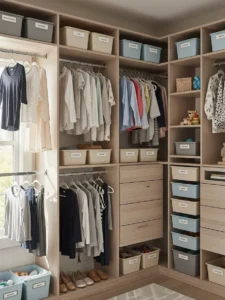

Kids grow fast, and their closets need to keep up. Finding ways to stay organized can be a challenge, especially as toys, clothes, and shoes multiply over time. These closet organization ideas for kids provide simple and practical solutions that adapt as your children grow, making it easier to maintain order without constant overhauls. From low shelves for toddlers to adjustable storage for older kids, the right system can save space, reduce clutter, and make it simple for children to access their belongings. With thoughtful planning, closets can become a functional and even stylish part of the room, evolving seamlessly from toddler years through the teen stage.
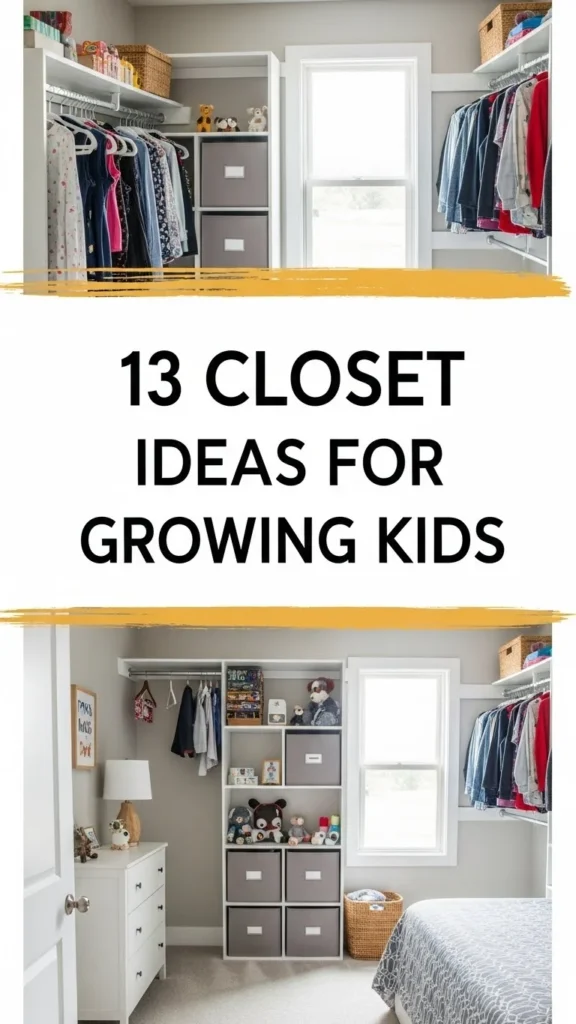
Ready to create a closet that grows up with your child? Let’s get started!
1. Install Adjustable Hanging Rods That Rise with Your Child

Start with hanging rods that adjust as your child grows taller. These systems use wall-mounted brackets with multiple height settings you can change in minutes. A 3-year-old needs the rod at 36 inches, but by age 10, they’ll need it at 48 inches or higher. Choose heavy-duty brackets that support the weight as clothing gets larger and heavier. This single investment eliminates buying new closet systems every few years. For more comprehensive organizational strategies, check out our guide on kids closet organization ideas. Most adjustable systems include clear instructions and require just a screwdriver for height changes. Your child can literally watch their closet grow up alongside them!
2. Use Modular Cube Storage That Reconfigures Easily

Invest in modular cube systems that stack and rearrange as needs change over the years. Among the most practical closet organization ideas for kids, these cubes can be configured horizontally with bins for toddlers’ toys and then stacked vertically for folded clothes and books as children grow. These versatile units adapt to changing ratios of hanging versus folded storage. You can add or remove cubes as your child’s wardrobe evolves from small clothes to bulkier teen items. The flexibility means you’re buying once for 15+ years instead of replacing furniture. Look for quality wood or heavy-duty plastic that withstands years of reconfiguration. This is hands-down one of the smartest solutions for long-term closet organization.
3. Choose Drawer Dividers That Adjust as Clothing Sizes Change
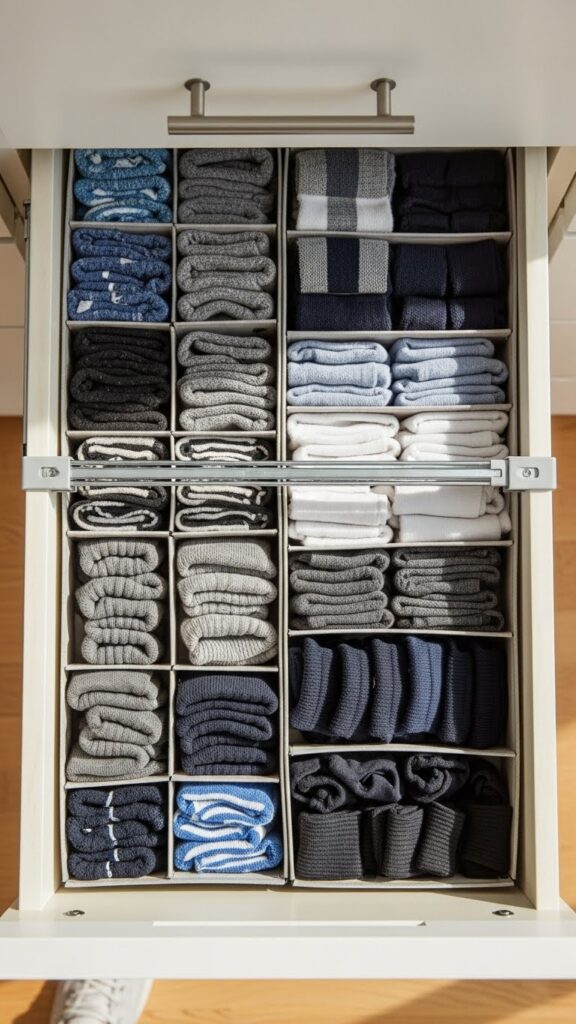
Use spring-loaded or adjustable dividers that expand as clothing items get bigger. One of the most effective closet organization ideas for kids is to have compartments that grow with their wardrobe. Toddler socks need tiny sections, but teen athletic socks require much larger spaces. These flexible dividers let you resize compartments without buying new organizers every few years. They work in dresser drawers, closet shelves, or storage bins throughout the room. The spring mechanism holds dividers firmly in place even as you adjust the spacing. This adaptability prevents the common problem of outgrowing your organization system. Choose dividers made from bamboo or sturdy plastic that won’t warp over time with repeated adjustments.
4. Install Shelving with Adjustable Bracket Systems

Install track-and-bracket shelving systems where shelf heights adjust in 1-inch increments. Young kids need lower shelves they can reach, while teens benefit from higher storage maximizing vertical space. This flexibility lets you optimize storage as your child’s reach and needs evolve. You can add shelves for growing wardrobes or remove them to create more hanging space for dresses or coats. Quality track systems last decades and support substantial weight at any height. For space-conscious families, explore vertical storage ideas for kids closets to maximize every inch. The ability to reconfigure without tools makes seasonal adjustments simple and fast!
5. Create Size-Transition Zones with Clear Labels
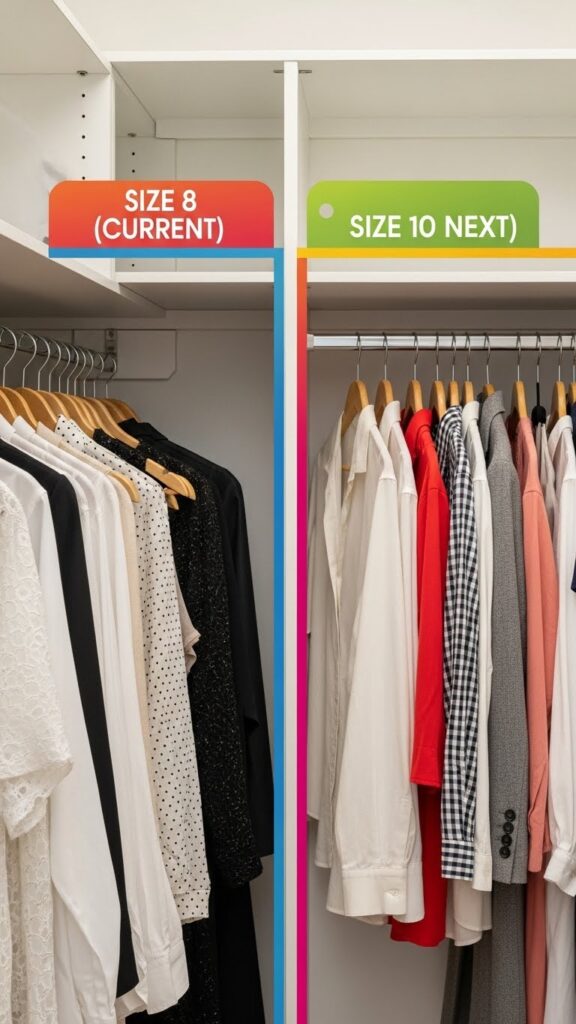
Designate separate closet zones for current sizes and the next size up as kids rapidly grow. One smart approach among closet organization ideas for kids is to label sections “Current Size” and “Next Size” or “Growing Into” for hand-me-downs and new purchases. This system prevents accidentally donating clothes your child will fit into next month. As items get too small, they move to a donation bin rather than cluttering the current wardrobe. Kids also learn to recognize when they’ve outgrown something and can move it themselves. This zone-based approach makes twice-yearly closet cleanouts faster and more efficient, ensuring you always know what sizes are needed when shopping or receiving hand-me-downs from friends.
6. Use Expandable Hanging Organizers for Shoes and Accessories
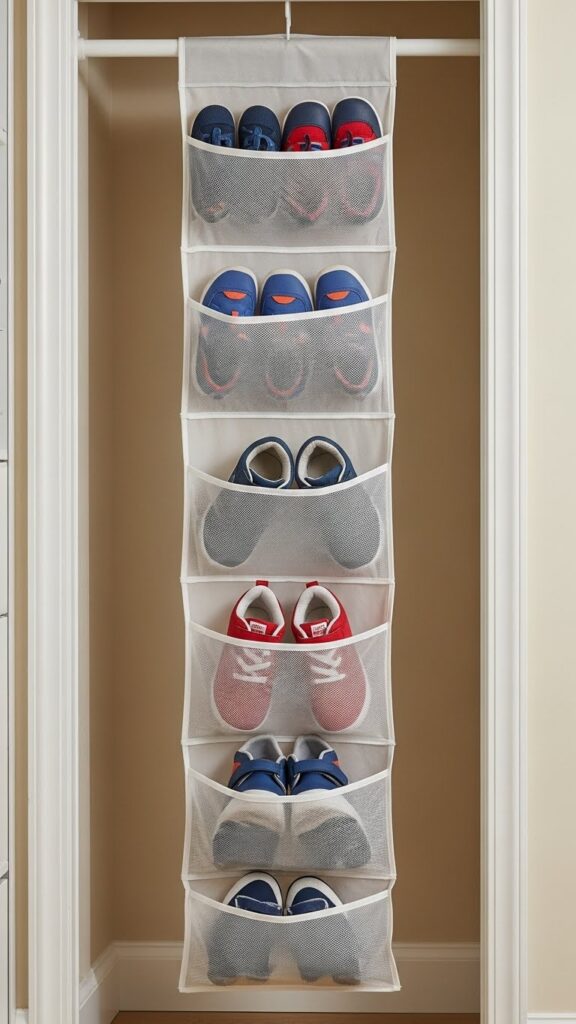
Choose hanging organizers with expandable pockets that accommodate growing shoe sizes. Toddler shoes fit in small 4-inch pockets, but teen sneakers need 8-inch or larger compartments. Mesh organizers with adjustable pocket sizes stretch to fit or you can skip pockets as needed. These save floor space while adapting to changing needs without replacement. Use them for shoes, accessories, sports equipment, or seasonal items as priorities shift. The vertical design maximizes closet space, especially important in small kids closets where floor space is precious. Hang them on rods or over doors depending on what works best for your layout!
7. Implement a Capsule Wardrobe Approach That Simplifies Growth

Adopt a capsule wardrobe strategy that makes managing growing kids’ clothes much simpler. Among the most practical closet organization ideas for kids is to keep only essential, mix-and-match pieces that fit right now, rather than overstuffing the closet with multiple sizes and seasonal items. This approach means you buy fewer items more frequently as kids grow, but spend less overall. When everything fits and coordinates, kids can dress independently without feeling overwhelmed by choices.
Sizing issues become obvious immediately when the capsule gets tight or short, and seasonal swaps are quick since you’re rotating smaller quantities of clothing. This minimalist system also teaches children about thoughtful consumption and caring for quality pieces. Less really is more when managing rapidly changing sizes.
8. Add Pull-Out Hampers That Handle Growing Laundry Volumes

Install pull-out hamper systems that accommodate increasing laundry as kids grow from babies to teens. One of the smartest closet organization ideas for kids is to choose hampers that grow with their needs toddlers may create only a couple of loads weekly, while an active teenager can fill one daily. Select pull-out systems that maximize depth and width for capacity, keeping dirty clothes hidden yet easily accessible for independent use. Some models include divided sections for pre-sorting, helping children learn laundry skills early. The gliding mechanism should be heavy-duty to handle added weight over the years, and the closed design also contains the inevitable smells that come with growing, active kids.
9. Create Multi-Purpose Storage Benches with Hidden Compartments
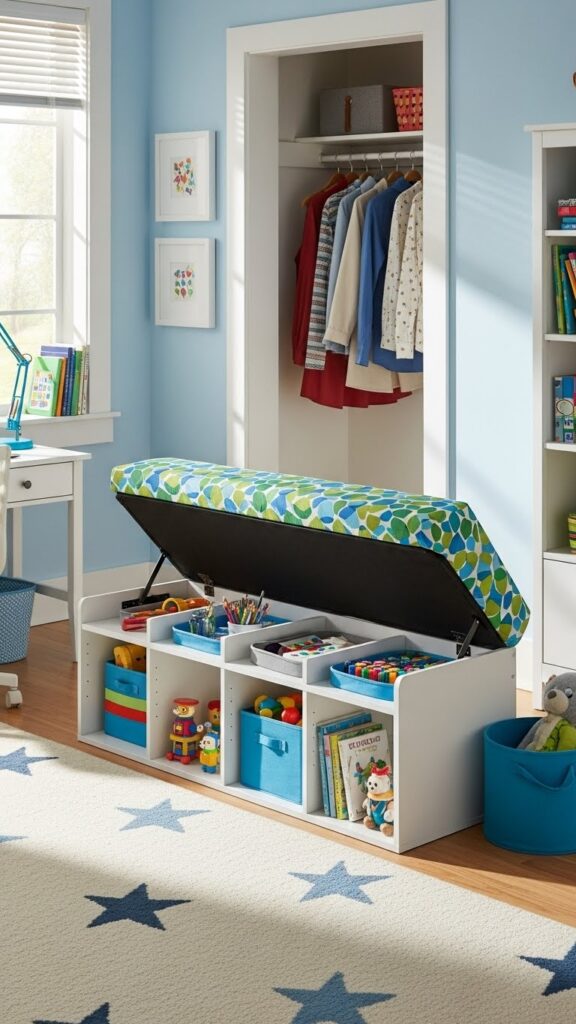
Add storage benches that serve multiple purposes as kids grow, from needing help dressing to wanting privacy. Among the most versatile closet organization ideas for kids, these benches provide a place for young children to sit while parents help with shoes, and for older kids to use while contemplating outfit choices. The hidden storage underneath adapts from toy overflow to sports equipment to shoe collections, keeping the room tidy without extra furniture.
Choose benches with removable cushions and sturdy construction to withstand jumping toddlers and lounging teens. The closed storage keeps seasonal items or special occasion clothes out of sight but accessible. Position the bench strategically for sitting while tying shoes or as a step stool for reaching higher rods. This furniture investment truly supports your child through every growth stage.
10. Use Color-Coded Systems That Evolve with Age
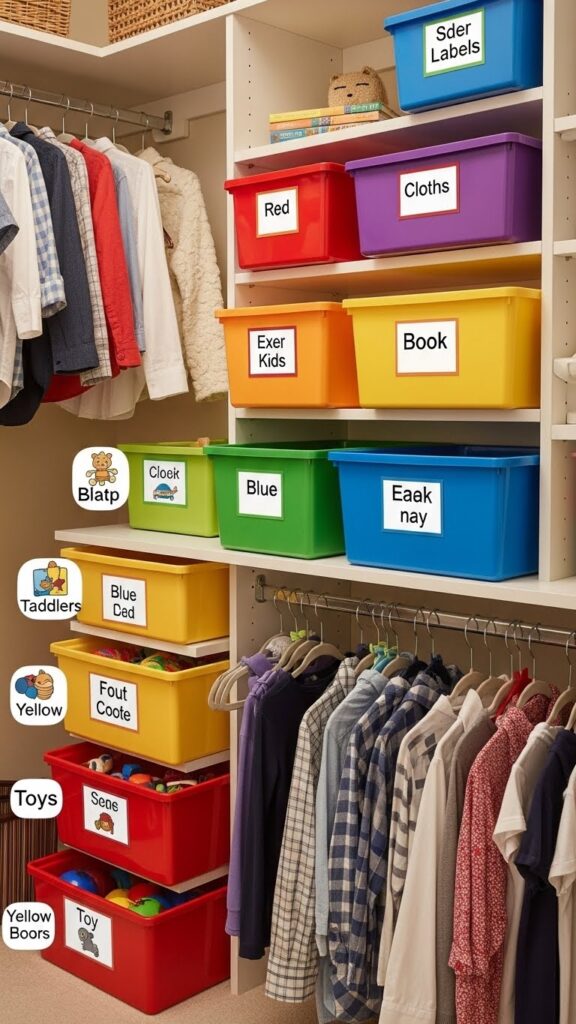
Implement color-coding that starts visual for toddlers and evolves to text-based for older kids. Blue bins might always mean “bottoms,” but labels progress from pants pictures to the word “PANTS” to size-specific text. This continuity helps kids adapt as their reading skills develop without confusing system changes. The colors provide visual consistency even as label complexity increases. Older kids can help younger siblings because the color system stays constant. You’re teaching organizational thinking and category skills that benefit them lifelong. For families with shared bedrooms, assigning each child their own color prevents mix-ups during growth spurts. The system matures alongside your child’s cognitive development!
11. Install Over-Door Organizers for Changing Accessory Needs
Absolutely! Here’s your paragraph broken naturally into two readable sections while keeping the keyword closet organization ideas for kids intact:
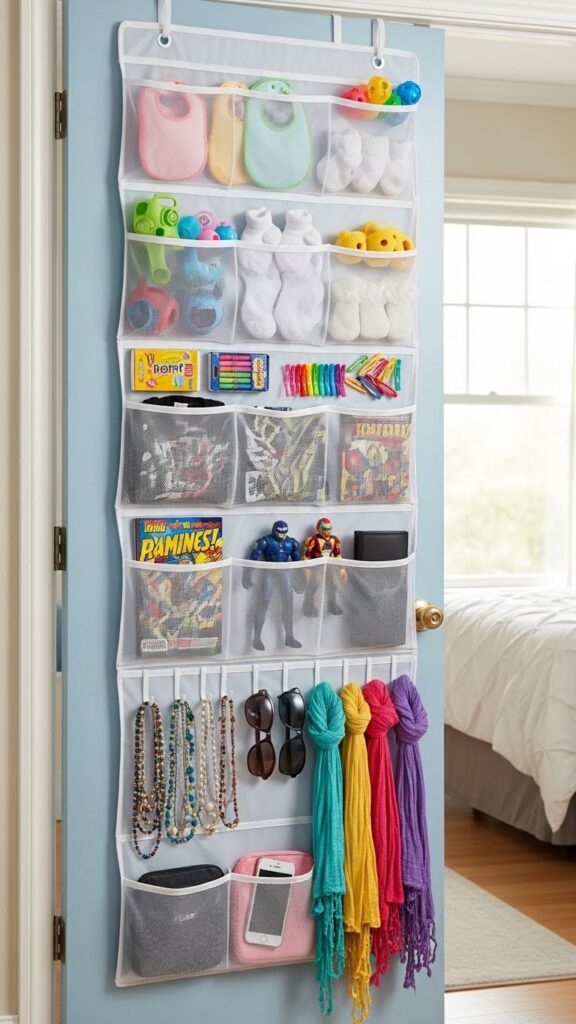
Maximize door space with organizers that transition from baby necessities to teen fashion accessories. One of the most practical closet organization ideas for kids is to use over-door pockets that grow with their needs what once held bibs and baby socks can later organize jewelry, hair accessories, and small bags. The beauty of this vertical storage is its flexibility, requiring no permanent installation and leaving floor space free.
As needs change, simply switch what goes in the pockets. Teens especially appreciate having accessories visible and organized for outfit planning. Choose clear or mesh pockets so contents stay visible as organizational needs evolve. This solution works brilliantly regardless of your child’s current age or style, making the most of often-underutilized door space.
12. Create a Memory Box System for Sentimental Outgrown Items

Designate specific memory boxes for truly special outgrown pieces instead of keeping everything. One small box per age range (0-2, 2-4, 4-6, etc.) holds those precious items you can’t part with. This limited space forces intentional choices about what’s truly meaningful. The boxes live on high shelves, keeping closets functional while preserving memories. Kids can look through boxes as they grow, seeing how much they’ve changed. This system prevents emotional attachment from overwhelming practical storage needs. Label boxes clearly by size range and date to track your child’s growth journey. You’re honoring memories without sacrificing current organizational functionality!
13. Plan for Independence with Progressively Lower Storage
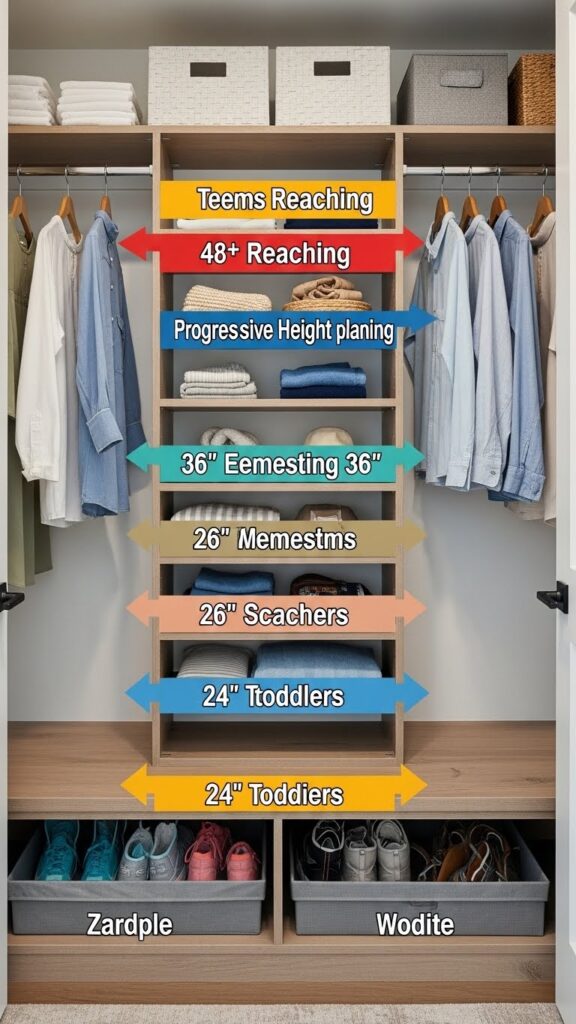
Design storage heights that progressively challenge your child’s growing reach and independence. What starts at 24 inches for toddlers moves to 36 inches for elementary kids and eventually 48+ inches for teens. This gradual increase builds confidence and physical capability alongside organizational responsibility. Current daily items stay at reachable heights while aspirational or seasonal items move higher. The system automatically adjusts expectations as kids grow taller without conscious reorganization. You’re literally raising the bar as your child develops. For complete strategies on maximizing closet potential, visit our kids organization ideas category. This thoughtful height planning respects both current abilities and future growth!
Closet Organization Ideas for Kids That Grow with Your Child
These closet organization ideas for growing kids create systems that adapt rather than needing replacement every few years. Smart adjustable solutions save money while teaching kids valuable organizational skills at every age. The best system grows seamlessly alongside your child.
Start by identifying which areas of your current closet frustrate you most as your child grows. Install one or two adjustable solutions that address those pain points. You don’t need to overhaul everything overnight to see real benefits.
Ready to create a closet that truly grows up with your kids? Choose your favorite adaptable idea and implement it this weekend. Future you will thank present you every time you skip buying another organizational system that won’t last. Here’s to smart investments that work from toddler tantrums through teen drama!

Amir Ali is the founder and site administrator of HomeDecorEdge, a modern home decor and interior design platform. Since starting the site, he has combined his passion for interior design, practical styling, and color coordination with hands-on content strategy and site management. He guides authors, curates high-quality articles, and ensures readers have access to actionable, visually inspiring, and user-focused home decor advice for apartments, small rooms, and family homes.