
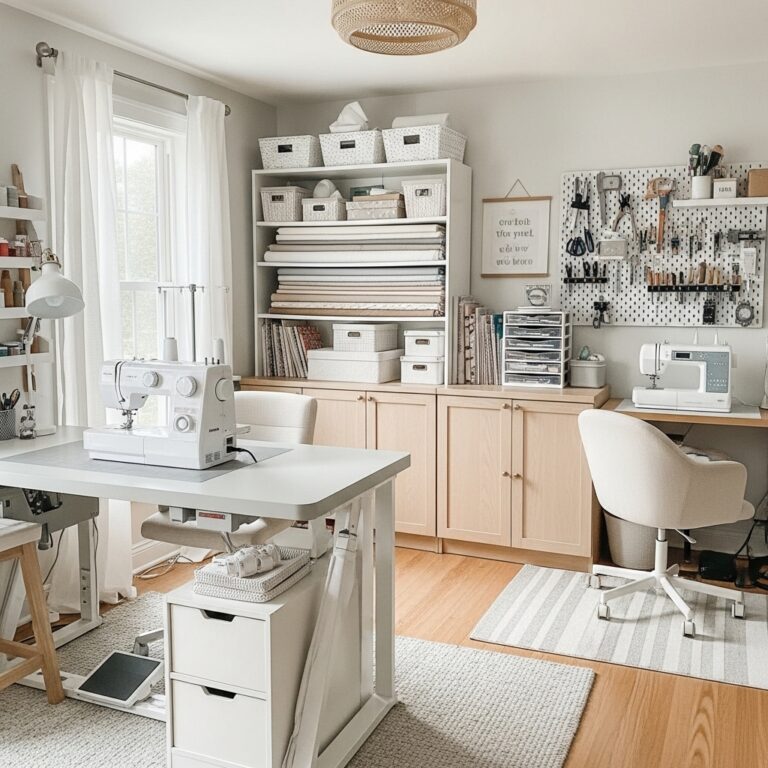

Setting up a sewing room is about more than placing a sewing machine on a table. A well-planned sewing room improves comfort, productivity, and creative flow. From choosing the right furniture and lighting to organizing storage and defining work zones, every decision impacts how smoothly you work. Whether you are starting from scratch or upgrading an existing space, intentional planning makes a lasting difference. This complete guide walks you through every step of setting up a sewing room that supports both creativity and efficiency. No matter your space or budget, the right setup transforms sewing into an enjoyable daily practice.

A thoughtfully planned sewing room turns creativity into a smooth, stress-free process, especially for makers who enjoy DIY home decor projects that blend function with personal style. Follow this complete guide on how to set up a sewing room to build a space that supports focus, comfort, and long-term productivity.
1. Choosing the Right Room for Your Sewing Space
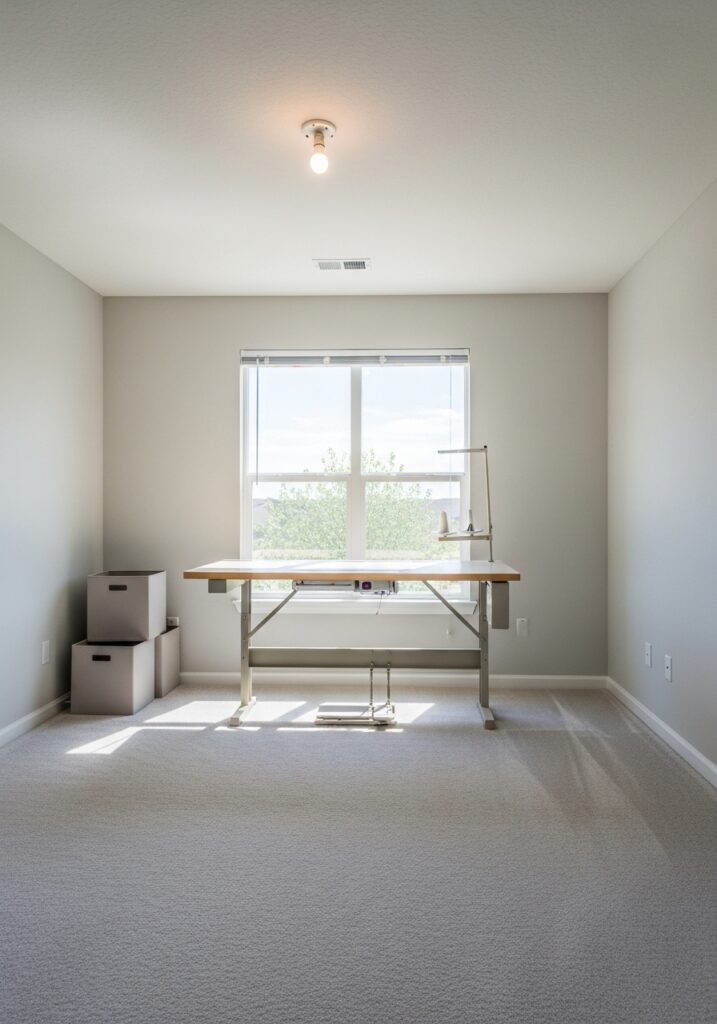
Selecting the right room is the first step in setting up a sewing room. Consider natural light, ventilation, and available square footage. A quiet area reduces distractions and improves focus. Accessibility matters if you sew frequently. Even small rooms can work with smart layouts. The goal is to create a dedicated creative zone. A good room choice sets the foundation for everything else.
2. Defining Sewing Room Zones
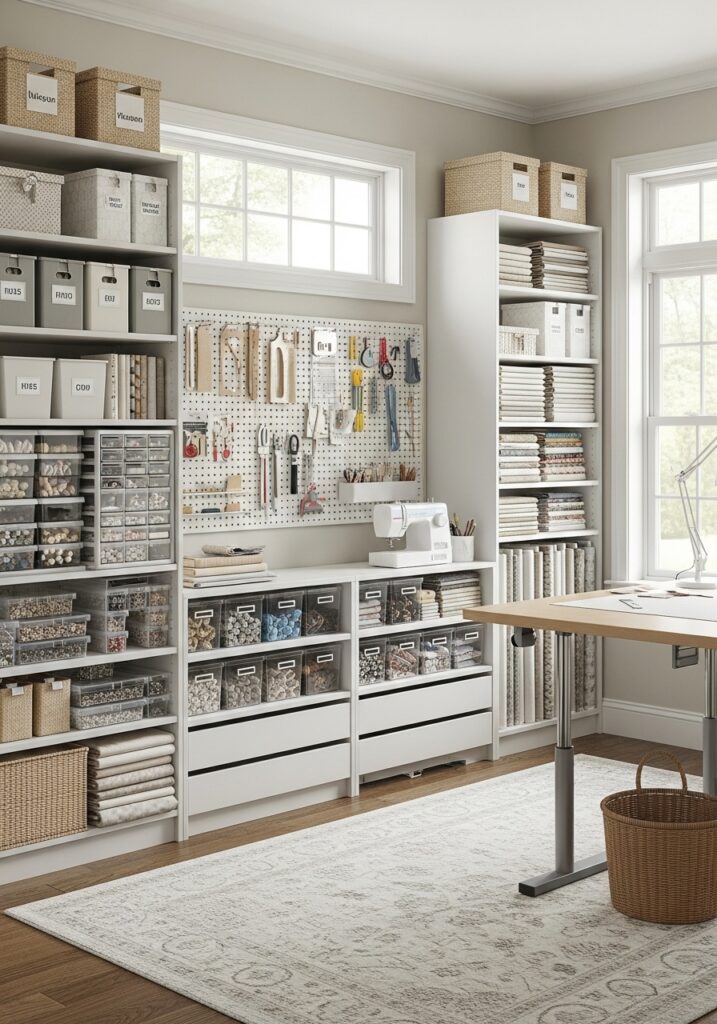
Zoning improves workflow and organization. Separate areas for sewing, cutting, ironing, and storage reduce movement. Defined zones prevent clutter buildup. Clear layouts improve efficiency during projects. Even small rooms benefit from zoning. Visual boundaries support mental focus. Organized zones make sewing smoother.
3. Planning a Functional Sewing Layout
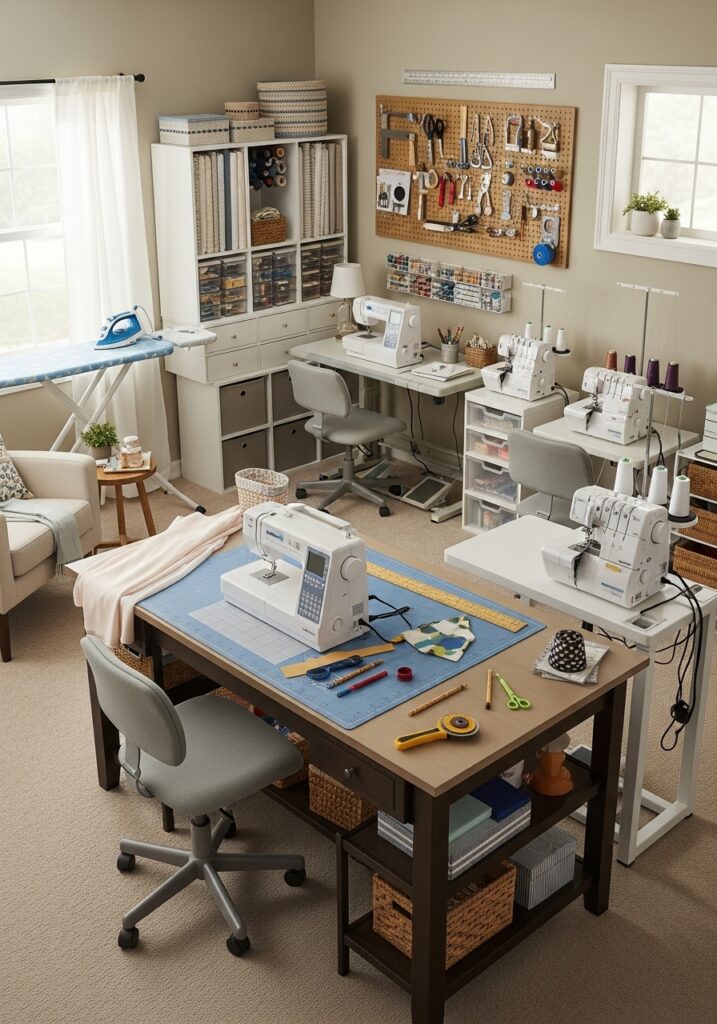
A functional layout minimizes unnecessary steps. Place the sewing machine near storage. Cutting tables should allow fabric flow. Keep frequently used tools within reach. Proper layout reduces fatigue. It also improves accuracy and speed. Planning before setup avoids future frustration.
4. Selecting the Right Sewing Table
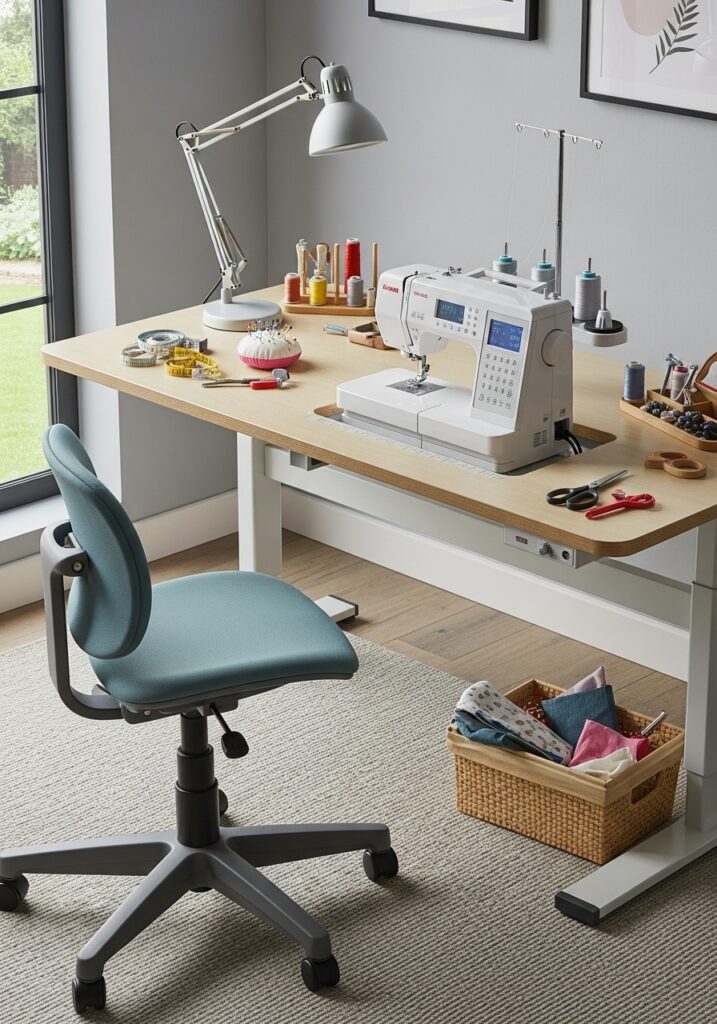
A sewing table must be stable and properly sized. Table height affects posture and comfort. Enough surface area supports fabric handling. A sturdy table improves stitch accuracy. This piece becomes the room’s centerpiece. Comfort and durability matter long-term. Choose wisely for daily use.
5. Choosing Comfortable Sewing Seating

Comfortable seating prevents strain during long sessions. Adjustable chairs support posture. Back support reduces fatigue. Mobility helps move between zones. Good seating protects health. Comfort directly impacts productivity. This is an essential investment.
6. Setting Up a Cutting Area

A dedicated cutting area improves precision. Large surfaces support pattern layouts. Proper height reduces bending strain. Cutting zones keep sewing tables clear. Measuring grids save time. Organization improves accuracy. This area boosts efficiency significantly.
7. Essential Sewing Room Furniture

Furniture defines the overall functionality of a sewing room by shaping how comfortably and efficiently you work. Storage cabinets help organize supplies and keep tools within easy reach. Shelves provide accessible space for fabrics, notions, and frequently used equipment. Sturdy worktables support cutting, sewing, and assembling projects with ease. Choosing essential pieces first helps prevent clutter and keeps the room purposeful. For detailed planning and smart furniture selection, Essential Sewing Room Furniture Guide offers practical insights into building a setup that lasts. Quality furniture not only improves workflow but also supports long-term creativity.
8. Sewing Room Storage Planning

Storage planning prevents chaos. Categorize tools, fabrics, and notions. Use vertical storage where possible. Clear systems save time. Organized storage reduces stress. Efficient storage supports creativity. Planning early avoids overcrowding.
9. Fabric Storage Solutions
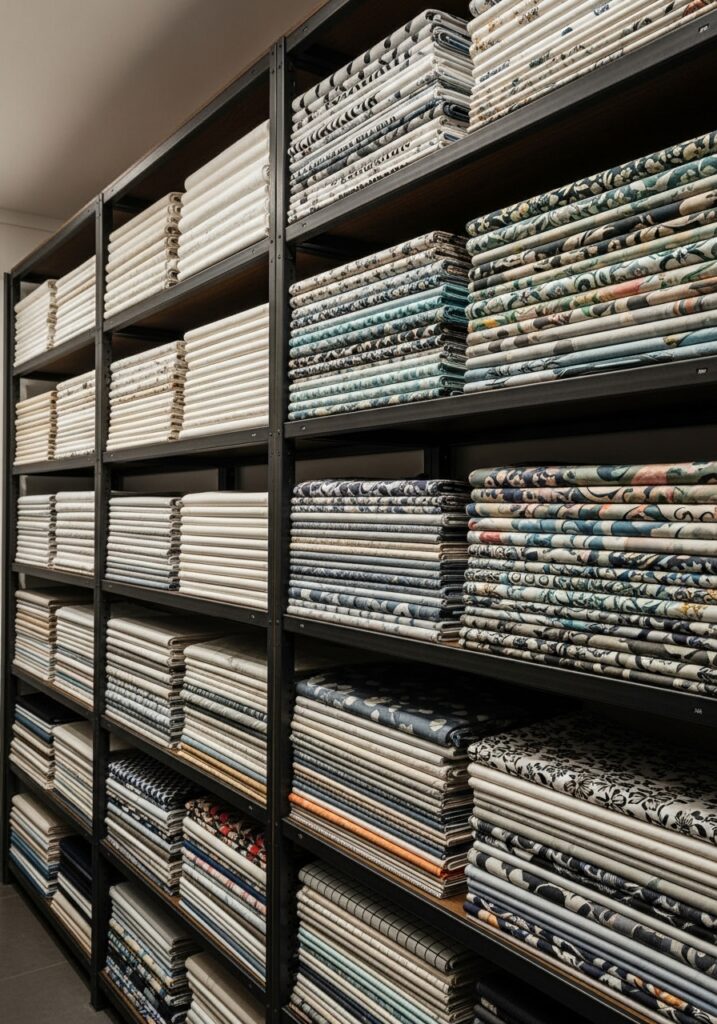
Fabric storage protects materials from damage. Folded or rolled storage saves space. Color sorting improves selection. Dust protection extends fabric life. Easy access speeds projects. Storage grows with collections. Proper fabric care matters.
10. Thread and Notion Organization
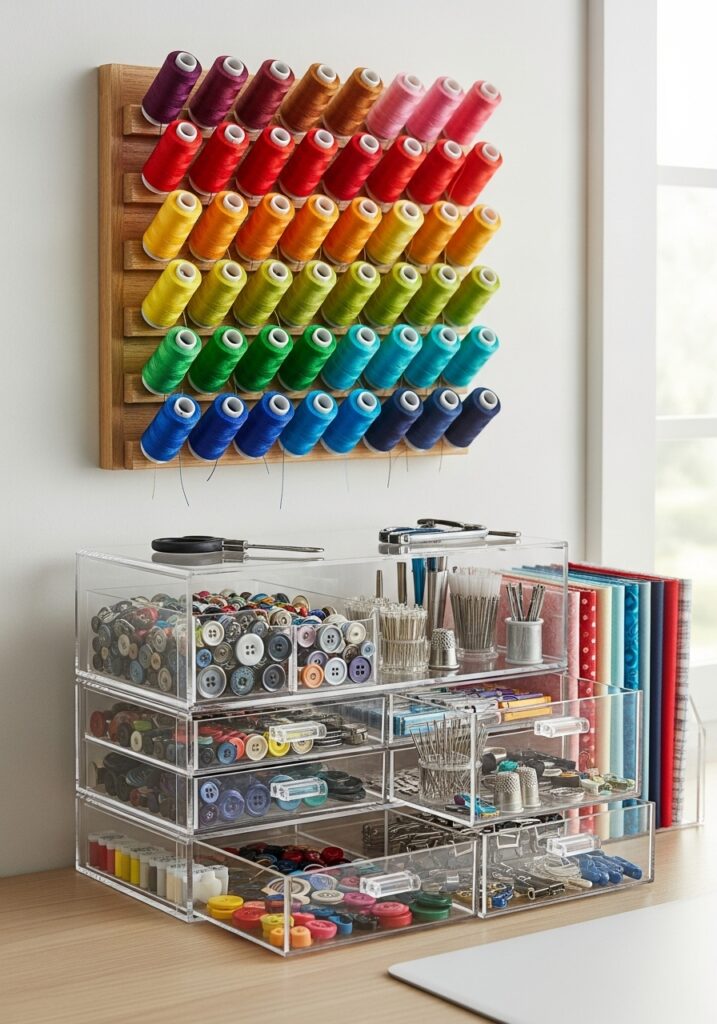
Small items need structure. Thread racks prevent tangling. Notions stay visible and accessible. Organized supplies reduce delays. Clear containers improve efficiency. Proper organization supports fast workflow. Small details matter.
11. Lighting Your Sewing Room Correctly
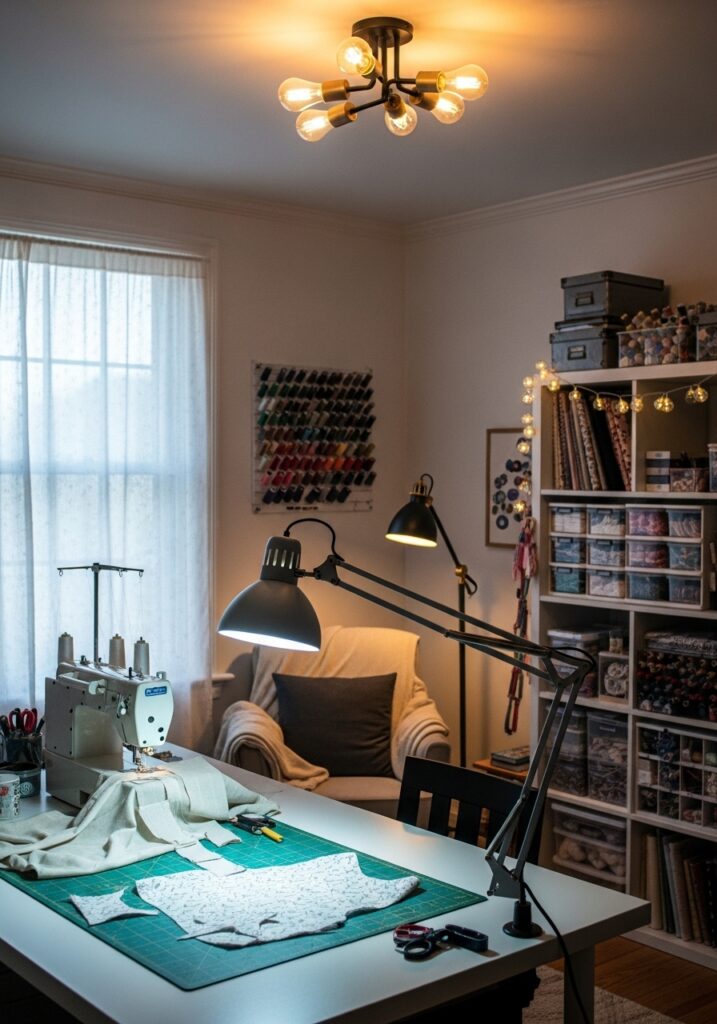
Lighting plays a critical role in sewing accuracy and overall comfort, especially during detailed work. Focused task lighting improves stitch visibility and reduces mistakes while sewing. Ambient lighting helps balance the room and prevents harsh contrasts. Proper lighting significantly reduces eye strain during long creative sessions. Natural light enhances color accuracy, making fabric selection easier and more reliable. For practical setup ideas and inspiration, Sewing Room Lighting Ideas: Brighten Your Workspace shows how thoughtful lighting choices can transform functionality and comfort.
12. Managing Cords and Power Access

Machines require safe power access. Cable management reduces hazards. Outlets should be accessible. Cord organization improves appearance. Safety supports long-term use. Clean setups feel professional. Details matter.
13. Creating an Ironing and Pressing Station
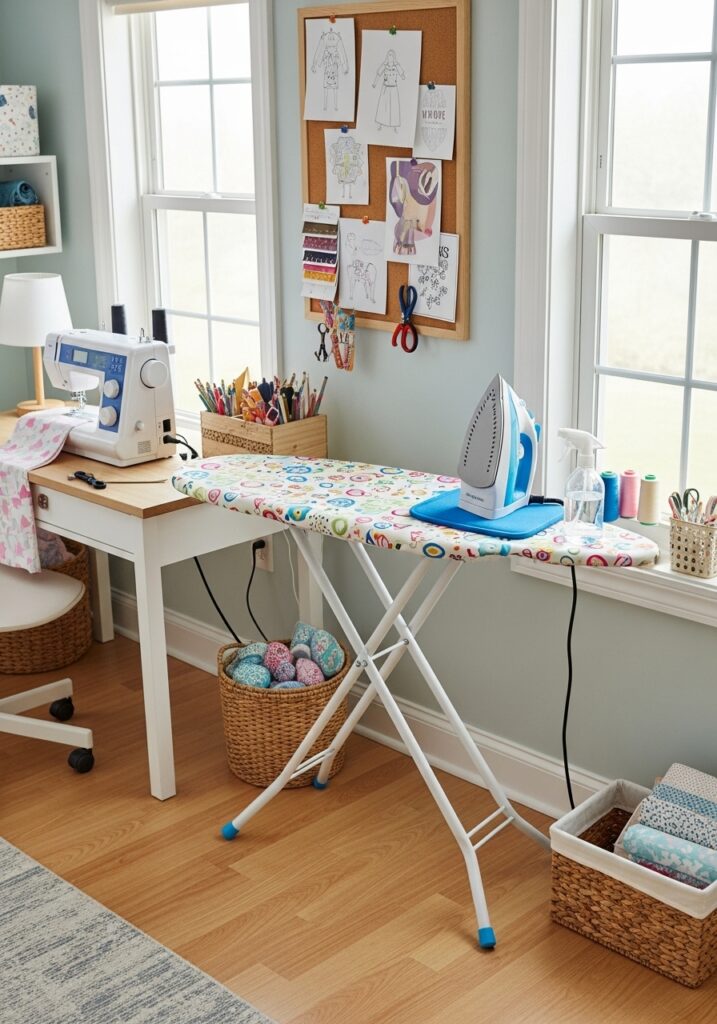
Ironing improves garment quality. Dedicated stations save time. Fold-out boards save space. Nearby storage improves efficiency. Pressing zones support finishing work. Workflow feels complete. Sewing quality improves.
14. Organizing Patterns Efficiently
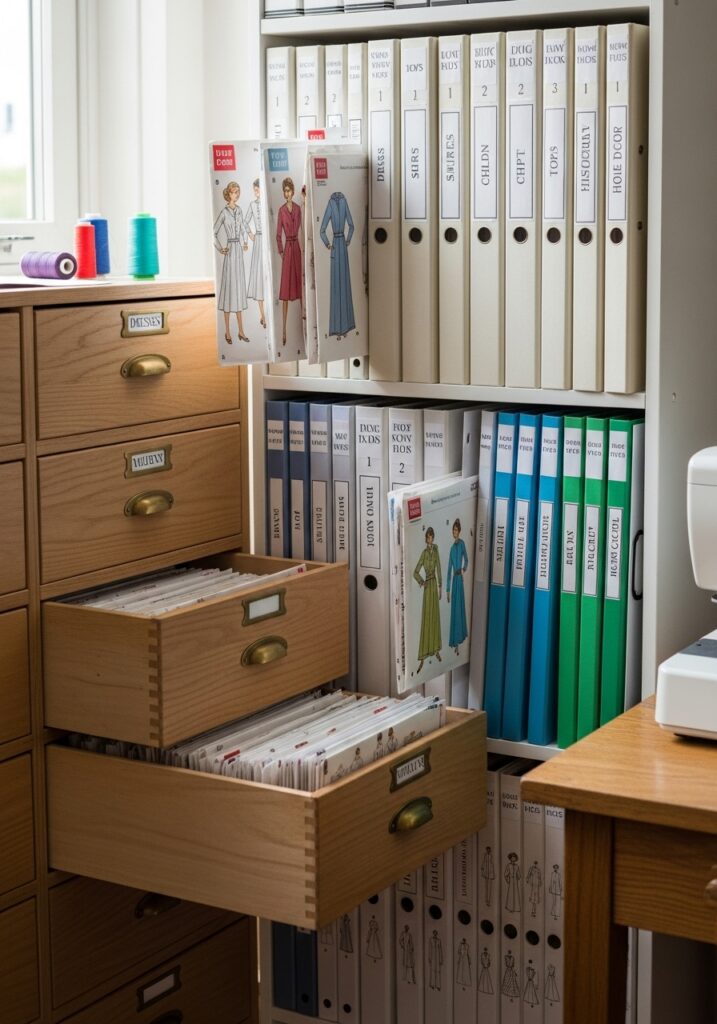
Patterns require careful storage. Flat storage prevents damage. Labeling saves time. Organized patterns speed planning. Proper storage extends lifespan. Preparation becomes easier. Order improves productivity.
15. Setting Up a Budget-Friendly Sewing Room
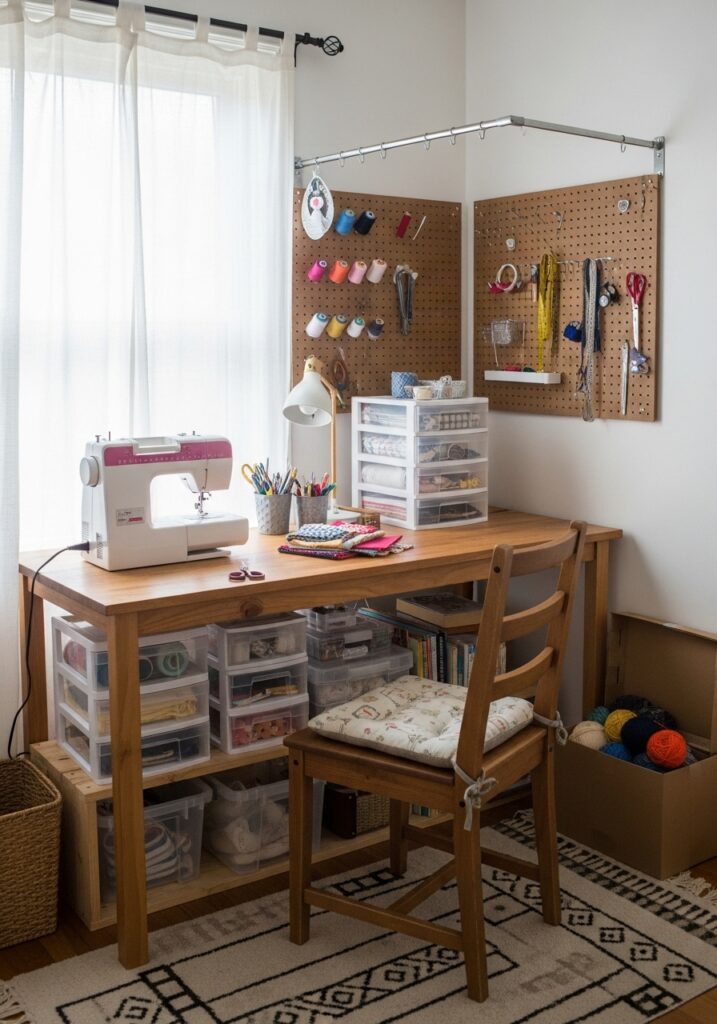
Budget-friendly sewing room setups focus on essentials first to create a functional workspace without overspending. DIY storage solutions help reduce costs while keeping supplies organized. Repurposed furniture adds character and saves money at the same time. Gradual upgrades allow the space to improve over time without financial pressure. Function always comes before aesthetics, especially for beginners setting up their first sewing area. For practical and cost-saving inspiration, Sewing Room Setup on a Budget shares smart ideas for building an efficient sewing room affordably.
16. Sound Management in Sewing Rooms

Machines can be noisy. Soft textiles absorb sound. Rugs reduce echo. Wall panels help insulation. Quiet spaces improve focus. Comfort increases during long sessions. Sound control matters.
17. Temperature and Ventilation Planning
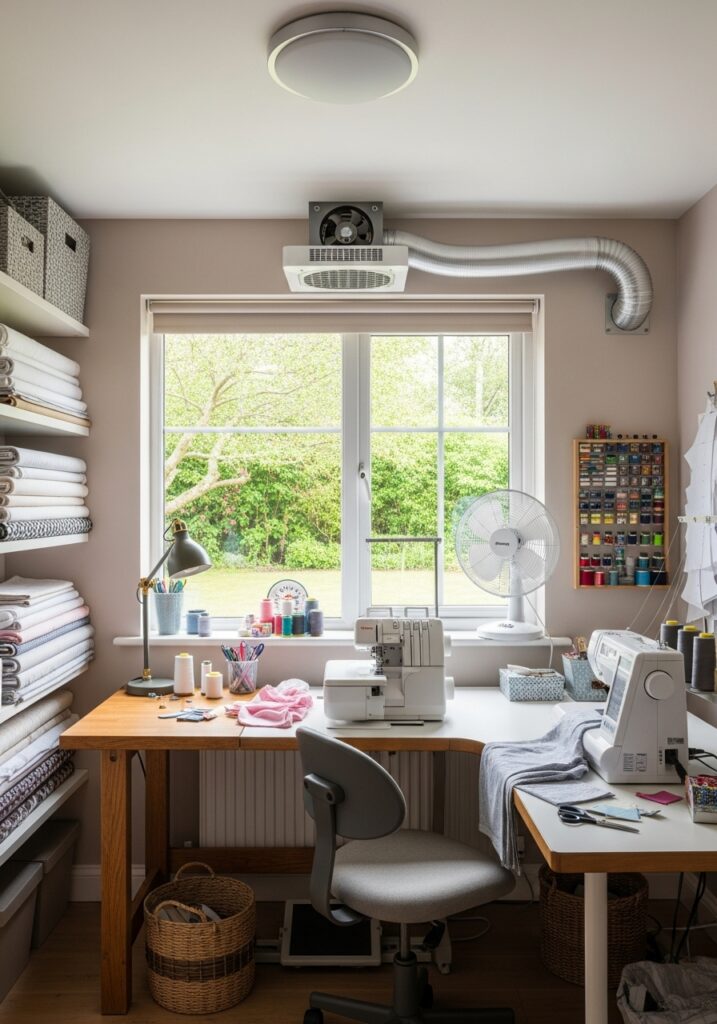
Comfortable temperature supports focus. Ventilation removes heat. Fans improve airflow. Fabric stays fresh. Long sessions become easier. Climate control improves productivity. Comfort supports creativity.
18. Decorating Without Clutter

Decor should inspire, not overwhelm. Minimal decor keeps focus. Personal touches add warmth. Balanced styling supports creativity. Avoid overcrowding surfaces. Decor enhances mood. Less is more.
19. Creating an Inspiration Board
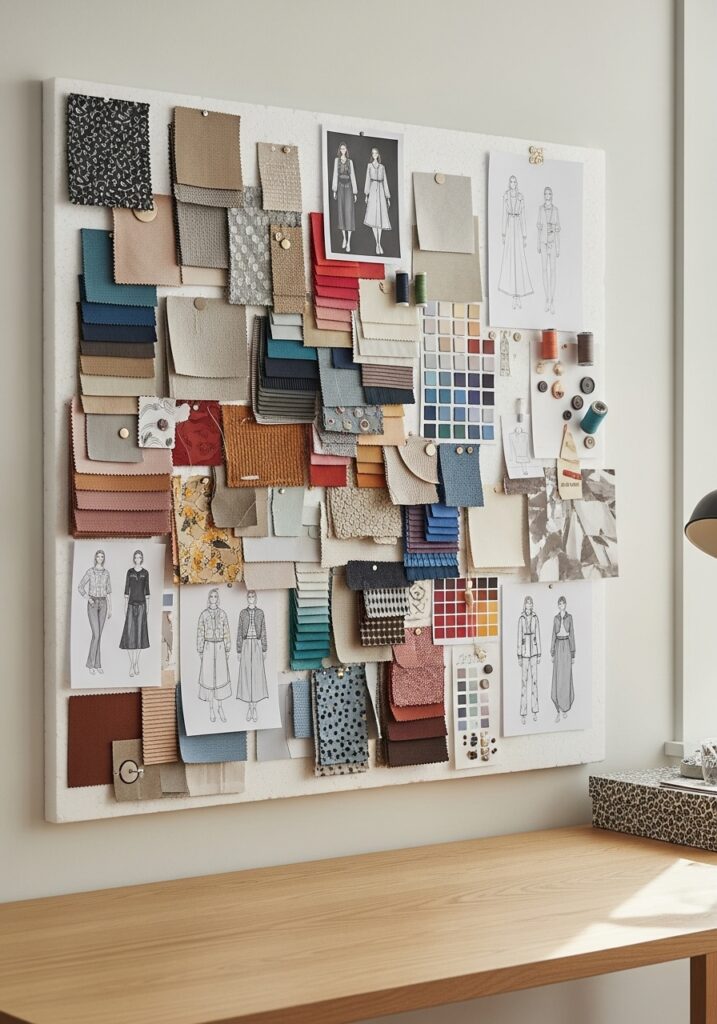
Visual inspiration fuels creativity. Boards display swatches and ideas. Planning becomes visual. Projects stay organized. Boards personalize the space. Creativity stays visible. Inspiration remains active.
20. Workflow Testing and Adjustment
Test the setup after completion. Identify inefficiencies. Adjust furniture placement. Improve access points. Continuous refinement improves comfort. Workflows evolve with experience. Flexibility matters.
Image Prompt:
“Sewing room in use with adjustments being made”
Alt text:
Testing and adjusting sewing room workflow
21. Converting a Spare Room into a Sewing Studio
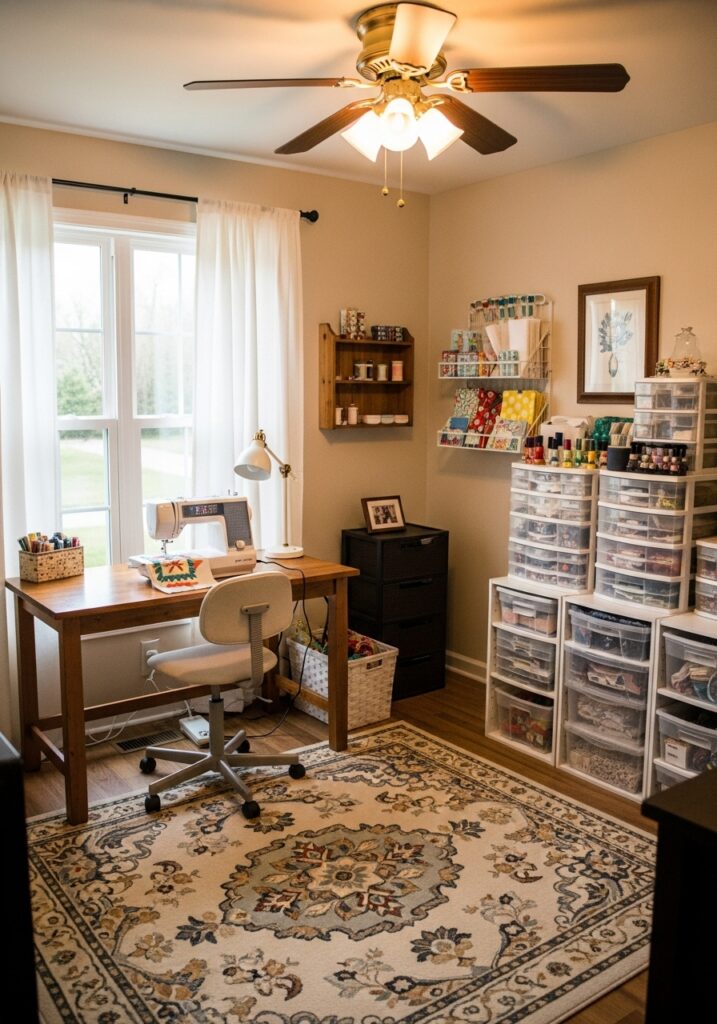
Spare rooms offer flexibility when creating a dedicated sewing space, often requiring minimal renovation to get started. Storage solutions can be adapted easily as supplies grow, making the room highly functional. Simple lighting upgrades can completely transform the space and improve usability. This option works especially well for sewists with evolving needs over time. Thoughtful planning ensures efficiency without major structural changes. For layout ideas and practical examples, Converting Spare Room to Sewing Studio provides inspiration on turning unused rooms into productive creative spaces.
22. Before and After Sewing Room Makeovers
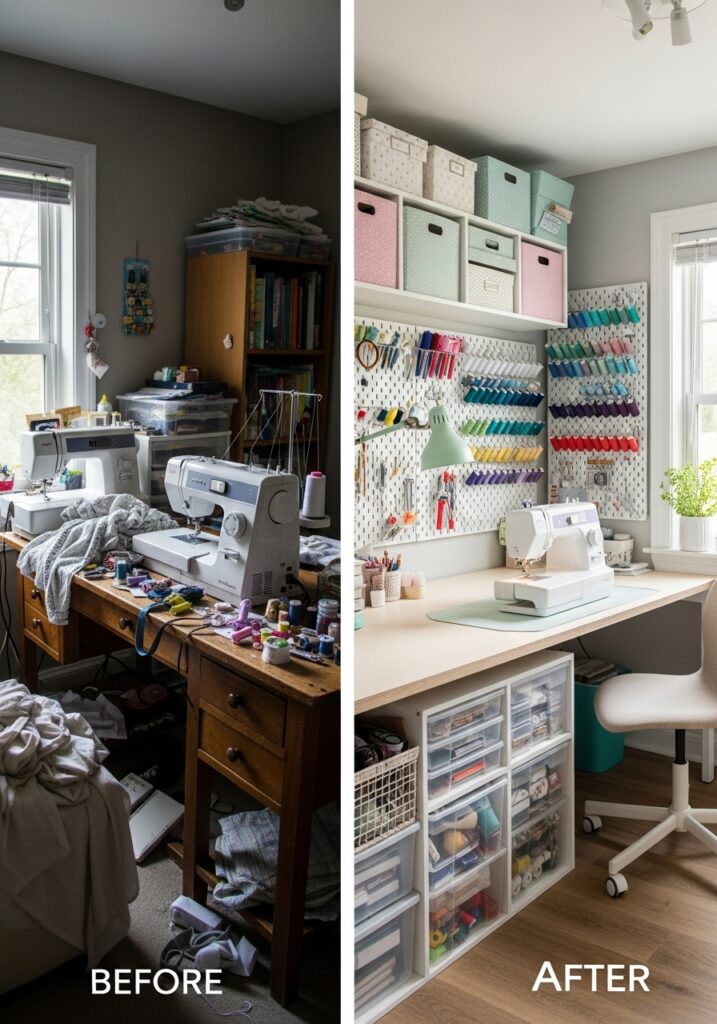
Sewing room makeovers highlight the powerful transformation potential of thoughtful design choices. Even small changes, such as improved organization or updated storage, can make a big impact on functionality. Better organization directly improves efficiency and reduces daily frustration. Visual upgrades like fresh colors or styled shelving boost motivation and pride in the workspace. Seeing before-and-after results inspires confidence and sparks new creative energy. For real-life transformation ideas, Sewing Room Makeover Before & After showcases how intentional updates can turn ordinary spaces into inspiring sewing rooms.
23. Storage for Growing Sewing Collections
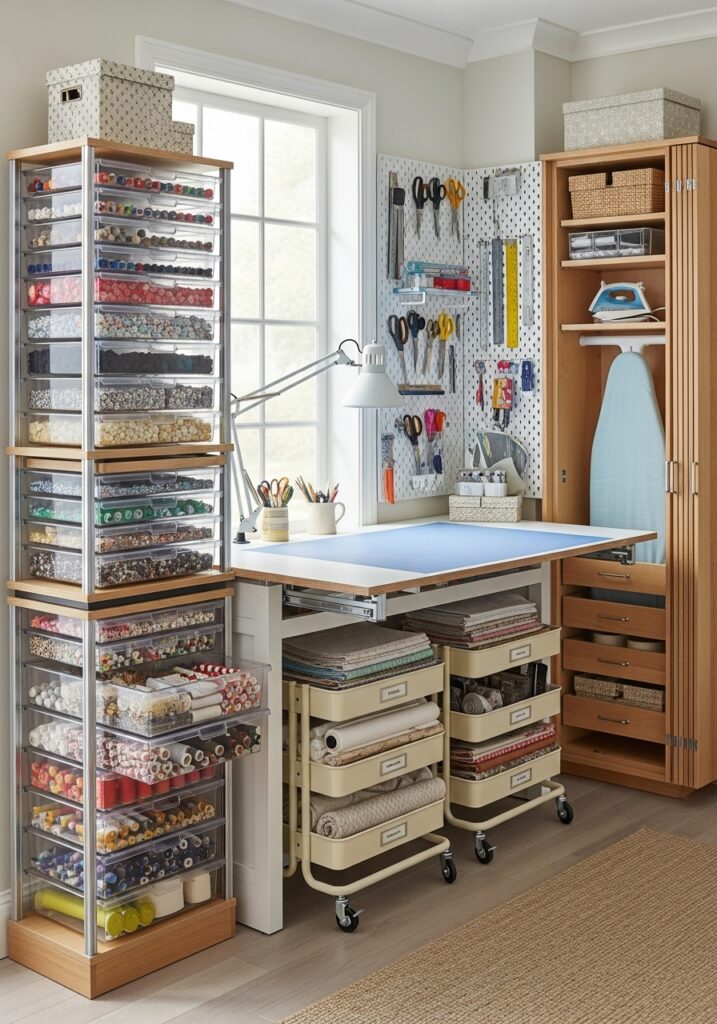
Collections expand over time. Flexible storage adapts growth. Modular systems scale easily. Planning ahead prevents clutter. Long-term thinking supports sustainability. Storage evolves with skill. Growth feels manageable.
24. Safety Considerations in Sewing Rooms
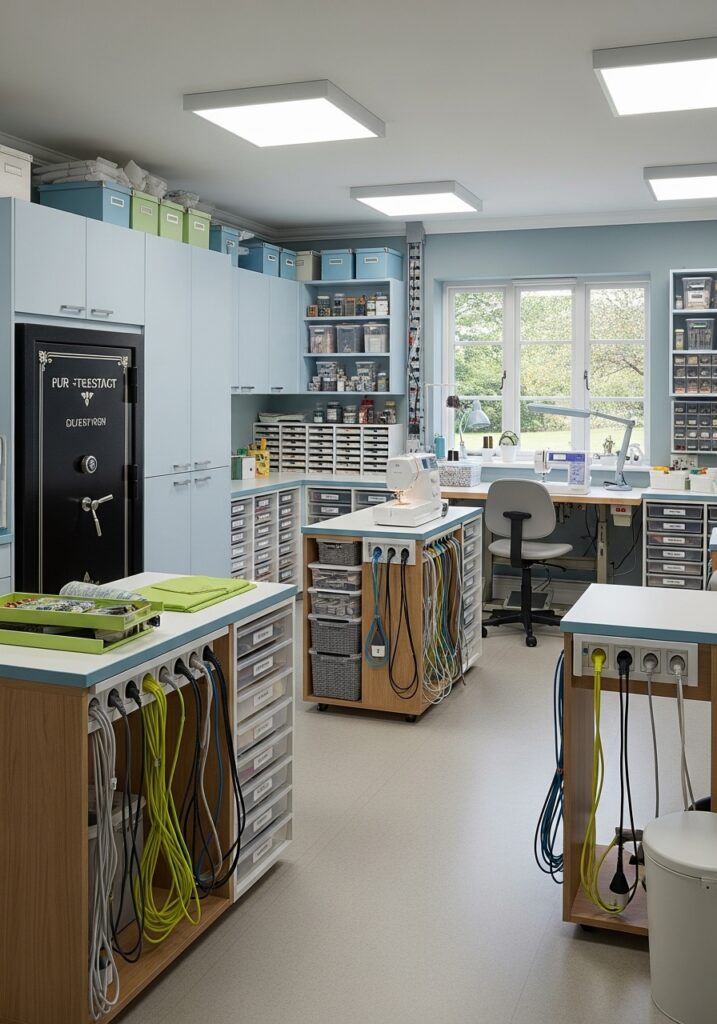
Safety supports long-term use. Sharp tools need proper storage. Electrical safety matters. Clear walkways prevent accidents. Lighting reduces mistakes. Safe spaces support confidence. Protection matters.
25. Organizing Digital Sewing Resources
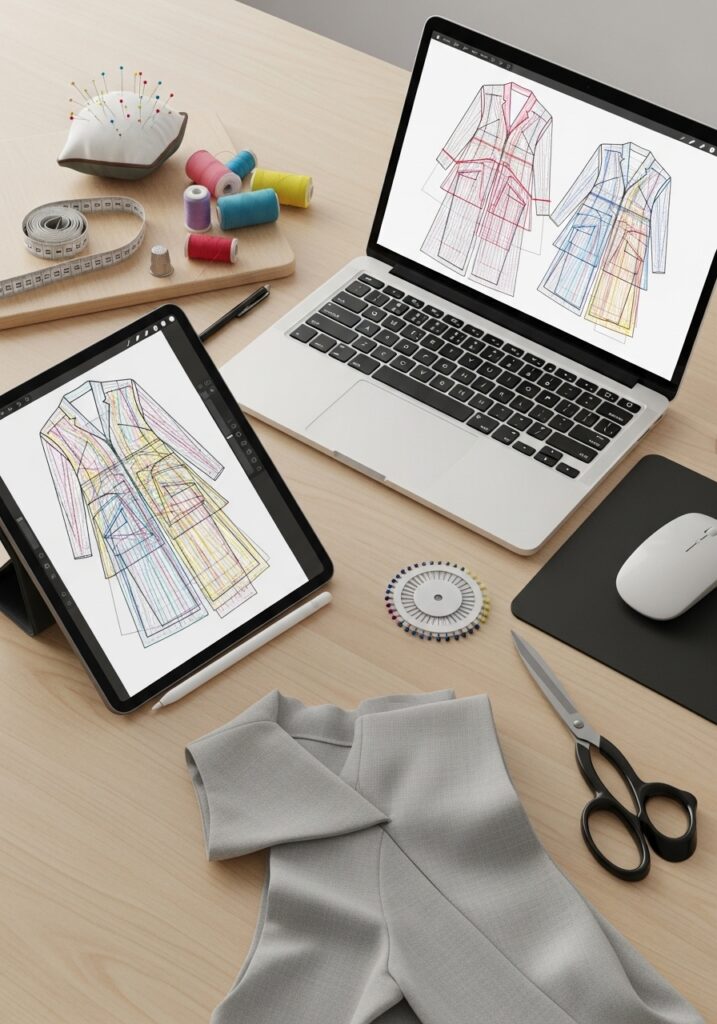
Digital patterns need structure. Dedicated devices help. File organization saves time. Digital planning improves efficiency. Technology supports creativity. Organization extends beyond physical space. Digital order matters.
26. Time Management Through Room Setup
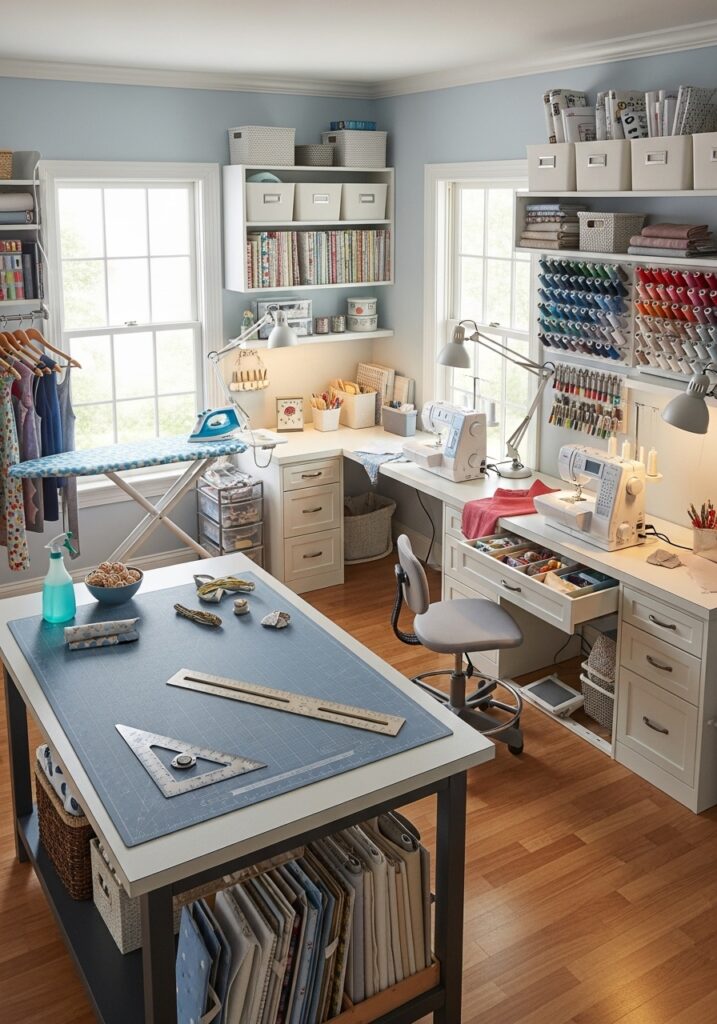
Efficient layouts save time. Reduced movement increases productivity. Organized tools reduce delays. Clear systems support focus. Time management improves output. Setup directly affects efficiency. Smart planning pays off.
27. Adapting the Sewing Room Over Time
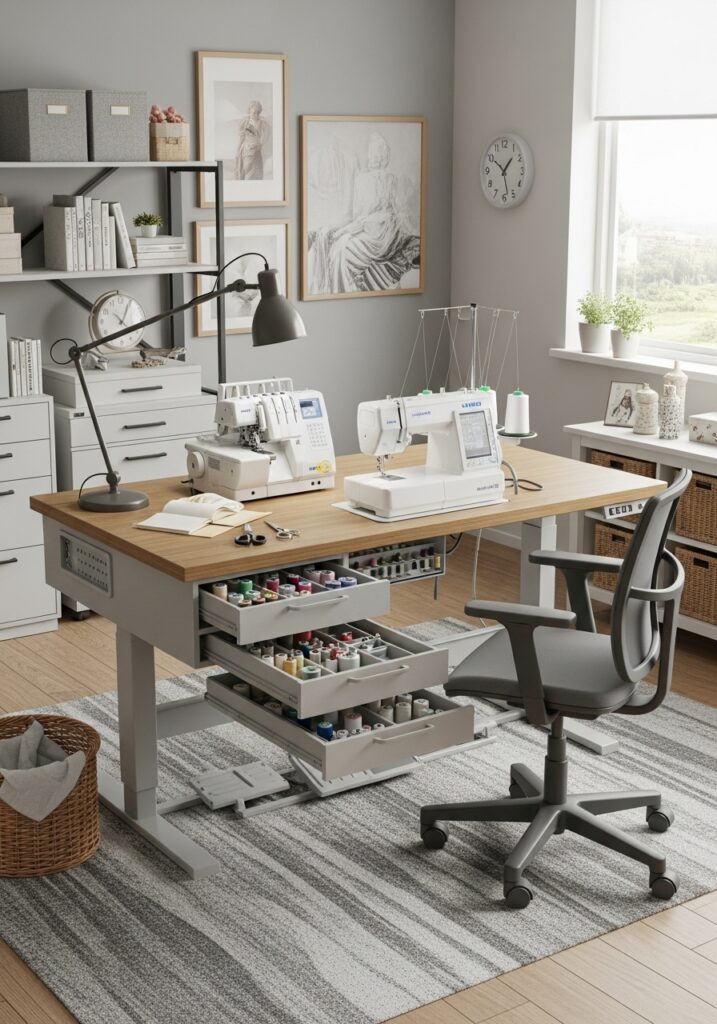
Needs change with skill level. Flexible layouts adapt growth. Furniture evolves. Storage expands. Continuous improvement supports longevity. Sewing rooms grow with you. Adaptability matters.
28. Maintaining an Organized Sewing Room

Maintenance keeps efficiency high. Regular decluttering helps. Cleaning protects equipment. Organization habits matter. Small routines save time. Consistency supports productivity. Order sustains creativity.
29. Balancing Beauty and Function

Aesthetic balance improves motivation. Function remains priority. Beautiful spaces inspire creativity. Avoid sacrificing usability. Harmony supports workflow. Design supports purpose. Balance matters.
30. Setting Up for Long-Term Comfort
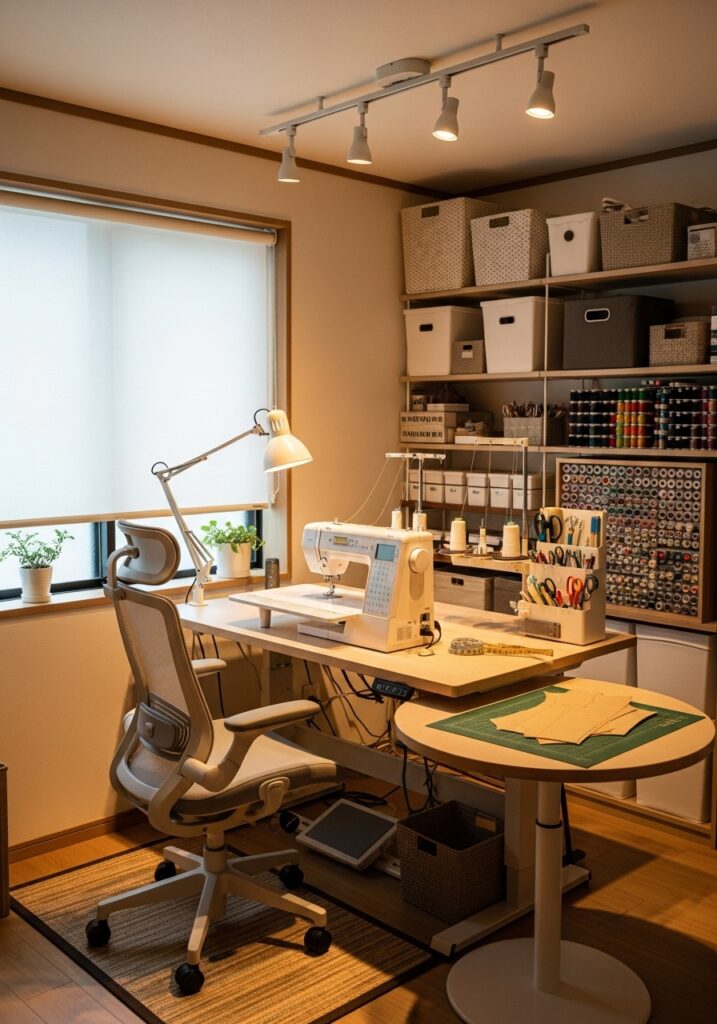
Long-term comfort prevents burnout. Ergonomics protect health. Lighting supports vision. Seating matters daily. Comfort improves consistency. Sustainable setups support creativity. Planning pays off.
31. Creating a Distraction-Free Environment
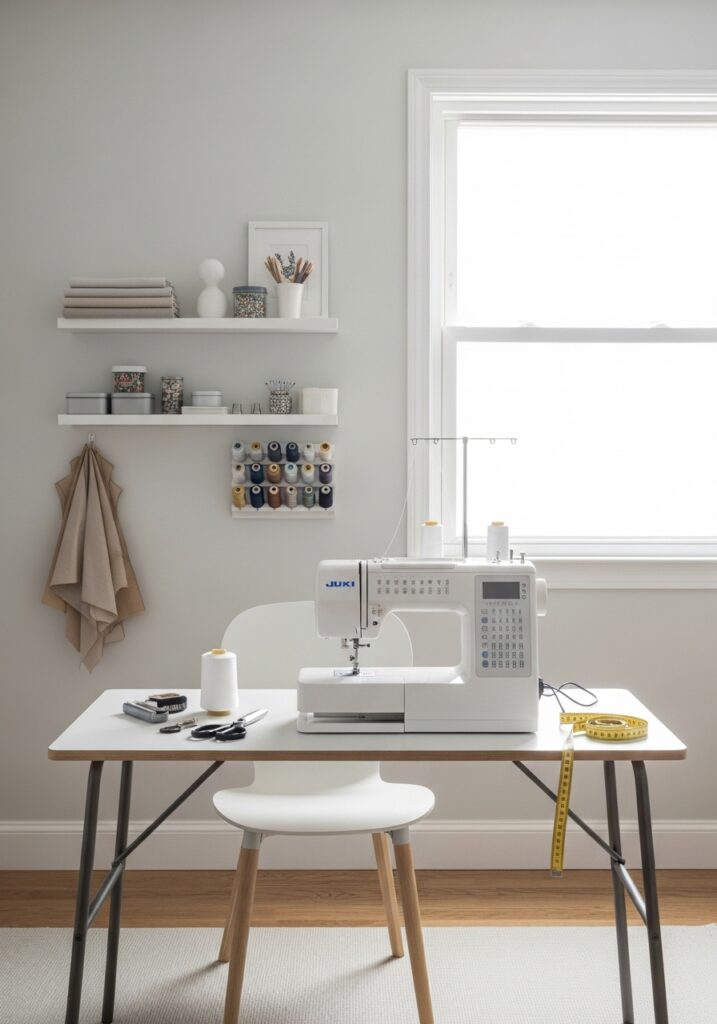
Minimal distractions improve focus. Organized spaces support concentration. Quiet zones help productivity. Clear desks improve clarity. Sewing requires attention. Focus enhances results. Calm environments matter.
32. Personalizing Your Sewing Room Setup
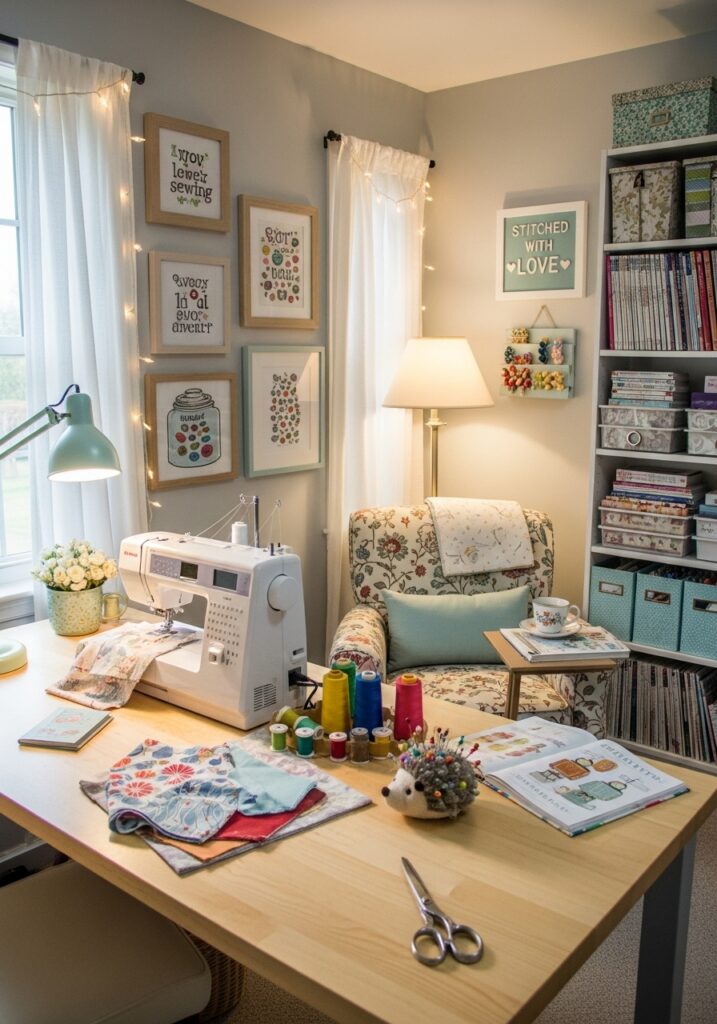
Personal touches create connection. Custom decor reflects identity. Personalization improves motivation. Spaces feel meaningful. Creativity thrives emotionally. Sewing becomes enjoyable. Ownership matters.
33. Creating a Professional Home Sewing Studio
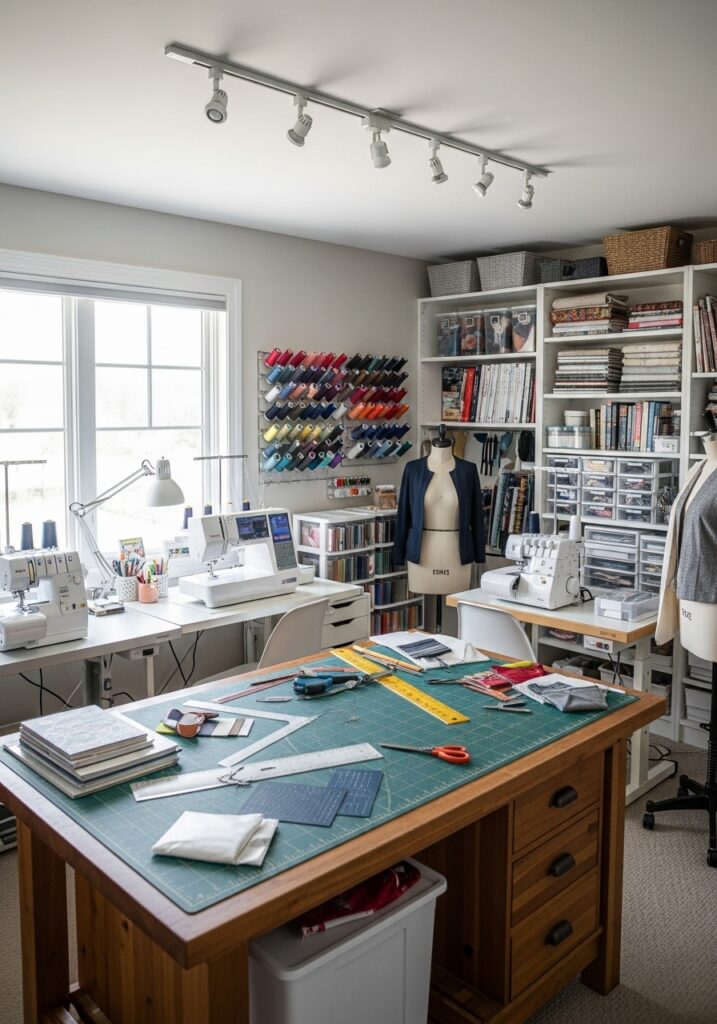
Professional setups support advanced work. Clean layouts impress clients. Efficient systems improve output. Professional studios support income work. Quality matters. Presentation builds confidence. Spaces feel purposeful.
34. Reviewing and Refining Your Setup
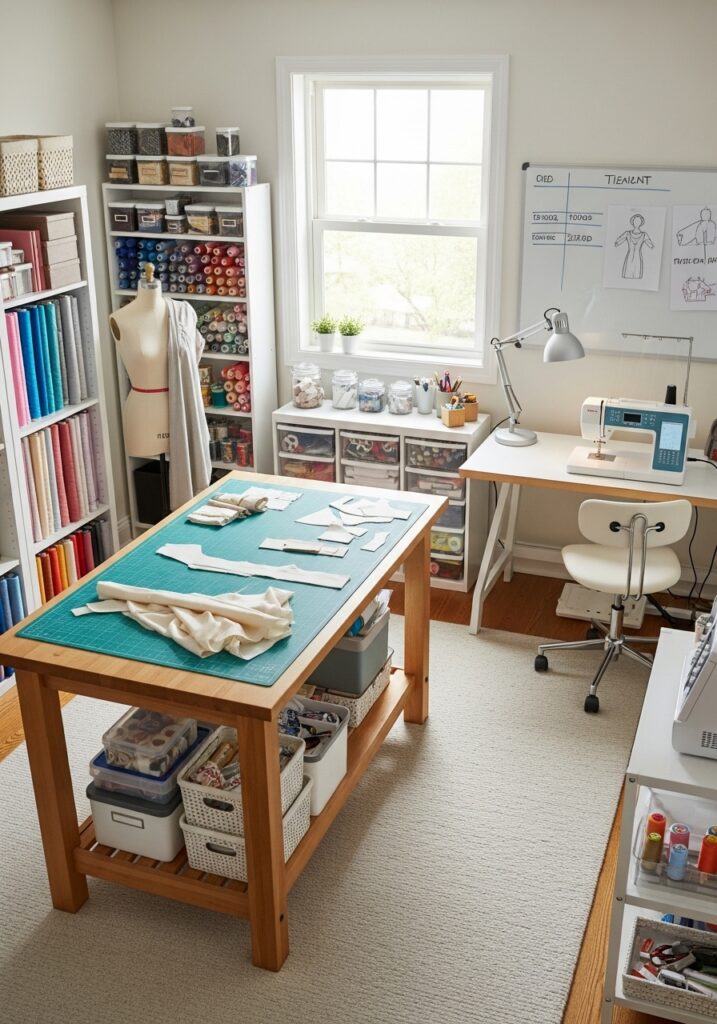
Periodic reviews improve performance. Identify pain points. Adjust furniture placement. Update storage. Continuous refinement supports growth. Setups evolve. Improvement never stops.
35. Building a Sewing Room That Grows With You

Growth requires flexibility. Skills improve over time. Storage adapts. Layout evolves. Long-term thinking matters. Sewing rooms support journeys. Design for the future.
36. Encouraging Consistency Through Setup
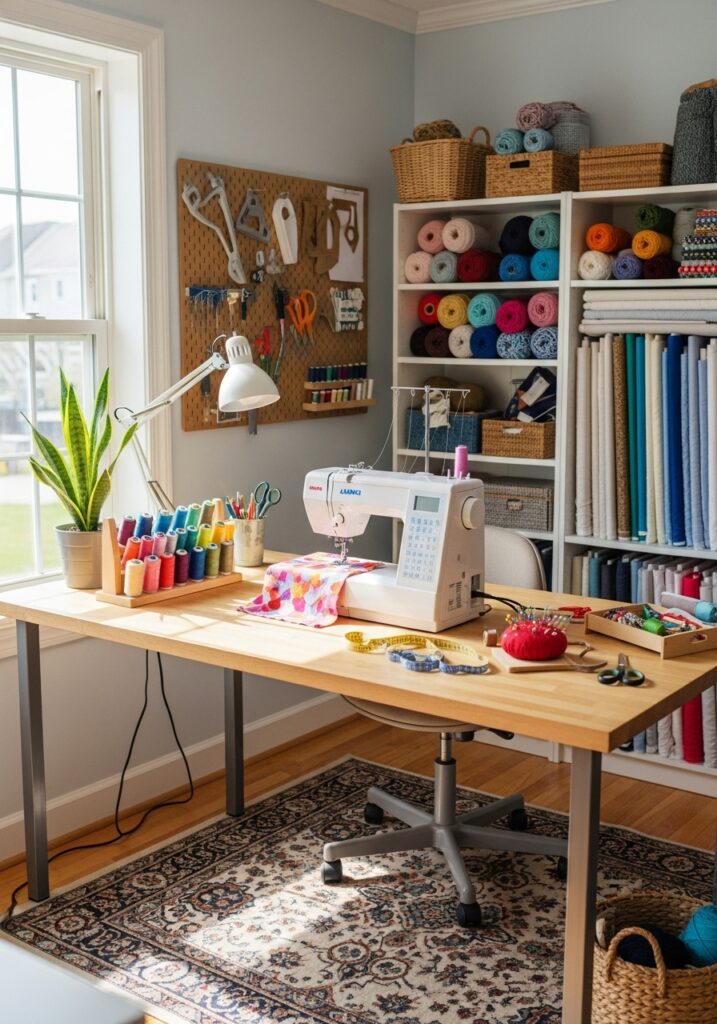
Ease encourages consistency. Accessible tools reduce resistance. Comfortable spaces invite daily use. Routine becomes enjoyable. Consistency builds skill. Setup influences habit. Design supports practice.
37. Supporting Creativity Through Order

Order supports creativity. Clutter distracts. Organized spaces calm the mind. Creativity flows freely. Clear layouts inspire focus. Structure enables imagination. Balance fuels innovation.
38. Setting Realistic Expectations for Setup
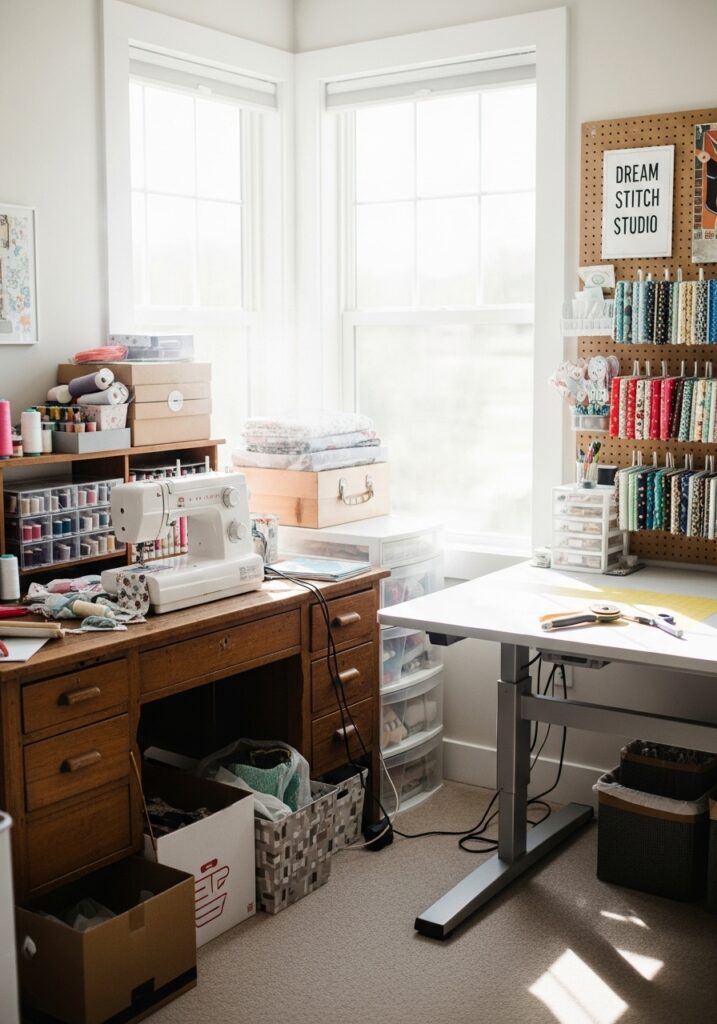
Perfect setups take time. Start simple. Improve gradually. Avoid overwhelm. Progress feels rewarding. Realistic planning prevents frustration. Growth happens step by step.
39. Enjoying the Sewing Process Through Better Setup
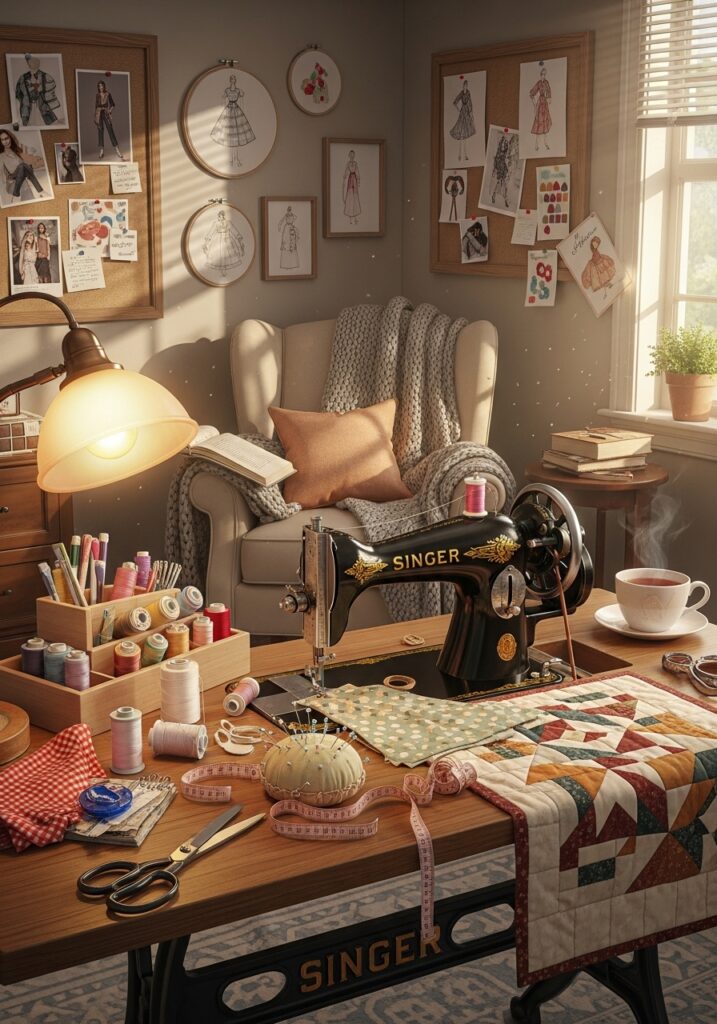
Comfort enhances enjoyment. Efficiency reduces stress. Organized spaces feel inviting. Sewing becomes relaxing. Joy supports creativity. Setup influences experience. Happiness matters.
40. Creating Your Ideal Sewing Room Vision
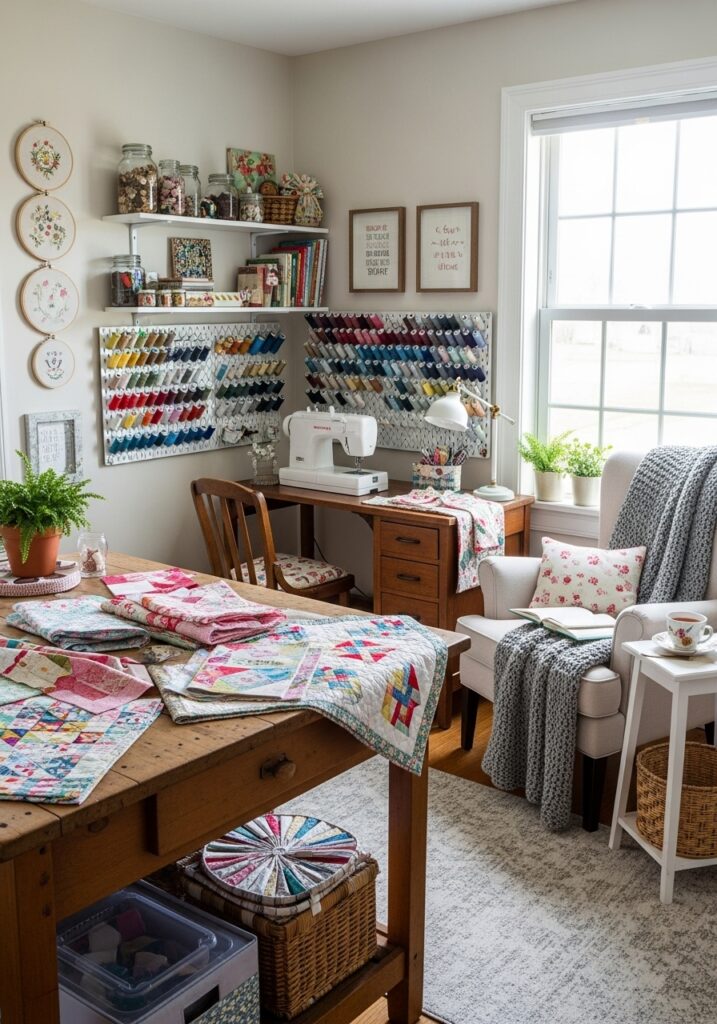
Your ideal sewing room reflects your workflow. Vision guides decisions. Personal goals shape design. Spaces feel intentional. Creativity thrives in alignment. Build thoughtfully. Make it yours.
Elevate Your Sewing Practice with a Well-Planned Sewing Room
These 40 steps show that setting up a sewing room is a thoughtful process that directly impacts creativity, comfort, and productivity especially for those who enjoy DIY home decor projects that blend function with personal expression. From layout planning and furniture selection to lighting, storage, and personalization, every decision shapes how you work. Whether you’re starting small or building a professional studio, intentional setup makes sewing more enjoyable and sustainable. Begin with essential elements, refine over time, and allow your space to grow with your skills. A well-designed sewing room supports not just projects, but your creative journey itself.

Hussam is a DIY home improvement specialist with 6+ years of hands-on experience. At HomeDecorEdge, he creates budget-friendly tutorials, furniture restoration guides, and creative upcycling projects for homeowners. Expertise: DIY Projects, Furniture Restoration, Budget Makeovers, Power Tools, Woodworking, Creative Upcycling