
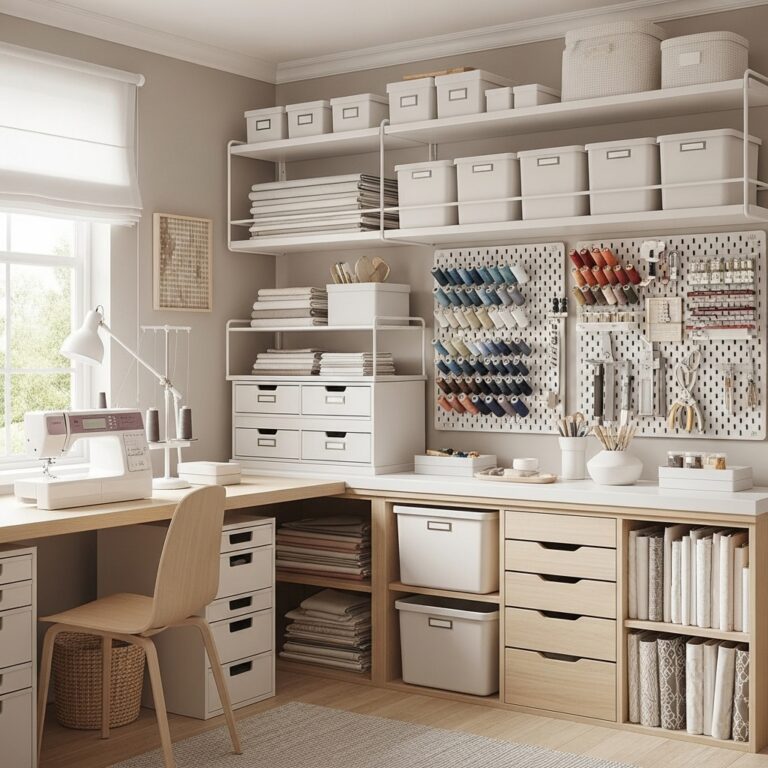

A well-organized sewing room is the backbone of creativity, efficiency, and long-term productivity. Whether you sew as a hobby, manage custom orders, or run a small sewing business, storage directly affects how smoothly you work. An intentional storage system reduces clutter, protects supplies, and keeps every tool within reach. From compact sewing corners to full studios, smart storage solutions make any space functional. Proper organization also supports focus, accuracy, and comfort during long sewing sessions. With the right systems in place, your sewing room becomes a stress-free creative zone rather than a chaotic workspace.
A thoughtfully organized sewing room improves workflow, protects materials, and enhances creativity especially for makers who enjoy DIY home decor projects that blend function with personal style. Explore the sewing room storage solutions below to design a space where every tool, fabric, and supply has a clear purpose and place.
1. Dedicated Sewing Storage Workstation
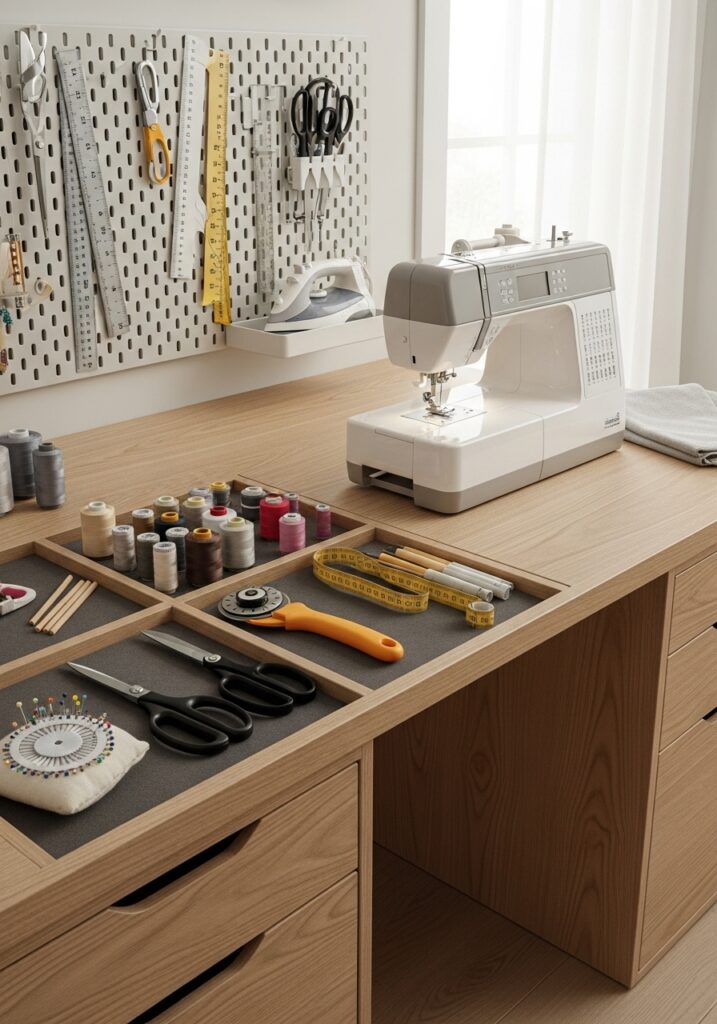
A dedicated sewing workstation anchors your entire storage system. It creates a defined space where tools, machines, and materials stay organized. Built-in drawers or side cabinets keep daily essentials within arm’s reach. A stable workstation prevents clutter from spreading across the room. Proper storage at the workstation also reduces setup and cleanup time. This setup supports consistent productivity. A well-planned workstation instantly makes sewing feel structured and professional.
2. Small Sewing Room Storage Layout
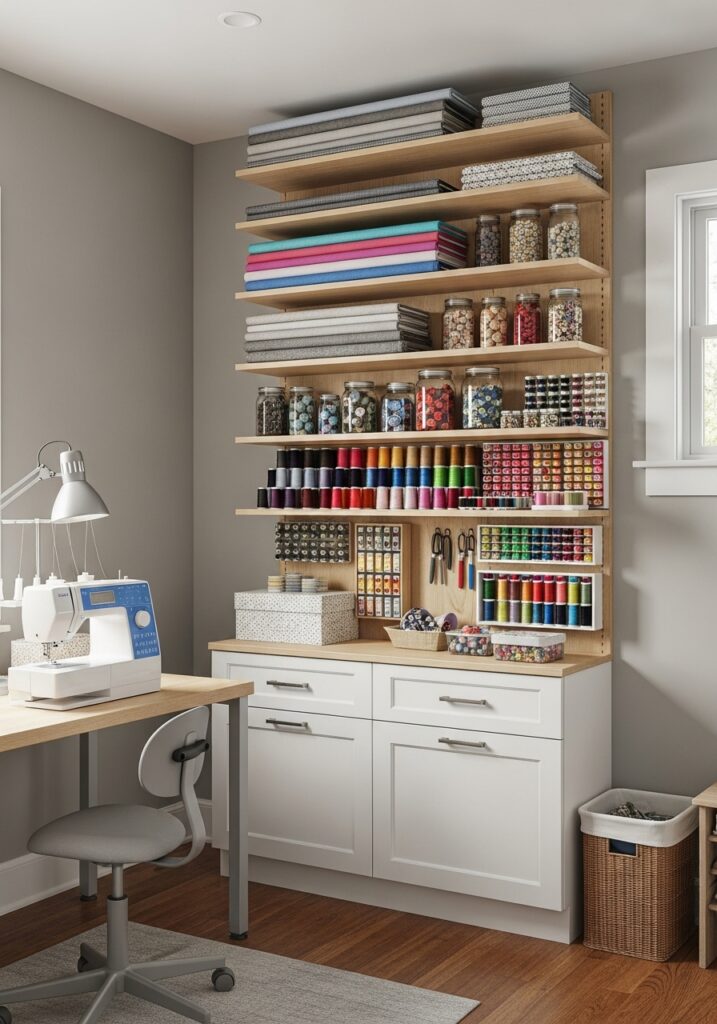
Small sewing rooms require intentional storage planning to stay functional. Vertical storage maximizes limited square footage without overcrowding the floor. Wall-mounted cabinets keep tools accessible while preserving walking space. Foldable or modular furniture adds flexibility in tight layouts. Light colors and open shelving help reduce visual clutter. Clear zoning prevents chaos in compact spaces. For compact solutions, inspiration from Sewing Room Storage Ideas for Small Spaces shows how even tiny rooms can stay highly efficient.
3. Fabric Storage by Type and Use
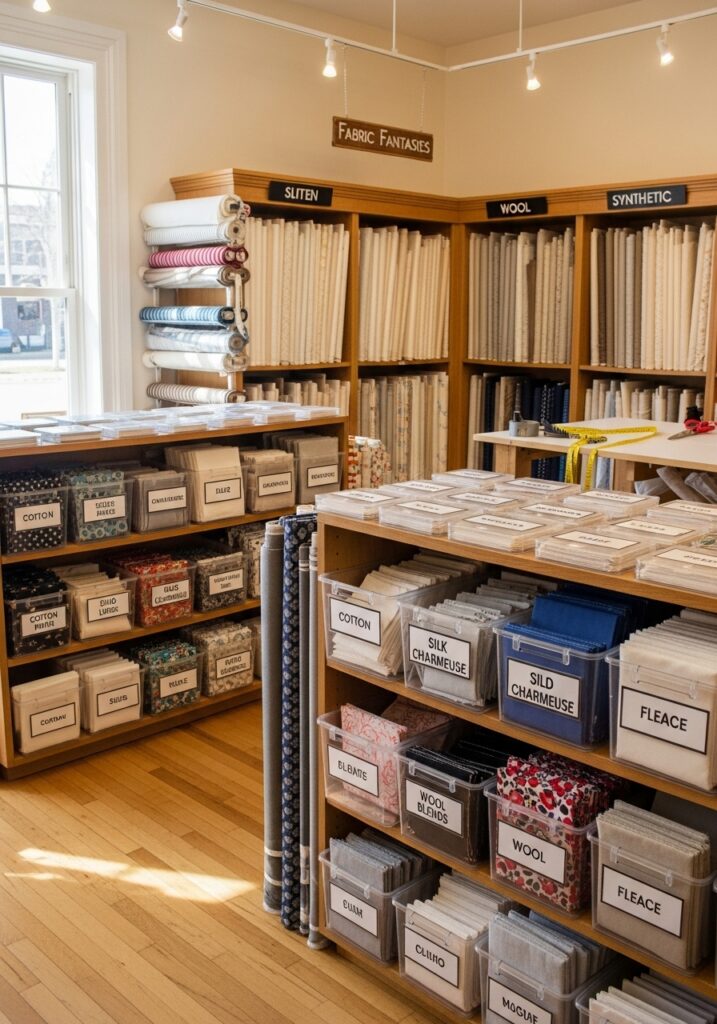
Organizing fabric by type improves both efficiency and fabric care. Separating cotton, linen, knits, and specialty fabrics prevents damage. Clear bins or labeled shelves reduce searching time. Proper folding keeps edges crisp and usable. Categorized storage also helps control fabric inventory. This system supports faster project planning. Fabric stays protected and easy to access.
4. Thread Storage Display System

Thread storage plays a critical role in sewing efficiency. Color-organized thread displays prevent tangling and breakage. Wall racks save drawer space while keeping spools visible. Seeing all colors reduces unnecessary duplicate purchases. Proper storage protects thread quality over time. Thread displays also add visual charm to the room. Organized thread keeps stitching uninterrupted.
5. Cutting Table with Integrated Storage
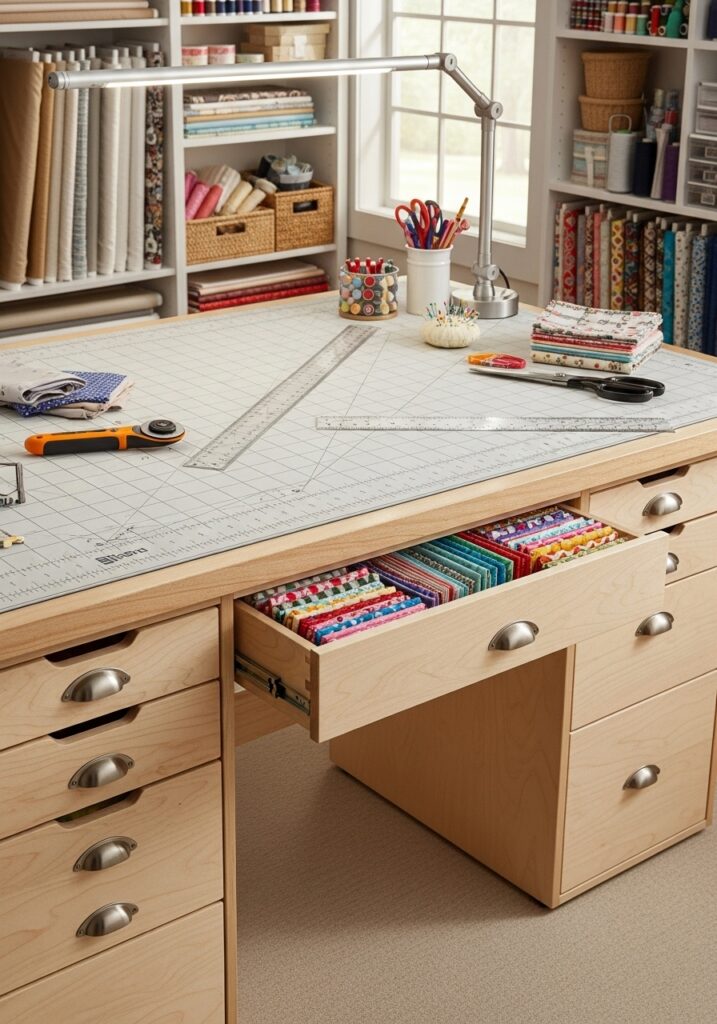
A cutting table with storage improves precision and organization simultaneously. Built-in drawers store rulers, rotary cutters, and measuring tools. A spacious surface allows fabric to lie flat without distortion. Proper table height reduces strain during cutting tasks. Storage underneath keeps essentials nearby. This setup prevents workspace overlap. Cutting becomes faster and more accurate.
6. Modular Sewing Storage Systems

Modular storage systems adapt as your sewing collection grows. Adjustable shelving allows flexibility for different supplies. Drawer inserts help separate small tools efficiently. Cabinets hide visual clutter while maintaining accessibility. Modular systems work well in both small and large sewing rooms. Their clean design supports long-term organization. Storage evolves without needing full redesigns.
7. Clear Storage Containers for Supplies

Clear containers make sewing storage intuitive and efficient. Supplies are instantly visible without opening boxes. Stackable designs save valuable shelf space. Containers protect materials from dust and moisture. Clear storage reduces accidental overbuying. Organization feels effortless and logical. Workflow becomes smoother with visual clarity.
8. Fabric Drawer Storage System
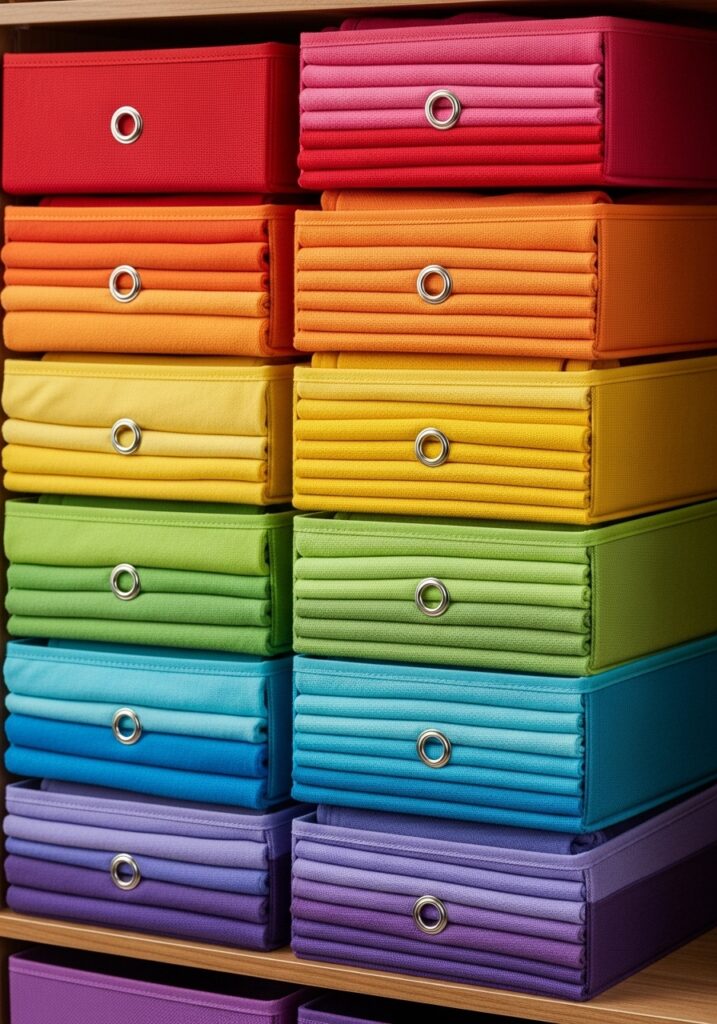
Fabric drawer systems protect textiles from light and dust. Pull-out drawers prevent unnecessary unfolding. Sorting by color or project type improves accessibility. Drawers maintain neat stacks over time. This system works especially well for large fabric collections. Organization remains consistent. Fabric longevity improves significantly.
9. Pegboard Sewing Tool Storage

Pegboards offer flexible and customizable sewing storage. Hooks adjust easily as tools change. Tools remain visible and within reach. Wall-mounted pegboards free up drawer space. This system reduces surface clutter instantly. Pegboards adapt to growing collections. Organization stays dynamic and efficient.
10. Zoned Sewing Storage Layout
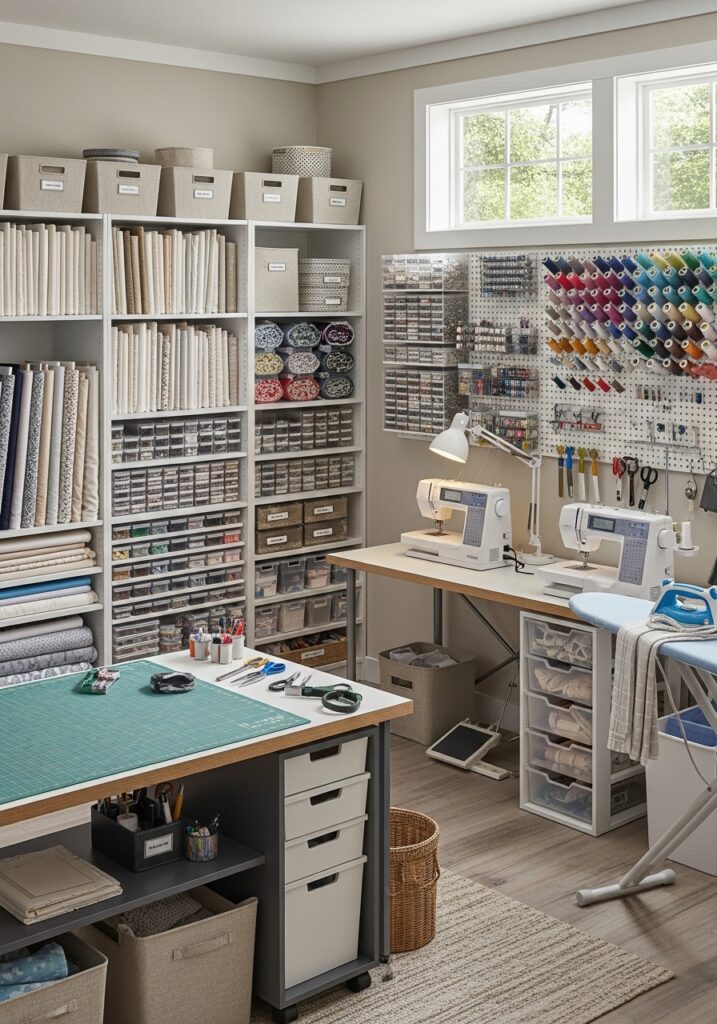
Zoning divides the sewing room into functional storage areas. Cutting, sewing, pressing, and storage zones remain separate. This prevents task overlap and confusion. Supplies stay where they are used most. Workflow becomes smoother and faster. Zoning is ideal for busy sewing rooms. It also pairs well with Best Sewing Room Storage Furniture for structured layouts.
11. Rolling Storage Carts

Rolling storage carts add mobility to sewing storage. Supplies move with your project effortlessly. Compact carts fit into tight spaces easily. Mobility reduces unnecessary walking. Storage adapts to changing workflows. Carts support multitasking efficiently. Convenience increases significantly.
12. Fully Labeled Storage System
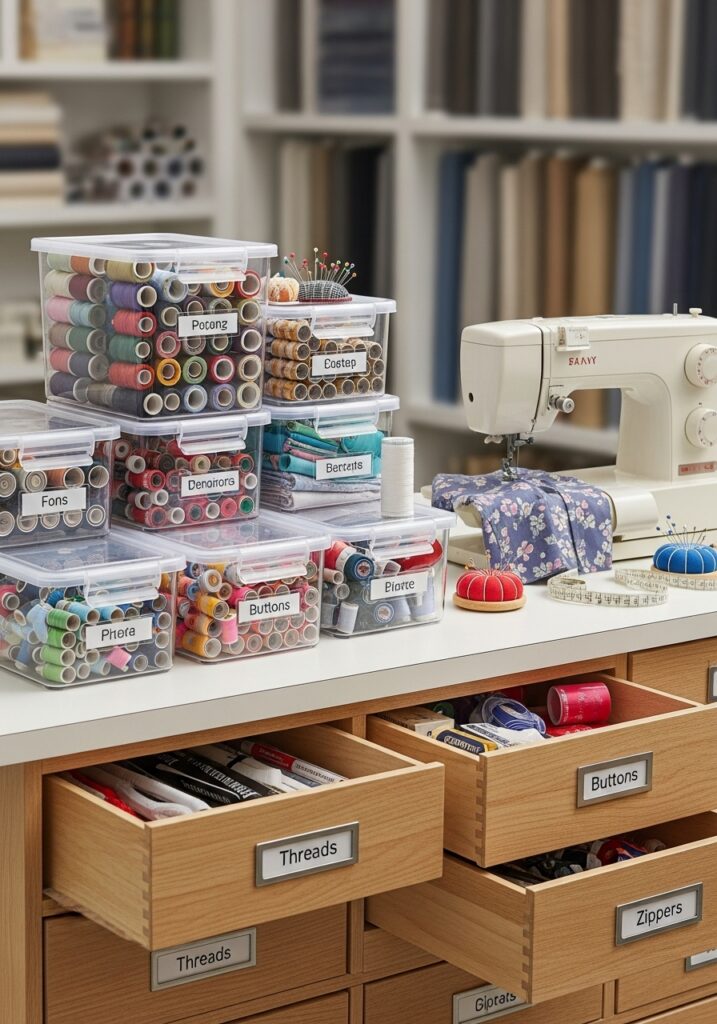
Labels eliminate confusion and wasted time. Supplies are easy to locate instantly. Clear labeling supports long-term organization consistency. This system works especially well for large collections. Everything has a designated place. Organization remains user-friendly. Productivity improves immediately.
13. Open Fabric Shelving Storage

Open shelving keeps fabric visible and inspiring. Sorting by color improves creativity. Vertical shelving saves valuable floor space. Restocking becomes quick and easy. This system prevents forgotten fabric purchases. Visual organization supports decision-making. Creative flow improves naturally.
14. Sewing Pattern Storage System
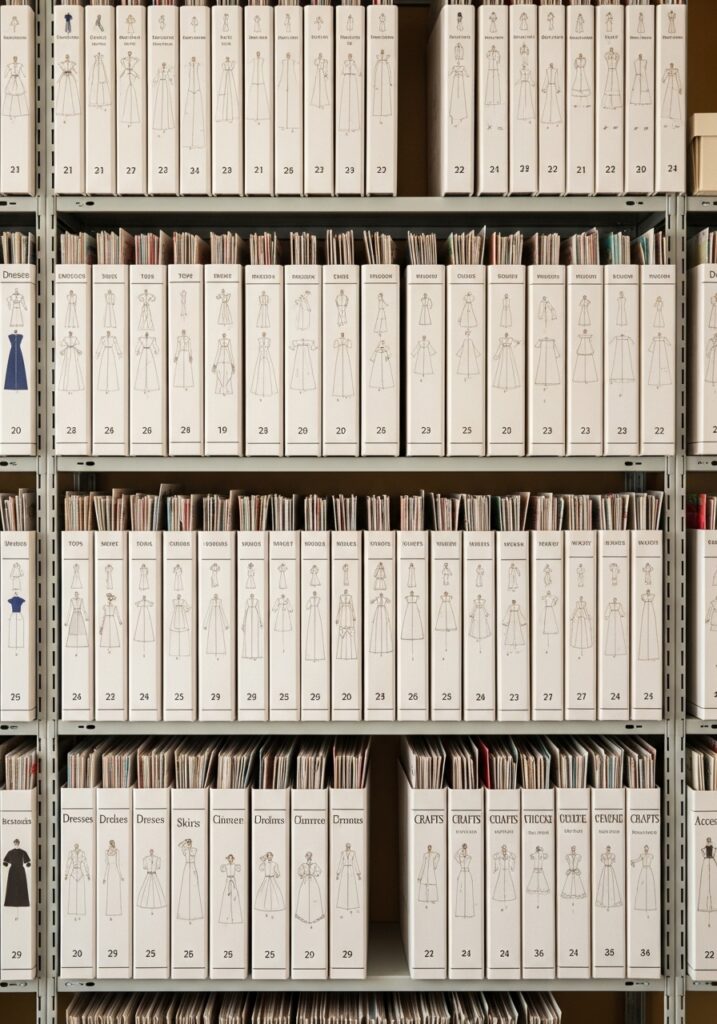
Proper pattern storage prevents folding damage. Hanging folders keep patterns flat and protected. Drawer systems improve access and organization. Labeling ensures patterns are never misplaced. Organized storage saves preparation time. Pattern lifespan is extended. Sewing preparation becomes smoother.
15. DIY Sewing Room Storage Projects
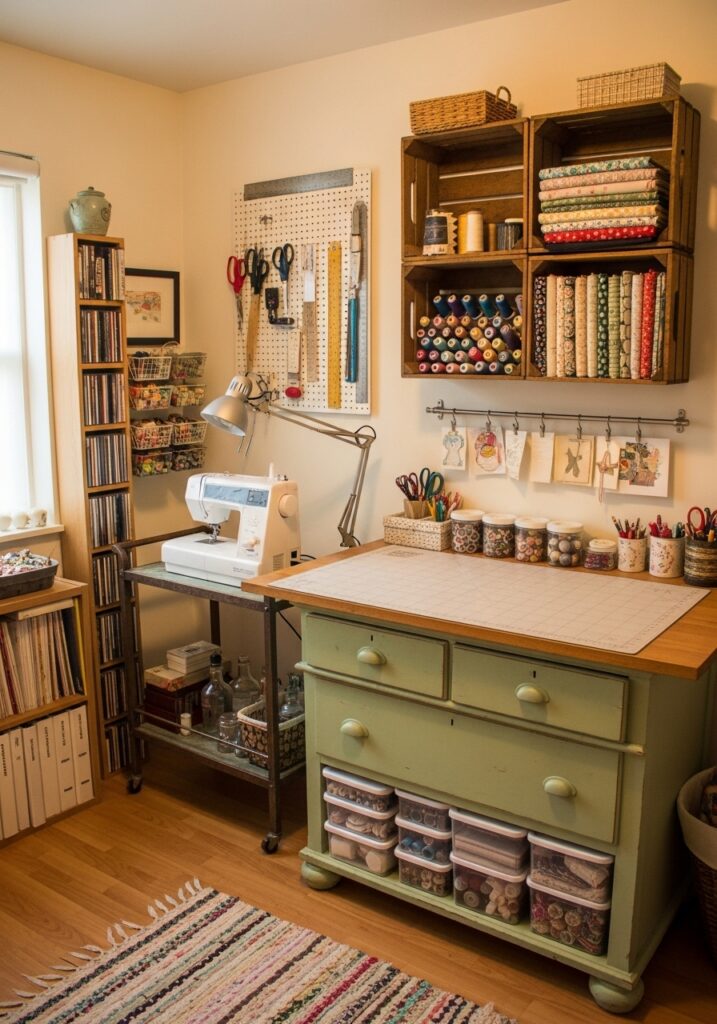
DIY storage solutions allow full customization, making it easier to design systems that fit personal workflows perfectly. Repurposed furniture helps reduce costs while adding character to the sewing room. Handmade storage systems feel rewarding and unique, reflecting creativity in both form and function. DIY projects also adapt easily over time as tools and supplies change. This approach allows creativity to meet practicality without sacrificing organization. For budget-friendly and flexible ideas, DIY Sewing Room Storage Projects offers inspiration on building custom storage that grows with your needs.
16. Wall-Mounted Storage Cabinets
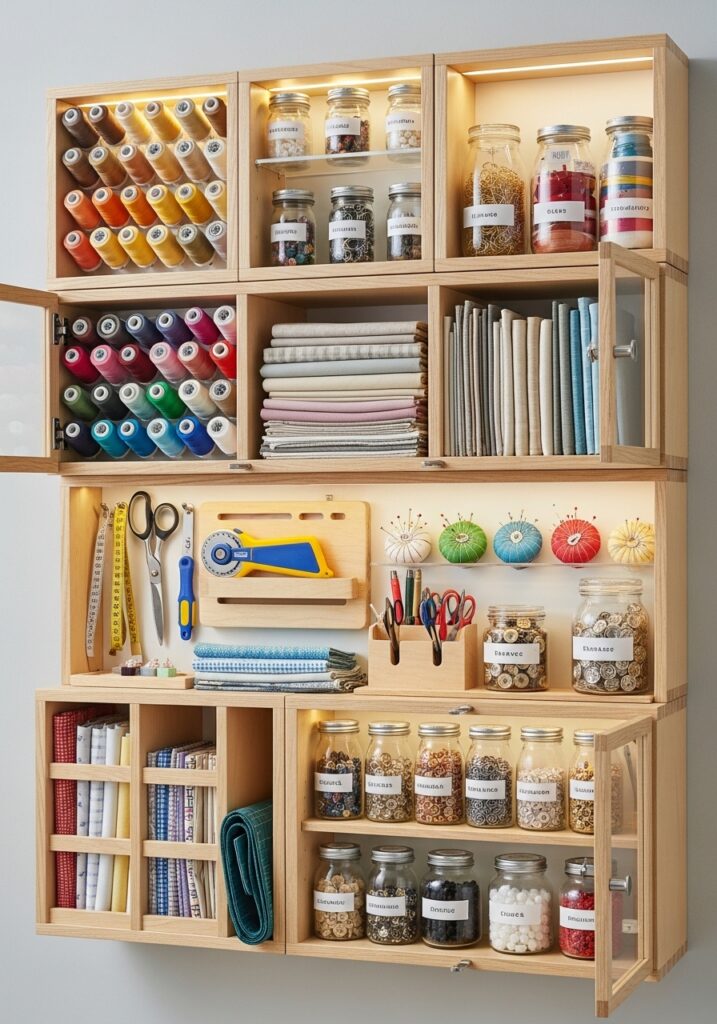
Wall-mounted cabinets maximize vertical storage efficiently. Floor space stays open and uncluttered. Cabinets store fabric, tools, and supplies securely. Adjustable shelves adapt as needs change. Wall storage works well in narrow rooms. Organization feels intentional. Aesthetic balance improves.
17. Vertical Fabric Storage System

Vertical fabric storage improves access and visibility. Upright stacking prevents deep piles from collapsing. Fabric remains wrinkle-free longer. This system works well in cabinets or shelves. Vertical storage maximizes limited space. Organization stays long-term. It aligns well with Creative Sewing Room Storage Solutions for smart fabric handling.
18. Drawer Dividers for Sewing Tools
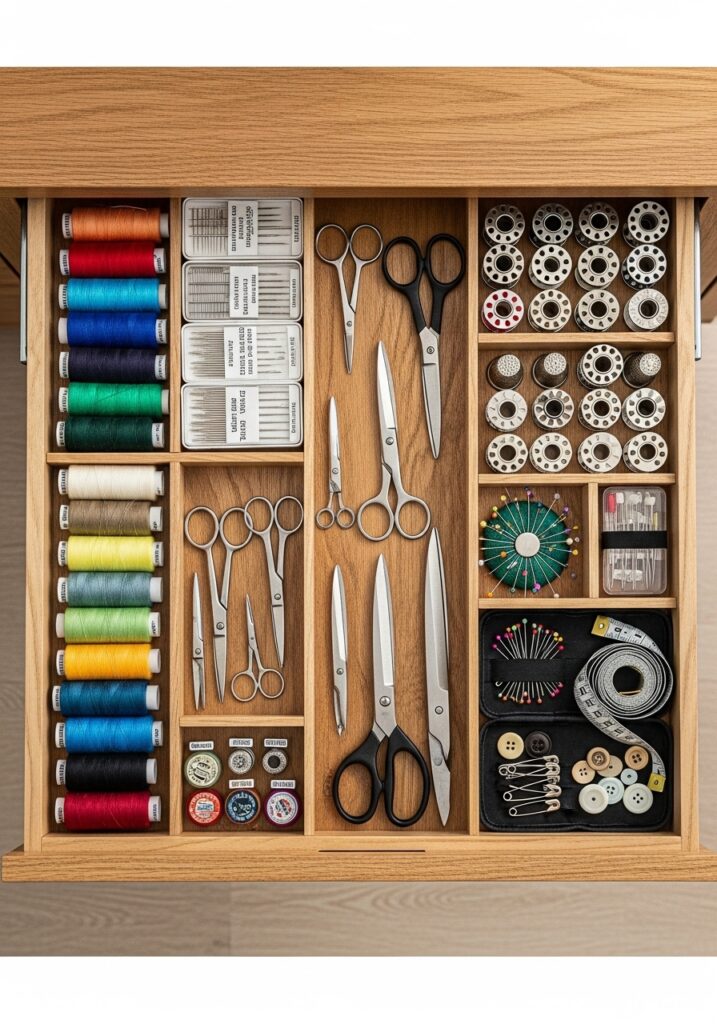
Drawer dividers transform cluttered drawers into efficient storage. Small tools stay separated and visible. Dividers prevent shifting during use. Adjustable inserts add flexibility. Organized drawers reduce frustration. Workflow becomes faster. Daily sewing feels smoother.
19. Floating Desk Sewing Storage Setup

Floating desks save floor space while providing storage. Wall-mounted designs feel light and modern. Storage below remains flexible and open. This setup works well for compact sewing rooms. Visual clutter is reduced significantly. Organization stays minimalist. Space efficiency improves.
20. Built-In Sewing Room Storage Cabinets

Built-in cabinets offer long-term storage solutions. Supplies stay dust-free and hidden. Custom designs maximize every inch. This system supports large sewing collections. Built-ins create a professional appearance. Visual clutter disappears. Organization feels permanent and polished.
21. Overhead Sewing Storage Cabinets
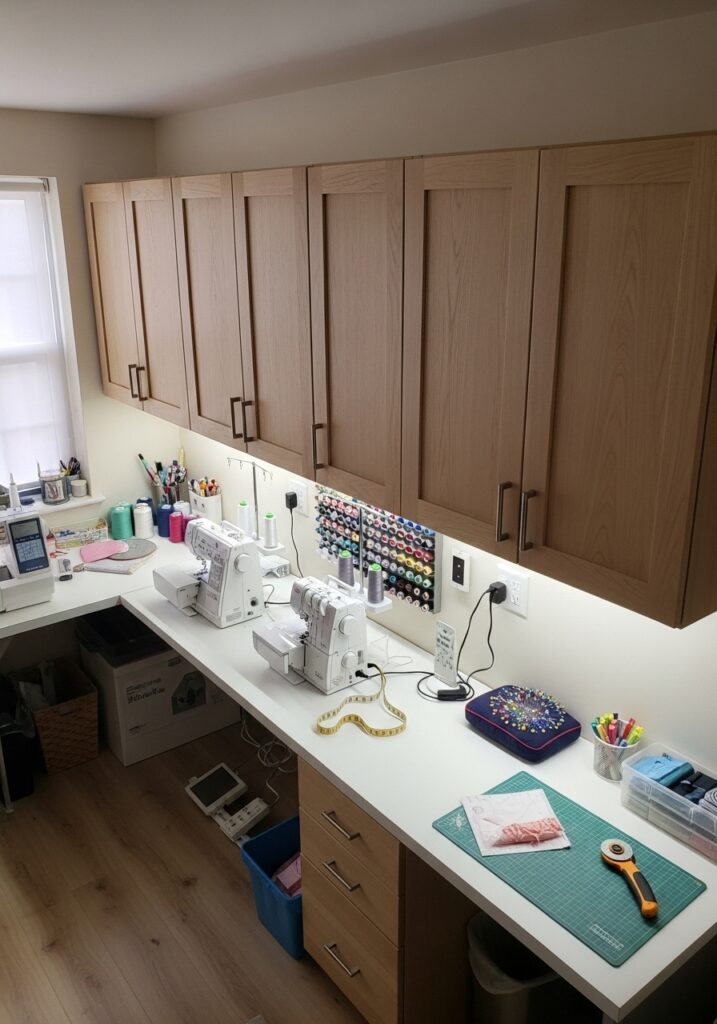
Overhead cabinets utilize unused vertical space. Rarely used items stay safely stored. Lower storage remains free for daily tools. Cabinets maintain a clean look. Overhead storage suits small rooms well. Organization feels complete. Space optimization improves greatly.
22. Open Shelf Fabric Bin Storage
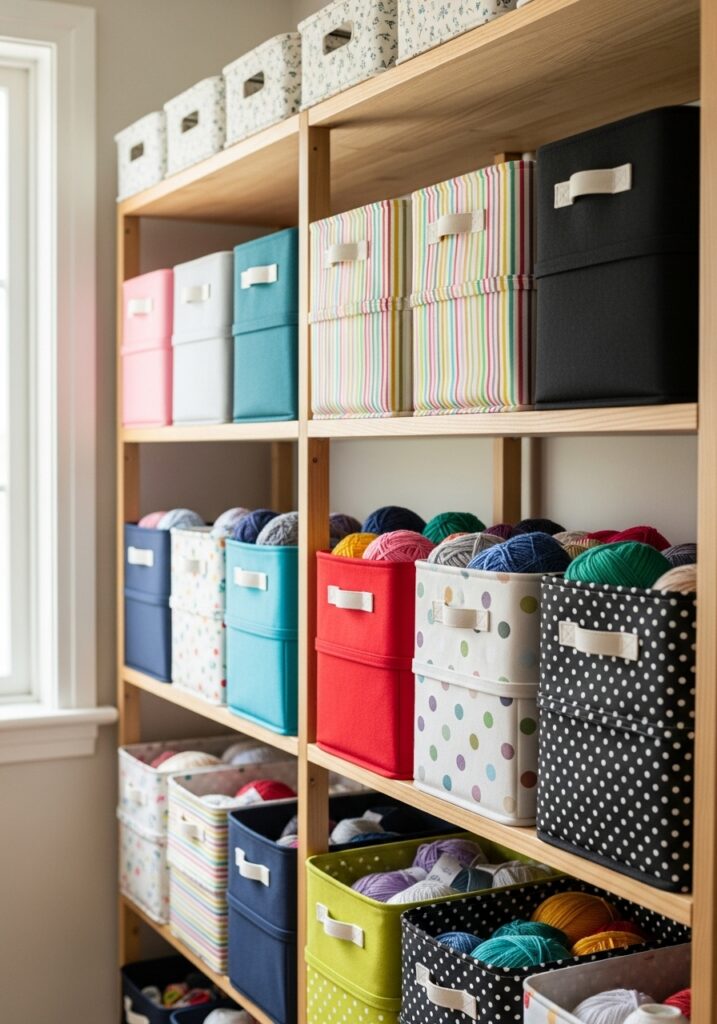
Fabric bins protect materials while staying accessible. Open shelving keeps everything visible. Neutral bins maintain visual calm. Storage expands easily over time. Bins help categorize fabric types. Organization remains flexible. Supplies stay neat and accessible.
23. Advanced Pegboard Storage Accessories

Pegboard accessories increase storage customization. Baskets hold larger tools and notions. Hooks adjust as supplies change. Wall storage saves drawer space. Tools remain visible and reachable. This system supports growth. Organization stays adaptable and efficient.
24. Sewing Room Lighting Storage Integration

Lighting organization supports sewing accuracy. Task lights focus on detailed work areas. Adjustable fixtures reduce eye strain. Lighting placement improves safety. Well-lit storage areas increase visibility. Comfort improves significantly. Sewing becomes less tiring.
25. Ergonomic Sewing Chair and Seating Storage
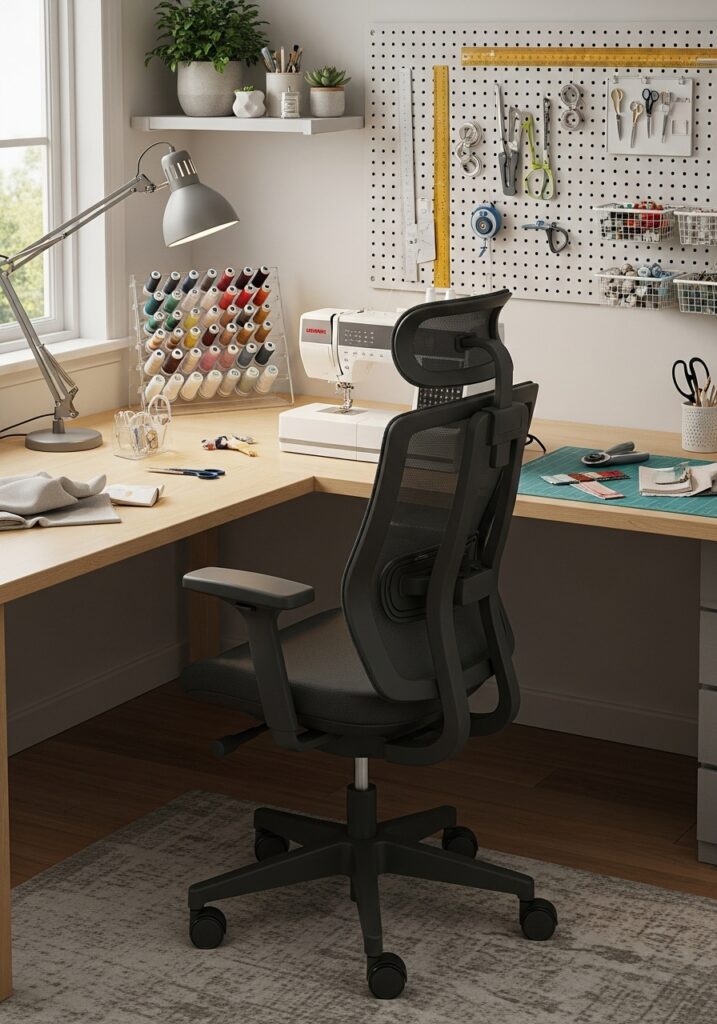
A dedicated seating zone supports long sewing sessions. Ergonomic chairs improve posture. Adjustable seating reduces fatigue. Nearby storage keeps tools accessible while seated. Comfort increases productivity. Health benefits are significant. Seating organization matters greatly.
26. Sewing Room Island Storage Table

A sewing room island table adds both storage and workspace in one central unit. It allows you to move freely around your projects without crowding the room. Built-in drawers provide organized storage for tools, rulers, and notions. The large surface supports cutting, folding, and assembling tasks comfortably. Island storage improves workflow by reducing back-and-forth movement. This setup is especially helpful for large or multi-piece projects. Centralized storage keeps everything balanced and accessible.
27. Clear Jar Storage for Sewing Notions
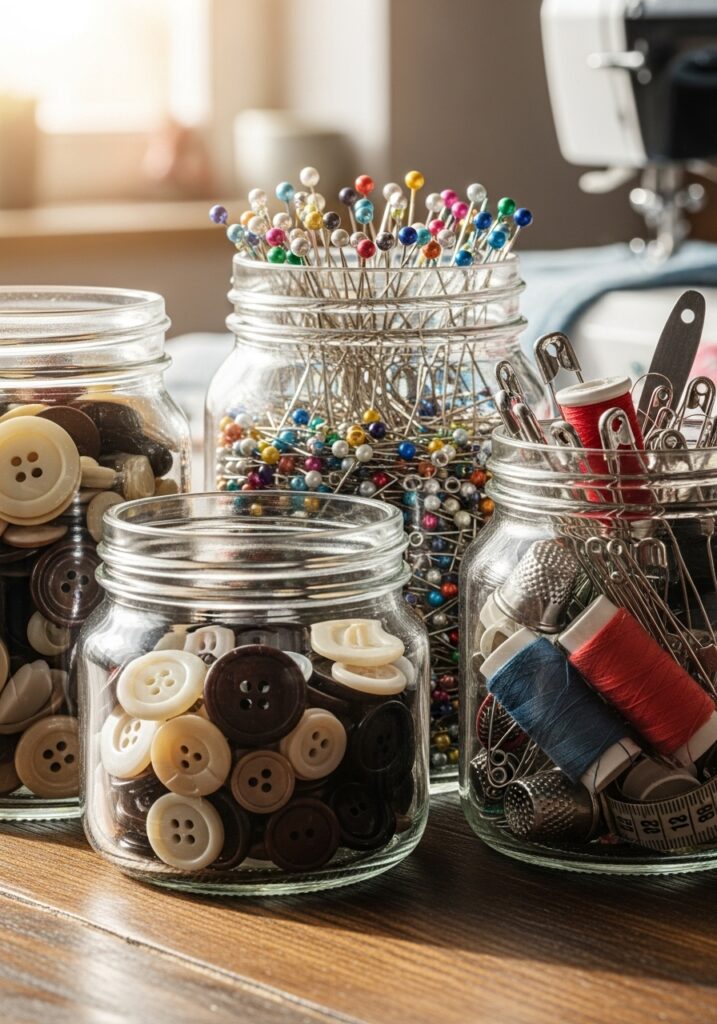
Clear jar storage is ideal for buttons, pins, clips, and small notions. Transparent containers make contents instantly visible, saving time during projects. Jars prevent small items from getting lost or mixed together. This solution is budget-friendly and easy to expand. Tabletop or shelf placement keeps supplies within reach. Clear jars also add decorative charm to the sewing room. Small tools remain controlled and organized.
28. Closet-to-Sewing Room Storage Conversion
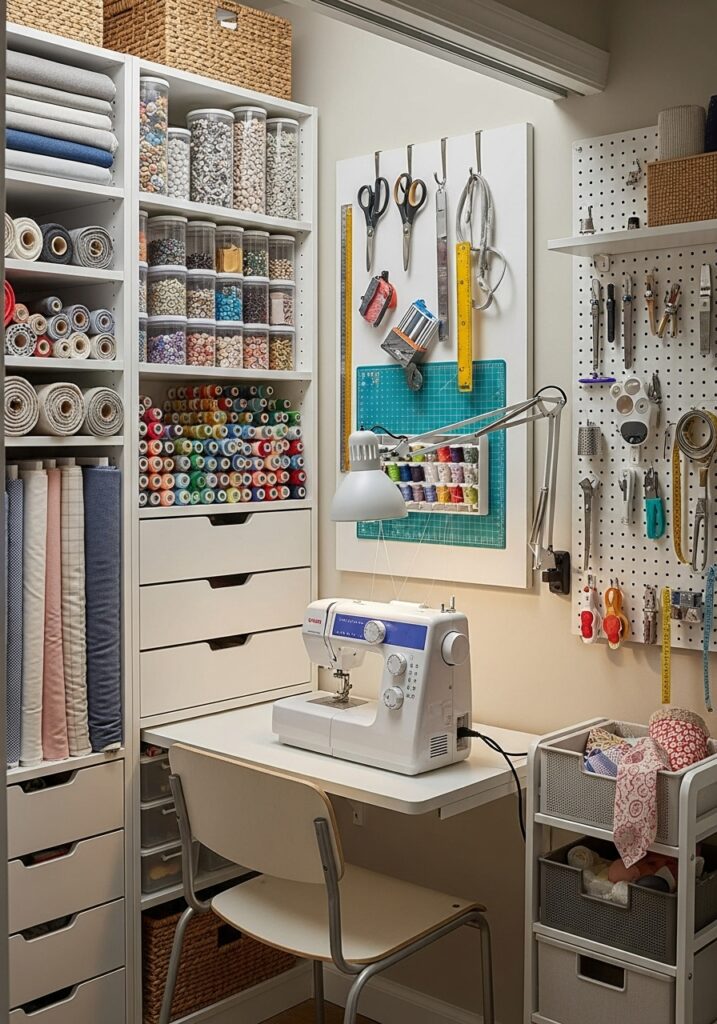
Converting a closet into a sewing storage area maximizes unused space. Vertical shelving dramatically increases storage capacity. Compact layouts keep everything within arm’s reach. Proper lighting transforms the space into a functional mini studio. This solution works well for apartments and small homes. Storage stays hidden when doors are closed. Closet conversions provide high efficiency in minimal space.
29. Fold-Down Sewing Table with Storage
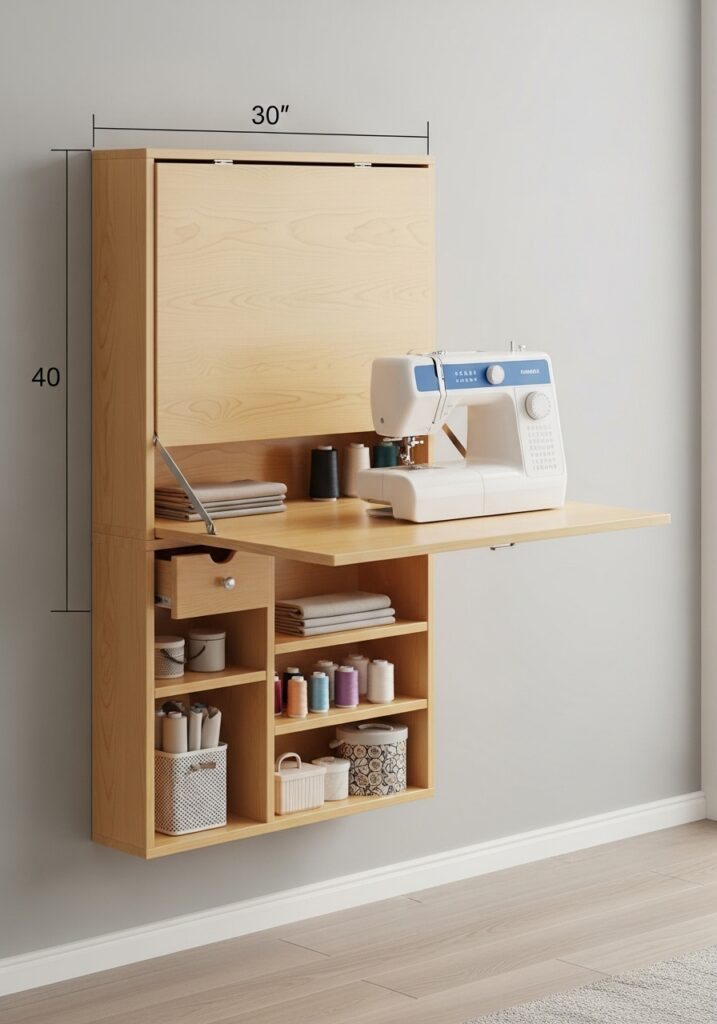
Fold-down sewing tables offer flexible storage solutions for limited spaces. When folded, they free up valuable floor space. Wall-mounted designs keep the room open and uncluttered. Built-in shelves store tools and supplies efficiently. This setup supports occasional or part-time sewing. Apartments benefit greatly from this approach. Storage remains minimal yet functional.
30. Labelled Fabric Drawer Storage System

Labelled fabric drawers improve long-term organization consistency. Sorting by color or project type saves preparation time. Labels eliminate guesswork during busy sewing sessions. Drawer systems protect fabric from dust and light exposure. Large collections stay manageable with this system. Visual clarity improves significantly. Workflow becomes faster and stress-free.
31. Dedicated Pressing Station Storage
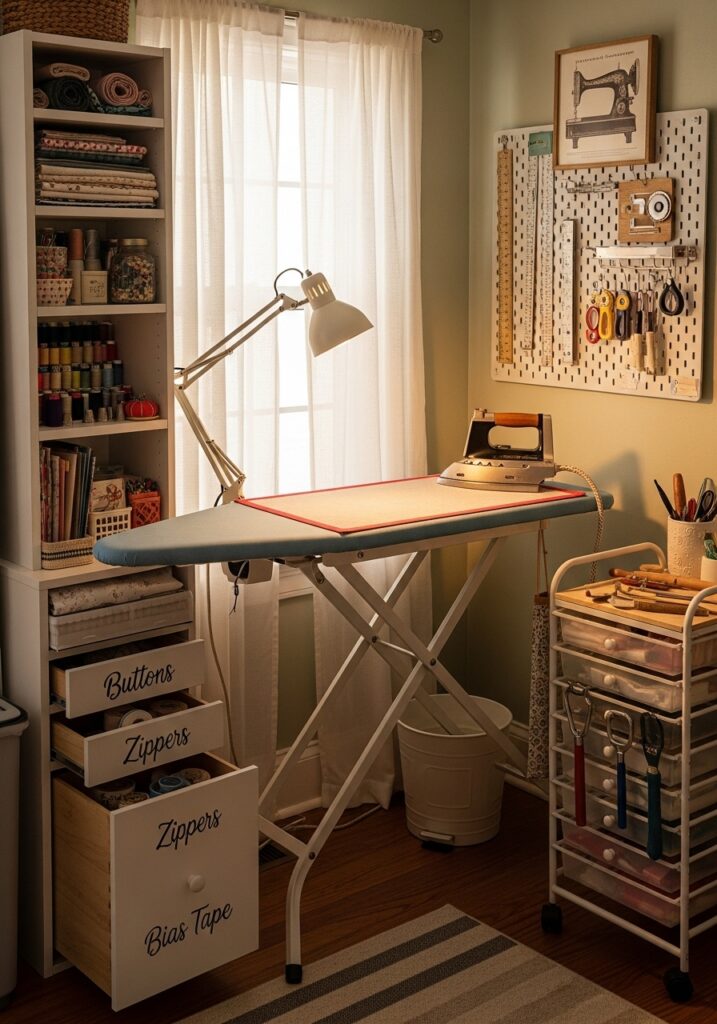
A designated pressing area improves overall sewing workflow. Storing irons and pressing tools separately prevents clutter. Wall-mounted ironing boards save floor space. Heat-resistant storage keeps tools safe. This zone streamlines garment finishing. Workflow interruptions are reduced significantly. Organization improves both safety and efficiency.
32. Sewing Pattern Filing Cabinet Storage
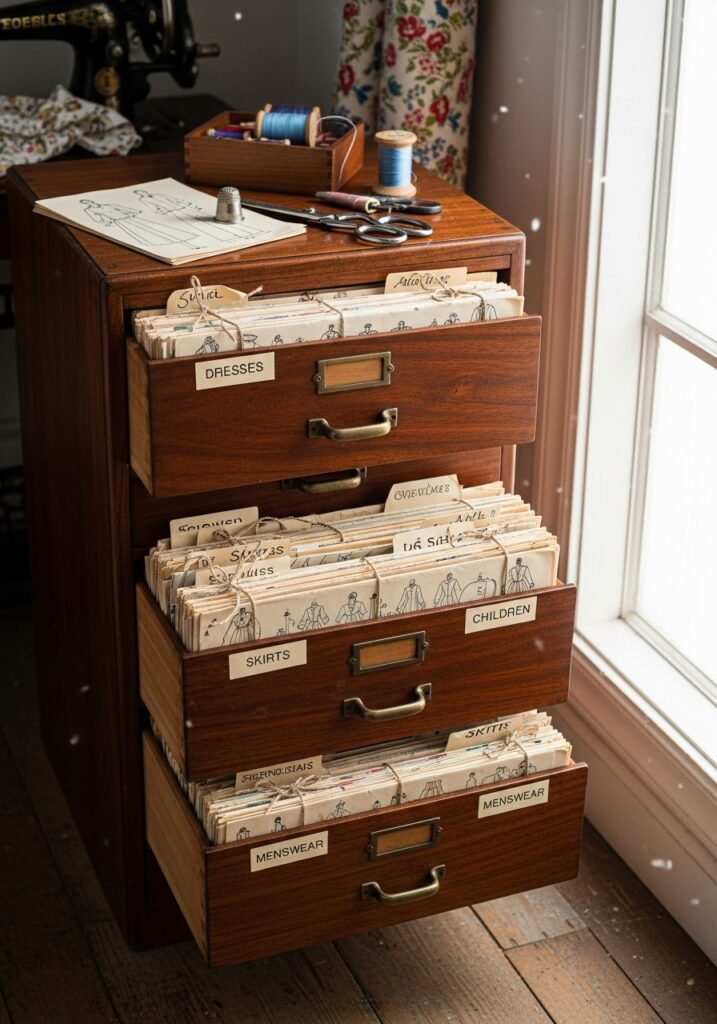
Filing cabinets protect sewing patterns from folding damage. Flat storage preserves pattern accuracy. Labelled files improve retrieval speed. Cabinets keep patterns dust-free and secure. Vertical filing saves space efficiently. Sewing preparation becomes more organized. Pattern lifespan is significantly extended.
33. Sewing Room Cable and Cord Storage
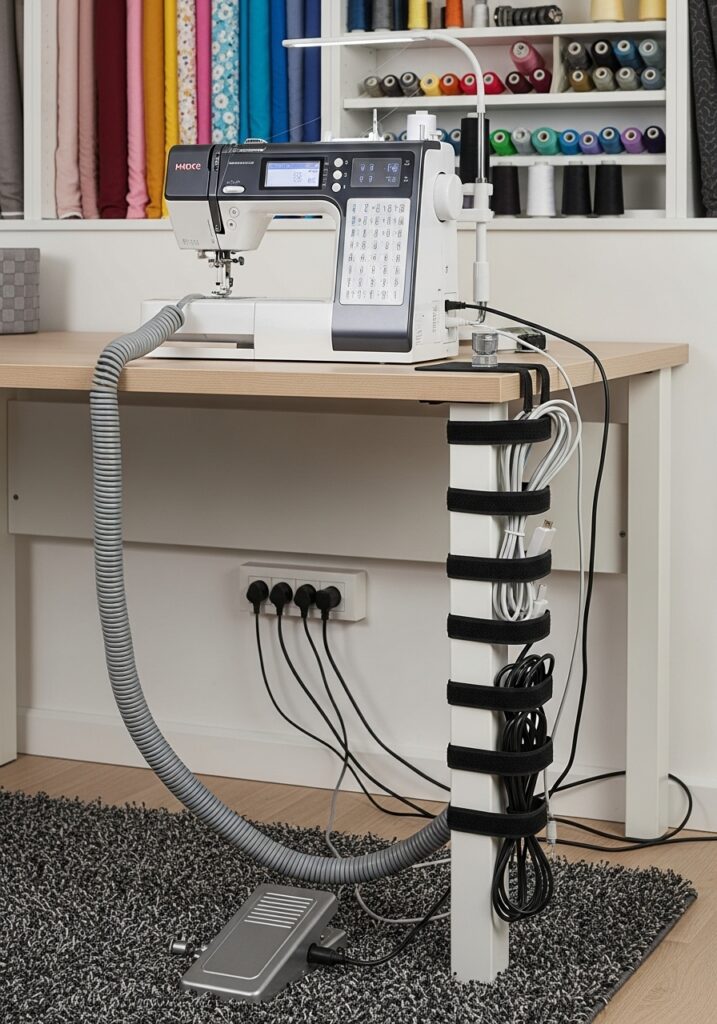
Proper cable storage improves safety and visual order. Hidden cords reduce tripping hazards. Machines remain easy to access and move. Cable clips keep wires controlled. Visual clutter disappears from work surfaces. Organization feels clean and professional. Sewing becomes safer and more comfortable.
34. Rolling Drawer Storage Units

Rolling drawer units offer flexible and mobile storage. Drawers move easily between work zones. Compact designs fit under tables. Tools stay organized while remaining accessible. Storage adapts to changing project needs. Efficiency improves during multitasking. Organization stays dynamic and convenient.
35. Sewing Room Inspiration Board Storage
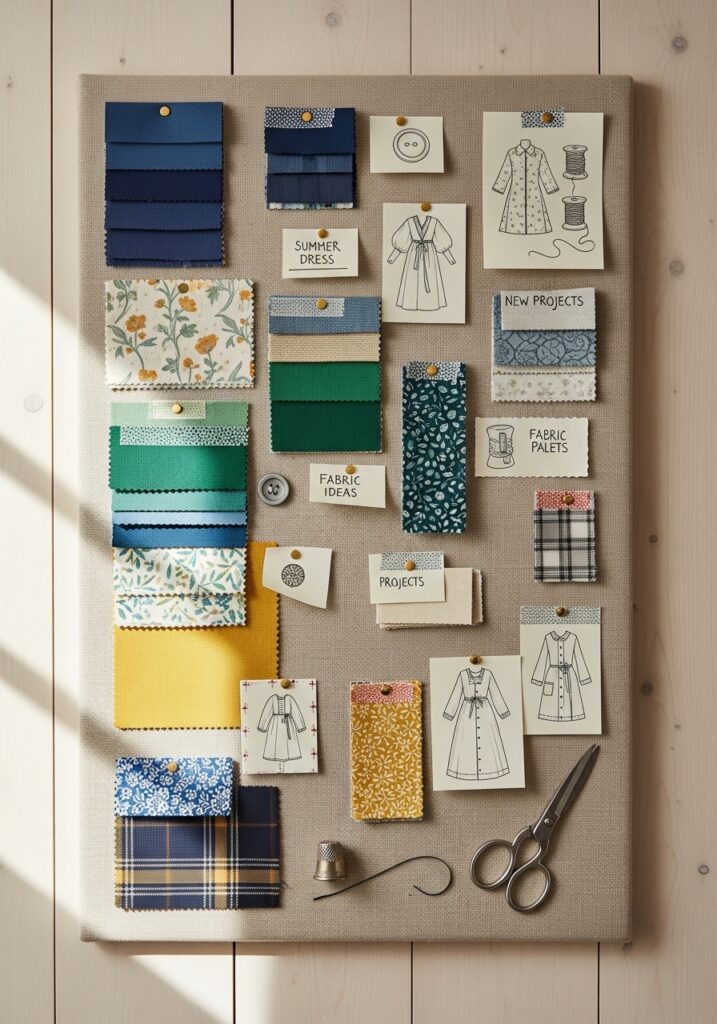
Inspiration boards store ideas visually and functionally. Fabric swatches stay visible for planning. Notes and sketches remain accessible. Boards personalize the sewing space creatively. Visual planning improves project outcomes. Storage doubles as decor. Motivation stays consistently high.
36. Floating Shelves for Sewing Supplies

Floating shelves provide lightweight storage solutions. They reduce visual heaviness in the room. Supplies remain visible and easy to access. Shelves support both storage and decor. Wall space is used efficiently. Organization stays airy and modern. Rooms feel more open and balanced.
37. Neutral-Tone Sewing Storage System

Neutral colors reduce visual clutter and stress. Calm tones improve focus during detailed work. Supplies stand out more clearly. This palette supports long sewing sessions comfortably. Organization feels intentional and timeless. Decor remains versatile long-term. Productivity improves naturally.
38. Upholstered Pin Board Storage
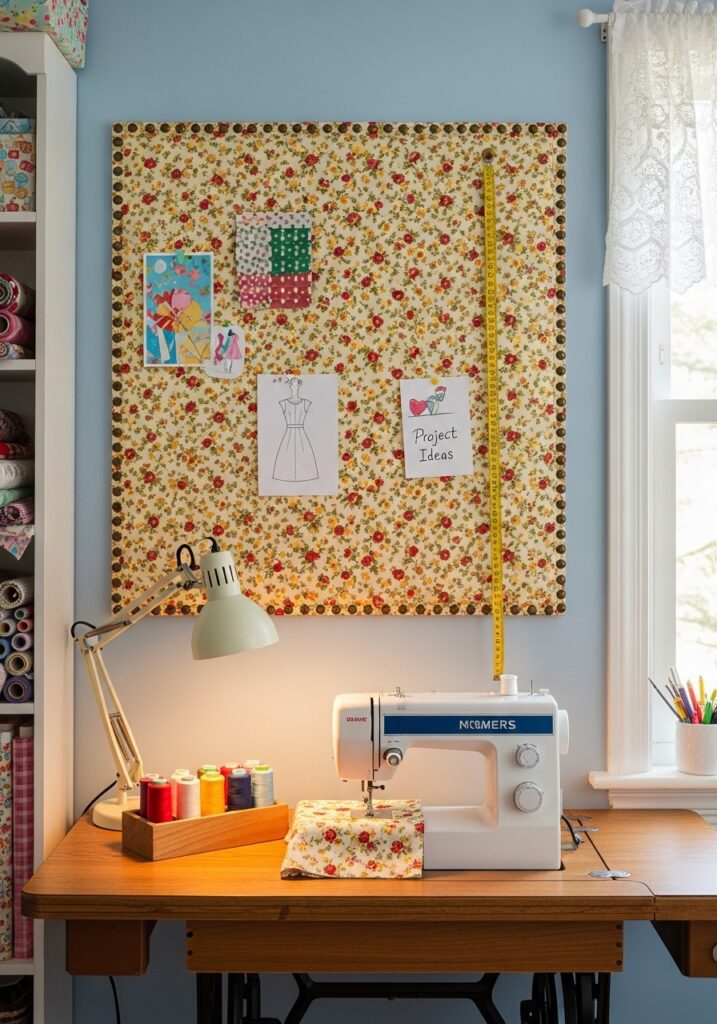
Upholstered pin boards protect patterns and notes. Soft surfaces prevent paper damage. Fabric boards add warmth to the room. Planning becomes visually accessible. Storage doubles as wall decor. Organization improves without clutter. Creativity flows more freely.
39. Sewing Room Mirror Integration
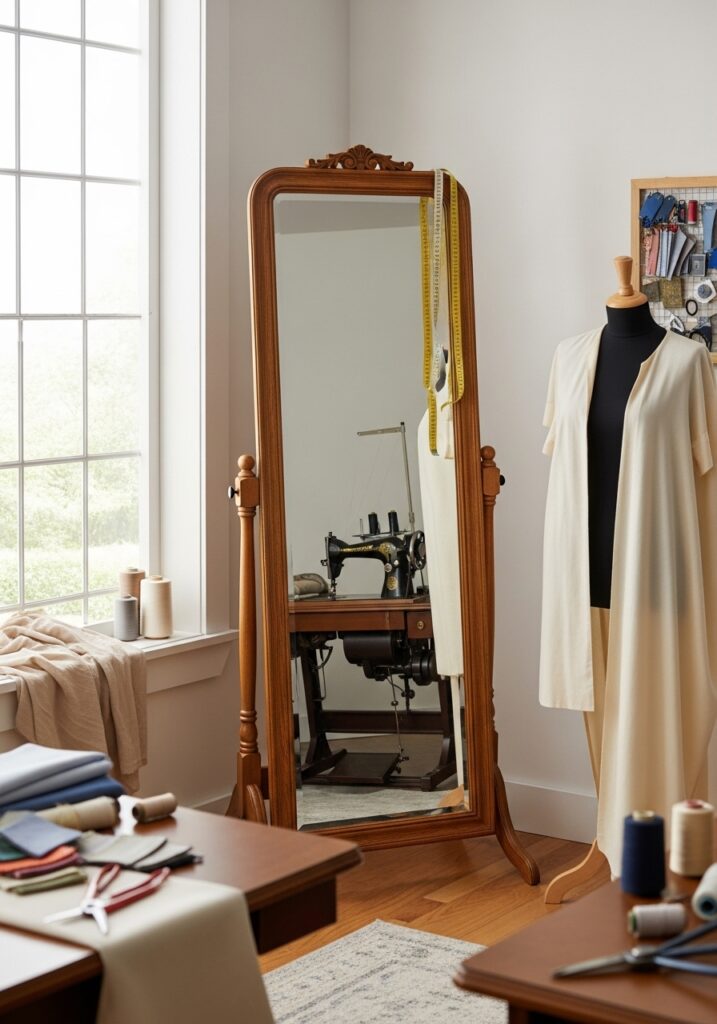
Mirrors support garment fitting and adjustments. Light reflection brightens the room. Spaces feel larger and more open. Mirrors assist in final project checks. Placement improves sewing accuracy. Practicality increases significantly. Storage layouts benefit from visual balance.
40. Sound-Reducing Storage Panels
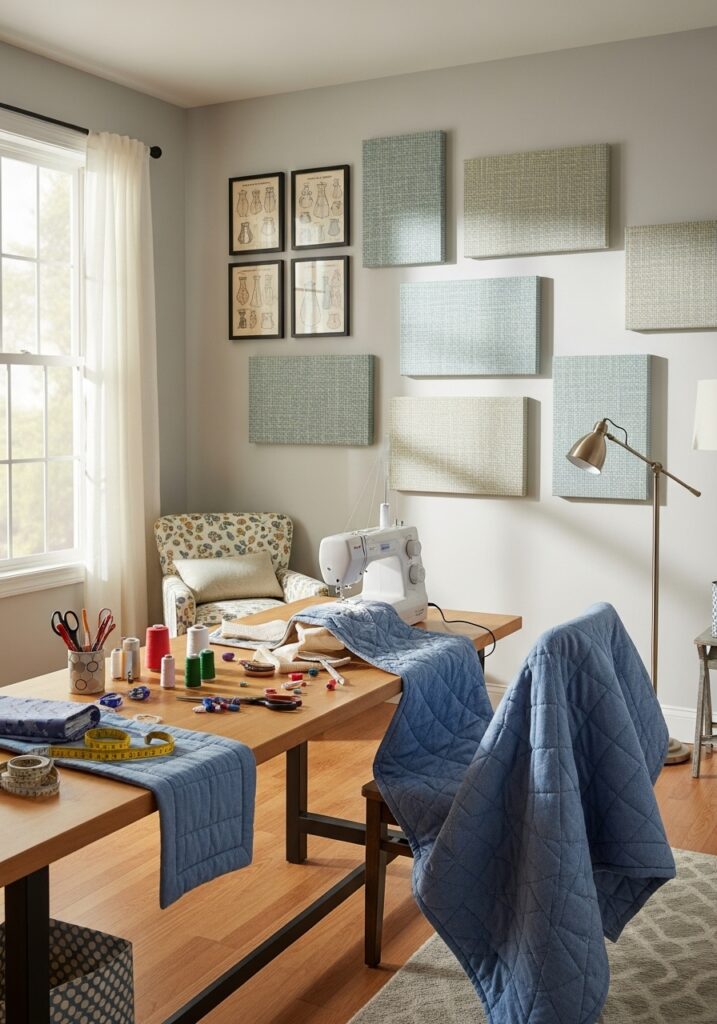
Sound-absorbing panels reduce machine noise effectively. Rooms feel calmer and less echo-heavy. Textile panels improve acoustic comfort. Long sewing sessions become more pleasant. Panels enhance room aesthetics. Focus improves significantly. Sewing environments feel peaceful.
41. Seasonal Sewing Storage Rotation
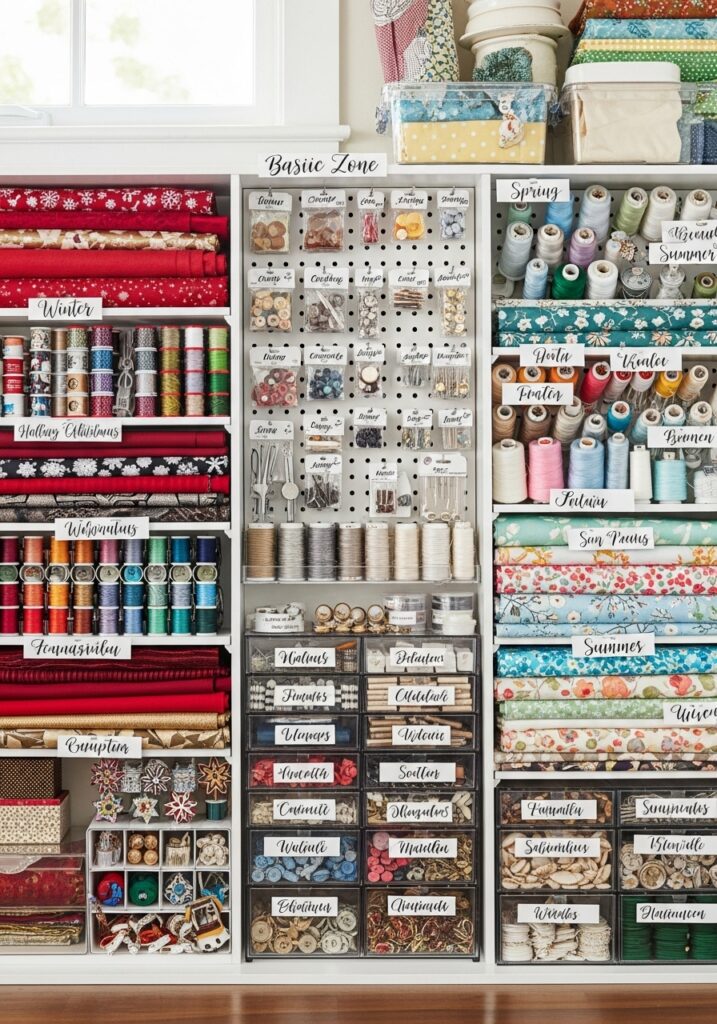
Seasonal rotation keeps storage relevant and uncluttered. Off-season supplies are stored away safely. Active materials stay easily accessible. Storage feels refreshed regularly. Organization prevents overcrowding. Creativity feels renewed. This system supports long-term order.
42. Sewing Supply Inventory Storage System
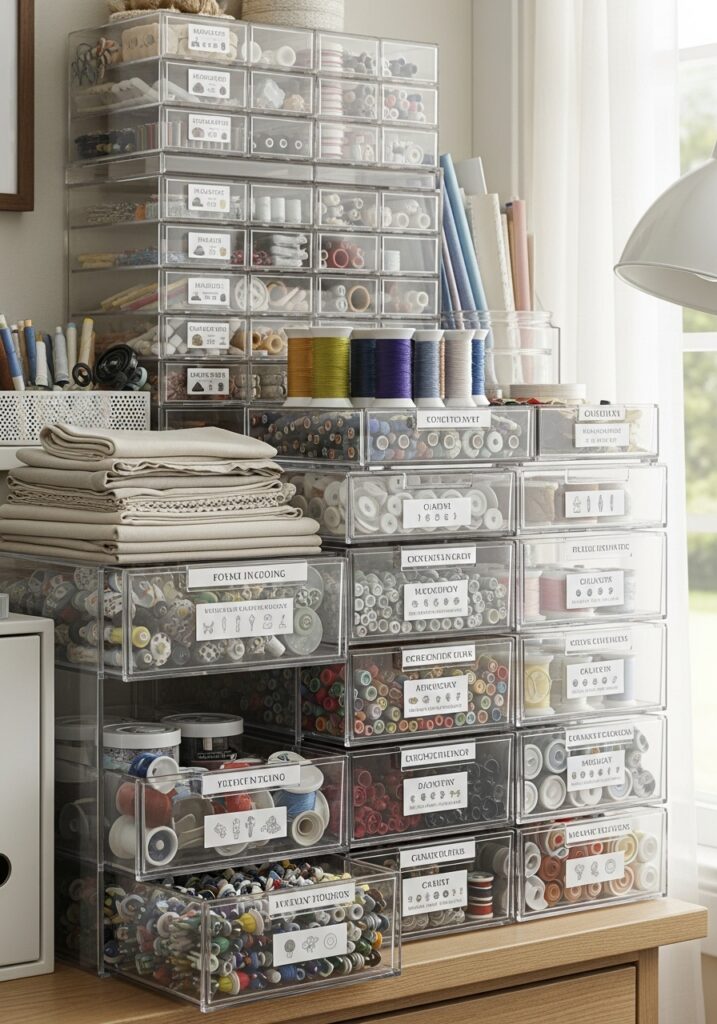
Inventory storage prevents overbuying supplies. Stock levels remain visible and tracked. Budget control improves significantly. Missing items are identified quickly. Workflow interruptions decrease. Organization supports business-level sewing. Control improves long-term efficiency.
43. Drawer Storage for Sewing Notions

Dedicated drawers keep notions protected and sorted. Small items remain tangle-free. Drawers save tabletop space. Sorting improves daily efficiency. Organization feels controlled and neat. Supplies stay secure. Sewing becomes smoother and faster.
44. Multi-Level Sewing Storage Systems
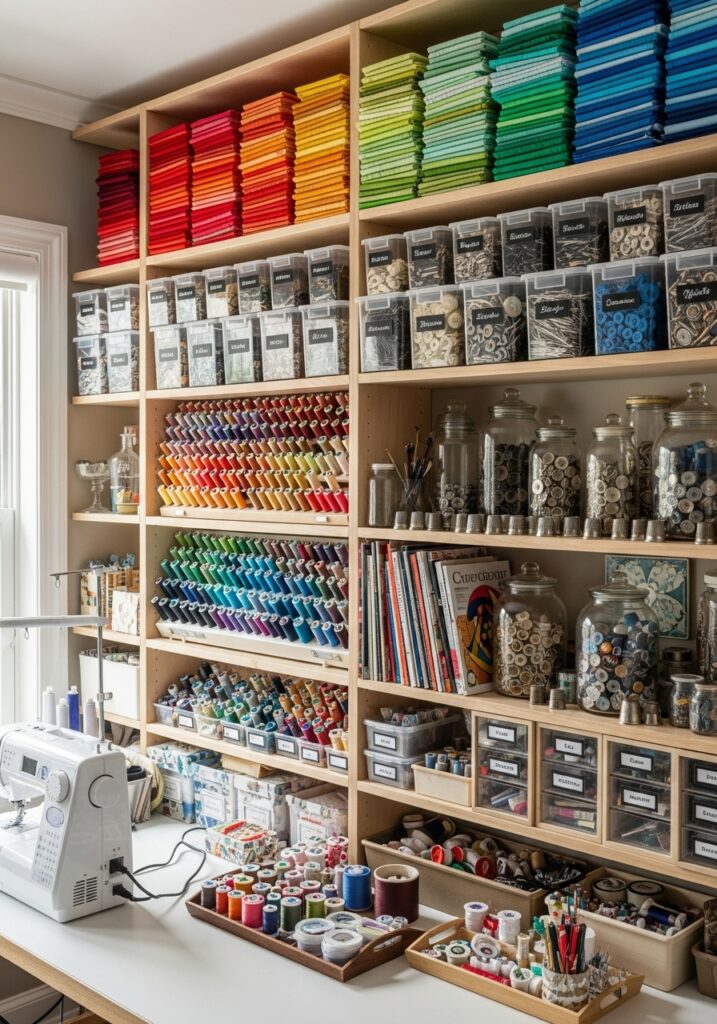
Multi-level storage increases overall capacity. Different shelf heights suit varied supplies. Organization remains structured and balanced. This system prevents overcrowding. Accessibility improves across storage zones. Visual order stays consistent. Storage adapts easily over time.
45. Adjustable Sewing Room Storage Shelving
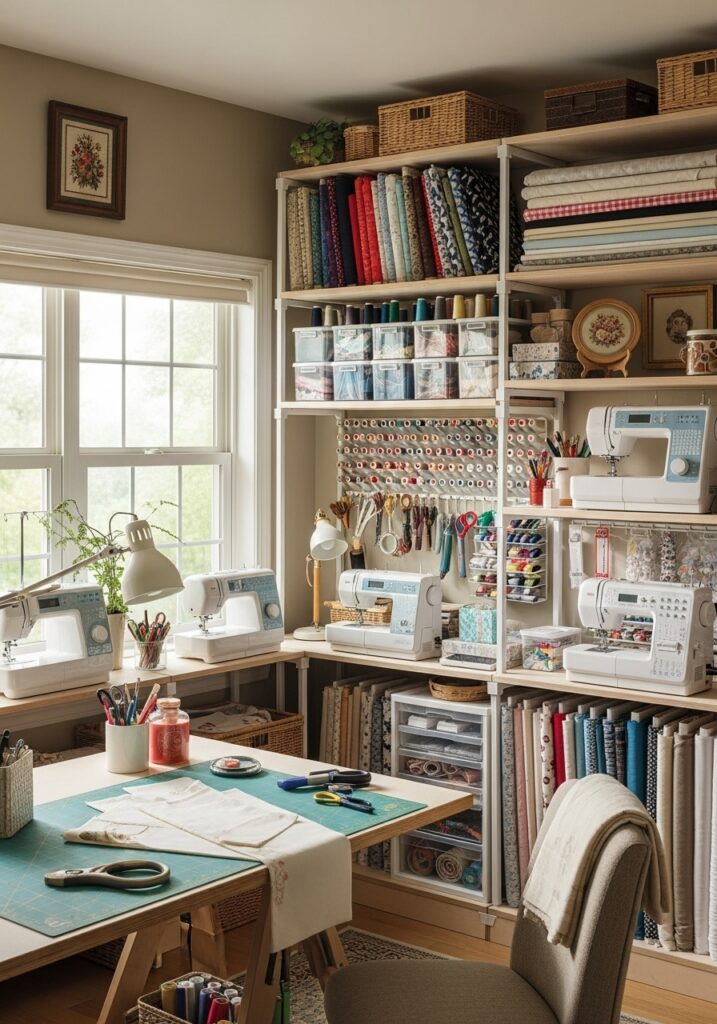
Adjustable shelving supports changing storage needs. Shelf heights can be modified easily. Supplies fit perfectly without wasted space. Organization remains flexible long-term. Growth is supported without redesign. Visual balance improves. Storage stays efficient and practical.
Transform Your Sewing Room with Smart Storage Solutions
These 45 sewing room storage solutions show how thoughtful planning can completely transform your creative space especially for makers who enjoy DIY home decor projects that blend organization with personal style. From compact storage ideas to advanced organizational systems, the right setup makes sewing more efficient and enjoyable. Well-structured storage protects your fabrics, tools, and supplies while saving valuable time during projects. An organized sewing room reduces daily stress and improves focus. Whether you work in a small corner or a dedicated studio, smart storage supports smoother workflows. Each solution prioritizes accessibility, flexibility, and long-term usability. With proper organization, your sewing room becomes a space that truly supports creativity, productivity, and inspiration.

Hussam is a DIY home improvement specialist with 6+ years of hands-on experience. At HomeDecorEdge, he creates budget-friendly tutorials, furniture restoration guides, and creative upcycling projects for homeowners. Expertise: DIY Projects, Furniture Restoration, Budget Makeovers, Power Tools, Woodworking, Creative Upcycling