

I used to think my flower beds needed more plants. They did not. They needed an edge. The day I laid a simple row of bricks along the front bed, the whole yard suddenly looked finished, like someone had drawn a frame around a painting.
That is what a good garden border does. It keeps grass out of your beds, holds mulch where it belongs and makes even a young garden look cared for.
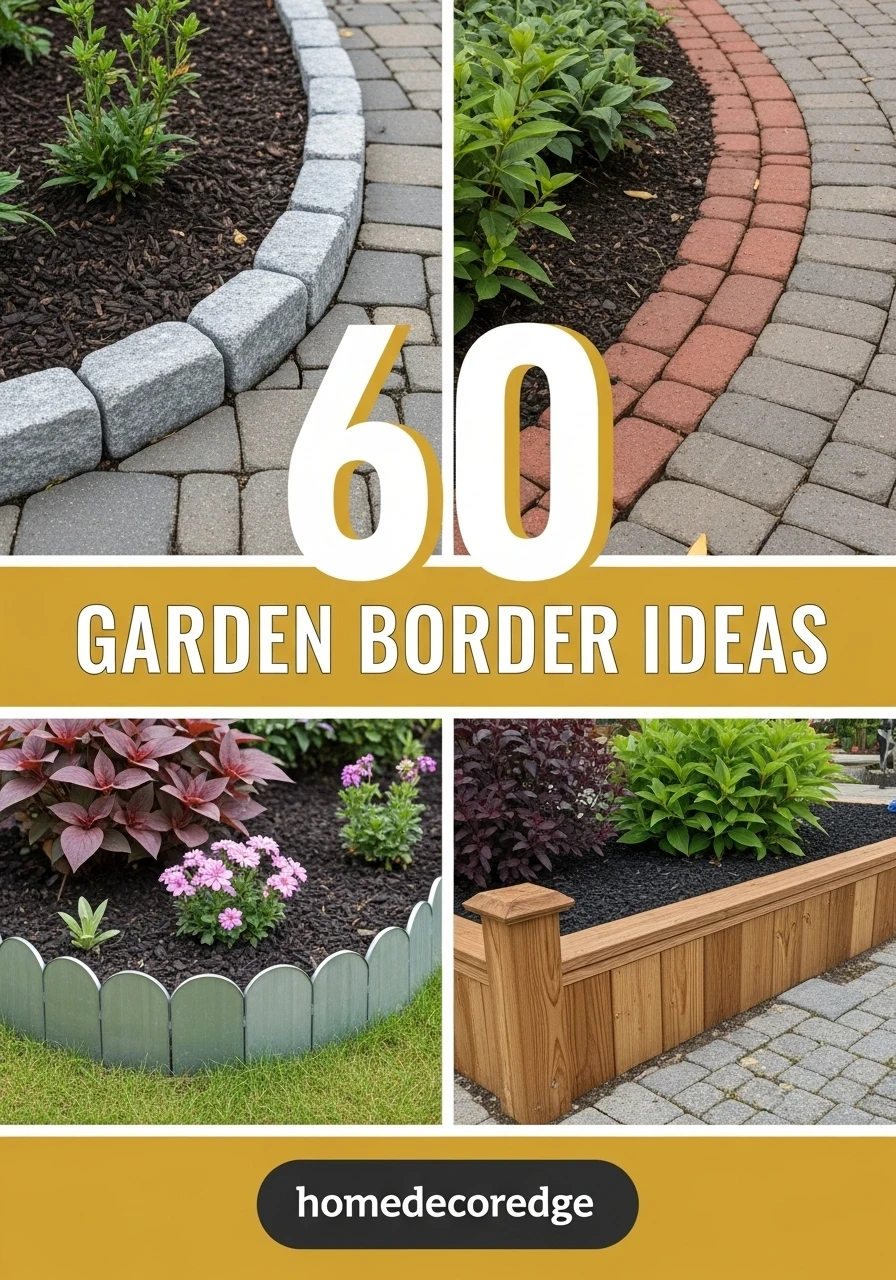
These 60 garden border ideas cover every style and budget, from free materials you can collect yourself to sleek metal edging that lasts for decades. Pick the one that suits your garden and your weekend.
1Classic Brick Border Edging
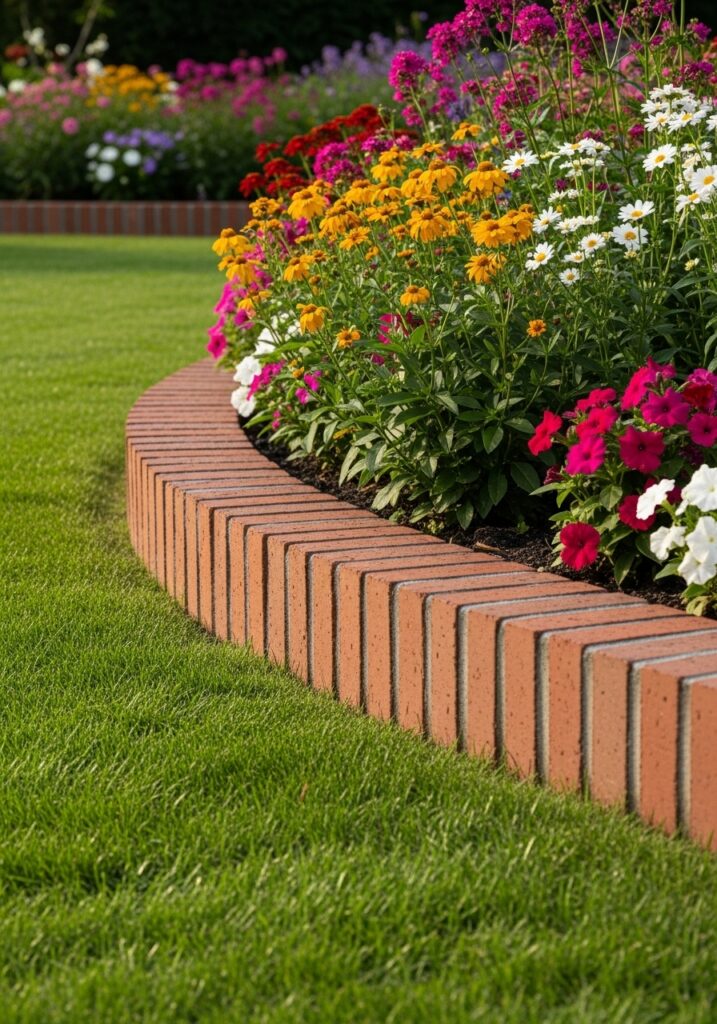
Brick is the border most people picture, and for good reason. It suits cottage gardens and modern yards alike, and it lasts for decades.
Set landscape edging bricks on end, angled slightly, in a shallow trench for the classic soldier look. A tip I picked up: bury each brick about halfway so they stay put when you mow right up against them.
- Timeless look
- Lasts decades
- Easy DIY

My Pick
Landscape Edging Bricks
Classic bricks for a timeless soldier edge that lasts for decades.
2Natural Stone Stacked Edge
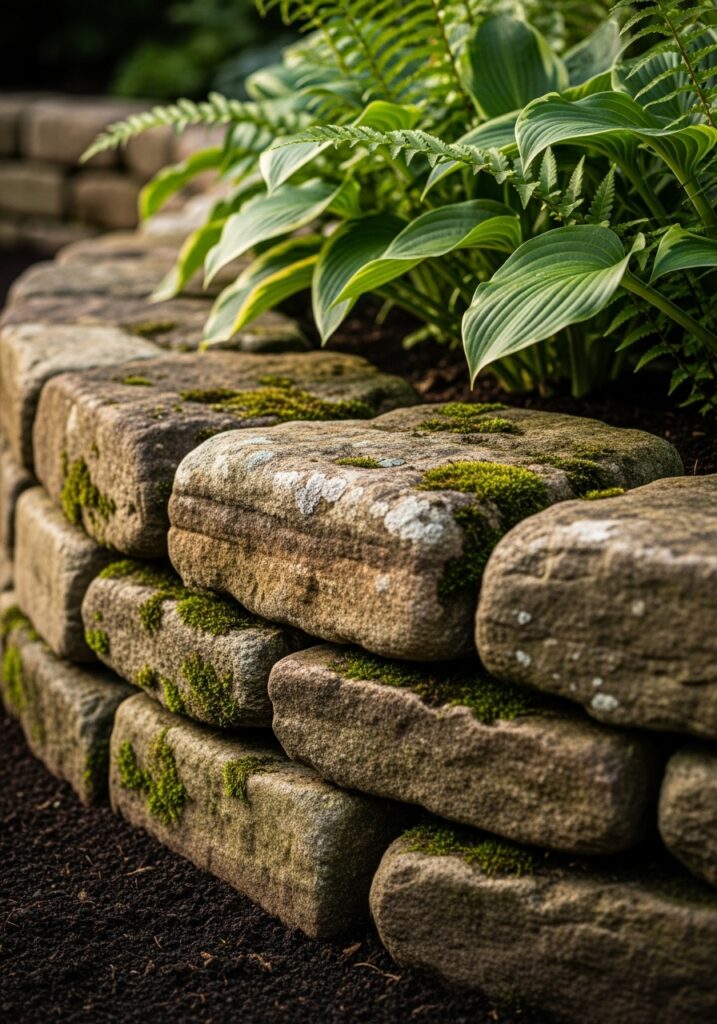
Stacked fieldstone gives a soft, natural edge that blends right into the planting. Two or three layers high is enough to look substantial.
Put the biggest, flattest stones on the bottom and tilt each layer slightly back toward the bed. No mortar needed, and the gaps are perfect for tucking in creeping thyme.
- Natural and rustic
- No mortar
- Room for little plants
3Steel Landscape Edging
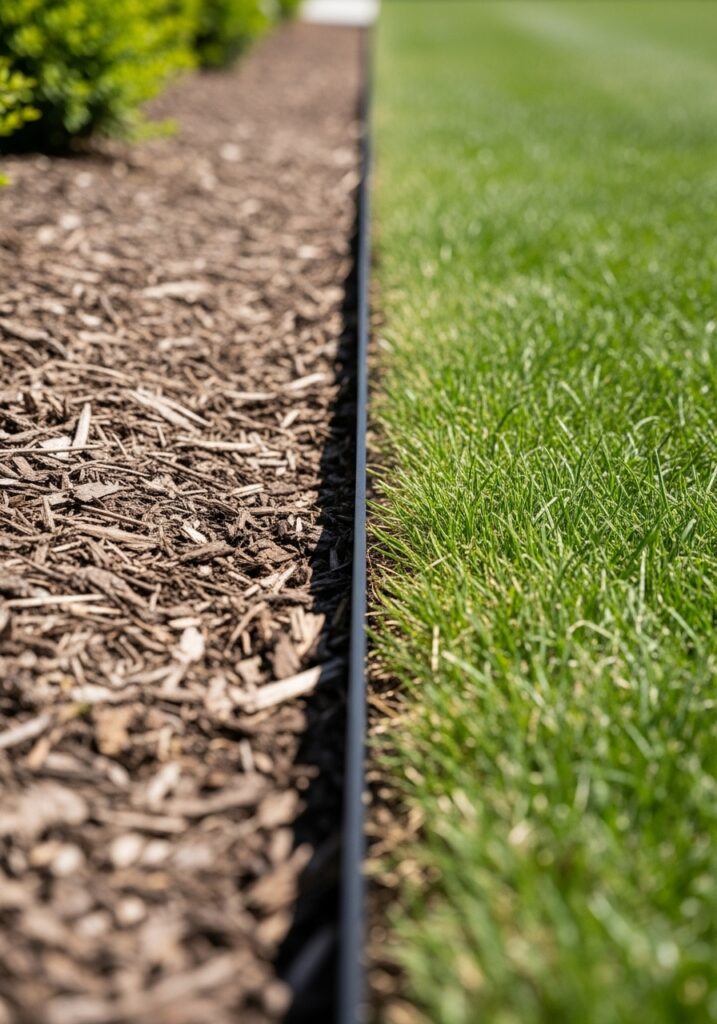
Steel edging gives the cleanest line you can get. It is thin, nearly invisible from a distance and keeps grass and beds perfectly separate.
Steel landscape edging bends into smooth curves and stakes into place without concrete. Honestly, it is the edge I would choose for any modern garden.
- Razor clean lines
- Bends into curves
- Nearly invisible

Start Your 30-Day Home Reset
Stop waiting for a "perfect" free weekend. Grab the 30-day plan and start feeling lighter in your own home by tomorrow.
View the 30-Day Plan Printable PDF · Instant downloadMy Pick
Steel Landscape Edging
Thin, strong steel that bends into smooth curves for razor clean lines.
4Railroad Tie Style Timber Borders
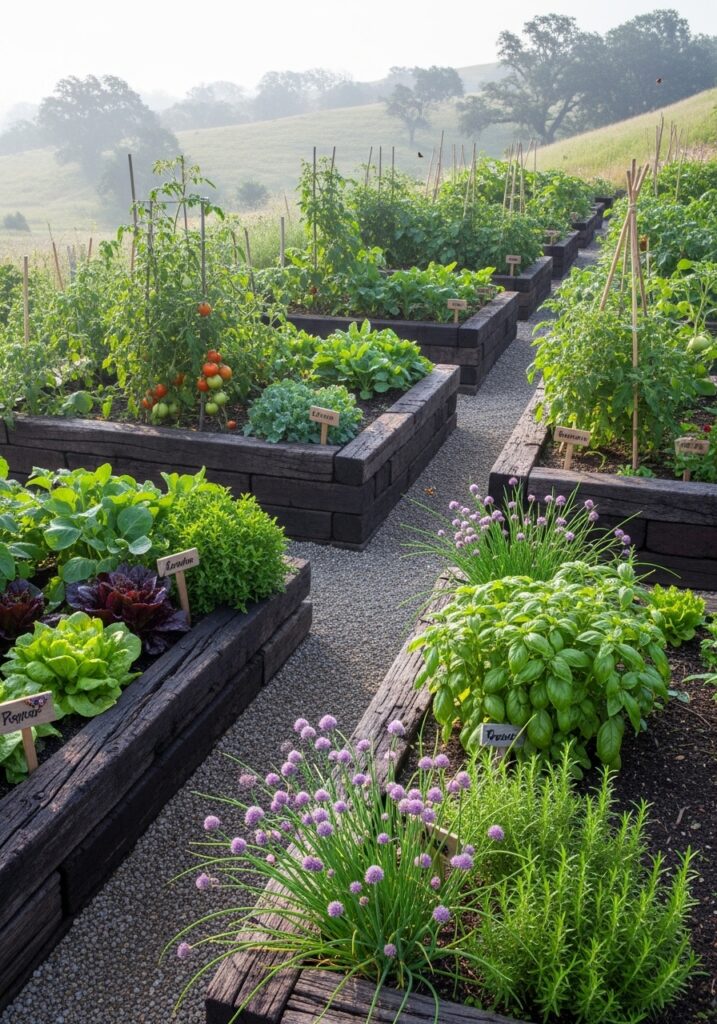
Big chunky timbers make a strong, rustic border and are great for terracing a slope. They give flat yards some height too.
One important note: old railroad ties are usually treated with creosote, which you do not want near vegetables or where kids play. I’d suggest new landscape timbers instead. You get the same look without the chemicals.
- Great for slopes
- Bold rustic look
- Safer with new timbers
5River Rock Dry Creek Border
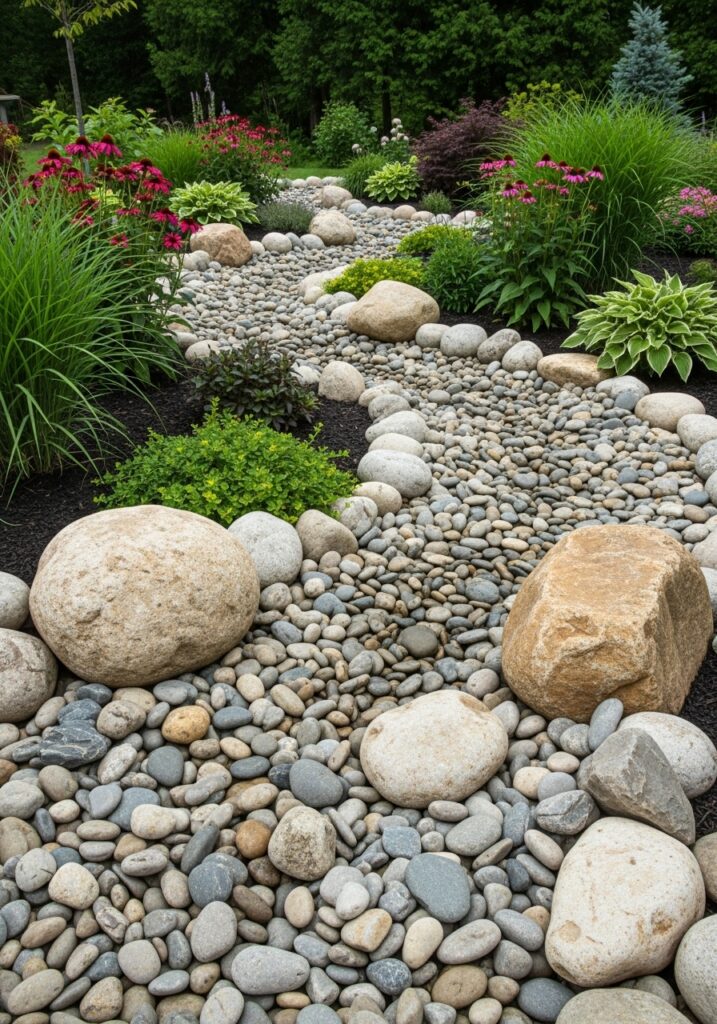
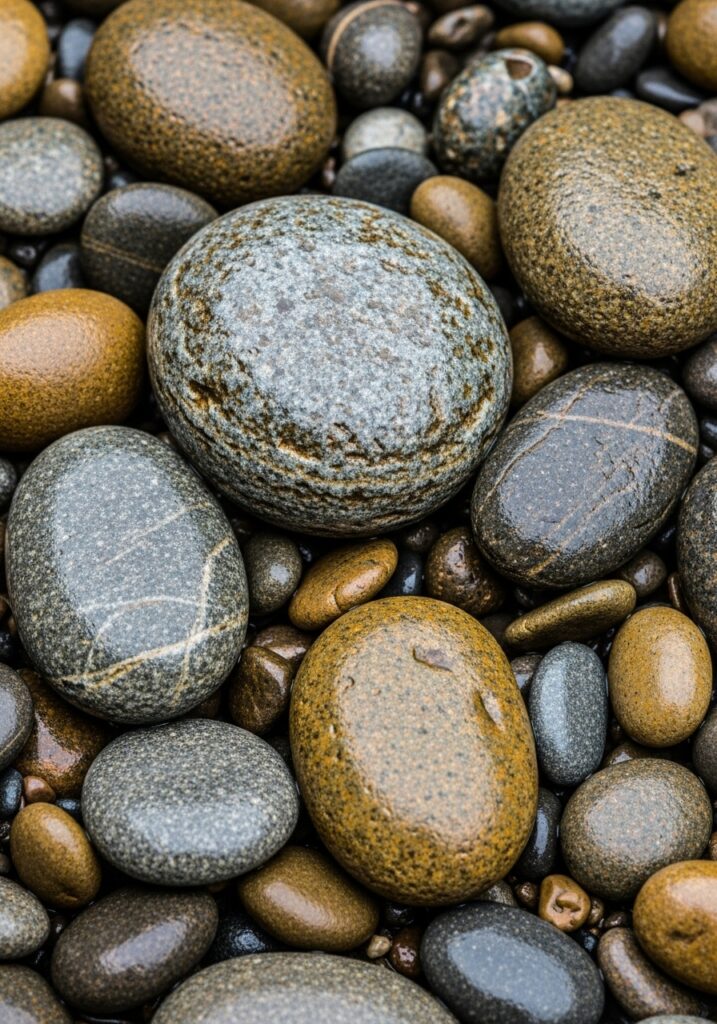
A dry creek border looks like a little stream bed winding through the garden. It is beautiful, and it also guides rainwater away from your house.
Mix decorative river rock in a few sizes, from small pebbles to a few bigger stones, so it looks natural. Lay landscape fabric underneath first, or weeds will push through within a season.
- Solves drainage
- Natural look
- Low maintenance

My Pick
Decorative River Rock
Smooth natural stones for dry creek beds and low maintenance borders.
6Concrete Paver Border
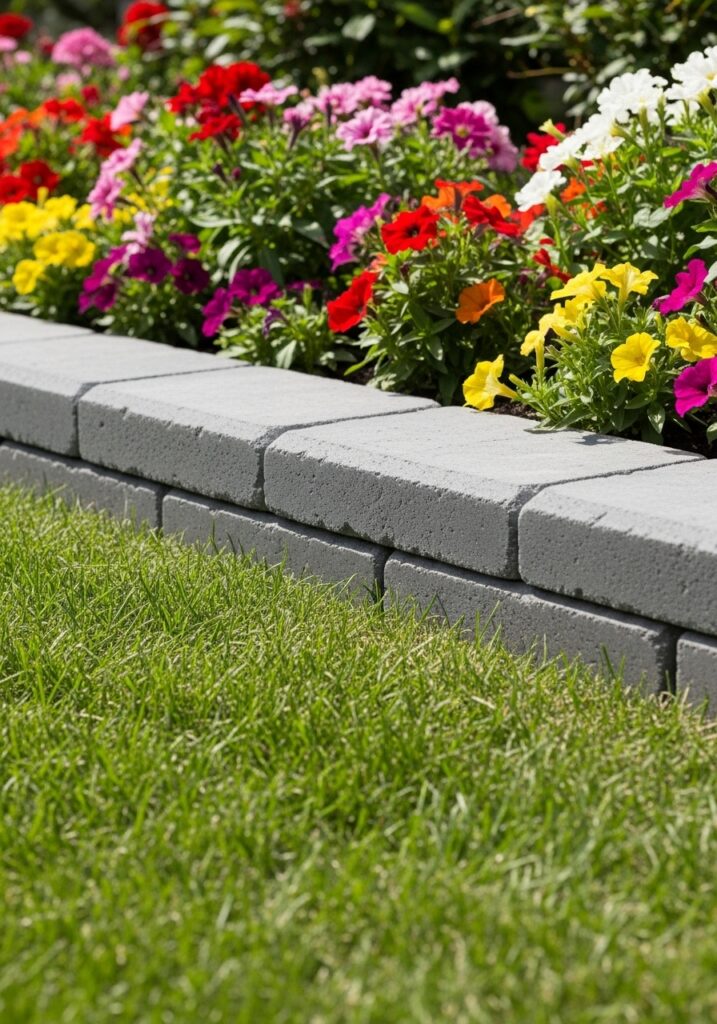
Pavers are one of the most budget friendly borders, and they double as a mowing strip. Your mower wheel rides on the pavers and the grass gets cut right to the edge.
Lay concrete pavers flush with the lawn on a bed of sand. In my experience, that flush height is what makes them so easy to live with.
- Built in mow strip
- Budget friendly
- Many colors

My Pick
Concrete Pavers
Lay them flush with the lawn for a border that doubles as a mowing strip.
7Woven Willow Border Edging
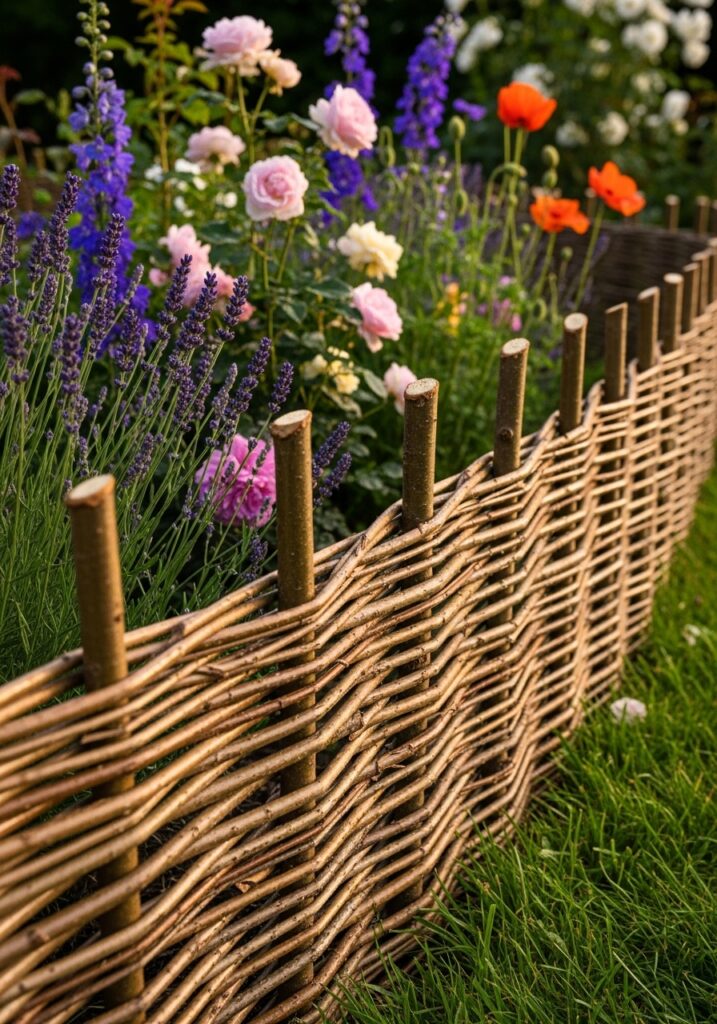
A low woven willow edge is pure cottage charm. Flexible willow rods wind between stakes to make a little basket weave border.
It costs almost nothing if you can find willow or other bendy prunings, and it is one of the most satisfying weekend projects in the garden.
- Almost free
- Cottage charm
- Fun to make
Project Card · 1 afternoon · Easy
Materials Needed
- Straight hardwood stakes about 18 inches long
- Fresh willow rods or other flexible prunings
- Mallet
- Pruning shears
- Garden twine
How to Make It
- Hammer stakes into the ground along the bed edge, about 12 inches apart.
- Start with the thickest rods and weave them in front of and behind each stake.
- Alternate the pattern on the next row so the weave locks together.
- Press each row down firmly as you go to keep the weave tight.
- Trim the rod ends neatly and tie the last row to the end stakes with twine.
PRO TIP Weave willow while it is fresh and green. Dried rods snap instead of bending, so soak them overnight if they have been cut for a while.
8Gabion Wall Garden Border
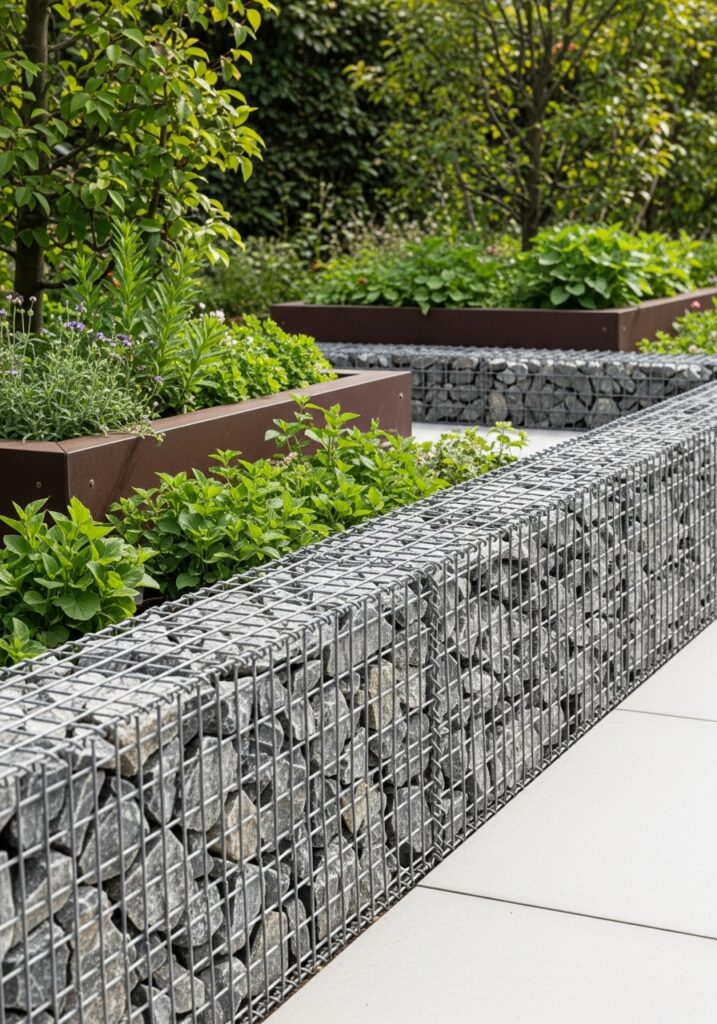
Gabions are wire cages filled with stone. As a border they look modern and architectural, and they can hold back soil on a slope too.
A gabion basket can be filled with river rock, broken concrete or even recycled glass for color. They drain well and never rot.
- Modern look
- Holds slopes
- Fill with anything

My Pick
Gabion Basket
Fill with stone for a modern border that drains well and never rots.
9Lavender Hedge Border
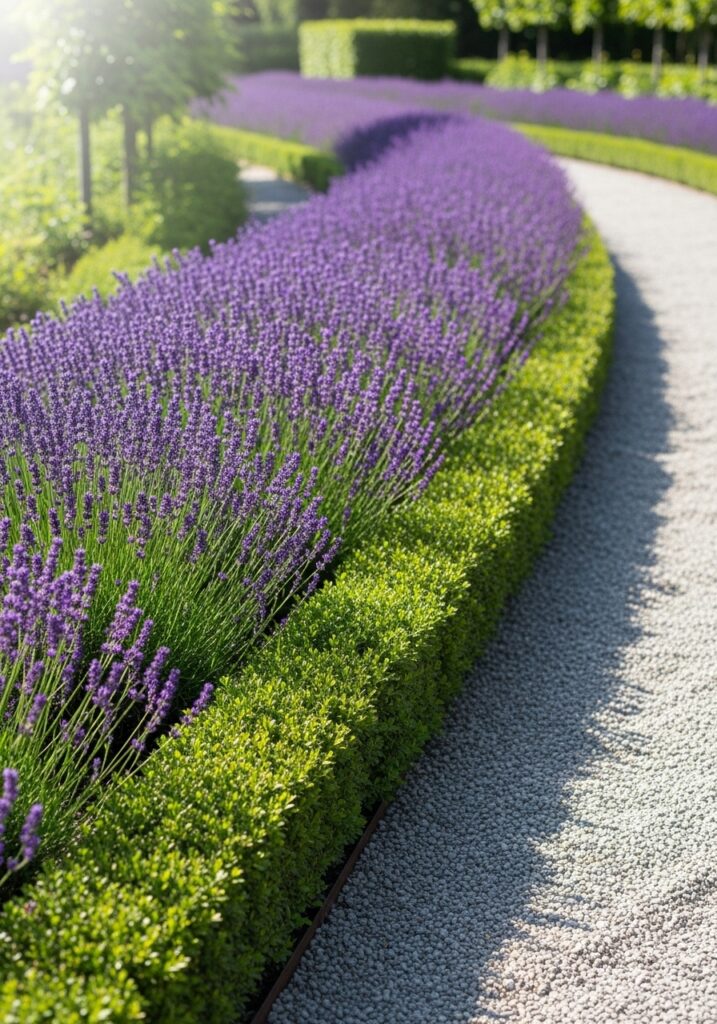
A low row of lavender is a border you can smell. It edges a path beautifully and the bees will love you for it.
Plant lavender live plants about 12 to 18 inches apart in a sunny, well drained spot. Trim lightly right after flowering to keep the hedge neat and bushy.
- Smells amazing
- Loved by bees
- Drought tolerant

My Pick
Lavender Live Plants
A fragrant, drought tolerant living border that bees love.
10Reclaimed Wood Pallet Border
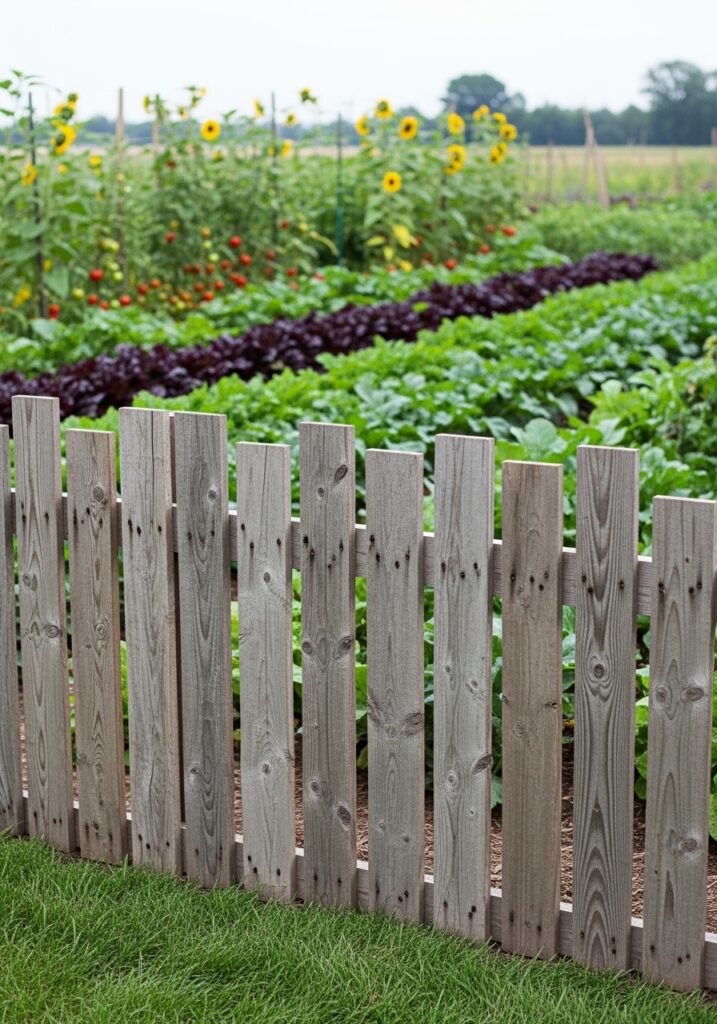
Pallet wood makes a charming little picket border for free. Cut the slats to the same height and stake them along the bed.
Look for pallets stamped HT, which means heat treated, not chemically treated. If you would rather skip the prep, wood landscape edging gives the same rustic look ready to install.
- Free material
- Rustic picket look
- Upcycled

My Pick
Wood Landscape Edging
Ready made rustic picket edging, no pallet prep needed.
11Bamboo Cane Border Fence
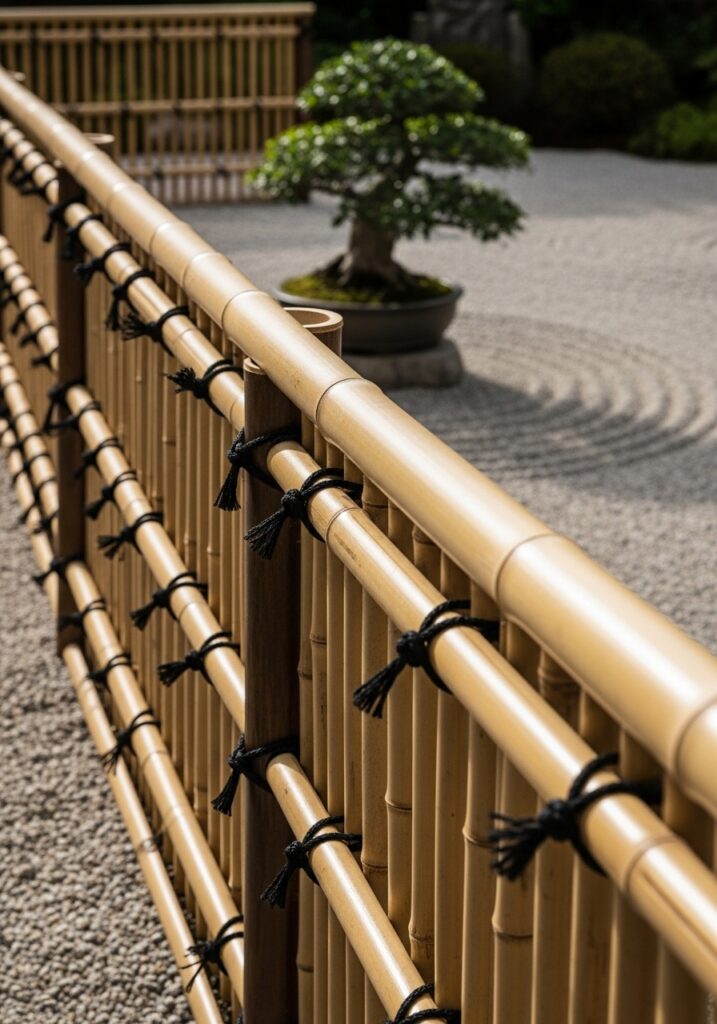
Bamboo canes tied together with dark cord make a calm, simple border. It suits Japanese style gardens and modern minimalist yards.
Bamboo lasts a few years outdoors before it needs replacing. Keep the bottom ends out of wet soil by setting them on a little gravel, and they will last much longer.
- Calm, simple look
- Lightweight
- Easy to install
12Cobblestone Border Edge
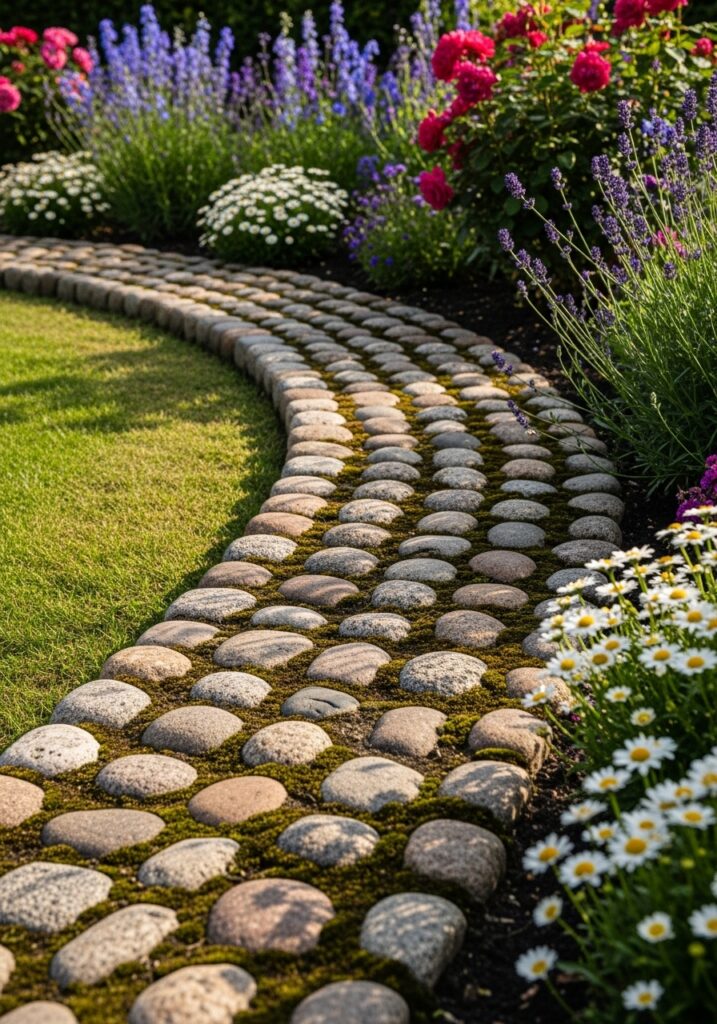
Cobblestones bring old world charm to a garden edge. Salvaged cobbles are especially lovely, worn smooth from years of use.
Set them in a bed of sand and gravel for an easy dry border, or in mortar if you want something truly permanent.
- Old world charm
- Very durable
- Salvage friendly
13Corrugated Metal Panel Border
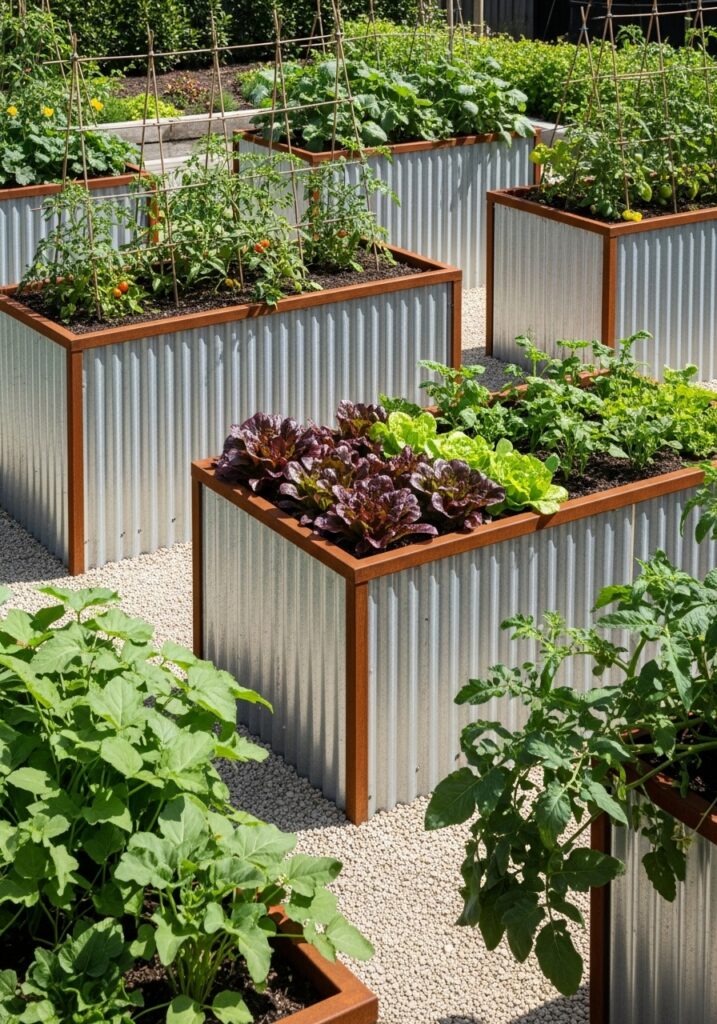
Corrugated metal makes tall, sturdy borders and raised bed walls. It has a farmhouse feel and warms the soil early in spring.
Corrugated metal panels are easy to cut to size. Cap the top edge with a wooden board so there are no sharp edges when you lean over the bed.
- Farmhouse style
- Warms the soil
- Very sturdy

My Pick
Corrugated Metal Panels
Sturdy panels for tall borders and raised beds with a farmhouse feel.
14Limestone Block Border
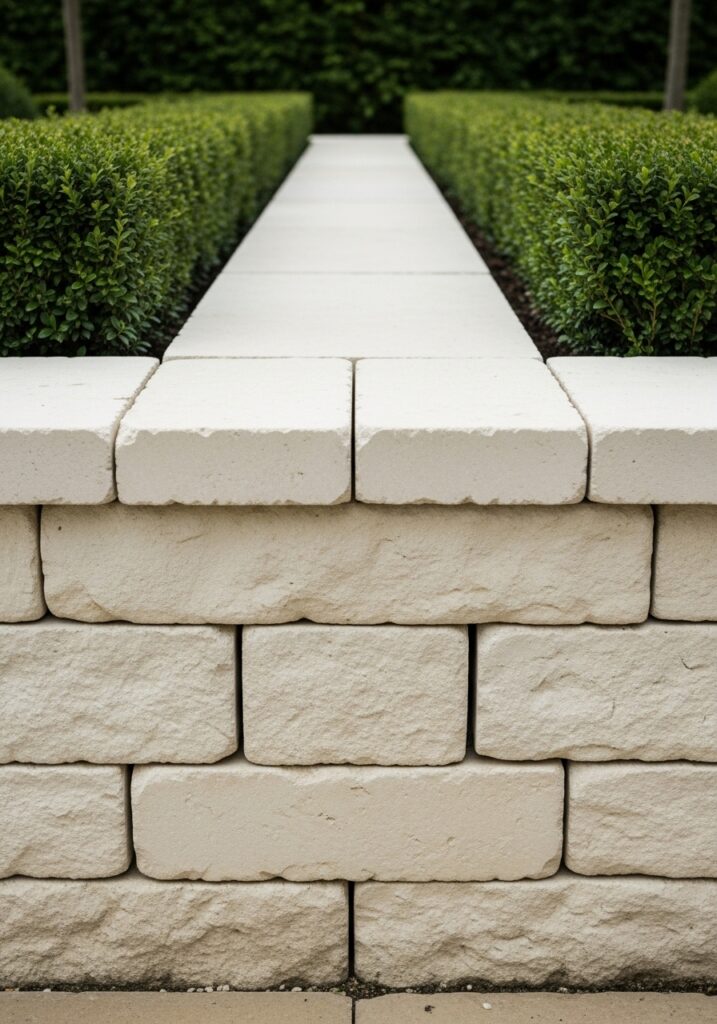
Cut limestone blocks give a formal, tidy edge in soft cream tones. They stack neatly without mortar.
Limestone looks wonderful with traditional homes and softens modern ones. Use a single row for edging or stack a few courses for a low raised bed.
- Formal and neat
- Soft cream color
- Stacks without mortar
15Wattle Fence Panel Border
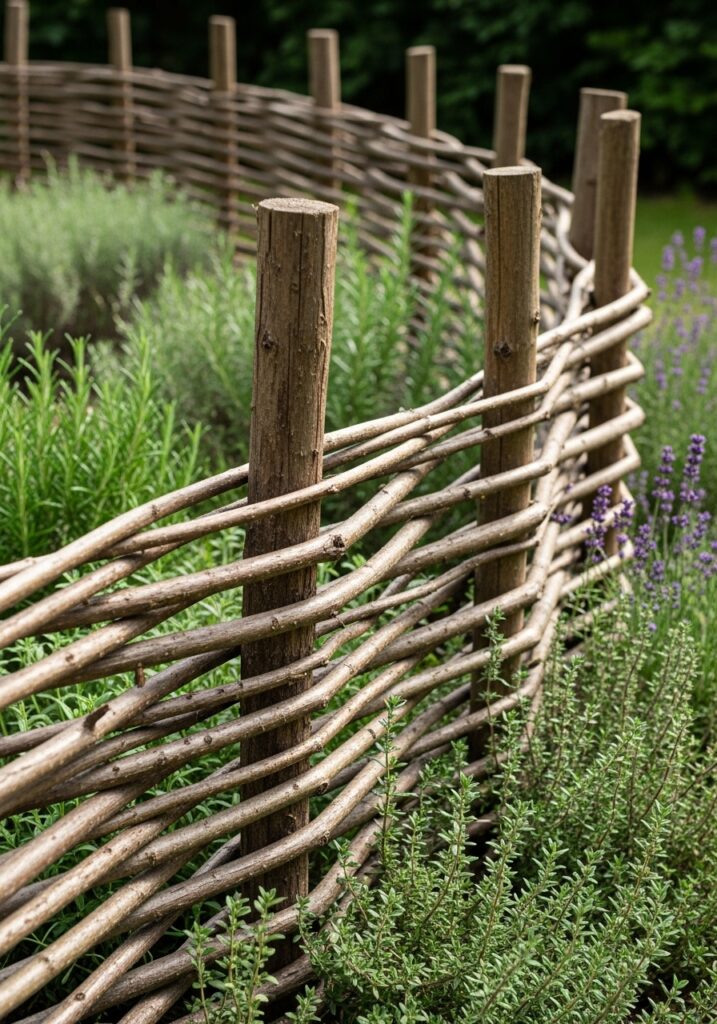
Wattle panels are taller than simple woven edging, often knee high. They make a cozy, sheltered edge for vegetable or herb beds.
You can buy ready made panels or weave your own from hazel and willow. Either way, they bring a charming, storybook feel to the garden.
- Sheltered beds
- Storybook charm
- Natural materials
16Seashell Border Edge
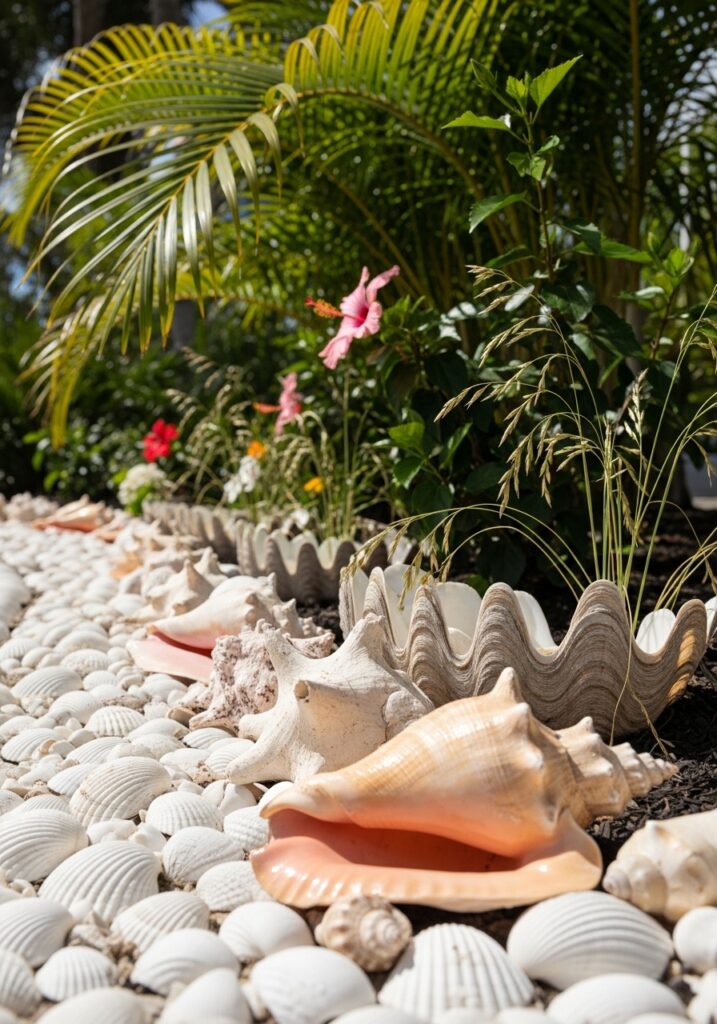
Seashells along a bed edge bring the beach home. White shells look especially bright against dark mulch.
Only collect shells where it is allowed, and give them a good rinse to wash off the salt before they go near your plants.
- Coastal feel
- Bright and pretty
- Holiday memories
17Granite Cobble Border
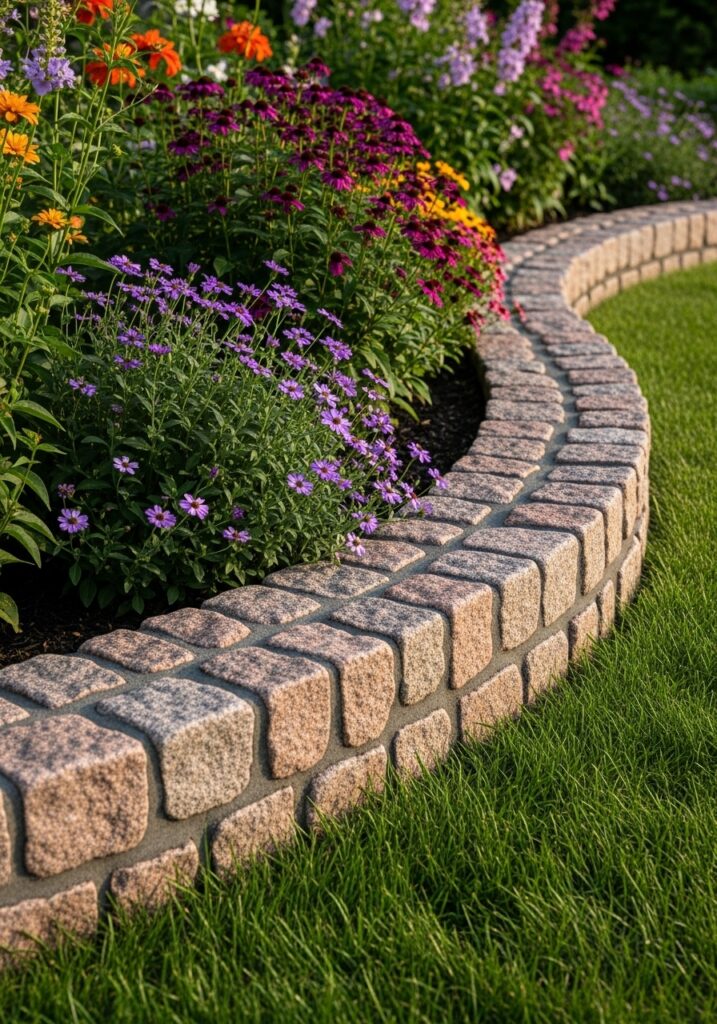
Granite cobbles are about as tough as a border gets. They will outlast you, your house and probably your neighbors.
Local granite is usually cheaper than imported stone. Fit the pieces tightly together and grass will have a hard time sneaking through.
- Practically forever
- Tight fitting
- Beautiful speckles
18Vertical Log Border
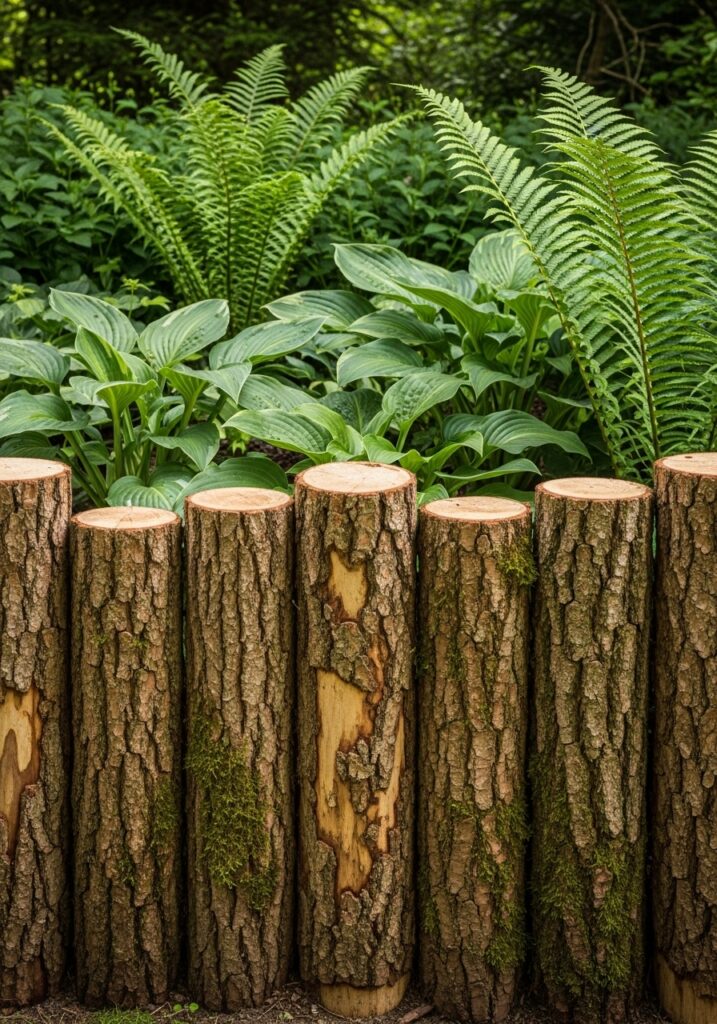
Logs set upright at different heights make a playful, woodland style edge. It is a great use for wood from a tree you had cut down.
Logs will slowly rot, but that takes years. Hardwoods like oak last much longer than softwoods, so use them if you have a choice.
- Free from tree work
- Woodland feel
- Fun and playful
19Slate Standing Stone Border
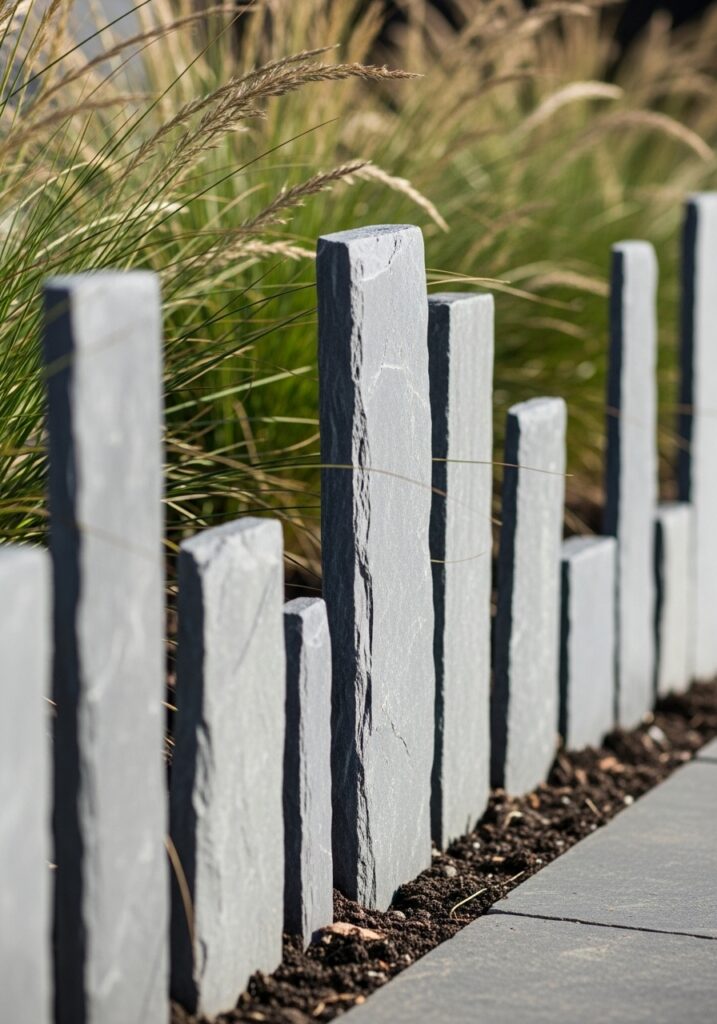
Flat slate pieces set upright on edge make a striking, modern border. Varying their heights gives the edge a lovely rhythm.
Bury each piece at least a third of its height so it stays firm. Slate looks especially good against bright green plants and colorful flowers.
- Dramatic look
- Modern style
- Natural texture
20Plastic Landscape Edging
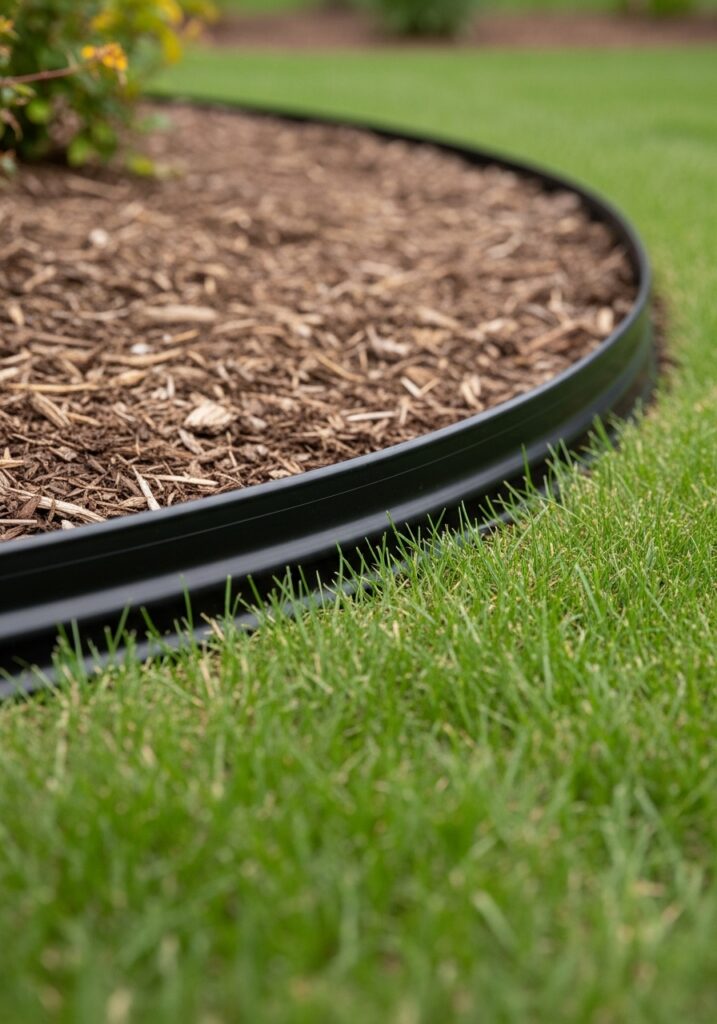
Not every border needs to be seen. Plastic edging hides below the mulch and simply stops grass roots creeping into your beds.
Plastic landscape edging is the cheapest option on this list and installs in minutes. Leave about half an inch showing above the soil so your mower blade can trim right along it.
- Cheapest option
- Installs in minutes
- Stops grass roots

My Pick
Plastic Landscape Edging
The budget pick that hides under mulch and stops grass roots.
21Terracotta Roof Tile Border
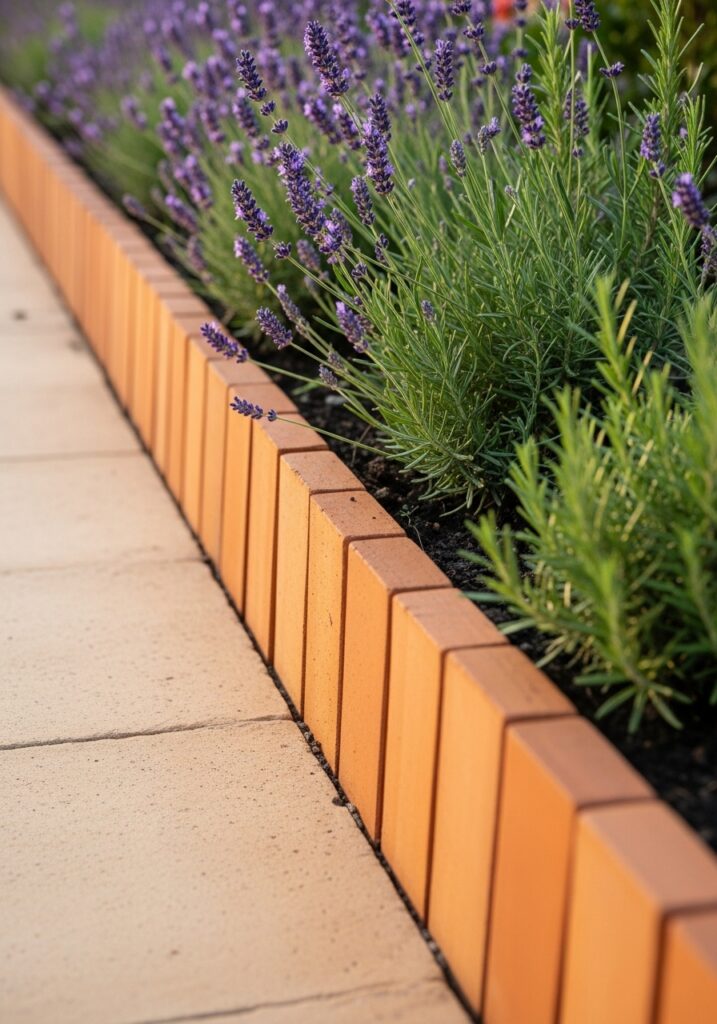
Curved terracotta roof tiles set on end make a warm, Mediterranean style edge. They look wonderful around herb beds.
Look for leftover tiles at salvage yards. In cold climates, terracotta can crack in hard frost, so this border works best where winters are mild.
- Warm color
- Mediterranean feel
- Salvage friendly
22Rope Border Edge
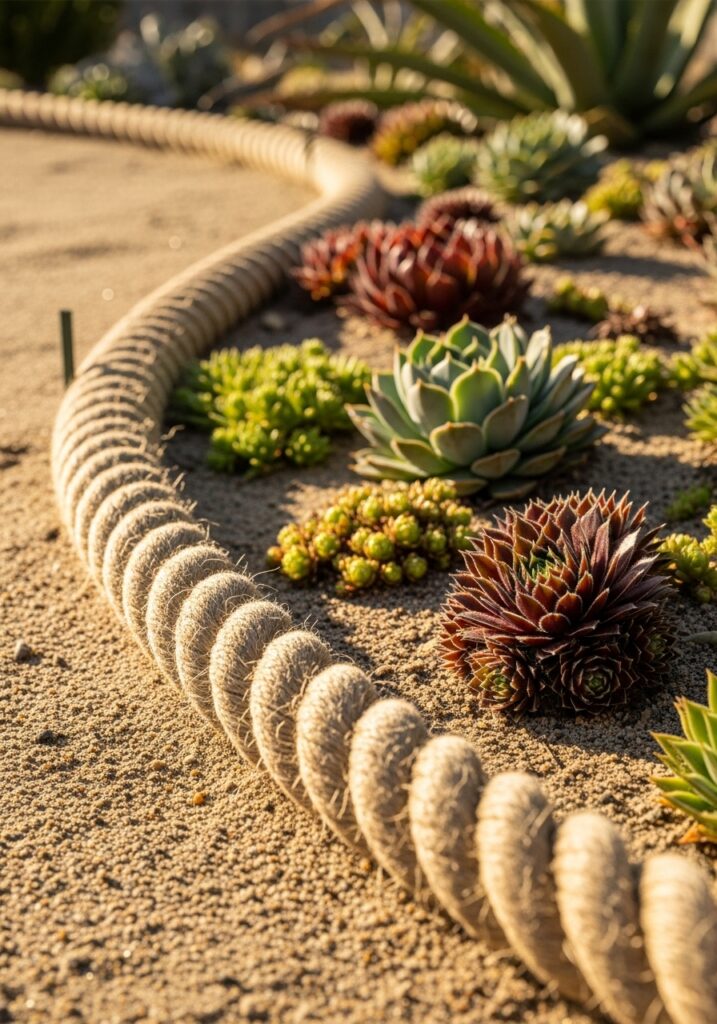
Thick natural rope laid along a bed edge gives a soft, coastal look. Pin it down with garden staples so it holds its curve.
Rope is a temporary border, lasting a season or two, which makes it great for renters or a garden you are still planning.
- Soft curves
- Renter friendly
- Coastal style
23Flagstone Crazy Paving Border
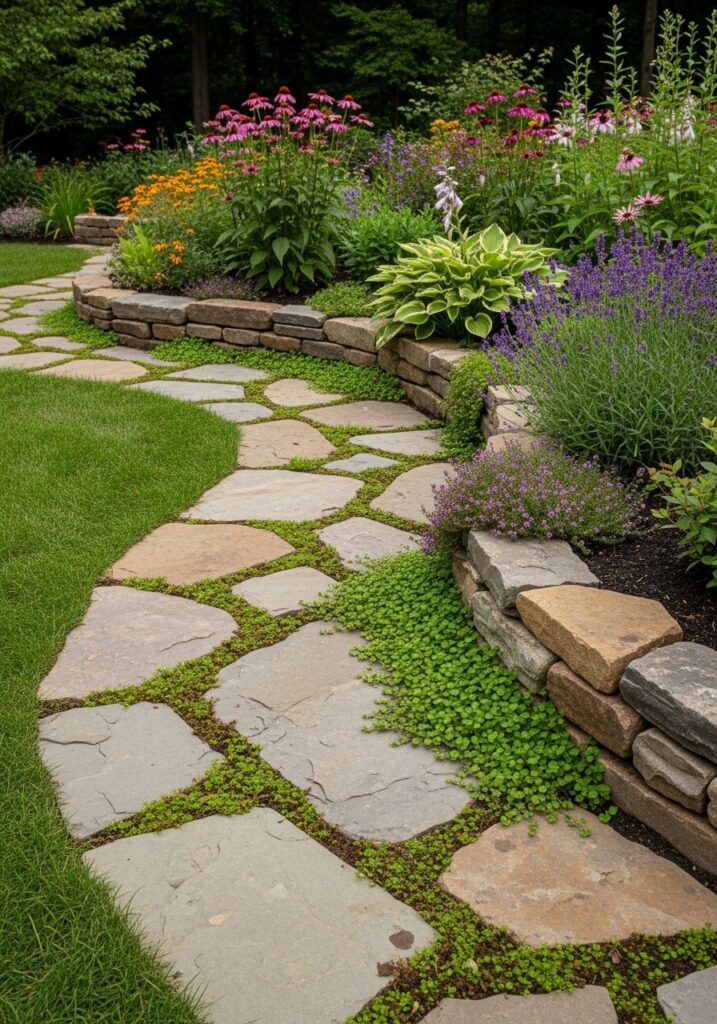
Crazy paving uses broken pieces of flagstone fitted together like a puzzle. Every border ends up completely unique.
It is a great way to use up offcuts from a patio project. Leave small gaps between pieces and fill them with creeping thyme or moss.
- Totally unique
- Uses offcuts
- Softened by plants
24Brick Basket Weave Border
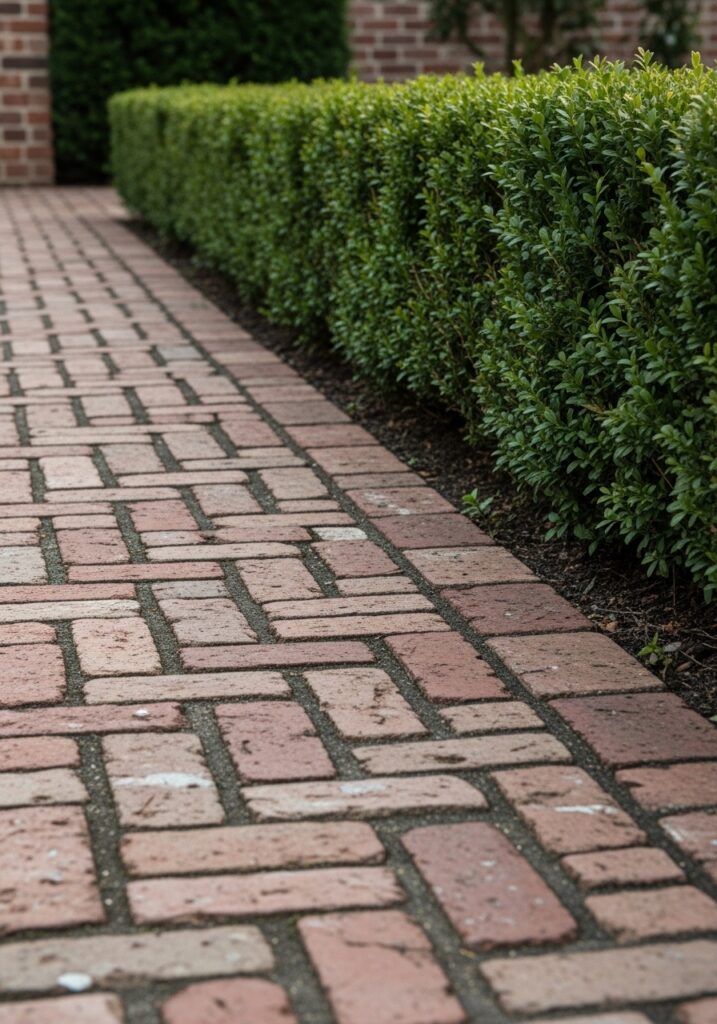
Basket weave is a brick pattern where pairs of bricks alternate direction. It turns an ordinary brick edge into something special.
It uses the same bricks as a simple border, just laid in a different pattern, so you get a lot more style for no extra cost.
- Special pattern
- Same cost as plain
- Formal look
25Living Boxwood Border
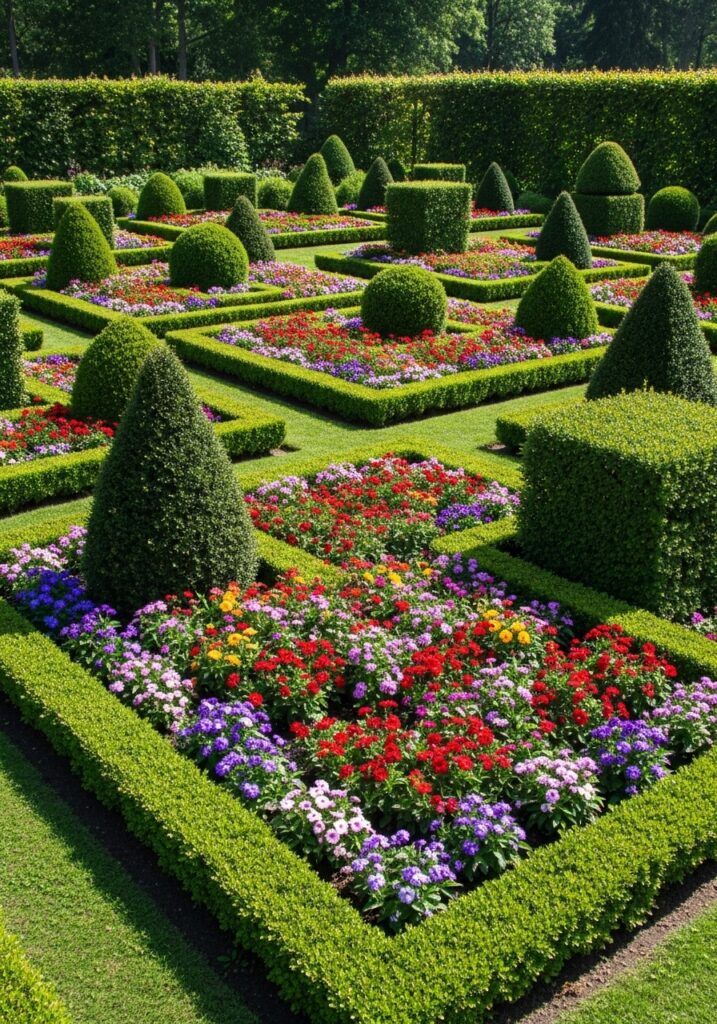
Clipped boxwood makes the classic formal edge seen in grand gardens. It stays green all year and gives structure when everything else dies back in winter.
Plant boxwood live plants about 12 inches apart for a low hedge. Clip it once or twice a year, and avoid clipping in very hot weather to prevent leaf scorch.
- Green all year
- Formal structure
- Classic look

My Pick
Boxwood Live Plants
Evergreen plants for a classic clipped hedge that looks good all year.
26Concrete Block Planter Border
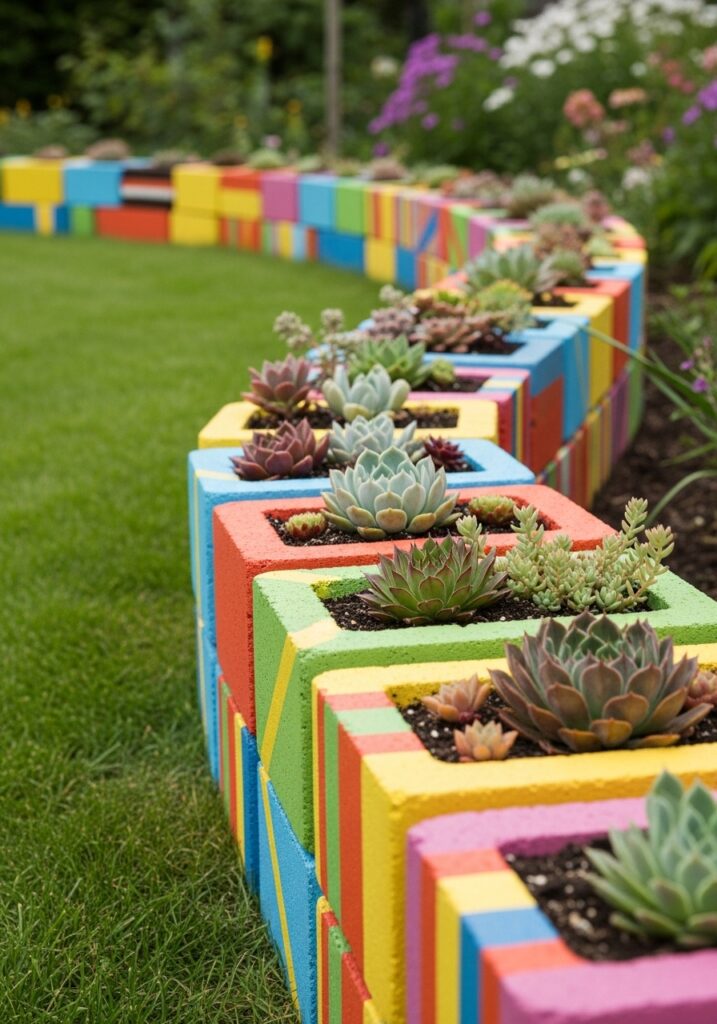
Concrete blocks laid with their holes facing up become a border and a planter at the same time. Fill the holes with succulents, herbs or flowers.
Paint them in bright colors and you get a cheerful, playful border for very little money. This is one of my favorite budget projects.
- Border plus planter
- Very cheap
- Colorful and fun
Project Card · 1 day · Easy
Materials Needed
- Concrete blocks with open cores
- Exterior masonry paint in bright colors
- Wire brush and paintbrush
- Potting soil
- Succulents, herbs or small flowers
- Shovel and level
How to Make It
- Scrub each block with a wire brush to remove dust so the paint sticks.
- Paint the blocks in your chosen colors and let them dry overnight.
- Dig a shallow trench along the bed edge and level the base.
- Set the blocks in the trench with the holes facing up, tight against each other.
- Fill the holes with potting soil and plant them with succulents or herbs.
PRO TIP Do not grow vegetables in old cinder blocks. Use newer concrete blocks or stick to ornamental plants and flowers to be safe.
27Galvanized Steel Edging
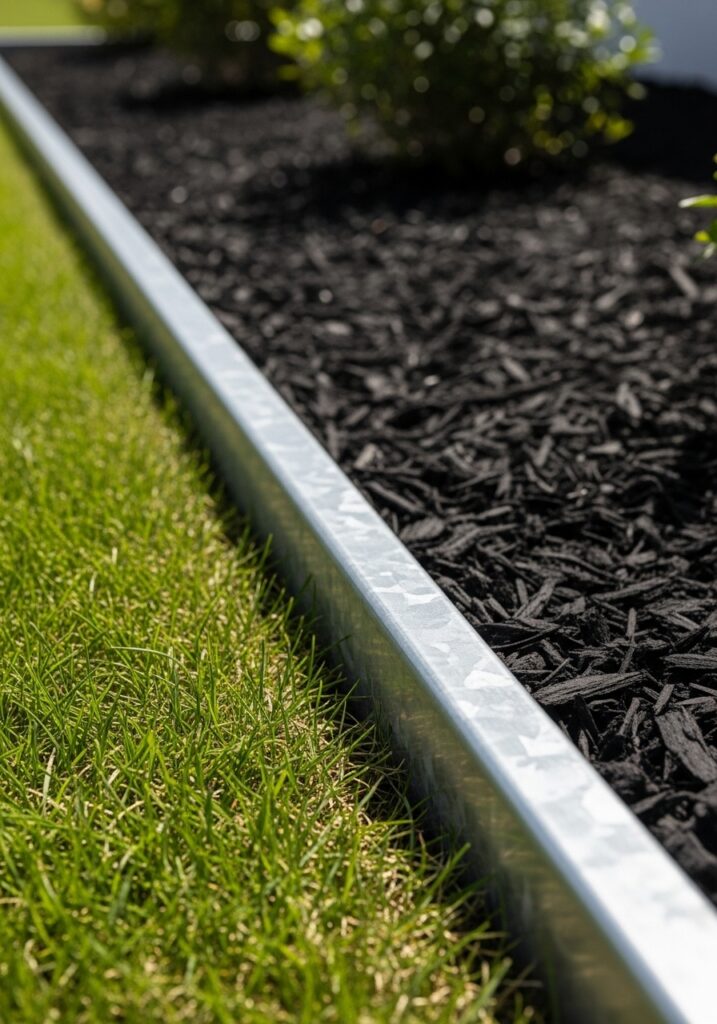
Galvanized steel has a bright silver finish that slowly mellows to a soft gray. It is strong, flexible and very long lasting.
Galvanized steel edging curves easily around beds and trees. It is the edge many landscapers use because it goes in quickly and stays put.
- Strong and flexible
- Long lasting
- Quick to install

My Pick
Galvanized Steel Edging
Strong, flexible edging that curves around beds and lasts for years.
28Colored Glass Mulch Border
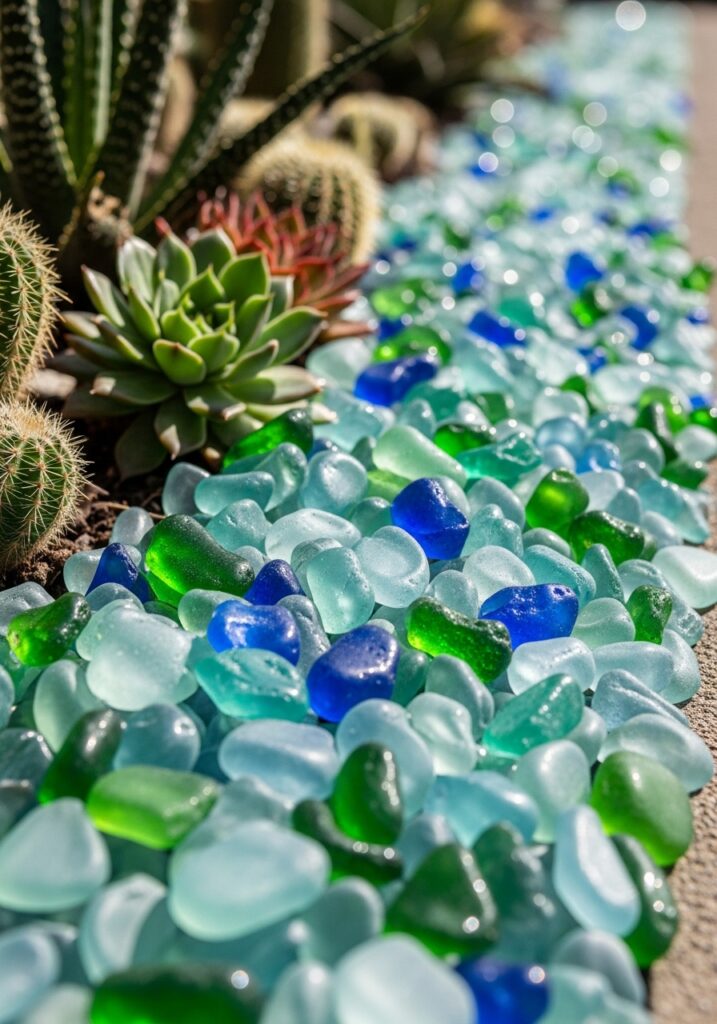
Tumbled recycled glass makes a sparkling border strip, especially in blue or green. It catches the sun and never breaks down.
Buy only glass mulch that is properly tumbled so the edges are smooth. Lay it over landscape fabric to keep it clean and weed free.
- Sparkles in sun
- Never breaks down
- Recycled material
29Hedge Stone Border
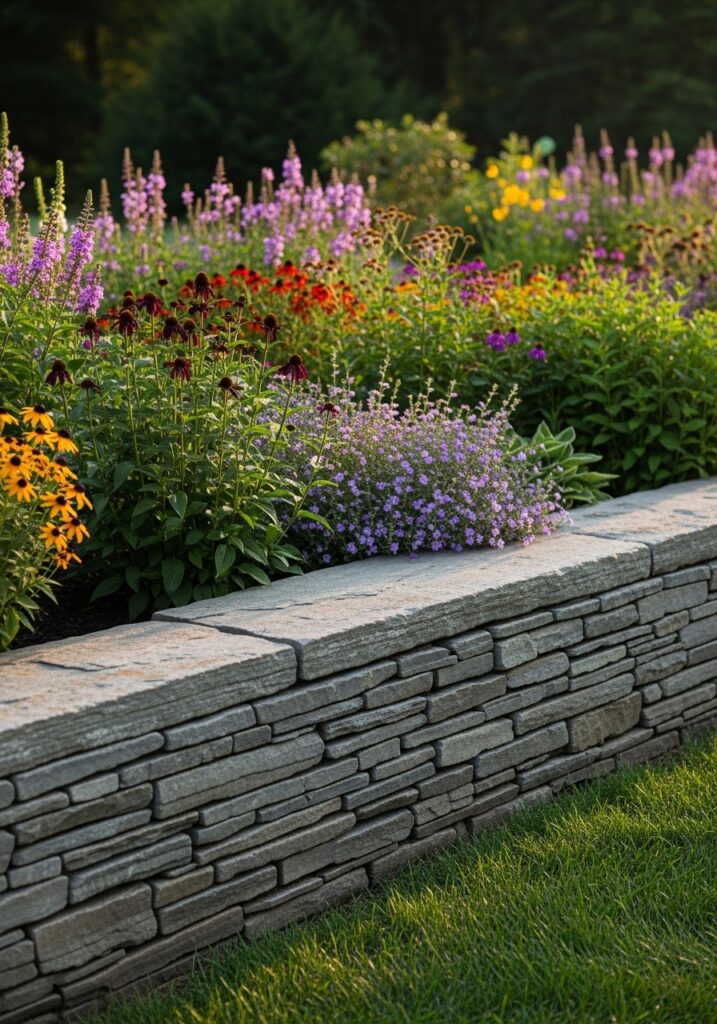
Flat hedge stones stack into low, tidy walls with a traditional New England feel. Their even thickness makes them easy for beginners.
Dry stacked walls drain well and shift a little with frost without cracking. Tilt each layer slightly back toward the bed for stability.
- Beginner friendly
- Traditional style
- Good drainage
30Aluminum Landscape Border
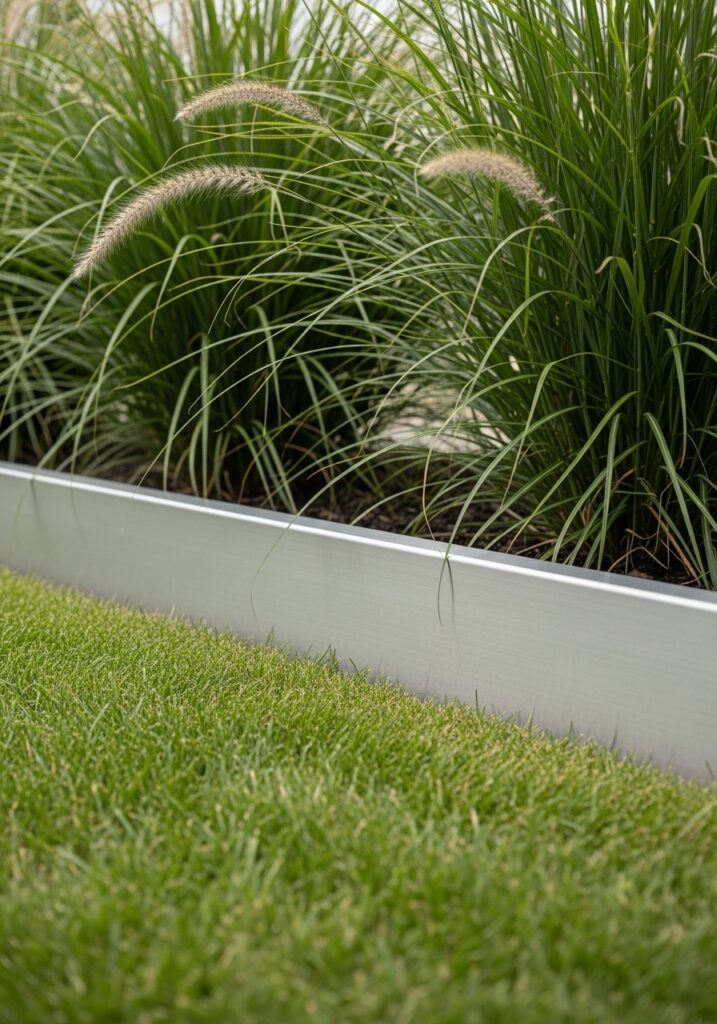
Aluminum edging gives the same clean line as steel but will never rust. It is also lighter and easier to carry and bend.
It is a great choice near the coast where salty air rusts steel quickly. The brushed finish suits modern minimalist gardens.
- Never rusts
- Lightweight
- Great near the coast
31Moss Rock Boulder Border
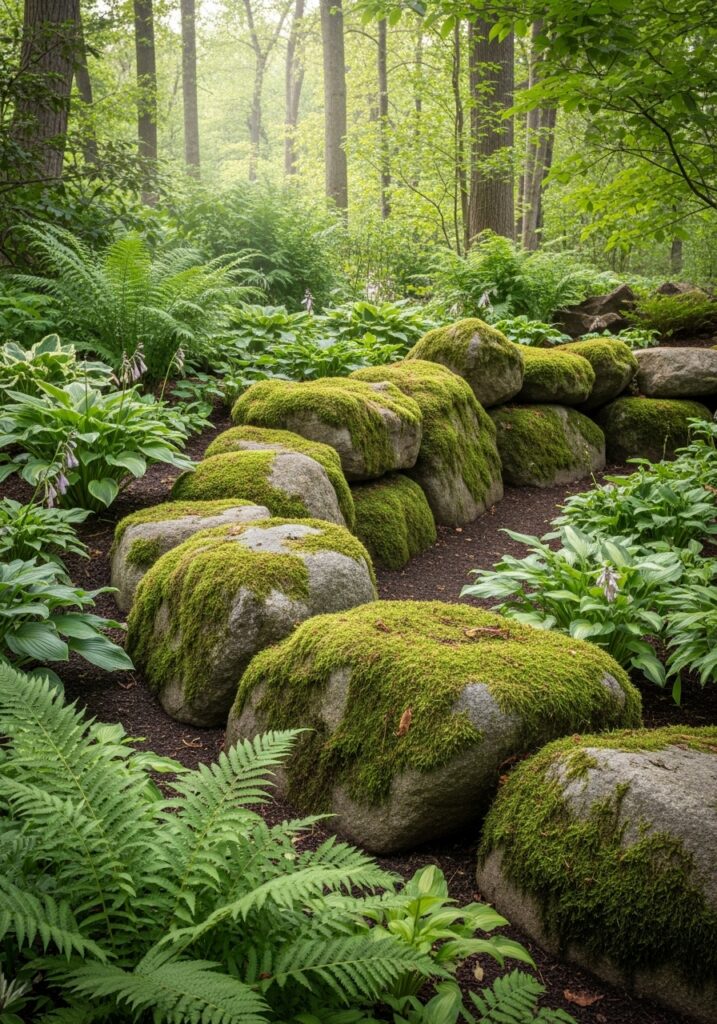
Mossy boulders make a border that looks like it has always been there. They give a woodland garden instant age and weight.
Bury each boulder about a third of the way down. Rocks sitting on top of the soil look placed, while partly buried ones look natural.
- Instant age
- Woodland feel
- Big visual impact
32Recycled Tire Border
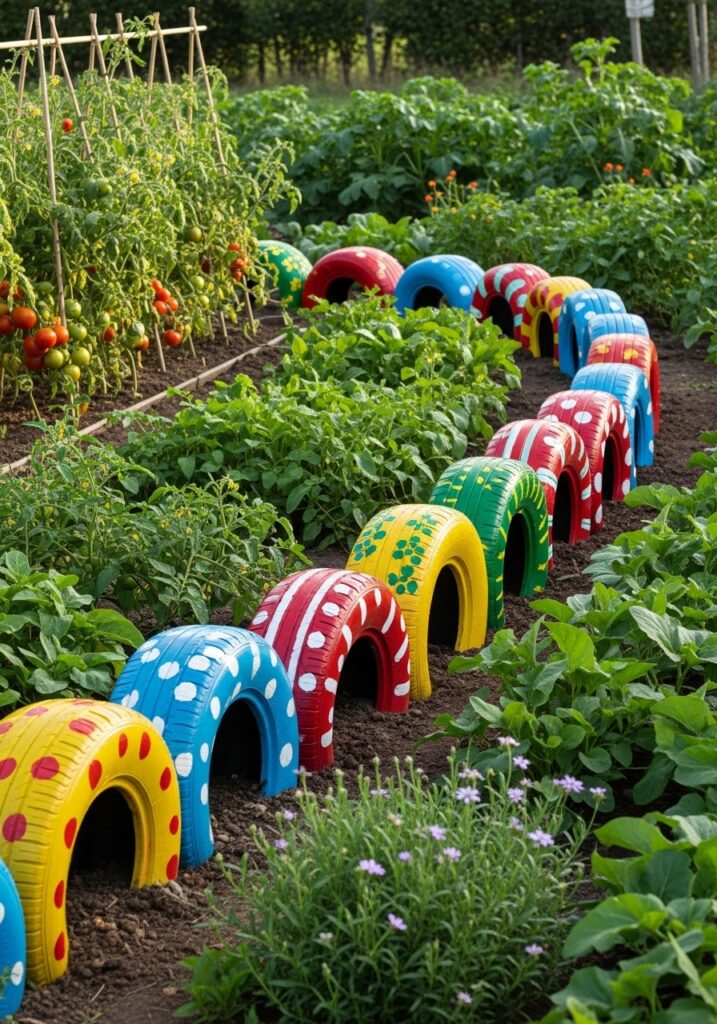
Painted tires make a bright, playful border and raised planters. It is a fun upcycle for a family or kids garden.
I’d suggest using them for flowers rather than food crops, since old tires can leach chemicals into the soil over time.
- Playful and bright
- Upcycled
- Great for kids gardens
33Cut Stone Ashlar Border
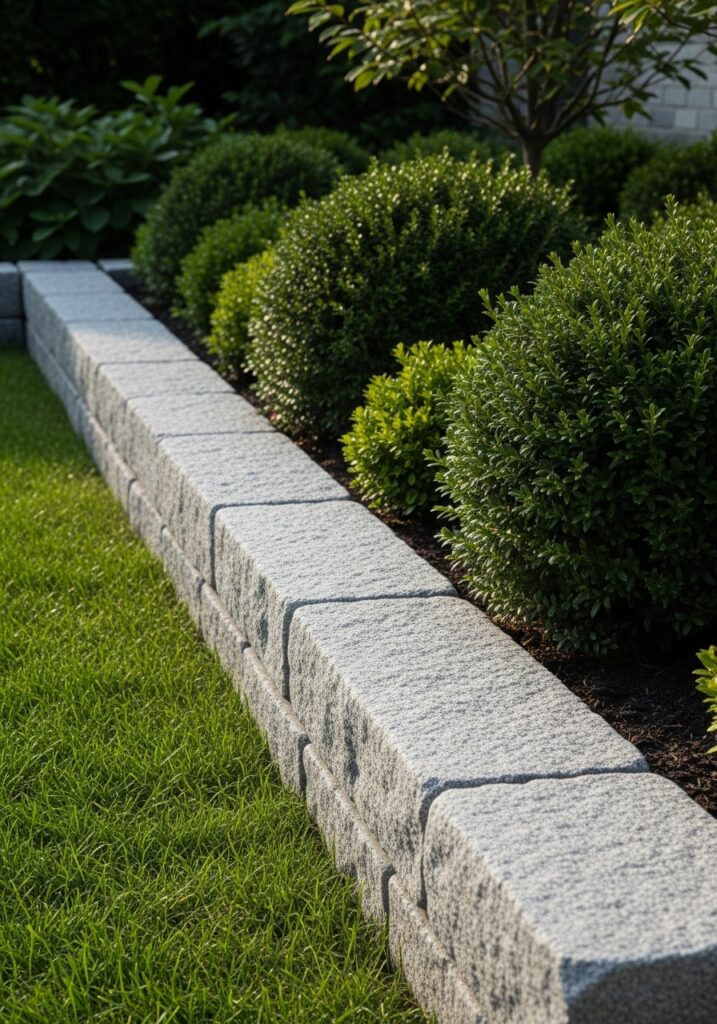
Ashlar stone is cut into neat rectangles for a crisp, formal edge. It is the border you see around classic estate gardens.
It is one of the more expensive options, so I’d suggest using it in the most visible spot, like the bed by your front door.
- Very formal
- Crisp lines
- High end look
34Woven Copper Wire Border
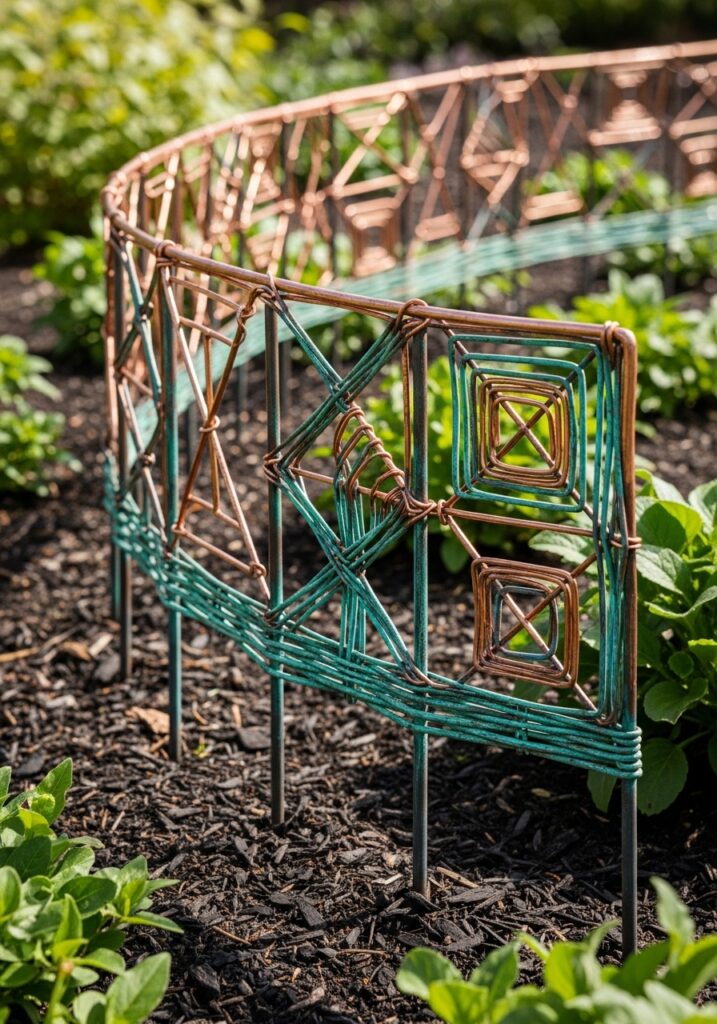
Copper wire woven into low hoops or loops makes a delicate, decorative edge. Over time it ages to a lovely green patina.
Copper is also said to help keep slugs away. It is a small, special detail that works best around a feature bed.
- Delicate and pretty
- Ages beautifully
- Unique detail
35Sandstone Slab Border
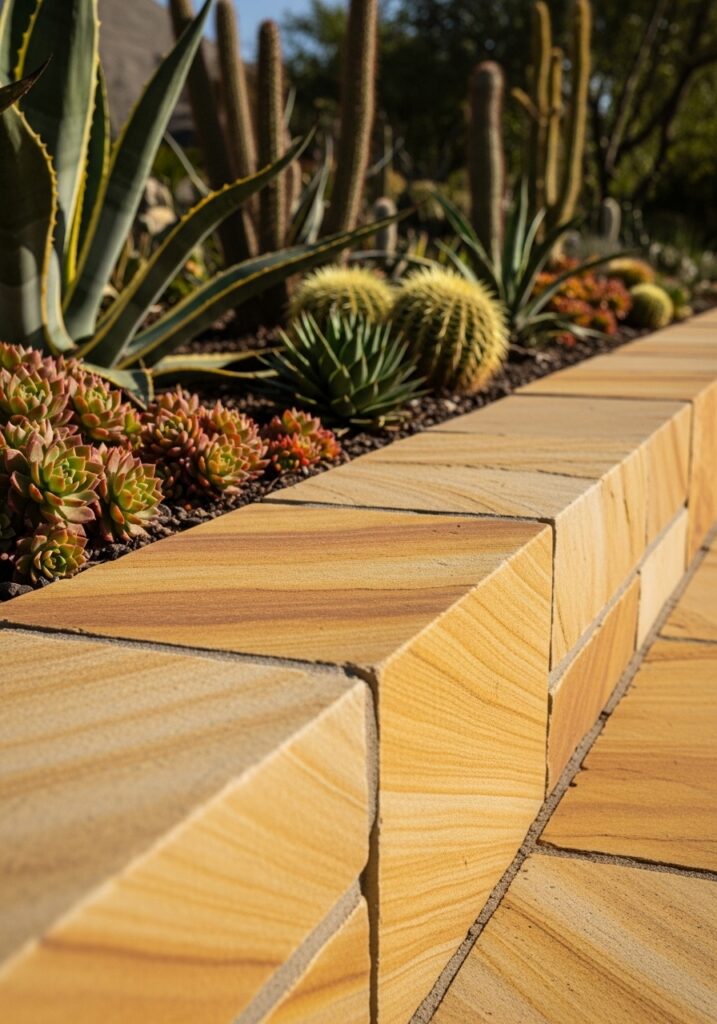
Sandstone slabs bring warm golden and rusty tones to the garden. Set them flat as a wide edge or on end for a taller border.
Sandstone is softer than granite, so seal it if you live somewhere with hard frosts and lots of rain.
- Warm colors
- Natural texture
- Wide flat edge
36Living Thyme Border
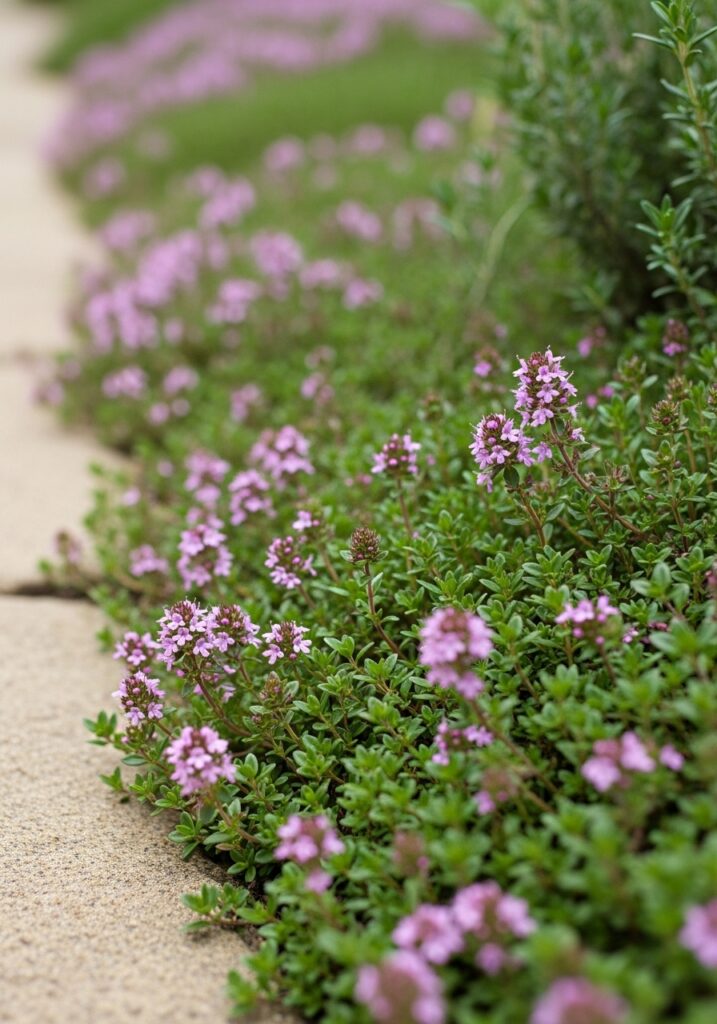
Creeping thyme makes a soft, low border that smells lovely when you brush past. It even tolerates a little foot traffic.
It loves sun and dry soil, so it is perfect along a gravel path or between stepping stones. Bees adore the tiny summer flowers.
- Smells lovely
- Bee friendly
- Handles foot traffic
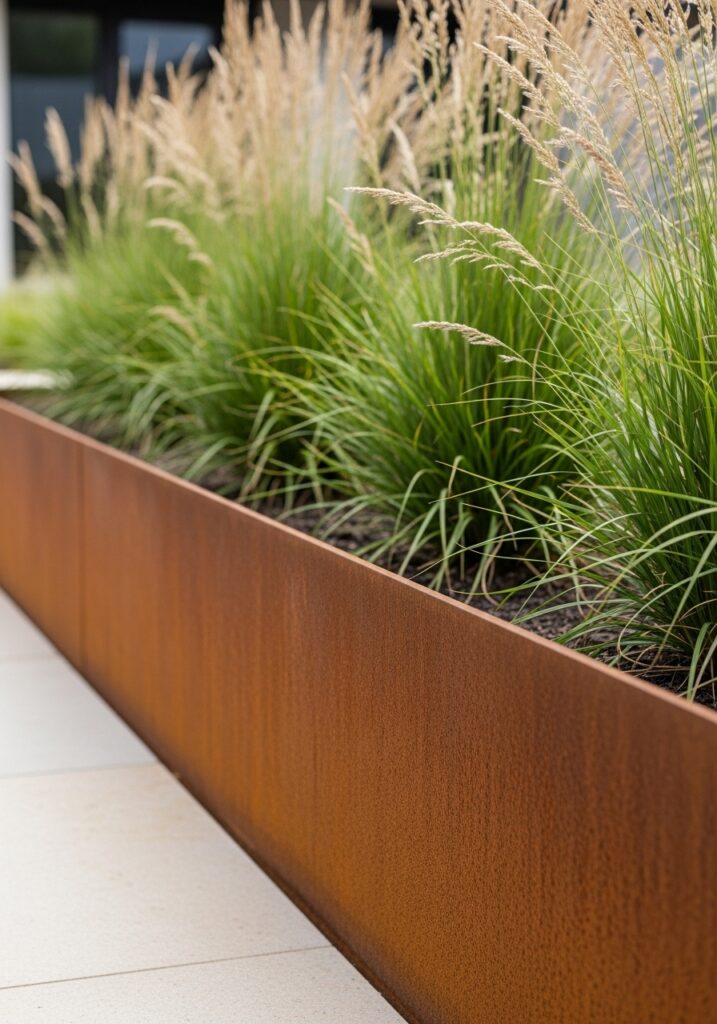
37Corten Steel Border
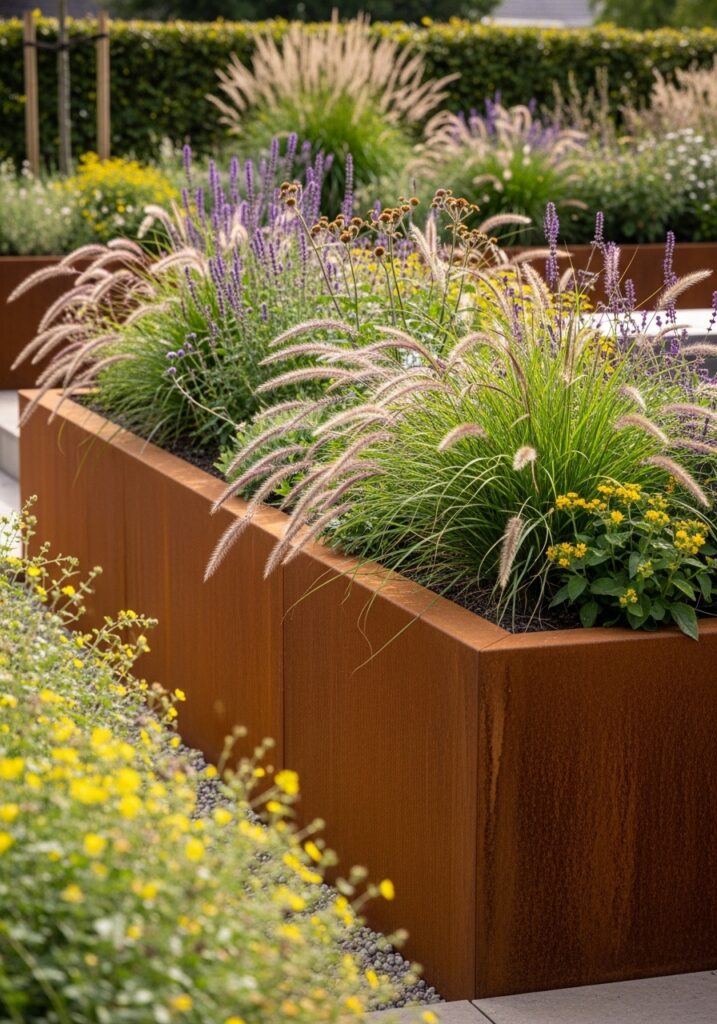
Corten steel is designed to rust on the surface, forming a warm orange layer that protects the metal underneath. It looks stunning against green plants.
Corten steel border edging is a favorite in modern gardens. Keep it away from light colored paving, though, because the rust can stain at first.
- Warm rust color
- Very modern
- Long lasting

My Pick
Corten Steel Border Edging
Weathering steel with a warm rust finish that looks stunning against green.
38Crushed Gravel Border
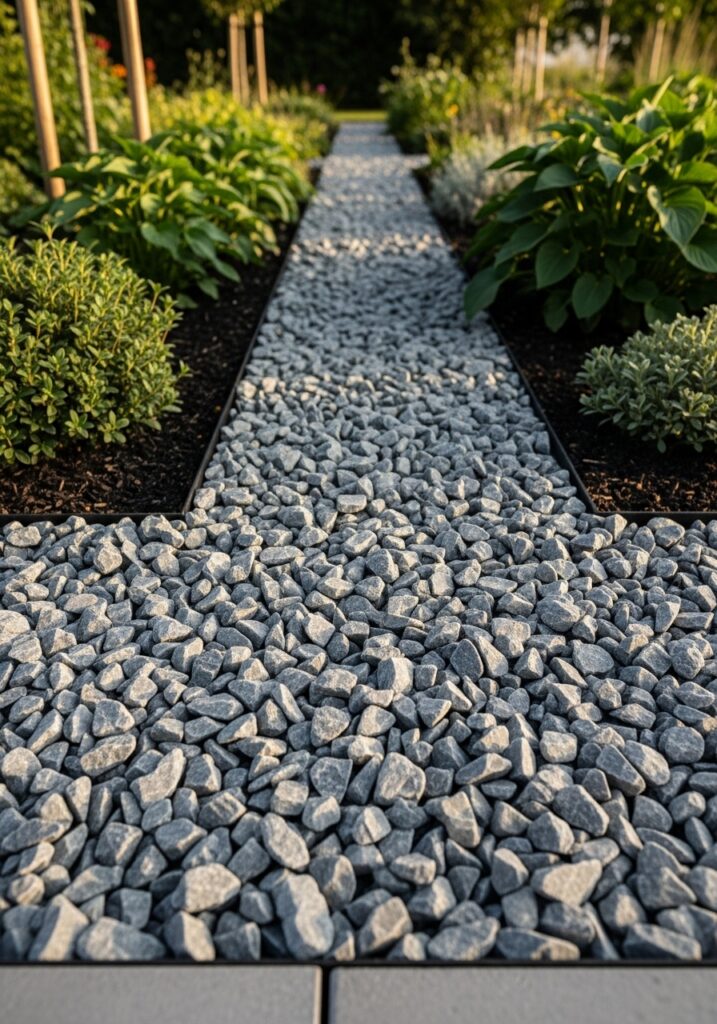
A strip of gravel between lawn and bed makes a clean, simple border that also improves drainage. It is easy to install and cheap to fill.
Lay crushed gravel over landscape fabric, about 2 inches deep. Angular crushed gravel locks together better than round pebbles and stays put.
- Simple and clean
- Better drainage
- Easy to fill

My Pick
Crushed Gravel
Angular gravel that locks together for a clean, well drained border strip.
39Redwood Border Boards
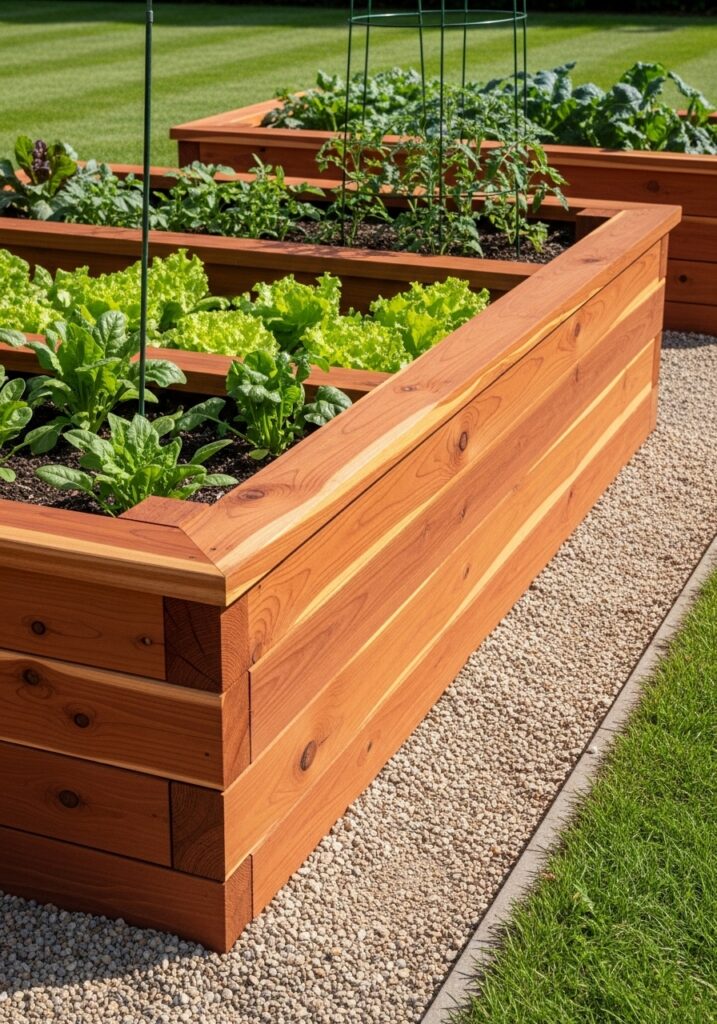
Redwood boards make a warm, natural edge that resists rot far better than most woods. They suit vegetable gardens and raised beds especially well.
Redwood landscape boards can be cut to any length. Stake them on the inside of the bed so the stakes stay hidden.
- Naturally rot resistant
- Warm wood tone
- Easy to cut
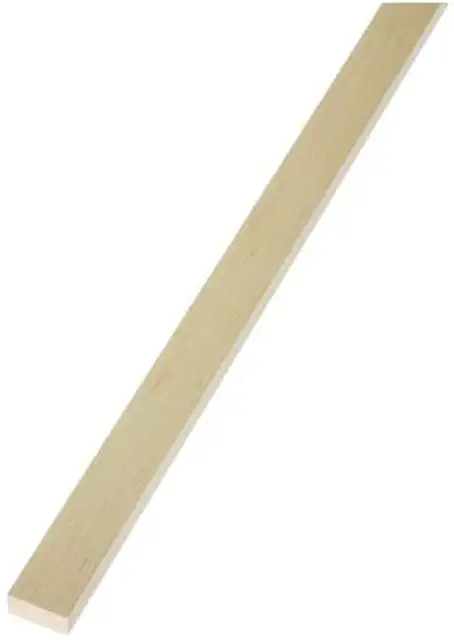
My Pick
Redwood Landscape Boards
Naturally rot resistant boards for warm wooden edges and raised beds.
40Lava Rock Border
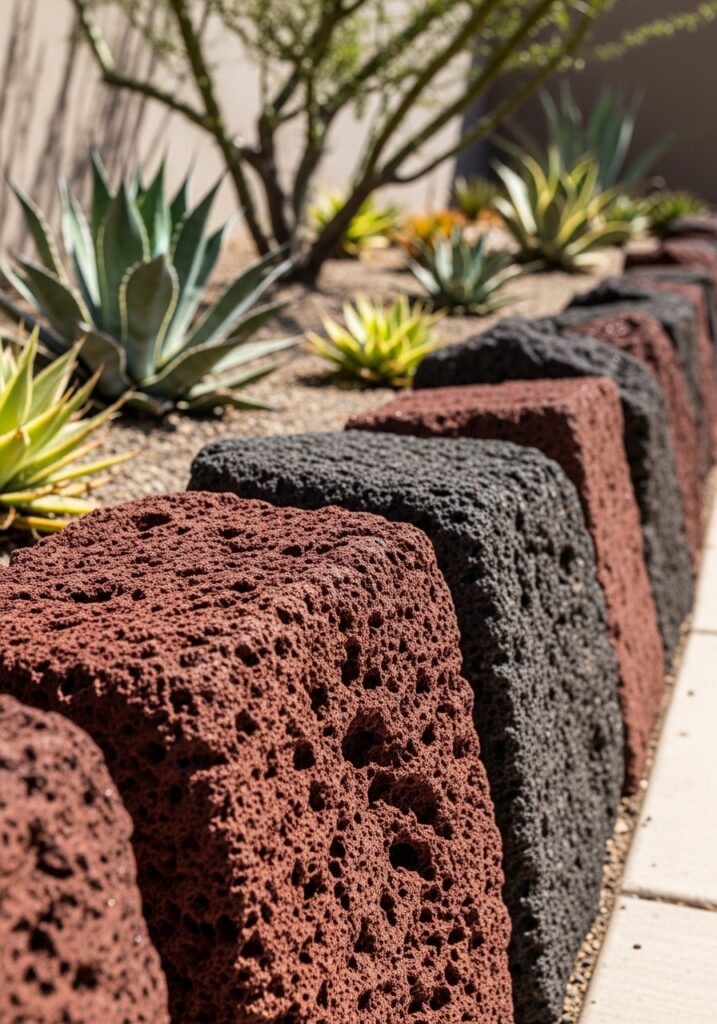
Red or black lava rock makes a bold, colorful border that is very light to carry. It works especially well in desert and tropical style gardens.
Lava rock holds heat, so it is great with sun loving plants. Wear gloves when handling it because the edges are rough.
- Bold color
- Lightweight
- Great for desert gardens

My Pick
Lava Rock
Bold, lightweight volcanic rock for colorful desert and tropical borders.
41Victorian Rope Top Tile Border
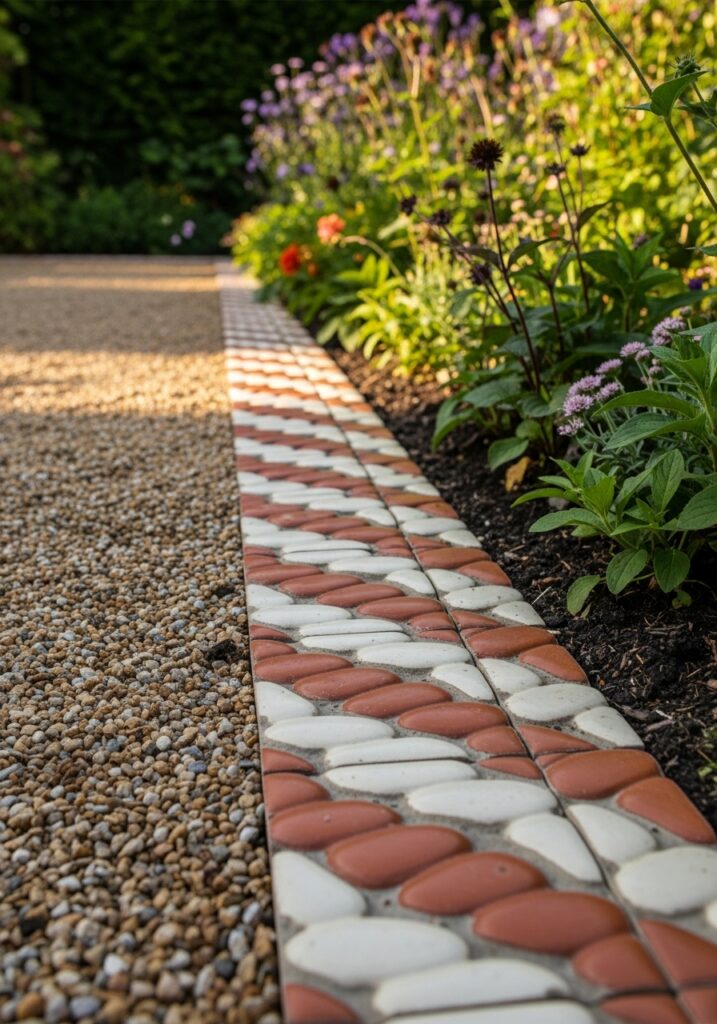
Victorian style edging tiles have a twisted rope pattern along the top. They give paths and beds a charming, old fashioned finish.
Set them in a narrow trench with a little sand and gravel underneath, and tap them level with a rubber mallet.
- Old fashioned charm
- Pretty detail
- Neat path edges
42Living Mondo Grass Border
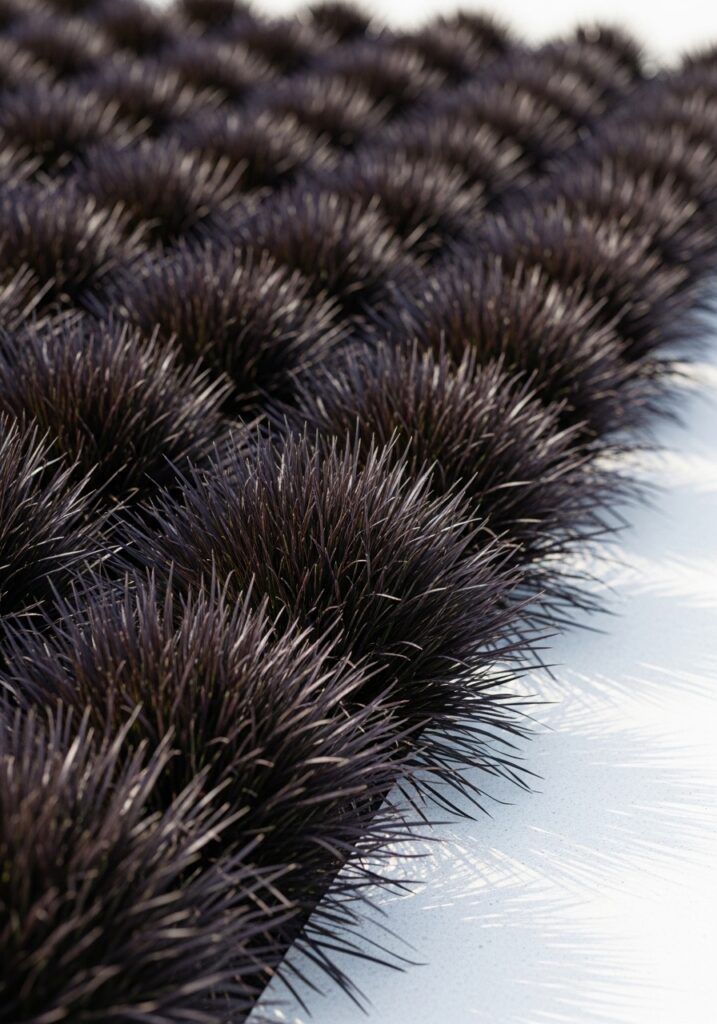
Dwarf mondo grass forms tidy little evergreen tufts that make a soft, modern edge. It looks especially sharp in Japanese style gardens.
It grows slowly, so plant it close together, about 4 to 6 inches apart, for a full border sooner.
- Evergreen
- Soft modern look
- Very low upkeep
43Poured Concrete Mow Strip
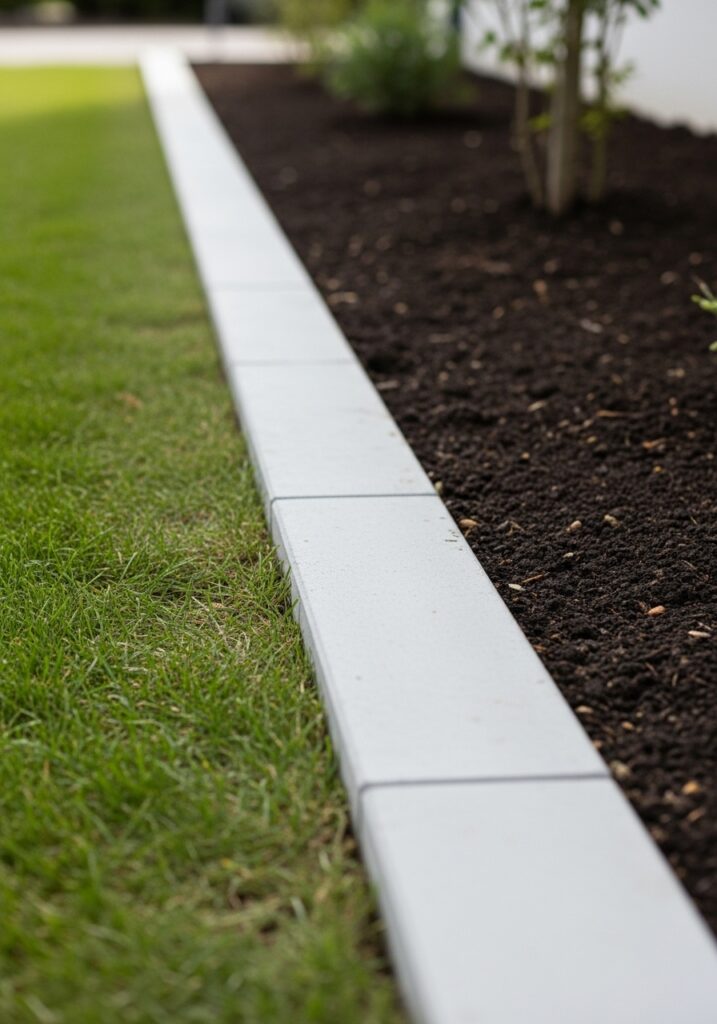
A poured concrete strip between lawn and bed is the ultimate low maintenance border. Your mower runs along it and you never edge by hand again.
Use flexible form boards to pour smooth curves, and cut control joints every few feet so the concrete does not crack randomly.
- No more hand edging
- Smooth curves
- Permanent
44Hazel Hurdle Border
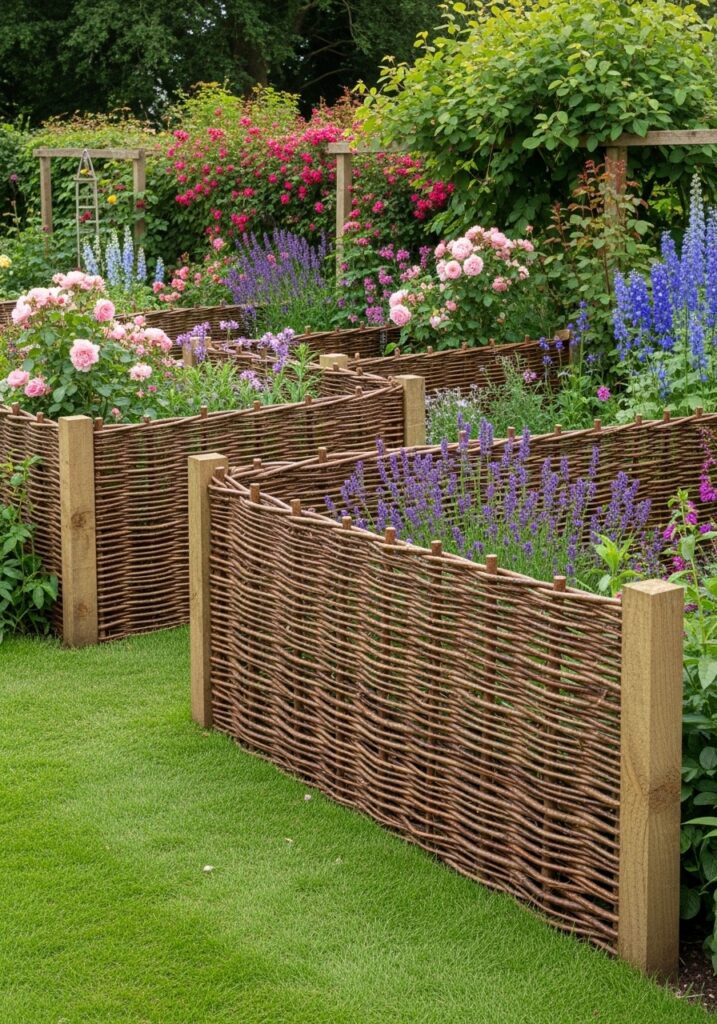
Hazel hurdles are traditional woven panels, sturdier and more rustic than willow. They make lovely backdrops for flower borders.
They last around eight to ten years outdoors. Set them on a little gravel rather than straight into soil to slow down rot.
- Traditional craft
- Rustic backdrop
- Sturdy panels
45Decomposed Granite Border
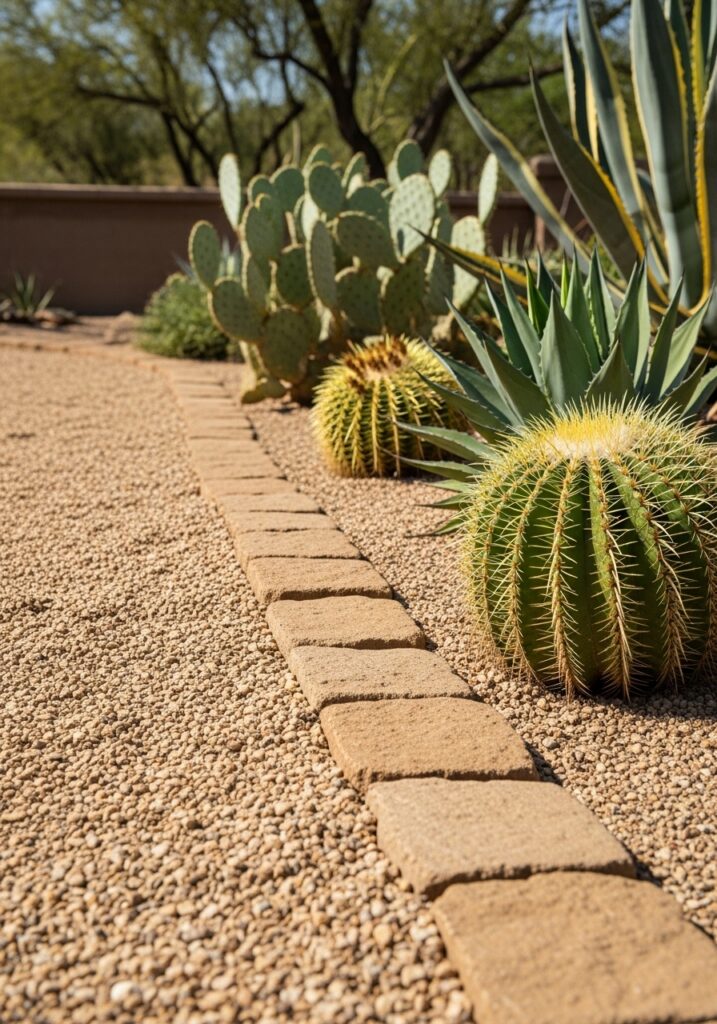
Decomposed granite is a fine, sandy gravel that packs down firmly. It makes a soft, natural looking border strip and a great path surface.
Pack decomposed granite down in layers with a tamper, lightly misting each layer with water. That is the secret to a firm surface that does not wash away.
- Natural look
- Packs firm
- Great for paths too

My Pick
Decomposed Granite
Fine granite that packs down firm for natural border strips and paths.
46Slate Mulch Border
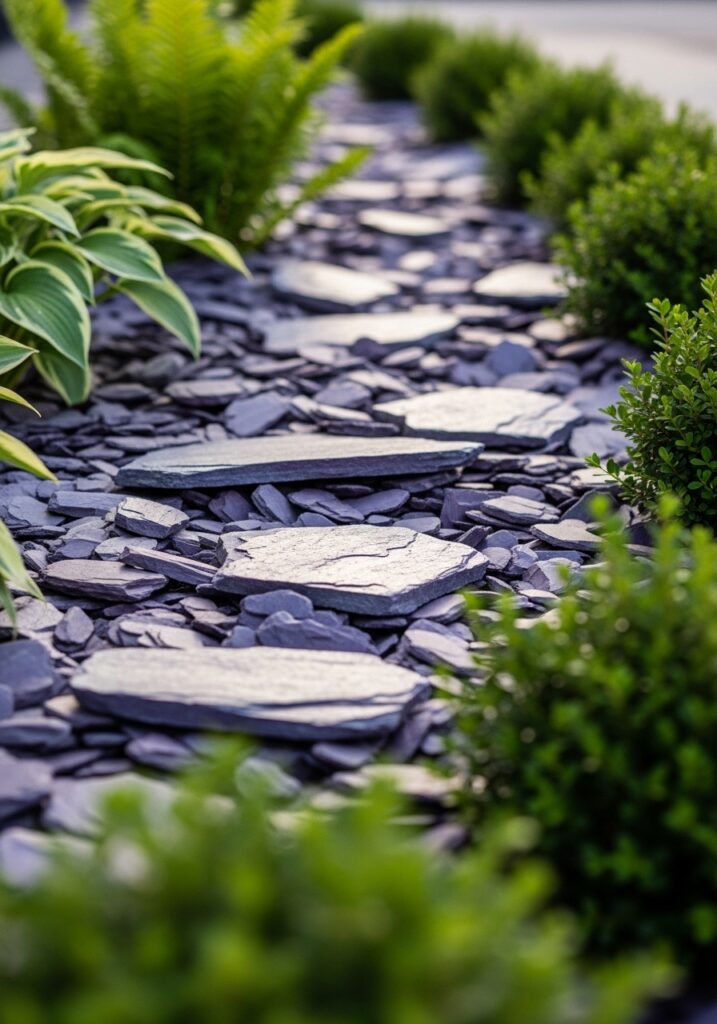
Slate chippings make a cool gray or plum colored border that looks smart and modern. They never break down like bark mulch.
Slate mulch looks darker and richer when wet, so it really shines on rainy days. Lay it over fabric to keep weeds out.
- Modern color
- Never breaks down
- Looks great wet
47Cedar Split Rail Border
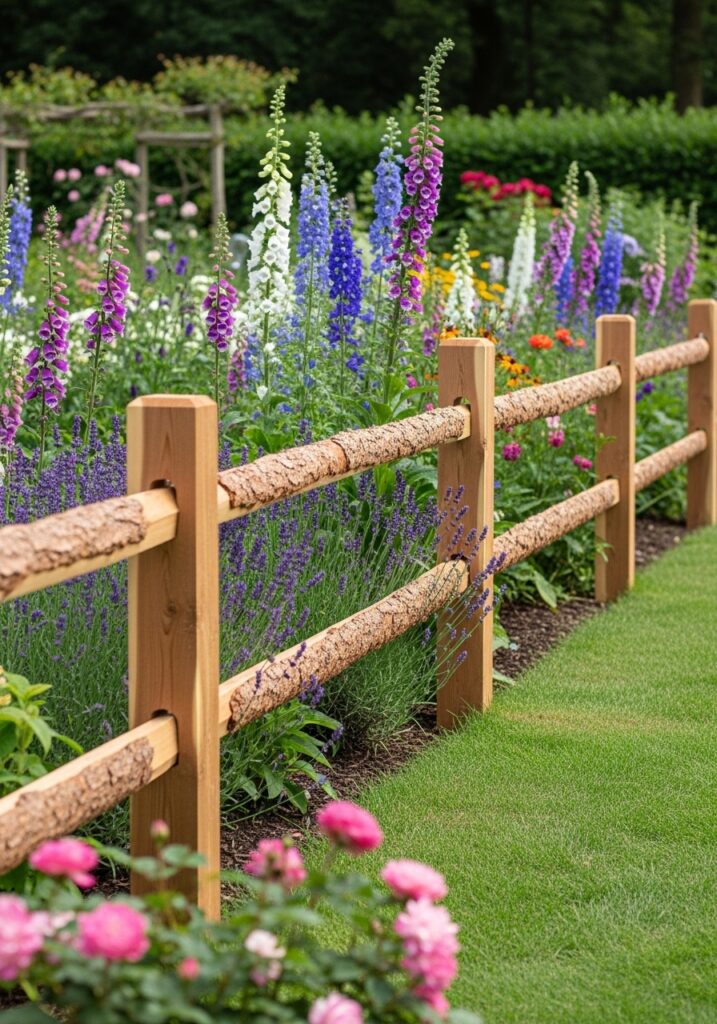
A low split rail fence gives a country style edge to a large bed or a front yard. Cedar weathers to a beautiful silver gray.
It is more of a frame than a barrier, so pair it with a simple edging strip underneath if you need to stop grass creeping in.
- Country style
- Weathers beautifully
- Frames large beds
48Marble Chip Border
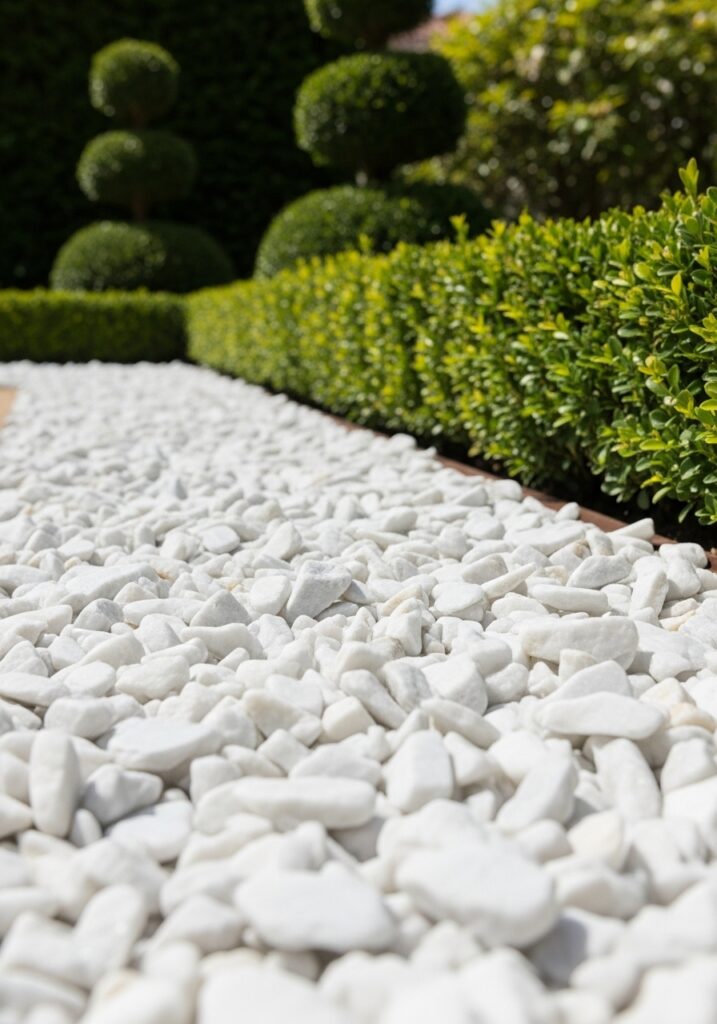
White marble chips make a bright, crisp border that stands out beautifully against green lawn and dark plants.
White marble chips raise the soil pH a little over time, so keep them away from acid loving plants like azaleas and blueberries.
- Bright white
- Crisp contrast
- Elegant look

My Pick
White Marble Chips
Bright white chips for a crisp border that pops against green lawn.
49Living Alyssum Border
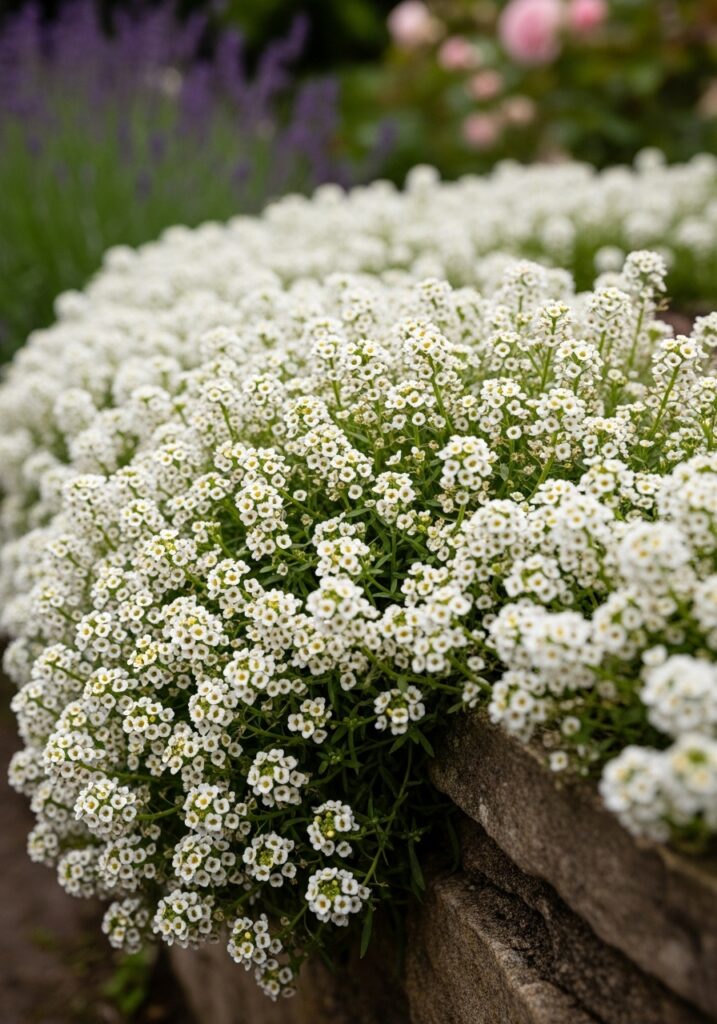
Sweet alyssum makes a frothy carpet of tiny white or purple flowers along a bed edge. It smells sweet like honey.
It grows fast from seed and blooms for months. Trim it back by a third if it gets leggy in midsummer and it will flower again.
- Honey scent
- Blooms for months
- Cheap from seed
50Railway Ballast Style Stone Border
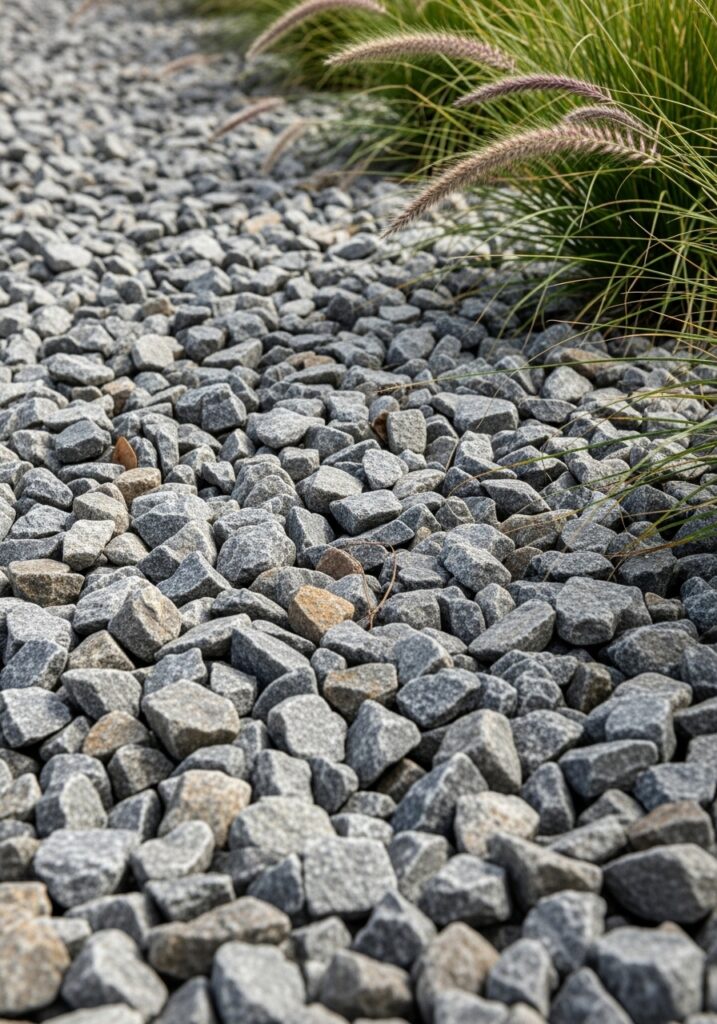
Chunky angular stone, like the kind used under rail tracks, makes a rugged, industrial looking border. It locks together and stays put.
Buy clean, new crushed stone rather than real used ballast, which can carry oil and chemicals.
- Rugged look
- Locks together
- Industrial style
51Treated Landscape Timber Border
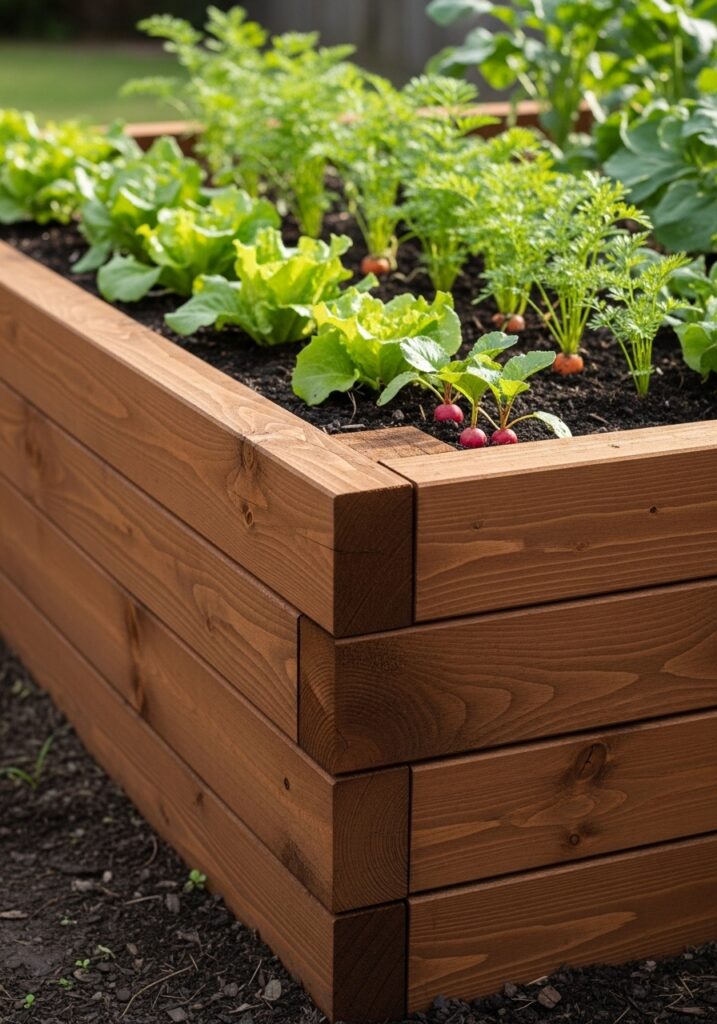
Landscape timbers are long, flat sided wooden posts made for edging. They stack well and make sturdy raised bed walls.
Landscape timbers treated for ground contact last for years. Line the inside with plastic if you are growing vegetables, so soil does not touch the wood directly.
- Sturdy and simple
- Stacks easily
- Long lasting

My Pick
Landscape Timbers
Flat sided timbers that stack easily into sturdy borders and bed walls.
52Pea Gravel Border
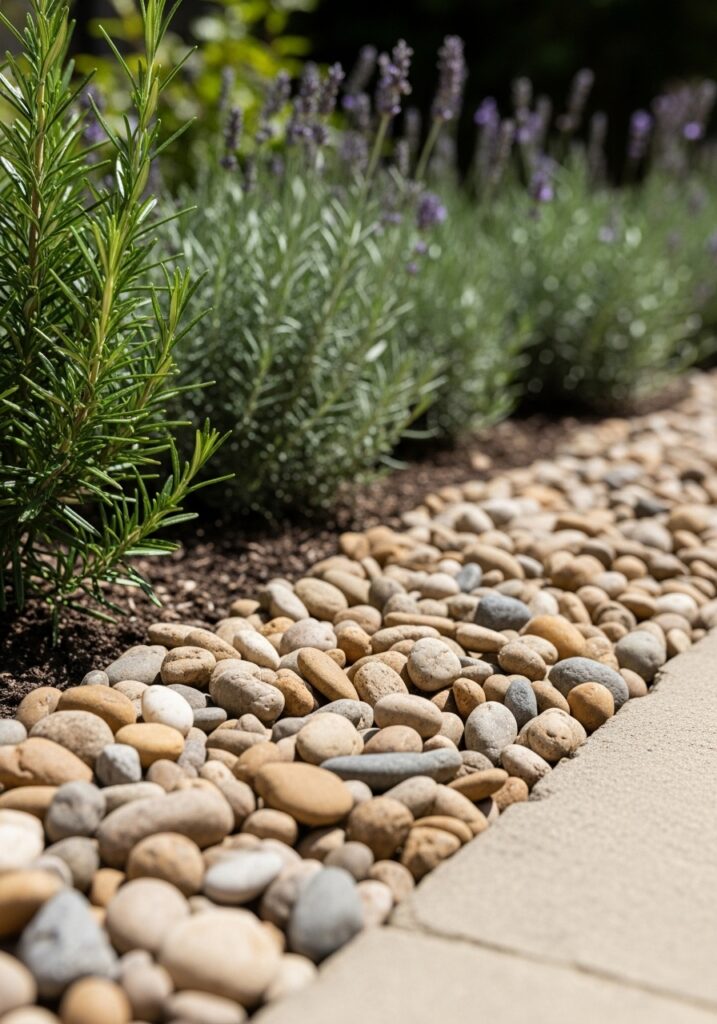
Pea gravel is small, smooth and comfortable underfoot. As a border it gives a soft, relaxed look that suits cottage and Mediterranean gardens.
Pea gravel rolls around, so contain it with a metal or plastic edge on both sides. Otherwise it ends up in the lawn and the mower throws it.
- Soft relaxed look
- Comfortable underfoot
- Affordable
My Pick
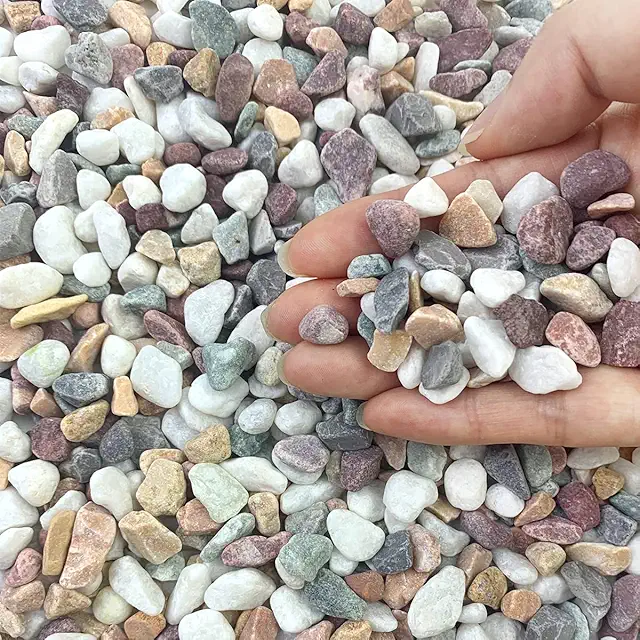
Pea Gravel
Small, smooth stones for a soft, relaxed border that feels good underfoot.
53Living Catmint Border
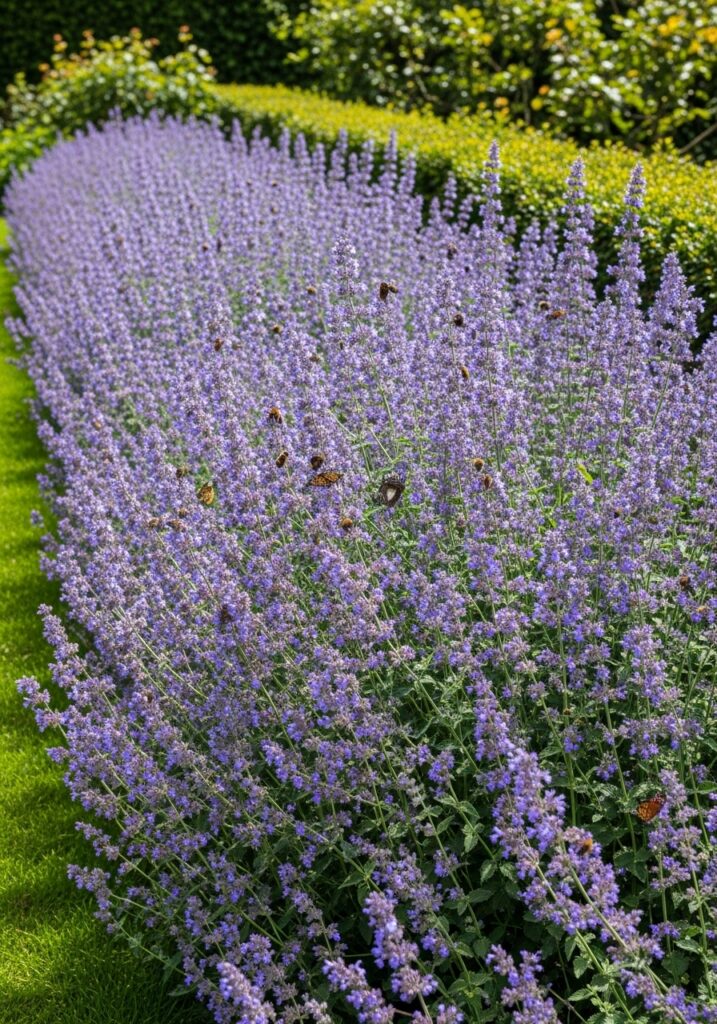
Catmint makes a soft, billowy edge of lavender blue flowers that bloom on and off all summer. Bees and butterflies love it.
Cut it back by half after the first flush of flowers and it will bloom again. Your cat may also love it a little too much.
- Long blooming
- Pollinator magnet
- Soft and billowy
54Rusty Metal Border
Old metal scraps, like rusty bed frames or wheel rims, make quirky, artistic borders. Every piece is a conversation starter.
Check for sharp edges and file them smooth before you install anything, especially in a garden where children play.
- Quirky and artistic
- Upcycled
- One of a kind
55Fieldstone Dry Stack Border
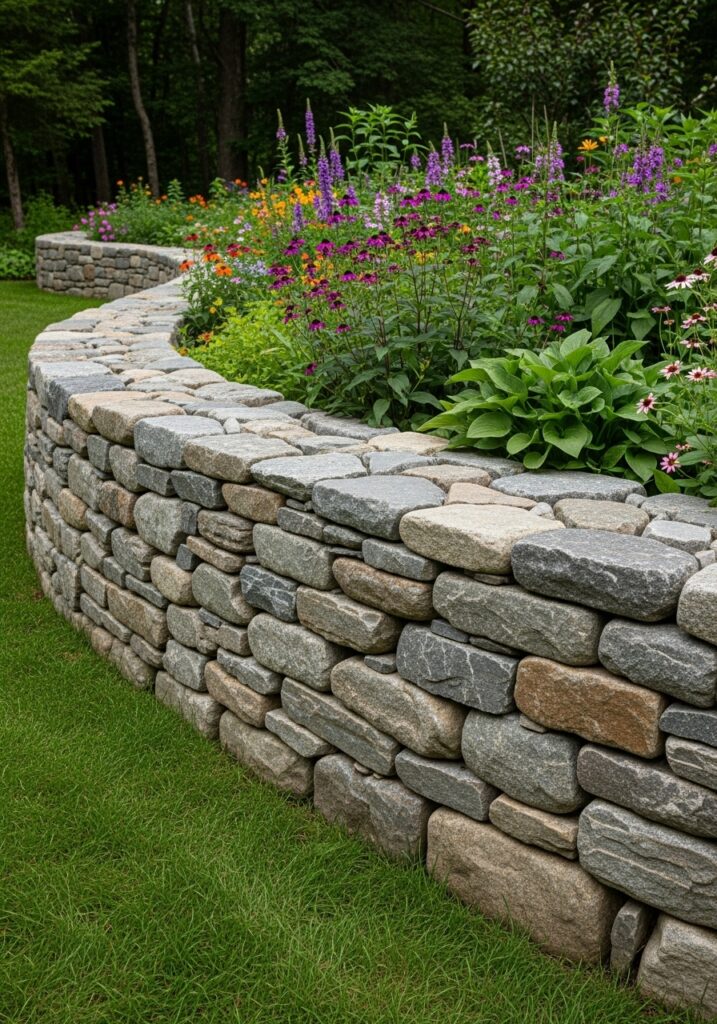
Fieldstones collected from your own land make the most natural border of all. A dry stacked low wall looks like it grew there.
It costs nothing but effort if you have stones on your property, and it is a deeply satisfying weekend project.
- Free if you have stones
- Most natural look
- Very durable
Project Card · 1 weekend · Medium
Materials Needed
- Fieldstones in mixed sizes
- Shovel and garden rake
- Crushed gravel for the base
- Rubber mallet
- Work gloves
- String line and stakes
How to Make It
- Mark the border line with stakes and string.
- Dig a shallow trench about 4 inches deep and fill it with crushed gravel.
- Set the largest, flattest stones in the base row, pressing them into the gravel.
- Add the next layer, placing each stone across the joint below it.
- Tilt each layer slightly back toward the bed and fill gaps with small stones.
PRO TIP Sort your stones by size before you start building. It is much faster to pick the right stone from a sorted pile than to dig through a heap.
56Recycled Brick Border
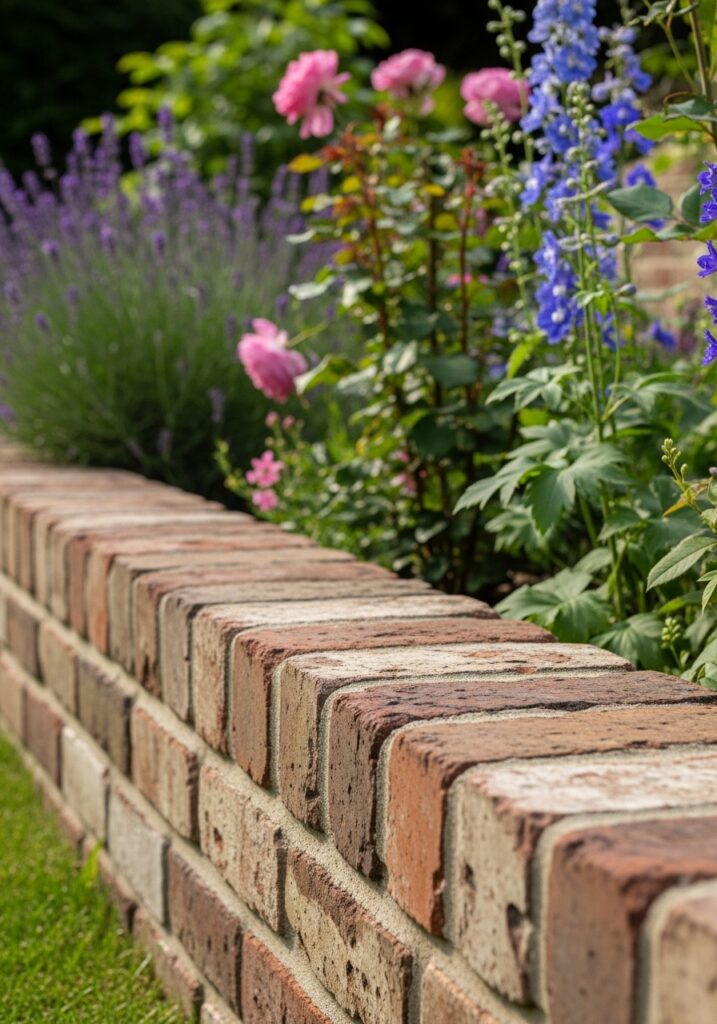
Old bricks have chips, color variations and character that new bricks simply cannot copy. They make a warm, lived in border.
Check local listings and demolition sites. Old bricks are often free or cheap, and every border ends up unique.
- Full of character
- Often free
- Eco friendly
57Living Germander Border
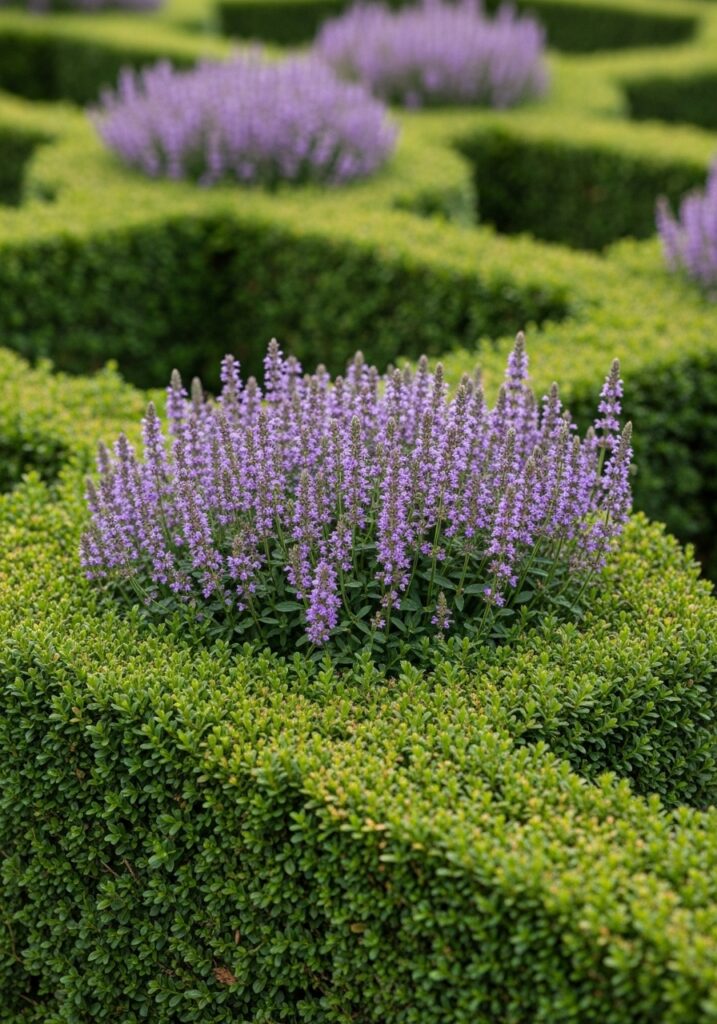
Germander is a small, aromatic shrub that clips into a neat low hedge, like boxwood, but tougher in hot, dry gardens.
It has pretty pink flowers in summer and handles drought well once settled. It is a great alternative where boxwood struggles.
- Drought tough
- Pretty pink flowers
- Boxwood alternative
58Living Santolina Border
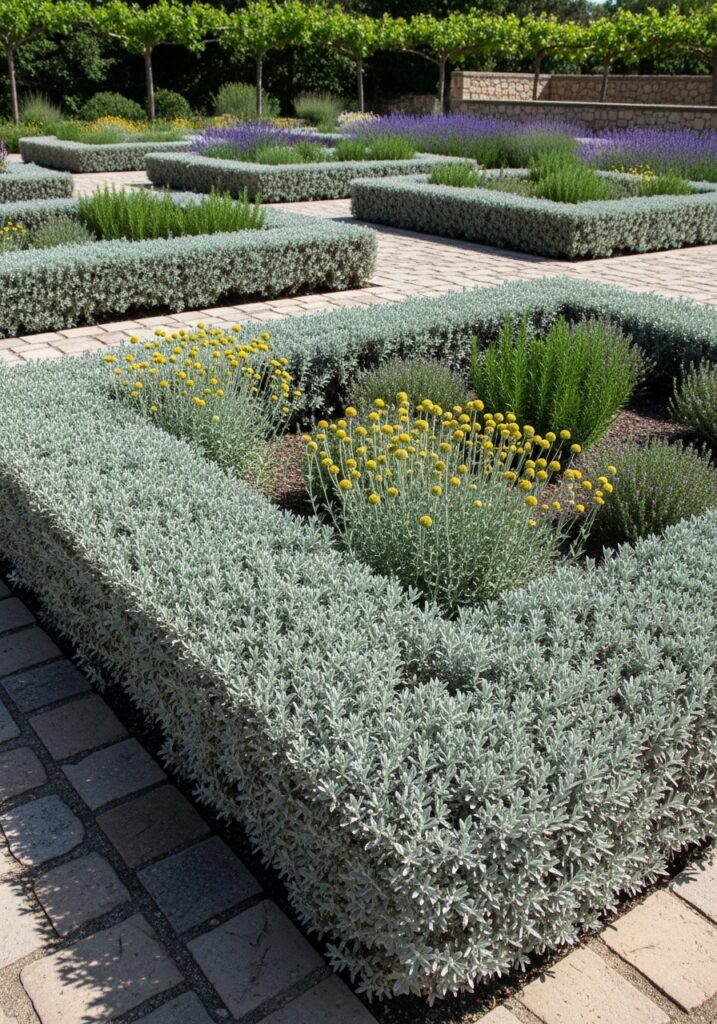
Santolina, also called cotton lavender, has soft silver foliage that forms a neat, rounded edge. It looks wonderful next to purple flowers.
Clip it in spring to keep it tidy. It loves full sun and poor, sandy soil, so do not fuss over it with rich compost.
- Silver foliage
- Loves poor soil
- Neat rounded shape
59Scalloped Terracotta Edging Tiles
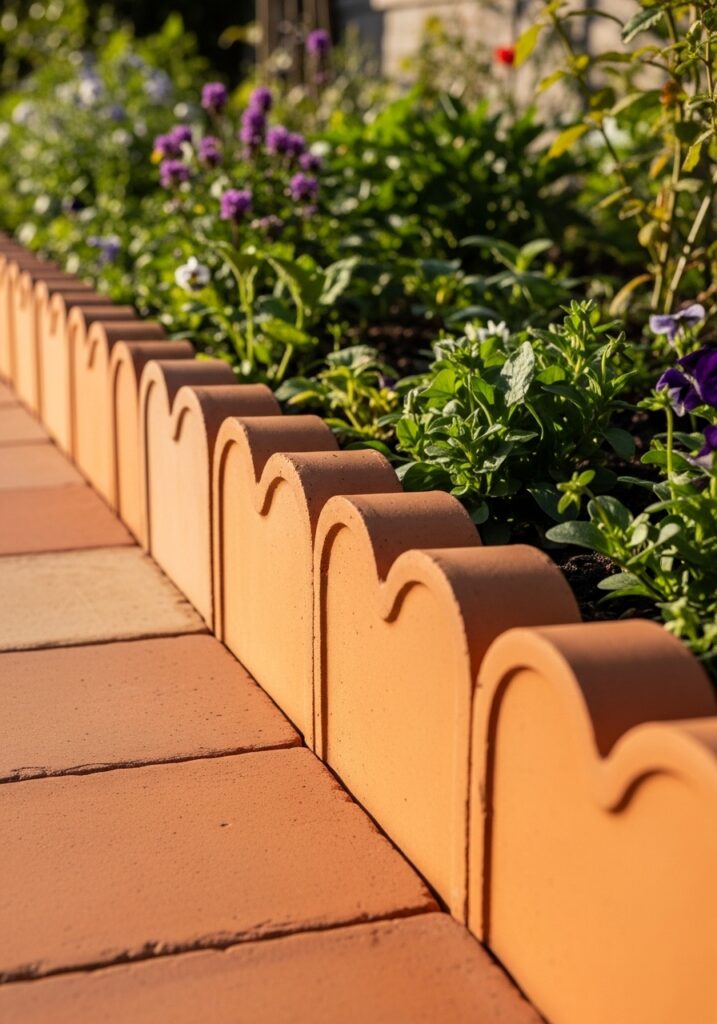
Scalloped terracotta tiles have curved tops that give a bed a soft, decorative finish. They are a lovely detail around herb gardens and roses.
Lay them close together in a narrow trench and tap them level. They look best along gentle curves rather than long straight runs.
- Decorative curves
- Warm color
- Perfect for herb beds
60River Stone Mortared Border
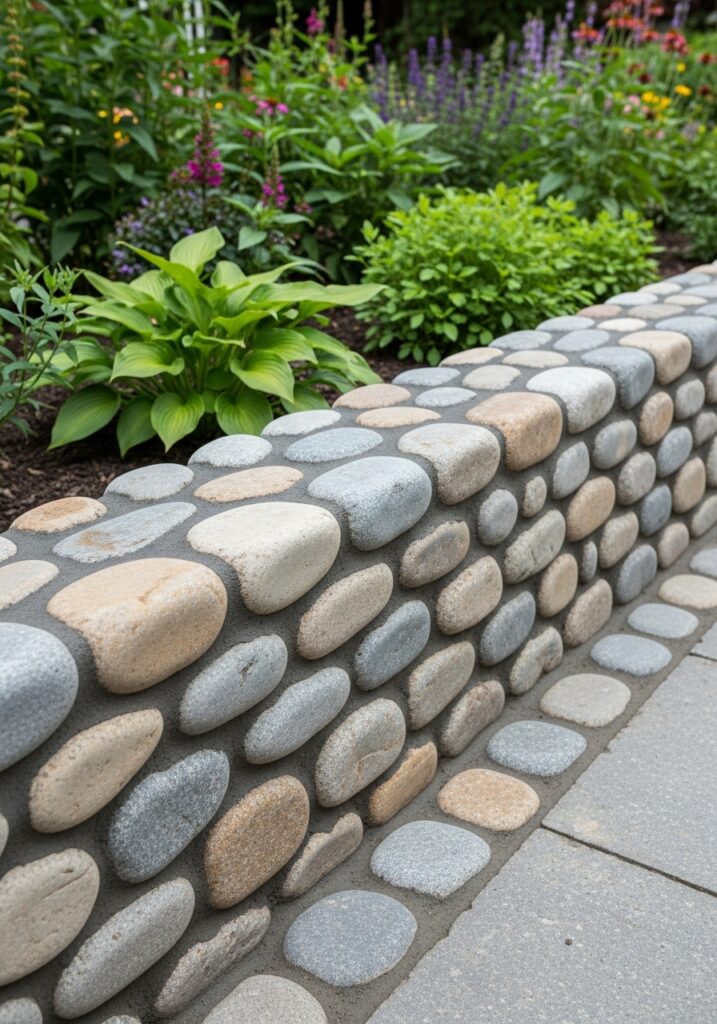
Smooth river stones set in mortar make a permanent, polished border with a natural look. It is a great choice where you want stone that never shifts.
Press each stone halfway into the mortar and wipe any smears off the faces with a damp sponge before it sets.
- Permanent
- Polished look
- Never shifts
Frequently Asked Questions
What is the cheapest garden border?
Plastic edging, gravel strips and free materials like fieldstones, salvaged bricks or woven prunings are the most budget friendly. Planted borders like alyssum also cost very little when grown from seed.
What garden border lasts the longest?
Stone, brick, steel, aluminum and poured concrete last the longest. Most will last decades with almost no maintenance.
How do I stop grass from growing into my flower beds?
Use an edge that goes at least 4 inches into the soil, like steel, aluminum or plastic edging. A flush mow strip of pavers or concrete also helps, because your mower can trim right to the edge.
How deep should garden edging be buried?
Bury most edging about 4 to 6 inches deep, leaving a small lip above the soil. Bricks and stones should be buried about halfway so they stay firm.
Final Thoughts on Garden Border Ideas
A garden border is one of the quickest ways to make your whole yard look cared for. Stone, metal, wood or living plants, the right edge frames your beds and keeps everything in its place.
Pick one bed this weekend and give it an edge. Honestly, you will be surprised how much of a difference one simple line can make.


Amir Ali is the founder and site administrator of HomeDecorEdge, a modern home decor and interior design platform. Since starting the site, he has combined his passion for interior design, practical styling, and color coordination with hands-on content strategy and site management. He guides authors, curates high-quality articles, and ensures readers have access to actionable, visually inspiring, and user-focused home decor advice for apartments, small rooms, and family homes.