

Bored goats are destructive goats. A herd with nothing to climb, push, chew, or investigate will test every weak point in the fence until they find one worth escaping through, then spend the afternoon eating the garden. The good news is that goat enrichment does not require expensive purpose-built equipment — a tractor tire, a cable spool, a stack of pallets, or a hanging rope provides everything a goat needs to stay mentally engaged and physically active throughout the day. These DIY goat toy ideas use cheap or free materials to build a complete enrichment setup that keeps any herd genuinely happy.
This post contains affiliate links. If you purchase through these links I may earn a small commission at no extra cost to you.
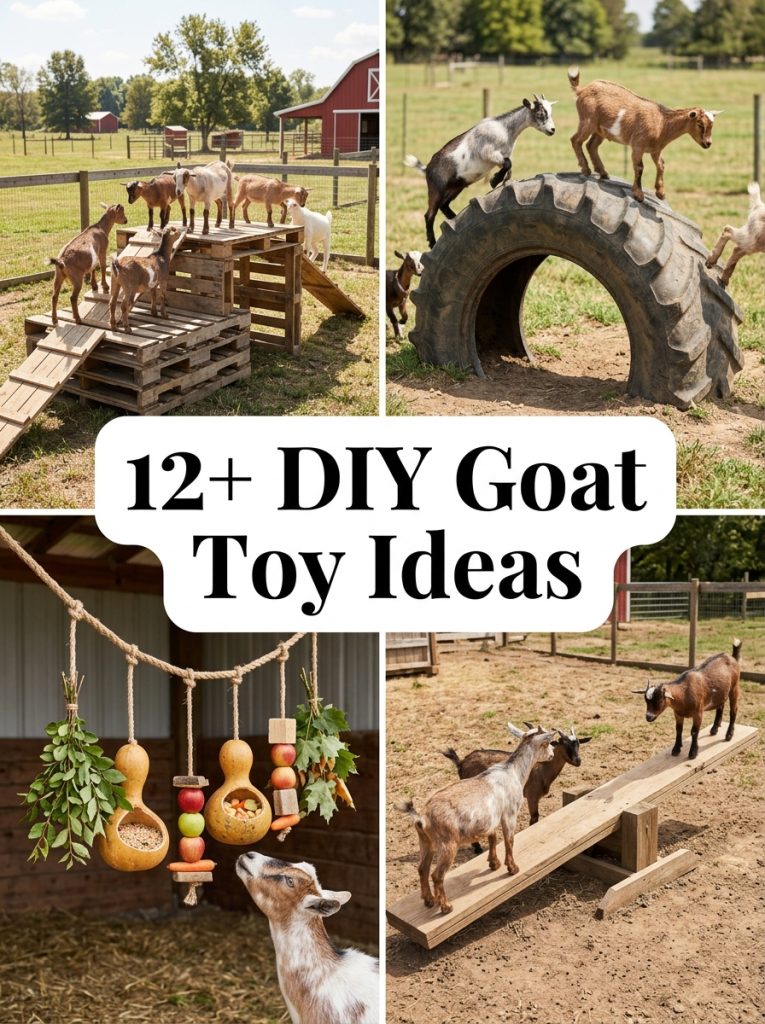
A bored goat is always looking for trouble — a busy goat is always looking for the next thing to climb.
1. Roll Out an Enrichment Ball
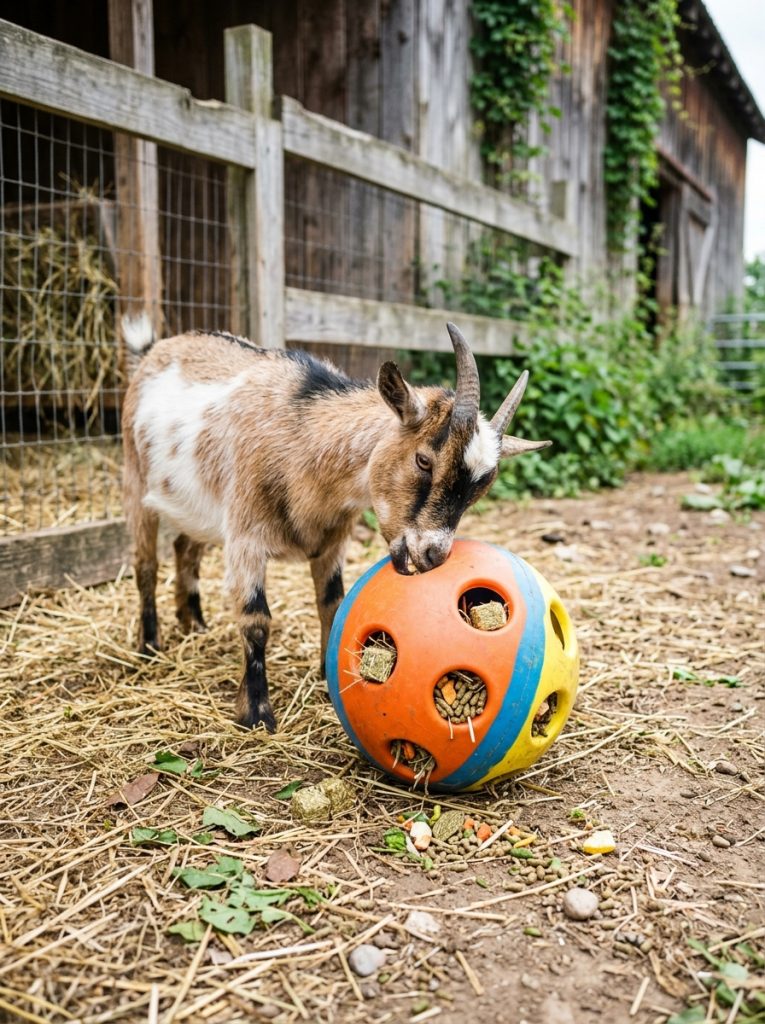
homedecoredgeofficial
An enrichment ball is the easiest goat toy to introduce and one of the most effective — fill it with hay, treats, or small pieces of fruit and the goats spend extended time nudging, rolling, and manipulating it to get the food out. This goat toy enrichment ball is sized and durable enough to handle rough goat play without cracking. Rotate different treats inside throughout the week so the ball stays interesting rather than becoming predictable.
Materials Needed:
- Large durable enrichment ball
- Hay pellets or small treats for filling
- Rope for hanging if preferred over rolling
How to Make It:
- Fill the ball with hay pellets, dried fruit pieces, or small crackers.
- Place in the pen at ground level for rolling enrichment.
- Alternatively tie a rope through the ball attachment point and hang at goat nose height.
- Refill every one to two days to maintain interest.
- Rotate filling types weekly so the reward stays unpredictable and engaging.

Goat Enrichment Ball Toy
Durable treat-filled enrichment ball that keeps goats mentally engaged through foraging and rolling.
Check Price on Amazon2. Build a Wooden Climbing Platform
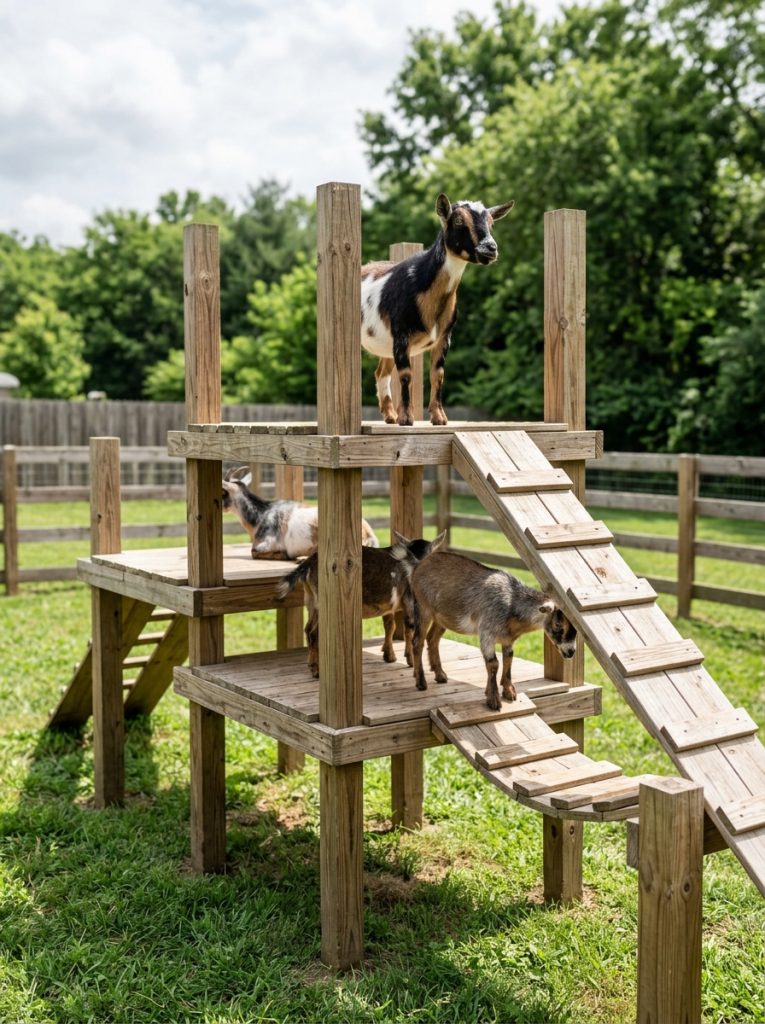
homedecoredgeofficial
Goats are instinctively driven to seek elevated positions — in the wild this behavior keeps them safe from predators, and in a backyard pen it keeps them mentally stimulated and physically active. A wooden climbing platform with steps or ramps at different heights gives the whole herd opportunities to establish a hierarchy by claiming the highest spot. This goat climbing platform wood shows the stable multi-level design to aim for when building from scratch.
Materials Needed:
- 4×4 posts for legs
- Plywood or decking boards for platform surfaces
- Exterior wood screws
- Non-slip surface material for platform tops
- Sandpaper for all edges
How to Make It:
- Cut four 4×4 posts to the desired platform height — start with 18 to 24 inches for smaller breeds.
- Attach a plywood platform to the top of all four posts using exterior screws.
- Sand all edges completely smooth to prevent splinters.
- Add a non-slip surface like rubber matting or roofing felt to the platform top.
- Build a second lower platform beside the first to create a stepped climbing system.

Wooden Goat Climbing Platform
Stable multi-level wooden platform that satisfies goats’ natural instinct to seek elevated positions.
Check Price on Amazon3. Build a Goat Seesaw Teeter Totter
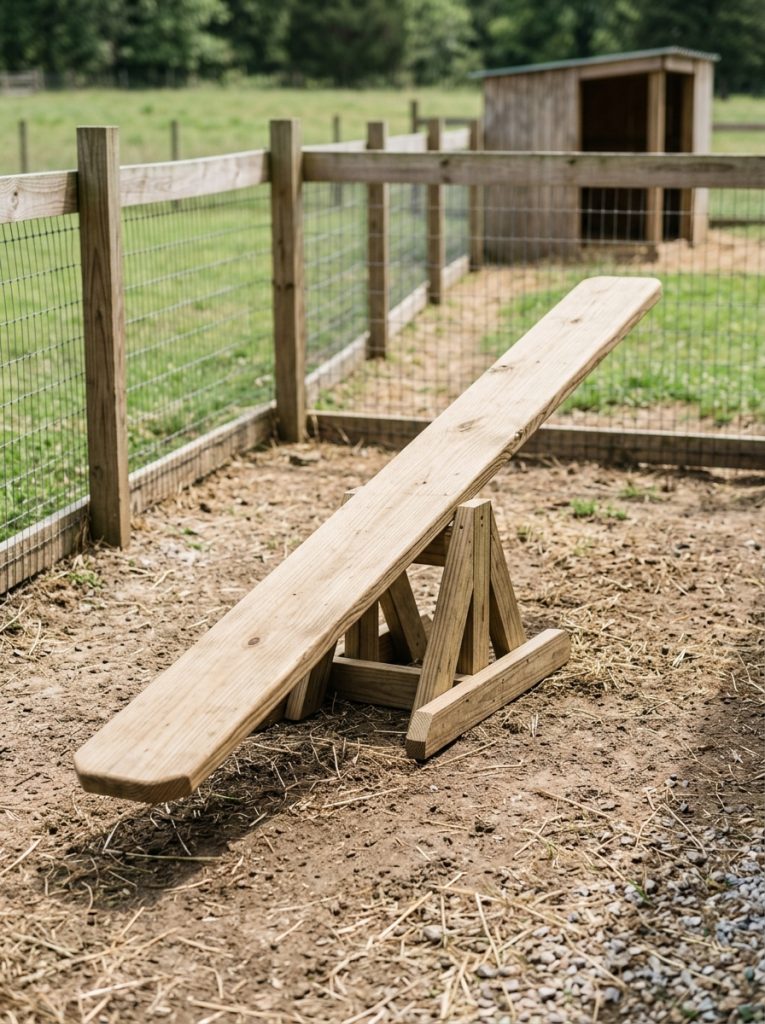
A goat seesaw is one of the most entertaining enrichment builds to watch in action — goats quickly learn to balance on the moving surface and actively seek it out once they discover the rocking motion. This goat seesaw teeter totter shows the simple pivot-and-plank design that takes under an hour to build from basic lumber. The gentle movement challenges goat balance and coordination in a way static platforms cannot. For more goat pen ideas check out these goat pen ideas.
Materials Needed:
- One long 2×10 or 2×12 plank for the seesaw surface
- One central pivot block (4×4 post section)
- Exterior wood screws
- Non-slip grip tape for the plank surface
- Sandpaper for all edges
How to Make It:
- Cut the plank to the desired length — 6 to 8 feet works well for most goat breeds.
- Cut a 4×4 post into a rounded or triangular pivot block about 6 inches tall.
- Attach the pivot block to the center underside of the plank using exterior screws.
- Apply non-slip grip tape or rubber mat strips to the top surface of the plank.
- Sand all edges smooth and place on a flat stable surface in the pen.

Goat Seesaw Teeter Totter
Simple pivot-and-plank seesaw that challenges goat balance and coordination in the pen.
Check Price on Amazon4. Make a Puzzle Feeder Toy
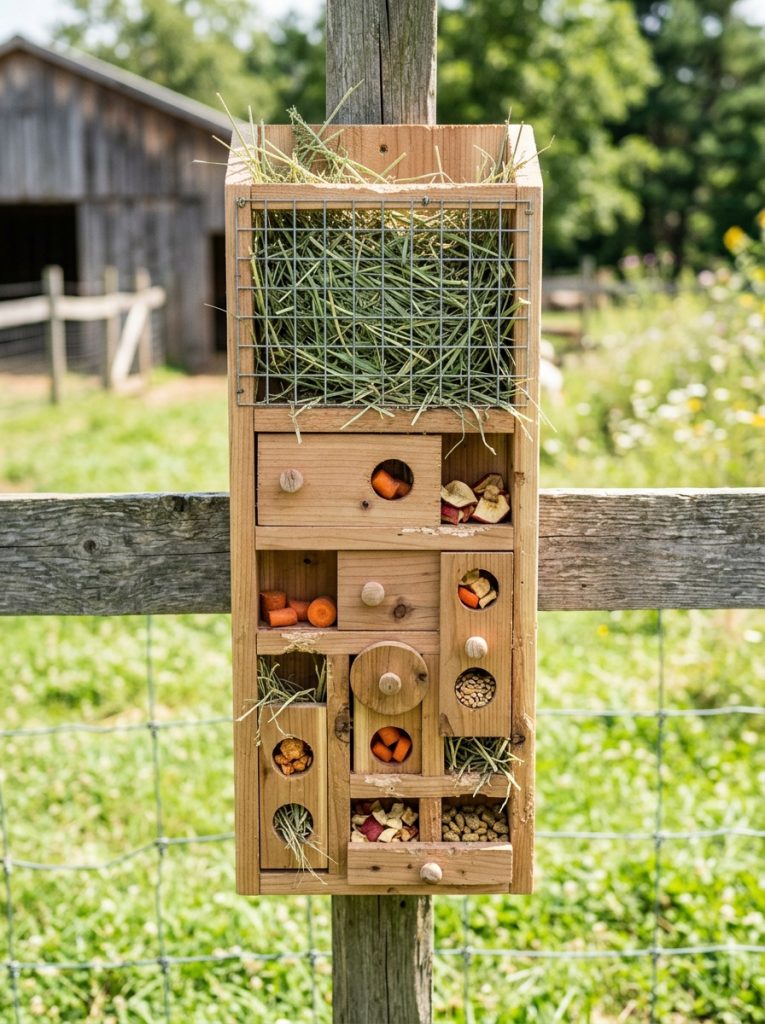
A puzzle feeder slows down fast eaters and turns mealtime into a mentally stimulating activity rather than a thirty-second rush to the hay rack. This goat feeder puzzle toy has multiple compartments and openings that require different movements to access, keeping goats engaged for significantly longer than a standard feeder. Build a DIY version by drilling various sized holes into a wooden board and tucking hay, herbs, or treats into each opening.
Materials Needed:
- Thick plywood board or wooden box
- Drill with various sized hole saws
- Sandpaper for all edges and hole interiors
- Hay, herbs, or treats for filling
- Eye bolts for wall mounting
How to Make It:
- Cut a plywood board to a manageable size and sand all edges smooth.
- Drill holes of different sizes across the board surface — vary from 1 inch to 3 inches.
- Sand the interior of every hole to remove splinters completely.
- Mount the board at goat nose height using eye bolts screwed into the pen wall.
- Stuff each hole with hay, fresh herbs, or small treats and let the goats figure out how to extract them.

Goat Puzzle Feeder Toy
Multi-compartment puzzle feeder that turns mealtime into a mentally stimulating foraging activity.
Check Price on Amazon5. Mount a Mineral Lick Toy
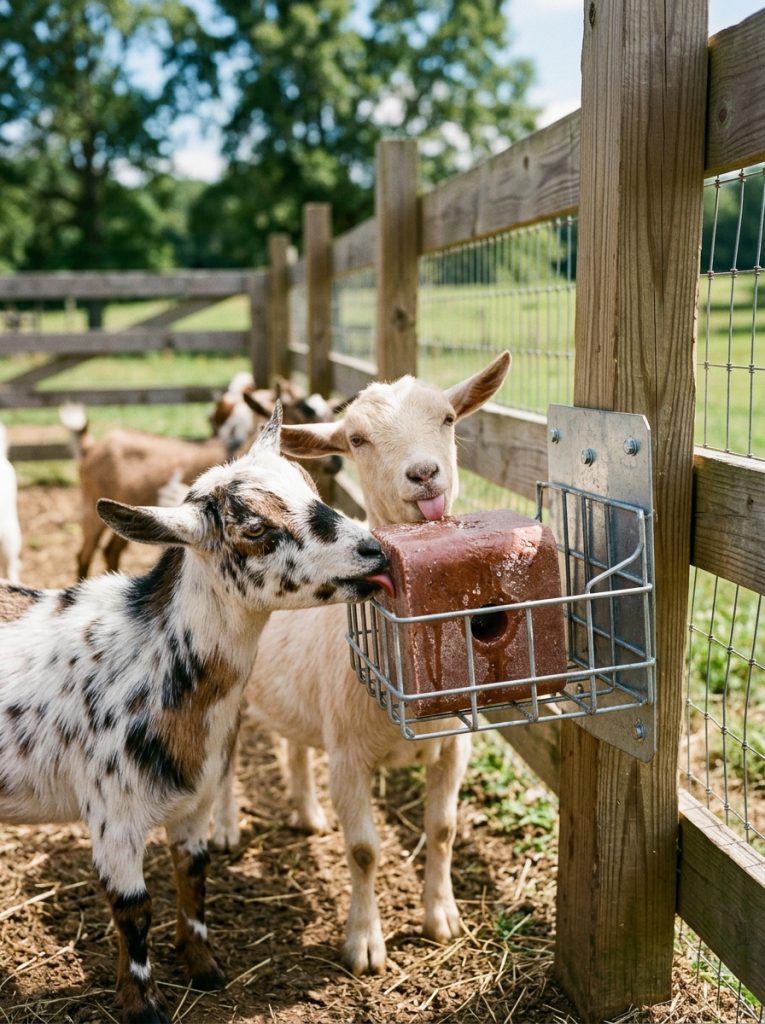
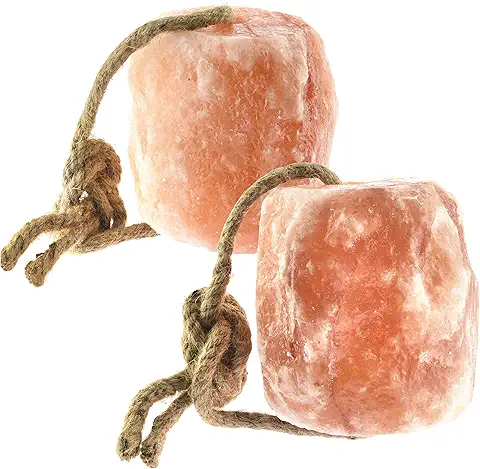
A mineral lick block mounted at goat head height provides both essential nutrition and a licking activity that keeps goats occupied for extended periods throughout the day. This goat mineral lick toy supplies copper, selenium, and zinc in the self-regulated quantities goats require rather than fixed supplementation. Mount it separately from the hay feeder so different goats can access both simultaneously without competition.
Materials Needed:
- Mineral lick block
- Wall-mounted lick holder bracket
- Screws for mounting
- Drill for bracket installation
How to Make It:
- Select a pen wall location separate from the main hay and water station.
- Install the lick holder bracket at goat head height using appropriate screws.
- Place the mineral block securely in the holder.
- Check the block weekly and replace when consumed down to a small piece.
- Rotate mineral block flavors or types to keep the activity interesting.
Goat Mineral Lick Toy
Mineral lick that provides essential nutrition while keeping goats occupied through extended licking activity.
Check Price on Amazon6. Hang a Rope Toy for Chewing and Tugging
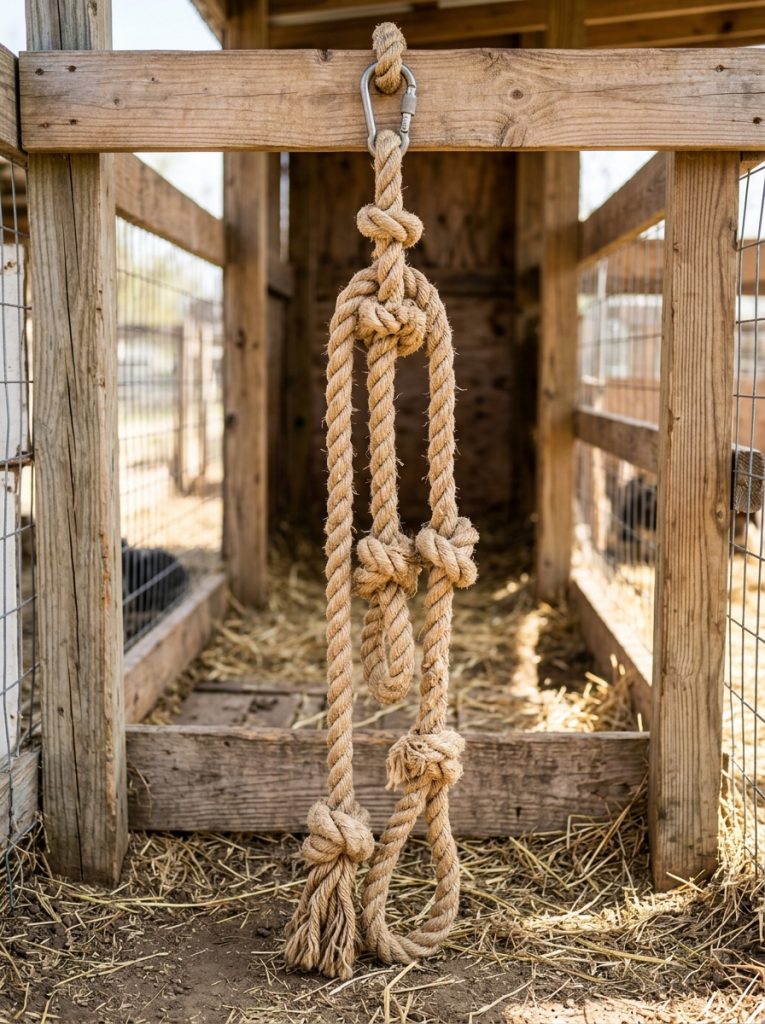
Goats love to chew and tug on rope, and a hanging rope toy gives them a safe and appropriate outlet for this behavior rather than directing it at fence posts or shelter woodwork. This goat rope hanging toy is made from natural fiber that is safe if ingested in small amounts during normal chewing activity. Tie extra knots throughout the length to create different textures and resistance points that vary the chewing and pulling experience.
Materials Needed:
- Thick natural hemp or sisal rope
- Carabiner or eye bolt for hanging
- Scissors for trimming
- Optional wooden blocks threaded onto the rope
How to Make It:
- Cut rope to the desired hanging length — 3 to 4 feet hangs well from most pen structures.
- Thread a carabiner through one end and clip to an eye bolt in the pen ceiling or beam.
- Tie large knots throughout the length at varied intervals.
- Optionally thread wooden blocks or short pieces of PVC pipe onto the rope between knots.
- Hang at goat chest to nose height so the toy swings freely when pushed or pulled.

Goat Rope Hanging Toy
Natural fiber rope toy that gives goats a safe outlet for chewing and tugging behavior.
Check Price on Amazon7. Stack Pallets for a Climbing Structure
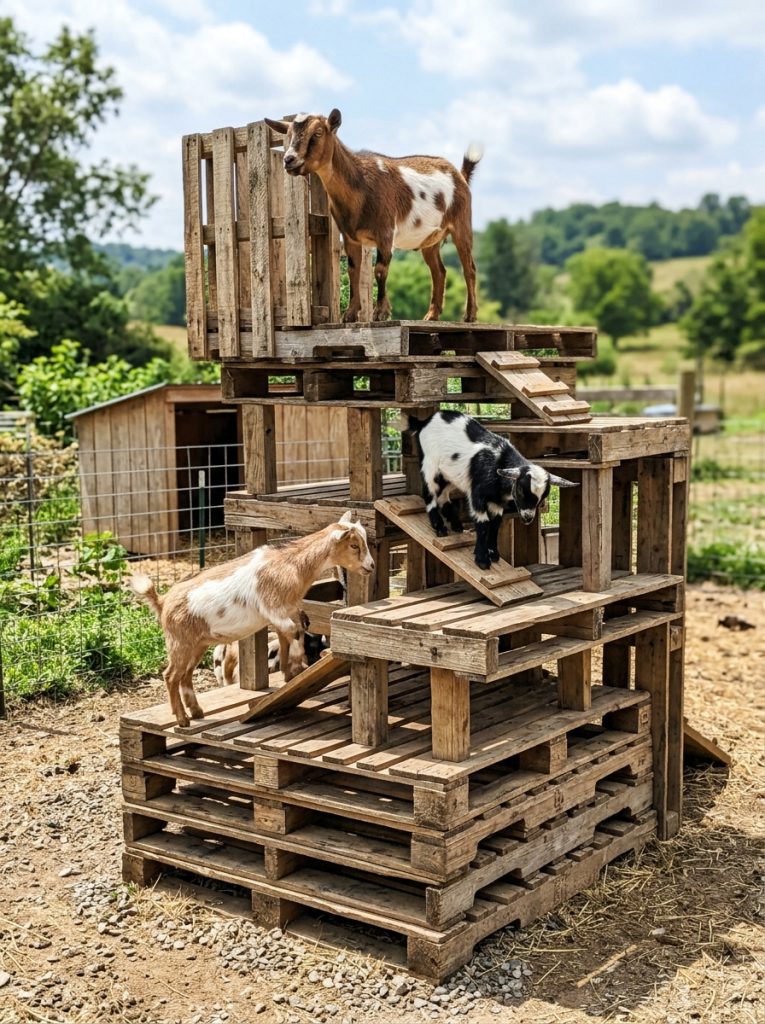
Pallets are the most accessible free building material for goat toys — most farms, feed stores, and garden centers have surplus pallets available for free or next to nothing. Stack two or three pallets at different heights secured to each other with lag screws and the result is a free multi-level climbing structure that gives the herd hours of daily enrichment. Check all pallet wood for loose nails and remove any protruding fasteners before putting pallets in the pen.
Materials Needed:
- 3 to 6 wooden pallets in good condition
- Lag screws for securing pallets together
- Drill for assembly
- Pliers and hammer for removing loose nails
How to Make It:
- Inspect all pallets carefully and remove any loose or protruding nails completely.
- Place two pallets flat on the ground as the base level.
- Stack one or two pallets on top at one end to create a raised platform section.
- Secure all stacked sections together using lag screws through the frame boards.
- Add a ramp piece of wood at an angle from ground level to the upper platform.
8. Half-Bury a Tractor Tire
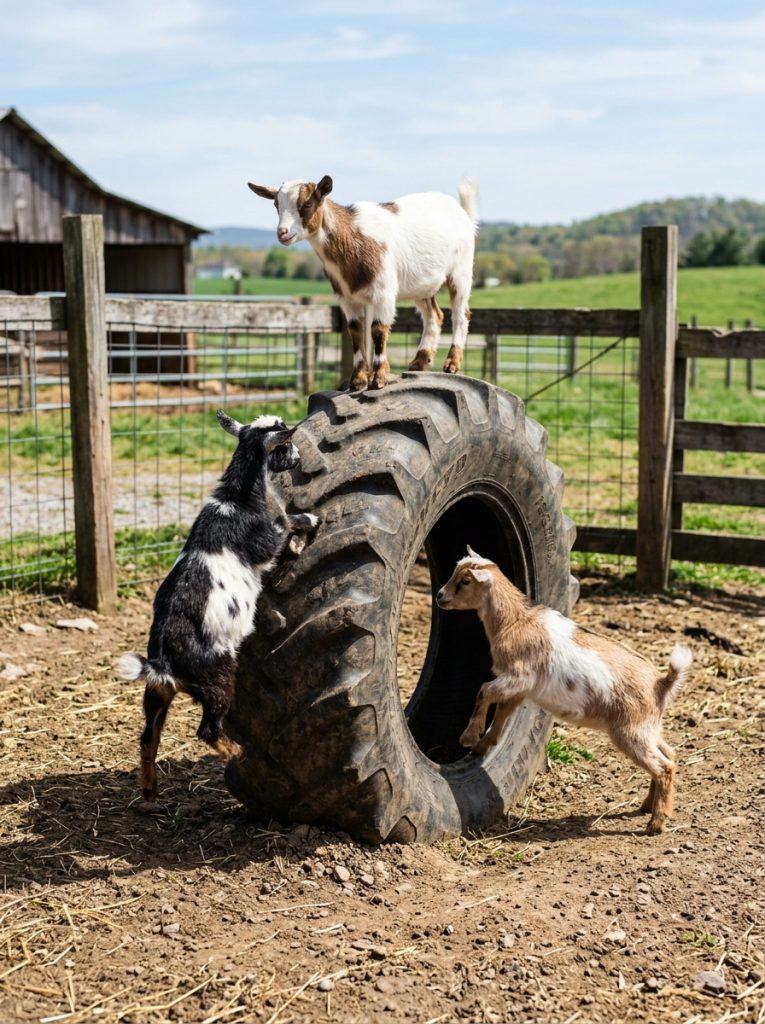
A tractor tire half-buried vertically in the pen ground creates a free, essentially indestructible enrichment feature that outlasts any wooden structure in the pen. Goats jump on and off the exposed upper section, balance on the rim, and use it as a vantage point to survey the pen. Source free tractor tires from local farms or tire shops since most are happy to give them away rather than pay disposal fees.
Materials Needed:
- Large tractor tire (free from farms or tire shops)
- Shovel for digging
- Post hole digger for deep burial
How to Make It:
- Choose a level spot in the pen clear of the shelter and feeder zones.
- Dig a trench the width of the tire and roughly half the tire’s diameter deep.
- Stand the tire upright in the trench and backfill around it firmly.
- Tamp the soil tight around the buried section so the tire stands solidly.
- Check stability before leaving goats unsupervised with the new tire.
9. Make a Treat Dispenser from PVC Pipe
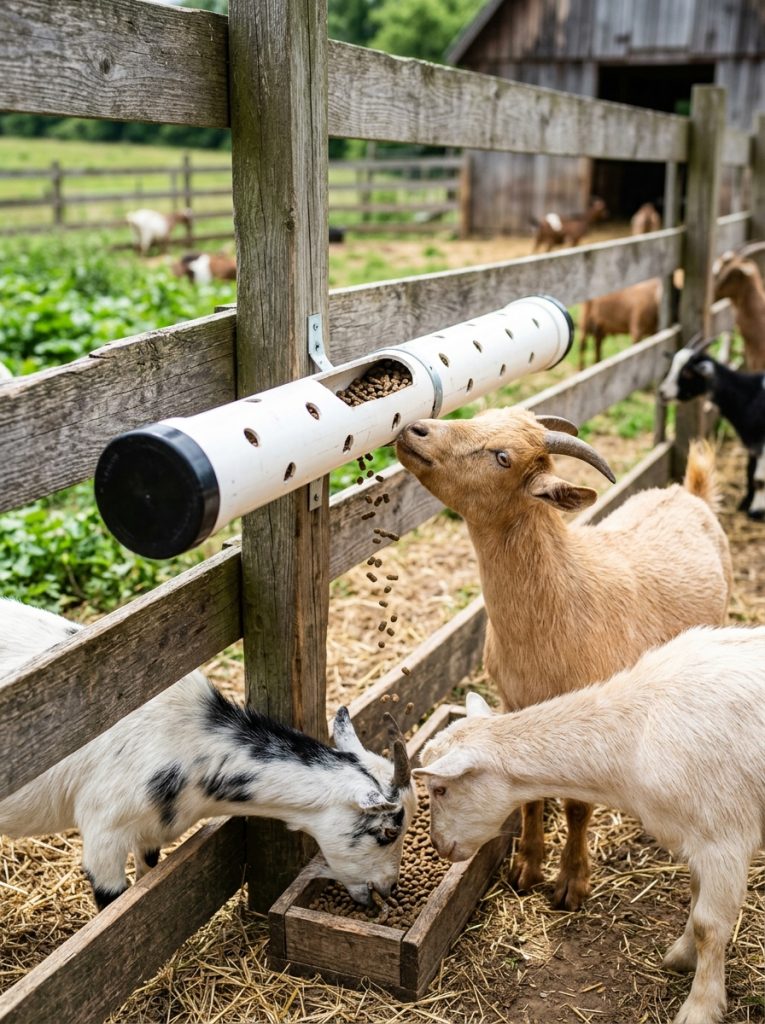
A capped PVC pipe with small holes drilled throughout makes a virtually free treat dispenser that hangs from the pen fence and releases small pieces of feed or treats as the goats nudge and spin it. Use a pipe diameter that is too large for goats to get their mouth around entirely so the toy requires genuine manipulation rather than simple grabbing to release the treats.
Materials Needed:
- 4-inch diameter PVC pipe cut to 18 inches
- Two PVC end caps
- Drill with 1-inch hole saw bit
- Rope for hanging
- Small feed pellets or treats for filling
How to Make It:
- Cut PVC pipe to length and cap one end permanently with PVC cement.
- Drill 10 to 15 holes of approximately 1 inch throughout the pipe body.
- Fill with small treat pellets through the open end.
- Cap the open end securely.
- Drill a hanging hole through both caps and thread rope through for hanging in the pen.
10. Build a Pallet Playground Structure
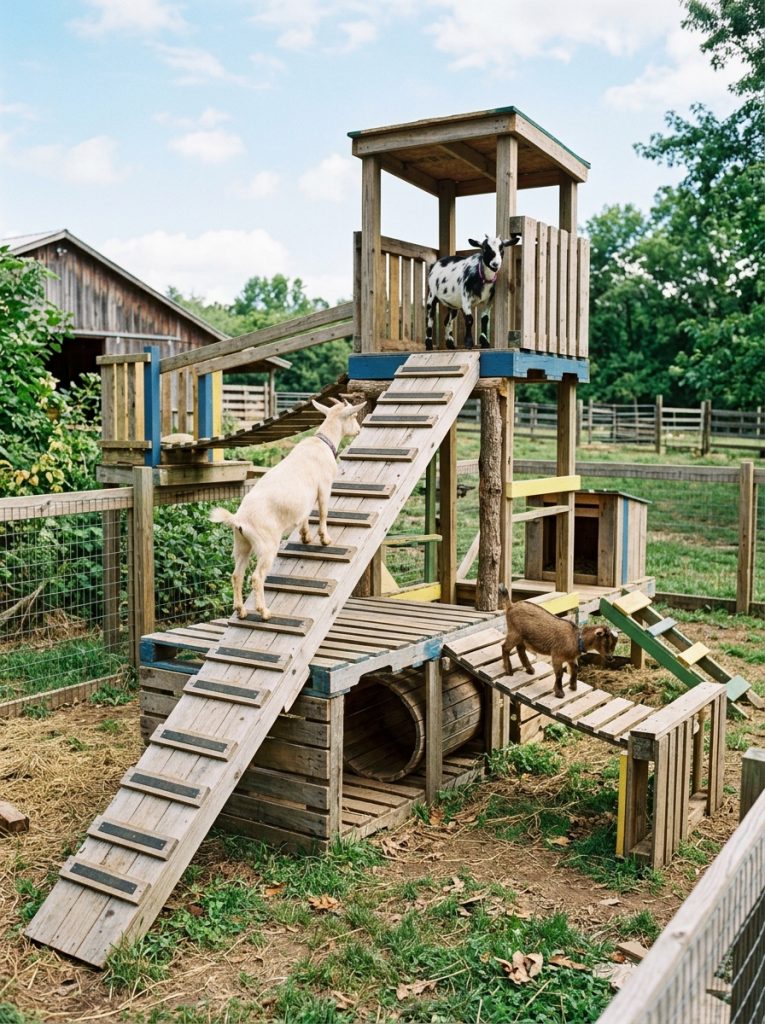
A full pallet playground combines climbing platforms, ramps, and tunnels into a complete enrichment environment that keeps a whole herd engaged simultaneously without competition for a single feature. Use pallets for all platform surfaces, old cable spools as additional climbing elements, and scrap lumber ramps connecting different levels. The more variety of heights and routes through the structure the more engaging it stays over time.
11. Hang a Treat Piñata
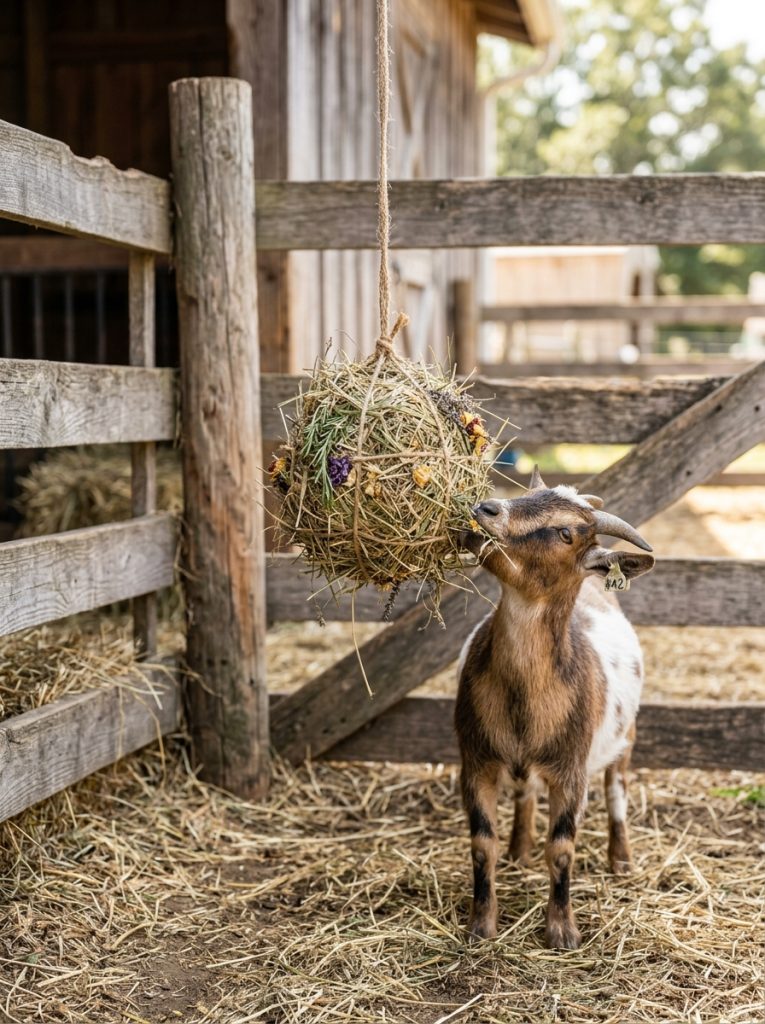
A treat piñata made from hay packed into a mesh bag or tied into a loose bundle and hung from a pen beam gives goats a foraging activity at a challenging height that requires standing on hind legs to reach — which provides a physical workout alongside the mental enrichment of getting to the food. Vary the height and the treat type throughout the week and the piñata stays genuinely engaging rather than becoming a routine feeding spot.
12. Build a Goat Kids Playground with Ramps
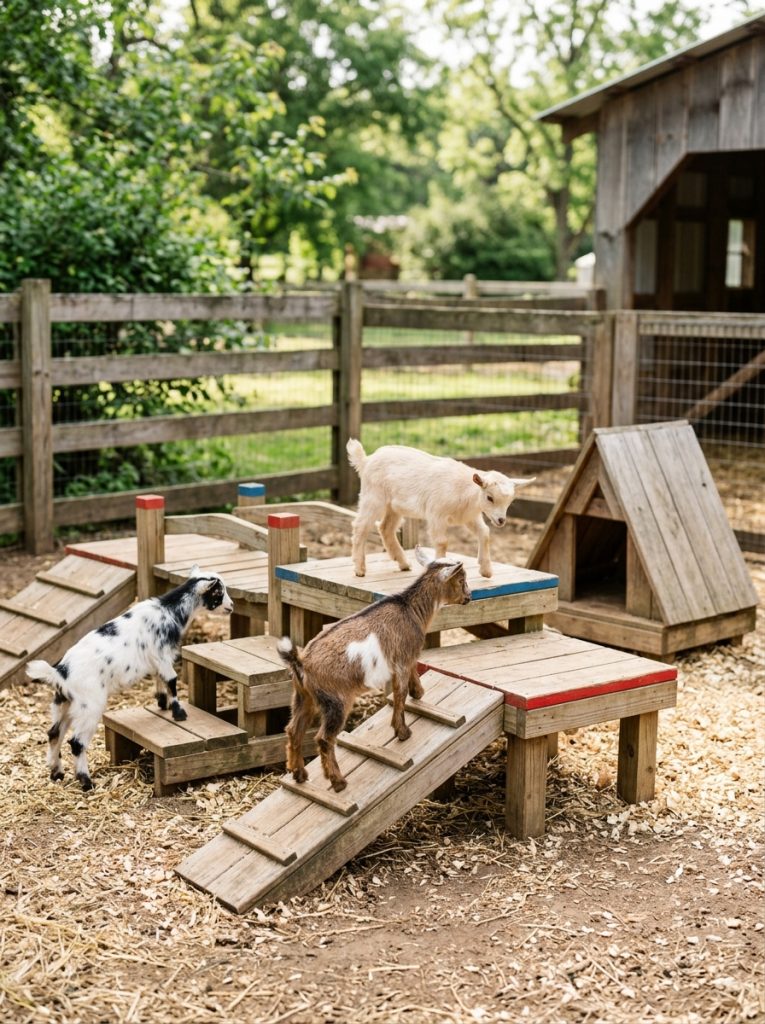
Baby goats begin exploring and climbing within days of birth, and a dedicated kids playground scaled to their small size lets them develop coordination and confidence without the risk of falling from the full-height adult platforms. Build low platforms of 6 to 8 inches, gentle ramps with good traction, and small steps rather than big jumps between levels. The kids playground becomes less relevant as they grow and join the adults on the main climbing structures.
+ Extra DIY Goat Toy Tips
Rotate toys regularly — move structures to different pen locations and swap toys in and out every few weeks to prevent boredom with familiar items.
Use cable spools — electrical cable spools from utility companies are often free and make excellent goat climbing features when stood on end or laid flat.
Hang fresh browse — bundles of fresh tree branches, leaves, and edible plants hung at head height give goats natural foraging activity that supplements both nutrition and enrichment.
Add a scratching post — a stiff brush or rough-surfaced post mounted at shoulder height gives goats a dedicated scratching spot that reduces fence rubbing and post damage.
Safety check weekly — inspect all wooden toy structures for splinters, loose screws, and rot every week and repair or replace any piece that poses an injury risk before returning it to the pen.
Final Thoughts on DIY Goat Toys
A well-enriched goat is a healthier, calmer, and significantly less destructive animal than a bored one — the time and minimal cost invested in building a few of these toys pays back immediately in reduced fence damage, fewer escape attempts, and a herd that is genuinely enjoyable to watch. Start with a pallet platform and a hanging rope toy this week and add more enrichment elements as you observe which ones your specific goats respond to most enthusiastically.

Amir Ali is the founder and site administrator of HomeDecorEdge, a modern home decor and interior design platform. Since starting the site, he has combined his passion for interior design, practical styling, and color coordination with hands-on content strategy and site management. He guides authors, curates high-quality articles, and ensures readers have access to actionable, visually inspiring, and user-focused home decor advice for apartments, small rooms, and family homes.