

A kayak leaned against the garage wall works fine for exactly one season before it starts scratching the car door or becoming the thing everyone trips over reaching for a bike. The real fix is usually just getting it up off the floor entirely, whether that means a wall rack, a ceiling hoist, or something as simple as a padded outdoor stand. These 12 kayak storage ideas cover garages, decks, apartments, and every space in between.
This post contains affiliate links. If you purchase through these links I may earn a small commission at no extra cost to you.

1. Mount a Wall Rack for Horizontal Storage
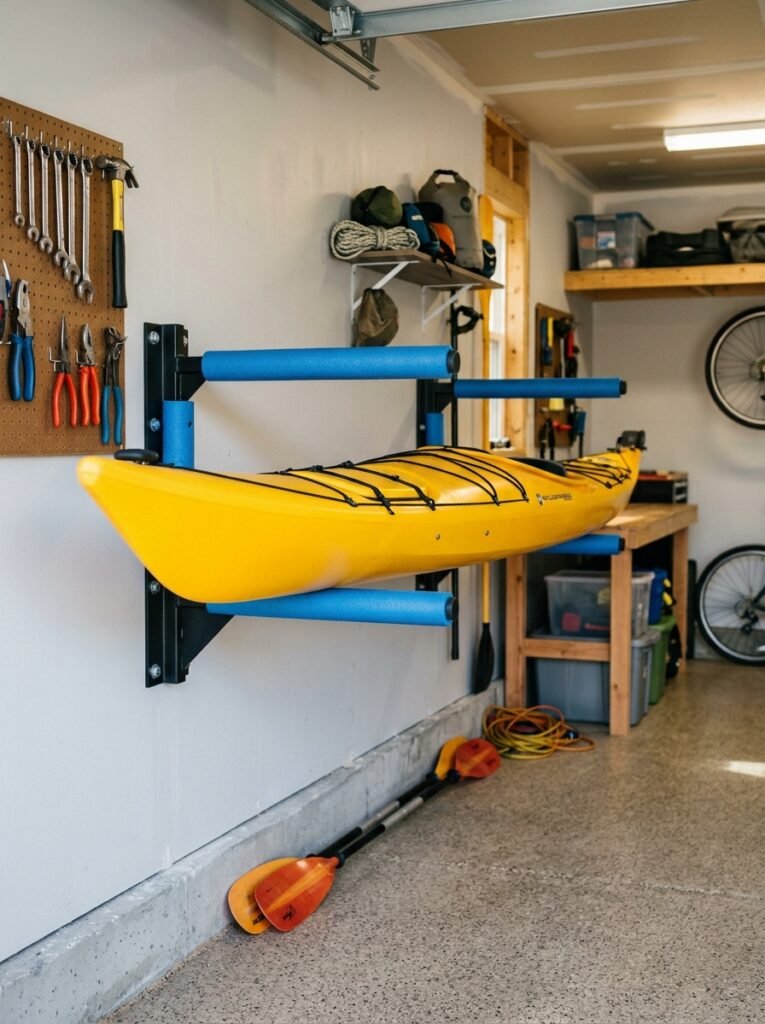
A wall mount rack is genuinely the easiest way to get a kayak off the floor without needing much ceiling clearance or complicated hardware. This kayak wall mount rack holds the hull with padded arms that keep it from scratching against the mounting brackets, and it frees up the entire floor space underneath for anything else.

Kayak Wall Mount Rack
Padded wall rack for storing a kayak horizontally off the floor
Check Price on Amazon2. Hoist It to the Ceiling
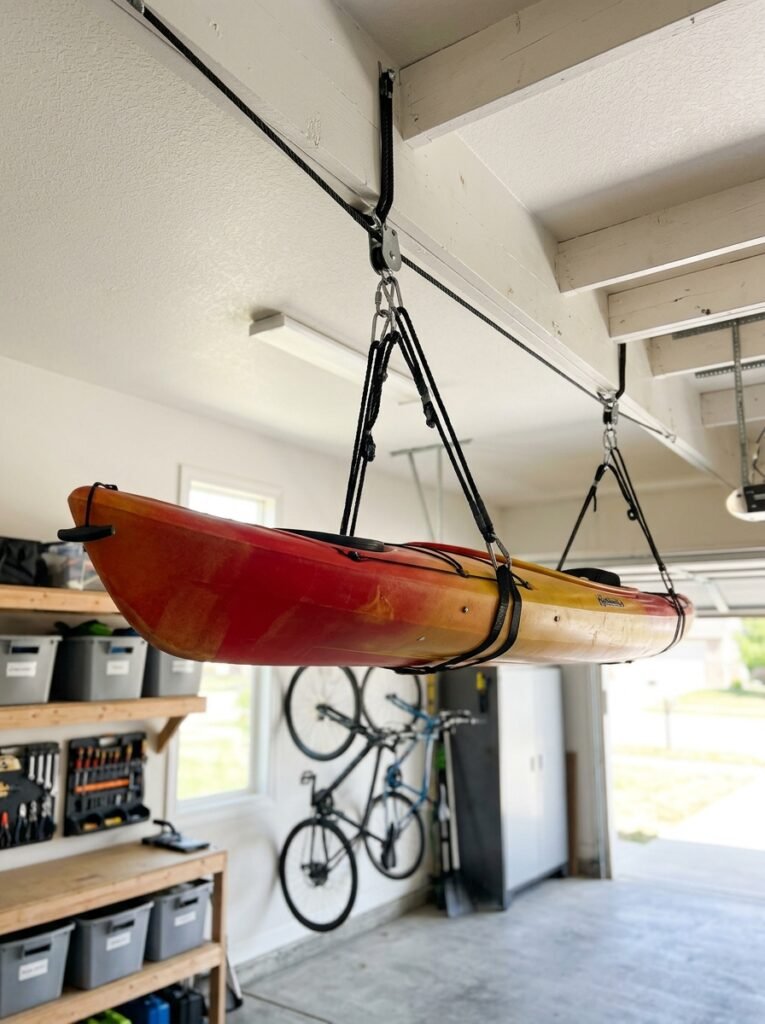
A ceiling hoist takes advantage of space that’s otherwise completely wasted, lifting the kayak up and out of the way of cars, bikes, and everything else sharing garage floor space. This kayak ceiling hoist hanger uses a pulley system that one person can operate alone, which matters since kayaks are awkward to lift solo any other way.

Kayak Ceiling Hoist Hanger
Pulley hoist system for lifting a kayak to overhead ceiling storage
Check Price on Amazon3. Set Up an Outdoor Storage Stand
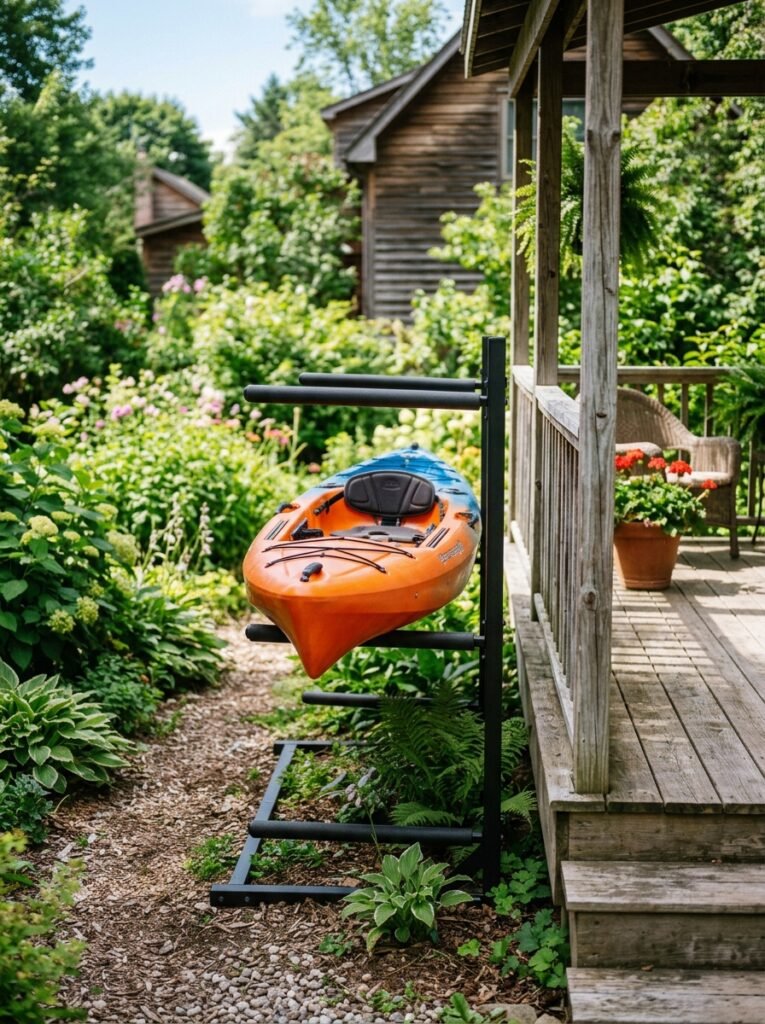
For anyone storing a kayak outside near the water or right off a deck, a freestanding stand keeps it elevated and ventilated without needing any wall or ceiling to attach to. This kayak storage stand outdoor unit is weather resistant, holding the hull at an angle that lets rainwater drain off rather than pooling inside.

Kayak Storage Stand Outdoor
Weather resistant freestanding stand for outdoor kayak storage
Check Price on Amazon4. Add a Freestanding Garage Rack
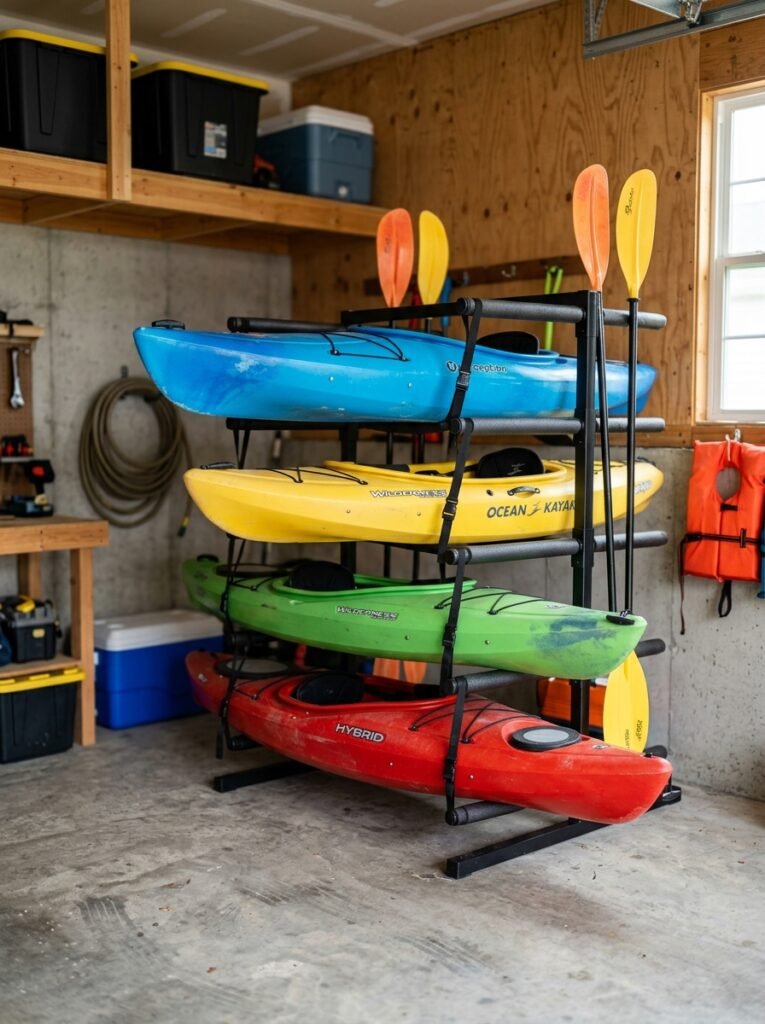
A freestanding rack works well for households storing more than one kayak, since it doesn’t require drilling into walls or ceiling joists at all. This freestanding kayak rack garage unit holds several boats stacked on separate tiers, making it a solid option for renters who can’t modify the actual garage structure.

Freestanding Kayak Rack Garage
No drill freestanding rack for storing multiple kayaks in a garage
Check Price on Amazon5. Protect It with a Storage Cover

Sun exposure fades and weakens a kayak’s hull over time, which matters a lot if it spends most of the off season sitting outside rather than tucked away in a garage. This kayak cover storage bag blocks UV rays and keeps dust and debris off the hull, extending the life of the boat considerably compared to leaving it fully exposed.

Kayak Cover Storage Bag
Protective cover bag for shielding a kayak from sun and debris
Check Price on Amazon6. Store Vertically to Save Floor Space
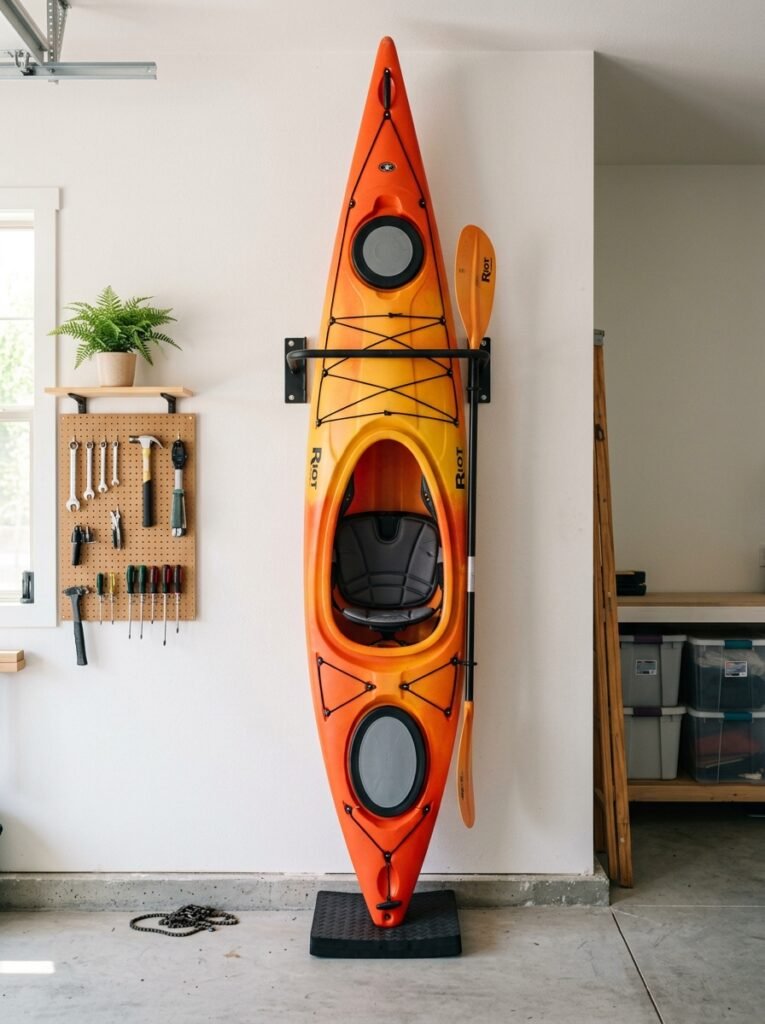
Storing a kayak vertically, nose up against a wall, takes up a fraction of the footprint horizontal storage requires, which matters a lot in a garage already crowded with other gear. This orientation does put more strain on the hull near the mounting point, so it works best for kayaks used less frequently rather than ones getting hauled out weekly.
7. Use a Deck Storage Solution
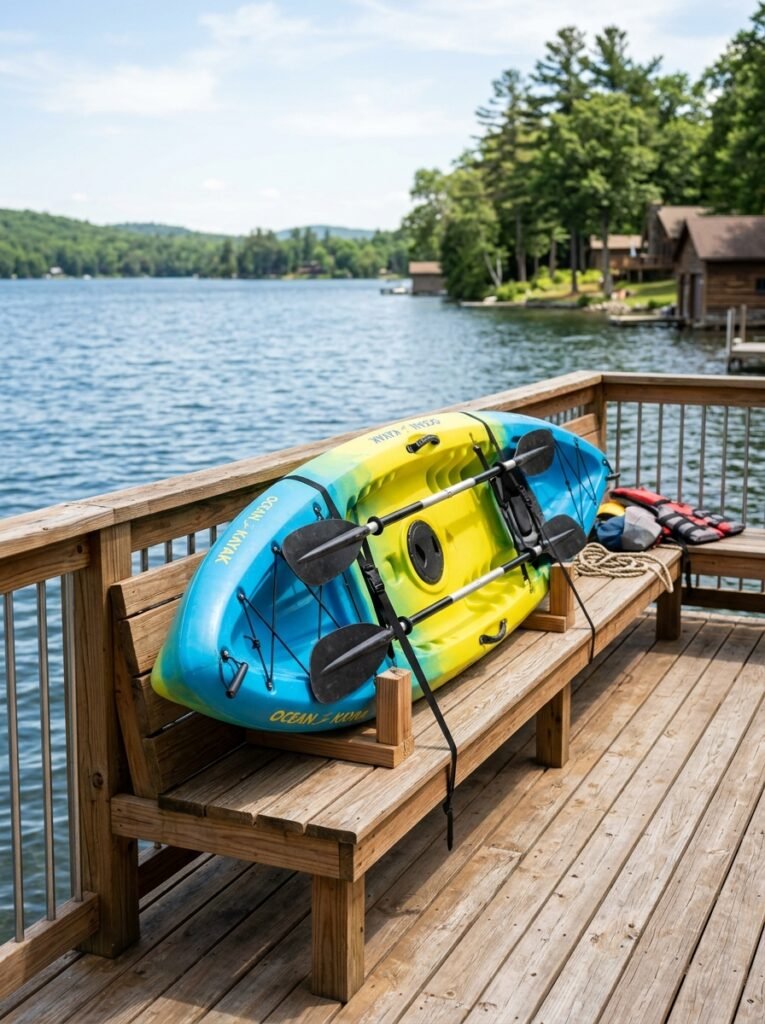
A deck side storage bench or rack keeps a kayak close to the water without dragging it through the house or yard every time, which is genuinely the whole point for anyone kayaking regularly from the same dock or shoreline. Positioning the storage where it doesn’t block deck foot traffic keeps this convenient setup from becoming its own obstacle.
8. Adapt Storage for an Apartment
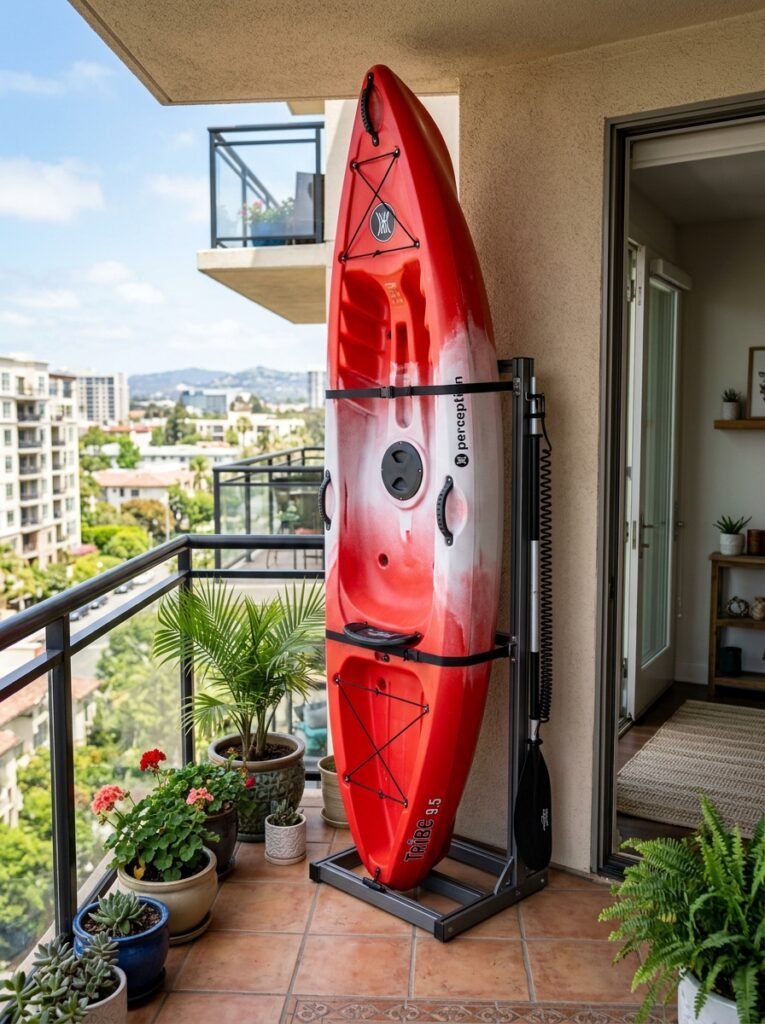
Apartment dwellers without garage or yard access usually end up storing a kayak on a balcony or just inside an entryway, which calls for a compact upright stand rather than anything requiring wall drilling. This works especially well alongside the small space thinking used in small entryway ideas for other apartment friendly storage challenges.
9. Fit Storage Into a Small Space
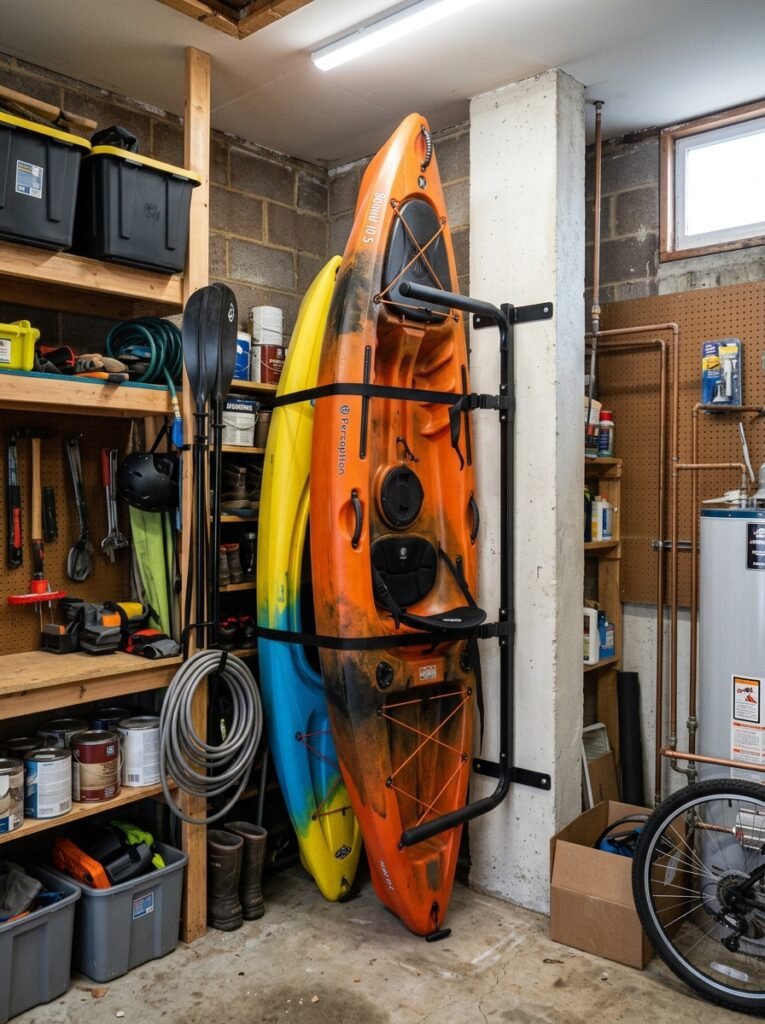
A genuinely small storage area, whether a narrow side yard or a tight garage corner, benefits from a slim vertical rack rather than a wider horizontal one that simply won’t fit. Measuring the exact available space before buying any rack prevents the common mistake of a storage solution that ends up not fitting the spot it was meant for.
10. Store an Inflatable Kayak Differently
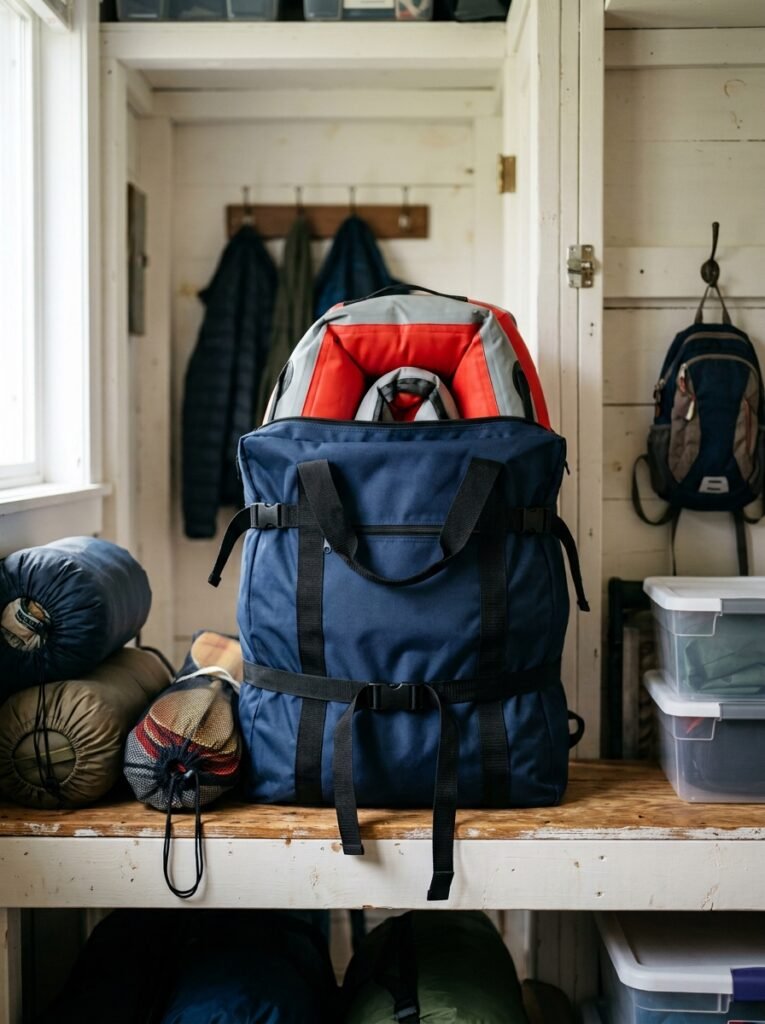
Inflatable kayaks skip most of the rigid rack and hoist solutions entirely, since they deflate down into a bag small enough to fit on a closet shelf or in a garage cabinet. This genuinely simplifies storage for anyone who doesn’t have garage space for a hardshell kayak, trading a bit of setup time on the water for dramatically easier storage at home.
11. Build a DIY PVC Pipe Rack
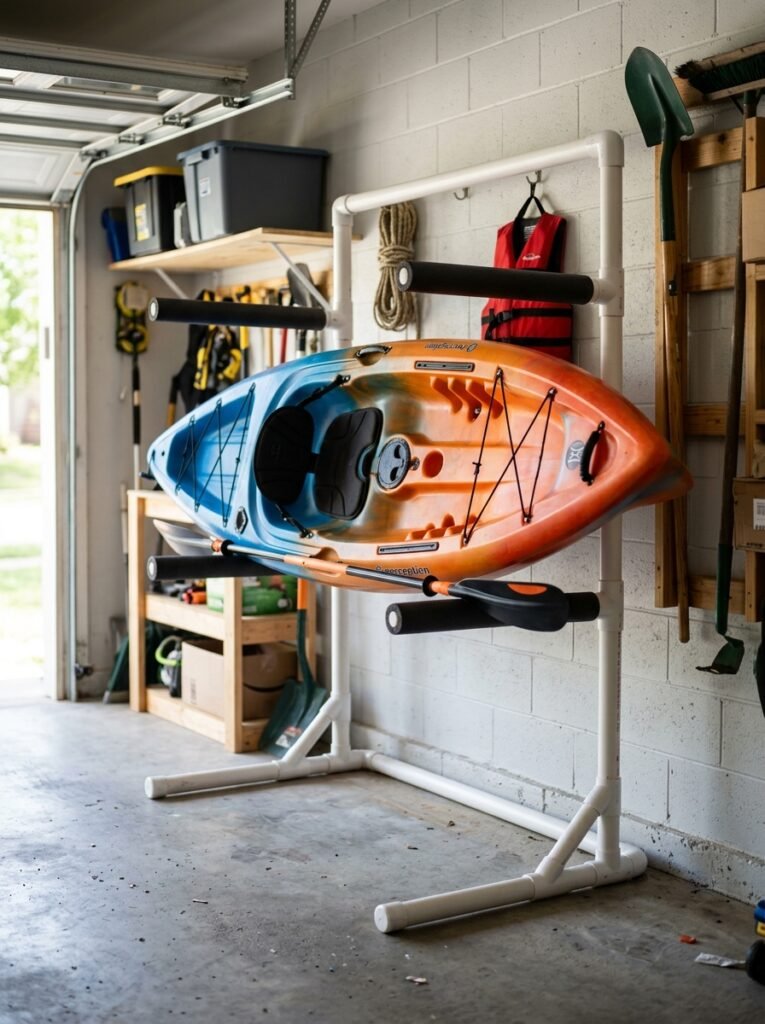
A rack built from PVC pipe and basic fittings costs a fraction of a store bought rack while still providing padded, secure horizontal storage for one or two kayaks. This budget friendly project pairs well with the same resourceful material thinking used in 50 diy paper craft ideas for other affordable DIY builds around the house.
Start Your 30-Day Home Reset
Stop waiting for a "perfect" free weekend. Grab the 30-day plan and start feeling lighter in your own home by tomorrow.
View the 30-Day Plan Printable PDF · Instant download12. Store a Canoe Using the Same Methods
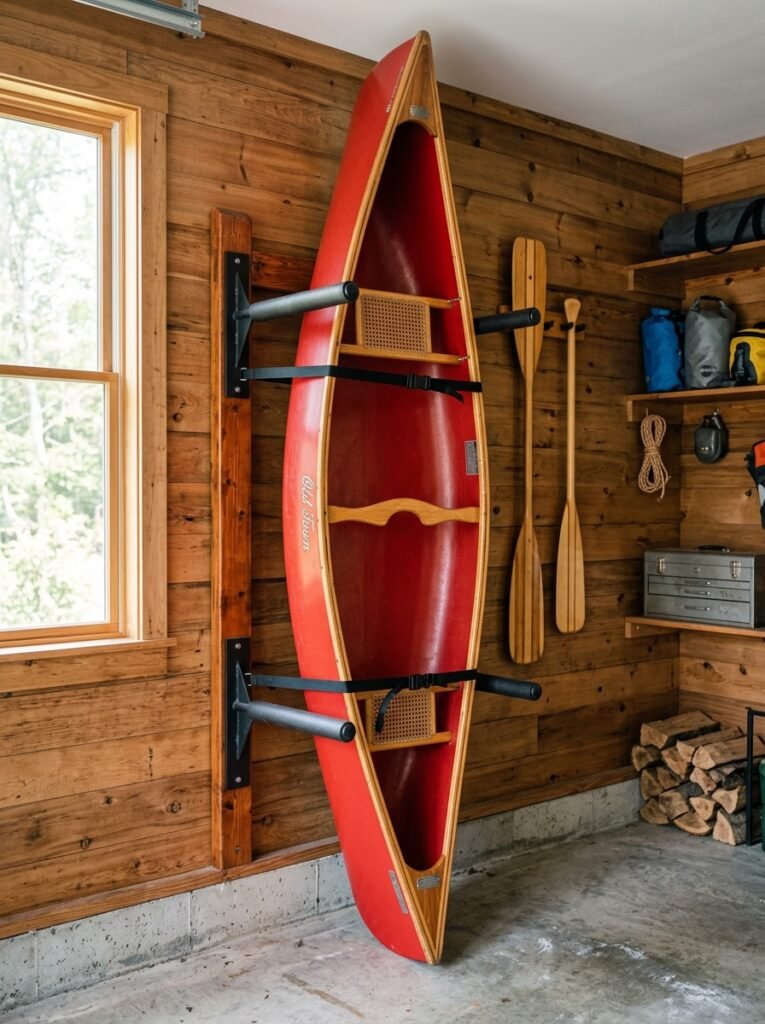
Most kayak storage solutions work equally well for a canoe, since both are long, narrow watercraft that benefit from the same wall mount, ceiling hoist, or freestanding rack approaches. The main difference comes down to weight and length, so double check any rack’s stated capacity before assuming it will hold a longer or heavier canoe the same way it holds a standard kayak.
Final Thoughts on Kayak Storage Ideas
The right kayak storage solution really depends on how much space is available and how often the boat actually gets used, since a wall rack in a garage solves a completely different problem than a deflate and stash inflatable kayak in an apartment closet. Getting the kayak up off the ground in some form, whether that’s a rack, a hoist, or just an angled stand, is really the whole goal no matter which specific method ends up working best for the space.


Amir Ali is the founder and site administrator of HomeDecorEdge, a modern home decor and interior design platform. Since starting the site, he has combined his passion for interior design, practical styling, and color coordination with hands-on content strategy and site management. He guides authors, curates high-quality articles, and ensures readers have access to actionable, visually inspiring, and user-focused home decor advice for apartments, small rooms, and family homes.