

A single feeder hanging from a tree branch works fine until the squirrels find it, and then it turns into a daily battle that most people eventually lose. A proper feeding station changes the whole equation, giving birds a reliable spot while actually keeping the seed where it’s supposed to go. These 15 bird feeder station ideas cover everything from a simple pole setup to a fully equipped backyard birding hub.
This post contains affiliate links. If you purchase through these links I may earn a small commission at no extra cost to you.
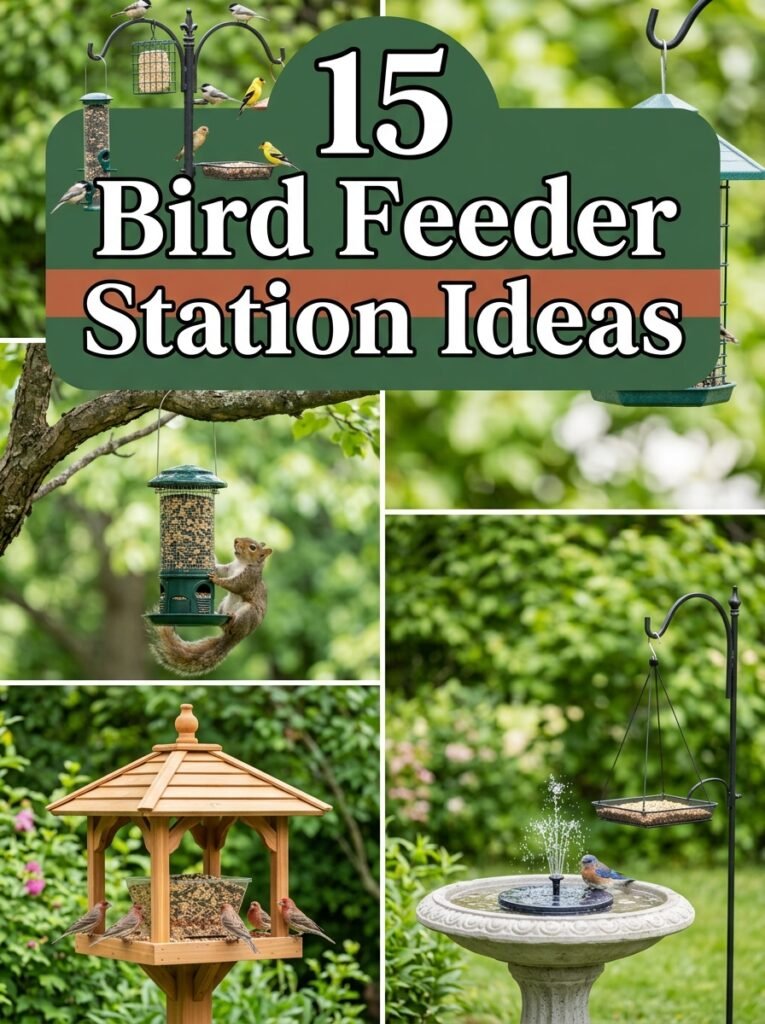
1. Build a Central Pole Station
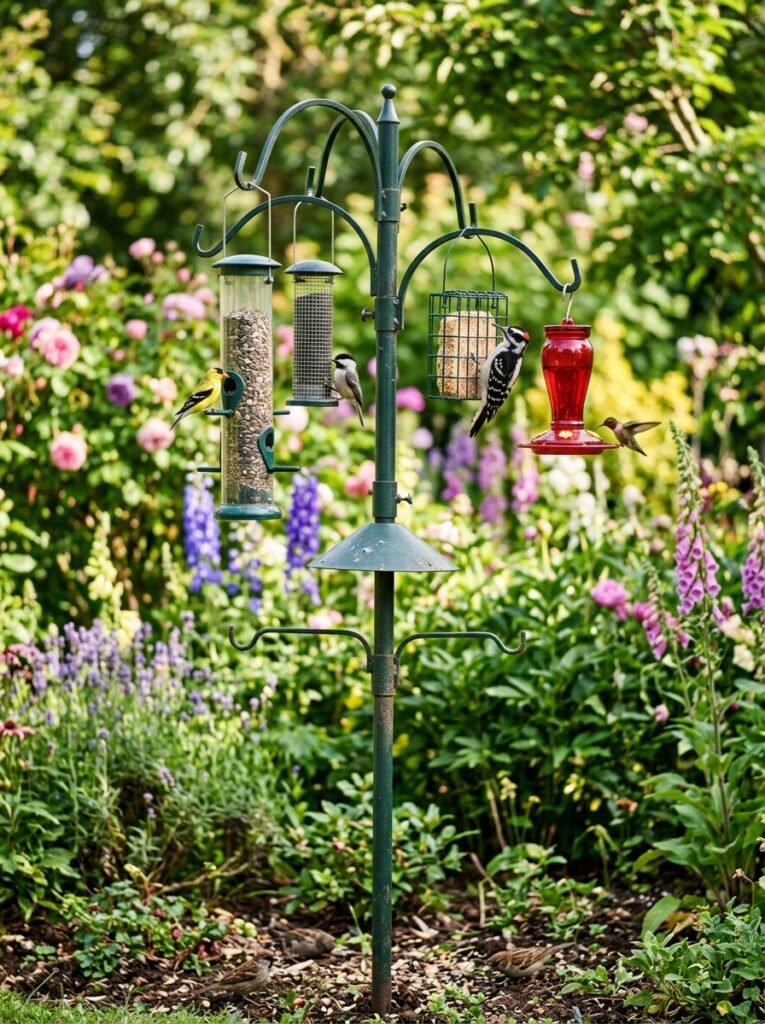
A central pole gives multiple feeders one shared support structure instead of scattering them across different tree branches around the yard. This bird feeder pole station holds several arms at once, letting different seed types and feeder styles all live in one spot that’s easy to fill and monitor.
Materials Needed:
- Bird feeder pole station
- Ground anchor or concrete mix for stability
- Level
How to Make It:
- Choose a spot with a clear view from a window but some distance from dense shrubs where predators could hide.
- Dig a hole for the pole base according to the included instructions.
- Set the pole in place and check it’s level before securing.
- Fill around the base with the ground anchor or concrete mix.
- Let the base cure fully before hanging any feeders on the arms.

Bird Feeder Pole Station
Central pole station for hanging multiple bird feeders in one spot
Check Price on Amazon2. Add a Squirrel Proof Feeder
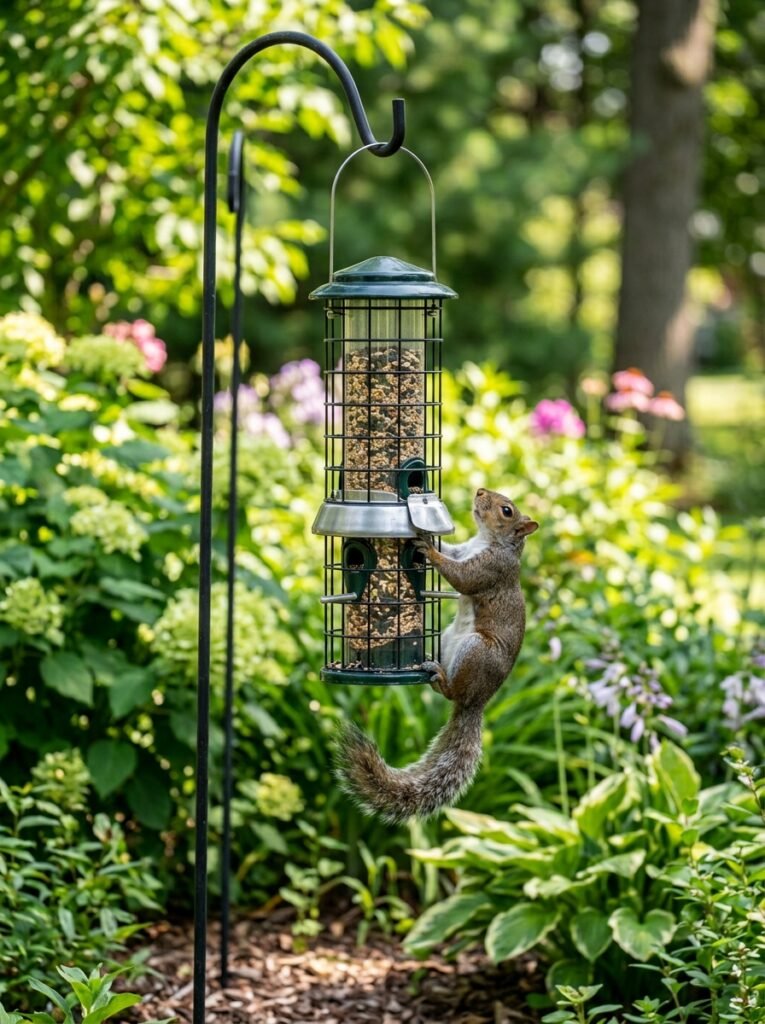
Anyone who’s watched a squirrel casually raid an entire feeder in one sitting knows this is genuinely the most requested feature in backyard birding gear. This squirrel proof bird feeder uses a weight sensitive mechanism that closes the seed ports when anything heavier than a bird lands on the perch.
Materials Needed:
- Squirrel proof bird feeder
- Hanging hook or pole arm
- Bird seed
How to Make It:
- Test the weight sensitive mechanism before filling to understand how it triggers.
- Fill the feeder with seed according to the capacity guidelines.
- Hang the feeder from a hook, pole arm, or sturdy branch.
- Position it away from anything a squirrel could jump from to bypass the mechanism.
- Refill regularly and clean the feeder every few weeks to prevent mold buildup.

Squirrel Proof Bird Feeder
Weight sensitive feeder that keeps squirrels out of the bird seed
Check Price on Amazon3. Protect Seed with a Covered Roof
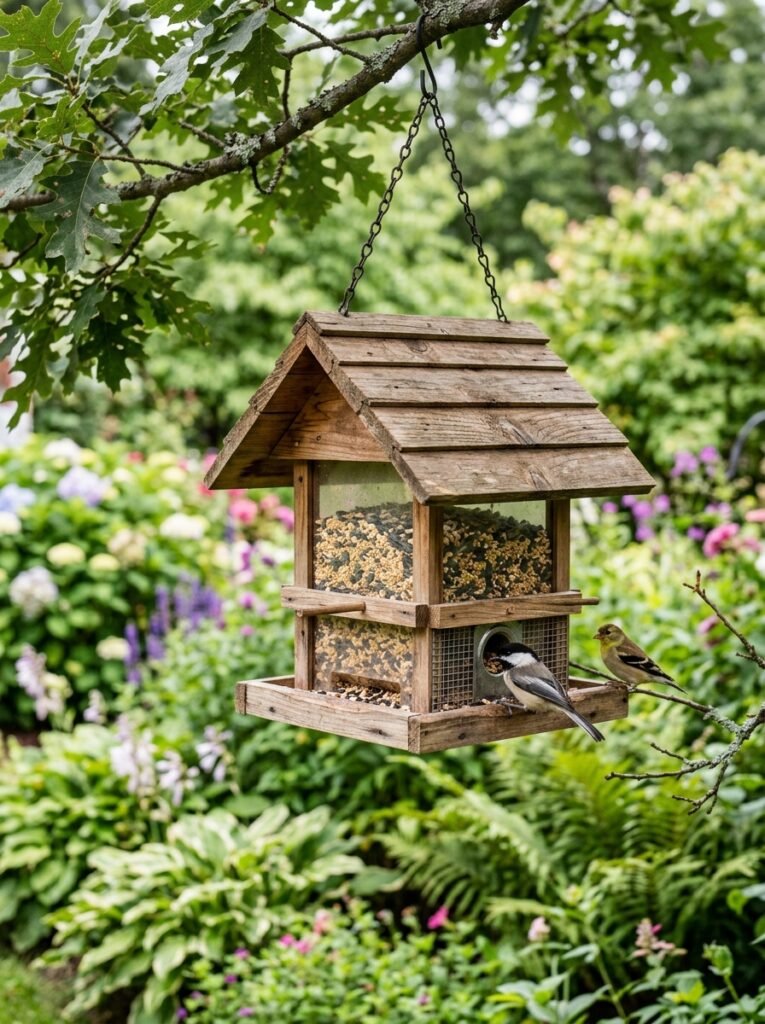
A covered roof keeps rain from soaking the seed and turning it into a soggy, moldy mess within a single afternoon storm. This bird feeder with roof style shields the feeding area completely, extending how long a single fill actually stays fresh and usable for the birds.
Materials Needed:
- Bird feeder with roof
- Hanging hardware or pole mount
- Bird seed
How to Make It:
- Assemble the roof and feeder body according to the included instructions.
- Attach the hanging hardware or mount it to a pole arm.
- Position the feeder in a spot with some overhead tree cover for extra protection.
- Fill the feeder and check the roof fully shields the seed ports from rain angles.
- Check seed condition after storms to confirm the roof is doing its job.

Bird Feeder with Roof
Covered roof feeder that protects seed from rain and weather
Check Price on Amazon4. Combine a Bird Bath with the Feeder
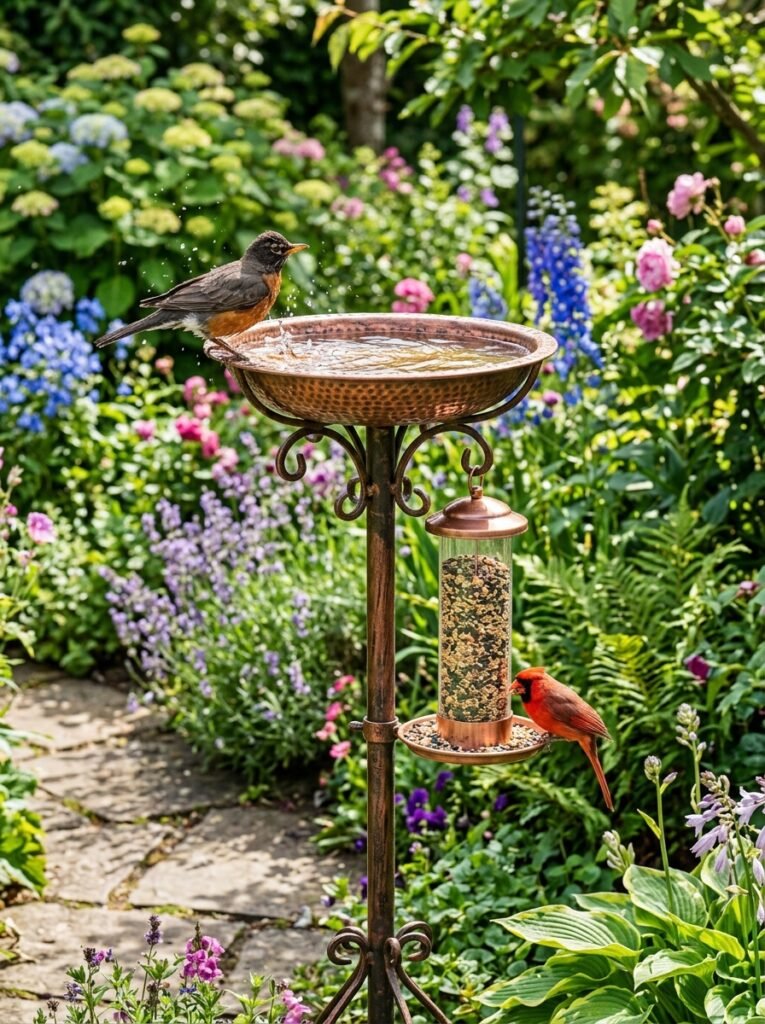
Birds need water just as much as food, and combining both into one station means they don’t have to fly off to find a separate water source elsewhere in the yard. This bird bath and feeder combo unit gives visiting birds everything they need in one convenient spot, which also concentrates the birding activity right where you can actually see it.
Materials Needed:
- Bird bath and feeder combo
- Stable ground surface or base
- Bird seed and fresh water
How to Make It:
- Choose a level spot for the combo unit, ideally visible from inside the house.
- Assemble the base and bath following the included instructions.
- Fill the bath section with fresh water and change it every few days.
- Fill the feeder section with seed appropriate for local bird species.
- Clean both sections regularly to prevent algae growth and seed mold.

Bird Bath and Feeder Combo
Combined bath and feeder unit for water and food in one spot
Check Price on Amazon5. Attract Hummingbirds Separately
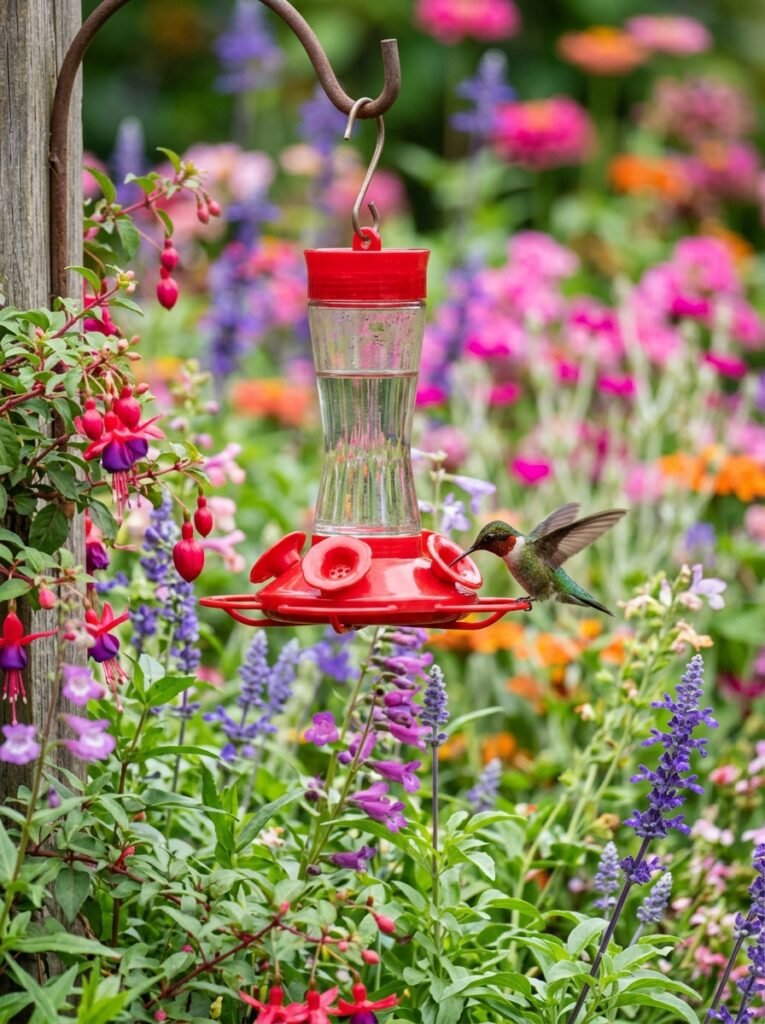
Hummingbirds need nectar rather than seed, so they genuinely require their own dedicated feeder separate from the main seed station entirely. This hummingbird feeder uses the bright red coloring that naturally attracts these birds, and positioning it near actual flowering plants increases the odds of regular visitors even further.
Materials Needed:
- Hummingbird feeder
- Sugar water nectar solution
- Hanging hook
How to Make It:
- Mix a simple sugar water solution following the standard nectar ratio.
- Fill the feeder reservoir with the fresh nectar mixture.
- Hang the feeder near flowering plants for the best visibility to passing hummingbirds.
- Clean and refill the feeder every few days, more often in hot weather.
- Watch for regular visitors once the birds discover the reliable food source.

Hummingbird Feeder
Nectar feeder designed specifically to attract hummingbirds
Start Your 30-Day Home Reset
Stop waiting for a "perfect" free weekend. Grab the 30-day plan and start feeling lighter in your own home by tomorrow.
View the 30-Day Plan Printable PDF · Instant download6. Add a Camera for Close Up Watching
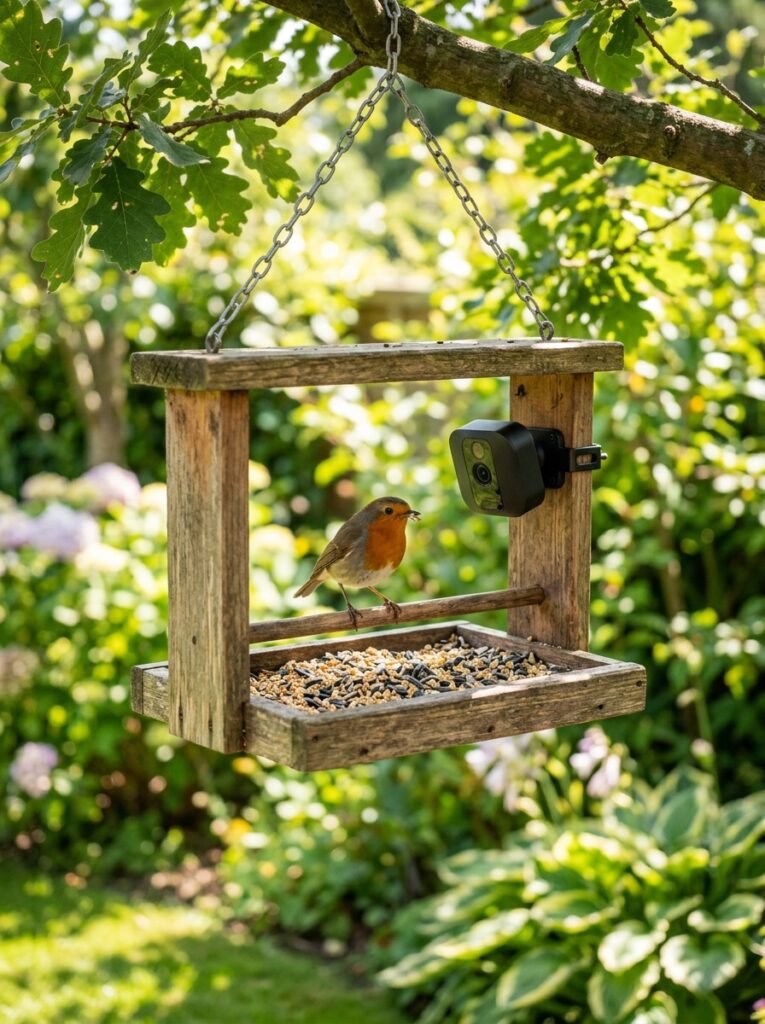
A camera mounted directly on the feeder streams close up footage of visiting birds straight to a phone, letting you actually identify species and watch behavior without standing at the window with binoculars. This bird feeder camera captures footage automatically, so even feeding activity that happens while you’re at work doesn’t go unseen.
Materials Needed:
- Bird feeder camera
- Compatible feeder mount
- Wifi connection for streaming
How to Make It:
- Attach the camera to the feeder using the included mounting bracket.
- Connect the camera to home wifi following the app setup instructions.
- Position the camera angle to capture the full feeding area clearly.
- Charge or check the battery level regularly depending on the camera model.
- Check the app periodically to review captured footage of visiting birds.

Bird Feeder Camera
Smart camera for close up viewing of birds visiting the feeder
Check Price on Amazon7. Build a Rustic Wood Feeding Station
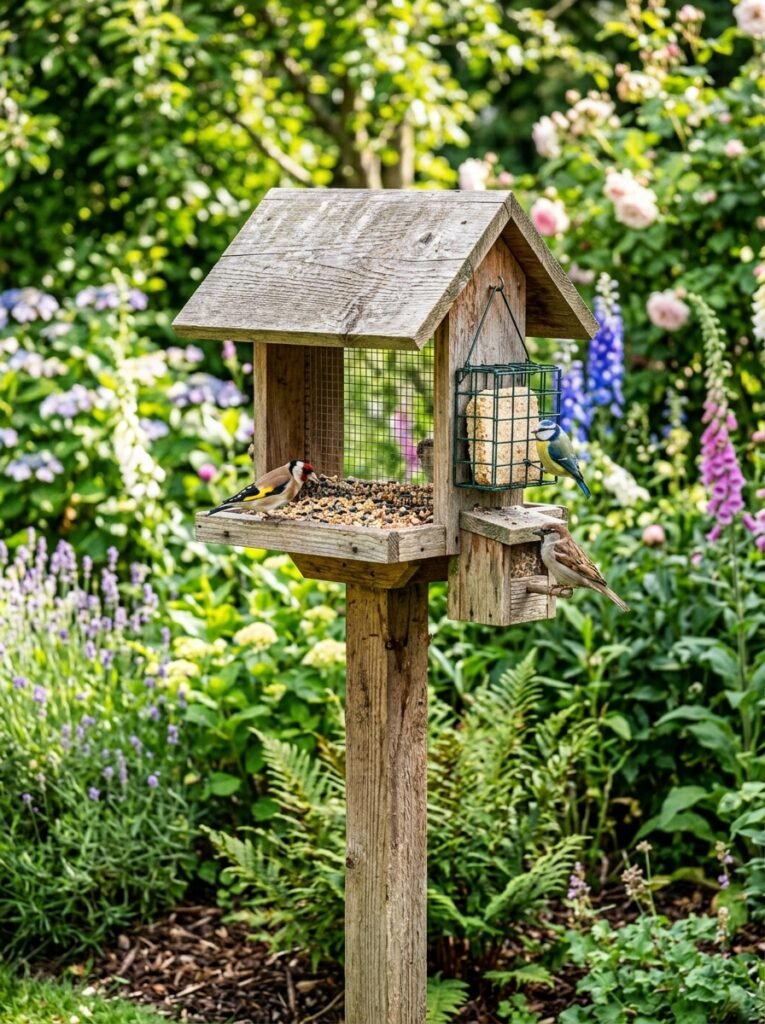
A rustic wood feeding station, built from cedar or reclaimed lumber, blends naturally into a garden setting far better than a bright plastic feeder would. This style ages gracefully outdoors, developing a weathered patina that only adds to the charm over the seasons.
8. Paint a Colorful Feeder Design
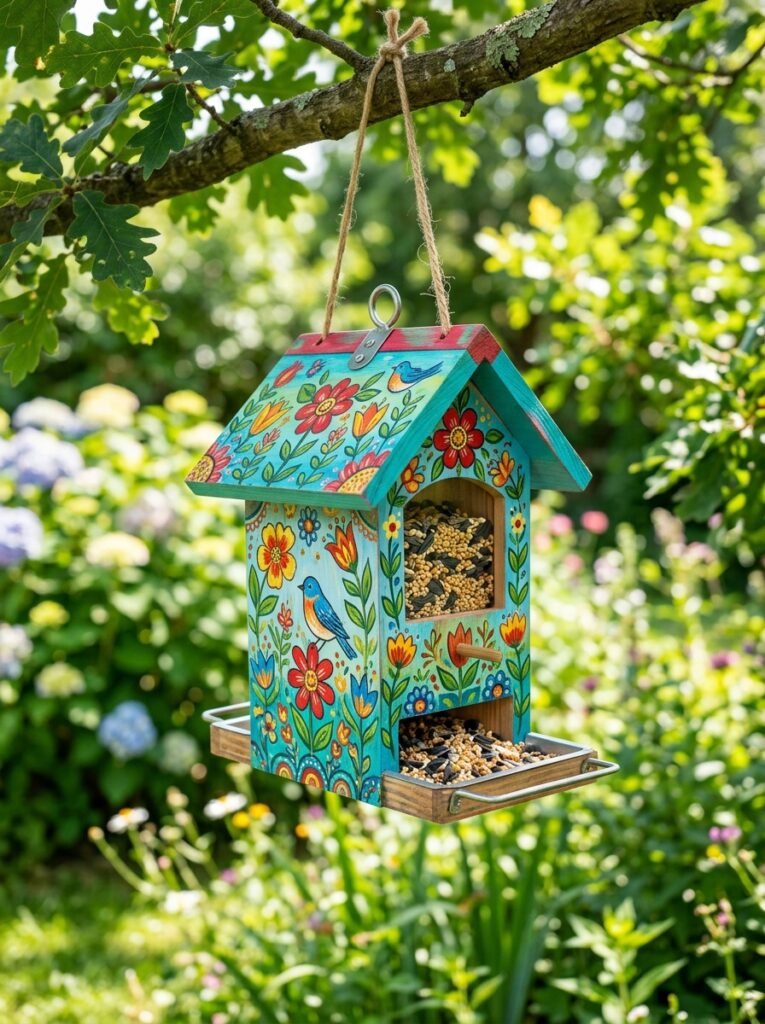
Painting a plain wooden feeder with a bright, weatherproof design turns a purely functional item into a genuine garden decor piece. This works especially well as a family project, giving kids a hands on way to contribute to the backyard birding setup.
9. Fit a Station Into a Deck Setup
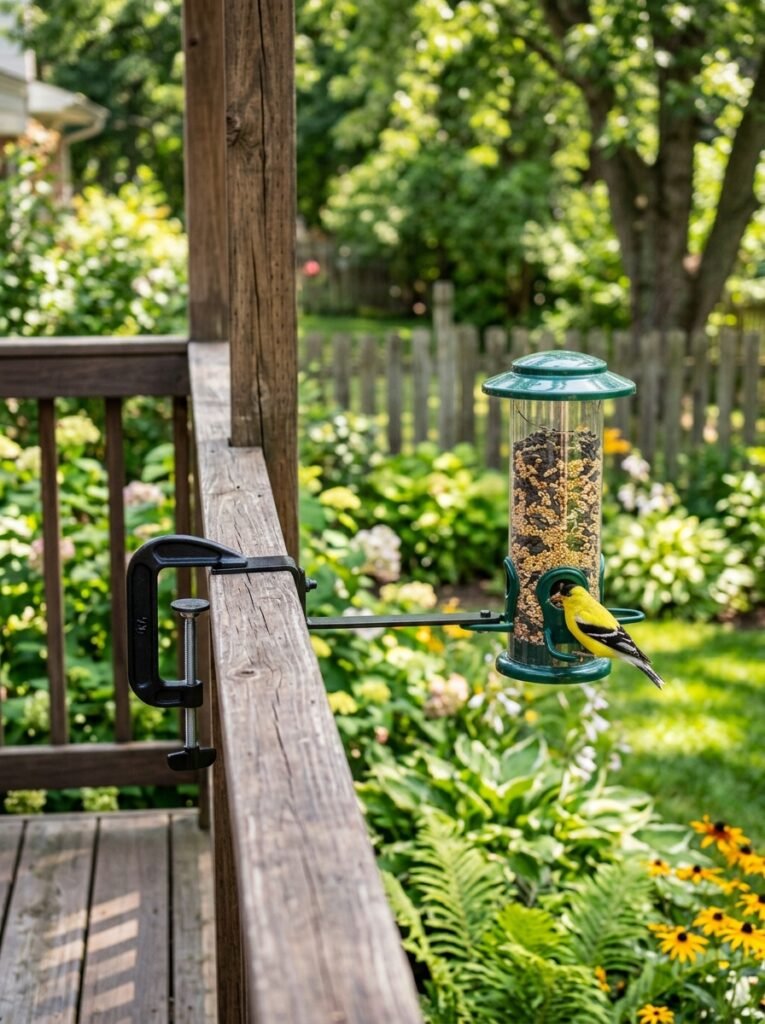
A deck mounted feeder brings birds right up close to where people actually spend time outdoors, rather than tucked away at the far end of the yard. Choosing a clamp mount rather than a freestanding pole works well here, attaching directly to the deck railing without needing any ground space at all.
10. Adapt a Feeder for a Balcony
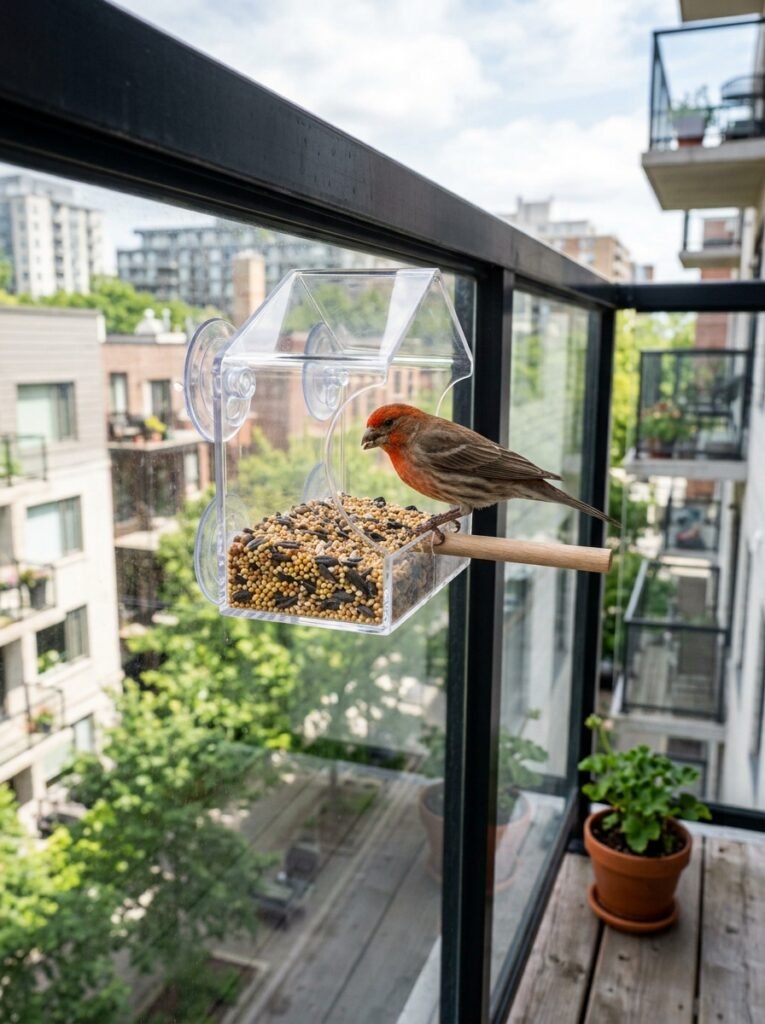
Apartment dwellers without yard access can still attract birds using a suction cup or railing mounted feeder positioned on a balcony. This works especially well alongside the small space thinking used in balcony decor ideas for other apartment friendly outdoor upgrades.
11. Design for a Large Yard Setup
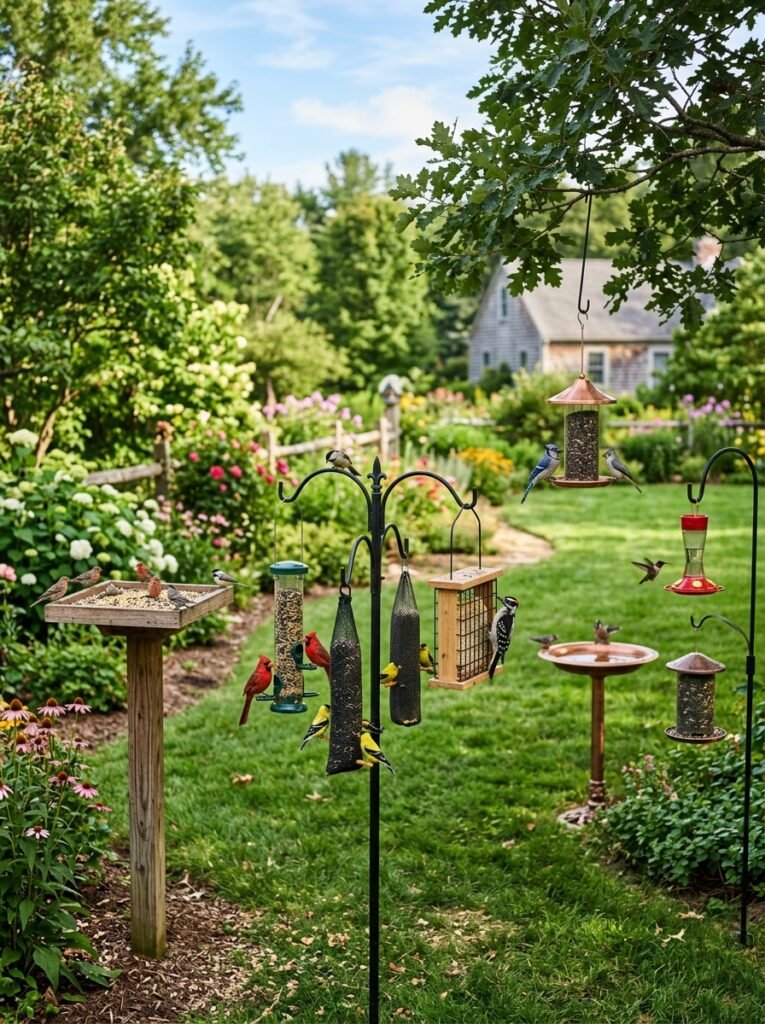
A larger yard has room to support multiple stations spread across different zones, one seed feeder, one hummingbird spot, one bird bath, rather than cramming everything into a single area. Spacing these out actually reduces competition between different bird species, encouraging a wider variety of visitors overall.
12. Attract Specific Bird Species with Targeted Seed
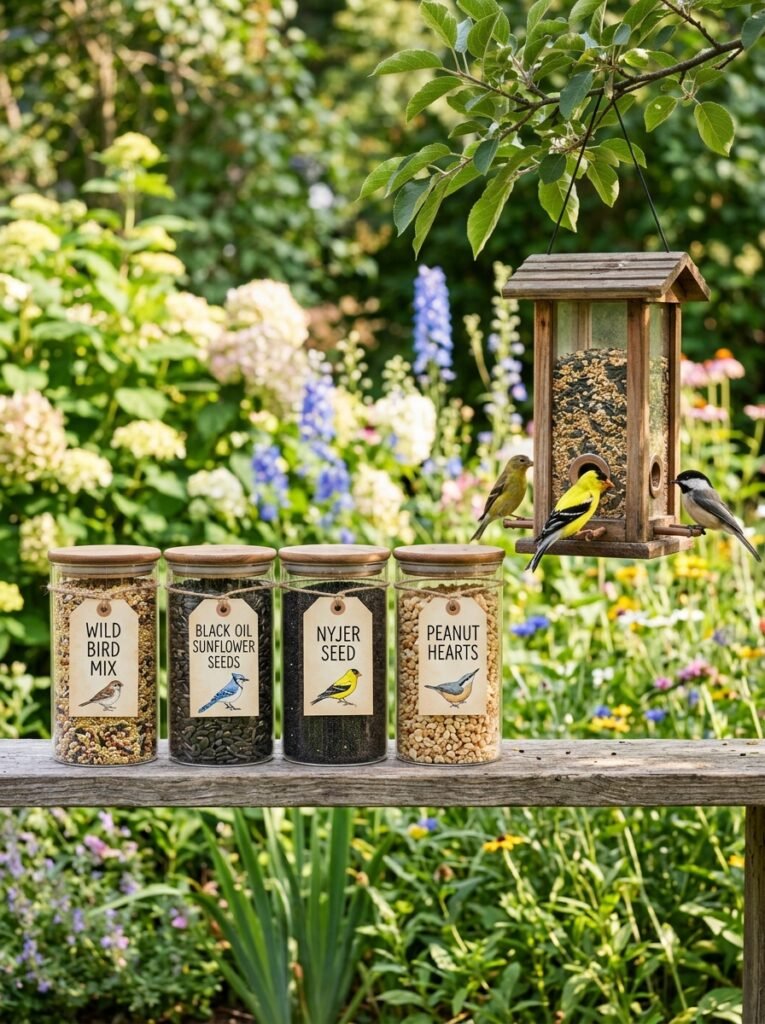
Different seed types attract different birds, so choosing black oil sunflower seed, nyjer, or suet based on which species you’re hoping to see makes a real difference in results. Researching what’s actually native to the local area before buying seed saves money on mixes that end up mostly ignored.
13. Keep the Station Active Through Winter
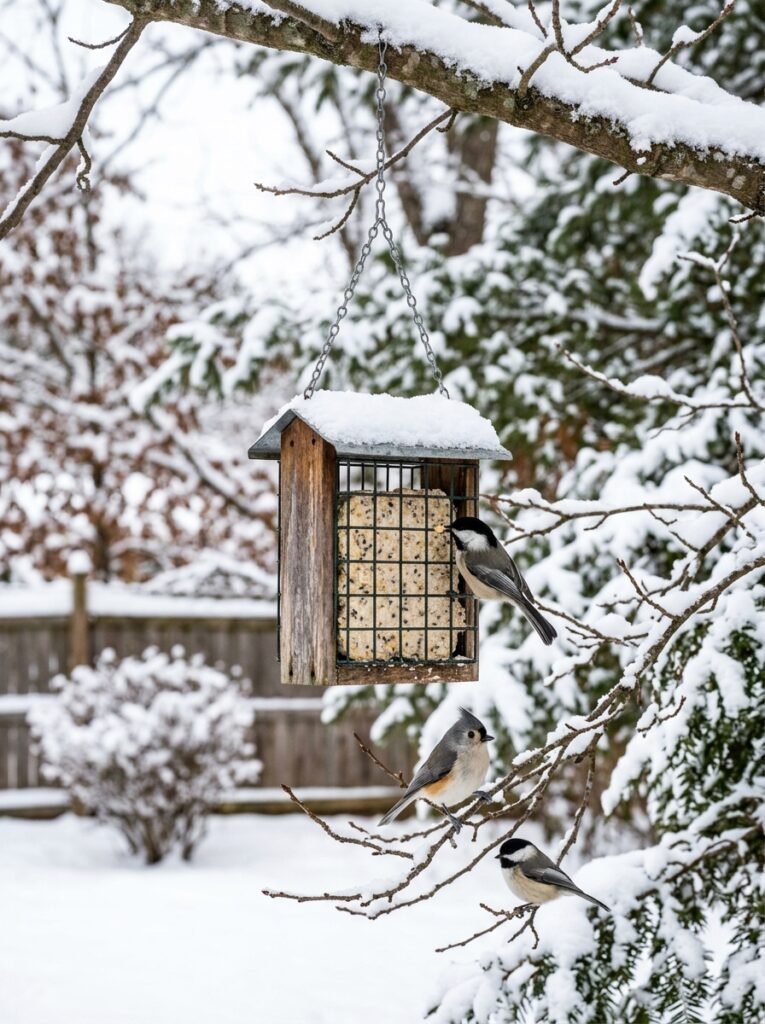
Continuing to feed through winter matters most when natural food sources become scarce, and a station that stays stocked through the cold months tends to see the most consistent bird traffic all year. Adding suet specifically during winter provides the extra fat content birds need to maintain body heat in freezing temperatures.
14. Surround the Station with Flowering Plants
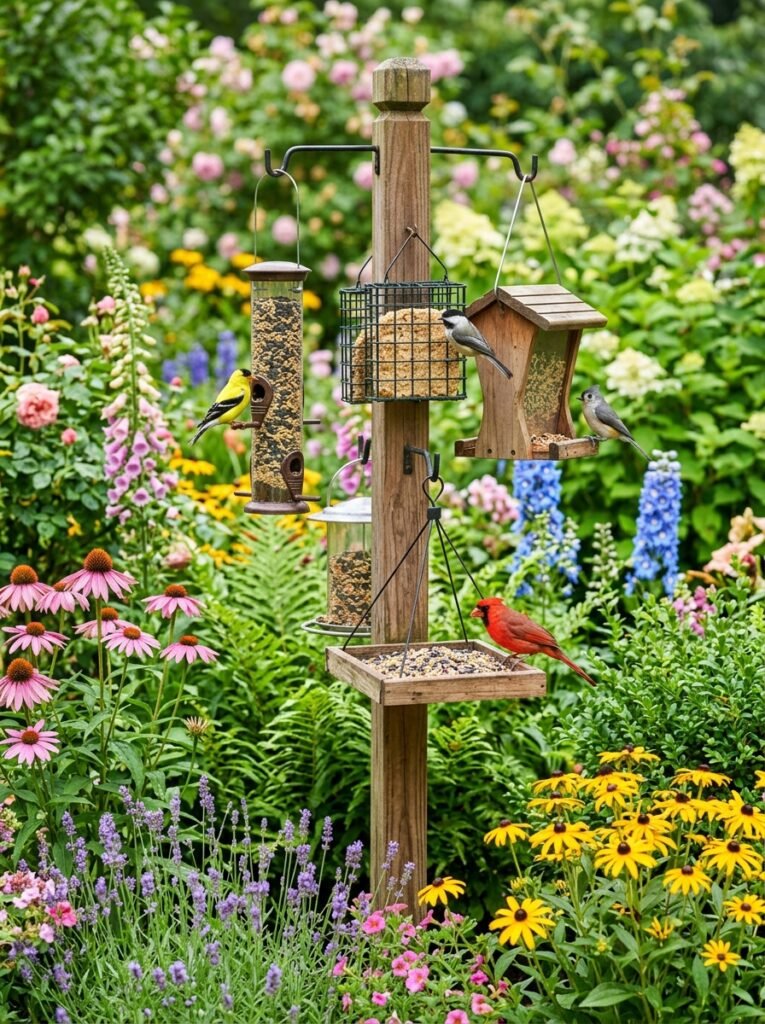
Planting flowers and shrubs around the feeding station gives birds natural cover and additional food sources beyond just the feeder itself. This layered approach pairs well with the native plant thinking covered in woodland garden ideas for creating a genuinely welcoming habitat rather than just a single feeding point.
15. Finish with a Concrete Base for Stability
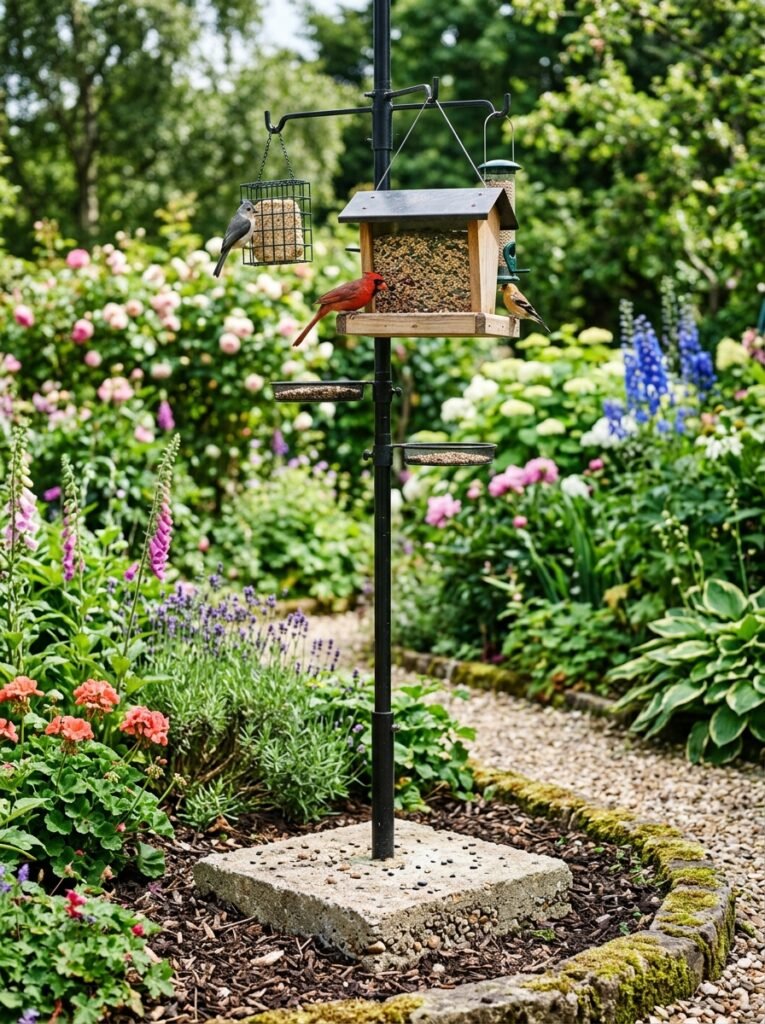
A concrete base anchors a pole station permanently, preventing it from tipping over in wind or getting knocked loose by an ambitious raccoon. This extra step takes more effort upfront than a simple ground stake, but it’s worth it for a station meant to stay in one spot for years.
Final Thoughts on Bird Feeder Station Ideas
The most successful bird feeder station combines a few key elements, reliable protection from squirrels and weather, a water source, and seed matched to local species, rather than relying on a single basic feeder to do everything. Starting with one solid pole station and building outward with a bird bath or hummingbird feeder over time creates a backyard spot that genuinely becomes a daily gathering point for local wildlife.


Amir Ali is the founder and site administrator of HomeDecorEdge, a modern home decor and interior design platform. Since starting the site, he has combined his passion for interior design, practical styling, and color coordination with hands-on content strategy and site management. He guides authors, curates high-quality articles, and ensures readers have access to actionable, visually inspiring, and user-focused home decor advice for apartments, small rooms, and family homes.