

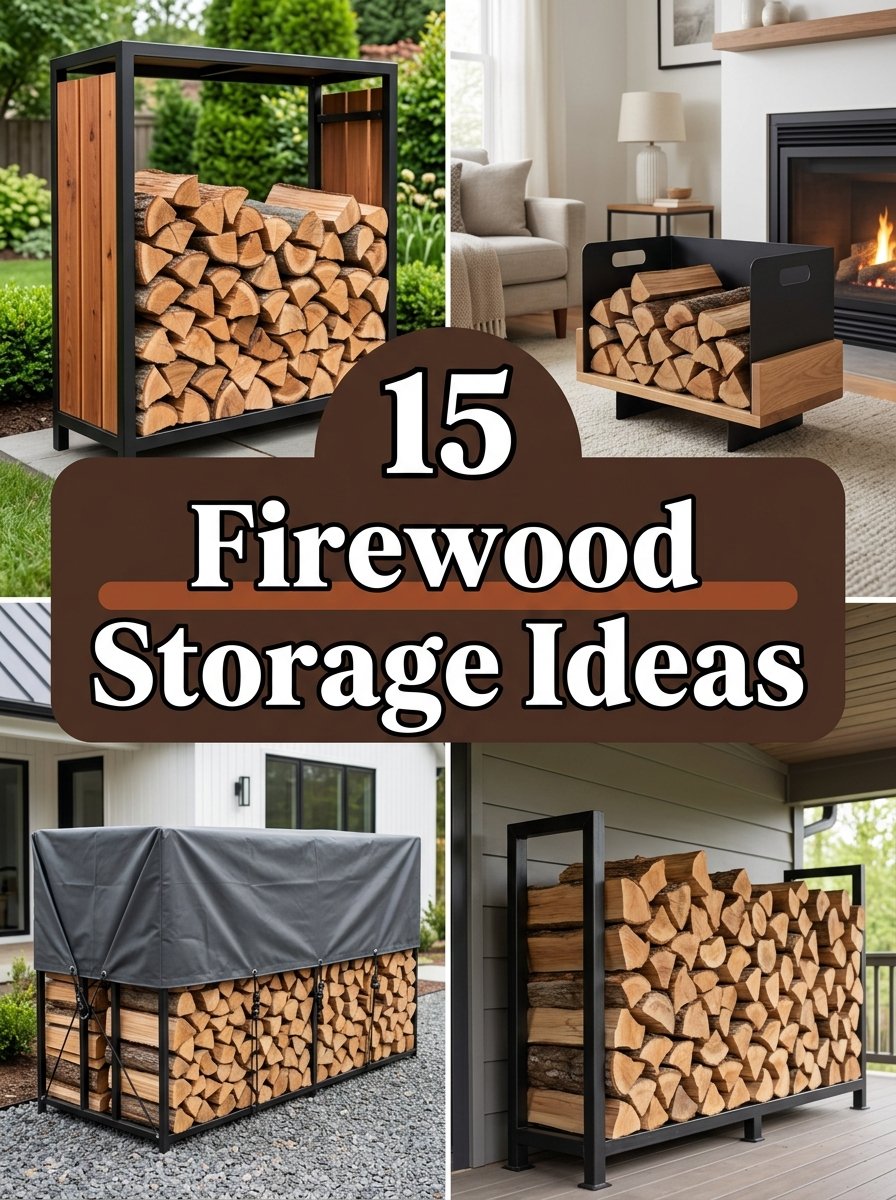
Honestly, firewood storage is one of those genuinely practical projects that people tend to underthink until they’re standing in the rain trying to grab a few logs for the night, at which point the whole setup suddenly matters a lot more than it did in summer. What I’ve learned looking into this properly is that keeping wood dry and off the ground genuinely affects how well it actually burns, since damp wood smokes more and puts out noticeably less heat than properly seasoned dry logs. This list covers 15 firewood storage ideas for both indoor and outdoor setups, along with some honest notes about what actually keeps wood dry versus what just looks nice until the first real storm.
This post contains affiliate links. If you purchase through these links I may earn a small commission at no extra cost to you.
1. Set Up an Outdoor Rack for Airflow
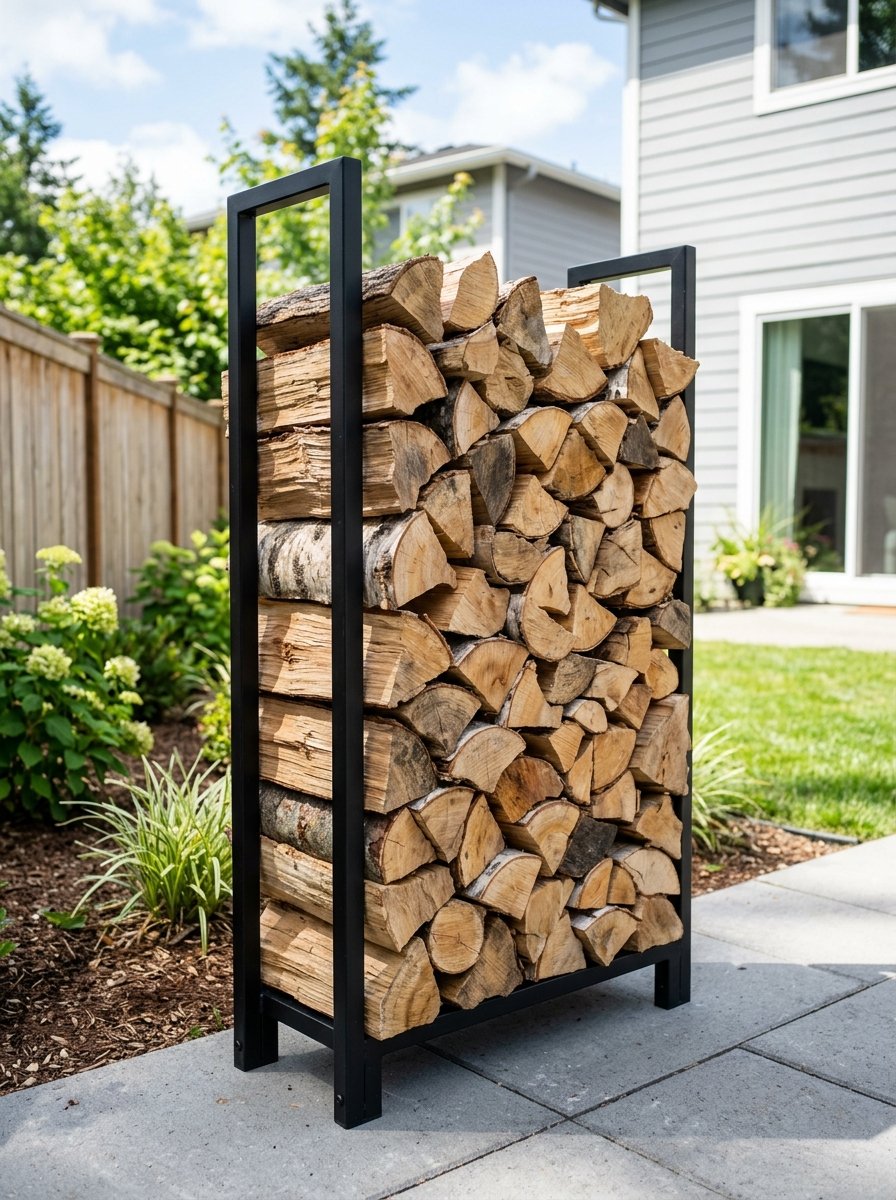
Honestly, getting firewood up off the ground genuinely matters more than most people realize, since direct ground contact traps moisture and speeds up rot in a way that shortens how long your wood pile actually stays usable. This particular rack elevates logs enough to let air circulate underneath, which honestly makes a real, noticeable difference in how quickly stacked wood actually dries out and stays that way.
Materials Needed:
- Firewood rack outdoor
- Level ground for placement
How to Make It:
- Choose a spot with good sun and wind exposure for faster drying.
- Assemble the rack following the included instructions.
- Position the rack on level ground to keep the stack stable.
- Stack logs with bark facing up to help shed rain.
- Leave gaps between logs for airflow rather than packing them tightly.

2. Keep a Small Indoor Holder Near the Fireplace
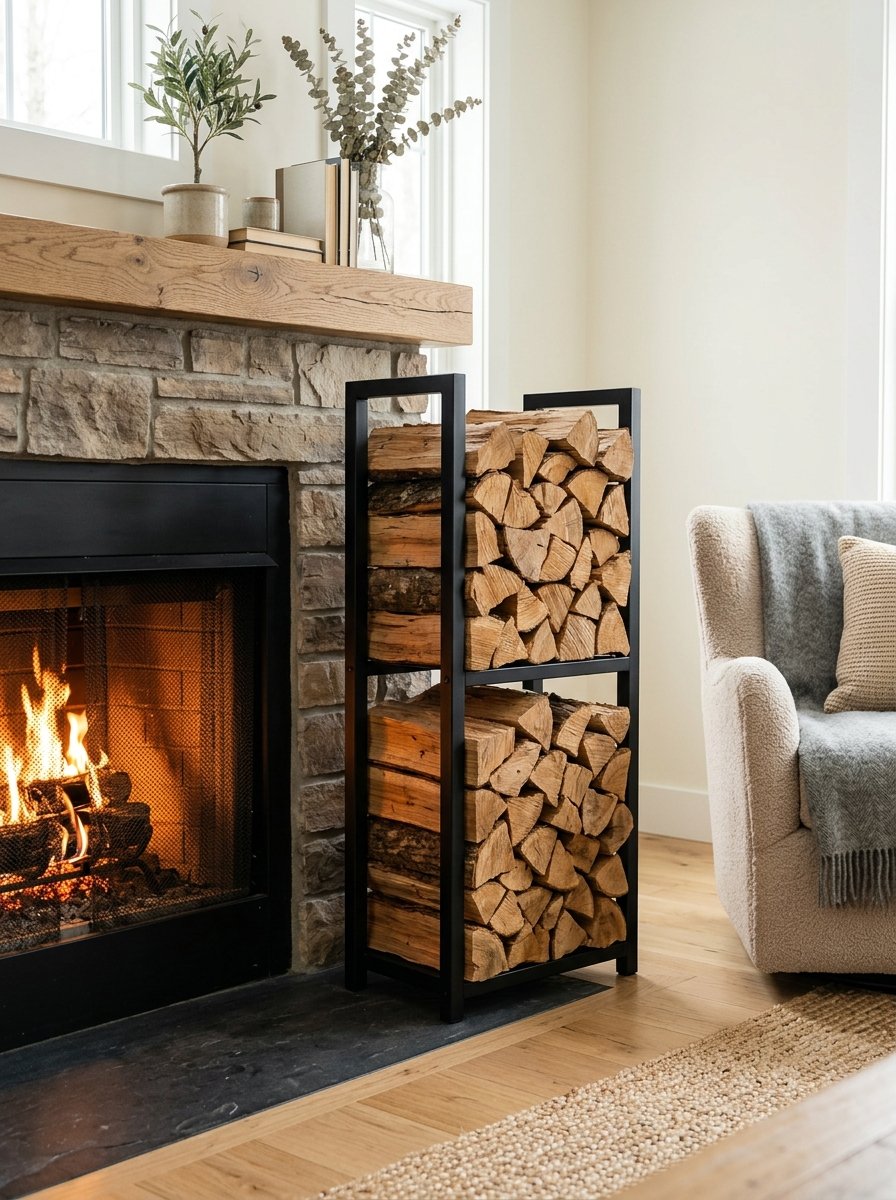
Genuinely, an indoor holder solves the actual daily annoyance of running outside every single time the fire needs feeding, letting you keep a day or two worth of logs right in the living room instead. This particular holder is sized to look intentional as a decor piece rather than purely functional, which honestly matters since it sits in view all winter long right next to the fireplace.
Materials Needed:
- Indoor firewood holder
- A few days worth of dry logs
How to Make It:
- Position the holder within easy reach of the fireplace.
- Load it with dry, seasoned logs ready to burn.
- Refill from the outdoor stack every few days rather than letting it run empty.
- Sweep up bark debris from the floor periodically.
- Keep only what you’ll burn within a few days to avoid tracking in pests.

3. Protect the Stack with a Weatherproof Cover
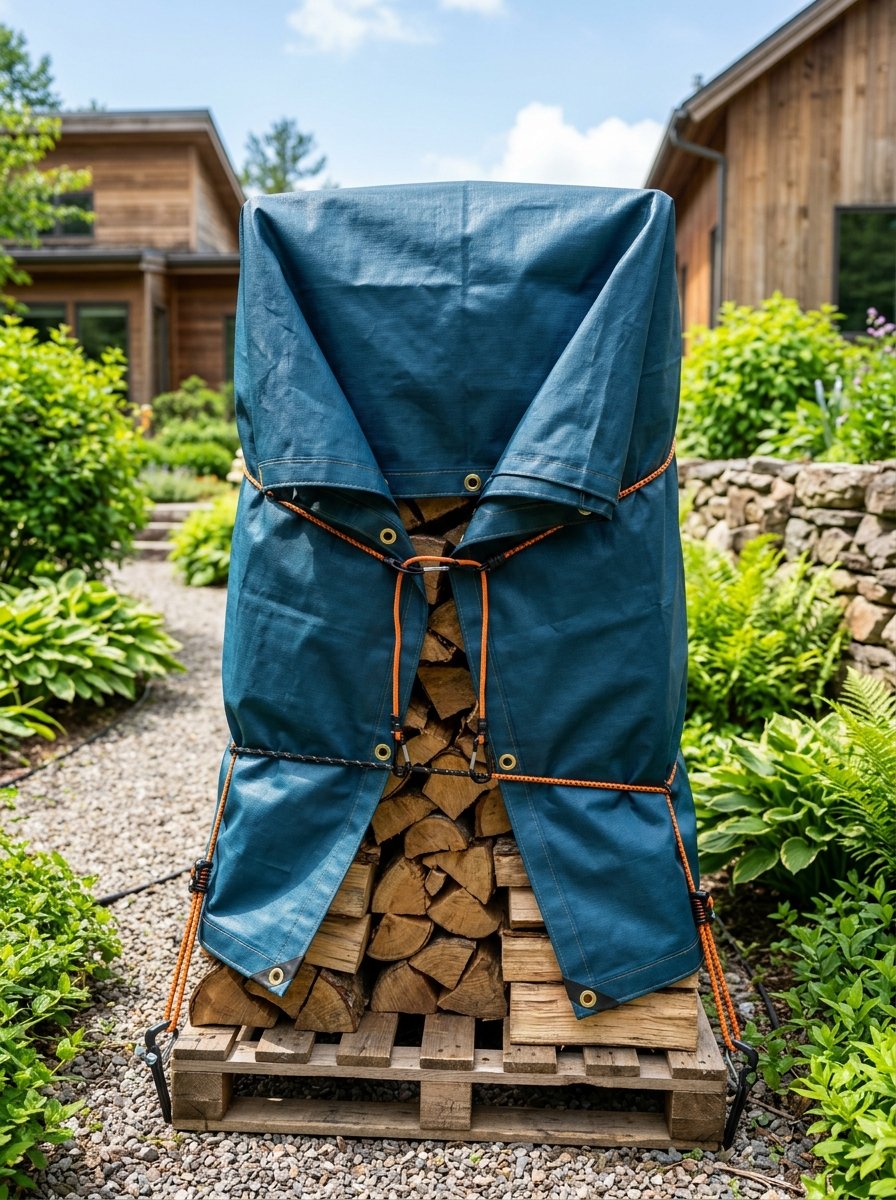
Honestly, a cover genuinely matters most on the top of the stack specifically, since rain hitting logs from above causes far more actual damage than moisture wicking up from the ground, which is why a lot of experienced wood burners cover only the top and leave the sides open for airflow. This particular tarp is sized generously enough to drape over a full rack without needing to be stretched tight, which honestly makes securing it in wind a lot less frustrating.
Materials Needed:
- Firewood cover tarp
- Bungee cords or rope for securing
How to Make It:
- Drape the tarp over the top of the stacked wood.
- Leave the sides open or loosely covered to maintain airflow.
- Secure the tarp edges with bungee cords or rope to prevent wind lift.
- Check the cover periodically after storms for shifting or pooling water.
- Remove and reposition the tarp if snow accumulation weighs it down heavily.

4. Build a Durable Metal Log Rack
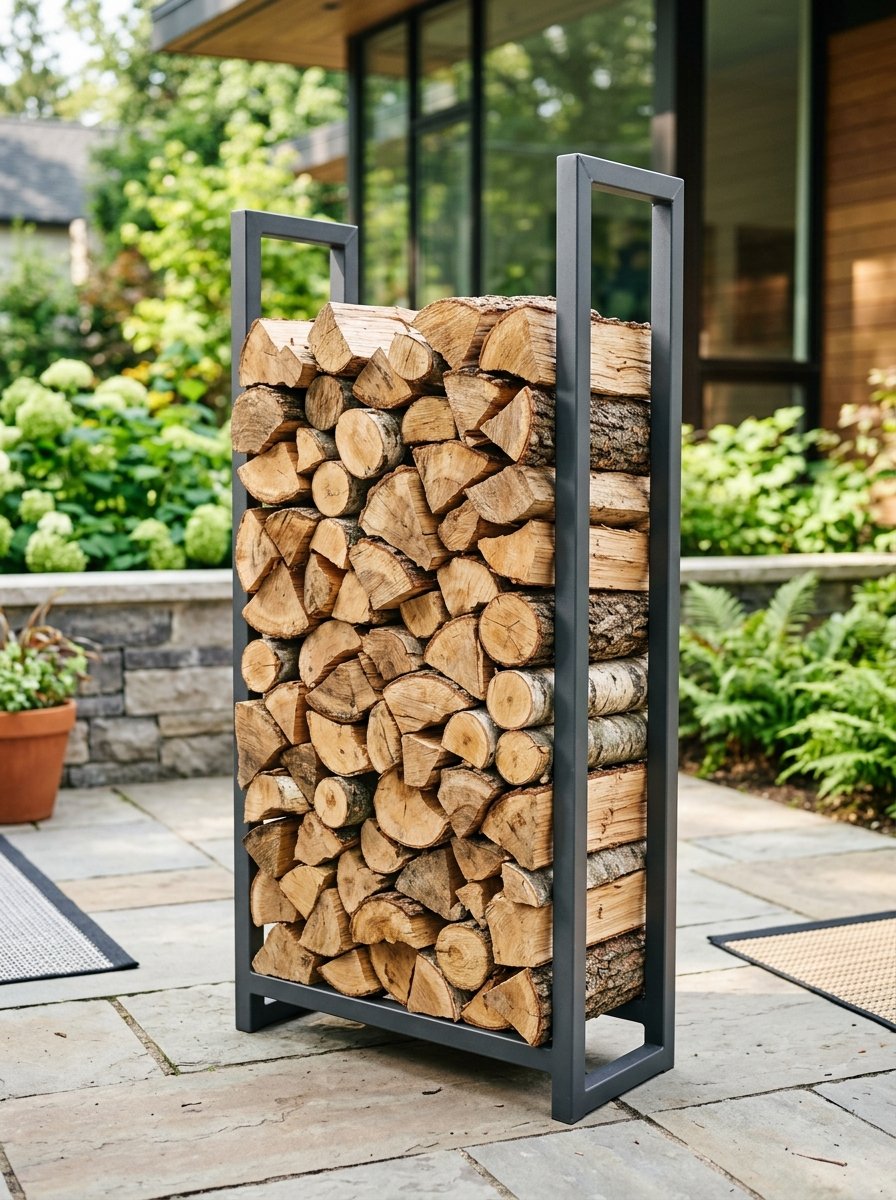
Genuinely, metal racks hold up to years of outdoor exposure far better than wood or plastic alternatives, since they don’t rot, warp, or become brittle from repeated freeze and thaw cycles the way other materials eventually do. This particular rack handles a genuinely substantial wood volume, which matters if you’re heating primarily with wood rather than just keeping a small supply for occasional fires.
Materials Needed:
- Log rack metal
- Firewood cover tarp for the top
How to Make It:
- Position the rack on stable, level ground near your main entry point.
- Assemble following the manufacturer’s included hardware and instructions.
- Load the rack with split, seasoned firewood.
- Add a cover over the top for additional rain protection.
- Check rack stability periodically, especially after it’s fully loaded.

5. Build a Budget Pallet Rack
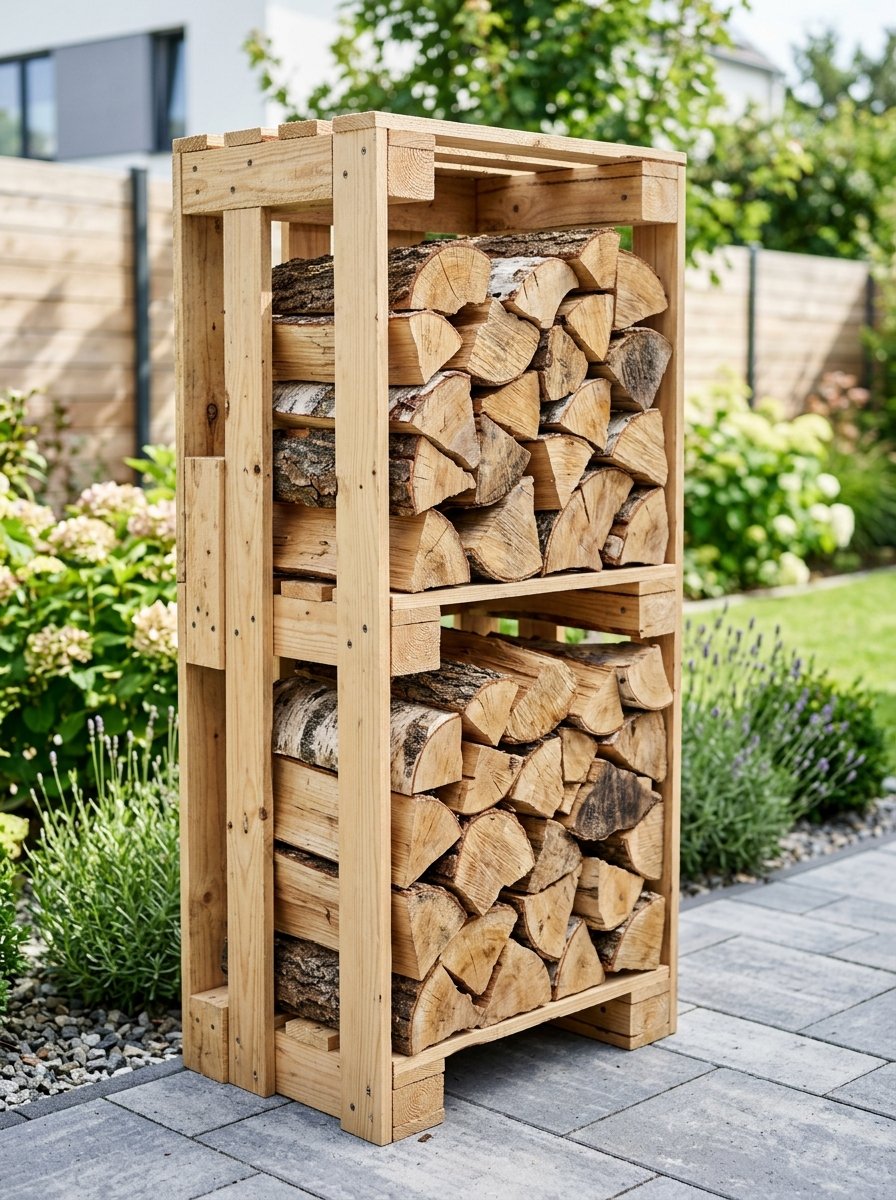
Genuinely, a firewood rack built from repurposed pallets costs almost nothing beyond your own time, and honestly works perfectly well for elevating wood off the ground even if it doesn’t look quite as polished as a purpose built rack. This budget approach pairs well with the same resourceful thinking covered in 15 diy earring holder ideas, where working with materials already on hand delivers a genuinely functional result for very little cost.
6. Design a Built In Bench with Hidden Storage
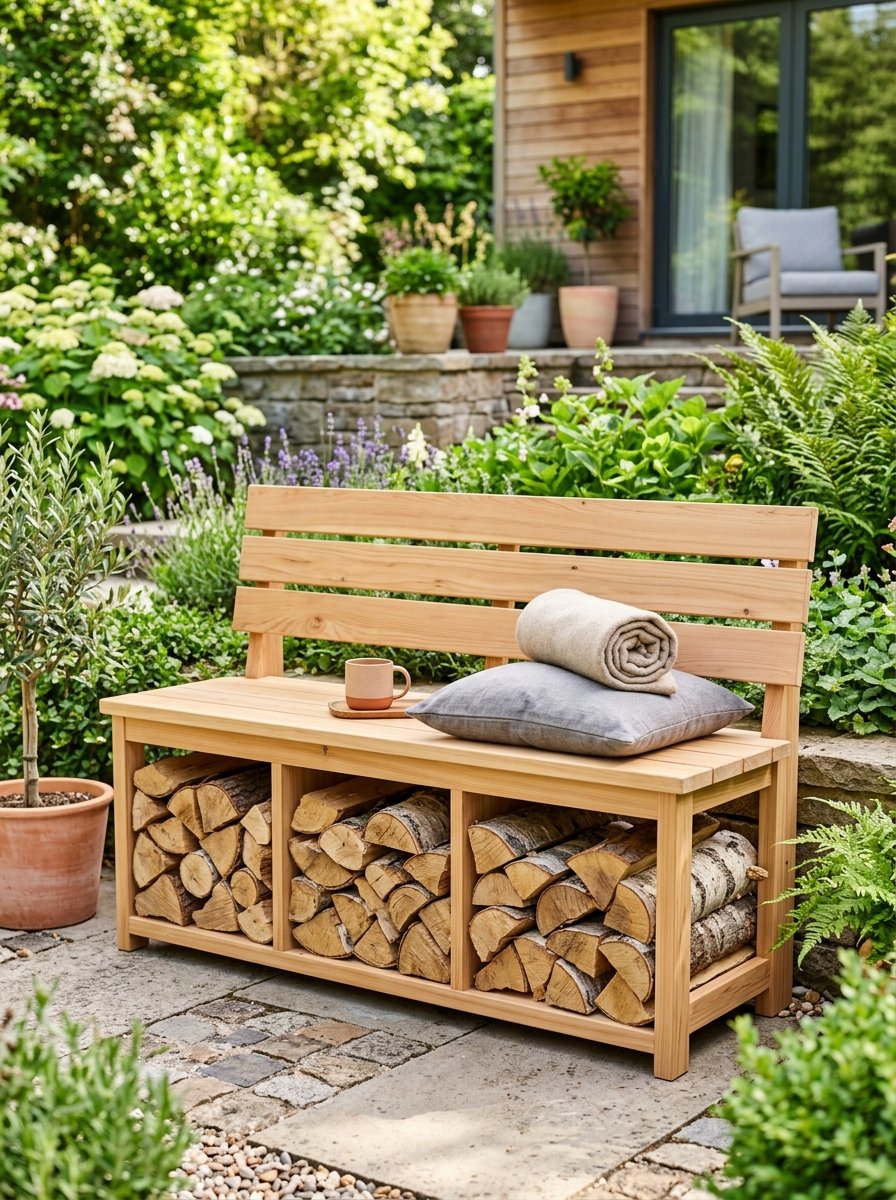
Honestly, a bench seat with a hinged top or open shelving underneath for firewood genuinely earns its space on a porch or patio by serving two functions in the same footprint, seating and storage, rather than needing separate pieces for each. This works especially well combined with the same dual purpose thinking used in 15 diy outdoor bench ideas if you want a fuller breakdown of building the actual bench structure.
7. Construct a Proper Lean-To Woodshed
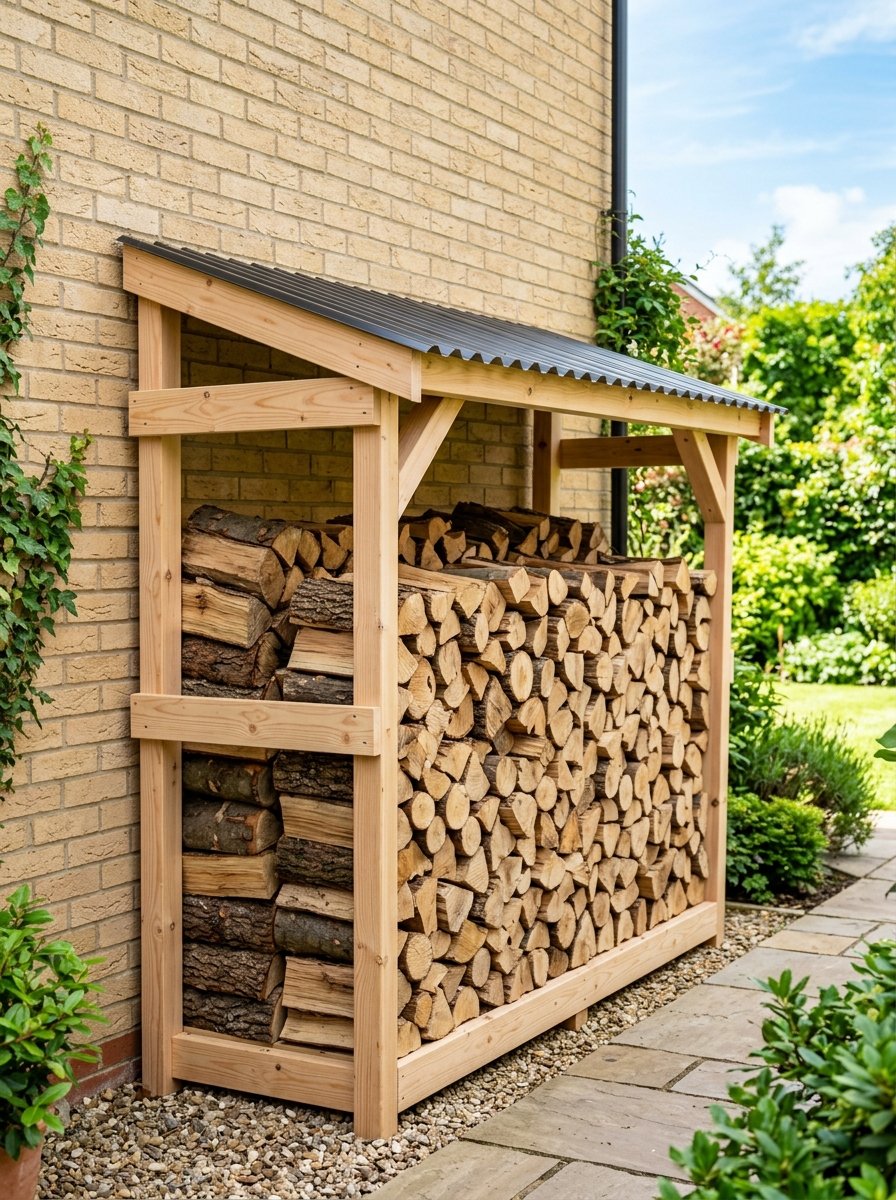
Genuinely, a lean-to structure built against an existing wall or fence line gives firewood the most complete protection on this entire list, a solid roof overhead plus walls on at least two sides, while still costing considerably less than a fully enclosed standalone shed. This structure works best positioned with its open side facing away from prevailing wind and rain direction for your specific climate.
8. Build a Full Standalone Woodshed
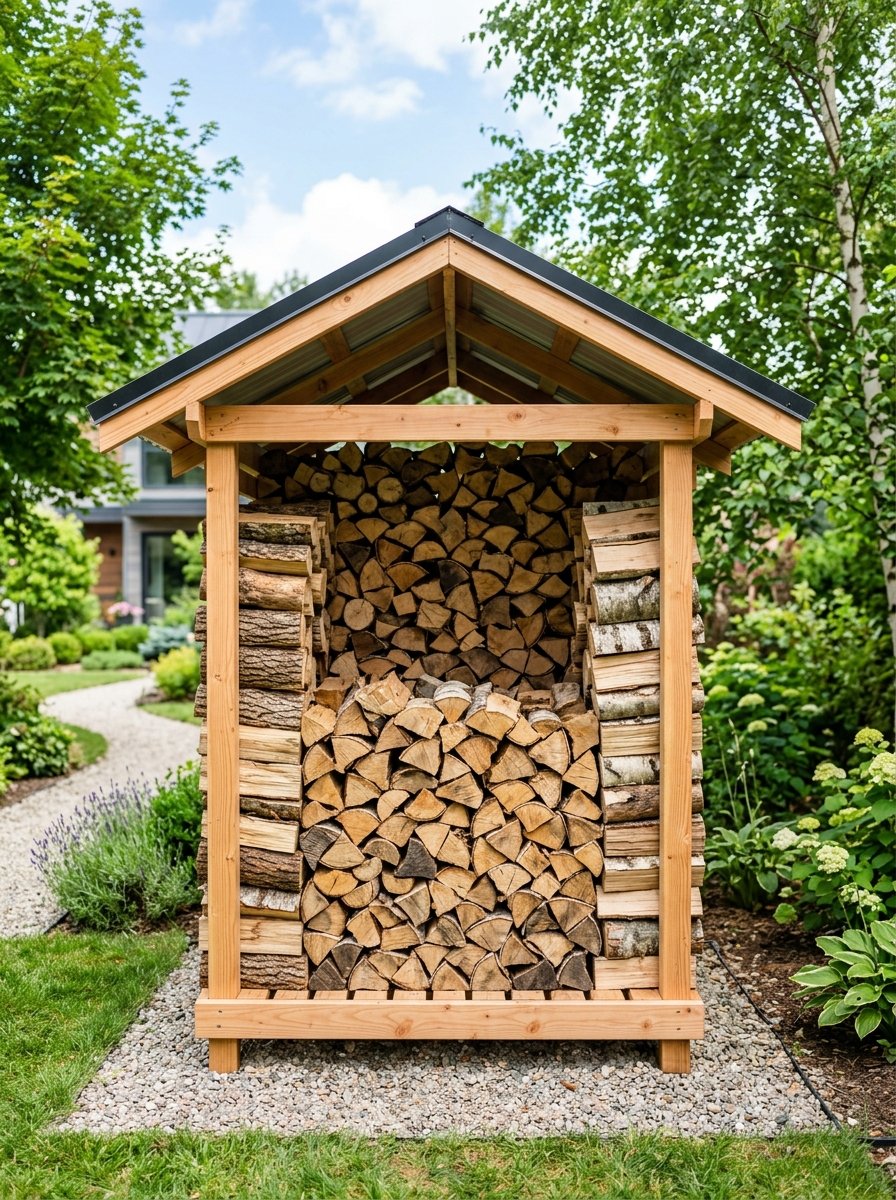
Honestly, if you’re heating a home primarily with wood rather than just occasional fires, a genuinely dedicated woodshed with proper roofing and open sided walls for ventilation is worth the extra construction investment, since it can hold a full season’s supply while keeping everything dry and organized in one place. This bigger structure also keeps your wood supply visually contained rather than scattered across multiple smaller storage spots around the property.
9. Set a Stone or Brick Base for Stability
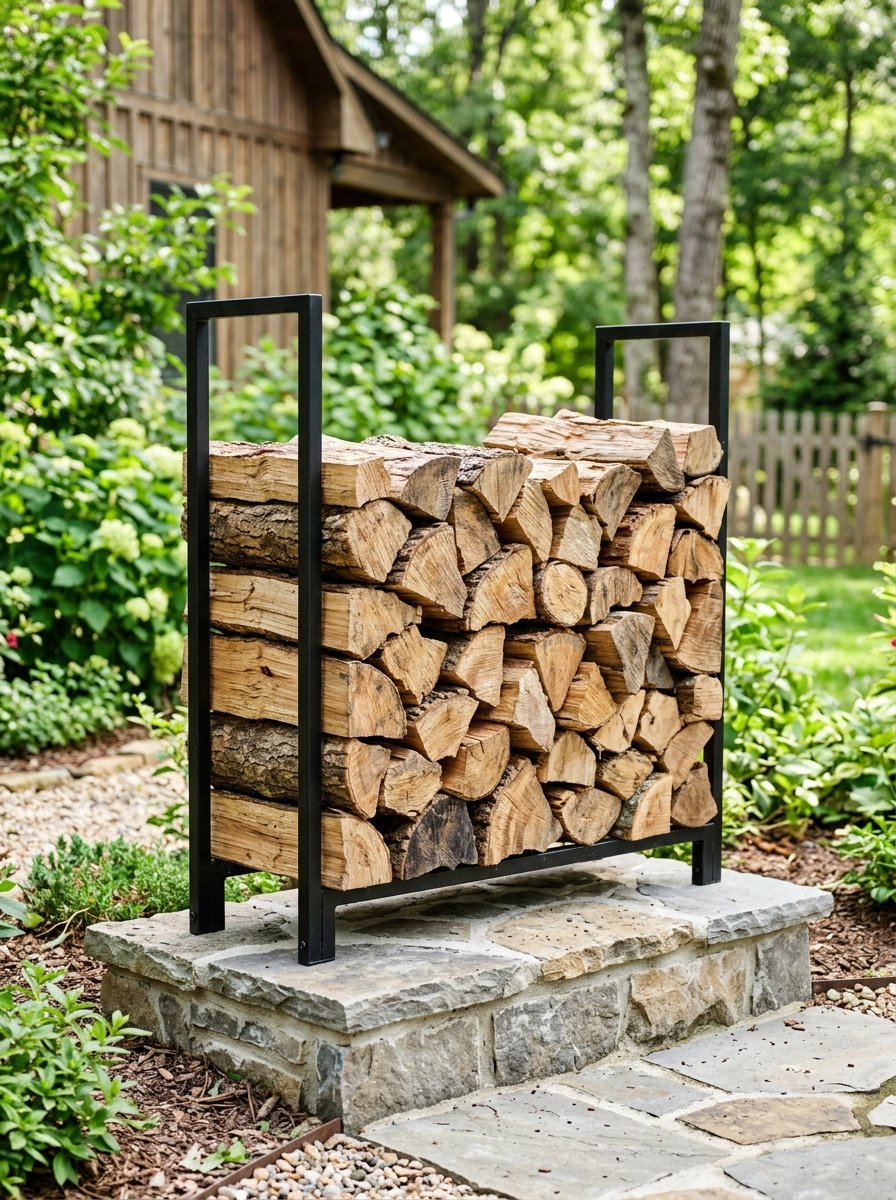
Genuinely, a simple stone or brick foundation under any outdoor rack or woodshed genuinely improves drainage and stability compared to placing the structure directly on bare dirt or grass, which tends to become uneven and muddy over a rainy season. This small addition matters more in climates with genuinely wet winters, where ground conditions shift considerably between seasons.
10. Try a Space Saving Vertical Design
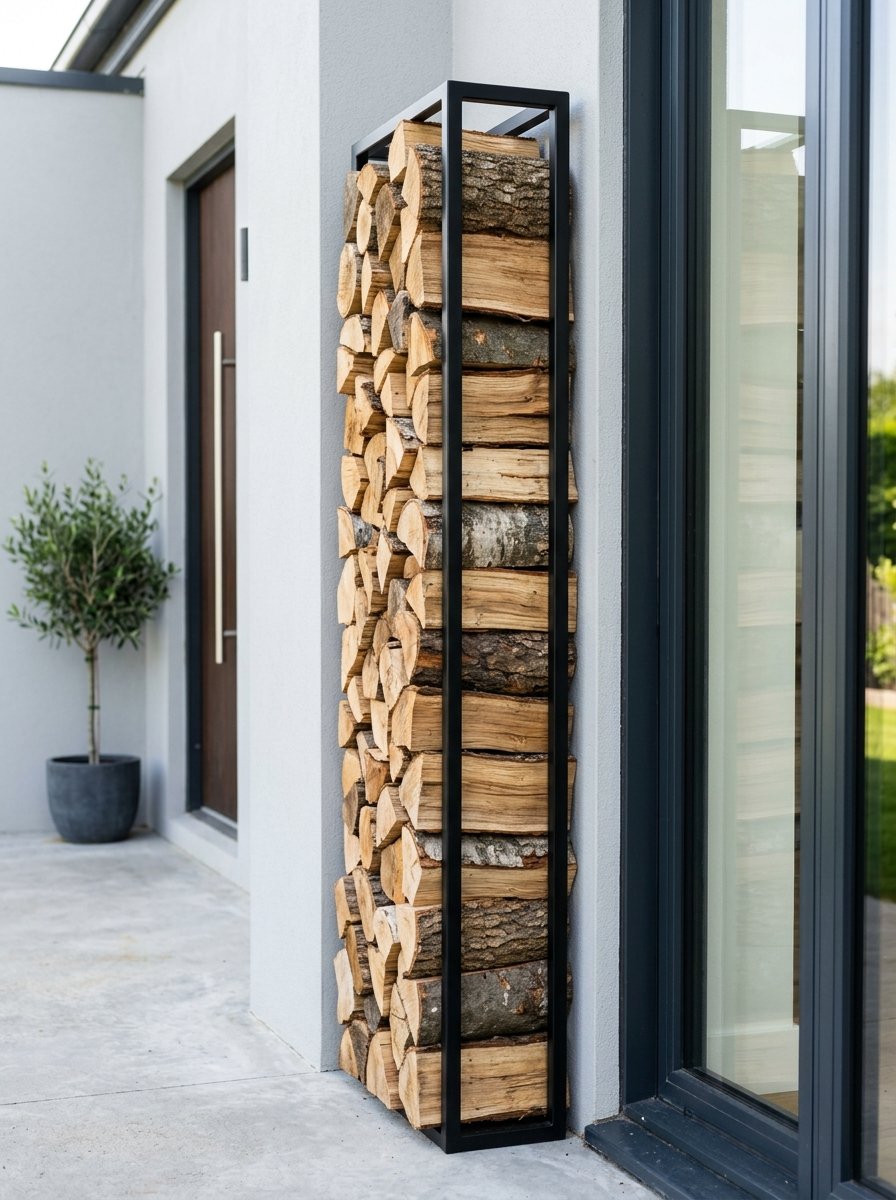
Honestly, a vertical storage design, stacking wood upward in a narrower footprint rather than spreading it out horizontally, genuinely makes sense for a smaller yard or patio where floor space is at more of a premium than height. This approach does require slightly more careful stacking to keep the pile stable, since a tall narrow stack is more prone to toppling than a low wide one.
11. Build a Decorative Triangle Rack
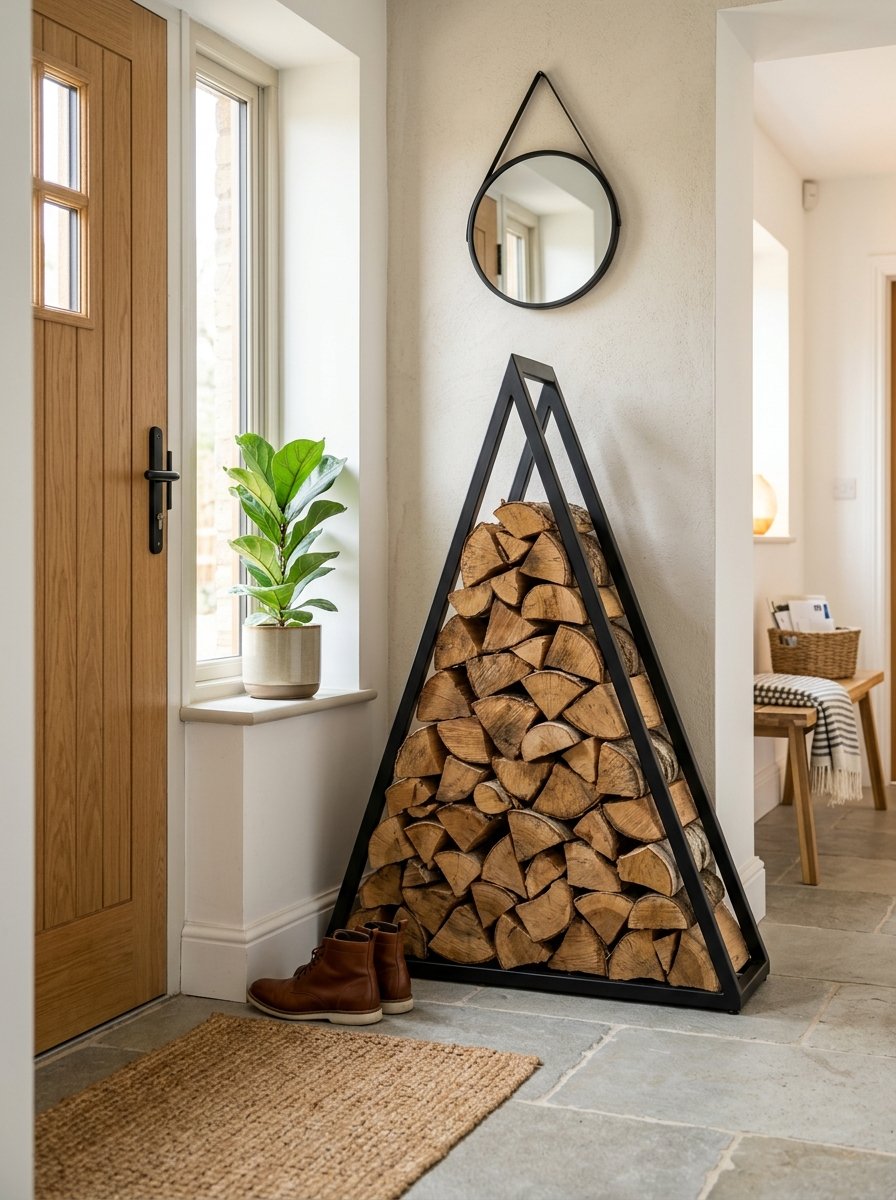
Genuinely, a triangular shaped rack design, tapering wider at the base and narrower toward the top, creates a genuinely more visually interesting silhouette than a standard rectangular rack, while still functioning identically in terms of keeping wood organized and elevated. This style works especially well as a decorative feature near an entryway where the woodpile itself becomes part of the overall curb appeal.
12. Style Firewood Storage Near a Stone Fireplace
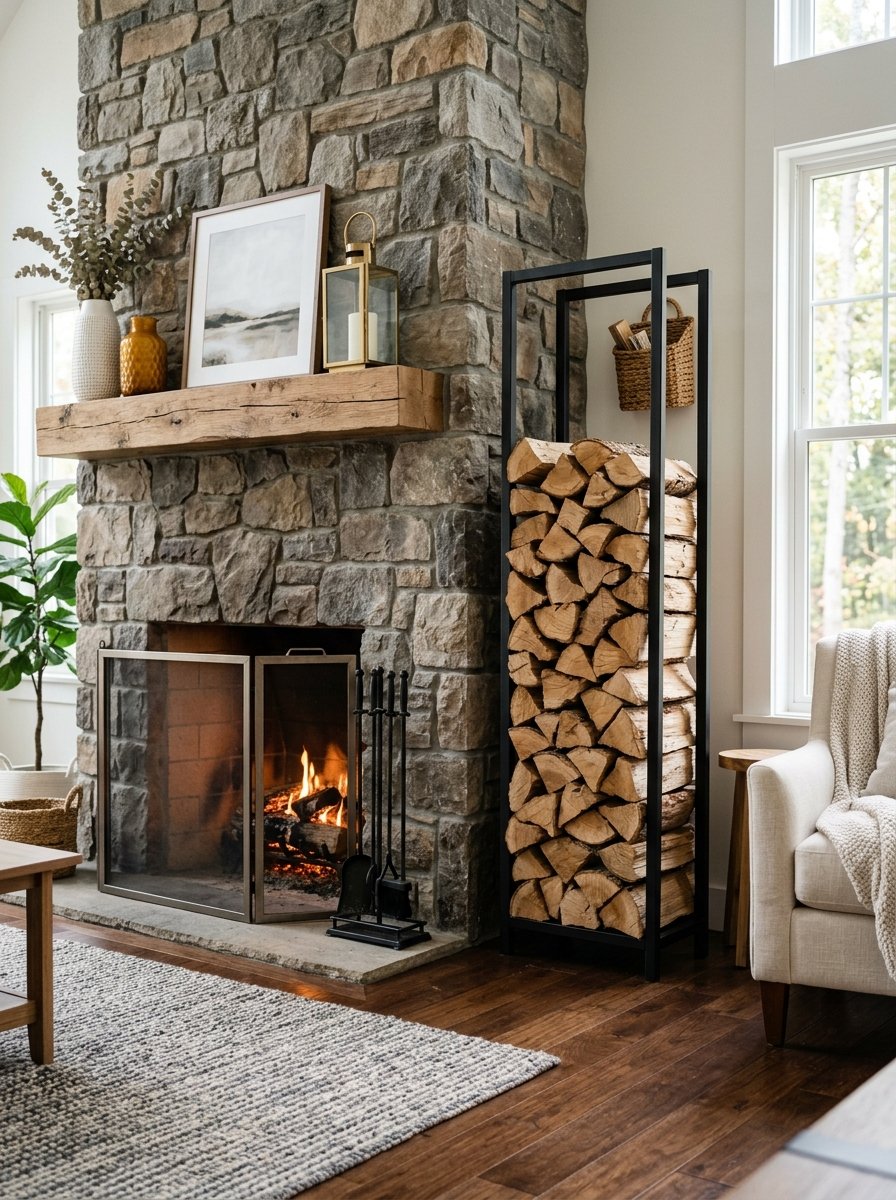
Honestly, positioning an indoor firewood holder or built in nook directly beside an existing stone fireplace genuinely ties the material palette of the whole space together, since the wood grain and stone texture read as intentionally complementary rather than like two unrelated elements placed near each other. This styling detail matters more than people expect in how finished a living room with a working fireplace actually feels.
13. Frame Storage Under a Staircase
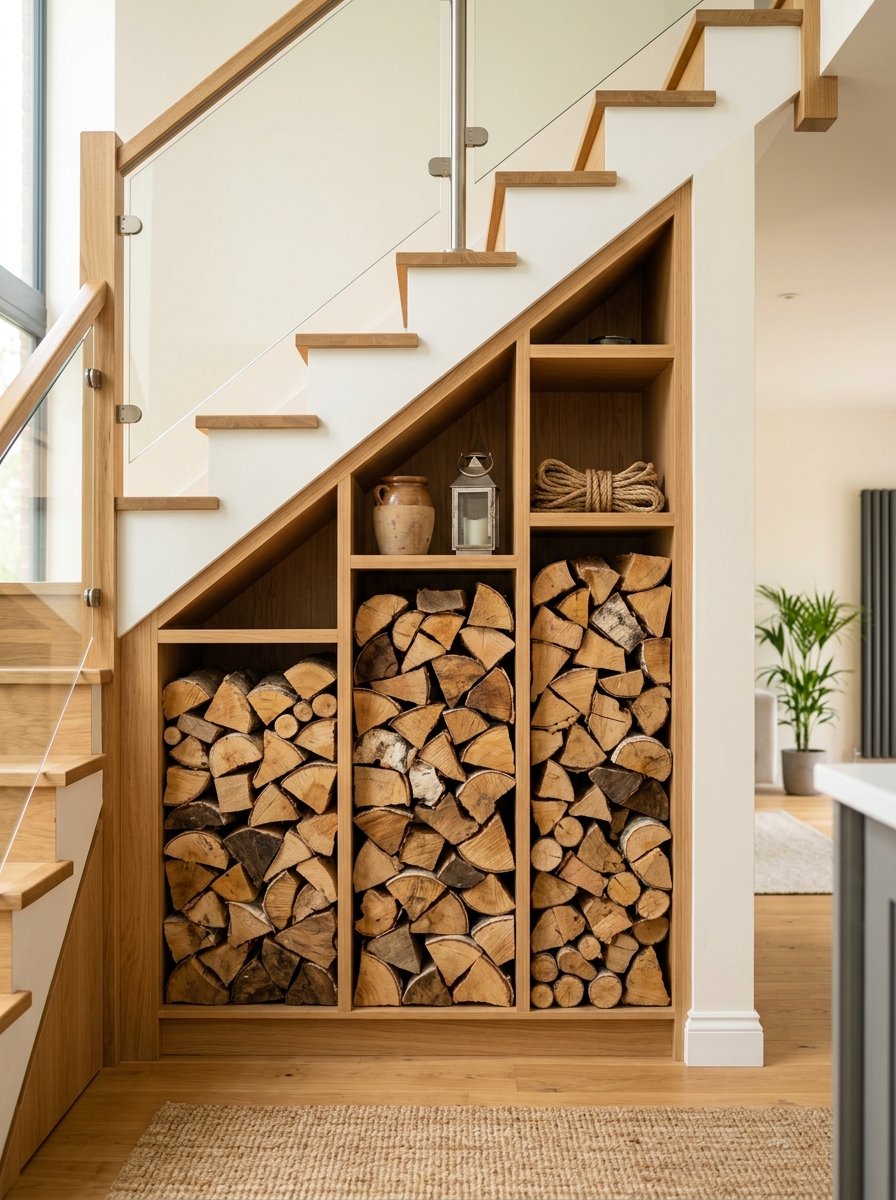
Genuinely, the often wasted space beneath an interior or exterior staircase can genuinely become dedicated firewood storage with some simple shelving built into the angled void, making use of square footage that would otherwise sit completely empty. This approach works particularly well for a home where the staircase leads directly to an entryway near the fireplace, minimizing how far wood needs to be carried.
14. Use Cinder Blocks for a Simple Outdoor Frame
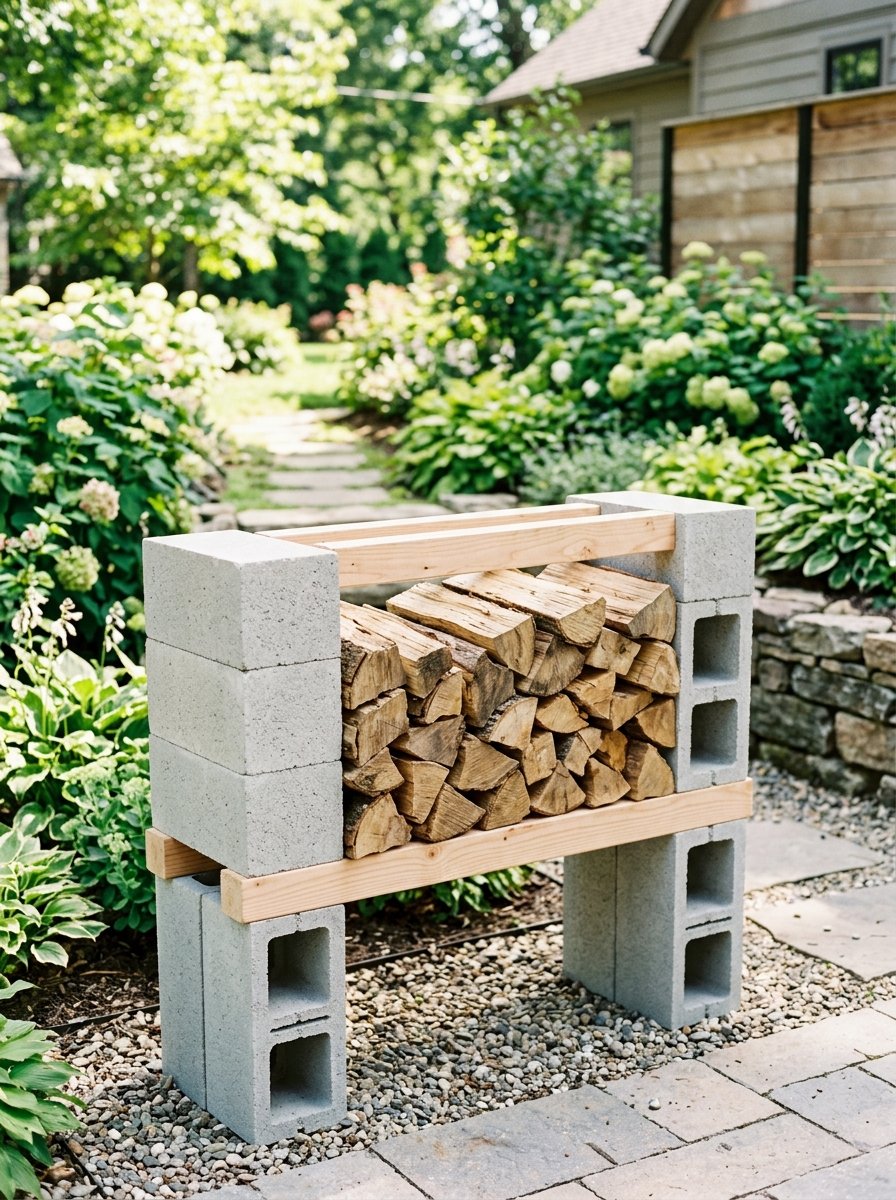
Honestly, stacking cinder blocks with a length of pipe or rebar running through the center holes creates a genuinely simple, sturdy outdoor rack frame using materials that cost very little and require no actual building skill beyond basic stacking. This method is honestly one of the fastest ways to get wood up off the ground if you need a functional solution today rather than a weekend build project.
15. Combine Indoor and Outdoor Storage Systems
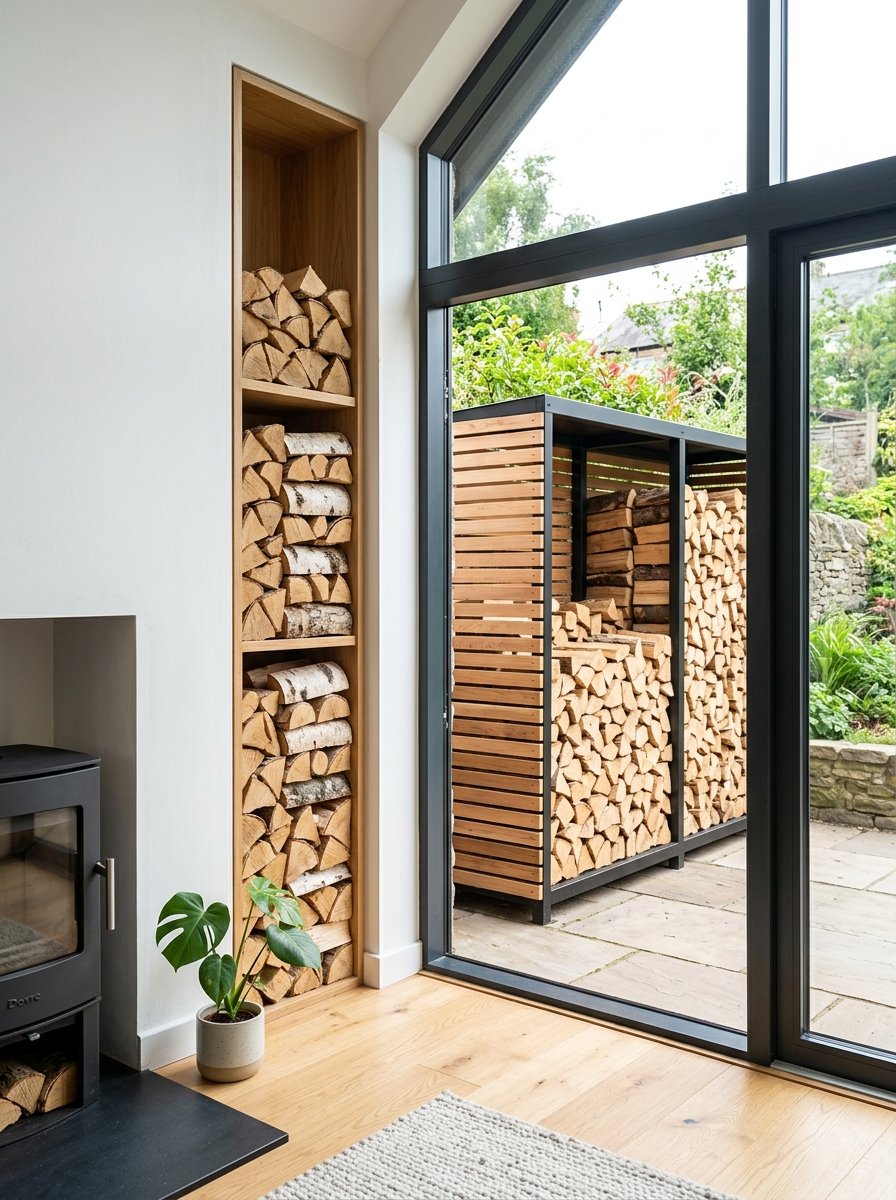
Genuinely, the most practical overall setup usually combines a larger outdoor rack or shed for your main seasoned supply with a smaller indoor holder for daily convenience, rather than relying entirely on just one storage type. This two part system mirrors the same practical thinking covered in under bed storage ideas, where a main bulk storage spot pairs with a smaller, more accessible everyday spot for genuinely efficient organization.
Final Thoughts on Firewood Storage Ideas
Honestly, the right firewood storage setup really comes down to how much wood you’re actually working through each season, since a small indoor holder solves a completely different problem than a full standalone woodshed built for heating an entire home. Start with getting your main outdoor supply elevated and covered properly, since that single change genuinely does more for wood quality than any other storage decision on this whole list.


Amir Ali is the founder and site administrator of HomeDecorEdge, a modern home decor and interior design platform. Since starting the site, he has combined his passion for interior design, practical styling, and color coordination with hands-on content strategy and site management. He guides authors, curates high-quality articles, and ensures readers have access to actionable, visually inspiring, and user-focused home decor advice for apartments, small rooms, and family homes.