

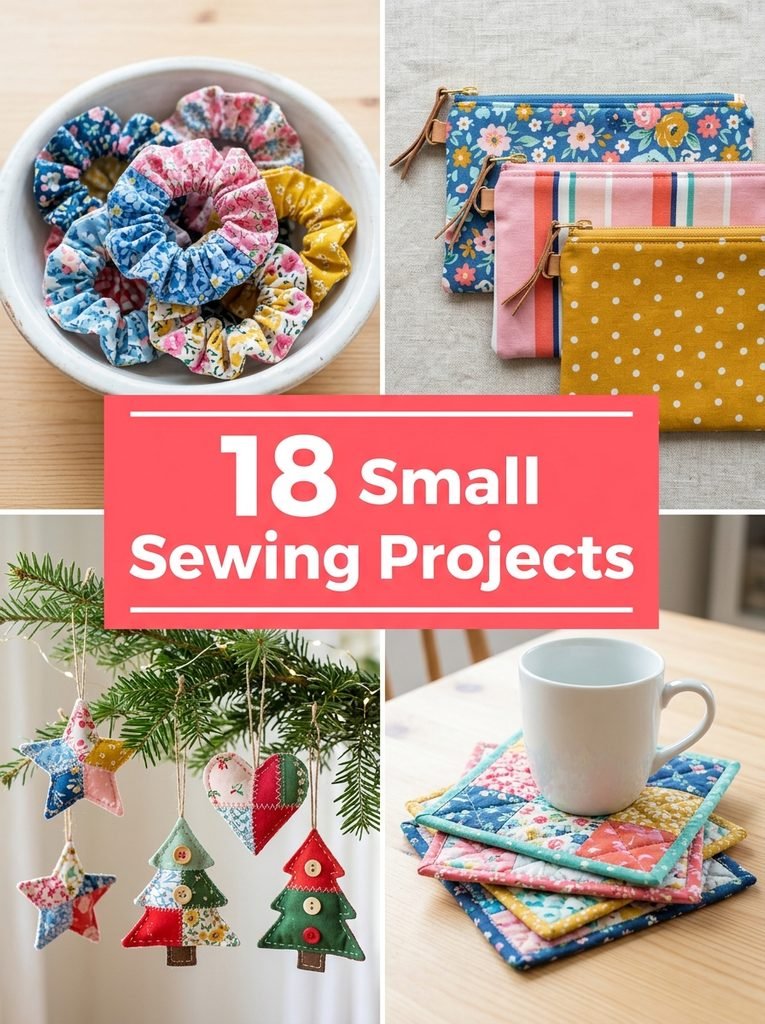
Here’s something nobody told me when I started sewing. The projects that sell best at craft fairs are almost never the big impressive ones. They’re the little things. A scrunchie, a pouch, a set of coasters. People pick them up, smile, and buy three. They’re also the projects I reach for every time I need a last minute gift. So this list is a mix of both: small sewing projects that are quick to make, use up your fabric scraps, and look good enough to sell or wrap. I’ve added a practical tip to each one, plus a little selling advice where it helps.
1. Fabric Scrunchies
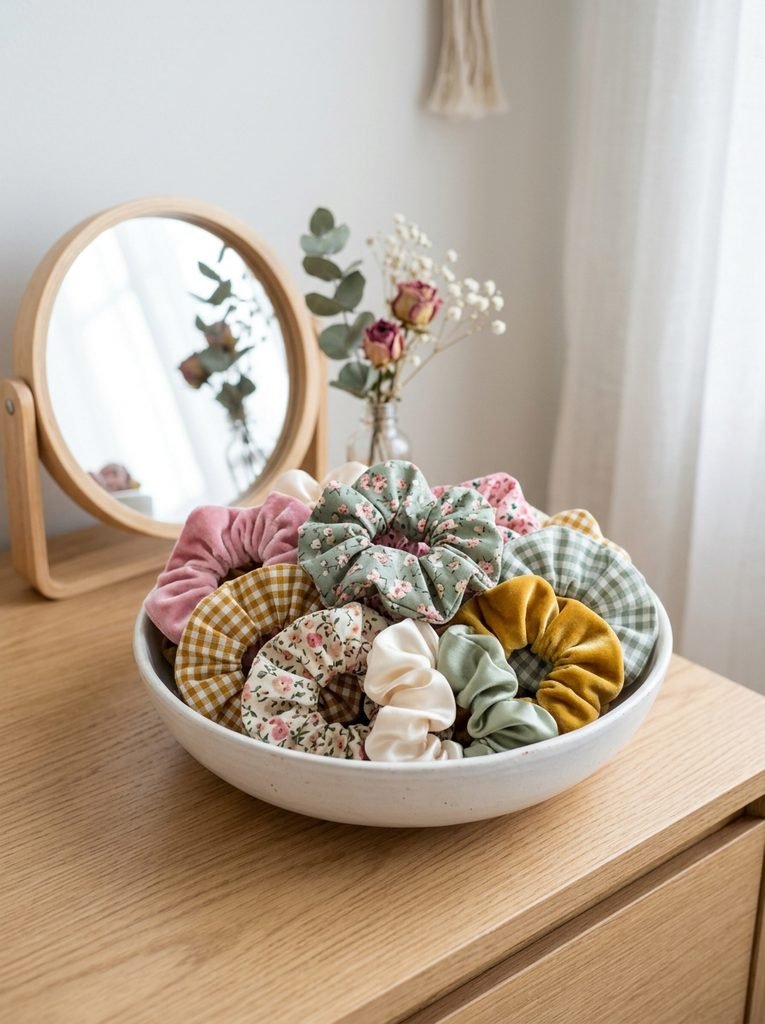
If I had to pick one project to sell, it would be scrunchies. Honestly, they take about ten minutes each once you get into a rhythm, and they use the tiniest strips of fabric. Satin and velvet sell the best in my experience, because they feel a little luxurious. Cut your strips on the straight grain so they gather evenly. A tip I picked up: sell them in bundles of three on a simple card. People almost always buy the bundle over a single one.
2. Zipper Pouches
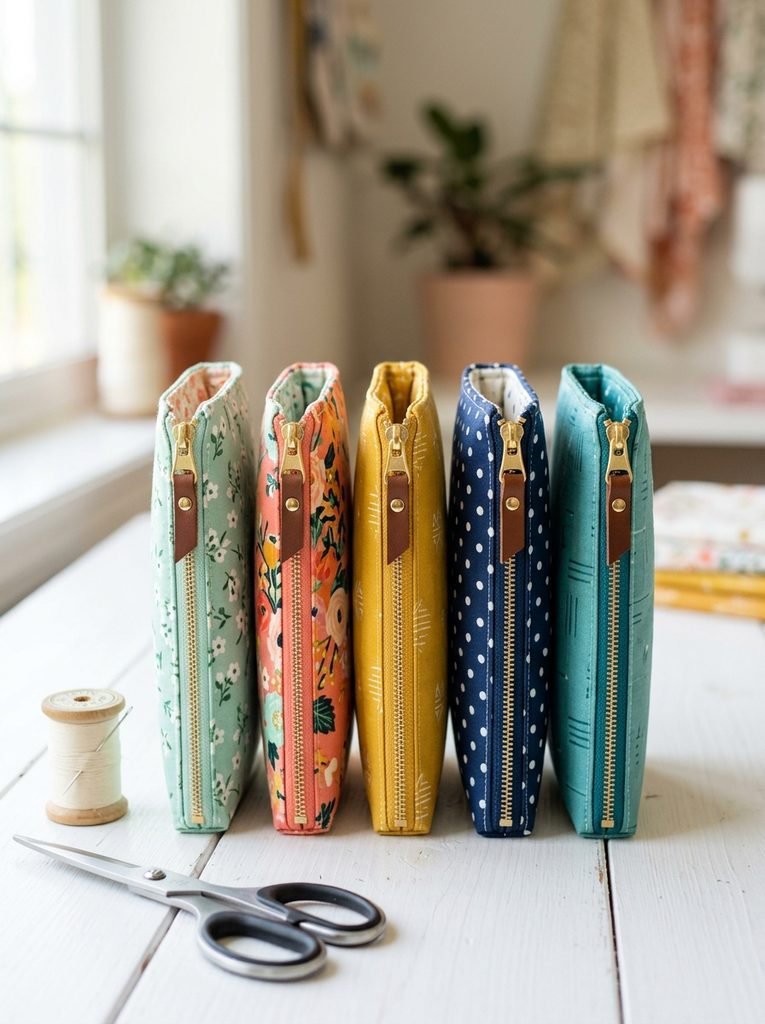
Zipper pouches look tricky, but once you’ve made one, you’ll want to make twenty. They’re useful for makeup, pencils, chargers or snacks, which is exactly why they sell so well.
Materials Needed: Two outer fabric rectangles, two lining rectangles, a zipper slightly longer than the fabric width, fusible interfacing, a zipper foot, pins or clips, and matching thread.
How to Make It: Iron interfacing onto the outer fabric pieces so the pouch holds its shape. Sandwich the zipper between one outer piece and one lining piece, right sides facing, and stitch with your zipper foot. Repeat on the other side. Open the zipper halfway, which is the step everyone forgets, then pin outer to outer and lining to lining. Sew around the edges, leaving a small gap in the lining. Turn it right side out through the gap, stitch the gap closed and press. A tip I picked up: a metal zipper looks far more expensive than plastic and lets you charge a little more.
3. Scrap Fabric Christmas Ornaments
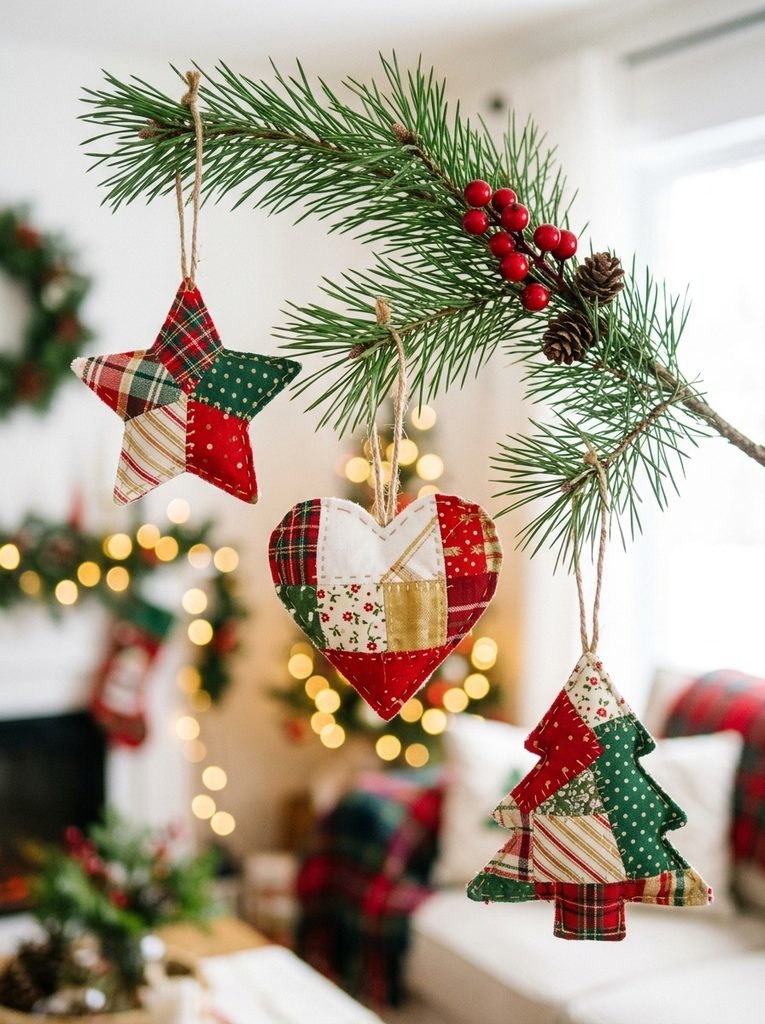
This is the perfect project right now. Christmas fabric scraps turn into the sweetest ornaments, and they sell fast at holiday markets.
Materials Needed: Fabric scraps in holiday colors, a paper template for a tree, star or heart, polyester stuffing, twine or ribbon for hanging loops, pins, and thread.
How to Make It: Sew small scrap strips together into a patchwork panel and press the seams flat. Trace your template onto the back and cut two matching shapes. Fold a short loop of twine and tuck it between the shapes at the top, facing inward. Sew around the edge with a small seam allowance, leaving a gap on one side. Clip the curves and points, turn right side out, stuff lightly and close the gap by hand. In my experience, adding a single button or a tiny bell makes them look much more finished.
4. Quilted Mug Rugs
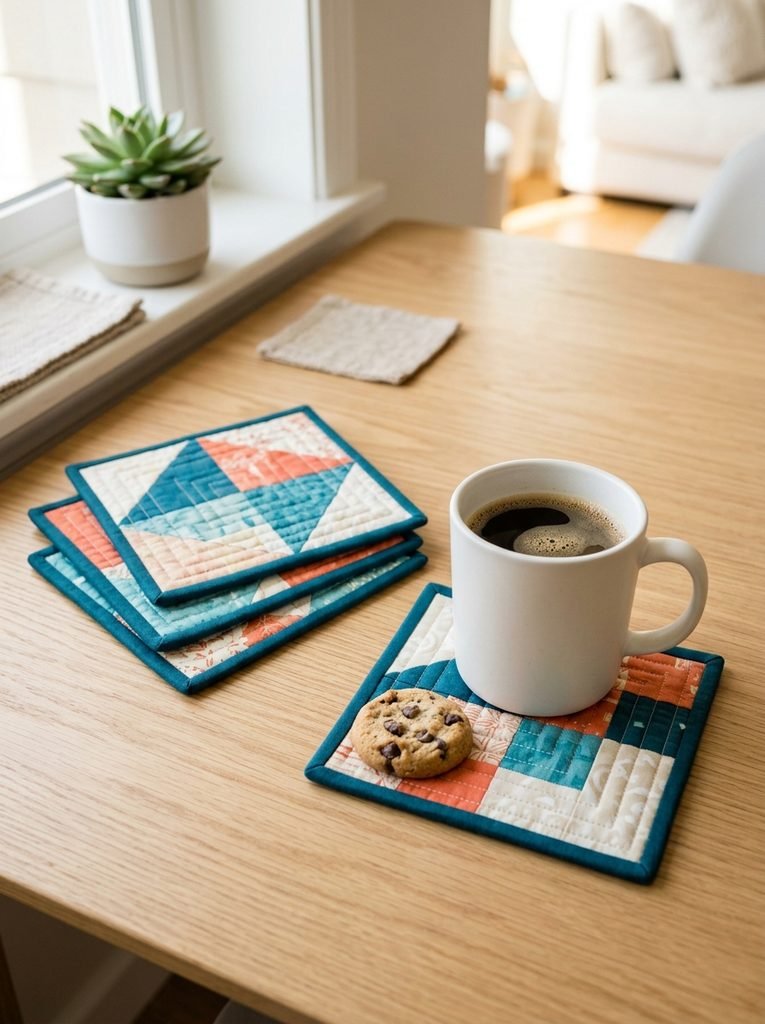
A mug rug is basically a tiny quilt that holds your coffee and a snack. It’s a brilliant way to practice quilting without committing to a whole blanket. I like making them in sets of two, because they make such a sweet gift for a friend who loves tea. The honest tip here is to use cotton batting, not polyester. It lies flatter and handles hot mugs much better.
5. Fabric Coasters Set
Coasters are small, quick and practical, which is a winning combo for selling. Sew them in sets of four or six with coordinating fabrics so they look like a collection. A layer of thin cotton batting or a scrap of felt inside makes them absorb drips properly. I’d suggest finishing them with a tidy topstitch around the edge. It holds everything flat and gives that crisp store bought look.
6. Lavender Sachets
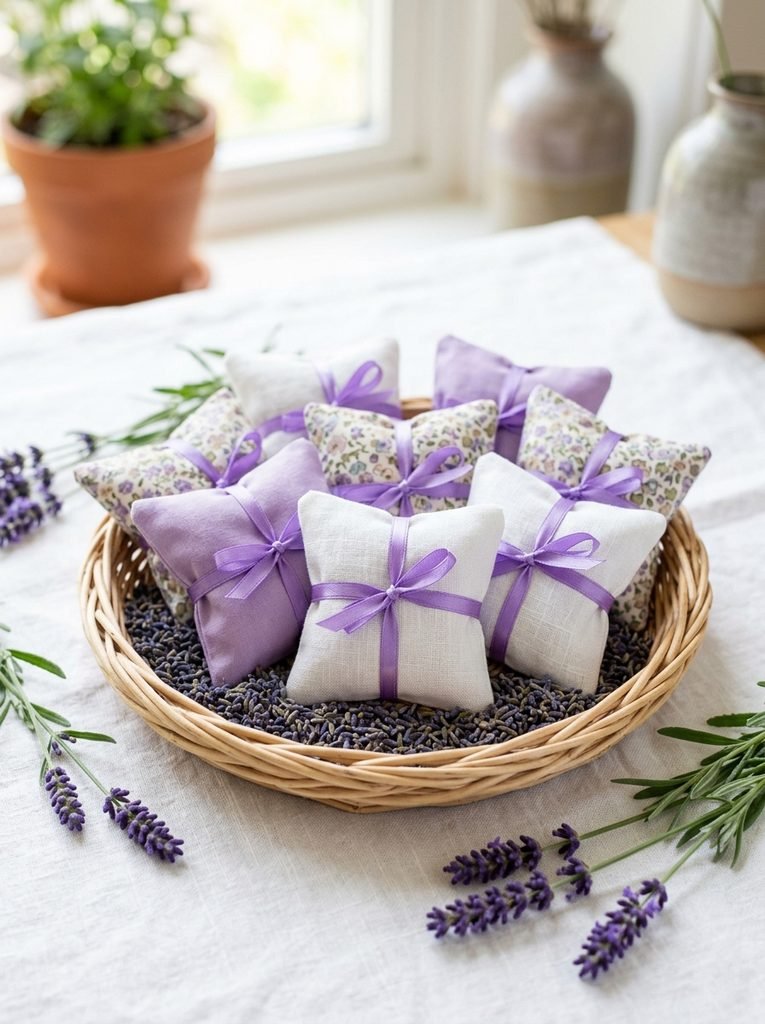
These are one of my favourite quick gifts. Two little squares of fabric, a spoonful of dried lavender and you’re done. They go in drawers, closets or pillowcases and make everything smell lovely. Use a tightly woven fabric so the buds don’t poke through. A tip I picked up: mix a little rice in with the lavender. It bulks the sachet up and makes the dried lavender go further.
7. Fabric Key Fobs
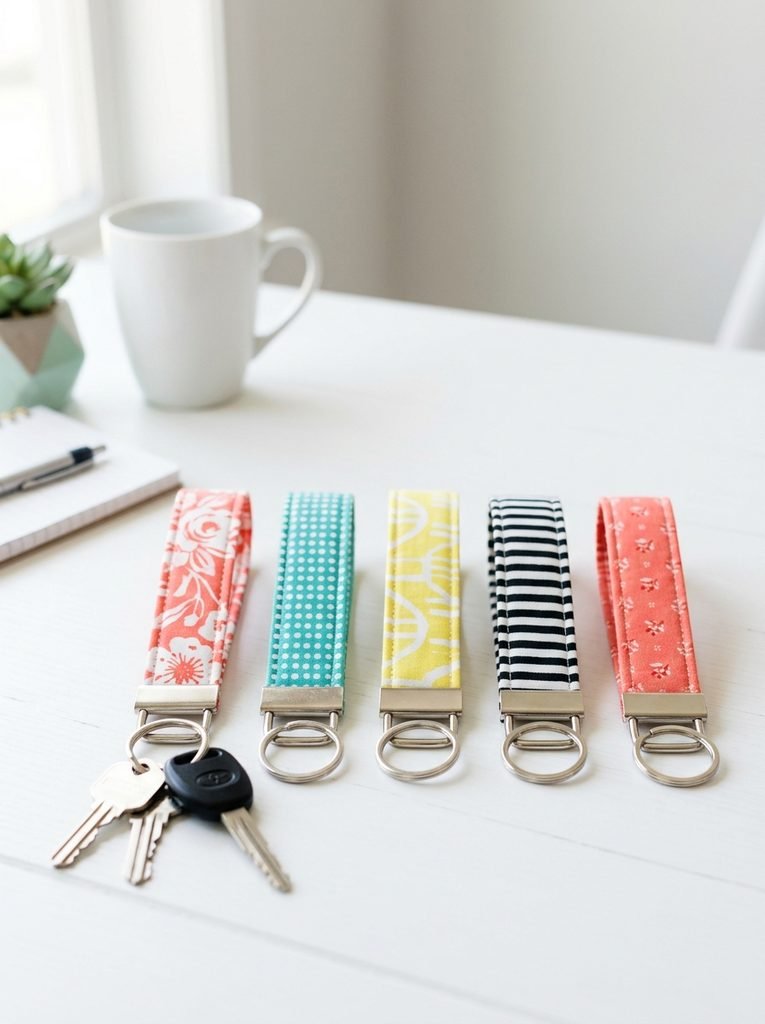
Key fobs take only a strip of fabric and a bit of hardware, and they’re one of the easiest sellers out there. People love them because they make keys so much easier to find in a bag. Add a strip of fusible fleece or interfacing so they don’t feel flimsy. The hardware clamp is the one fiddly part. Honestly, a small square of fabric over the clamp before you squeeze it with pliers stops the metal from getting scratched.
8. Reusable Makeup Remover Pads
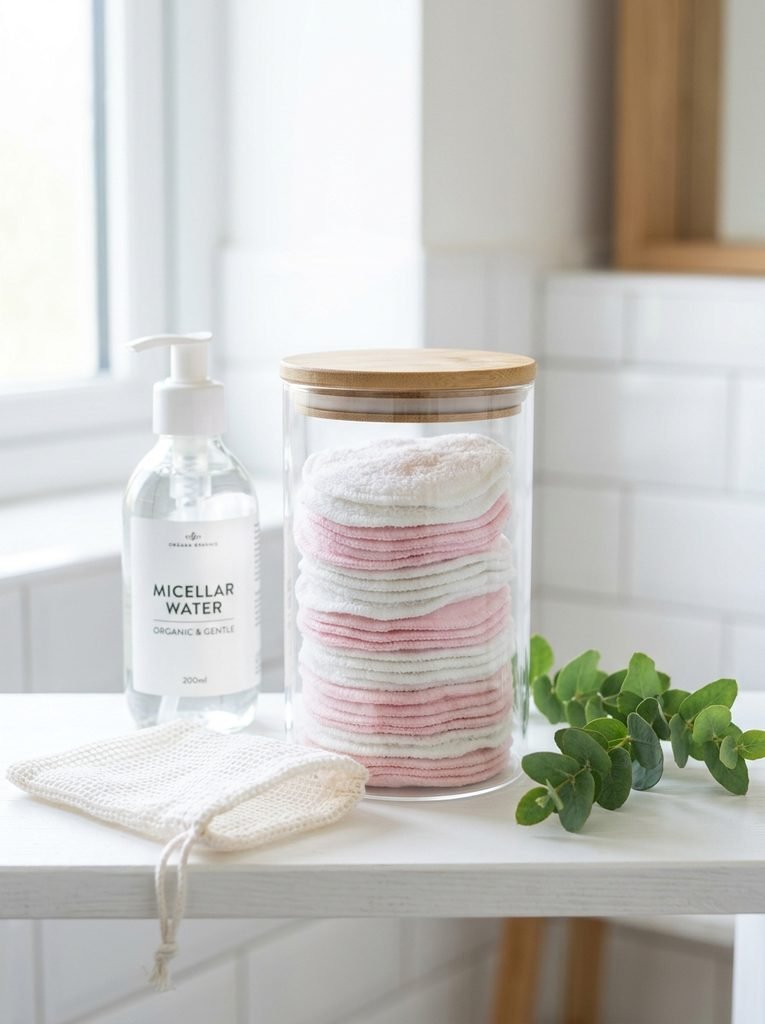
Eco friendly products are a big trend right now, and these little rounds fit right in. They’re made from two small circles of soft fabric, so they use up even the tiniest scraps. Terry cloth or bamboo fleece on one side and cotton on the other works beautifully. I’d suggest selling them in a set of ten with a small mesh wash bag. That little extra makes the set feel complete and gift ready.
9. Small Drawstring Gift Bags
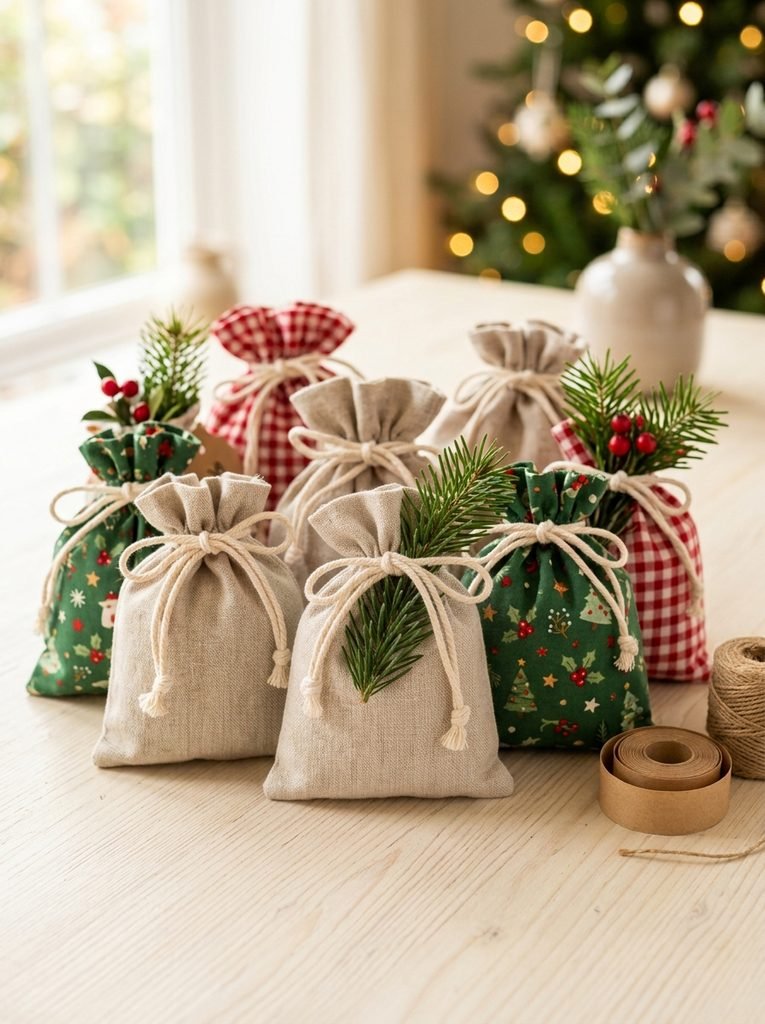
Drawstring bags are reusable gift wrap, and honestly once you start using them, paper wrapping feels like a waste. They’re also great for jewellery, soaps or small treats.
Materials Needed: Two fabric rectangles, cotton cord or ribbon, a safety pin, pins or clips, scissors, and thread.
How to Make It: Place the rectangles right sides together and sew down both sides and across the bottom, stopping about two inches below the top on each side. Press the seams open. Fold the top edge down a little, then fold again to make a channel and stitch it closed all the way around. Thread the cord through the channel using a safety pin and knot the ends. A tip I picked up: box the bottom corners by stitching across each corner diagonally. The bag will stand up on its own and look much more polished.
10. Fabric Bookmarks
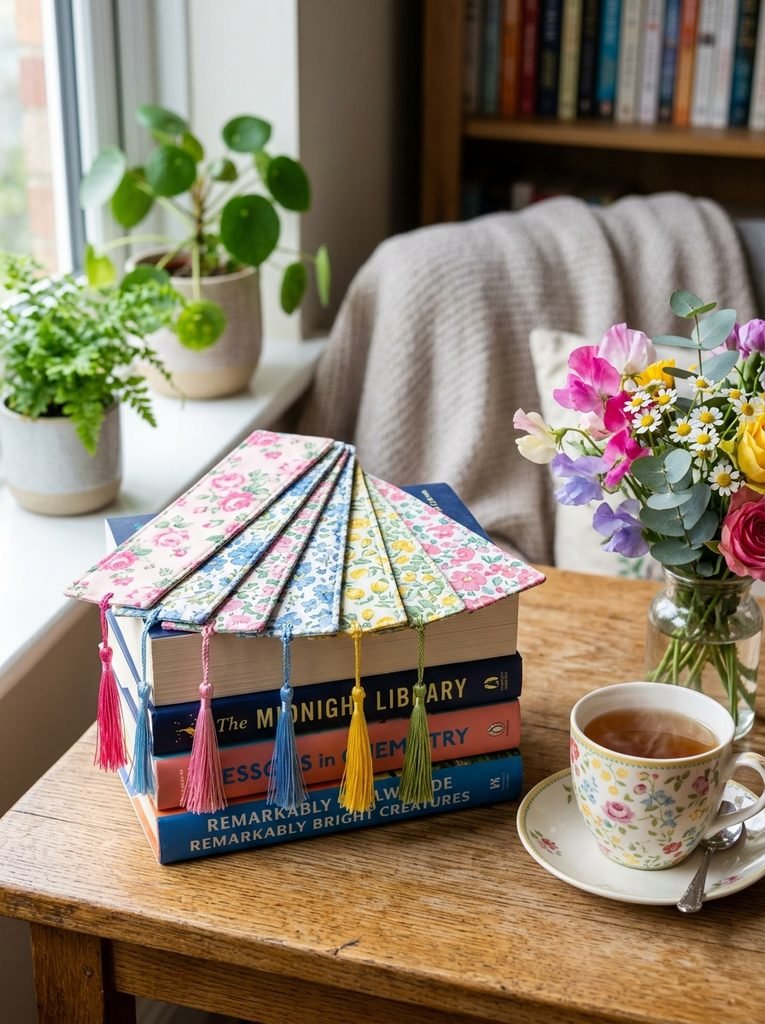
Book lovers always appreciate a pretty bookmark, and these take almost no fabric. A strip of fabric with a stiff interfacing inside and a little tassel at the top looks really charming. I like using fussy cut prints, where you center a flower or small motif on the front. In my experience, a bookmark tucked inside a secondhand book makes a sweet, thoughtful gift for almost no money.
11. Pin Cushions
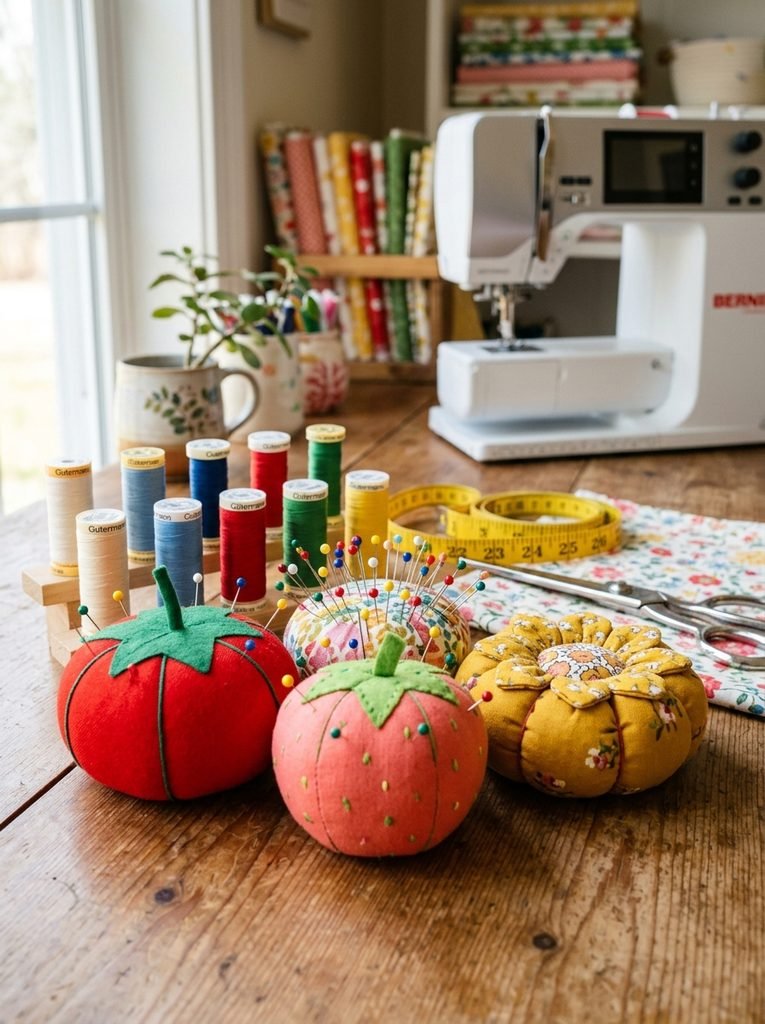
Every sewer needs a pin cushion, and most of us need a few. That makes them perfect gifts for your crafty friends. A simple round or flower shape stuffed firmly works great. The honest tip is to fill it with crushed walnut shells instead of just stuffing. It adds weight so it doesn’t slide around, and it keeps pins sharp. Fill it really firmly, because a soft pin cushion is frustrating to use.
12. Mini Fabric Storage Baskets
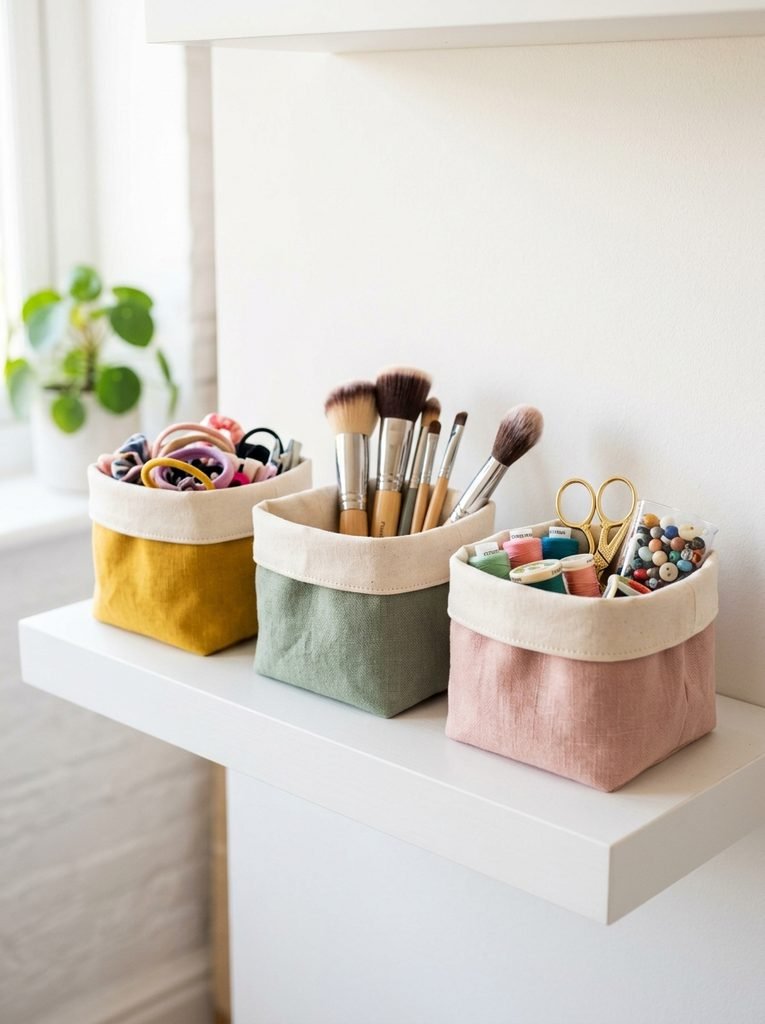
Little fabric baskets are cute, useful and sell really well, especially in sets of different sizes. They’re great for desks, bathroom counters or nurseries. Use a firm interfacing or a layer of fusible fleece so they stand up properly. I like adding a contrast lining and folding the top over to show it off. Honestly, that small detail makes them look like they came from a boutique.
13. Baby Bibs
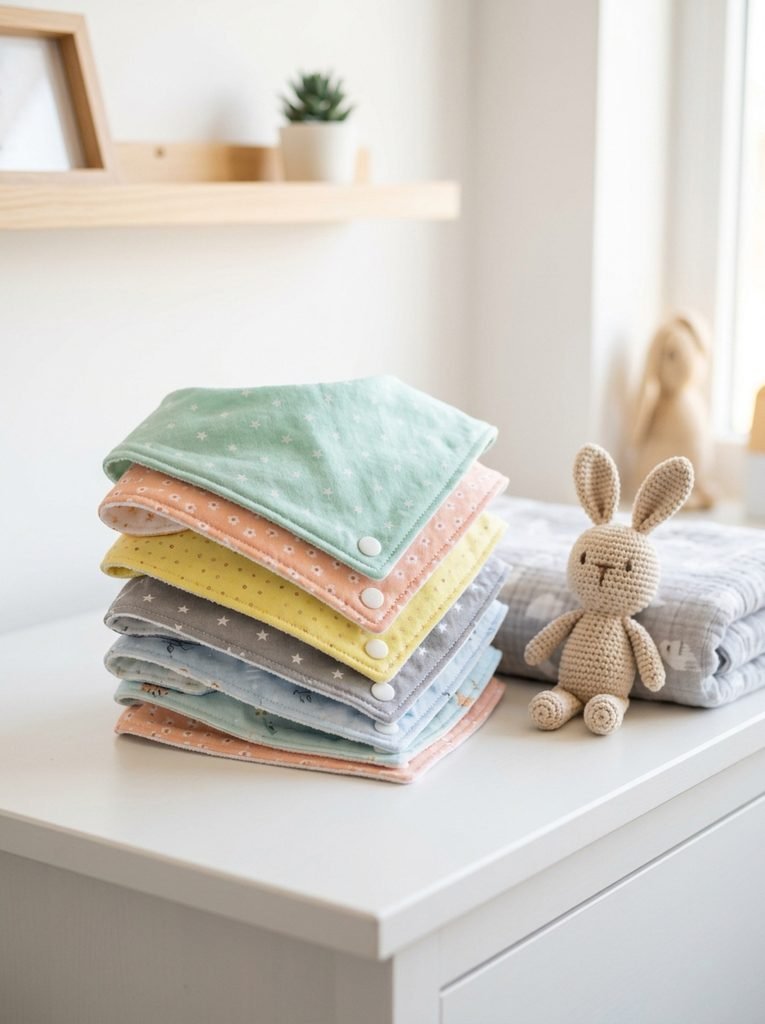
Baby bibs are one of the best quick projects for baby shower gifts. A bandana style bib uses very little fabric, and you can make a whole set in an afternoon. Use soft cotton on the front and an absorbent backing like minky or terry cloth. A tip I picked up: use plastic snaps instead of velcro. Velcro catches on everything in the wash, while snaps stay neat and are much safer.
14. Pocket Tissue Holders
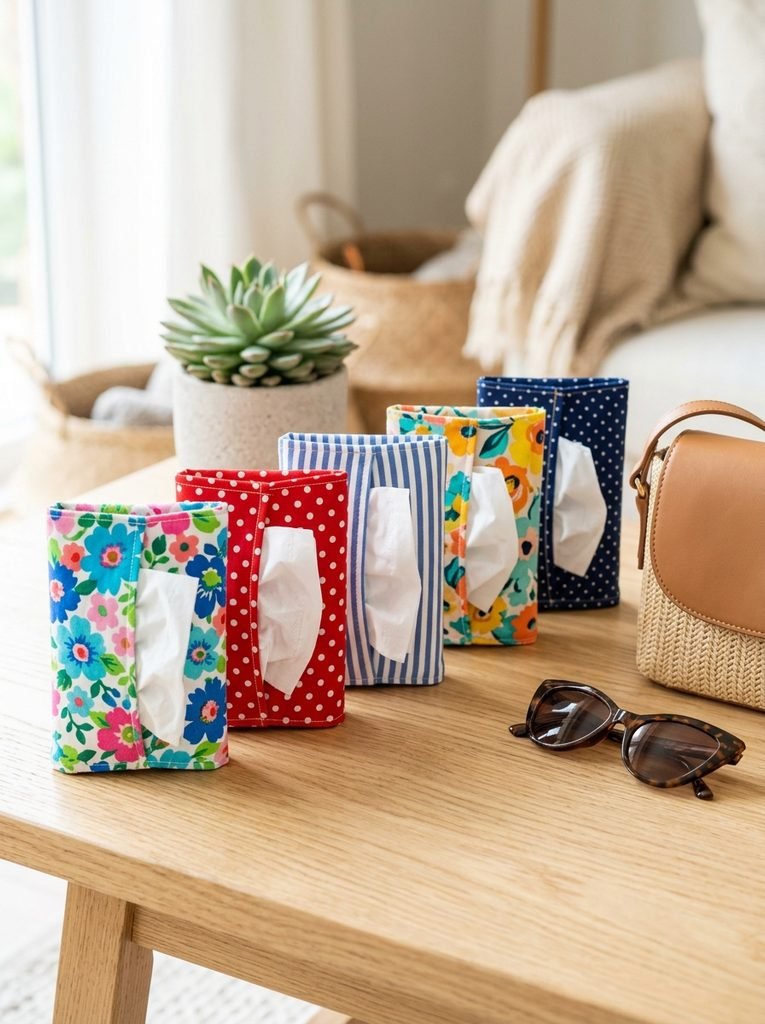
This might be the fastest project on the whole list. A tissue holder is one rectangle of fabric folded and stitched, and you can finish one in about five minutes. They’re handy in a handbag or car, and they make lovely stocking stuffers. I’d suggest making a batch of them assembly line style. Cut ten, sew ten, turn ten. It’s oddly satisfying.
15. Fabric Hair Bows
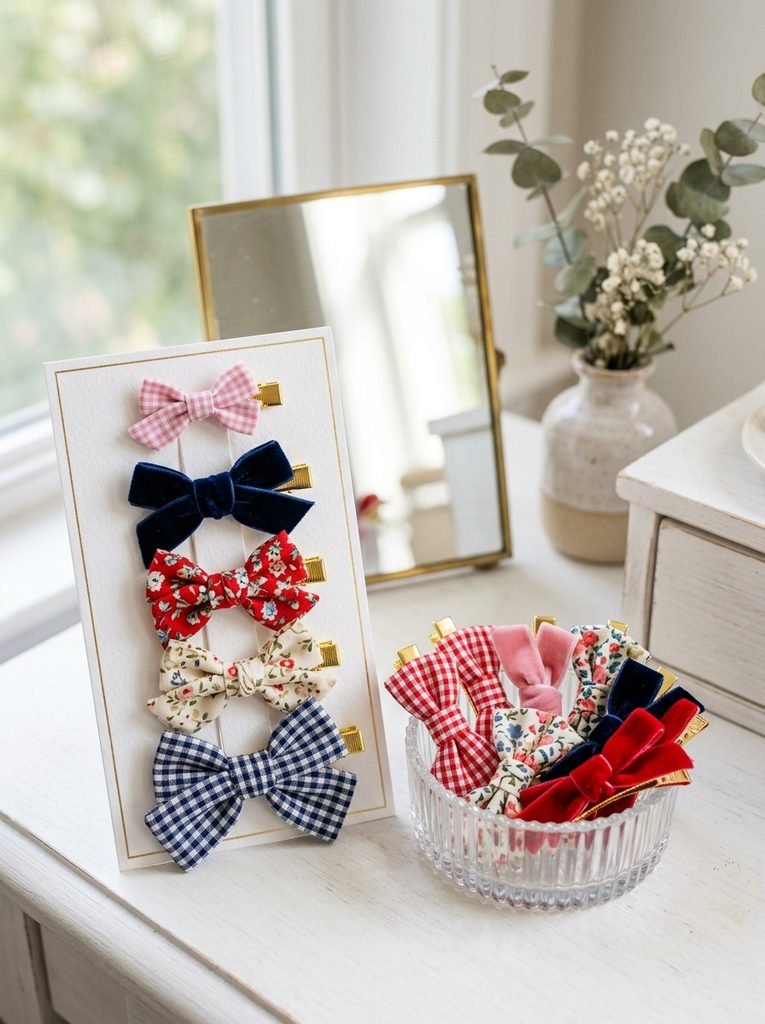
Fabric bows are having a huge moment, and they sell well to every age. You only need a small rectangle of fabric for the bow and a thin strip for the center. Velvet and gingham are my two favourites for a classic look. In my experience, using a fabric stiffener or a light interfacing helps the bow hold its shape longer. Attach them to clips or elastic, and display them on cards for a neat, ready to sell finish.
16. Cloth Napkins
Cloth napkins feel fancy, but they’re really just hemmed squares. A set of four in linen or cotton makes a beautiful housewarming or holiday gift. I’d suggest learning mitered corners for these. It sounds technical, but it’s just a clever fold, and it gives the napkins a really crisp, professional finish. Prewash your fabric first so the napkins don’t shrink unevenly after their first wash.
17. Eyeglass Cases
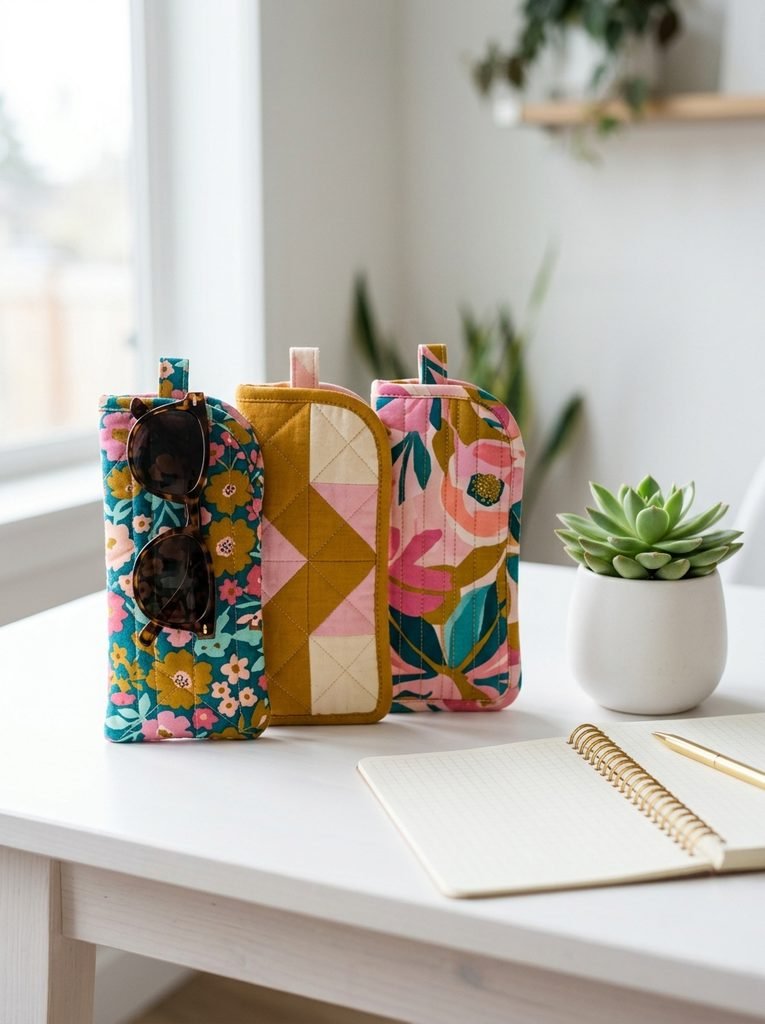
A soft padded glasses case is a really thoughtful gift, and it’s useful every single day. Use a layer of batting or fusible fleece inside so the lenses stay protected. I like quilting simple lines across the outer fabric before sewing. It adds structure and looks lovely. Honestly, these are a great way to show off a special fabric you’ve been saving, because you only need a small piece.
18. Rice Heating Pads
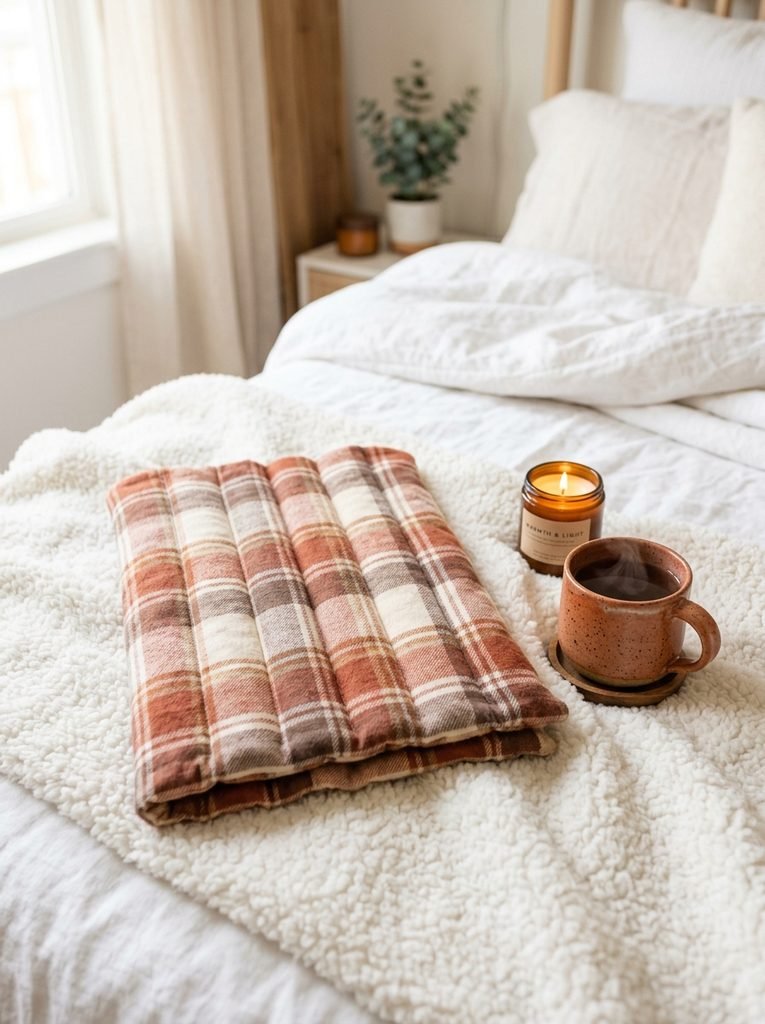
As the weather gets colder, rice heating pads become one of the most loved handmade gifts. Pop one in the microwave and it stays warm for ages. Sew the pad into channels so the rice stays spread out evenly. Use 100 percent cotton fabric, since synthetic fabrics can melt in the microwave. A tip I picked up: add a few drops of lavender or a little dried lavender to the rice. It turns a practical gift into a really relaxing one.
Final Thoughts on Small Sewing Projects
The best part about small sewing projects is that they’re quick, use up your scraps and make people genuinely happy. Pick two or three you love, make a little batch, and you’ll have gifts ready or a small stock to sell. Honestly, there’s no better way to turn a pile of leftover fabric into something special.


Amir Ali is the founder and site administrator of HomeDecorEdge, a modern home decor and interior design platform. Since starting the site, he has combined his passion for interior design, practical styling, and color coordination with hands-on content strategy and site management. He guides authors, curates high-quality articles, and ensures readers have access to actionable, visually inspiring, and user-focused home decor advice for apartments, small rooms, and family homes.