

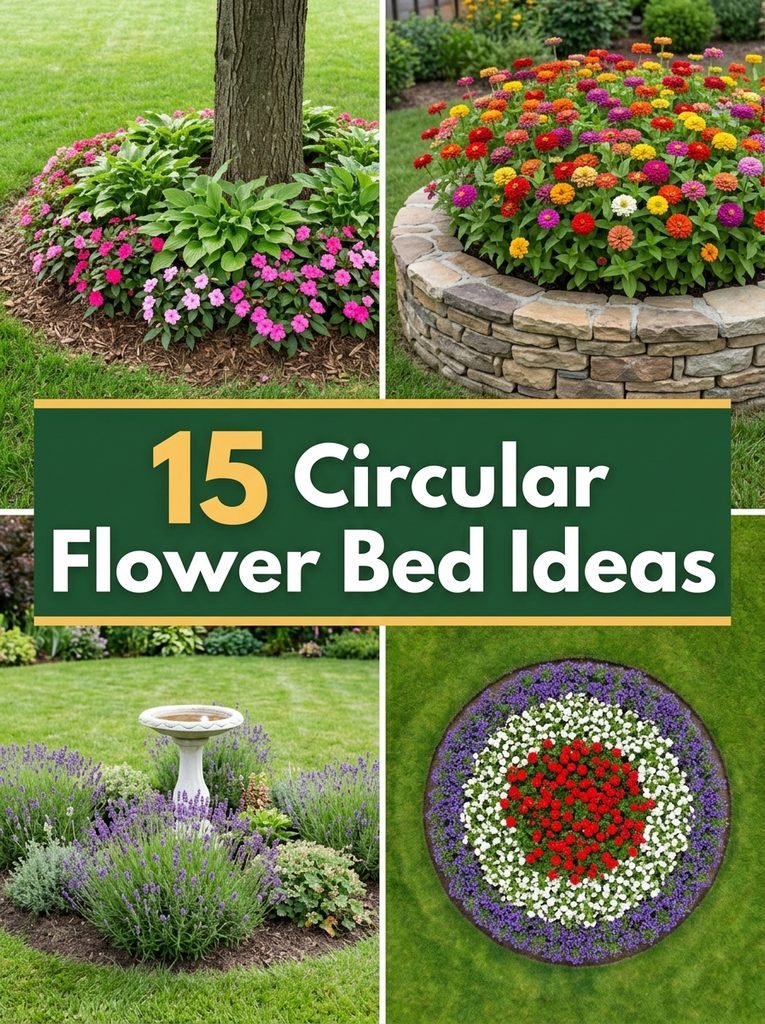
A plain lawn is fine, but a round flower bed in the middle of it changes everything. The eye goes straight to it. It’s honestly one of the easiest ways to make a front yard look designed instead of just mowed. Circles also feel softer than straight beds, and they work almost anywhere: around a tree, in the middle of the grass, or right in front of the house. Below are 15 circular flower bed ideas, starting with how to mark out a perfect circle, then moving through raised beds, focal points, layouts and a simple planting guide.
1. How to Lay Out a Perfect Circle Bed
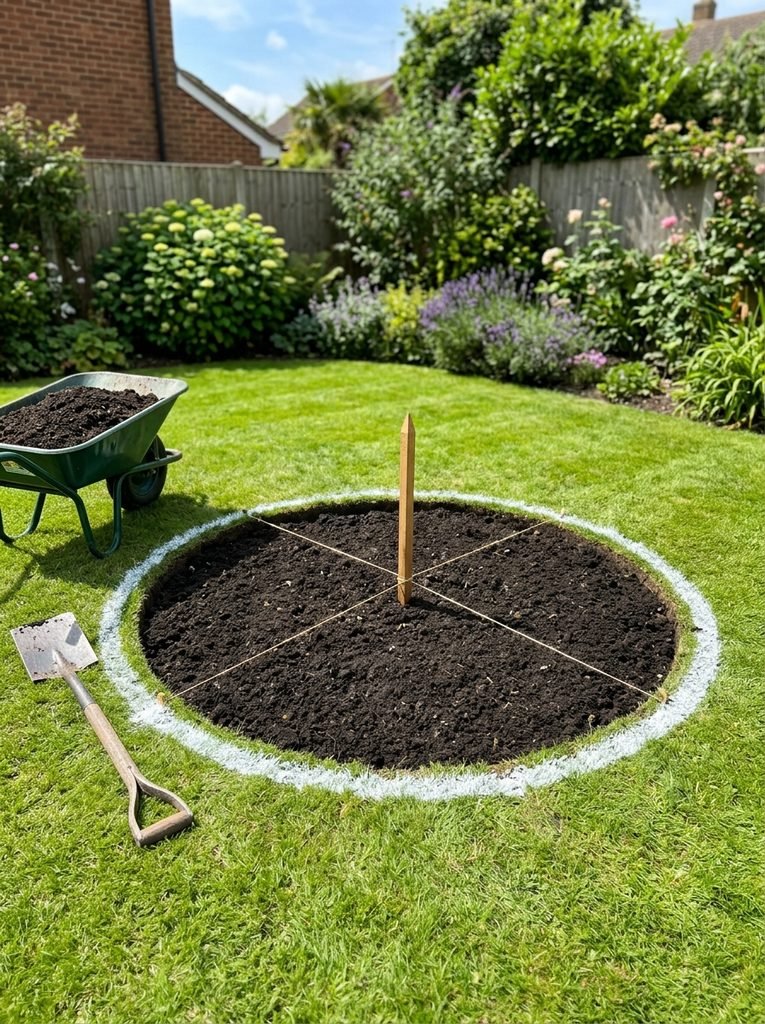
A wobbly circle is the one thing that makes a round bed look homemade in a bad way. The good news is that getting it perfect only takes a stake and a piece of string.
Materials Needed: A wooden stake, garden string, landscape marking paint or flour, a flat edged spade or half moon edger, a garden fork, compost, and mulch.
How to Make It: Hammer the stake into the spot where you want the center of the bed. Tie the string to the stake and measure out half the width you want. For a bed 8 feet across, that’s 4 feet of string. Hold the string tight and walk around the stake, spraying or sprinkling a line as you go. Cut straight down along the line with your spade, then slice under the grass and lift it out in strips. Loosen the soil with a fork, mix in 2 to 3 inches of compost, and rake it smooth with the center slightly higher than the edges. Plant, then add 2 to 3 inches of mulch. A tip I picked up: look at the circle from your front window before you dig. A bed that looks huge on the lawn often looks small from inside the house.
Overwhelmed by Clutter?
15 minutes a day for 30 days, and your home feels calm again.
2. Raised Stone Circular Flower Bed
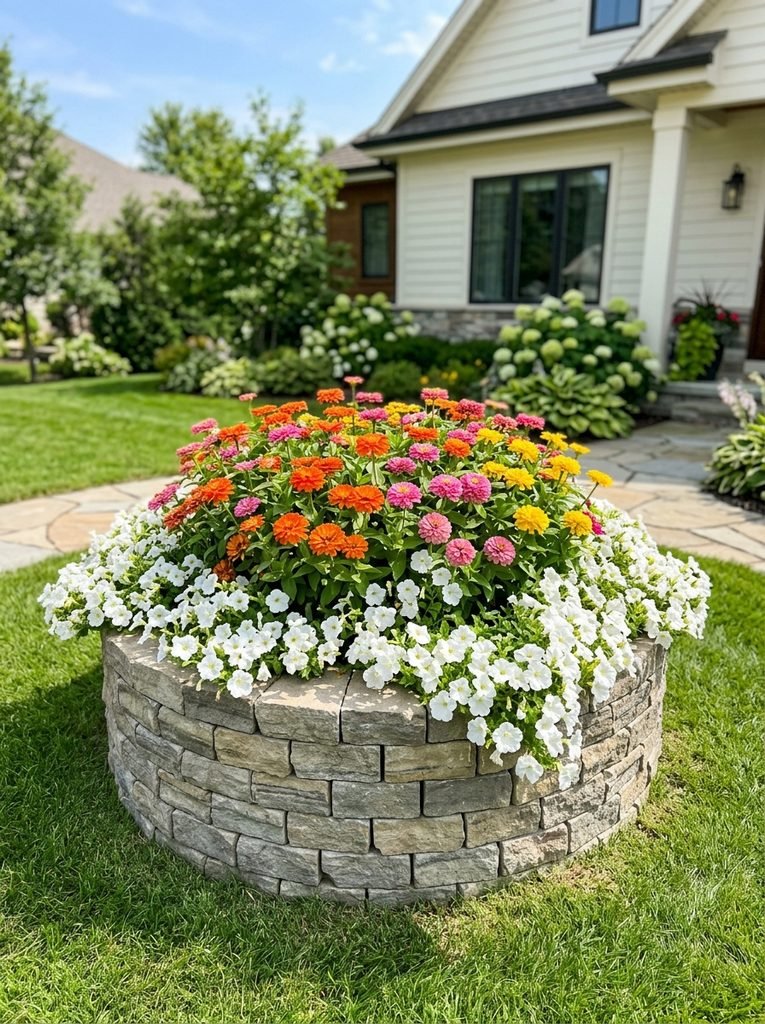
A raised round bed adds height and structure, and it’s a great fix if your soil is heavy clay or the area floods. The stone wall itself becomes part of the design.
Materials Needed: Curved retaining wall blocks or natural stones, a stake and string, a spade, paver base gravel, a tamper, a level, landscape fabric (optional), and a garden soil and compost mix.
How to Make It: Mark the circle with a stake and string as in idea 1. Dig a shallow trench about 4 to 6 inches deep where the wall will sit, fill it with gravel and tamp it firm. Set the first row of stones on the gravel, partly buried, checking each one with a level. This first row is the most important, so take your time. Stack the next rows on top, staggering the joints like brickwork. Keep the wall between 12 and 18 inches high for a stable bed without mortar. Fill the inside with a mix of garden soil and compost and water it so it settles before planting. In my experience, curved wall blocks made for circles are much easier than natural stone if this is your first build.
Inside the 30-Day Declutter Challenge
- Daily 15 minute tasks
- Room checklists
- Printable labels
3. Flower Ring Around a Tree
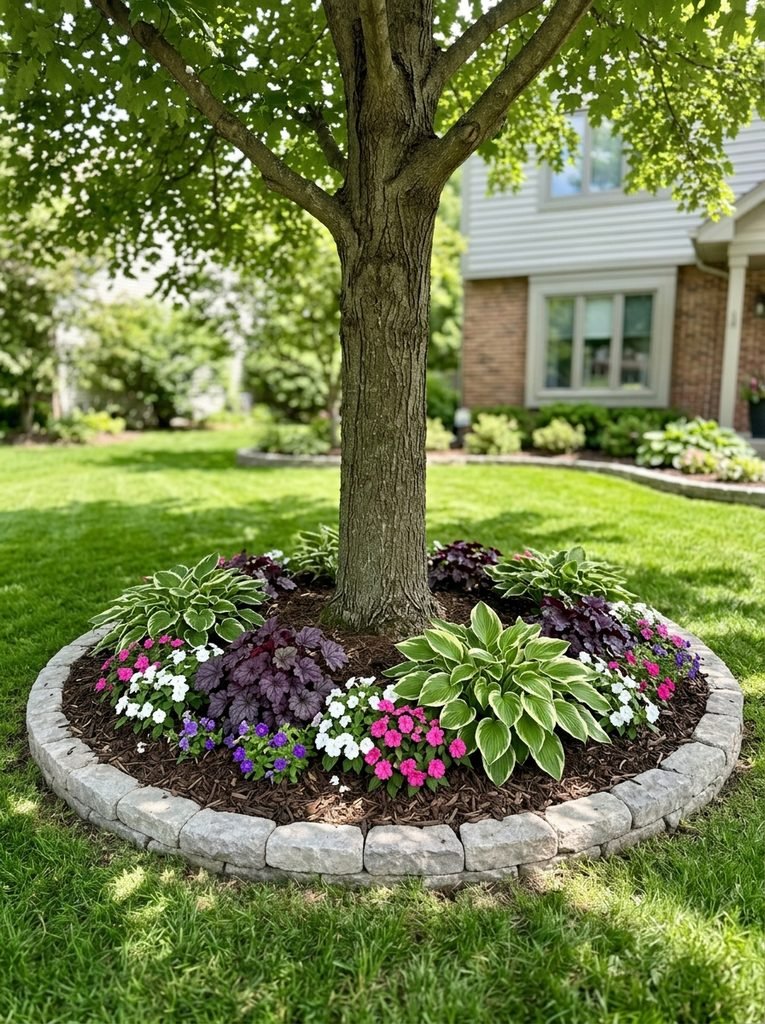
A ring of flowers around a tree is one of the prettiest circle ideas, but it’s also the one people most often get wrong. Done the right way, it looks lovely and keeps the tree healthy.
Materials Needed: A hand trowel, a stake and string or a garden hose to mark the circle, small shade tolerant plants, compost, mulch, and low edging stones.
How to Make It: Mark a circle around the tree, keeping it wide enough to look balanced. Remove the grass by hand or with a flat spade, working shallowly so you don’t cut big roots. Don’t dig or till the whole area. Instead, plant small plants in individual pockets between the roots. Add no more than an inch or two of compost on top, because piling deep soil over tree roots can suffocate them. Keep mulch a few inches away from the trunk, never heaped against it. Choose plants that handle shade and root competition, like hostas, heuchera, ferns and impatiens. A tip I picked up: water the new plants often for the first few weeks. The tree drinks first, so small plants under it dry out faster than you’d think.
4. Bird Bath Centerpiece Circle
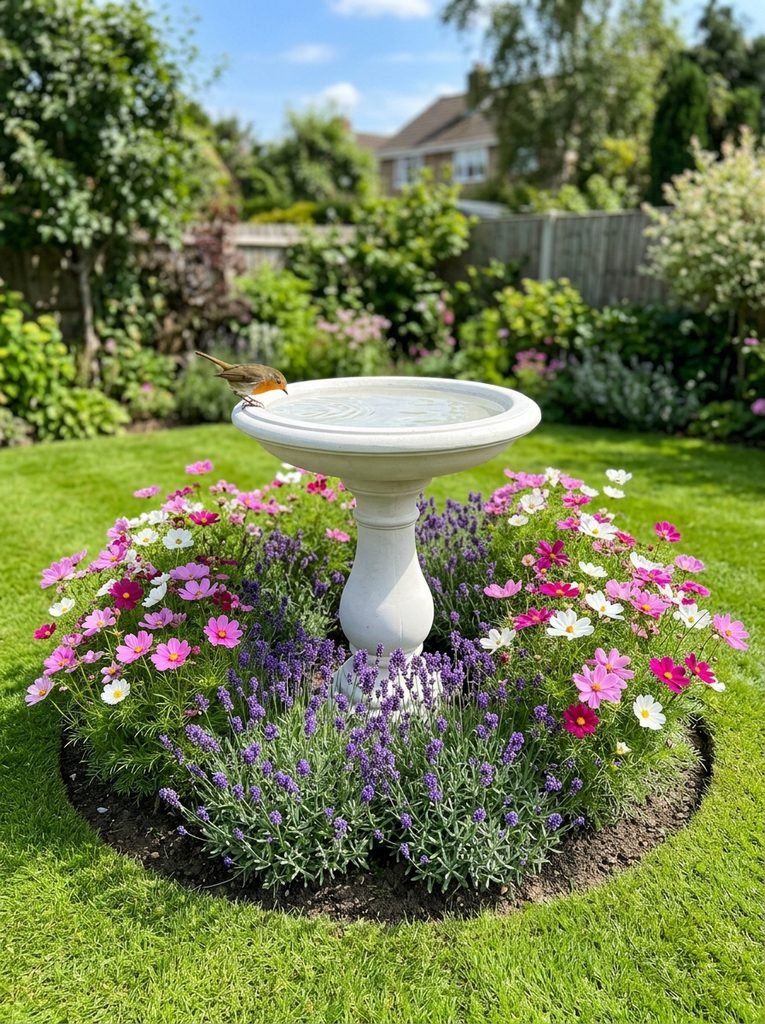
A bird bath in the middle gives a circular bed an instant focal point, and the birds turn it into a little show. Plant in rings around it, with lower plants close to the bird bath so it stays visible. Lavender, catmint and cosmos look beautiful and attract bees and butterflies too. Set the bird bath on a few flat pavers so it stays level as the soil settles. Honestly, clean and refill the water every couple of days. Fresh water is what keeps the birds coming back.
5. Fountain in the Middle of a Round Bed
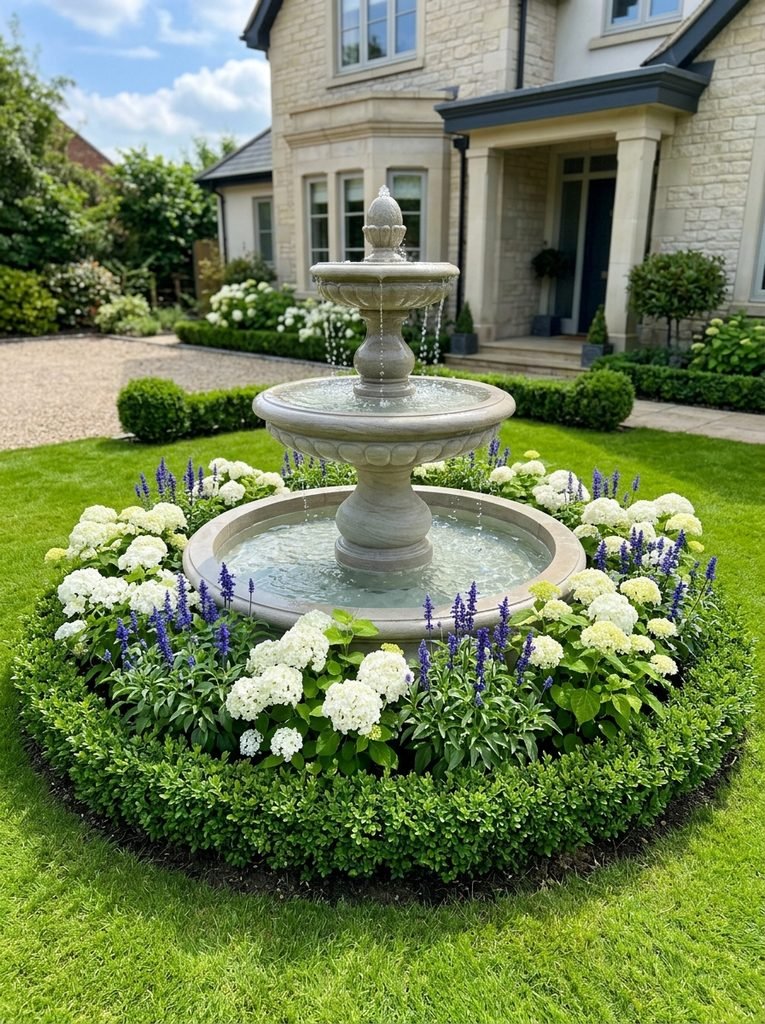
A fountain in the center makes a round bed feel elegant, almost like a small formal garden. The sound of water adds so much. A recirculating fountain with its own basin is the simplest option because it doesn’t need a pond. Choose a solar pump if there’s no outdoor outlet nearby. In my experience, a low boxwood border around the outside frames it beautifully and keeps it looking tidy all year.
You’ll need: a recirculating garden fountain with basin, a solar pump or an outdoor outlet with a safety (GFCI) socket, a few flat pavers for a level base, and gravel.
6. Front Yard Island Bed
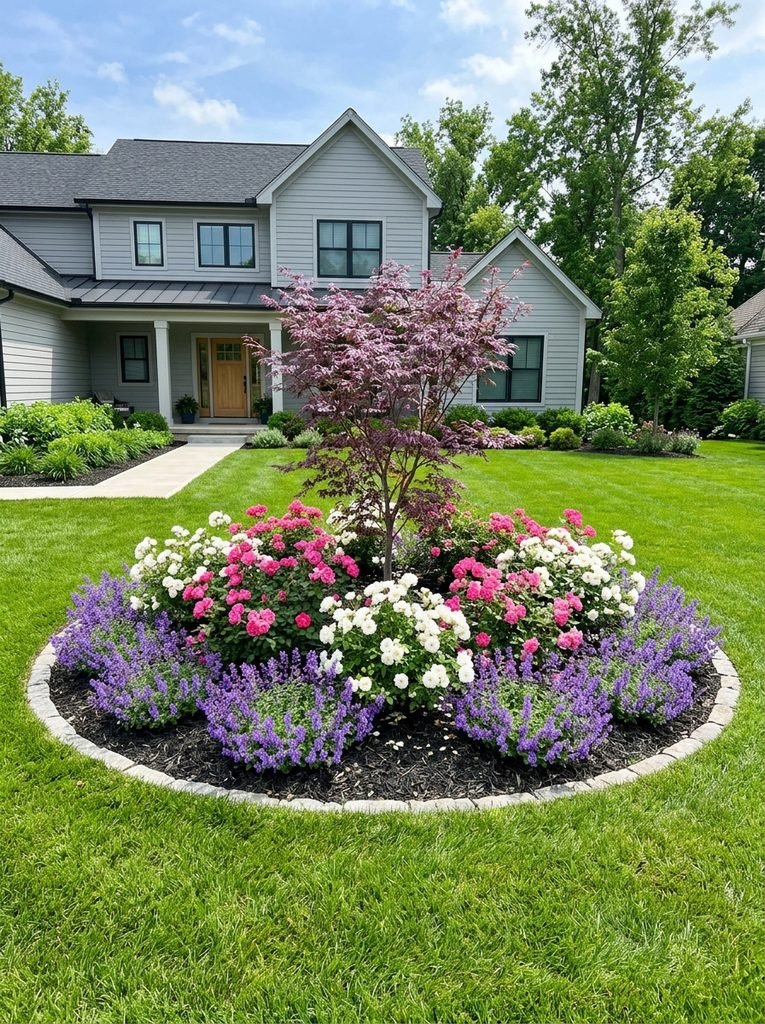
An island bed is a circle that floats in the middle of the lawn, and it’s brilliant for breaking up a big, flat front yard. A small ornamental tree in the center, like a Japanese maple or a dwarf crabapple, gives it height. Then add shrubs and flowers in rings around it. Place it slightly off center, rather than right in the middle of the lawn, for a more natural look. Honestly, it adds more curb appeal than almost anything else you can plant.
Start Your 30-Day Home Reset
Stop waiting for a "perfect" free weekend. Grab the 30-day plan and start feeling lighter in your own home by tomorrow.
View the 30-Day Plan Printable PDF · Instant download7. Front of House Circle Under the Window
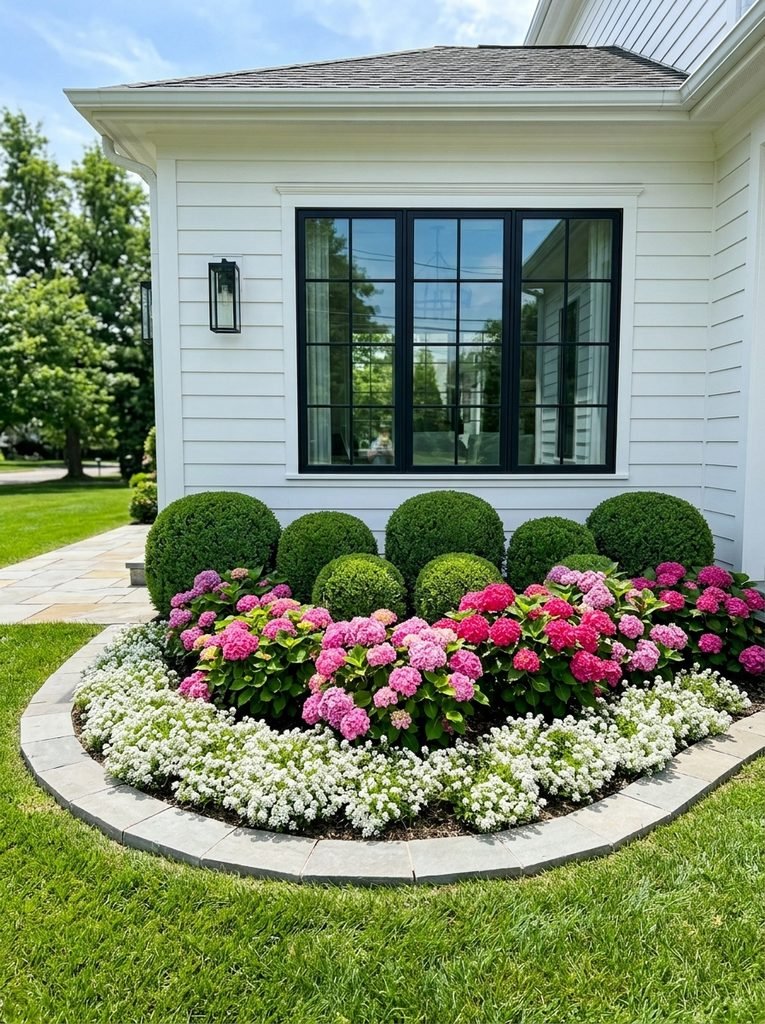
A half circle bed curving out from the front of the house softens the hard lines of the wall and frames a window beautifully. Keep plants under the window low enough that they won’t block the view as they grow. Rounded boxwoods and hydrangeas are a classic combination. I’d suggest leaving at least a foot or two between the wall and the first plants. It helps air move and makes painting and repairs much easier later.
8. Large Layered Circle With Three Tiers of Height
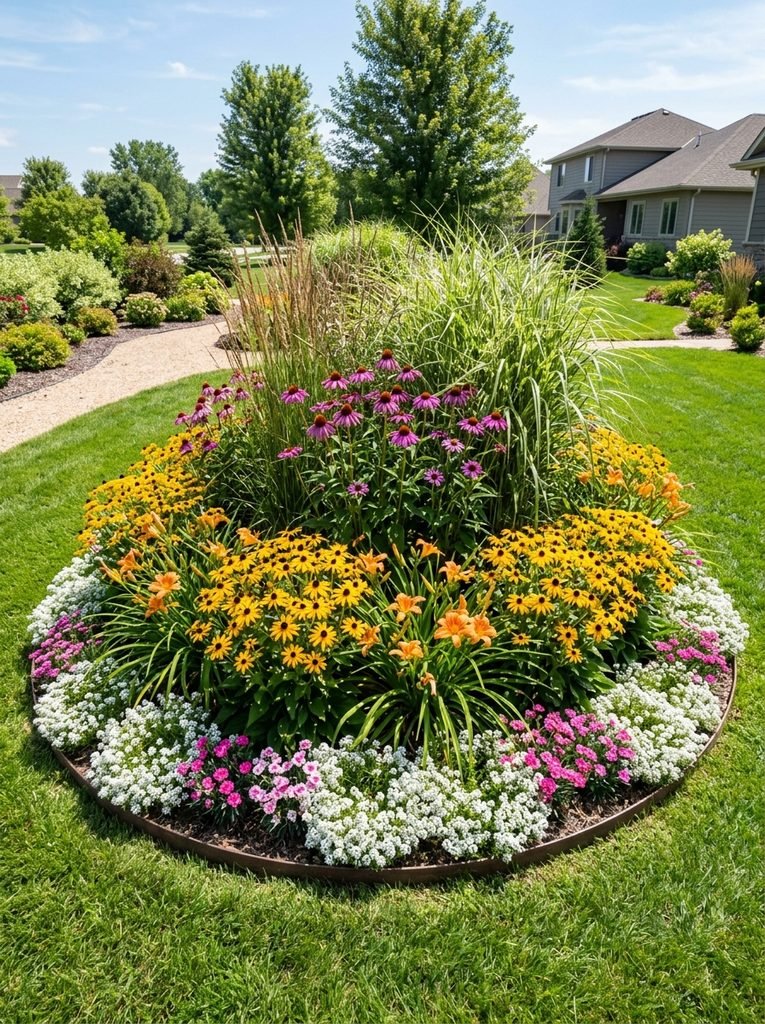
For a large circular bed, the trick is height. Think of it like a little hill made of plants: tall in the center, medium in the middle ring and low around the edge. This way everything is visible from every side. Repeat the same plants a few times around each ring so it feels planned, not random. In my experience, groups of three or five of the same plant look much better than one of everything.
9. Full Sun Circle With Easy Plants
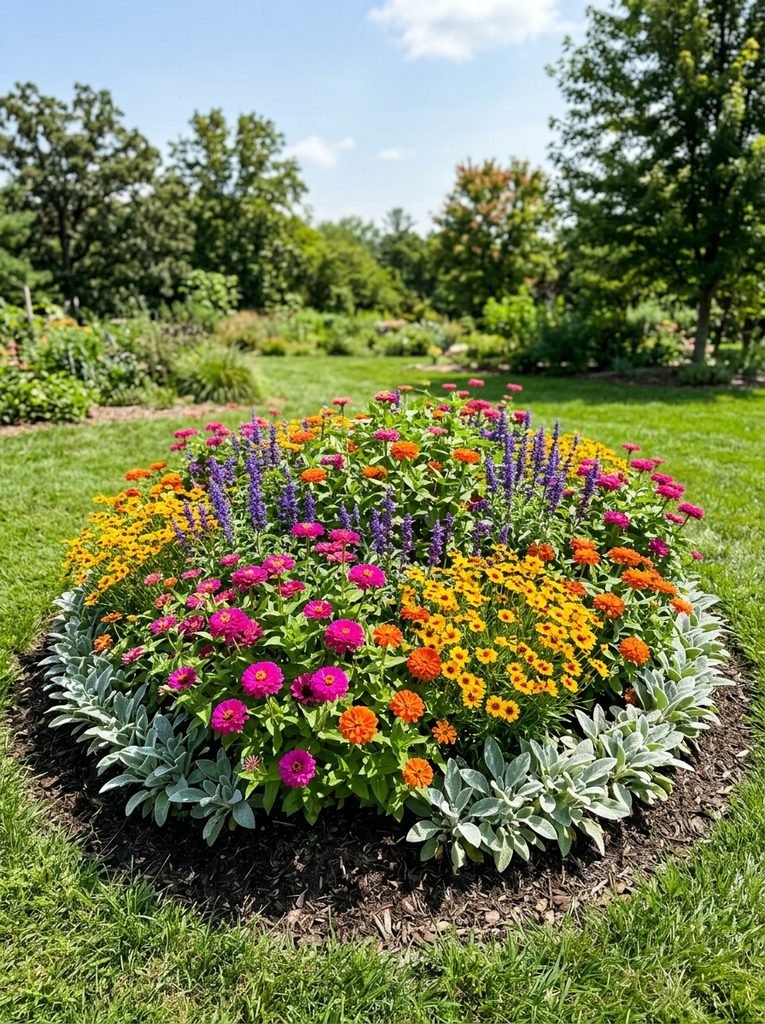
If your circle sits in full sun, choose tough plants that love heat and don’t mind drying out a little. Salvia, coneflower, black eyed susan, zinnias, coreopsis, catmint and lamb’s ear all thrive in bright sun. Most of them bloom for months, and butterflies love them. Honestly, these are some of the most forgiving flowers for beginners. A tip I picked up: water deeply once or twice a week rather than a little every day. Deep watering grows stronger roots.
10. Concentric Rings Garden Layout
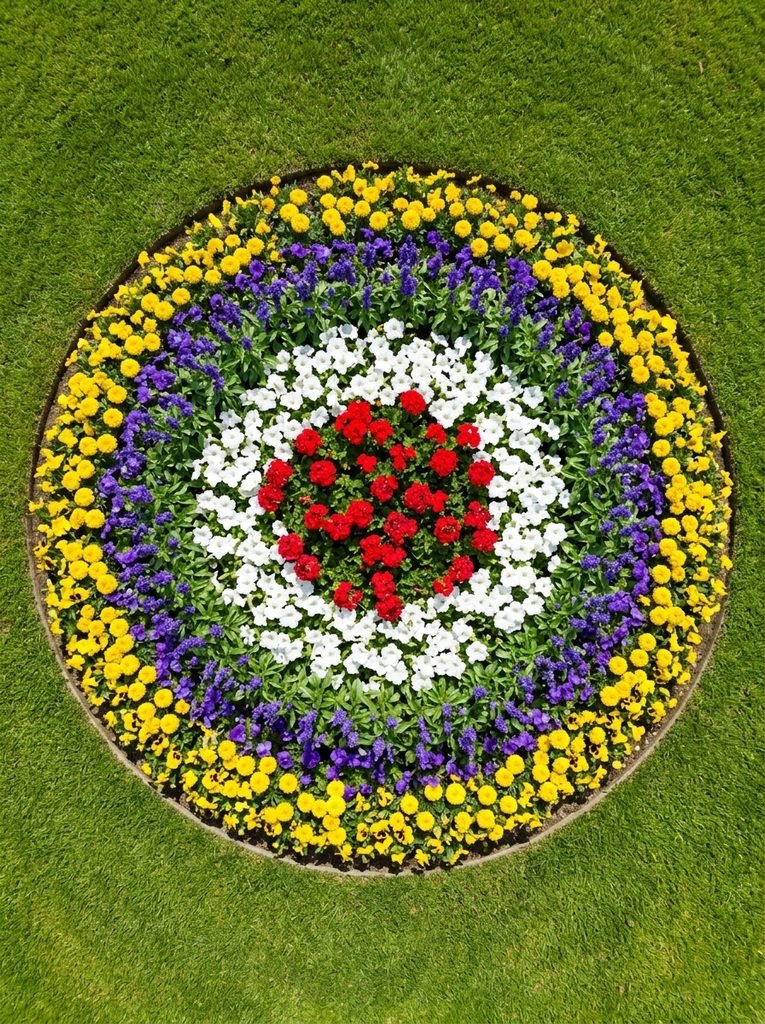
Concentric rings look amazing from above, and they’re surprisingly simple. Plant each ring in a single color using flowers of the same height, so the bands stay crisp. Annuals like begonias, marigolds, alyssum and petunias are perfect because they stay compact and bloom all season. Honestly, this one looks incredible from an upstairs window. I’d suggest sketching your rings on paper first and counting how many plants each ring needs.
11. Brick Edged Circle Bed
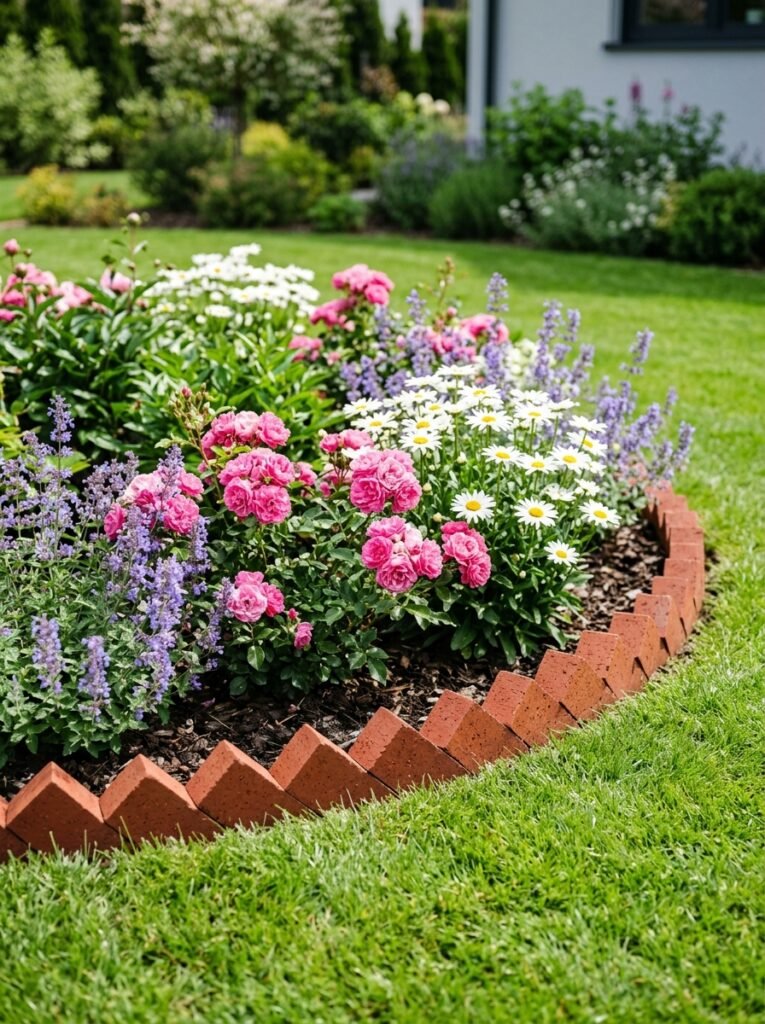
A brick edge gives a circle a crisp, classic outline and stops grass from creeping into the bed. Set the bricks on end at an angle for a sawtooth look, or lay them flat as a mowing strip so your mower wheels can run right along the edge. Red brick looks traditional, while grey pavers feel more modern. In my experience, a mowing strip saves so much trimming time that it pays for itself in one summer.
You’ll need: bricks or small pavers, a stake and string, a flat spade, sand or paver base, and a rubber mallet.
12. Obelisk or Sundial Focal Point
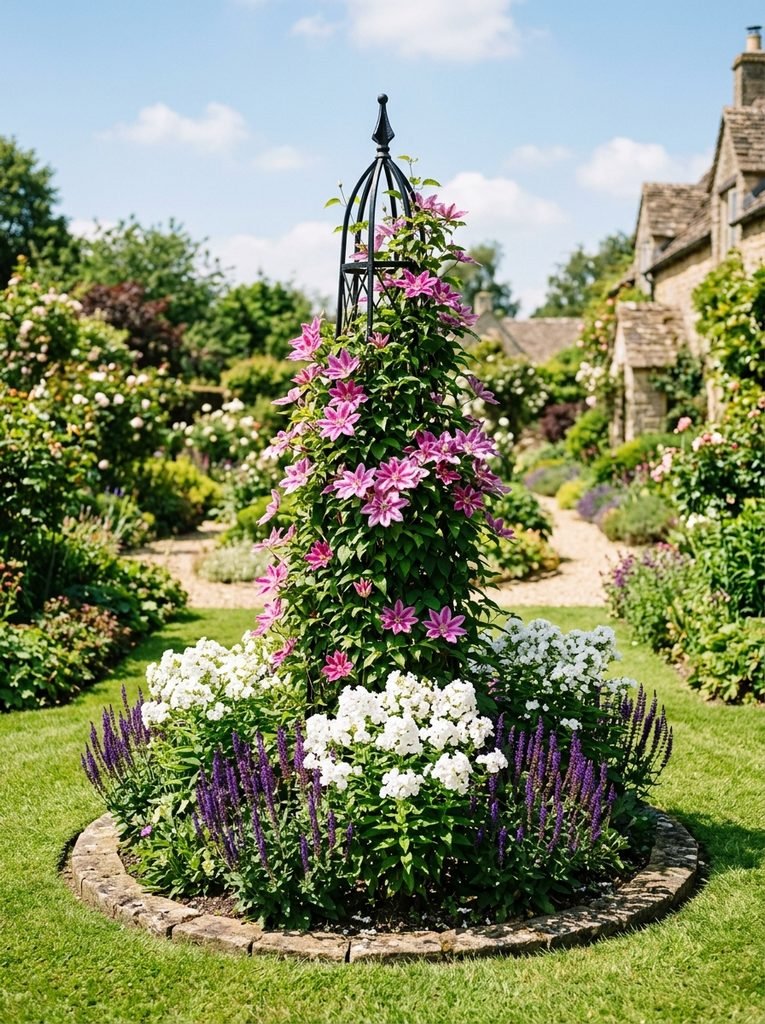
A tall obelisk in the center gives a round bed height and drama, especially when a clematis or climbing rose grows up it. A sundial on a pedestal works too, if you prefer something lower and more classic. Either one gives the eye a place to land. I’d suggest anchoring an obelisk firmly into the ground, because climbing plants get heavy and catch the wind. Honestly, it makes a small bed look much bigger and more important.
13. Gravel and Stone Ring With Flowers
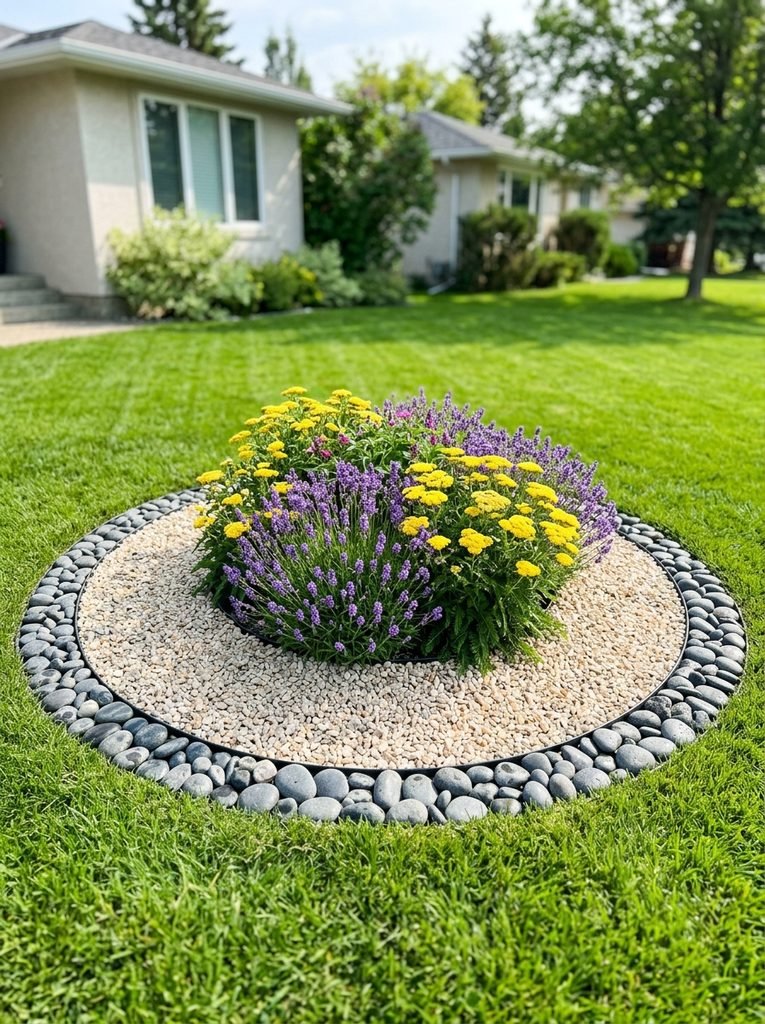
A gravel ring around a smaller flower center gives a clean, modern look and cuts down on weeding. The gravel acts like a frame, and the stones make a tidy edge. Lavender, yarrow and sedum love the warm, well drained conditions gravel creates. Lay landscape fabric under the gravel to stop weeds. In my experience, this is one of the best low maintenance circular flower bed ideas for a busy family.
You’ll need: pea gravel, smooth river stones, landscape fabric, landscape pins, a rake, and a flat spade.
14. Ornamental Grass and Perennial Circle
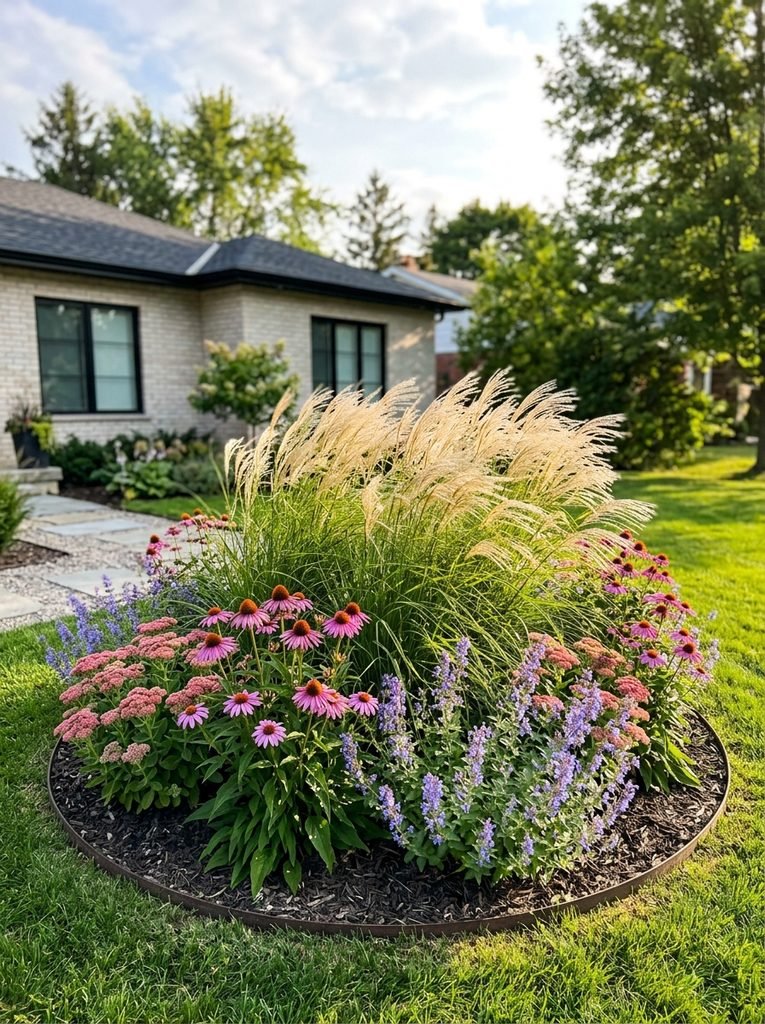
Ornamental grasses give a circular bed movement, and they look good almost all year, even in winter. Pair them with long blooming perennials like coneflower, sedum and catmint for a natural, prairie style look. Once established, this kind of bed needs very little care. Just cut the grasses back in late winter before new growth starts. Honestly, it’s the bed I’d plant if I wanted beauty without a lot of work.
15. What to Plant in a Circular Flower Bed
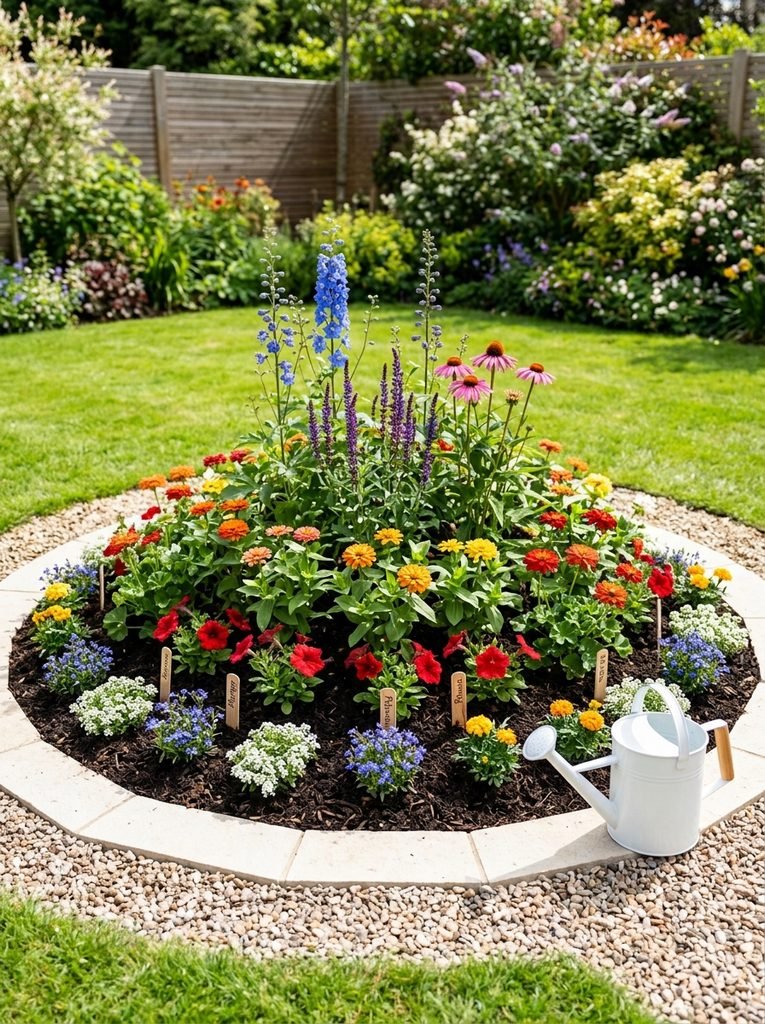
If you’re staring at an empty circle wondering what to plant, think in three rings. Center: tall plants like ornamental grass, salvia, coneflower, dahlias or a small shrub. Middle ring: medium plants like black eyed susans, daylilies, zinnias and shrub roses. Edge: low plants like sweet alyssum, creeping thyme, dwarf marigolds, lamb’s ear or catmint. Check the sun first. Most of these love full sun, while shady circles do better with hostas, heuchera, ferns and impatiens. A tip I picked up: follow the spacing on the plant tags, even if the bed looks empty at first. Plants fill in fast, and crowded beds get sick.
Final Thoughts on Circular Flower Bed Ideas
A round flower bed is one of the simplest ways to give your yard a real focal point. Start by marking a perfect circle, choose a centerpiece, then plant in rings from tall to low. Honestly, once you see how much a single circle changes your front yard, you’ll probably want a second one.


Amir Ali is the founder and site administrator of HomeDecorEdge, a modern home decor and interior design platform. Since starting the site, he has combined his passion for interior design, practical styling, and color coordination with hands-on content strategy and site management. He guides authors, curates high-quality articles, and ensures readers have access to actionable, visually inspiring, and user-focused home decor advice for apartments, small rooms, and family homes.