

Scratch, scratch, meow. Open the door. Five minutes later, scratch, scratch, meow. Let me back in. If you live with a cat, you’ve probably spent more time as a doorman than you’d like to admit.
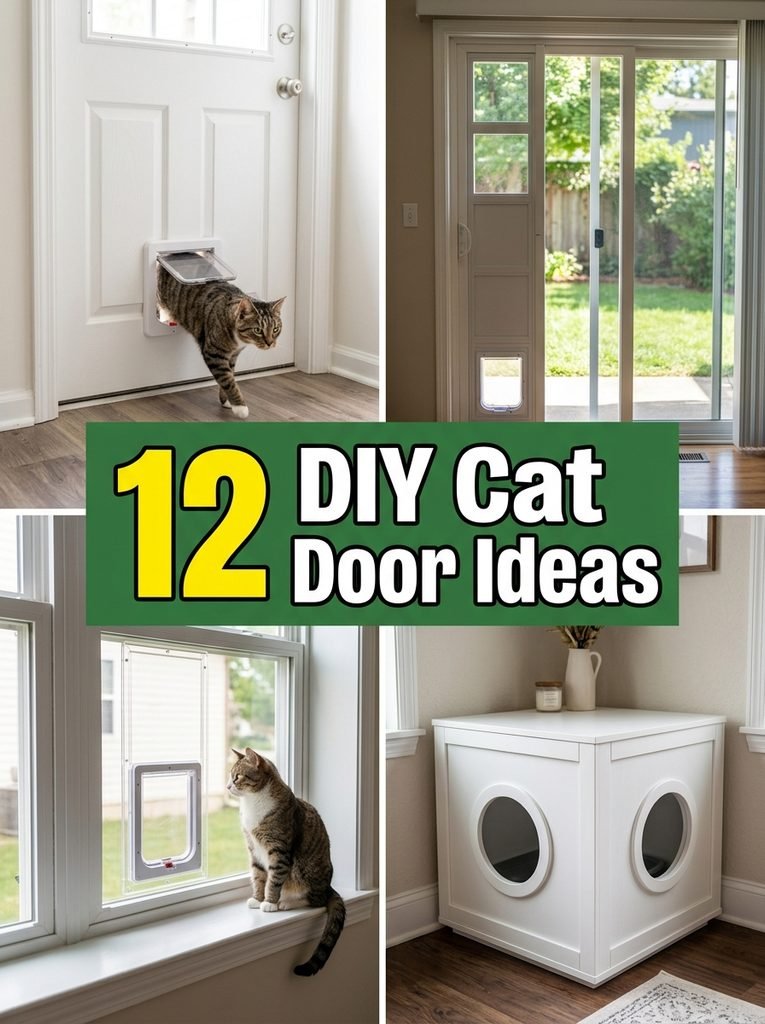
A cat door ends all that. Your cat comes and goes on its own schedule, and you get your evenings back. It also lets you keep the litter box hidden in a closed room, keep the dog out of the cat food, and give an indoor cat safe access to a screened porch. These 12 DIY cat door ideas cover interior doors, sliding glass doors, windows, walls and a few smart no cut options for renters.
1. DIY Cat Flap in an Interior Door
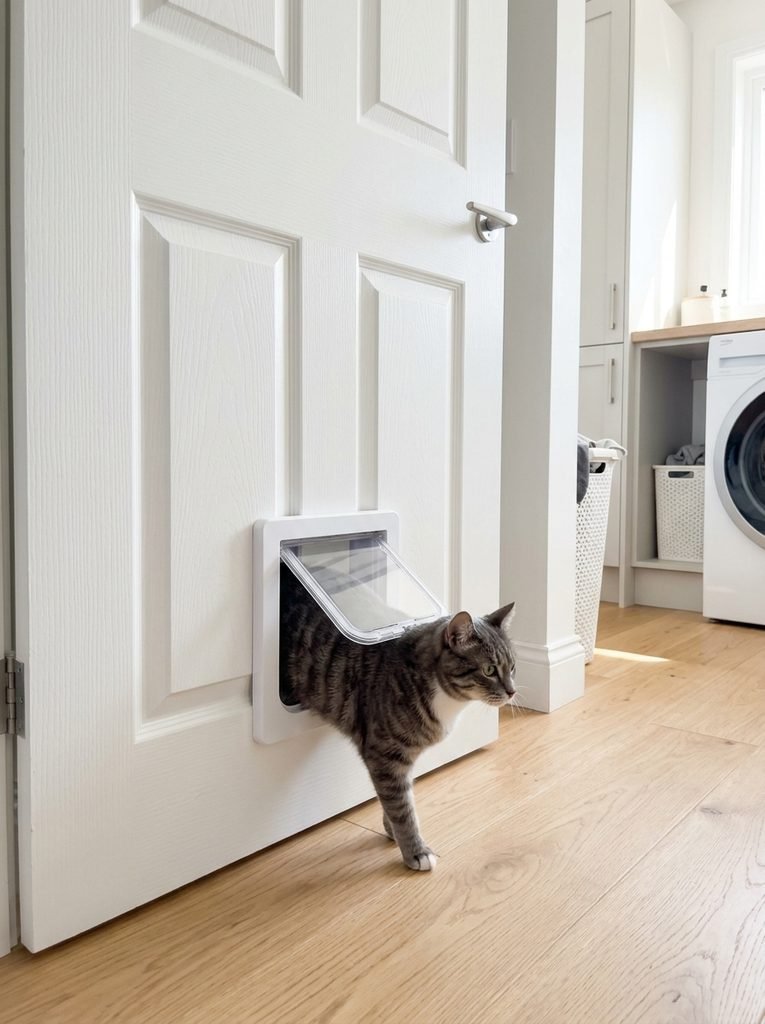
This is the most common cat door, and it’s easier than it looks. A simple cat flap kit fits into a hole cut in any interior door. It’s perfect for giving your cat access to a laundry room or bathroom with the litter box, while keeping the door closed.
I installed mine in about an hour with a jigsaw. The kit comes with a template, so you just trace and cut.
Materials Needed: A cat flap kit with a paper template, a drill with a 1/2 inch bit, a jigsaw with a fine wood blade, painter’s tape, a pencil, a measuring tape, sandpaper, and a screwdriver.
How to Make It:
- Measure your cat’s belly height from the floor, usually about 4 to 6 inches, and mark that line on the door.
- Tape the paper template to the door with its bottom edge on your line, centered across the door.
- Drill a hole inside each corner of the template so the jigsaw blade fits through.
- Cut along the template lines with the jigsaw, going slowly to keep the edges straight.
- Sand the cut edges smooth.
- Fit the two frame halves on each side of the door, screw them together through the hole, and test the flap.
A tip I picked up: hollow core doors need a little support. Glue thin wood strips inside the opening before fitting the frame so the screws grip.
2. DIY Sliding Glass Door Cat Panel
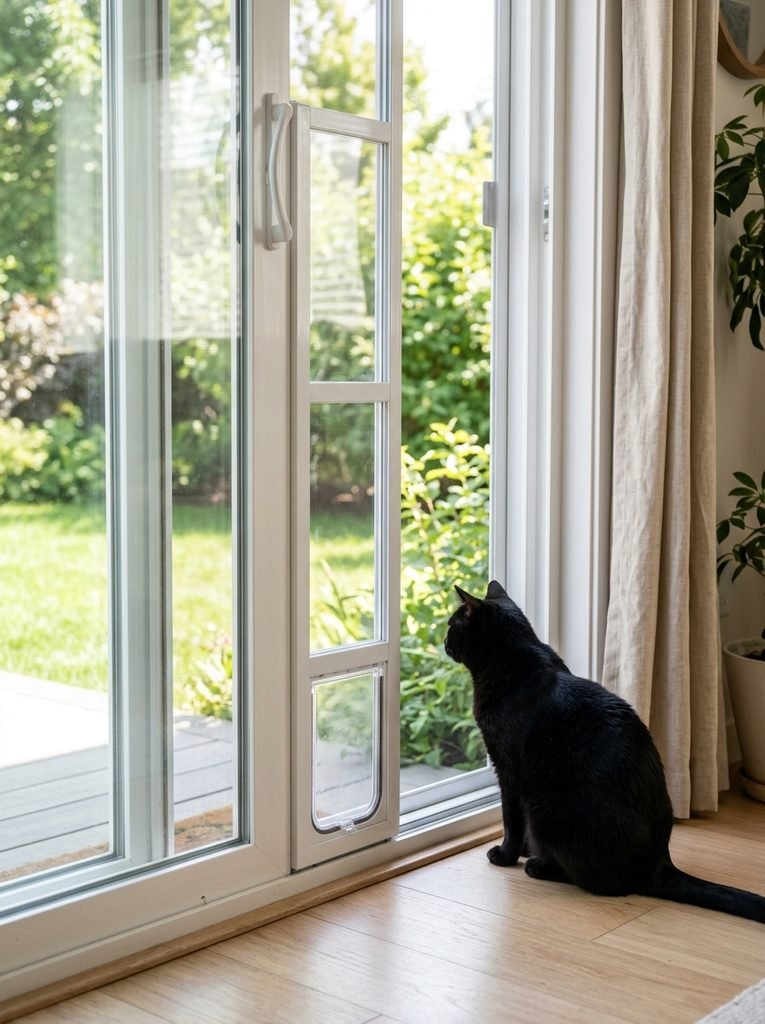
You don’t need to cut glass to give your cat access through a sliding door. A tall panel fits into the track when the door is slightly open, and it has a cat flap built into the bottom. Pull it out any time and the door works as normal, so it’s great for renters.
In my experience, a clear acrylic panel keeps the room bright, and you barely notice it’s there.
Materials Needed: Two lengths of 1×2 wood or aluminum channel for the frame sides, short pieces for the top and bottom, a clear acrylic sheet cut to fit, a cat flap kit, a jigsaw, a drill, screws, weatherstripping foam, and a tension rod or foam spacers to hold it snug.
How to Make It:
- Measure the height of the door opening from the bottom track to the top track and decide the panel width, about 12 inches.
- Build a slim rectangular frame from the wood or channel to that height and width.
- Cut the acrylic to fit inside the frame and cut the cat flap opening near the bottom using the kit’s template.
- Fit the acrylic into the frame with screws and install the cat flap into its opening.
- Stick weatherstripping foam along both long sides of the panel.
- Slide the door open, stand the panel in the track, then slide the door snug against it and lock it with a bar in the track.
Add a security bar in the track behind the door. It stops anyone from sliding the door further open from outside.
3. DIY Window Insert Cat Door
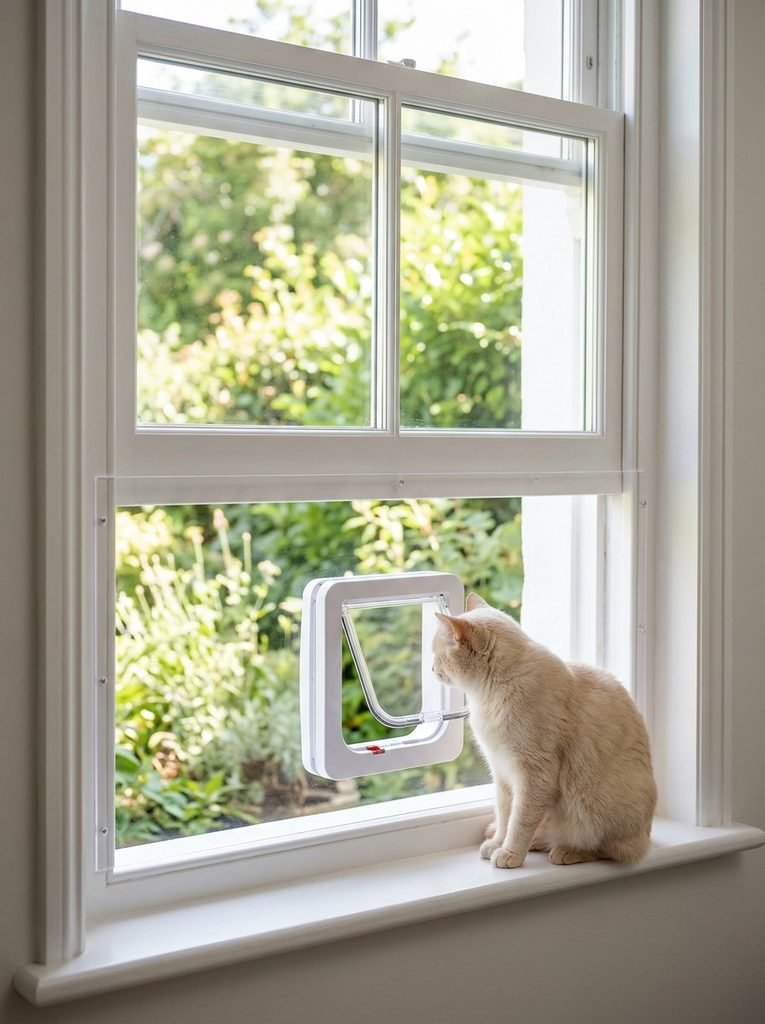
A window insert lets your cat go out to a catio or a screened porch through a window, with no cutting into walls or doors. It fits a sliding window or a sash window that’s opened partway, and it comes out easily.
I’d only do this on a ground floor window or one that opens onto an enclosed catio, so your cat stays safe.
Materials Needed: A clear acrylic sheet, a cat flap kit, a jigsaw with a plastic cutting blade, a drill, foam weatherstripping, a measuring tape, and a window lock or wooden block to stop the window opening further.
How to Make It:
- Open the window to the height you want and measure the gap and the width of the frame.
- Cut the acrylic sheet to fit the opening snugly.
- Mark and cut the cat flap opening in the center of the panel using the kit’s template.
- Fit the cat flap into the panel and screw the frame halves together.
- Stick foam weatherstripping around the panel edges for a snug, draft free fit.
- Set the panel in the opening, close the window down onto it and fit a lock or block so the window can’t open wider.
Cut acrylic slowly with a fine blade. Going too fast can crack the sheet.
4. Cat Door Through a Wall
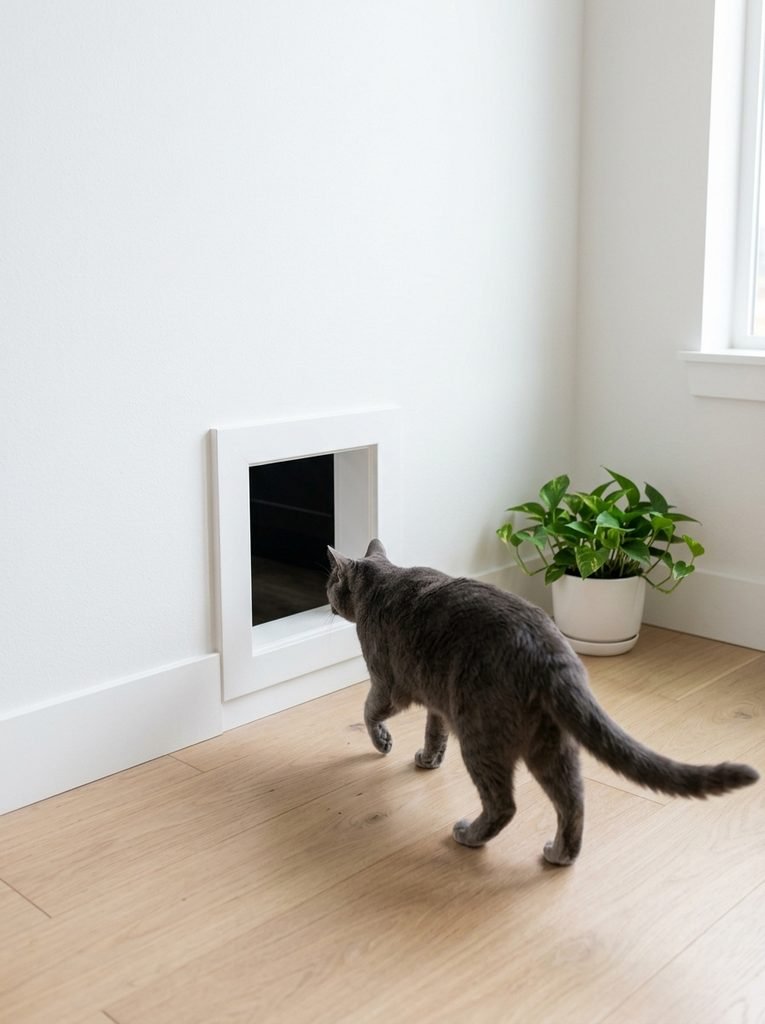
When there’s no door in the right spot, a wall cat door works perfectly. It’s great for reaching a litter room under the stairs or a closet. Use a wall tunnel kit that lines the opening between both sides of the wall.
Always check for wires and pipes with a stud finder that has a wire setting before you cut.
You’ll need: a wall cat door kit with a tunnel, a drywall saw, a stud finder with a wire detector and a pencil.
5. Window Screen Cat Flap
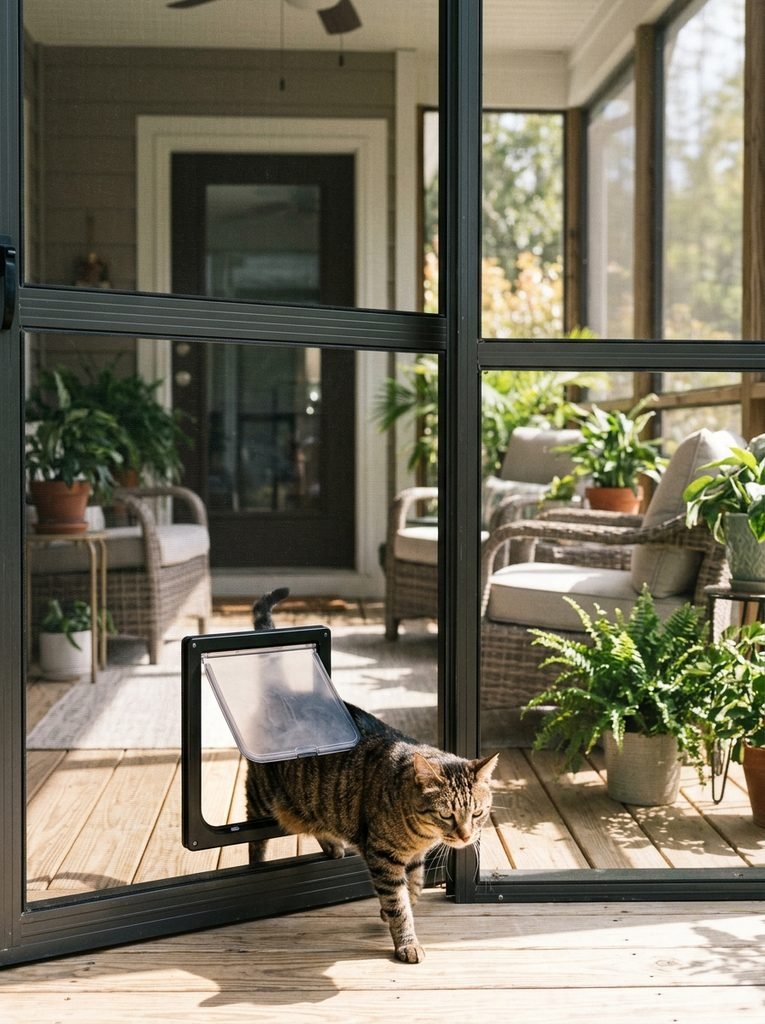
A screen cat flap fits straight into window or porch screen mesh. It clips onto both sides of the screen, so there’s no wood cutting at all. It’s a quick way to let your cat out onto a screened porch or catio.
Use pet resistant screen mesh around the flap. Regular mesh tears easily when cats push against it.
Start Your 30-Day Home Reset
Stop waiting for a "perfect" free weekend. Grab the 30-day plan and start feeling lighter in your own home by tomorrow.
View the 30-Day Plan Printable PDF · Instant downloadYou’ll need: a screen pet flap kit, pet resistant screen mesh and a utility knife.
6. Litter Box Cabinet with a Cat Door
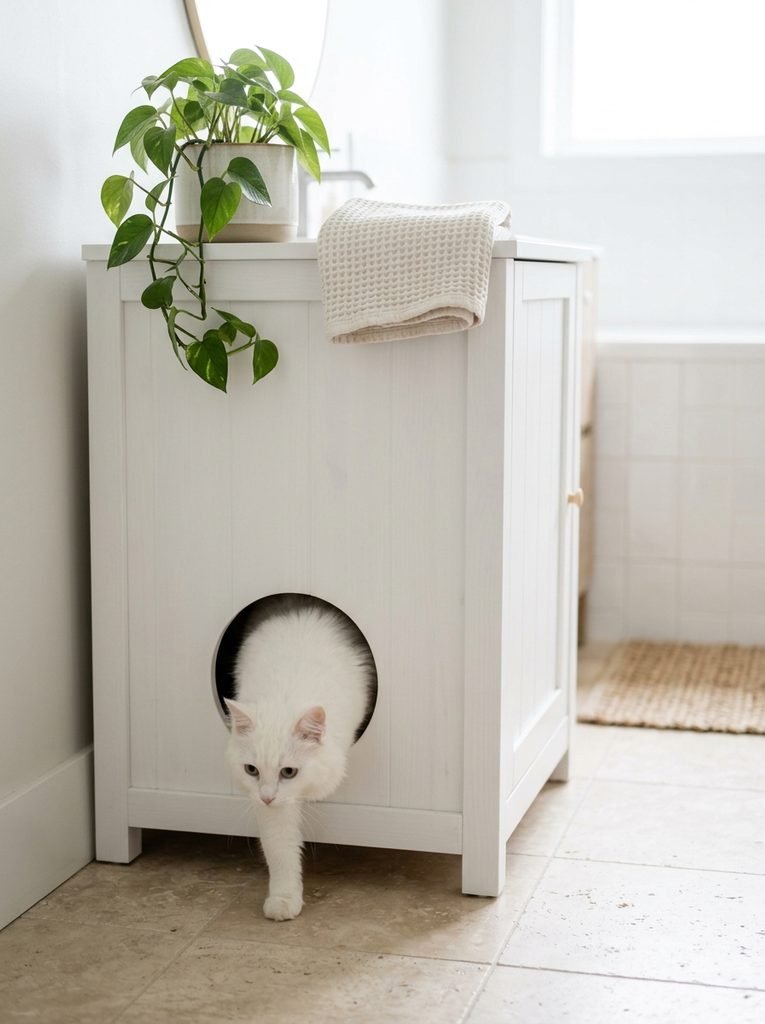
Hide the litter box inside a cabinet and cut a cat door in the side. Your cat gets privacy, litter stays contained, and the bathroom just looks like it has a nice piece of furniture.
A tip I picked up: put the cat door on the side, not the front. Litter tracking stays inside the cabinet, and guests won’t see straight in.
You’ll need: a cabinet big enough for the litter box, a jigsaw, a round template or a cat flap frame and sandpaper.
7. Curtain Flap Opening
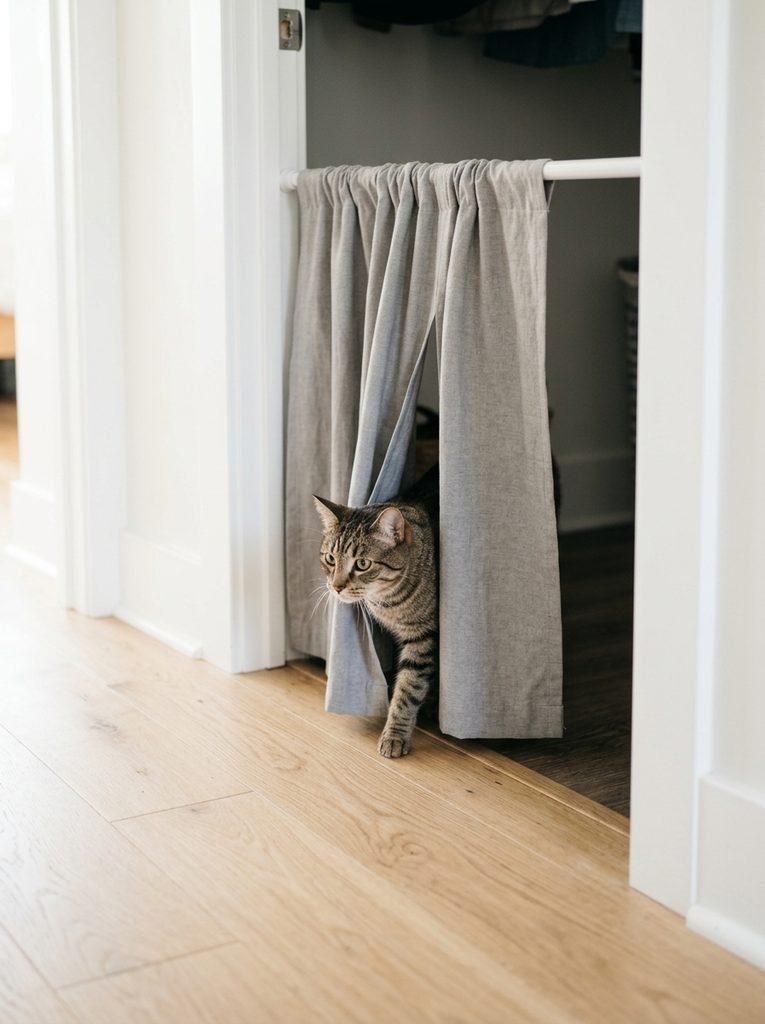
If you can’t cut anything, hang a short curtain over an opening, like a closet with the door removed or a gap under a counter. It covers the litter area, and your cat simply pushes through.
It’s the easiest cat door there is, and it takes about five minutes.
You’ll need: a small tension rod and a short piece of fabric or a ready made cafe curtain.
8. Garage Cat Door
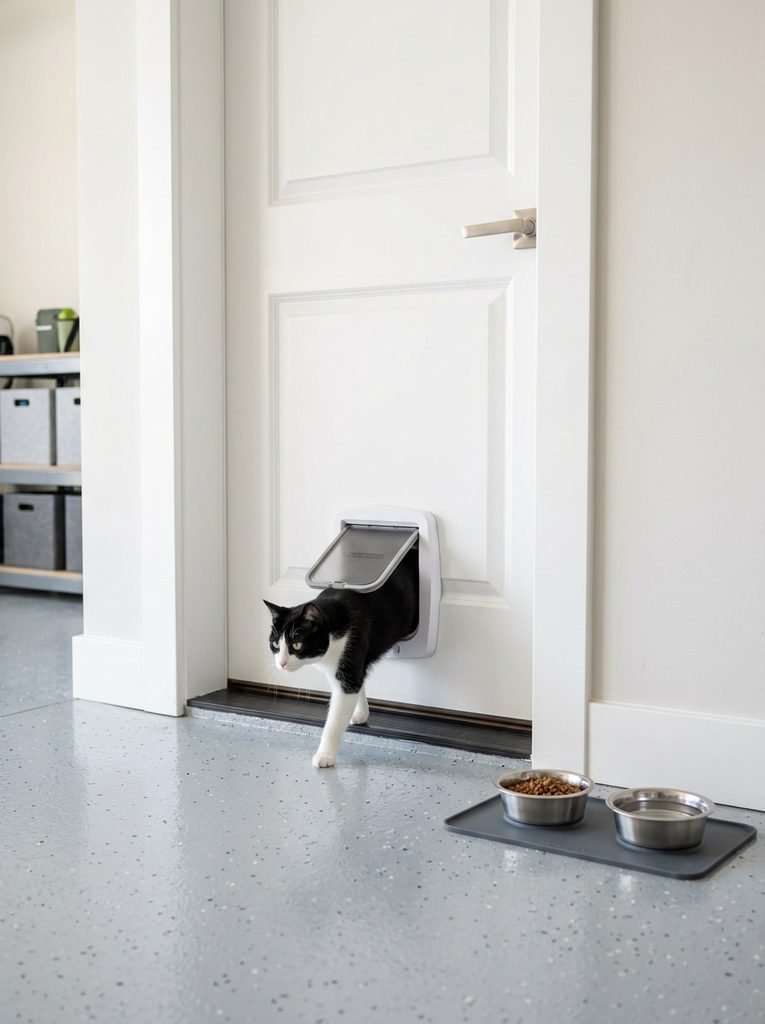
A cat door between the house and the garage, or from the garage to the yard, gives outdoor cats a warm, dry shelter. Choose a weatherproof, insulated flap so the cold stays out.
I’d add a microchip flap if you have neighborhood cats around. It only opens for your own cat.
You’ll need: an insulated or microchip cat flap, a jigsaw, a drill and a little exterior sealant.
9. Door Latch Strap That Lets Cats In and Keeps Dogs Out
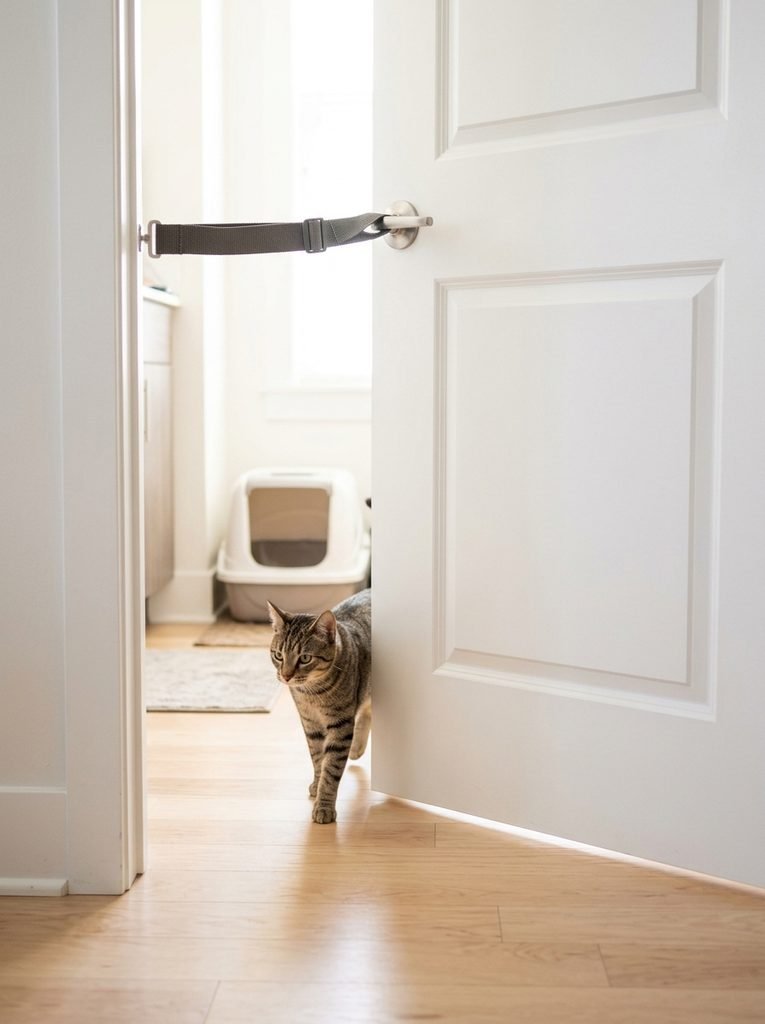
If you have a dog that loves the litter box or the cat’s food, a door latch strap is a brilliant trick. It holds the door open just wide enough for your cat, but too narrow for most dogs.
Honestly, it’s the cheapest fix on this list, and it takes seconds to fit.
You’ll need: an adjustable door latch strap or door stopper.
10. Pet Gate with a Built In Cat Door
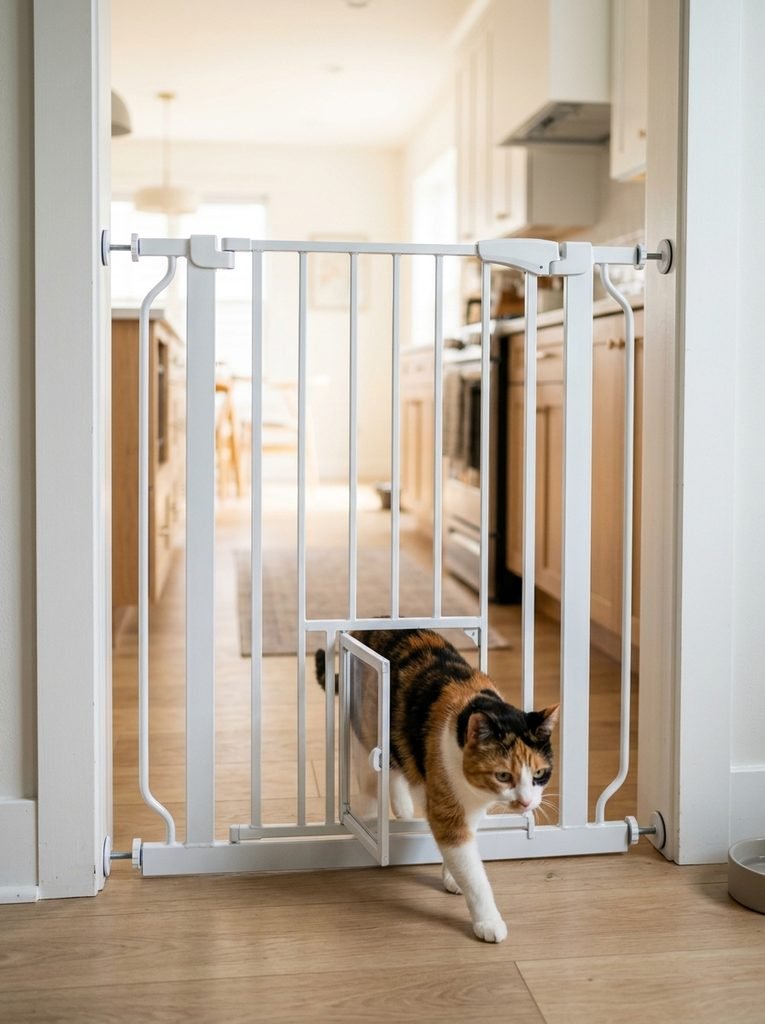
A pet gate with a small cat door at the bottom keeps the dog or the baby out of a room while the cat comes and goes freely. It’s perfect for blocking off the kitchen or a room with the cat food.
Choose a pressure mounted gate if you rent. It holds tight with no screws in the walls.
You’ll need: a pressure mounted pet gate with a built in small pet door.
11. Corner Cat Door into a Laundry Room
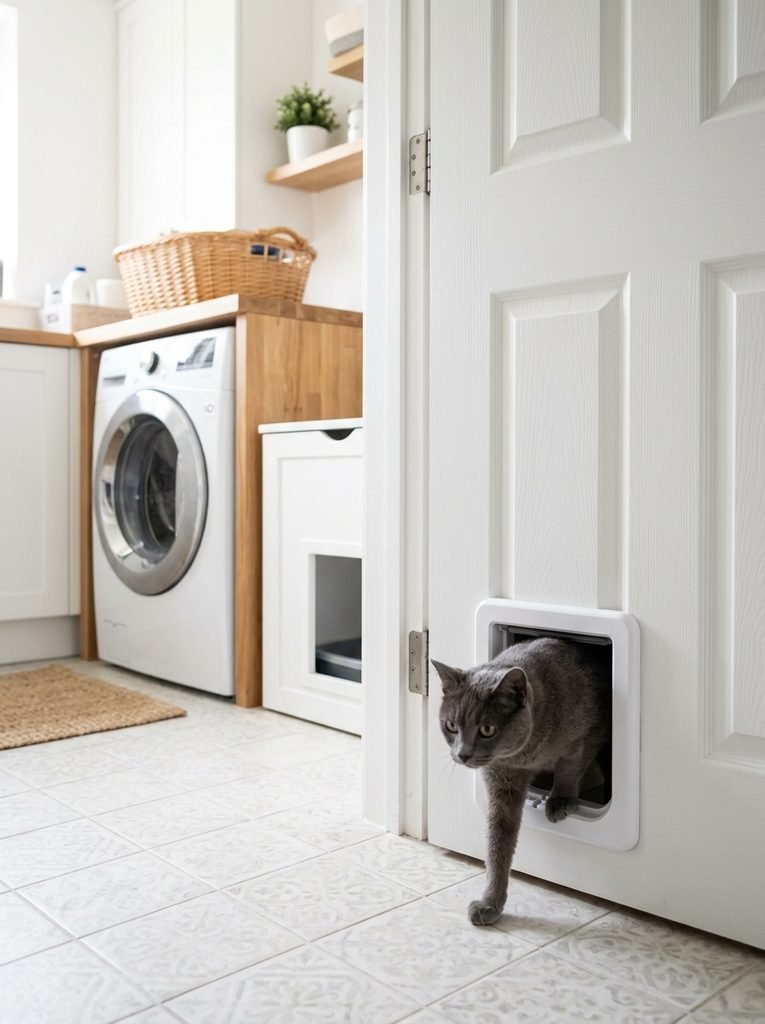
Put the cat door near the hinge side corner of a laundry room or closet door. It keeps the opening out of the way, and the cat door doesn’t line up with the litter box, so you won’t see it from the hallway.
Leave at least 4 inches between the cat door and the door edge so the frame stays strong.
You’ll need: a cat flap kit, a jigsaw, a drill and sandpaper.
12. Mat and Weather Seal for an Outdoor Flap
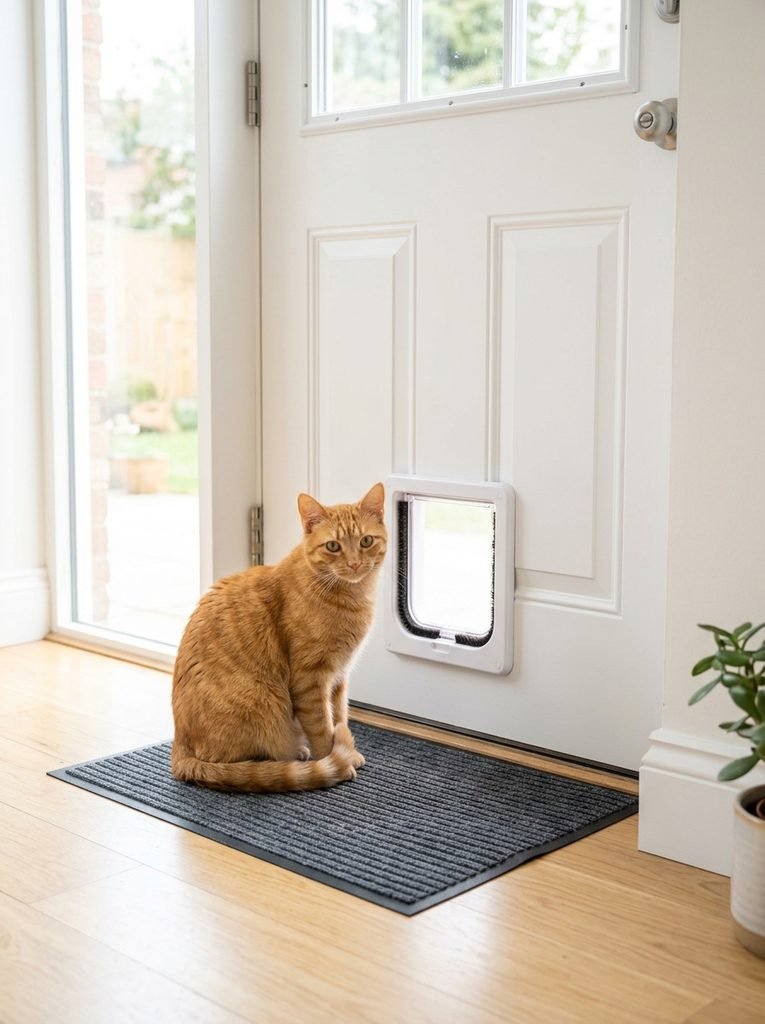
An outdoor cat flap brings in muddy paws and cold drafts. Put a washable mat right under the flap inside to catch dirt, and add a brush seal or magnetic strip around the flap to stop drafts.
I wash the mat once a week. It saves the floor from a lot of tiny muddy footprints.
You’ll need: a small washable rubber backed mat and a brush draft strip or magnetic seal.
Final Thoughts on DIY Cat Door Ideas
A DIY cat door gives your cat freedom and gives you a break from door duty. Start with an easy interior flap or a no cut option like a latch strap or curtain, then try a sliding door panel or window insert for outdoor access. Measure your cat first, keep the opening safe, and your cat will figure it out in no time.


Amir Ali is the founder and site administrator of HomeDecorEdge, a modern home decor and interior design platform. Since starting the site, he has combined his passion for interior design, practical styling, and color coordination with hands-on content strategy and site management. He guides authors, curates high-quality articles, and ensures readers have access to actionable, visually inspiring, and user-focused home decor advice for apartments, small rooms, and family homes.