

My cat has a 6 a.m. alarm, and it’s me. She sits on my chest, stares, and taps my face until breakfast appears. Then she gulps it down in thirty seconds and asks for more.
That’s what got me into DIY cat feeders. A raised stand made mealtimes neater. A puzzle feeder slowed her down and kept her busy. A simple gravity feeder meant dry food was always there, so the early wake up calls finally stopped. These 10 DIY cat feeder ideas cover all of that, from easy wood stands to automatic style builds, puzzle toys and tidy feeding stations.
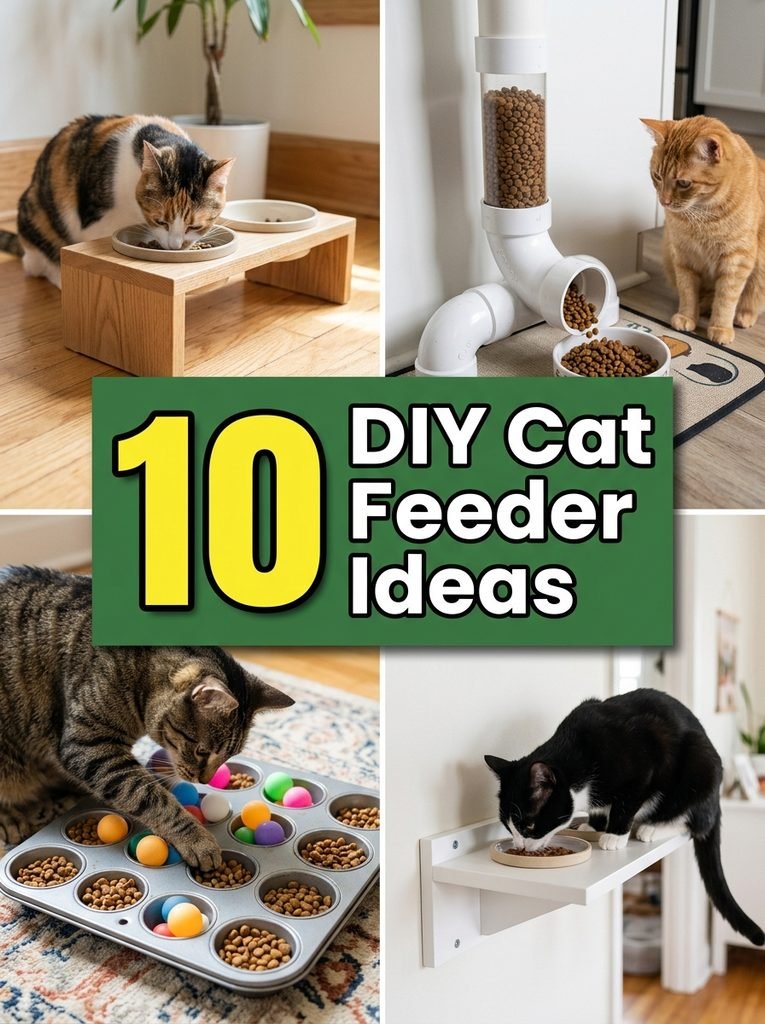
1. DIY Raised Wooden Cat Feeder Stand
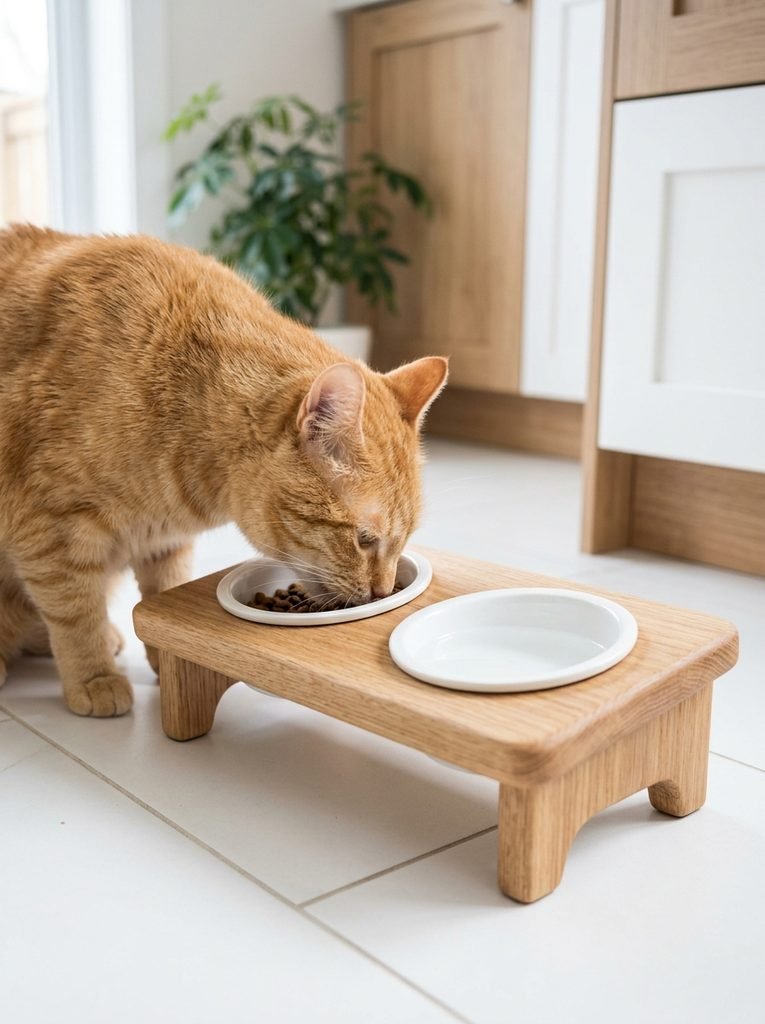
A raised feeder lifts the bowls closer to your cat’s mouth, so they don’t have to crouch low to eat. Many cats find it more comfortable, especially older cats with stiff joints. It also keeps the bowls from sliding across the floor.
I built mine from one oak board in an afternoon, and it’s the neatest corner of the kitchen now.
Why I love it
- Easier on your cat’s neck and joints
- Bowls stay put and don’t slide
- Looks like real furniture
Project Card · 2 hours · Easy
Materials Needed
- One 1×10 hardwood board about 24 inches long
- Two ceramic or stainless steel bowls with a lip
- A jigsaw and a drill with a 1/2 inch bit
- Wood glue and 1 1/4 inch screws
- Sandpaper and a pet safe, water resistant finish
- Felt pads or rubber feet
How to Make It
- Cut a top piece about 16 inches long and two side pieces about 5 inches tall from the board.
- Turn a bowl upside down on the top piece and trace around it, then draw a second circle about 1/4 inch inside the line.
- Drill a hole inside each inner circle and cut it out with the jigsaw so the bowl’s lip rests on the edge.
- Glue and screw the side pieces to the ends of the top.
- Sand every edge round and smooth, then seal it with a pet safe finish.
- Add felt pads or rubber feet underneath and drop in the bowls.
PRO TIP Make the stand about the height of your cat’s elbow. Too high is just as uncomfortable as too low.
2. DIY PVC Gravity Cat Feeder
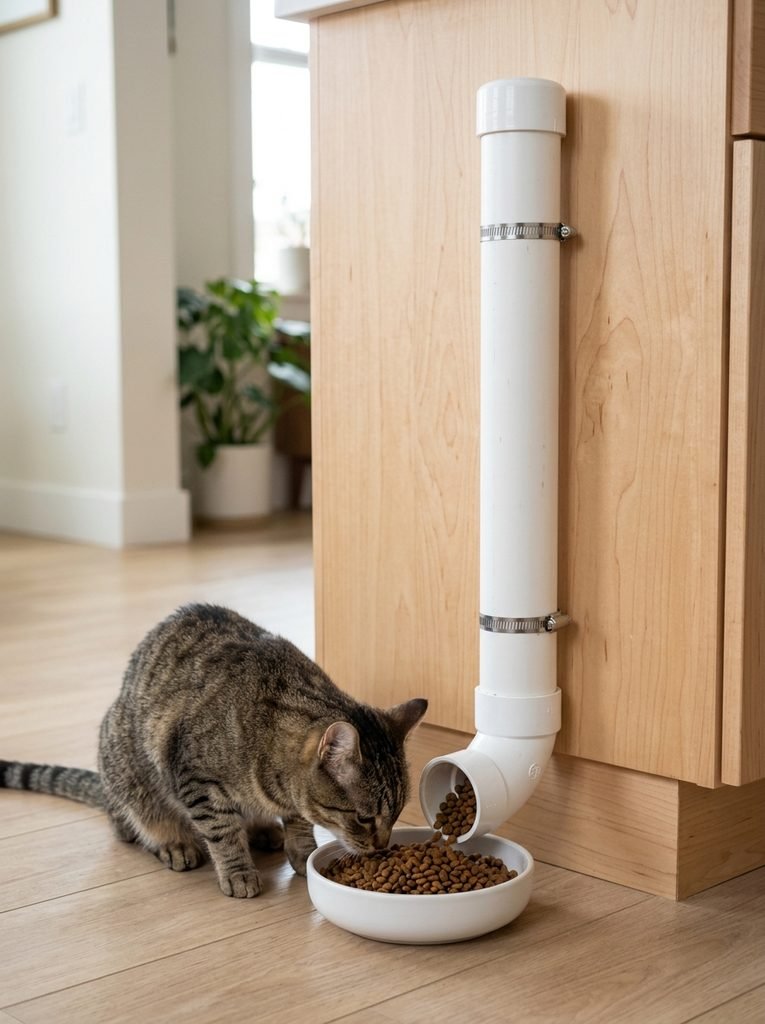
A gravity feeder keeps dry food topped up all day. As your cat eats from the bottom, more kibble slides down from the tube above. It’s a simple automatic feeder made from PVC pipe and no batteries at all.
Honestly, this is great for busy days or a long work shift, but it’s best for cats who don’t overeat.
Why I love it
- Keeps dry food topped up all day
- No batteries or electronics
- Costs very little to make
Project Card · 1 hour · Easy
Materials Needed
- One 3 inch PVC pipe, about 18 inches long
- One 3 inch PVC 45 degree elbow
- A 3 inch PVC cap
- A shallow wide bowl
- A saw for PVC and fine sandpaper
- Two pipe clips and screws to fix it to a wall or cabinet side
How to Make It
- Cut the PVC pipe to length and sand the cut edges smooth.
- Wash every piece with warm soapy water and dry it fully.
- Push the elbow onto the bottom of the pipe so the opening faces forward and down.
- Fix the pipe upright to a wall or cabinet side with pipe clips, with the elbow sitting just above the bowl.
- Set the bowl under the elbow so kibble pours into it and stops at the rim.
- Fill the pipe with dry food from the top and fit the cap.
PRO TIP Only use dry food in a gravity feeder. Wet food spoils quickly at room temperature.
3. DIY Muffin Tin Puzzle Feeder
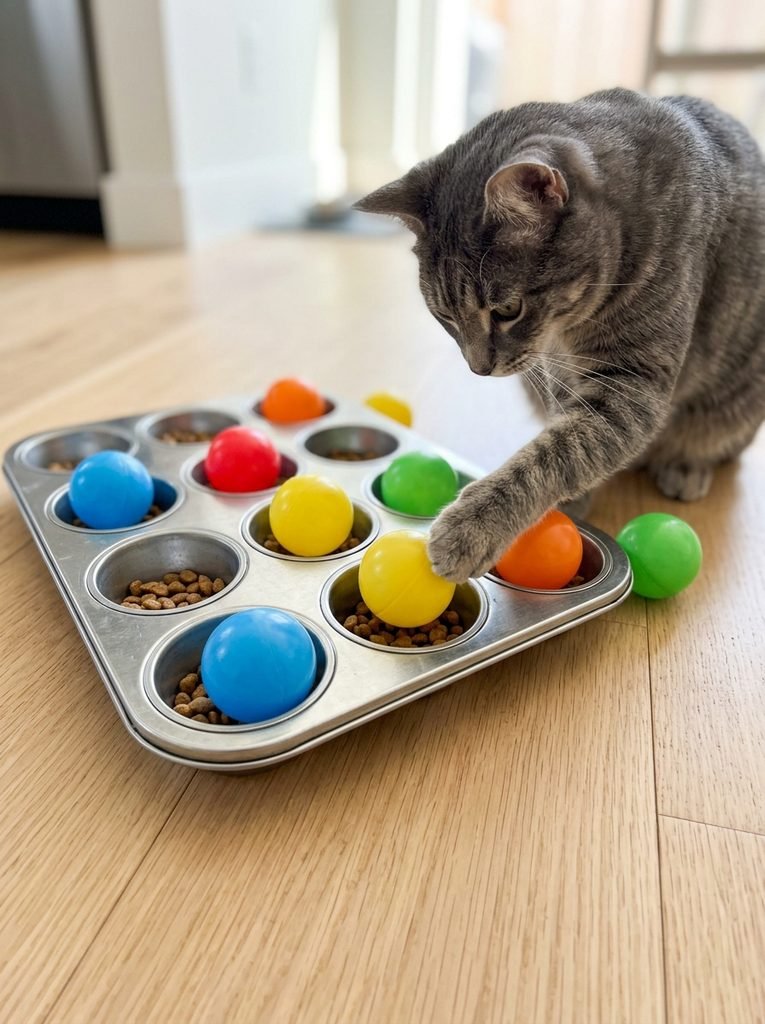
A puzzle feeder turns mealtime into a game. Your cat has to paw balls out of the cups to reach the kibble, which slows down fast eaters and keeps bored indoor cats busy. You can make one in two minutes from a muffin tin.
In my experience, start easy with just a few cups covered. Once your cat gets it, cover more.
Why I love it
- Slows down fast eaters
- Keeps indoor cats busy
- Made in two minutes
Project Card · 5 minutes · Very easy
Materials Needed
- A 6 or 12 cup muffin tin
- Soft plastic balls or ping pong balls a little bigger than the cups
- Your cat’s dry food or treats
How to Make It
- Wash and dry the muffin tin.
- Drop a few pieces of kibble or a treat into each cup.
- Cover a few cups with balls and leave the rest open.
- Set the tin on a mat and show your cat the open cups first.
- Once your cat is comfortable, cover every cup with a ball.
- Wash the tin and balls after each use.
PRO TIP Use balls that are bigger than your cat’s mouth. Small balls can be a choking risk.
4. Cat Feeding Station with a Mat and Food Storage
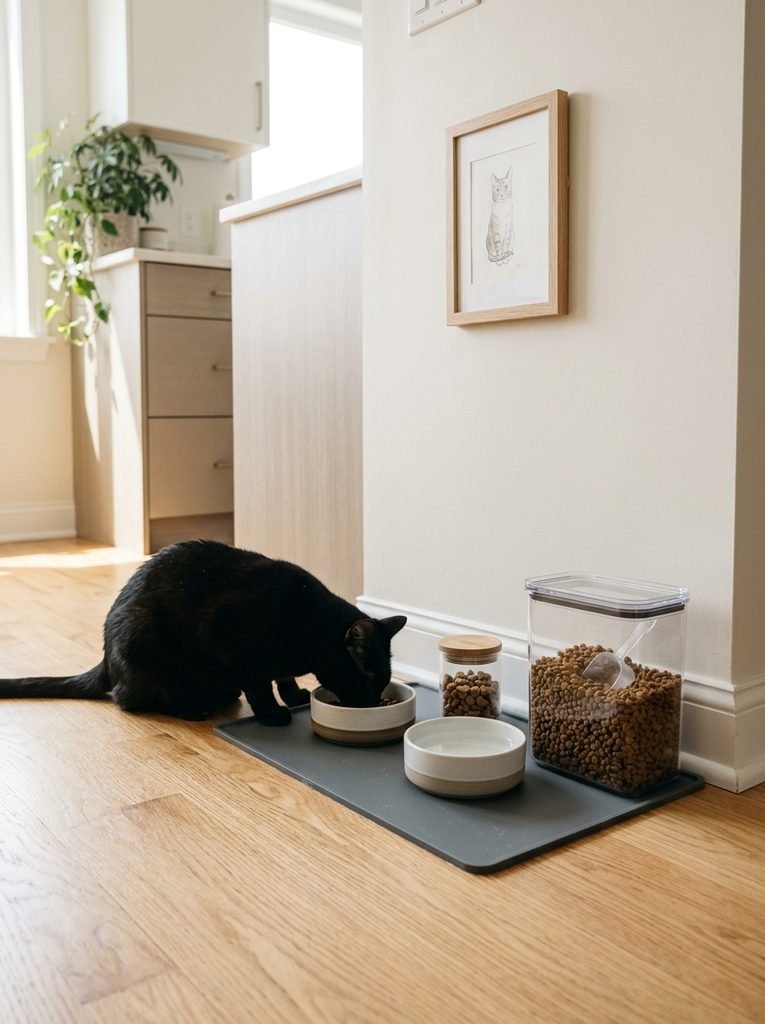
A feeding station gives everything one home: bowls, a mat, the food container and the treats. It keeps the kitchen tidy and makes feeding time quick.
I keep the food in an airtight container right next to the bowls. It stays fresh, and the scoop is always there.
Why I love it
- Everything in one spot
- Easy to clean
- Keeps food fresh
You’ll need: a silicone mat, an airtight food container with a scoop and a small treat jar.
5. Wall Mounted Feeding Shelf
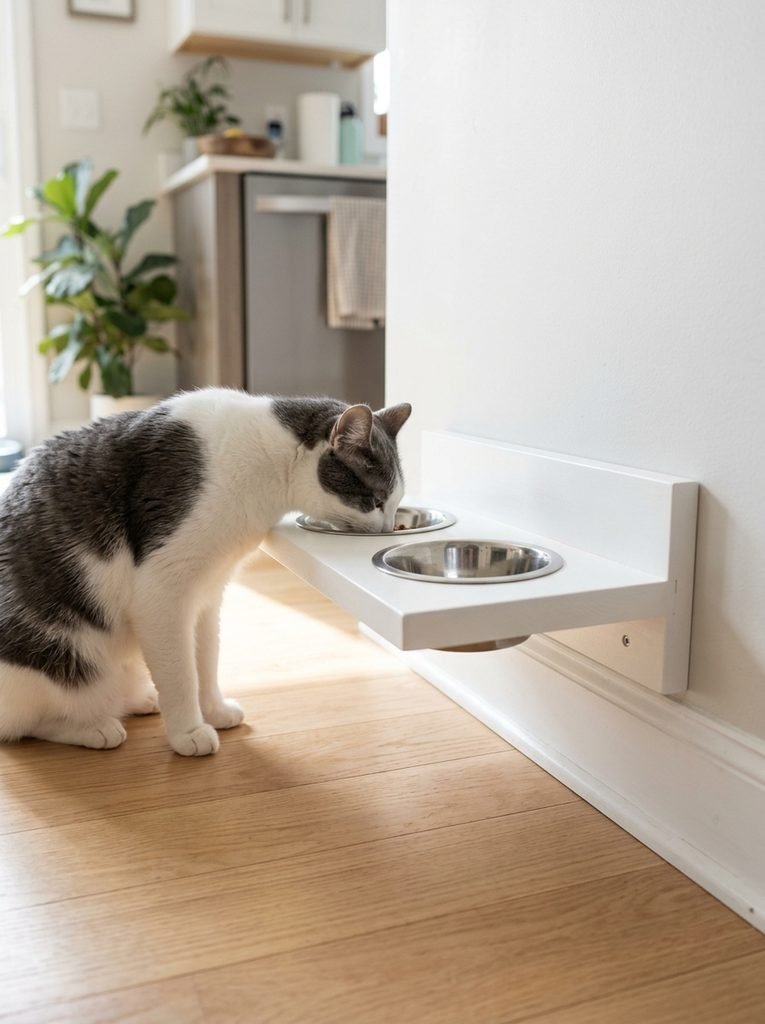
A low wall shelf holds bowls off the floor and leaves the floor clear underneath for easy cleaning. It’s great in small kitchens where a stand would get kicked.
Start Your 30-Day Home Reset
Stop waiting for a "perfect" free weekend. Grab the 30-day plan and start feeling lighter in your own home by tomorrow.
View the 30-Day Plan Printable PDF · Instant downloadMount it into studs or strong anchors. Cats lean on their bowls more than you’d think.
Why I love it
- Easy to sweep under
- Bowls can’t be pushed around
- Saves floor space
You’ll need: a 1×8 board, two sturdy shelf brackets, a jigsaw and two bowls with a lip.
6. Bottle Gravity Feeder
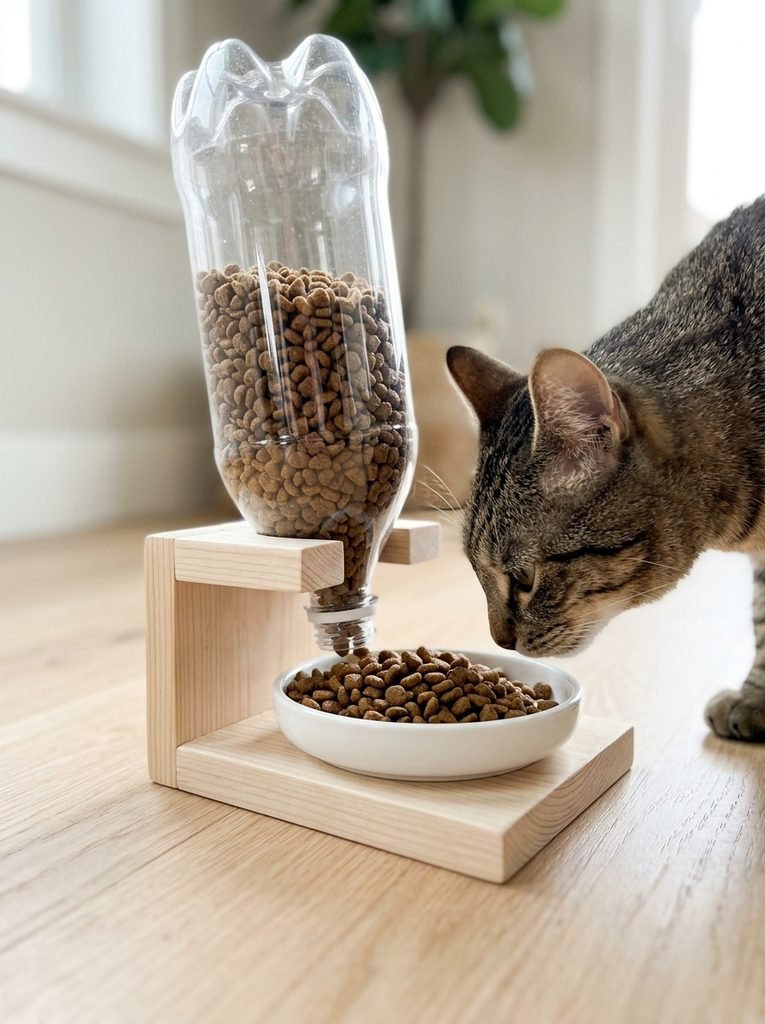
A large plastic bottle makes a quick gravity feeder. Turn it upside down into a simple wooden holder above a bowl, and the kibble flows down as your cat eats.
It’s a great weekend fix when you’re going out for the day and want dry food ready.
Why I love it
- Uses a bottle you already have
- Ready in minutes
- Easy to see how much food is left
You’ll need: a large clean plastic bottle, a small wooden block with a hole for the bottle neck and a shallow bowl.
7. Hidden Feeding Station in a Cabinet
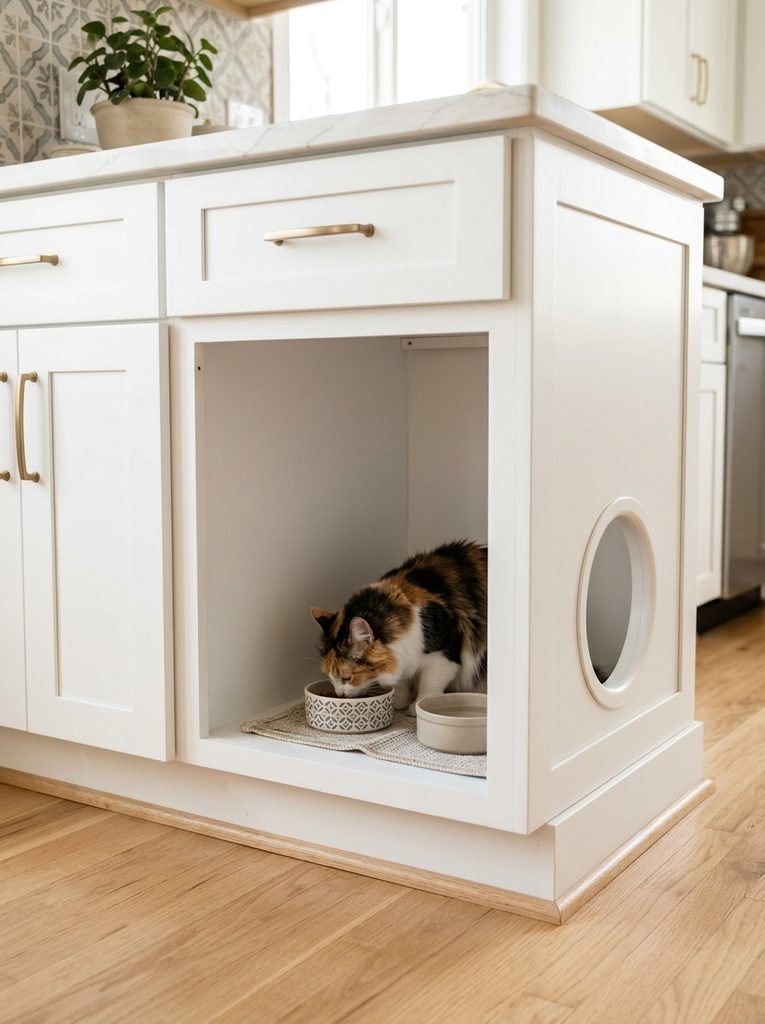
If you have a dog who steals cat food, hide the bowls inside a cabinet with a small opening only your cat can fit through. It also keeps the kitchen floor clear.
A tip I picked up: use the lowest cabinet near a corner. It’s quiet, and cats like eating somewhere a little tucked away.
Why I love it
- Keeps dogs out of the cat food
- Hides messy bowls
- Feels safe and quiet for cats
You’ll need: a base cabinet, a jigsaw for the opening and a mat for the bowls.
8. Treat Dispensing Ball Toy
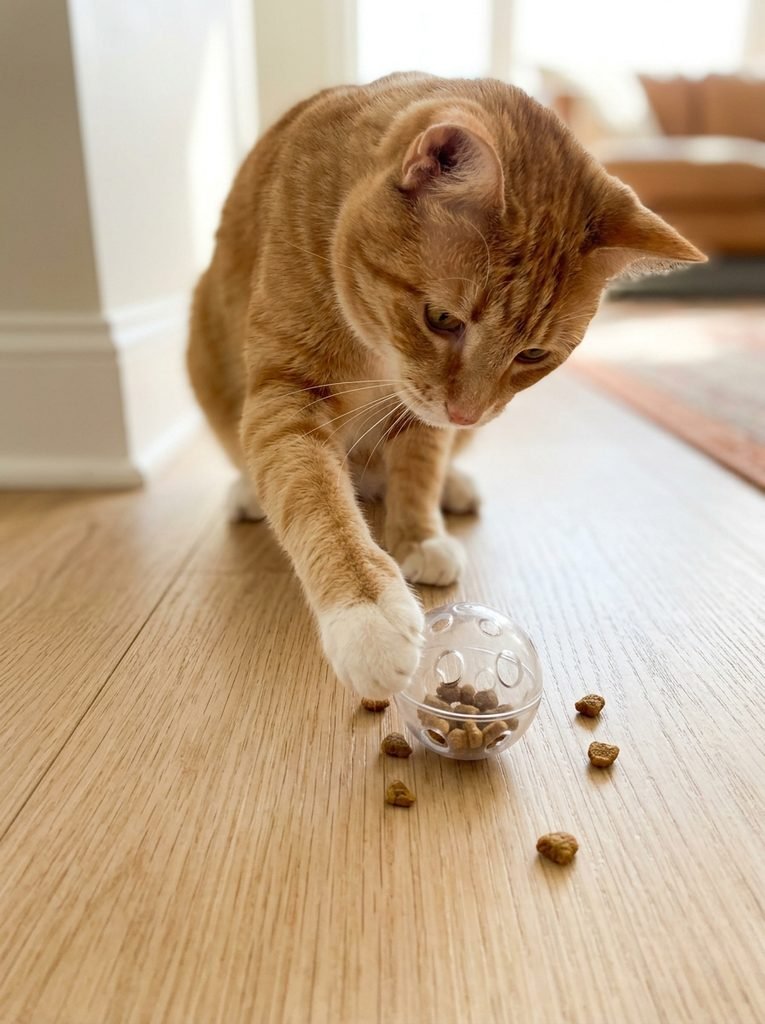
A treat ball turns snack time into play. Your cat rolls it around and treats fall out of the holes. It’s an easy way to get a lazy indoor cat moving.
Make the holes just a little bigger than one treat, so they drop out slowly.
Why I love it
- Gets lazy cats moving
- Makes treats last longer
- Fun for both of you
You’ll need: a small hollow plastic ball that opens, a drill with a small bit and your cat’s favorite treats.
9. Snuffle Mat Slow Feeder
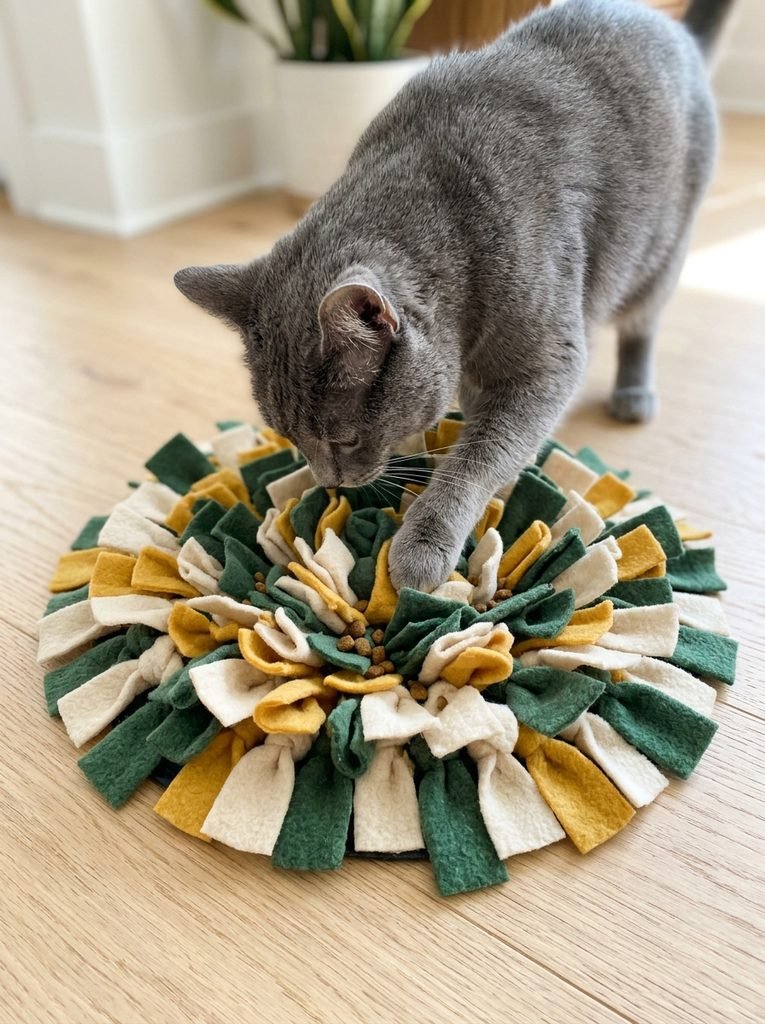
A snuffle mat lets your cat sniff and forage for kibble hidden in soft fleece strips, just like hunting. It’s no sew: you tie fleece strips through the holes of a rubber sink mat.
I sprinkle part of breakfast into it every morning. It keeps her busy while I make my coffee.
Why I love it
- No sewing needed
- Slows down eating
- Great mental workout
You’ll need: a rubber sink mat with holes, fleece fabric cut into 1 by 6 inch strips and scissors.
10. Tiered Feeder for Multiple Cats
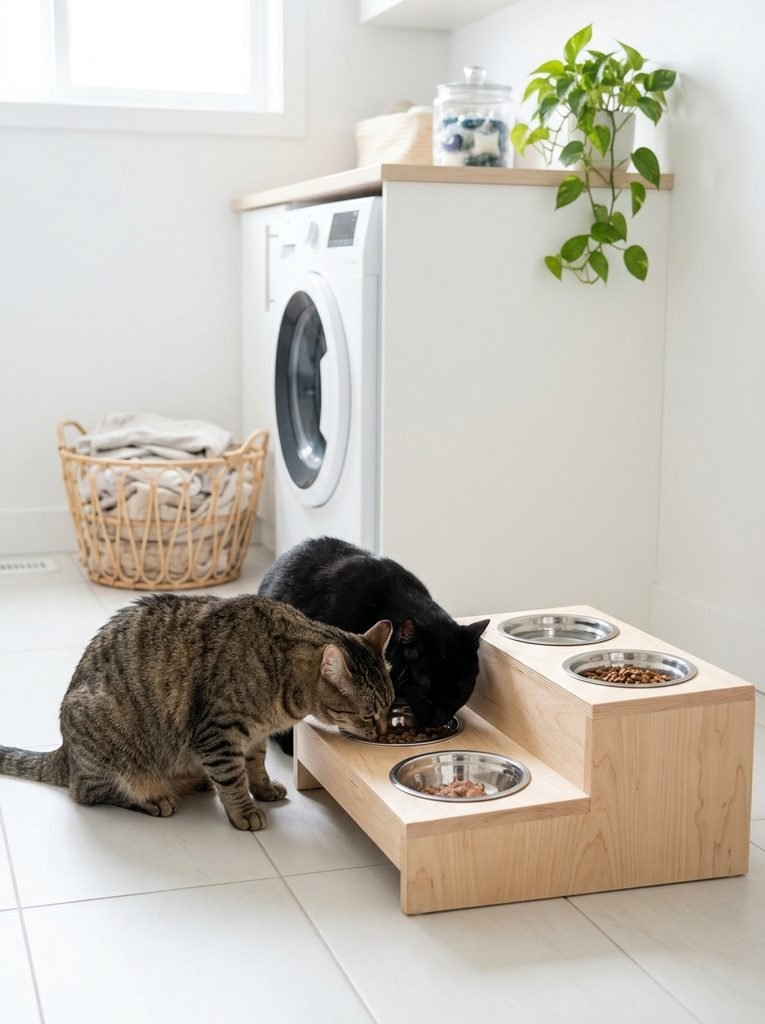
In a home with more than one cat, a tiered feeder gives each cat its own spot at different heights. Cats feel less crowded, and there’s less food stealing.
Leave a little space between each set of bowls. Some cats don’t like eating shoulder to shoulder.
Why I love it
- Each cat gets its own space
- Less food stealing
- Fits more bowls in less floor space
You’ll need: hardwood boards, a jigsaw, wood glue, screws, four bowls with a lip and a pet safe finish.
Frequently Asked Questions
How high should a raised cat feeder be?
For most adult cats, about 4 to 6 inches works well. A good rule is to keep the bowl around the height of your cat’s elbow, so they can eat without crouching or stretching.
Are automatic and gravity feeders safe for cats?
They’re safe for dry food, but they don’t control portions. If your cat tends to overeat, measure the daily amount into the feeder instead of filling it to the top.
Do puzzle feeders really help cats?
Yes. Puzzle feeders slow down cats who eat too fast, which can reduce vomiting after meals. They also give indoor cats something to do, which helps with boredom.
What bowls are best for a DIY cat feeder?
Wide, shallow bowls in ceramic or stainless steel are best. They’re easy to clean, don’t hold smells like plastic, and wide bowls stop your cat’s whiskers from brushing the sides.
Final Thoughts on DIY Cat Feeder Ideas
The best DIY cat feeder matches your cat’s habits. A raised stand makes meals comfortable, a puzzle feeder slows down fast eaters, and a gravity feeder keeps dry food ready when you’re busy. Start with the muffin tin puzzle tonight, it takes five minutes, and see how much your cat enjoys working for dinner.


Amir Ali is the founder and site administrator of HomeDecorEdge, a modern home decor and interior design platform. Since starting the site, he has combined his passion for interior design, practical styling, and color coordination with hands-on content strategy and site management. He guides authors, curates high-quality articles, and ensures readers have access to actionable, visually inspiring, and user-focused home decor advice for apartments, small rooms, and family homes.