

The first time my cat cleared the back fence, I didn’t even see her jump. One second she was sunbathing on the grass, the next she was on top of the fence looking very pleased with herself, and then she was gone. She came home three hours later. I aged about three years.
Cats are amazing climbers and jumpers, so a normal fence barely slows them down. The good news is that a few smart changes can make your yard, balcony or even a single room cat proof, without building a cage. These 10 DIY cat fence ideas cover outdoor fences, balconies, indoor barriers and that one holiday problem every cat owner knows: the Christmas tree.
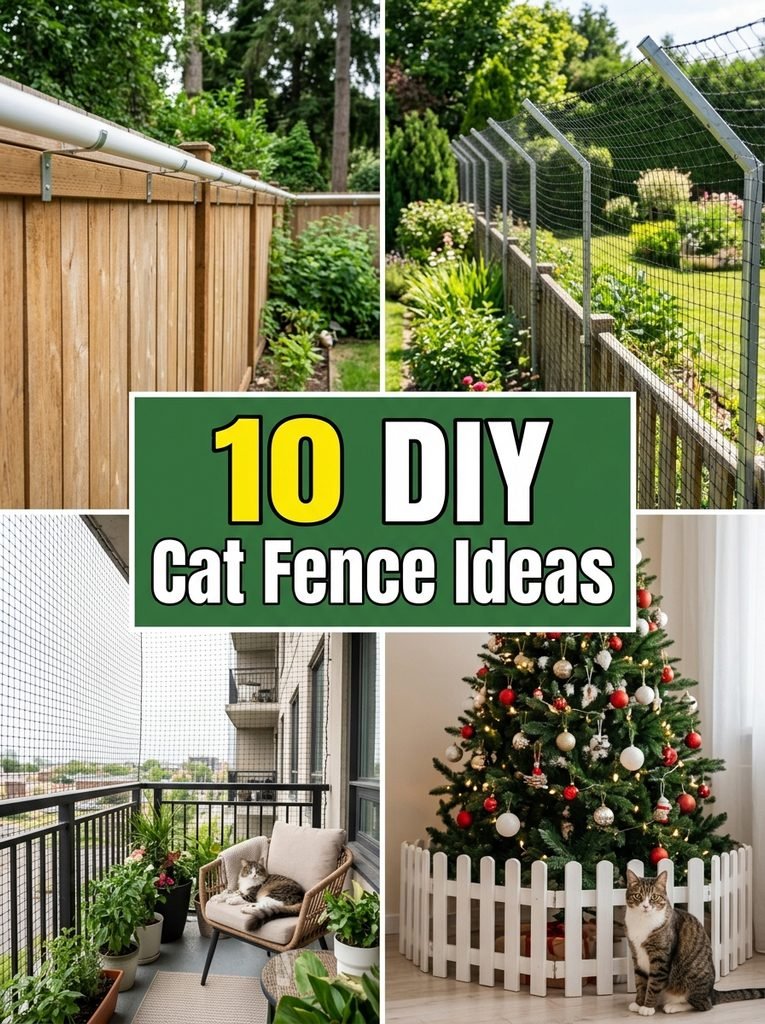
1. DIY Cat Fence Roller
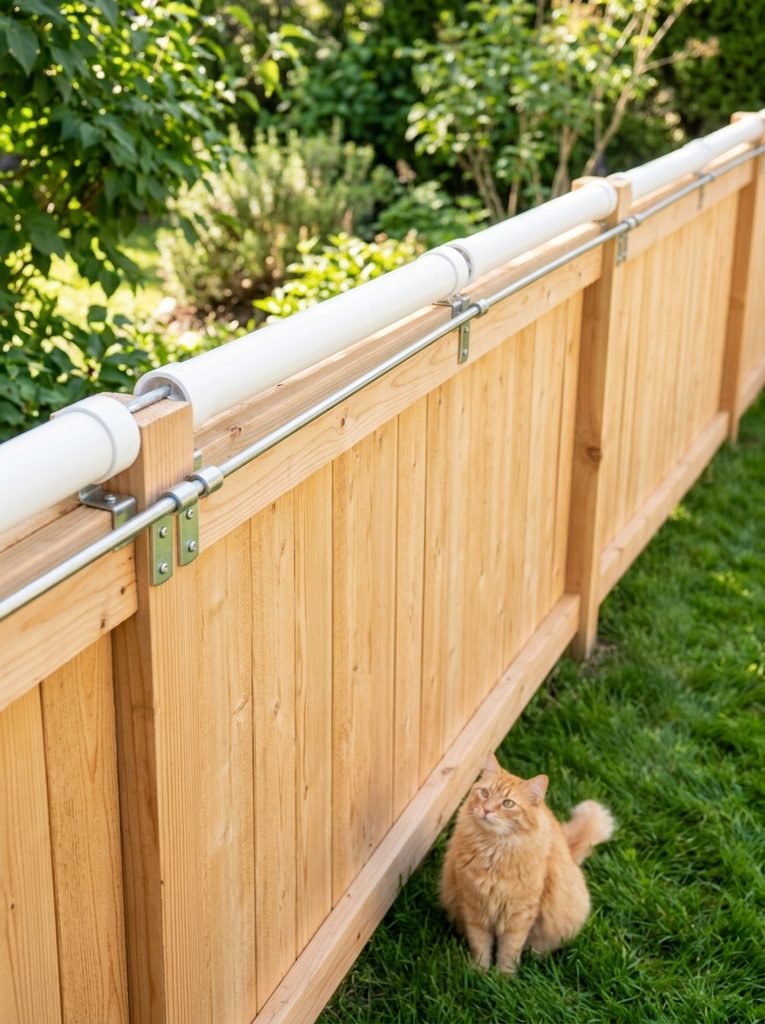
A roller is the cleverest cat fence trick there is. Smooth pipes spin along the top of your fence. When your cat jumps up and tries to grab the top, the roller turns and they slide gently back down. No net, no cage, and from the street it looks like a simple trim.
I put rollers on our back fence over a weekend, and my escape artist hasn’t made it over since.
Why I love it
- Almost invisible from a distance
- Safe and gentle for cats
- Works on wood and vinyl fences
Project Card · One weekend · Medium
Materials Needed
- 3 inch PVC pipe, enough to cover the top of your fence
- A smooth metal rod or galvanized conduit, slightly longer than each pipe section
- Heavy duty L brackets, two per pipe section
- Exterior screws and a drill
- A PVC saw and a tape measure
- Two PVC end caps per section with a hole drilled in the center
How to Make It
- Measure the full top of your fence and cut the PVC pipe into sections about 4 feet long.
- Fit an end cap on both ends of each pipe and drill a hole in the center of each cap, just big enough for the rod.
- Slide a metal rod through each pipe so the pipe spins freely around it.
- Screw two L brackets to the top of the fence for each section, pointing up.
- Fix the ends of each rod to the brackets so the pipe sits about 1 inch above the fence top.
- Spin every roller by hand to check it turns easily, and leave no gaps between sections.
Don’t want to DIY?
Cat Fence Roller Kit
If you’d rather skip the cutting and drilling, a ready made roller kit comes with the brackets and rods, and it goes up in an afternoon.
PRO TIP Leave no gaps between rollers, even small ones. A determined cat will find the one spot that doesn’t spin.
2. DIY Angled Net Fence Topper
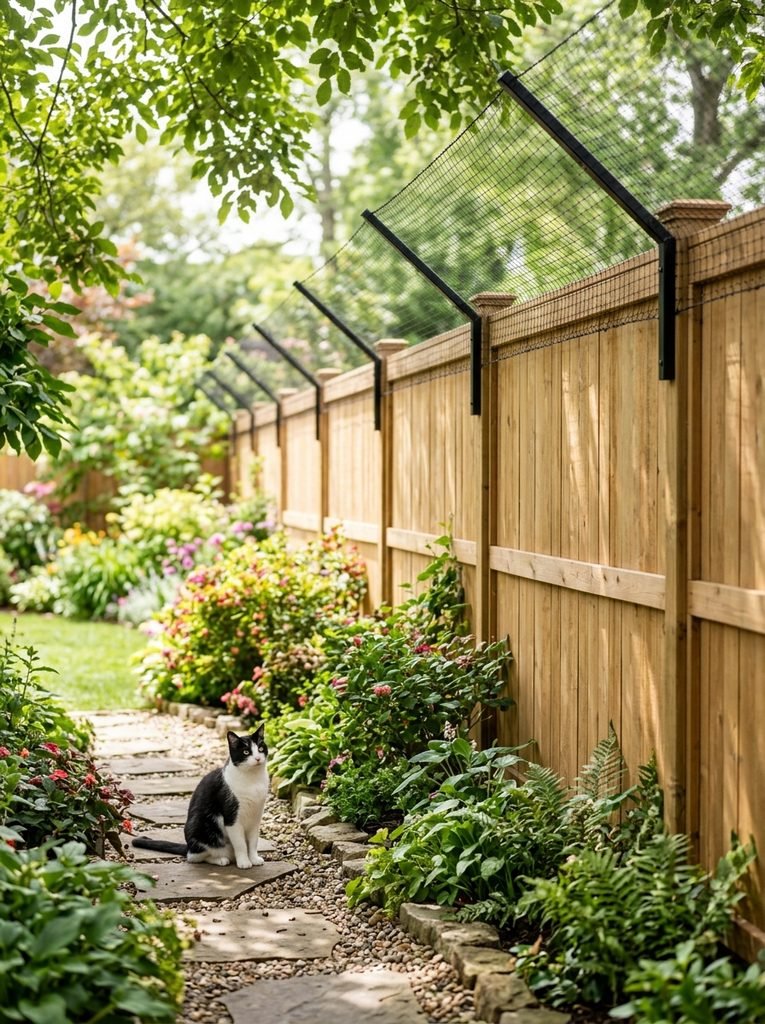
An angled net topper leans inward over your yard. When your cat climbs up, the net hangs over their head and they can’t get a grip to go over. It’s one of the most reliable outdoor cat fences, and black mesh nearly disappears against the sky.
In my experience, the angle is what makes it work. Straight up nets can be climbed. Angled ones can’t.
Why I love it
- Very hard for cats to beat
- Mesh is barely visible
- Cheaper than rollers for long fences
Project Card · One weekend · Medium
Materials Needed
- Angled fence brackets, one every 4 to 6 feet
- Black polypropylene mesh netting about 3 feet wide
- Strong cable ties
- Tension wire and wire clamps
- Exterior screws and a drill
- Scissors or snips
How to Make It
- Screw the brackets to the inside of the fence posts so the top arm points into your yard at about a 45 degree angle.
- Run a tension wire along the ends of the bracket arms and pull it tight with the clamps.
- Run a second wire along the fence top where the brackets start.
- Hang the netting between the two wires and attach it every 6 inches with cable ties.
- Pull the netting taut so there’s a slight slope with no loose sagging.
- Walk the fence line and close any gaps at corners and posts.
PRO TIP Use UV resistant netting made for outdoor use. Cheap garden mesh breaks down in the sun within a year.
3. DIY Balcony Cat Net
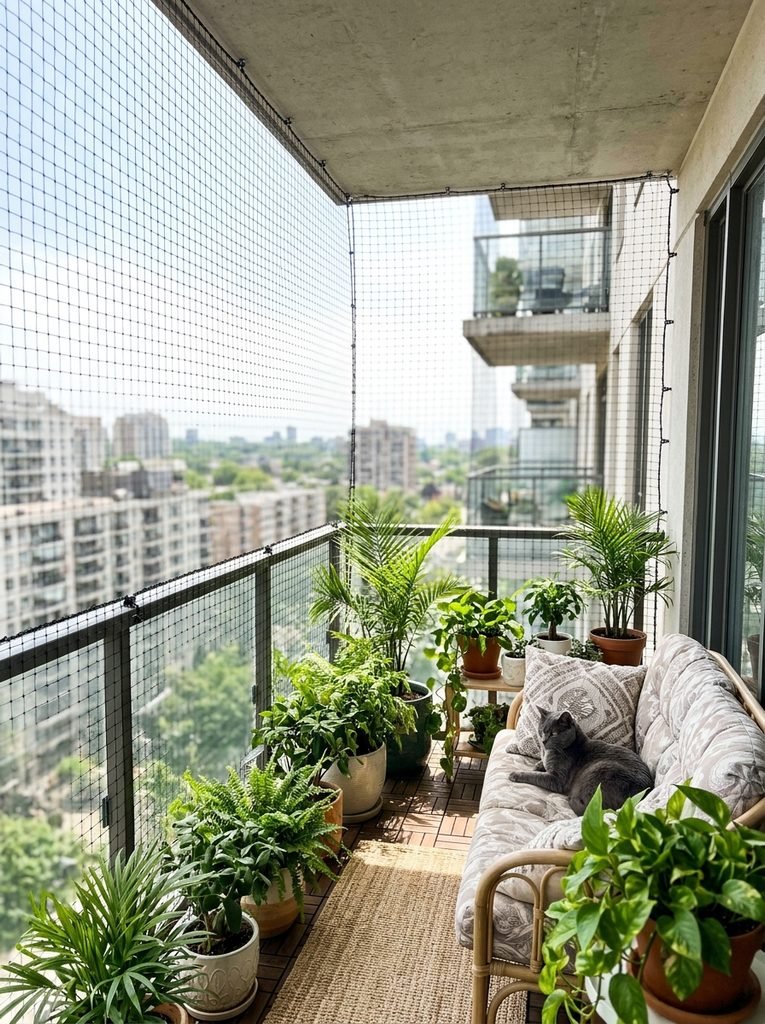
If you live in an apartment, a balcony can be dangerous for a curious cat. A cat safety net from the railing to the ceiling turns it into a safe outdoor room. Your cat gets fresh air and sunshine, and you get peace of mind.
Honestly, this is the most important idea on the list if you live above the ground floor.
Why I love it
- Makes high balconies safe
- No drilling needed with a tension pole setup
- Your cat gets fresh air every day
Project Card · Half a day · Easy
Materials Needed
- A cat safety net sized to your balcony
- Tension poles or adhesive hooks for the ceiling
- Cable ties and cord
- A measuring tape
- Scissors
How to Make It
- Measure each open side of the balcony from the railing to the ceiling.
- Set tension poles at the corners, or stick strong outdoor hooks along the ceiling edge.
- Tie the top of the net to the hooks or poles, pulling it straight.
- Fix the bottom of the net to the railing every 8 inches with cable ties.
- Join the sides to the walls and close every gap so there’s nowhere to squeeze through.
- Check the whole net by pressing on it gently, then tighten any loose spots.
Don’t want to DIY?
Balcony Cat Safety Net
A ready made cat net comes in big sizes with cord and hooks included, so you can enclose a whole balcony in one go.
Start Your 30-Day Home Reset
Stop waiting for a "perfect" free weekend. Grab the 30-day plan and start feeling lighter in your own home by tomorrow.
View the 30-Day Plan Printable PDF · Instant downloadPRO TIP Always check with your building or landlord before fixing anything to the walls or ceiling. Tension poles avoid the problem completely.
4. Cat Proof an Existing Fence with Smooth Panels
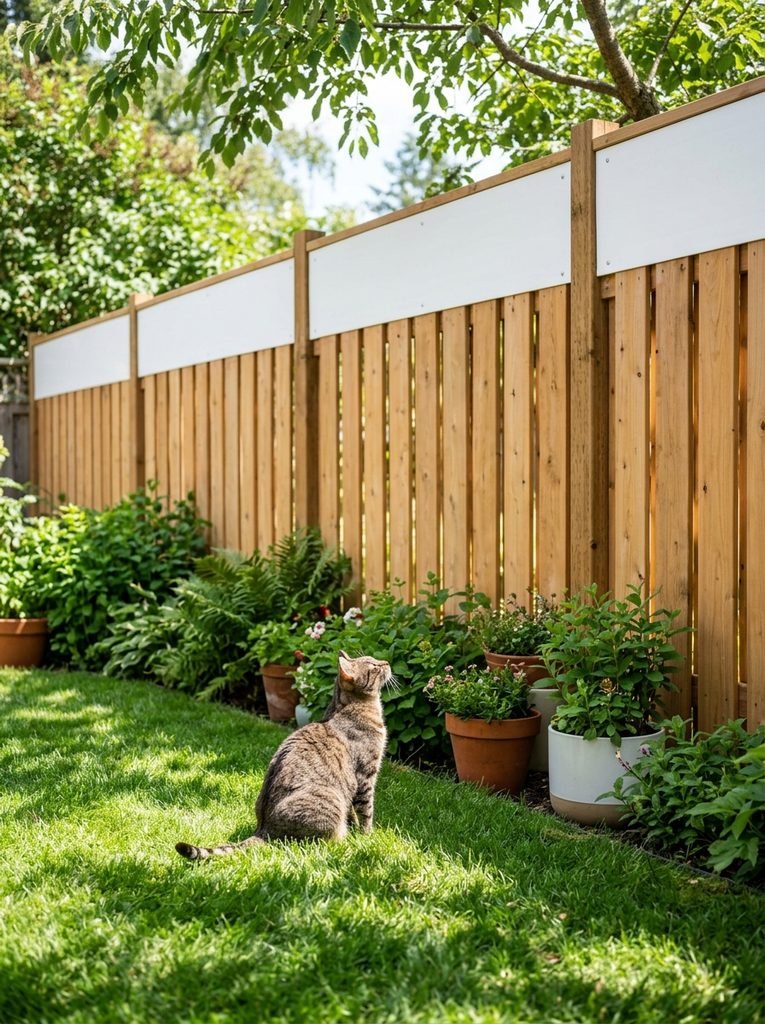
Cats climb wooden fences by digging their claws in. A smooth band of plastic or metal panel along the top of the fence takes away their grip. With nothing to hold onto, they slide back down.
I’d combine this with rollers or a net for really good climbers.
Why I love it
- Simple to install
- Works on any wooden fence
- No moving parts
You’ll need: smooth PVC or aluminum sheet panels, exterior screws and a drill.
5. Tall Indoor Cat Barrier
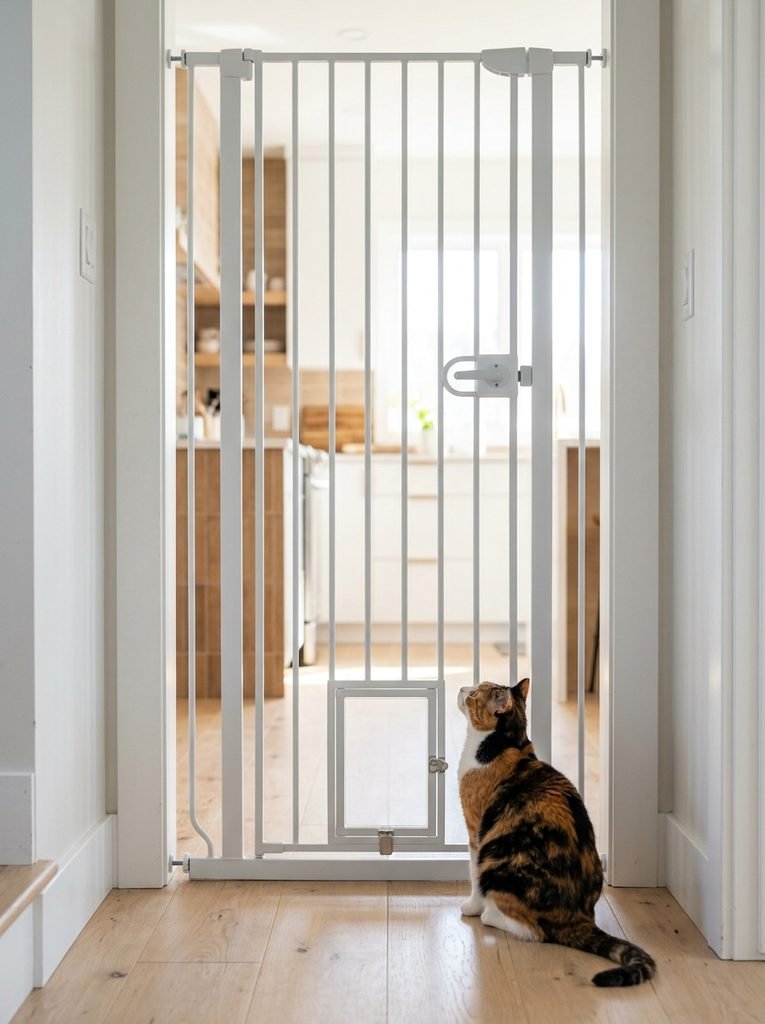
Sometimes you need to keep your cat out of a room, like a nursery, a home office or a room with a new pet. A regular baby gate is too short for most cats. An extra tall gate, 4 to 5 feet high, stops most of them.
Look for one with a small locking cat door. You can open it when you want your cat to pass through and lock it when you don’t.
Why I love it
- Keeps cats out of one room
- No tools with pressure mount
- Cat door can be locked or opened
You’ll need: an extra tall pressure mounted pet gate.
Don’t want to DIY?
Extra Tall Pet Gate with Cat Door
A tall pressure mounted gate stops jumpers, and a lockable cat door gives you full control over who goes where.
6. Christmas Tree Cat Fence
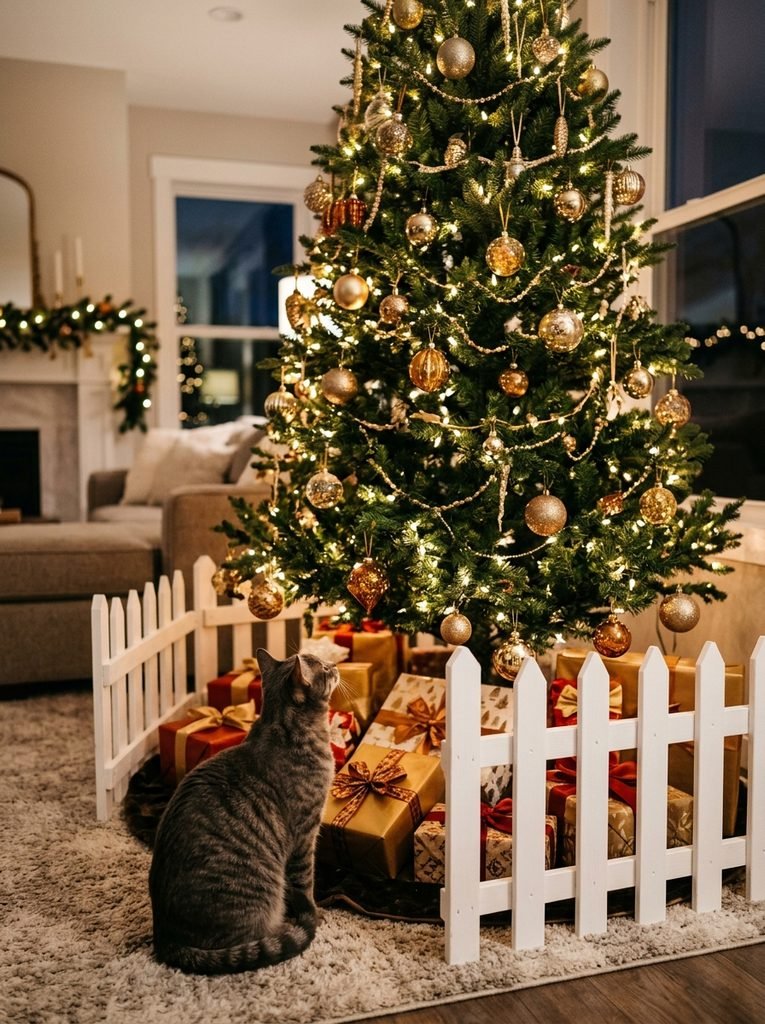
Every cat owner knows the Christmas tree battle. A low decorative fence around the base keeps your cat from climbing the trunk and batting the low ornaments. It also looks charming, like a little garden around the tree.
A tip I picked up: hang shatterproof ornaments on the bottom branches. Even with a fence, a curious paw can still reach.
Why I love it
- Protects the tree and the ornaments
- Looks festive and cute
- Folds flat to store
You’ll need: a low decorative picket fence or a folding pet playpen and a few shatterproof ornaments.
7. Catio Connected to the Fence
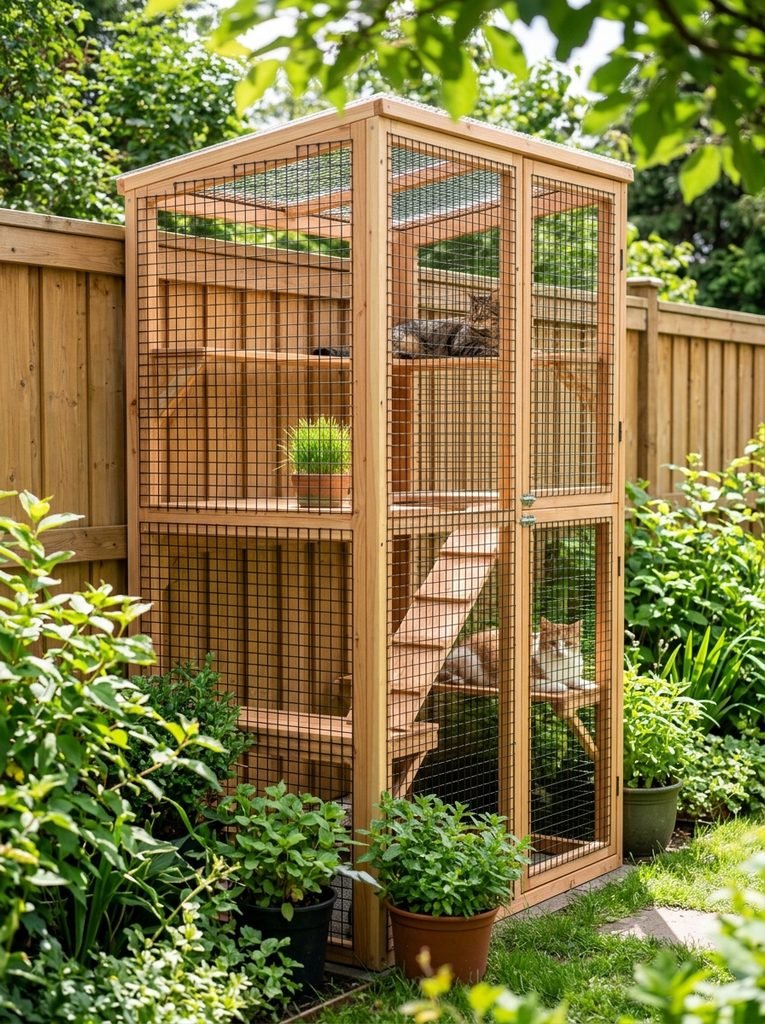
A catio is a safe outdoor room for your cat. Building it against an existing fence saves wood and money, since the fence becomes one of the walls. Add shelves, a ramp and some cat grass and your cat gets the outdoors without the risk.
In my experience, even a small catio makes a huge difference for bored indoor cats.
Why I love it
- Safe outdoor time every day
- Uses the fence as one wall
- Easy to add shelves and plants
You’ll need: 2×4 lumber, galvanized wire mesh, a staple gun, screws and a few wooden shelves.
8. Garden Bed Cat Barrier
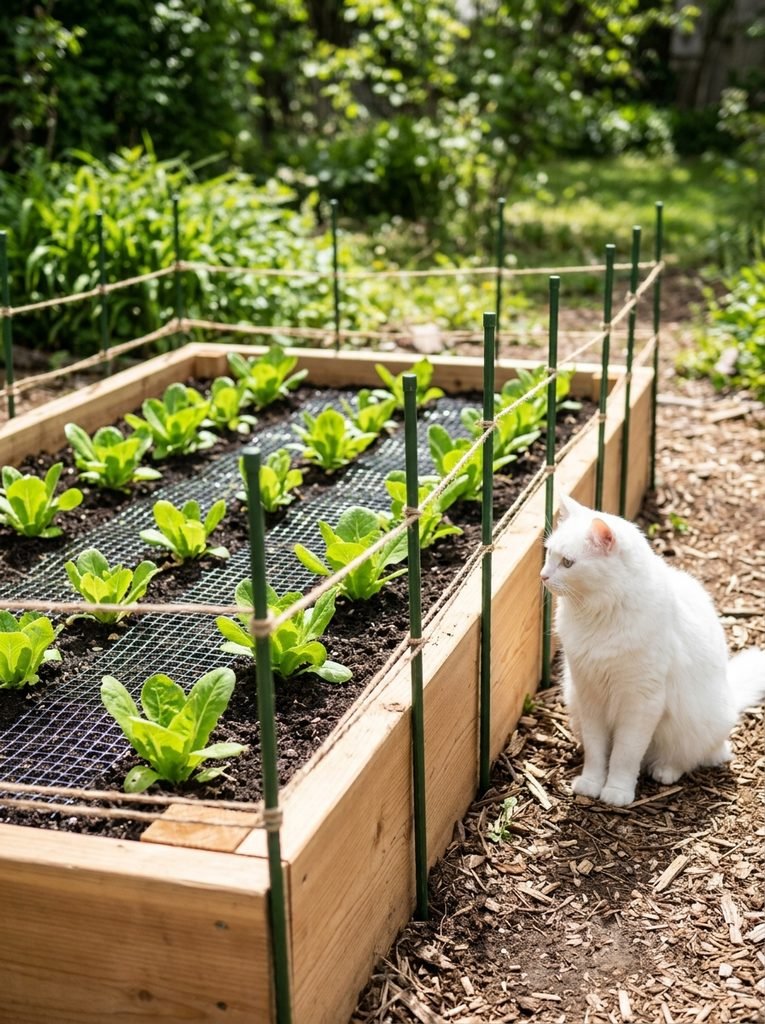
Sometimes the problem is the opposite: neighborhood cats digging in your garden beds. A short border fence plus flat mesh laid over the soil stops them. Cats don’t like walking or digging on mesh, and your plants grow right through the holes.
I’ve had zero digging since I tried this in my vegetable bed.
Why I love it
- Keeps cats out of garden beds
- Plants grow right through
- Gentle and harmless
You’ll need: plastic garden mesh, garden stakes and twine.
9. Freestanding Cat Proof Enclosure
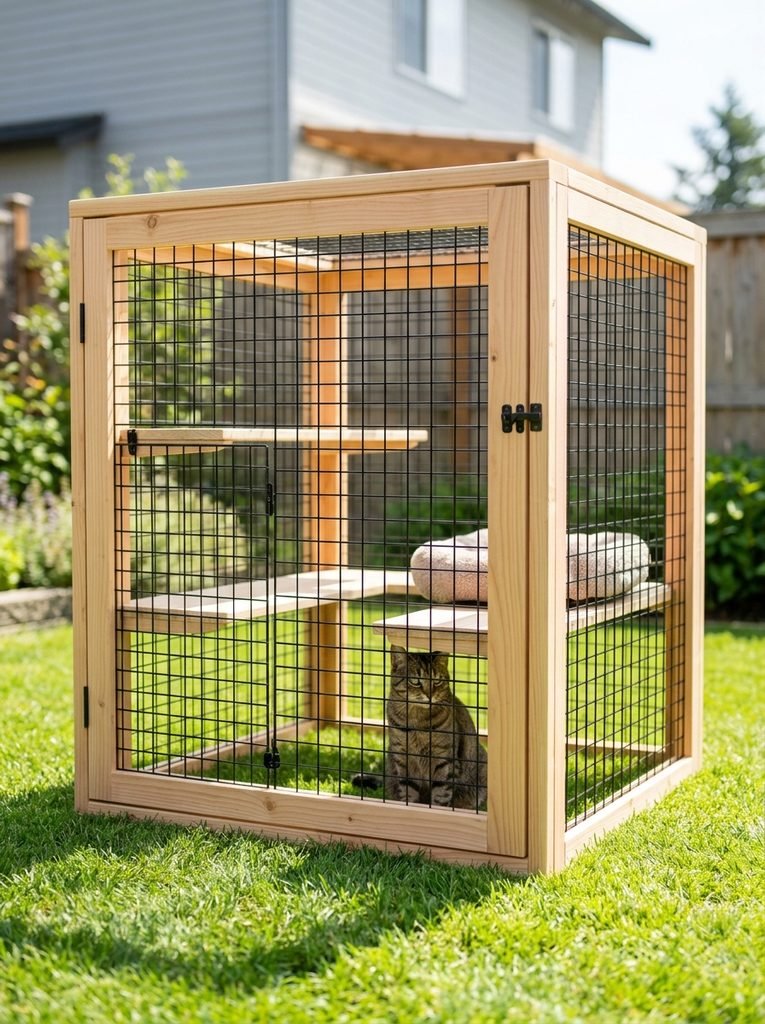
If you can’t change your fence, build a freestanding cat enclosure instead. It’s like a big outdoor playpen made of wood frames and wire mesh. You can move it around the yard, and it doesn’t touch the fence at all.
It’s ideal for renters or anyone with a shared fence.
Why I love it
- No changes to your fence
- Can be moved around the yard
- Great for renters
You’ll need: 2×2 lumber for frames, wire mesh, a staple gun, hinges and a simple latch.
10. Blocking Gaps and the Bottom of the Fence
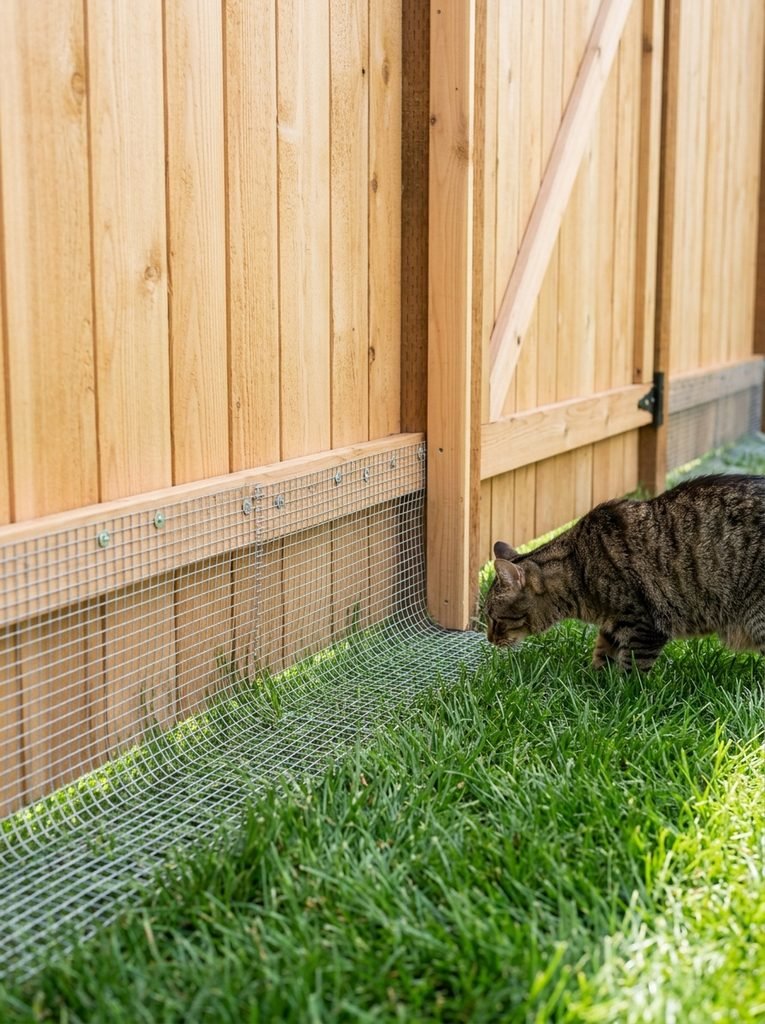
Cats don’t only go over fences. They squeeze under them and through gaps by the gate. Walk your fence line and look for any space bigger than 3 inches. Close gaps beside gates with wood strips, and fix wire mesh along the bottom, bent outward under the soil so diggers can’t get under.
Honestly, this is the step most people forget, and it’s where a lot of cats get out.
Why I love it
- Closes the escape routes most people miss
- Stops cats who dig
- Cheap and quick
You’ll need: galvanized wire mesh, landscape staples, wood strips and exterior screws.
Frequently Asked Questions
How high should a cat fence be?
Most cats can jump about 5 to 6 feet. A fence at least 6 feet tall with a roller or an inward angled net on top is the best way to stop them going over.
Do cat fence rollers really work?
Yes. Rollers work because cats need to grip the top of a fence to pull themselves over. When the top spins, they can’t get a hold and slide back down safely.
Is netting safe for cats?
Cat safety netting made for pets is safe. Choose UV resistant netting with small holes, check it often for tears, and keep it pulled tight so your cat can’t get tangled.
How do I stop my cat climbing the Christmas tree?
Put a low fence around the base, use a sturdy stand, and hang shatterproof ornaments on the lower branches. Most cats lose interest after a few days once they can’t reach the trunk.
Final Thoughts on DIY Cat Fence Ideas
The best DIY cat fence ideas take away the one thing your cat needs to escape: a grip at the top or a gap at the bottom. Start with rollers or an angled net outside, net your balcony if you live up high, and use a tall gate or a little fence inside. A safe cat is a happy cat, and you’ll finally stop running to the window every time the yard goes quiet.


Amir Ali is the founder and site administrator of HomeDecorEdge, a modern home decor and interior design platform. Since starting the site, he has combined his passion for interior design, practical styling, and color coordination with hands-on content strategy and site management. He guides authors, curates high-quality articles, and ensures readers have access to actionable, visually inspiring, and user-focused home decor advice for apartments, small rooms, and family homes.