

Why does a cat that weighs ten pounds manage to carry half a box of litter across the whole house?
Every cat owner knows that crunch under bare feet. You sweep, and an hour later it’s back. Litter sticks to paws, falls out of fur and somehow ends up in the hallway.
A good mat catches most of it before it travels. And the nice part is that you don’t need a fancy store bought one. Many of the best fixes are cheap, quick and easy to make at home.
Below are 10 DIY cat litter mats and box setups I really like, from five minute fixes to a hidden litter cabinet that looks like real furniture.
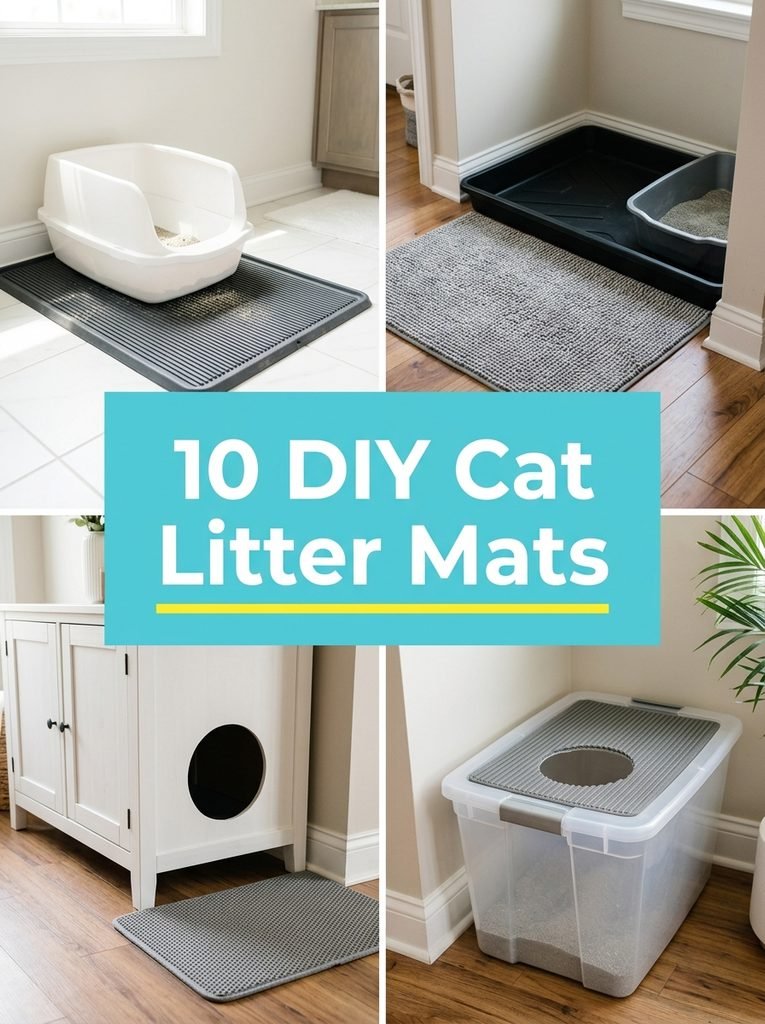
Quick Picks
- Fastest fix: Cut to Size Rubber Doormat Mat (idea 1)
- Best at trapping litter: Double Layer Litter Trapper Mat (idea 2)
- Prettiest: Furniture Hack Litter Cabinet (idea 6)
- Budget pick: Boot Tray Litter Catcher (idea 3)
1. Cut to Size Rubber Doormat Litter Mat
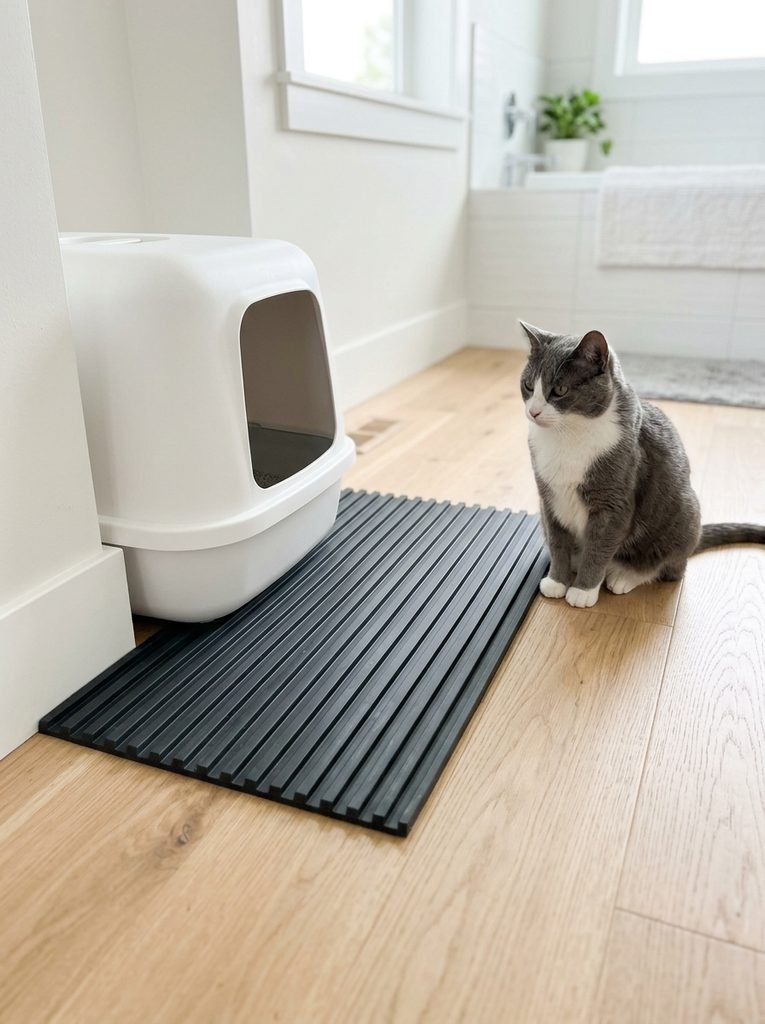
This is the easiest fix on the list. Grab a ridged rubber indoor doormat, trim it with sharp scissors and slide it in front of the box. The deep grooves knock litter loose from paws and hold it there.
Honestly, size matters more than style here. Most cats take two or three steps after leaving the box, so aim for a mat at least two feet deep. Smaller mats just move the mess a little further out.
You’ll need: a ridged rubber doormat, heavy duty scissors
Best for: a quick fix you can do in five minutes
2. Double Layer Litter Trapper Mat
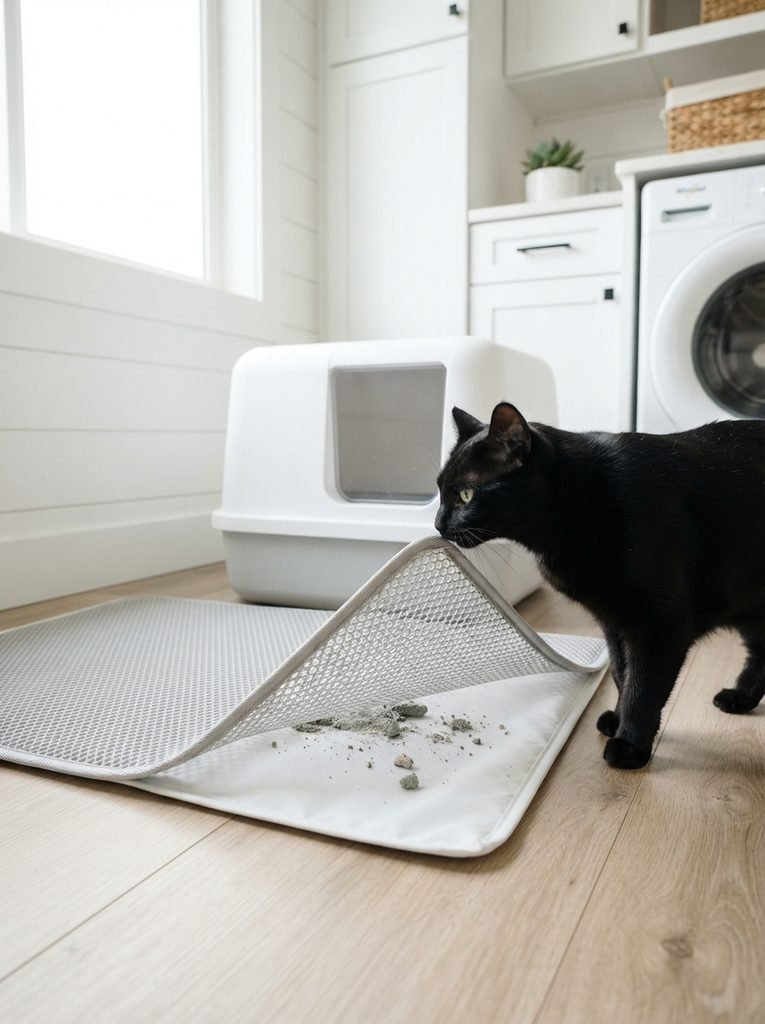
This is the one I’d make if litter tracking drives you crazy. The top layer is an open mesh that lets litter fall through. The bottom is a waterproof base that holds it until you shake it out.
I like using honeycomb mesh matting for the top. It’s soft on paws and the holes are just the right size. Emptying it takes ten seconds over the trash can.
⏱ 1 hour💲 Low🛠 Easy
Materials Needed
- Honeycomb mesh mat, about 24 by 30 inches
- Waterproof vinyl or rubber sheet the same size
- Heavy duty scissors and a tape measure
- Hole punch and 4 small binder clips or zip ties
How to Make It
- Measure the space in front of the litter box and cut both layers to match.
- Round the corners slightly so nothing curls up or catches paws.
- Punch a hole near each corner on one short side of both layers.
- Join that side with clips or zip ties, snipping the tails short, so the mat opens like a book.
- Lay it mesh side up, and lift the top layer to empty the litter every few days.
Tip: Join only one side. If all four sides are closed, you can’t empty it without making a bigger mess.
3. Boot Tray Litter Catcher
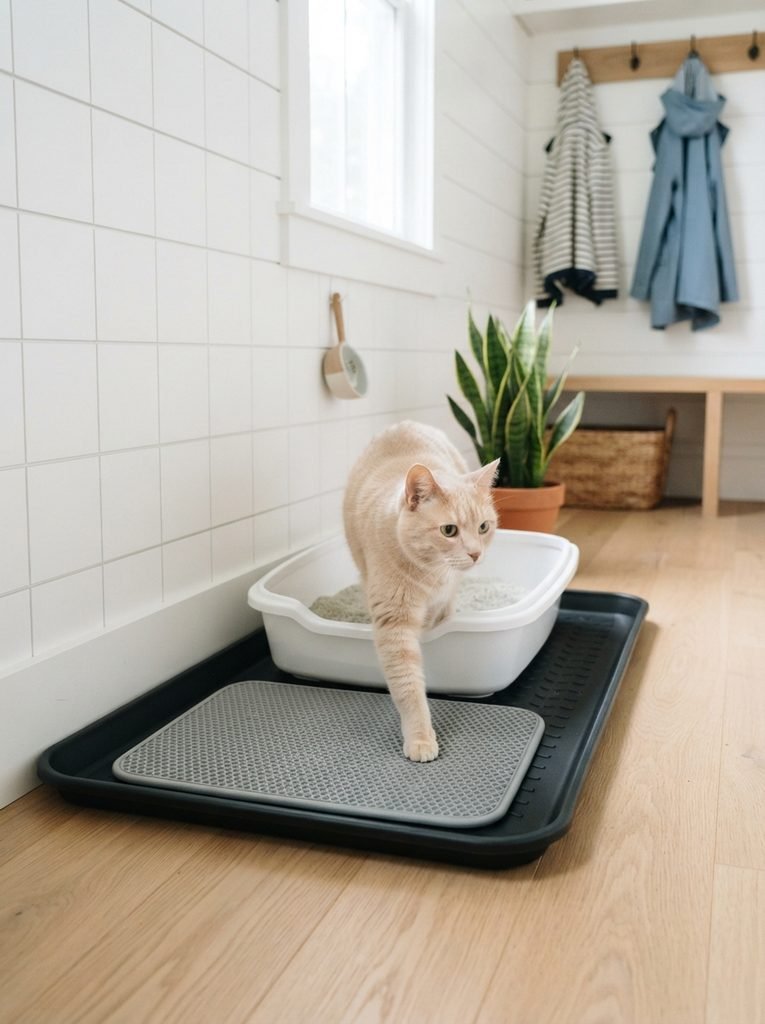
A boot tray is my favorite cheap trick. Set the whole litter box inside a large rubber boot tray and the raised rim catches everything that gets kicked out the sides.
Add a small mat in the front part of the tray for paws. Cleaning is easy too. Just lift the box, tip the tray into the trash and wipe it down.
You’ll need: a large boot tray, a small washable mat
Best for: cats who dig hard and fling litter sideways
4. Artificial Grass Turf Mat
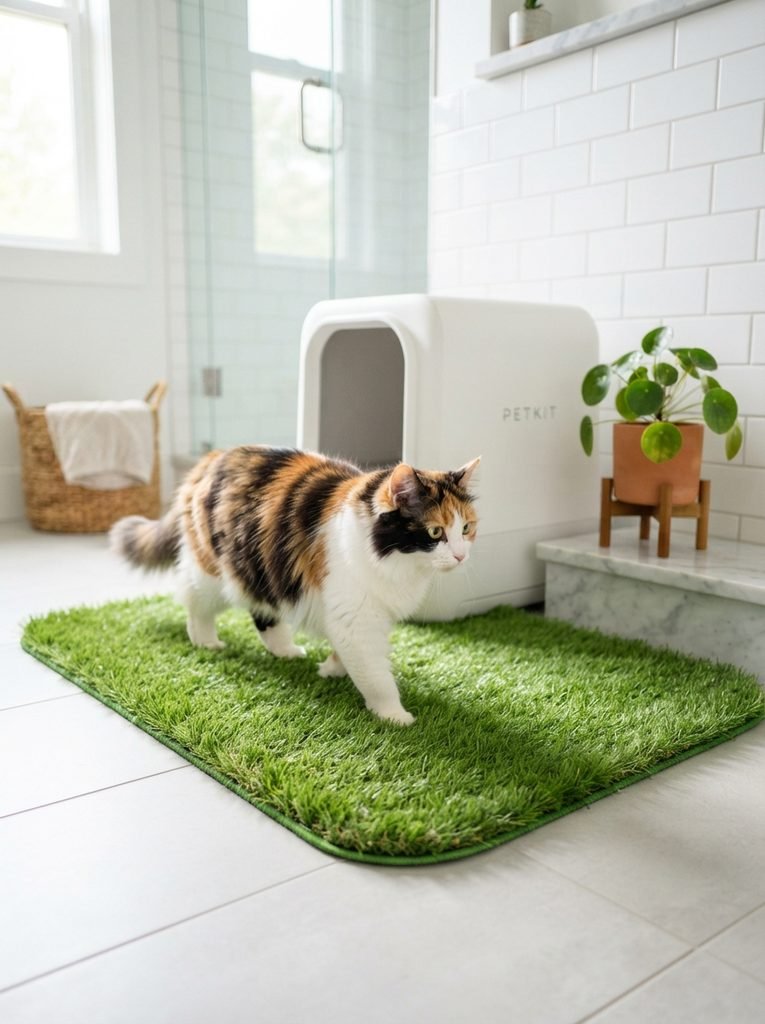
Turf works surprisingly well. The blades act like tiny brushes and pull litter off paws. It also looks fresh and cheerful, which is nice in a small bathroom.
Pick a pet artificial grass mat with no infill. Infill is the loose rubber or sand used in outdoor turf, and you don’t want your cat chewing or swallowing it. Shake it outside once a week and rinse it now and then.
Best for: bright bathrooms and a fresh, natural look
Start Your 30-Day Home Reset
Stop waiting for a "perfect" free weekend. Grab the 30-day plan and start feeling lighter in your own home by tomorrow.
View the 30-Day Plan Printable PDF · Instant download5. Washable Runner Rug With Non Slip Pad
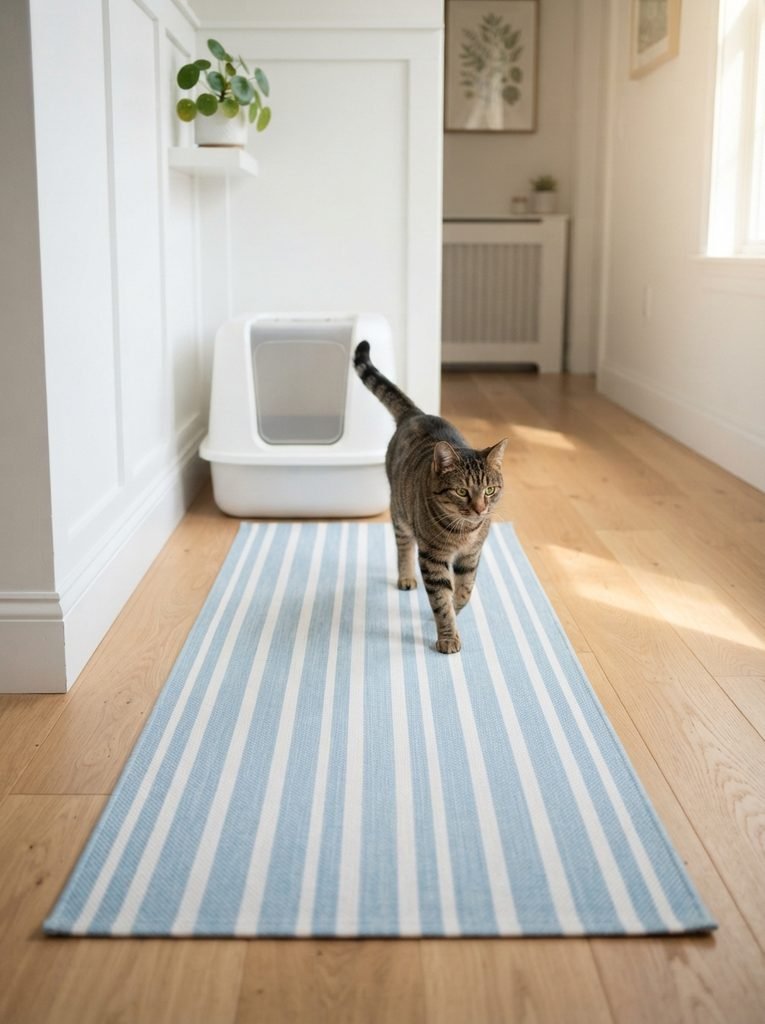
If your cat’s box is in a hallway, a long runner catches litter over several steps instead of one. A low pile, machine washable rug is the key. Thick shaggy rugs just hide litter deep inside.
Put a non slip rug pad underneath. Cats zoom out of the box sometimes, and a sliding rug can scare them off using it.
You’ll need: a low pile washable runner, a non slip rug pad
Best for: litter boxes in hallways or long walkways
6. Furniture Hack Litter Cabinet With Built In Mat
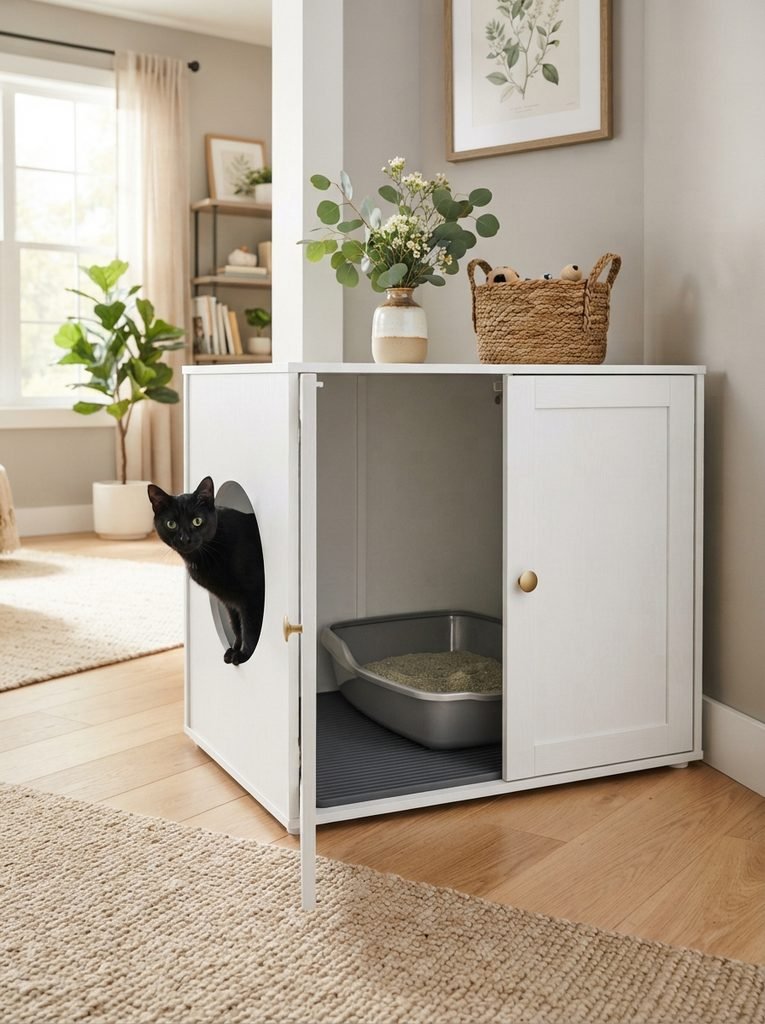
This is the prettiest setup here. Take a simple two door storage cabinet, cut an entry hole in the side and line the floor with a litter mat. Litter stays inside, and the box is hidden behind real furniture.
In my experience, the side entry is the secret. When the cat walks through a mat lined cabinet before it gets out, most of the litter drops off inside. Just make sure the cabinet is big enough for your cat to turn around comfortably.
⏱ 3 hours💲 Medium🛠 Medium
Materials Needed
- Two door storage cabinet, at least 30 inches wide and 20 inches deep
- Jigsaw and a drill with a large bit
- Medium sandpaper and edge trim or paint
- Ridged rubber mat cut to fit the cabinet floor
- Furniture wall anchor kit
- Small round vent covers
How to Make It
- Assemble the cabinet and remove any center shelf so the box fits.
- Trace an 8 inch circle on one side panel, low enough for an easy step in.
- Drill a starter hole, cut the circle with the jigsaw and sand the edge very smooth.
- Drill a few vent holes on the back panel and fit the vent covers.
- Lay the cut mat on the cabinet floor and set the litter box on top.
- Anchor the cabinet to the wall with the anchor kit before your cat uses it.
Tip: Keep the old box in its usual spot for a few days and move it into the cabinet slowly. Cats hate sudden litter changes.
7. Top Entry Storage Box With Mat Lid
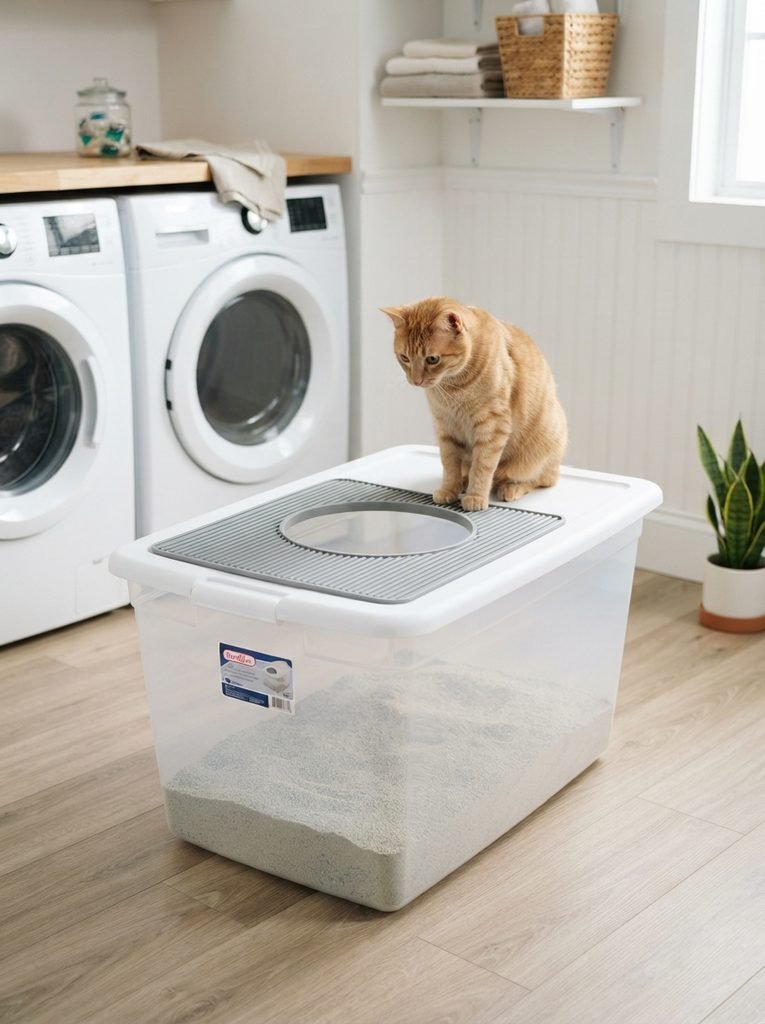
A top entry box is a game changer for heavy diggers. The cat climbs in through a hole in the lid, and when it climbs out, paws drag across a grooved mat on top. Litter falls right back inside.
Use a large storage tote with a lid. A tip I picked up: this works best for young, healthy cats. Older cats or cats with stiff joints usually prefer a low front entry box.
⏱ 1 hour💲 Low🛠 Easy
Materials Needed
- Large storage tote with lid, about 50 to 60 quarts
- Utility knife or jigsaw
- Fine sandpaper or a file
- Grooved rubber mat cut to fit the lid
- Non toxic, low odor waterproof glue
How to Make It
- Trace an 8 to 9 inch circle near the back of the lid.
- Cut it out carefully and sand or file the edge until it feels completely smooth.
- Cut the rubber mat to the lid shape, with a matching hole, and glue it down.
- Let the glue cure fully, ideally a full day in a well aired room.
- Fill the tote with 3 to 4 inches of litter and snap the lid on.
Tip: Cutting plastic is an adult job. Go slowly, and keep the cat out of the room until the glue smell is completely gone.
8. Large Washable Silicone Mat
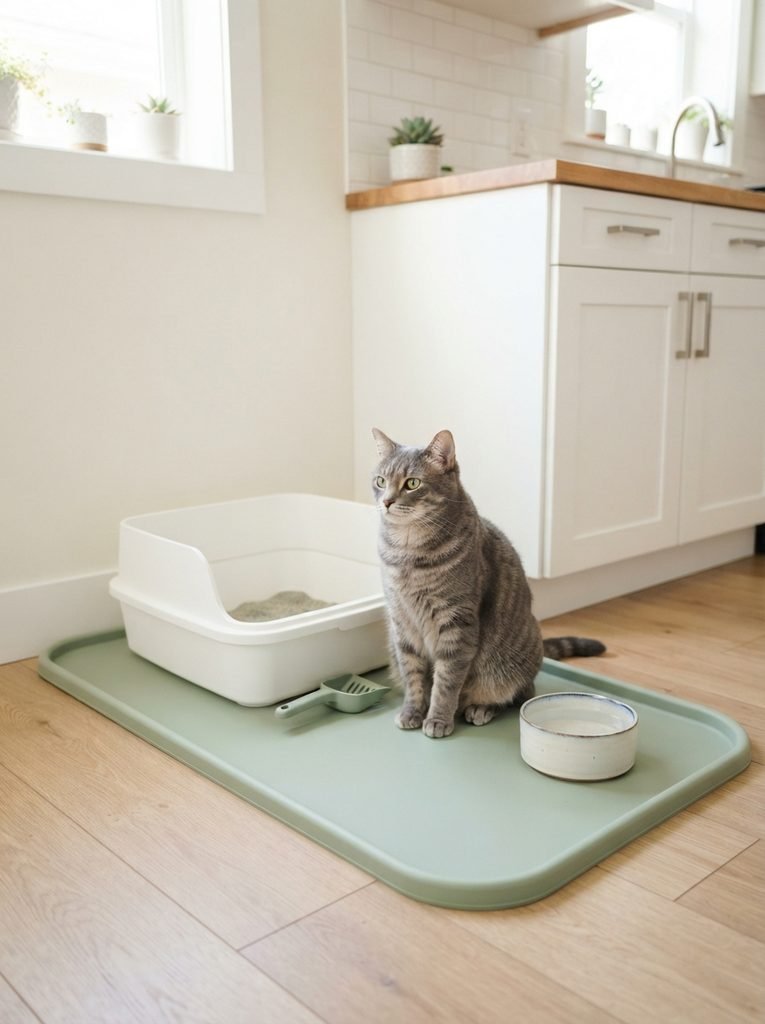
A large silicone mat with a raised edge is perfect if your cat sometimes misses the box. Nothing soaks through, and the lip keeps spills and litter on the mat.
It doesn’t trap litter as well as a ridged mat, honestly. But it’s the easiest to clean. Rinse it in the shower or wipe it in seconds. I’d pair it with a small ridged mat in front for the best of both.
Best for: senior cats and anyone who wants the easiest cleanup
9. Replaceable Carpet Tile Mat
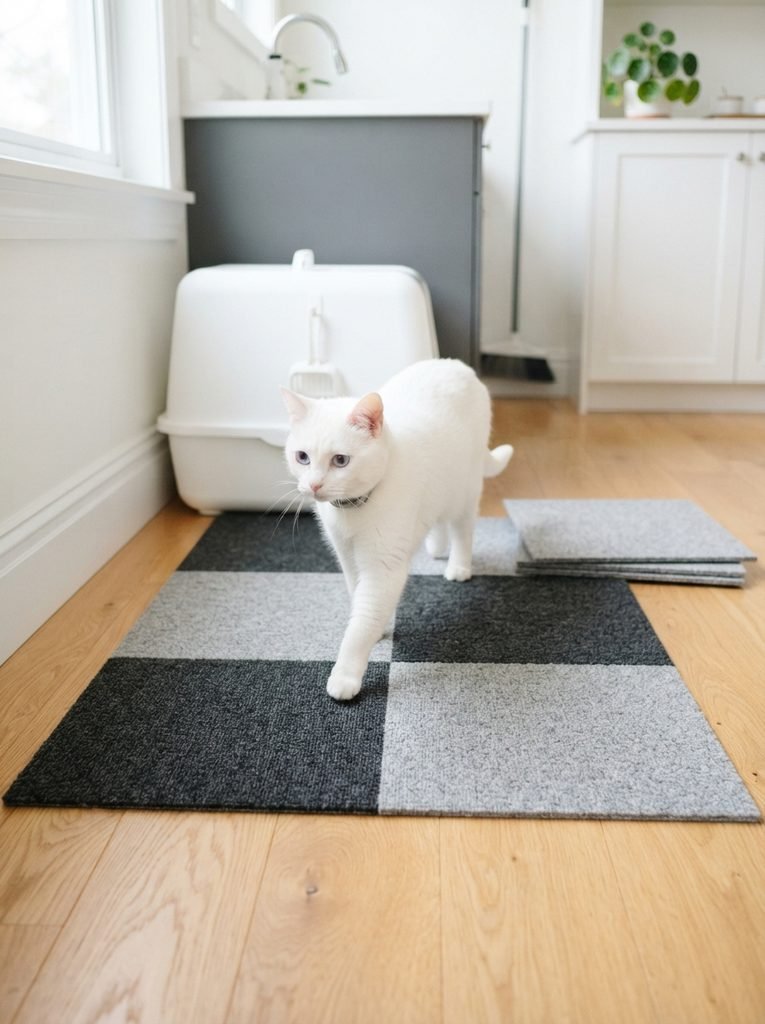
Here’s a smart one. Instead of one big mat, lay a few carpet tiles in front of the box. When one gets messy, you swap just that tile, not the whole thing.
The tiles nearest the box get dirty fastest, so I rotate them every couple of weeks. Low pile, commercial style tiles hold up best. Skip the sticky backed kind if you want to lift them out to clean.
Best for: renters and odd shaped spaces
10. Grooved Step Exit Mat
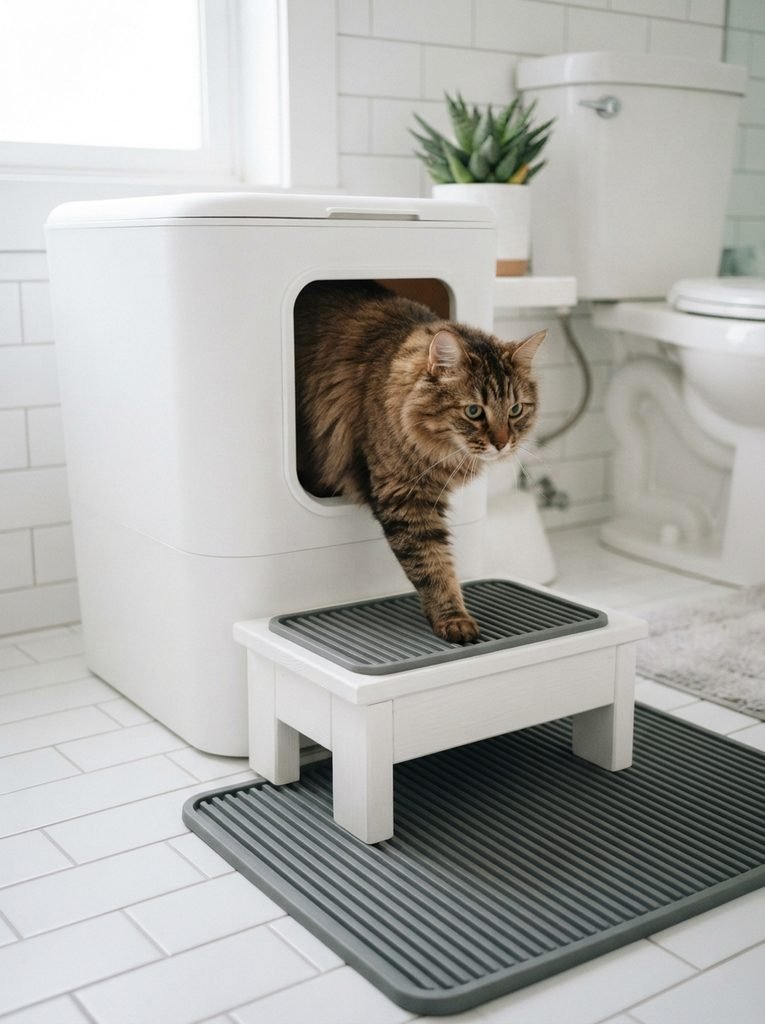
A little step at the box exit gives paws one extra scrub before they hit the floor. Cover a sturdy wooden step with a grooved mat, and most of the leftover litter drops off right there.
This works best with tall, high sided boxes, since cats already hop out of them. Make sure the step is wide, heavy and won’t tip. A wobbly step will put any cat off for good.
You’ll need: a sturdy wooden step, a grooved rubber stair tread
Best for: tall or high sided litter boxes
Frequently Asked Questions
What is the best material for a cat litter mat?
Ridged rubber and honeycomb mesh trap the most litter. Silicone is the easiest to clean, and low pile carpet is the softest on paws.
How big should a litter mat be?
Aim for at least 24 by 30 inches. Your cat should take two or three steps on it after leaving the box.
How often should I clean a litter mat?
Shake or empty it every few days and wash it every week or two. Mesh trapper mats may need emptying more often in busy homes.
Is artificial grass safe for cats?
Yes, if it has no loose infill. Choose a pet turf mat and watch that your cat doesn’t chew the blades.
Will my cat use a litter cabinet or top entry box?
Most cats adjust within a week if you introduce it slowly. Keep the old setup nearby at first and use the same litter they already like.
Can I use scented sprays on the mat?
It’s best not to. Many sprays and essential oils are unsafe for cats. Plain water, mild unscented soap and regular washing are enough.
Final Thoughts on DIY Cat Litter Mats
You won’t stop every single grain, but the right mat catches most of it. Start with a cheap doormat or boot tray, and upgrade to a cabinet or top entry box if you want the mess gone for good. Your bare feet will thank you.


Amir Ali is the founder and site administrator of HomeDecorEdge, a modern home decor and interior design platform. Since starting the site, he has combined his passion for interior design, practical styling, and color coordination with hands-on content strategy and site management. He guides authors, curates high-quality articles, and ensures readers have access to actionable, visually inspiring, and user-focused home decor advice for apartments, small rooms, and family homes.