

The first cat tree I ever bought cost a small fortune. It tipped over on day two.
My cat survived, but the tree went straight into the garage. That’s when I started to wonder if I could build something better myself.
It turns out you can. A wide base, a solid post and a few safe platforms are all a cat really needs. And you pick the size, the look and the budget.
Here are 12 DIY cat tree ideas for every home and every cat. Three of them come with full step by step build cards.
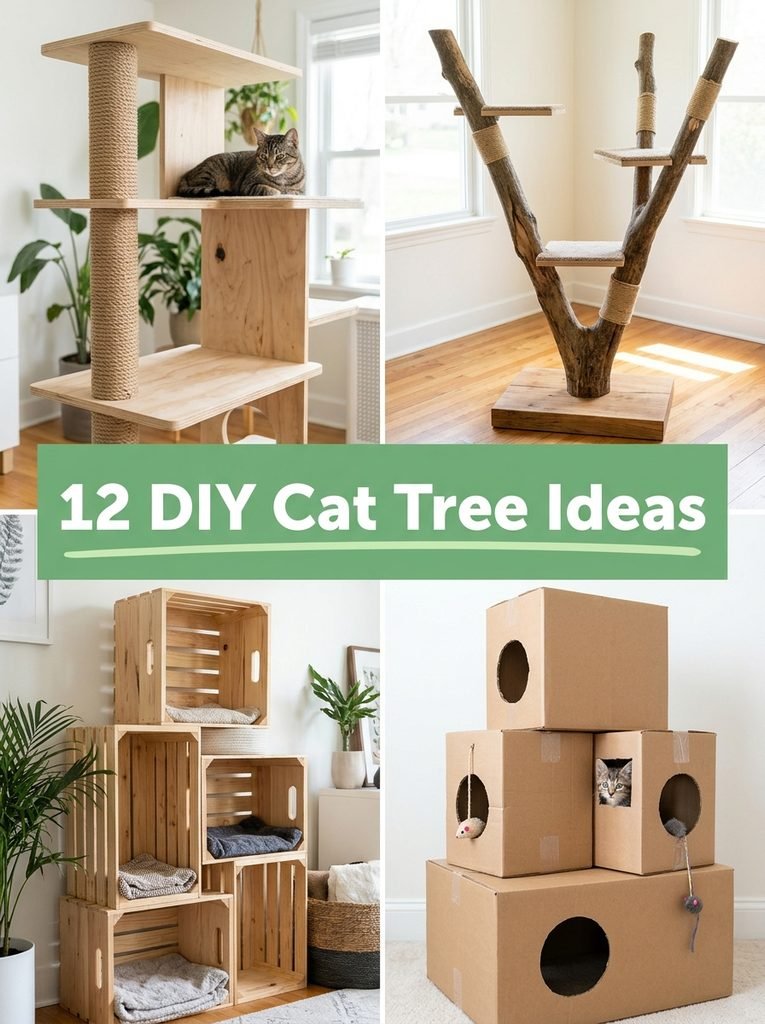
Quick Picks
- Best all round plan: Easy Plywood Cat Tree Plans (idea 1)
- Easiest build: Ladder Cat Tree (idea 5)
- Best for big cats: Large Cat Tree for Big Cats (idea 9)
- Prettiest: Aesthetic Neutral Cat Tree (idea 11)
1. Easy Plywood Cat Tree Plans
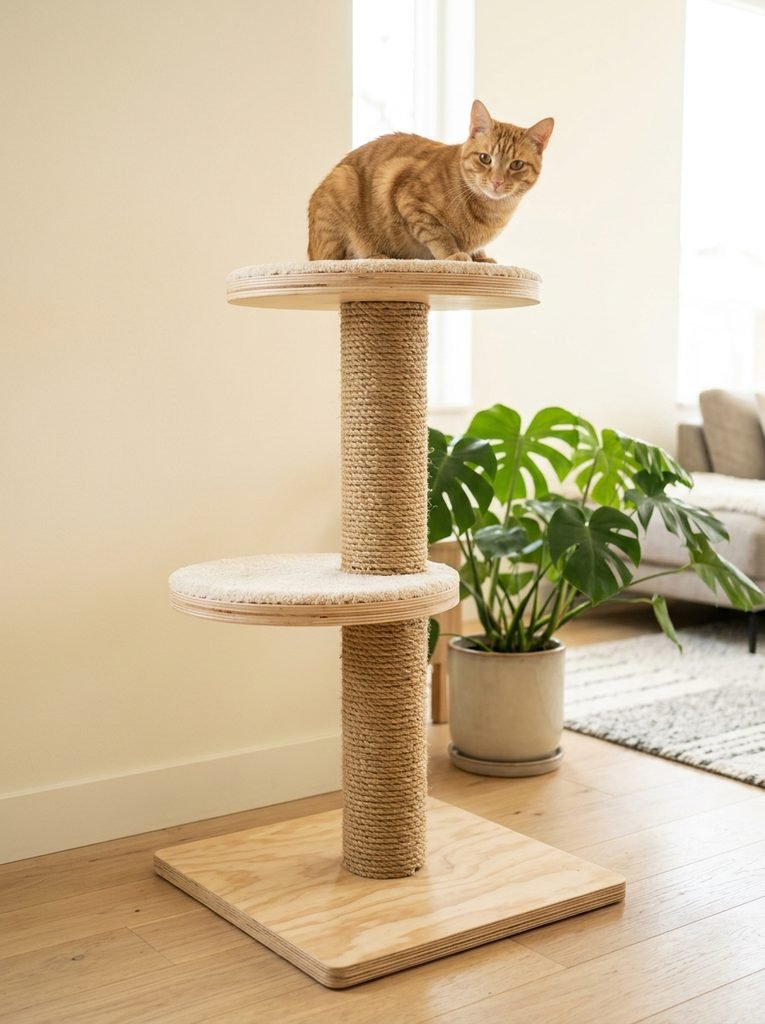
If you want one plan that works for almost any cat, this is it. A wide base, a thick sisal post and two carpeted platforms. It’s easy, solid and costs far less than a store tree.
The secret is the base. Make it wide and heavy, about 24 inches square, so the tree can’t tip when your cat jumps. I’d add a second platform lower down, so older cats can climb up in two easy steps.
⏱ 1 weekend💲 Medium🛠 Medium
Materials Needed
- One sheet of 3/4 inch plywood, cut into a 24 inch square base and two 16 inch platforms
- One 4×4 pine post, about 36 inches tall
- Natural sisal rope, 3/8 inch
- Low pile carpet remnant
- Wood screws, non toxic wood glue and a heavy duty staple gun
How to Make It
- Cut the plywood into the base and two platforms, then sand all the edges smooth.
- Screw the post to the center of the base from underneath, with glue at the joint.
- Wrap the post tightly with sisal rope, gluing the start and the end.
- Cover the platforms with carpet, stapling it underneath so nothing shows.
- Fix the platforms to the post at different heights with long screws and test the whole tree.
Tip: Give the tree a firm push from every side before your cat uses it. If it wobbles at all, widen the base or anchor it to the wall.
2. Real Branch Cat Tree
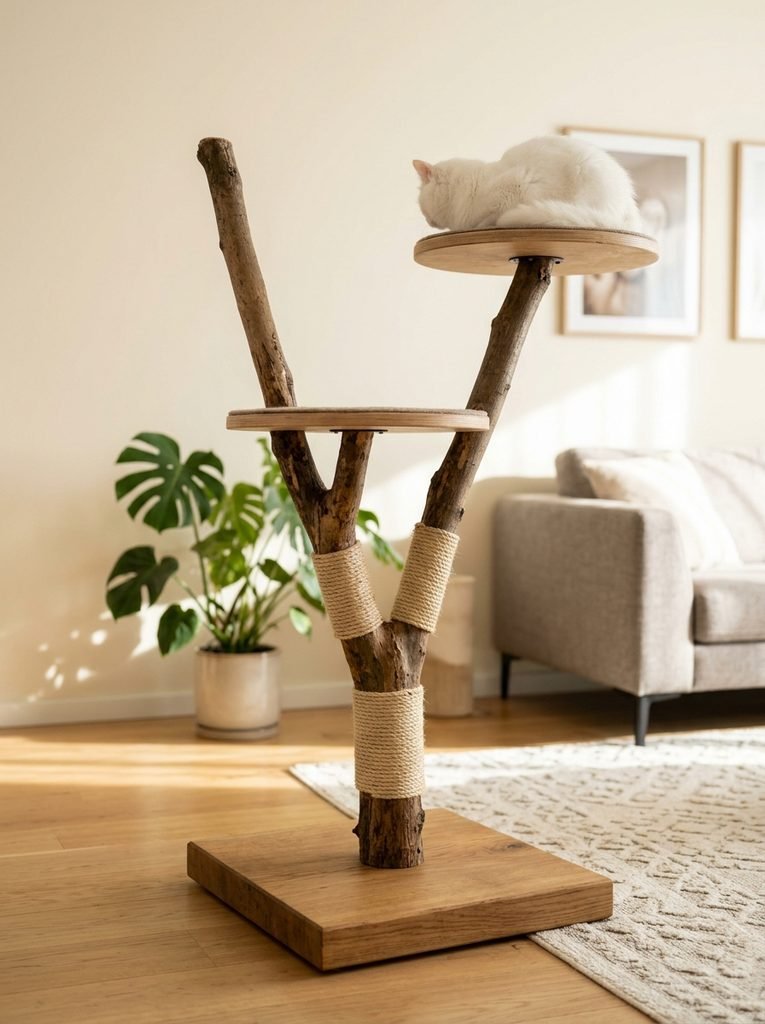
A real branch looks amazing, and cats love it. The rough bark is great for scratching, and the natural shape gives them paths to climb that a straight post never could.
Pick a safe wood, like maple, apple or birch. Avoid cherry, peach, plum and oak. Scrub the branch, remove loose bark and let it dry fully, or bake it at a low heat for an hour or two, so no bugs come along.
⏱ 1 weekend💲 Low🛠 Medium
Materials Needed
- One sturdy branch, 4 to 6 inches thick, about 5 feet tall with a few side limbs
- One plywood base, about 24 inches square, and two small platforms
- Folding pruning saw
- Heavy duty lag screws, 3/8 inch
- Sandpaper, a drill and a stiff brush
How to Make It
- Brush the branch clean, cut off any weak or thin twigs and let it dry completely.
- Sand any sharp stubs and rough spots on the branch.
- Drill pilot holes and fix the branch upright to the base with two lag screws from underneath.
- Attach the platforms to the side limbs with strong screws, resting them flat.
- Test by pushing and shaking the whole tree from all sides before use.
Tip: Check the branch for any splits or soft spots. Never use a branch from a toxic tree, and keep the tree away from curtain cords.
3. Cardboard Box Cat Tree
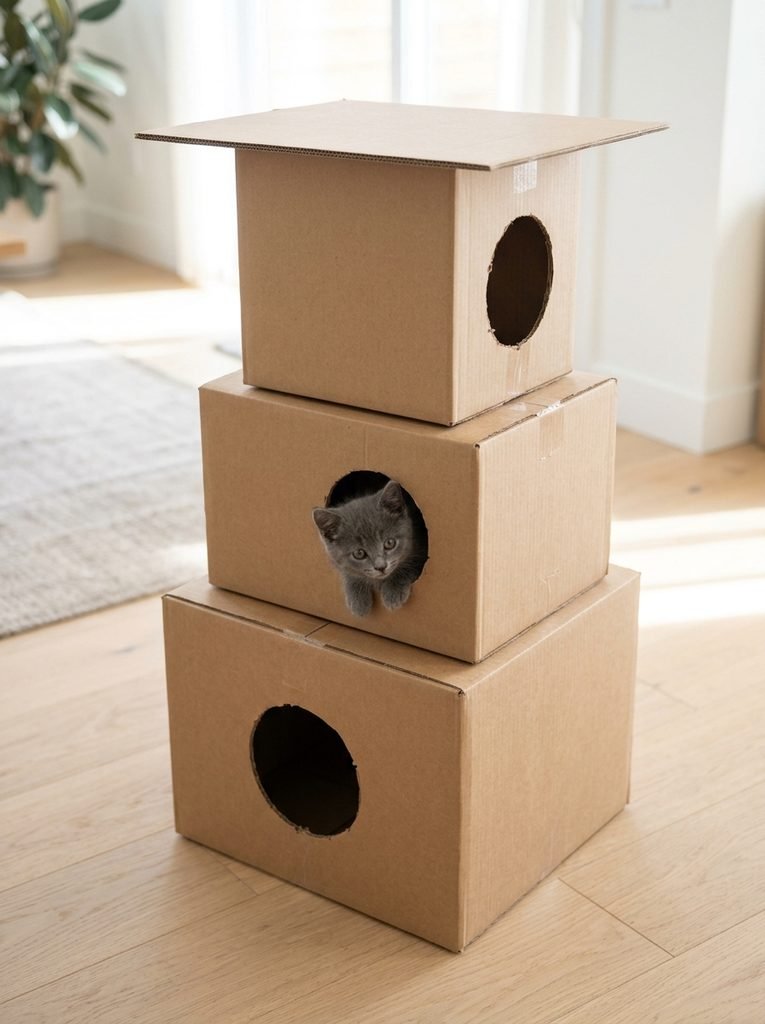
Cardboard is the easiest way to try a cat tree. Stack three boxes of different sizes, cut doorways and your cat has a mini apartment building.
Be honest about the weight. Cardboard suits kittens and small cats. For a heavy cat, it can sag and fall. Glue the boxes together and press them firmly while the glue dries for a full day.
You’ll need: non toxic craft glue and plain cardboard boxes
Best for: kittens, small cats and easy homemade tries
4. Wooden Crate Cat Tower
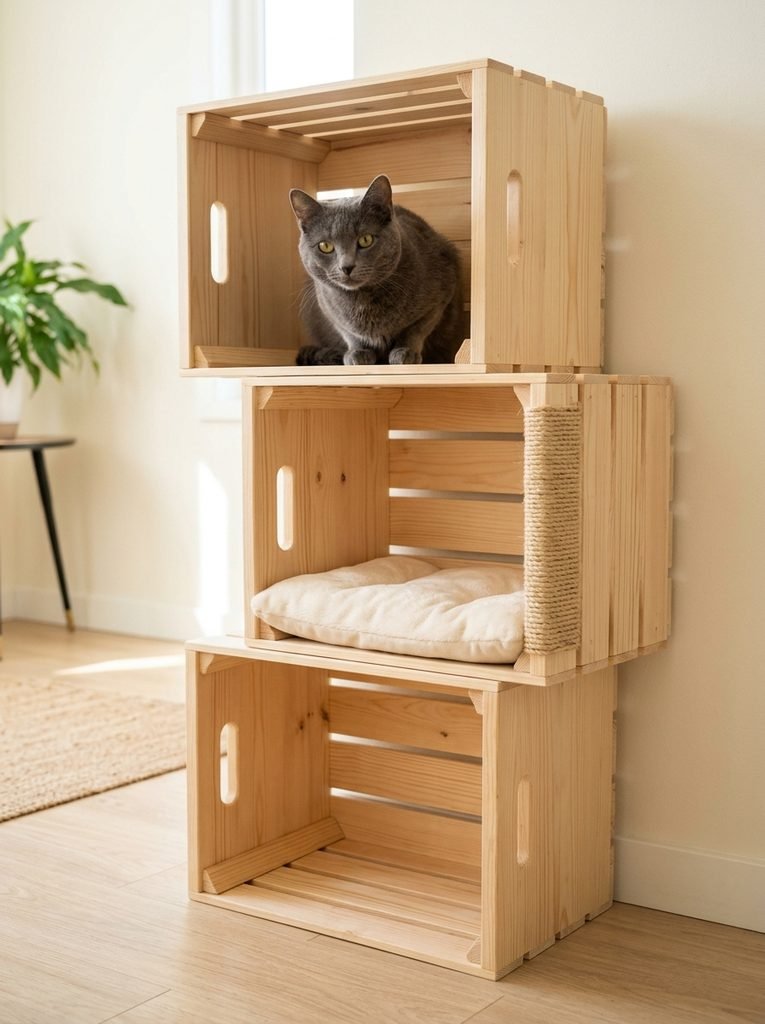
Wooden crates make cat furniture that looks great. Stack them in a staggered way and you get cubbies to hide in, platforms to sit on and a tower that suits any room.
Pick crates that are solid and sanded. Join them with screws and corner brackets, and fix the whole stack to the wall if it’s tall. Leave the sides open on at least two crates, so your cat can leave quickly.
⏱ 3 hours💲 Medium🛠 Easy
Materials Needed
- Unfinished wooden crates, set of 3
- Furniture anti tip wall strap
- Washable cat bed cushion
- Wood screws, corner brackets and fine sandpaper
How to Make It
- Sand every crate until it feels smooth, with no splinters at the edges.
- Arrange the crates in a staggered stack, with open sides facing out.
- Screw the crates together from inside, adding a corner bracket where they meet.
- Fix the stack to the wall with an anti tip strap.
- Place a cushion in the middle crate and let your cat explore.
Tip: Anchor any stack more than 2 crates tall. A tall stack that isn’t fixed can tip over when a cat jumps.
5. Ladder Cat Tree
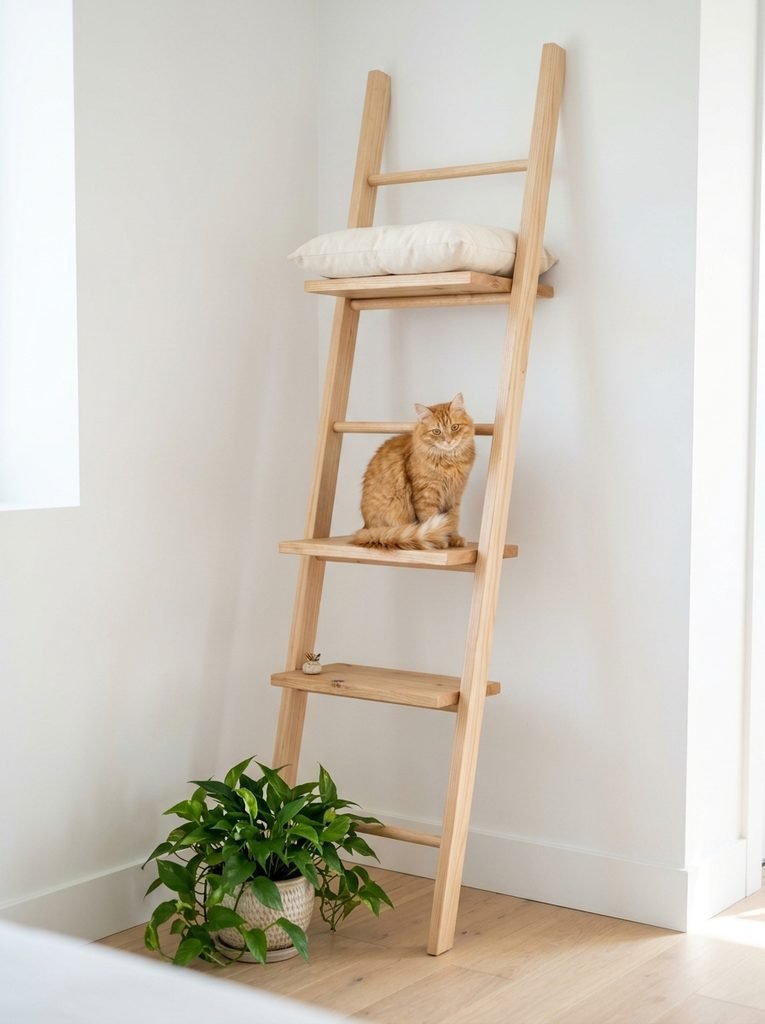
A wooden ladder is the quickest tree you’ll ever make. Lean it on the wall, lay planks across the rungs and you’ve got a set of steps and shelves in under an hour.
Pick a sturdy ladder with wide, flat rungs. Fix the planks with screws so they can’t slide, and tie the top to the wall or a stud so the ladder stays put when your cat leaps onto it.
You’ll need: decorative wooden ladder, 5 foot
Best for: quick homemade easy projects
6. Budget Store Bookshelf Cat Tree
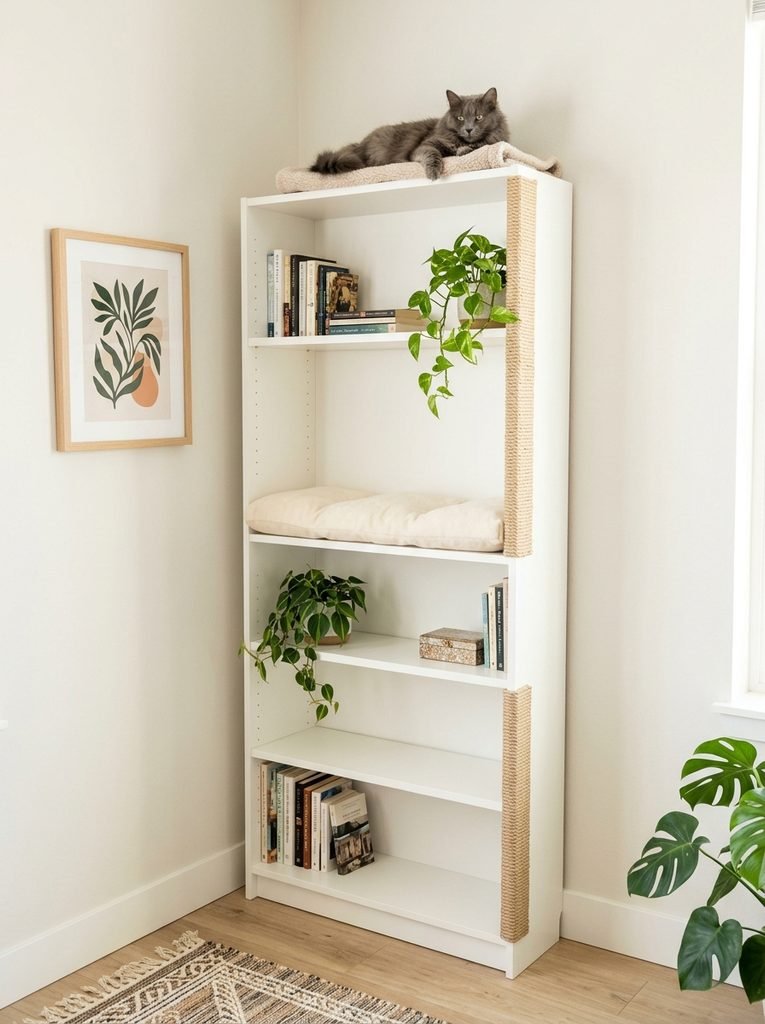
A cheap bookcase already has the shelves, the frame and the height. Clear the shelves and your cat has a tower that fits right into your room.
Pick a solid bookcase with a deep back and wide shelves. Strap it to the wall first, then add cushions on a few shelves and wrap the front edge of one with sisal. Keep a gap in the middle as a little hideout.
You’ll need: sturdy 5 shelf white bookcase
Best for: small spaces and apartment cat owners
7. Wall Mounted Cat Tree for Small Spaces
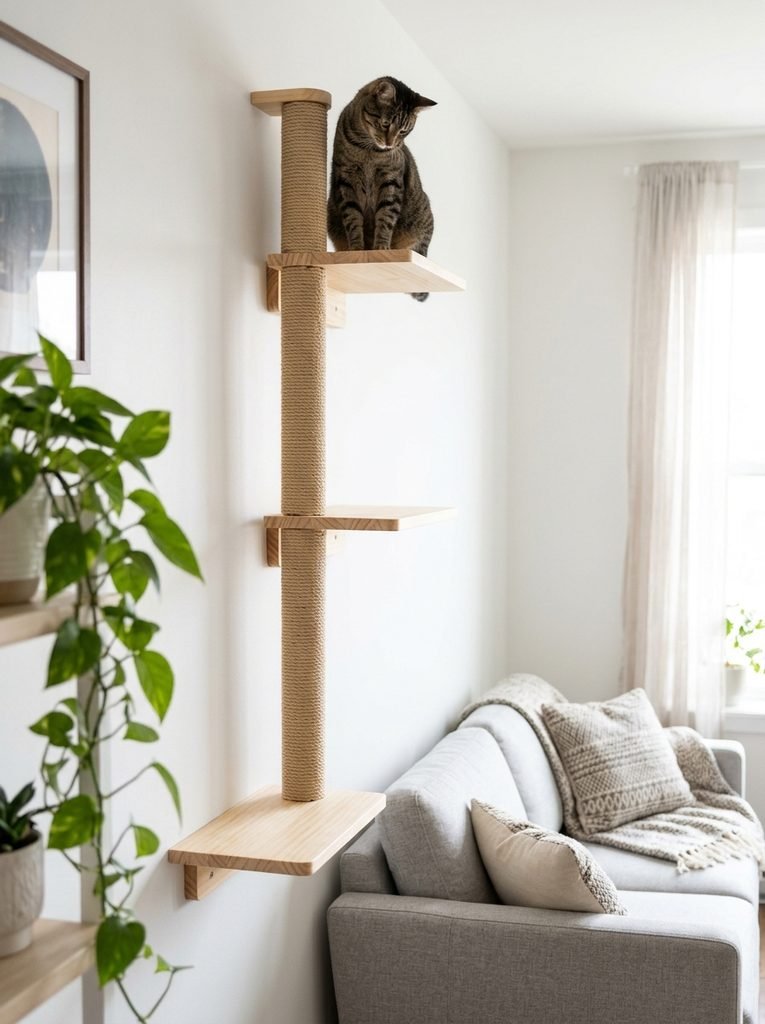
When the floor is full, go up. A wall tree uses almost no space, and your cat gets a real climbing route from low to high.
Fix a tall board into the studs, then attach the platforms to it, one above the other. Keep the steps about 12 inches apart. This one is for confident builders, so test every part before your cat gets on it.
You’ll need: heavy duty wall mounting brackets and a stud finder
Best for: tiny apartments and floor space savers
8. Hammock Cat Tree
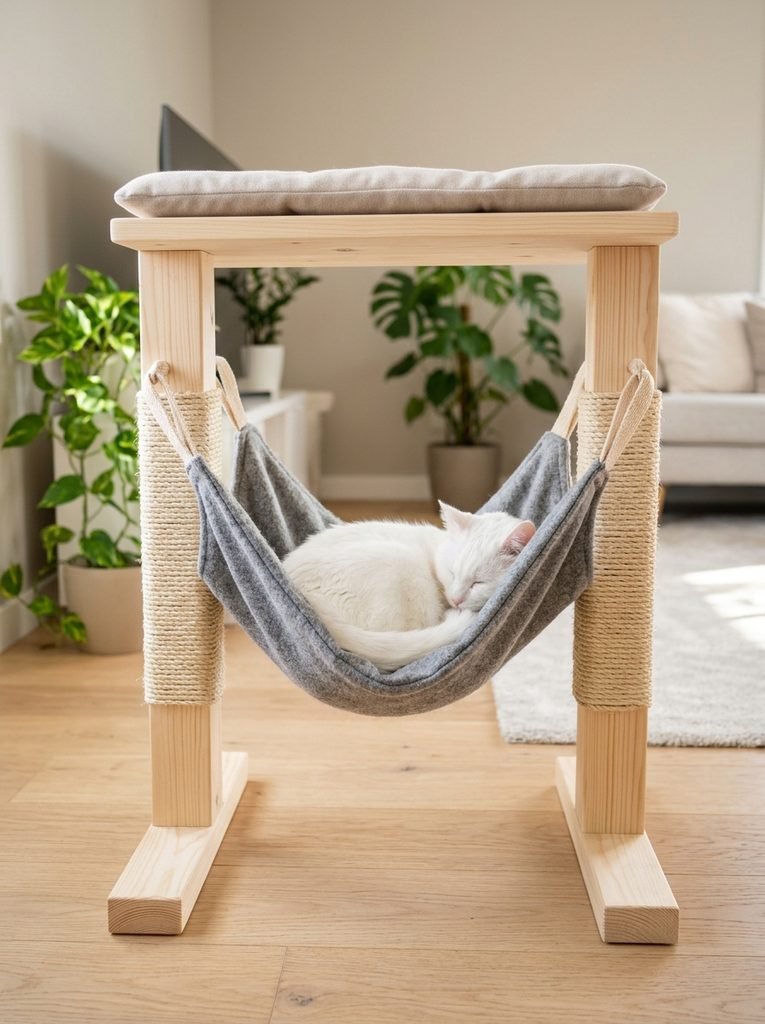
A hammock is where cats go to nap. Stretch one between two posts of your tree and you’ve got the coziest bed in the house.
Make the hammock snug but not too tight, so it can sag a little under your cat’s weight. Attach it with strong hooks, and check them every few weeks. A washable fabric keeps it fresh.
You’ll need: cat hammock for cat tree, replacement
Best for: napping cats and cozy corners
9. Large Cat Tree for Big Cats
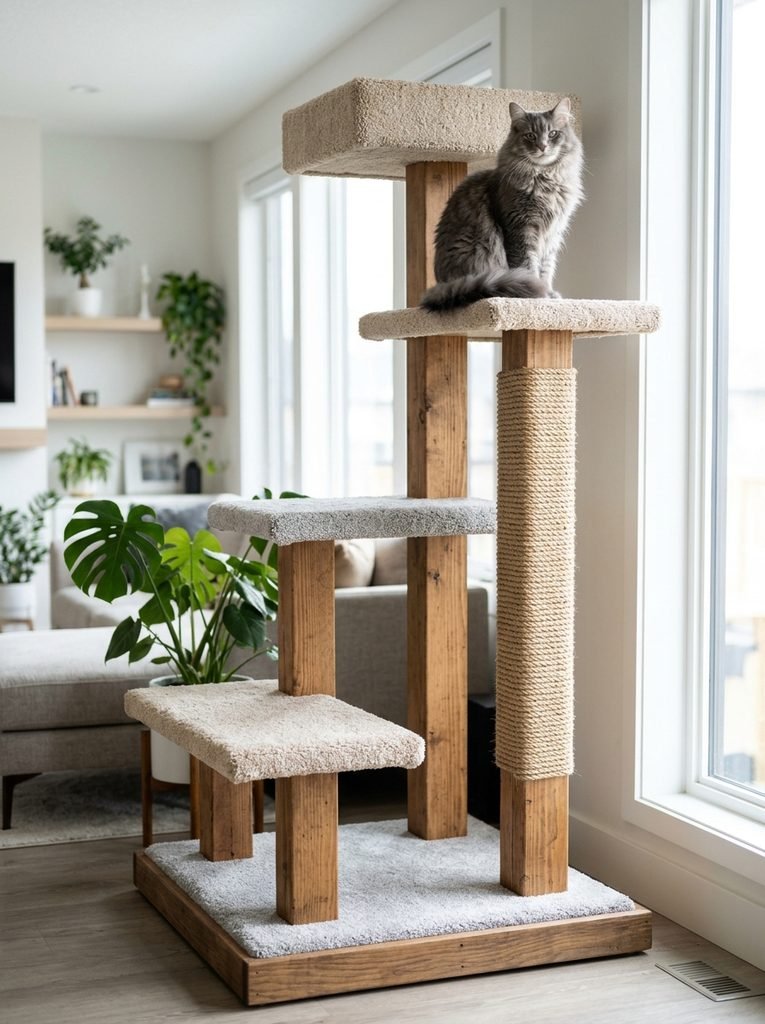
Big cats need big trees. Thin posts and small platforms shake and tip, and a big cat soon stops using them.
Use thicker posts, at least 4 by 4 inches, and platforms about 18 inches wide. Make the base heavy and wide, and anchor it to the wall. Wrap the post with extra thick rope for a strong grip.
You’ll need: thick sisal rope, 1/2 inch
Best for: large breeds and heavy cats
10. Cat Tree With a Cozy House
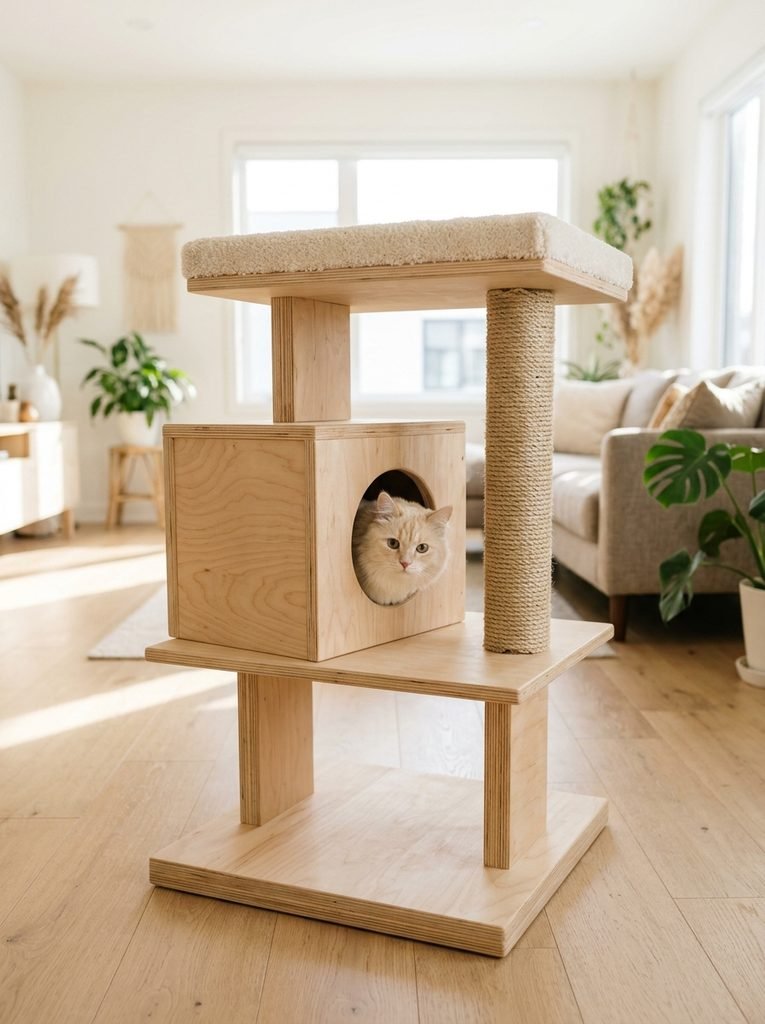
Some cats want to climb, and some want to hide. A house in the middle of your tree gives them both.
Make the doorway about 6 inches wide, with smooth sanded edges. Line the floor with a soft cushion and keep the roof flat, so it doubles as the next platform up.
You’ll need: washable cat house cushion
Best for: shy cats and cozy sleepers
11. Aesthetic Neutral Cat Tree
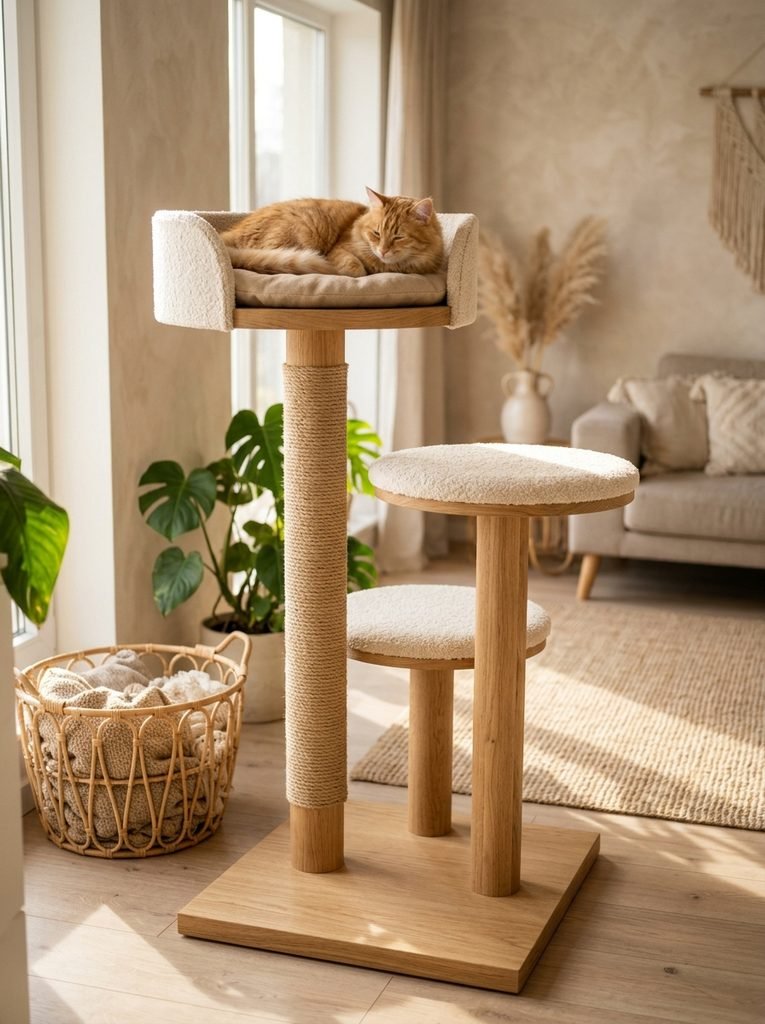
Cat trees don’t have to be ugly. Light wood, cream fabric and natural rope look like real furniture, and they fit a calm, neutral room.
Choose soft colors, skip the loud carpet and wrap the post in thick natural rope. A cream cushion on the top platform finishes the look, and nobody will guess it’s for a cat.
You’ll need: thick natural jute rope and a boucle cat bed cushion
Best for: neutral homes and stylish cat owners
12. Outdoor Cat Tree for the Garden
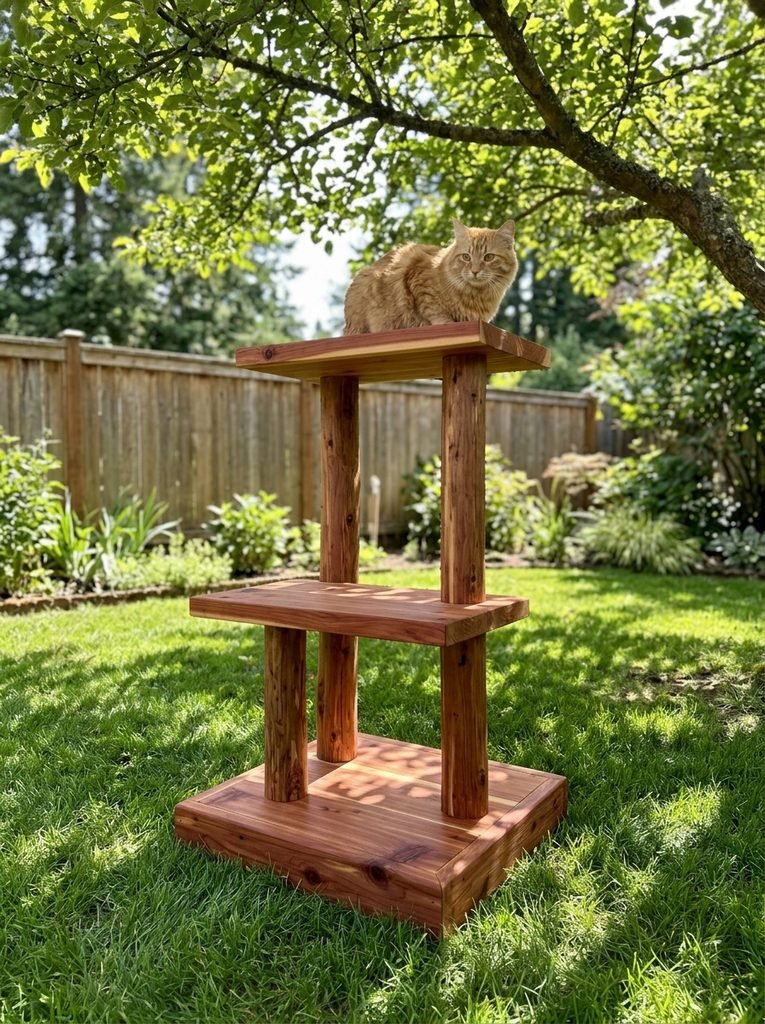
A tree in the garden gives your cat sun, shade and a place to watch. Build it from cedar, which stands up well to the weather.
Skip pressure treated wood, and sand every edge. Set it in the shade and always watch your cat when they’re outside. Keep them inside a fence or a catio, and bring the tree in or cover it in bad weather.
You’ll need: cedar boards, 1 by 10 and waterproof outdoor cushion
Best for: gardens and catio owners
Frequently Asked Questions
How tall should a cat tree be?
Aim for at least 3 to 5 feet, so your cat can climb and look down. Taller trees need a wide base or a wall anchor.
What wood is best for a DIY cat tree?
Plain pine, plywood and cedar are good choices. Avoid pressure treated wood and anything painted with strong chemicals.
Is a real branch safe for a cat tree?
Yes, if it comes from a safe tree like maple, apple or birch. Scrub it, dry it fully and avoid cherry, peach, plum and oak.
How do I stop a cat tree from tipping over?
Use a wide, heavy base, and strap tall trees to the wall. Test it by pushing from every side before your cat climbs.
Can a cardboard cat tree hold a big cat?
Usually not. Cardboard suits kittens and small cats. For big cats, build with plywood and thick posts.
How do I get my cat to use a new cat tree?
Place it by a window or near their favorite spot, and rub a little catnip on the platforms. Add a treat on the first platform and let them explore.
Final Thoughts on DIY Cat Tree
A good cat tree is sturdy first and pretty second. Pick the idea that fits your room and your cat’s size, build the base wide and test it well. Your cat will thank you with a nap on the top shelf.


Amir Ali is the founder and site administrator of HomeDecorEdge, a modern home decor and interior design platform. Since starting the site, he has combined his passion for interior design, practical styling, and color coordination with hands-on content strategy and site management. He guides authors, curates high-quality articles, and ensures readers have access to actionable, visually inspiring, and user-focused home decor advice for apartments, small rooms, and family homes.