

I lost a whole geranium once to one cold night. Never again.
Bringing plants inside is easy when you have a plan. It just takes a few quiet afternoons in autumn.
Here are 10 tips for bringing plants indoors for winter, from timing and pest checks to light and reviving tired plants. Three of them come with full step by step cards.
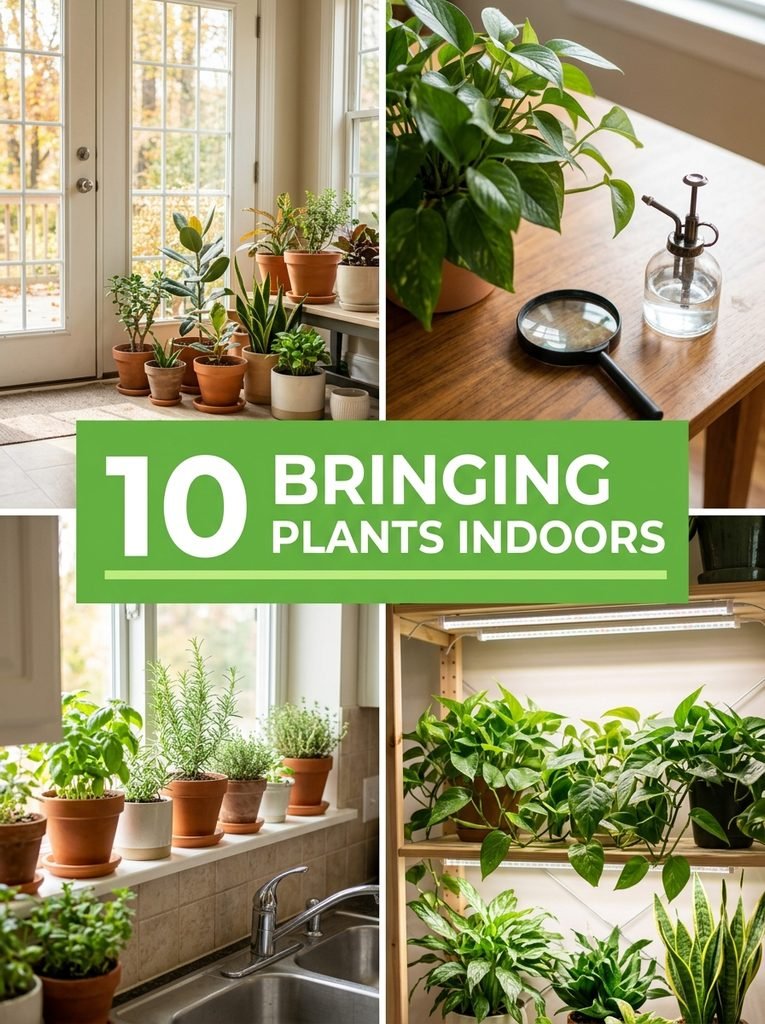
Quick Picks
- Start here: How to Bring Plants Indoors Step by Step (idea 1)
- Most important: Check and Treat Pests (idea 3)
- Best picks: Best Plants to Bring Indoors (idea 4)
- For tired plants: Bring Plants Back to Life (idea 5)
1. How to Bring Plants Indoors for Winter Step by Step
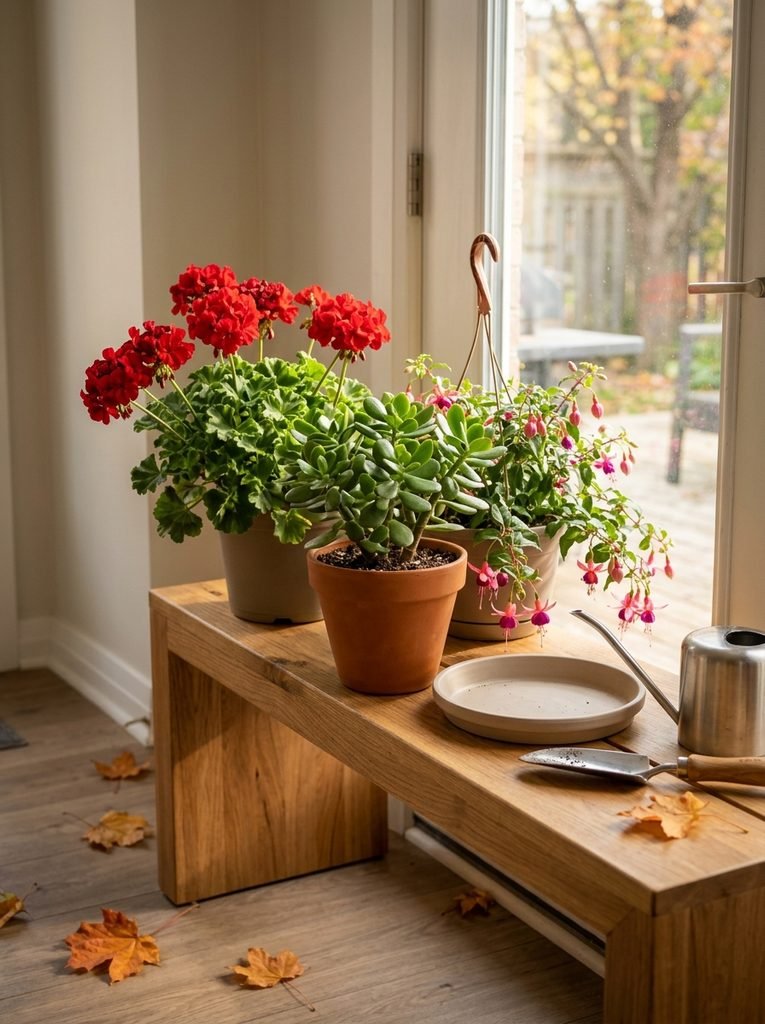
Cold nights sneak up fast. A little planning saves your favorite plants before the first frost.
The rule is simple. Move plants in when nights fall near 50 degrees, and do it in steps. Check each plant, clean it, give it a good home and then adjust slowly.
⏱ 1 hour💲 Low🛠 Easy
Materials Needed
- Plant saucers, 10 inch
- Indoor potting mix
- Pruning scissors, a watering can and a clean cloth
How to Make It
- Pick a day when nights are heading to 50 degrees, before the first frost.
- Trim any dead or leggy stems, and remove fallen leaves from the top of the soil.
- Wipe the leaves, check under them for bugs and treat any problems before moving the plant.
- Place each pot on a saucer in a bright spot, away from heaters and vents.
- Water lightly and keep new arrivals apart from other houseplants for two weeks.
Tip: Lift heavy pots with a friend or use a plant dolly. Keep plants away from heating vents, which dry the leaves fast.
2. Best Time to Bring Plants Inside for Winter
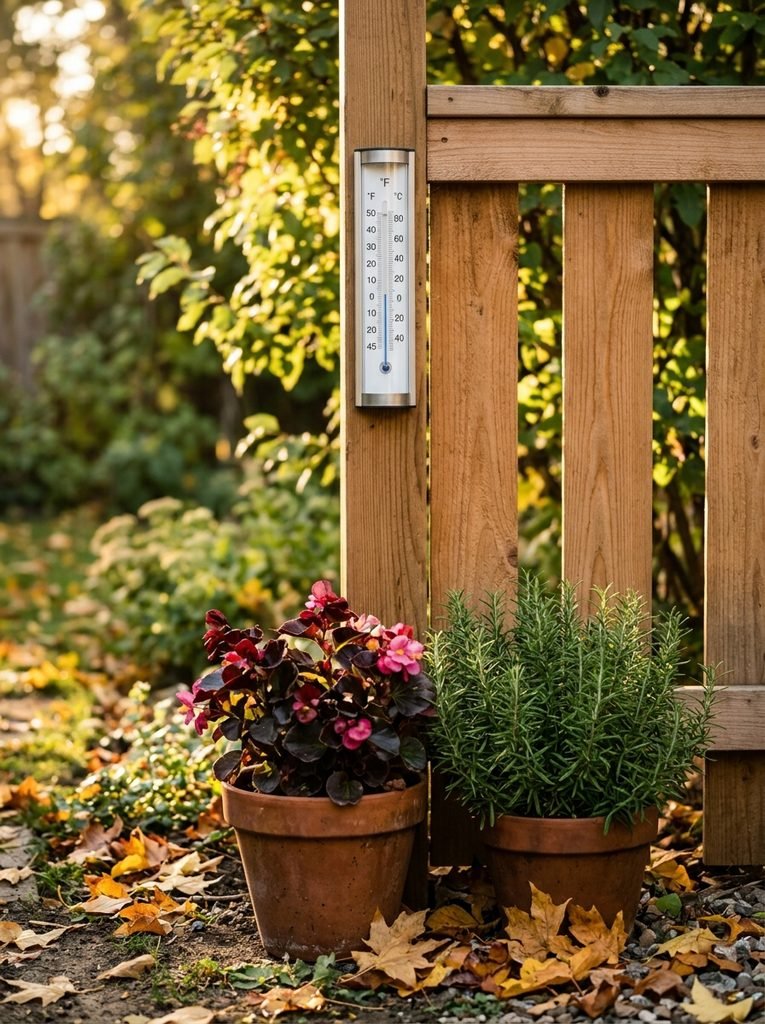
Too early and plants get shocked by the warm house. Too late and frost damages them. Watch the night temperature.
Tender tropicals like hibiscus and begonias want to come in at about 55 degrees. Hardier plants like rosemary and geraniums can wait until 50 degrees. Check your weather forecast every day in autumn.
You’ll need: outdoor garden thermometer
Best for: autumn planning and cold snaps
3. Check and Treat Pests Before Plants Come Indoors
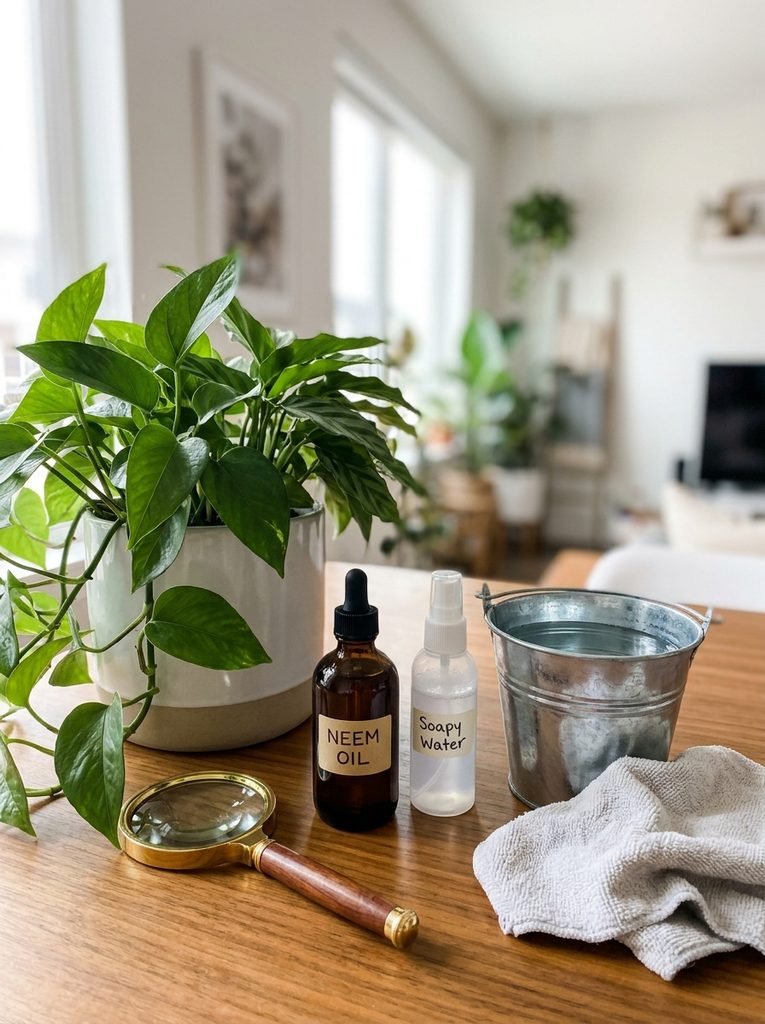
Pests love a cozy house just as much as you do. One aphid on a leaf can become a big problem by December.
Check the undersides of leaves and the soil surface. Look for webs, sticky spots and tiny moving dots. Rinse and treat every plant before it comes in, then keep it separate for two weeks.
⏱ 30 minutes💲 Low🛠 Easy
Materials Needed
- Neem oil spray for plants
- Insecticidal soap for plants
- Handheld magnifying glass
- A bucket, a soft cloth and lukewarm water
How to Make It
- Look under the leaves and along the stems with a magnifying glass.
- Spray the whole plant with a hose or shower to wash off loose bugs.
- Soak the pot in a bucket of lukewarm water for 15 minutes to push out hidden insects.
- Wipe the leaves and spray with insecticidal soap or neem oil, as the label says.
- Repeat in a week, and keep the plant away from the others for two weeks.
Tip: Spray plants outdoors or in a well ventilated spot, away from pets and kids. Always follow the label.
4. Best Plants to Bring Indoors for the Winter
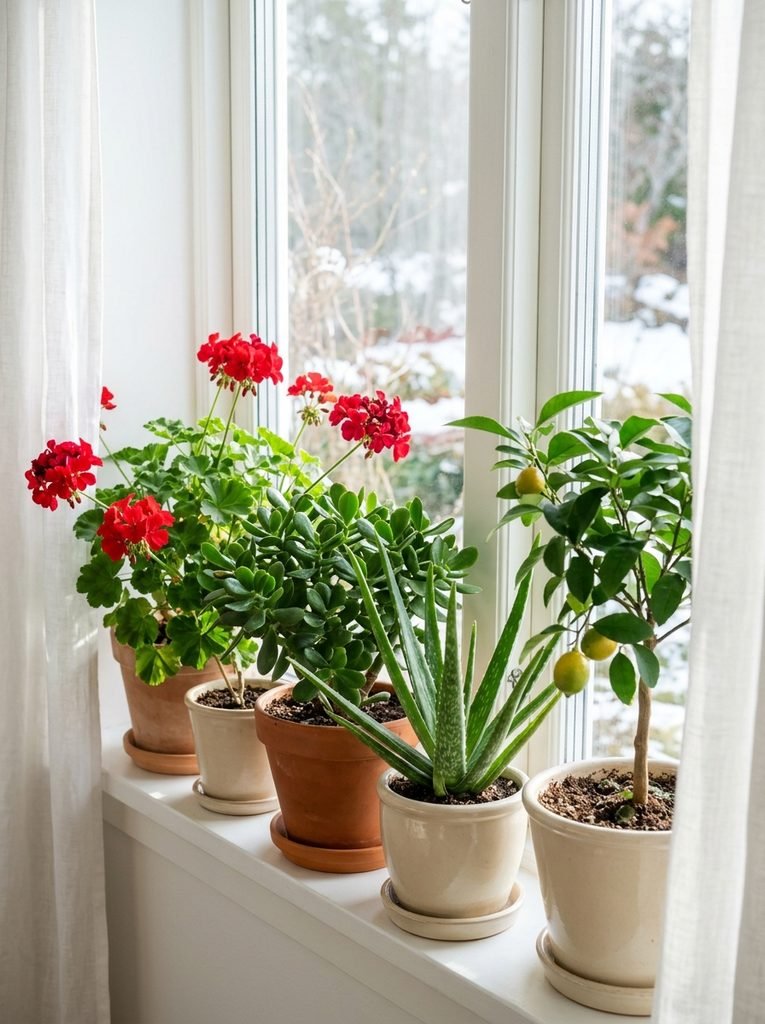
Not every plant needs saving. Pick your favorites, and bring in the ones that bloom or fruit.
Geraniums, begonias, jade, aloe, fuchsias and small citrus trees do well indoors. Some are toxic to pets, like jade and aloe, so put them on a high shelf.
You’ll need: plant stand for windows
Best for: favorite plants and small space care
5. Bring Plants Back to Life After Summer
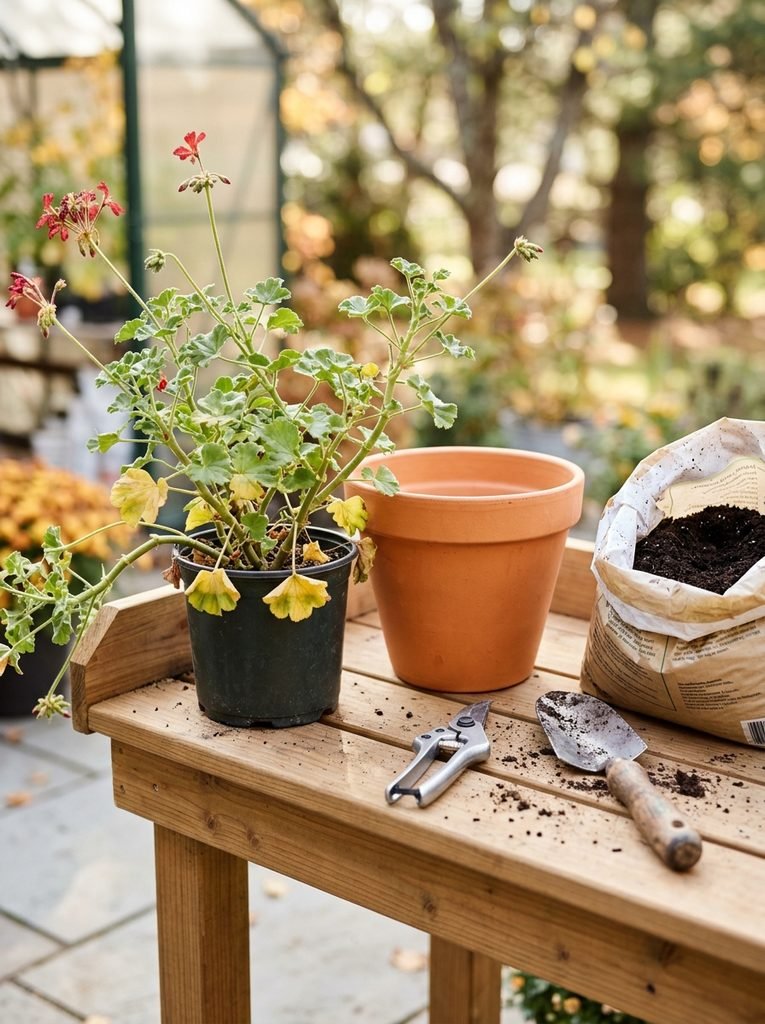
Summer can leave plants tired, leggy and yellow. A little care brings them back to life before winter.
Cut off a third of the plant, remove dead leaves and check the roots. If the roots circle the pot, give the plant a slightly bigger home. Then keep it in bright light and water gently.
⏱ 40 minutes💲 Low🛠 Easy
Materials Needed
- Terracotta pots with drainage, set of 3
- Houseplant fertilizer, gentle
- Pruning scissors, potting mix and a trowel
How to Make It
- Trim dead, yellow and leggy growth with clean scissors.
- Slide the plant out of the pot and check the roots, trimming any that are brown and mushy.
- Repot into a pot one size bigger with fresh mix and a drainage hole.
- Water well once, then let the top inch of soil dry before watering again.
- Hold off on heavy feeding in winter, and use only a very light feed if growth restarts.
Tip: Never leave a plant sitting in water. Soggy roots are the biggest reason plants die indoors in winter.
6. Herbs to Bring Inside for Winter
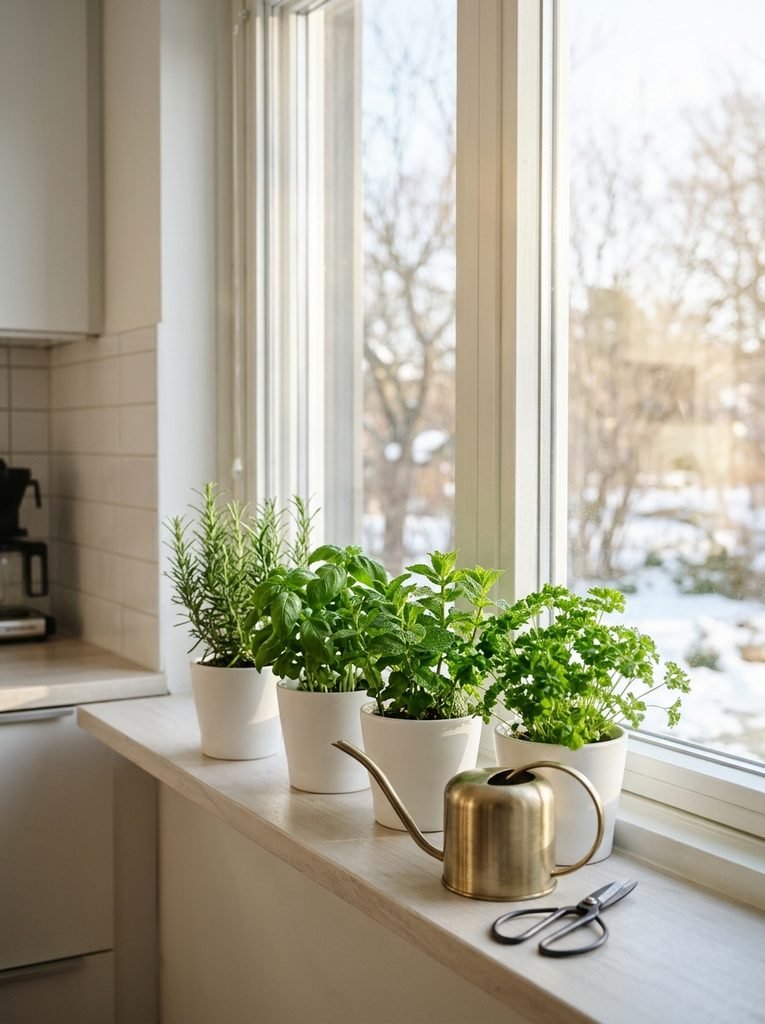
Fresh herbs in January feel like a small luxury. Pot up your favorites before the frost.
Rosemary, thyme and parsley do well on a bright windowsill. Basil is fussy and needs warmth, so place it away from cold glass. Mint grows fast, so give it its own pot.
You’ll need: herb planters for windowsill
Best for: kitchen windowsills and home cooks
7. Light Setup With Windows and Grow Lights
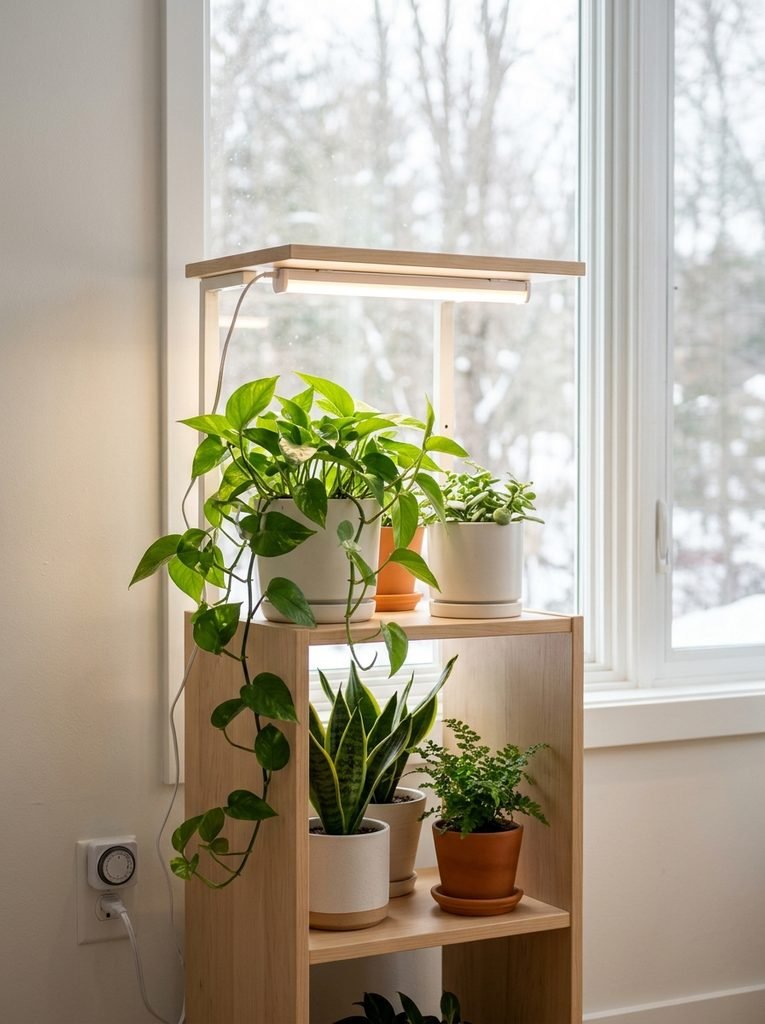
Winter days are short and dim. Even sun loving plants can get leggy without enough light.
Put plants in your brightest window, usually south facing. Add an LED grow light for 12 to 14 hours a day if the window is weak. Turn pots a quarter turn each week so they grow evenly.
You’ll need: LED grow light bar and outlet timer
Best for: dark rooms and short winter days
8. Slow Acclimation to Stop Leaf Drop
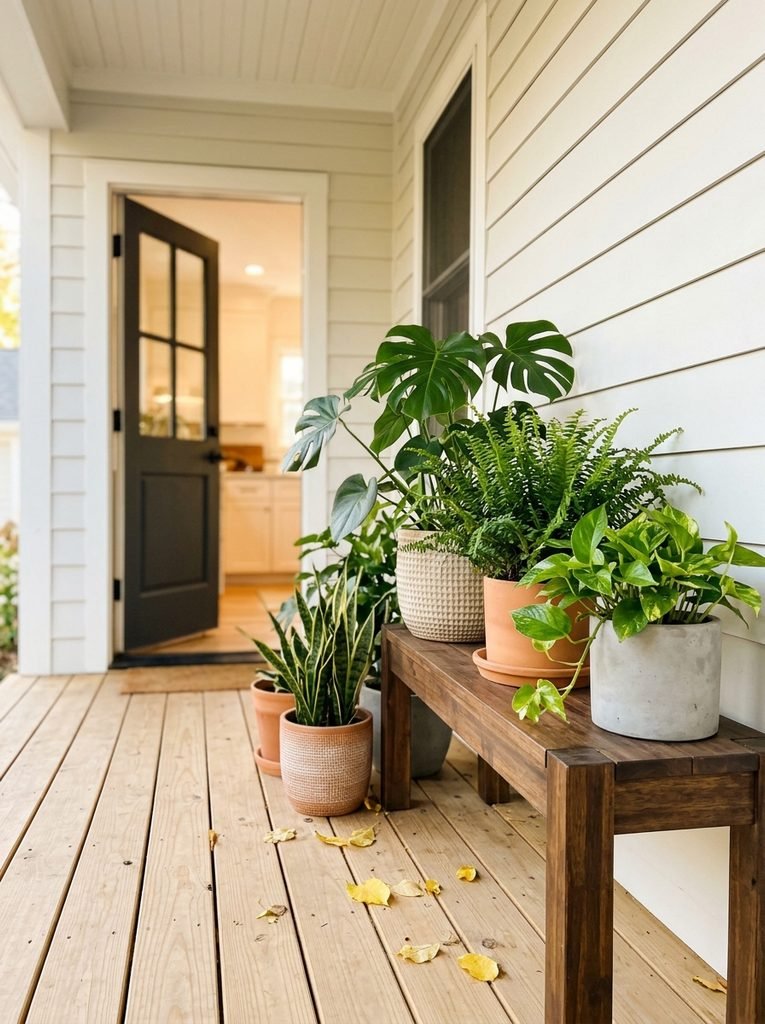
Plants drop leaves when they’re shocked. A slow move from outside to inside prevents it.
For a week, move plants to a shady porch, then a bright hall, then their final spot. Don’t be alarmed if a few leaves fall. It’s normal and the plant will recover.
You’ll need: rolling plant caddy
Best for: fussy plants and heavy pots
9. Watering and Humidity Indoors in Winter
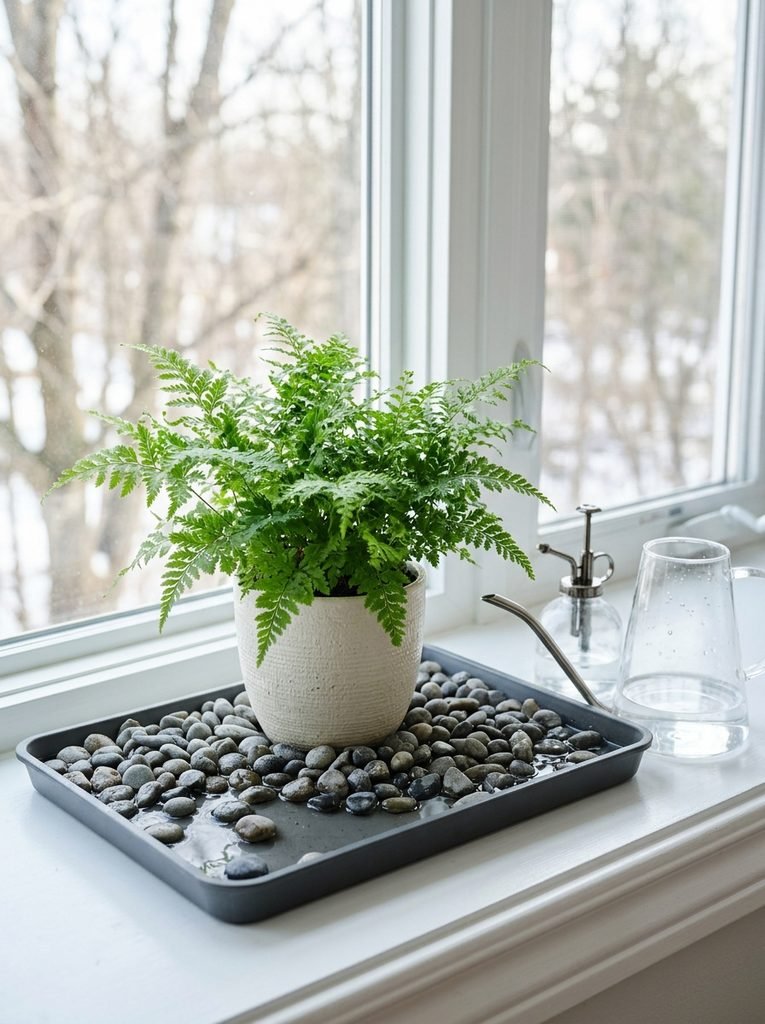
Indoor plants need less water in winter, but the air is drier. That’s a tricky mix.
Water only when the top inch of soil feels dry. Put a pebble tray under plants that love humidity, like ferns. Keep plants away from heating vents.
You’ll need: soil moisture meter and small room humidifier
Best for: dry heated homes
10. Cuttings to Take Instead of Moving Whole Plants
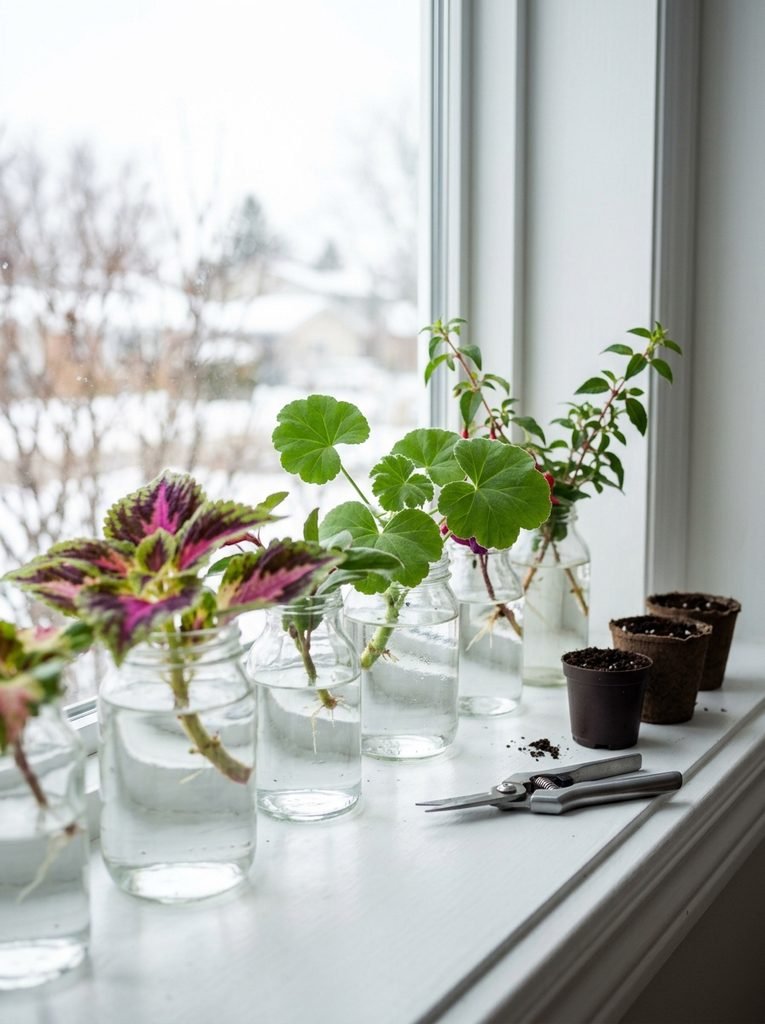
Big pots are heavy and crowd your windows. Cuttings give you the same plant in a jar.
Take 4 inch cuttings from geraniums, coleus and fuchsias in early autumn. Root them in water, then pot them up. For more ideas on what to leave outside, see these winter pots.
You’ll need: small glass propagation jars
Best for: saving space and sharing plants
Frequently Asked Questions
When should I bring plants indoors for winter?
When nights fall near 50 degrees, and before the first frost. Tender tropicals come in at about 55 degrees.
How do I stop pests coming in with my plants?
Check under the leaves, rinse the plant, soak the pot and spray with insecticidal soap or neem oil. Keep it apart for two weeks.
Why is my plant dropping leaves indoors?
It’s shock from the change in light and temperature. Move plants slowly and the leaf drop will pass.
Should I water plants less in winter?
Yes. Water when the top inch of soil is dry, and make sure the pot drains well.
Which plants are best to bring inside?
Geraniums, begonias, jade, aloe, fuchsias, rosemary and small citrus trees are good choices.
Are overwintered plants safe for pets?
Some are not. Jade, aloe and many others are toxic to pets, so keep them out of reach.
Final Thoughts on Bringing Plants Indoors for Winter
Start early, check for pests and move your plants slowly. A little care now gives you green leaves and happy plants all winter long.


Amir Ali is the founder and site administrator of HomeDecorEdge, a modern home decor and interior design platform. Since starting the site, he has combined his passion for interior design, practical styling, and color coordination with hands-on content strategy and site management. He guides authors, curates high-quality articles, and ensures readers have access to actionable, visually inspiring, and user-focused home decor advice for apartments, small rooms, and family homes.