Chickens handle cold better than you think.
What hurts them is damp air, drafts and frozen water.
These 12 winter chicken coop ideas fix exactly that, with no heat lamps. Three come with full step by step cards.
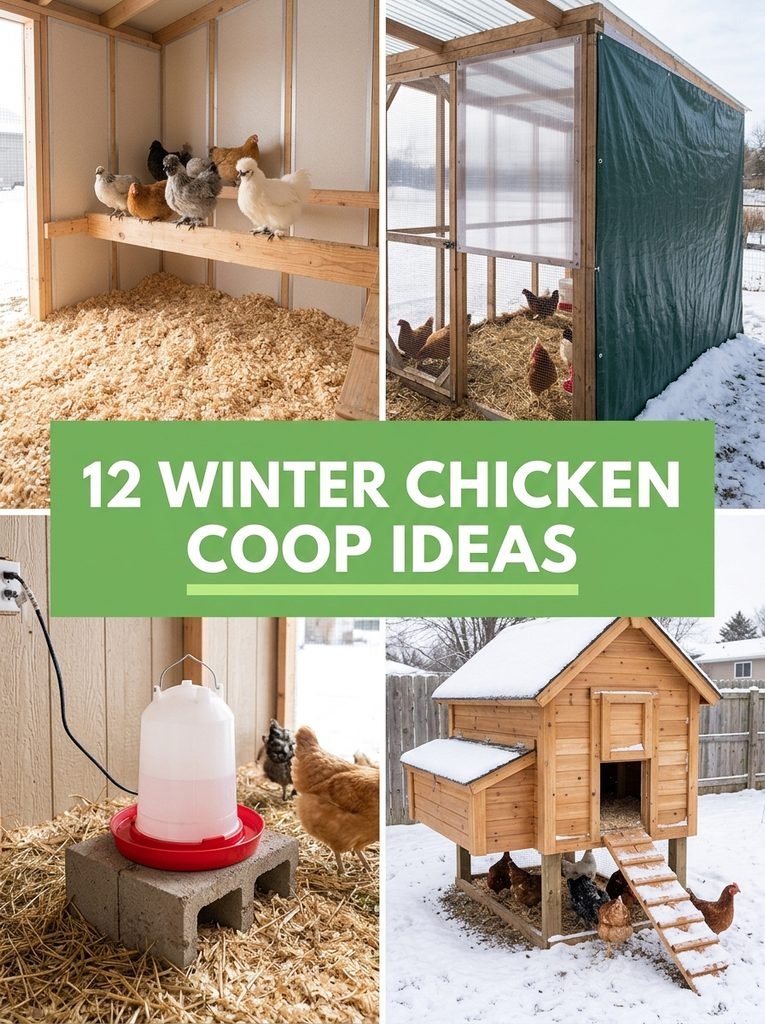
Quick Picks
- Biggest difference: Insulated Winter Chicken Coop (idea 1)
- Cheapest: Deep Litter Bedding (idea 2)
- Easiest build: Wide Flat Roost (idea 5)
- Most overlooked: Ventilation Without Drafts (idea 4)
1. Insulated Winter Chicken Coop
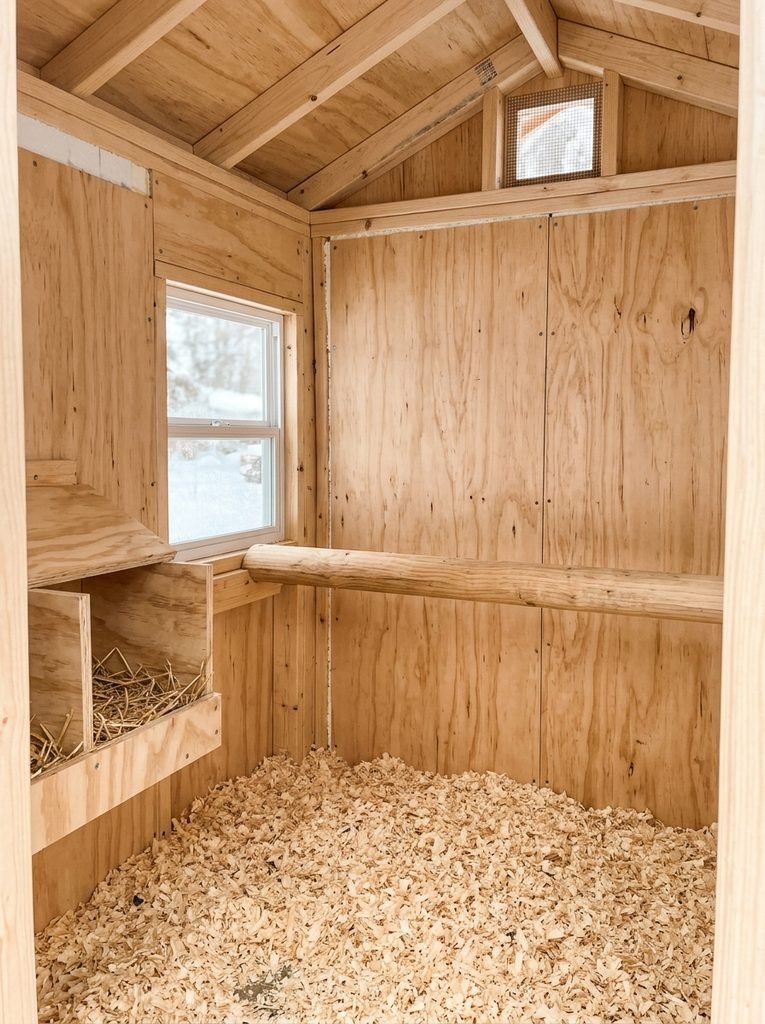
Insulation does two jobs. It keeps the coop steadier in the cold, and it keeps it cooler in summer. I like it because hens stay comfortable without any heater.
Fit rigid foam board between the studs, then cover every inch with plywood. Hens will peck bare foam and eat it. Leave the vents open, because insulation without airflow means damp air and frostbite.
⏱ 3 hours💲 Medium🛠 Medium
Materials Needed
- Rigid foam board insulation
- Plywood sheets, half inch
- Screws, a utility knife and a tape measure
- Pine shavings for the floor
How to Make It
- Measure each wall section between the studs and cut the foam board to fit snugly.
- Press the foam into place and seal any gaps with tape or foam sealant.
- Cover the foam with plywood and screw it down so no foam is exposed.
- Leave the high vents under the roof completely open and uncovered.
- Add 4 to 6 inches of pine shavings on the floor.
Tip: Never insulate over the vents. Cold dry air is fine for hens, but damp stale air gives them frostbite and breathing trouble. Adults should handle the saw and the knife.
2. Deep Litter Bedding for Warm Winter Floors
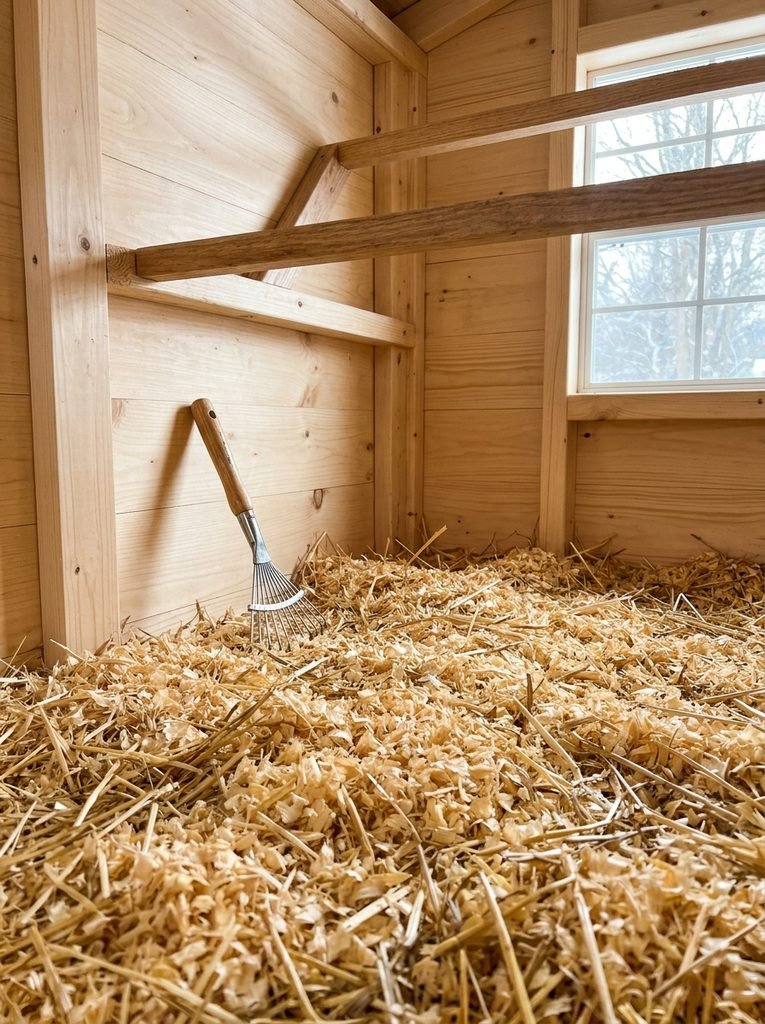
The deep litter method is my favorite winter trick. You keep adding fresh bedding, and the lower layers slowly break down and give off a little gentle warmth.
Start with 6 inches of dry pine shavings and add more every week. Stir it now and then so it stays fluffy. If it smells or feels wet, take that part out right away.
You’ll need: pine shavings bedding and small garden rake
Best for: cold climates and busy keepers
3. Run Windbreak and Snow Wall
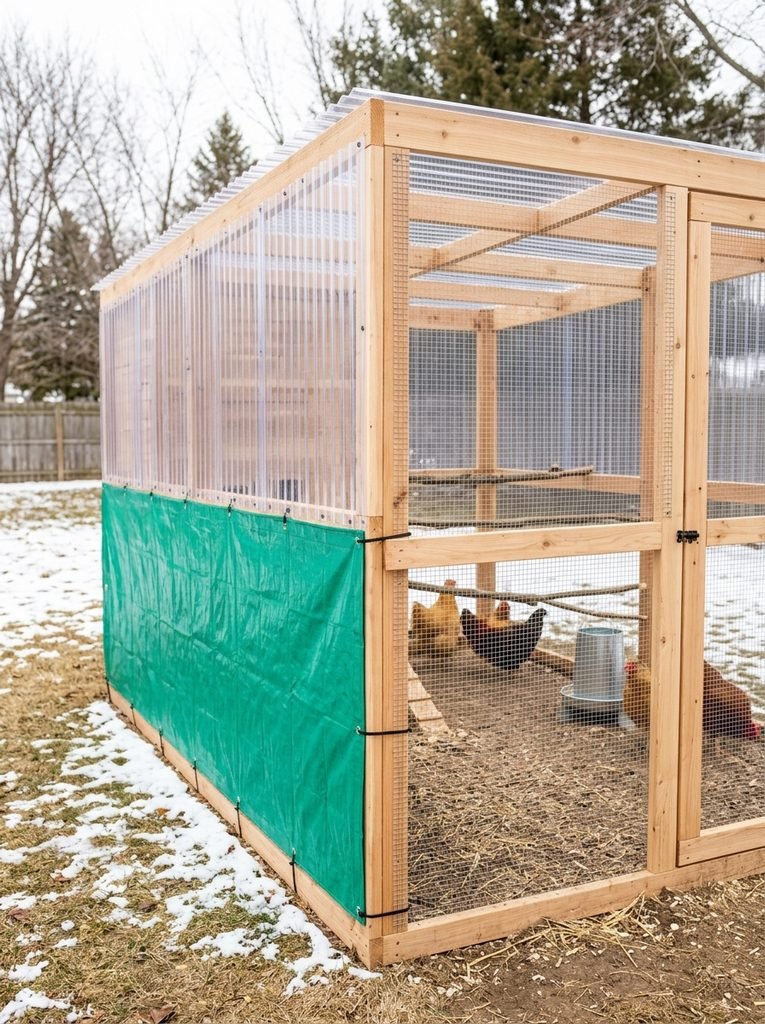
Chickens do not mind cold half as much as wind. A windbreak lets them go outside on winter days and stay out of the worst of it.
Wrap the north and west sides of the run, and leave the south side open for sunshine. Clear panels let in light, and tarps block the strongest gusts. Keep the roof sturdy, because wet snow is heavy.
⏱ 2 hours💲 Low🛠 Easy
Materials Needed
- Clear polycarbonate panels
- Heavy duty tarp
- Zip ties, screws and washers
- A drill and a tape measure
How to Make It
- Pick the sides that face the wind, usually north and west.
- Cut the panels to the height of the run frame.
- Screw the panels to the posts with washers so they don’t crack.
- Fix the tarp over any gaps and tie it down tight.
- Leave a gap at the top for air, and keep the south side open.
Tip: Leave 2 to 3 inches of open space at the top so the run still gets airflow. Adults should use the drill, and tuck cut edges away from the hens.
4. Winter Chicken Coop Ventilation Without Drafts
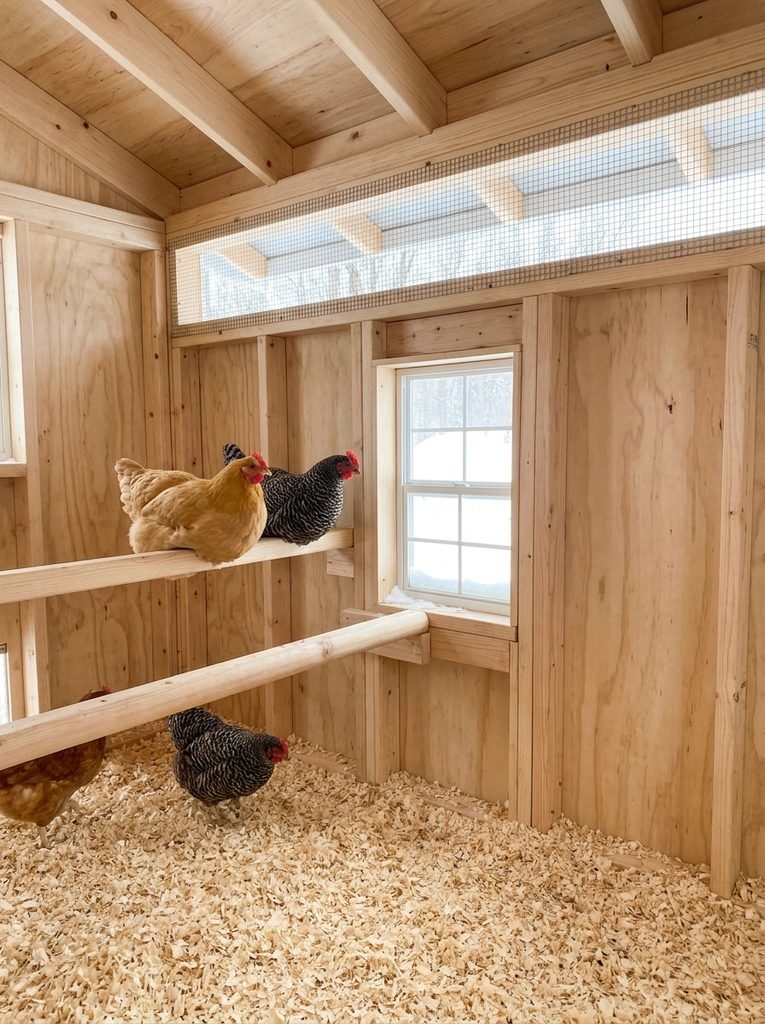
This one surprises people. A winter coop needs more airflow, not less. Hens breathe out a lot of moisture, and trapped moisture is what causes frostbite.
Put vents high up, above the roost, so the cold air never blows straight on the hens. Cover them with hardware cloth to keep predators out. Place the roost below the vent line and away from direct drafts.
You’ll need: hardware cloth, half inch
Best for: anyone with a damp coop
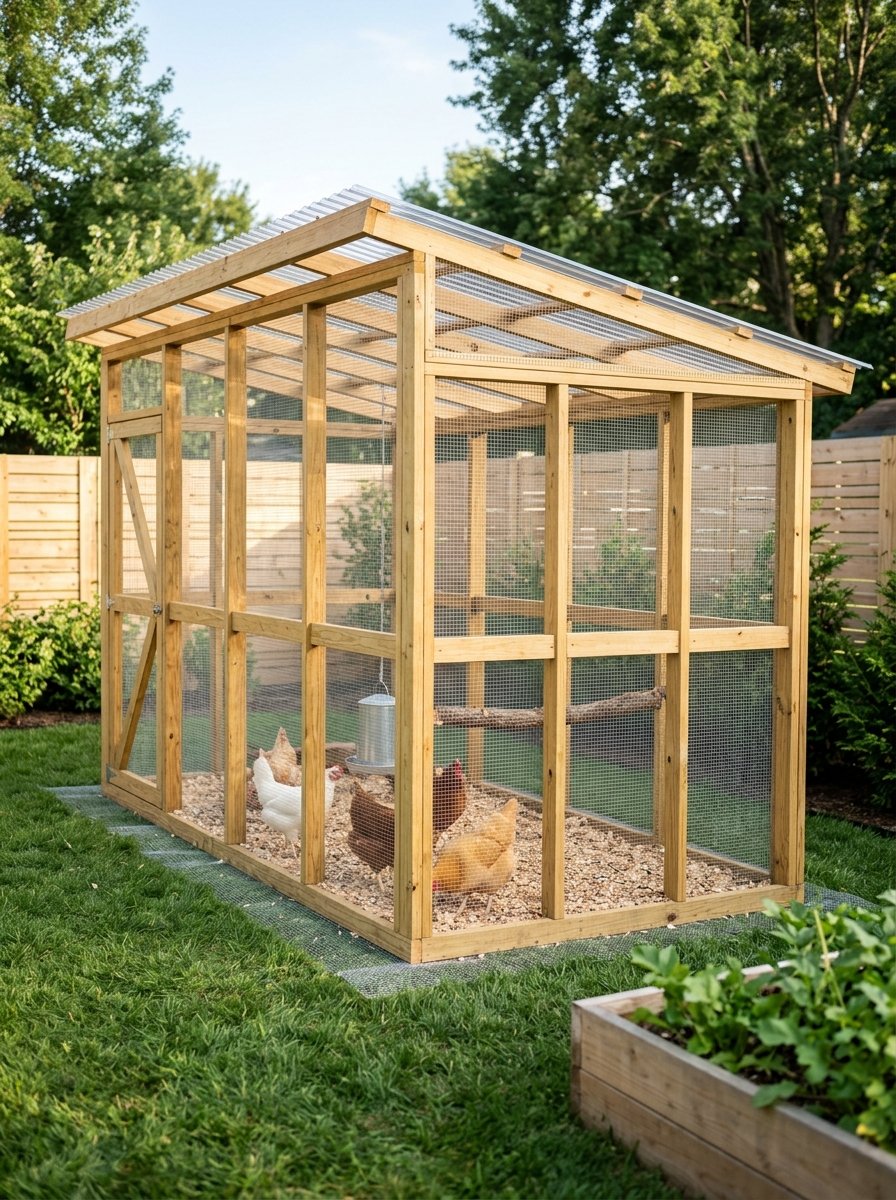
DIY Build Plans
8x12 Walk-In Chicken Run Plans
Predator-proof run for up to 10 chickens, with a full cut list, shopping list and 12 easy steps.
5. Wide Flat Roost for Cold Nights

A flat roost is a small change that helps in a big way. Hens sit down and cover their toes with their feathers, so their feet stay warm.
Use a 2×4 laid flat, not a round pole. Sand the edges until they’re smooth. Give each hen about 10 to 12 inches of space, and set the roost higher than the nest boxes.
⏱ 30 minutes💲 Low🛠 Easy
Materials Needed
- 2×4 lumber, 8 foot
- Sandpaper, medium grit
- Screws and two wooden brackets
- A drill and a level
How to Make It
- Cut the 2×4 to fit the width of your coop.
- Sand the top and all edges until they feel smooth.
- Screw two brackets to the side walls at the same height.
- Lay the 2×4 flat on the brackets and screw it down.
- Check it with a level and test that it doesn’t wobble.
Tip: Keep the roost away from the vents and windows. A toes covered roost helps prevent frostbite, but dry bedding matters just as much. Adults should use the drill.
6. Heated Waterer and Frost Free Water Station

Frozen water is the biggest winter chore. A heated base keeps water open, so hens drink and eat normally.
Choose one made for poultry, and keep the cord short and chew proof. Plug it into a GFCI outlet, and keep the base dry and off the bedding. Never leave a bare heating element where hens can reach it.
You’ll need: heated poultry waterer base and outdoor GFCI extension cord
Best for: freezing nights and busy mornings
7. Covered Winter Chicken Run With a Roof

A roof turns a muddy, snowy run into a place hens actually want to be. They get fresh air and exercise without wet feet.
Use a clear or light roof so sunshine can still come in. Slope it so snow slides off, and build the frame strong enough to carry wet snow. Add straw or wood chips to the floor of the run.
You’ll need: clear corrugated roofing panels
Best for: wet and snowy regions
8. Winter Coop With No Electricity

You don’t need power to keep hens through winter. A small, snug coop, thick bedding and a dry floor do most of the work.
Hens share body heat on the roost, so a coop sized for your flock holds warmth well. Don’t make it too big. Keep it dry, ventilated and free of drafts at roost height.
You’ll need: straw bedding bale
Best for: off the grid homes and small flocks
9. Cozy Winter Chicken Coop Decor
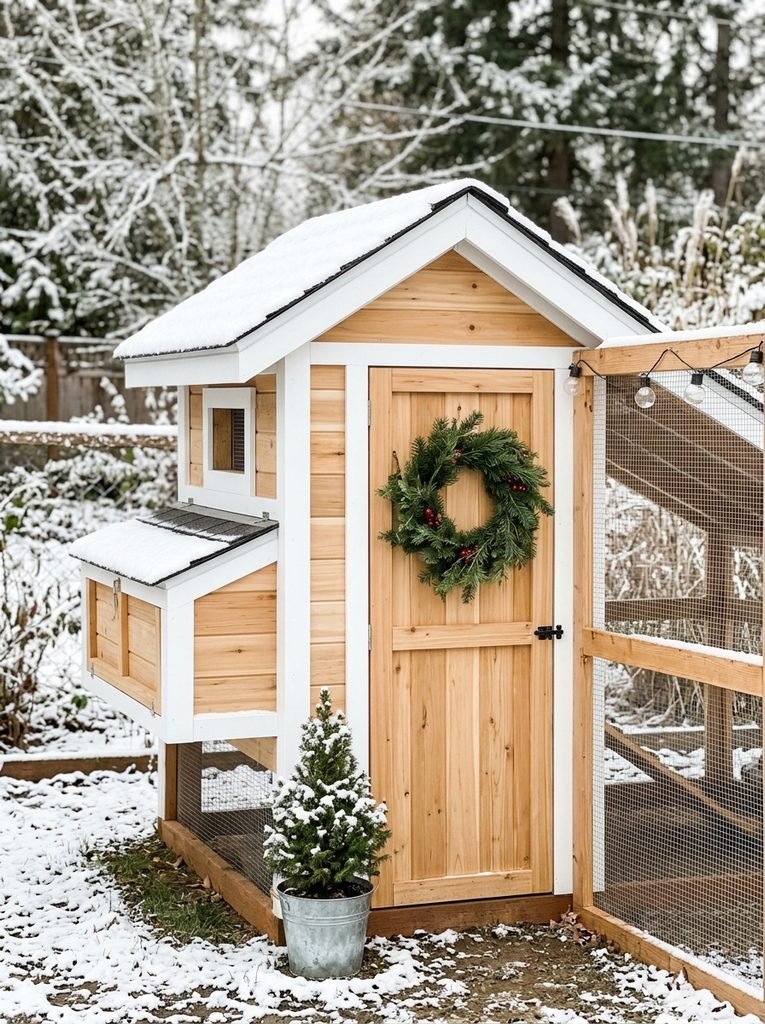
A coop can look cute in winter, too. A wreath on the door and a few solar lights make the whole corner feel lovely.
Keep every decoration outside the coop and out of reach. Use solar lights, not plug in strings, and skip anything chewable or toxic. Stick to plain evergreen branches, since some plants are poisonous to hens.
You’ll need: solar string lights outdoor
Best for: people who love a pretty backyard
10. Straw Bale Wind Barrier

Straw bales are a cheap, quick windbreak. Stack them on the windy side of the coop and run, and the wind drops fast.
Stack them tight with no gaps, and put them a short distance from the walls so hens can’t pull the straw out. Replace them when they get wet or moldy, and use the old straw in the garden.
You’ll need: straw bales for garden
Best for: budget builders and windy yards
11. Winter Treat and Feeding Station

Hens burn more energy to stay warm, so they eat a bit more. A hanging cabbage gives them something to do on short days.
Feed a good layer feed as the main meal, and give scratch grains in the afternoon so they have something to digest overnight. Keep the feeder under cover and dry.
You’ll need: hanging poultry feeder with cover and mesh treat hanger
Best for: busy keepers and bored hens
12. Small Raised Winter Coop for 4 to 6 Hens
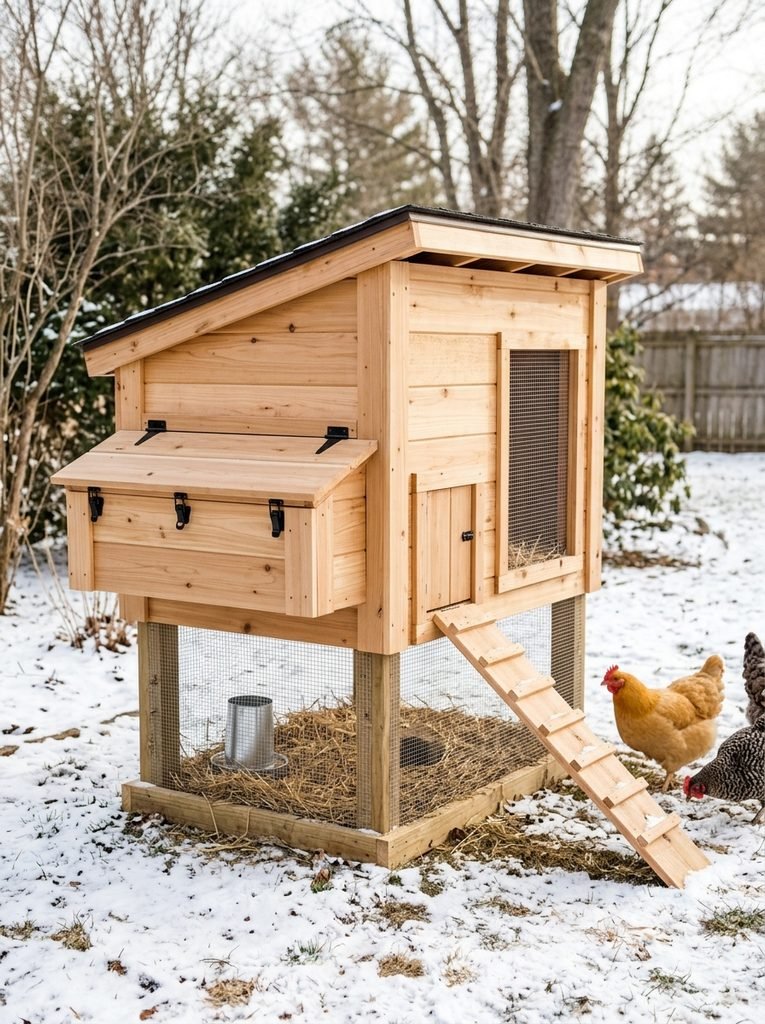
A raised coop keeps the floor off the cold, wet ground. The space underneath is a dry, shaded spot for the hens in daytime.
Plan about 4 square feet per hen inside, and make the ramp wide with grip strips. Wrap the underside with hardware cloth, and set the coop so the door faces south.
You’ll need: chicken coop ramp with grip strips and hardware cloth
Best for: small backyards and starter flocks
Frequently Asked Questions
Do chickens need heat in winter?
Most hardy breeds do not. A dry, draft free coop with good ventilation is usually enough. Heat lamps are a serious fire risk, so I don’t suggest them.
How cold is too cold for chickens?
Many breeds handle well below freezing if they’re dry and out of the wind. Watch for frostbite on combs and wattles, and bring in any bird that looks unwell.
Should I close all the vents in winter?
No. Keep high vents open above the roost. Closed coops trap moisture, and moisture causes frostbite and breathing problems.
How much bedding do I need in winter?
About 4 to 6 inches of dry pine shavings or straw, topped up often. Remove any wet patches quickly.
How do I stop water from freezing?
Use a heated poultry waterer base on a GFCI outlet, or swap water twice a day. Keep cords short and chew proof.
How big should a winter coop be?
Plan about 4 square feet per hen inside, and 10 square feet each in the run. Smaller coops hold warmth better, so don’t oversize it.
Final Thoughts on Winter Chicken Coop Ideas
Keep your hens dry, out of the wind and well ventilated, and most of them will do fine all winter. Start with one or two changes this week. Your flock will thank you.


Amir Ali is the founder and site administrator of HomeDecorEdge, a modern home decor and interior design platform. Since starting the site, he has combined his passion for interior design, practical styling, and color coordination with hands-on content strategy and site management. He guides authors, curates high-quality articles, and ensures readers have access to actionable, visually inspiring, and user-focused home decor advice for apartments, small rooms, and family homes.