
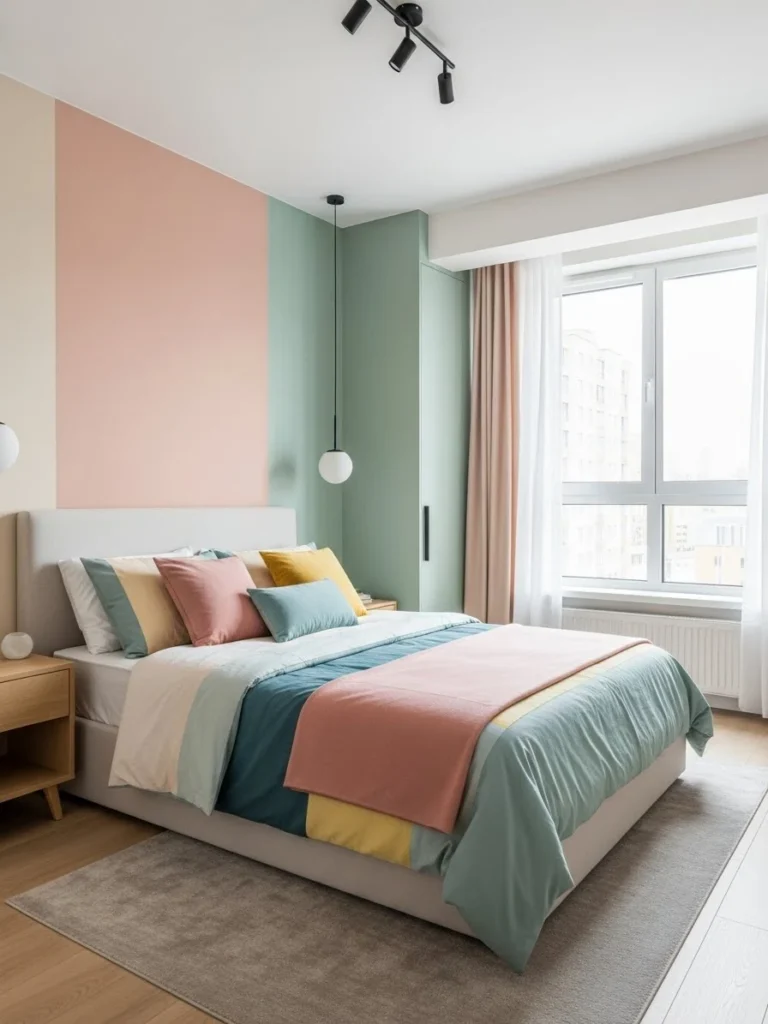

Color plays a critical role in how a small bedroom feels and functions. In compact spaces, the wrong color palette can make the room feel tight, dark, and uncomfortable, while the right colors can visually expand the space and improve overall comfort. Light reflection, contrast control, and color balance all contribute to how open a bedroom appears.
Modern interior planning under curated Color Palettes focuses on soft neutrals, low-contrast tones, and layered light shades that support brightness and visual flow. This guide shares 15 carefully selected bedroom color ideas for small rooms, helping you design a space that feels larger, calmer, and more modern. Many of these ideas also align with the strategies discussed in the main pillar guide, Bedroom Color Palette Ideas for Modern Homes, making this article a practical companion resource.
1. White Bedroom Color Palette for Small Rooms
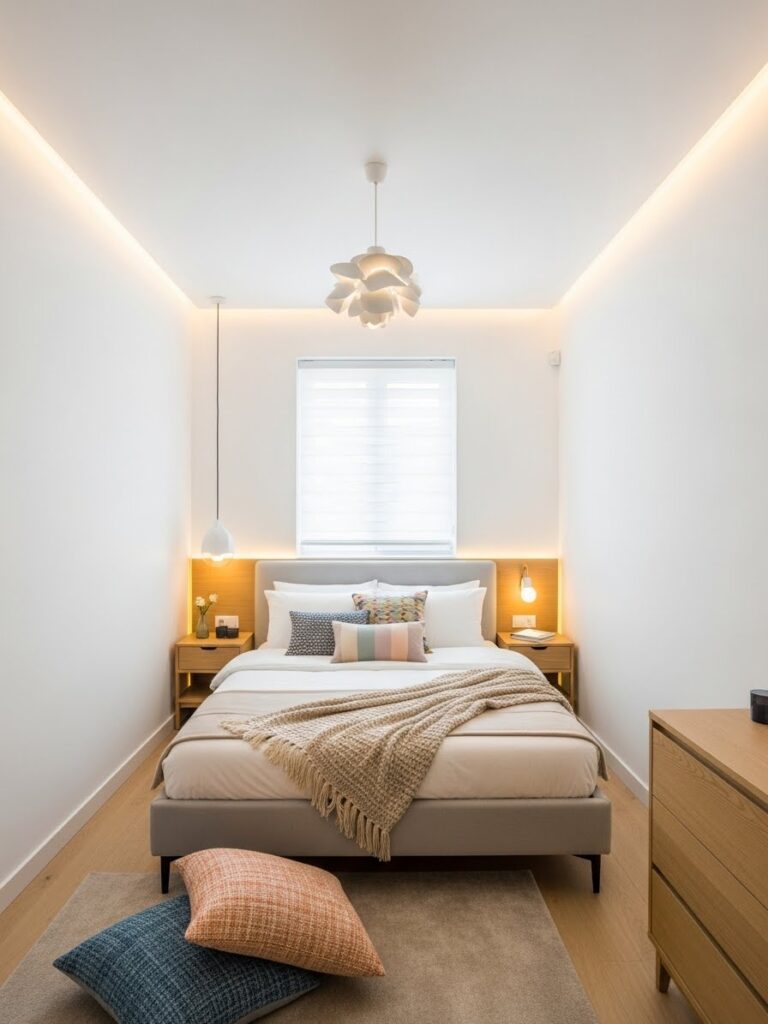
White remains the most effective color choice for small bedrooms because of its ability to reflect natural and artificial light. It minimizes visual boundaries, making walls appear farther apart and ceilings feel higher.
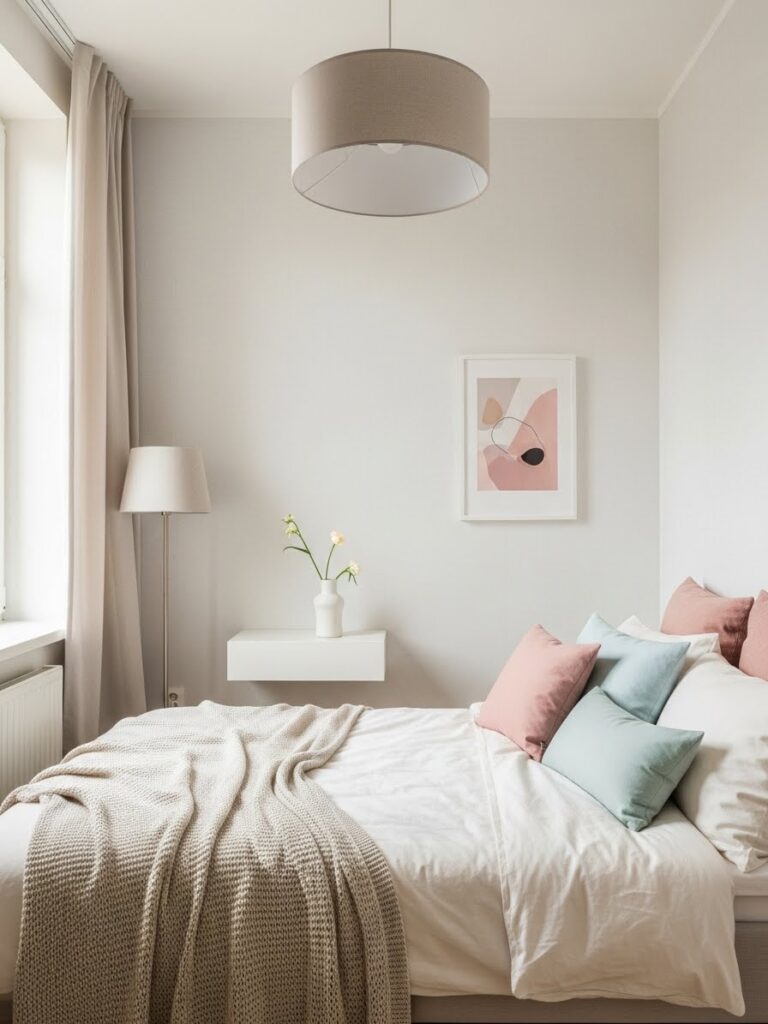
To prevent a stark or flat appearance, white bedrooms should rely on texture rather than contrast. Layered bedding, fabric headboards, soft rugs, and warm lighting help add depth while maintaining openness. This approach is frequently recommended within broader strategies shared in the Bedroom Color Palette Ideas for Modern Homes pillar post.
2. Soft Beige and Cream Color Combination
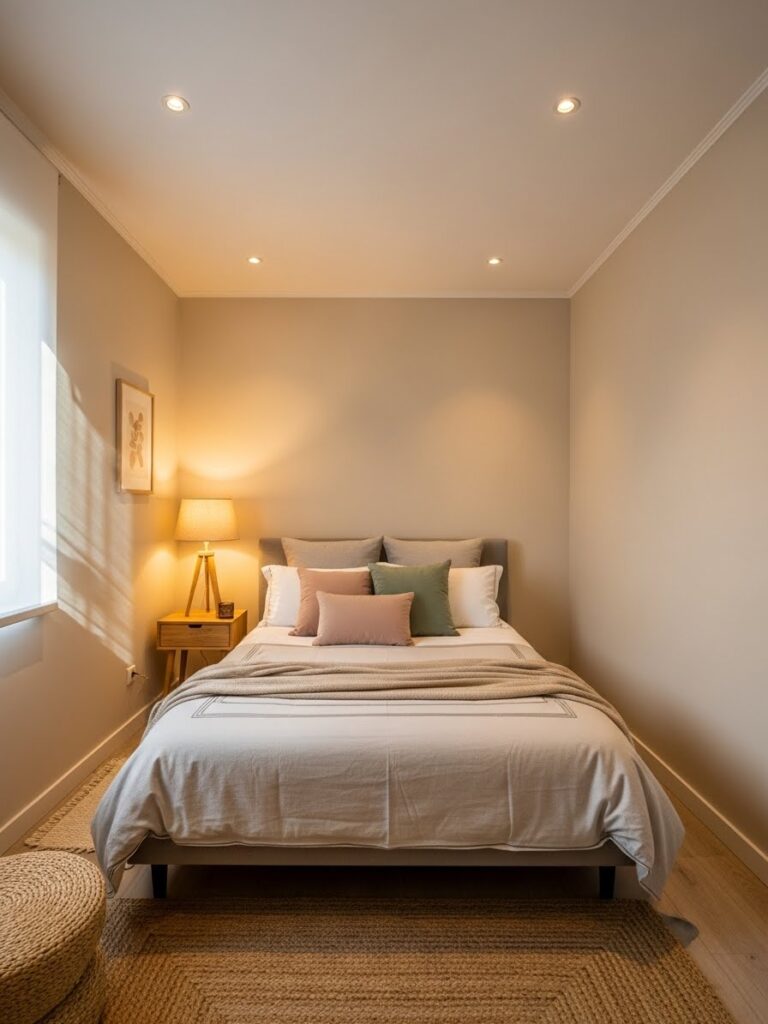
Beige and cream introduce warmth without sacrificing brightness, making them ideal for small bedrooms that need a cozy yet open feel. These tones soften harsh lighting and create a welcoming atmosphere.
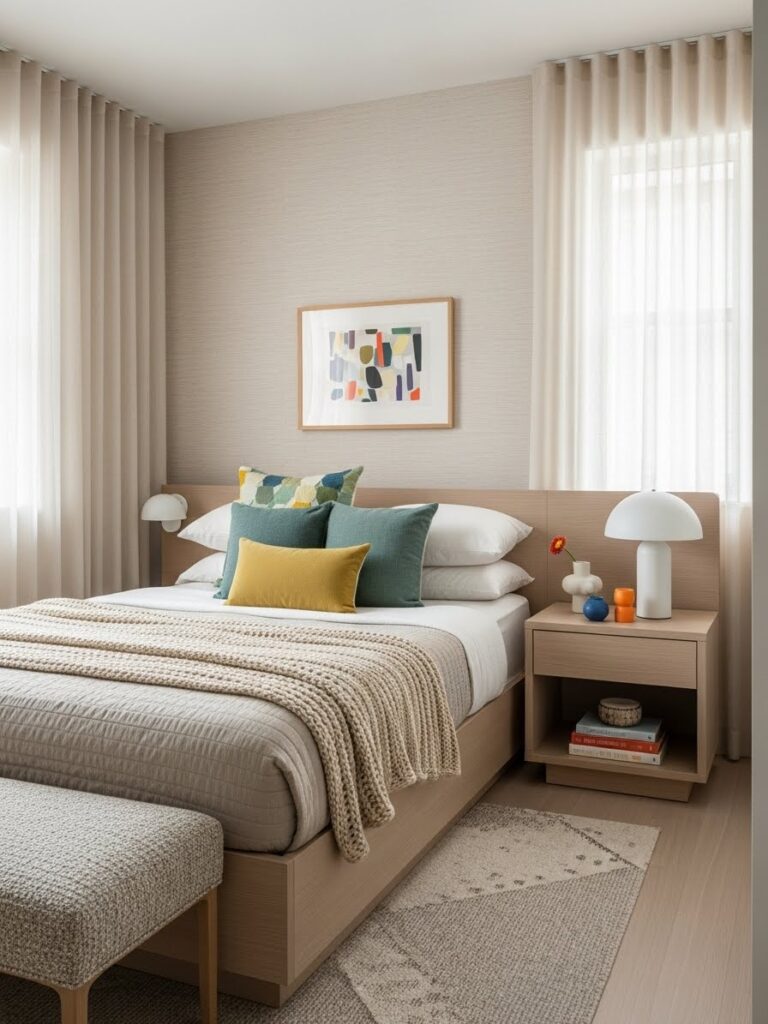
This palette works especially well in apartments and rental homes where long-term flexibility is important. Neutral foundations like this are commonly highlighted within modern Color Palettes planning due to their adaptability.
3. Light Gray Bedroom Colors That Feel Airy
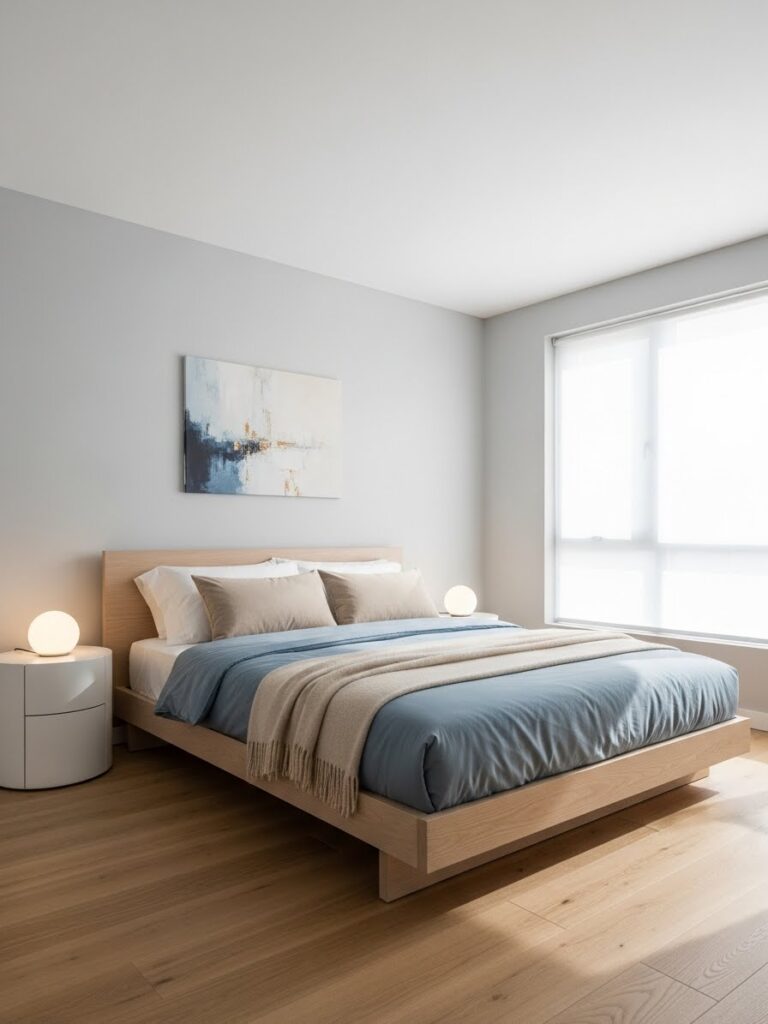
Light gray offers subtle contrast while maintaining a clean, modern appearance. Unlike darker grays, it does not visually shrink the room and works well in limited lighting conditions.
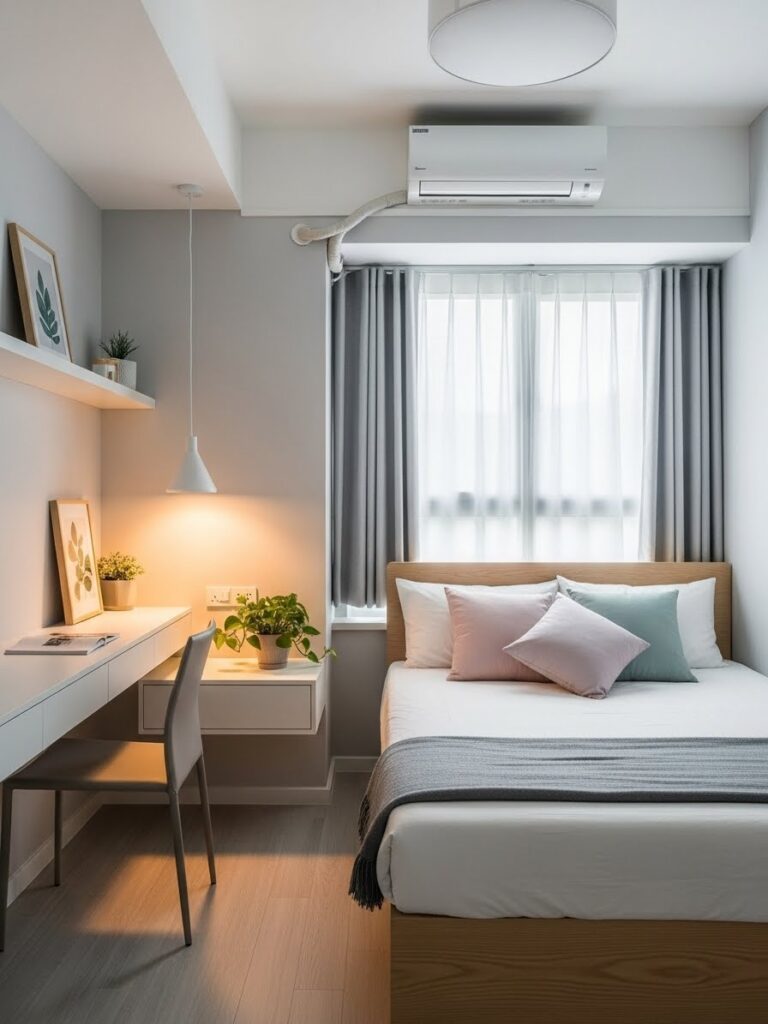
Pairing light gray walls with white bedding and minimal furniture helps preserve visual balance while adding sophistication to small bedrooms.
4. Greige Color Palette for Compact Bedrooms
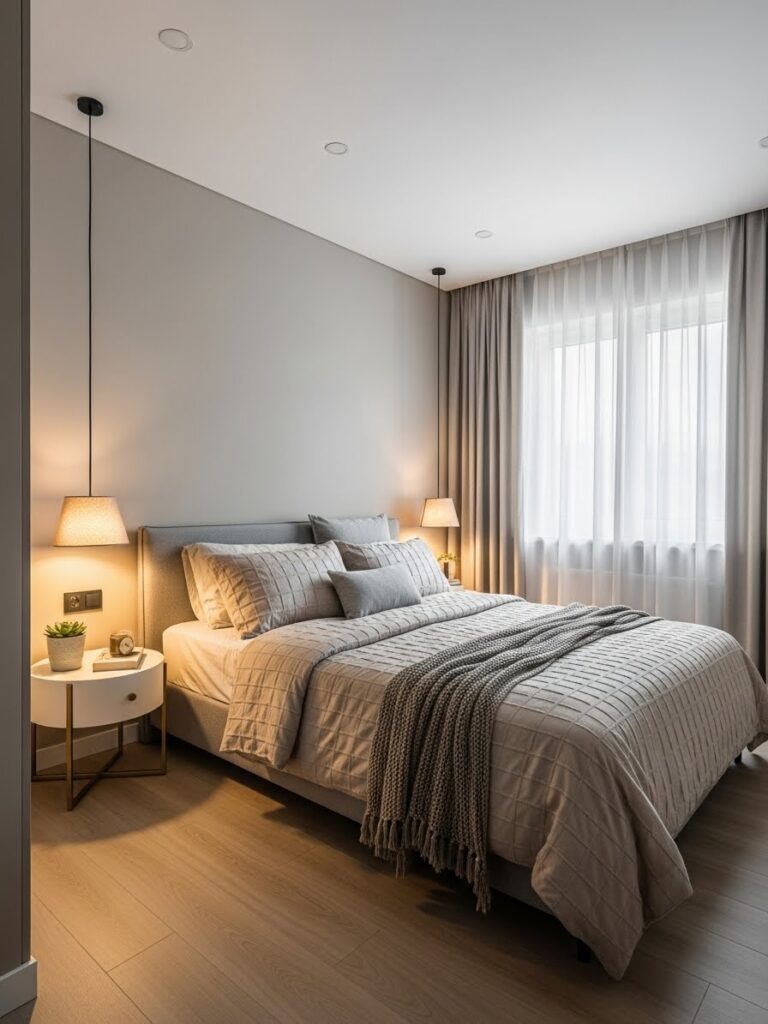
Greige blends the warmth of beige with the refinement of gray, making it highly adaptable for small rooms. It responds well to both natural and artificial lighting.
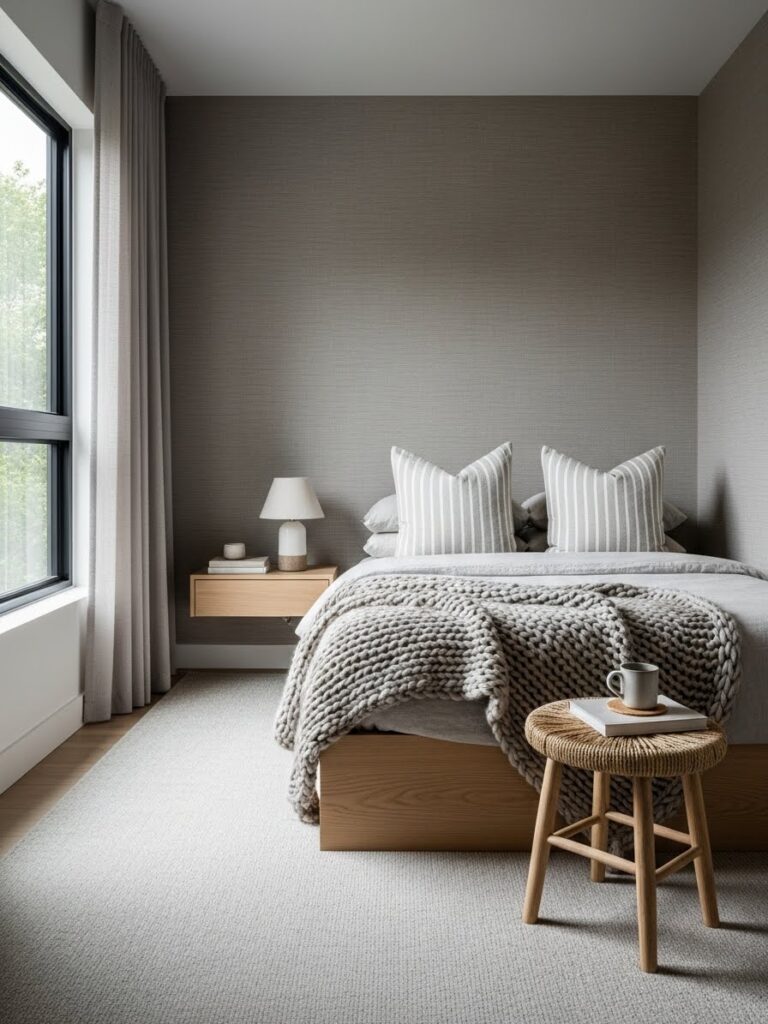
This color choice is particularly useful for bedrooms that need to feel modern without appearing cold or flat.
5. Soft Pastel Colors with Neutral Balance
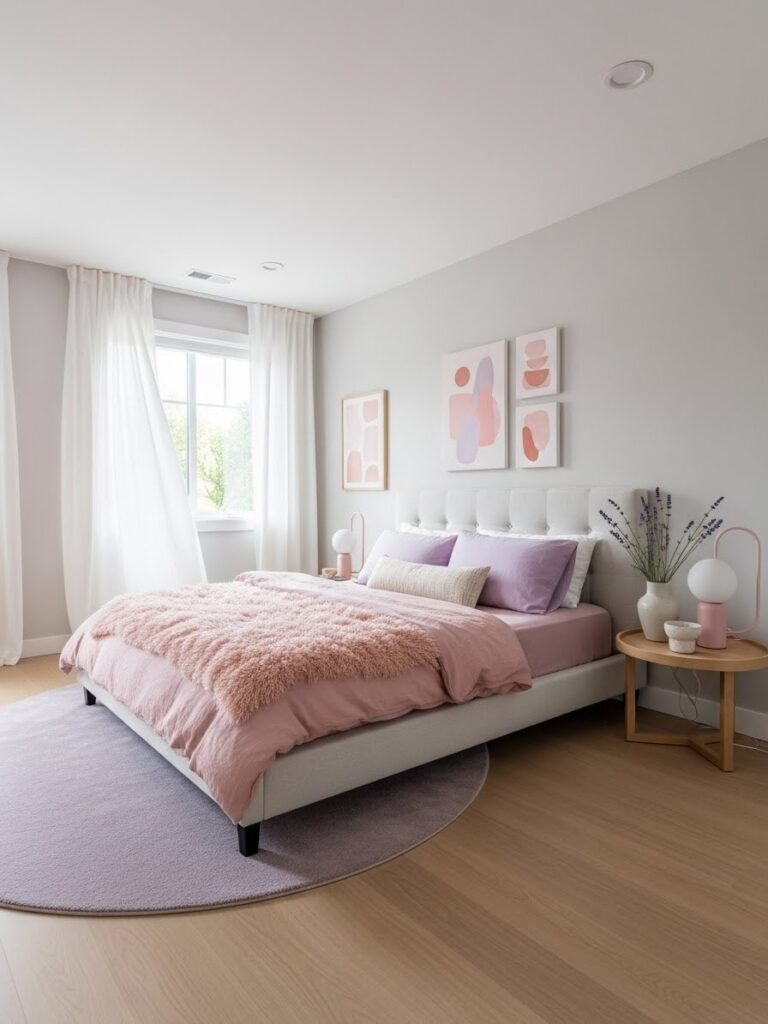
Soft pastels such as blush pink, muted peach, or pale lavender add personality without overwhelming a small bedroom. These colors introduce warmth and character gently.
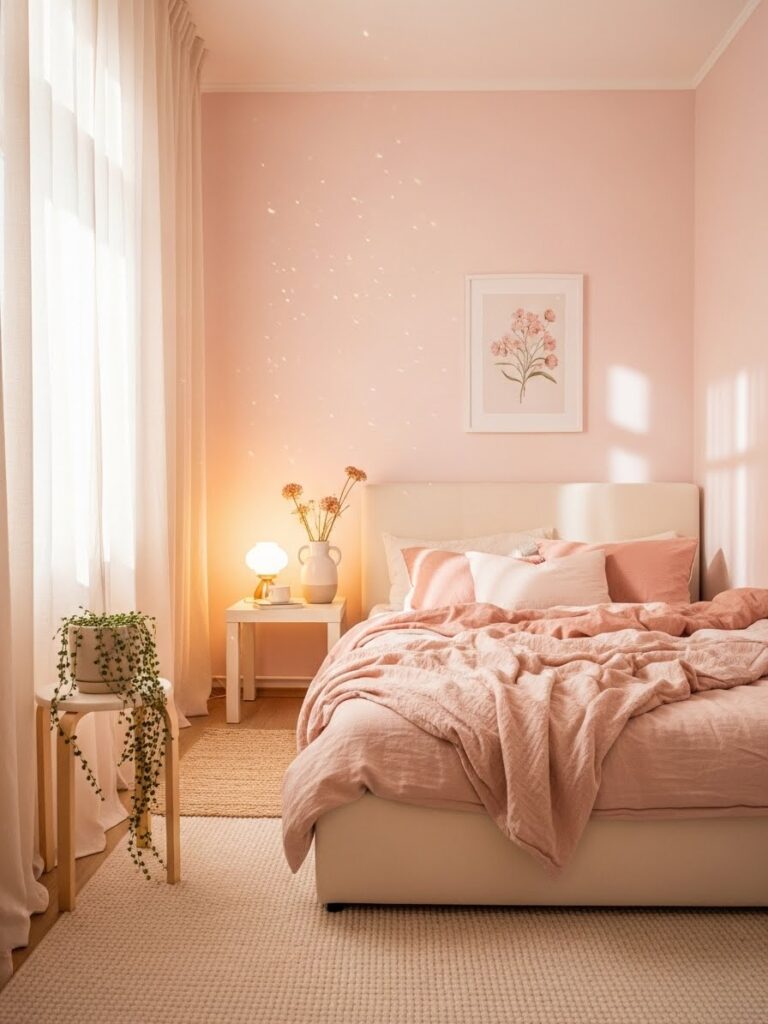
When balanced with white or cream, pastels maintain brightness while keeping the room visually calm and spacious.
6. Sage Green for a Calm, Open Bedroom
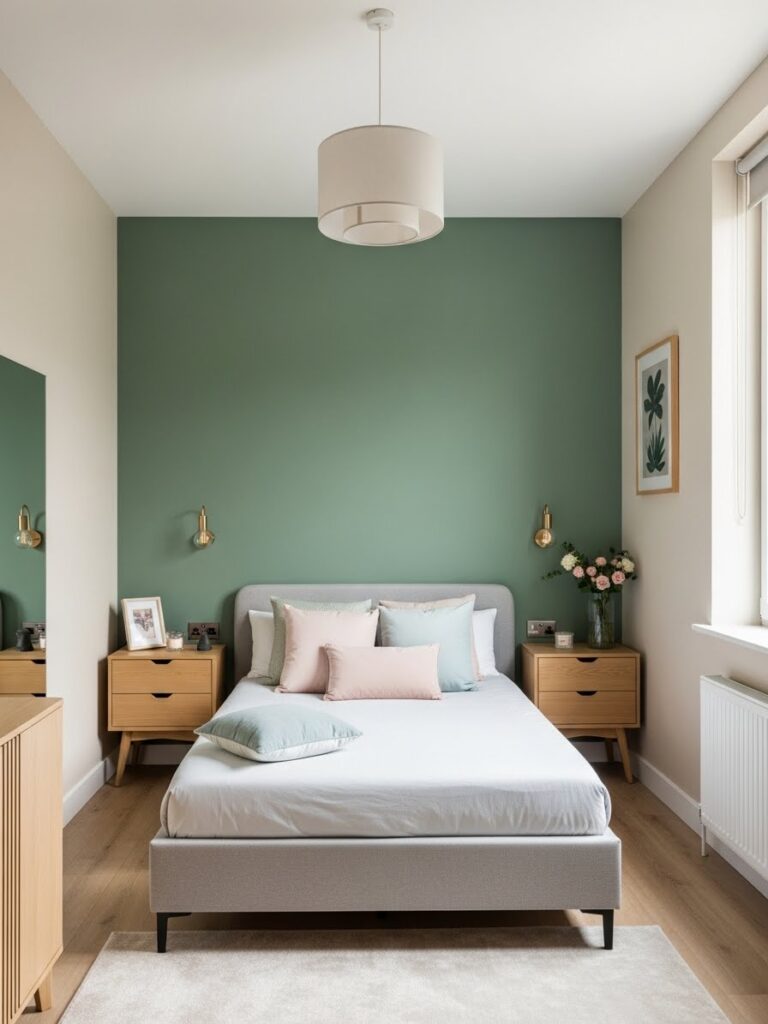
Sage green brings a nature-inspired calm that works beautifully in small bedrooms. Its muted tone prevents the room from feeling dark or enclosed.
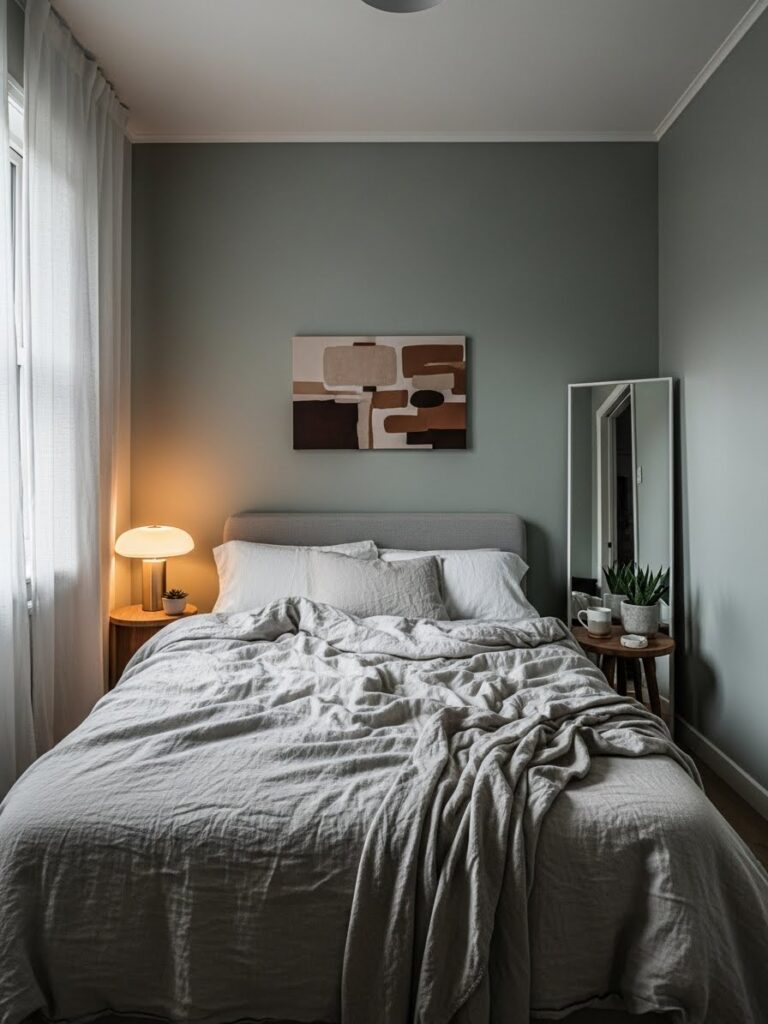
Using sage green on a single wall or through textiles allows the space to remain open while adding visual interest.
7. Pale Blue Bedroom Colors That Expand Space
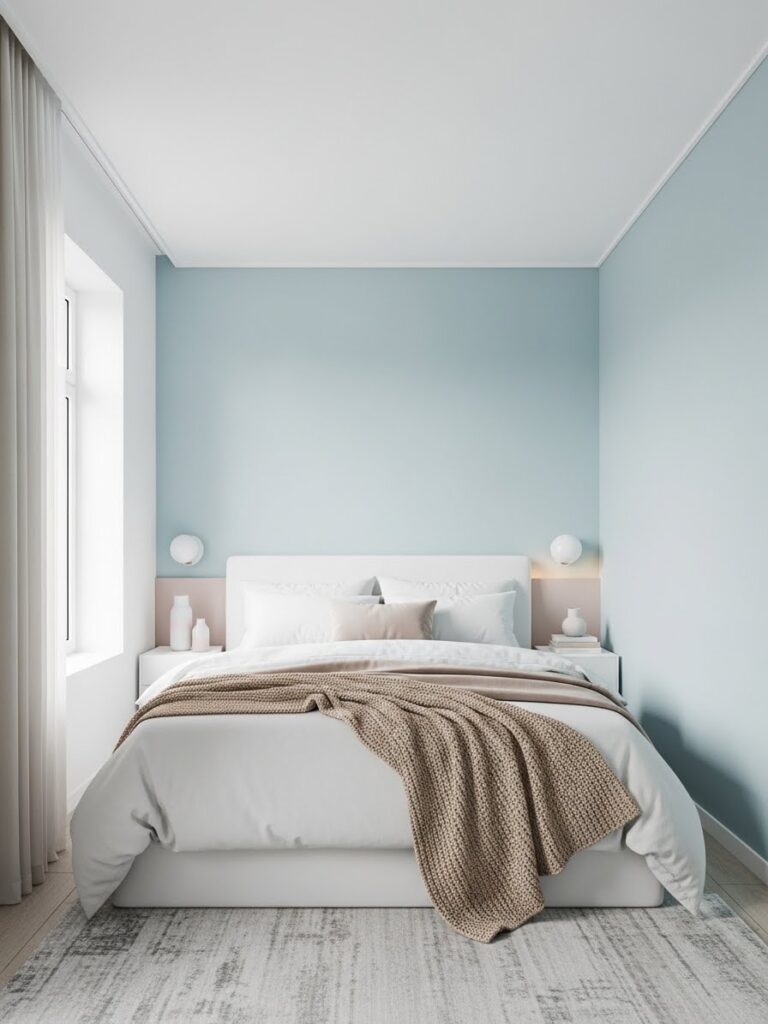
Pale blue creates a fresh and airy feeling that supports relaxation and visual openness. It works especially well in bedrooms with limited natural light.
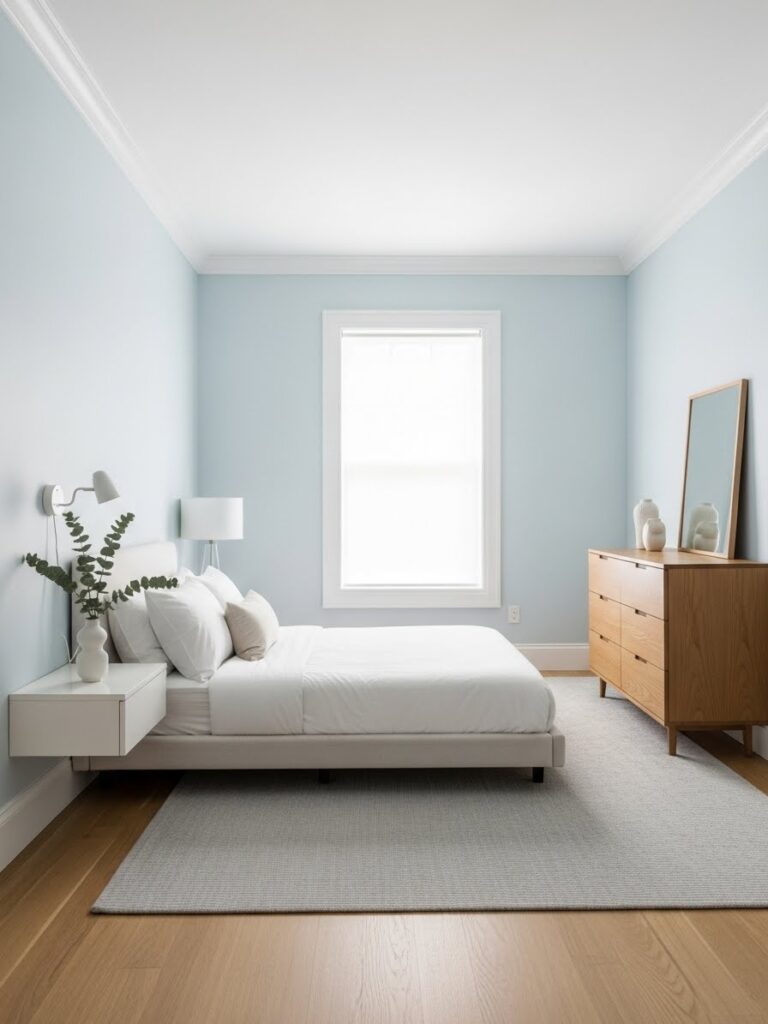
When paired with white furniture and light flooring, pale blue enhances the perception of space.
8. Neutral Monochrome Bedroom Palette
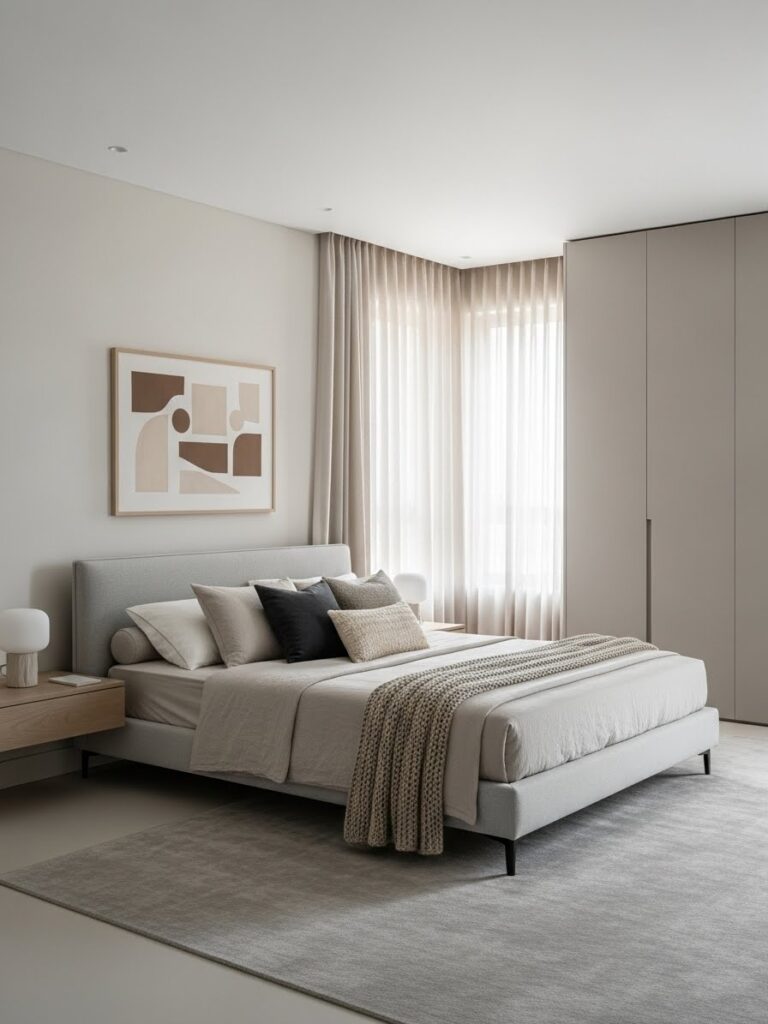
A monochrome palette uses multiple shades of the same neutral color to create depth without strong contrast. This approach avoids visual clutter.
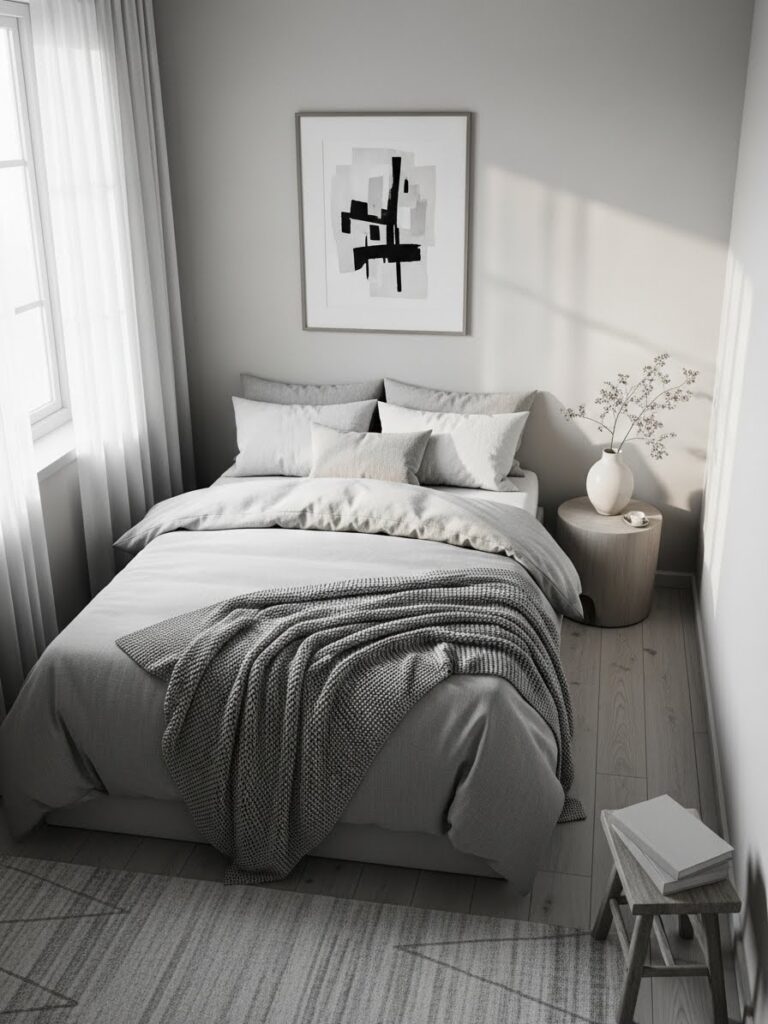
Small bedrooms benefit from monochrome schemes because they create a seamless flow across walls, furniture, and textiles.
9. White and Light Wood Color Combination
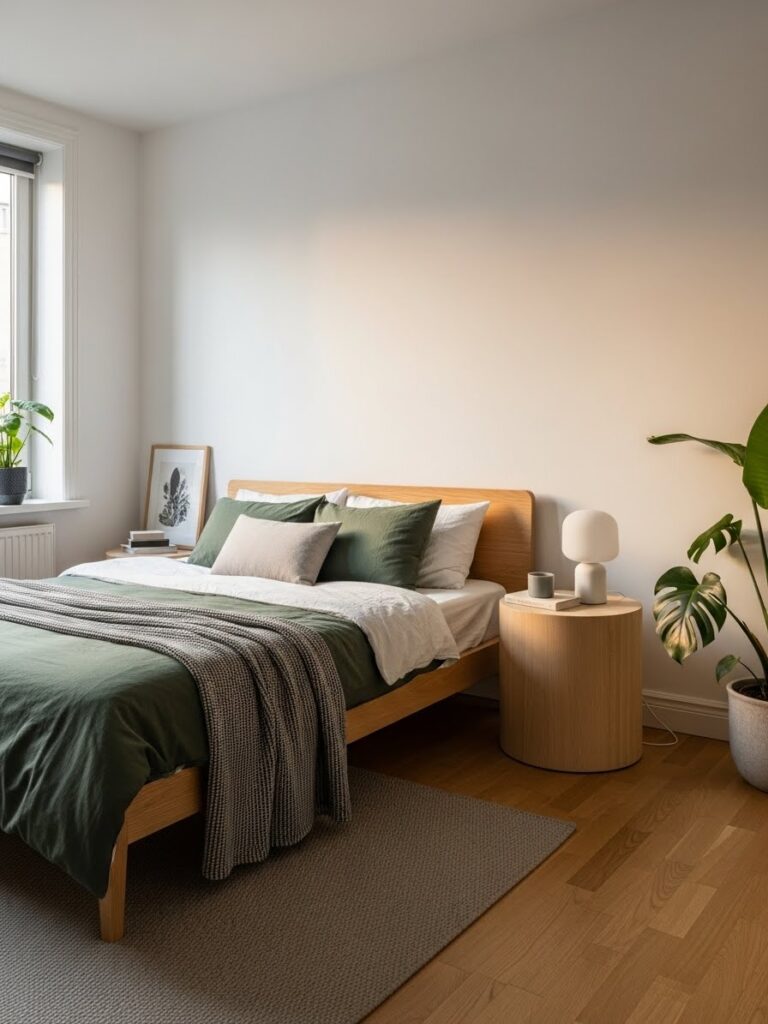
White walls combined with light wood furniture create warmth while maintaining brightness. This palette feels natural and uncluttered.
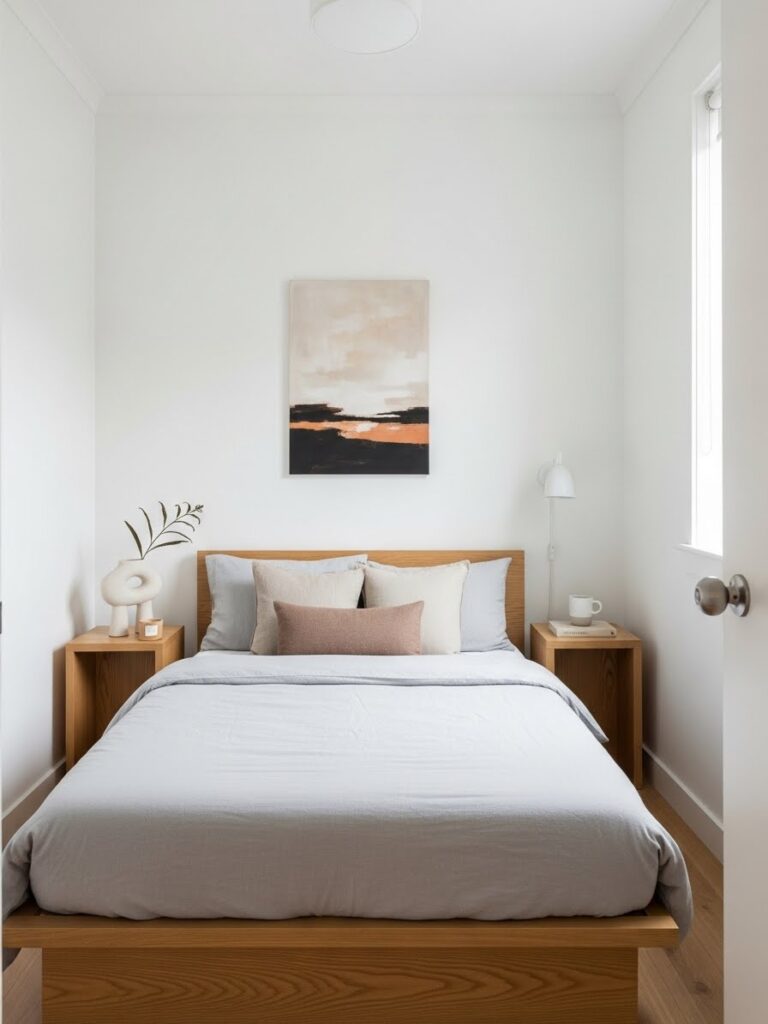
It is a popular choice in Scandinavian-inspired small bedrooms due to its simplicity and space-enhancing qualities.
10. Soft Taupe for Cozy Small Bedrooms
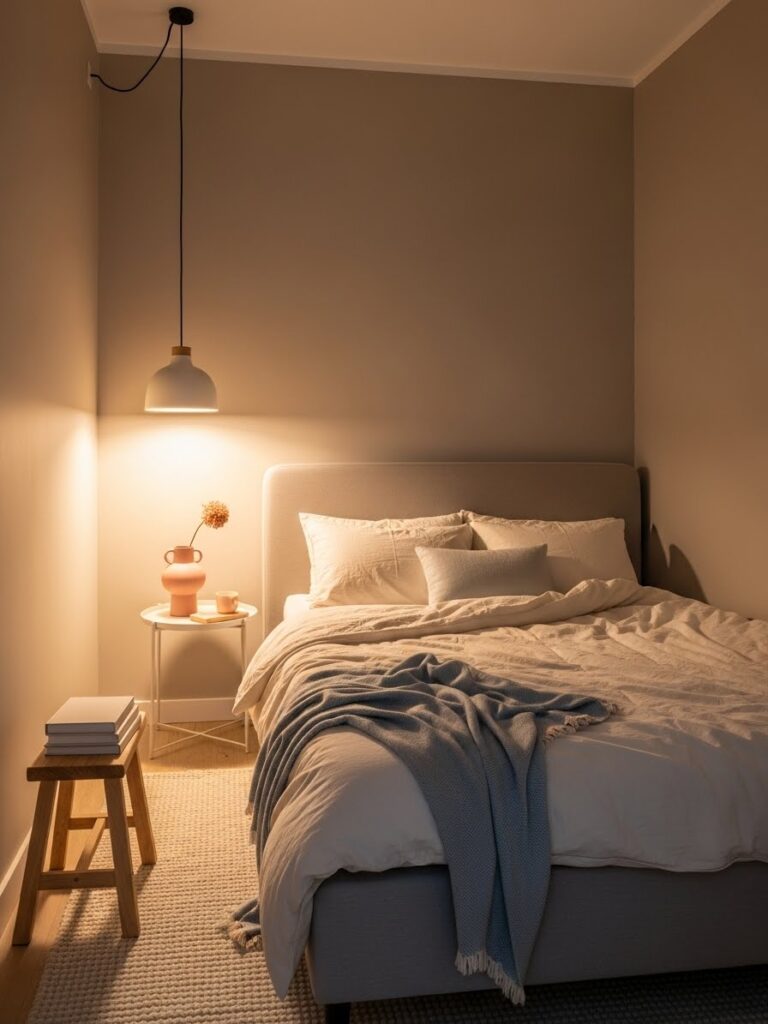
Soft taupe adds comfort and warmth without making a small bedroom feel heavy. It works well in rooms designed primarily for rest.
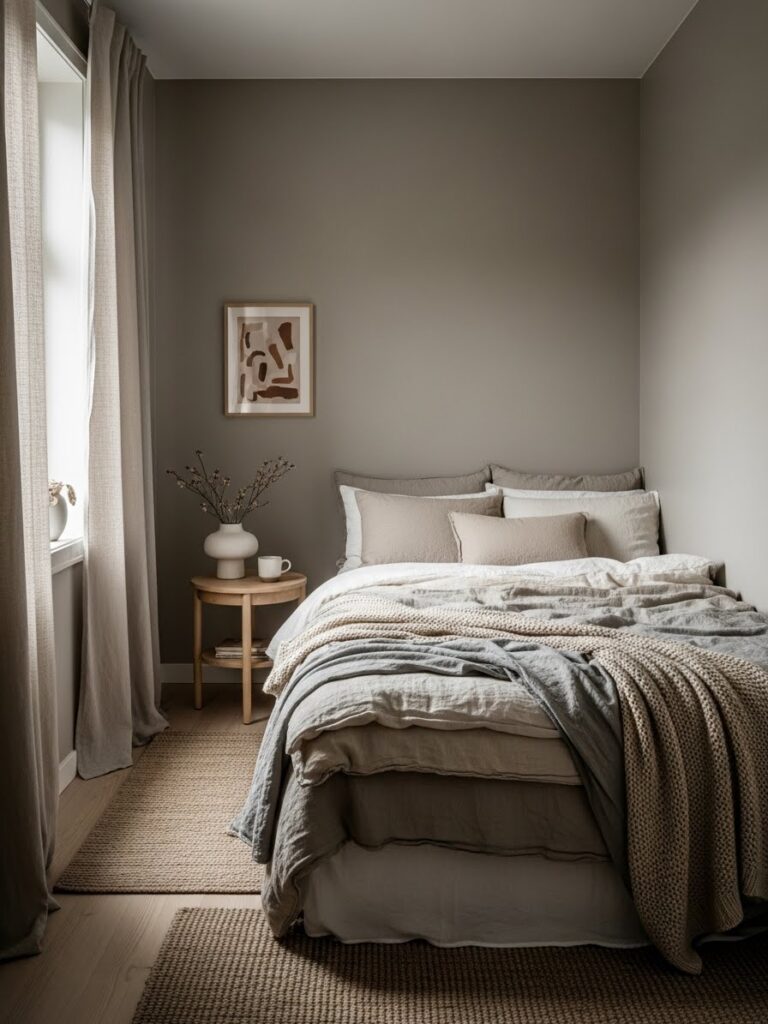
Balancing taupe with lighter bedding and soft lighting ensures the room remains open and inviting.
11. Low-Contrast Neutral Color Palettes
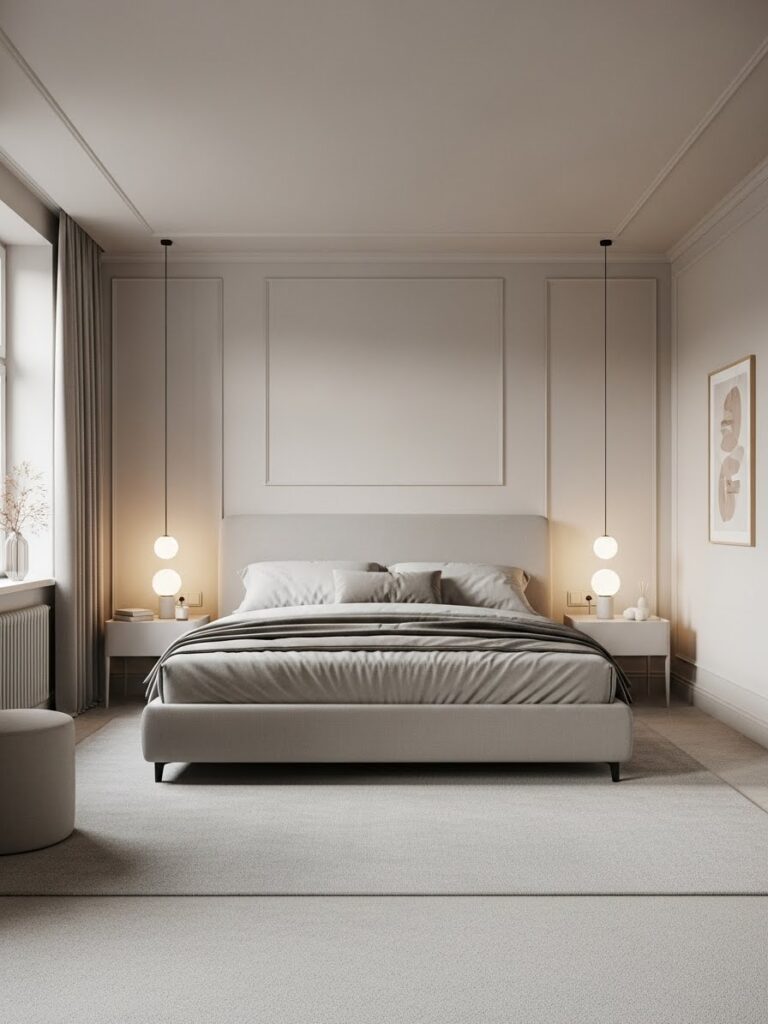
Low-contrast palettes reduce visual breaks, helping small bedrooms feel more expansive. Avoiding harsh color changes keeps the eye moving smoothly.
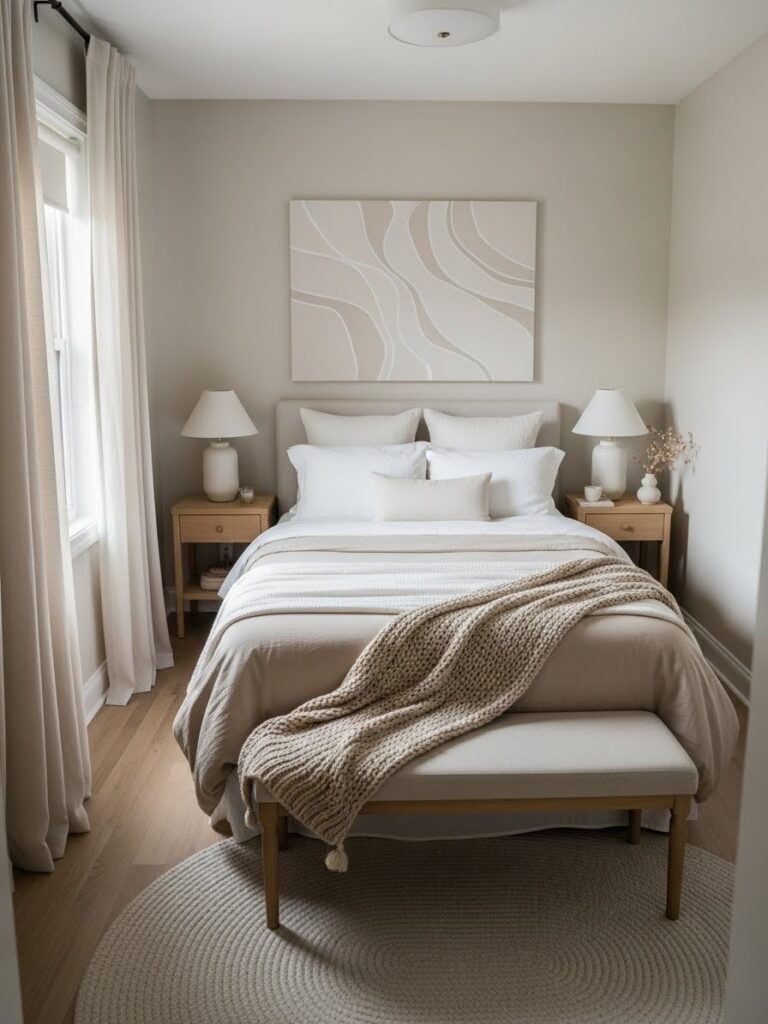
This strategy is especially useful in narrow or awkwardly shaped bedrooms.
12. Pale Green and White Bedroom Palette
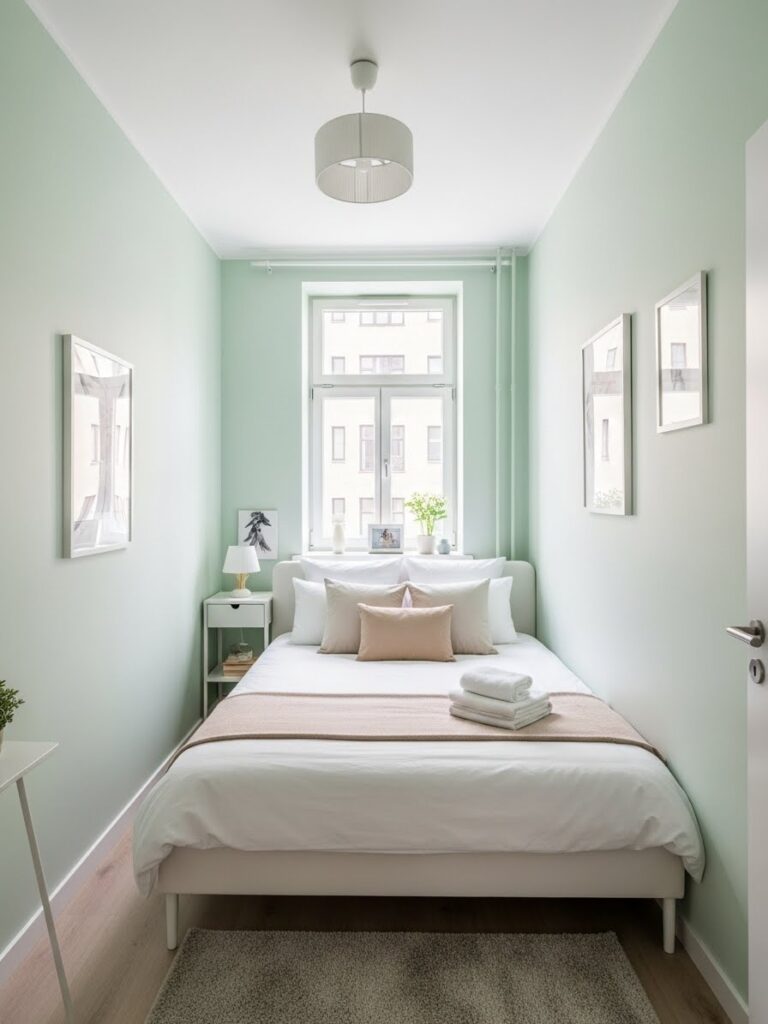
Pale green paired with white creates a fresh, clean bedroom environment. The combination supports calmness and clarity.
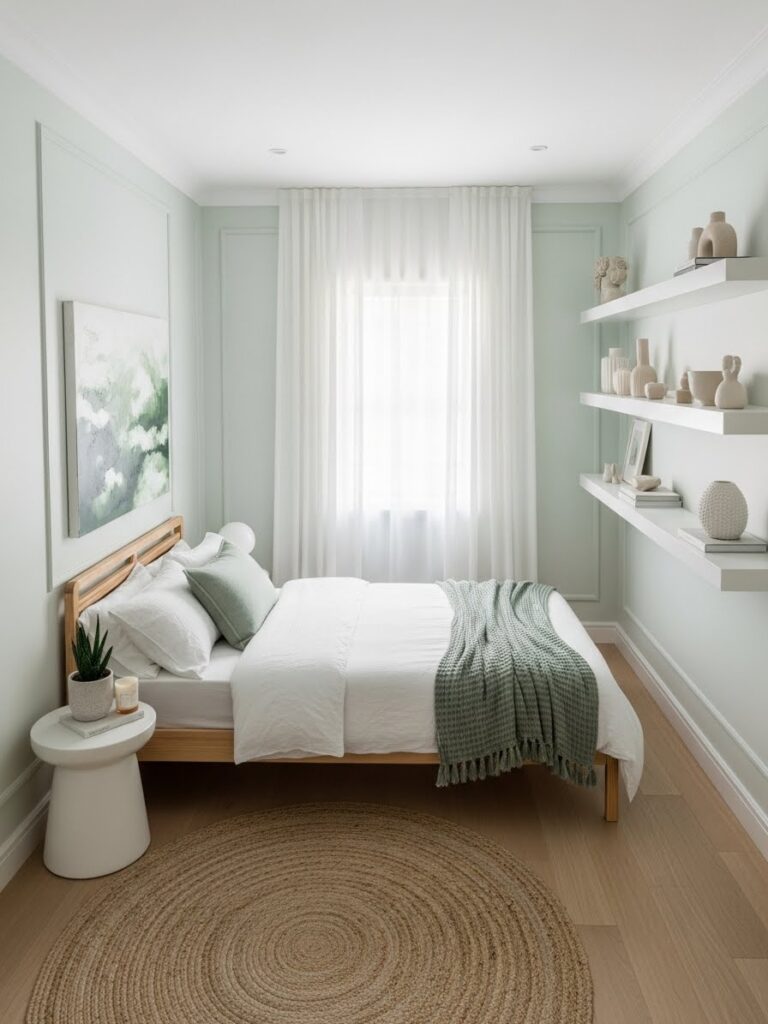
This palette works well in modern homes focused on wellness-oriented interior design.
13. Ivory and Soft Gray Layered Palette
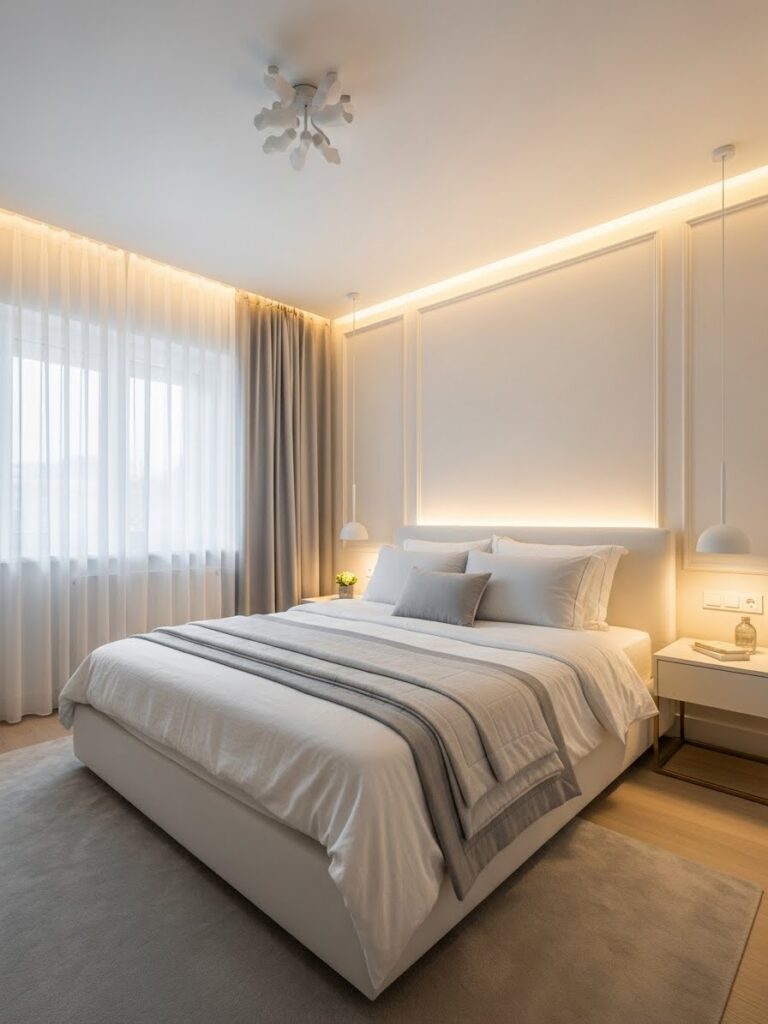
Ivory and soft gray offer gentle contrast while maintaining brightness. This combination feels refined without overpowering the space.
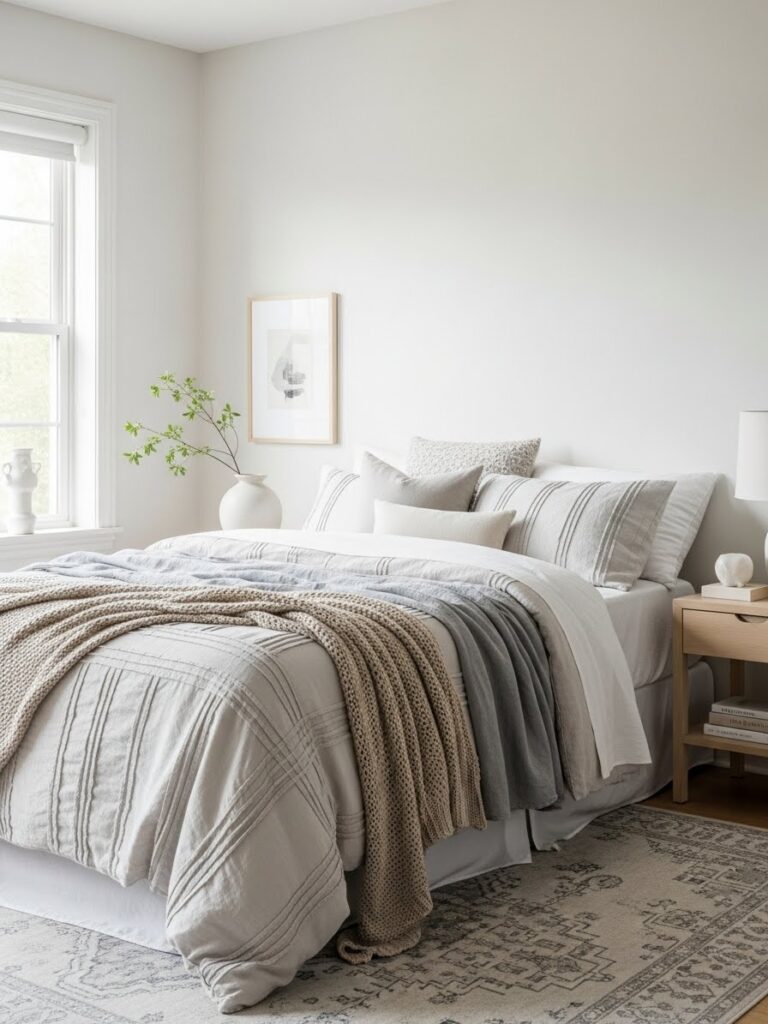
Layering these tones through textiles helps small bedrooms feel sophisticated and balanced.
14. Warm Neutral Layers for Visual Depth
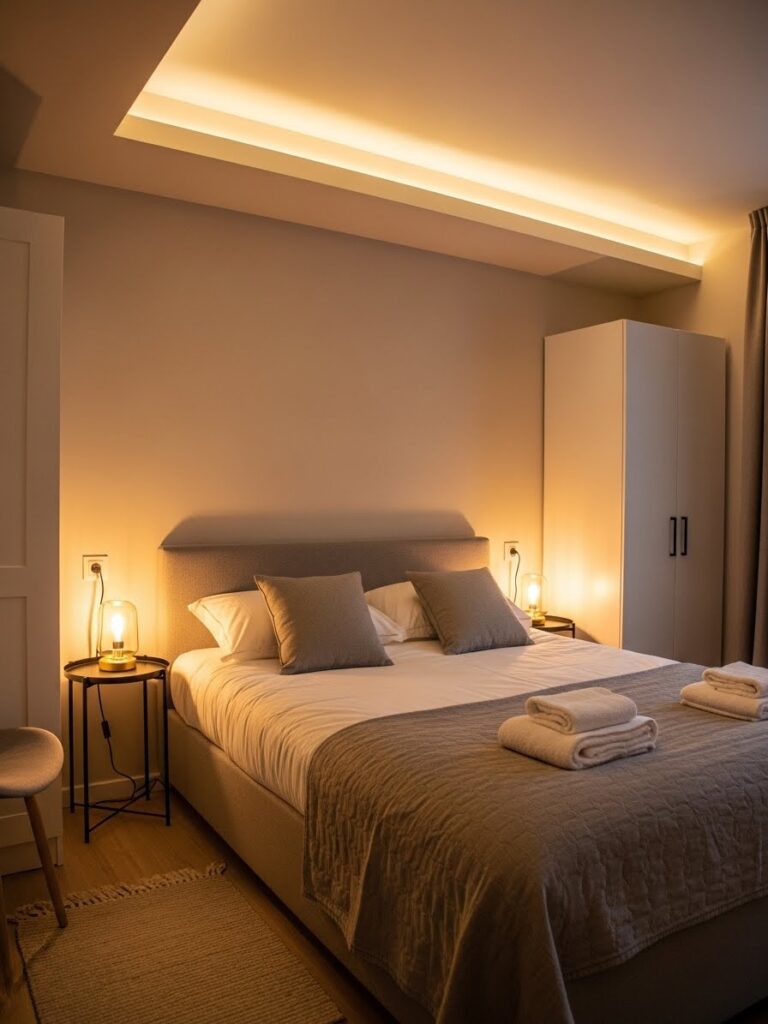
Layering warm neutrals such as cream, beige, and light taupe creates depth without closing in the room.
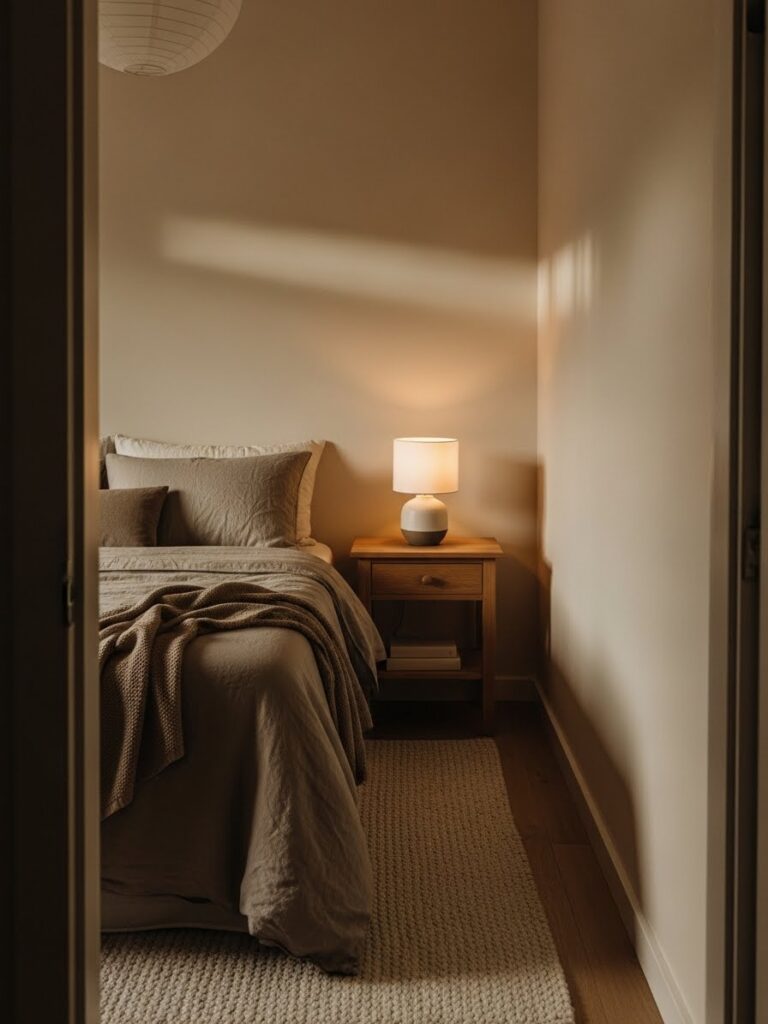
This technique is widely used in modern Color Palettes planning for compact interiors.
15. Minimalist Light Neutral Bedroom Palette
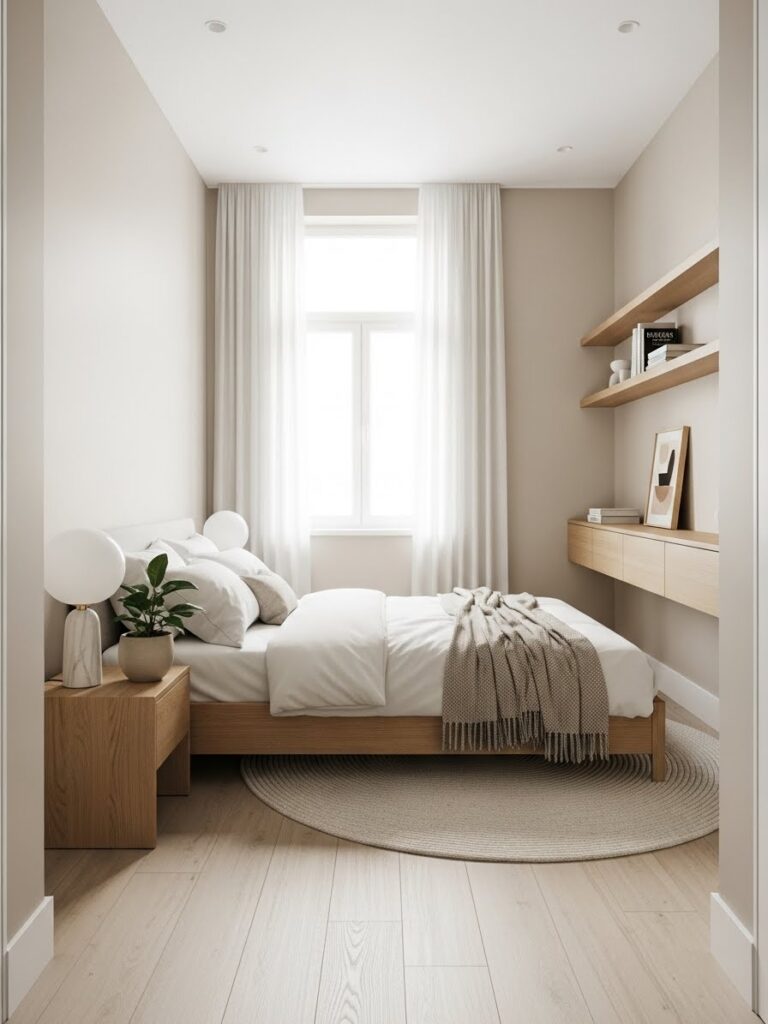
Minimalist bedrooms benefit from light neutral palettes that emphasize simplicity and openness. Fewer colors reduce visual noise, making even the smallest spaces feel calm and uncluttered. These bedroom color ideas for small rooms focus on soft whites, gentle beiges, and muted grays, which reflect light and create an airy atmosphere. By keeping the color scheme simple and cohesive, the room feels larger and more inviting, while carefully chosen accent pieces add subtle character without overwhelming the space.
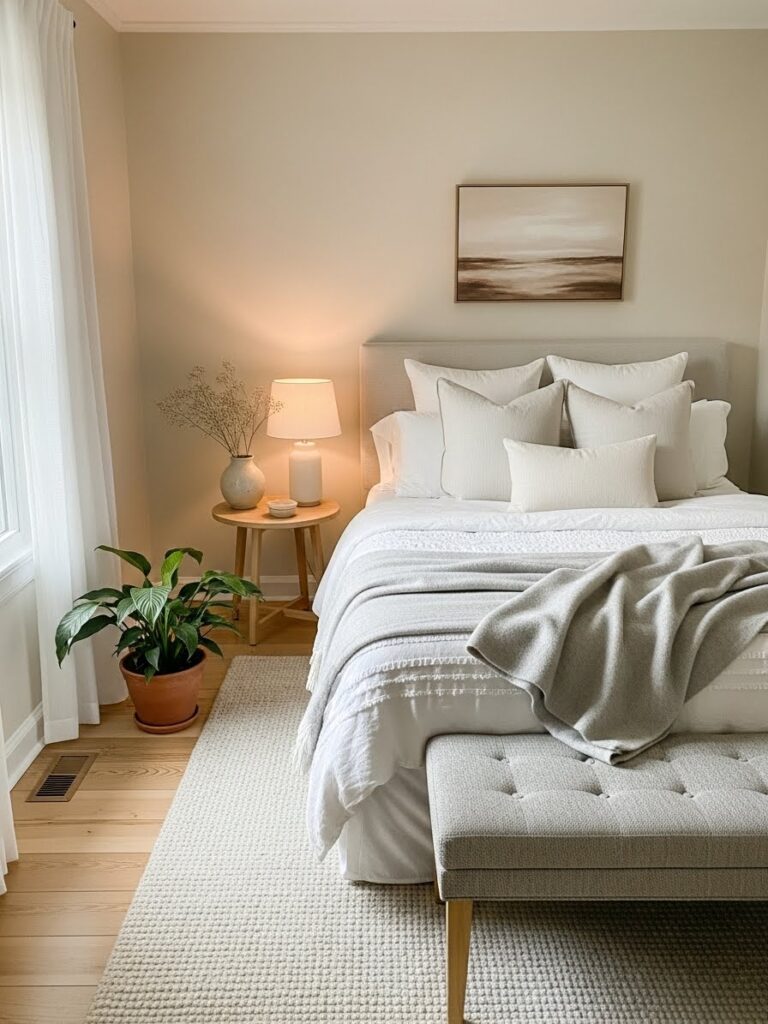
This approach is ideal for small bedrooms where clarity and calm are top priorities.
Conclusion
Small bedrooms can feel significantly larger with the right color choices. Using the best bedroom color ideas for small rooms, you can transform compact spaces into bright, inviting, and stylish retreats. By focusing on light-reflecting tones, soft contrasts, and thoughtful layering, even the tiniest rooms can appear open and airy. Adding subtle accents, such as gentle patterns, warm textures, and complementary furniture, further enhances the sense of space while keeping the room cozy and functional. With these creative approaches, small bedrooms no longer feel cramped they become beautiful, well-balanced, and visually expansive.
This article supports the Color Palettes category and works as a complementary resource to the Bedroom Color Palette Ideas for Modern Homes pillar post, strengthening long-term SEO and internal linking structure.

Amir Ali is the founder and site administrator of HomeDecorEdge, a modern home decor and interior design platform. Since starting the site, he has combined his passion for interior design, practical styling, and color coordination with hands-on content strategy and site management. He guides authors, curates high-quality articles, and ensures readers have access to actionable, visually inspiring, and user-focused home decor advice for apartments, small rooms, and family homes.