

A 52 week money saving challenge turns saving from a chore into a small weekly win, because the amounts start tiny and grow so slowly you barely notice them. Save $1 in the first week, $2 in the second, and by the end of the year you have $1,378 put aside, one week at a time. These 52 week money saving challenge ideas give you twelve ways to play it, so you can pick the version that fits your money, your habits and your goals.
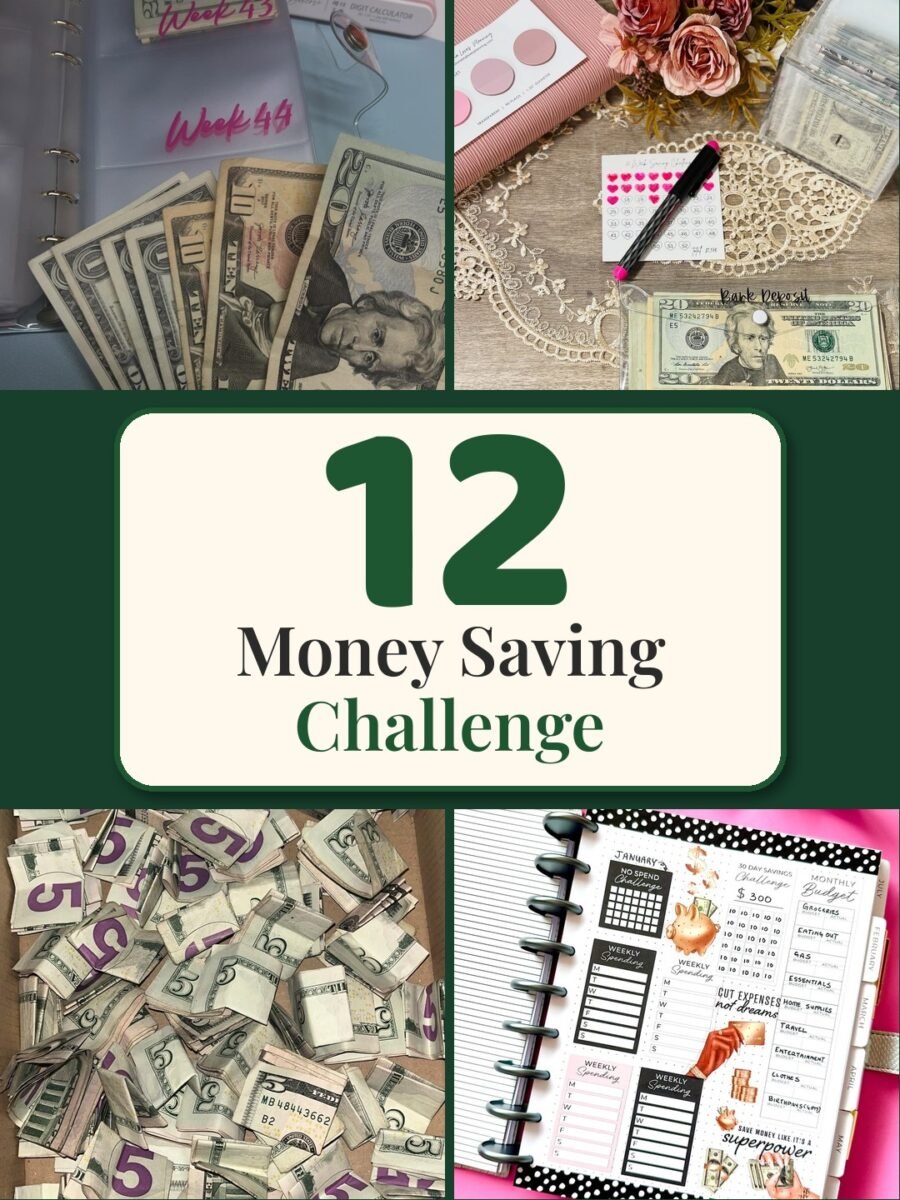
The twelve ideas below start with three full builds, the classic challenge, the reverse challenge and the five dollar bill challenge, then move through lighter versions, no spend weeks, round ups, cash envelopes and a date night jar, and finish with a coin jar, a payday plan, a flat weekly amount, a pack your lunch twist and a vacation fund. If you like starting the year with a clear picture of where you are headed, our vision board ideas for the new year help you set the goal your savings will fund.
You do not need special supplies. A jar or a binder, some envelopes, a pen and a printed tracker cover almost every idea on this page. One rule matters more than any other: keep the saving visible and the amount honest, so the habit survives the weeks when money is tight and the total still adds up.
Work from the version that feels easiest, because a challenge you enjoy in week 1 is a challenge you finish in week 52. Start tonight with $1 in a jar, add a tracker to the fridge, and by the same week next year you will have a real sum saved and a habit worth keeping.
Quick Picks
- Best place to start: Classic 52-Week Challenge (idea 1)
- Easiest to stick with: Five Dollar Bill Challenge (idea 3)
- Biggest total: Classic and Reverse Challenges, $1,378 each (ideas 1 and 2)
1. Classic 52-Week Challenge
BuildAbout 30 minutesBeginner friendly
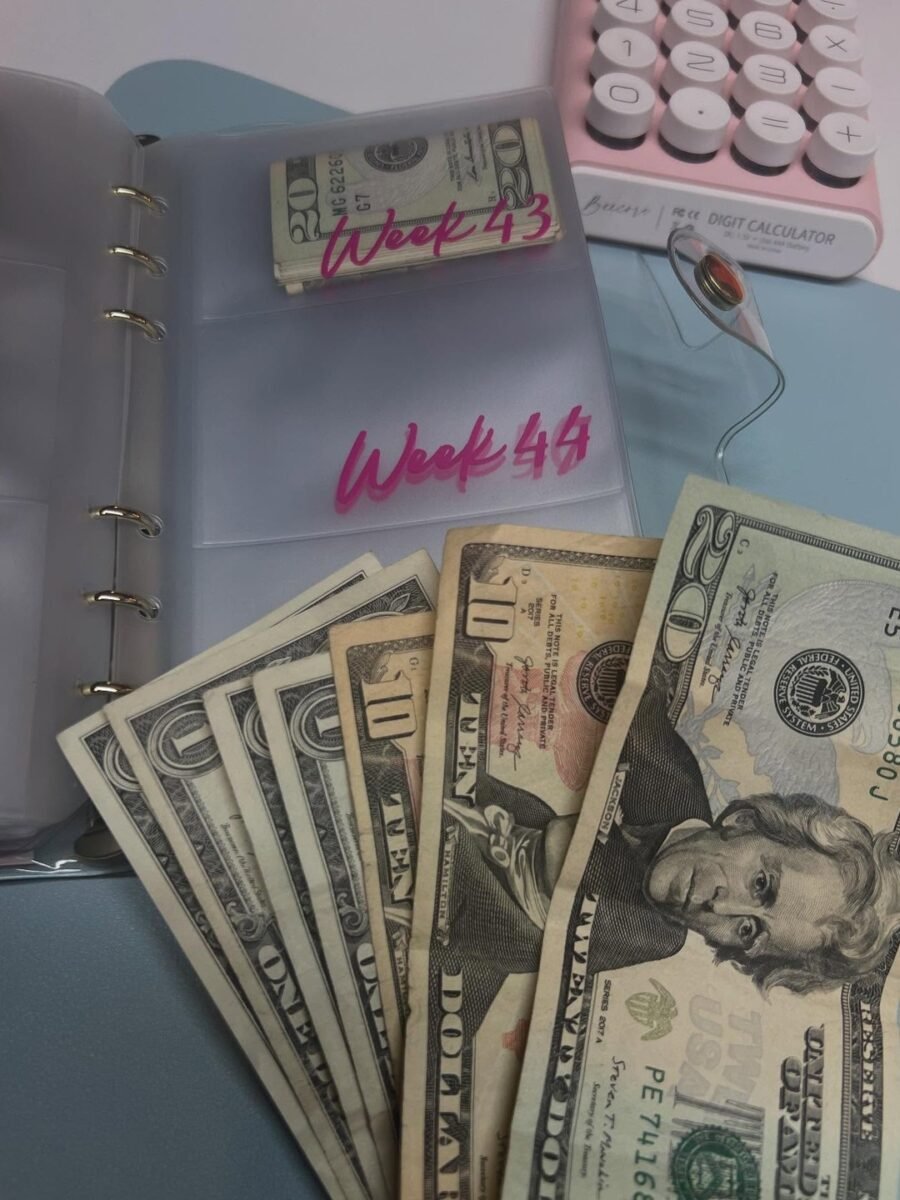
The classic 52 week money saving challenge is the one everyone starts with, because the rule could not be simpler. In week 1 you save $1, in week 2 you save $2, and you keep adding one dollar each week until week 52, when you save $52. By the last week you will have saved $1,378 in total, which is a real sum for a holiday, an emergency cushion or a big goal. A binder with clear pockets keeps every week separate, so you always know exactly where you stand.
Materials Needed
- A ring binder with 52 clear pocket pages, or a large glass jar
- 52 small labels or stickers, numbered 1 to 52
- A printed 52 week tracker sheet
- A pen for marking off each week
- Cash for week 1, just $1 to start
- A calculator for checking your running total
How to Make It
- Label the 52 pockets or envelopes with the numbers 1 to 52, in order, so week 1 is easy to find.
- Put $1 in pocket 1 in the first week and cross week 1 off on the tracker sheet.
- Each week add one more dollar than the week before, so week 2 gets $2, week 3 gets $3, and so on.
- Count the pockets at the end of each month to check your running total against the tracker.
- If a week is tight, swap it with a cheaper later week and pay the difference the next week.
- In week 52 put $52 in the last pocket, count the whole binder, and enjoy your $1,378.
Tip: Keep the binder somewhere you see it every day, because a challenge you can see is a challenge you finish, and a hidden jar is easy to forget.
2. Reverse 52-Week Challenge
BuildAbout 30 minutesBeginner friendly
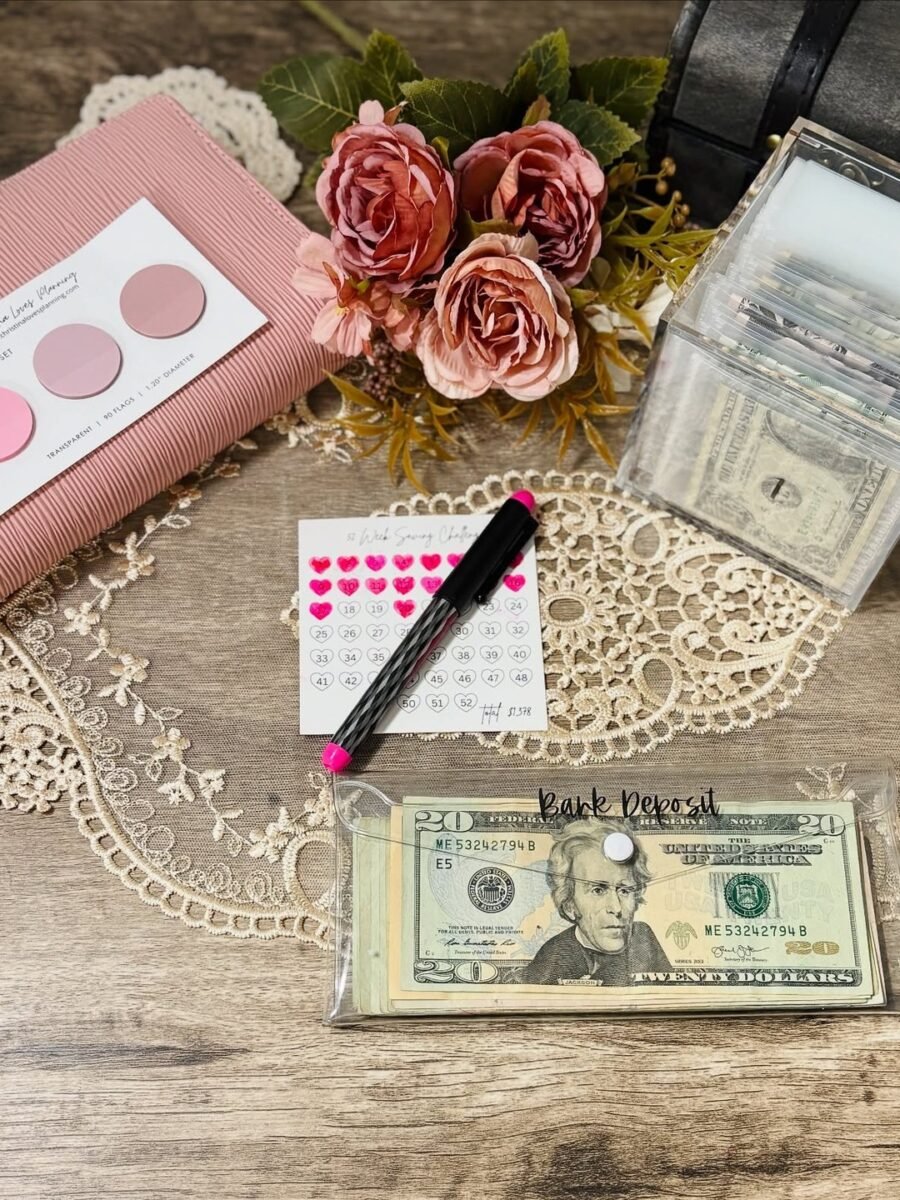
The reverse 52 week money saving challenge flips the classic order, so the hardest weeks come first and the easy weeks come last. You save $52 in week 1, $51 in week 2, and keep going down by one dollar each week until week 52, when you save just $1. The total is the same $1,378, but the finish feels gentle, which is why so many people prefer this version when the new year starts with fresh motivation.
Materials Needed
- A planner or notebook for tracking the weeks
- A glass jar, box or binder to hold the cash
- A printed reverse tracker, numbered 52 down to 1
- A pen or marker for crossing off weeks
- Cash for week 1, $52 to start
- Small envelopes, optional, for keeping weeks separate
How to Make It
- Write the numbers 52 down to 1 on your tracker, one number for each week of the challenge.
- In week 1 put $52 in the jar or binder and cross 52 off the tracker.
- Each week save one dollar less than the week before, so week 2 gets $51 and week 3 gets $50.
- Keep the jar or binder in plain sight so the falling amounts feel like progress every week.
- If the first weeks feel heavy, split the $52 into two smaller deposits a few days apart.
- In week 52 save just $1, cross off the last number, and count your $1,378.
Tip: Start the reverse challenge in a month when money is comfortable, because the first four weeks add up to $202 and a strong start sets the tone for the whole year.
Seasonal Special
Winter Home Reset Kit
8 printable pages to warm up your home, get holiday guest ready and stay cozy all season.
Get the Kit3. Five Dollar Bill Challenge

BuildAbout 15 minutesBeginner friendly
The five dollar bill challenge is the easiest version on this page, because there is no weekly amount to remember and no tracker to fill in. Every time a five dollar bill lands in your hands, from change at a shop or cash from a friend, it goes straight into a box instead of your wallet. The bills pile up quietly, and by the end of the year the box holds a surprising amount of money you never missed.
Materials Needed
- A sturdy box, jar or tin with a lid
- A label or tag that reads five dollar bills
- A pen for writing the start date on the box
- A safe spot on a shelf or in a drawer
- A small notebook, optional, for counting deposits
- A rubber band for bundling full stacks of bills
How to Make It
- Pick a box or jar that is big enough to hold a year of five dollar bills and label it clearly.
- Put the box somewhere handy, near where you empty your pockets or bag each day.
- Every time you get a five dollar bill in change, drop it in the box right away, before you can spend it.
- Bundle the bills with a rubber band every time the box holds about twenty of them, so they stay tidy.
- Count the box once a month and write the total in a small notebook so you can watch it grow.
- At the end of the year open the box, count the full total, and move it to savings or your goal.
Tip: Tell the people you live with about the rule, because a five dollar bill only reaches the box if everyone in the house knows it is off limits for spending.
4. No-Spend Weeks Challenge

A no spend week is a planned pause, not a punishment. Pick one week each month where you buy only the basics, food, fuel and bills, and skip takeout, new clothes, online orders and impulse buys. Move the money you would have spent straight into your savings jar, and most people find $50 to $100 a week they never knew they had. Mark the no spend weeks on the planner at the start of the year so they never clash with birthdays or trips.
You’ll need: a planner or calendar, a pen, and a list of your usual weekly treats to skip.
Best for: Months when spending has crept up and needs a reset
5. Round-Up Challenge

The round up challenge saves the spare change from every purchase. If you buy a coffee for $3.40, the 60 cents rounds up to $4 and goes to savings, either into a jar at home or through a banking app that moves the difference automatically. It feels like nothing at the time, but a few purchases a day add up to $10 to $20 a week, which is $520 to $1,040 over 52 weeks. Keep a coin jar by the door for cash purchases so the habit works both ways.
You’ll need: a jar for coins, or a banking app with a round up feature turned on.
Best for: People who pay by card and want saving on autopilot
Printable Planner
The 30-Day Declutter Challenge
15 minutes a day, room by room, to a calm and tidy home. 47 pages with checklists and labels.
6. Cash Envelope Challenge
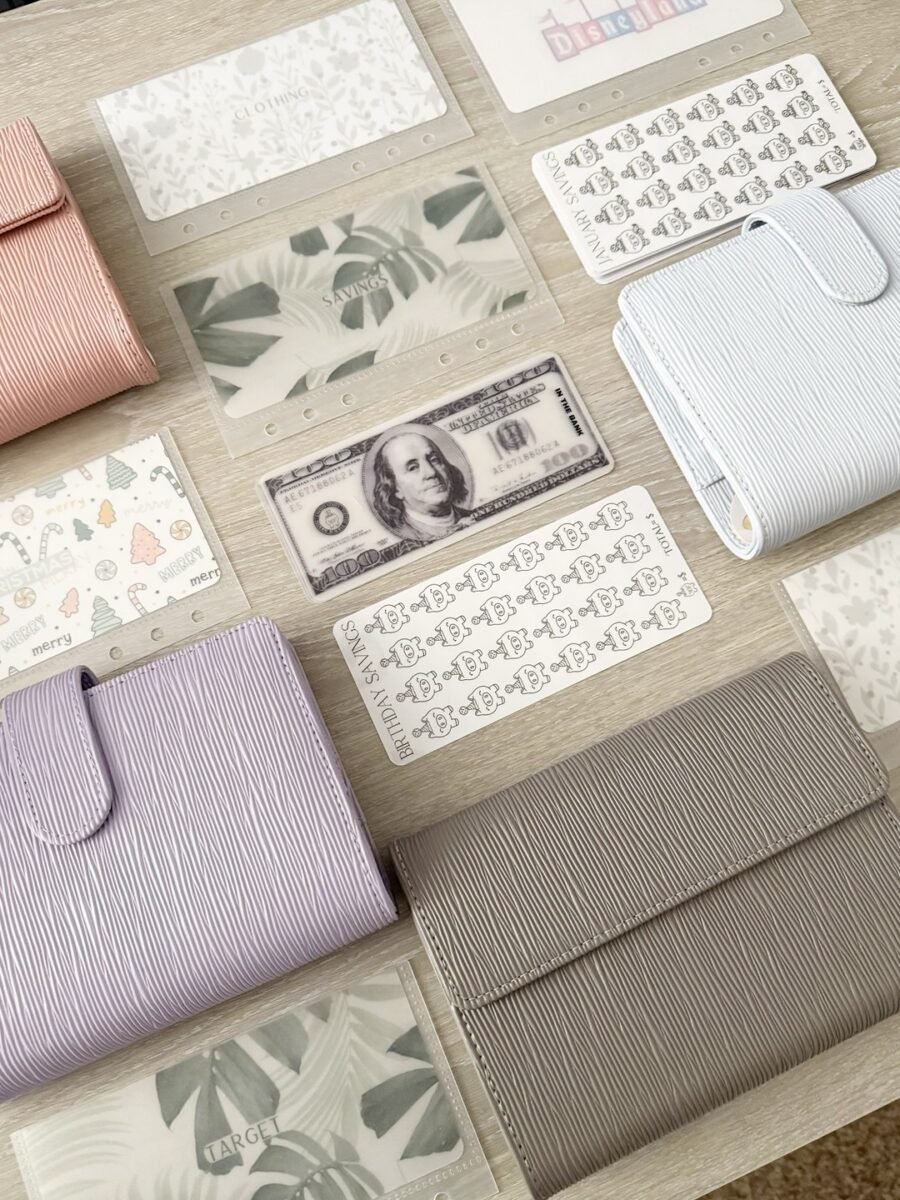
The cash envelope challenge gives the classic 52 week plan a physical form. Number 52 envelopes from 1 to 52, put the matching cash in one envelope each week, and watch the stack grow. Envelope 1 holds $1, envelope 52 holds $52, and the full set adds up to $1,378, the same as the classic challenge, but you can see and touch your progress. Keep the finished envelopes in a binder so none go missing before the year ends.
You’ll need: 52 envelopes, a pen, a binder or box to hold them, and cash each week.
Best for: Cash spenders who want every dollar to have a job
7. Date-Night Jar Challenge

The date night jar challenge turns saving into something to look forward to. Each week you and your partner put $10 into the jar and drop in a heart or a slip of paper with a date idea, a picnic, a movie night, a cooking class, a walk at sunset. After 52 weeks the jar holds $520, which pays for a year of small dates or one big night out. Pull a heart from the jar each week so the saving and the dating happen together.
You’ll need: a glass jar, small wooden hearts or paper slips, a pen, and $10 in cash each week.
Best for: Couples who want saving to feel like fun, not a chore
8. Spare Change Coin Jar Challenge

The spare change coin jar is the oldest saving trick there is, and it still works. Every evening, empty your pockets and purse into the jar, coins and small bills alike, and leave it alone for 52 weeks. Most households collect $300 to $500 in a year this way without ever feeling the loss, because the money was already spent in your head. Put the jar somewhere you pass daily so the evening routine sticks.
You’ll need: a large glass jar, a label, and the habit of emptying your pockets each evening.
Best for: Anyone with a pocket full of loose change at the end of the day
9. Payday Challenge

The payday challenge ties saving to the day money arrives, which is when willpower is strongest. Every payday, move a fixed amount, $25 is a good start, into savings before you spend anything else, and write it in the planner next to your bills. With 26 paydays in a year, $25 each time adds up to $650, and raising it to $50 a payday reaches $1,300. The planner keeps the habit honest, because every payday has a line for saving right beside the lines for rent and food.
You’ll need: a paycheck budget planner, a pen, and a fixed amount to move on every payday.
Best for: People paid every two weeks who want saving tied to payday
10. Flat $20 a Week Challenge

The flat $20 a week challenge is the simplest version for people who dislike rising amounts. Save the same $20 every week for 52 weeks and you will have $1,040 at the end of the year, with no maths and no tracker to fill in. Put each $20 in its own envelope so a tight week cannot quietly borrow from the pile, and count the envelopes once a month to watch the stack grow. It is a good middle ground between the classic challenge and the five dollar bill box.
You’ll need: 52 envelopes, a pen, and $20 in cash each week.
Best for: People who like a flat, predictable weekly amount
11. Pack-Your-Lunch Challenge

The pack your lunch challenge saves the difference between buying lunch and making it. Pack lunch three days a week instead of buying it, and put the money you would have spent, about $7 a day, into your savings jar. Three packed lunches a week saves about $21 a week, which is about $1,092 over 52 weeks, and the food is usually healthier too. Plan the lunches on Sunday night so a busy morning never becomes an excuse to buy lunch again.
You’ll need: reusable lunch boxes, a weekly meal plan, and a jar for the money saved.
Best for: Workers and students who buy lunch out most days
12. Vacation Fund Challenge

The vacation fund challenge works because the goal is something you can see. Put $25 in the jar each week, stick a photo of your destination on the wall above it, and watch the fund grow toward a real trip. After 52 weeks you will have $1,300, enough for flights, a hotel stay or a long weekend away, depending on where you are headed. Label the jar TRAVEL and keep it next to the map, because a visible goal is much harder to raid for everyday spending.
You’ll need: a glass jar, a TRAVEL label, a world map or photo of your destination, and $25 a week.
Best for: Anyone saving toward a trip they can picture
Frequently Asked Questions
How much money do you save with the classic 52 week money saving challenge?
The classic version adds up to $1,378. You save $1 in week 1, $2 in week 2, and keep adding one dollar each week until $52 in week 52. The maths is simple: 1 plus 2 plus 3, all the way to 52, equals $1,378.
What is the reverse 52 week money saving challenge?
The reverse challenge saves the same $1,378, but in the opposite order. You start with $52 in week 1, then $51, then $50, and keep going down by one dollar each week until just $1 in week 52. It suits people who have more money at the start of the year and like an easy finish.
Can I start the 52 week money saving challenge at any time of year?
Yes, you can start in any week of the year. The challenge is 52 weeks long from whenever you begin, so a January start finishes in December, but a March start finishes the next February. Pick a payday or the first of a month so the weekly habit is easy to remember.
What should I do if I miss a week of the challenge?
Just catch up the next week, or swap the missed week with a cheaper one later in the plan. If you miss week 40, save $40 the following week along with that week’s amount, or save a smaller amount now and pay the difference before the challenge ends. One missed week does not spoil the challenge.
Do I need to use cash, or can I save in a bank account?
Either works. Cash in a jar or binder feels real and keeps the challenge visible, which helps many people stick with it. A separate savings account works too, and it is safer for larger amounts. Set up a weekly transfer for the same amount on the same day each week, and check the balance once a month.
Which 52 week money saving challenge variation is best for beginners?
The classic challenge and the five dollar bill challenge are the best for beginners. The classic version starts with just $1, so the first weeks cost almost nothing, and the five dollar version needs no tracker at all. Pick the one that fits your habits and start this week, even if the amount is small.
Final Thoughts on 52 Week Money Saving Challenge
Twelve variations, and the pattern is simple: pick a weekly amount you can afford, keep it visible, and let the weeks do the work. The classic and reverse challenges both reach $1,378, the five dollar bill box grows on its own, and the envelope, round up, payday and lunch versions fit saving into routines you already have. You do not need all twelve, because one version done for the full 52 weeks beats three versions started and dropped. If you want the year to start with a clear plan, our glow up checklist pairs well with a savings goal, covering habits, home and money in one simple list.
Start this week with just $1 in a jar or an envelope, because the first deposit is the hardest part and every week after it gets easier. Print a tracker from our shop if a ready made planner helps you stay on track, then check off week 1 tonight. By the same week next year your jar, binder or account will hold a sum that felt out of reach on day one, and the habit will be yours to keep.

