


Small kids closets can feel like puzzle boxes where nothing quite fits. But here’s the truth: tiny closets just need smarter strategies, not more space. With the right organization tricks, even a closet the size of a broom cupboard can hold everything your child needs.

Ready to make your tiny closet work harder? These ideas prove size doesn’t matter when you’ve got the right systems! For more ways to organize your child’s entire space, check out our complete kids organization ideas collection.
1. Install Double Hanging Rods to Maximize Vertical Space
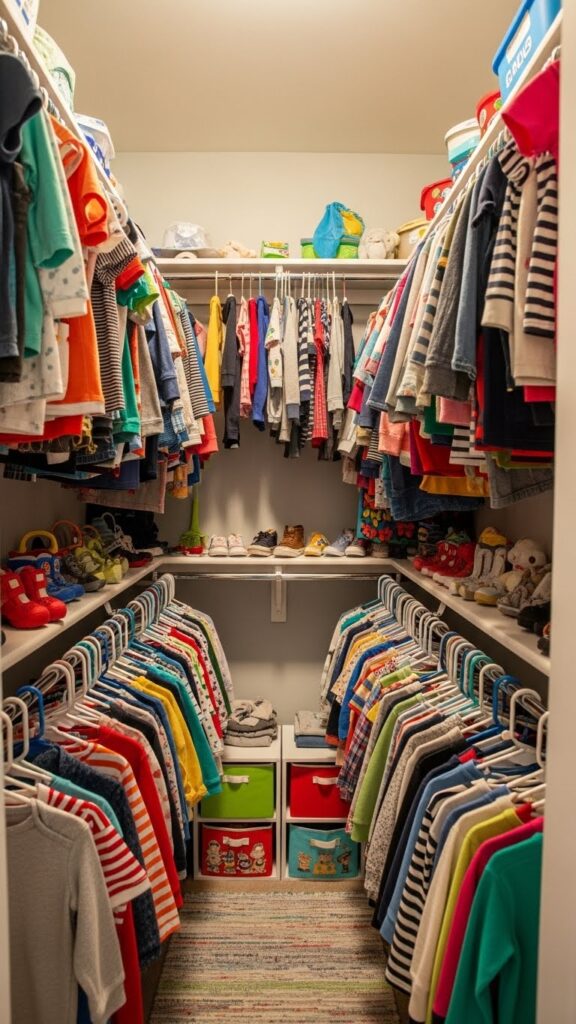
Two hanging rods instantly double your hanging capacity without taking more floor space. Kids’ clothes are shorter than adult clothes, so you can easily fit a second rod below the first one. Install the top rod at about 5 feet and the bottom one around 3 feet for easy kid access. Use the upper rod for out-of-season clothes or less frequently worn items. The lower rod becomes your child’s everyday selection zone. This single change can transform a cramped closet into functional storage. For more comprehensive organization strategies, explore our main guide on kids closet organization ideas with 27 solutions. Your vertical space just became your best friend!
2. Use Slim Velvet Hangers to Fit More Clothes

Slim hangers can literally double the number of items you can hang in a small closet. Regular plastic hangers take up about 1 inch of rod space each, while slim hangers use only half an inch. Velvet coating prevents clothes from slipping off, which is perfect for slippery dresses and silky fabrics. Switch out all your mismatched hangers for one uniform slim type and watch your rod space expand. They’re available at Target, Amazon, and HomeGoods in fun colors kids love. The investment pays off immediately when you see how much more fits. Plus, the uniform look makes everything feel more organized. Who knew hangers could be this powerful?
3. Add Over-the-Door Shoe Organizers for Instant Storage

Over-the-door organizers add storage without stealing precious floor or shelf space. These simple hangers hook over any door and create instant homes for shoes, socks, accessories, and even small toys. The clear pockets let kids see everything at a glance, which reduces “I can’t find it” meltdowns. Use larger pockets at the bottom for boots and sneakers, smaller top pockets for hair accessories and socks. Installation takes literally 30 seconds with no tools required. Some families use two organizers—one for shoes, one for accessories. If you’re working with apartment restrictions, our space-saving kids closet storage ideas show more renter-friendly solutions. Your door just became prime real estate!
4. Install Vertical Hanging Shelves for Folded Items

Vertical hanging shelves make use of wasted height in small closets without requiring installation. These fabric organizers hook onto your existing closet rod and drop down to create multiple shelving levels. Stack folded t-shirts, pajamas, and pants in each compartment so everything stays visible and accessible. They work brilliantly in closets too small for traditional shelving units. When you need to reconfigure, simply unhook and relocate—perfect for renters. Some versions include built-in drawers for socks and underwear. For more ways to maximize height, check out our dedicated guide on vertical storage ideas for kids closets. Your ceiling height just became usable space!
5. Use Under-Shelf Baskets to Capture Dead Space

Under-shelf baskets capture the awkward space between shelves that usually goes to waste. These clever wire baskets slide over existing shelf edges and hang underneath, creating bonus storage instantly. Use them for lightweight items like mittens, hats, socks, or hair accessories. They’re especially valuable in small closets where every inch counts. The open wire design keeps items visible so kids can find what they need. Installation is tool-free—just slide the basket over the shelf edge and you’re done. They’re available at dollar stores for under $5 each. For more budget-friendly tricks, our budget-friendly kids closet organization hacks include tons of affordable solutions. Your shelves just got smarter!
6. Store Off-Season Clothes Elsewhere to Free Space

Your tiny closet doesn’t need to hold winter coats in July or swimsuits in December. Pack away off-season items in labeled bins and store them under the bed, on high shelves, or in the garage. This instantly frees up 30-50% of your closet space for clothes your child actually wears right now. Rotate bins every few months as seasons change—it’s also the perfect time to purge outgrown items. Use vacuum-seal bags for bulky winter jackets to save even more space. Some parents keep one small bin of off-season favorites accessible for unpredictable weather. This trick alone can transform a bursting closet into a functional one. Your closet breathes easier!
7. Add Hooks Inside the Door for Daily-Use Items
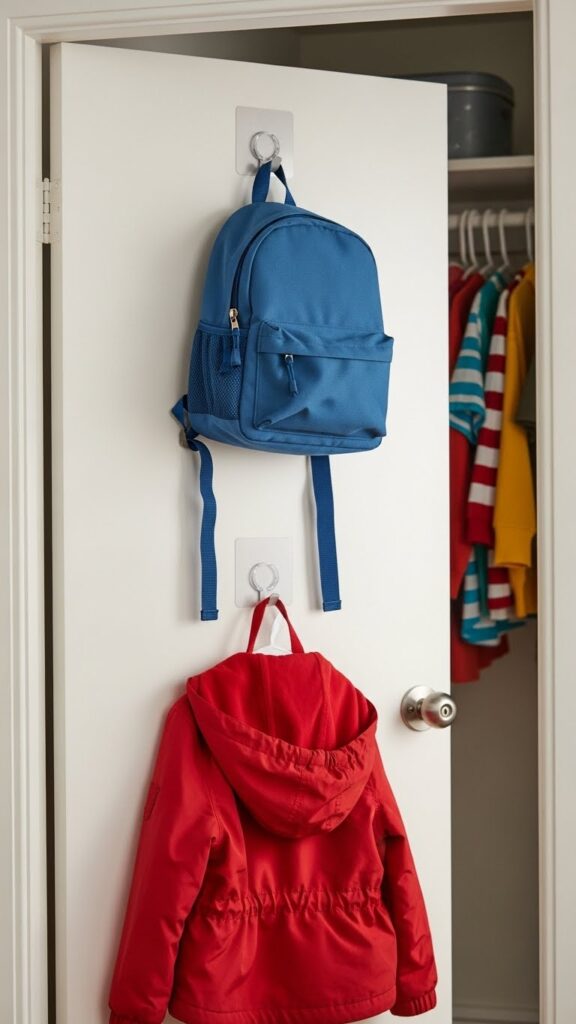
Hooks on the inside of the closet door keep daily essentials accessible without eating floor space. Install adhesive hooks for backpacks, jackets, pajamas, or tomorrow’s outfit so kids can grab items quickly. This creates a designated landing zone that prevents piles on the floor. Use one hook per frequently used item—maybe three or four total to avoid overcrowding. Command hooks work perfectly for renters since they remove cleanly without damage. Color-code hooks by item type or by child in shared spaces. For complete daily routine systems, our guide on kids wardrobe organization ideas for daily routines shows how to streamline mornings. Your door becomes functional storage!
8. Use Drawer Dividers to Maximize Dresser Space

Drawer dividers turn chaotic drawers into organized compartments where everything has its place. Without dividers, drawers become jumbled messes where socks disappear into black holes. Create designated sections for underwear, socks, hair accessories, and belts so your child can find items instantly. Adjustable dividers adapt as your child’s needs change over time. This system works especially well in small closets where drawer space is limited. Kids can dress independently when they know exactly where everything lives. Try spring-loaded dividers that adjust to any drawer size. Simple yet transformative!
9. Install a Closet Rod Extender for More Hanging Space

Closet rod extenders hang from your existing rod and create additional hanging space below without drilling. These simple metal or plastic hooks drop down from the main rod and give you a second tier for hanging clothes. They’re perfect for renters or anyone wanting temporary solutions. Use extenders for shorter items like shirts and skirts while keeping dresses on the main rod. Some extenders hold multiple hangers, effectively doubling your hanging capacity. They cost under $10 at Container Store or Amazon. When you move or want to reconfigure, simply remove them. Your rod just multiplied!
10. Label Everything with Pictures and Words

Visual labels help kids know exactly where everything belongs, even in tiny closets. Combine pictures with words so pre-readers can participate in cleanup routines. A pants icon next to the word “Pants” works perfectly for kindergarteners. Labels eliminate guessing and reduce “Where does this go?” questions during laundry time. Use laminated labels that can handle sticky fingers and occasional spills. Color-code labels by category for extra visual clarity—blue for shirts, green for pants, red for accessories. Print free templates online or make your own with a label maker. When kids can maintain the system independently, your small closet stays organized longer. No reading required!
11. Use Stackable Storage Cubes for Flexibility
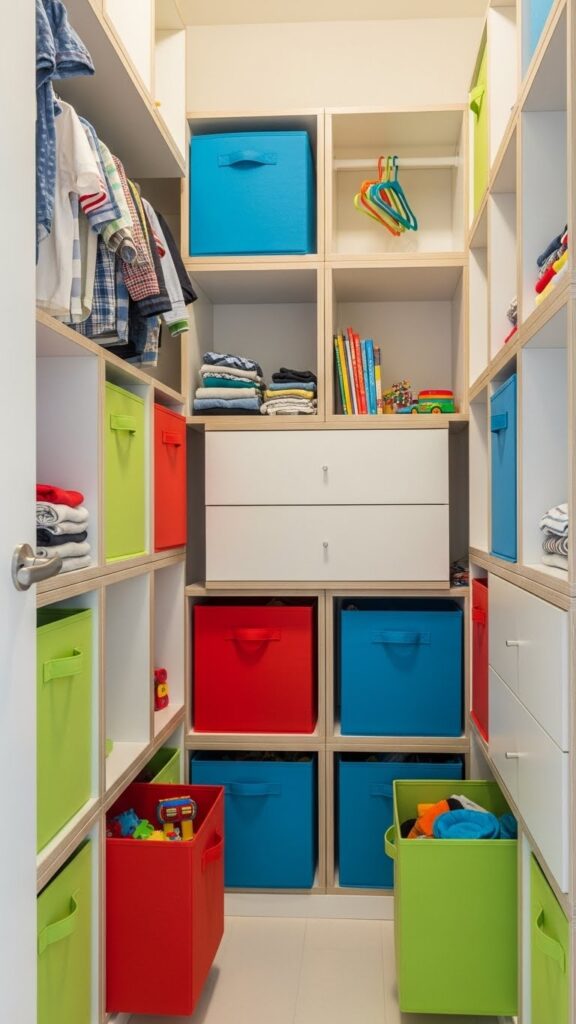
Stackable cubes adapt to awkward small closet dimensions where traditional furniture doesn’t fit. These modular units let you configure storage exactly how you need it—stack them tall for vertical storage or arrange them horizontally along the floor. Insert fabric bins for small items or leave cubes open to display shoes and folded clothes. When your child grows or needs change, simply reconfigure the cubes differently. They’re available at IKEA, Target, and Amazon in various sizes. The flexibility is unmatched compared to permanent built-ins. Start with a few cubes and add more as needed. Your closet grows with you!
12. Hang a Tension Rod for Extra Tiers

Tension rods create additional hanging tiers without drilling holes or permanent installation. These spring-loaded rods wedge between closet walls and hold lightweight items like tank tops, skirts, and pajamas. Install one below your main rod to instantly add a lower hanging tier for your child to reach. Use another rod across a corner to hang accessories or dress-up clothes. They cost under $15 at Target or HomeGoods and install in under 30 seconds. Perfect for renters who can’t make permanent changes. When you move, simply release the tension and pack it. Your walls stay hole-free!
13. Use Clear Storage Bins to See Contents
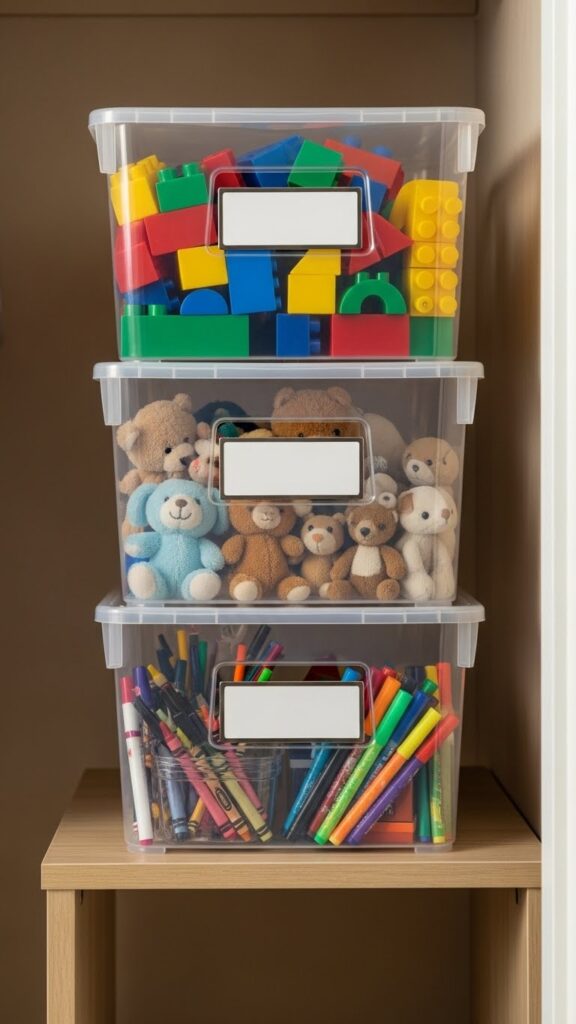
Clear bins eliminate the mystery of what’s inside, saving time during frantic mornings. When everything is visible through the sides, kids can spot what they need without pulling down every bin. This is crucial in small closets where you might stack bins to save space. Label bins on the front and sides for double visibility. Use different sized bins for different items—small for socks, medium for accessories, large for seasonal clothes. Stackable clear bins maximize vertical space while keeping everything accessible. They’re dishwasher-safe for easy cleaning when crayon marks happen. Your bins become see-through!
14. Add LED Battery Lights for Better Visibility

Good lighting transforms dark closets into functional spaces where kids can actually see their clothes. Many small closets lack overhead lights, which makes finding specific items nearly impossible. Install battery-operated LED strips on the top shelf or rod—no electrician needed. Motion-sensor lights are genius for kids who forget switches. Suddenly that back corner of the closet becomes usable instead of a dark mystery zone. Better lighting also makes the closet feel bigger and more inviting. Lights last for months on batteries and cost under $15. If you’re organizing a shared small space, check out our kids clothes storage ideas for shared bedrooms for dividing tight quarters fairly. Your closet just got brighter!
15. Use Rolling Carts for Flexible Floor Storage

Rolling carts give you flexible storage that moves when you need it and tucks away when you don’t. These slim multi-tier carts fit in narrow closets and hold folded clothes, shoes, or accessories on each level. Roll the cart out when your child is getting dressed, then push it back to save space. The mobility means you can use the cart elsewhere when needed—move it to the bathroom for bath time storage or to the craft table. Target’s three-tier carts are perfect for small closets and come in fun colors. The wheels lock to keep carts stable when stationary. Your storage becomes portable!
16. Hang Outfit Sets Together on One Hanger

Hanging complete outfits together on one hanger saves rod space and morning decision-making time. Use hangers with clips or cascading hooks to attach matching tops and bottoms together. Your child grabs one hanger and has a complete outfit instead of mixing and matching. This trick cuts rod space usage in half compared to hanging separates individually. Prepare a week’s worth of outfits on Sunday and hang them in order. For school-age kids, this eliminates morning outfit battles completely. Some parents color-code hangers by day of the week. For more morning routine strategies, explore our closet organization ideas for school-going kids. Your mornings just got easier!
17. Use Fabric Drawer Organizers in Closet Cubes

Fabric drawer organizers turn open cube shelves into functional drawer-like compartments. These collapsible boxes slide into cube openings and create contained storage for small items. Use different colored boxes for different categories—blue for shirts, pink for pants, yellow for pajamas. Kids can pull out the entire box to browse contents, then slide it back when done. The soft fabric is safer than hard plastic for young kids. When items outgrow a box, simply collapse it and use it elsewhere. They’re available at Target, IKEA, and HomeGoods in countless colors and patterns. Your cubes become drawers!
18. Mount Small Shelves on Closet Walls

Small floating shelves mounted on closet side walls create storage in spaces that usually go unused. Even a 6-inch wide shelf can hold folded t-shirts, hats, or accessories. Mount several shelves vertically to maximize the wall height. These work especially well in closets with deep side walls. Use shelf brackets that match your decor style—modern chrome, rustic wood, or minimalist white. This trick is brilliant for awkwardly shaped closets where traditional furniture doesn’t fit. Just make sure shelves are securely anchored to studs for safety. Your walls become functional!
19. Use Hanging Closet Dividers to Separate Categories

Hanging dividers organize clothes by category even in the tiniest closets so kids find items fast. These simple tags slide onto the closet rod and separate sections—school clothes here, play clothes there, pajamas at the end. The visual organization helps everyone maintain the system without thinking. Use dividers labeled by clothing type or by child in shared closets. They’re especially helpful when you’re using slim hangers that all look identical. Kids learn to put clothes back in the correct section naturally. Available at Container Store or print free templates online. Your rod has sections!
20. Utilize the Floor with Low Bins or Baskets

Low-profile baskets on the closet floor organize shoes and accessories without creating clutter. Choose baskets that are wide and shallow rather than tall so they don’t block access to hanging clothes. Natural fiber baskets look less cluttered than plastic bins and blend into the decor. Use one basket for everyday shoes and another for seasonal footwear. The low height means kids can reach in easily without bending awkwardly. Make sure baskets leave enough walking space in your narrow closet. This simple floor solution keeps shoes contained and out of the main living space. Your floor stays organized!
21. Add Narrow Shelving Units Against Back Wall

Narrow shelving units (10-12 inches deep) fit against closet back walls without overwhelming small spaces. These slim units provide vertical storage for folded clothes, bins, and shoes while leaving walking room. Look for units with adjustable shelves that adapt as your child grows. Metal wire shelving keeps things light and visible, while wood units feel more finished. Secure tall units to the wall to prevent tipping hazards. This works brilliantly in small walk-in closets or deep reach-in closets. The key is keeping the footprint slim so the closet doesn’t feel cramped. Your back wall becomes productive!
22. Use Pegboards for Accessories and Small Items

Pegboards turn vertical wall space into customizable storage for accessories and small items. Mount a small pegboard section on the closet wall or door and add hooks, baskets, and shelves as needed. Hang hats, bags, belts, necklaces, and hair accessories so everything is visible at a glance. The flexibility means you can rearrange hooks as your child’s needs change. Paint the pegboard to match your closet or leave it natural. Kids love the visual display aspect—it makes getting dressed more fun. This works especially well for fashion-loving kids who want to see all their accessories. Your walls become interactive!
23. Create a Weekly Closet Maintenance Routine
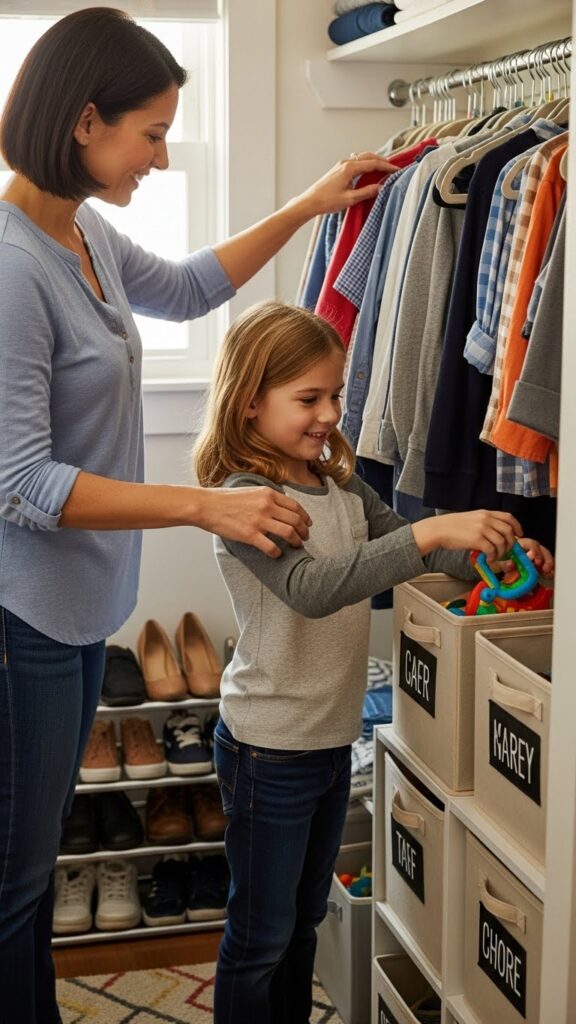
A 10-minute weekly reset keeps your small closet functional and prevents overwhelming clutter buildup. Every Sunday, spend a few minutes straightening hangers, returning misplaced items, and pulling out clothes that no longer fit. This maintenance prevents small messes from becoming big disasters. Make it a family activity where kids help put away clean laundry and organize their belongings. The routine teaches responsibility while keeping systems working long-term. Some families do quick daily tidies instead of weekly resets—either works as long as it’s consistent. For families needing systems that grow with kids, check out our closet organization ideas for growing kids. Your small closet stays functional!
Maximize Your Tiny Closet Today!
These 23 small kids closet organization ideas prove that limited space doesn’t mean limited function. By thinking vertically, using every available surface, and maintaining smart systems, even the tiniest closets can hold everything your child needs without feeling cramped.
Start by implementing the two or three ideas that address your biggest frustrations maybe it’s the hanging space shortage or the shoe situation. Build from there as you discover what works best for your specific closet dimensions and your child’s habits.
Remember, small closets actually have an advantage: there’s less space to get messy! With the right organization approach, your tiny closet can be easier to maintain than a sprawling walk-in. For additional strategies across your entire home, explore our complete kids organization ideas collection and our main kids closet organization ideas guide with 27 solutions for every closet size!

Amir Ali is the founder and site administrator of HomeDecorEdge, a modern home decor and interior design platform. Since starting the site, he has combined his passion for interior design, practical styling, and color coordination with hands-on content strategy and site management. He guides authors, curates high-quality articles, and ensures readers have access to actionable, visually inspiring, and user-focused home decor advice for apartments, small rooms, and family homes.