
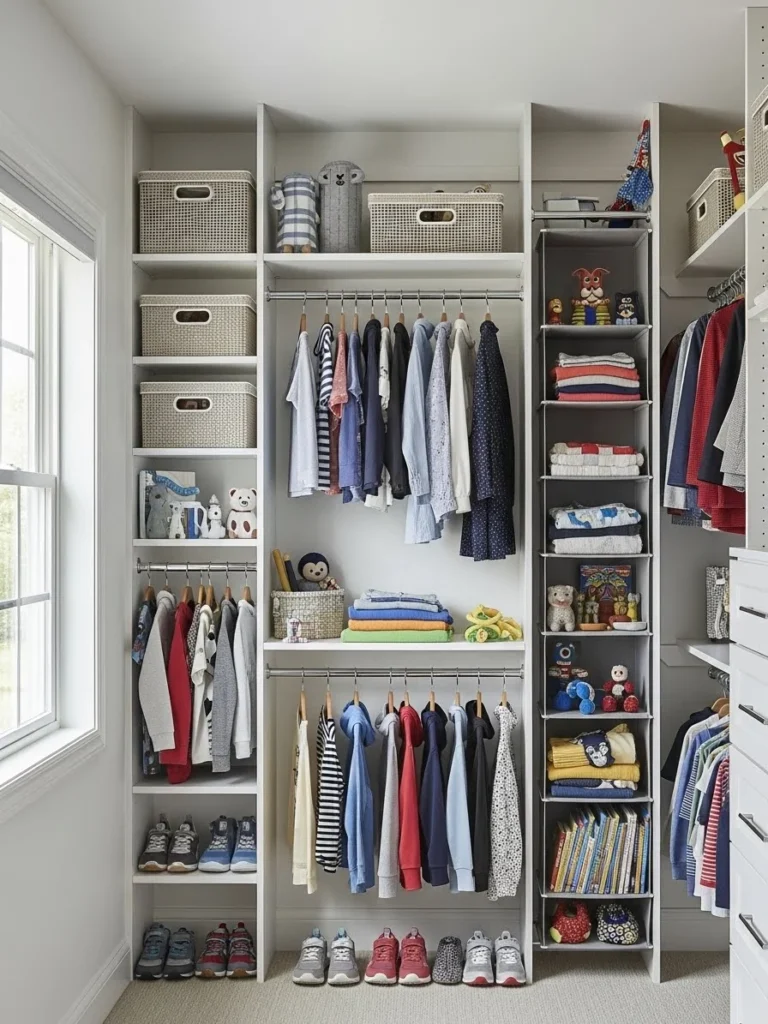

Most people organize closets horizontally, arranging shelves and bins side by side. But what if you looked up instead? Vertical storage ideas for kids closets can completely transform small spaces, making every inch count. In tiny bedrooms or apartments, floor space is precious, and using vertical space is the secret weapon for keeping clothes, shoes, and toys neatly organized. From floor to ceiling, there’s untapped potential just waiting to be harnessed tall shelving units, hanging organizers, hooks, and wall-mounted racks can all help maximize storage. By thinking vertically, even the smallest kids closets can hold more items, stay tidy, and make daily routines smoother and more efficient.
Ready to think vertically and double your closet storage? These ideas make every inch count from floor to ceiling! For more comprehensive organization strategies, explore our complete kids organization ideas collection.
1. Install Floor-to-Ceiling Shelving Units

Floor-to-ceiling shelving units maximize every inch of vertical space in your kids closet. These tall units can hold folded clothes on lower shelves, seasonal items in the middle, and rarely-used items up top. The key is making the bottom shelves accessible to your child while using upper shelves for adult-access storage. Install units securely to wall studs to prevent tipping hazards—safety first with tall furniture. Adjustable shelves let you customize spacing as your child grows and needs change. White or natural wood units keep the look clean and bright. For comprehensive organization strategies across all closet types, check out our main kids closet organization ideas guide with 27 solutions. Your ceiling height becomes valuable storage!
2. Add Tall Hanging Fabric Organizers

Tall hanging organizers make use of every inch from rod to floor without requiring installation. These fabric towers hook onto your closet rod and drop down to create 6-10 shelves instantly. Stack folded clothes, shoes, and accessories in each compartment so everything stays visible and organized. They’re especially valuable in closets with high ceilings where traditional shelving doesn’t reach. When you need to reconfigure or move, simply unhook and fold them up—no tools, no damage, no hassle. Some versions include mesh sides for better visibility and airflow. For apartment dwellers who can’t drill, check out our space-saving kids closet storage ideas for more renter-friendly solutions. Your ceiling height becomes usable!
3. Stack Modular Storage Cubes to the Ceiling
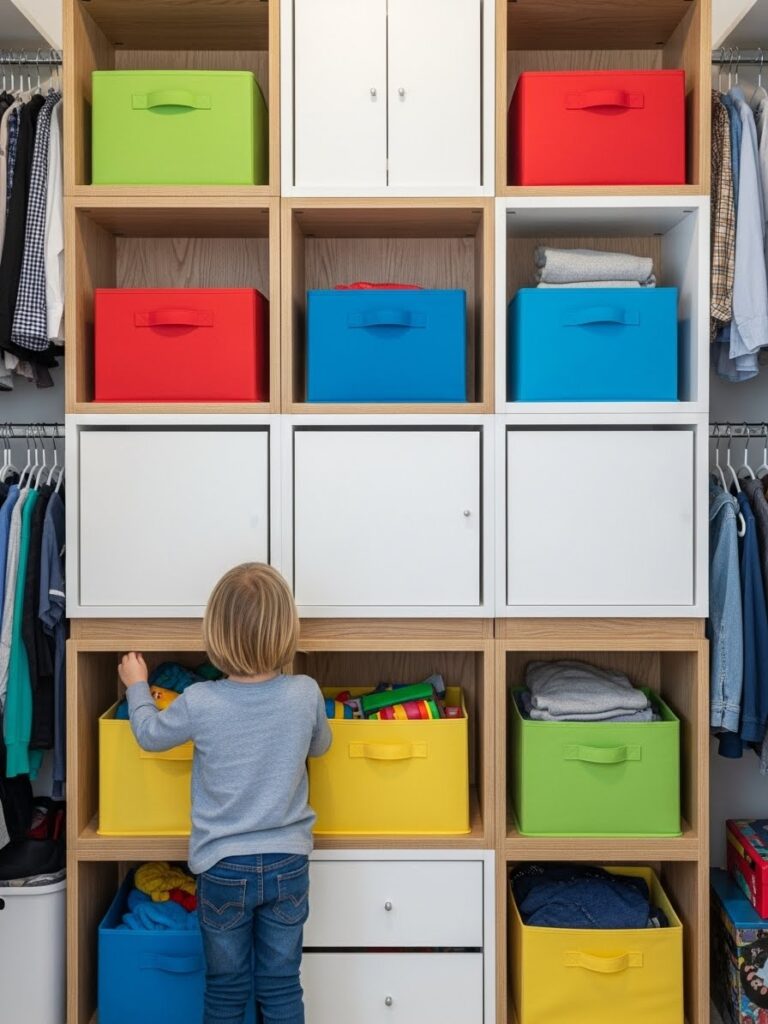
Stacking cubes vertically creates customizable storage that grows upward instead of outward. Start with a base row of cubes along the floor, then stack additional rows all the way to the ceiling. The modular design lets you configure the layout exactly how you need it—more cubes where you need more storage. Use lower cubes for items kids access daily, upper cubes for parent-supervised storage. Insert fabric bins in some cubes for small items, leave others open for shoes and folded clothes. Anchor the stack to the wall at multiple points for stability. When your child’s needs change, simply reconfigure the cubes differently. They’re available at IKEA, Target, and Amazon in every size imaginable. Your vertical space multiplies!
4. Mount Floating Shelves High on Closet Walls

High floating shelves capture the upper wall space that typically goes completely unused in closets. Mount shelves 6-7 feet high to store seasonal clothes, out-of-size items, or special occasion outfits that kids don’t need daily access to. Use the upper real estate for bins labeled by season or size—”Winter Coats,” “Size 6T,” “Holiday Dresses.” This keeps current clothes accessible at lower heights while maximizing total storage capacity. Install shelves with proper anchors into wall studs since they’ll hold weight. The high placement keeps items dust-free and out of the way until needed. Your upper walls work!
5. Use Over-the-Rod Shelf Extenders
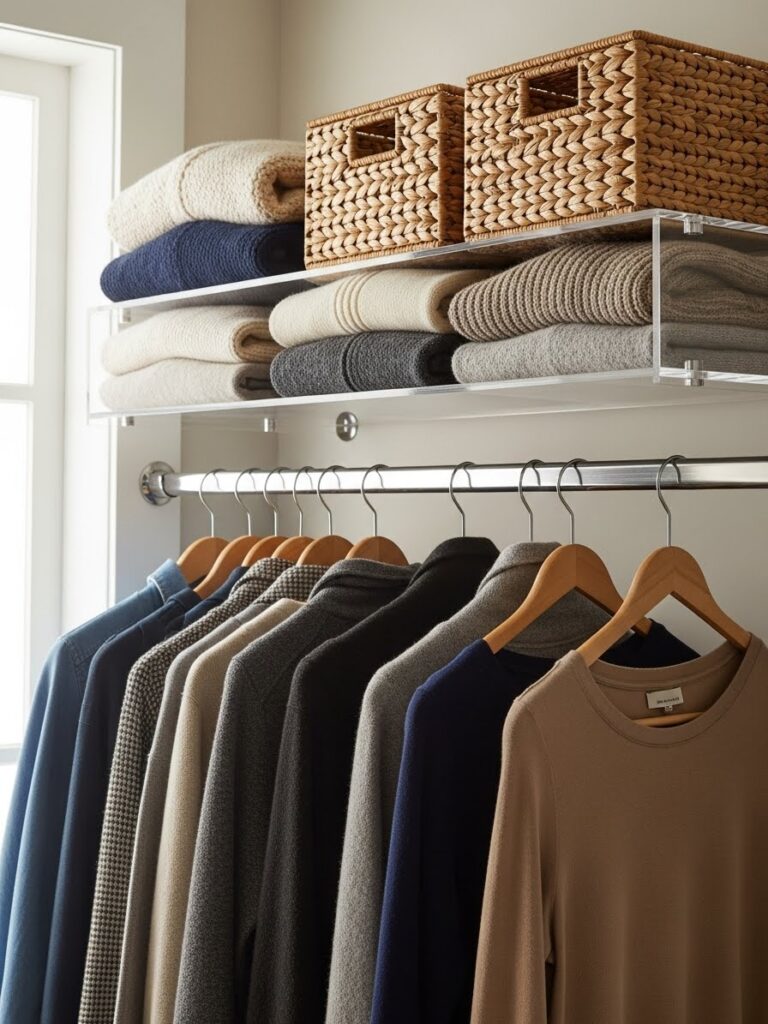
Over-the-rod shelf extenders sit on top of your closet rod and create a bonus shelf above hanging clothes. These clever platforms rest securely on the rod and provide a flat surface for folded items, bins, or accessories. The space above hanging kids’ clothes is often wasted—this captures it perfectly. Use this upper level for items kids need but don’t access constantly—extra pajamas, spare sheets, or backup supplies. The extenders require no installation and adjust to fit various rod widths. They’re especially brilliant in closets without built-in shelving. When you rearrange, simply lift them off and reposition. Your rod does double duty!
6. Stack Multiple Shoe Racks Vertically

Stackable shoe racks turn floor space into vertical storage towers that hold multiple levels of shoes. Instead of one rack holding 6 pairs, stack three racks for 18 pairs in the same footprint. Place current shoes on lower racks where kids can reach, less-worn shoes on middle racks, and seasonal footwear up top. The vertical stacking works brilliantly in closet corners that often collect clutter. Choose racks with stable designs that interlock when stacked for safety. Metal or sturdy plastic racks hold up better than flimsy ones. This approach works especially well in small closets where floor space is premium. For more tiny space solutions, check out our small kids closet organization ideas. Your shoes climb up!
7. Add Multiple Tension Rods at Different Heights

Multiple tension rods at staggered heights create vertical hanging zones without any installation. Install one rod low for your child to reach daily outfits, another rod mid-height for less frequent items, and a third rod up high for seasonal clothes or special occasion outfits. The rods wedge between walls using spring tension—no drilling required. This approach works brilliantly in closets with depth but limited width. Stagger the rods front-to-back if your closet is deep enough, creating even more hanging capacity. When kids grow or needs change, simply adjust rod heights. Perfect for renters! Your vertical space layers!
8. Install Under-Shelf Hanging Rods

Under-shelf hanging rods capture the vertical gap between your closet shelf and main hanging rod. These rods hang from the shelf edge and drop down to create an additional hanging tier. Use them for lightweight items like tank tops, scarves, or belts that don’t need full rod space. The installation is simple—most hook over the shelf edge or attach with screws. This trick is brilliant for adding hanging capacity without losing any existing storage. The space between shelf and rod is often wasted air—now it holds clothes. Your vertical gaps fill in!
9. Create Vertical Hook Lines on Walls
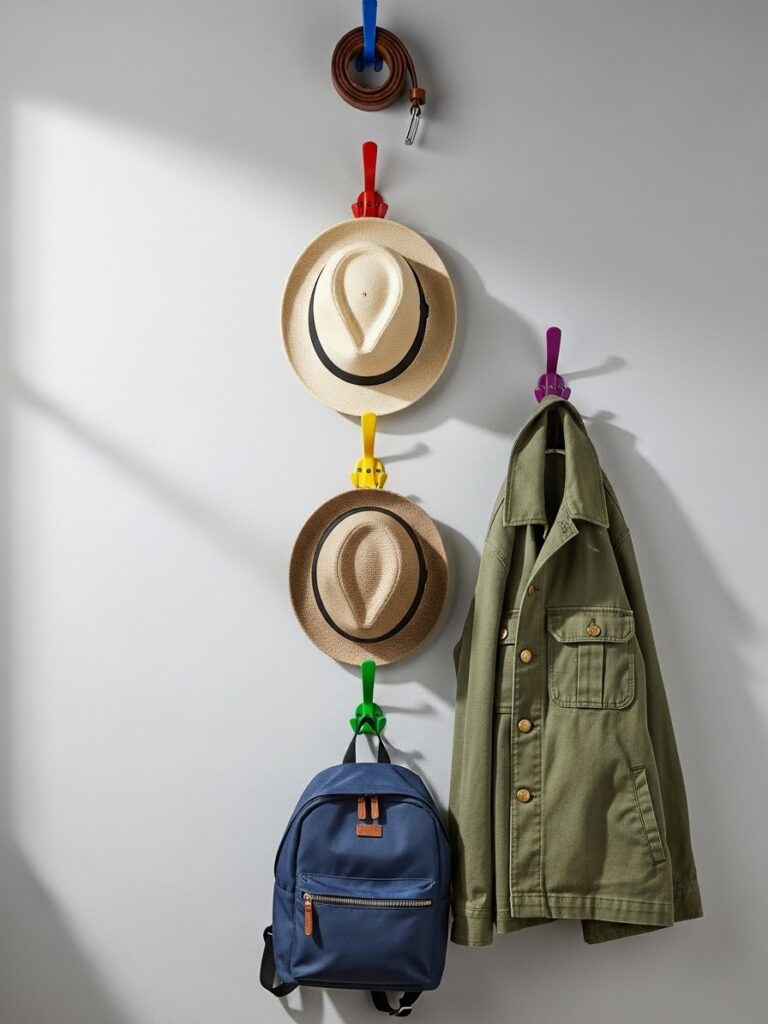
Mounting hooks vertically in a line uses wall height strategically for different items. Place the lowest hook at your child’s height for daily backpacks, a middle hook for jackets, and higher hooks for parent-supervised items or less frequent accessories. This vertical arrangement keeps items accessible by height relevance. Use sturdy hooks that hold several pounds each—Command hooks work for lightweight items, screwed hooks for heavier loads. Color-code hooks by item type or by child in shared closets. The vertical line approach looks cleaner than scattered hooks everywhere. For complete daily routine systems, our kids wardrobe organization ideas for daily routines streamline mornings. Your walls go vertical!
10. Add a Tall Narrow Bookshelf for Folded Clothes

Tall narrow bookshelves provide vertical storage without eating up precious floor space. Choose shelves that are 10-12 inches deep but 6 feet or taller—they fit against closet walls perfectly. Use each shelf for a different clothing category: t-shirts on one shelf, pants on another, pajamas on a third. The narrow depth means items stay one layer deep and visible, unlike deep shelves where things get lost in back. Adjustable shelves adapt as your child grows and wardrobe needs change. Secure tall units to the wall for safety. This approach beats wide dressers in small closets. Your vertical walls become dressers!
11. Use Pegboard Walls for Customizable Vertical Storage
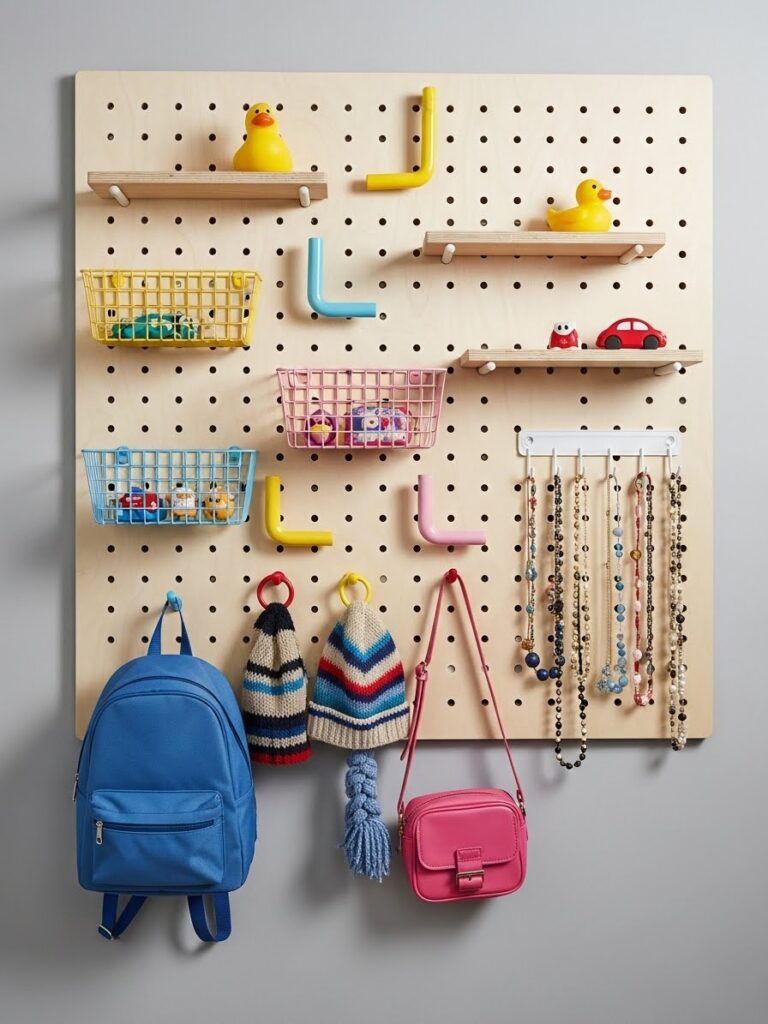
Pegboards transform vertical wall space into completely customizable storage where everything has a visible spot. Mount a pegboard section on the closet wall or door and add hooks, baskets, and small shelves wherever you need them. Hang hats, bags, belts, necklaces, and hair accessories so kids can see everything at a glance. The flexibility means you can rearrange hooks as your child’s needs change—no tools required. Paint the pegboard to match your closet or use natural wood for a modern look. Kids love the visual display aspect, which makes getting dressed more fun. Your walls become interactive!
12. Install a Second Closet Rod Below the First
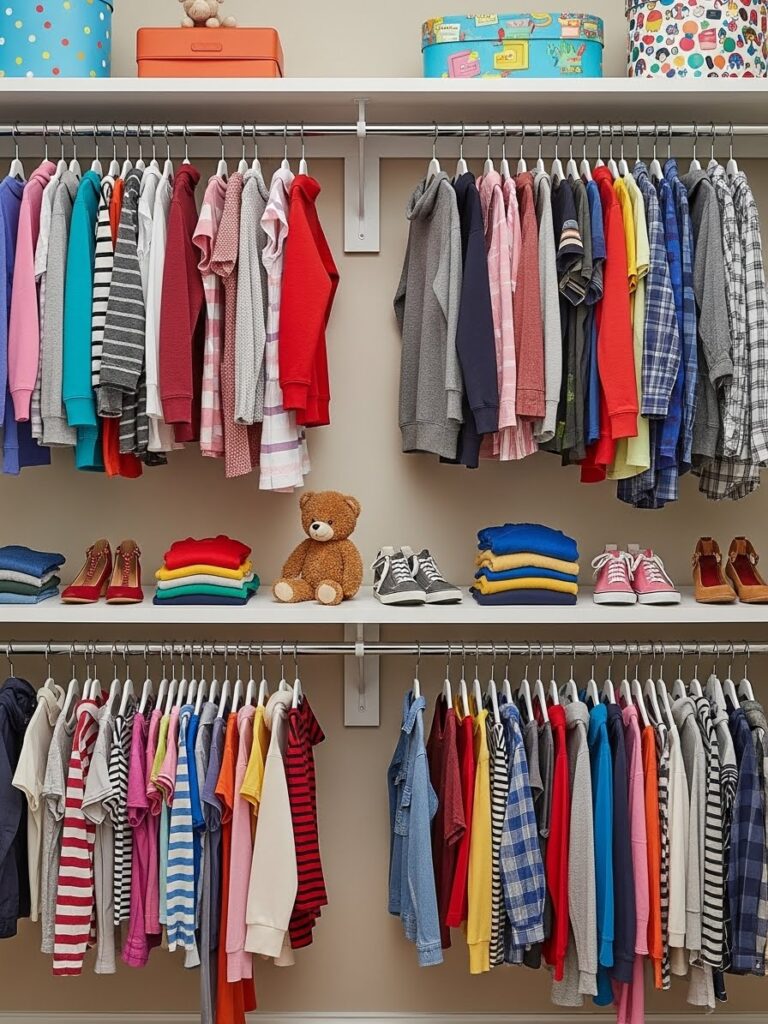
Installing a second rod below your main rod instantly doubles hanging capacity using vertical space. Kids’ clothes are short enough that two rods fit perfectly with clothes clearing each other. Put dresses and longer items on the top rod, shirts and shorts on the bottom rod where kids can reach independently. This single upgrade transforms cramped closets into functional storage. Professional closet rod kits include all the hardware you need, or DIY with brackets and a wooden dowel. Adjust heights as your child grows—start with the lower rod very low for toddlers. Your hanging space doubles!
13. Stack Clear Storage Bins to the Ceiling

Clear bins stacked vertically maximize ceiling height while keeping everything visible through transparent sides. Start with larger, heavier bins on bottom containing bulkier items, then stack lighter bins on top with smaller accessories. Label each bin clearly on the front and side for visibility from any angle. The transparency eliminates digging through bins to find items—you can see what’s inside at a glance. Use stackable bins designed to interlock for stability. Keep frequently used items in lower bins, seasonal stuff in upper bins. When your child needs something from up high, they can ask for help safely. Your vertical space stacks high!
14. Use Tall Over-the-Door Multi-Pocket Organizers

Tall over-the-door organizers use the full vertical height of your closet door from top to bottom. These organizers typically have 20-24 pockets cascading down the door, creating massive storage without taking any floor or wall space. Use bottom pockets for shoes kids wear regularly, middle pockets for accessories and small toys, top pockets for items kids need less often. The clear pockets let everyone see contents instantly, eliminating morning searches. Hook the organizer over the door top—no tools required. When you move or rearrange, unhook and relocate in seconds. Your door’s full height works!
15. Create Vertical Zones with Shelf Dividers

Vertical shelf dividers create sections that let you stack items higher without toppling. These dividers stand upright on shelves and prevent clothes stacks from leaning into each other. Use one section for t-shirts, another for pants, a third for pajamas each stack can grow taller without spreading sideways. The divisions keep organization clear and make it easier for kids to put laundry away correctly. Adjustable dividers work on any shelf depth and height. Acrylic dividers are nearly invisible, while wire or wood dividers are more visible. For families managing shared spaces, our kids clothes storage ideas for shared bedrooms show how to divide storage fairly. Your shelves stack higher!
Elevate Your Space: Vertical Storage Ideas for Kids Closets
These 15 vertical storage ideas prove that the key to organized kids closets isn’t more floor space it’s using the height you already have. By thinking upward instead of outward, even small closets can hold everything your child needs without feeling cramped or cluttered.
Start with one or two vertical solutions that address your biggest storage challenges maybe adding a second hanging rod or installing floor-to-ceiling shelving. Build from there as you discover which vertical strategies work best for your specific closet dimensions and your child’s age.

Amir Ali is the founder and site administrator of HomeDecorEdge, a modern home decor and interior design platform. Since starting the site, he has combined his passion for interior design, practical styling, and color coordination with hands-on content strategy and site management. He guides authors, curates high-quality articles, and ensures readers have access to actionable, visually inspiring, and user-focused home decor advice for apartments, small rooms, and family homes.