

Empty shelves feel cold. Overstuffed ones look chaotic. The sweet spot between the two is where real style happens — and you do not need a design degree or an expensive decorator to get there. These 50 shelf styling ideas cover every room, every style, and every budget. Pick two or three that resonate and start there.
This post contains affiliate links. If you purchase through these links I may earn a small commission at no extra cost to you.
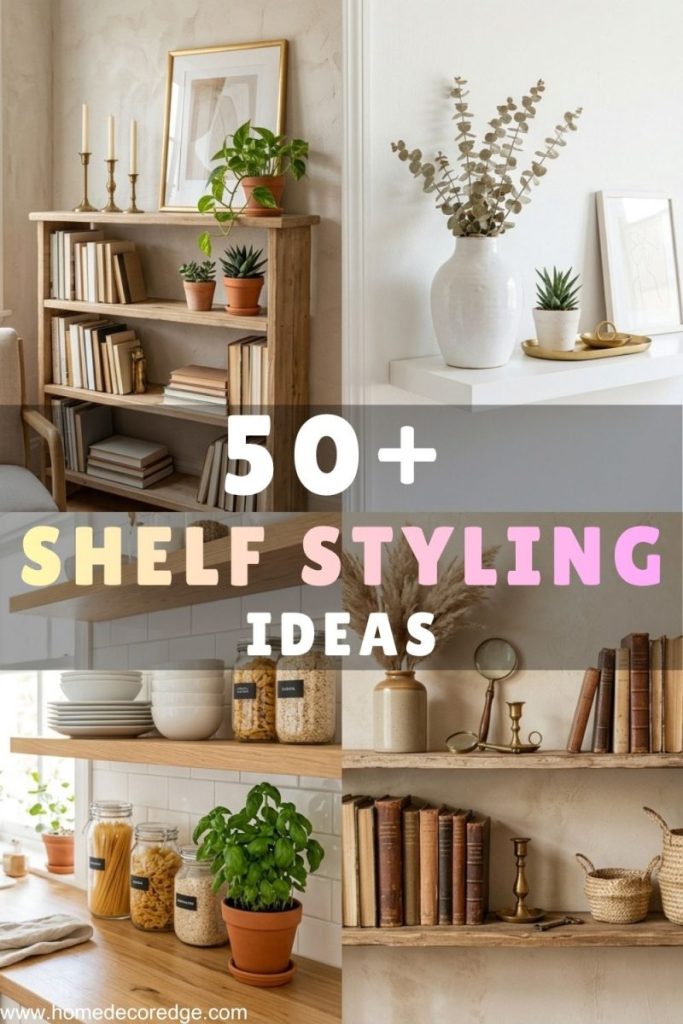
Styled shelves turn functional storage into genuine focal points — adding personality to every corner of your home.
For more home styling inspiration, explore our home decor ideas collection covering every room in your space.
1. Group Items in Threes for Instant Balance
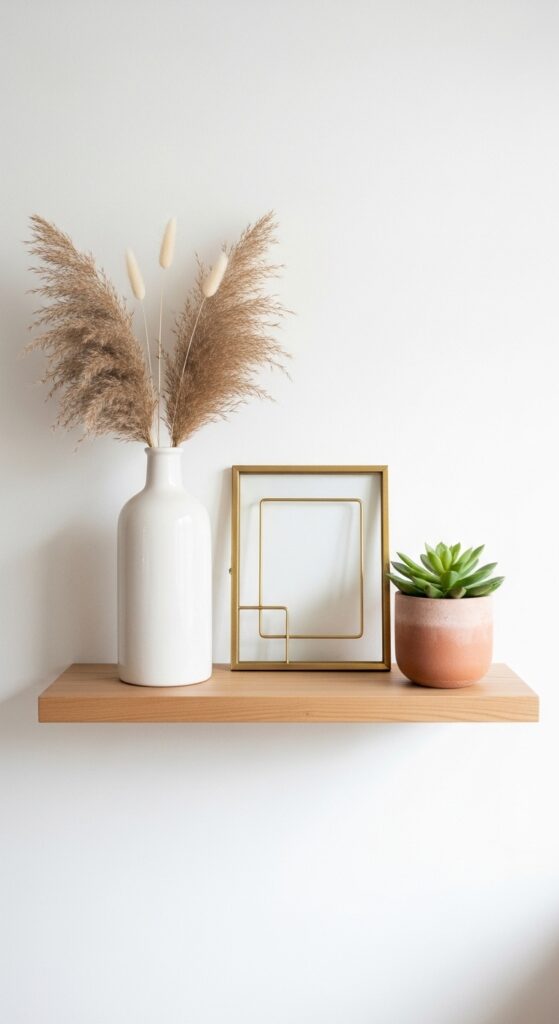
The rule of three is the most reliable trick in shelf styling. Group a tall vase, a medium frame, and a small plant together and your eye immediately reads it as intentional. Odd numbers feel more natural than even ones — two things look like a pair, three things look like a composition. Mix different heights within each group to create that triangular arrangement that designers always reach for first.
2. Stack Books Both Ways for Dimension
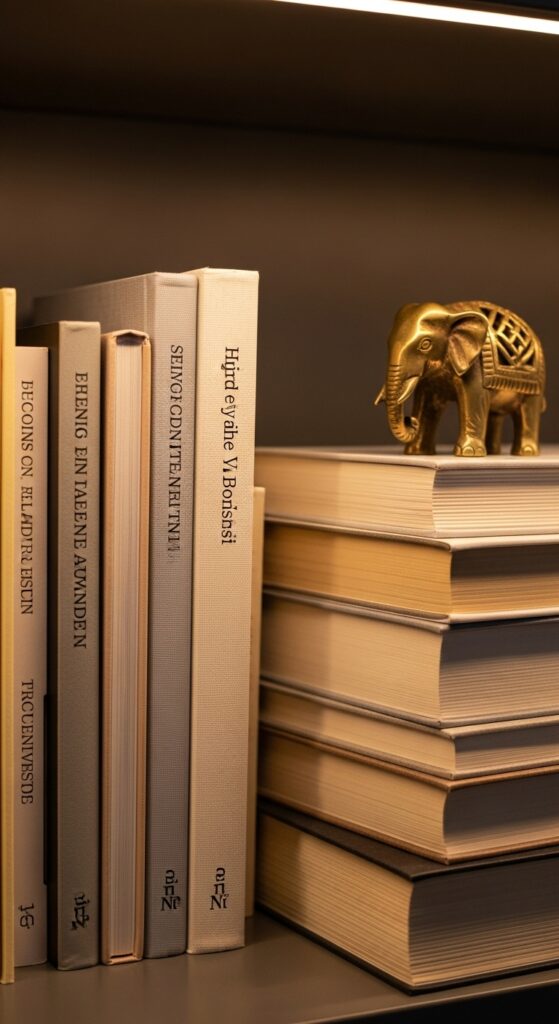
Line all your books up vertically and the shelf looks like a library. Stack some horizontally instead and suddenly there is visual interest. Place a small object on top of each horizontal stack — a candle, a tiny plant, a decorative piece — and you have created layers without buying anything new. This single change makes a bookshelf look styled rather than just stored.
3. Layer Items Front to Back for Depth
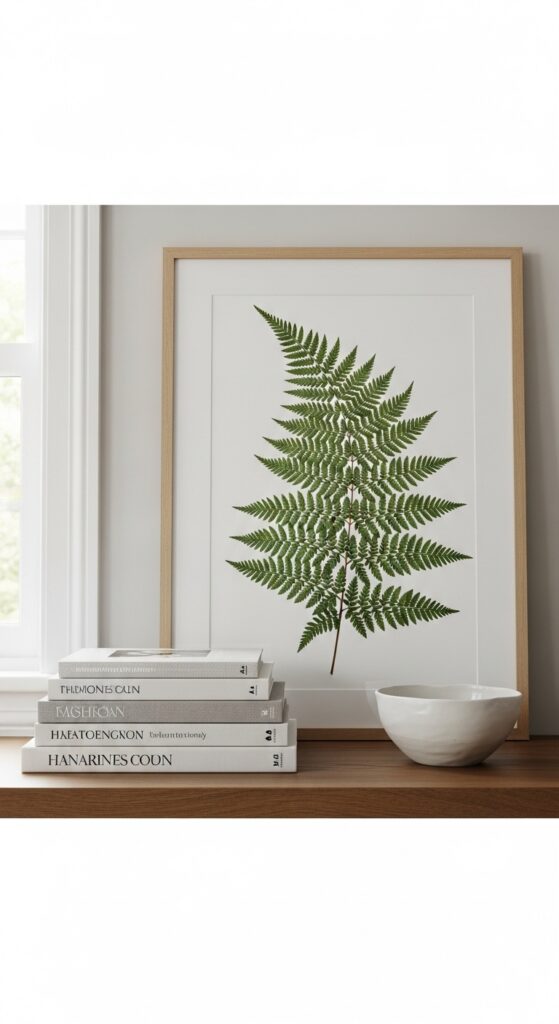
Flat arrangements look flat. Layered ones look considered. Place larger items at the back, medium pieces in the middle, and smaller objects at the front. Lean a piece of artwork or a small mirror behind the arrangement for an extra layer of depth. Overlapping items slightly rather than spacing them out equally creates the kind of composition that stops people in their tracks.
4. Use the 60-30-10 Color Rule
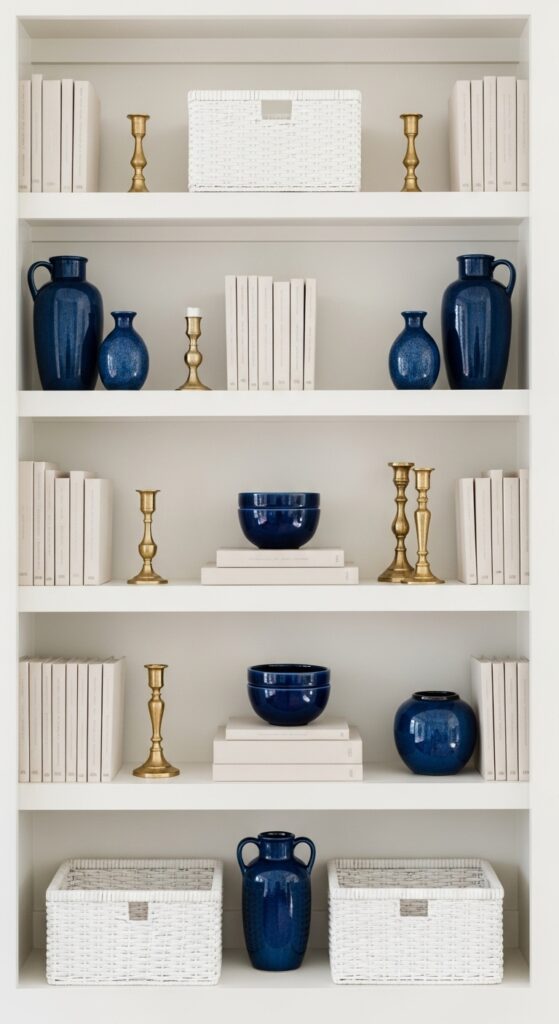
Choose one dominant color for roughly 60 percent of your shelf items, a secondary color for 30 percent, and a small accent for the remaining 10. Pull these colors from what is already in your room — your rug, your cushions, your curtains. The result feels coordinated without looking matched. This is what separates a shelf that looks designed from one that just looks collected.
5. Leave Some Shelves Completely Empty
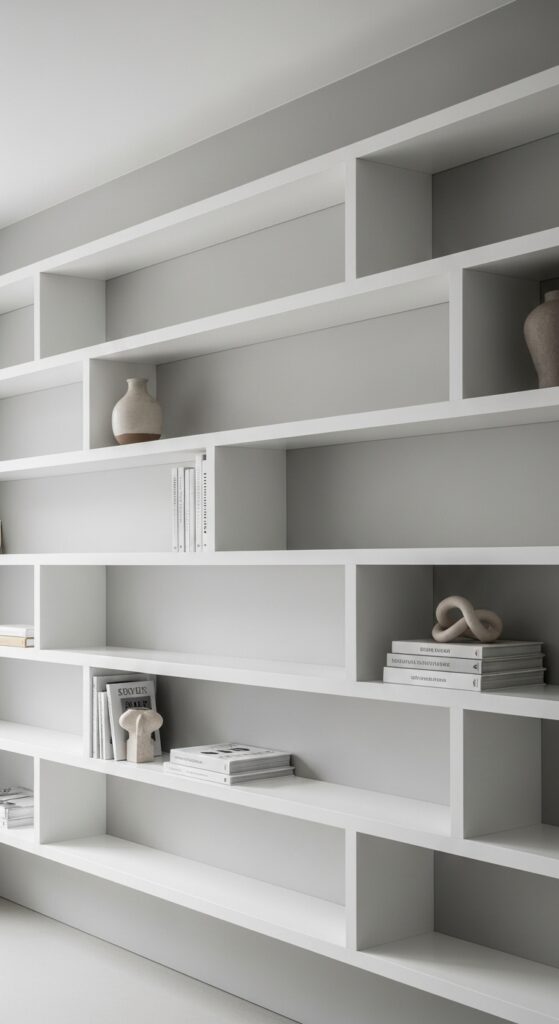
White space is not wasted space. An empty shelf gives your eye somewhere to rest and makes everything around it feel more intentional. In smaller rooms especially, trying to fill every surface creates visual noise that makes the whole space feel smaller. Treat empty space as part of the design rather than something to fix.
6. Mix in Baskets for Hidden Storage

Baskets solve the problem of things that need to be accessible but should not be visible. Batteries, cords, remotes, small toys — all of it disappears behind a well-chosen basket. These woven baskets for shelves come in a coordinating set so your shelves look cohesive rather than like a collection of random containers. Use them on lower shelves where you cannot see inside anyway.

Woven Basket Set for Shelves
Coordinating set that hides clutter beautifully — works on lower shelves where storage matters more than display.
Check Price on Amazon7. Add Plants at Different Heights
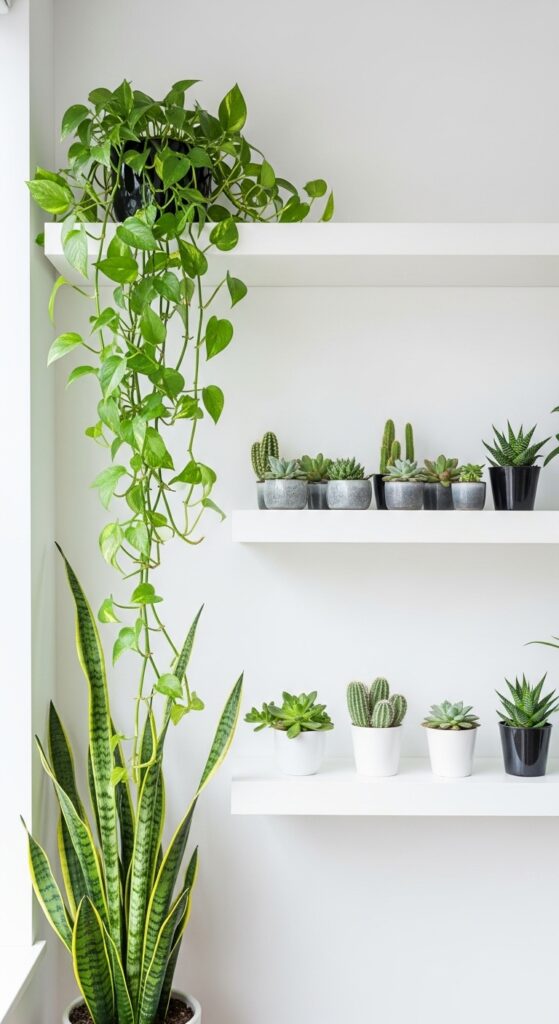
Plants bring movement and life to shelves in a way that no decorative object can replicate. Trail a pothos from a top shelf, place a taller plant on a lower shelf, and scatter small plants throughout. The varying heights create rhythm across the whole display. If you cannot keep real plants alive in certain rooms, these small artificial succulent plants look genuinely realistic from a distance and require zero maintenance.

Small Artificial Succulent Plants
Realistic looking and zero maintenance — scatter throughout shelves for green accents that never wilt or need watering.
Check Price on Amazon8. Display Collections Together
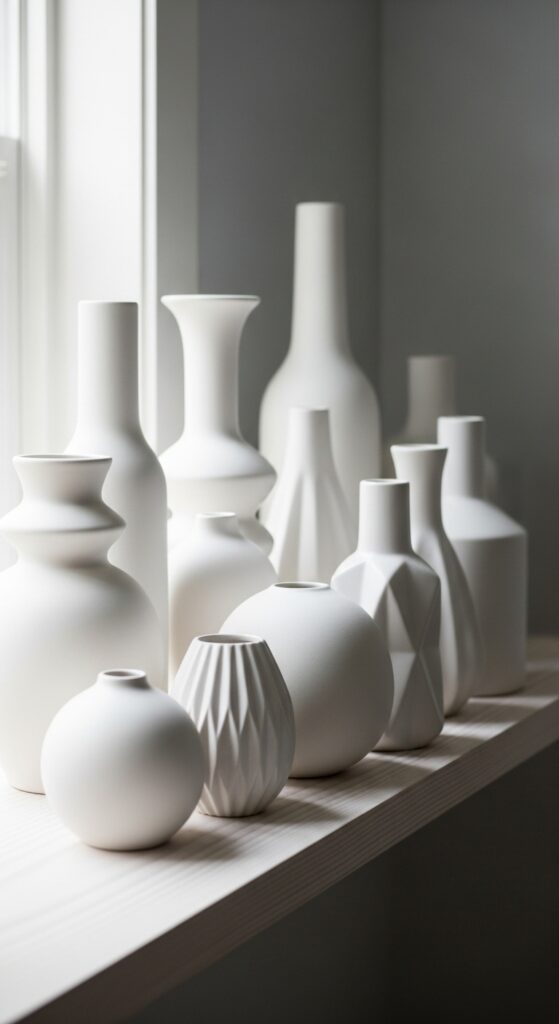
A single vintage camera on a shelf looks like clutter. Five vintage cameras grouped together looks like a collection. Whatever you collect — vases, travel souvenirs, small figurines — grouping them in one place makes them feel intentional and curated rather than random. Collections tell the story of who you are in a way that generic decor simply cannot.
9. Lean Artwork Casually
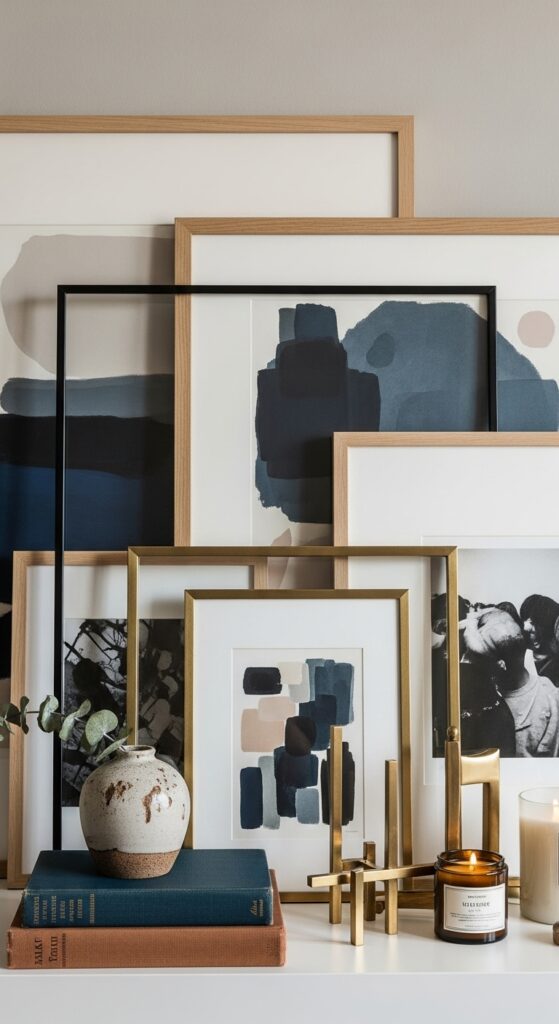
Leaning framed art on a shelf rather than hanging it creates an effortless, relaxed look that feels lived-in rather than staged. You can switch pieces around whenever you feel like a change without touching the walls. Layer a smaller frame in front of a larger one for extra depth. This casual approach often looks more sophisticated than a perfectly hung gallery wall.
10. Add Texture with Natural Elements
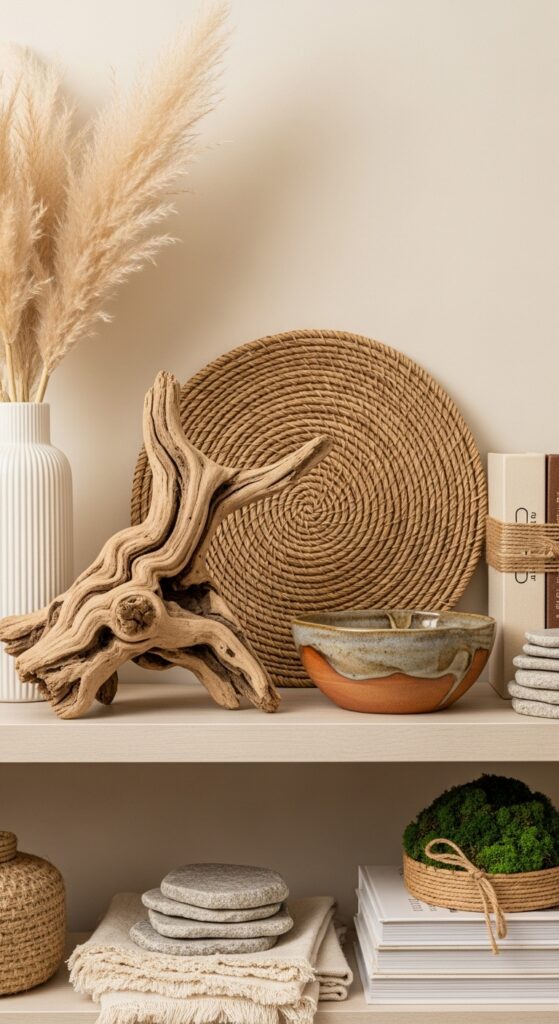
Smooth ceramics next to rough wood, polished metal next to woven fiber — texture contrast is what keeps shelves from feeling flat and sterile. Driftwood, stone, pottery, dried pampas grass, woven baskets — these organic materials add warmth that manufactured items struggle to replicate. One or two natural elements in a display changes how the whole shelf feels.
11. Use Symmetry for Formal Spaces

Matching items on both sides of a centered focal point creates the composed, elegant look that works beautifully in formal living rooms and traditional spaces. Identical candlesticks on each end, a piece of art centered in the middle, balanced visual weight throughout. Symmetry feels calm and orderly. It is styling that never goes out of fashion.
12. Go Asymmetrical for Modern Vibes
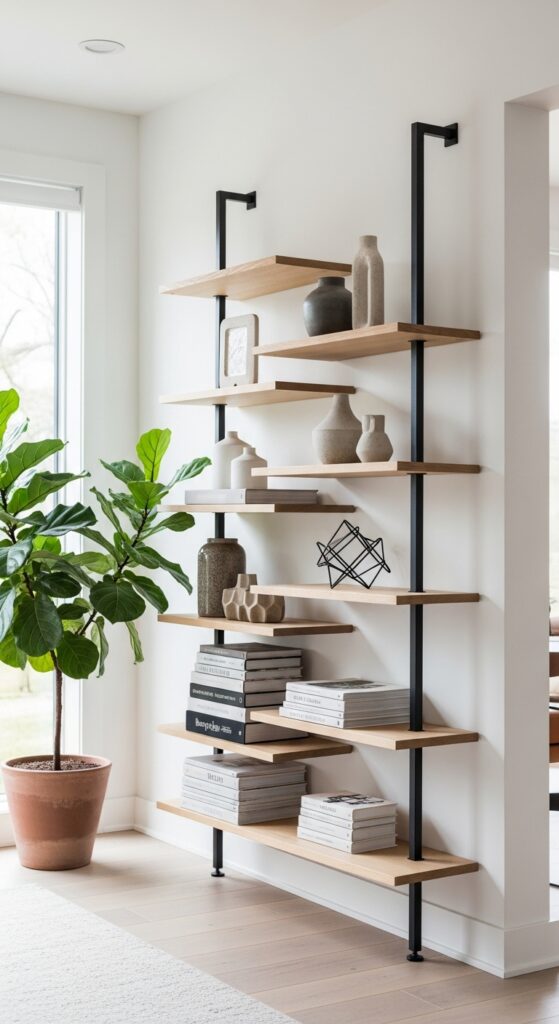
Intentional imbalance creates movement and a contemporary energy that symmetry cannot. Group most of your visual weight on one side and leave the other side lighter and airier. It feels more dynamic and relaxed than a perfectly balanced arrangement. Modern spaces respond well to this approach — it looks considered rather than accidental.
13. Create Zones by Category
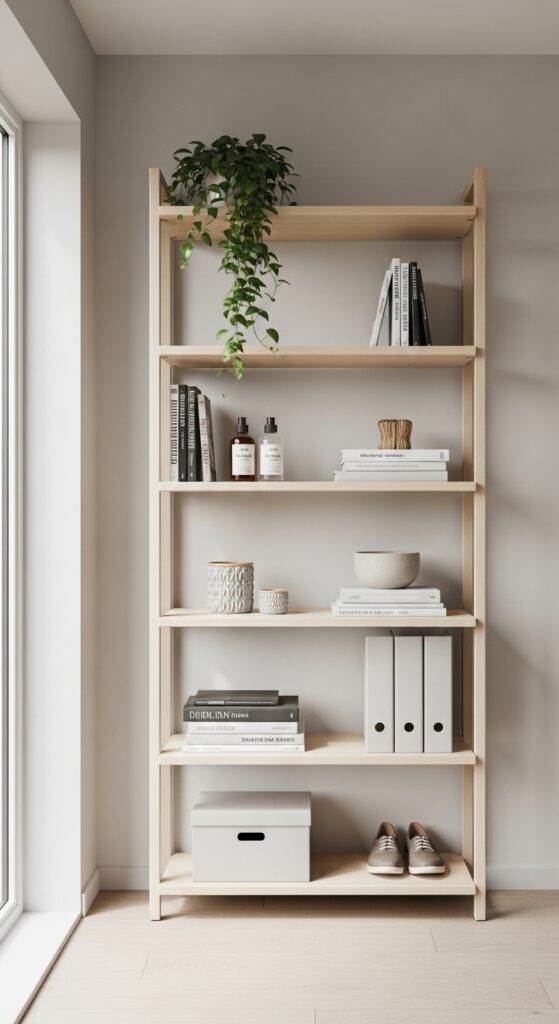
Divide your shelving into clear zones — all plants on one level, books on another, decorative objects on a third. Your eye can navigate the display easily without feeling overwhelmed. This works especially well in rooms with a lot of content to display. Organization and style are not mutually exclusive when the zones are thoughtfully defined. For more bedroom-specific organization, our organized life aesthetic guide covers whole-room styling systems.
14. Mix High and Low Price Points
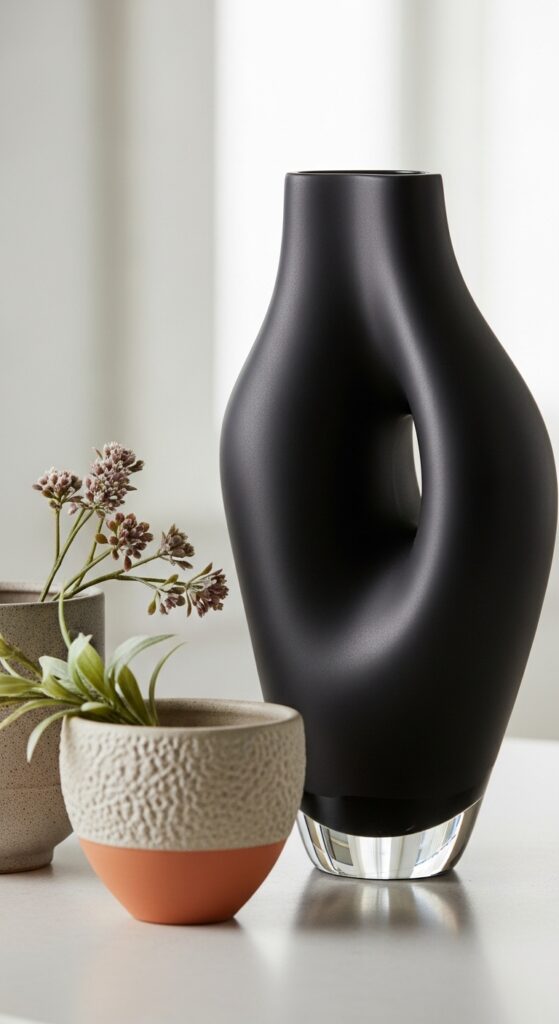
Expensive pieces and budget finds look indistinguishable when styled well together. A designer vase next to something from a discount store reads as a curated collection, not as a mismatched pair. The key is mixing materials and finishes so everything flows together rather than competing. Good styling elevates everything around it.
15. Add Personal Photos in Frames
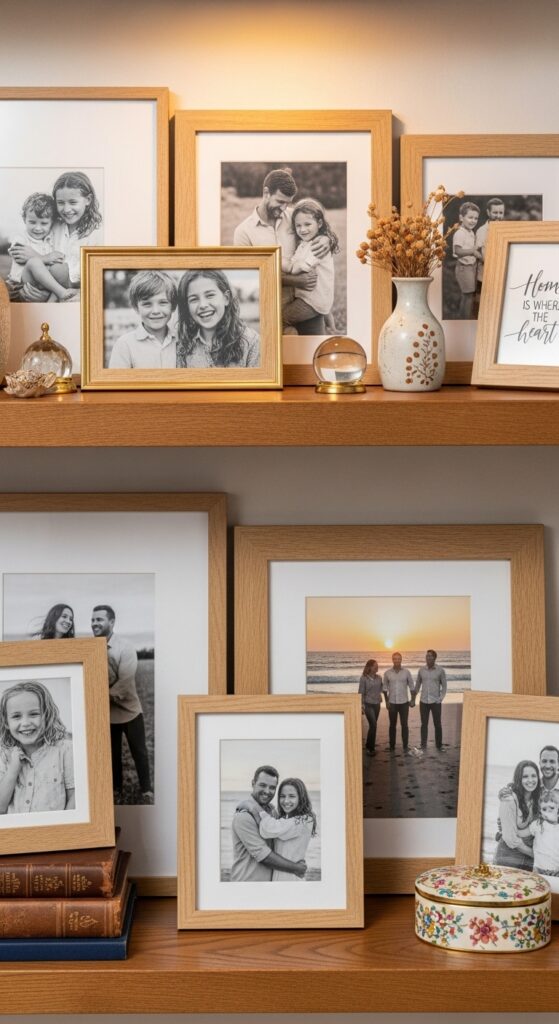
A shelf full of beautiful objects with no personal element can feel like a showroom. Mix in a few framed photos — use coordinating frames so they read as intentional rather than random. Black and white images blend more easily with surrounding decor than color photos. Lean some, stand others. Your shelves should reflect who you are, not just what looks nice.
16. Include Sculptural Objects

Objects with interesting forms — abstract shapes, architectural fragments, unusual figurines — give your eye somewhere specific to land. One strong sculptural piece can anchor an entire shelf arrangement and eliminate the need for a dozen smaller items competing for attention. Think of these as the punctuation of your shelf — they create pauses that make the whole composition readable.
17. Use Books as Risers

A small object placed directly on a shelf can get lost. The same object placed on top of a stack of two or three books is immediately more visible and more interesting. This technique costs nothing extra and works consistently. Mix book sizes and colors for variety within the stack itself.
18. Add Metallic Accents for Shine
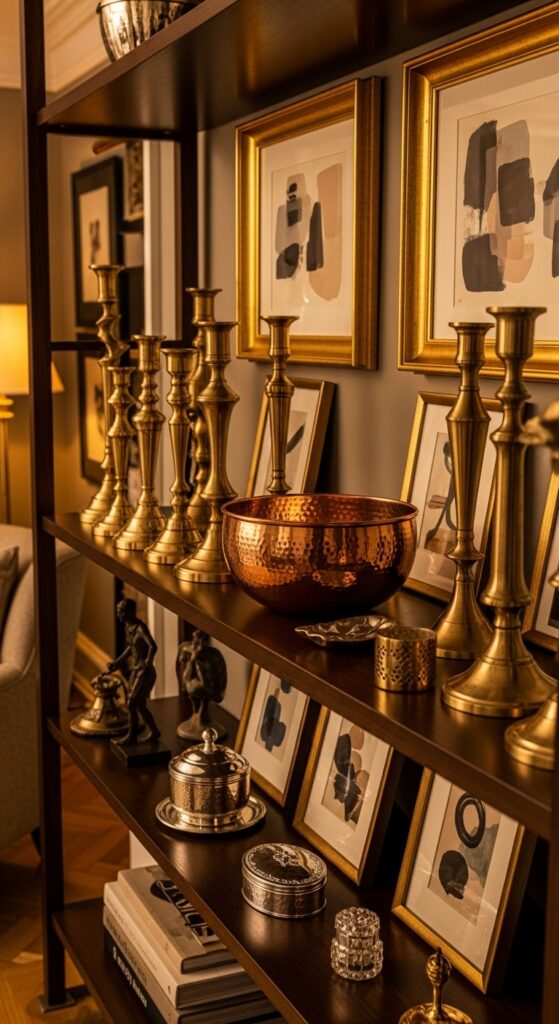
Metal catches light in a way that matte materials cannot. Brass candlestick holders in varying heights add warmth and vertical interest simultaneously. Gold frames, copper bowls, silver objects — metallics work in any style from modern to traditional. You do not need to match metals — mixing them looks more collected and less catalog-perfect.

Brass Candlestick Holders Set
Varying heights add warmth and vertical drama — catches light beautifully and works in any shelf styling aesthetic.
Check Price on Amazon19. Style with Candles at Varying Heights

Candles add warmth and texture even when they are not lit. Group pillar candles of different heights together and the arrangement immediately feels cozy and inviting. Stick to one color family so the grouping reads as intentional. Brass candlestick holders elevate taper candles and make a simple candle display feel genuinely styled.
20. Incorporate Vintage Finds
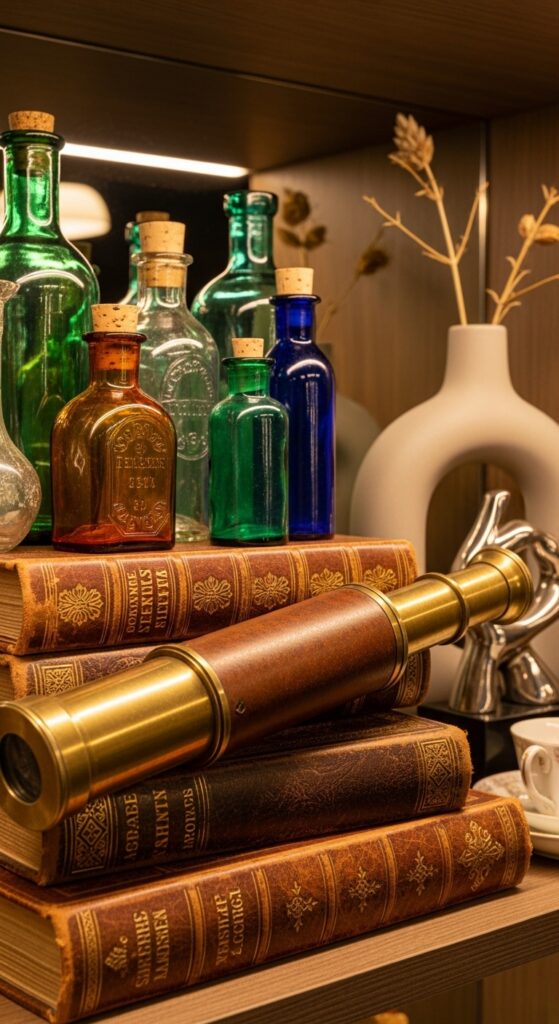
Vintage pieces add the one thing that new purchases cannot — history. Old books with worn spines, antique brass objects, vintage glass bottles — these items give shelves a collected-over-time quality that even the most carefully curated new purchases cannot replicate. Thrift stores and estate sales are consistently the best sources for this kind of character.
21. Keep It Minimal in Small Spaces
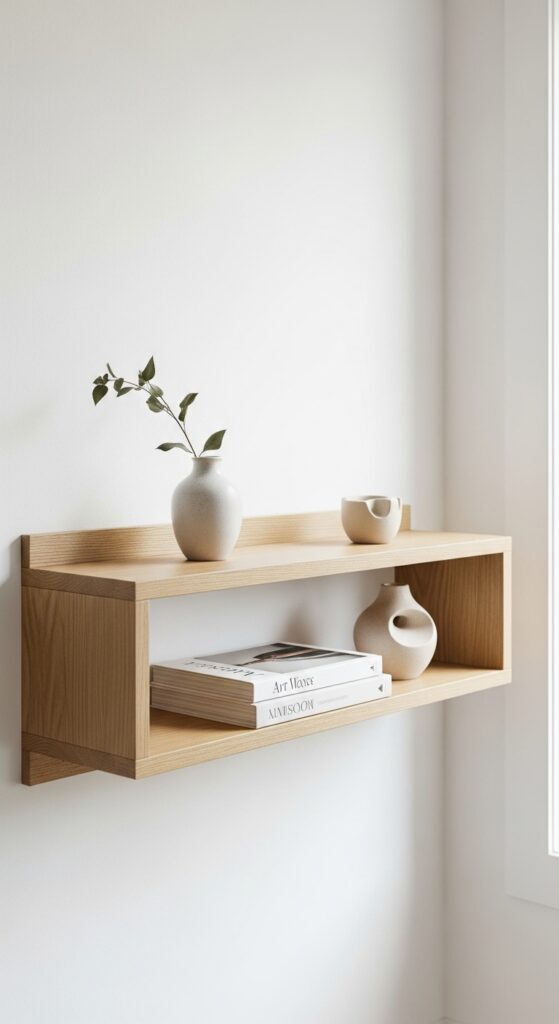
In small spaces, every item on a shelf is competing for attention in an already limited visual field. Choose a few pieces that genuinely matter and give them room to breathe. One or two items per shelf maximum. The restraint is not a compromise — it is a design decision that makes everything you do display feel more considered and valuable.
22. Add Drama with Black and White

A strict black and white palette creates graphic impact that works in almost any room. Black frames, white ceramics, black books, white vases — the high contrast feels intentional and modern. Limiting your color choices forces every other element of the display — shape, texture, height — to carry more of the visual interest.
23. Display Travel Souvenirs with Intention
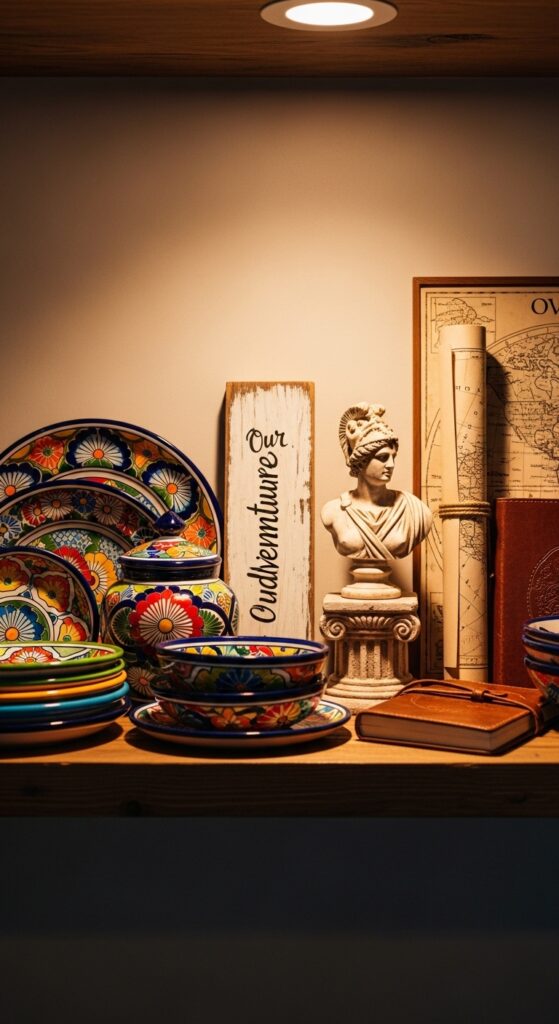
Travel souvenirs scattered around a room look like clutter. The same objects grouped together on one shelf become a curated memory display. Add a framed travel photo or a small map for context. These pieces tell stories that generic decor cannot tell — and they make shelves genuinely personal rather than just attractive.
24. Use Shelf Lighting for Ambiance
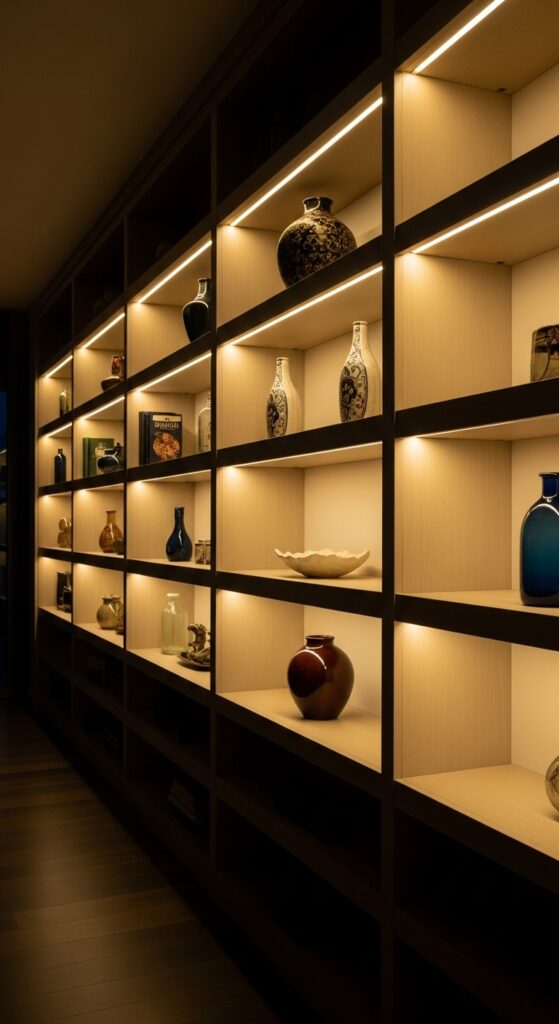
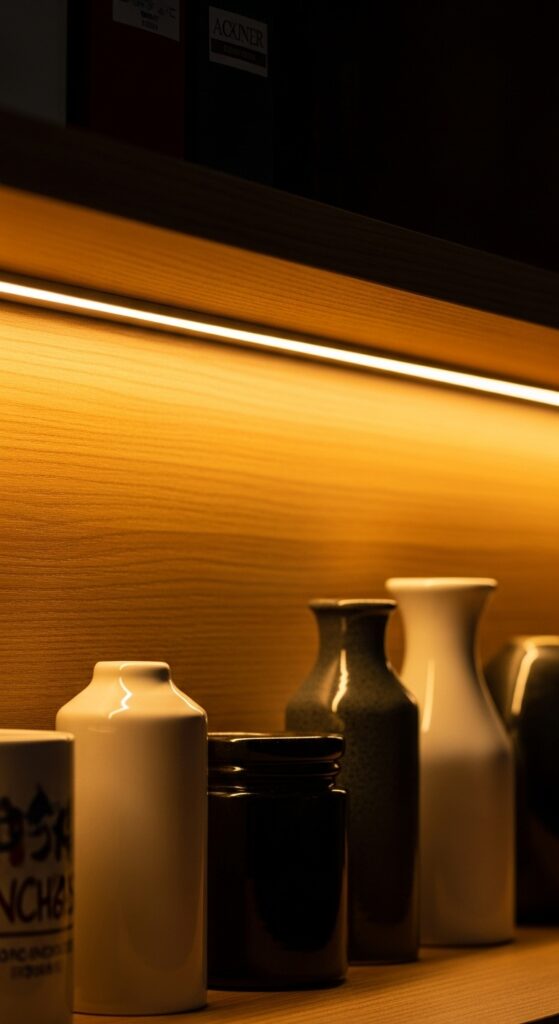
Lighting transforms how a shelf reads — especially in the evening. LED strip lights under shelves cast a warm glow that highlights everything on the shelf below and creates an ambient quality that no overhead light can replicate. Warm white works better than cool white for living spaces. The effect looks expensive immediately.

LED Strip Lights Under Shelf
Warm white glow that highlights your display and creates evening ambiance — instantly makes shelves look more expensive.
Check Price on Amazon25. Mix Open and Closed Storage
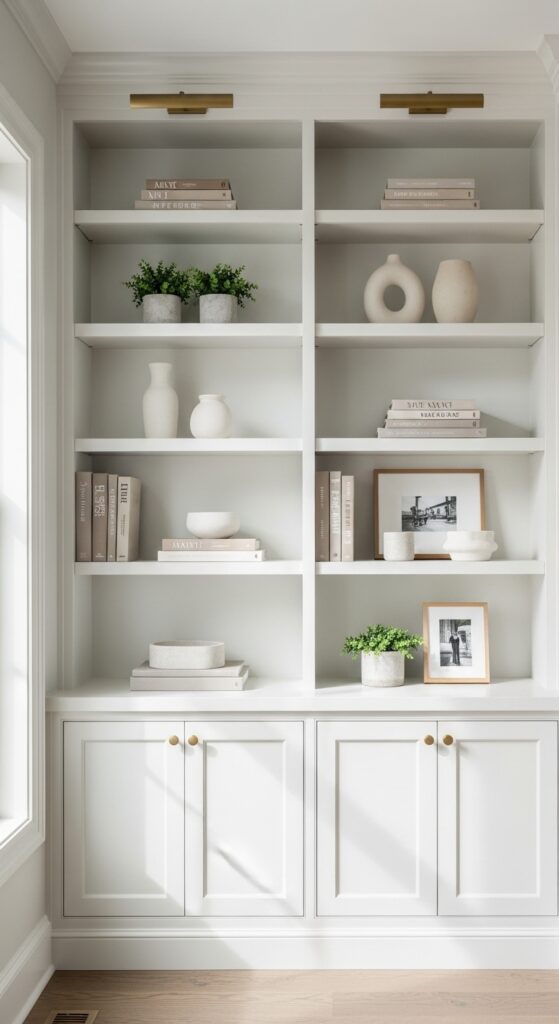
Display what is beautiful, hide what is not. Open shelves show off your favorite pieces while closed cabinet sections below or beside them keep everyday necessities out of sight. This combination gives you both the visual appeal of open shelving and the practicality of closed storage — the two things most shelving systems force you to choose between.
26. Create Visual Weight at Bottom
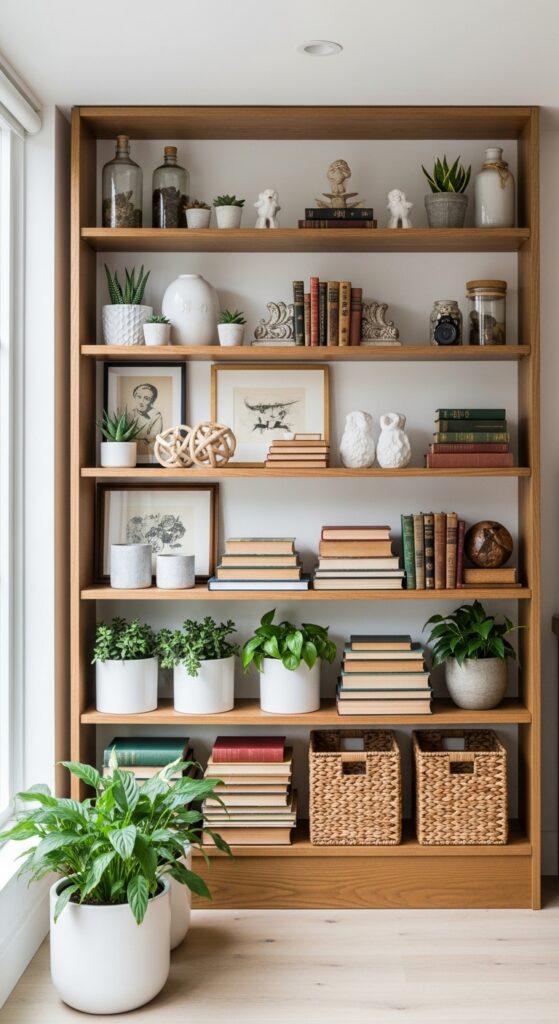
Heavier, larger items on lower shelves and lighter, smaller items on upper shelves creates visual stability that feels instinctively right. Large books and baskets go low, delicate objects and small plants go high. This mirrors how things naturally exist in the world — substantial at the base, delicate toward the top. The arrangement feels grounded rather than precarious.
27. Use Trays to Corral Small Items

A collection of small objects scattered across a shelf looks like clutter. The same objects arranged on a decorative gold tray looks like a vignette. The tray creates a defined boundary that tells your eye this is intentional rather than accumulated. Gold, wood, and marble trays all work beautifully — the material matters less than the containment effect.

Decorative Gold Tray
Corrals small objects into a defined vignette — turns scattered clutter into an intentional curated display instantly.
Check Price on Amazon28. Add Texture with Woven Elements
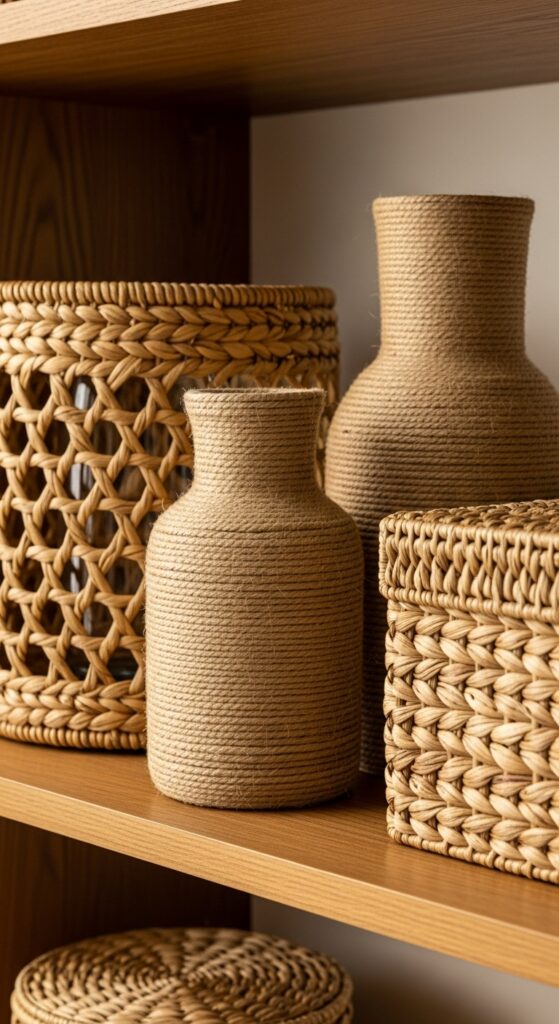
Rattan, jute, seagrass, and wicker add a warmth and tactile quality that smooth materials cannot provide. A woven basket next to polished ceramics, a jute bowl next to glass objects — the contrast between organic and refined textures is what gives shelves depth. These natural fibers also soften edges and keep contemporary spaces from feeling too hard or cold.
29. Display Fresh Flowers or Greenery
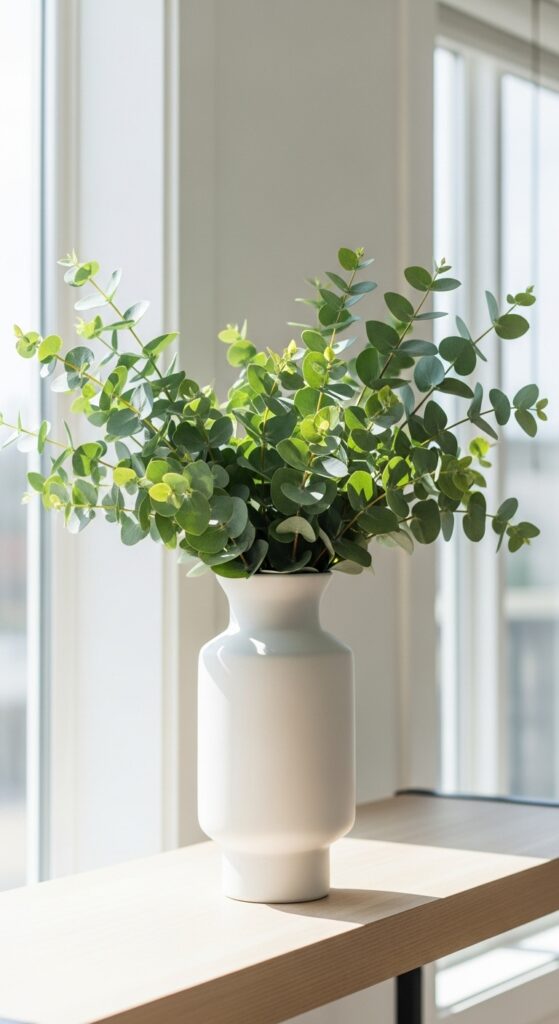
Fresh greenery — even simple eucalyptus from the grocery store — adds life and a freshness that no manufactured element can match. The organic shapes break the regularity of more structured objects and the natural color brings the eye in. Swap it out when it dries. The seasonal rotation keeps shelves from looking static.
30. Organize Books by Color
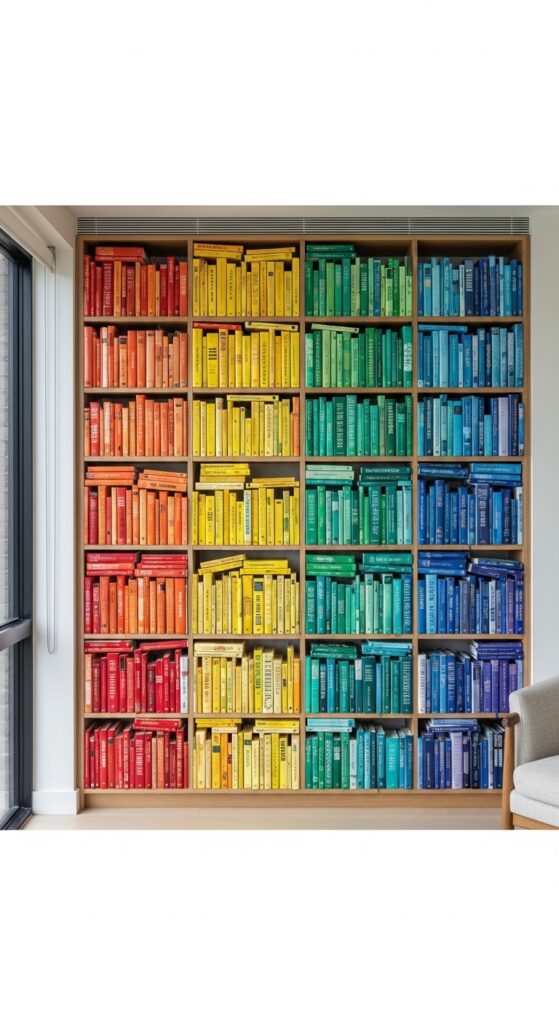
Organizing books by color creates an ombre or gradient effect that looks intentional and artistic rather than just organized. It photographs beautifully, it makes a visual statement, and it gives you a way to display a large book collection without the shelves looking like a storage solution. Start with warm tones on one end and move through to cool tones on the other.
31. Add Personality with Quirky Objects
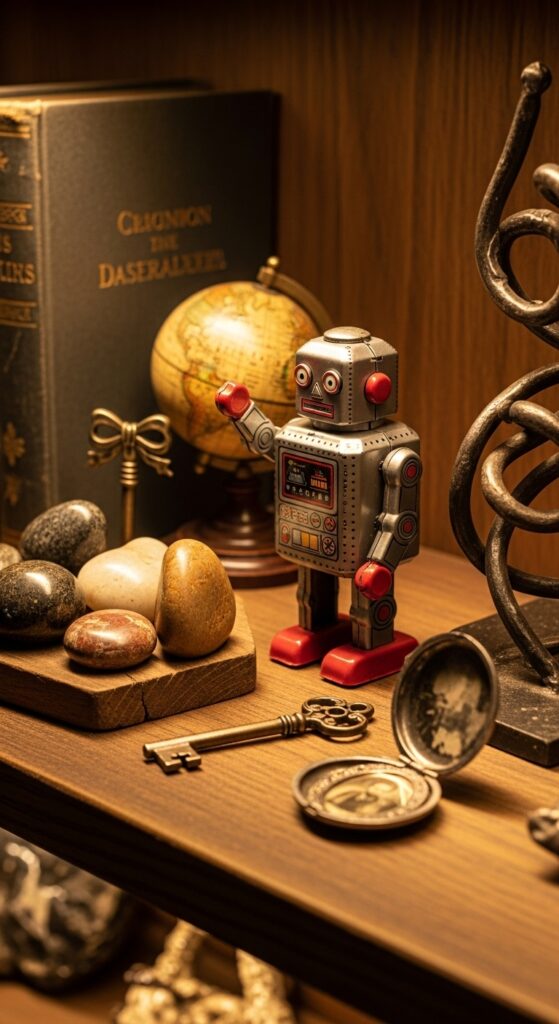
Perfect shelf styling is often the least interesting kind. The objects that make people stop and ask questions — the odd vintage find, the unexpected shape, the thing that makes no obvious design sense — are the ones that give shelves genuine character. Display what you actually love, not just what photographs well.
32. Use Glass Objects to Add Lightness
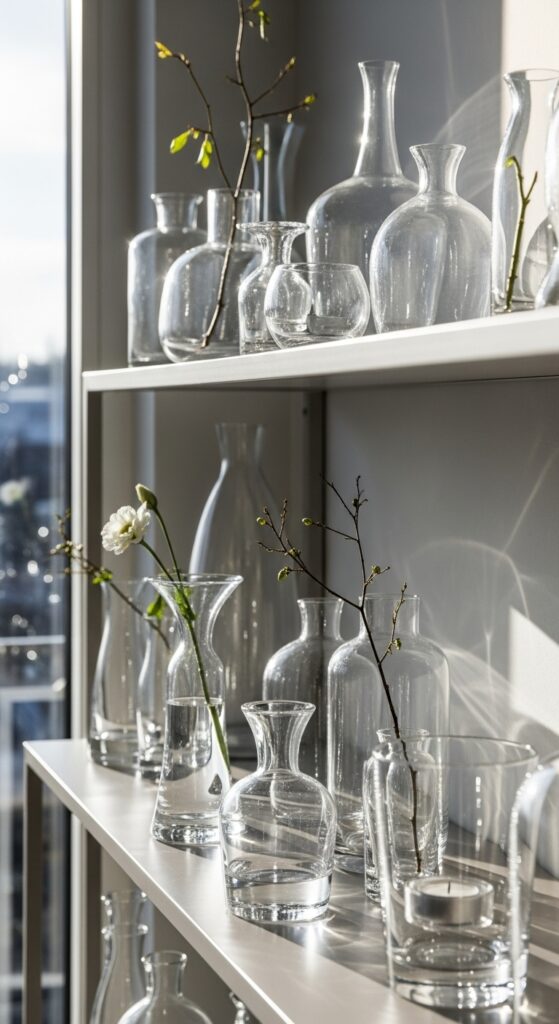
Glass and clear objects add visual presence without visual weight. In small spaces or crowded shelves, this is a genuine advantage — you get the styling benefit of an additional object without making the display feel heavier. White ceramic vases in varying sizes achieve a similar effect — clean, light, and visually neutral enough to work with almost anything around them.

White Ceramic Vase Set
Varying sizes that add visual presence without weight — neutral enough to work with any shelf styling palette.
Check Price on Amazon33. Create Seasonal Shelf Displays

Swapping out 20 percent of your shelf display each season keeps the room feeling current without requiring a full redecoration. Small pumpkins in autumn, evergreen branches in winter, fresh flowers in spring — these seasonal touches signal that someone lives here and pays attention. The effort is minimal but the effect on how the home feels is significant.
34. Include Architectural Elements
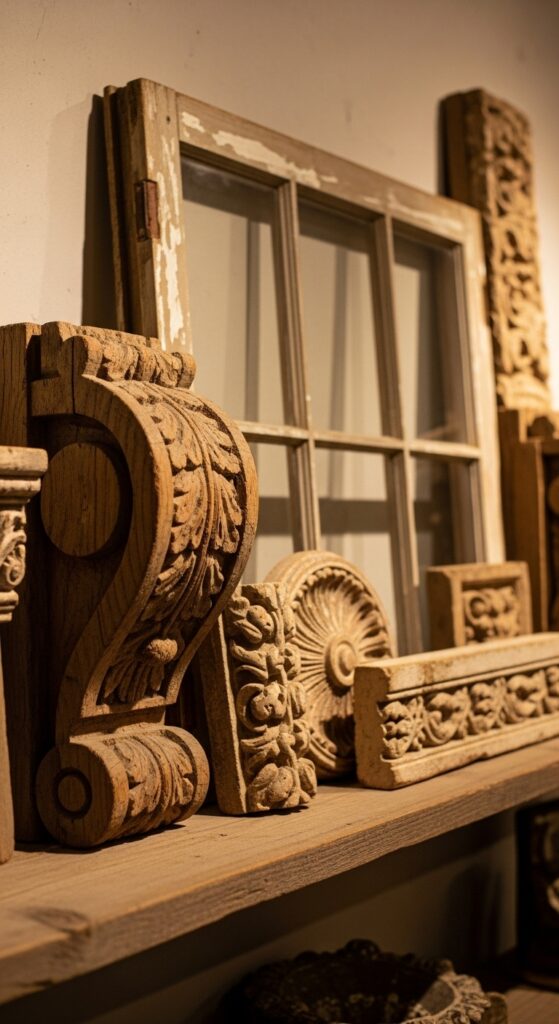
Corbels, vintage window frames, interesting molding fragments, old architectural hardware — these salvaged elements add a gravitas and historical weight that new objects cannot replicate. They work especially well in older homes or in spaces that mix old and new. Architecture repurposed as decor always creates conversation.
35. Use Matching Containers for Cohesion
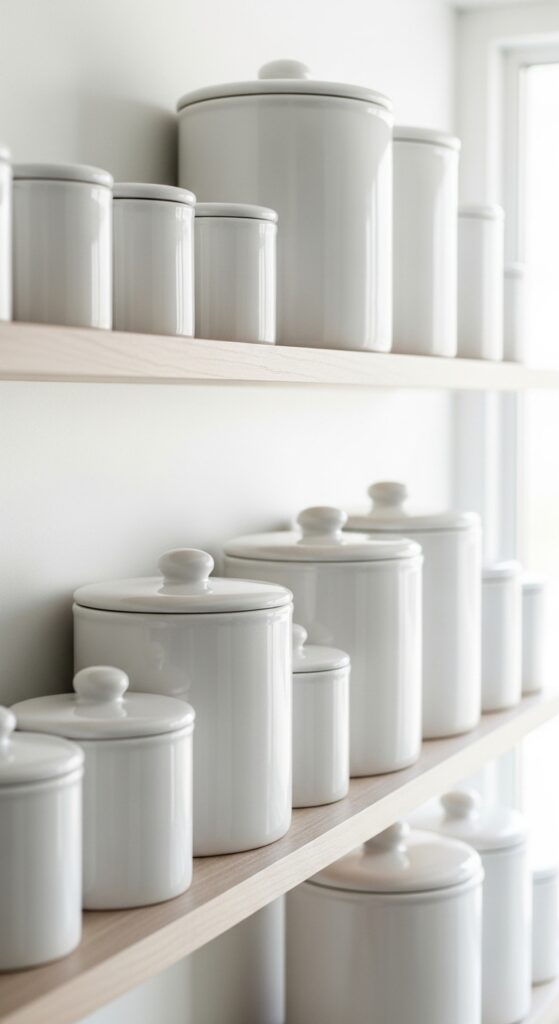
When you are working with a collection of different objects and want the shelf to feel unified, matching containers tie everything together. All white ceramics, all brass, or all woven baskets in the same material create cohesion even when the shapes and sizes vary. The repetition reads as intentional rather than accidental.
36. Add Height with Tall Candlesticks
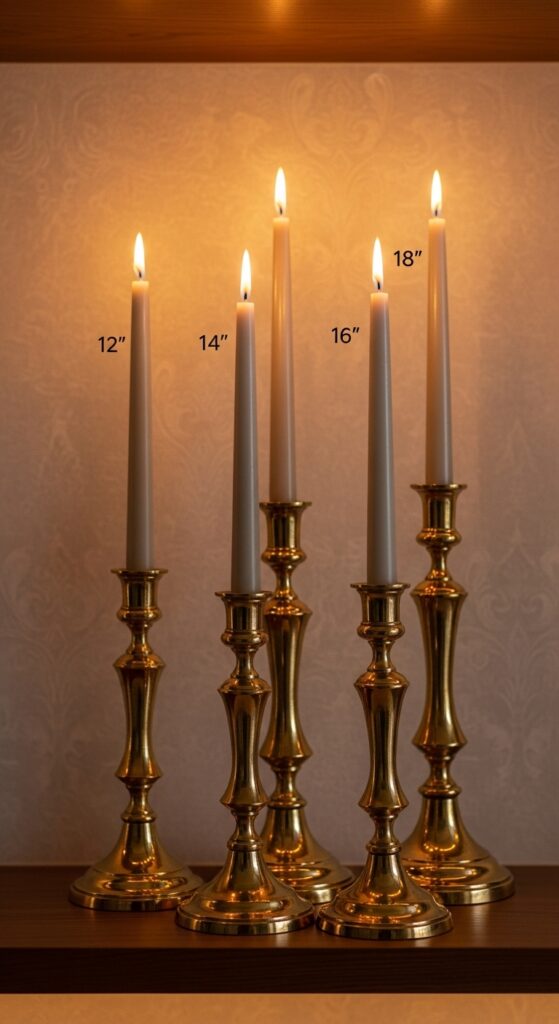
On lower shelves where horizontal space is generous but vertical interest is lacking, tall candlestick holders solve the problem immediately. They draw the eye upward, add elegance without bulk, and work in any decor style from traditional to contemporary. Varying heights within a grouping of candlesticks looks more interesting than identical ones.
37. Display Kids’ Artwork in Frames
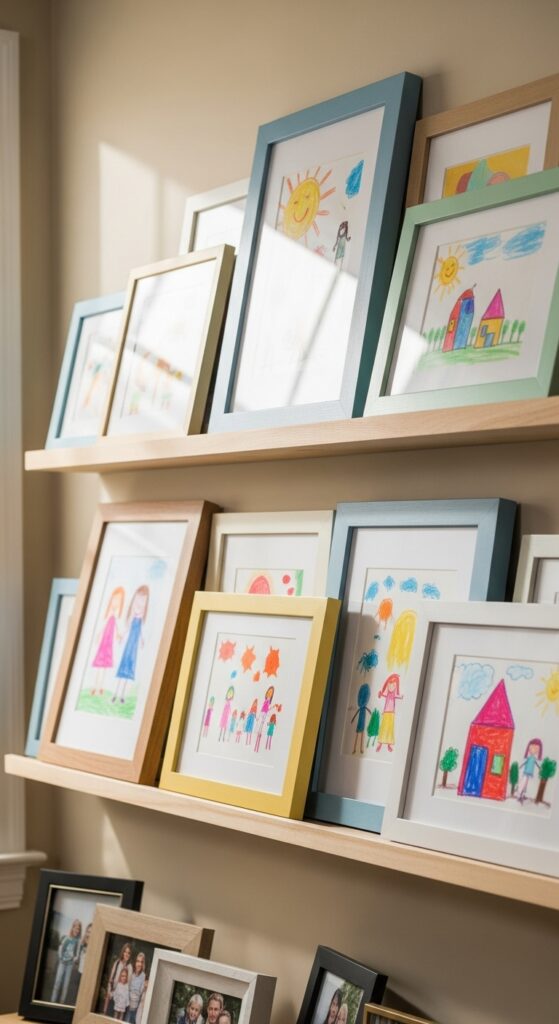
Framed children’s artwork displayed on shelves feels considered rather than pinned to a refrigerator as an afterthought. Use consistent frame styles so the display reads as intentional. Rotate pieces periodically. The objects themselves are unique — no two pieces of children’s art are alike — which gives shelves personality that no store purchase can replicate.
38. Mix Matte and Glossy Finishes

Matte surfaces absorb light and feel quiet. Glossy surfaces reflect it and feel alive. Combining the two within the same shelf display creates subtle contrast that adds depth to even a simple arrangement. This works regardless of color — two white objects in different finishes have more visual interest together than two identical ones.
39. Add Warmth with Wood Tones
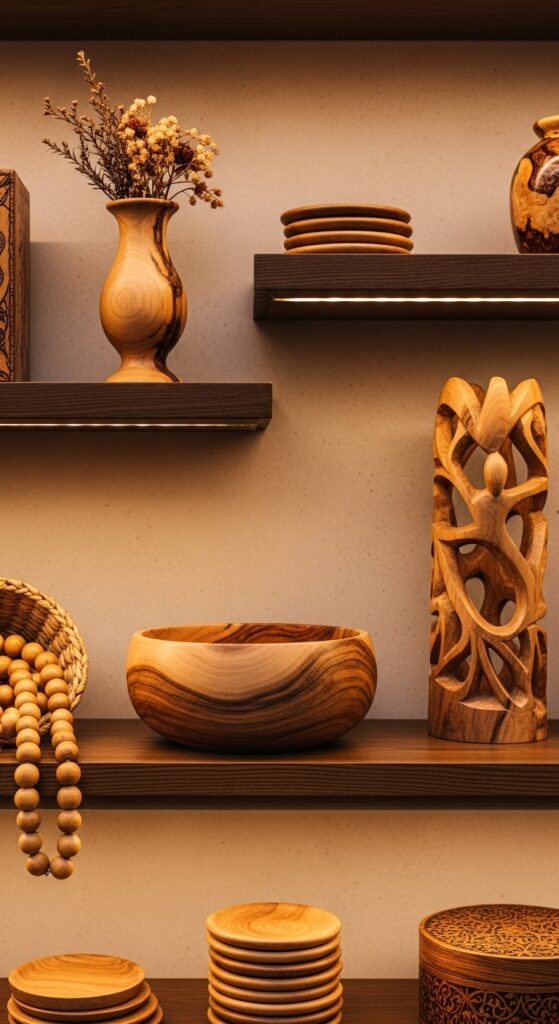
Wood brings warmth to any shelf arrangement — it is one of those materials that makes everything around it feel more inviting. Wood bowls, carved objects, natural branches — the organic grain and warm color temperature soften hard edges and cool tones. You do not need to match wood finishes. Variety in wood tones looks more natural than uniformity.
40. Create Focal Points with Large Objects

One large statement piece — a substantial vase, an oversized bowl, a significant sculpture — anchors a shelf display and gives everything else a clear supporting role. Without a focal point, the eye does not know where to land and the whole arrangement feels restless. This large decorative vase provides exactly that kind of grounding presence that makes a shelf display feel complete.

Large Decorative Vase
Anchors a shelf display and gives surrounding objects a clear supporting role — the focal point every arrangement needs.
Check Price on Amazon41. Use Floating Shelves for Modern Look
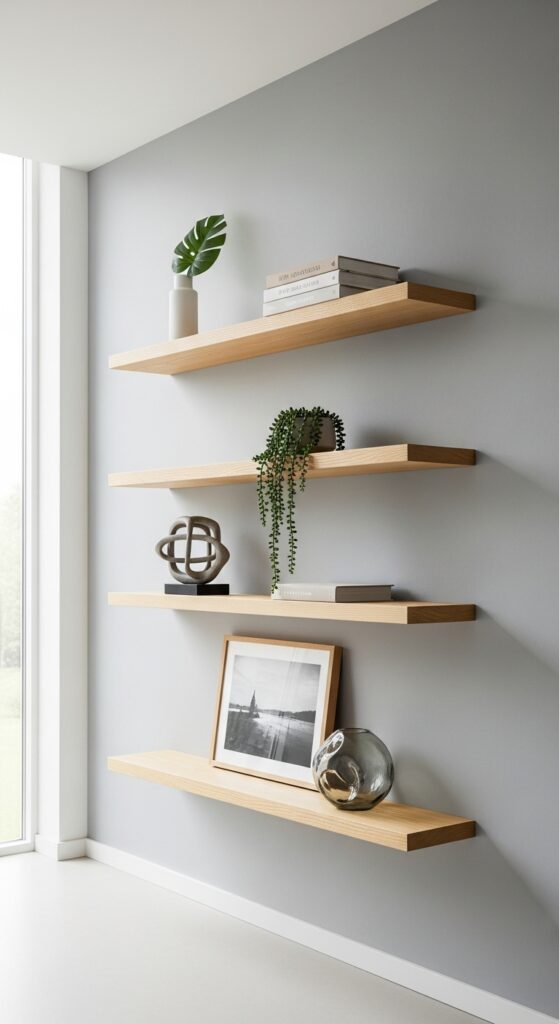
Floating shelves with no visible brackets keep the focus entirely on the display rather than the shelf itself. They work in any room and any style. Keep the styling intentional and relatively minimal — floating shelves look their best when they are not overcrowded. These floating wood wall shelves install cleanly and work for both display and light storage.

Floating Wood Wall Shelves
No visible brackets means the display stays the focus — clean modern look that works in any room and any style.
Check Price on Amazon42. Add Interest with Geometric Shapes

Objects with strong geometric forms — hexagonal trays, spherical vases, triangular bookends — add contemporary energy through shape alone. The clean lines feel modern and deliberate. Marble bookends are a particularly strong choice — they provide practical function, add significant visual weight, and the natural marble variation gives each set a unique character.

Marble Bookends Decorative Set
Practical function with significant visual weight — natural marble variation gives each set genuine character.
Check Price on Amazon43. Display Magazine Collections Stylishly

Magazines stacked with spines visible add color and graphic interest. Organize them by color or keep them in a consistent holder so the stack looks intentional rather than accumulated. They make a shelf feel lived-in and current in a way that purely decorative objects sometimes do not.
44. Use Risers for Varied Heights
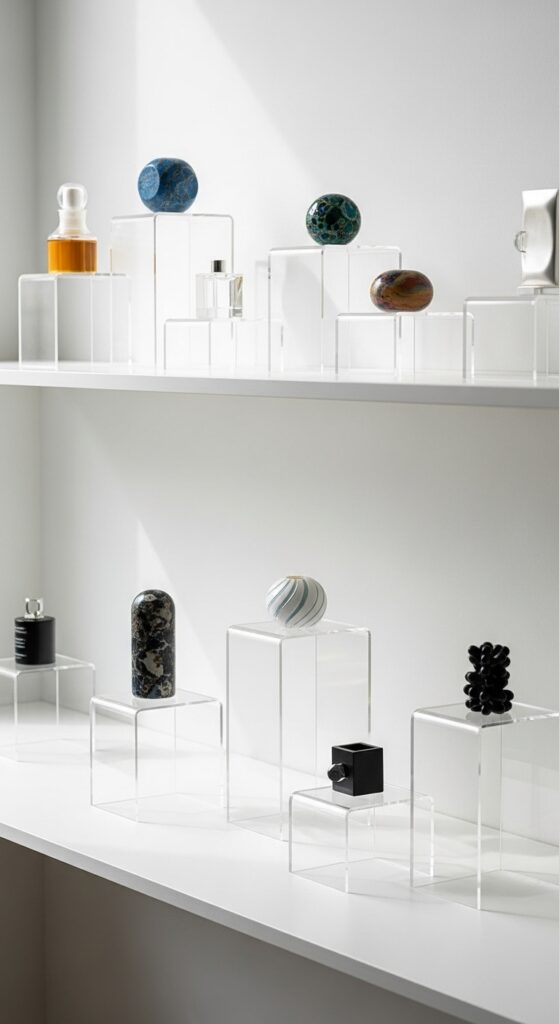
Small objects on deep shelves get lost. Clear acrylic risers elevate them to a visible height without adding color or visual weight of their own. The acrylic disappears and the object appears to float. You can achieve the same effect with small boxes or stacked books, but acrylic risers are the cleanest solution when you want the elevation without anything else visible.

Clear Acrylic Shelf Risers
Elevates small objects to visible height without adding visual weight — the acrylic disappears so the object floats.
Check Price on Amazon45. Incorporate Mirrors for Dimension
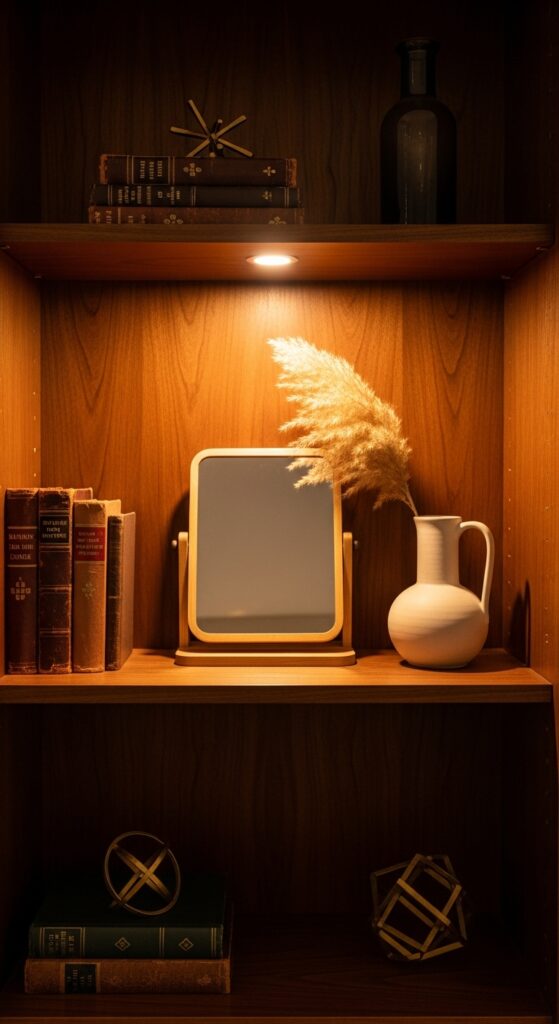
A small mirror leaned on a shelf bounces light into the display and makes the space behind the shelf feel deeper than it actually is. It reflects the objects around it for a layered, dimensional quality. In darker corners or smaller rooms, a mirror on a shelf does more work than almost any other single element.
46. Add Charm with Vintage Books
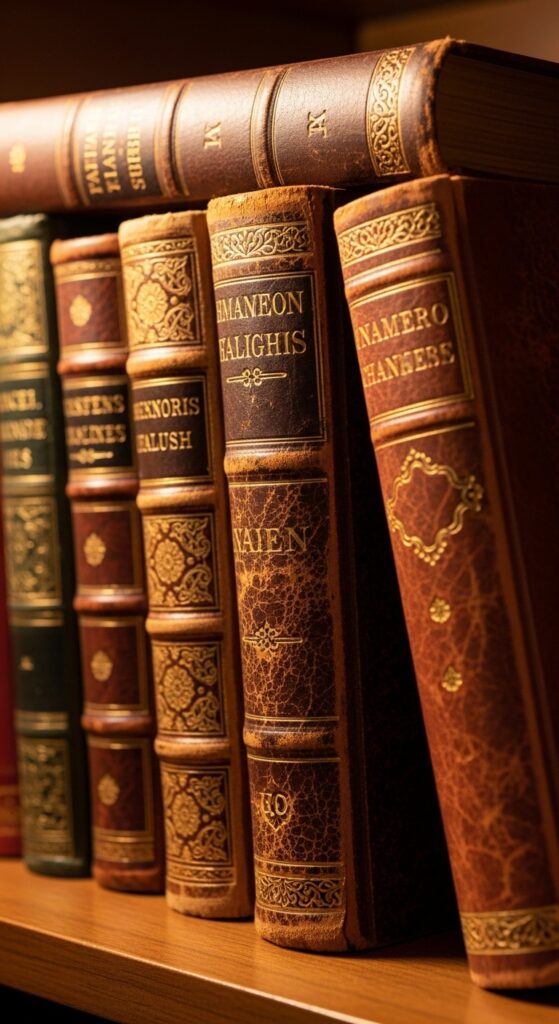
Vintage hardcovers with worn leather spines and aged pages add warmth and history that new books with bright covers cannot. Even books you will never read look beautiful on a shelf when chosen for their physical character. Hunt thrift stores for old hardcovers with interesting spines. The patina and imperfection are exactly what makes them work.
47. Style Bathroom Shelves with Spa Vibes
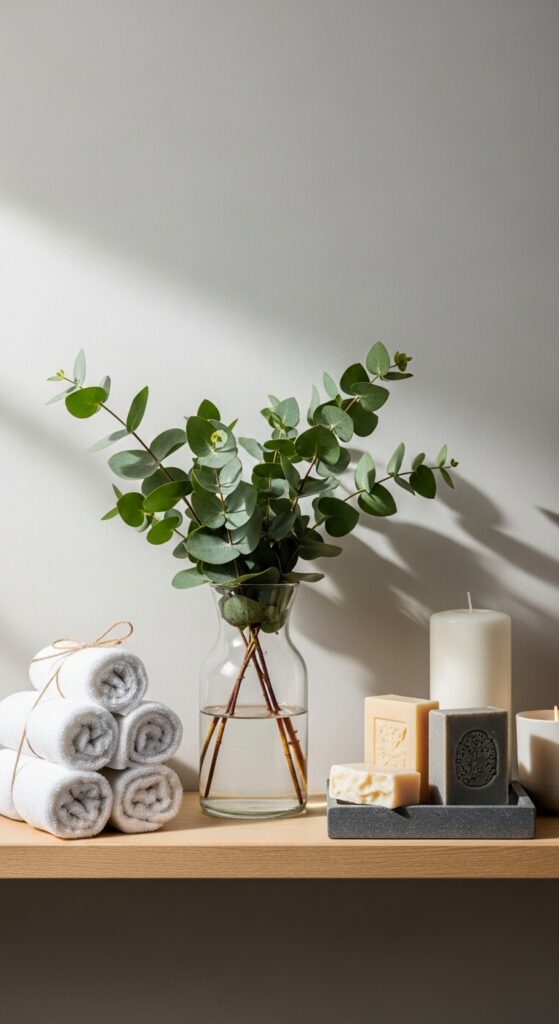
Bathroom shelves become genuinely functional and beautiful when styled with intention. Roll towels neatly, add a small plant, display pretty soaps, and group lotions and candles on a small tray. Keep the palette neutral and the surfaces uncluttered. For more bathroom styling ideas, our bathroom remodel ideas guide covers complete bathroom transformations.
48. Create Kitchen Shelf Displays That Function
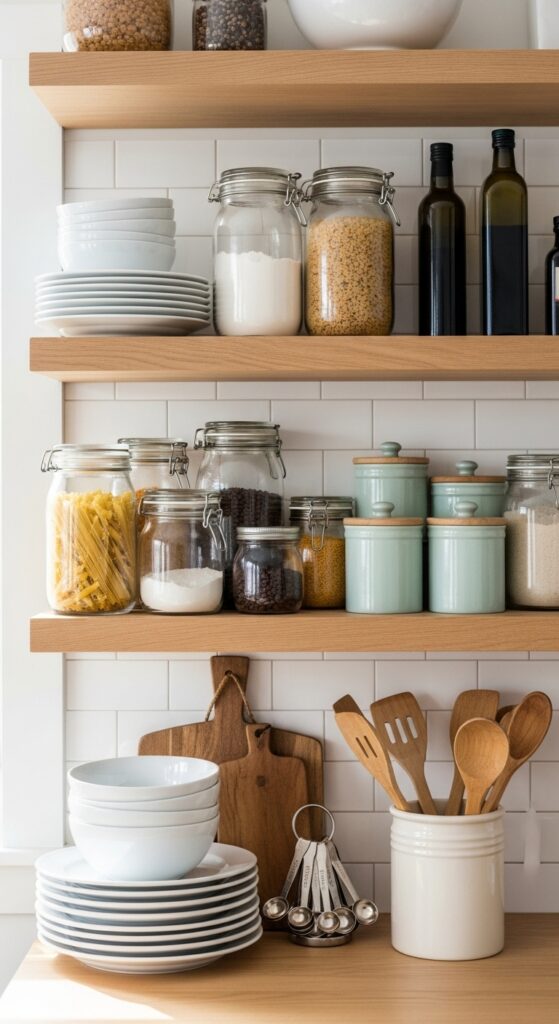
Open kitchen shelves work best when the displayed items are things you actually use. Stack white dishes, display glass jars filled with pasta or beans, show off nice oil bottles. The restriction of displaying only functional items forces a natural curation that purely decorative shelves sometimes lack. For more kitchen inspiration, our farmhouse kitchen ideas guide shows how to style kitchen shelves beautifully.
49. Add Drama with Black Accent Pieces
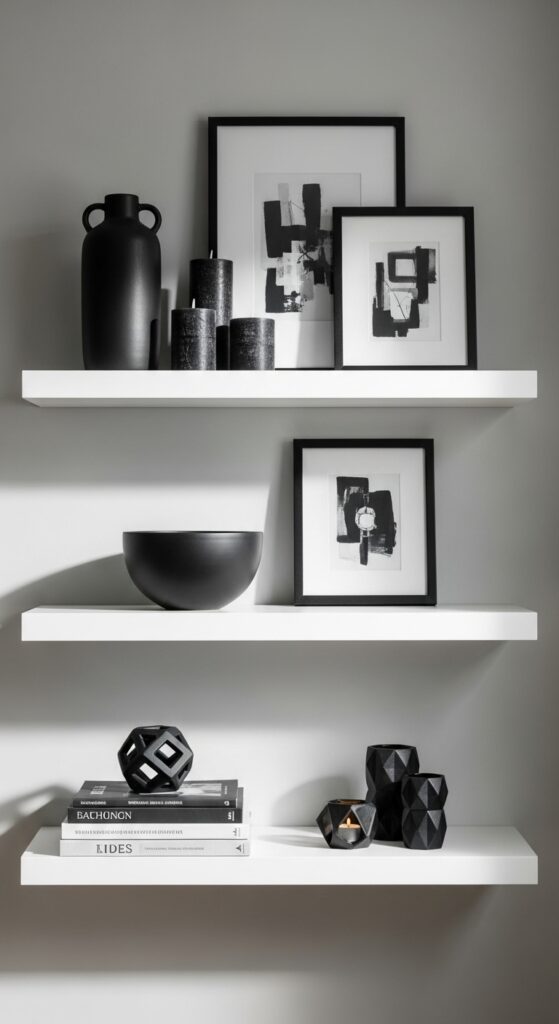
Black objects — vases, frames, candlesticks — ground a shelf display and prevent it from feeling too light or too scattered. They create visual anchors that make everything around them feel more purposeful. Black works in any style from modern to traditional and pairs well with any color palette. A little goes a long way — one or two black pieces per shelf is usually enough.
50. Mix Indoor and Outdoor Elements
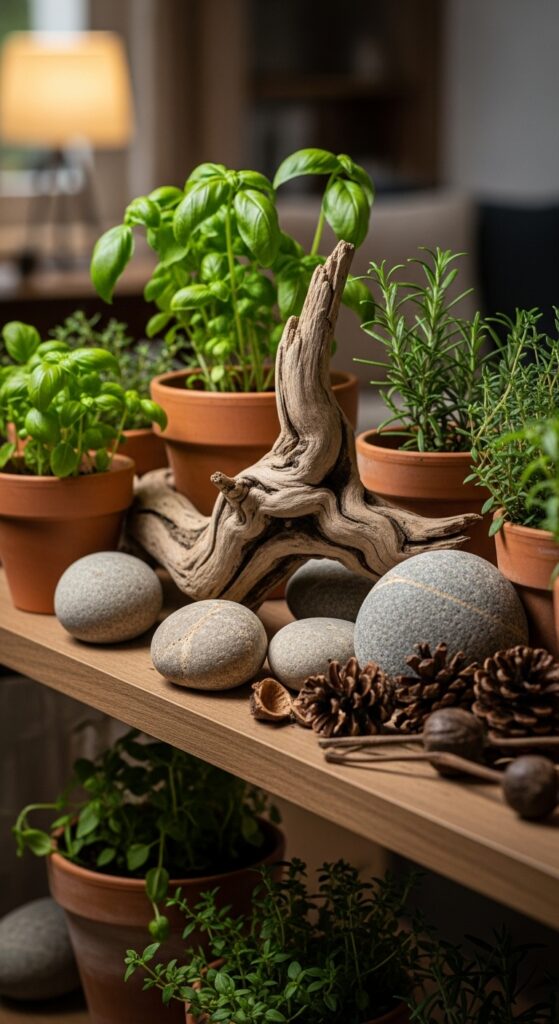
Smooth river rocks, interesting branches, dried seed pods, a small potted herb — bringing natural outdoor elements inside adds unpredictability and organic character to shelf displays. These are often free, completely unique, and create a connection between the interior and the world outside that manufactured objects simply cannot replicate. Nature is consistently the best source of objects with genuine character.
Transform Your Home with Styled Shelves Today!
Shelf styling is one of the most accessible forms of home decorating — it requires no tools, no renovation, and no significant investment. Start with one shelf, apply two or three of these ideas, and step back. The difference between a shelf that looks accidental and one that looks designed is almost always just intention — knowing what you are trying to achieve and making deliberate choices to get there.
For more home decor inspiration throughout every room, explore our DIY home decor ideas for creative projects that personalize your space.


Amir Ali is the founder and site administrator of HomeDecorEdge, a modern home decor and interior design platform. Since starting the site, he has combined his passion for interior design, practical styling, and color coordination with hands-on content strategy and site management. He guides authors, curates high-quality articles, and ensures readers have access to actionable, visually inspiring, and user-focused home decor advice for apartments, small rooms, and family homes.