

Raised garden beds transform your growing space into an organized, productive paradise. They improve drainage, warm soil faster, reduce back strain, and keep weeds under control. Whether you’re working with a tiny patio or sprawling backyard, these 41 raised garden bed ideas help you create the perfect raised bed setup for maximum harvests and minimum hassle.
This post contains affiliate links. If you purchase through these links I may earn a small commission at no extra cost to you.
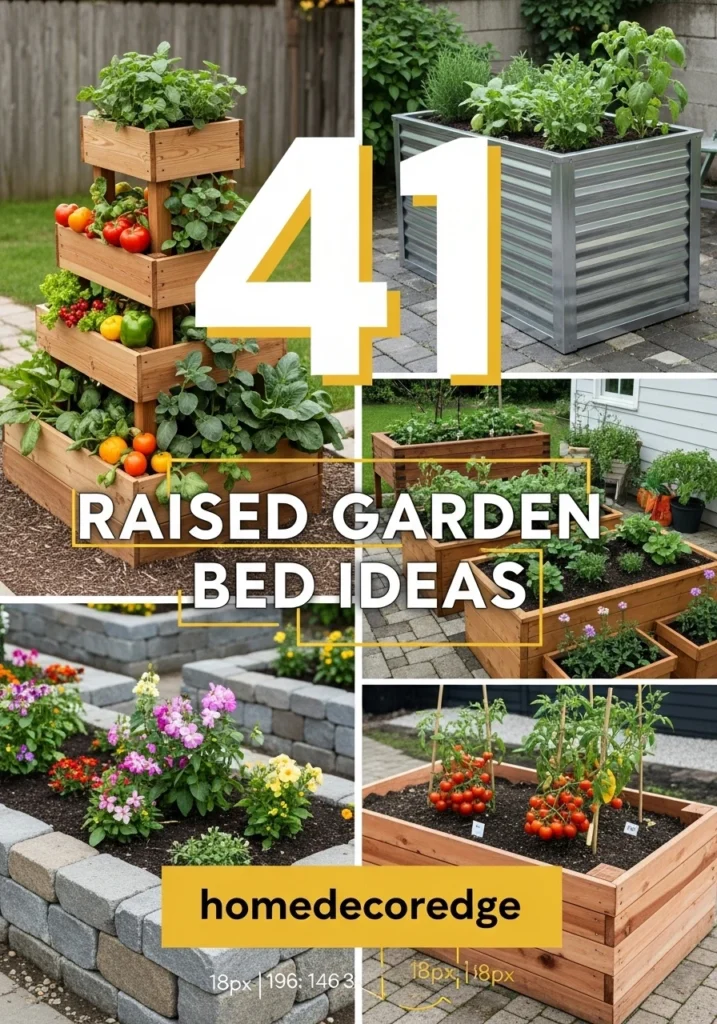
Raised beds give you complete control over your soil, drainage, and growing conditions making gardening easier and more productive than ever.
Explore stunning outdoor garden decor ideas that’ll elevate your entire space!
1. Classic Cedar Box Beds
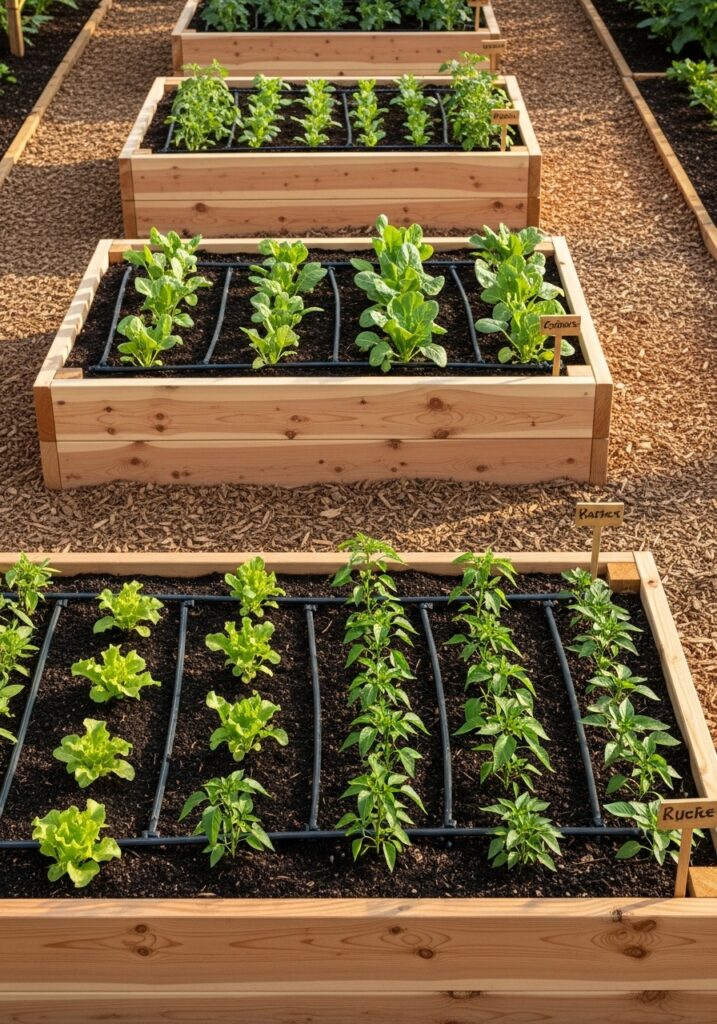
Cedar’s the gold standard for raised garden bed ideas — it resists rot naturally without chemicals. Build them 4×8 feet for easy reach from both sides, keeping them around 12 inches deep for most vegetables. The warm wood tones look beautiful while the natural oils protect against moisture and pests. This cedar raised garden bed kit comes ready to assemble — no cutting required and it fits perfectly in any backyard layout. Cedar beds last 10-15 years and age into gorgeous silvery-gray if you skip the stain.

Raised Garden Bed Cedar Wood
Natural cedar resists rot without chemicals — assembles quickly and looks beautiful in any backyard garden layout. Lasts 10-15 years with zero maintenance.
Check Price on Amazon2. Tiered Hillside Gardens


Turn that challenging slope into productive terraced gardens. Build beds stepping up the hillside, using the natural grade instead of fighting it. Each tier creates flat growing space while the walls prevent erosion. Stone or timber retaining walls hold everything in place beautifully. The elevation improves drainage naturally water moves down through each level instead of pooling. Plant taller crops at the top so they don’t shade lower beds.
3. Metal Trough Beds
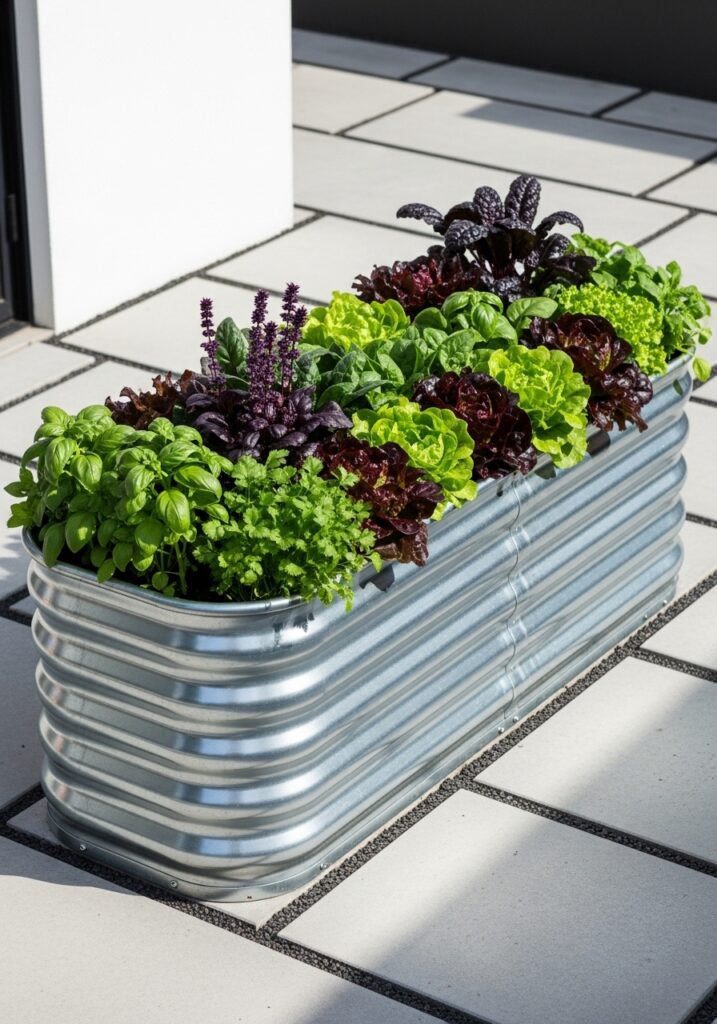
Galvanized steel troughs bring serious modern style to vegetable growing. The metal heats up quickly in spring, extending your season naturally. This galvanized metal raised garden bed is 2-3 feet tall so you can garden standing up — your back will thank you. The industrial look pairs perfectly with contemporary homes and urban patios. Line the inside with landscape fabric to prevent soil contact with metal. These beds literally last forever and develop beautiful weathered patina over time.

Galvanized Metal Raised Bed
Heats soil quickly in spring and lasts forever — the most durable and modern-looking raised garden bed option for any backyard layout.
Check Price on Amazon4. Keyhole Garden Design
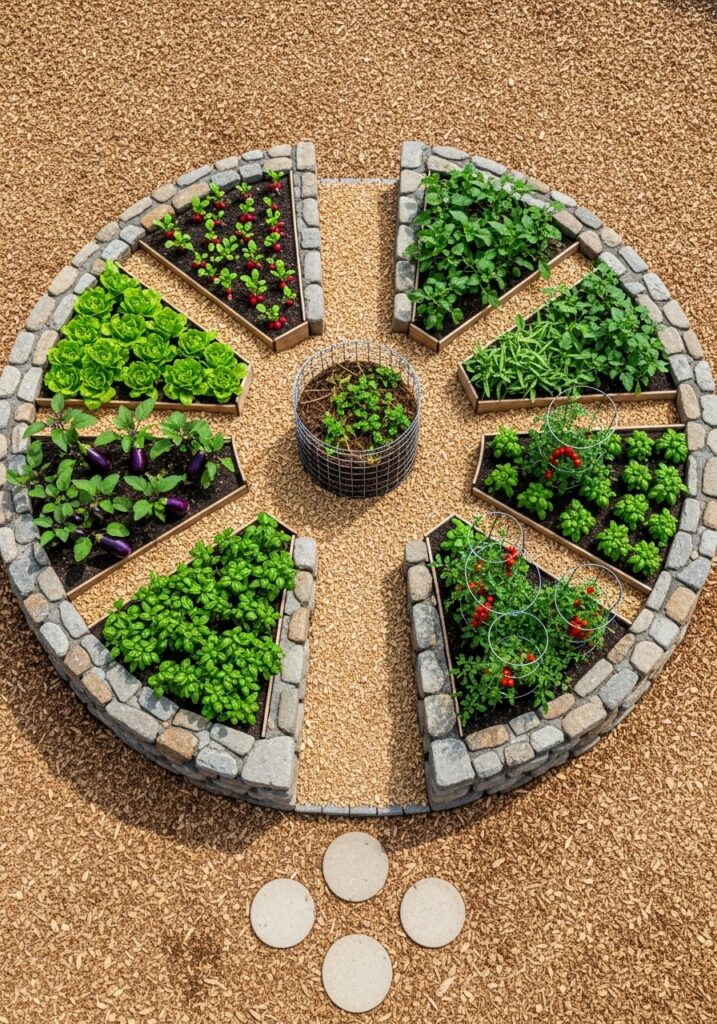
Keyhole beds maximize space with brilliant circular design. Build a round raised bed with a pathway cutting to the center composting basket. You reach every plant easily from the keyhole path while the compost feeds everything as it breaks down. The 6-foot diameter gives you serious growing space in compact footprint. Stack stone, brick, or blocks for walls about 3 feet high. This African-inspired design works magic in small yards—you’re composting and growing in the same efficient space.
5. U-Shaped Accessible Beds
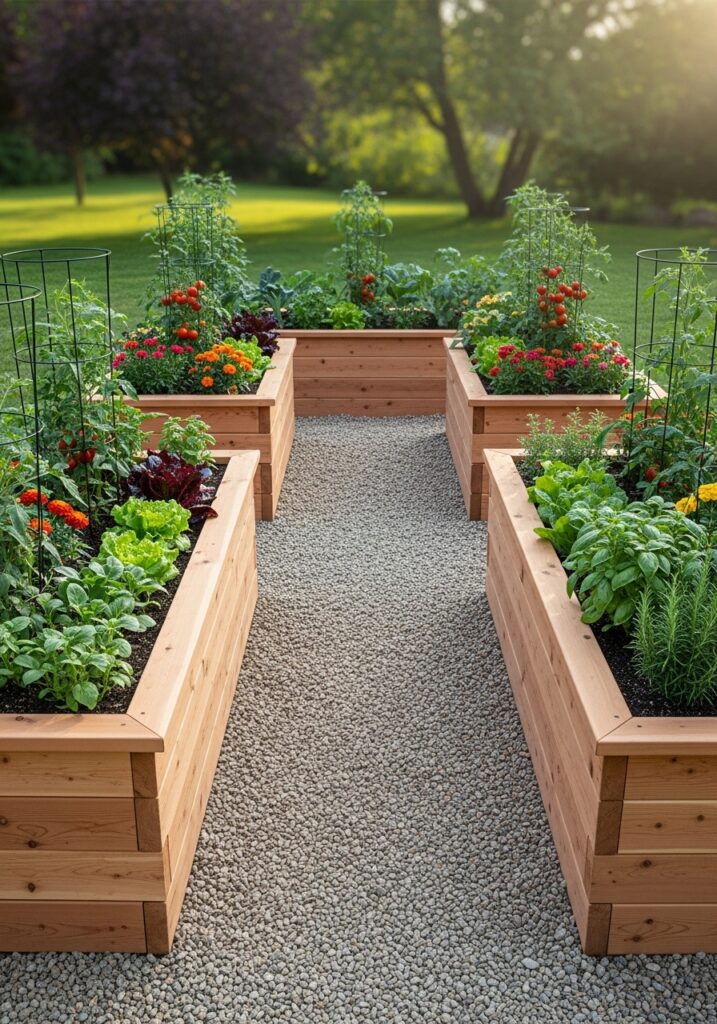
U-shaped configurations create wheelchair-accessible gardens that anyone can enjoy. Build beds 30 inches tall with wide pathways through the center. The three-sided design means you reach everything from the open side without stretching or straining. Make beds no deeper than 2 feet so plants stay within comfortable reach. Add a smooth, firm pathway surface — decomposed granite or concrete work perfectly. Use metal corner brackets to lock your wooden boards together at the corners for a sturdy structure that holds its shape season after season.

Raised Bed Corner Brackets
Heavy duty metal brackets lock wooden boards together at any angle — build U-shaped L-shaped or rectangular raised beds that hold their shape permanently.
Check Price on Amazon6. Stacked Stone Elegance
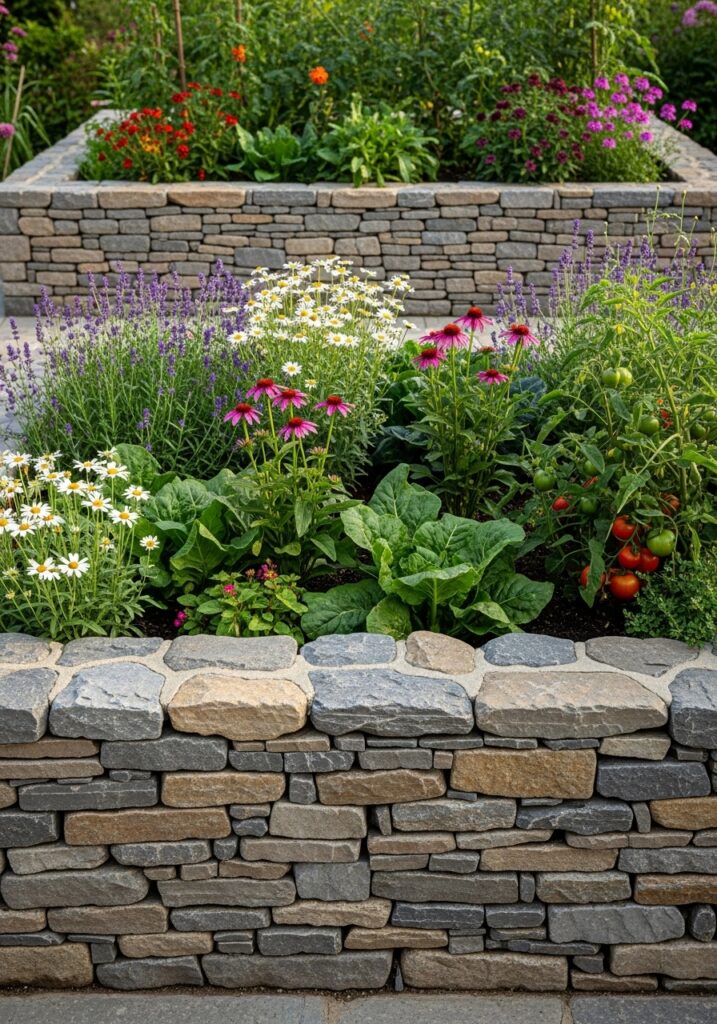
Dry-stacked stone creates timeless raised beds that look like they’ve always been there. The irregular stones fit together naturally—no mortar needed when you build properly. Choose local stone to match your region’s natural aesthetic. Stack walls 18-24 inches high, slightly tilting inward for stability. The gaps between stones provide drainage while beneficial insects find shelter. These beds improve with age as moss and patina develop. The organic look suits cottage gardens, farmhouse styles, and rustic landscapes beautifully.
7. Corrugated Metal Modern

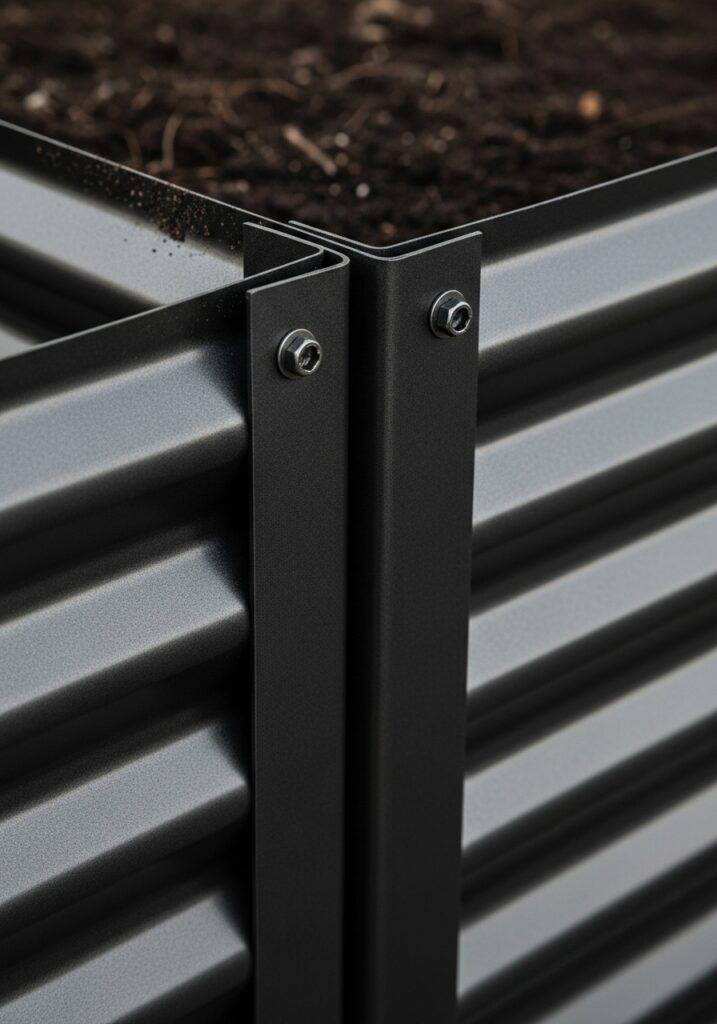
Corrugated metal panels make ultra-modern raised beds fast. Paint them charcoal, black, or leave them natural galvanized for industrial chic. The ribbed texture adds visual interest while making panels incredibly strong. Build them any size — metal’s easy to cut and attach with simple brackets. These beds heat soil quickly in spring and cool fast in fall, giving you season extension naturally. Fill with quality raised bed soil mix for the best vegetable growing results from day one.
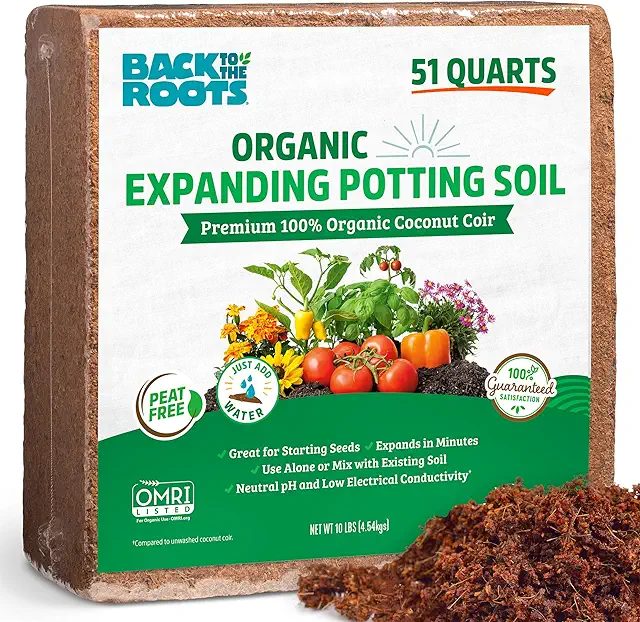
Raised Bed Soil Mix
Premium blend designed specifically for raised beds — perfect drainage and nutrient balance that gives vegetables the best possible start from day one.
Check Price on Amazon8. Brick Border Tradition

Brick borders bring formal elegance to vegetable gardens. Mortar them properly and they’ll outlast you—these beds are permanent. The thermal mass stores heat during the day and releases it at night, protecting plants from temperature swings. Build walls in classic running bond or herringbone patterns for timeless appeal. The reddish tones warm up any garden space. Keep them 12-16 inches tall unless you want to invest in serious bricklaying. Match your home’s brick for cohesive landscape design.
9. Livestock Tank Conversions

Old stock tanks make instant raised beds with serious farm charm. Drill drainage holes in the bottom and fill with quality soil. The deep walls give roots plenty of room while the galvanized metal lasts forever. Oval tanks work better than round—you can reach the center more easily. The height’s perfect for standing gardening without bending. Find used tanks cheap at farm auctions or buy new ones at feed stores. They’re mobile too—fill them where you want them because they’re not moving once planted.
10. Composite Deck Boards

Composite decking creates maintenance-free raised beds that never rot, warp, or splinter. Use the same boards you’d deck with—they’re designed for ground contact. Choose gray, brown, or wood-toned colors to match your outdoor style. These beds look sharp for decades with zero upkeep. The synthetic material won’t leach anything into soil, and it resists insects completely. Build them any height, though 18 inches gives great growing depth. Add matching composite cap rails for finished professional look. For more garden organization strategies, check out our raised garden beds layout ideas for organization.
11. Railroad Tie Rustic

Railroad ties build seriously heavy-duty beds with instant aged character. The massive timbers stack easily and last for decades. Look for untreated ties—old creosote-treated ones aren’t food-safe. New hardwood ties work great and they’re sold specifically for landscaping. Stack them two or three high for substantial walls that’ll never budge. Drill through and pound rebar down to lock everything together. The weathered look suits cottage gardens, country properties, and anywhere rustic charm feels right. These beds handle serious weight—perfect for deep-rooted vegetables.
12. Cinder Block Flexibility
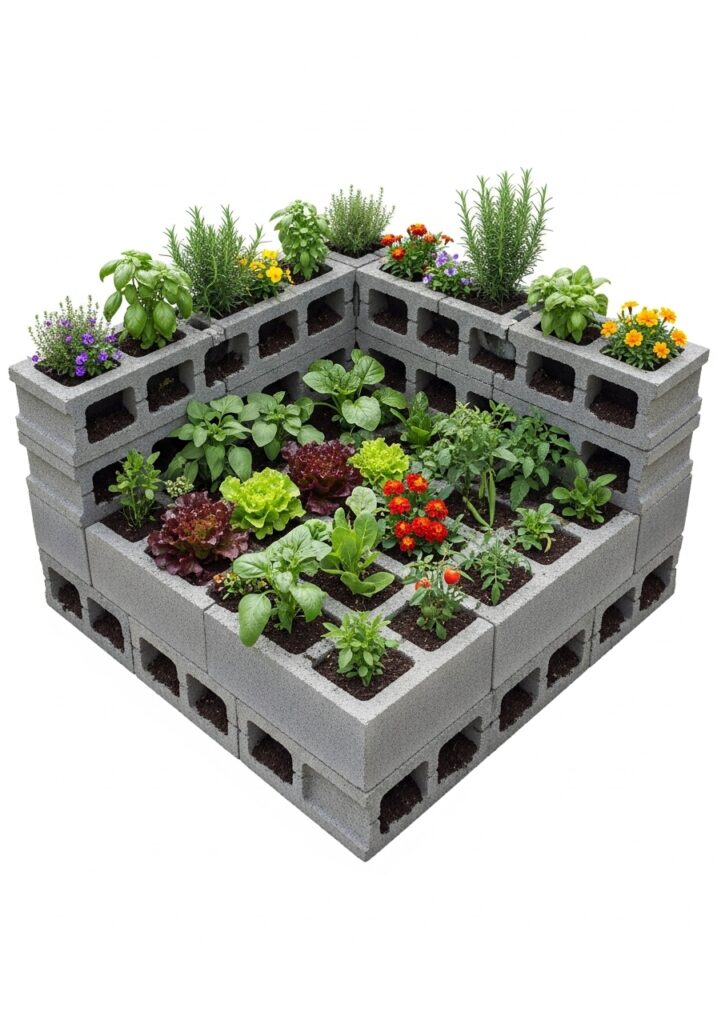
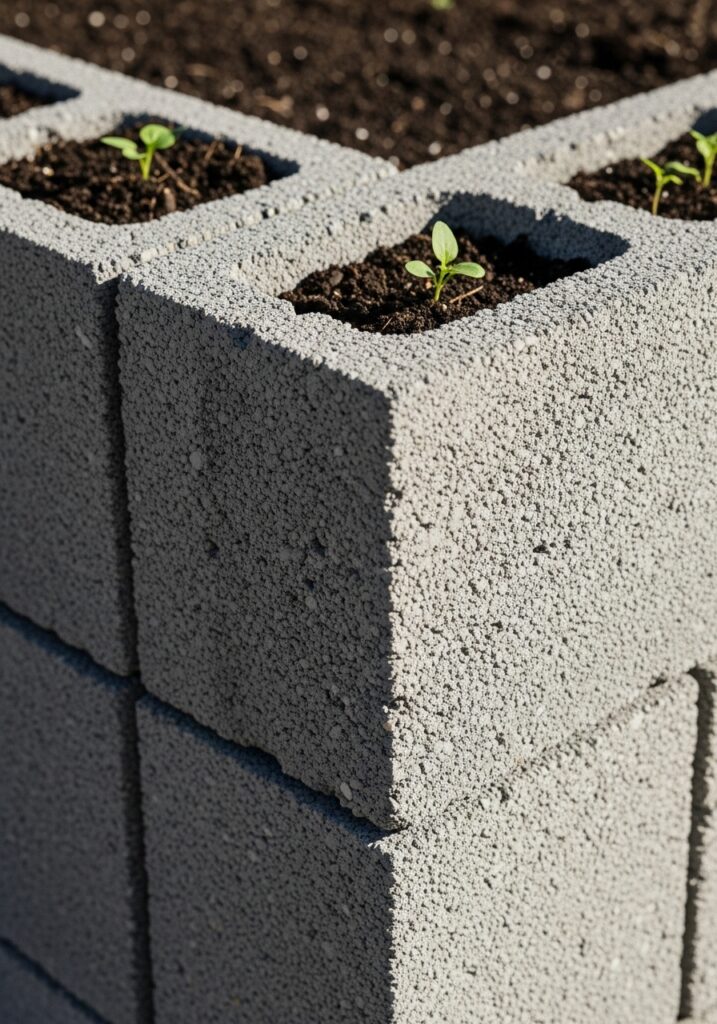
Cinder blocks let you build raised beds in any configuration fast — they’re one of the best cheap raised garden bed ideas available. Stack them without mortar for temporary beds you can reconfigure next season. The hollow cells provide extra planting spots for herbs or flowers along the edges. This cinder block garden bed kit gives you everything you need for a sturdy modular layout. Build beds any shape — L-shaped, U-shaped, or simple rectangles — blocks cost pennies and they’re endlessly reusable.

Cinder Block Garden Bed
Modular and endlessly configurable — stack without mortar for any layout shape and reconfigure next season. The most flexible cheap raised garden bed option.
Check Price on Amazon13. Elevated Table Gardens
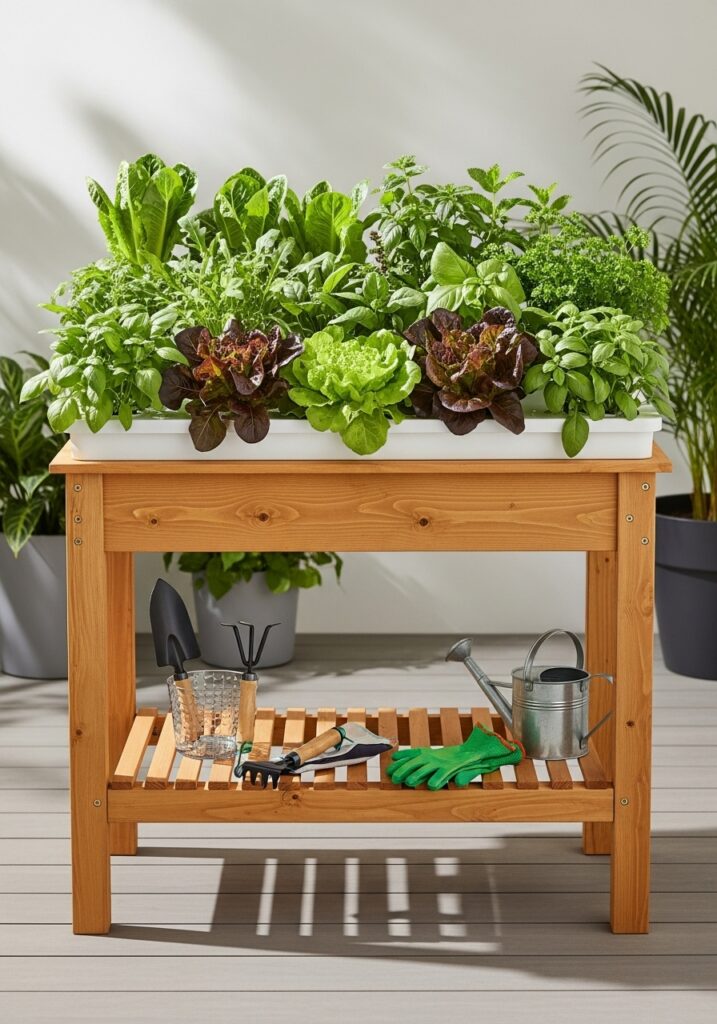
Elevated tables bring gardening to comfortable standing height. Build a waist-high frame supporting shallow growing trays—perfect for seniors or anyone with mobility issues. The 8-inch depth works great for greens, herbs, and shallow-rooted vegetables. Add a shelf underneath for storing tools and supplies. These beds warm up faster than ground-level ones, extending your season. Position them on decks, patios, or near your kitchen door for ultimate convenience. No bending, no kneeling—just comfortable upright gardening.
14. Hugelkultur Mounds
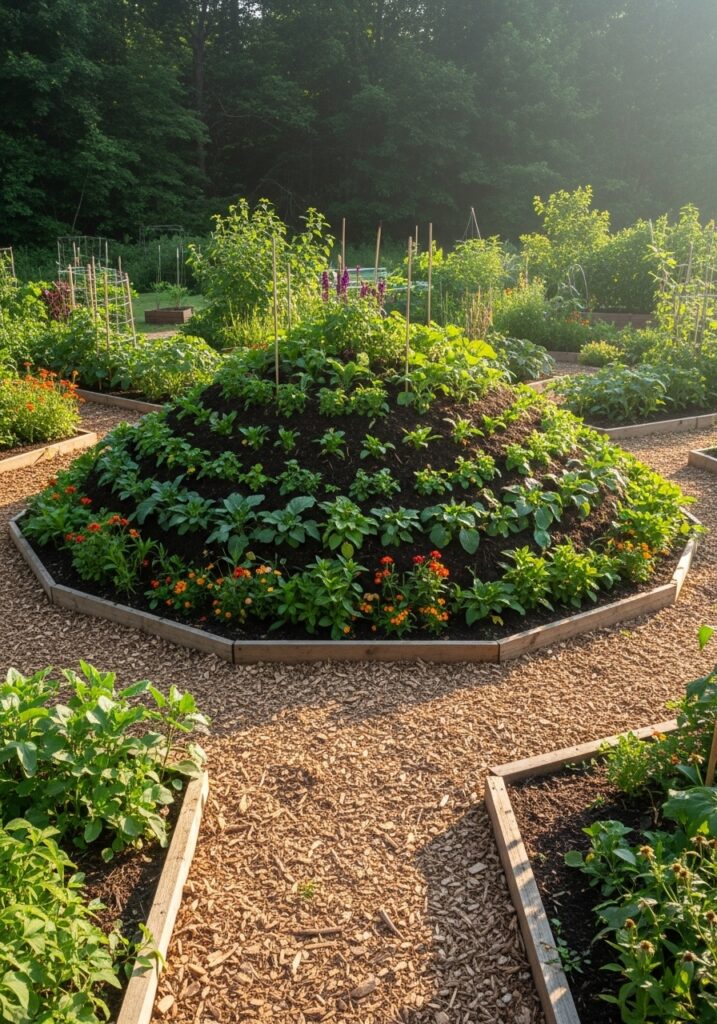
Hugelkultur beds turn buried wood into long-term fertility. Dig a shallow trench, pile in logs and branches, then mound soil over the top. The wood acts like a sponge—holding moisture during dry spells. As it decomposes over years, it releases nutrients slowly. Build mounds 3-4 feet tall and as long as you want. The height creates different microclimates—plant heat lovers at the sunny top, cool-season crops on shaded sides. These beds improve every year as the wood breaks down. They’re self-watering once established and incredibly productive.
15. Wicking Bed Systems
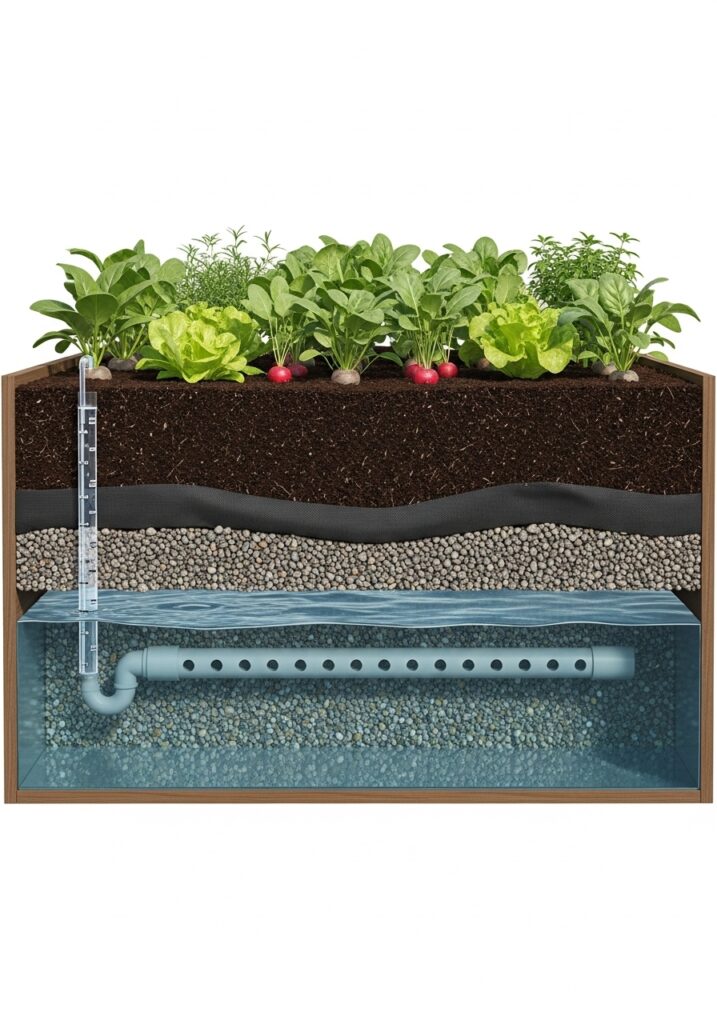

Wicking beds water themselves from below — genius for busy gardeners. Build a watertight raised bed with a gravel reservoir at the bottom — this wicking bed reservoir kit makes the whole system simple to set up. Water wicks up through the soil as plants need it and the system keeps soil evenly moist without overwatering. Vegetables love the consistent moisture — yields increase dramatically. These beds use 50% less water than traditional irrigation while producing better crops.

Wicking Bed Reservoir Kit
Self-watering system from below — 50% less water use with dramatically better yields. Fill the reservoir weekly and your raised bed waters itself.
Check Price on Amazon16. Concrete Block Style
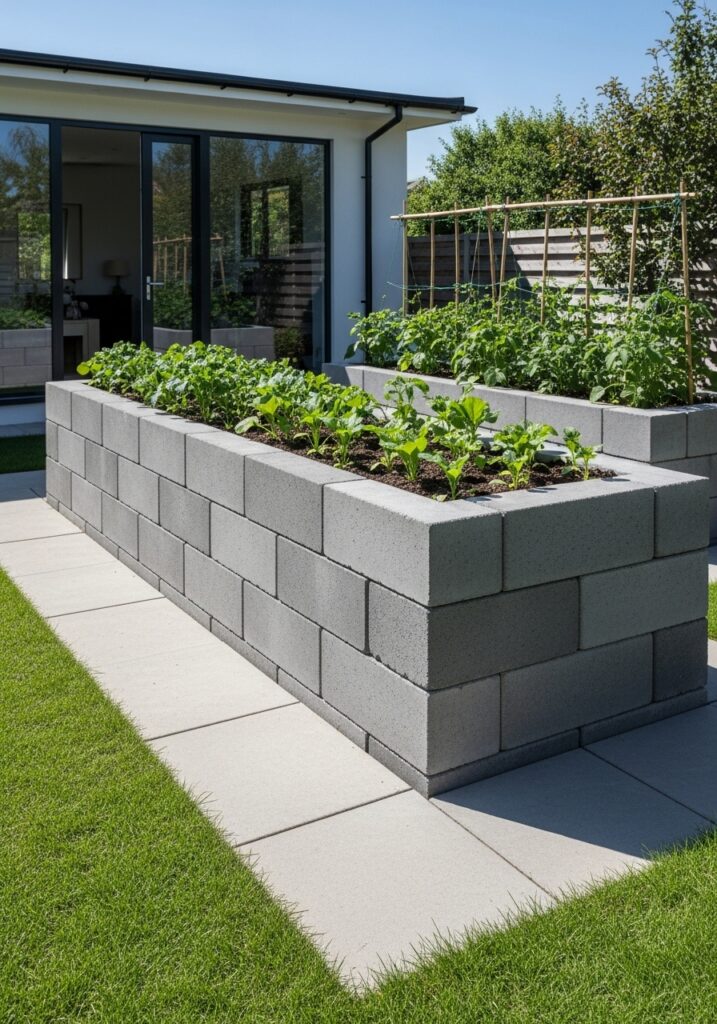
Smooth-faced concrete blocks create clean modern beds with architectural presence. Stack them with mortar for permanent structures or dry-stack for seasonal flexibility. The uniform blocks make perfectly straight walls and crisp corners. Choose standard gray or find blocks in tan, charcoal, or even white. Build them 16-24 inches tall for good root depth. The mass stores heat beautifully—protecting plants from temperature swings. Cap the top course with flat pavers for finished look and comfortable seating edge. For more structured garden layouts, explore our raised garden beds layout ideas for organization.
17. Bamboo Border Natural
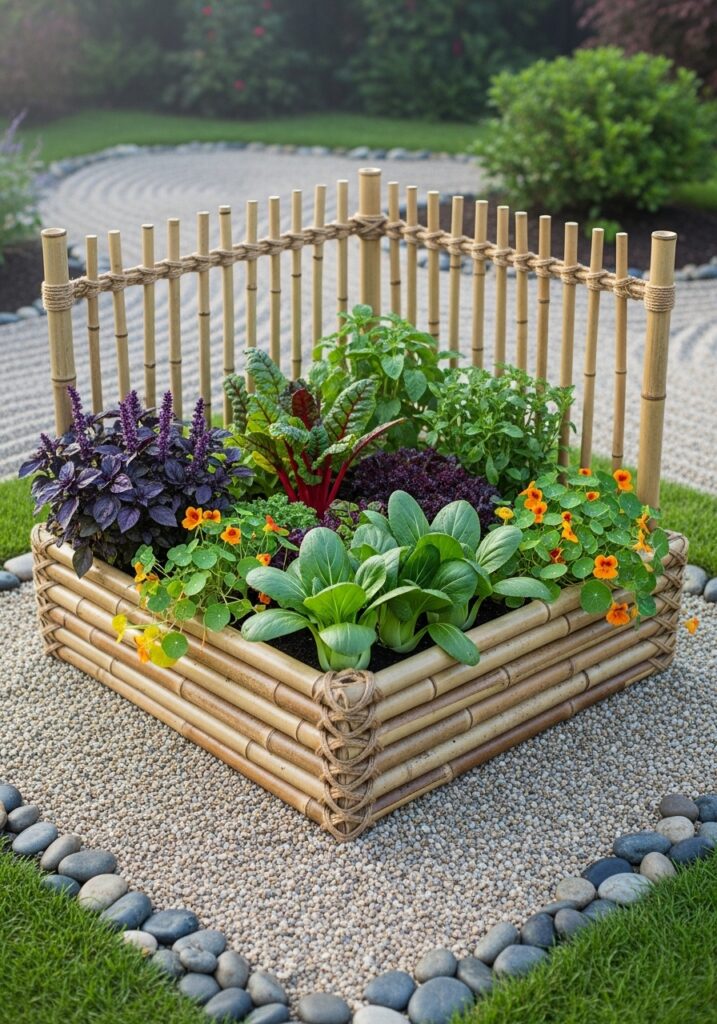
Bamboo poles create exotic raised bed borders for pennies. Drive thick bamboo canes vertically into the ground, spacing them close together. Wire or lash them together for stability. The natural poles bring organic texture and Asian-inspired style. They’re perfect for shallow beds—8 to 12 inches works great. Bamboo eventually breaks down but it’s so cheap you can replace it guilt-free. The light color brightens shady gardens while the vertical lines add architectural interest. Source bamboo locally or buy bundles at garden centers.
18. Strawberry Tower Vertical
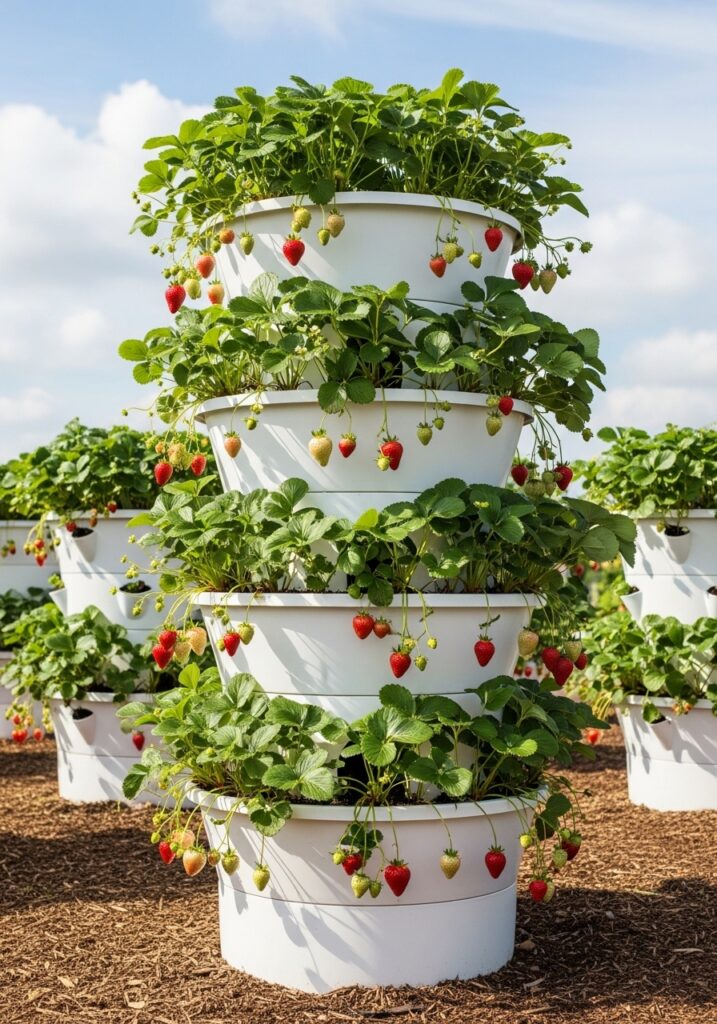
Strawberry towers multiply your harvest by growing up instead of out. This strawberry tower planter stacks in tiers — each level holds plants that cascade over the edges giving you 20+ plants in a 3-foot footprint. Water from the top and it trickles down through each level. Perfect for patios, decks, or anywhere space is precious. The vertical design keeps berries clean and makes harvesting easy. Try herbs, lettuce, or flowers too — any shallow-rooted plant works perfectly.

Strawberry Tower Planter
20+ plants in a 3-foot footprint — the most space-efficient raised garden bed idea for small spaces patios and decks. Works for herbs lettuce and flowers too.
Check Price on Amazon19. Repurposed Pallet Beds
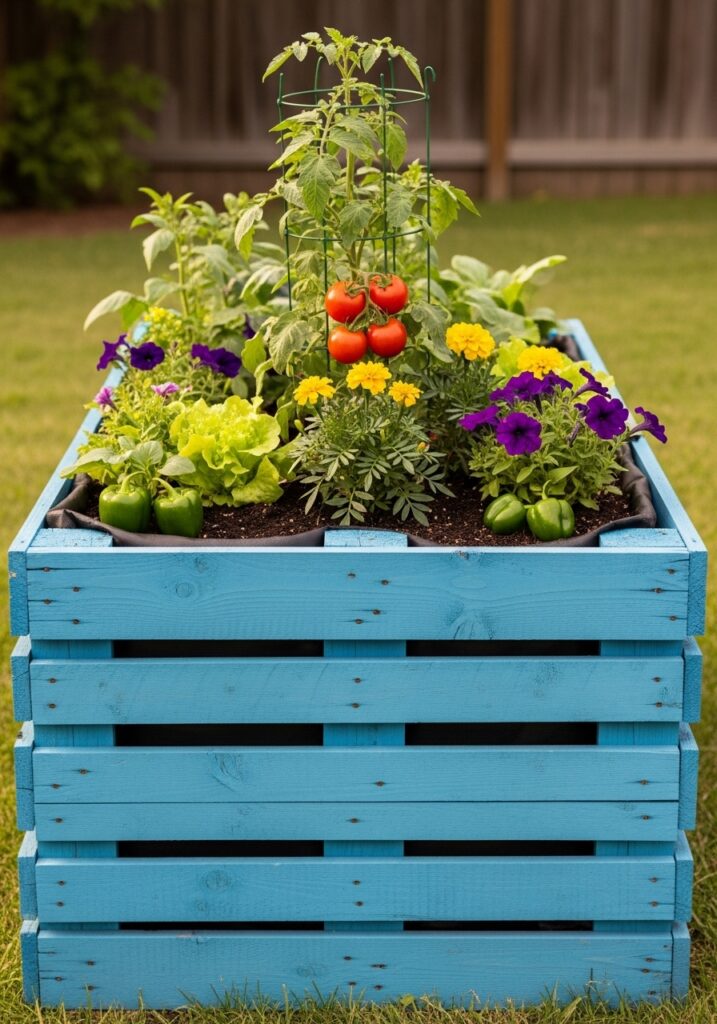
Free pallets build instant raised beds when you stand them on edge. Line the back and sides with landscape fabric to hold soil. The slatted front allows air circulation while keeping soil contained. Paint pallets any color you want for personalized style. They’re perfect for shallow-rooted crops—herbs, lettuce, and flowers thrive. Stack two pallets for deeper beds or create L-shaped configurations. Use only heat-treated pallets marked “HT”—avoid chemically treated ones marked “MB”. These beds cost nothing and they handle a season or two before replacing.
20. Treated Lumber Economy
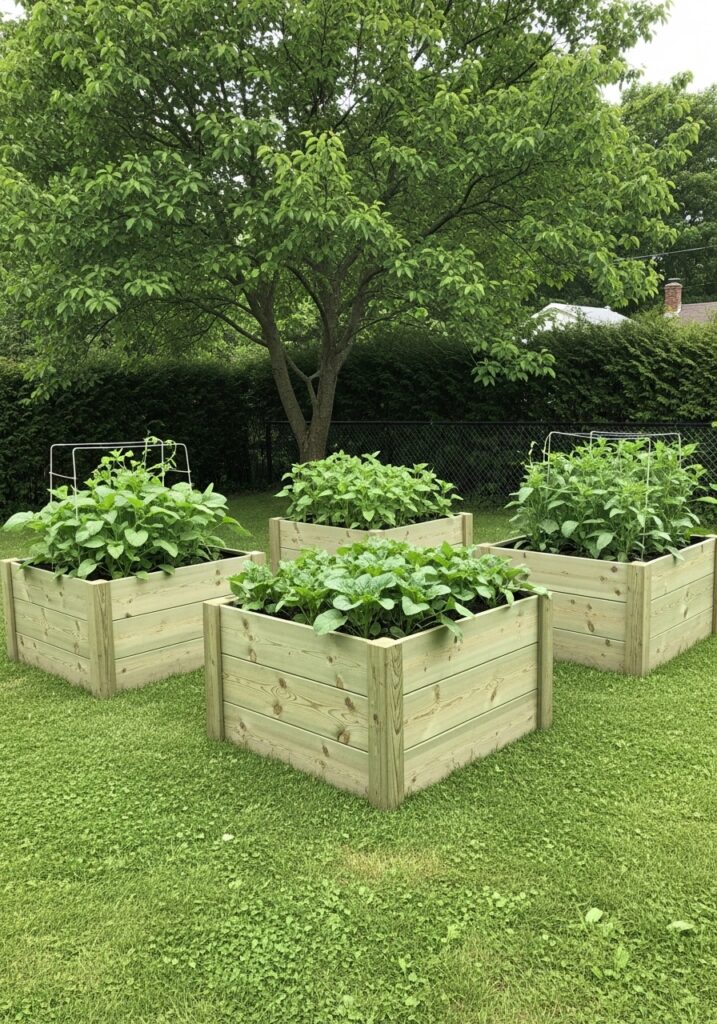
Pressure-treated lumber gives you affordable beds that last 15-20 years. Modern treatments (ACQ or copper azole) are safe for vegetable gardens—the old arsenic stuff’s been banned for decades. Build simple boxes from 2×10 or 2×12 boards. The wood resists rot, insects, and decay naturally. Let new treated lumber weather for a month before planting if you’re cautious. The light green tint fades to natural gray over time. These beds offer the best price-to-longevity ratio available. For maximum growing potential, check out our container garden ideas for patio spaces.
21. Slate Stacked Artistry
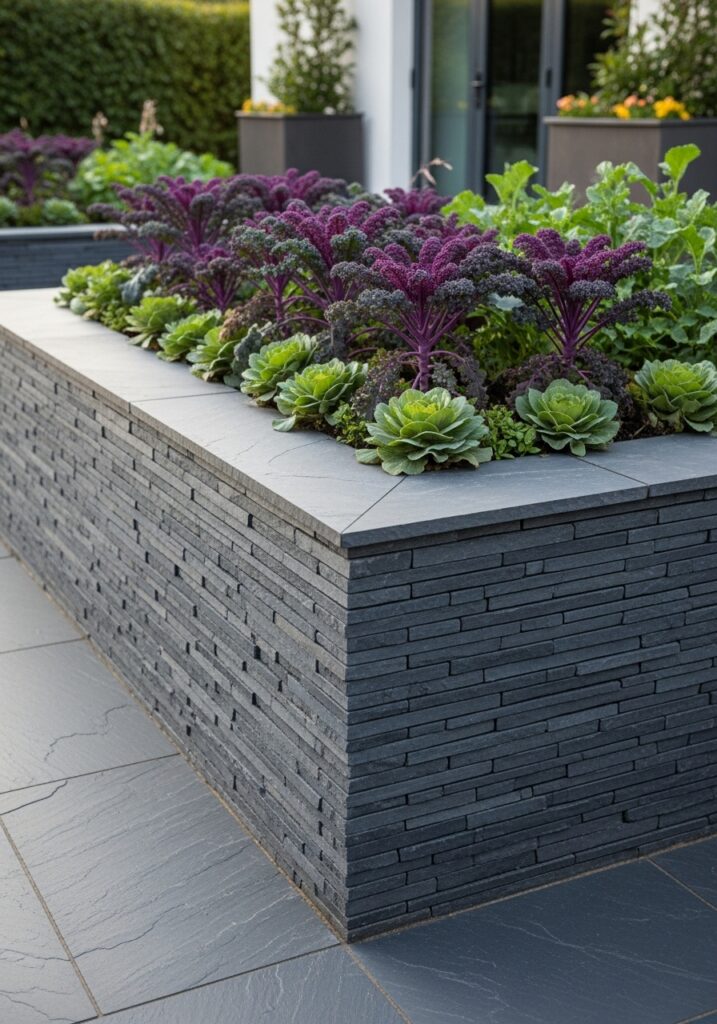
Slate creates stunning raised beds with sophisticated linear texture. Stack flat pieces horizontally without mortar—they nestle together beautifully. The dark stone makes vegetables pop visually while adding contemporary edge. Slate’s density stores heat during the day, releasing it slowly at night. Build walls 12-18 inches tall, tilting slightly inward for stability. The natural cleft surface catches light gorgeously. Slate costs more than other stones but the dramatic effect justifies the investment. These beds suit modern landscapes and architectural gardens perfectly.
22. Living Willow Walls

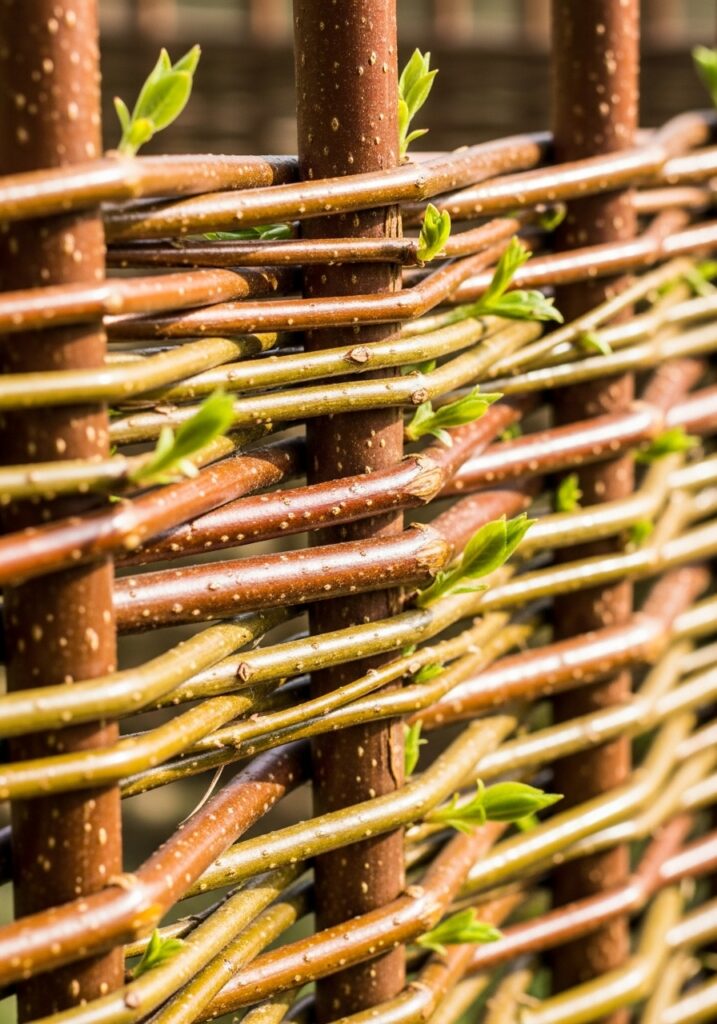
Living willow creates magical beds that grow more beautiful each year. Drive willow cuttings into the ground as vertical stakes, then weave flexible branches horizontally between them. Water well and the willow roots itself—creating living walls that sprout leaves. The flexible wood weaves easily into any shape. Harvest willow in late winter when dormant for best results. These beds suit cottage gardens and permaculture designs beautifully. The living fence provides habitat for beneficial insects while looking absolutely enchanting. Prune yearly to maintain shape.
23. Colorful Painted Wood
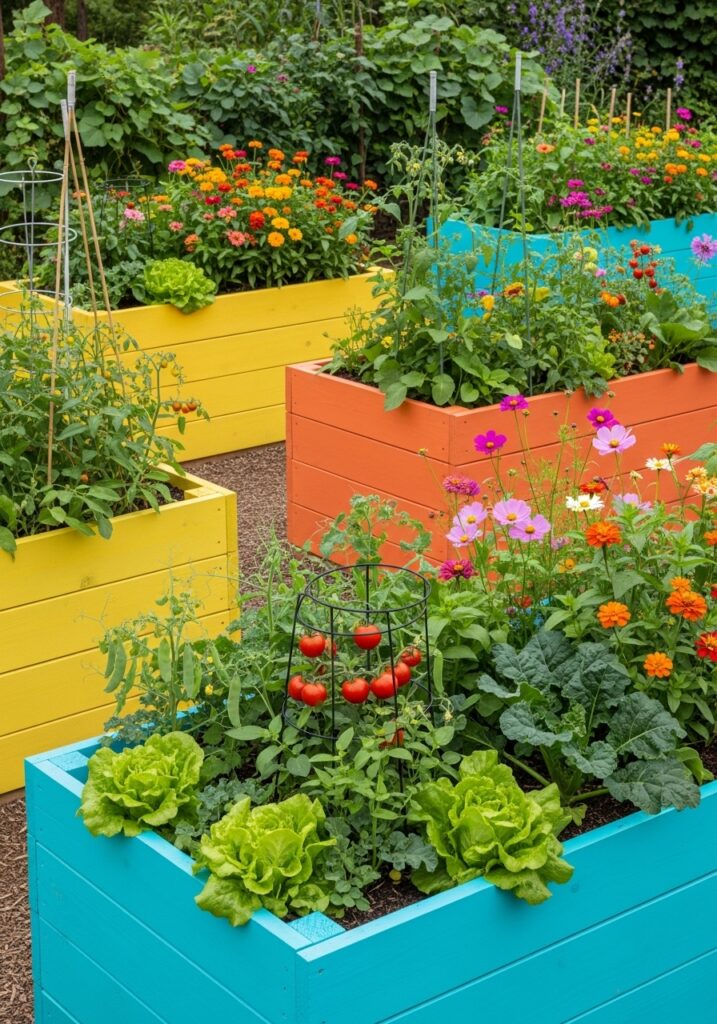
Paint transforms basic lumber into personality-filled raised beds. Choose exterior paint in any color that makes you happy. Bright turquoise, sunny yellow, coral pink—vegetables don’t care but you’ll smile every time you garden. The paint protects wood from moisture while reflecting your style. Prime first for longest-lasting color. These beds suit cottage gardens, kids’ gardens, and anywhere playful charm belongs. Repaint every few years to keep colors fresh. Mix and match colors for eclectic look or use one shade for cohesive design.
24. Stone Veneer Sophistication
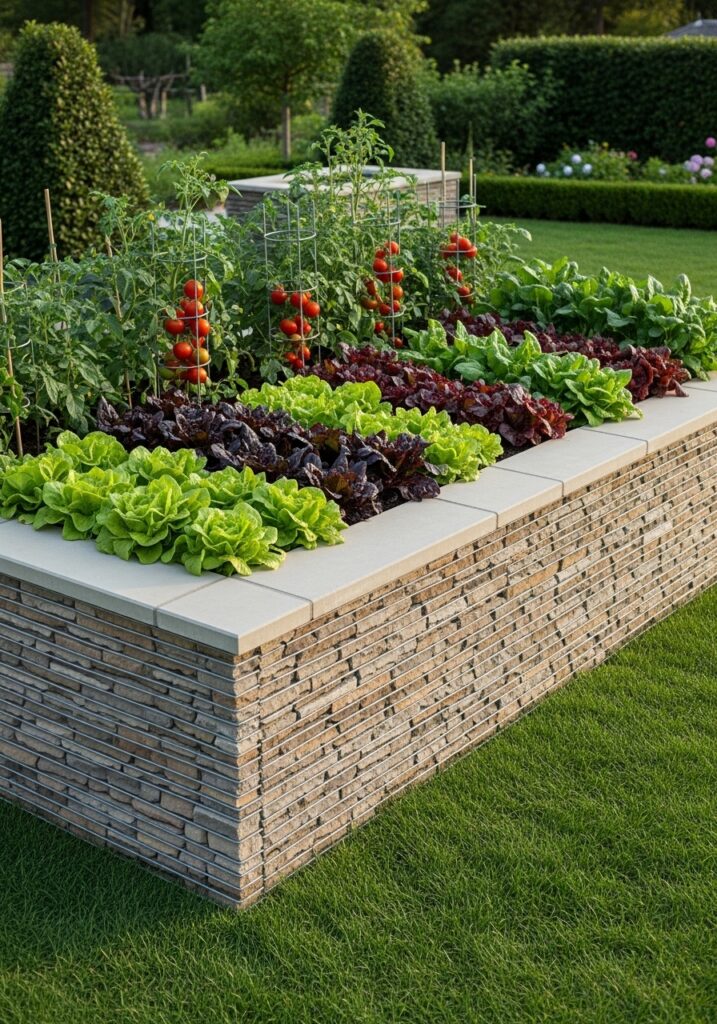
Stone veneer gives you the look of stacked stone without the weight or cost. Build a simple concrete block frame, then adhere thin stone veneer to the outside. The result looks like expensive dry-stacked stone from a distance. Choose from limestone, sandstone, or manufactured stone in dozens of colors. The thin pieces install easily with mortar or construction adhesive. These beds suit upscale landscapes where appearance matters. Cap the top with matching stone for polished finish. The sophisticated look elevates your vegetable garden to estate-worthy status.
25. Ladder-Style Tiered
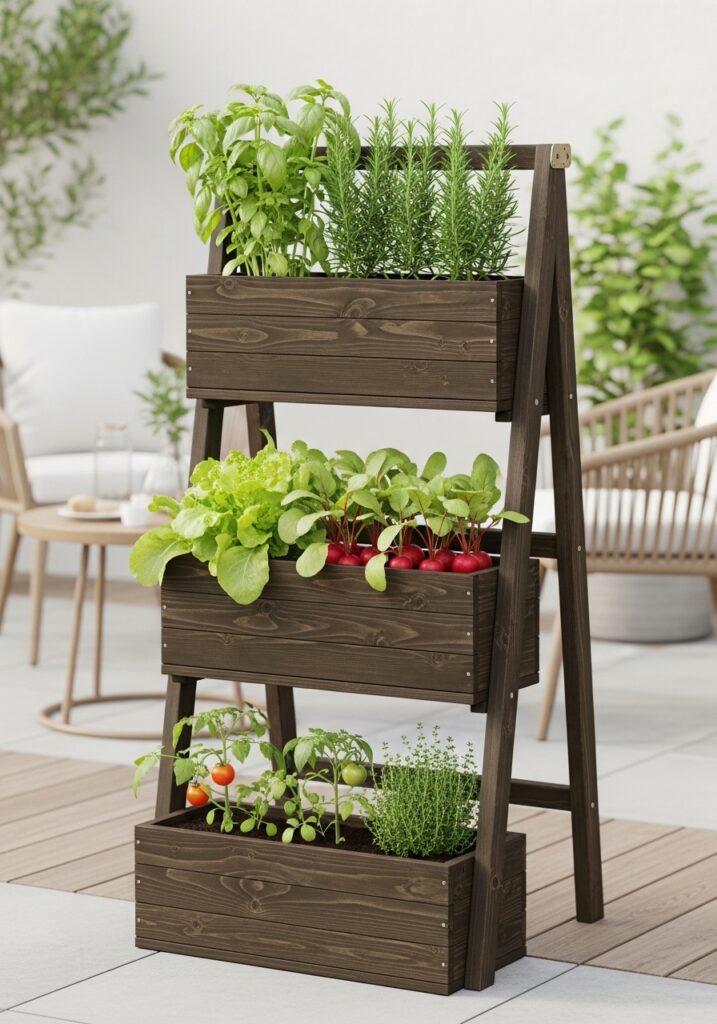
Ladder planters create tiered gardens perfect for small spaces. Build a frame like a leaning ladder with shelves at different heights. Each shelf holds a shallow planter box. The vertical design gives you three growing levels in a 2-foot footprint. Perfect for patios, decks, or against walls. Plant sun-loving herbs at the top, shade-tolerant greens below. The tiered structure ensures each level gets adequate light. These portable units move easily and store flat in winter. For more space-saving ideas, explore our vertical garden ideas for small spaces.
26. Recycled Plastic Lumber
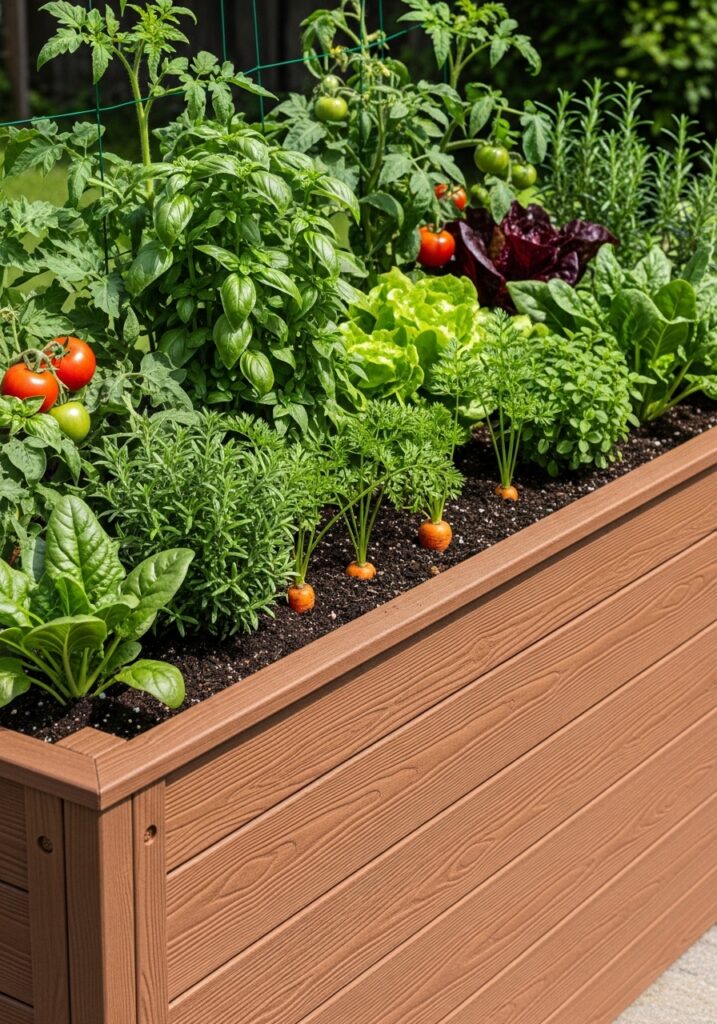
Recycled plastic lumber builds beds that last forever while helping the planet. The material looks like wood but it’s made from recycled plastic bottles and bags. It never rots, splinters, or needs maintenance. Cut and assemble it exactly like wood—same tools, same techniques. Choose brown or gray to mimic natural timber. The plastic won’t leach chemicals and it’s completely food-safe. These beds cost more upfront but they’re the last beds you’ll ever buy. The environmental benefit feels good while the durability performs perfectly.
27. Sunken Greenhouse Beds
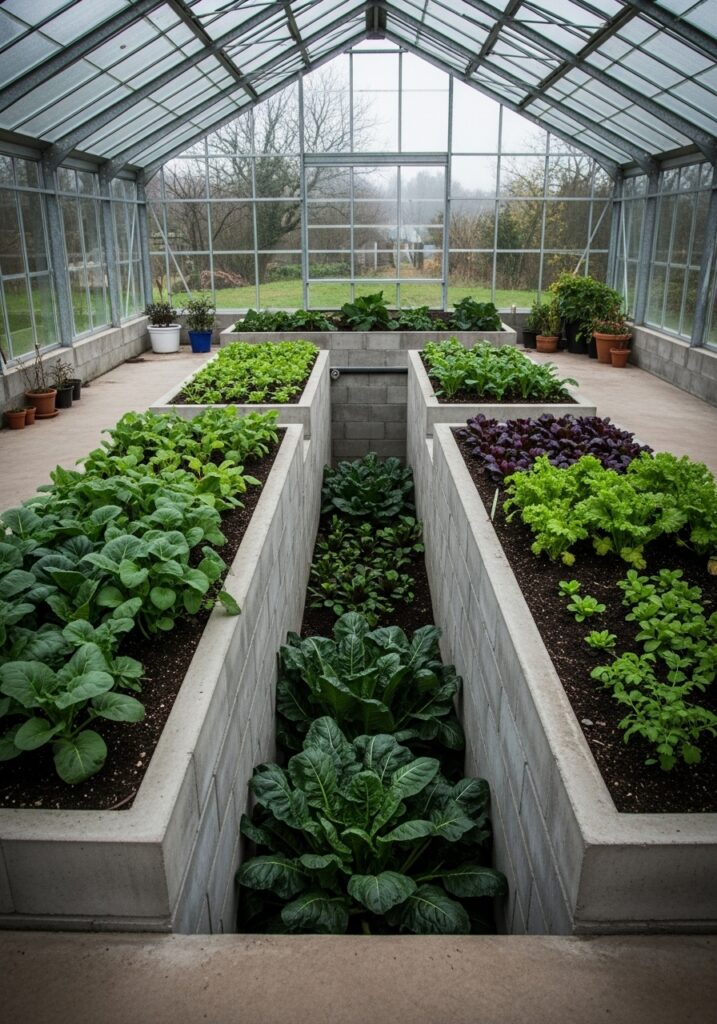
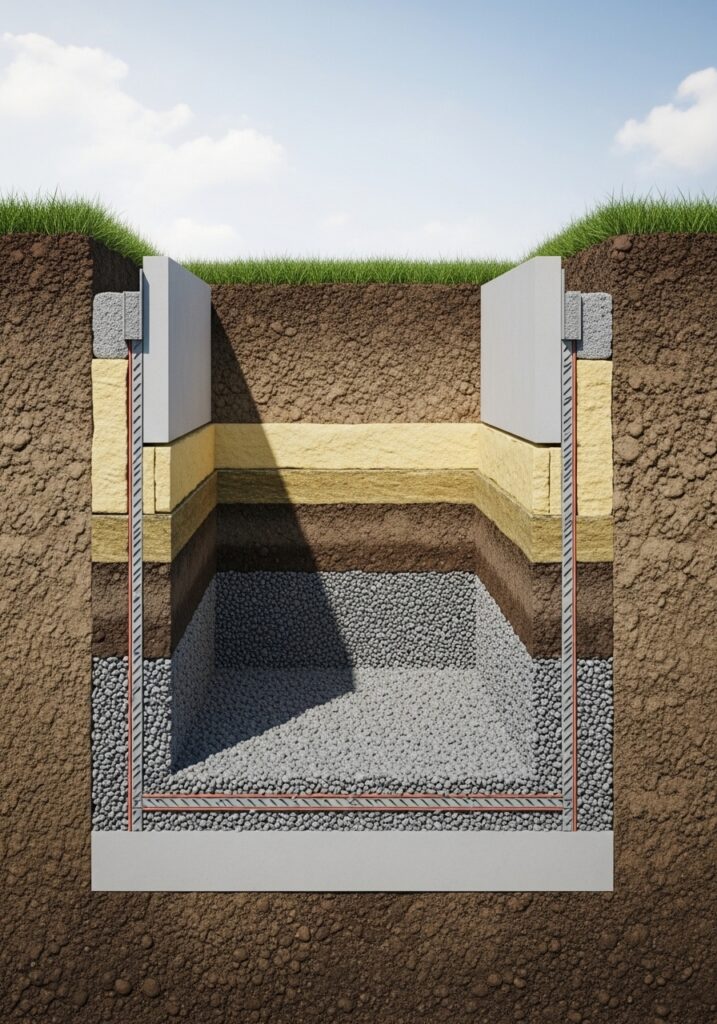
Sunken beds in greenhouses extend your season incredibly. Build beds partially below ground—walls go down 12 inches and up 12 inches. The surrounding earth insulates roots from temperature swings. Combined with greenhouse protection, you’re growing year-round. The sunken design captures heat naturally while still providing raised bed drainage. Perfect for winter greens, early spring starts, and late fall harvests. These beds grow food when outdoor gardens are frozen solid.
28. Corner L-Shaped Design
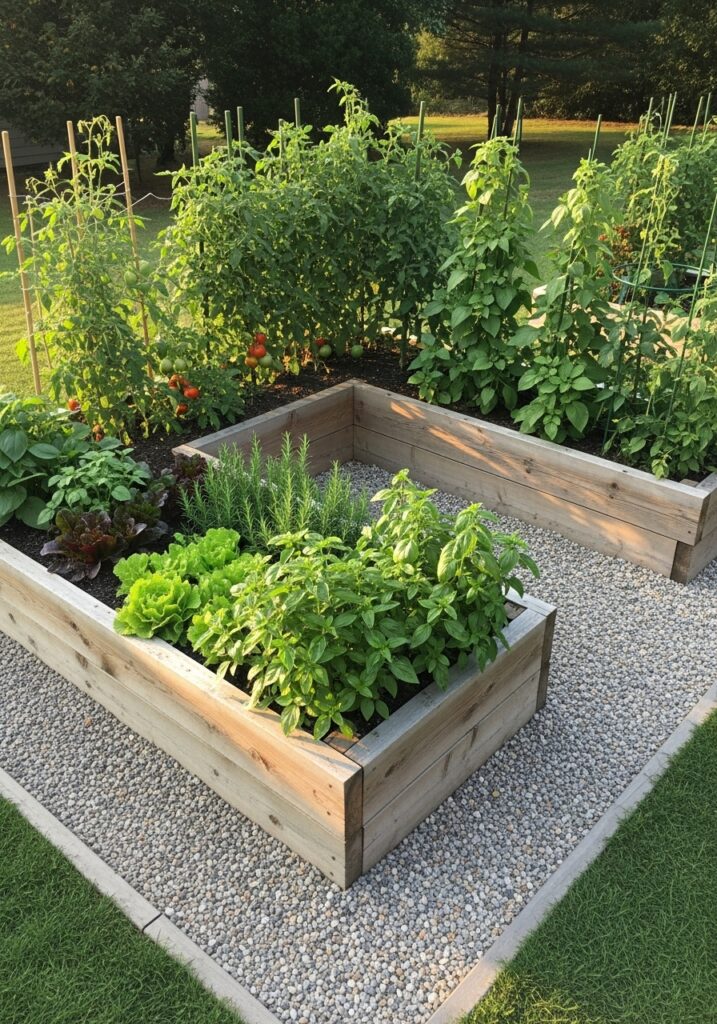
L-shaped beds maximize awkward corner spaces beautifully. Build two beds meeting at 90 degrees—one along each fence or wall. The configuration creates efficient growing space while leaving the center open for pathways and access. Each leg of the L can be different lengths to fit your space perfectly. This design turns wasted corners into productive gardens. Add a bench in the inside corner for pleasant garden seating. The layout suits small yards where every square foot counts.
29. Gabion Cage Modern

Gabion cages bring serious architectural style to raised beds. Fill wire baskets with rocks, creating textured walls that look expensive. The caged stone allows air circulation while the mass stores heat. Line the inside with landscape fabric before filling with soil. Choose rocks to match your landscape—river rock, flagstone, or any attractive aggregate. These beds suit contemporary gardens and modern landscapes perfectly. The industrial aesthetic makes vegetables look intentionally designed rather than afterthought. Build them any size by connecting wire baskets.
30. Reclaimed Window Frames
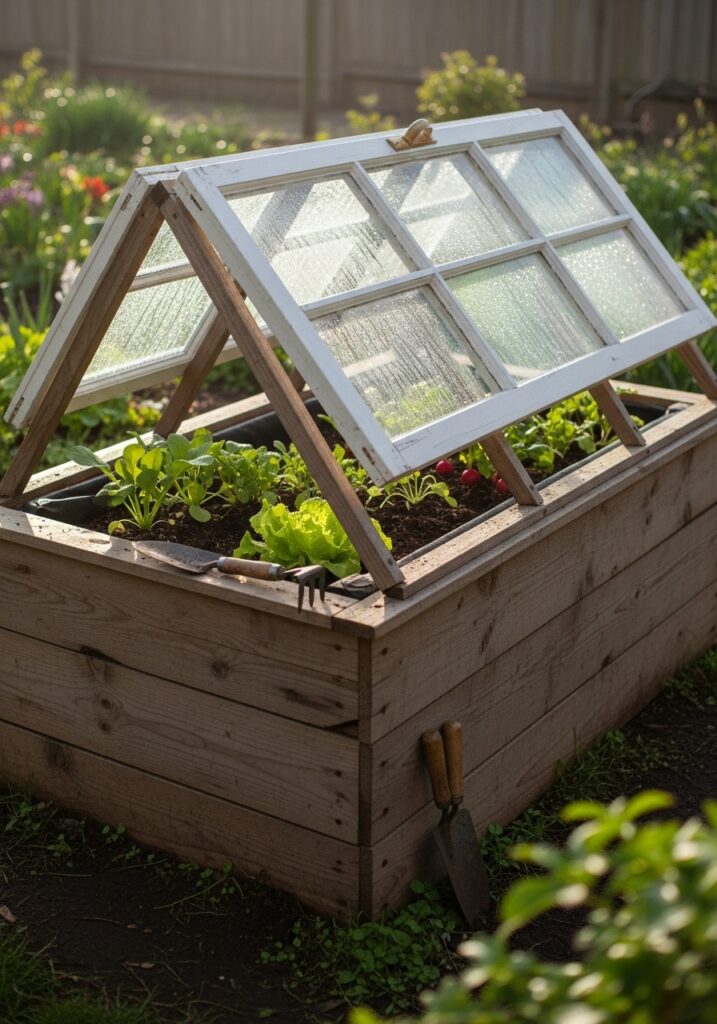
Old windows transform raised beds into charming cold frames. Build a simple wooden bed, then hinge vintage windows on top as lids. The glass protects plants from frost while letting light through. Prop windows open during warm days, close them on cold nights. The weathered frames add incredible character—each window tells a story. This design extends your season by weeks on both ends. Perfect for early spring greens and late fall harvests. Source windows from salvage yards or demolition sites for authentic vintage character.
31. Hay Bale Temporary
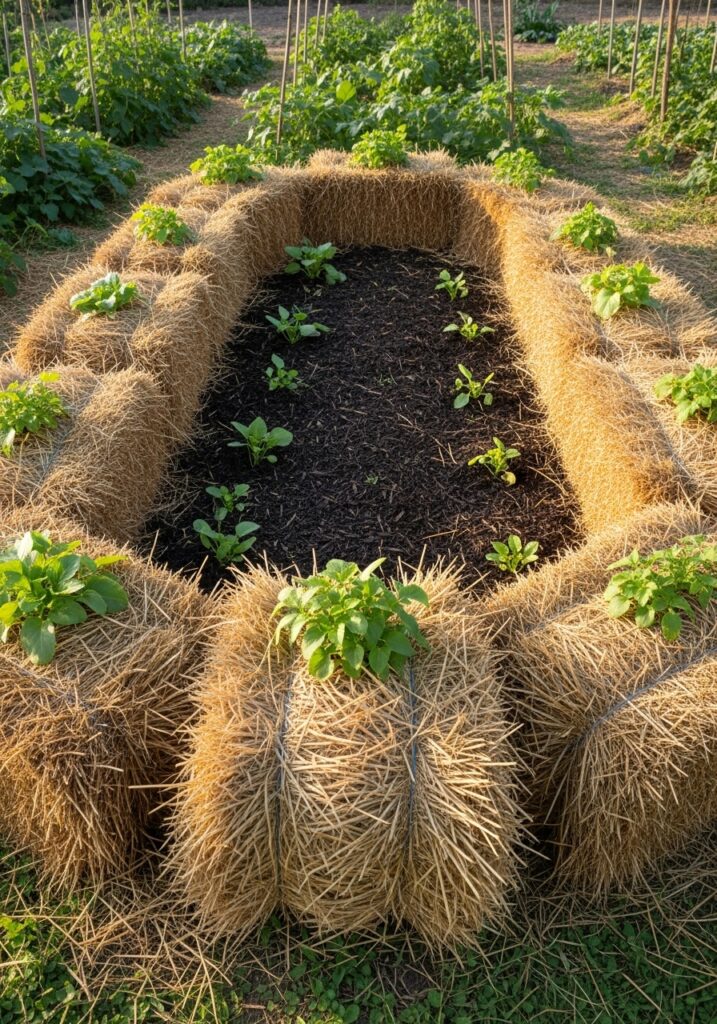
Straw bales build instant temporary beds for one season. Arrange bales in a rectangle, fill the center with soil, and plant. The bales insulate soil beautifully while slowly decomposing to feed next year’s garden. You can even plant directly in the bales after conditioning them. At season’s end, scatter the decomposed straw as mulch. These beds cost almost nothing and they’re perfect for renters or trying new garden locations. The bales hold heat wonderfully—extending your season naturally. For different growing approaches, check out our container garden ideas for patio spaces.
32. Mortared Brick Formal
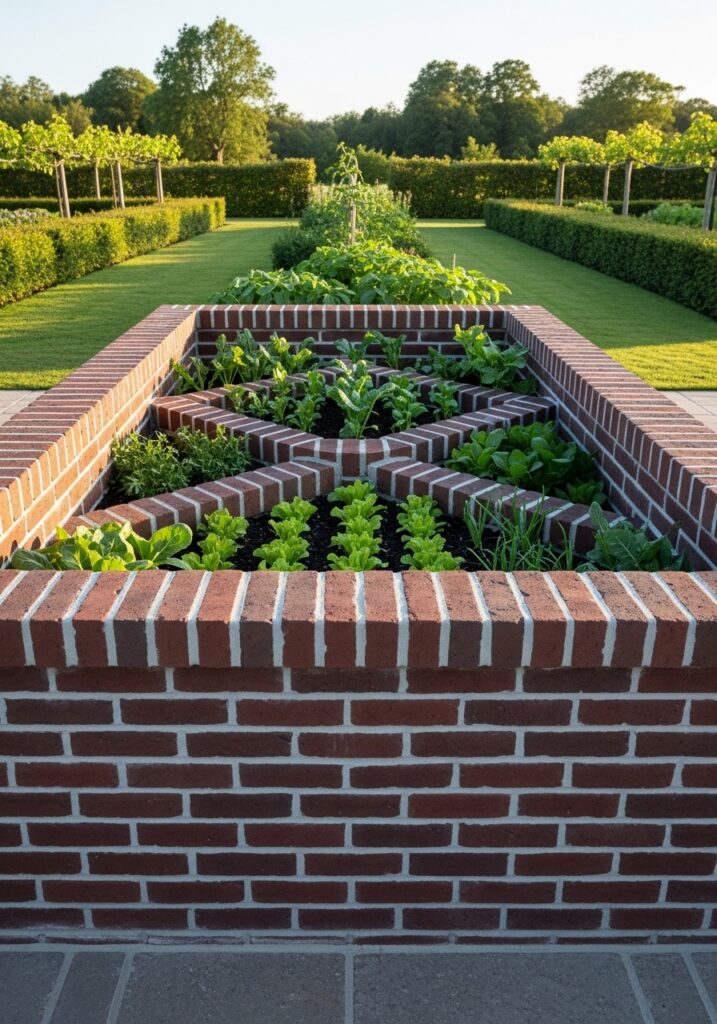
Properly mortared brick creates estate-worthy raised beds that last centuries. Lay bricks in traditional patterns—running bond, Flemish bond, or English garden wall. Point the joints carefully for waterproof durability. Add a soldier course or decorative cap along the top edge. These permanent structures become landscape features in themselves. The thermal mass protects plants from temperature extremes. Match your home’s brick for cohesive design or choose contrasting colors for accent. These beds require masonry skills but the results are truly heirloom-quality.
33. Stepped Cascade Beds
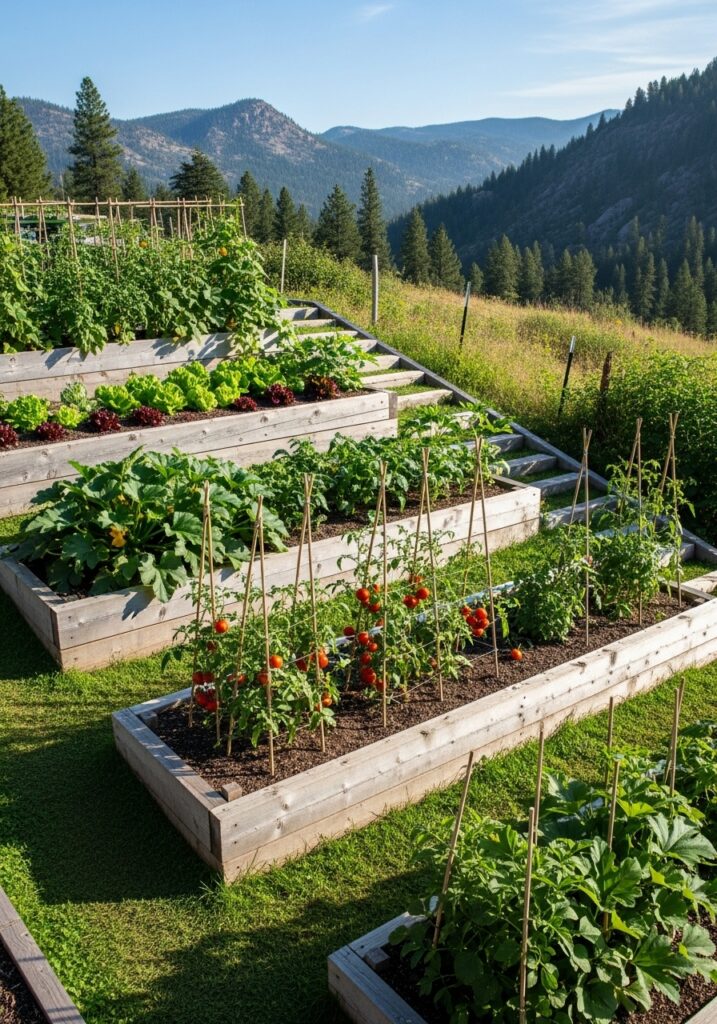
Stepped beds cascade down slopes like architectural waterfalls. Each bed drops one level below the previous, following your yard’s natural grade. Build them progressively wider at the bottom to match your slope angle. The design creates multiple flat growing areas while managing erosion beautifully. Plant taller crops at the top so they don’t shade lower beds. Water cascades naturally from upper to lower levels—built-in irrigation. These beds turn challenging slopes into stunning productive gardens.
34. Wine Barrel Halves
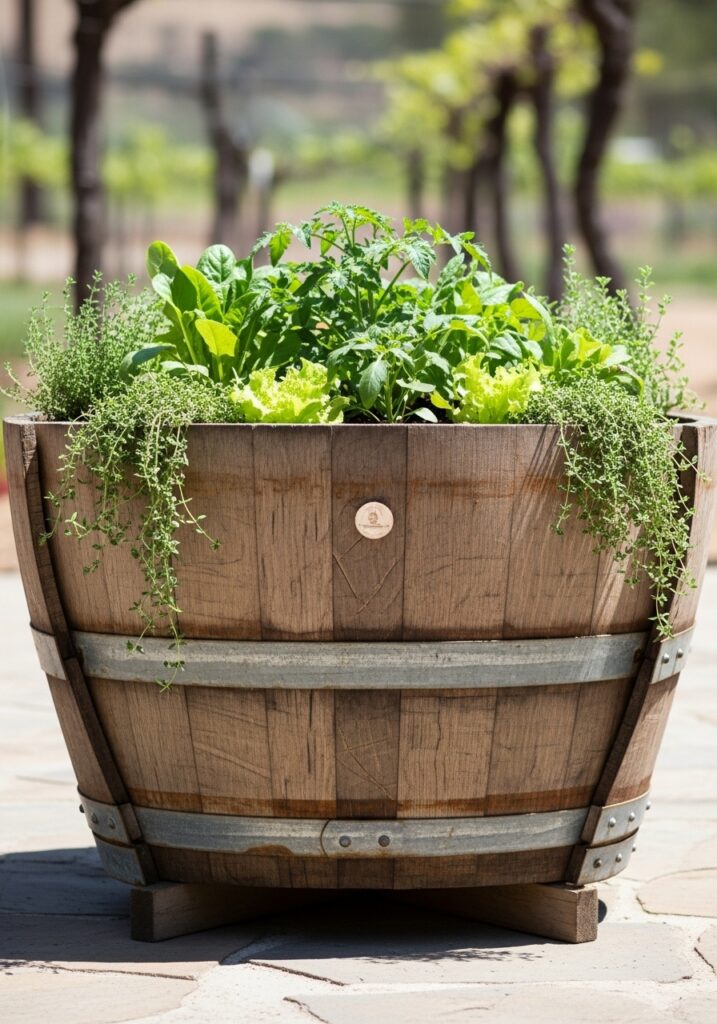
Wine barrel halves bring instant rustic charm to raised bed gardens. This wine barrel planter is deep enough for almost any vegetable and portable enough to move when needed. The wood is naturally rot-resistant from years of wine aging. Drill drainage holes in the bottom before planting. These barrels suit patios, decks, and anywhere you want movable raised beds with serious character — find them at wineries or buy pre-cut halves at garden centers.
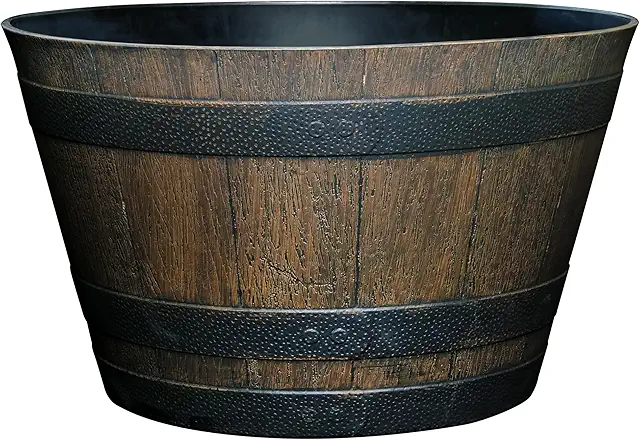
Wine Barrel Planter
Deep enough for any vegetable and portable enough to move with the seasons — authentic rustic character that gets better looking every year.
Check Price on Amazon35. Stucco-Finished Beds
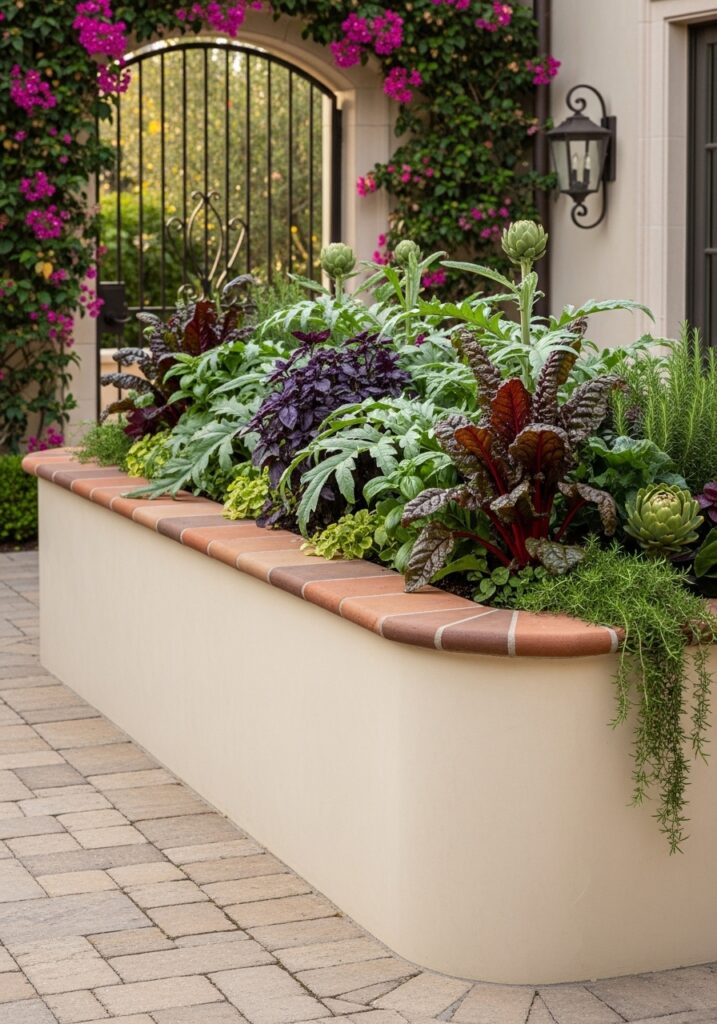
Stucco transforms basic concrete block beds into Mediterranean masterpieces. Build block frames, then apply stucco over the outside. The smooth finish hides the blocks completely while adding color and texture. Choose earthy tones—cream, terra cotta, sandy beige. Add decorative tile caps along the top for polished Mediterranean look. These beds suit Spanish, Italian, and Southwestern landscapes beautifully. The stucco protects blocks from weather while creating upscale aesthetic. Paint or re-stucco whenever you want to change colors.
36. Black Plastic Raised Kits
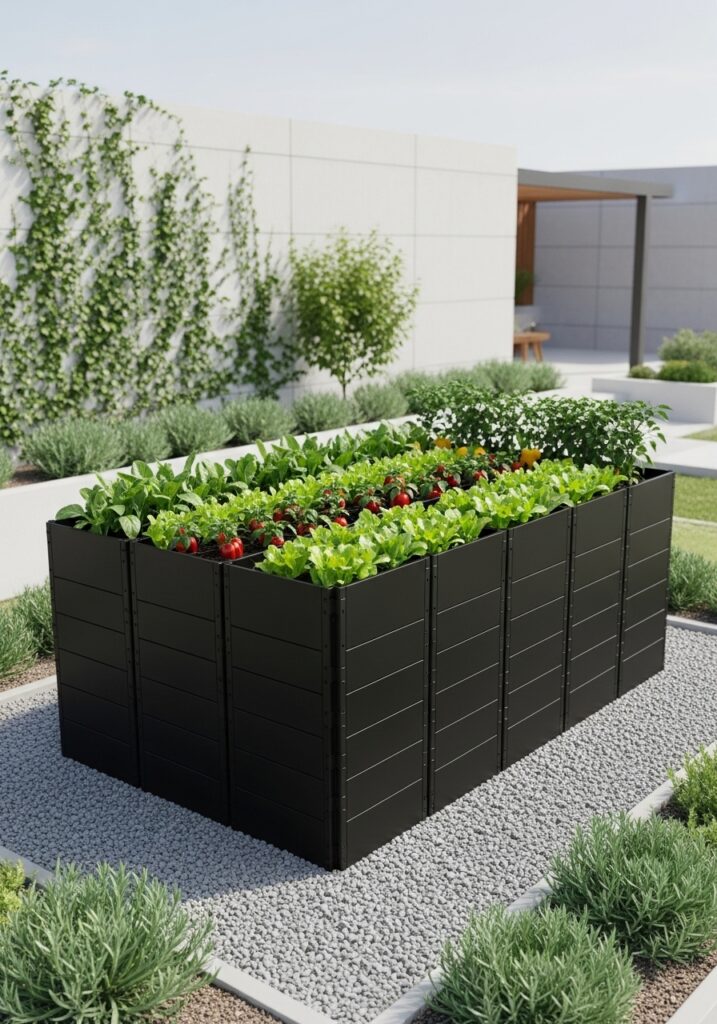
Modular plastic kits assemble in minutes without tools. This modular raised bed kit interlocks like building blocks — anyone can do it. The heavy-duty HDPE plastic lasts decades without rotting or fading. Black color warms soil quickly in spring while looking sleek and modern. These kits expand easily — buy more panels to make beds longer or stack them higher. Perfect for renters since you can disassemble and take them with you.

Modular Raised Bed Kit
Assembles in minutes without tools — expandable modular design means you can make it any size. Perfect for renters since it disassembles and moves with you.
Check Price on Amazon37. Log Cabin Stacked
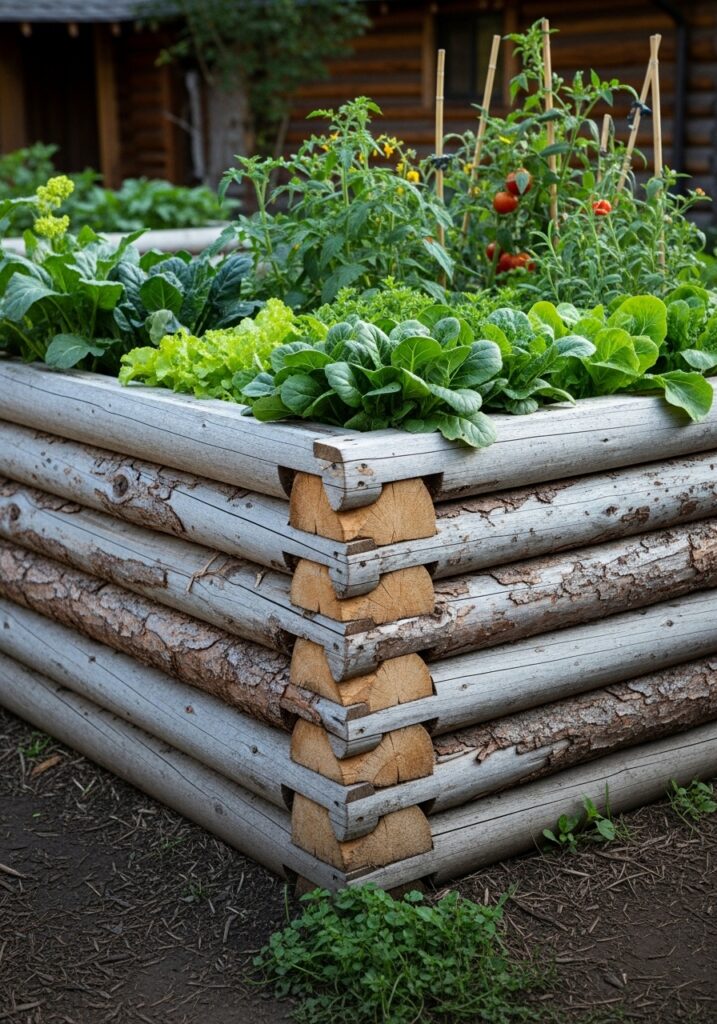
Notched logs create frontier-style beds with serious rustic appeal. Cut corner notches so logs interlock at the ends classic log cabin construction. Stack them three or four courses high for substantial depth. The round logs age beautifully, turning silvery-gray over time. Use durable woods like cedar, locust, or oak for longest life. These beds suit mountain properties, cabin gardens, and anywhere pioneer aesthetic belongs. The heavy logs stay put without stakes or additional support. They’re permanent features that improve the landscape.
38. Fabric Grow Bags
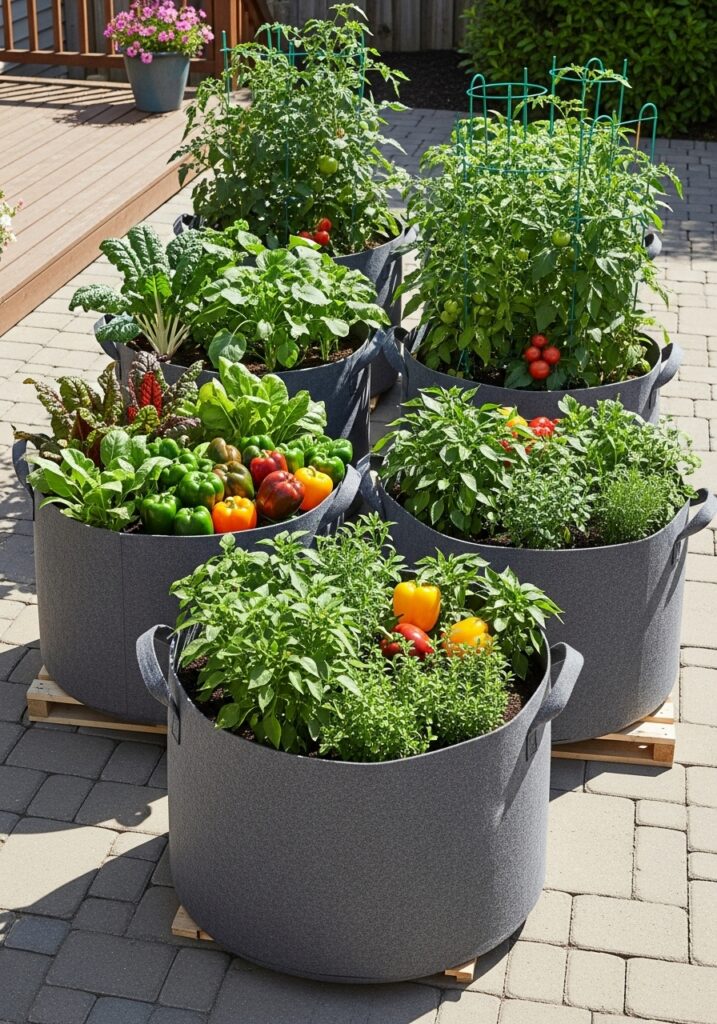
Fabric grow bags work like portable raised beds you can move around. This raised bed fabric grow bag in 15-30 gallon size gives vegetables serious root room anywhere. The breathable material promotes incredible root growth while preventing overwatering. The handles let you move them easily — chase the sun or relocate seasonally. Roots air-prune at the fabric edges, creating healthier plants than solid containers. These bags fold flat for storage when empty — perfect cheap raised garden bed ideas for renters and small spaces.

Raised Bed Fabric Grow Bag
Portable breathable and folds flat for storage — move it to follow the sun or pack it away off-season. The most flexible raised garden bed idea for renters and small spaces.
Check Price on Amazon39. Aluminum Planter Boxes
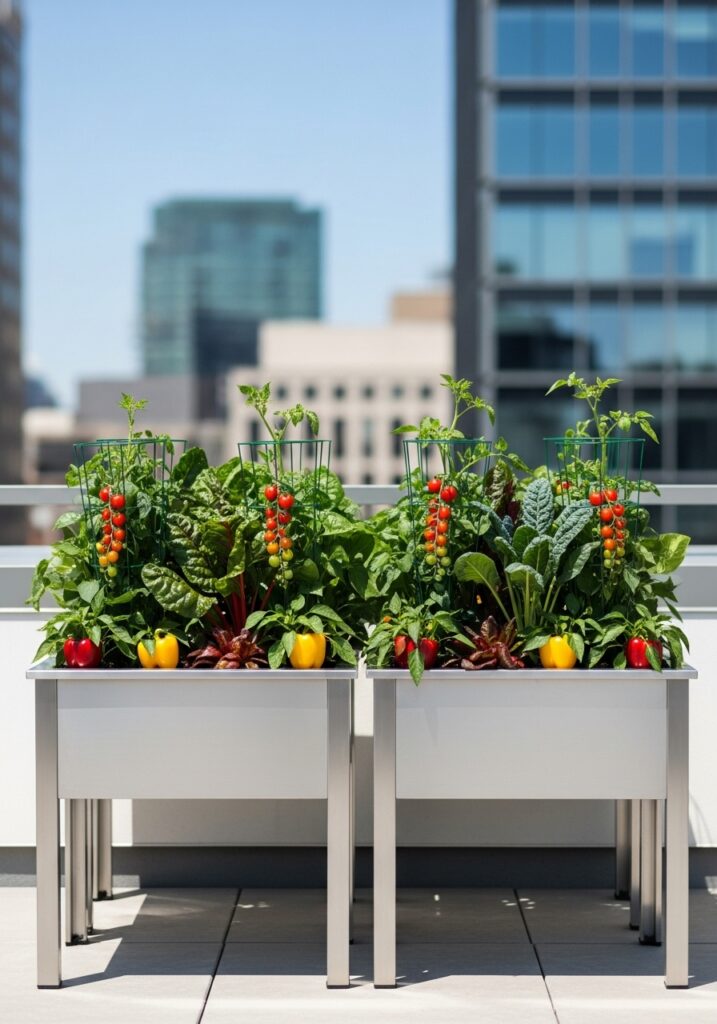
Aluminum planters bring lightweight modern style to raised bed growing. This aluminum planter box won’t rust and weighs a fraction of other materials — perfect for rooftop gardens where weight matters. The brushed finish reflects light beautifully while resisting corrosion forever. These planters often include built-in water reservoirs for self-watering capability. The contemporary look suits urban gardens, modern architecture, and minimalist landscapes.

Aluminum Planter Box
Lightweight rust-proof and built to last forever — the most modern and low-maintenance raised garden bed option for urban rooftop and patio gardens.
Check Price on Amazon40. Drip-Irrigated Systems
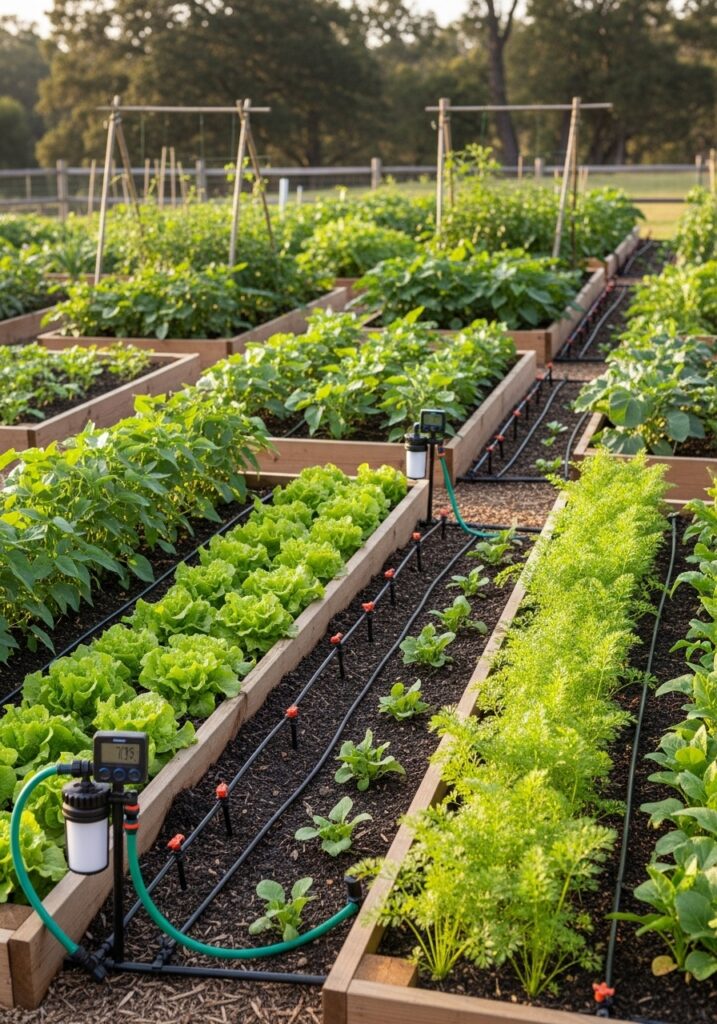
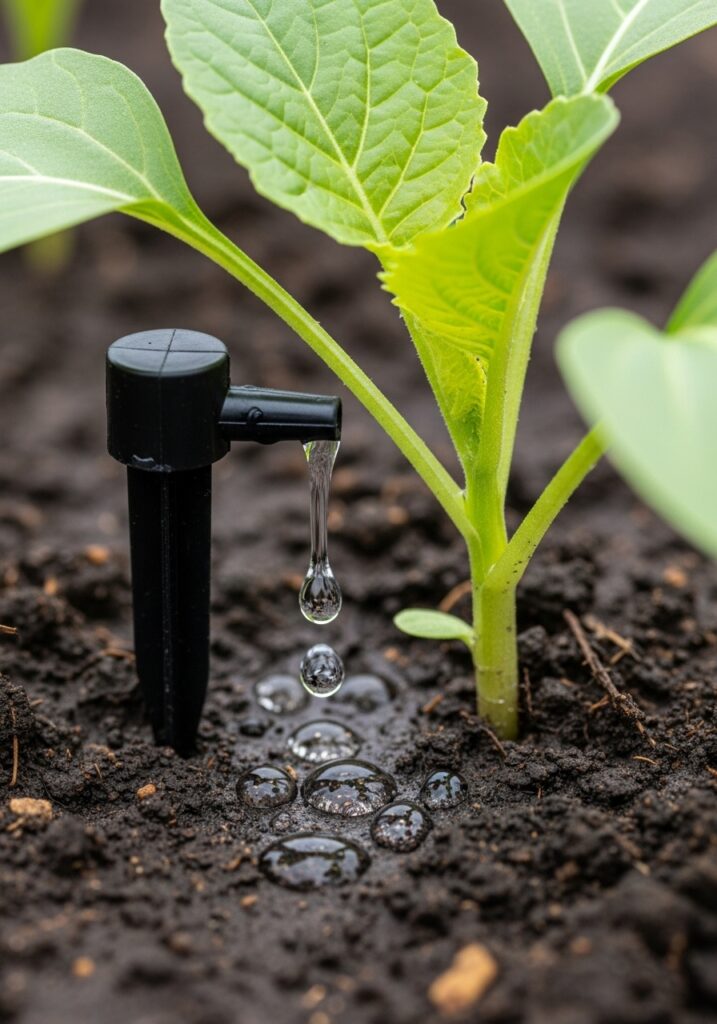
Drip irrigation transforms raised beds into automated gardens. Install this drip irrigation kit along each bed with emitters at every plant and connect to a timer — then forget about watering. The system delivers water directly to roots with no waste, no evaporation. Vegetables grow more consistently with steady moisture. Set the timer and your raised garden bed waters itself whether you’re home or traveling. These systems use 50% less water than overhead watering while producing better yields.
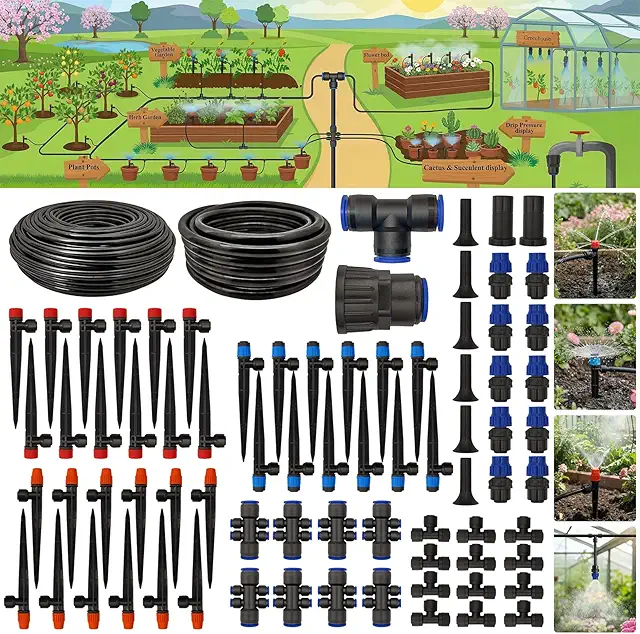
Drip Irrigation Kit
Connect to a timer and your raised bed waters itself — 50% less water use with consistently better vegetable yields. Set it once and forget about watering completely.
Check Price on Amazon41. Multi-Level Pyramid
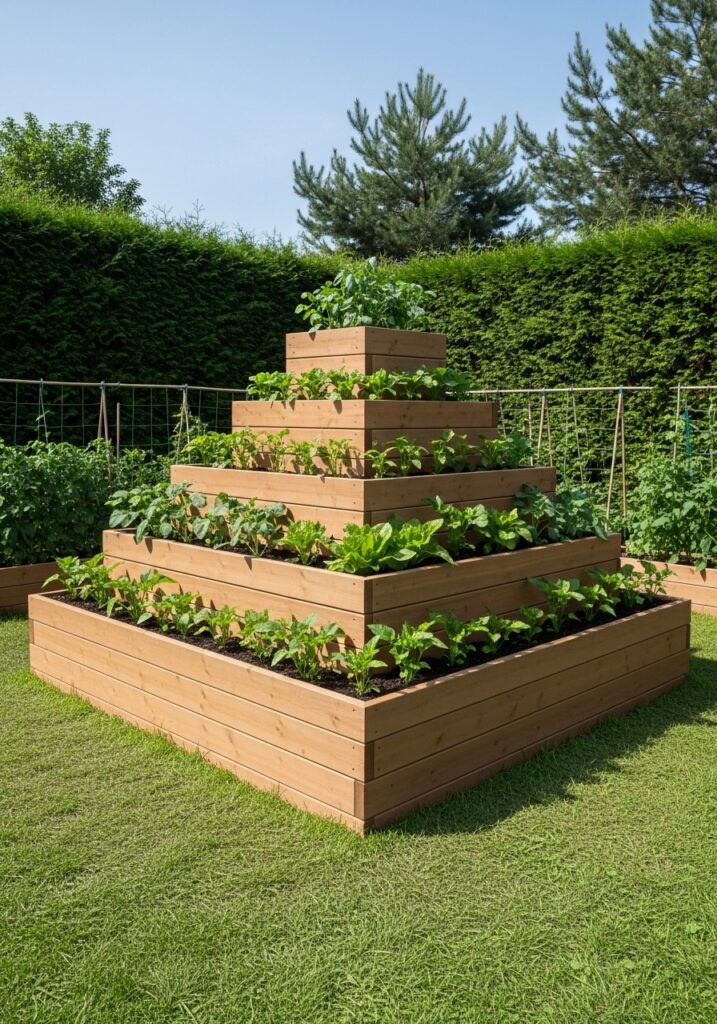
Pyramid beds create maximum growing space in minimum footprint — the ultimate raised garden bed layout for small spaces. Stack square frames in decreasing sizes — 8×8 at bottom, 6×6 next, 4×4 above, 2×2 on top. Each level provides growing surface while the exposed edges of lower tiers create additional planting spots. The pyramid shape ensures every level gets adequate sunlight. Plant root vegetables in the deep bottom level, shallow-rooted greens in upper tiers. Add a garden trellis behind the pyramid for climbing vegetables that maximize your vertical space even further.
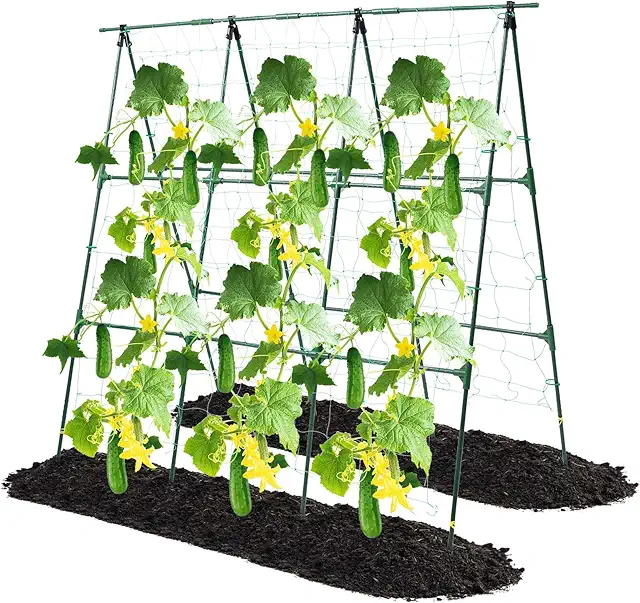
Garden Bed Trellis
Position behind any raised bed to grow climbing vegetables vertically — doubles your growing space without using any extra ground footprint.
Check Price on AmazonTransform Your Garden Today!
These 41 raised bed ideas give you everything you need to create productive, organized gardens that work with your space and style. Whether you’re building simple cedar boxes or elaborate pyramid systems, raised beds deliver better drainage, earlier harvests, and easier gardening. Start with one or two beds this season and explore more inspiration in our outdoor garden decor collection. Get growing and watch your garden transform!


Amir Ali is the founder and site administrator of HomeDecorEdge, a modern home decor and interior design platform. Since starting the site, he has combined his passion for interior design, practical styling, and color coordination with hands-on content strategy and site management. He guides authors, curates high-quality articles, and ensures readers have access to actionable, visually inspiring, and user-focused home decor advice for apartments, small rooms, and family homes.