

A Japanese-style bedroom is not just a decorating choice — it is a way of approaching rest. The simplicity, the natural materials, the absence of clutter — all of it works together to create a space where your mind actually slows down when you walk in. You do not need to renovate or spend a lot to get there. These 15 ideas show you exactly how to bring that sense of calm into your own bedroom.
This post contains affiliate links. If you purchase through these links I may earn a small commission at no extra cost to you.

A Japanese bedroom is not about how much you add — it is about how thoughtfully you choose what stays.
1. Understand the Concept of Japanese Design
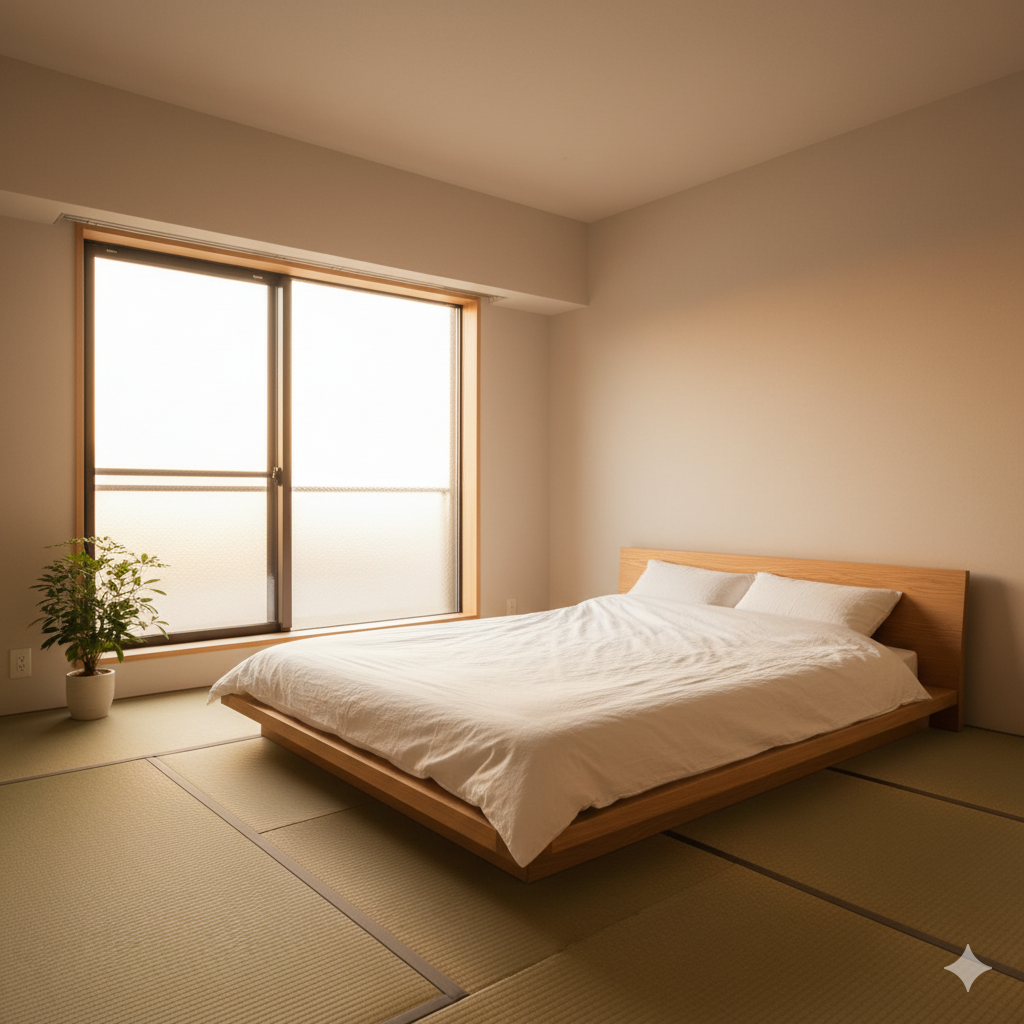
Japanese interior design is built on three ideas — simplicity, functionality, and nature. Everything in the room serves a purpose. Clutter, heavy furniture, and bold colors are avoided in favor of open space, natural materials, and quiet beauty. The philosophy comes from Zen — the idea that a calm environment supports a calm mind. When you approach your bedroom with this mindset, every decision becomes easier.
2. Choose a Low Bed or Futon
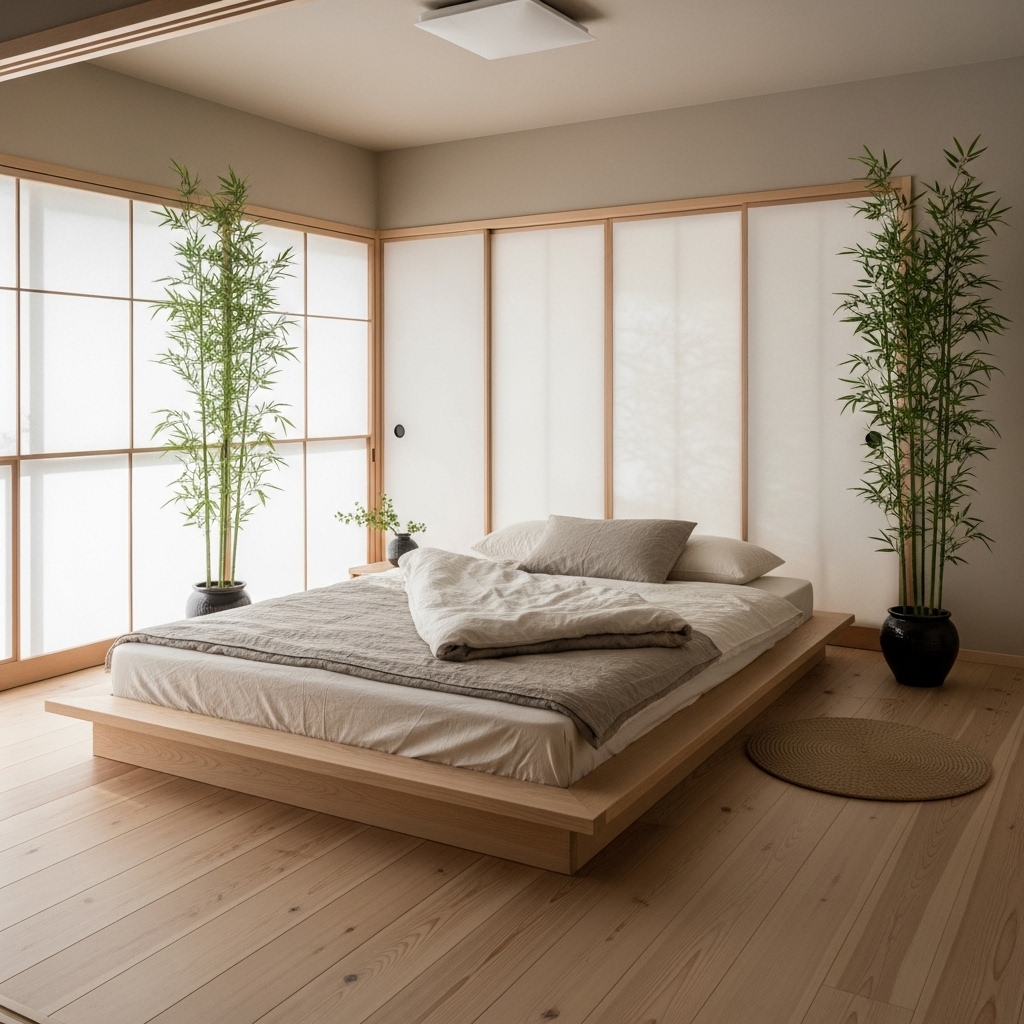
The bed is the most important element in a Japanese bedroom. Traditional Japanese homes use futons placed directly on the floor — thin mattresses that roll away during the day to free up space. For a more modern take, a low platform bed frame gives you the same grounded, close-to-the-floor feeling with the comfort of a permanent setup. Keep bedding simple — white, cream, or soft grey in natural cotton or linen.

Low Platform Bed Frame Wood
Clean low profile with warm wood tones — creates that grounded Japanese bedroom feel without sacrificing comfort.
Check Price on Amazon3. Use Natural Materials Everywhere
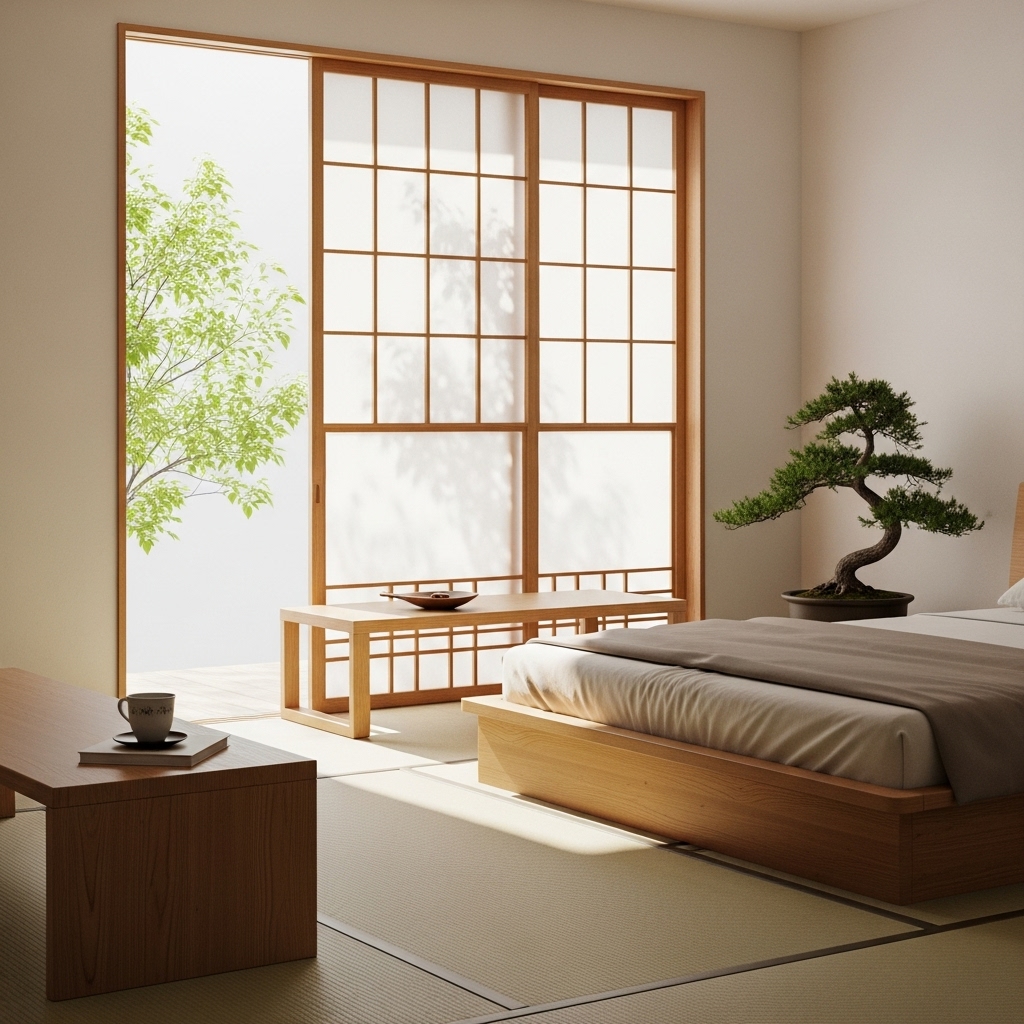
Wood, bamboo, linen, cotton, paper, and stone — these are the materials that define Japanese interiors. They add warmth and texture while keeping the space feeling grounded and honest. Use wooden floors or bamboo mats instead of synthetic carpets. Choose neutral linen bedding over synthetic alternatives. The closer your materials are to nature, the more the room will feel like a genuine retreat.

Neutral Linen Duvet Cover Set
Soft breathable linen in calm neutral tones — exactly the kind of natural material that anchors a Japanese bedroom aesthetic.
Check Price on Amazon4. Add Shoji Screens or Sliding Doors
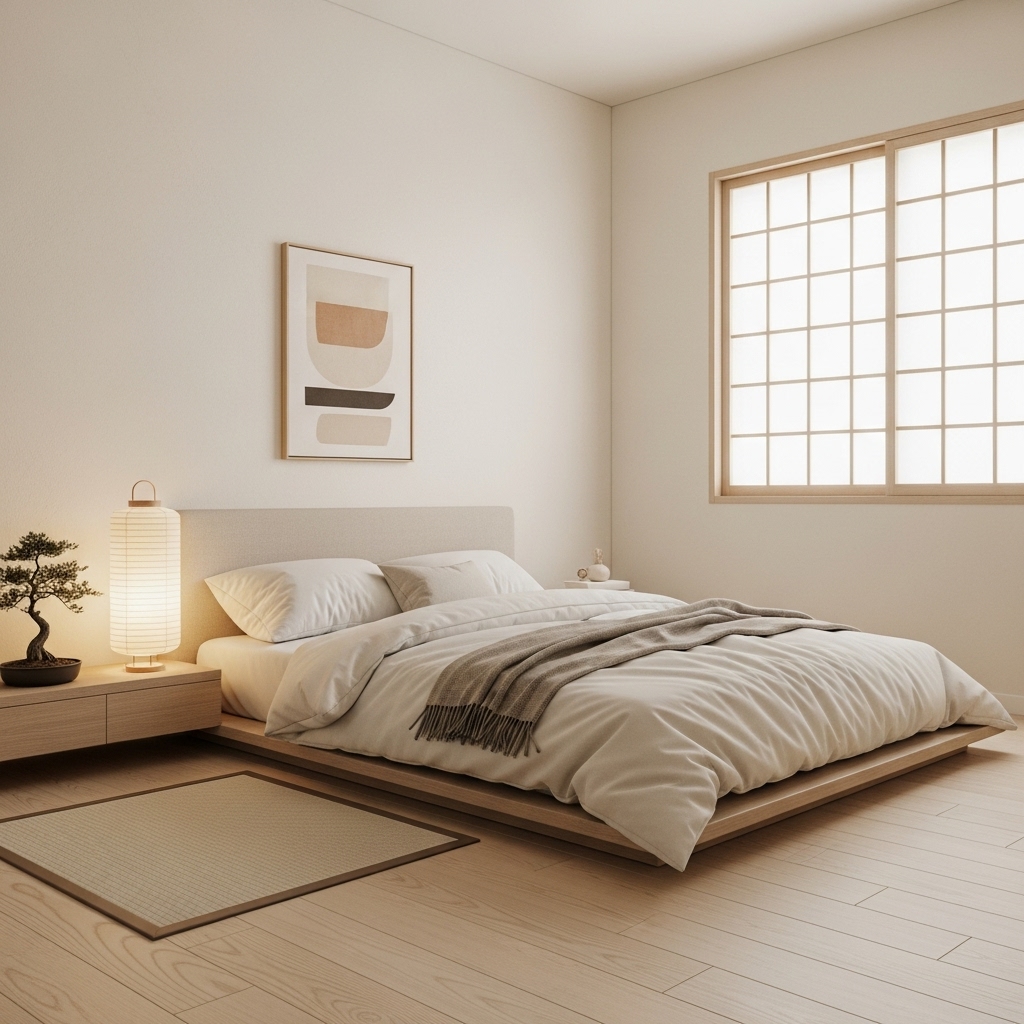
Shoji screens are one of the most recognizable elements of Japanese interior design. They are lightweight sliding panels with wooden frames and translucent paper that allow soft light to pass through rather than blocking it entirely. Use them as room dividers, closet doors, or window coverings. This shoji screen room divider works beautifully in modern bedrooms as both a functional partition and a design element that instantly signals the Japanese aesthetic.

Shoji Screen Room Divider
Filters light softly and creates privacy without closing the space — the most recognizable element of Japanese bedroom design.
Check Price on Amazon5. Stick to a Neutral and Soft Color Palette
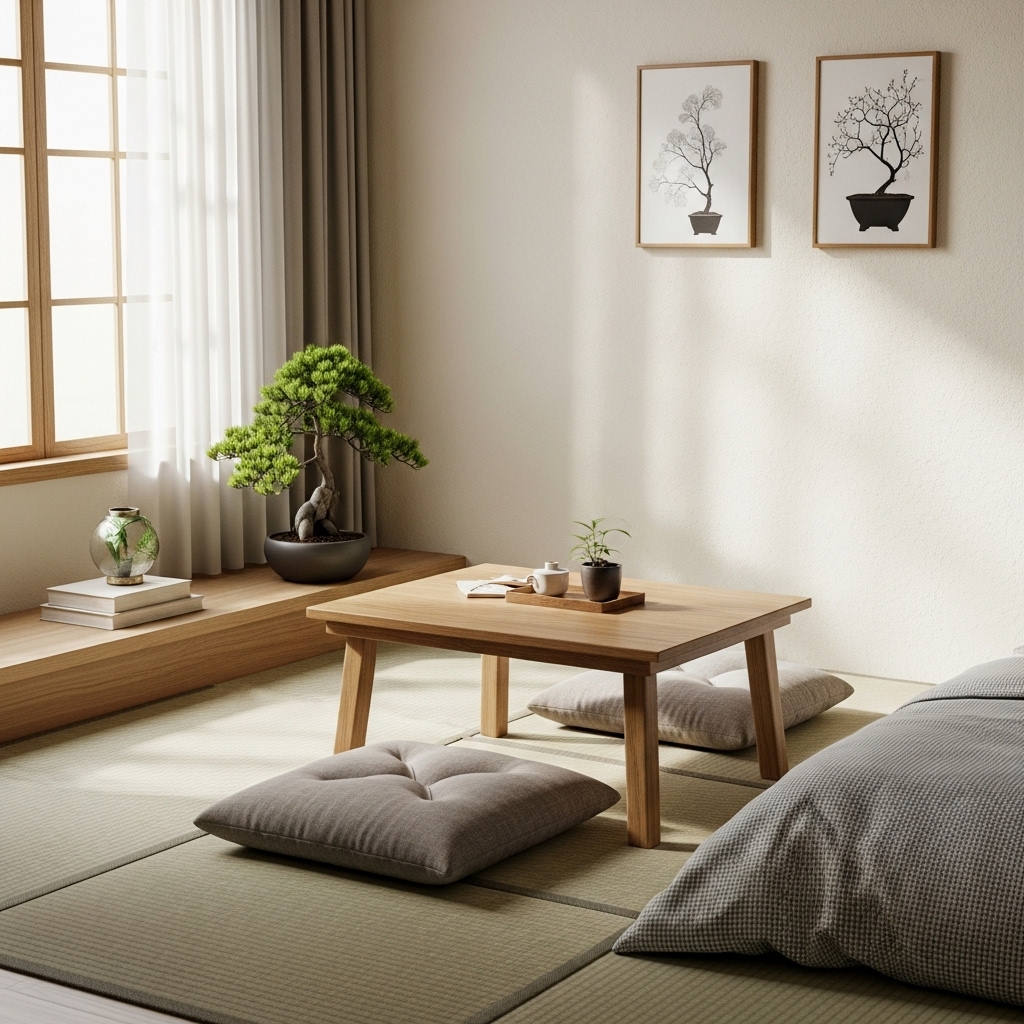
Japanese design draws its colors from nature — white walls, light beige floors, soft brown wood tones, and occasional touches of muted green or grey. Bright or saturated colors are avoided because they create visual noise rather than calm. A bedroom with white walls, wooden furniture, and cream bedding has a timeless quality that never feels cluttered or loud. The restraint in color is what makes everything else in the room feel intentional.
6. Create a Small Zen Corner
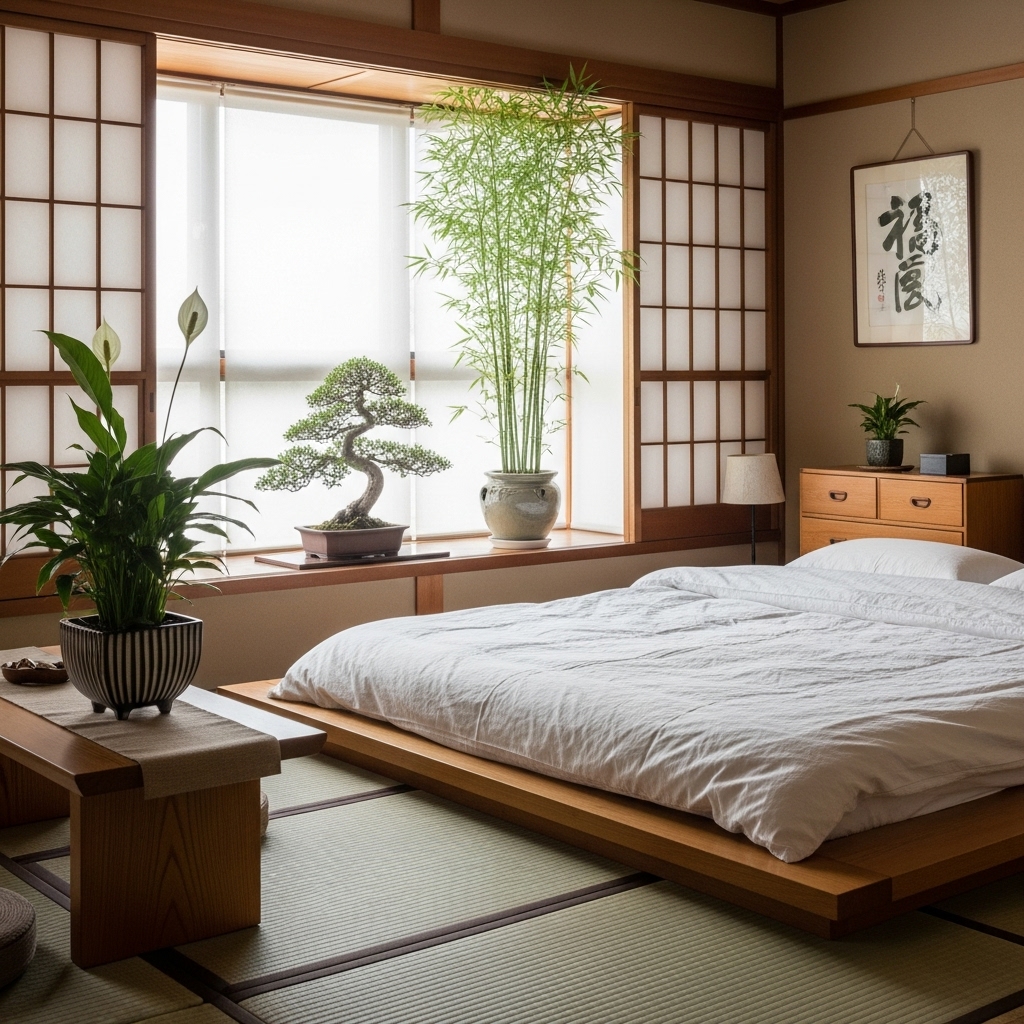
A dedicated corner for stillness is one of the most meaningful things you can add to a Japanese bedroom. Place a Japanese floor cushion in a quiet corner of the room with a small low table, a plant, and a candle. This space is for morning tea, reading, or simply sitting without a screen. It does not need to be large — even a small corner with the right few elements creates a sense of purpose and calm that a purely functional room cannot offer.

Japanese Floor Cushion Zabuton
Traditional floor seating that creates a dedicated calm corner — perfect for reading meditation or quiet morning moments.
Check Price on Amazon7. Bring Nature Indoors with Plants
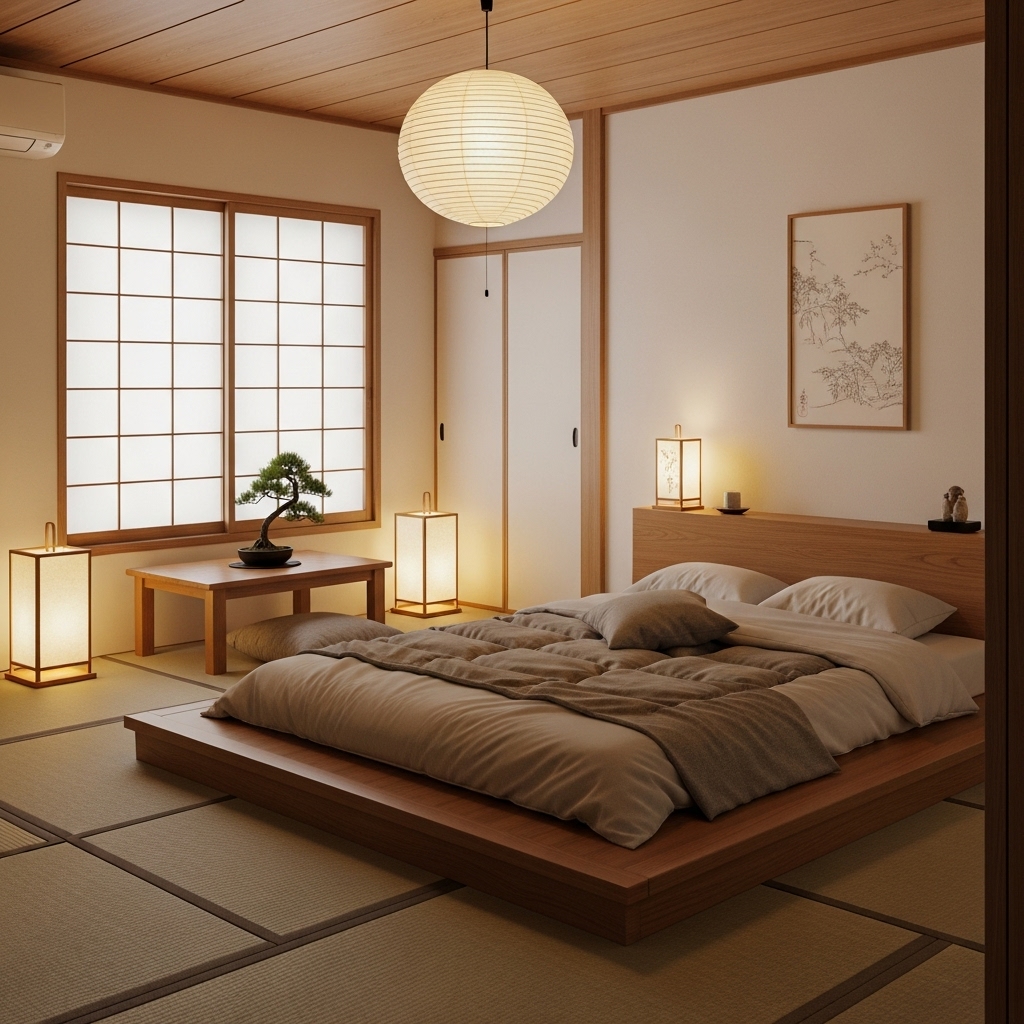
Plants bring life into a Japanese bedroom without breaking the minimal aesthetic. One or two carefully chosen plants placed near a window or in a corner is enough. Bonsai trees are the most authentically Japanese choice — this small indoor bonsai tree brings that quiet, meditative quality that fits perfectly with the overall mood. Peace lily, bamboo, and snake plant also work well. The key is restraint — two plants placed thoughtfully look more intentional than five scattered around.

Small Bonsai Tree Indoor
The most authentically Japanese plant choice — brings quiet meditative energy and natural beauty to any bedroom corner.
Check Price on Amazon8. Focus on Soft and Warm Lighting
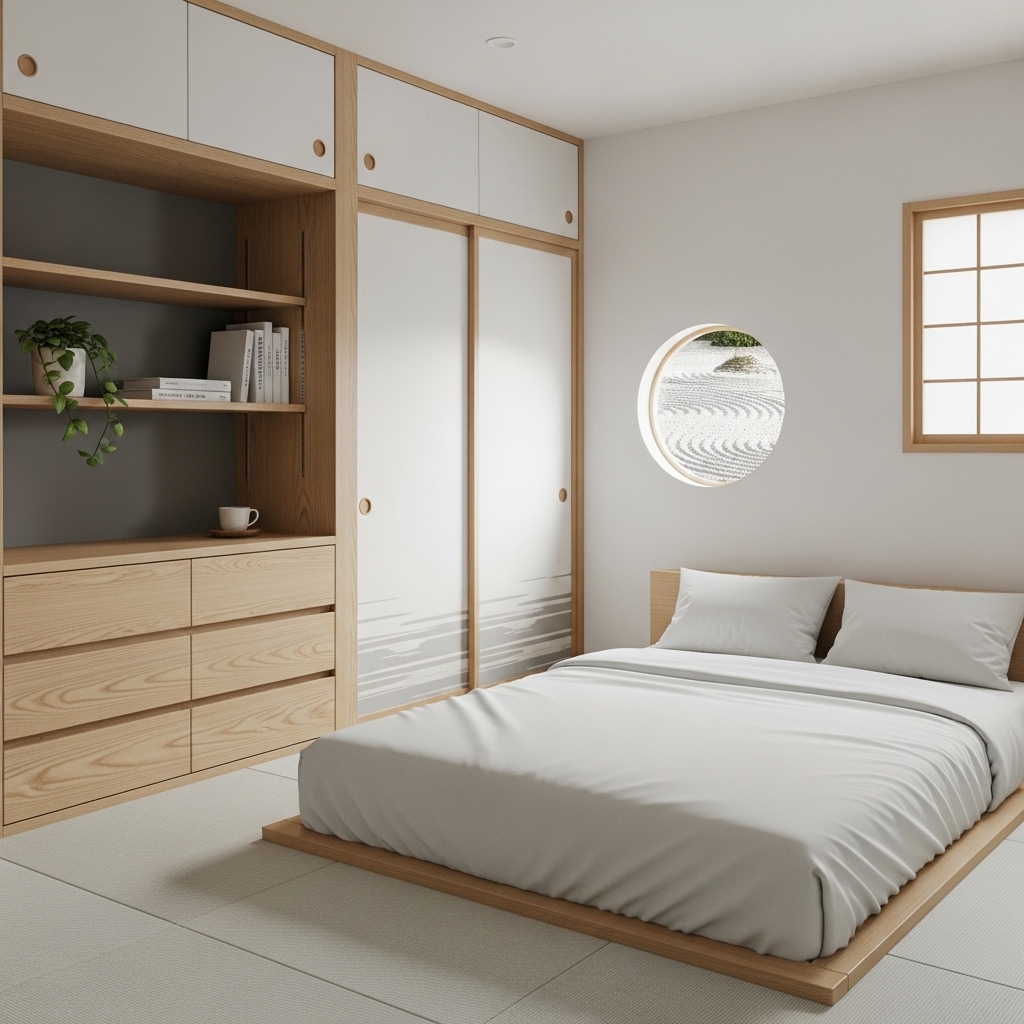
Lighting shapes how a room feels more than almost any other element. Japanese bedrooms use gentle, warm light — never harsh or fluorescent. Paper lanterns, bamboo lamps, and diffused ceiling fixtures create the soft glow that makes a bedroom feel genuinely restful. This bamboo table lamp provides exactly the right quality of warm, diffused light that complements wooden tones and natural materials throughout the room.

Bamboo Table Lamp
Warm diffused glow through natural bamboo — the perfect bedside lamp for a Japanese bedroom that needs soft evening light.
Check Price on Amazon9. Keep the Room Clutter-Free
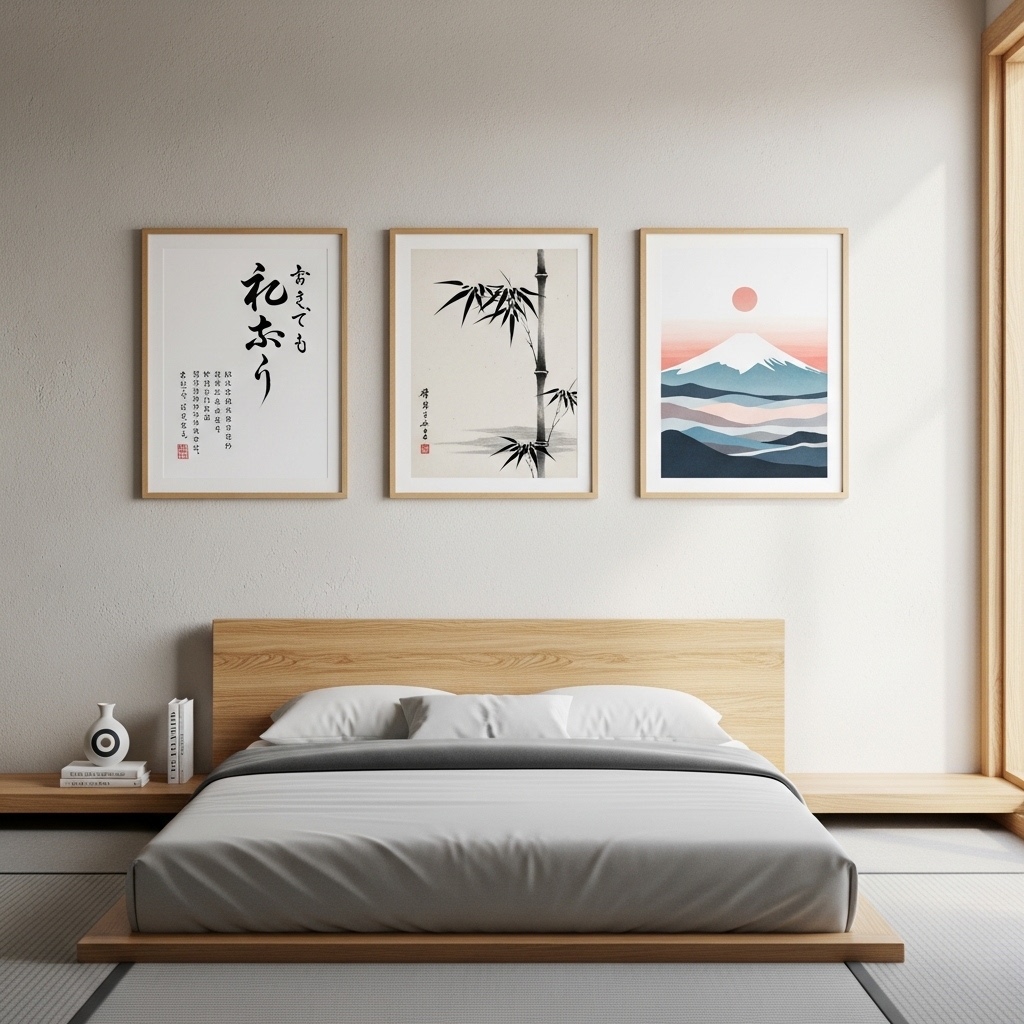
A cluttered room creates a busy mind — this is one of the central beliefs of Japanese design. Hidden storage is preferred over open storage wherever possible. Use sliding-door closets, under-bed drawers, or natural woven baskets to keep everyday items out of sight. Keep surfaces completely clear except for the one or two objects that genuinely belong there. The discipline of keeping a room tidy is itself part of the Japanese approach to living well.

Natural Woven Storage Basket
Keeps everyday items out of sight while adding natural texture — the ideal storage solution for a clutter-free Japanese bedroom.
Check Price on Amazon10. Choose Simple Artwork and Decor
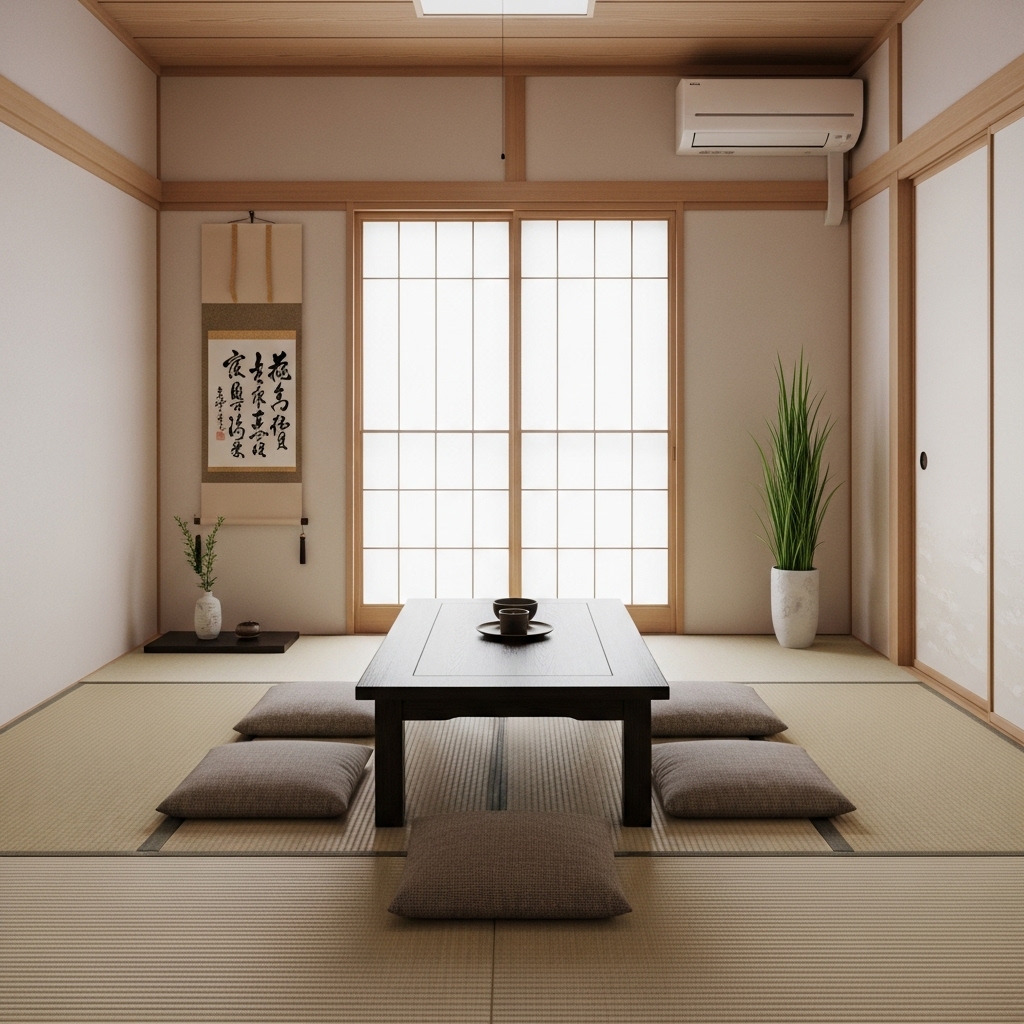
Japanese decor is minimal but meaningful. One piece of wall art — a nature-inspired print, a simple ink painting, or a calligraphy scroll — is enough. This Japanese minimalist wall art print adds character without visual noise — exactly the balance Japanese design aims for. Use natural materials for frames and avoid anything shiny or decorative for decoration’s sake. The goal is one or two objects that add genuine beauty rather than a collection of things that fill space.

Japanese Minimalist Wall Art Print
Nature-inspired minimal design that adds character without visual noise — one piece is all a Japanese bedroom needs.
Check Price on Amazon11. Mix Modern and Traditional Elements
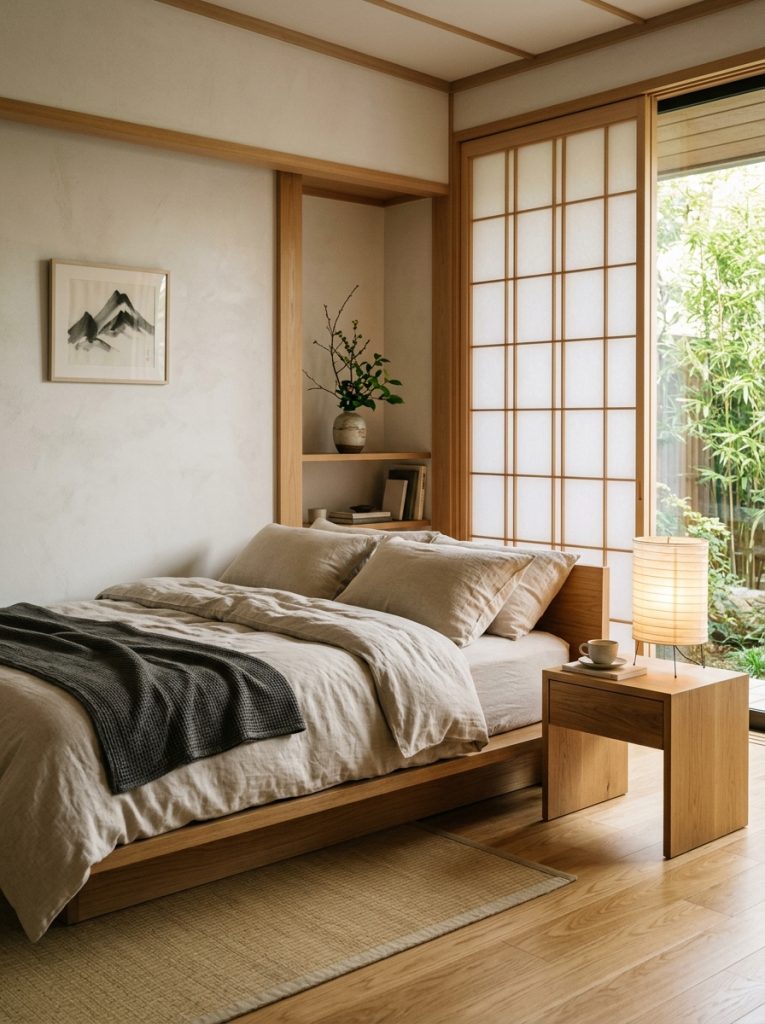
A Japanese bedroom does not have to replicate a historical interior exactly. Modern Japanese design blends traditional elements with contemporary simplicity — a modern low bed paired with paper lamps, a minimalist wardrobe beside shoji-inspired panels. The balance between old and new is what gives modern Japanese interiors their distinctive quality. Do not feel pressured to choose one or the other. Let them coexist naturally.
12. Keep the Air Fresh and Natural
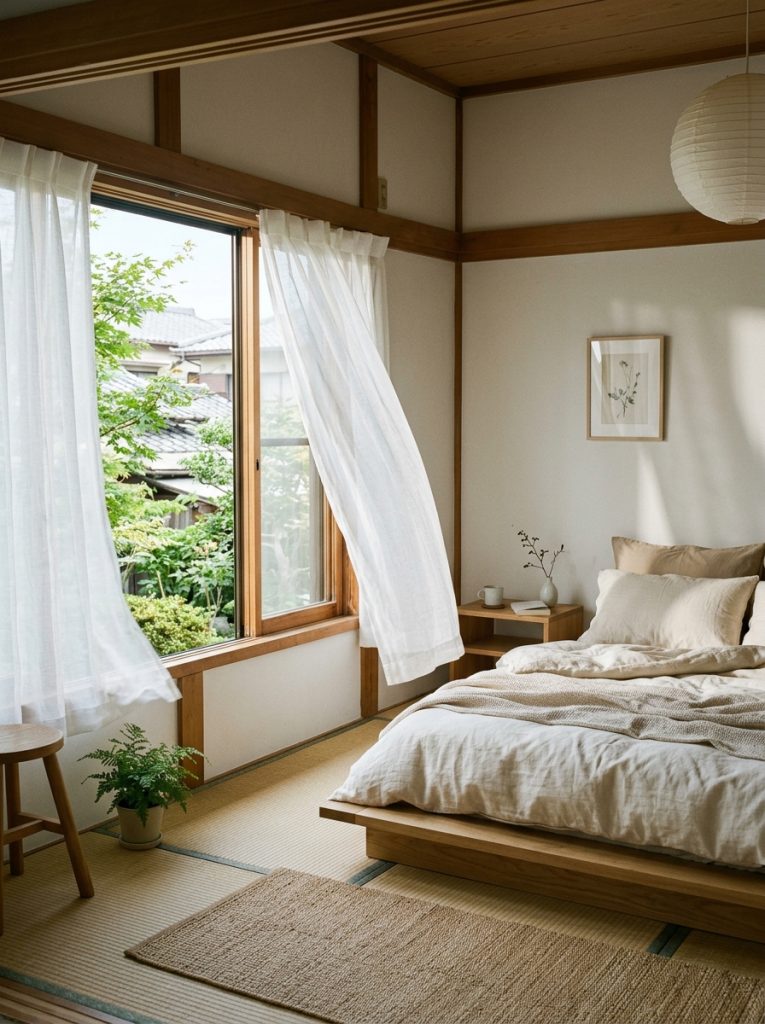
Good ventilation is part of Japanese living. Keep windows open whenever possible to let natural air and light flow through the room. Use light linen curtains instead of heavy drapes that block both. The connection to outside air — the sound of wind, the change in temperature through the day — is part of what makes a Japanese bedroom feel alive rather than sealed off. Fresh air costs nothing and changes how the whole room feels.
13. Create a Cozy Japanese Bedroom Atmosphere
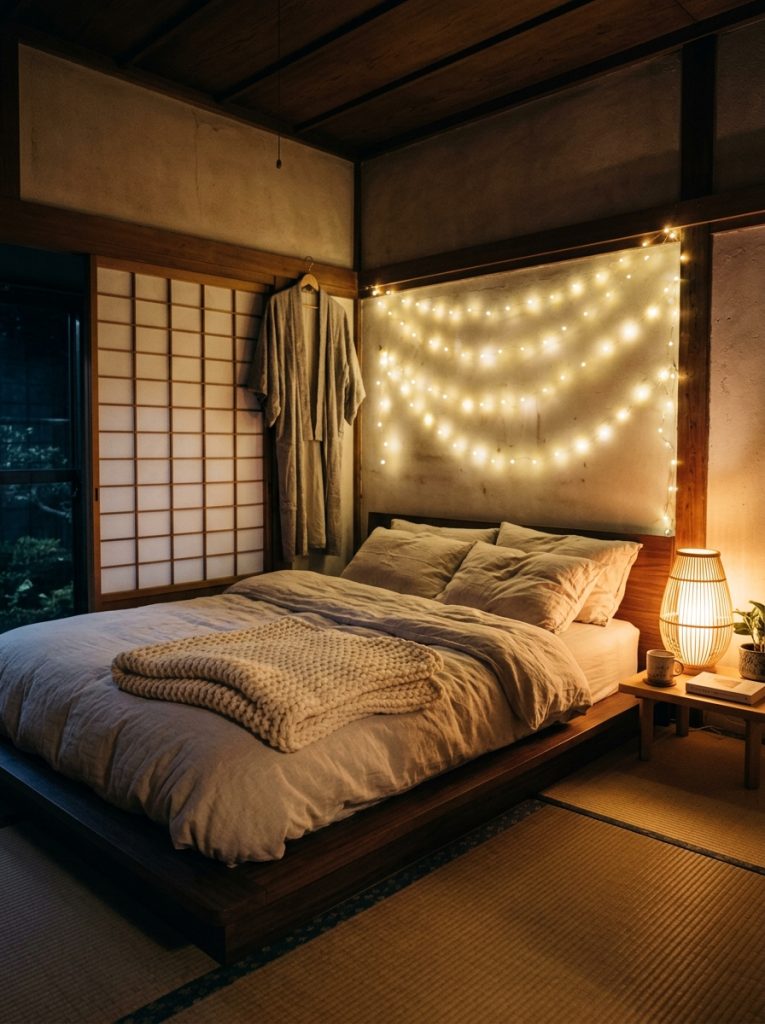
The warmth of a Japanese bedroom comes from layering softness into the minimal framework. Warm white fairy lights strung along a wall or headboard create a gentle evening glow that no overhead light can replicate. Add a a fluffy throw blanket folded at the foot of the bed for texture and warmth. These cozy details do not break the minimal aesthetic — they complete it. The goal is a room that feels calm enough to rest in and warm enough to actually want to stay.

Fairy Lights Warm White
Soft warm glow that transforms a minimal Japanese bedroom into a genuinely cozy space for evening relaxation.
Check Price on Amazon
Fluffy Throw Blanket
Adds softness and warmth to a low platform bed — the cozy layer that makes a minimal Japanese bedroom feel inviting.
Check Price on AmazonFinal Thoughts
A Japanese bedroom is not about how it looks in a photograph — it is about how it feels to live in every day. The simplicity, the natural materials, the absence of clutter, the soft light — all of it works together to create a space that genuinely supports rest. Start with one change. Clear a surface, swap your bedding for linen, add a small plant. The shift happens gradually and the results are more noticeable than you might expect.
For more bedroom inspiration, explore our interior design styles for styles that bring calm and personality into every sleeping space. If you love the Japanese aesthetic but want something softer and more playful, our cute Japanese bedroom ideas shows how to blend kawaii charm with Japanese calm.


Amir Ali is the founder and site administrator of HomeDecorEdge, a modern home decor and interior design platform. Since starting the site, he has combined his passion for interior design, practical styling, and color coordination with hands-on content strategy and site management. He guides authors, curates high-quality articles, and ensures readers have access to actionable, visually inspiring, and user-focused home decor advice for apartments, small rooms, and family homes.