

Keeping ducks is one of the most rewarding backyard hobbies — but they need a proper enclosure to stay safe, healthy and happy. Whether you want something cheap and simple or a full setup with a pond, these 20 DIY duck enclosure ideas cover every budget, style and season.
This post contains affiliate links. If you purchase through these links I may earn a small commission at no extra cost to you.
Get inspired with these 20 easy DIY duck enclosure ideas that work for any backyard, budget and flock size.
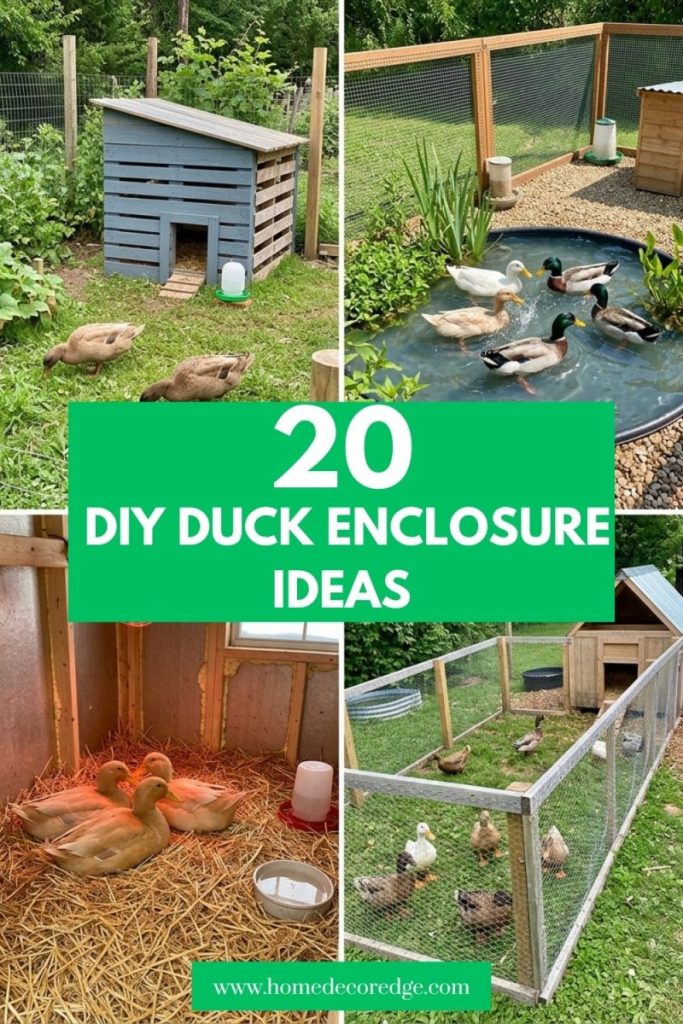
Here are 20 of the best DIY duck enclosure ideas for every backyard, budget and season.
1. Simple Pallet Duck House Enclosure
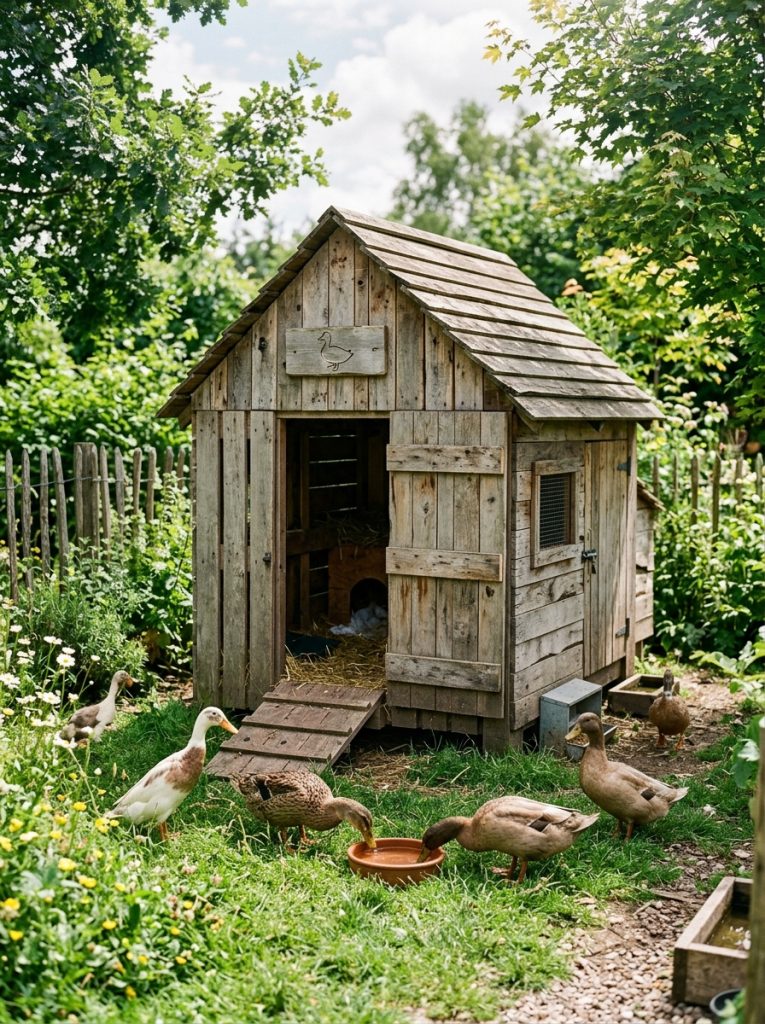
A pallet duck house is the most budget friendly DIY duck enclosure you can build — pallets are often free and the build takes just one weekend. It gives your ducks a solid weatherproof shelter at almost zero cost. This Duck House Outdoor Enclosure is a great ready-made option if you want a polished result without the build.
Materials Needed:
- 6-8 wooden pallets
- Screws and drill
- Roofing felt or corrugated sheets
- Hinges for door
How to Make It:
- Stand 4 pallets upright and screw together to form walls
- Add a pallet roof frame and cover with roofing felt
- Cut out a small duck entry door on one side
- Add a hinged access panel on the back for cleaning

Duck House Outdoor Enclosure
Ready made outdoor duck house enclosure — weatherproof, easy to assemble and perfect for any backyard duck flock.
Check Price on Amazon2. Cheap Pallet Duck Run with Netting
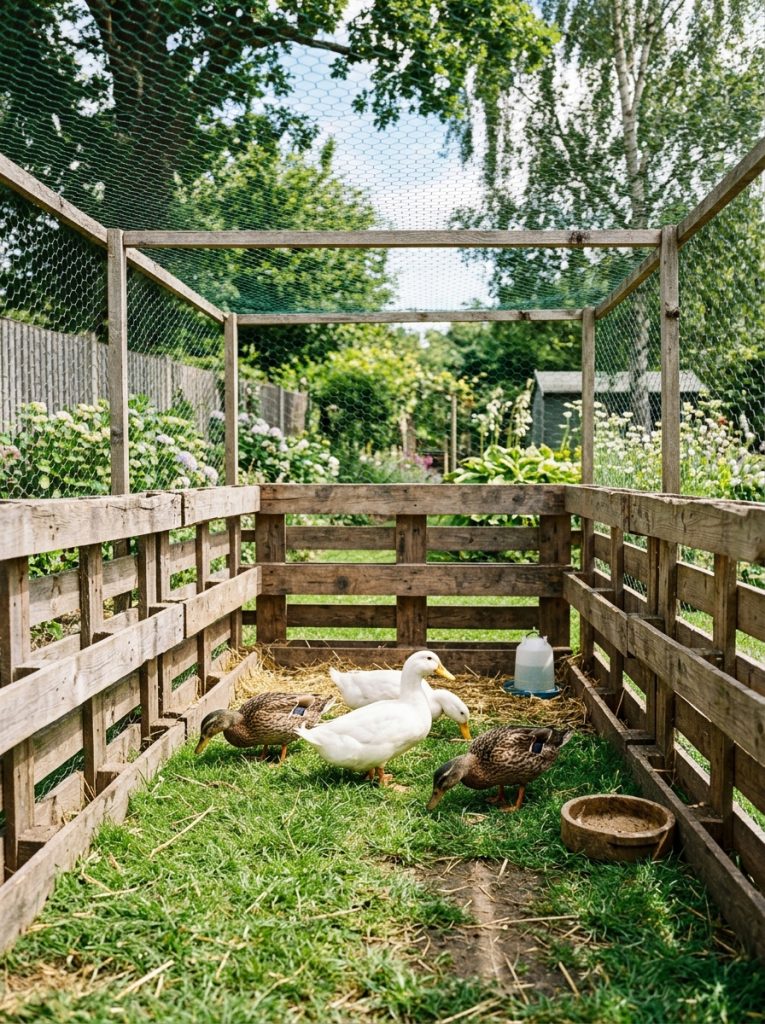
A pallet duck run gives your flock a safe outdoor space to roam without wandering or being attacked by predators. Use pallets for the frame and stretch poultry netting across the top and open sides for full protection. This Poultry Netting Duck Run is heavy duty and predator resistant — perfect for enclosing any pallet frame structure.
Materials Needed:
- 4-6 wooden pallets
- Poultry netting roll
- Zip ties or staple gun
- Gate hinges and latch
How to Make It:
- Arrange pallets in a rectangle and secure together with screws
- Add a pallet gate on one end with hinges and latch
- Stretch poultry netting across the top and staple to pallet edges
- Cover any gaps at ground level to prevent predator entry

Poultry Netting Duck Run
Heavy duty poultry netting for duck run and enclosure — predator resistant and easy to attach to any frame or pallet structure.
Check Price on Amazon3. Pallet Duck House with Attached Run
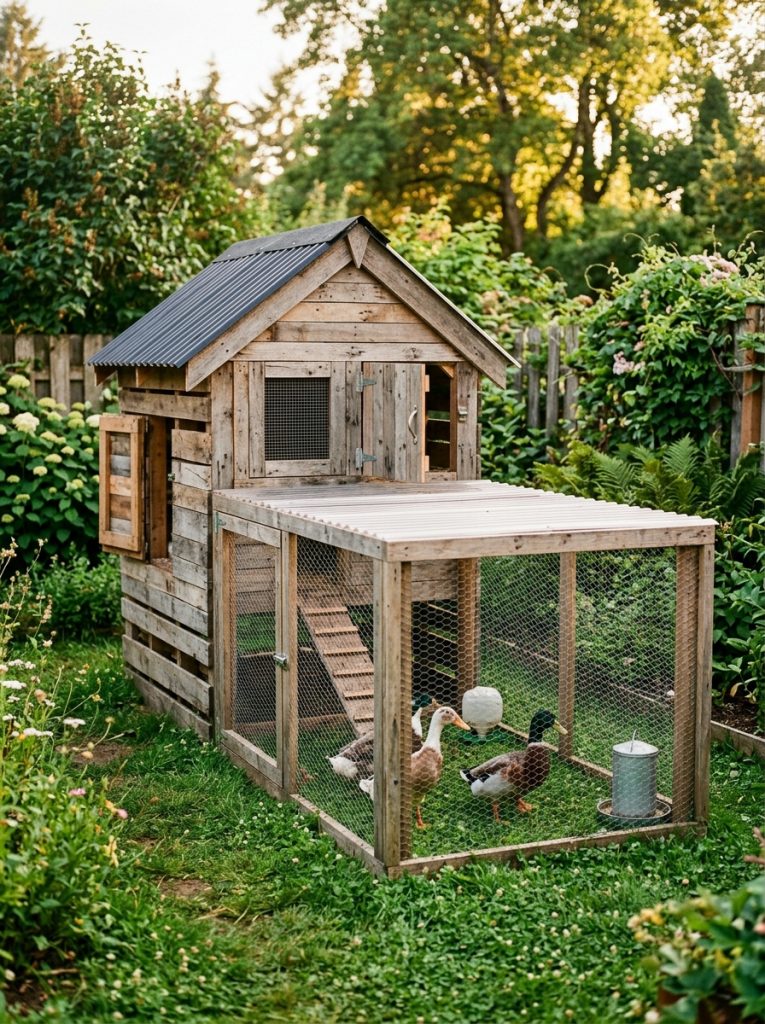
Combining a pallet duck house with an attached run gives your flock shelter and outdoor space in one connected structure. Build the house section first then extend a netted run from the front door so ducks can move freely between inside and outside whenever they choose. It is one of the most practical and cheap DIY duck enclosure ideas for small backyards.
Materials Needed:
- 8-10 wooden pallets
- Poultry netting
- Roofing felt
- Screws, hinges and latch
How to Make It:
- Build pallet house with solid walls and roofing felt roof
- Cut a small duck door on the front panel
- Extend 4 pallets forward from the door to form run walls
- Cover run top and sides with poultry netting and add a gate
4. Easy Ready-Made Duck Coop Kit
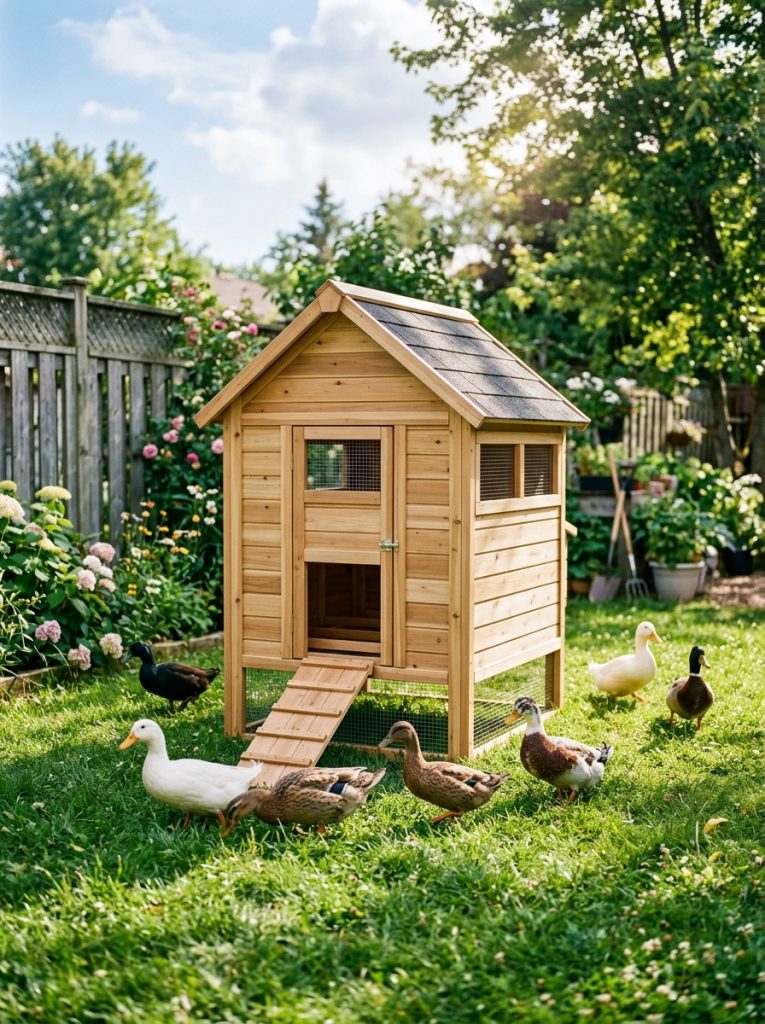
If you want an easy duck enclosure without any building this ready-made duck coop kit is the perfect solution. It assembles in a few hours with basic tools and gives your flock a proper weatherproof home from day one. This Duck Coop Kit is well designed with ventilation, a cleaning hatch and a ramp that ducks love to use.
Materials Needed:
- Duck coop kit
- Screwdriver
- Level and measuring tape
How to Make It:
- Lay out all panels and hardware from the kit
- Follow included instructions to assemble walls and roof
- Attach ramp and secure ventilation panels
- Place on level ground and add bedding inside

Duck Coop Kit
Easy to assemble duck coop kit — weatherproof wooden design with ventilation, ramp and cleaning hatch for any backyard flock.
Check Price on Amazon5. Easy DIY Duck Enclosure from Wire and Wood Posts
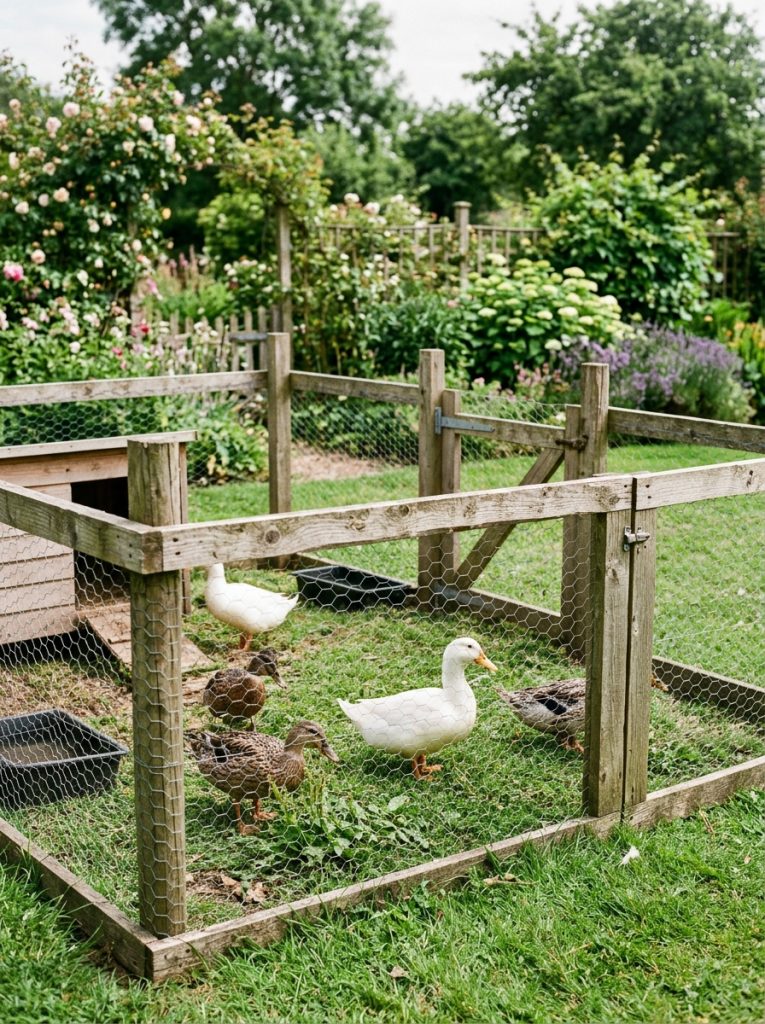
A simple post and wire duck enclosure is one of the easiest DIY builds for any beginner. Drive wooden posts into the ground, stretch wire fencing between them and add a simple gate — done in a few hours. Add a small shelter inside for sleeping and your ducks have everything they need in a safe predator resistant space.
Materials Needed:
- Wooden fence posts
- Wire fencing or hardware cloth
- Post driver or mallet
- Gate hardware
How to Make It:
- Mark out enclosure area and drive posts into ground every 2 meters
- Stretch wire fencing between posts and staple securely
- Bury wire 6 inches underground to stop digging predators
- Add a wooden gate and place a small shelter inside
6. Duck Enclosure with Small Pond Liner Pool
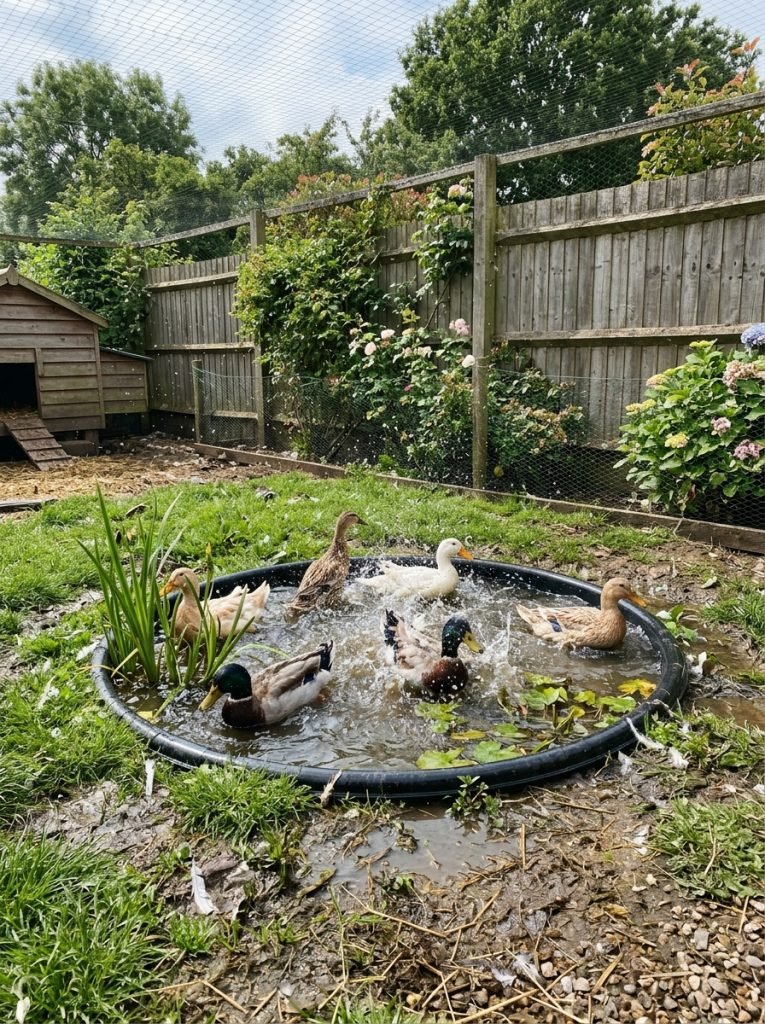
Ducks absolutely love water and a small pond liner pool inside their enclosure keeps them happy, healthy and clean. Sink a pond liner into the ground so ducks can easily step in and out and change the water every few days. This Duck Pond Liner Small is the perfect size for a backyard duck enclosure and is durable enough to last for years. For more backyard water feature inspiration check out these DIY ponds backyard ideas that pair beautifully with any duck setup.
Materials Needed:
- Small pond liner
- Shovel
- Gravel for drainage
- Stepping stones around edge
How to Make It:
- Dig a shallow hole the size of your pond liner
- Add a layer of sand at the bottom for cushioning
- Place liner in hole and fill with water
- Surround edges with stepping stones for easy duck access

Duck Pond Liner Small
Small durable pond liner for backyard duck enclosure — easy to install, perfect size for a small flock to splash and swim.
Check Price on Amazon7. Raised Pond Platform Inside Duck Enclosure
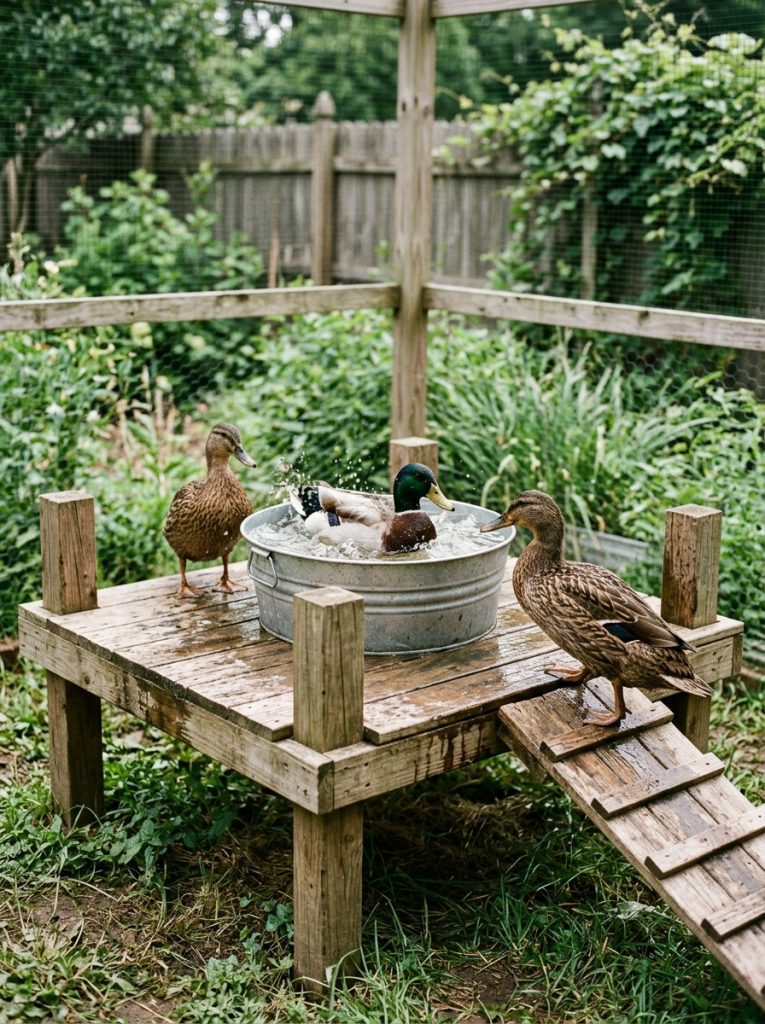
If you don’t want to dig a pond, a raised platform with a large tub or container on top gives ducks the water access they love without any ground work. Build a simple wooden step platform so ducks can easily climb up to reach the water. Change the water daily and your ducks will use it constantly throughout the day.
Materials Needed:
- Large plastic tub or container
- Wooden planks for platform
- Screws and drill
- Non-slip mat
How to Make It:
- Build a simple wooden step platform from planks and screws
- Place large plastic tub on top and fill with clean water
- Add a non-slip mat on the platform step for duck safety
- Change water daily and scrub tub weekly
8. Duck Enclosure with Outdoor Feeder Setup
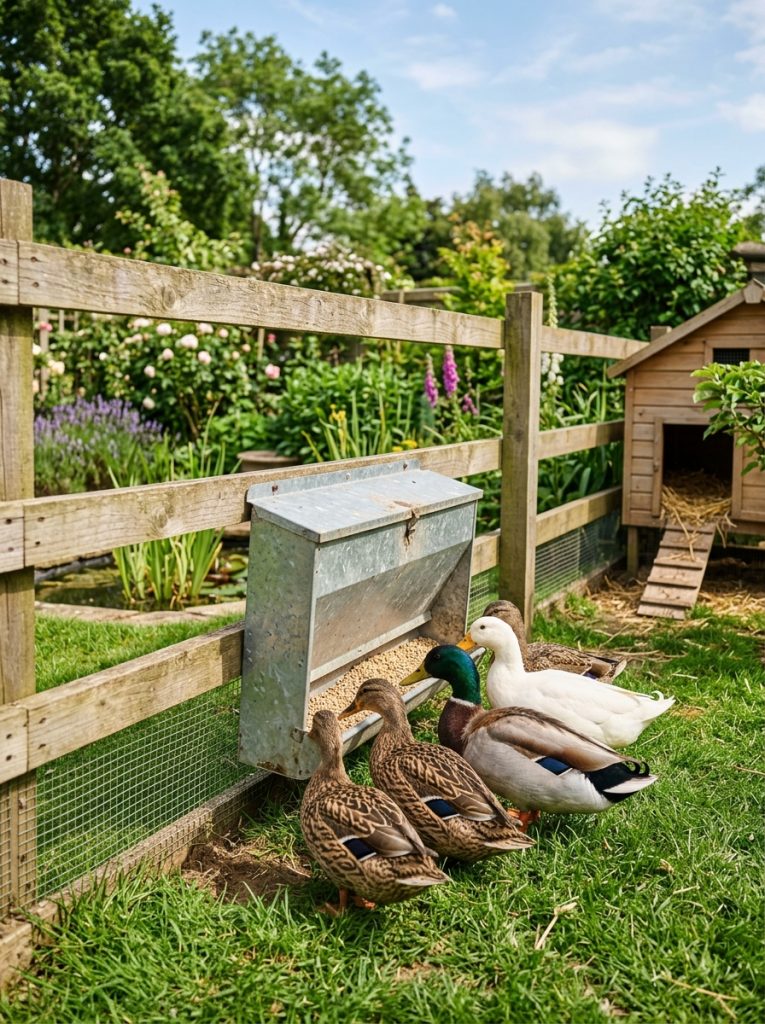
A proper outdoor duck feeder keeps feed dry, clean and off the ground — reducing waste and keeping your enclosure cleaner. Mount it at duck head height on the fence rail or on a post inside the enclosure. This Duck Feeder Outdoor holds a generous amount of feed and is weatherproof so it stays dry even in rain.
Materials Needed:
- Outdoor duck feeder
- Mounting screws or post
- Level
How to Make It:
- Choose a sheltered spot inside the enclosure away from the pond
- Mount feeder at duck head height on fence rail or post
- Fill with duck pellets and check daily
- Clean feeder weekly to prevent mold and bacteria

Duck Feeder Outdoor
Weatherproof outdoor duck feeder — keeps feed dry and clean, mounts easily inside any duck enclosure or run.
Check Price on Amazon9. Duck Waterer Station Inside Enclosure
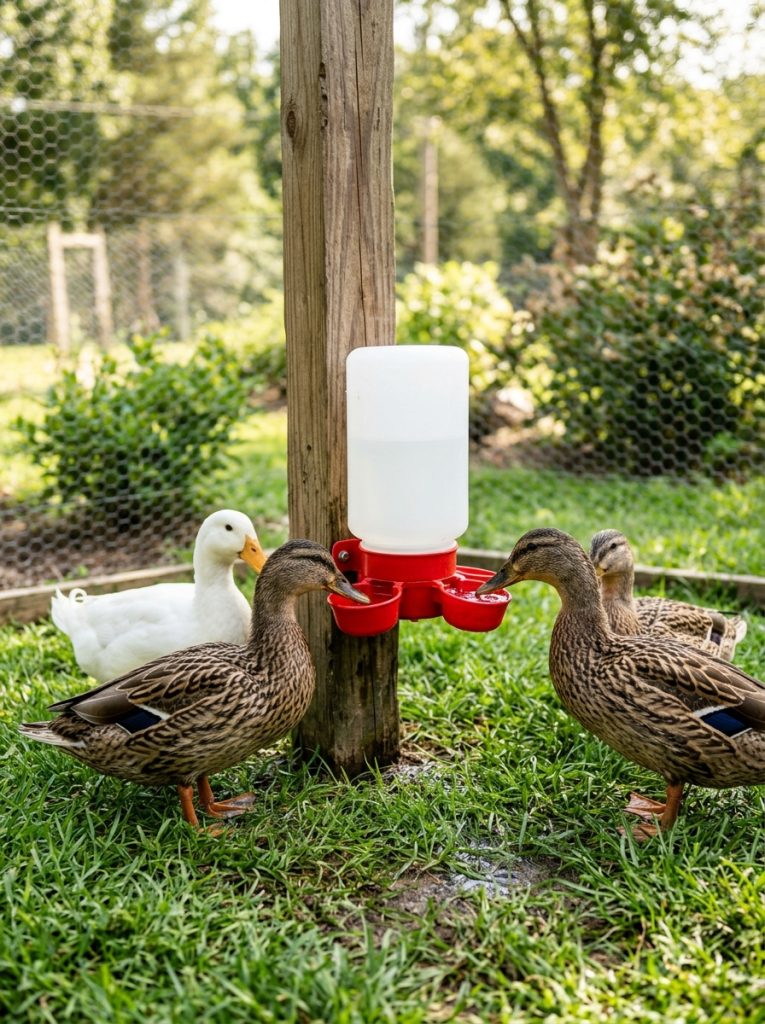
A dedicated duck waterer separate from the swimming pond keeps your ducks hydrated with clean drinking water at all times. Place it away from the pond to prevent contamination and refill it daily. This Duck Waterer Outdoor is easy to fill, holds plenty of water and is designed to stay clean longer than open bowls.
Materials Needed:
- Outdoor duck waterer
- Wooden post or mounting bracket
- Level
How to Make It:
- Choose a spot inside enclosure away from pond and sleeping area
- Mount waterer on post at duck drinking height
- Fill daily with fresh clean water
- Scrub and rinse waterer twice a week

Duck Waterer Outdoor
Easy to fill outdoor duck waterer — keeps drinking water clean and fresh, perfect for any backyard duck enclosure setup.
Check Price on Amazon10. Straw Bedding Duck House Setup
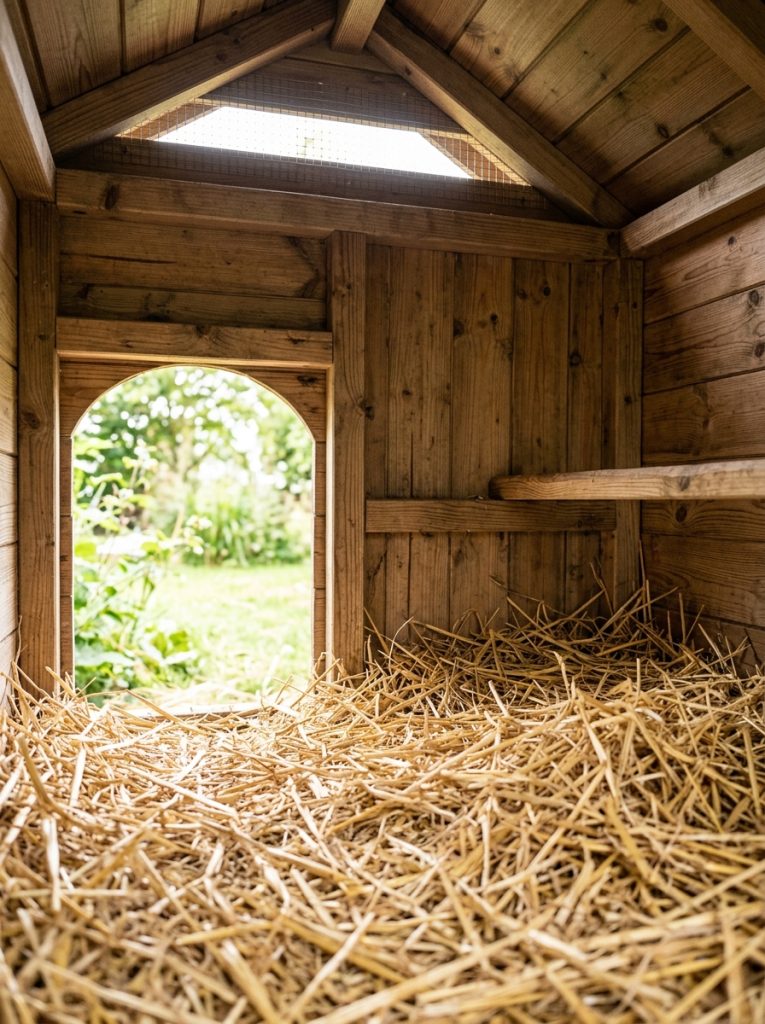
Deep straw bedding inside your duck house keeps your flock warm, comfortable and dry all year round. Ducks do not roost like chickens — they sleep on the ground so good deep bedding is essential for their comfort and health. This Duck Bedding Straw is clean absorbent and perfect for any duck house floor — replace it fully every week or two.
Materials Needed:
- Straw bedding bale
- Pitchfork or gloves
- Wheelbarrow for removal
How to Make It:
- Clear old bedding completely from duck house floor
- Spread a thick 4-6 inch layer of fresh straw across the floor
- Push straw into corners and edges for full coverage
- Replace fully every 1-2 weeks or spot clean daily

Duck Bedding Straw
Clean absorbent straw bedding for duck house — keeps flock warm, dry and comfortable all year round on any floor.
Check Price on Amazon11. Winter Duck Enclosure with Insulation
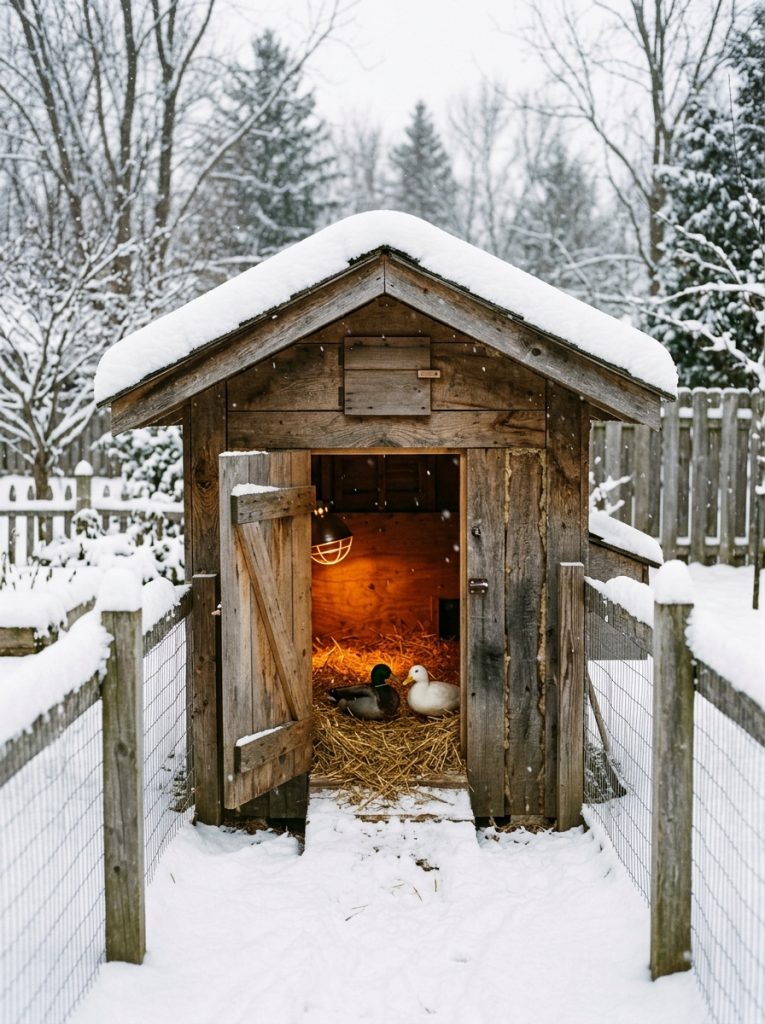
Ducks are surprisingly cold hardy but they still need a properly insulated winter enclosure to stay safe in freezing temperatures. Add thick straw bedding, cover ventilation gaps with flaps that can be adjusted and use a safe heat lamp inside for the coldest nights. This Duck House Heater Winter is designed for safe use inside poultry enclosures and keeps your flock warm without fire risk.
Materials Needed:
- Foam insulation boards
- Thick straw bedding
- Duck house heater
- Weatherproof door flap
How to Make It:
- Line inside walls with foam insulation boards and cover with plywood
- Add a thick 6 inch layer of straw bedding on the floor
- Install a weatherproof door flap to block wind and drafts
- Mount heater safely above duck level on the wall

Duck House Heater Winter
Safe poultry house heater for winter — keeps duck enclosure warm on freezing nights without fire risk.
Check Price on Amazon12. Winter Duck Run with Windbreak Panels
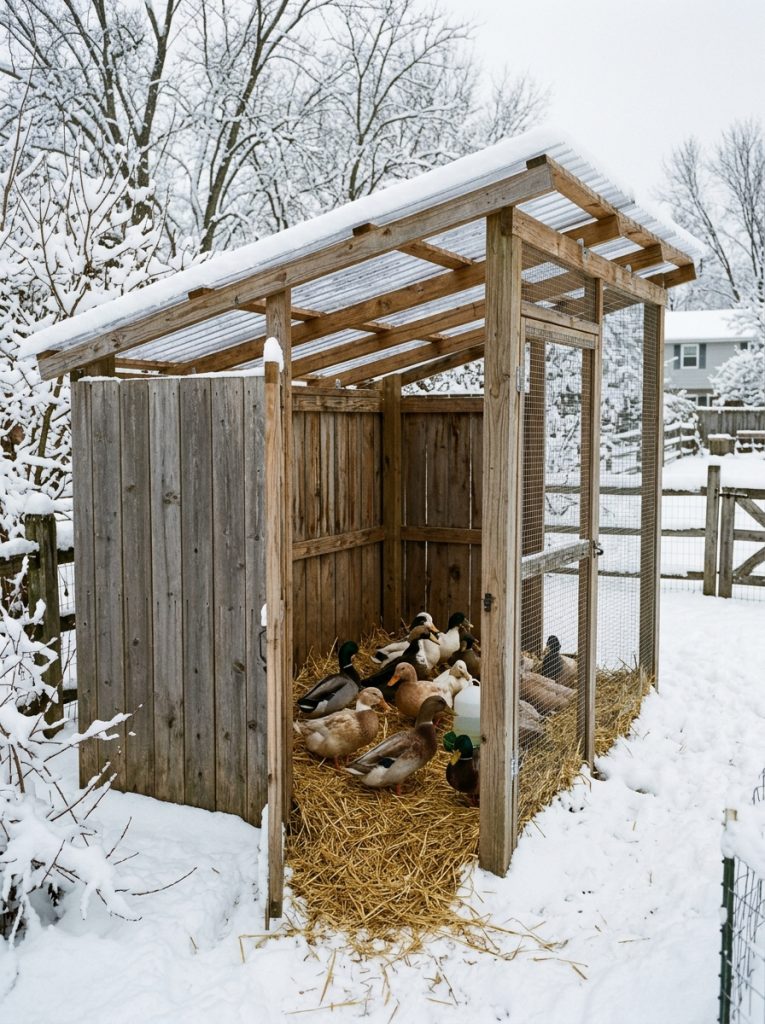
Adding solid windbreak panels to your duck run for winter keeps biting winds and snow away from your flock while still allowing them outdoor access on milder days. Use solid timber boards or corrugated plastic panels on the north and west facing sides and cover the run roof with clear corrugated sheets to let in light while blocking precipitation.
Materials Needed:
- Timber boards or corrugated plastic panels
- Clear corrugated roof sheets
- Screws and drill
- Weatherproof sealant
How to Make It:
- Attach solid timber boards to north and west sides of run frame
- Replace netting roof with clear corrugated sheets
- Seal all gaps with weatherproof sealant
- Add thick straw on the run floor for warmth underfoot
13. Heated Winter Water Setup for Duck Enclosure
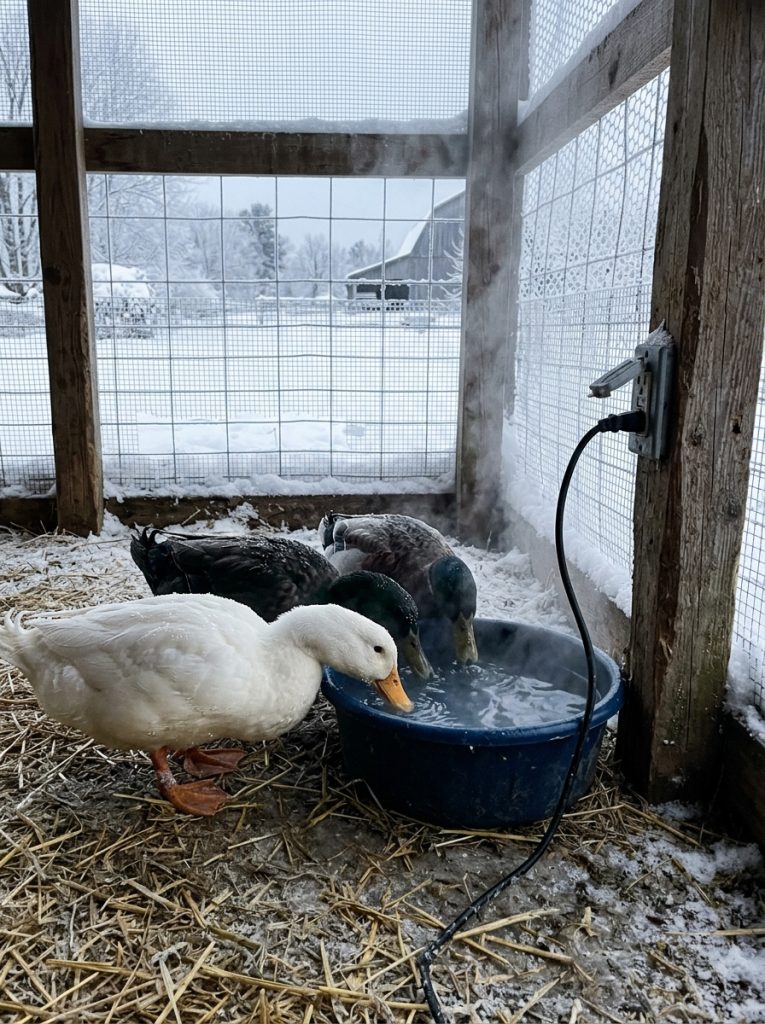
Keeping water from freezing in winter is one of the biggest challenges for duck keepers. A heated water bowl or a submersible water heater inside your duck waterer ensures your flock always has access to liquid water even on the coldest mornings. Check water twice daily in freezing temperatures and break any ice that forms around the edges.
Materials Needed:
- Heated water bowl or submersible heater
- Extension cord rated for outdoor use
- Weatherproof outlet cover
How to Make It:
- Place heated water bowl in a sheltered corner of the enclosure
- Run outdoor rated extension cord to nearest power source
- Cover outlet with weatherproof cover for safety
- Check water level and temperature daily in freezing weather
14. Indoor Duck Enclosure for Small Spaces
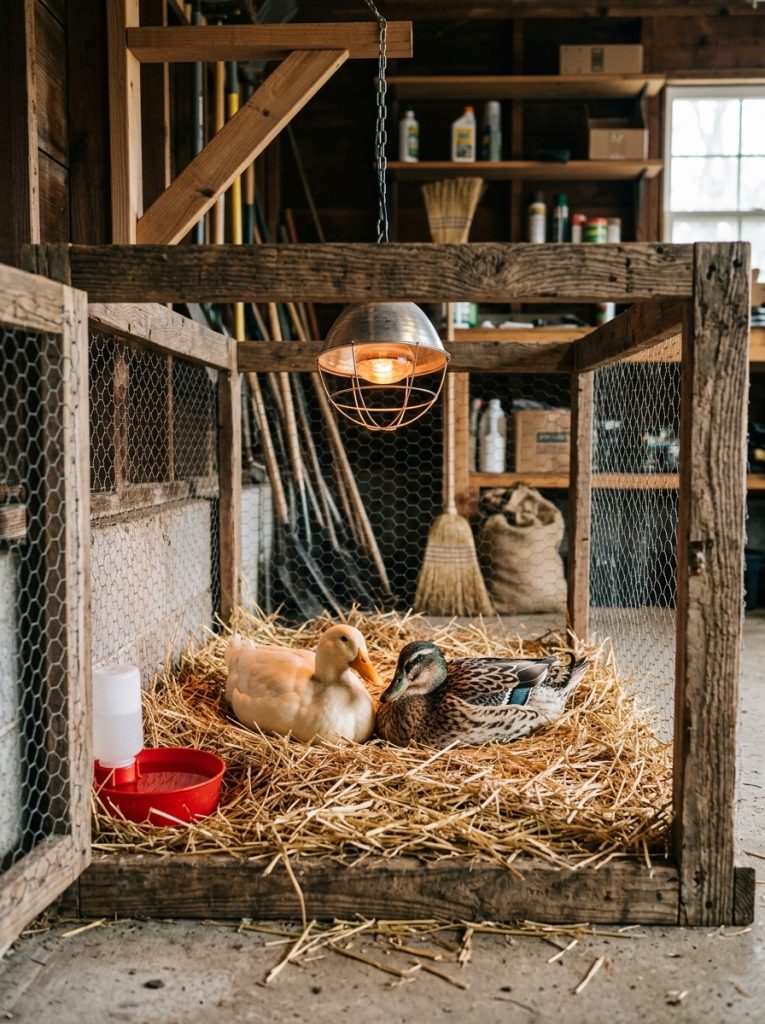
An indoor duck enclosure in your garage or shed is perfect for raising ducklings, housing ducks during extreme weather or keeping a small urban flock safely contained. Build a simple wooden pen frame, line the floor with waterproof sheeting, add thick straw bedding and a heat lamp and your indoor setup is complete.
Materials Needed:
- Wooden boards for pen frame
- Waterproof floor sheeting
- Straw bedding
- Heat lamp and hook
How to Make It:
- Build a simple rectangular pen frame from wooden boards — 4 feet high
- Line floor with waterproof sheeting to protect floor below
- Add thick straw bedding on top of sheeting
- Mount heat lamp safely above pen and add water and feed stations
15. Indoor Duckling Brooder Setup
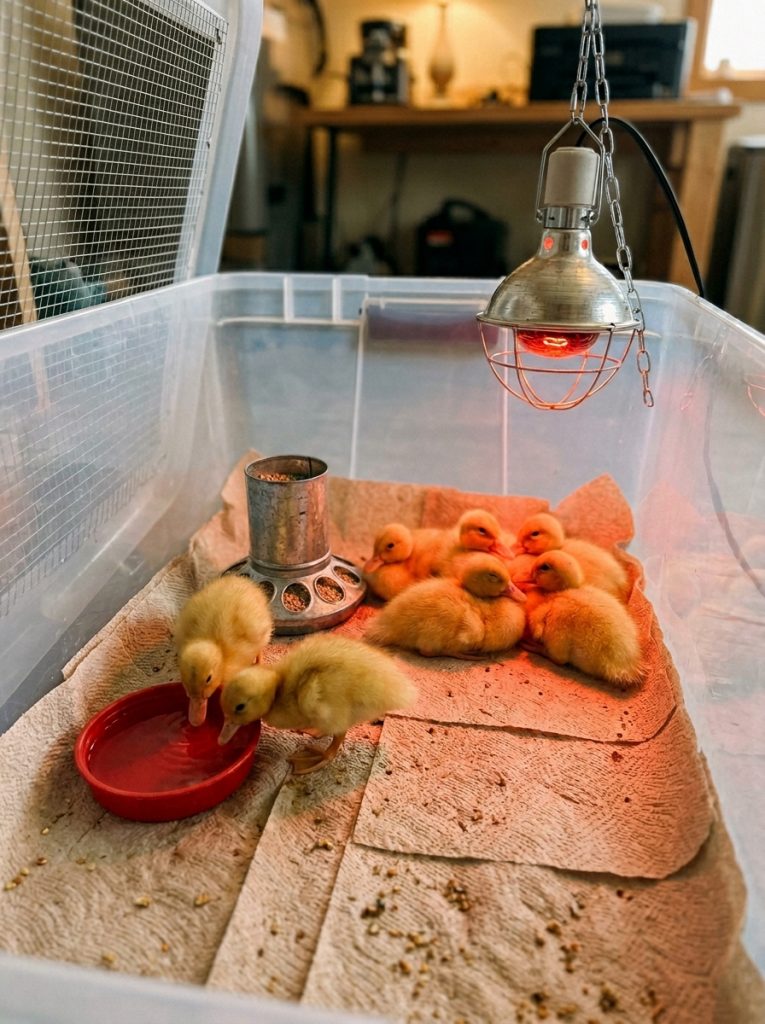
Baby ducklings need a warm safe indoor brooder for the first 4-6 weeks before they are ready for an outdoor enclosure. Use a large plastic tub or wooden box, line it with paper towels for the first week then switch to straw, add a heat lamp and keep the temperature at 90 degrees for week one dropping 5 degrees each week. For more outdoor garden ideas to complement your duck setup check out these outdoor garden decor ideas.
Materials Needed:
- Large plastic tub or wooden box
- Paper towels and straw bedding
- Heat lamp and thermometer
- Shallow water dish
How to Make It:
- Set up large tub in a draft free indoor location
- Line floor with paper towels for first week then switch to straw
- Mount heat lamp above one end — leave other end cooler
- Add shallow water dish and chick starter feed
16. Cheap Duck Enclosure from Repurposed Fencing
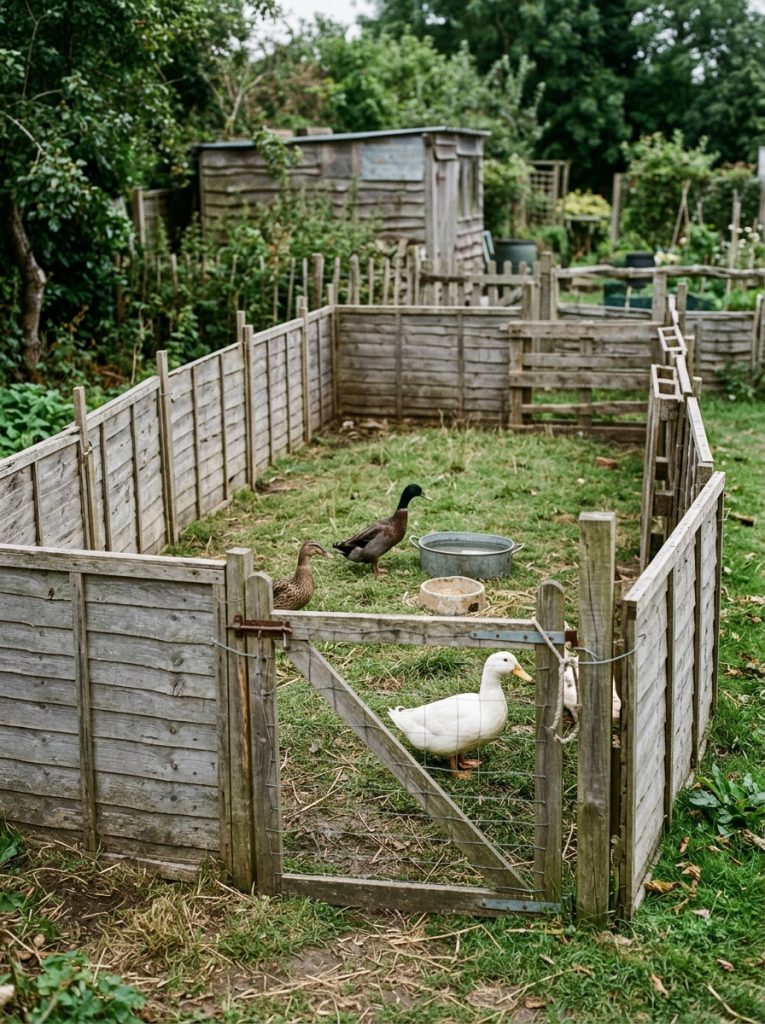
Old fence panels are one of the best free materials for building a cheap duck enclosure — they are solid, weatherproof and already cut to size. Stand them upright and connect at the corners with screws, add a simple gate and cover the top with netting for predator protection. It costs almost nothing and looks surprisingly tidy in any backyard.
Materials Needed:
- Old wooden fence panels
- Corner brackets and screws
- Poultry netting for roof
- Simple gate hardware
How to Make It:
- Stand fence panels upright and connect at corners with brackets
- Add a gate on one side with hinges and a latch
- Cover the top with poultry netting to prevent aerial predators
- Add a small shelter inside for sleeping
17. Duck Enclosure with Shaded Rest Area
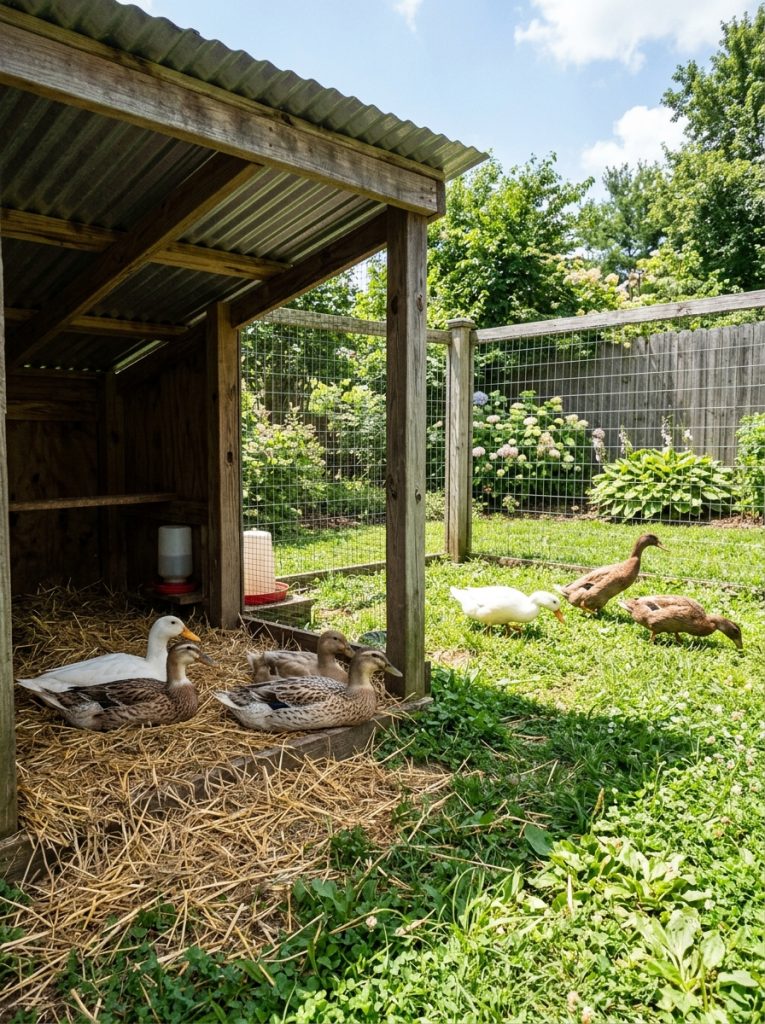
Ducks need shade in hot weather as much as they need water — a shaded rest area inside the enclosure keeps them cool and comfortable on summer days. Build a simple lean-to shade structure on one side of the run with a corrugated roof and let ducks choose between sun and shade freely throughout the day.
Materials Needed:
- Timber posts and beams
- Corrugated roofing sheets
- Screws and drill
- Straw bedding for floor
How to Make It:
- Set two timber posts into ground on one side of the enclosure
- Attach a simple beam across the top and add corrugated roof sheets
- Leave front open for easy duck access
- Add straw on the floor of the shaded area for comfort
18. A-Frame Duck House with Run
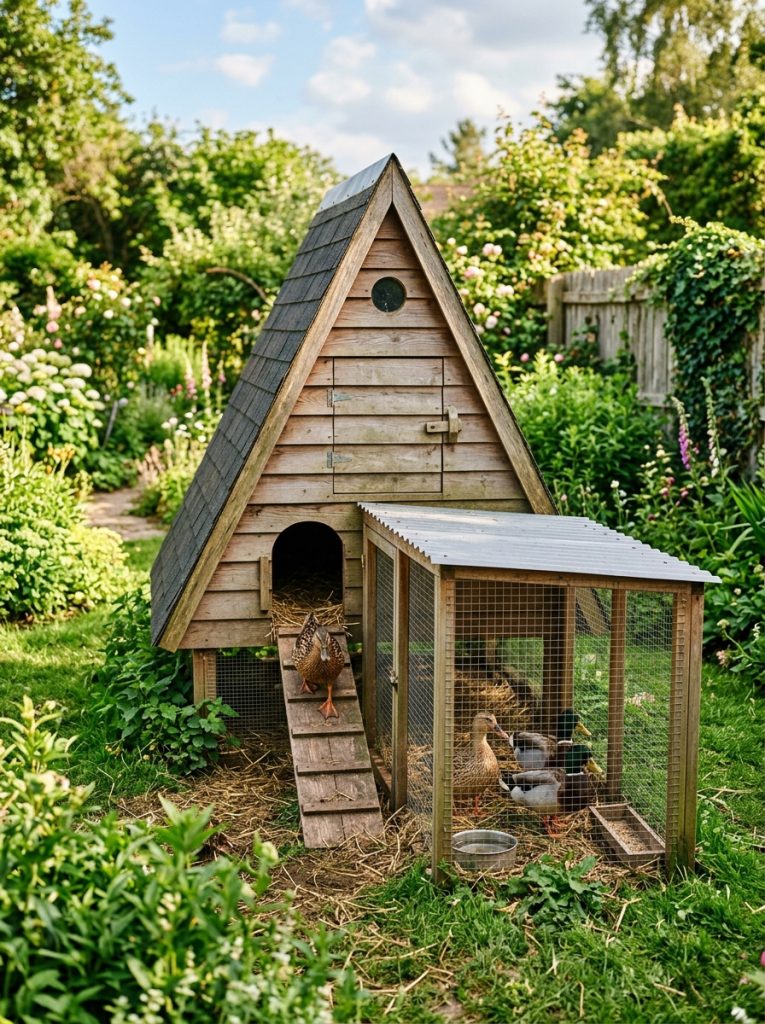
An A-frame duck house is one of the most charming and space efficient designs you can build for a small backyard flock. The angled roof naturally sheds rain and the low profile keeps the structure stable in wind. Attach a small covered run to the front with a pop door that you open each morning for a complete and self-contained duck housing solution.
Materials Needed:
- Plywood sheets
- Timber framing
- Roofing felt or shingles
- Hinges, latch and ramp
How to Make It:
- Cut plywood into A-frame triangles for front and back panels
- Attach timber rafters along the top to form the roof ridge
- Cover with plywood sides and roofing felt
- Add a small ramp, pop door and attach a netted run to the front
19. Duck Enclosure with Mud Management System
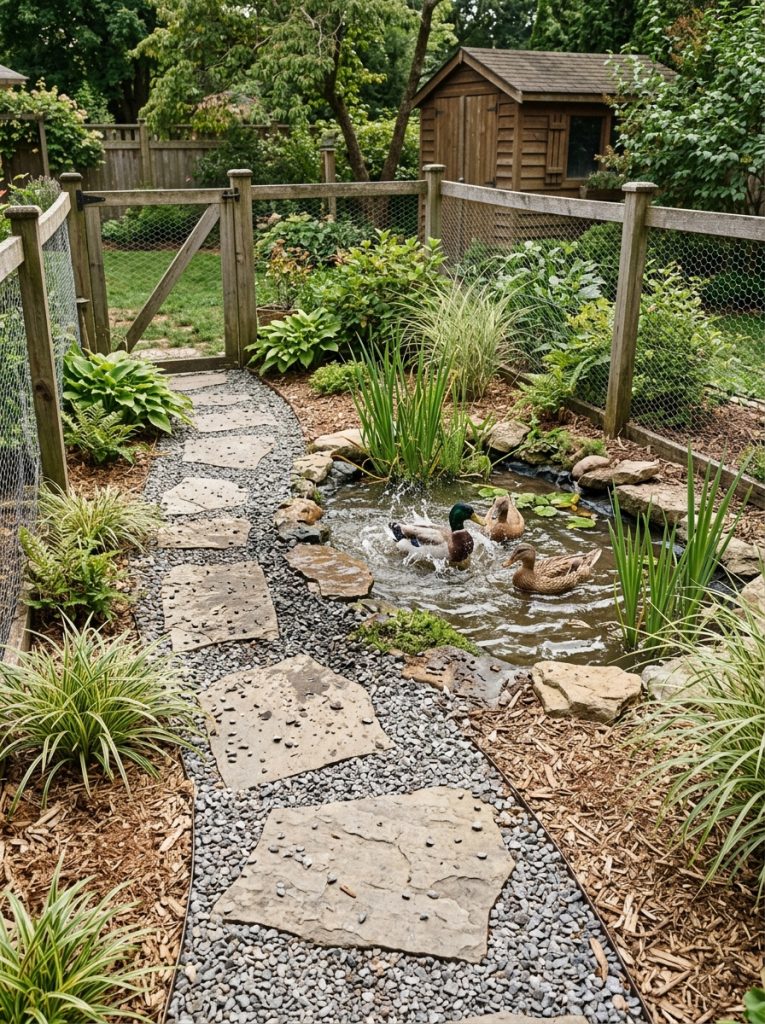
Ducks and mud go hand in hand — but with a simple mud management system you can keep your enclosure clean and dry year round. Lay a thick layer of gravel or paving stones around the pond and water station areas where mud forms most. The gravel drains quickly and gives ducks solid footing while keeping the rest of the enclosure cleaner for much longer.
Materials Needed:
- Pea gravel or coarse gravel
- Landscape fabric
- Paving stones
- Wheelbarrow and rake
How to Make It:
- Lay landscape fabric around pond and water station areas
- Pour a thick 3-4 inch layer of gravel on top
- Add flat paving stones as stepping paths through the enclosure
- Top up gravel every few months as it compacts down
20. Movable Duck Tractor Enclosure
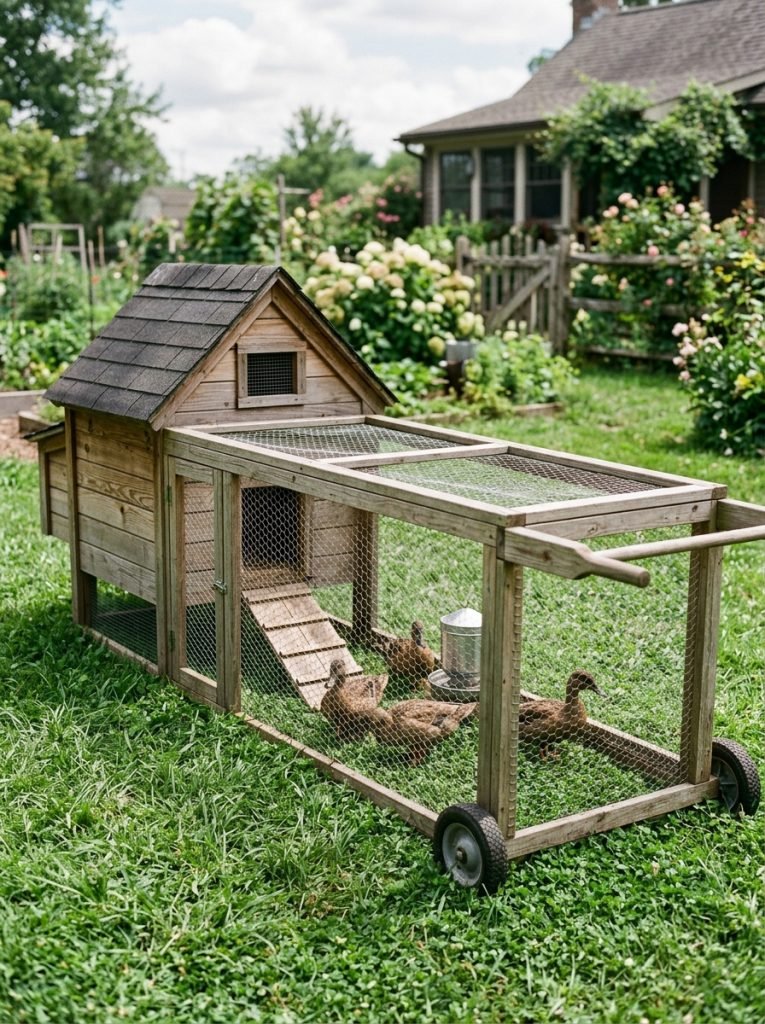
A movable duck tractor is one of the cleverest cheap duck enclosure ideas — build it with handles or wheels so you can move it to a fresh patch of grass every few days. Ducks get access to fresh foraging ground, the old patch gets a rest and your yard stays much cleaner and greener. It is perfect for small flocks in suburban backyards.
Materials Needed:
- Timber framing and plywood
- Poultry netting
- Wheels or handles
- Roofing felt for sleeping section
How to Make It:
- Build a lightweight rectangular frame from timber with a covered sleeping end
- Cover the open run section with poultry netting on top and sides
- Attach two wheels on one end and handles on the other
- Move to fresh grass every 2-3 days for best results
Final Thoughts
Whether you start with a simple pallet build or go all out with a duck house, pond and winter setup — these DIY duck enclosure ideas give you everything you need to create a safe and happy home for your flock. Start with the basics and add features like a pond, shade area and mud management as your setup grows.


Amir Ali is the founder and site administrator of HomeDecorEdge, a modern home decor and interior design platform. Since starting the site, he has combined his passion for interior design, practical styling, and color coordination with hands-on content strategy and site management. He guides authors, curates high-quality articles, and ensures readers have access to actionable, visually inspiring, and user-focused home decor advice for apartments, small rooms, and family homes.