Your old shed already has a roof, four walls and a door.
That’s half a coop right there.
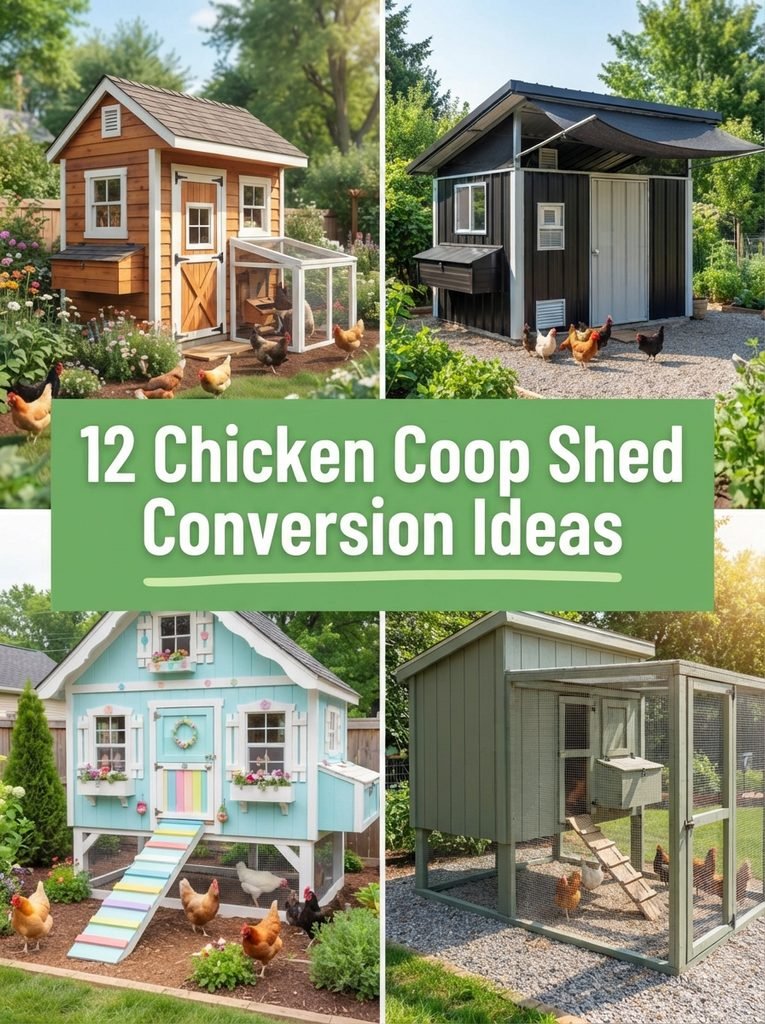
Here are 12 chicken coop shed conversion ideas for garden, metal, resin and small sheds, plus playhouse and playset coops. Three come with full step by step cards.
Quick Picks
- Best first project: Garden Shed to Hen House (idea 1)
- Cutest: Playhouse or Cubby House Coop (idea 6)
- Small yards: Small Shed Coop (idea 4)
- Do this first: Ventilation Fixes (idea 10)
1. Garden Shed to Hen House Conversion
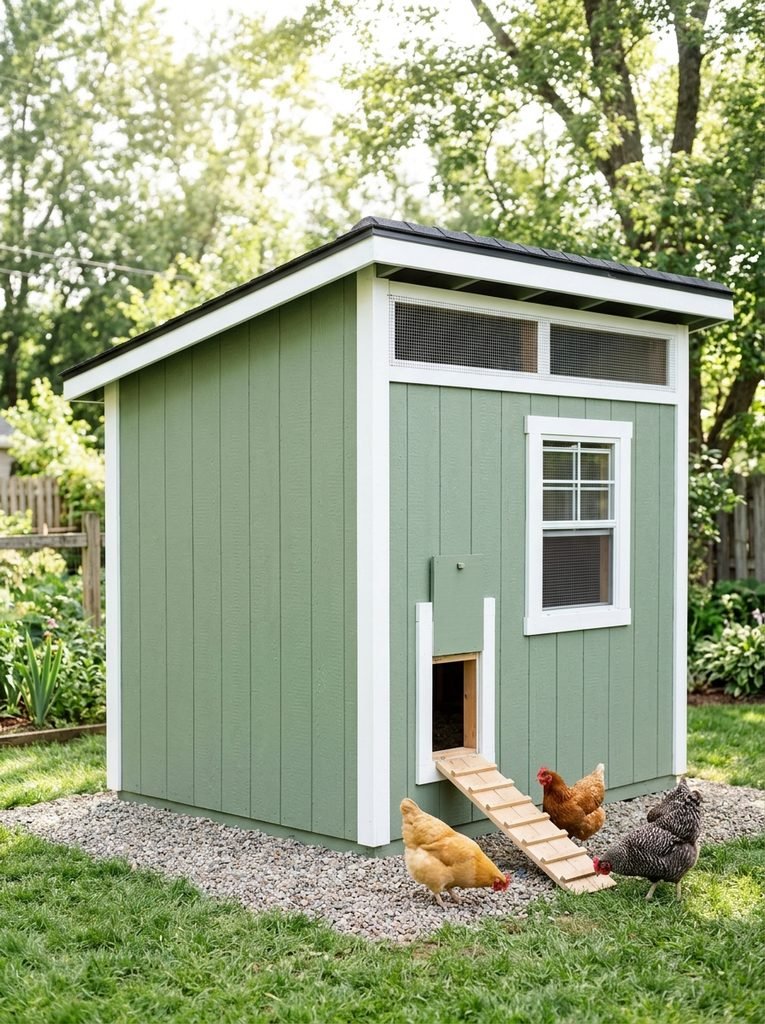
A garden shed is the best starting point. The walls, roof and door are already there, so most of the work is vents, a pop door and roosts.
Empty the shed completely and check the floor for rot. Cut vents high on two sides, and cover every opening with hardware cloth. Add roosts and nest boxes, and the hen house is ready.
⏱ 1 weekend💲 Medium🛠 Medium
Materials Needed
- Hardware cloth, half inch
- Chicken pop door kit
- Nest box set
- Exterior screws, a jigsaw and a drill
How to Make It
- Empty the shed and sweep it out, then check the floor and walls for rot or damage.
- Mark two vent openings high on opposite walls and cut them out.
- Staple hardware cloth over the openings, and screw a wood trim over the edges.
- Install a roost across the back wall and a row of nest boxes on a side wall.
- Cover the floor with a washable layer and 4 inches of pine shavings.
Tip: Never use a shed that held fuel, pesticides or paint. Adults should handle the saw and the drill. Always cover cut edges with trim, so there’s nothing sharp.
2. Metal Shed Chicken Coop

Metal sheds are cheap and sturdy, but they get hot and wet. Fix that and they make a good coop.
Line the inside with insulation covered by plywood, and put shade over the roof. Cut large vents high up. Trim every cut metal edge, because raw edges can slice a hen or a hand.
⏱ 4 hours💲 Medium🛠 Medium
Materials Needed
- Shade cloth, 70 percent
- Rigid foam board insulation
- Plywood, screws and metal edge trim
- Hardware cloth for the vents
How to Make It
- Mark vent openings near the roof and cut them out with metal snips, wearing thick gloves.
- Cover the cut edges with metal trim and cover the vents with hardware cloth.
- Fit foam board between the ribs of the walls and cover it with plywood.
- Stretch shade cloth over the roof with a small gap above the metal.
- Add a washable floor, roosts and nest boxes.
Tip: Metal gets very hot in sun. Hens can overheat above about 85 degrees, so shade and vents are not optional. Adults should handle the snips and cutting.
3. Resin and Plastic Shed Chicken Coop

Resin and plastic sheds are light and easy to assemble. They can work as a coop, with a few changes.
The walls are thin, so add vents and shade. Anchor the shed well, because wind can lift it. Plastic floors are not made for hens, so lay a washable floor on top. Don’t cut load bearing panels without checking the manual.
You’ll need: ground anchor kit for shed and hardware cloth
Best for: renters and quick builds
4. Small Shed Chicken Coop for a Few Hens

A small shed is enough for 3 or 4 hens. It’s easy to heat, easy to clean and fits a small yard.
Plan about 4 square feet per hen inside, and 10 square feet each in the run. Don’t try to fit too many birds. Crowding causes stress, pecking and dirty bedding.
You’ll need: small chicken feeder and waterer set
Best for: small yards and starter flocks
DIY Build Plans
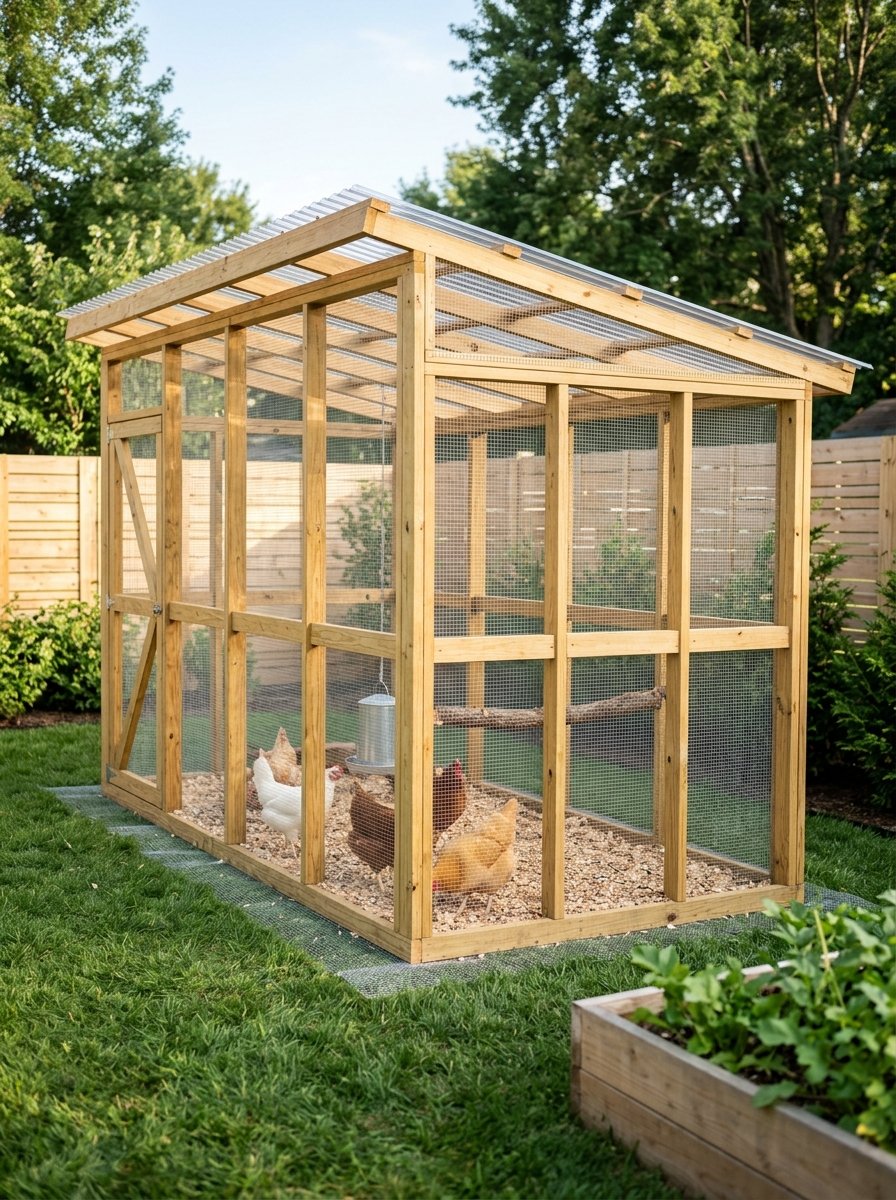
8x12 Walk-In Chicken Run Plans
Predator-proof run for up to 10 chickens, with a full cut list, shopping list and 12 easy steps.
5. Storage Shed Coop With a Feed Corner
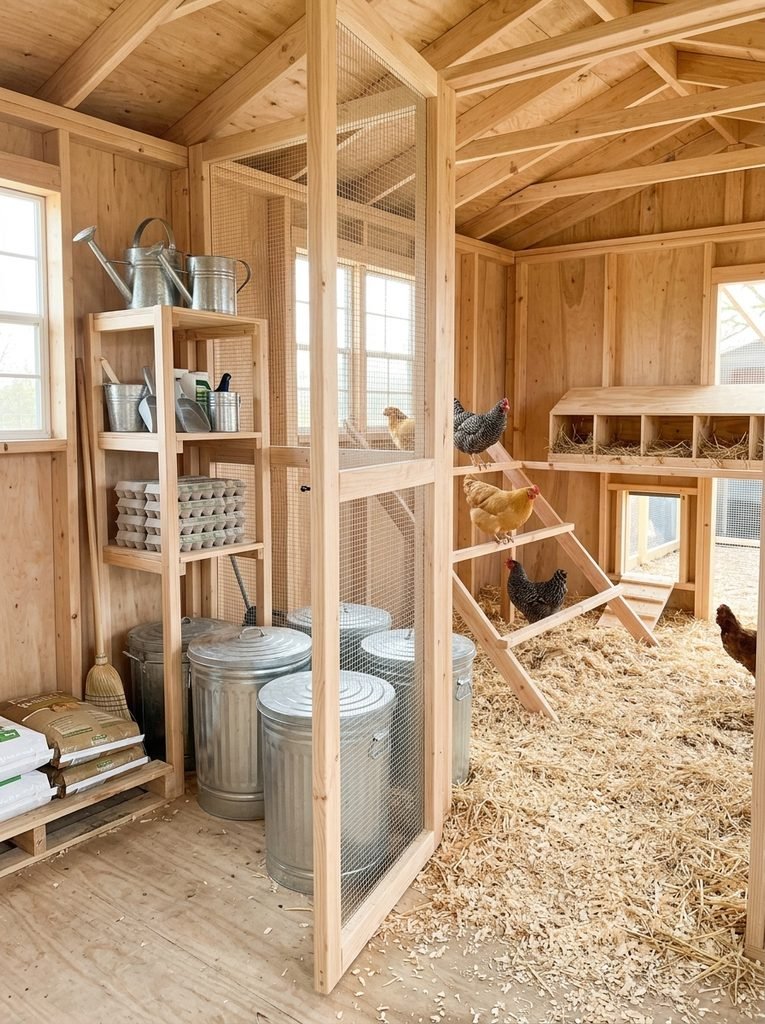
A bigger storage shed gives you room for hens and supplies. Split one end off as a feed and tool corner.
Use a solid partition so dust stays out of the hen area. Keep feed in metal bins with tight lids, since mice chew plastic. Hang tools on hooks off the floor.
You’ll need: galvanized feed bin with lid
Best for: keepers who like everything in one place
6. Playhouse or Cubby House Chicken Coop
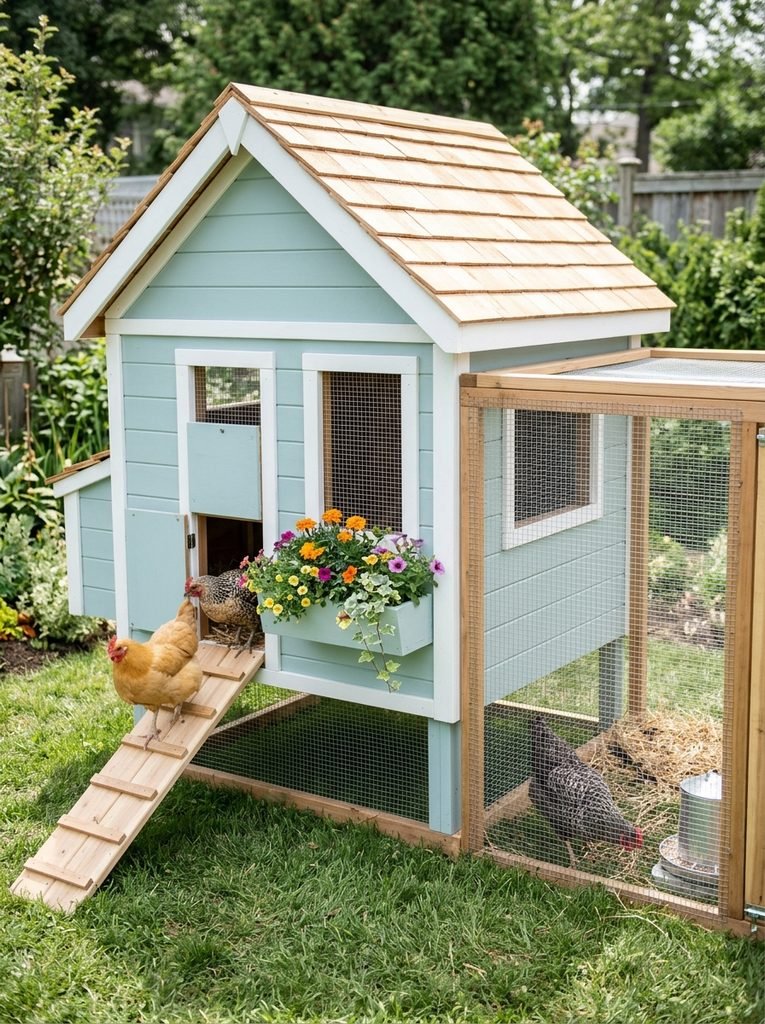
A playhouse makes a very cute coop. The small windows and doors are already there, and it’s raised off the ground.
Sand every board and remove any sharp parts. Skip old painted or old pressure treated wood, since it can hold lead or arsenic. Add vents high up and seal the floor so it can be washed.
You’ll need: non toxic exterior paint
Best for: cute backyards
7. Playset Chicken Coop

A used playset can become a coop and run. The raised platform becomes the hen house, and the space underneath becomes the run.
Take off the swings and slide, and check that the frame is strong. Avoid old playsets made from treated wood, because older types can contain arsenic. Wrap the base in hardware cloth.
You’ll need: hardware cloth, half inch
Best for: recyclers and big yards
8. Greenhouse Shed Chicken Coop
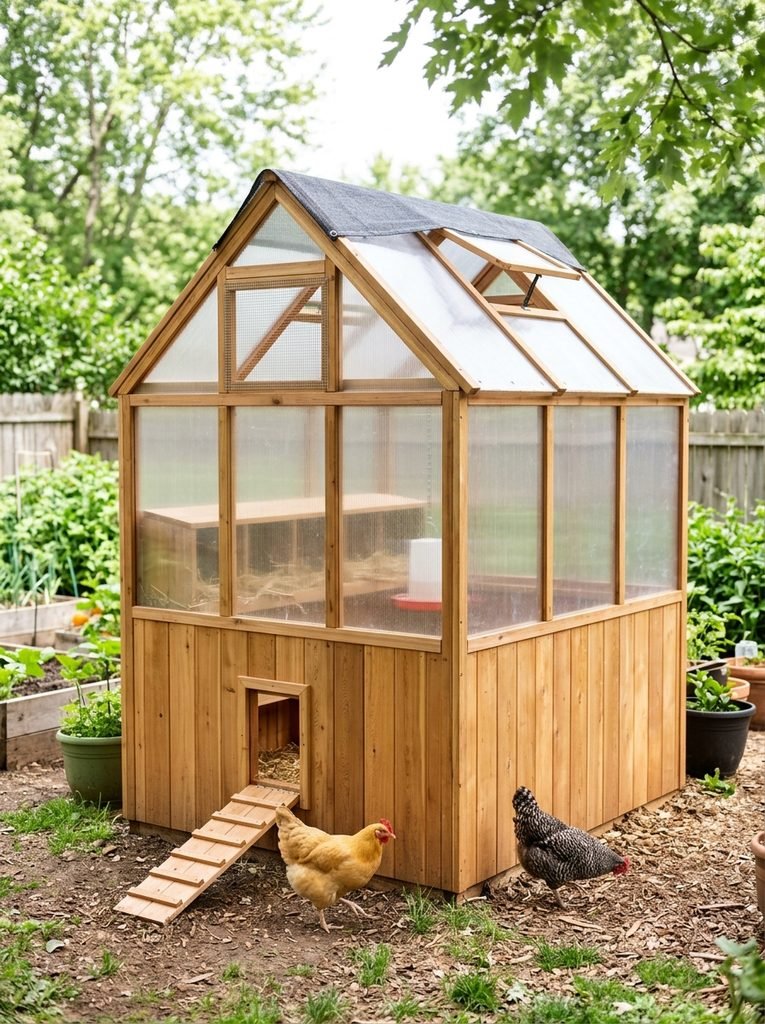
A small greenhouse shed can make a bright hen house. The clear panels let in light, which hens love.
Glass is not safe for hens. Replace any glass panes with polycarbonate, and add shade cloth on top. Make sure it has plenty of vents, because clear walls trap heat fast.
You’ll need: polycarbonate panels
Best for: bright coops and spare greenhouses
9. Pop Door and Ramp for Any Shed Coop

Every shed coop needs a pop door. It lets hens in and out on their own, and you can shut it at night.
Make the door about 12 inches wide and 14 inches tall. Fit a ramp with cleats so feet don’t slip. Use a latch that raccoons can’t open, and close the door every night.
⏱ 1 hour💲 Low🛠 Medium
Materials Needed
- Sliding door hardware set
- Wooden chicken ramp
- A jigsaw, screws and a pencil
- A two step latch
How to Make It
- Mark a 12 by 14 inch opening about 6 inches above the floor.
- Drill a starter hole and cut along the lines with a jigsaw.
- Trim the edges and screw the door frame in place.
- Hang the door so it slides or flips shut, and add a latch.
- Fit the ramp at a gentle slope with cleats every few inches.
Tip: Keep the ramp slope gentle, no steeper than about 30 degrees. Adults should handle the jigsaw and the drill, and cover every cut edge.
10. Ventilation Fixes for a Shed Coop
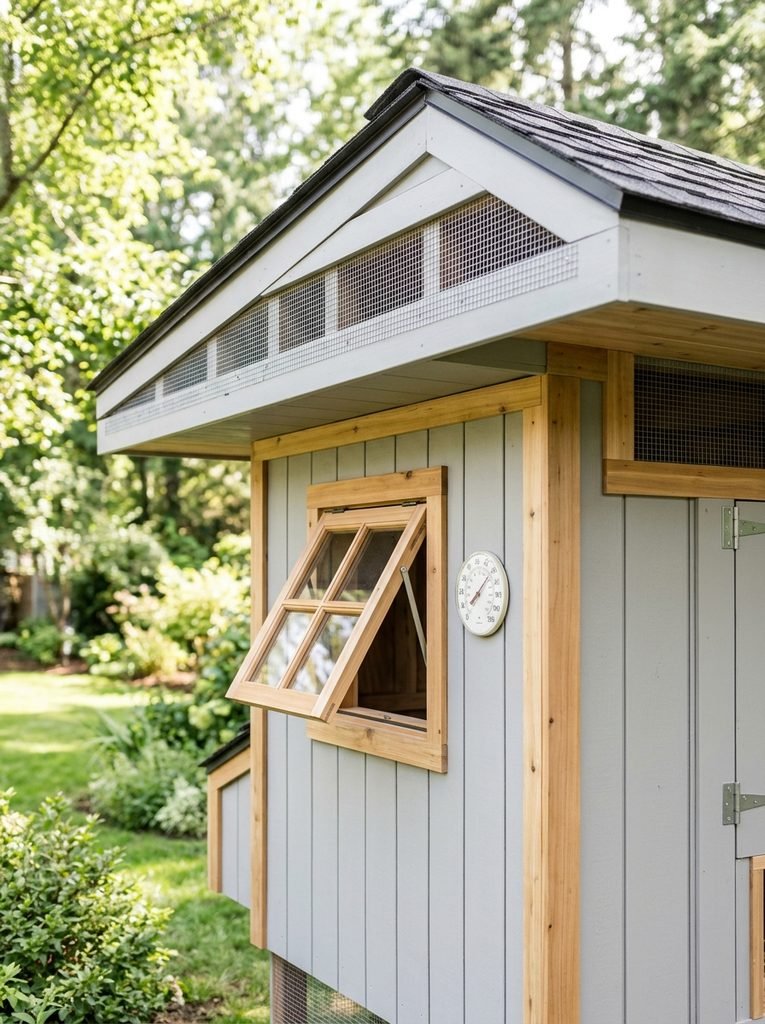
Sheds are built to keep air out. Coops need the opposite, so ventilation is the first fix.
A good guide is about 1 square foot of open vent per hen, set high above the roost. Cover every vent with hardware cloth. Never block the vents in winter, because damp air causes frostbite.
You’ll need: ridge vent for shed
Best for: every shed conversion
11. Floor and Predator Proofing a Shed Coop
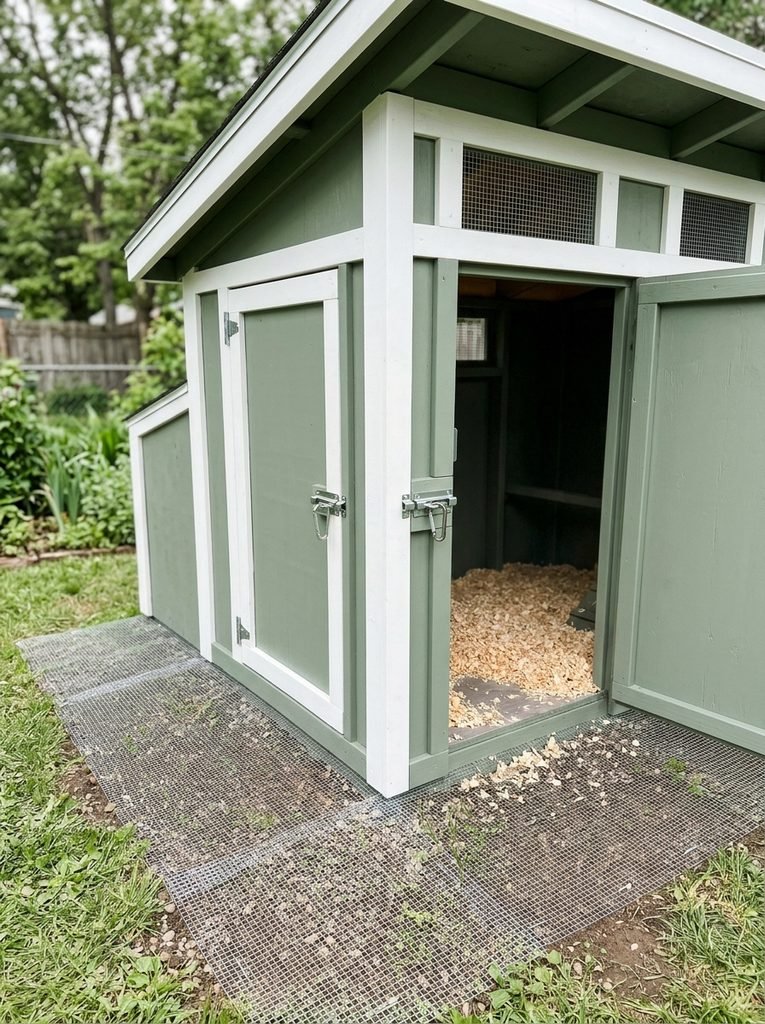
Most sheds sit on blocks, which leaves a gap for rats and digging predators. Close it off first.
Run hardware cloth around the base and bury it 12 inches deep or lay an apron 2 feet wide. Inside, cover the floor with vinyl flooring so you can hose it clean. Use two step latches on every door.
You’ll need: vinyl sheet flooring remnant and two step door latch
Best for: every shed coop
12. Attached Run for a Shed Coop

A run gives hens space to roam while the shed stays clean. Attach it to the side with the pop door.
Make it at least 10 square feet per hen and tall enough to walk in. Roof part of it for shade and dry ground. Bury the wire or add a wide apron to stop diggers.
You’ll need: heavy duty gate hinges
Best for: every flock
Frequently Asked Questions
Can I convert any shed into a chicken coop?
Most sheds can work, with added vents, a pop door, a washable floor and predator proofing. Avoid any that held fuel, pesticides or paint.
How many hens fit in a shed?
Plan about 4 square feet per hen inside. A 6 by 8 foot shed suits roughly 10 to 12 hens.
Are metal sheds too hot for hens?
They can be. Add shade cloth on the roof, large high vents and insulation inside. Hens overheat above about 85 degrees.
Is a resin shed okay for chickens?
It can work with extra vents, shade, a washable floor and strong anchoring. Check the maker’s manual before cutting any panels.
How much ventilation does a shed coop need?
About 1 square foot of open vent per hen, set high above the roost and covered with hardware cloth.
Do I need a permit to convert a shed?
It depends where you live. Check local rules for coop size, hen numbers and distance from the fence.
Final Thoughts on Chicken Coop Shed Conversion
A shed gives you a head start on a coop. Fix the vents, the floor and the predator gaps first, and the rest is easy. Your hens won’t care what it used to be.


Amir Ali is the founder and site administrator of HomeDecorEdge, a modern home decor and interior design platform. Since starting the site, he has combined his passion for interior design, practical styling, and color coordination with hands-on content strategy and site management. He guides authors, curates high-quality articles, and ensures readers have access to actionable, visually inspiring, and user-focused home decor advice for apartments, small rooms, and family homes.