

An open chicken run looks great on a sunny day. Then the rain comes, and it turns into a mud pit overnight.
I learned this after one wet autumn when my run was ankle deep in sludge and the hens refused to leave the coop. A week later a hawk circled over the yard, and that settled it. The run needed a roof.
A good chicken run cover keeps the ground dry, the feed fresh and the flock safe from birds of prey. It also makes winter so much easier.
Here are 12 chicken run cover ideas, from cheap DIY roofs and netting to clear winter wraps and fully covered coop runs.

1DIY Corrugated Roof Panel Cover
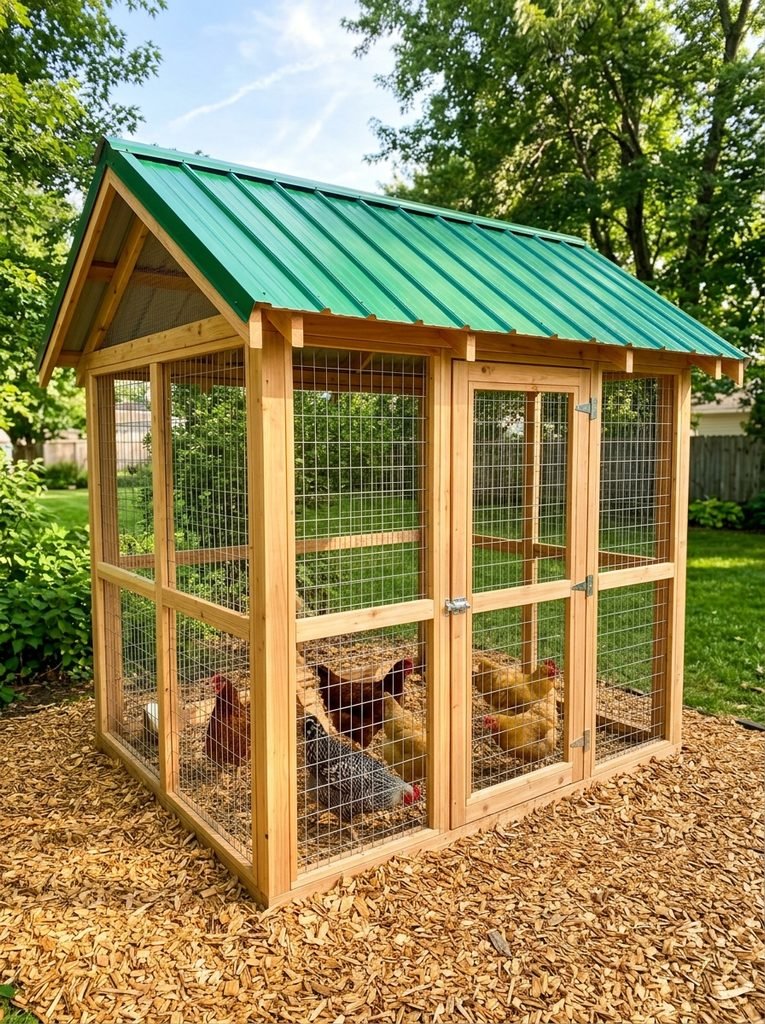
Corrugated roof panels are the most popular way to cover a run, and honestly for good reason. They are light, cheap and easy to screw onto a simple wood frame.
Metal panels last for years. Plastic ones are lighter and easier to cut. Either way, give the roof a slight slope so rain runs off instead of pooling on top.
- Fully waterproof
- Easy to install
- Lasts for years
Project Card · 1 day · Moderate
Materials Needed
- Corrugated metal or plastic roof panels
- 2×4 boards for rafters
- Roofing screws with rubber washers
- Drill and saw
- Ladder
- Gloves and safety glasses
How to Make It
- Measure the run and plan rafters every 2 feet across the top.
- Cut the rafters so one side sits a few inches lower than the other for a slope.
- Screw the rafters to the top frame of the run.
- Lay the first panel at the low end and screw it down through the ridges, not the valleys.
- Overlap each next panel by one ridge and screw it down the same way.
2Bird Netting Run Cover
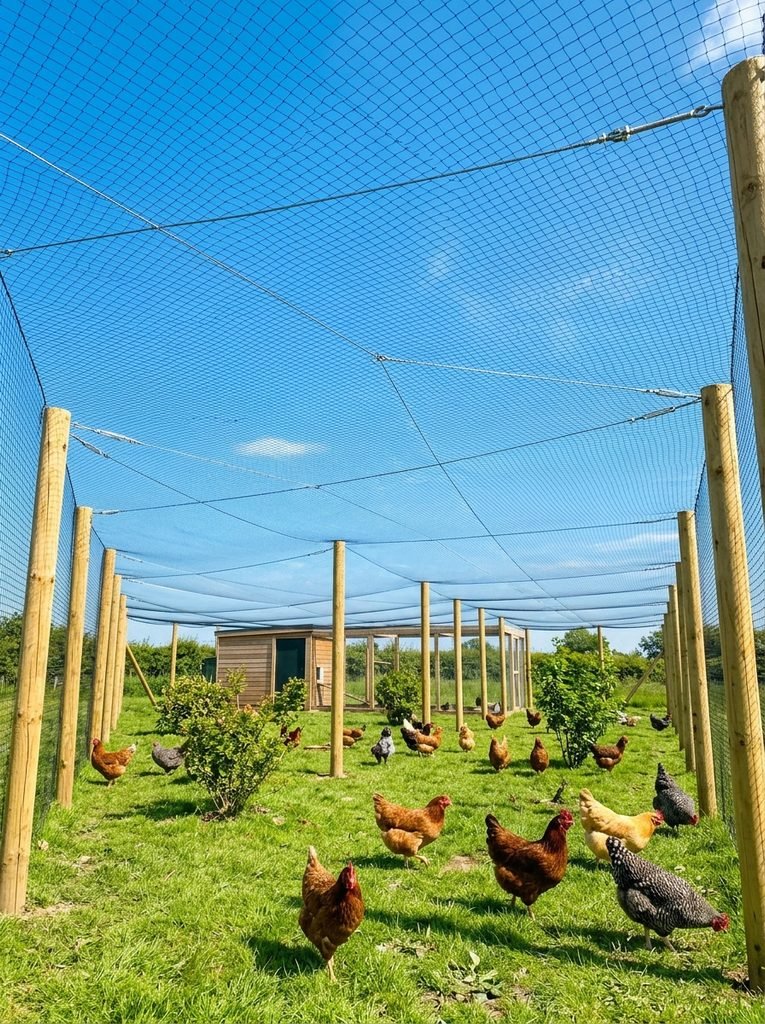
If hawks are your main worry, bird netting is the cheapest way to cover a large run. It stretches over the top and stops birds of prey from swooping in.
A roll of heavy duty bird netting covers a big area for very little money. Run a few support lines or wires underneath so it does not sag in the middle.
- Stops hawks
- Covers big areas cheaply
- Lets in full sunlight
PRO TIP Netting stops birds, not ground predators. At night, your hens still need a locked coop.
3Clear Polycarbonate Roof for More Light
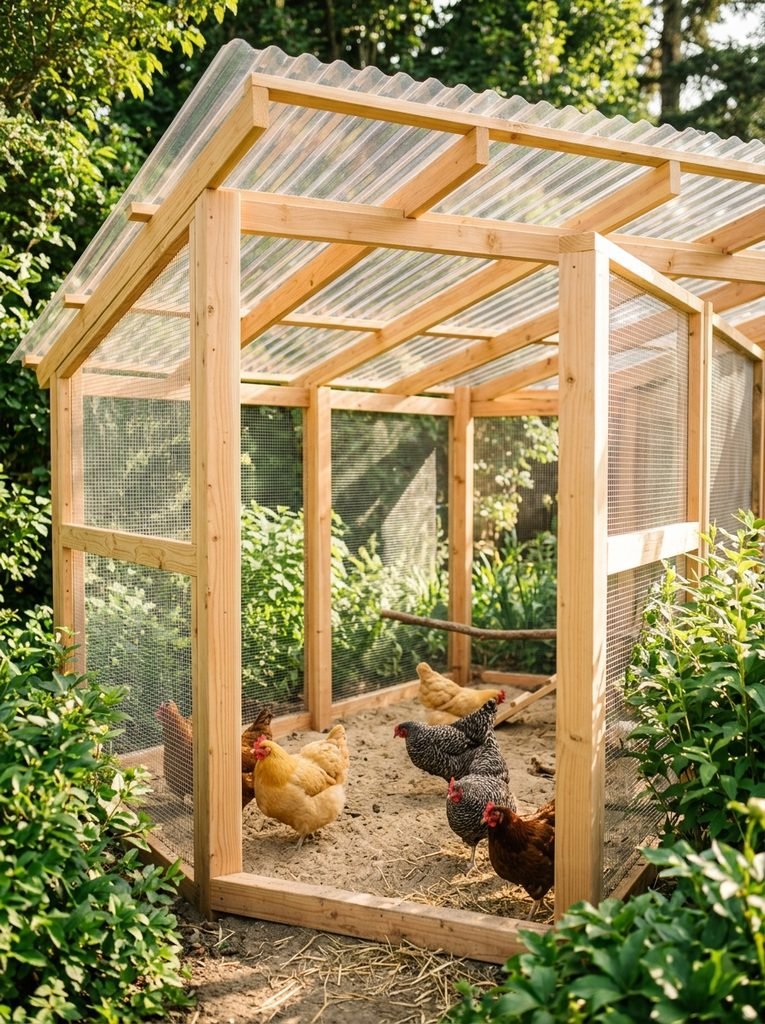
A solid roof can make the run dark and gloomy. Clear panels keep it dry and bright at the same time.
Clear polycarbonate panels are tough and let in lots of light. In my experience hens spend more time outside when the run feels sunny.
- Dry and bright
- Hens stay outside more
- Strong and light
4Winter Clear Plastic Run Wrap
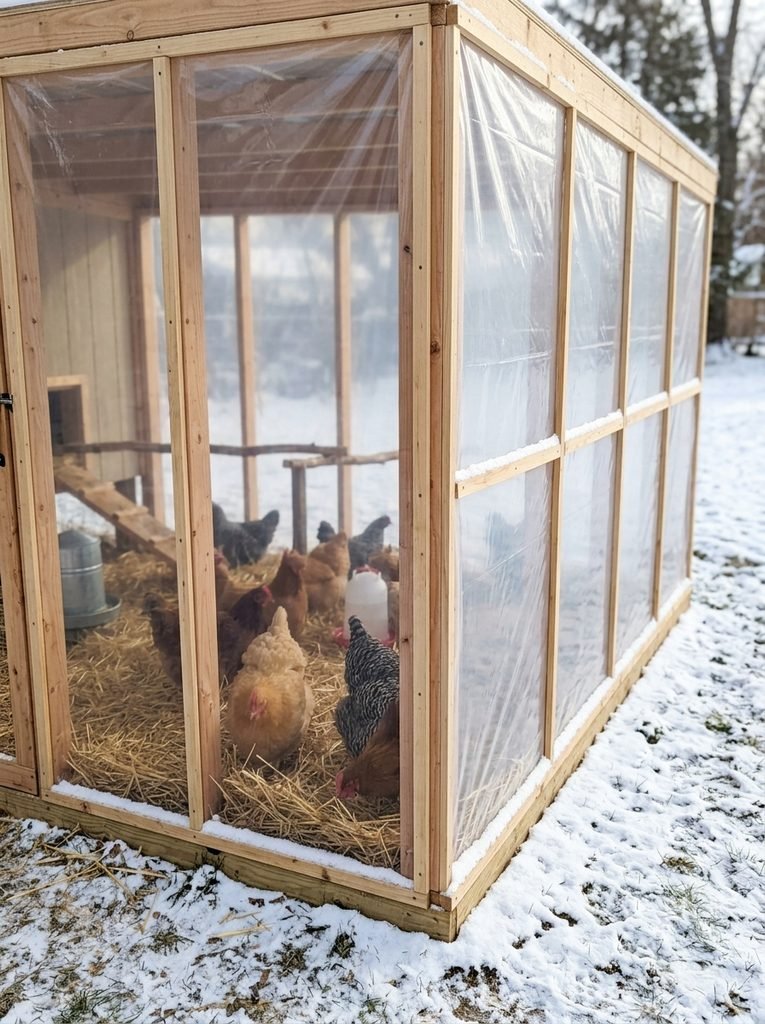
In winter, wrapping the run walls in clear plastic blocks wind and snow while still letting the sun in. The run stays warmer and drier.
Use a strong clear heavy duty tarp on the windy sides only. Leave the top few inches open all around, because chickens need fresh air to stay healthy in winter.
- Blocks cold wind
- Keeps snow out
- Sunny warm run
Project Card · 2 hours · Easy
Materials Needed
- Clear heavy duty plastic or tarp
- Thin wooden furring strips
- Screws or staple gun
- Zip ties
- Scissors and tape measure
How to Make It
- Check which sides of the run face the strongest wind.
- Cut the plastic to cover those sides, leaving the top 6 inches open for air.
- Fasten the plastic to the frame with furring strips screwed over the edges so it cannot tear.
- Zip tie any loose corners tight so it does not flap.
- Remove it in spring before the weather warms up.
PRO TIP Never seal the run completely. Trapped moisture is worse for chickens than cold air.
Start Your 30-Day Home Reset
Stop waiting for a "perfect" free weekend. Grab the 30-day plan and start feeling lighter in your own home by tomorrow.
View the 30-Day Plan Printable PDF · Instant download5Large Hoop Frame Run Cover
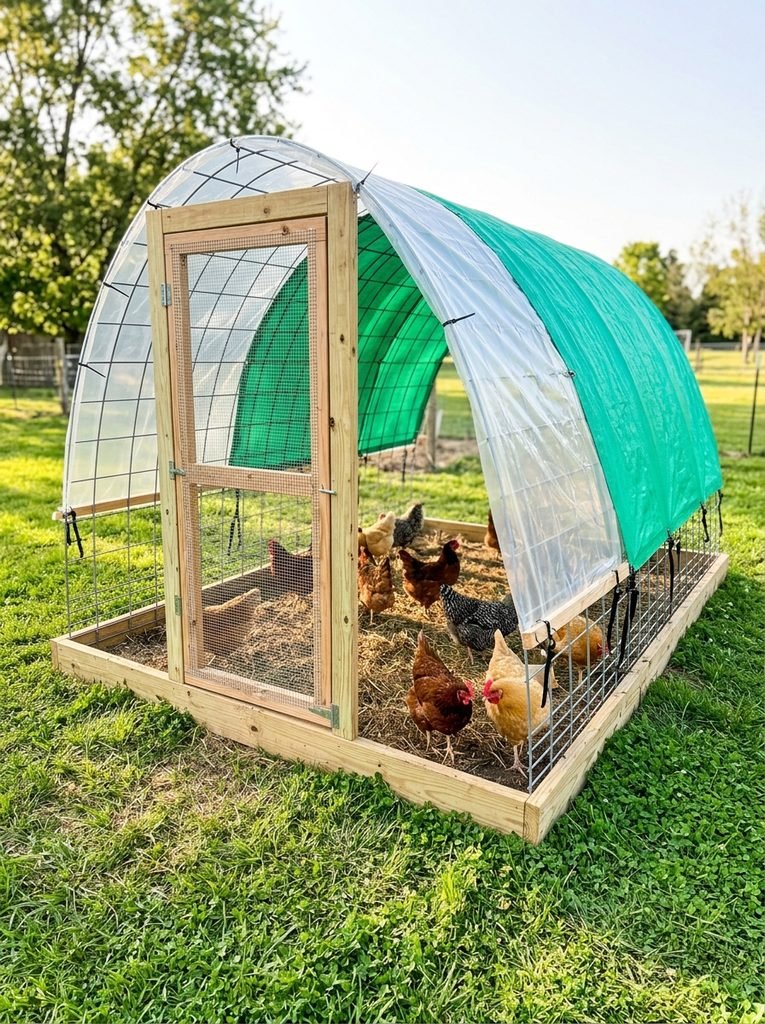
For a big run, a hoop frame is strong, cheap and looks great. Bend cattle panels or PVC into arches and cover them.
The curved shape sheds rain and snow on its own. You can cover it with a tarp, netting or clear plastic depending on the season.
- Great for large runs
- Sheds rain and snow
- Easy to change the cover
Project Card · 1 day · Moderate
Materials Needed
- 3 or 4 cattle panels, 16 feet long
- Wooden base boards or T posts
- Fence staples and zip ties
- Tarp, netting or clear plastic for the cover
- Heavy gloves
How to Make It
- Build a simple rectangular wooden base or set T posts along both long sides.
- Bend each cattle panel into an arch and fix both ends to the base.
- Line the panels up side by side and zip tie them together.
- Stretch your cover over the top and tie it down every foot.
- Add a door panel at one end.
6Wire Garden Style Hardware Cloth Roof
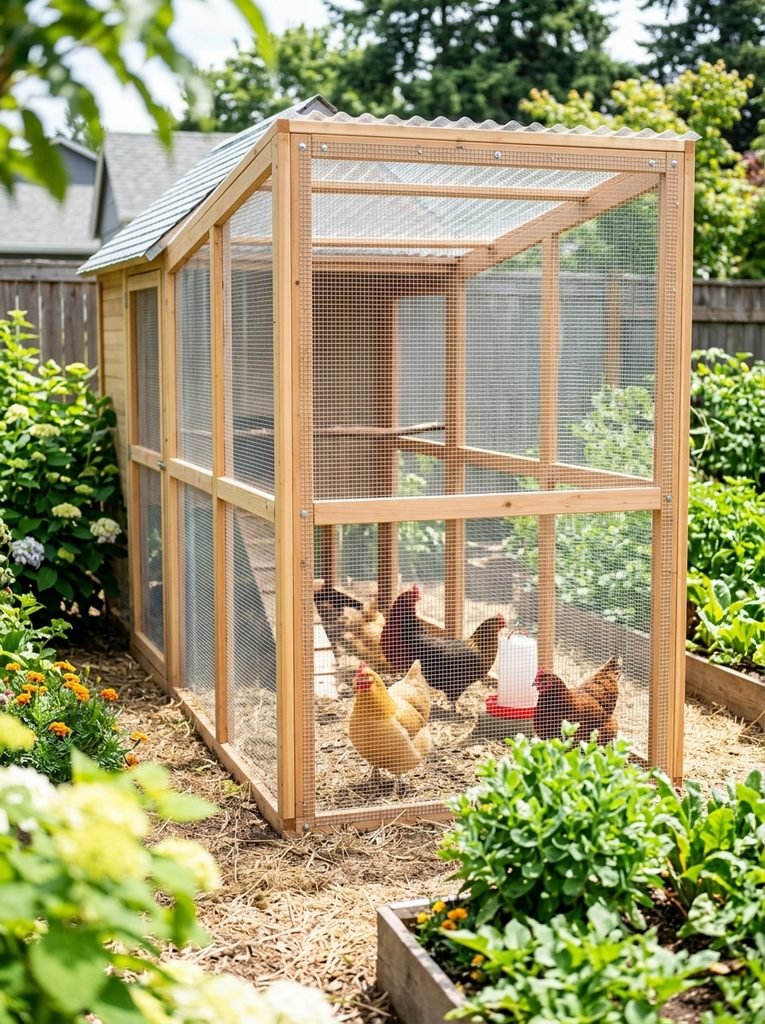
For full predator protection, cover the top with hardware cloth, just like a sturdy wire garden enclosure.
It stops hawks, raccoons and climbing predators. Half inch hardware cloth is stronger than chicken wire. Add a solid roof over part of it so the hens always have a dry spot.
- Predator proof
- Strong and secure
- Feels like a garden walk in
7Shade Cloth Summer Cover
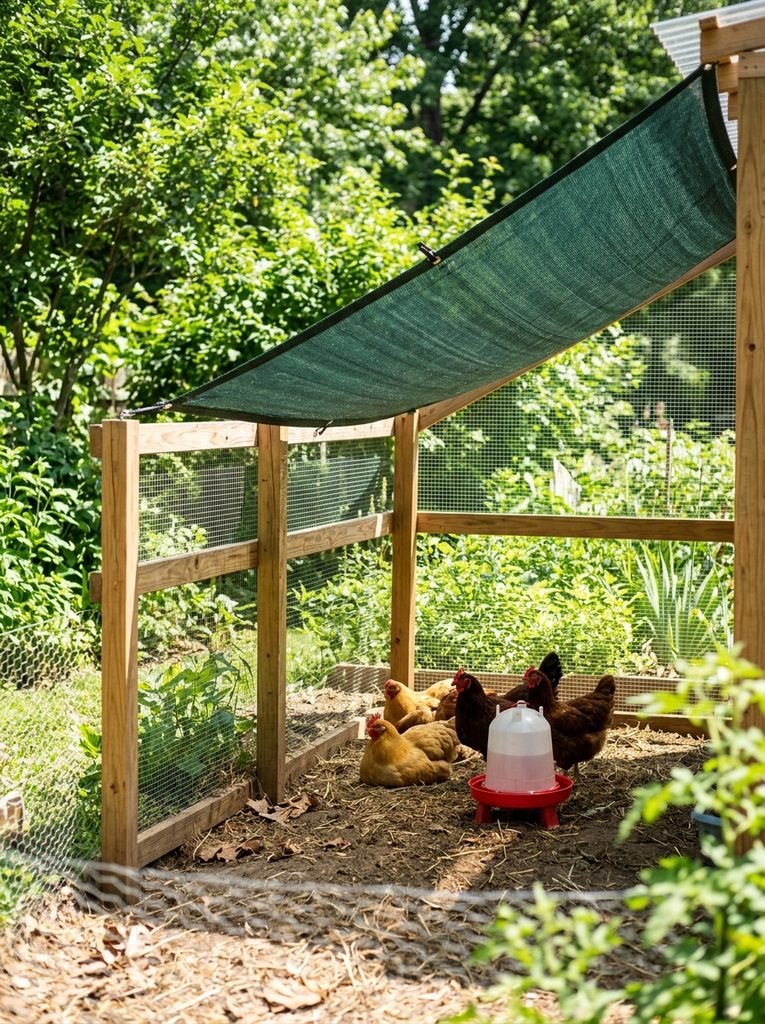
Summer heat is hard on chickens. A shade cloth cover keeps the run cooler while still letting air flow through.
A 70 percent shade cloth is a good balance between shade and light. Pull it off in winter when your hens want every bit of sun.
- Keeps hens cool
- Great air flow
- Easy to remove
8Coop with a Covered Run
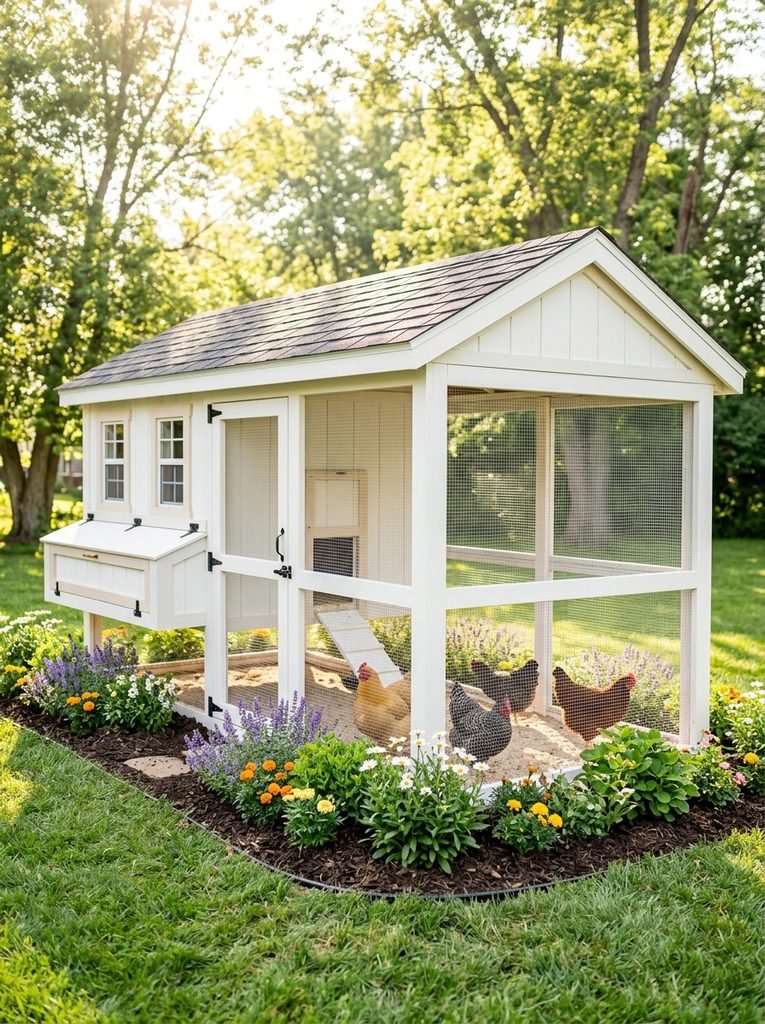
If you are building from scratch, think about a coop with a covered run attached. The roof can extend right over the run in one piece.
Everything stays connected and dry. Feed, water and dust bath all live under one roof, and chores get so much easier.
- One connected setup
- Dry all year
- Easier daily chores
9Covered Dust Bath Corner
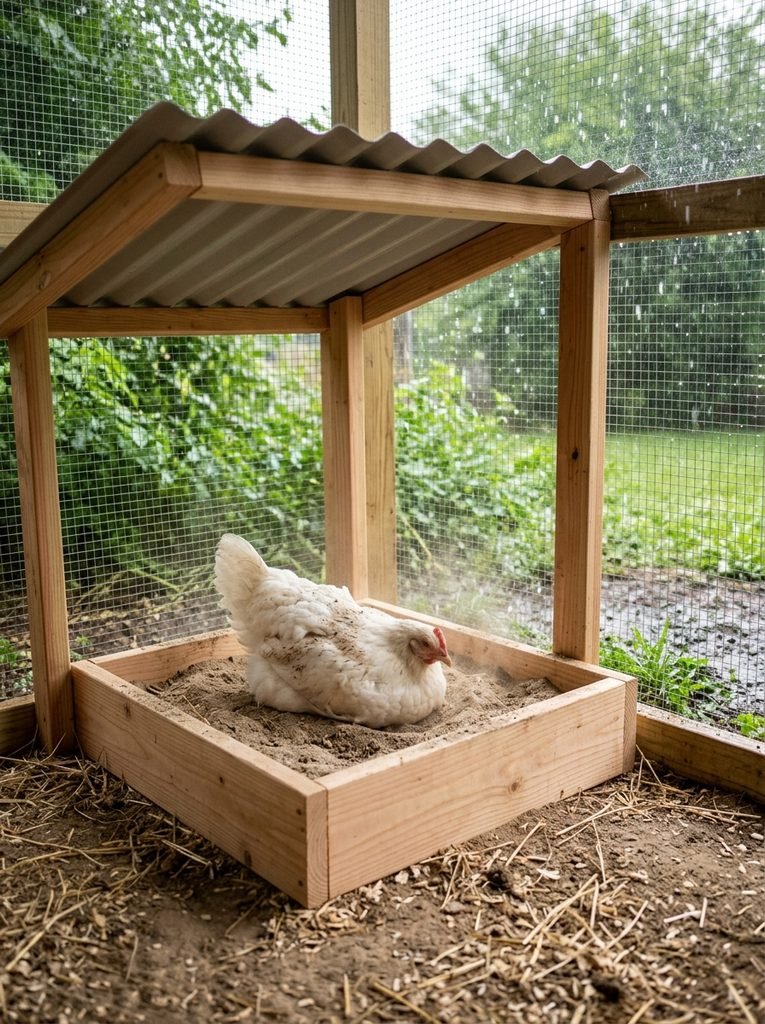
Chickens need a dry spot for dust bathing, even in the rainiest month. A small covered corner keeps it usable all year.
Fill a shallow box with sand and dry soil and put it under the roofed part of the run. My hens line up for it after every rainy day.
- Dry all year
- Keeps mites away
- Hens love it
10Covered Feeder Station
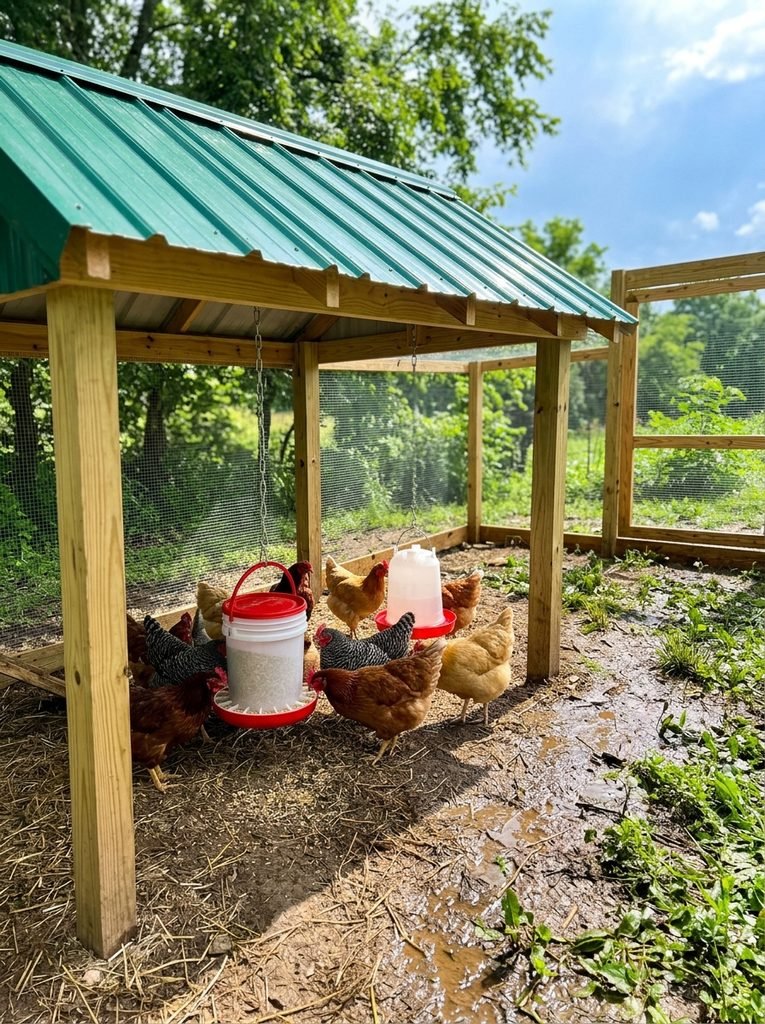
Wet feed goes moldy fast, and moldy feed can make chickens sick. Put your feeders under the covered part of the run.
If your whole run is not covered yet, even a small roof over the feeder makes a big difference.
- Feed stays dry
- No moldy feed
- Less waste
11Dry Coop Ground Under the Cover
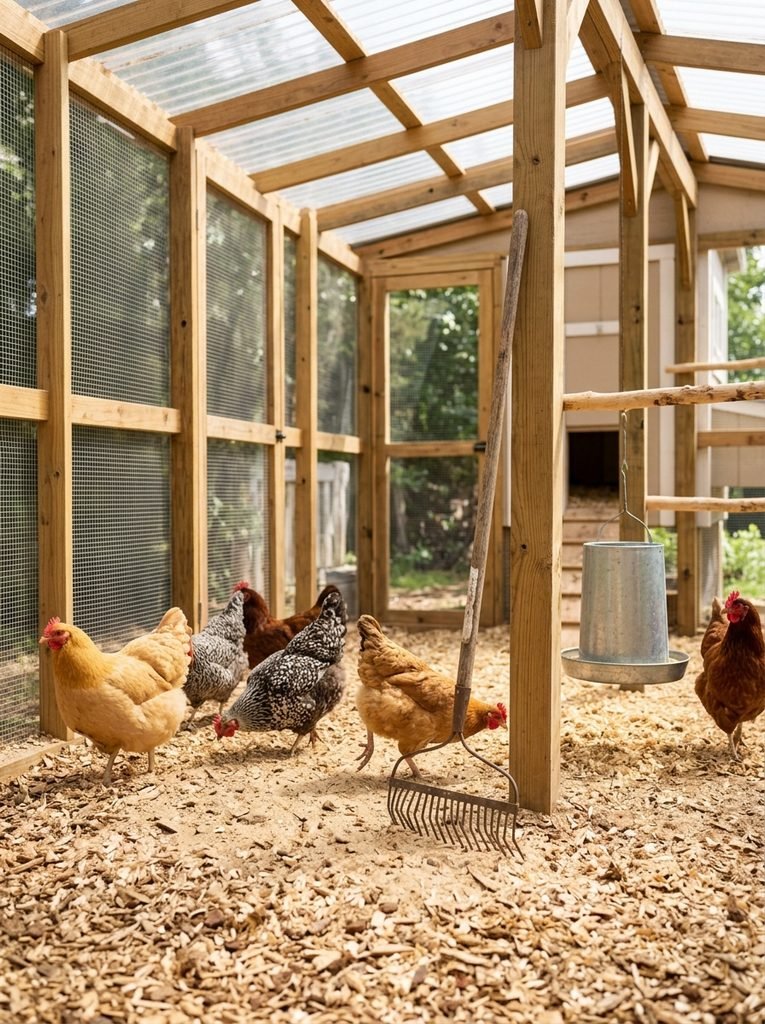
A roof only solves half the problem. The ground under it needs to drain well too.
Add a few inches of sand or wood chips under the covered area. It stays dry, is easy to rake clean and is much nicer for chicken feet than mud.
- No more mud
- Easy to clean
- Healthier feet
12Metal Lean To Run Roof
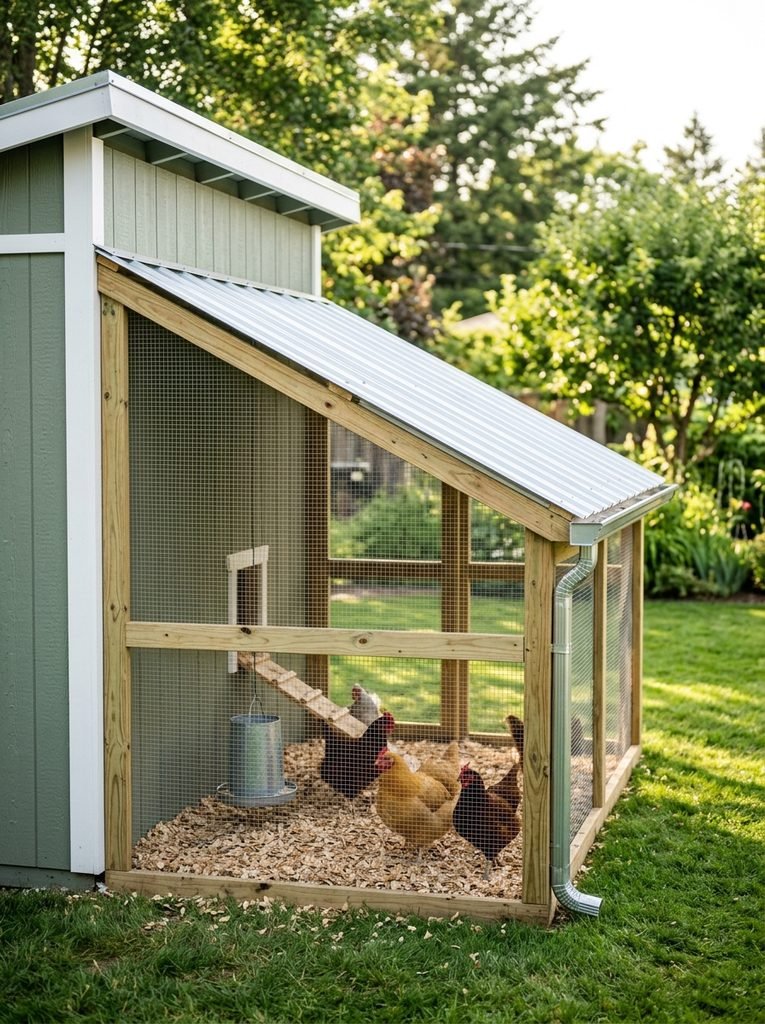
If your run sits against a shed, garage or fence, a lean to roof is the simplest cover of all. One side attaches to the wall and slopes down to posts on the other.
It uses fewer materials than a free standing roof. Add a gutter at the low edge so rain does not pour into the run.
- Uses an existing wall
- Fewer materials
- Quick weekend build
Frequently Asked Questions
What is the best cover for a chicken run?
Corrugated roof panels are best for rain and snow. Bird netting is cheapest for hawks. Hardware cloth gives full predator protection.
Should a chicken run be covered in winter?
Yes, a roof and wind blocking sides help a lot. Just keep some openings at the top for fresh air so moisture does not build up.
Does bird netting keep predators out?
It stops hawks and other birds, but not raccoons, foxes or dogs. Use hardware cloth for those.
How do I stop my chicken run from getting muddy?
Cover at least part of the run and add a few inches of sand or wood chips to the ground.
Final Thoughts on Chicken Run Cover
A chicken run cover makes life better for your hens and for you. Dry ground, dry feed and no hawks swooping in.
Start by covering the area around the feeder and dust bath, then add to it as your budget allows. Your flock will thank you on the first rainy day.


Amir Ali is the founder and site administrator of HomeDecorEdge, a modern home decor and interior design platform. Since starting the site, he has combined his passion for interior design, practical styling, and color coordination with hands-on content strategy and site management. He guides authors, curates high-quality articles, and ensures readers have access to actionable, visually inspiring, and user-focused home decor advice for apartments, small rooms, and family homes.