

The first spring after I hung a homemade birdhouse, a pair of chickadees moved in within a week. I spent way too many mornings watching them fly in and out with tiny bits of moss. It was the best entertainment our garden has ever had.
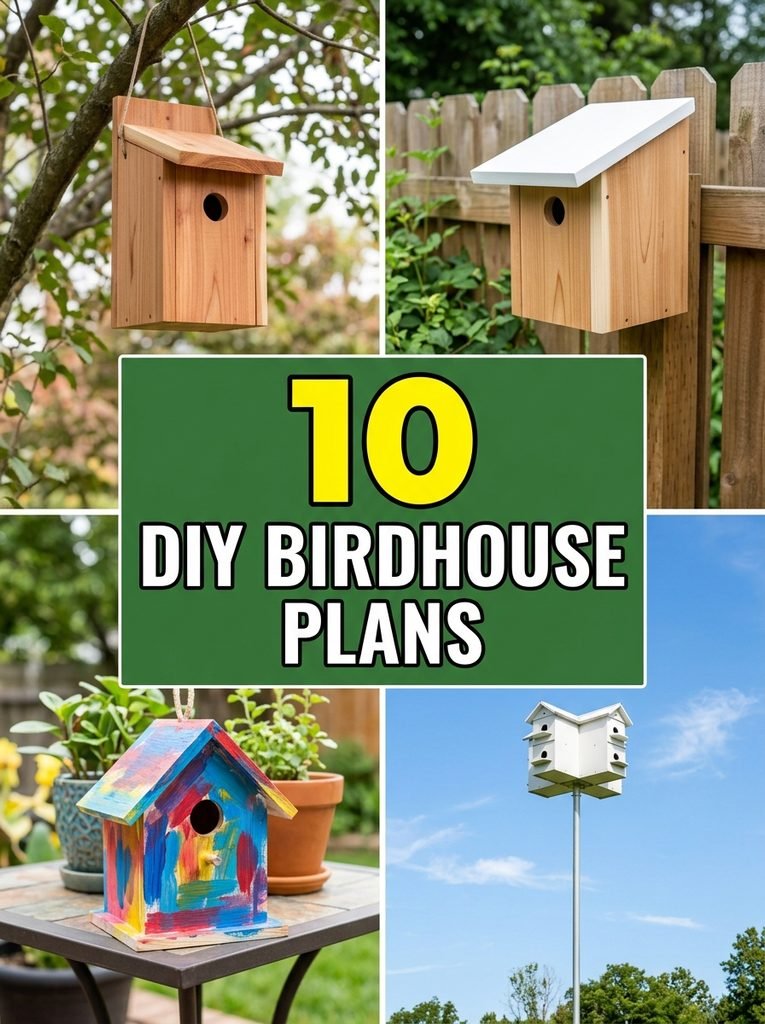
The secret is that birds don’t care how fancy a birdhouse looks. They care about the right size entrance hole, a safe height and a dry, airy space. Get those right and almost any simple plan works. These 10 DIY birdhouse plans include easy beginner builds, a modern design, a fun kids project and houses made for specific birds like bluebirds, wrens, chickadees and purple martins.
1. Easy One Board Birdhouse
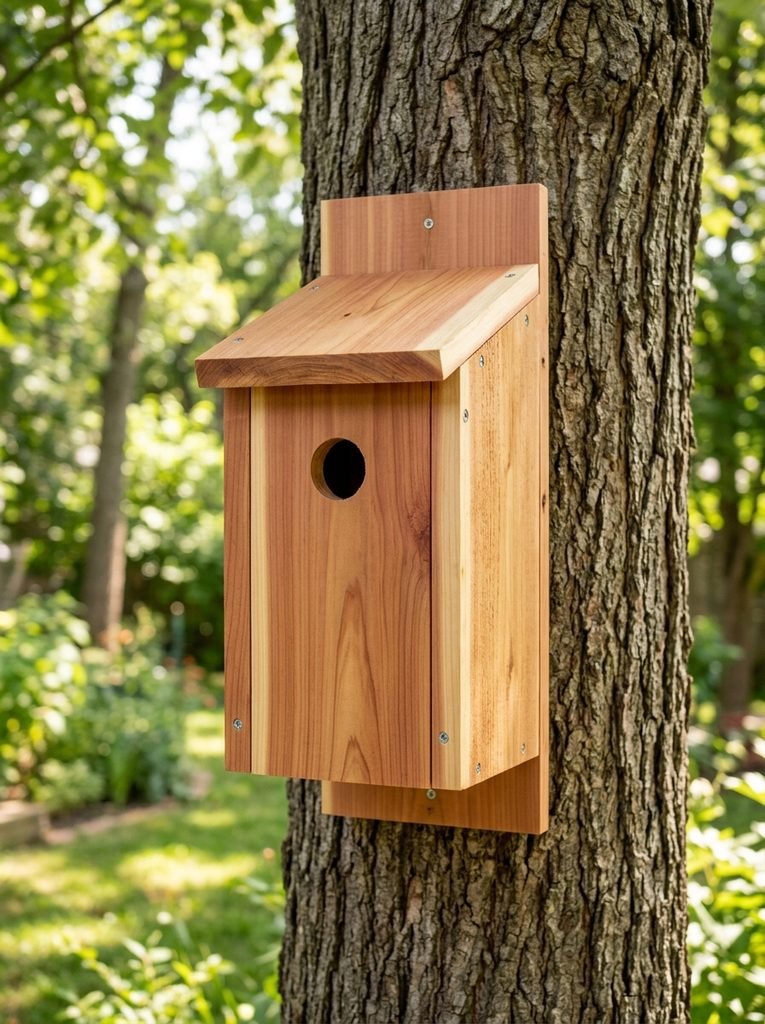
This is the perfect first birdhouse. Every piece comes from one cedar board, so there’s almost no waste and no complicated measuring. It’s a free, beginner friendly pattern you can finish in an afternoon.
I’ve built a dozen of these over the years. They’re simple, sturdy and birds love them.
Why I love it
- All pieces cut from one board
- Great first woodworking project
- Birds move in fast
Project Card · 2 hours · Easy
Materials Needed
- One 1×6 cedar board, 6 feet long
- 1 1/4 inch exterior screws or galvanized nails
- A saw and a drill
- A 1 1/2 inch hole saw or spade bit
- A 1/4 inch drill bit for drainage and air holes
- Sandpaper and a tape measure
How to Make It
- Cut the board into a front and back at 9 inches, two sides at 8 inches, a floor at 4 inches, and two roof pieces at 6 and 7 inches.
- Drill a 1 1/2 inch entrance hole in the front piece, about 6 inches up from the bottom.
- Drill four small drainage holes in the floor and two air holes near the top of each side.
- Screw the sides to the back, then fit the floor inside, set up about 1/4 inch from the bottom edge.
- Attach the front, then screw on the two roof pieces so the longer one overlaps the shorter one at the peak.
- Sand any rough edges, leave the inside bare, and hang it 5 to 10 feet high.
PRO TIP Skip the perch under the hole. Birds don’t need it, and it gives predators something to hold onto.
2. Modern Slanted Roof Birdhouse
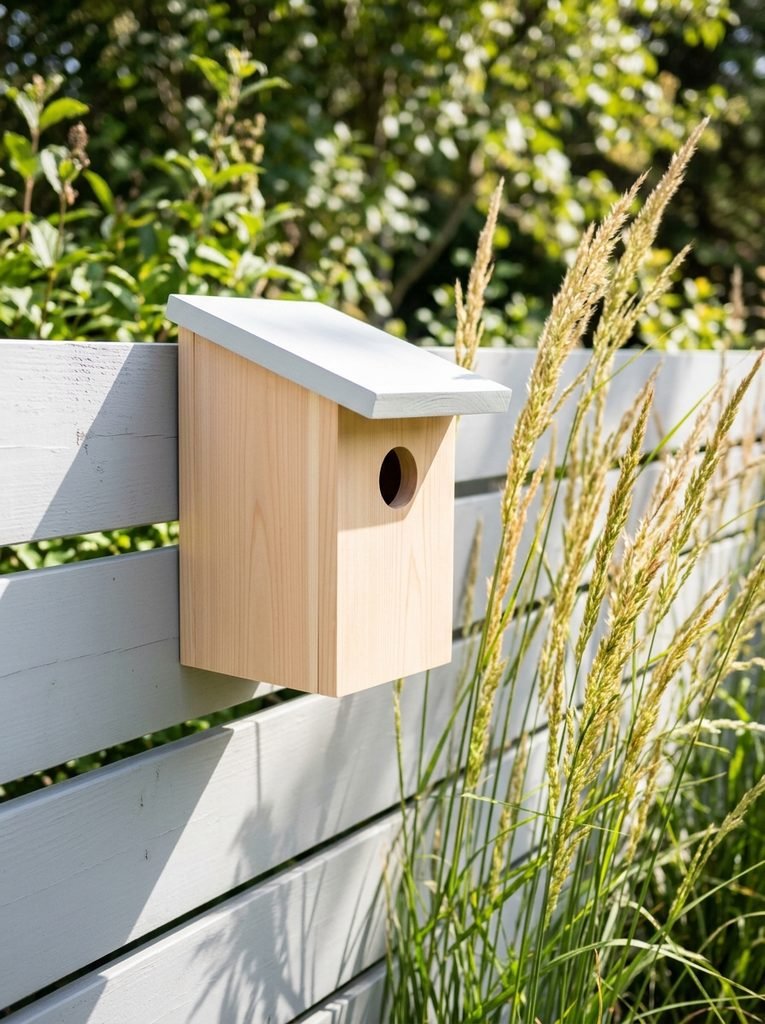
If you love clean lines, this modern birdhouse has a single slanted roof and simple square walls. It looks like a tiny piece of modern architecture on your fence, and it’s still easy to build.
In my experience, a painted roof with natural wood walls looks stylish and keeps the inside safe for birds.
Why I love it
- Stylish modern look
- Easy straight cuts
- Looks great on a fence or wall
Project Card · 2 hours · Easy
Materials Needed
- One 1×6 cedar or pine board, 4 feet long
- One 1×8 board for the roof
- Exterior wood glue and 1 1/4 inch screws
- A saw and a drill with a 1 1/2 inch hole saw
- Exterior paint for the roof only
How to Make It
- Cut two side pieces with the top edge angled, 9 inches tall at the back and 7 inches at the front.
- Cut a front, a back and a floor to fit between the sides.
- Drill a 1 1/2 inch entrance hole in the front and small drainage holes in the floor.
- Glue and screw the box together, setting the floor slightly up from the bottom.
- Cut the roof so it overhangs the front by about 2 inches and screw it to the slanted tops.
- Paint only the outside of the roof and mount the birdhouse on a fence or post.
PRO TIP Hinge one side panel instead of screwing it shut. You’ll need to clean the house out at the end of every season.
3. Kids Birdhouse Project
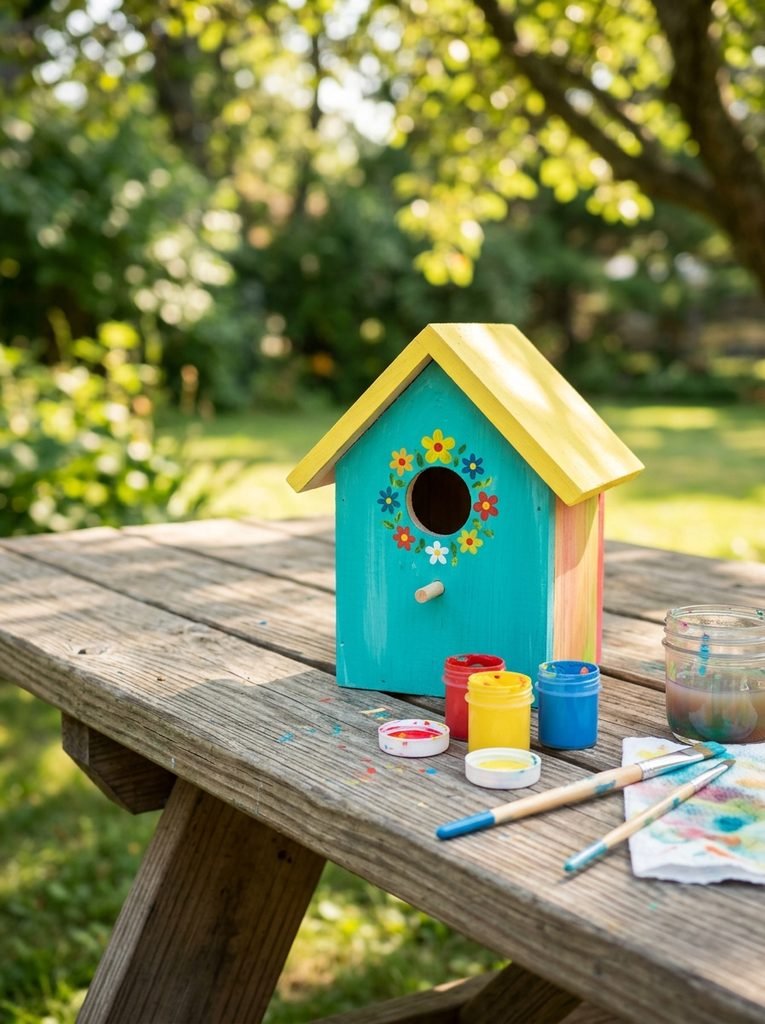
Building a birdhouse is one of the best projects to do with kids. They help with the gluing and painting, and then they get to watch real birds move in. Keep the plan very simple and pre cut the wood for little ones.
Honestly, the painting part is always their favorite.
Why I love it
- Great family weekend project
- Teaches kids about birds
- They’re so proud when birds move in
Project Card · 1 hour plus painting · Very easy
Materials Needed
- Pre cut pine pieces or a simple birdhouse kit
- Wood glue and small nails
- A small hammer
- Outdoor acrylic paints and brushes
- Sandpaper
How to Make It
- Sand all the pieces together so there are no splinters.
- Glue the sides to the back and front, then add the floor.
- An adult taps in a few small nails to hold everything firm.
- Glue and nail the roof on top.
- Let the kids paint the outside only, with bright outdoor paint.
- Let it dry fully, then hang it where the kids can watch from a window.
Don’t want to DIY?
Birdhouse Kit for Kids
A pre cut kit comes with every piece and the paints, so kids can build and decorate their own birdhouse in one afternoon.
PRO TIP Never paint the inside or the entrance hole. Paint fumes and chips aren’t safe for baby birds.
4. Classic Bluebird House
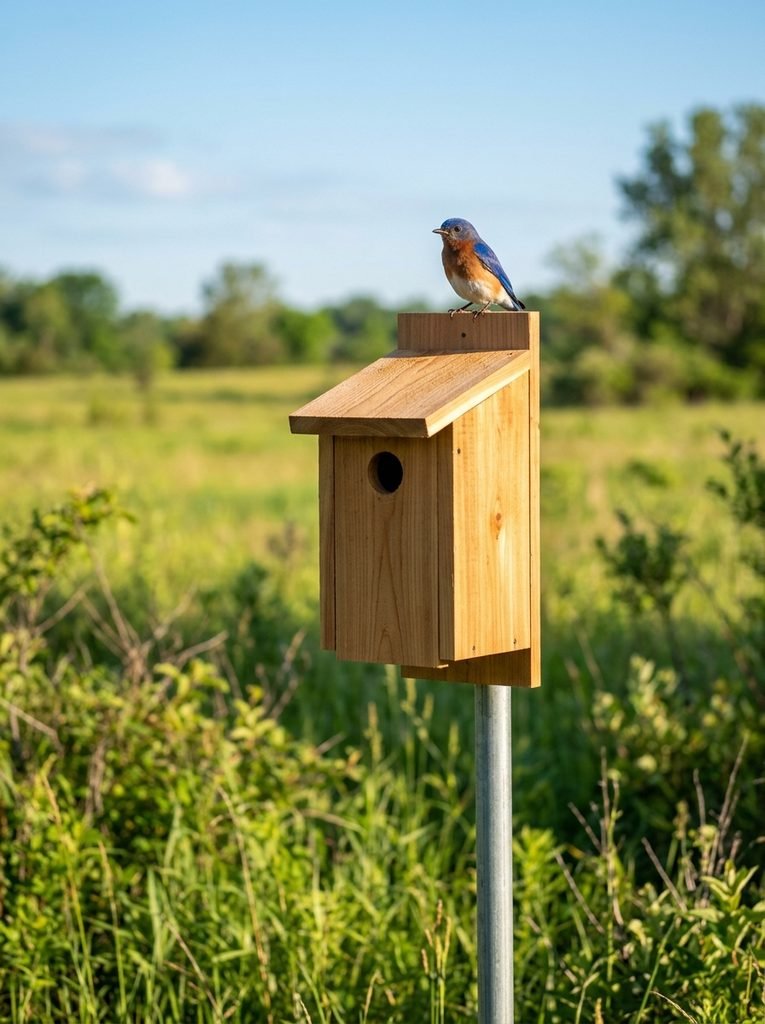
Bluebirds need a 1 1/2 inch entrance hole, a floor about 5 by 5 inches, and the hole set 6 to 7 inches above the floor. Mount it 4 to 6 feet high on a pole facing an open field or lawn.
A tip I picked up: bluebirds like open space. A house in the middle of trees attracts other birds instead.
Start Your 30-Day Home Reset
Stop waiting for a "perfect" free weekend. Grab the 30-day plan and start feeling lighter in your own home by tomorrow.
View the 30-Day Plan Printable PDF · Instant downloadWhy I love it
- Brings beautiful bluebirds to your yard
- Simple box design
- Easy to clean out
You’ll need: one 1×6 cedar board, a 1 1/2 inch hole saw, exterior screws and a metal mounting pole.
5. Wren House
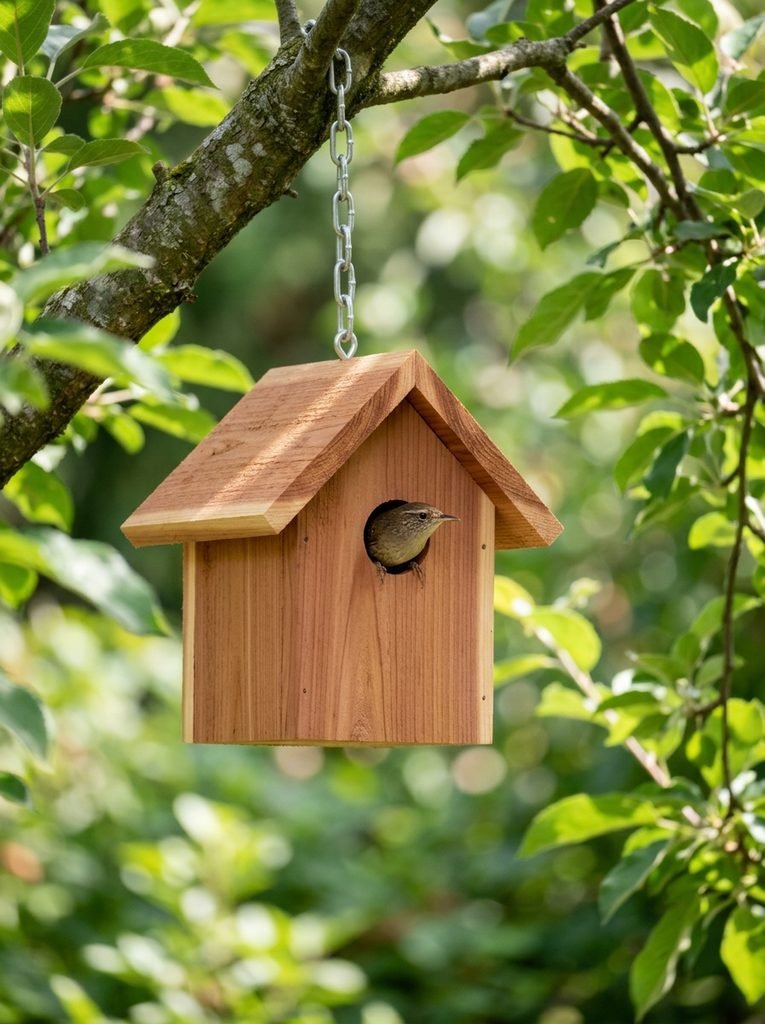
Wrens are tiny, cheerful birds that happily nest close to houses. A wren house uses a small entrance hole of about 1 to 1 1/4 inches, which keeps bigger birds out. Unlike most birdhouses, wrens don’t mind a house that hangs and sways a little.
Hang it 5 to 10 feet high, near shrubs where wrens like to hunt for insects.
Why I love it
- Small and quick to build
- Wrens love hanging houses
- Lovely birdsong all summer
You’ll need: a short 1×6 cedar board, a 1 1/8 inch spade bit, screws and a small chain.
6. Purple Martin House
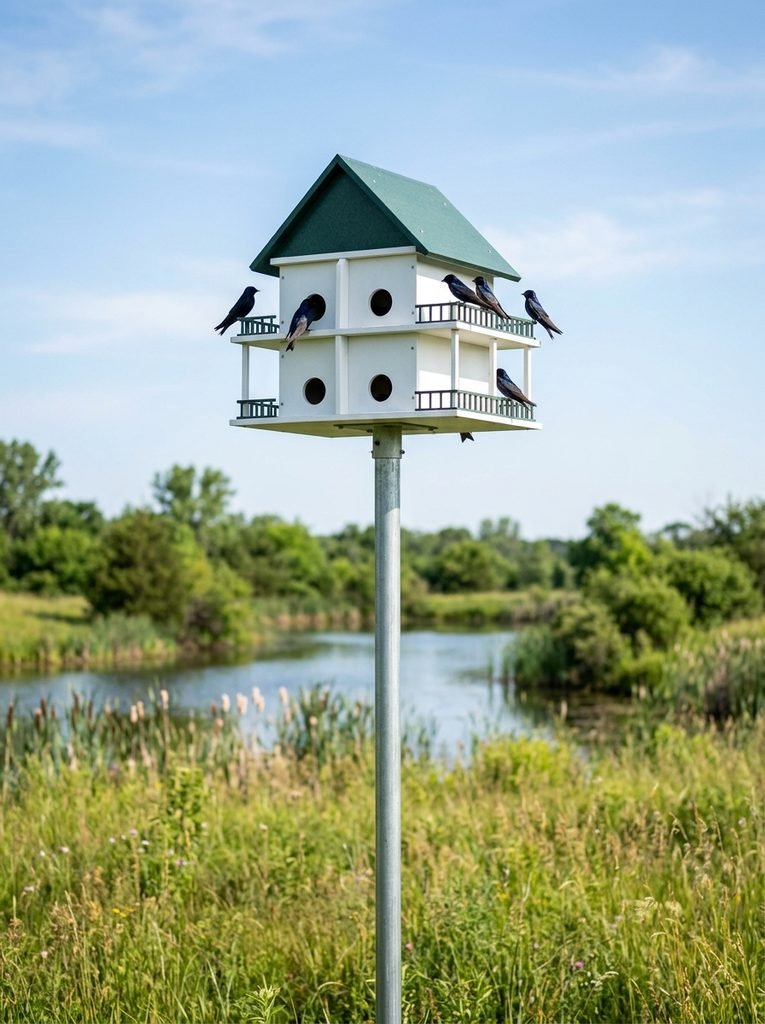
Purple martins live in colonies, so their house is really an apartment building with many rooms. It’s an advanced project, but nothing beats watching a whole colony return every spring.
Each room should be at least 6 by 6 inches with a 2 1/8 inch entrance hole. Mount it 10 to 15 feet high in a wide open space, at least 30 feet from trees.
Why I love it
- Attracts a whole colony
- A real showpiece in the yard
- Martins return every year
You’ll need: exterior plywood and cedar boards, a 2 1/8 inch hole saw, exterior paint, screws and a tall telescoping pole.
Don’t want to DIY?
Purple Martin House
A ready made purple martin house saves hours of building and comes sized correctly for a healthy colony.
7. Chickadee House
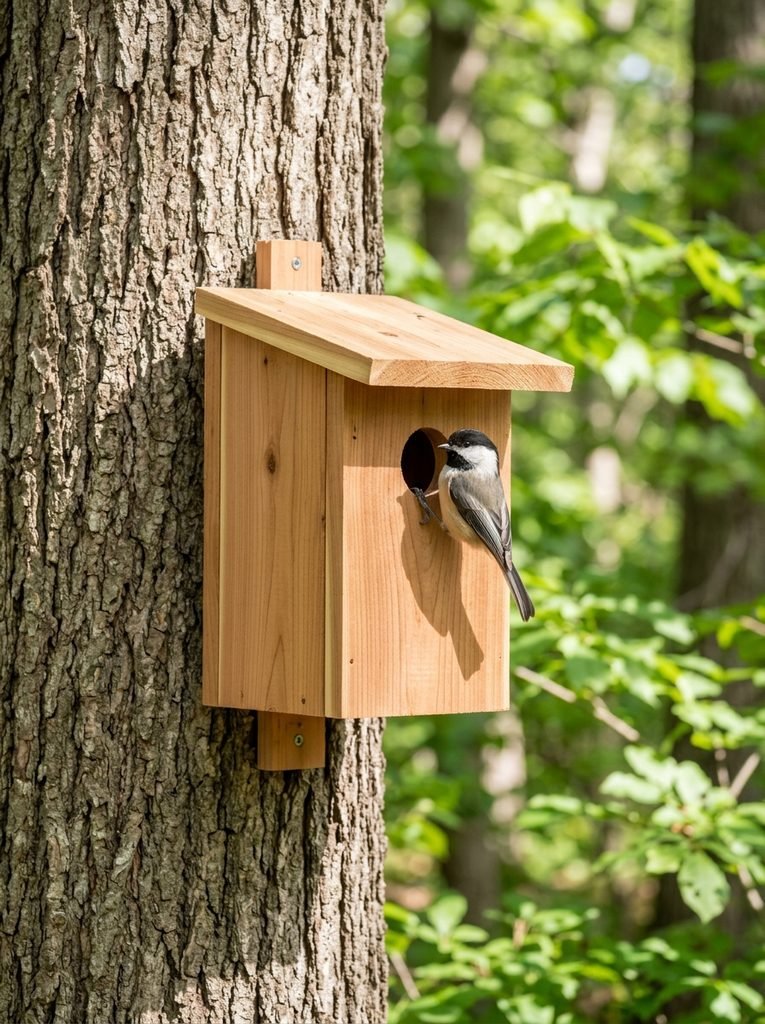
Chickadees are friendly little birds that often move in quickly. Their house uses a 1 1/8 inch entrance hole, a floor about 4 by 4 inches and the hole 6 to 8 inches above the floor. Mount it on a tree trunk 5 to 15 feet high.
I like adding a thin layer of wood shavings inside. Chickadees like to dig a little before they build.
Why I love it
- Chickadees move in quickly
- Small and simple to make
- Perfect for wooded yards
You’ll need: a short cedar board, a 1 1/8 inch spade bit, screws and a handful of untreated wood shavings.
8. Multi Room Birdhouse
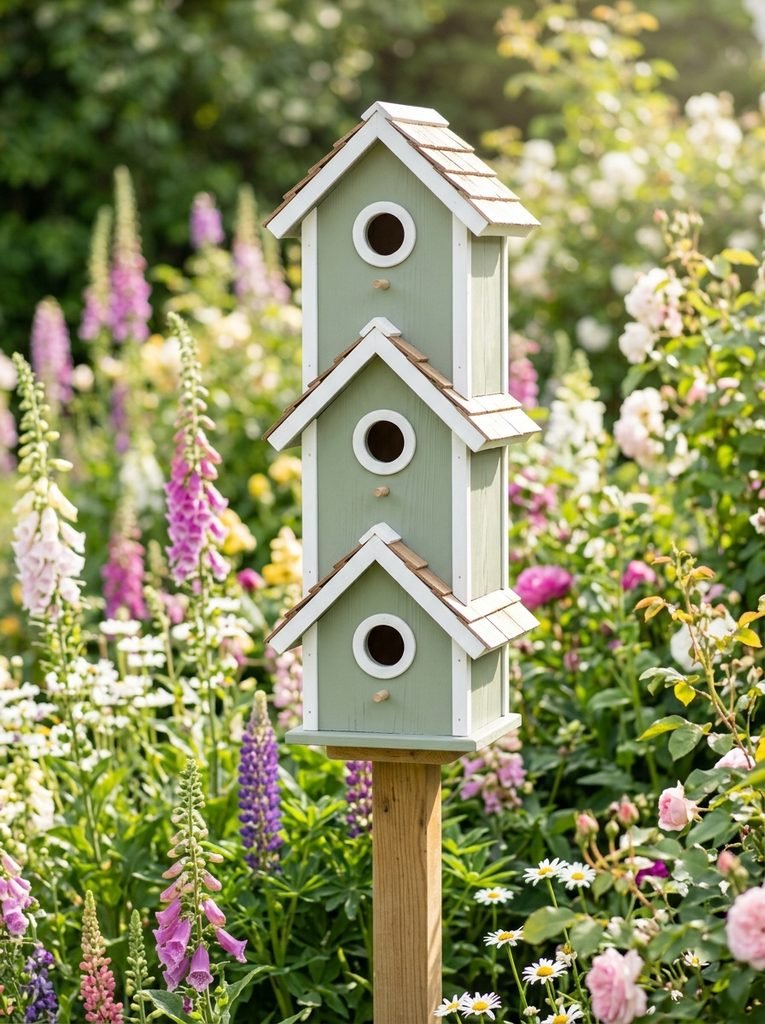
A multi room birdhouse looks like a tiny townhouse. Each room is separate inside, so several pairs of birds can nest at once. It’s a fun advanced project once you’ve built a few simple ones.
Make sure every room has its own cleanout door and drainage holes. Shared rooms aren’t healthy for birds.
Why I love it
- Room for several nesting pairs
- Beautiful garden centerpiece
- Fun next step after simple builds
You’ll need: cedar boards, a hole saw, small hinges for cleanout doors, exterior screws and exterior paint for the outside.
9. Pallet Wood Birdhouse
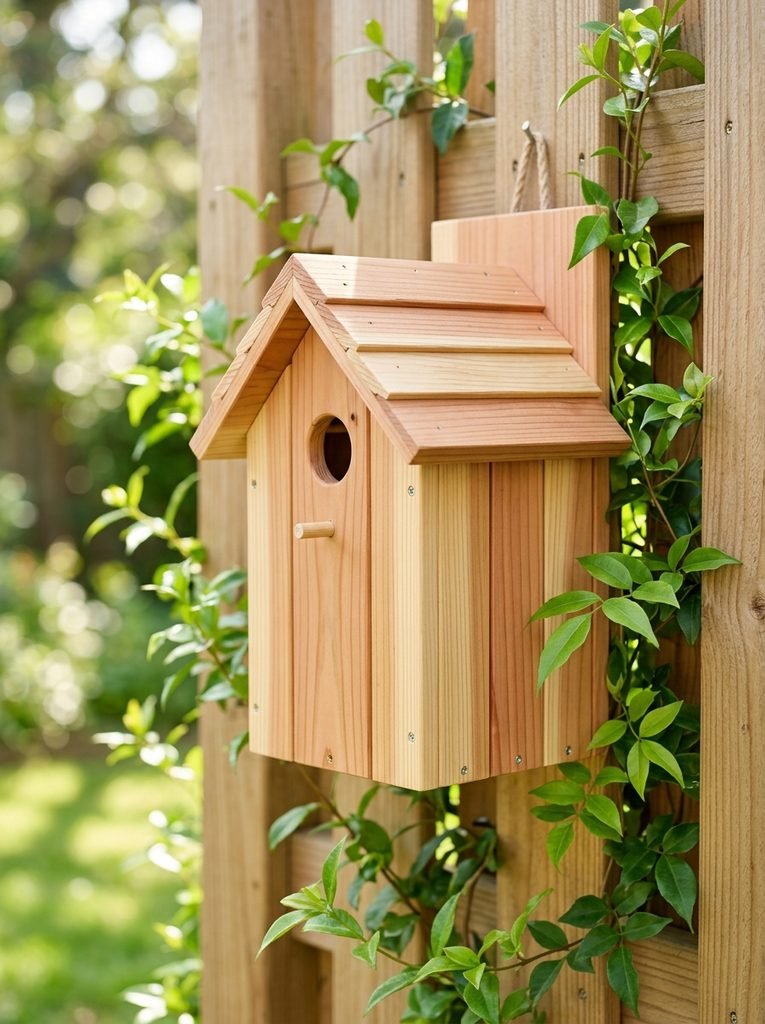
Pallet wood makes a charming rustic birdhouse for almost nothing. The slats have lots of character, and you can build several from one pallet.
Only use pallets stamped HT, which means heat treated. Avoid any stamped MB, which were treated with chemicals.
Why I love it
- Almost free to make
- Rustic natural look
- Great use for leftover pallets
You’ll need: one HT stamped pallet, a pry bar, sandpaper, a 1 1/2 inch hole saw and exterior screws.
10. Pole Mounted Birdhouse with a Predator Guard
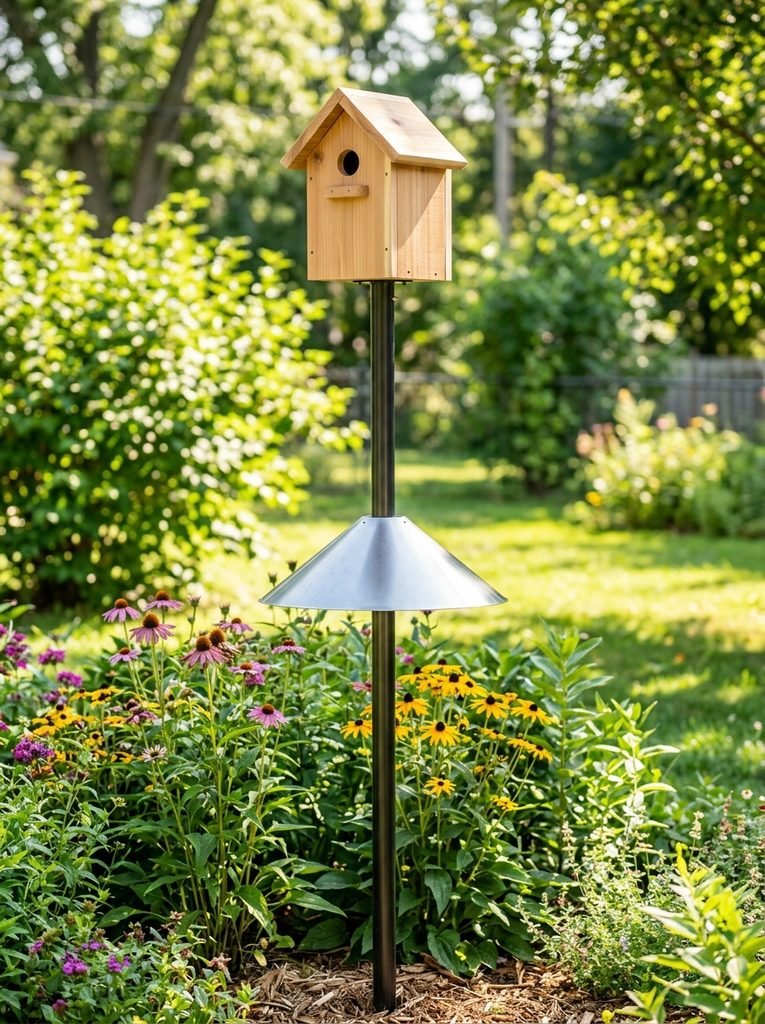
Where you put a birdhouse matters as much as how you build it. Mounting it on a smooth metal pole with a cone shaped baffle underneath keeps cats, raccoons and snakes from climbing up to the nest.
Honestly, this one step makes the biggest difference in whether baby birds survive.
Why I love it
- Keeps cats and raccoons away
- Safer for baby birds
- Works with any birdhouse plan
You’ll need: a smooth metal pole, a cone or stovepipe baffle and a mounting bracket for your birdhouse.
Don’t want to DIY?
Birdhouse Pole with Baffle
A ready made pole kit with a predator baffle is the easiest way to keep nesting birds safe from climbing animals.
Frequently Asked Questions
What wood is best for a birdhouse?
Untreated cedar is the best choice because it naturally resists rot and insects. Pine works too but won’t last as long. Never use pressure treated wood, since the chemicals can harm birds.
What size entrance hole should a birdhouse have?
It depends on the bird. Chickadees need about 1 1/8 inches, wrens 1 to 1 1/4 inches, bluebirds 1 1/2 inches and purple martins 2 1/8 inches. The right size keeps out bigger, more aggressive birds.
Should I paint my birdhouse?
You can paint the outside with light colored, exterior paint, which keeps the house cooler in the sun. Never paint the inside or around the entrance hole.
When should I put up a birdhouse?
Put it up in late winter or early spring, before birds start looking for nesting spots. Clean it out every fall once the nesting season is over.
Final Thoughts on DIY Birdhouse Plans
The best DIY birdhouse plans are simple, safe and sized for the birds you want to attract. Start with the easy one board birdhouse, try a modern design or a kids project, and then build a house for bluebirds, wrens or even a purple martin colony. Use untreated wood, skip the perch, and mount it safely, and you’ll have new feathered neighbors before you know it.


Amir Ali is the founder and site administrator of HomeDecorEdge, a modern home decor and interior design platform. Since starting the site, he has combined his passion for interior design, practical styling, and color coordination with hands-on content strategy and site management. He guides authors, curates high-quality articles, and ensures readers have access to actionable, visually inspiring, and user-focused home decor advice for apartments, small rooms, and family homes.