

Cats are strange about water. Mine would ignore a full bowl all day, then sit by the kitchen tap and wait for me to turn it on.
That is pretty normal, honestly. A lot of cats prefer moving water. It looks fresher to them, it tastes cooler, and the gentle sound gets their attention. More drinking means better hydration, which matters a lot for cats who mostly eat dry food.
Store bought fountains work, but they are often noisy, hard to clean or just plain ugly. Building your own lets you choose the bowl, the size and the look, and most of these take an afternoon.
Below are 12 DIY cat fountain plans, from simple ceramic bubblers to a pump free glass jar option, plus the safety and cleaning habits that keep the water truly fresh.
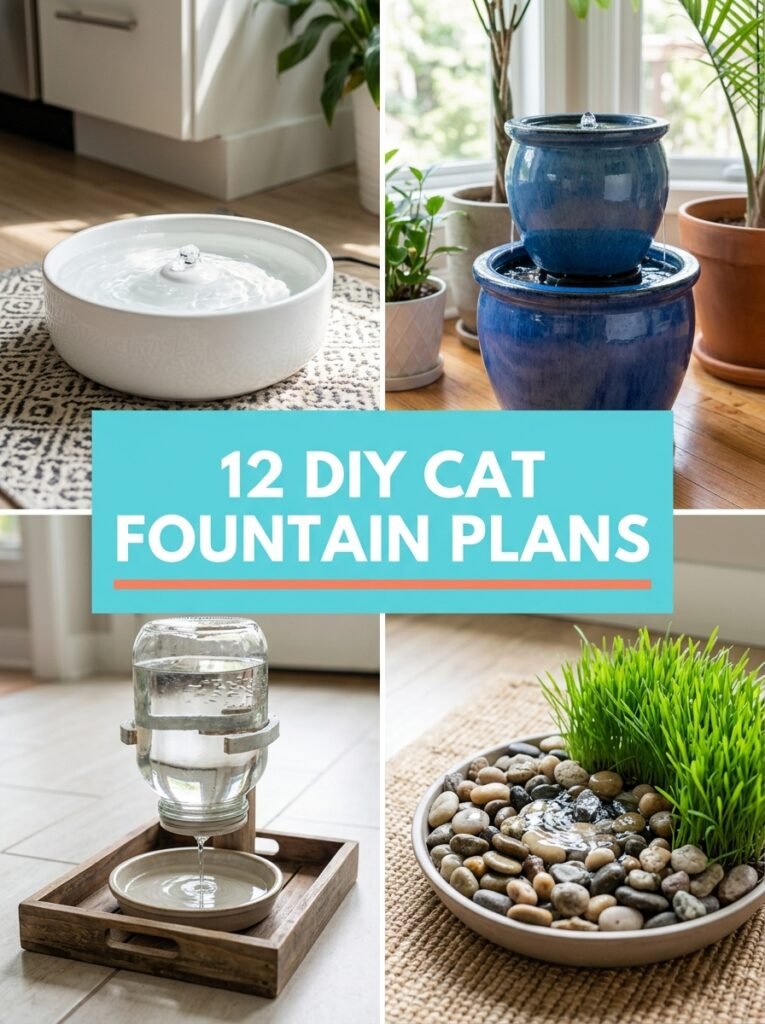
Quick Picks
- Easiest build: Easy Ceramic Bowl Cat Fountain (idea 1)
- No pump, no cord: Glass Jar Gravity Water Fountain (idea 7)
- Prettiest: Stacked Ceramic Planter Fountain (idea 4)
- Best for several cats: Large Fountain for Multi Cat Homes (idea 10)
1. Easy Ceramic Bowl Cat Fountain
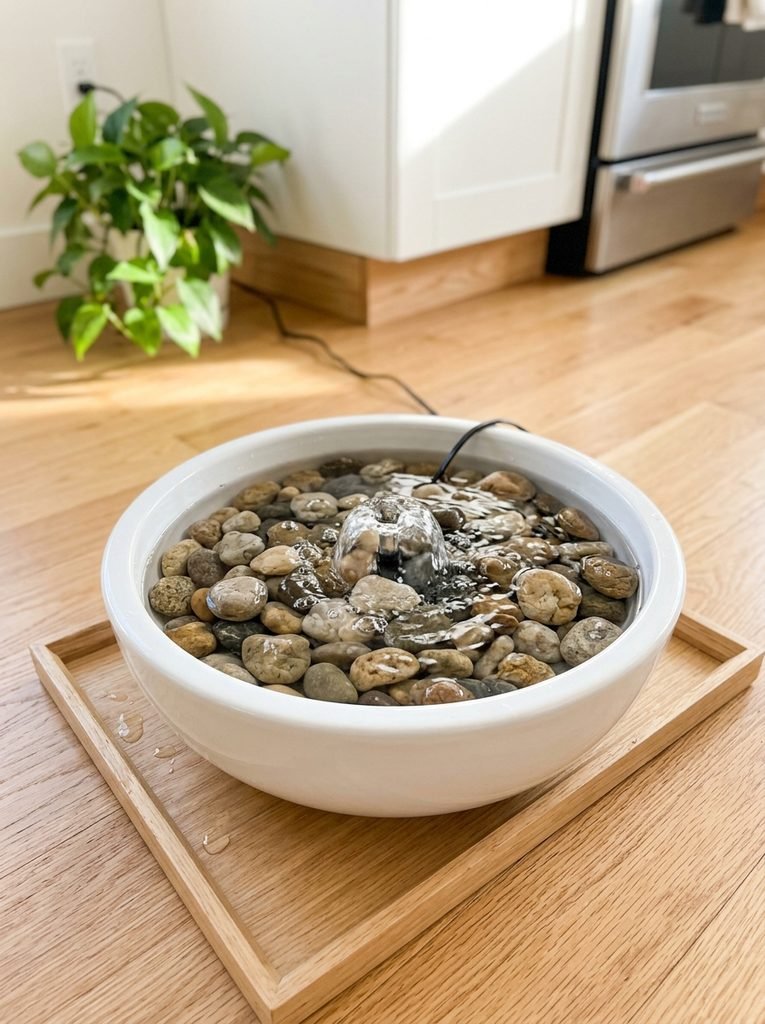
This is the one I tell everyone to start with. A wide ceramic bowl, a tiny pump hidden under a few stones and a little bubble of water in the middle. That is the whole fountain. Ceramic is heavy, so it does not slide around when a curious paw pokes at it, and it does not hold smells the way some plastics do.
Pick a bowl that says food safe on the label, because some decorative glazes are not meant for drinking water. For the pump, a small low voltage submersible pump with adjustable flow is perfect. Turn the flow down low. Most cats like a soft bubble, not a splashing jet.
⏱ 1 hour💲 Low🛠 Easy
Materials Needed
- Wide food safe ceramic bowl, about 8 to 10 inches across
- Small low voltage submersible pump with adjustable flow
- Short piece of food grade silicone tubing
- Smooth washed river stones
- Drill with a diamond tile bit (optional, for a cord hole)
How to Make It
- Wash the bowl and stones well with hot water and plain dish soap, then rinse very well.
- Set the pump in the center of the bowl and run the cord out over the back edge or through a drilled hole.
- Attach a short piece of tubing so the water bubbles just above the surface.
- Pile the stones around the pump so it is hidden but the intake is not blocked.
- Fill with fresh water, plug in, set the lowest flow your cat likes and leave a loop in the cord below the outlet so drips never run into the plug.
Tip: Drill slowly with water dripping on the bit if you make a cord hole, and seal around the cord with food safe silicone once it is through.
2. Small Pump Cat Fountain Basics
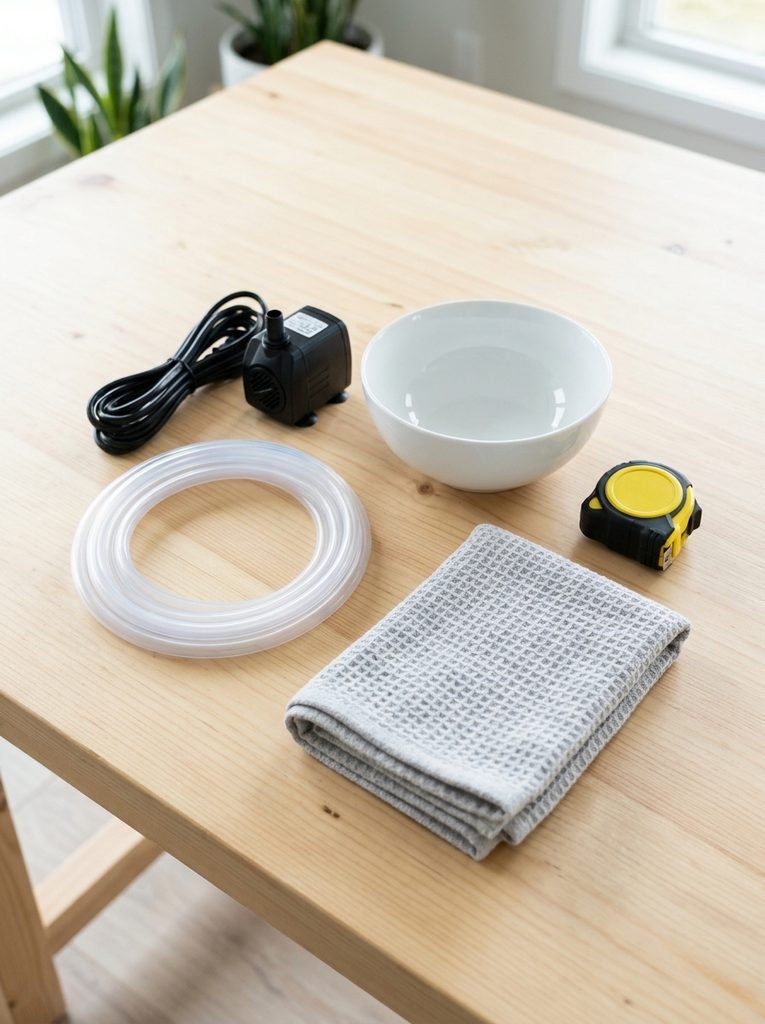
The pump is the heart of every fountain on this list, so it is worth getting right. Look for a low voltage pump, adjustable flow and a quiet motor. A pump rated around 50 to 80 gallons per hour is plenty for a cat bowl. Anything stronger just sprays water across the floor.
I like pumps that run on a USB plug or a small adapter, because the voltage in the water is low. A small USB submersible pump is easy to find and cheap. Whatever you use, plug it into an outlet with GFCI protection if you can, keep the plug higher than the bowl and never let the pump run dry, since that burns it out fast.
You’ll need: small low voltage pump, silicone tubing, a sturdy bowl
Best for: first time builders who want to understand the parts
3. Cat Fountain with a Filter for Cleaner Water
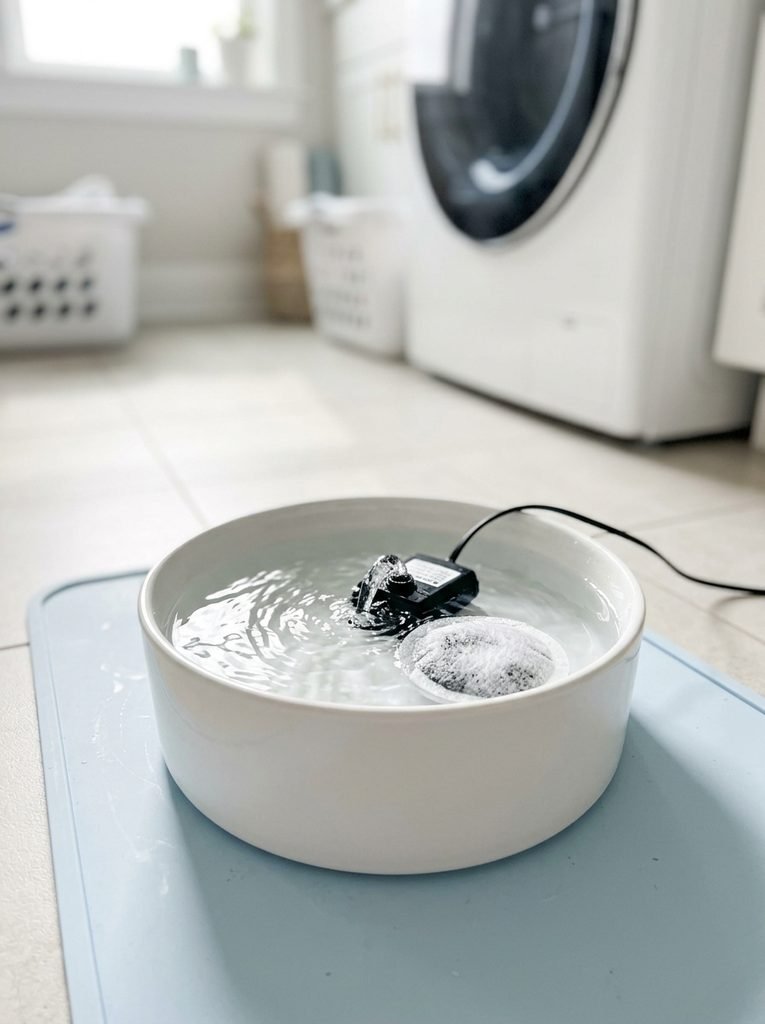
Cats drop fur, crumbs and the occasional bit of litter into their water. A filter catches all of that before it goes around again, and the water stays clearer for longer between washes.
The easiest way is to slip a small replacement fountain filter or a piece of filter sponge over the pump intake. Rinse the sponge every few days and swap carbon filters every two to four weeks. In my experience the filter is what makes the difference between water that looks good on day three and water that looks a bit sad.
You’ll need: pump with an intake you can cover, fountain filters or filter sponge
Best for: homes with long haired cats
4. Stacked Ceramic Planter Fountain
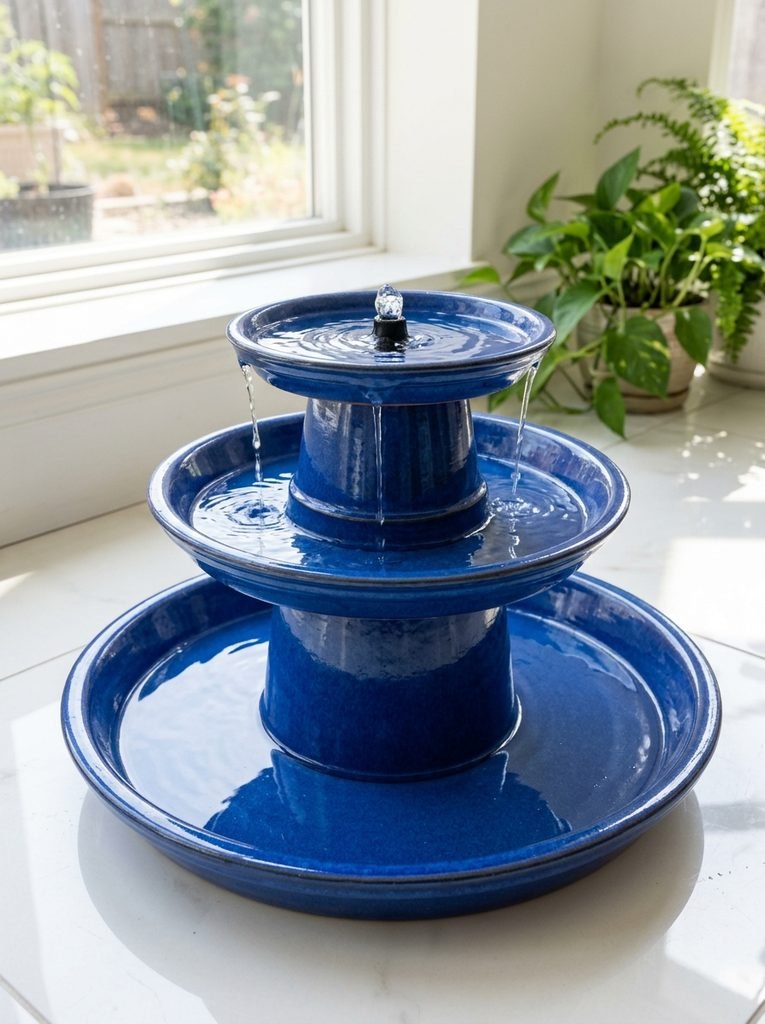
This one looks like a little garden fountain, but it lives on your kitchen floor. Three glazed ceramic saucers stacked from small to large, with a pump in the bottom one pushing water up through the middle. The water trickles down each level, and cats can drink from whichever tier they like.
Use glazed saucers only, never raw terracotta, because unglazed clay soaks up water and gets slimy inside. Check the glaze is food safe too. Wide, shallow tiers are better than deep ones, since a lot of cats dislike their whiskers touching the sides.
⏱ 2 hours💲 Low to medium🛠 Medium
Materials Needed
- 3 glazed food safe ceramic saucers in small, medium and large
- Low voltage submersible pump
- Silicone tubing long enough to reach the top tier
- Diamond tile drill bit
- Food safe silicone sealant
- A few smooth stones for the bottom dish
How to Make It
- Drill a hole in the center of the small and medium saucers just big enough for the tubing.
- Set the pump in the large bottom saucer and feed the tubing up through both holes.
- Stack the saucers and seal around the tubing at each hole with food safe silicone.
- Let the silicone cure fully as the label says, usually 24 hours, then rinse everything well.
- Fill the bottom saucer, plug in, and lower the flow until water trickles gently down without splashing.
Tip: Place it on a waterproof tray or silicone mat. Even a gentle trickle can make a small splash when a cat paws at it.
5. Bubbler Style Drinking Fountain for Picky Cats
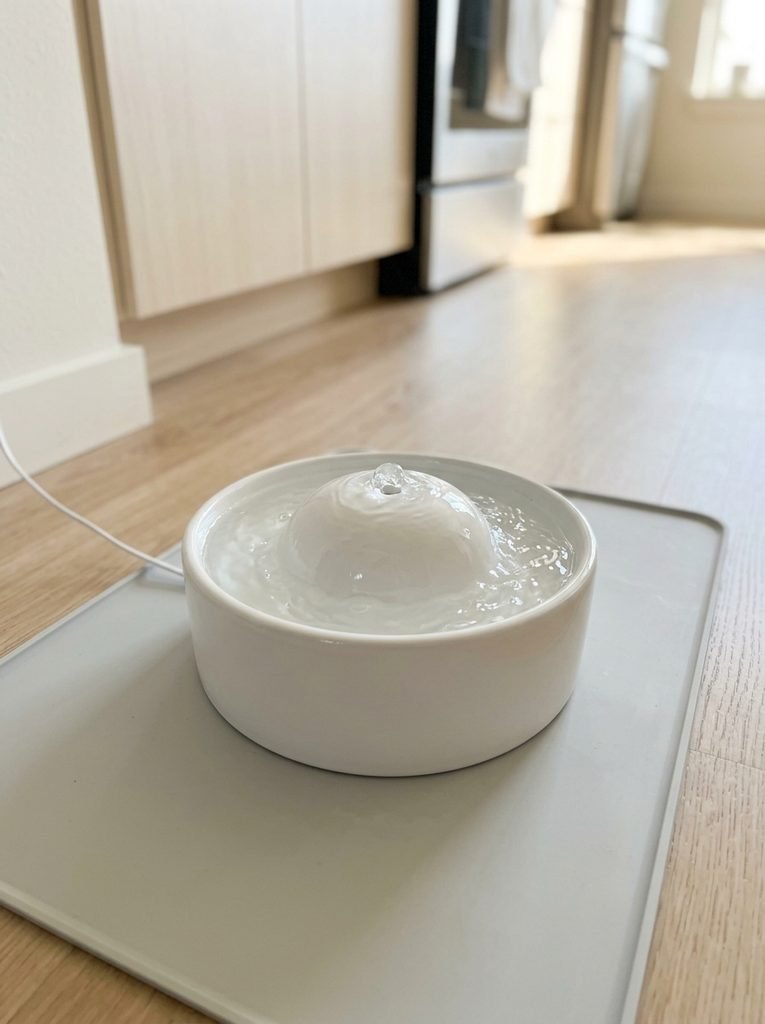
Some cats are scared of falling water and splashing noises. For them, a quiet bubbler works best. The water just rises in a soft dome in the middle of the bowl and rolls out to the edge.
To make one, point the pump outlet straight up with a short piece of tubing that sits just under the surface. That is it. Turn the flow down until the bubble is barely moving. A picky cat of mine went from ignoring her bowl to drinking several times a day with this exact setup.
You’ll need: small pump, short tubing, shallow ceramic bowl
Best for: shy or picky cats who dislike splashing
6. Quiet Indoor Countertop Cat Fountain
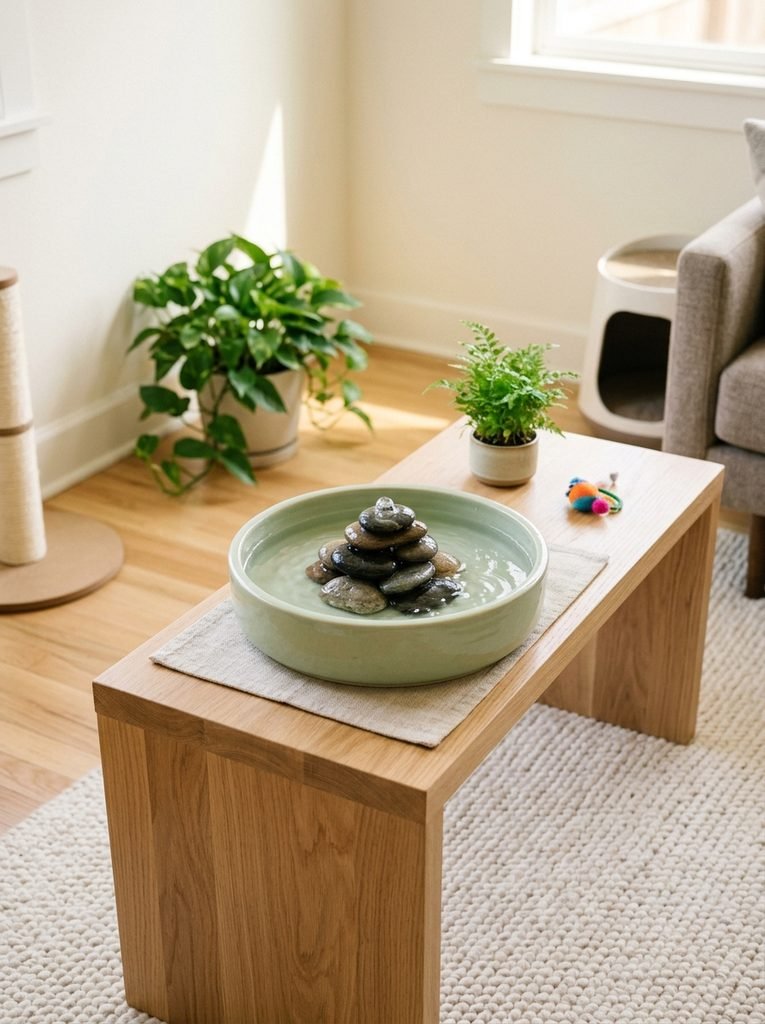
A fountain inside the house has to be quiet, or you will hear it humming at 2 in the morning. Most noise comes from the pump touching the bowl or water dropping a long way.
Put a small square of silicone anti vibration pad under the pump and keep the water level high, so it never drops far. Top it up every day. A low water level makes pumps gurgle and run hot. Keep it away from the food bowl too, since many cats prefer to drink a little distance from where they eat.
You’ll need: pump, silicone pad, a heavy ceramic dish
Best for: bedrooms, apartments and light sleepers
7. Glass Jar Gravity Water Fountain
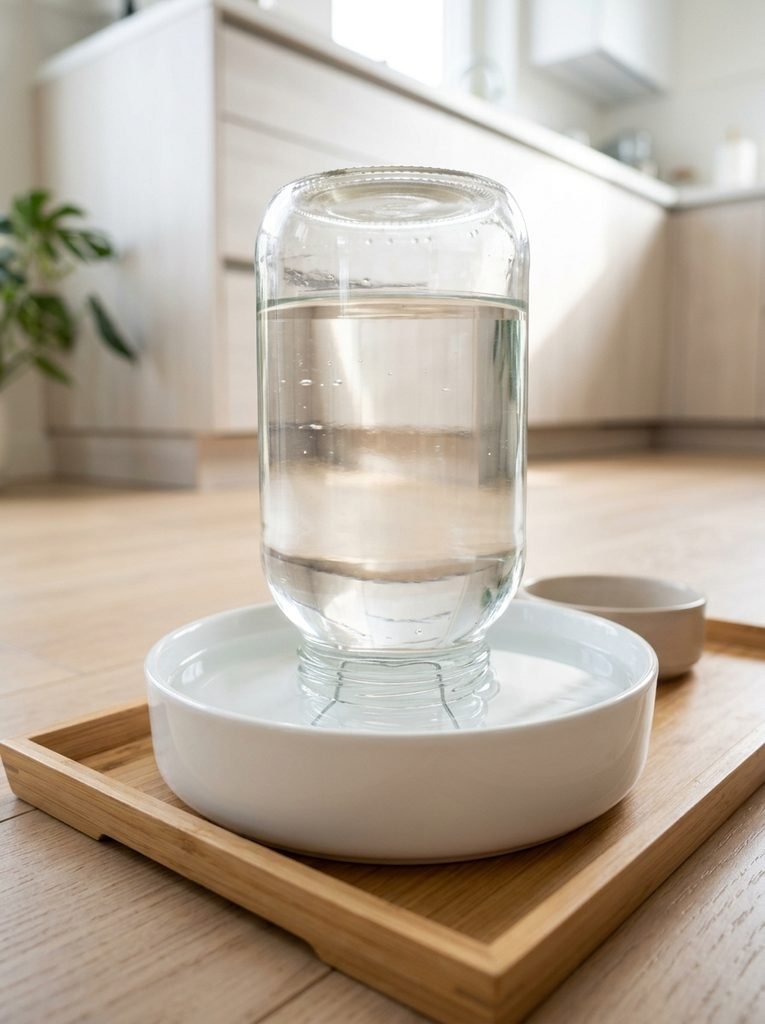
No pump, no cord, no electricity anywhere near the water. A glass jar turned upside down into a shallow dish refills the bowl on its own as your cat drinks. It is not a true flowing fountain, but it keeps the water fresh and full, and it is perfect for spots far from an outlet.
The trick is a small gap under the rim of the jar so water flows out only when the level in the dish drops. A few small stones or a gravity waterer base hold the jar at the right height. Glass is easy to see through, so you always know when it needs a refill.
⏱ 20 minutes💲 Very low🛠 Easy
Materials Needed
- Clean glass jar or bottle, 1 to 2 liters, with a smooth rim
- Wide shallow ceramic dish, a few inches wider than the jar
- 3 small smooth stones about the same height
- Fresh water
How to Make It
- Wash the jar, dish and stones well and rinse them.
- Set the three stones in a triangle in the middle of the dish.
- Fill the jar to the top with fresh water.
- Cover the opening with your hand, flip the jar quickly and set it on the stones.
- Check that water fills the dish just below the jar rim and stops. If it overflows, use slightly taller stones.
Tip: Empty, wash and refill it every two to three days. Still water needs changing more often than water in a filtered fountain.
Start Your 30-Day Home Reset
Stop waiting for a "perfect" free weekend. Grab the 30-day plan and start feeling lighter in your own home by tomorrow.
View the 30-Day Plan Printable PDF · Instant download8. Cat Fountain with a Cat Grass Planter
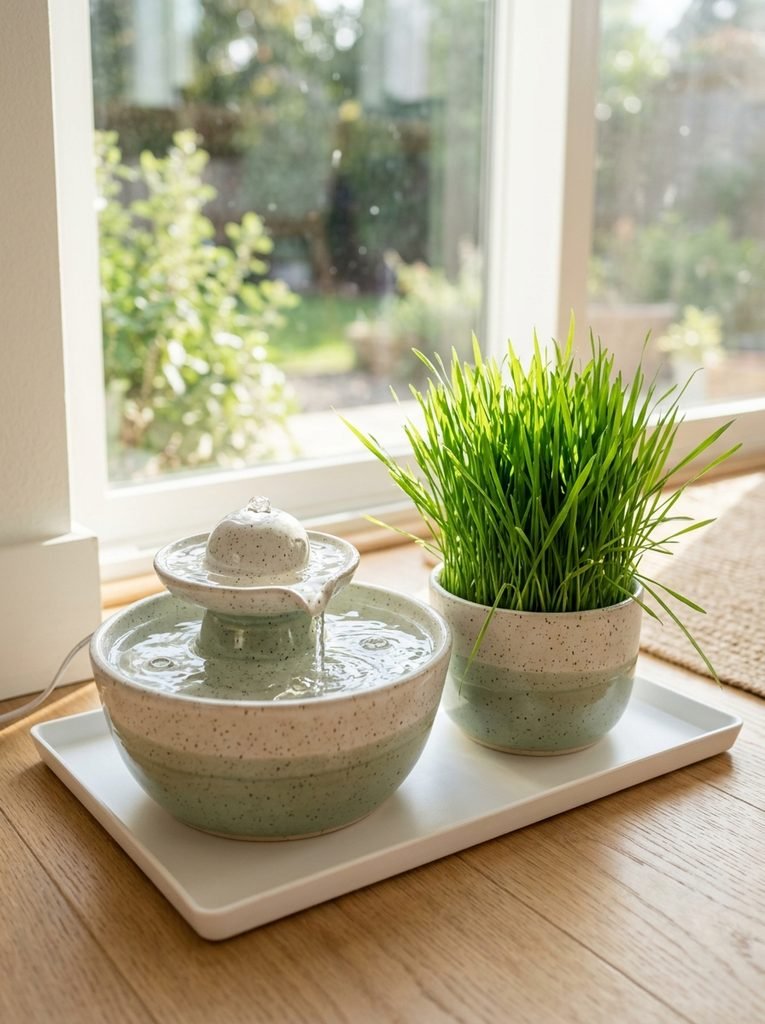
Fountains look lovely with a bit of green. Just keep the plants safe. Lots of common houseplants, and every type of lily, are toxic to cats. Cat grass is the safe choice and most cats love nibbling it.
Grow cat grass seeds in a separate small pot right next to the fountain instead of inside it, so soil never gets into the water. It sprouts in about a week. Swap the pot out when the grass gets tired.
You’ll need: cat grass seeds, a small ceramic pot, your fountain
Best for: indoor cats who like to chew on greens
9. Covered Outdoor Cat Fountain for the Patio
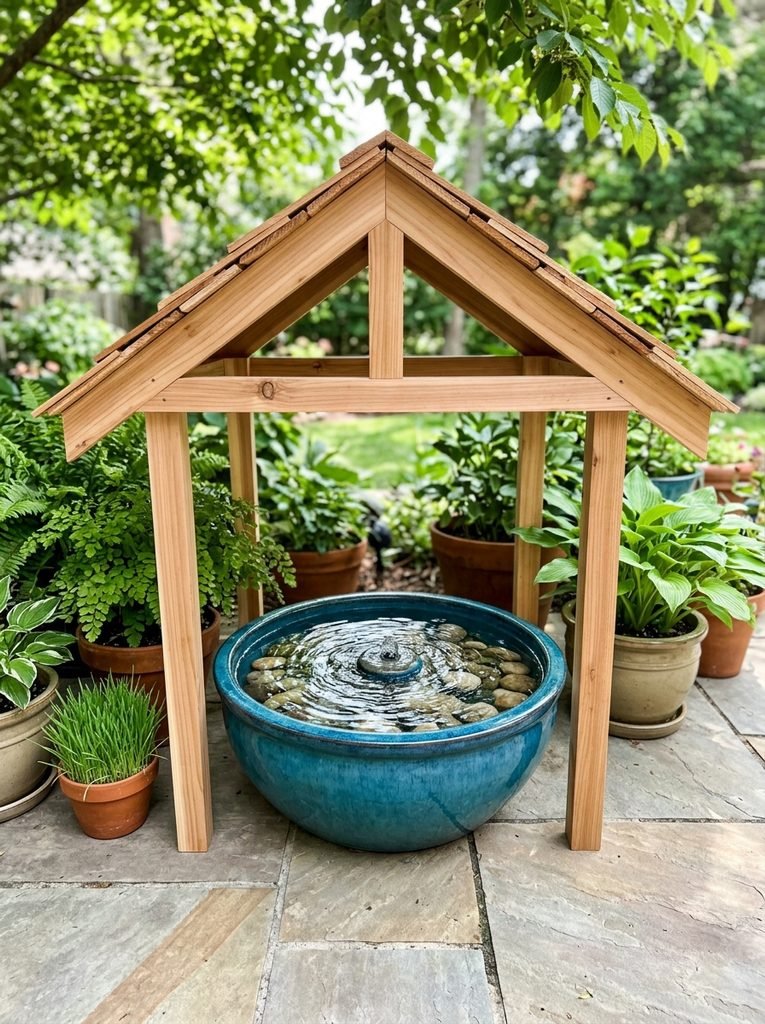
If your cat spends time on a patio or catio, outdoor water is a must, especially in summer. Put the fountain in full shade so the water stays cool and algae grows slower.
Outside, use an outdoor rated cord cover and an outlet with GFCI protection, or go solar with a small solar fountain pump so there is no cord at all. A simple roof or a big umbrella above it keeps leaves and rain out.
You’ll need: heavy glazed bowl, solar pump or outdoor rated setup, shade
Best for: patios, catios and hot climates
10. Large Fountain for Multi Cat Homes
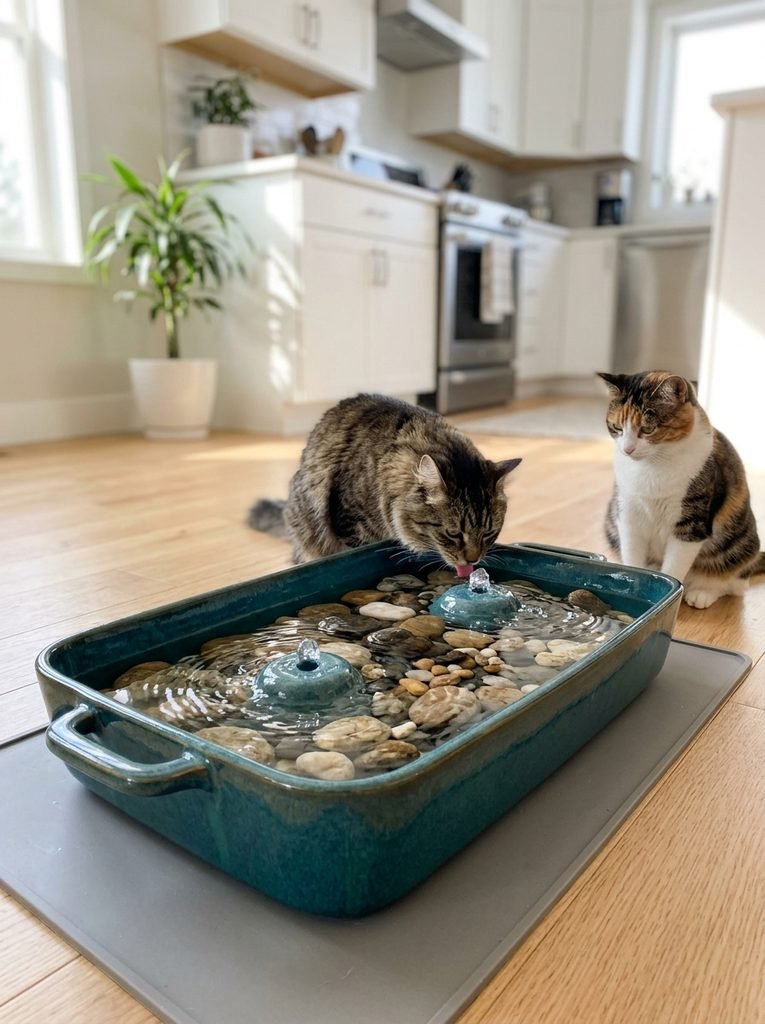
With two or more cats, a small bowl empties fast and the shy cat often waits her turn. A long, wide dish with two bubblers gives everyone room to drink at once.
A rectangular glazed baking dish works great. Use one slightly stronger pump with a tubing splitter for two outlets, or two small pumps. Bigger fountains need more water too, so check the level every morning.
You’ll need: long glazed dish, pump, tubing splitter
Best for: homes with two or more cats
11. Pebble Base Cat Fountain
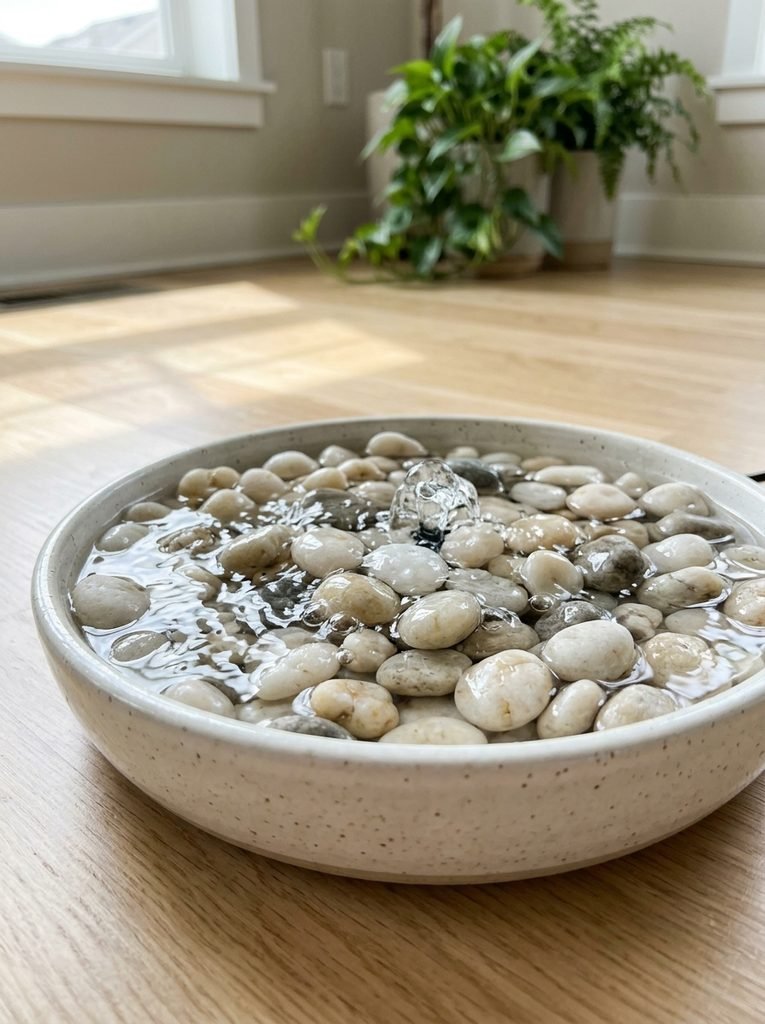
Covering the pump with smooth pebbles hides the machinery and makes the whole thing look natural. Water bubbles up between the stones, and some cats love pawing at the ripples.
Use large, smooth polished river pebbles so they cannot be swallowed, and never small gravel. Leave a clear area for drinking so your cat does not have to lick around stones. Take the pebbles out and scrub them every week, since they collect slime.
You’ll need: large polished pebbles, shallow dish, pump
Best for: a natural look that hides the pump
12. Easy Cleaning Setup and Weekly Routine
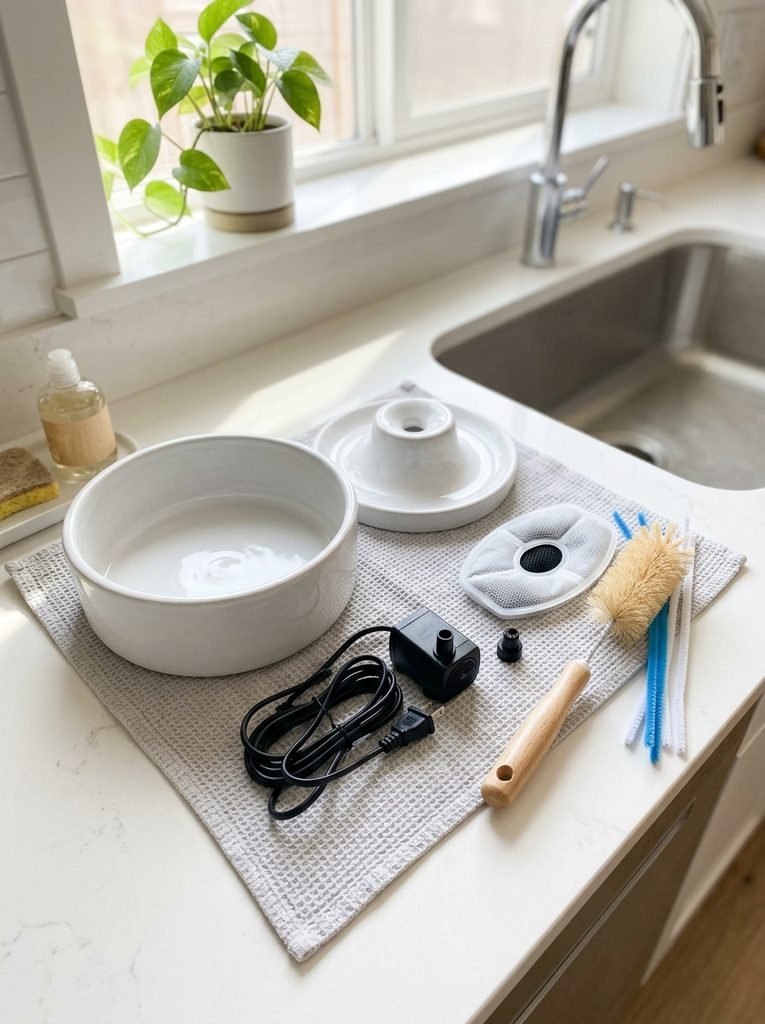
A fountain is only good if it is clean. Even filtered water grows a pink or green slime in a few days if you leave it. A quick routine stops that before it starts.
Every two or three days, empty it, wipe the bowl and refill. Once a week, unplug and take the pump apart, then scrub it with a small brush set and plain dish soap. Rinse everything really well, since cats hate any soap smell. Swap filters on schedule.
You’ll need: small cleaning brushes, mild dish soap, spare filters
Best for: keeping any fountain on this list fresh
Final Thoughts on DIY Cat Fountain Plans
A homemade cat fountain is one of those small projects that really pays off. Moving water gets most cats drinking more, and you get to choose a fountain that looks good in your home.
Start with the easy ceramic bowl or the pump free glass jar, keep the flow gentle and stick to a simple cleaning routine. Your cat will probably be waiting by it the first morning.


Amir Ali is the founder and site administrator of HomeDecorEdge, a modern home decor and interior design platform. Since starting the site, he has combined his passion for interior design, practical styling, and color coordination with hands-on content strategy and site management. He guides authors, curates high-quality articles, and ensures readers have access to actionable, visually inspiring, and user-focused home decor advice for apartments, small rooms, and family homes.