

The first thing my cat did with her brand new shelf was ignore it. The second thing was jump on top of the fridge instead.
That’s when it clicked. Cats don’t want more floor. They want height, a place to look down from and a spot where nobody can sneak up on them.
The good news is you can build that on any wall, even in a tiny apartment. A few boards, some strong brackets and a free weekend are enough.
Here are 12 DIY cat shelf ideas for walls, corners, windows and even the garden. Three of them come with full step by step build cards.
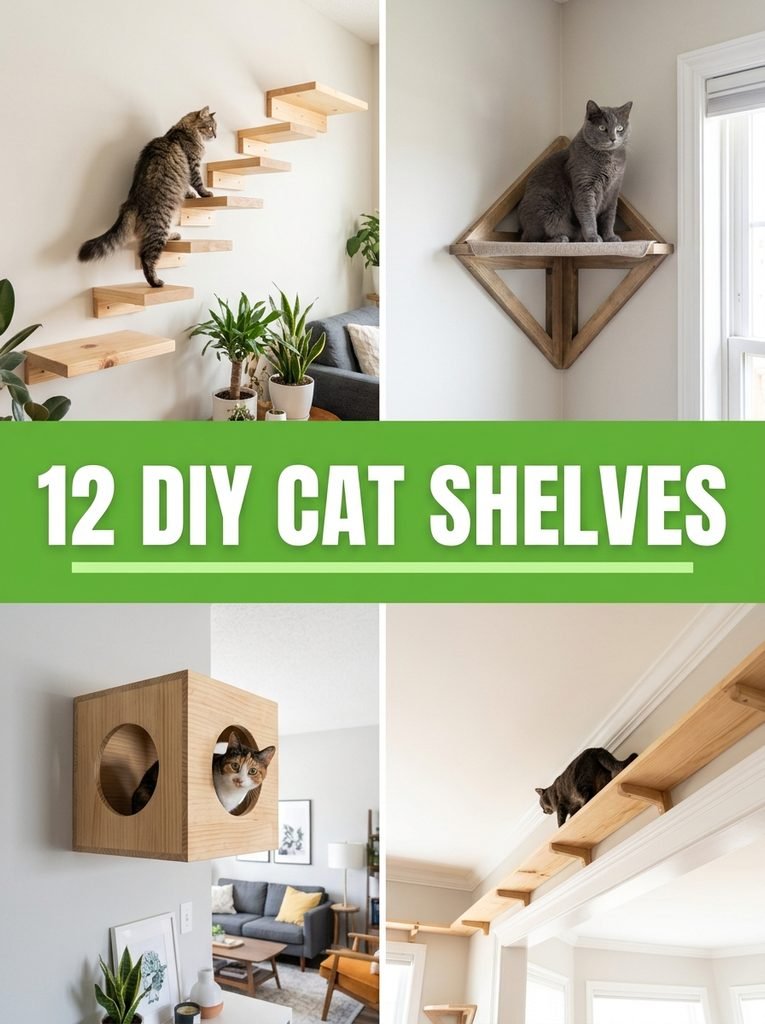
Quick Picks
- Easiest build: Floating Wall Shelf Steps (idea 1)
- Best for small rooms: Corner Shelf Perch (idea 3)
- Best for renters: No Drill Shelves for Apartments (idea 8)
- Prettiest: Wood and Rope Aesthetic Shelves (idea 9)
1. Floating Wall Shelf Steps
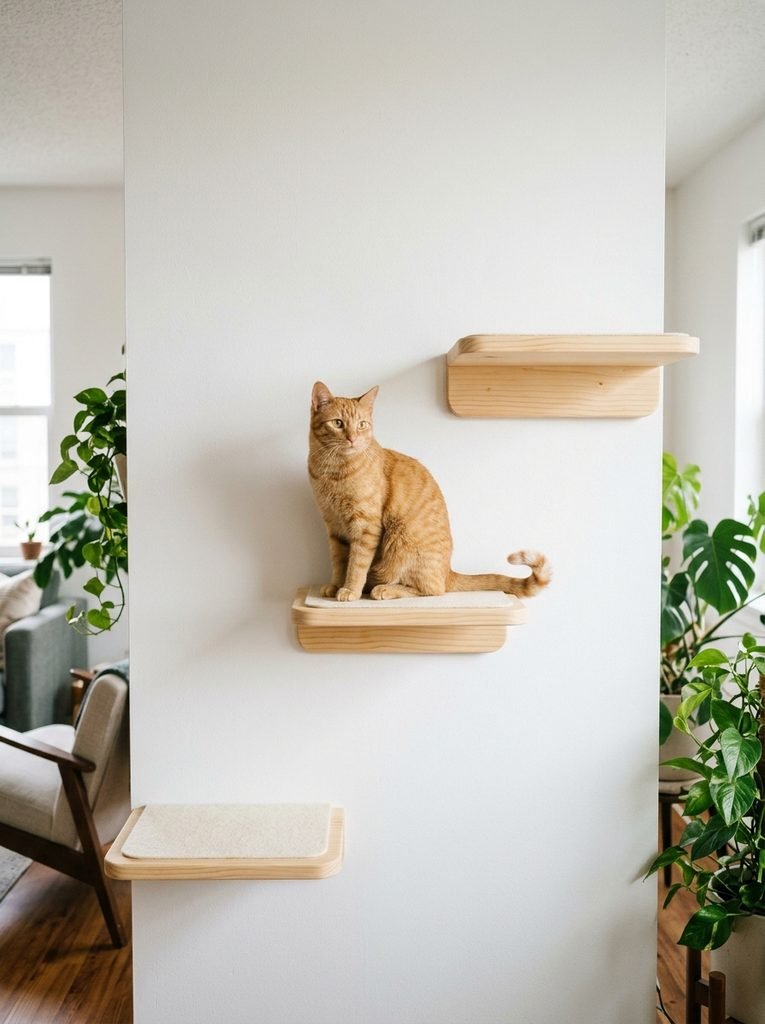
Start with the classic. Three shelves climbing the wall like stairs give your cat a path from the floor to a high perch, and you build the whole thing in an afternoon.
Space the steps about 12 to 16 inches apart, so even a heavy cat can hop between them without a stretch. I’d round the corners with sandpaper, because cats land on edges more than you’d think.
⏱ 2 hours💲 Low🛠 Easy
Materials Needed
- Three pine boards, each about 18 inches long and 10 inches deep
- Heavy duty shelf brackets, 10 inch
- Stud finder
- Pet safe water based wood sealer
- Sandpaper, a level and a drill
How to Make It
- Find the wall studs with the stud finder and mark where each shelf will sit.
- Sand every board smooth and round off all the corners and edges.
- Brush on the water based sealer, then let it dry fully for a day.
- Screw the brackets into the studs, checking each one with the level.
- Fix each board to its brackets from underneath and press a non slip pad on top.
Tip: Always screw into studs or use heavy duty wall anchors. Give each shelf a firm shake before your cat climbs on it for the first time.
2. Budget Store Shelf Hack
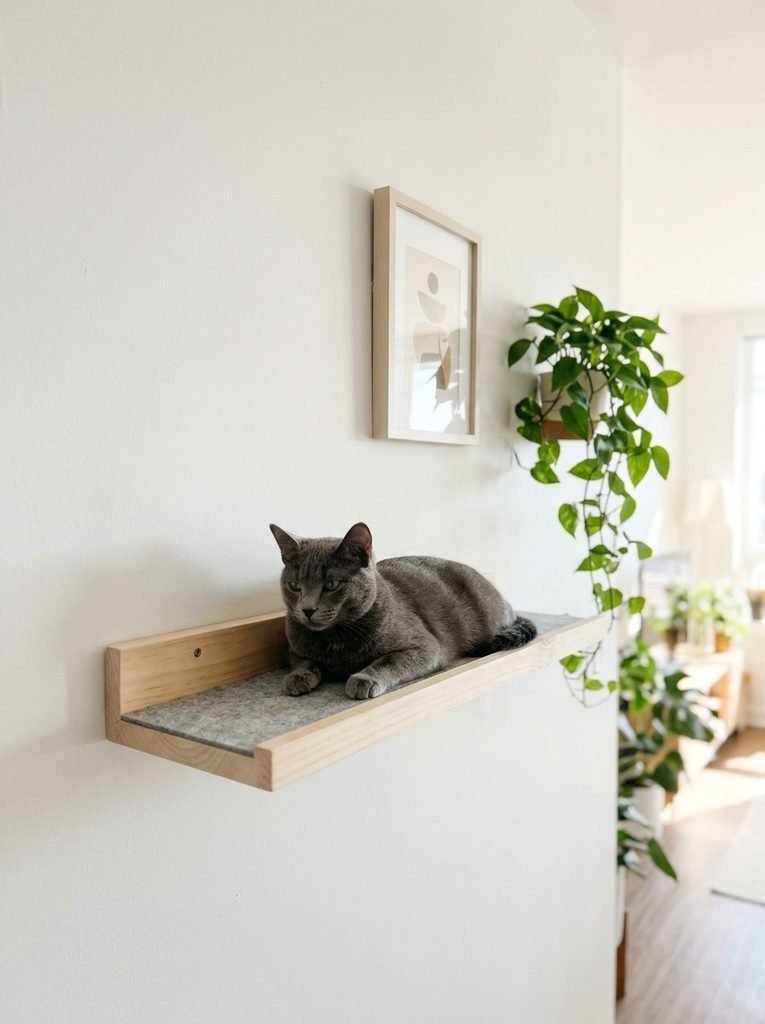
You don’t have to cut any wood. A picture ledge from your local budget home store already has the right shape. It’s long, narrow and made to hold a little weight.
The catch is the weight limit. Most ledges are made for frames, not cats. So swap the tiny included hardware for stronger screws and hit a stud, then add a felt pad on top. A trick that works: pick the deepest ledge you can find and mount it low first, so your cat learns to trust it.
You’ll need: non slip shelf liner, heavy duty wood screws and anchors
Best for: tiny budgets and quick weekend upgrades
3. Corner Shelf Perch
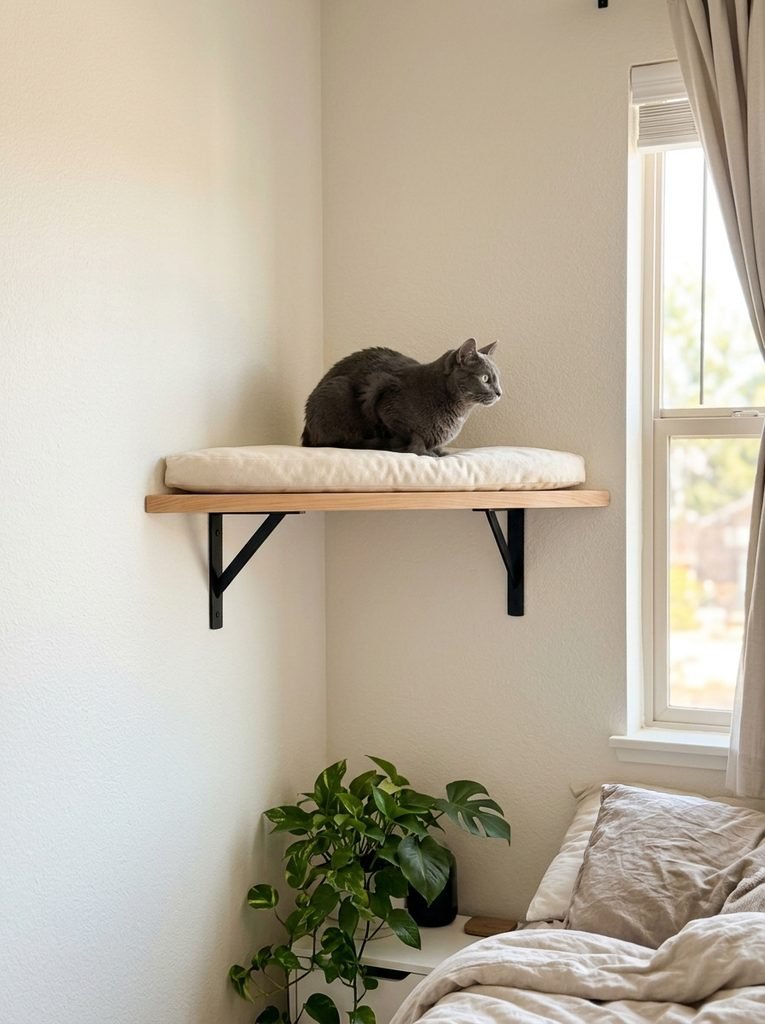
Corners are the most wasted space in a small room, and cats love them. A corner shelf lets your cat sit high, keep an eye on everything and feel safe doing it.
Cut a triangle from a single board, so both back edges sit flat against the walls. Give it a lip no taller than half an inch, so a sleepy cat doesn’t slide off. Here’s a small thing I’d never skip: a washable cushion on top, because shelf naps get furry fast.
⏱ 1 hour💲 Low🛠 Easy
Materials Needed
- One piece of 3/4 inch plywood, about 18 by 18 inches, cut into a triangle
- Two heavy duty corner shelf brackets
- Washable cat shelf cushion
- Sandpaper, wood glue and four long screws
How to Make It
- Draw a right angle triangle on the plywood so each straight side is about 18 inches.
- Cut it out, then sand the edges until they feel completely smooth.
- Screw both brackets into the wall studs on each side of the corner, at the same height.
- Set the shelf on top and screw it down from underneath through the brackets.
- Slip the cushion on and test the shelf with your own weight pressed on the center.
Tip: Check that both brackets are in studs. A corner shelf carries all the weight on two points, so it needs a strong hold.
4. Wall Catwalk Near the Ceiling
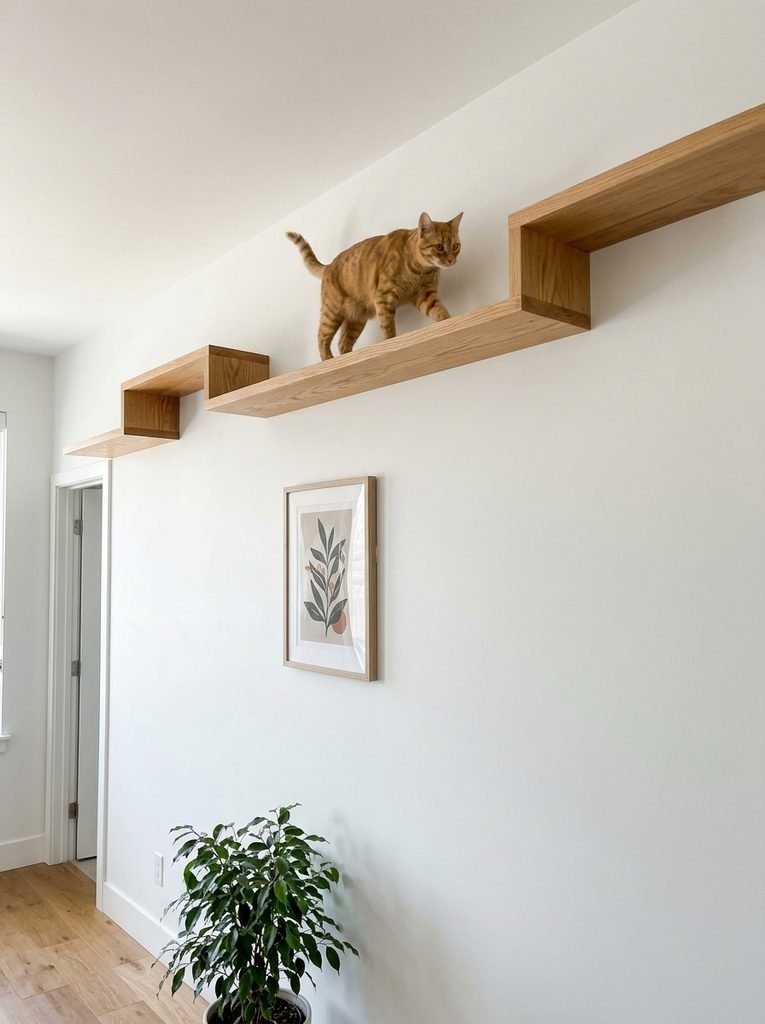
A catwalk turns a plain wall into a highway. Your cat crosses the whole room without touching the floor, and honestly, they act like they own the place when they do.
Use shelves of different lengths and keep the jumps short, about 12 inches between each one. Start low near a sofa or table, then climb toward the ceiling. Add a wide shelf in the middle where a cat can turn around or stop for a nap.
Shop it: pine floating shelves, 24 inch
Best for: multi cat homes and bored indoor cats
5. Window Perch Shelf
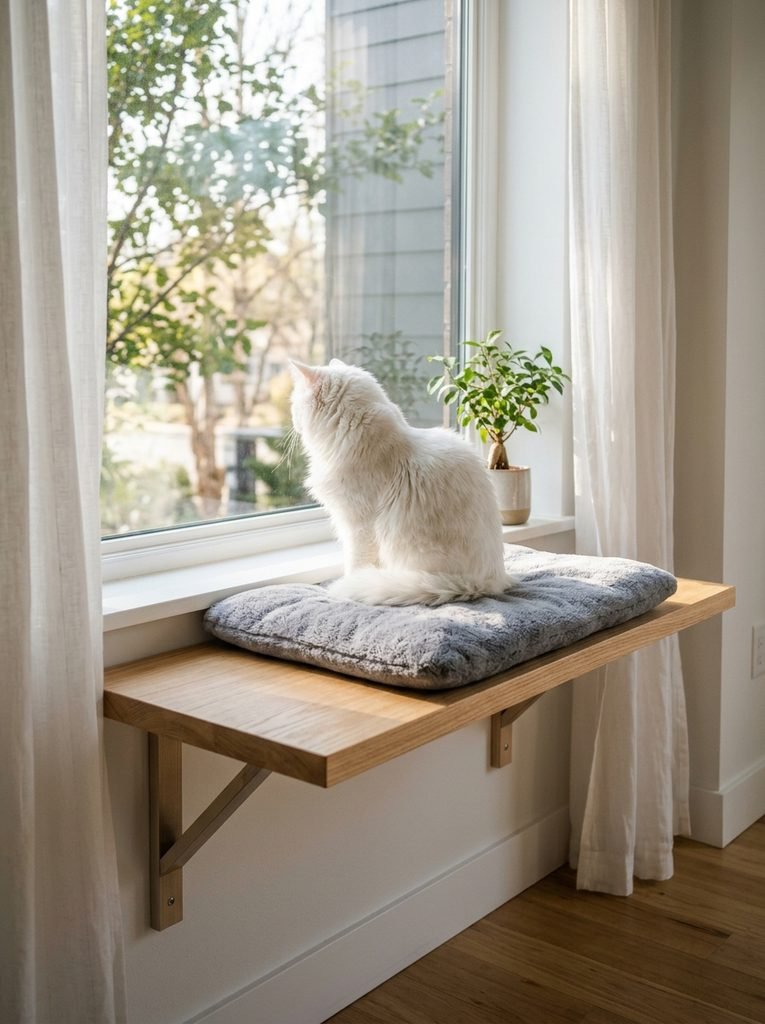
Cats watch the world like it’s a TV show. A shelf right at the window gives them the best seat in the house, and it keeps them busy for hours.
If you rent and can’t drill, try a window hammock that holds on with strong suction cups. If you can drill, mount a deep board on two brackets just below the sill. Either way, pick a window with a view of birds or trees.
You’ll need: window mounted cat hammock with suction cups
Best for: apartment cats and window watchers
6. Hiding Spot Cube Shelf
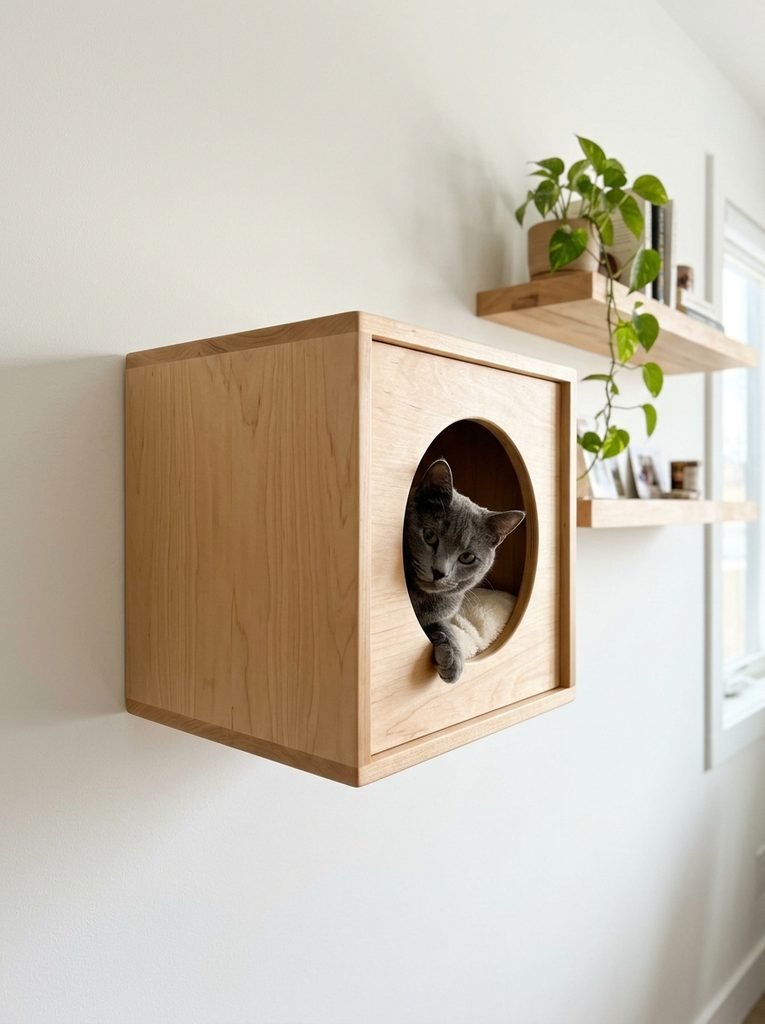
Some cats don’t want a perch. They want a hideout. A cube shelf gives them a quiet cave up on the wall, away from noisy kids and vacuum cleaners.
The doorway is the important part. Cut it about 6 inches wide, with smooth edges and a sanded rim. Keep one side open on a second shelf, so your cat always has a clear way out and never feels trapped.
⏱ 3 hours💲 Medium🛠 Medium
Materials Needed
- Five pine boards, about 12 inches square and 3/4 inch thick
- 6 inch hole saw
- Non toxic wood glue
- Cozy cat cube cushion
- Screws, sandpaper and two heavy duty brackets
How to Make It
- Cut or buy five square boards, then sand all the edges until they are smooth.
- Cut a 6 inch round hole in the front board with the hole saw and sand the rim.
- Glue and screw the boards together into an open box, with the holed board as the front.
- Let the glue cure for 24 hours before it goes anywhere near your cat.
- Mount the cube to wall studs with two brackets and drop the cushion inside.
Tip: Leave the back open or add a second hole, so your cat can always leave without turning around in a tight space.
7. Shelf With a Built In Scratching Post
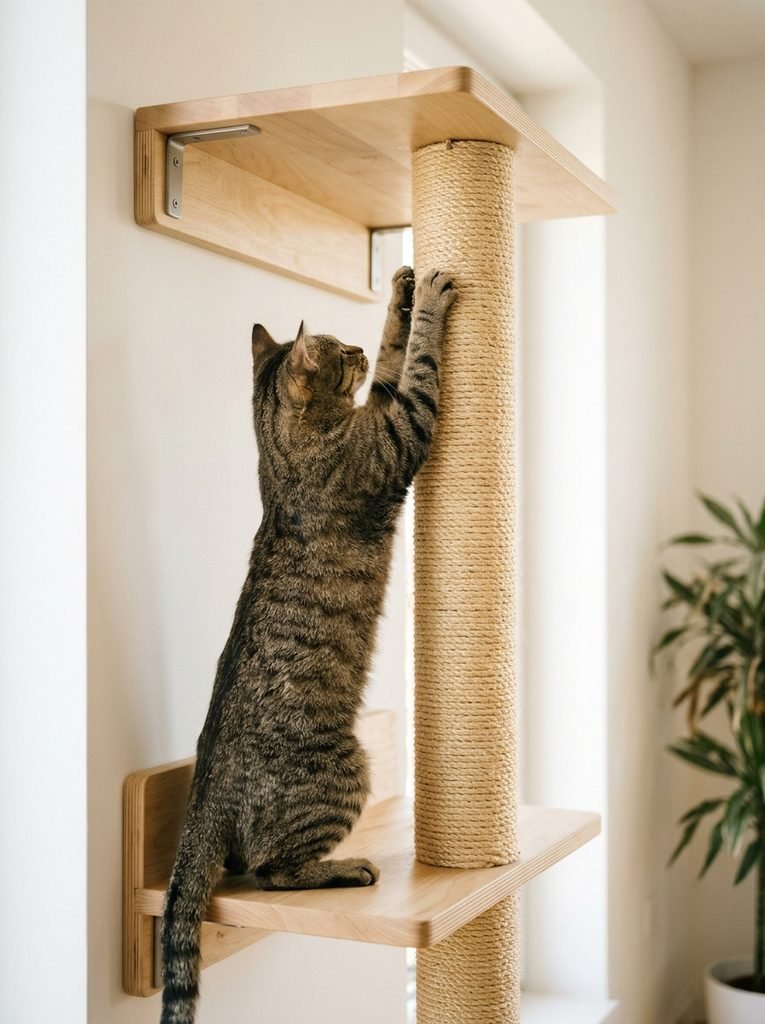
Why have a shelf and a scratcher when one build can do both? Link two shelves with a short sisal post, and your cat can climb, stretch and scratch in one smooth move.
Wrap the post tightly, so the rope doesn’t slide when your cat pulls. Skip any rope that smells of oil or chemicals. Plain sisal is the safest, and cats love how it feels under their claws.
You’ll need: natural sisal rope, untreated
Best for: cats who love stretching and climbing
8. No Drill Shelves for Apartments
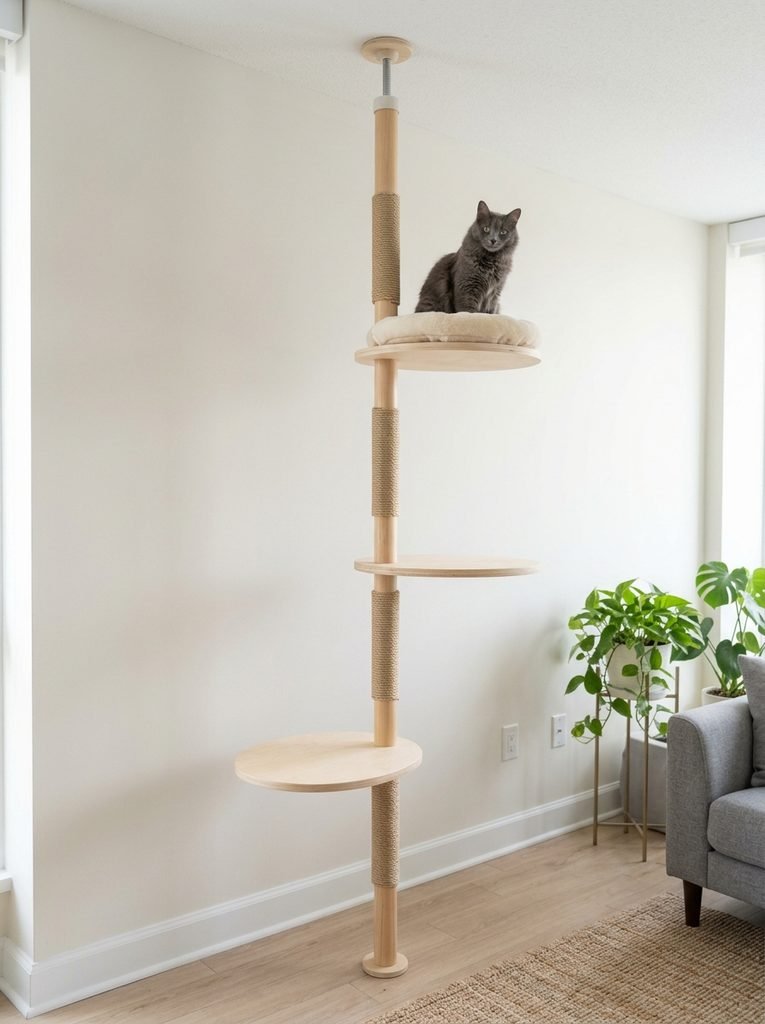
Rental rules don’t have to ruin your cat’s fun. A tension pole holds shelves between floor and ceiling with pressure alone, so there are no holes and no deposit worries.
Another good option is a leaning ladder shelf. It stands on the floor, rests on the wall and holds plants for you and napping spots for your cat. Place it where it can’t slide, and check every few weeks that it hasn’t shifted.
Shop it: floor to ceiling tension pole cat shelves
Best for: renters and anyone who hates drilling
9. Wood and Rope Aesthetic Shelves
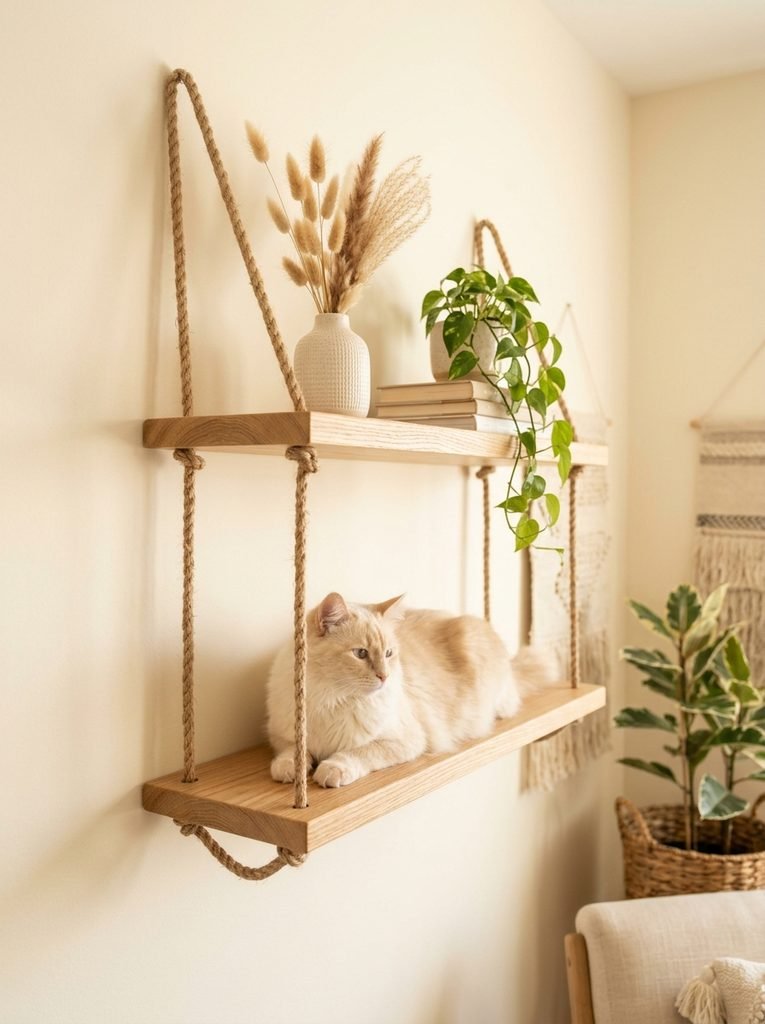
Cat furniture doesn’t have to look like cat furniture. Plain oak shelves with thick rope accents blend right into a boho or neutral room, and nobody guesses they’re for the cat.
Thread a thick rope through a drilled hole at one end, knot it underneath and leave a neat loop. It looks lovely and gives your cat something to grab. Keep the ends short and tucked, so no loose strands hang down.
You’ll need: thick natural jute rope
Best for: neutral homes and stylish cat owners
10. Raised Feeding Station Shelf
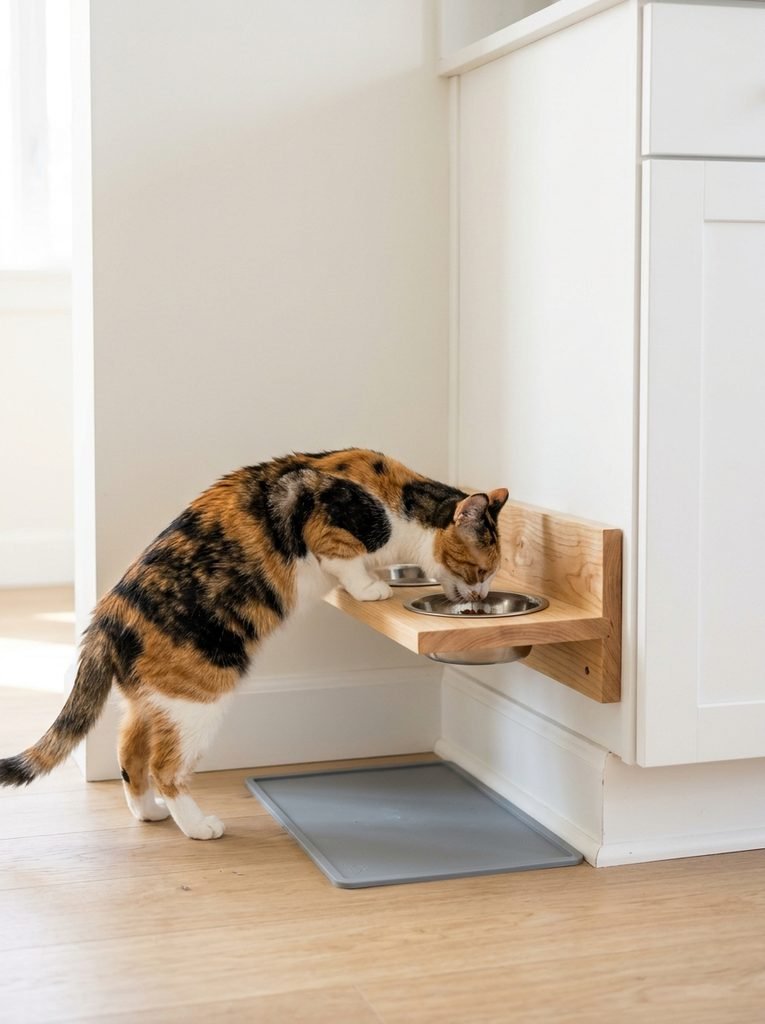
A shelf can solve a feeding problem too. A raised station keeps bowls off the floor, keeps them tidy and stops a pushy dog from stealing the food.
Cut two round holes that fit your bowls snugly, so they can’t tip. Mount the shelf about 10 inches off the floor, and put it away from the litter area. Cats like their meals and bathroom far apart.
You’ll need: tilted stainless steel cat bowls and a silicone pet mat
Best for: multi pet homes and messy eaters
11. Bookshelf Cat Lane
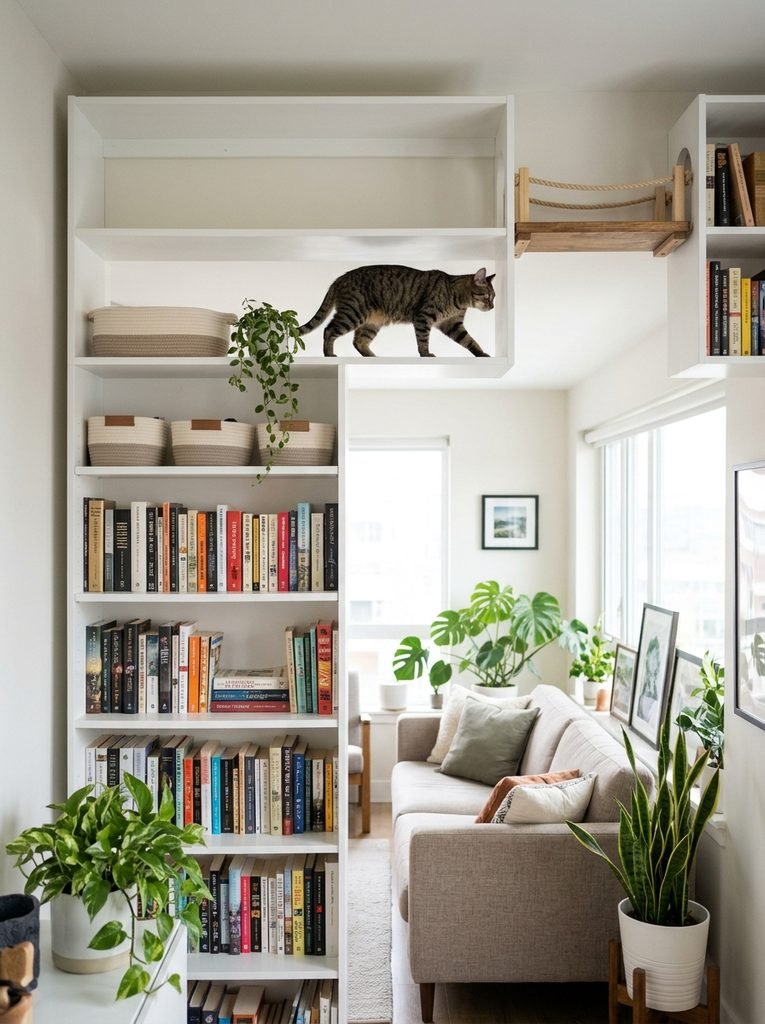
Sometimes the best cat shelf is the one you already own. Clear one row on your bookshelf, and it becomes a hallway in the sky, right inside a small room.
Add a short plank bridge between two bookshelves for extra fun. Fix the bookshelves to the wall first. Cats leap, and an unsecured bookshelf can tip right over.
You’ll need: furniture anti tip straps
Best for: small spaces and book lovers
12. Catio Shelves for Outdoors
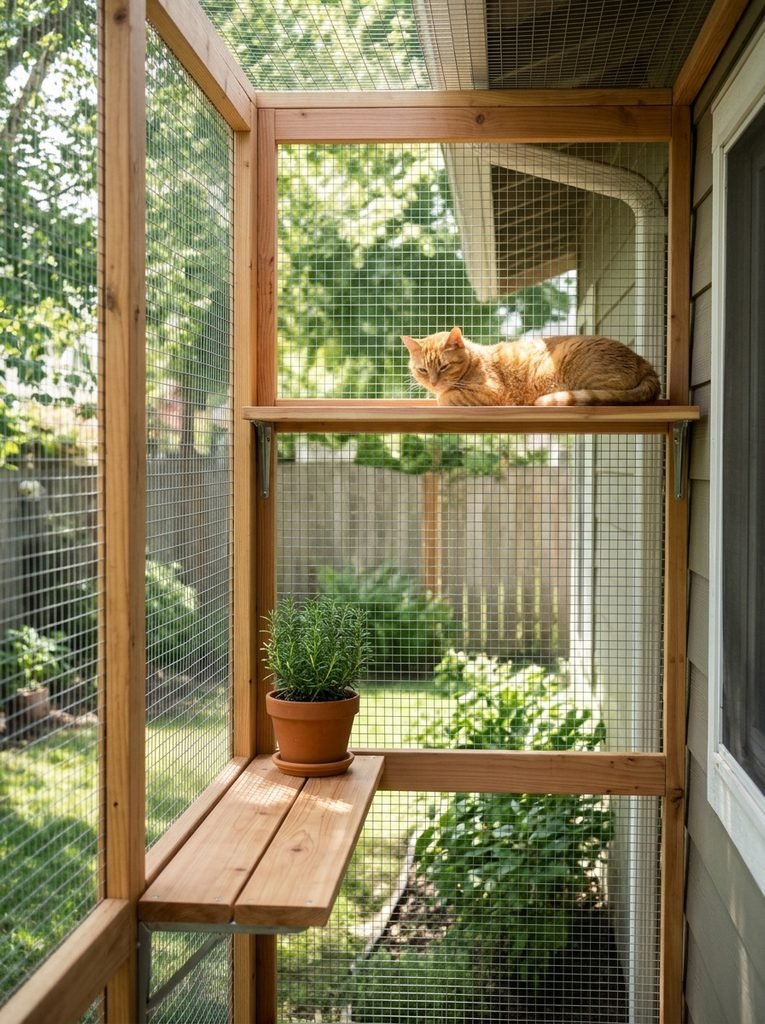
A catio lets your cat enjoy fresh air safely, and shelves make it so much better. Different heights give them places to sit in the sun, the shade or out of the breeze.
Use cedar or another untreated outdoor wood, and seal it with a pet safe finish. Slope the top slightly so rain runs off. Keep your cat inside the enclosure and watch them whenever they’re out.
Shop it: cedar planks, 1 by 10 or a ready made catio kit
Best for: garden lovers and balcony owners
Frequently Asked Questions
How high should cat shelves be?
Start with the first shelf about 12 to 16 inches off the floor, then keep each step the same distance apart. Cats feel most at home on perches about shoulder height or higher.
How much weight should a cat shelf hold?
Aim for at least 15 pounds per shelf, even for a small cat. They land hard, so the hold should be much stronger than their weight.
Do cats actually use wall shelves?
Most do. Cats love height because it feels safe. Put the first shelf next to something they already climb, like a sofa or table.
What wood is safe for cat shelves?
Plain pine, oak and cedar are all good choices. Seal them with a pet safe water based finish and let everything dry fully before your cat touches it.
How do I get my cat to try a new shelf?
Place a treat or a little catnip on the lowest shelf and let your cat sniff it out. Never lift or push them up. Let them choose.
Can I put cat shelves in a rental?
Yes. Try a tension pole, a leaning ladder shelf or a window hammock with suction cups, so you don’t need to drill into any walls.
Final Thoughts on DIY Cat Shelves
You don’t need a huge room or a fancy cat tree. One sturdy shelf at the right height can change how your cat uses the whole space. Start with a single shelf, watch where your cat likes to sit, and build from there.


Amir Ali is the founder and site administrator of HomeDecorEdge, a modern home decor and interior design platform. Since starting the site, he has combined his passion for interior design, practical styling, and color coordination with hands-on content strategy and site management. He guides authors, curates high-quality articles, and ensures readers have access to actionable, visually inspiring, and user-focused home decor advice for apartments, small rooms, and family homes.