

Does your cat sprint through the house at 3 a.m. like it’s late for something?
Mine does. And I finally figured out why. Indoor cats have loads of energy and not much place to use it.
A cat wheel gives that energy a safe home. You can build one yourself for much less than a store bought wheel, if you get the size and safety right.
Here are 10 DIY cat wheel ideas, from a full size plywood build to a simple cardboard toy. Three of them have full step by step build cards.
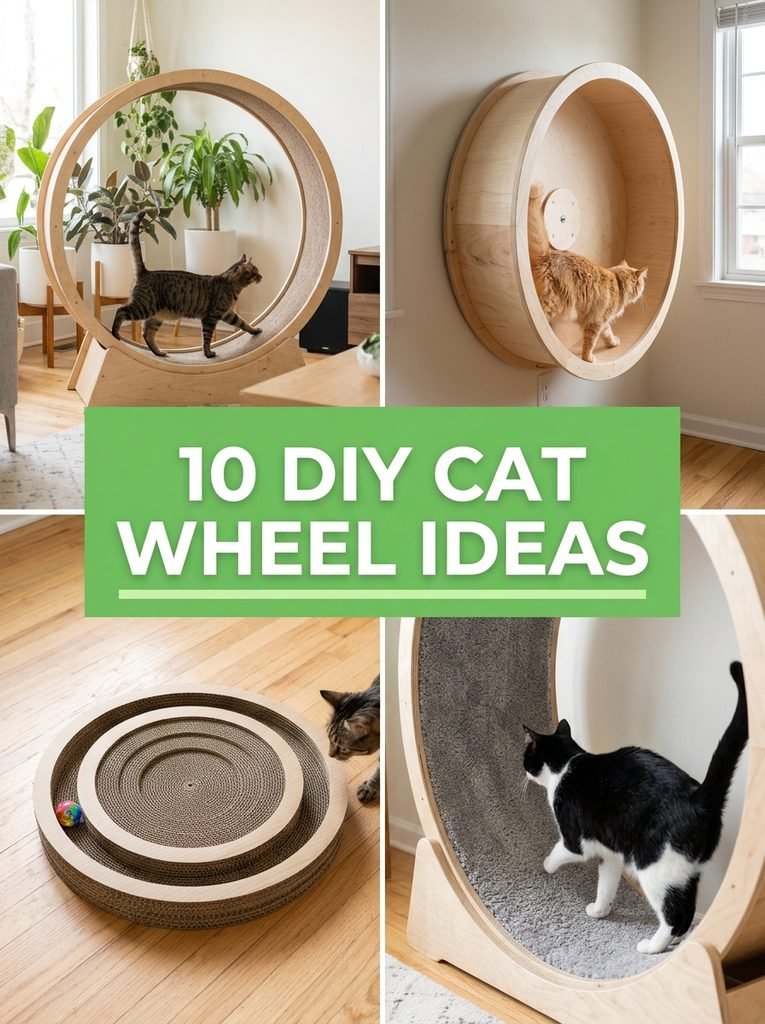
Quick Picks
- Best main build: Easy Plywood Cat Wheel (idea 1)
- Easiest build: Cardboard Ball Track Wheel (idea 4)
- Saves floor space: Wall Mounted Wheel Frame (idea 3)
- Do this first: Wheel Size and Safety Check (idea 7)
1. Easy Plywood Cat Wheel
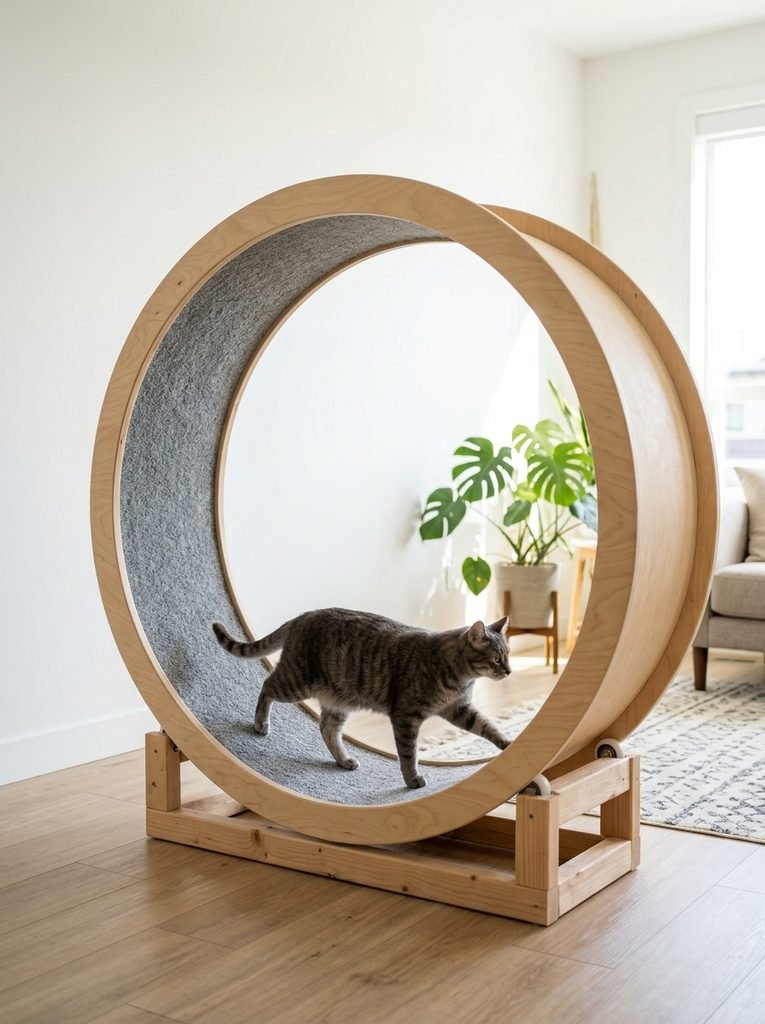
This is the real deal. A wooden wheel big enough for a cat to run naturally, without bending its back. It looks like a big project, but it’s mostly cutting circles and joining them with a track.
Size is everything here. Aim for a wheel about 40 to 48 inches across, with a track at least 10 inches wide. A small wheel makes a cat arch its spine, and that’s the one thing you really don’t want.
⏱ 1 weekend💲 Medium🛠 Medium
Materials Needed
- Two plywood rings, 3/4 inch thick and about 48 inches across, with a large round hole cut in the middle of each
- Flexible hardboard strips for the running track, about 12 inches wide
- Skate wheels with bearings, 80 mm, set of 8
- Pet safe water based wood sealer
- 2×4 boards for the base frame, wood screws and a jigsaw
How to Make It
- Cut both plywood rings and sand every edge until it feels smooth.
- Join the two rings with the hardboard strips, screwing from the outside and keeping the track perfectly round.
- Seal the whole wheel with the water based finish and let it dry for a full day.
- Build the 2×4 base and mount the skate wheels so the rings rest and spin on them.
- Spin the wheel by hand and check that it turns freely, with no wobble and no gaps.
Tip: Cover every screw head and sand all the edges. Block the wheel from rolling away with a wedge until your cat is confident.
2. Old Chair Turned Wheel Stand
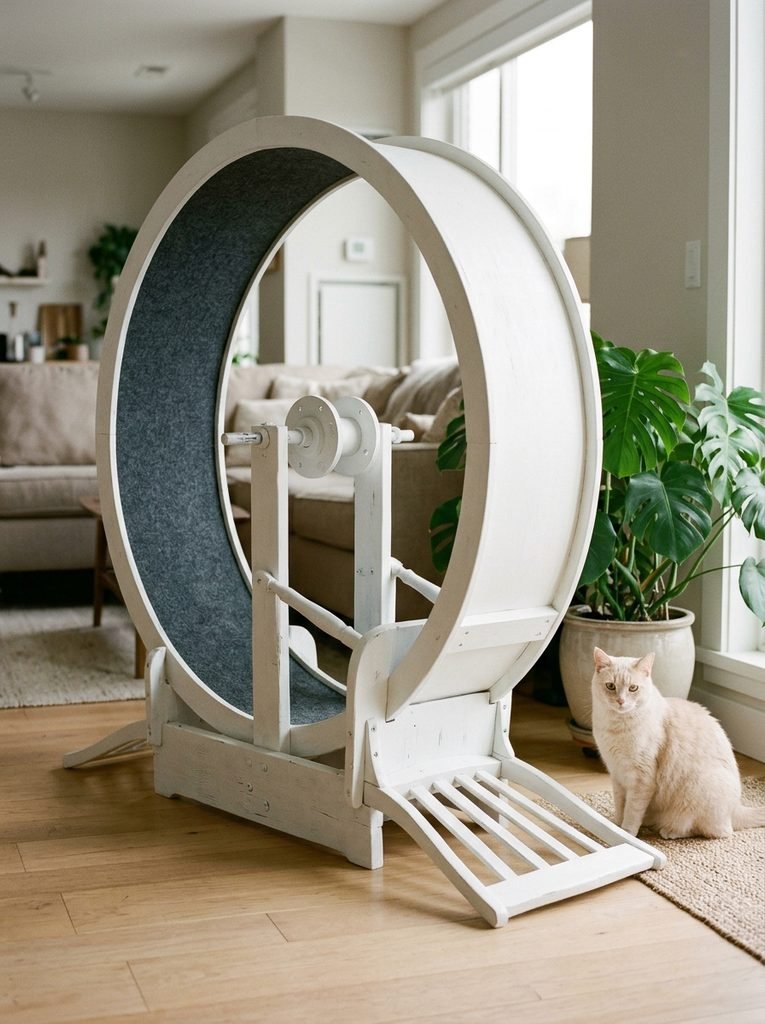
A tired old chair can find a second life. Its sturdy legs and rails make a ready made frame for holding the wheel steady, so you skip a lot of measuring and cutting.
Pick a solid wood chair, not a wobbly one. Take off the seat, remove any loose parts and brace the legs with an extra board. Paint it with a pet safe finish and it won’t look like a project at all.
You’ll need: heavy duty corner braces
Best for: thrifty builders and furniture rescuers
3. Wall Mounted Wheel Frame
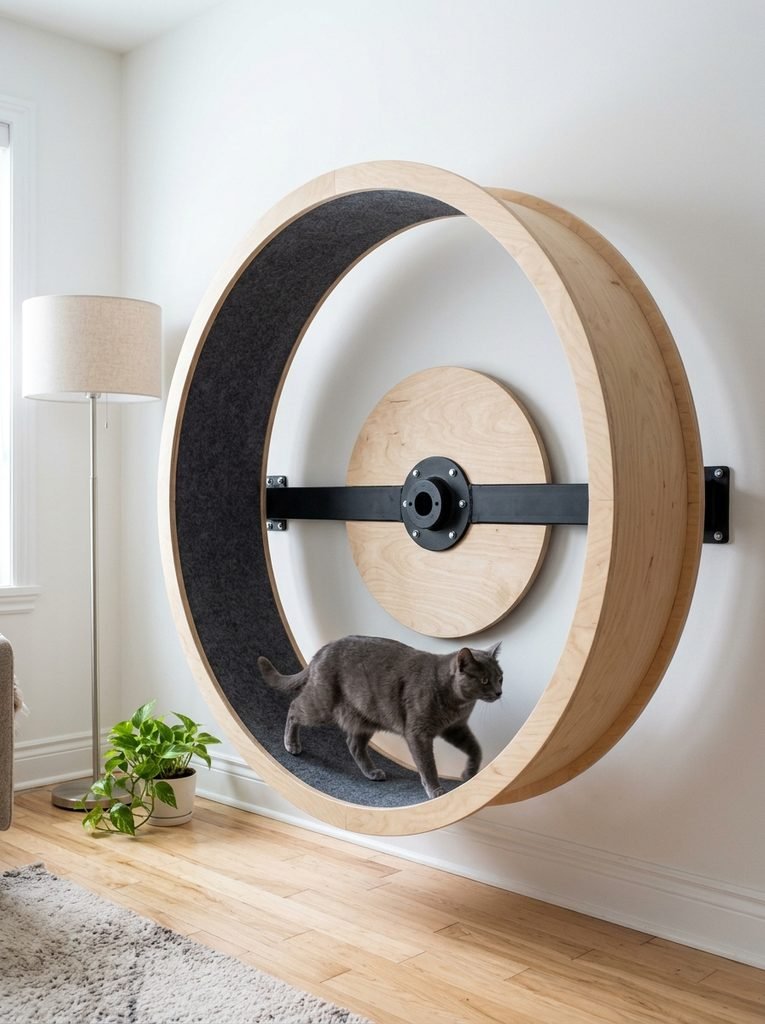
Short on floor space? Hang the wheel’s frame from the wall. The wheel sits a little above the floor, which leaves room underneath for a rug or a feeding mat.
The wall must carry real weight, so this one is for the confident builder. Use a stout wooden backboard fixed into at least two studs, and never mount it on plain drywall.
⏱ 1 weekend💲 Medium🛠 Hard
Materials Needed
- One thick hardwood backboard, about 5 feet by 8 inches
- Heavy duty French cleat wall hanger
- Stud finder
- A steel axle bolt, large washers and a wheel that spins freely
How to Make It
- Find at least two studs and mark where the backboard will go.
- Screw the French cleat to the backboard and the matching half into the studs.
- Mount the axle through the backboard and fit the wheel so it spins easily.
- Hang the board on the cleat and push hard on it to test the hold.
- Add a soft rug under the wheel and keep the floor around it clear.
Tip: If you can’t find studs, don’t build this one. A wall wheel that tears loose can seriously hurt a cat.
4. Cardboard Ball Track Wheel
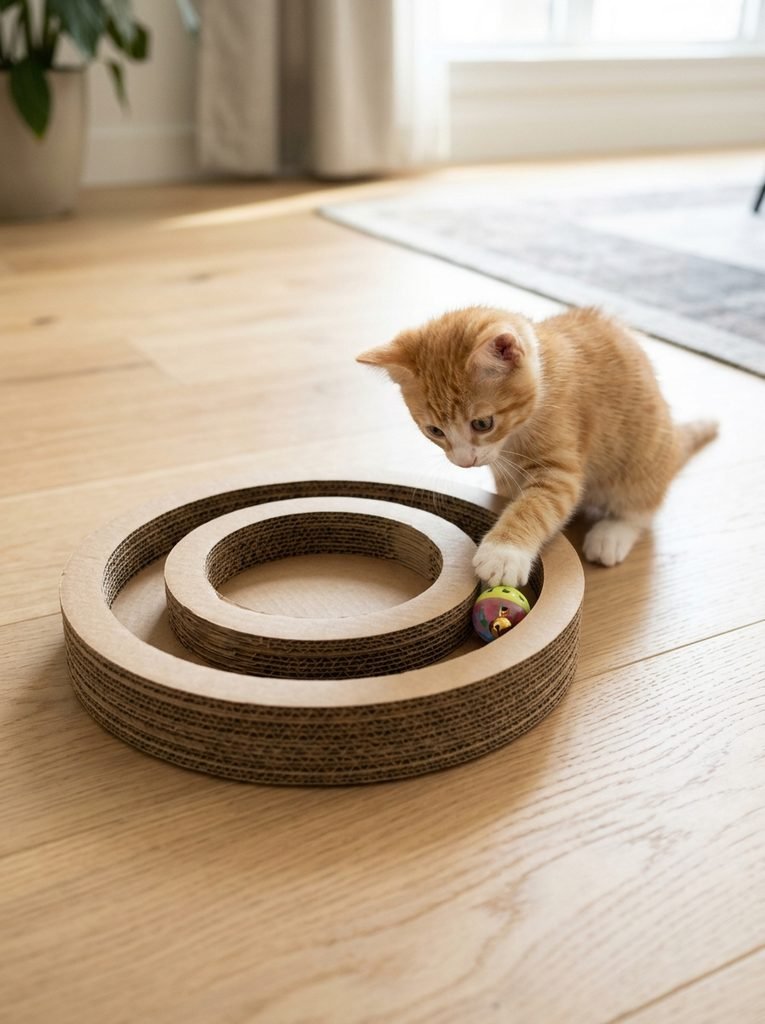
A cardboard wheel can’t carry a cat, but a cardboard track can keep one busy. A round groove lets a ball roll in circles, while your cat chases it with quick paws.
It’s a cheap, safe way to burn energy on a rainy day. Make the ring wide enough that the ball can’t escape, and swap it out when the cardboard gets soft or torn.
⏱ 1 hour💲 Low🛠 Easy
Materials Needed
- One large round piece of corrugated cardboard, about 20 inches across
- Cardboard strips, 2 inches tall, for the track walls
- Non toxic craft glue
- Hollow plastic cat balls with a bell
- Scissors or a box cutter
How to Make It
- Cut the big circle from the cardboard to make the base.
- Glue a ring of cardboard strips near the outer edge to form a low wall.
- Glue a smaller ring inside it, leaving a gap about 3 inches wide for the ball.
- Weigh it down and let the glue dry for 24 hours.
- Drop a ball in the groove and flick it to show your cat how it works.
Tip: An adult should use the box cutter. Throw the track out once the cardboard begins to peel, so your cat doesn’t chew it.
5. Treadmill Style Grip Lining
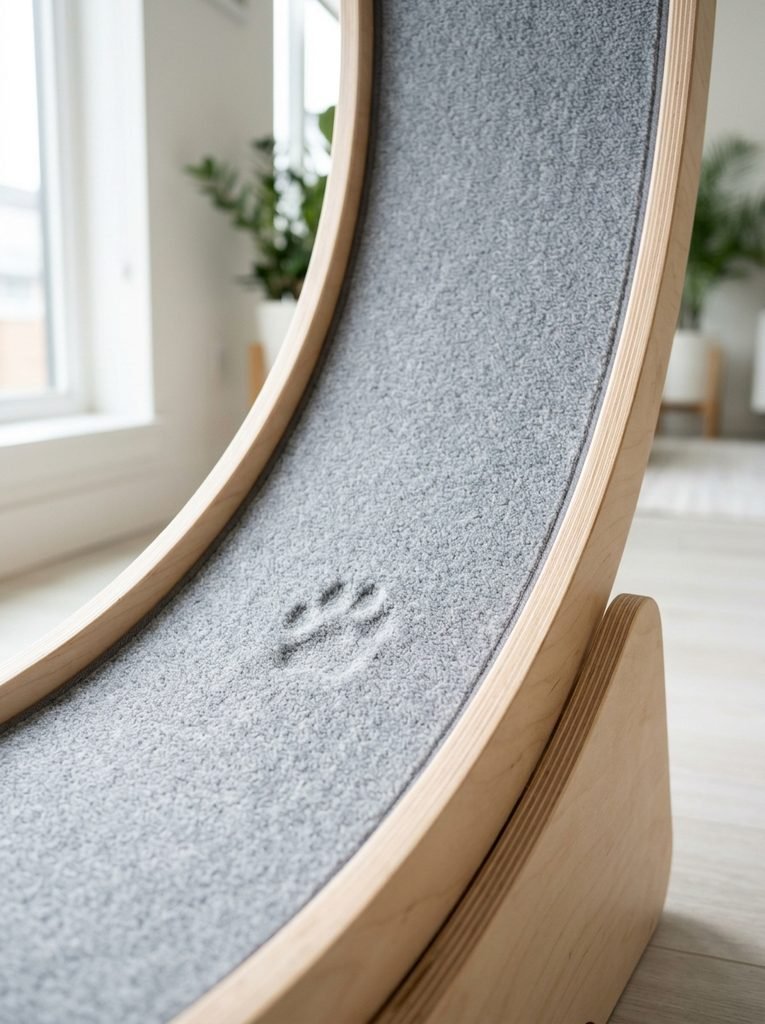
Think of a treadmill belt, but for a wheel. The surface your cat runs on decides whether they feel safe, and a bit of grip makes all the difference.
Line the track with low pile carpet or a tight cork sheet. Skip loose loops and long fibers that catch claws. A neat, glued down edge keeps it from curling.
You’ll need: low pile carpet runner, non slip
Best for: wheels that feel slippery
6. Quiet Smooth Spin Bearings
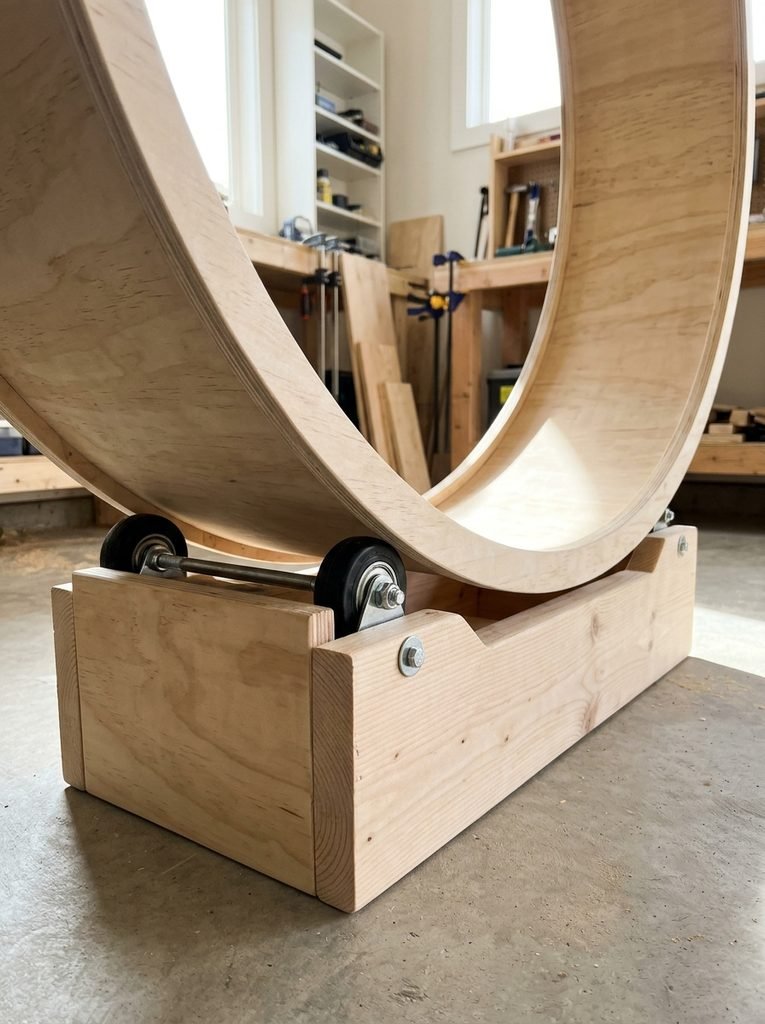
A squeaky wheel is a wheel your cat won’t use. Smooth bearings make the spin quiet and easy, and that’s what keeps a cat running without any fear.
Rub a drop of food grade silicone on the bearings, wipe off the extra and test the spin. If it still grinds or squeaks, swap the wheel. Cats notice every sound.
Shop it: food grade silicone lubricant spray
Best for: noisy wheels and light sleepers
7. Wheel Size and Safety Check
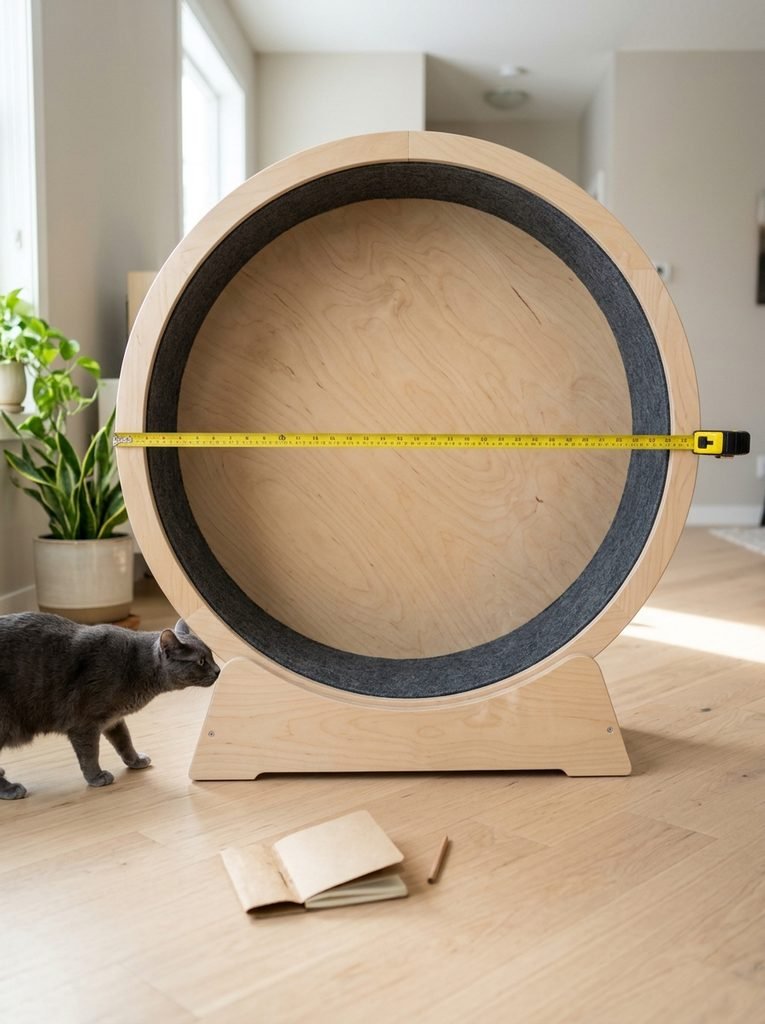
Before you cut a single board, do a quick check. Measure your cat from shoulder to hip, and plan a wheel much wider than you think you need.
A wheel that’s too small forces a cat to run with an arched back. Look for a smooth track with no gaps, a closed edge and no open spokes. If a cat’s paw can slip through, close the gap.
You’ll need: soft flexible measuring tape
Best for: first time builders and big cats
8. Training Your Cat to Run
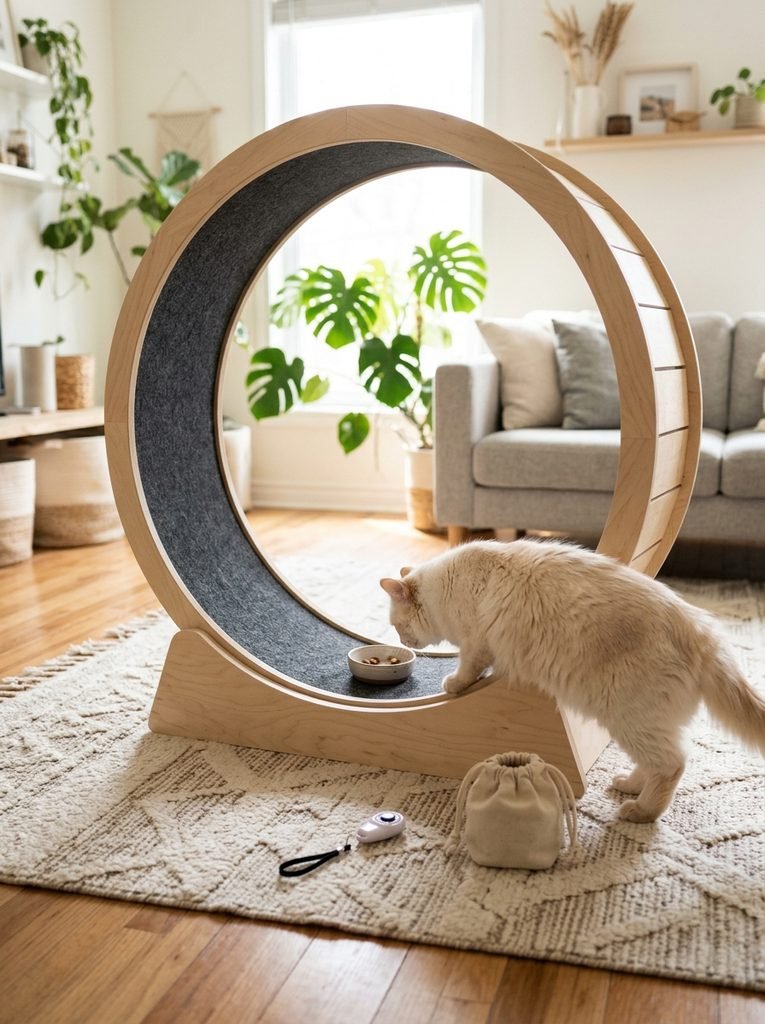
Don’t expect your cat to hop in and run on day one. Most cats need a few days to trust a big spinning thing.
Lock the wheel in place first, so it can’t move. Let your cat sit in it, nibble a treat and look around. Then let it turn just a little, a few inches at a time, and always praise gently.
You’ll need: cat training clicker with wrist strap
Best for: shy cats and first time wheel users
9. Treat Reward Setup
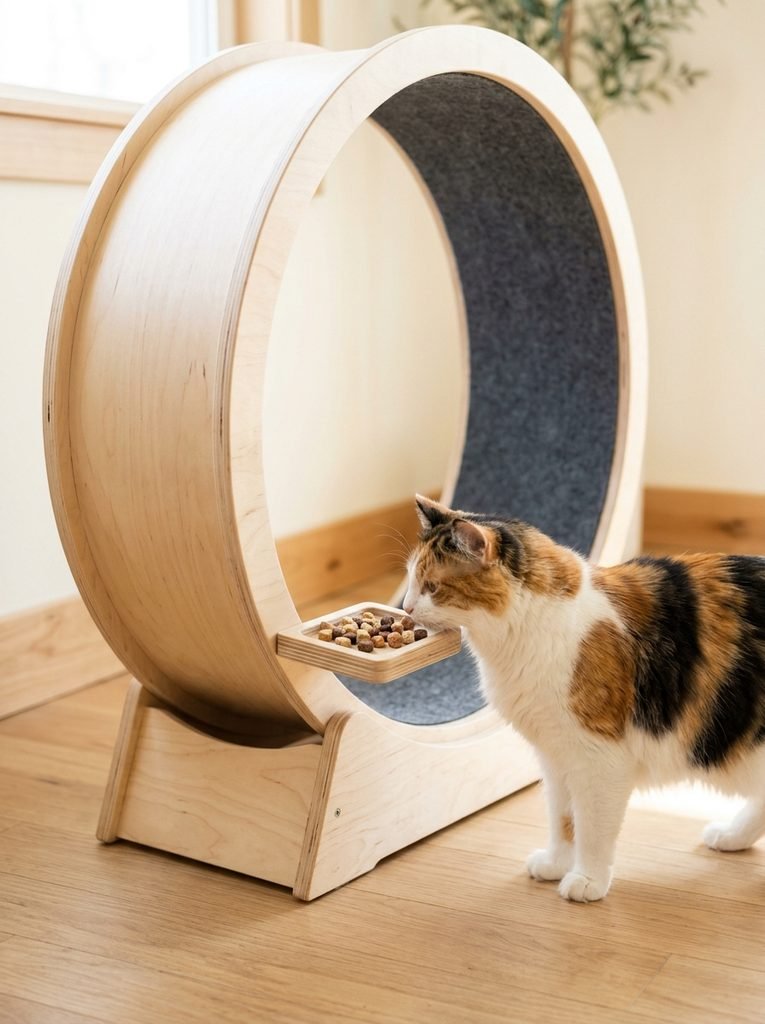
Rewards turn a scary wheel into a fun game. A small tray by the entrance gives your cat a reason to walk toward it every time.
Use tiny treats, a few at a time, so exercise doesn’t turn into extra weight. Move the treats a little deeper into the wheel each day, and your cat will follow them in.
Shop it: freeze dried cat treats
Best for: food loving cats
10. Cat Exercise Corner
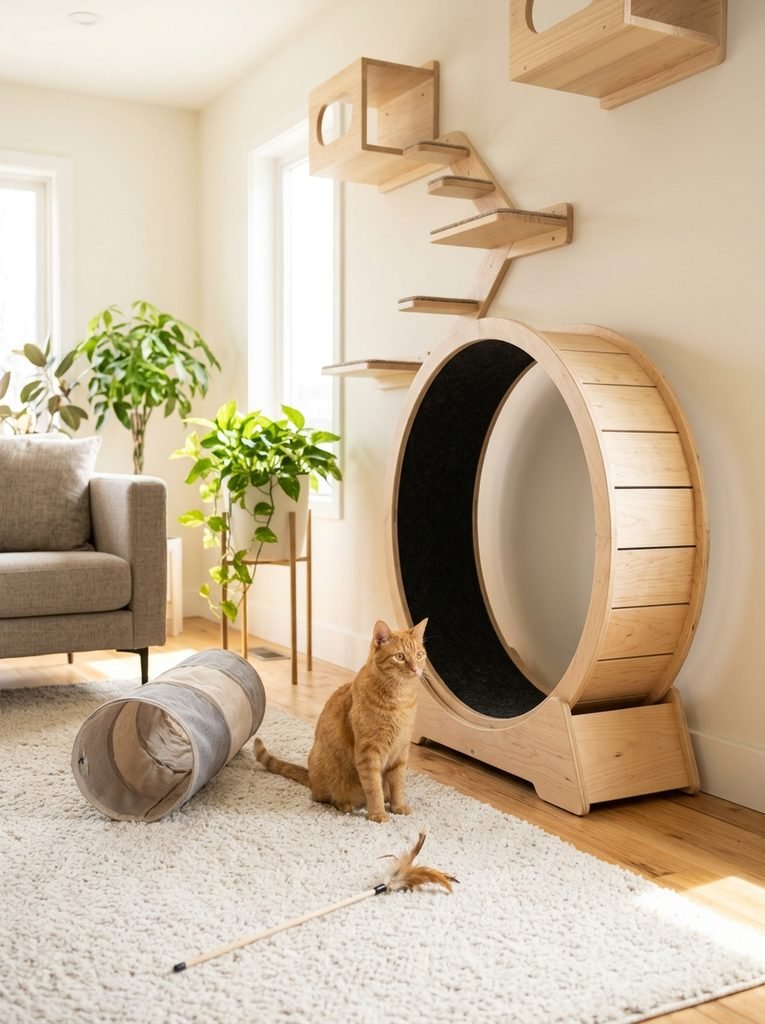
A wheel works best as part of a whole play zone. Put it beside a shelf and a toy, and your cat gets variety instead of just one thing to do.
Keep the corner open, with a soft rug under and around the wheel. Add a wand toy for play sessions with you, because nothing beats a game you play together.
You’ll need: interactive cat wand toy set
Best for: small apartments and active cats
Frequently Asked Questions
Are DIY cat wheels safe?
They can be, if the wheel is big enough and has a solid, gap free track. Always supervise, and sand every edge and cover every screw.
How big should a cat wheel be?
Aim for 40 to 48 inches across, with a track at least 10 inches wide. A smaller wheel makes a cat run with an arched back.
Will my cat actually use a wheel?
Most cats do after a few days of slow training. Use treats and patience, and never force a cat to go in.
How long should my cat run each day?
A few short sessions of 5 to 10 minutes are plenty. Let your cat decide when to stop, and check with a vet if your cat is senior or overweight.
Can I make a cat wheel from cardboard?
Not a wheel your cat can run in. Cardboard is too weak. Use it for ball tracks and toys, and build the real wheel from plywood.
Do I need a wheel if I already have cat shelves?
Shelves help with climbing, and a wheel helps with running. Many cats enjoy both, so use them together.
Final Thoughts on DIY Cat Wheel
A cat wheel takes some effort, but it can turn a bored indoor cat into a happy one. Start with the safety check, build it big and take the training slowly. Your cat will tell you when it’s ready.


Amir Ali is the founder and site administrator of HomeDecorEdge, a modern home decor and interior design platform. Since starting the site, he has combined his passion for interior design, practical styling, and color coordination with hands-on content strategy and site management. He guides authors, curates high-quality articles, and ensures readers have access to actionable, visually inspiring, and user-focused home decor advice for apartments, small rooms, and family homes.