

Every morning my cat sits at the window like a tiny security guard. Tail wrapped around her feet, eyes locked on a single sparrow.
I used to feel a bit guilty. She clearly wanted to be outside, but the street is busy and I wasn’t ready to let her roam.
Then I found out about catios. They’re safe, enclosed outdoor spaces, and you don’t need a big yard or a big budget to build one.
Here are 12 DIY catio ideas for patios, porches, balconies and windows. Three of them come with full step by step build cards.
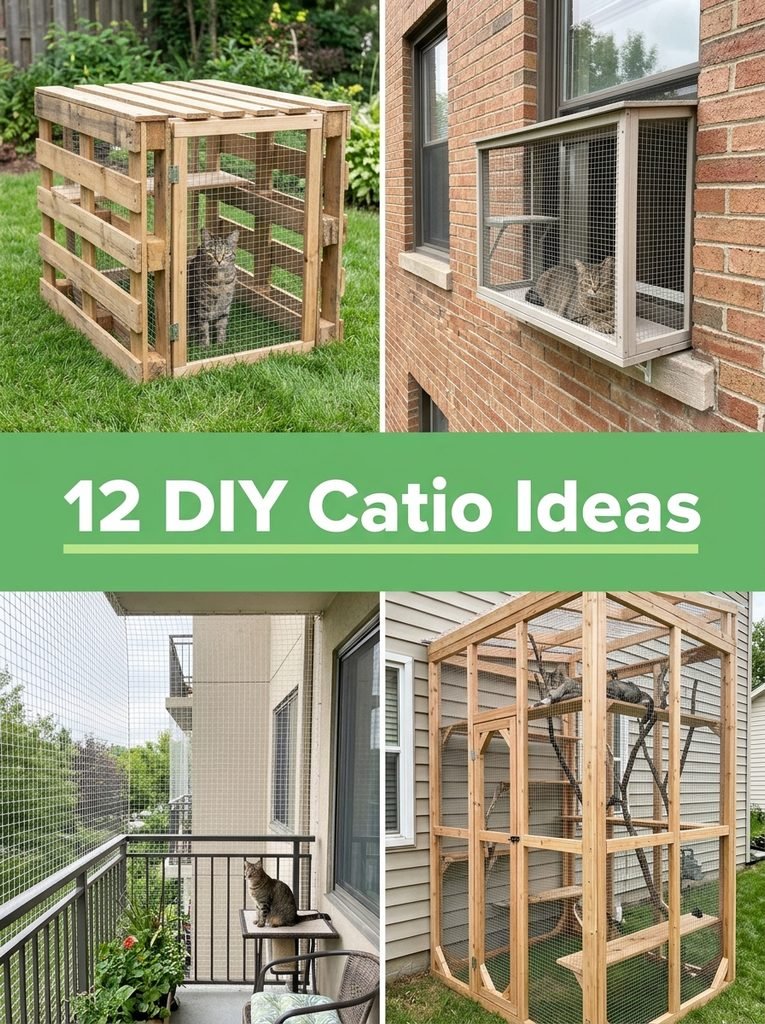
Quick Picks
- Cheapest build: Easy Pallet Catio (idea 1)
- Smallest space: Window Box Catio (idea 2)
- Best for apartments: Apartment Balcony Catio (idea 3)
- Best plans to follow: Simple Wood Frame Catio Plans (idea 5)
1. Easy Pallet Catio
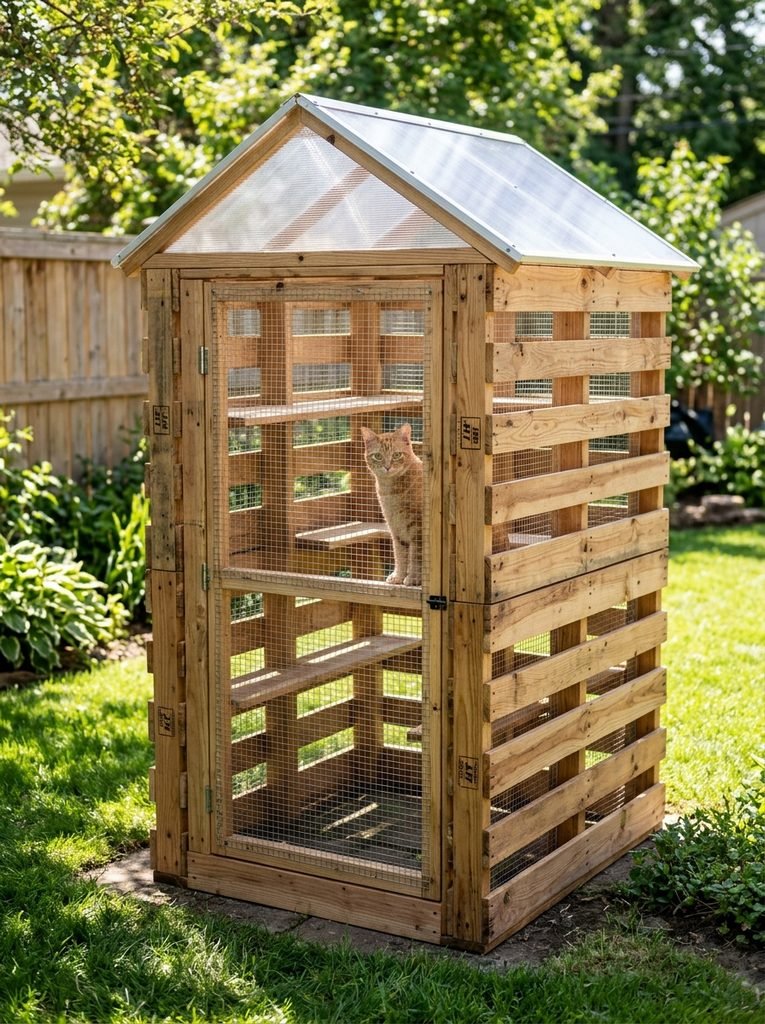
Pallets are the cheapest way to start. Two or three of them stood up and joined give you the walls of a catio for almost nothing.
Look for pallets stamped HT, which means they were heat treated, not chemically treated. Sand them well, cover every gap with fine mesh and your cat gets a safe little outdoor room.
⏱ 1 weekend💲 Low🛠 Medium
Materials Needed
- Three heat treated pallets, stamped HT, with solid slats
- Galvanized hardware cloth, 1/2 inch mesh, 19 gauge
- Heavy duty staple gun
- Exterior wood screws
- Sandpaper, a saw and a few corner braces
How to Make It
- Sand every pallet well, rounding off splinters and rough edges.
- Stand two pallets as the sides and one as the back, then screw them together at the corners.
- Staple hardware cloth over every gap and fold the cut ends inward.
- Add a simple slanted roof from a pallet board or a clear panel and screw it down.
- Attach a small door with a latch your cat can’t flip, then set it beside a door or window.
Tip: Use heat treated pallets only. Check for loose nails and stray staples, and run your hand along every edge before your cat goes in.
2. Window Box Catio
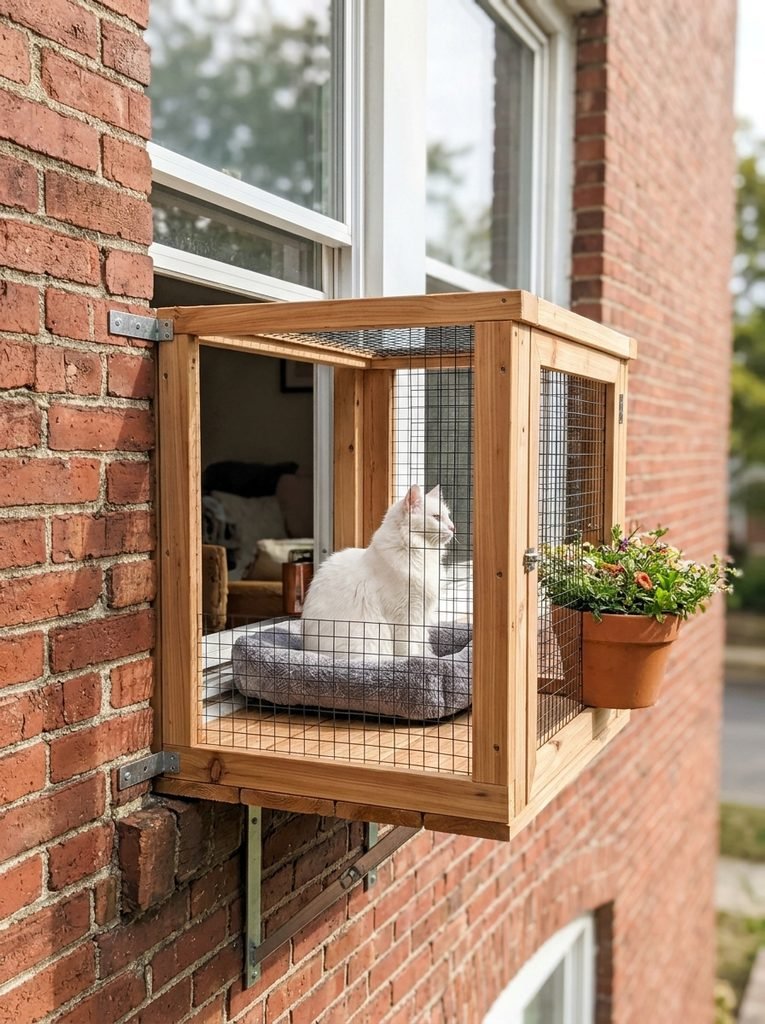
This is the smallest catio you can build, and for many cats it’s plenty. It’s a box that hangs on the outside of a window, giving your cat fresh air and a front row view of the birds.
It has to be held very firmly. I’d say anchor it to the window frame or wall, and add a support bracket underneath, because a loose box is a real danger to your cat and to people below.
⏱ 1 day💲 Medium🛠 Medium
Materials Needed
- Untreated cedar boards for the floor and frame, about 30 by 18 inches
- Stainless steel L brackets, heavy duty
- Pet resistant mesh panel
- Outdoor silicone caulk
- Exterior screws and a drill
How to Make It
- Cut the cedar and screw it into an open box with a solid floor.
- Cover the sides and top with pet resistant mesh, stapling it tight.
- Seal the window gap with caulk so no draft or gap is left.
- Fix the box to the wall with the L brackets and test it by pressing down hard.
- Add a soft cushion and let your cat sniff around with the window open only a little.
Tip: Check the weight limit of your wall and ask your landlord or building first. Never leave your cat alone in a window catio.
3. Apartment Balcony Catio
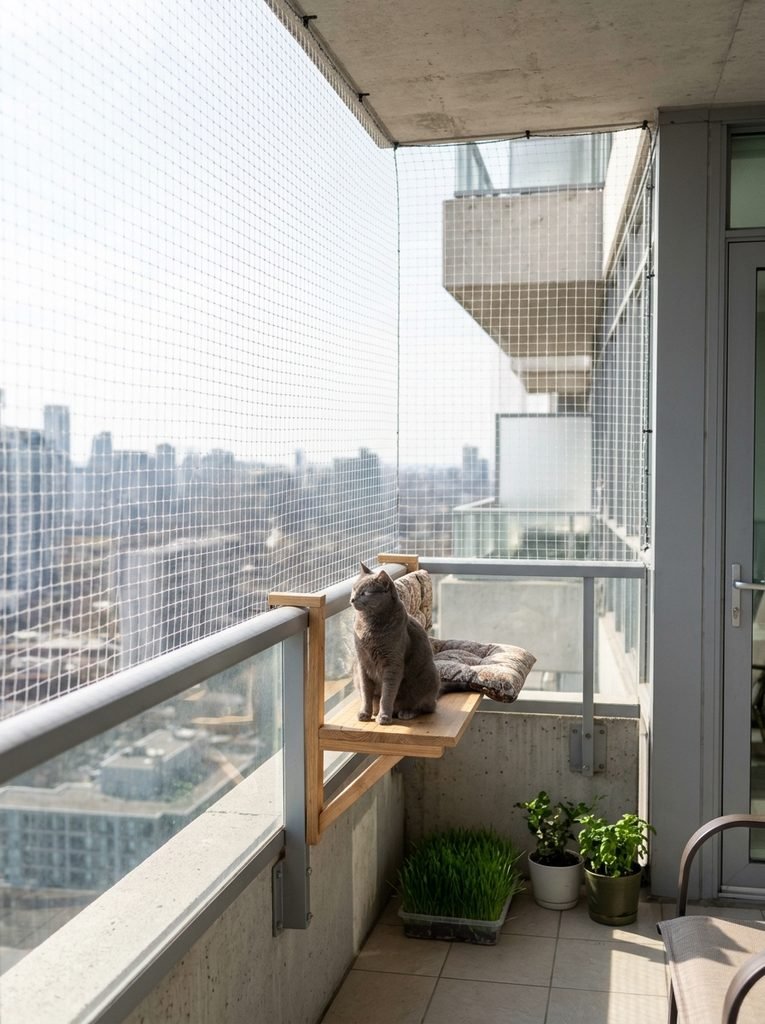
A balcony is a catio waiting to happen. All it needs is strong netting from the rail to the ceiling, with no gaps anywhere.
Check every corner and every edge. Cats can squeeze through surprisingly small spaces. Zip tie or clip the netting tight, and add a cushion in a sunny corner.
You’ll need: clear balcony cat safety netting, heavy duty
Best for: apartment owners and city cats
4. Porch Catio Enclosure
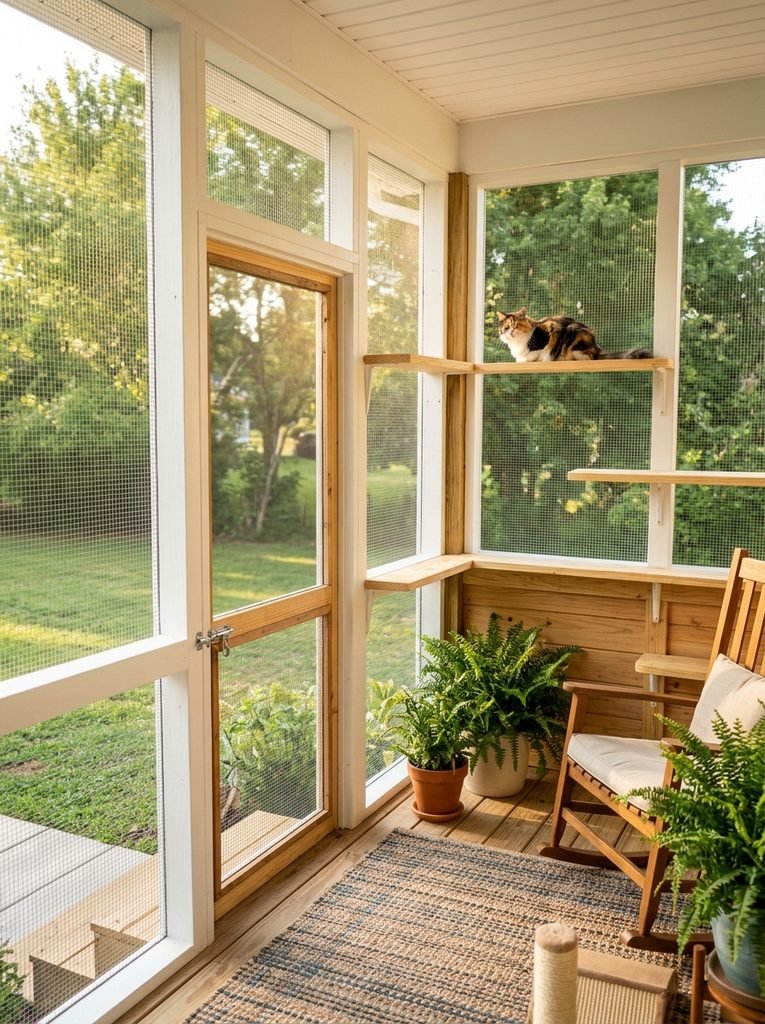
If you already have a porch, you’re halfway there. Close every opening with mesh, add a door that latches and the whole space becomes a catio.
Pay most attention to the bottom edge and the corners. A cat can slip through even a small gap. A second door, like a small entry airlock, stops a curious cat from bolting when you walk in.
Shop it: cat enclosure mesh panels
Best for: homes with a covered porch
5. Simple Wood Frame Catio Plans
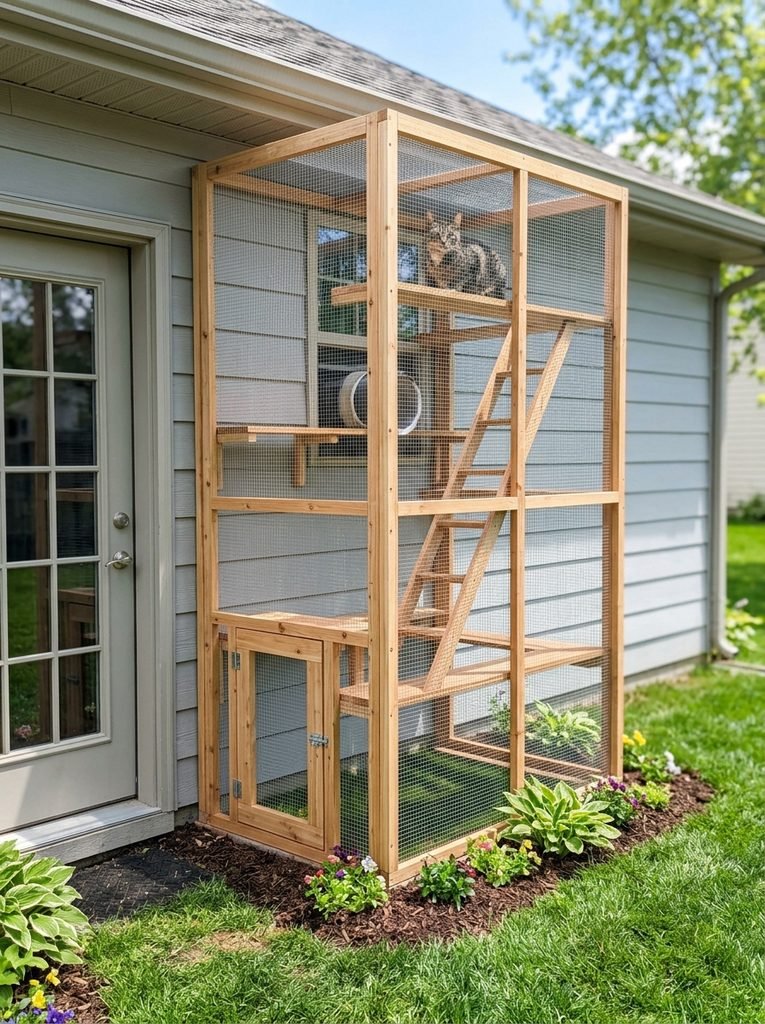
If you like a plan you can follow, this is it. A simple frame of cedar, covered in mesh, attached to the side of the house with a door that leads to your cat flap.
Keep the size about 6 by 4 feet and 6 feet tall, so you can stand inside to clean. Build the frame in panels on the ground, then join them in place. It’s far easier than building them upright.
⏱ 2 weekends💲 Medium🛠 Hard
Materials Needed
- Untreated cedar 2×2 boards, about 12 pieces cut to size
- Galvanized hardware cloth, 1 inch by 1 inch
- Galvanized corner brackets
- Gate hinges and a spring latch
- Exterior screws, a drill and a level
How to Make It
- Cut the cedar and build four flat frames, two long sides and two short ends.
- Screw and bracket each frame at the corners and check it is square.
- Stretch the mesh across each frame and staple it every 2 inches.
- Stand the panels, join them together and fix the back to the house wall.
- Hang a door with hinges and a self closing latch, then add shelves inside.
Tip: Use untreated cedar only, and set the frame on a flat base so no gap is left at the bottom.
6. Budget Store Shelf Unit Catio
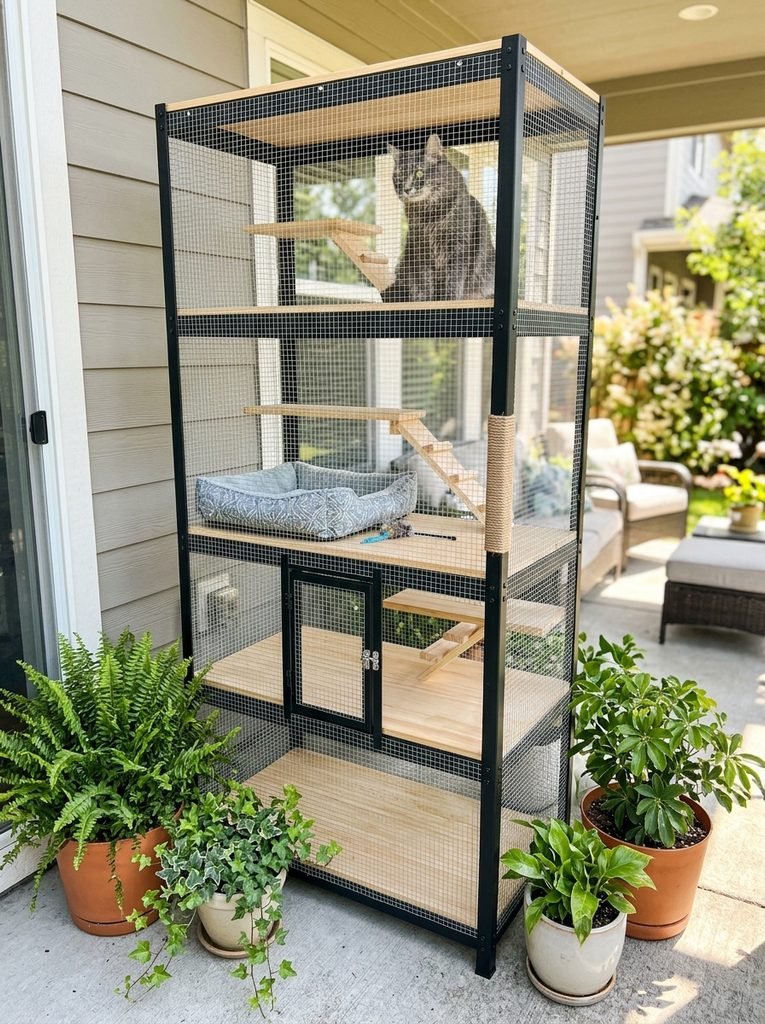
A shelving unit is already a frame. Wrap it in mesh and you’ve got a catio with levels, built in an afternoon with a screwdriver.
Choose a tall, solid unit made for outdoor use, and make sure it can’t tip. Secure it to a wall or fence, then cover every side and the top with mesh and zip ties.
You’ll need: outdoor weatherproof shelving unit, 4 tier
Best for: small patios and quick cheap builds
7. Cheap Mesh and PVC Catio
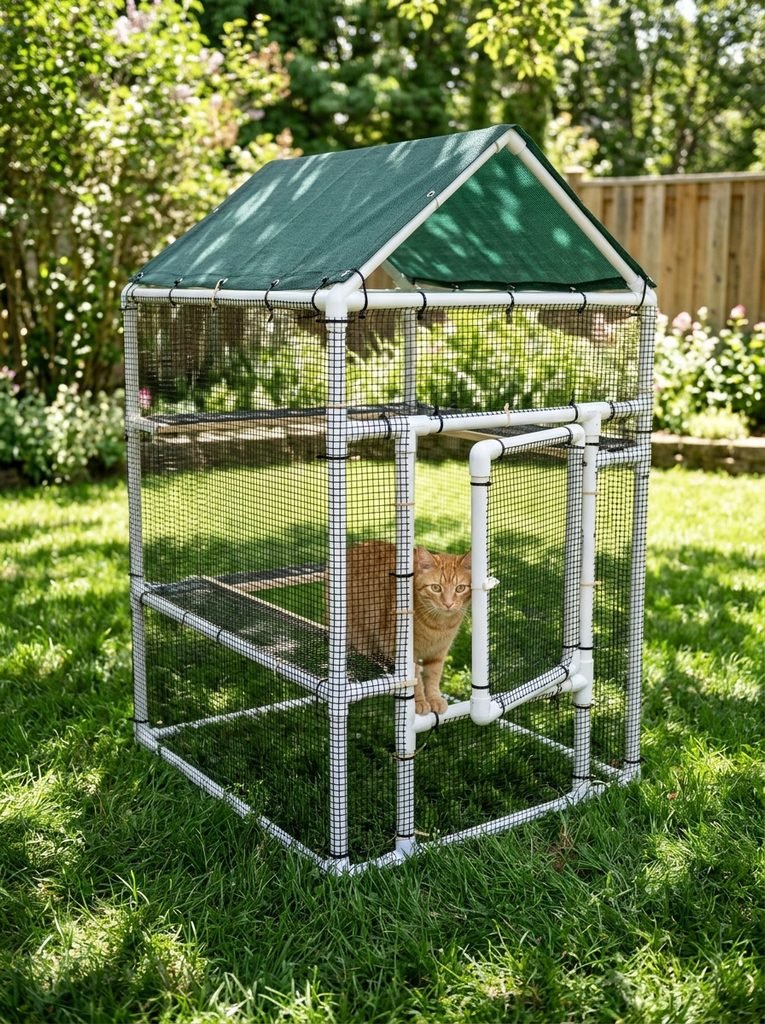
PVC pipe is light, cheap and needs no saw skill. Snap the pieces together, wrap the frame in mesh and you’ve got a catio that you can even move around the yard.
Fill the pipes with a little sand or fix the base into the ground, so wind can’t flip it. Use UV resistant zip ties, because the cheap ones go brittle in the sun.
You’ll need: PVC pipes and fittings, 1 inch and UV resistant zip ties
Best for: renters and anyone on a tight budget
8. Catio Tunnel to the Yard
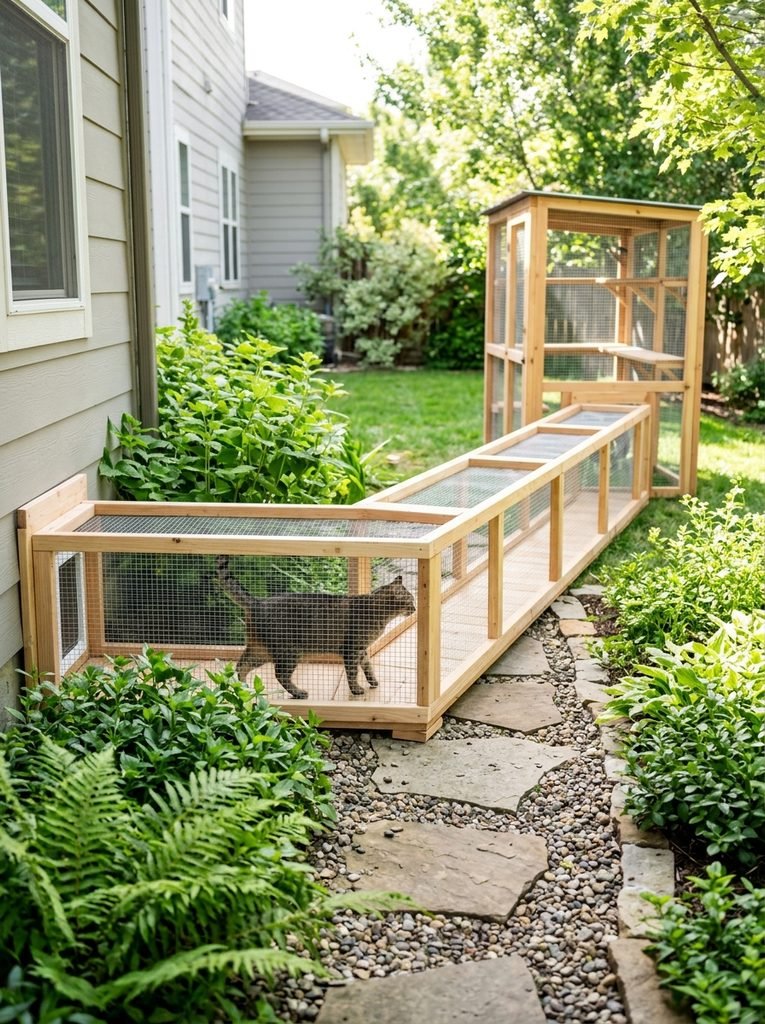
A tunnel links your house to a garden catio, so your cat can wander safely without ever touching the open yard. It’s a fun way to stretch a small catio into something much bigger.
Build it low, about 18 inches tall, with the same mesh as the catio walls. Make every join snug with no gaps. A soft bend in the tunnel keeps it interesting for your cat.
Shop it: outdoor mesh cat tunnel
Best for: garden owners and curious cats
9. Catio Accessories
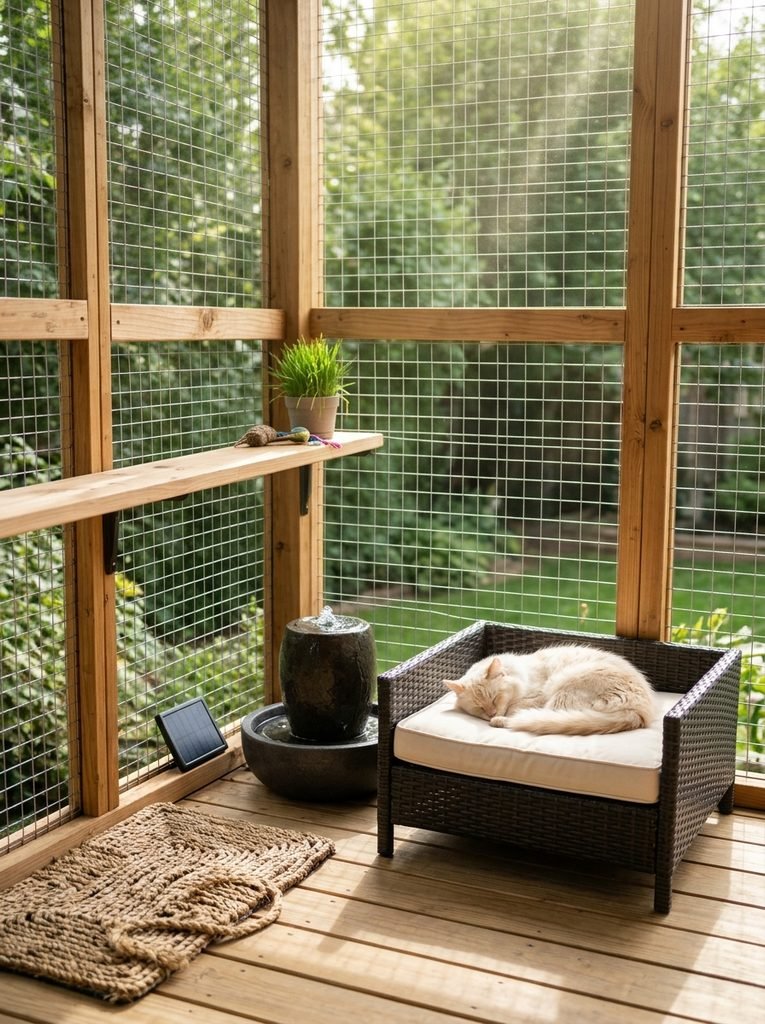
The right extras turn a plain box into your cat’s favorite room. A cozy bed, fresh water and something to scratch are all it takes.
Pick weatherproof pieces, so they survive rain and sun. Raise the bed a little off the floor, because cats like to be high and dry, and wash everything now and then.
You’ll need: weatherproof elevated cat bed outdoor and a solar powered pet water fountain
Best for: making a catio cozy
10. Cat Safe Plants for the Catio
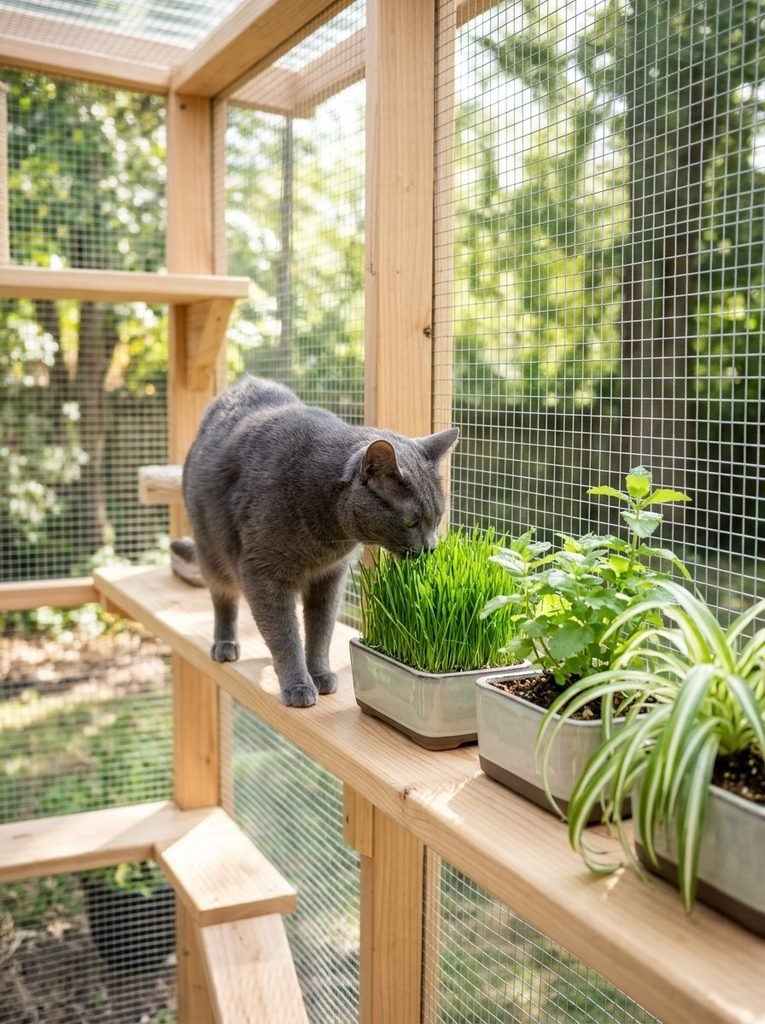
A few green plants make a catio feel like a little garden. Cat grass, catnip and spider plants are all good choices, and your cat will nibble on them happily.
Never plant lilies, as they are very dangerous to cats. When in doubt, check each plant against a trusted pet safe list before it goes into the catio.
You’ll need: cat grass growing kit
Best for: plant lovers and nibbling cats
11. Shade and Rain Roof
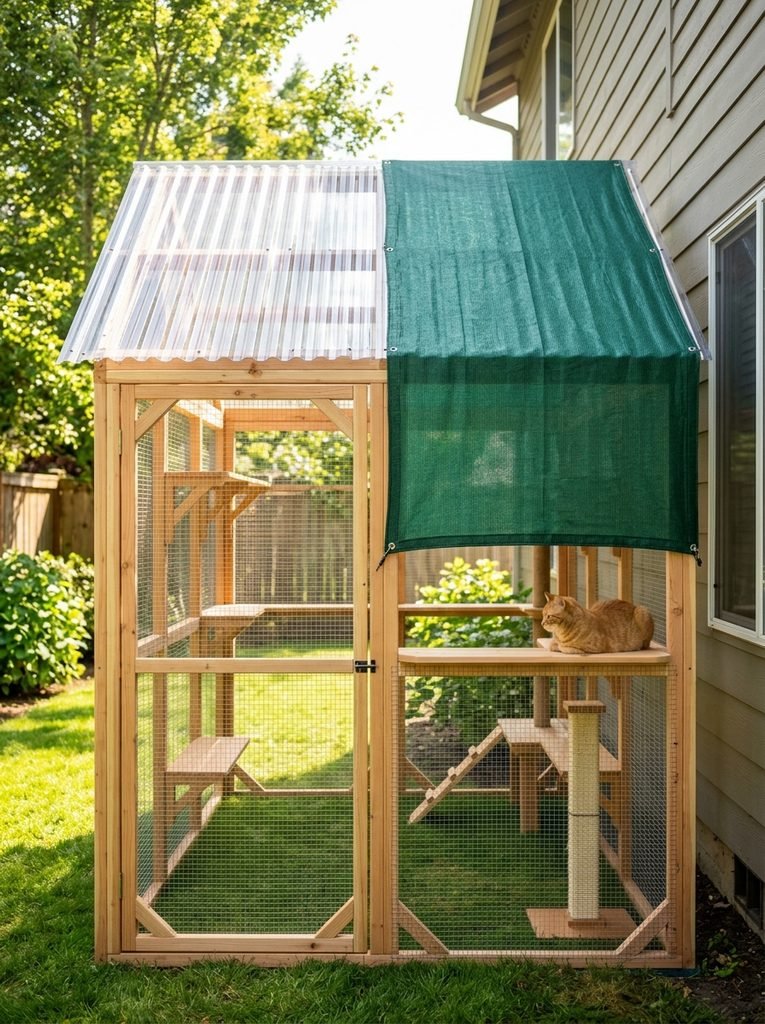
A roof does more than keep the rain off. It keeps your cat cool in summer, dry in showers and safe from birds and other animals above.
Cover half the roof with a clear panel, so sunlight still comes in, and the other half with shade cloth. That gives your cat a choice, sun or shade, whenever it wants.
You’ll need: clear corrugated polycarbonate roofing panels and shade cloth
Best for: hot summers and rainy climates
12. Cat Door to Connect Indoors
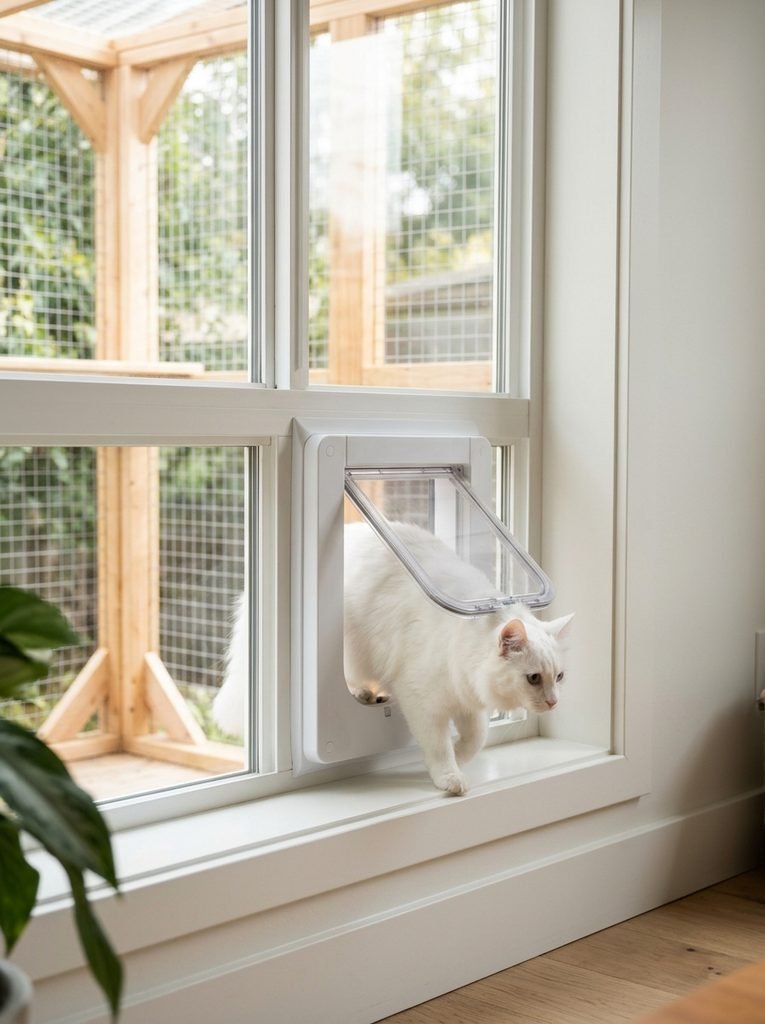
A cat flap lets your cat choose when to go out. You skip the opening and closing, and your cat gets some independence without ever leaving the safe enclosure.
Fit it so it opens directly into the catio, never into the open yard. A magnetic flap that works with your cat’s collar keeps stray animals out.
Shop it: magnetic cat flap door
Best for: busy owners and independent cats
Frequently Asked Questions
What is a catio?
A catio is a safe, enclosed outdoor space for cats. It gives them fresh air and a view without the risks of roaming free.
Do I need permission to build a catio?
If you rent or live in a building with rules, ask first. Window and balcony catios often need written approval.
How big should a catio be?
Even a small window box helps, but about 6 by 4 feet is a nice size for a walk in catio. Bigger is better if you have the space.
What wood is safe for a catio?
Untreated cedar or pine. Avoid pressure treated wood, as it contains chemicals your cat could lick or chew.
How do I stop my cat escaping?
Use fine mesh with gaps of 1 inch or less, secure every corner and use a door with a latch your cat can’t open. A double door adds extra safety.
Can I build a catio on a balcony?
Yes. Use strong cat safe netting from the rail to the ceiling with no gaps, and check your building’s rules first.
Final Thoughts on DIY Catio
A catio gives your cat the outdoors without the danger. Start small, even a window box, and make safety your first rule. Once your cat loves it, you can always build bigger.


Amir Ali is the founder and site administrator of HomeDecorEdge, a modern home decor and interior design platform. Since starting the site, he has combined his passion for interior design, practical styling, and color coordination with hands-on content strategy and site management. He guides authors, curates high-quality articles, and ensures readers have access to actionable, visually inspiring, and user-focused home decor advice for apartments, small rooms, and family homes.