My old dog stopped jumping onto the bed. She’d just stand there and look at me.
A ramp changed everything. She climbed up again, and I stopped lifting her.
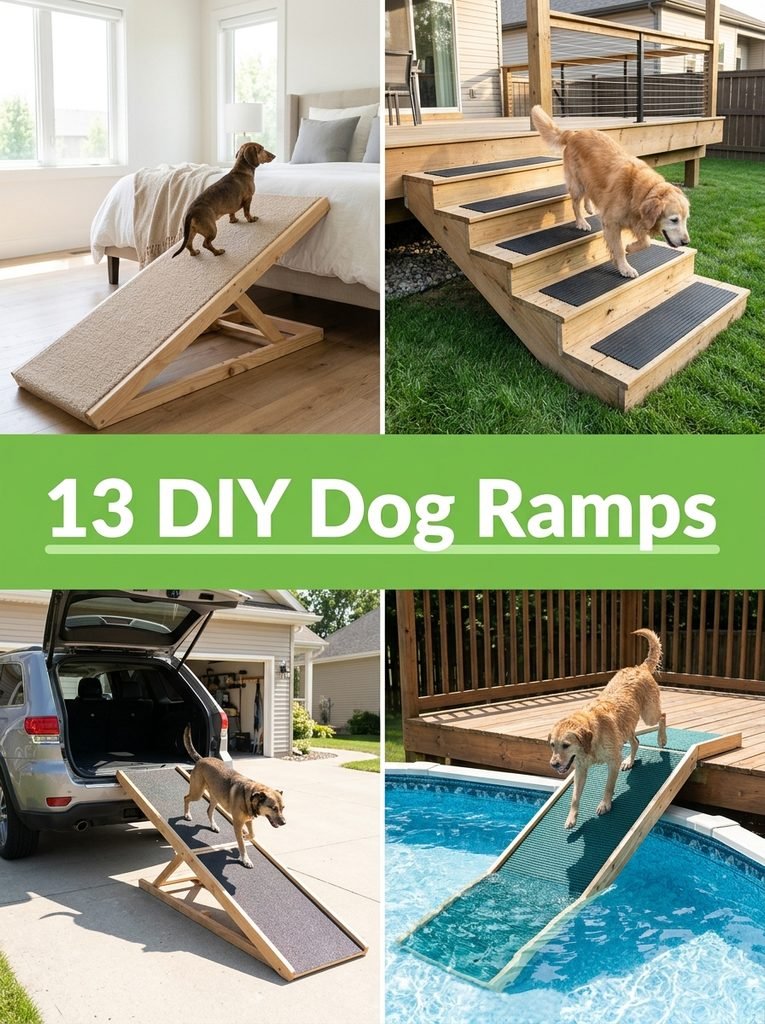
Here are 13 DIY dog ramps and stairs, from bed and car ramps to outdoor steps, pools and docks. Three of them come with full step by step build cards.
Quick Picks
- Best for beds: DIY Dog Ramp for a High Bed (idea 1)
- Best for small rooms: Pet Stairs for Bed With Storage (idea 2)
- Best outdoors: Outdoor Dog Stairs and Steps (idea 5)
- Best for road trips: Car Dog Ramp (idea 8)
1. DIY Dog Ramp for a High Bed With Plans
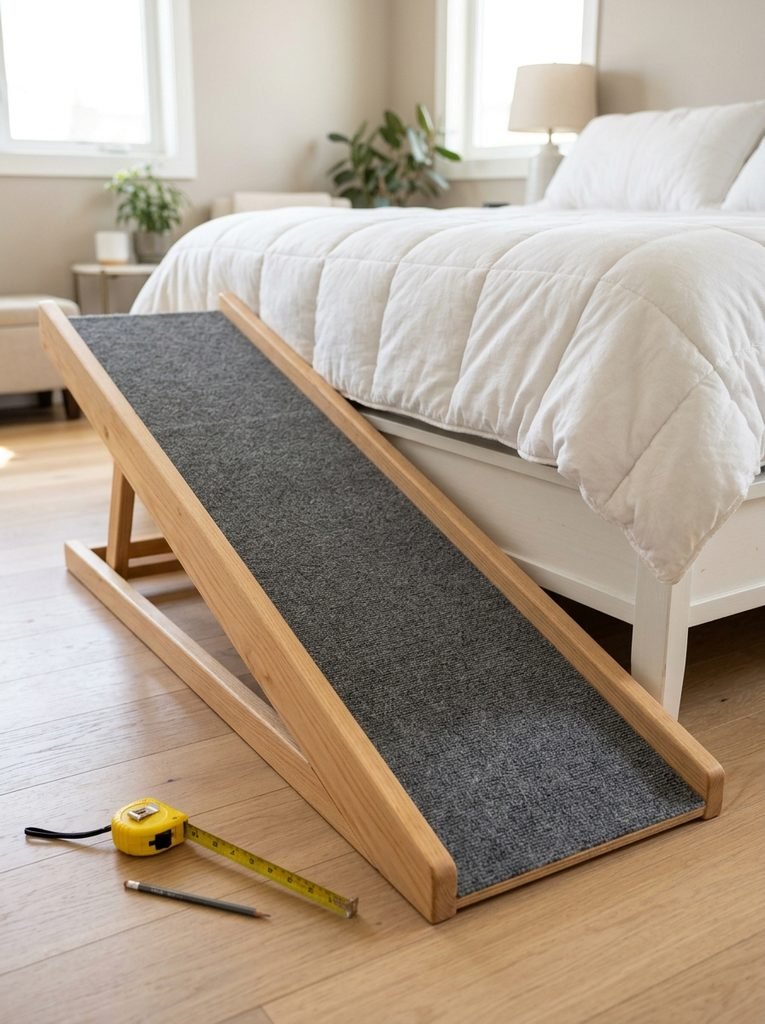
High beds are hard on little legs and older joints. A ramp lets your dog climb up without jumping, and it saves their back.
The secret is a gentle slope. Make the ramp about two to three times as long as the bed is high. Measure from the floor to the top of the mattress, add the plan to your sketch and cut once.
⏱ 3 hours💲 Medium🛠 Medium
Materials Needed
- Plywood sheet, 3/4 inch, 2 by 4 feet
- Non slip carpet runner
- Wood glue and screws
- A saw, a drill, a staple gun and sandpaper
How to Make It
- Measure the height of the bed from the floor to the top of the mattress, and plan a ramp two to three times that long.
- Cut the plywood to length and cut two side rails from scrap wood about 3 inches high.
- Sand all the edges until they are smooth and round.
- Glue and screw the rails to the sides, then staple the carpet runner over the top surface.
- Fit a soft pad where the ramp meets the bed, and test it with a treat first.
Tip: Check the weight rating for your dog’s size. Keep the slope gentle and never leave the ramp on a slippery floor without a rubber mat underneath.
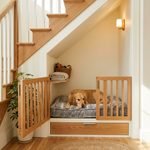
2. Pet Stairs for Bed With Storage
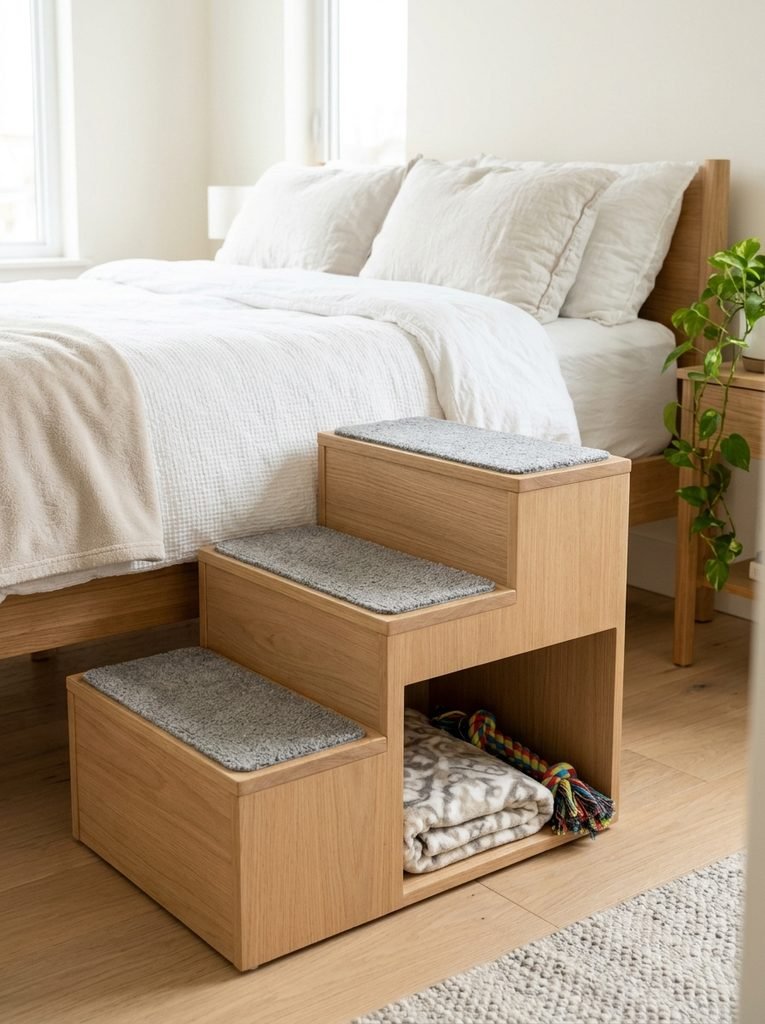
Stairs with storage do two jobs. Your dog gets up easily, and the toys, leashes and blankets get a home.
Build a strong box in three sizes, stacked like steps. Cover each tread with carpet. Use plywood at least 3/4 inch thick, and keep the steps wide and shallow for small paws.
⏱ 4 hours💲 Medium🛠 Medium
Materials Needed
- Plywood sheets, 3/4 inch
- Carpet tiles, peel and stick
- Wood screws, 1 1/4 inch
- A saw, a drill, sandpaper and a pencil
How to Make It
- Measure the bed height and divide it into three equal steps, each about 6 to 8 inches high.
- Cut the plywood into three open front boxes, in graded heights, with a back and a top.
- Glue and screw each box together and sand every edge smooth.
- Stack the boxes like stairs, screw them together and add carpet tiles to every tread.
- Put the storage items inside and place the stairs flat against the bed.
Tip: Wide, shallow steps are safer than narrow tall ones. Check every screw and keep the stairs close to the bed so there is no gap.
3. Dog Ramp for a Large Dog Bed
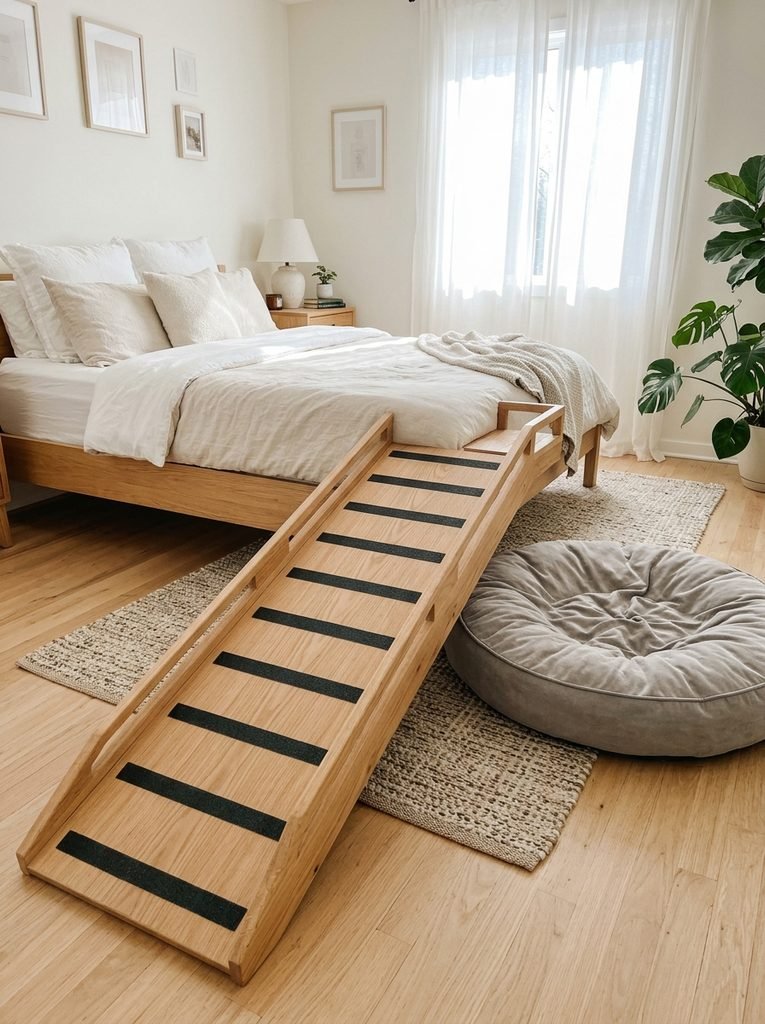
A large dog needs a wide, strong ramp. A narrow board can bend under the weight, or tip when your dog turns.
Use thicker plywood or add a center support under the board. Make the ramp at least 16 inches wide, with a long gentle slope. Add grip tape across the top, with the strips close together.
You’ll need: heavy duty grip tape
Best for: large and heavy dogs
4. Ottoman Dog Steps
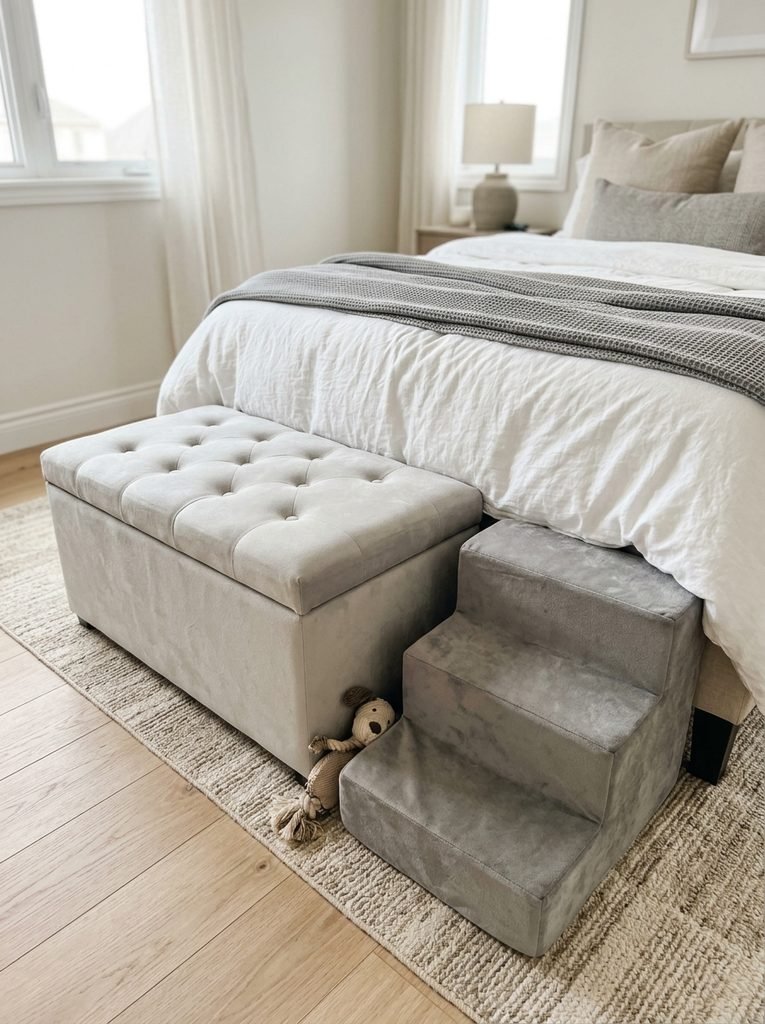
A sturdy storage ottoman makes a perfect first step for small dogs. It’s useful and looks like furniture.
Use a firm, low ottoman at the same height as your dog’s first jump. Add a second step if the bed is tall. Place it on a non slip mat so it can’t slide when your dog hops on.
You’ll need: sturdy storage ottoman and non slip rug pad
Best for: small dogs and stylish homes
5. Outdoor Dog Stairs and Steps
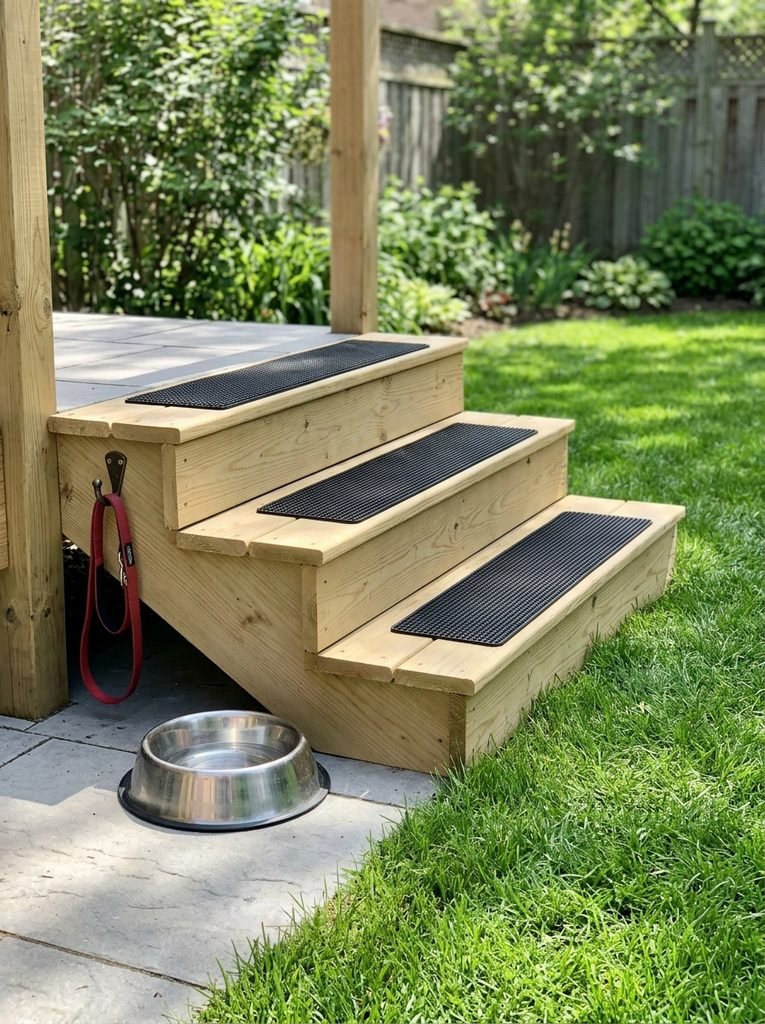
Back steps can be tough on older dogs. A wider, lower set of steps with grip makes the trip safe.
Build each step shallow, about 5 to 6 inches high, and at least 12 inches deep. Use treated wood and cover it with grip, because outdoor wood is slippery when wet.
⏱ 4 hours💲 Medium🛠 Medium
Materials Needed
- Pressure treated lumber, 2 by 10 inch, 8 feet
- Rubber grip stair treads
- Exterior deck screws
- A saw, a drill, a tape measure and a level
How to Make It
- Measure the rise from the patio to the ground and divide it into steps about 5 to 6 inches high.
- Cut the treated lumber to make wide treads and strong side supports.
- Screw the supports to the treads with exterior screws and check that every step is level.
- Add the rubber grip treads to the top of each step.
- Set the steps on firm, flat ground and test them with your own weight.
Tip: Check the steps on firm ground and level them again if the soil shifts. Wet wood is slippery, so add grip and keep leaves off the steps.
6. Deck Dog Stairs and Ramp
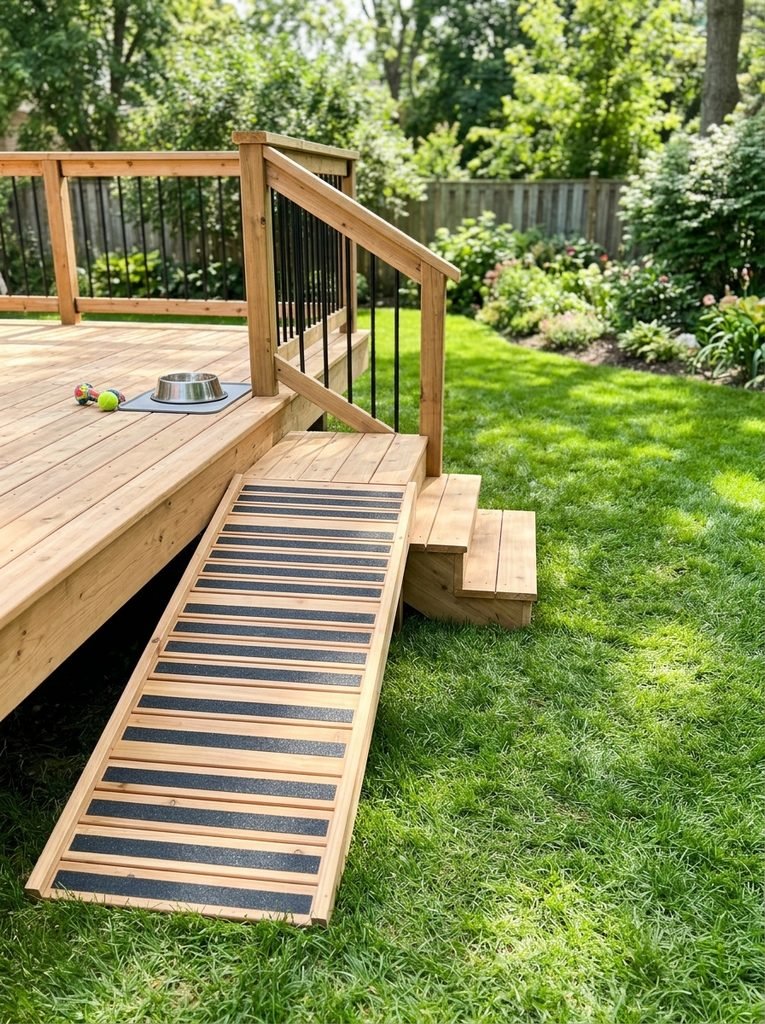
Deck stairs can be steep and narrow, and slippery after rain. A ramp or wide steps help your dog get down safely.
Add a ramp on the side of the deck where the drop is short. A long gentle slope with grip works for most dogs. For taller decks, build wide steps beside it.
You’ll need: outdoor non slip tape
Best for: decks and raised patios
7. Porch and Steep Stairs Dog Ramp
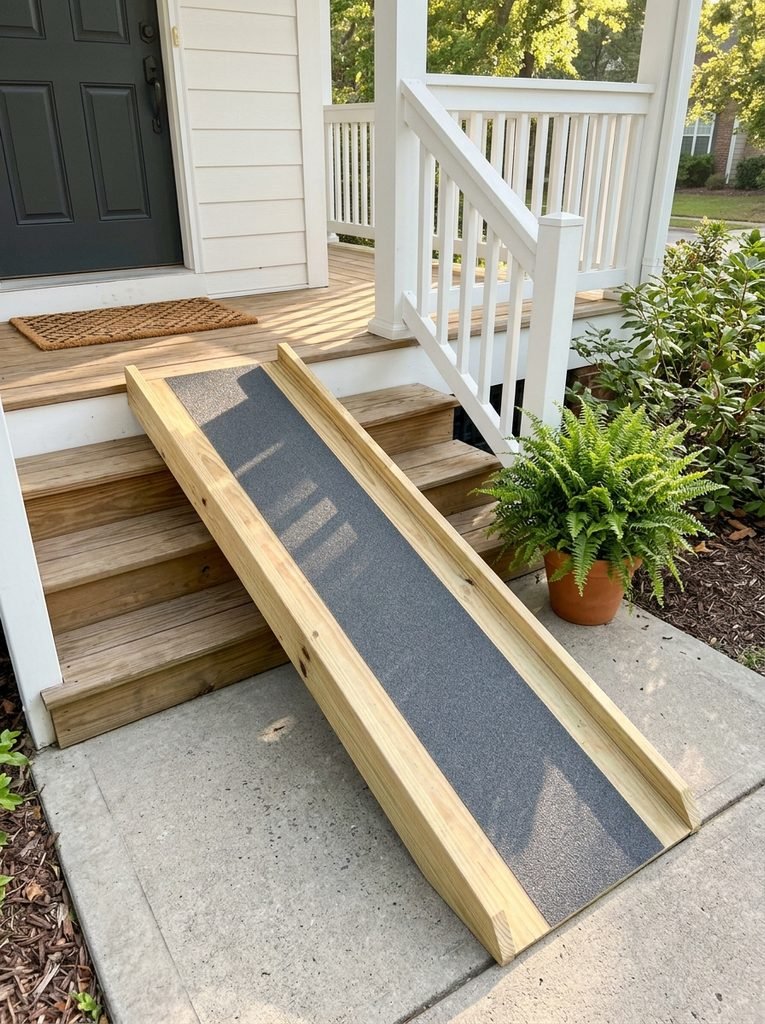
Steep porch stairs are hard for older and small dogs. A ramp across the steps turns a tough climb into an easy walk.
Measure the total rise, and make the ramp long enough for a gentle slope. Add side rails so your dog can’t step off, and a rubber backing so it doesn’t slide.
You’ll need: rubber ramp backing mat
Best for: steep steps and older dogs
8. Car Dog Ramp
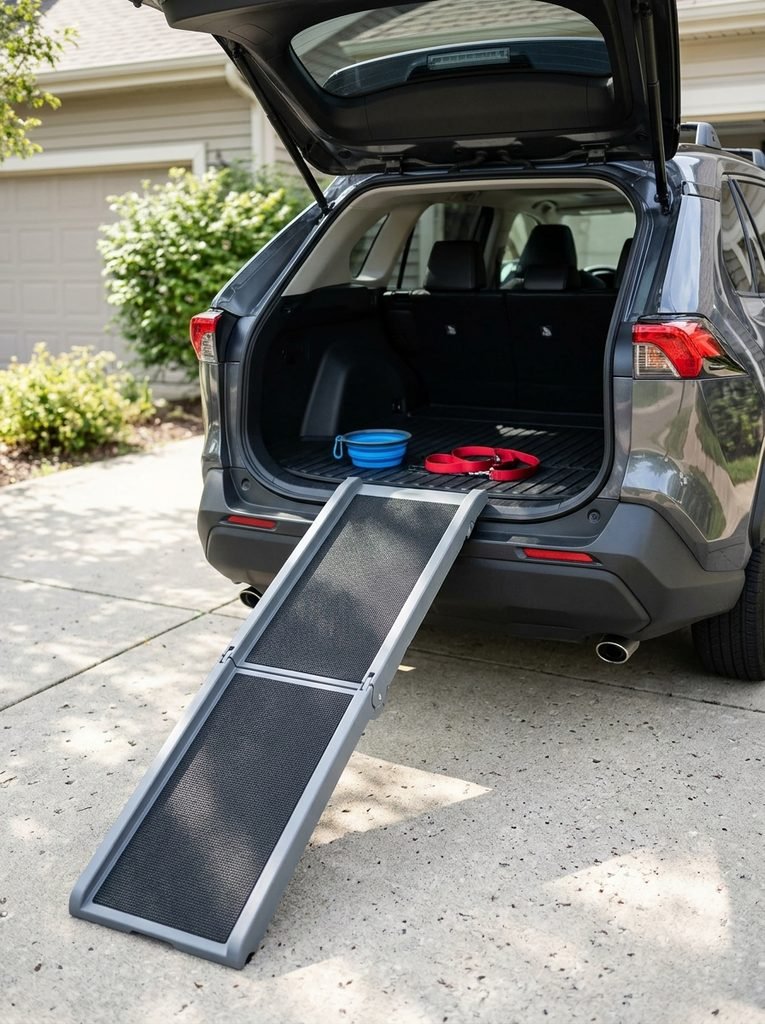
A car ramp saves your dog’s joints from jumping, and it saves your back from lifting.
Look for a folding ramp that is long enough for a gentle slope. Add a rubber backing so it doesn’t slip on the bumper. Test it on flat ground, and use treats to build confidence.
You’ll need: folding dog ramp for cars
Best for: cars, SUVs and older dogs
9. Truck and Camper Dog Ramp
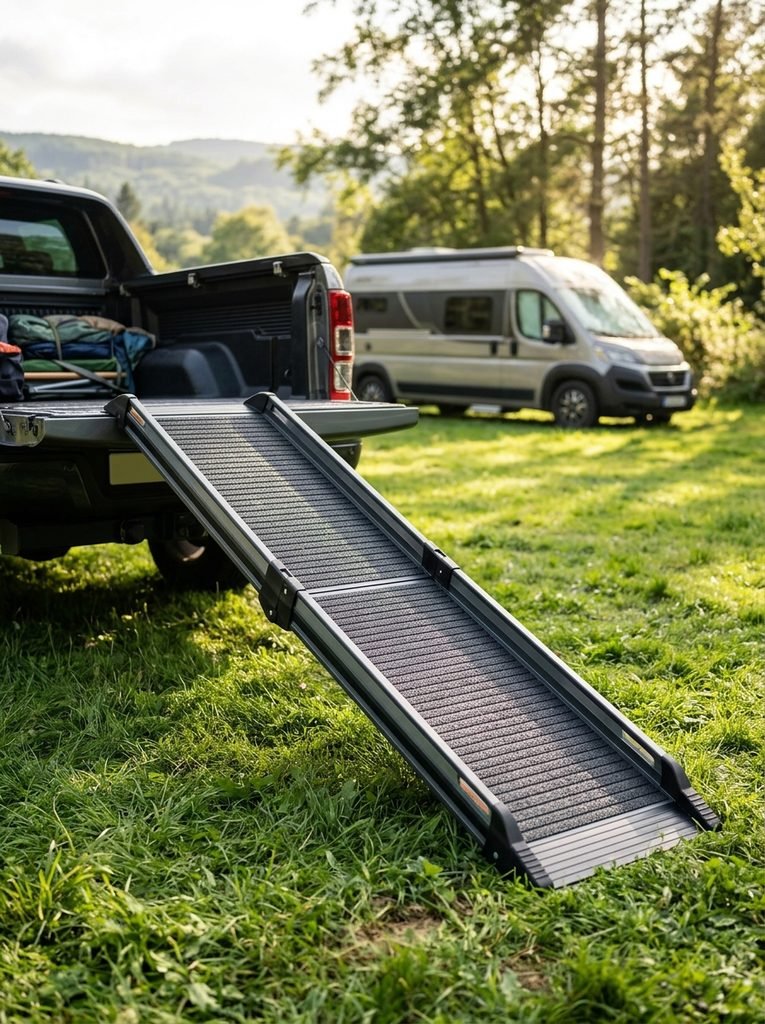
Trucks and campers are even higher than cars. A longer ramp makes the slope gentle enough for safe use.
Choose a telescoping ramp that extends to at least 6 feet. Check the weight rating and use a rubber backing at the top. Keep a lead on your dog, as a ramp near a road needs extra care.
You’ll need: telescoping dog ramp for trucks
Best for: trucks, campers and big dogs
10. Window Dog Ramp
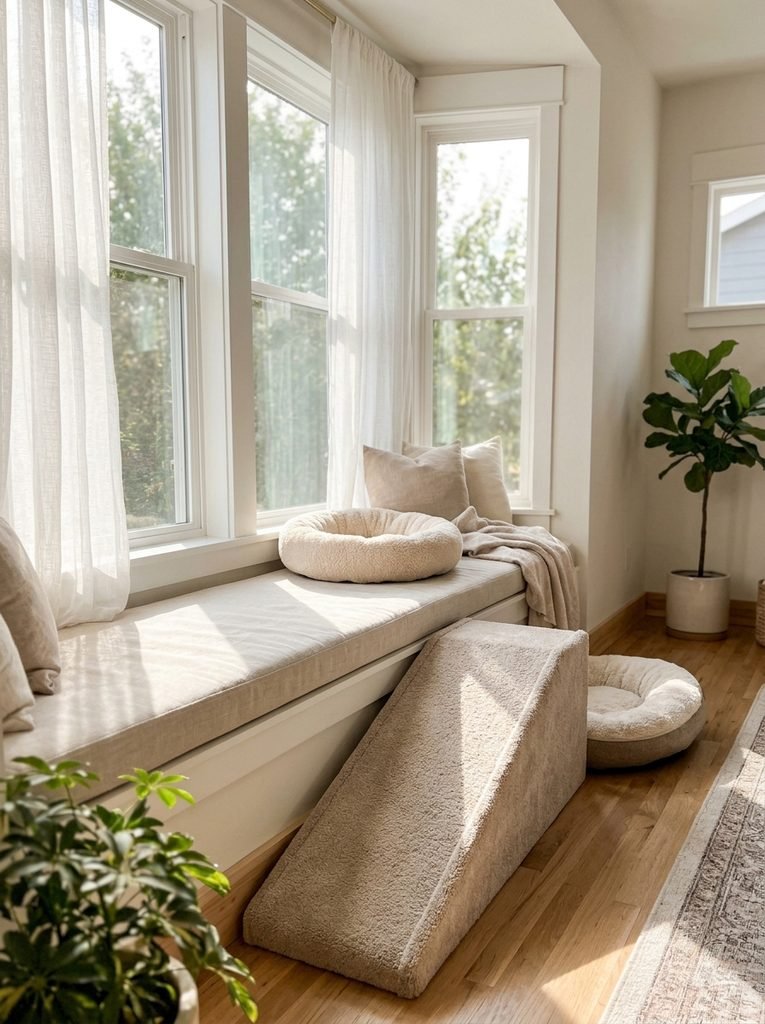
Dogs love a view. A small ramp to a window seat gives them a safe spot to watch the world. See also these dog door ideas.
Build a short ramp, about 12 to 16 inches high, with a carpet top. Add a soft cushion on the seat and keep windows closed or screened, so your dog can’t fall out.
You’ll need: window seat cushion pad
Best for: window watchers and small dogs
11. Pool and Above Ground Pool Dog Ramp
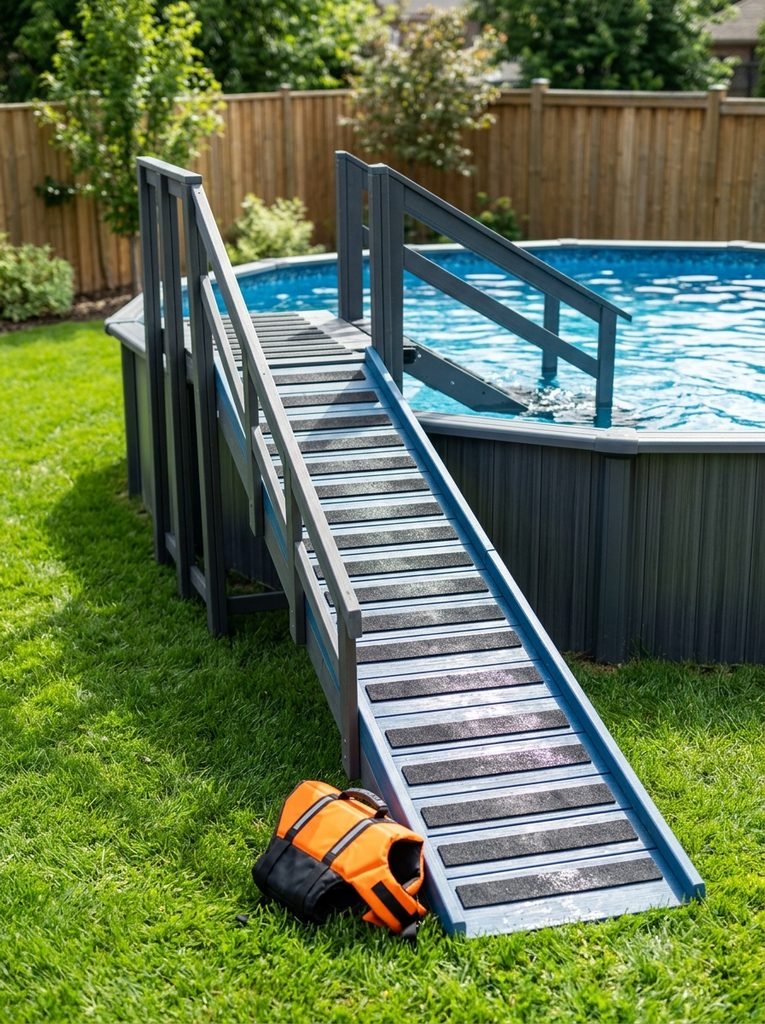
Dogs jump into the pool with joy, then can’t find the way out. A ramp is the only safe exit for an above ground pool. For a smaller pool, check this dog pool ramp.
Choose a ramp made for the pool wall height, and fix it so it can’t slip. Add grip across the top and teach your dog the exit with treats. Never leave your dog alone in the water.
You’ll need: pool ramp for dogs
Best for: above ground pools and big dogs
12. Dock Dog Ramp
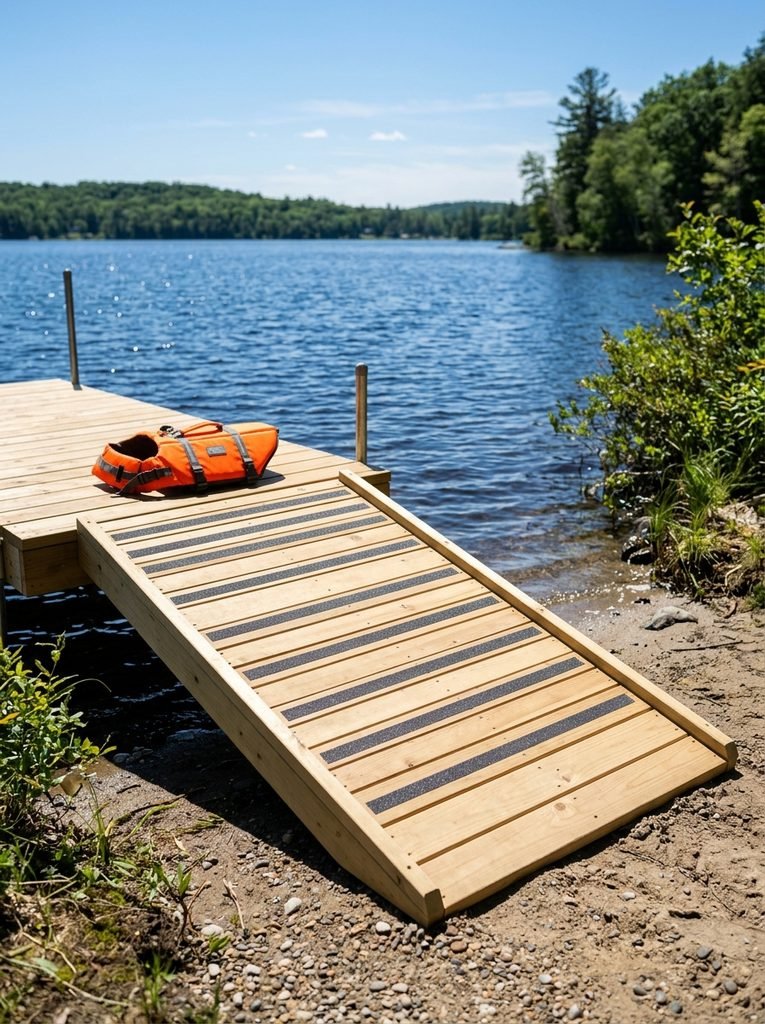
Docks are slippery and high. A ramp gives your dog a safe way back up when they jump in.
Use marine grade grip and fix the ramp so it can’t move. Keep a life jacket on your dog near deep water, and never trust a swimming dog to find the way out alone.
You’ll need: dog life jacket with handle and marine grade grip tape
Best for: lakes, docks and water dogs
13. Cardboard Dog Ramp for Small Dogs
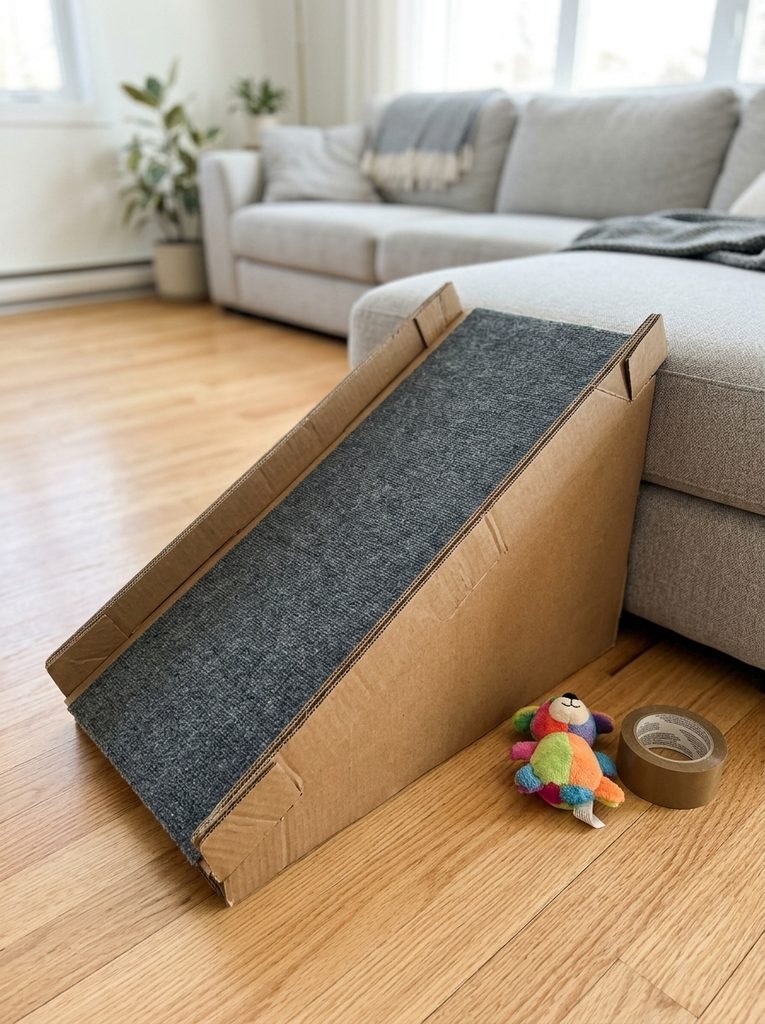
A cardboard ramp is a cheap quick fix for tiny, light dogs, or for testing before you build with wood.
Only use thick, double wall boxes and fold them into a strong wedge. Cover the top with fabric or carpet so it grips. Keep it dry, since wet cardboard fails. It’s temporary, not for medium or large dogs.
You’ll need: double wall cardboard boxes and strong packing tape
Best for: tiny dogs and quick tests
Frequently Asked Questions
How long should a dog ramp be?
About two to three times as long as the height it climbs, so the slope stays gentle and safe.
What slope is safe for a dog ramp?
A gentle slope is best. Too steep and dogs slip, especially small, old or heavy dogs.
What surface works best on a dog ramp?
Carpet, rubber or grip tape. It should be non slip even when wet.
Can I use cardboard for a dog ramp?
Only for tiny, light dogs, indoors and dry. It’s a temporary fix, not a permanent ramp.
Do older dogs need ramps?
Often, yes. Ramps and low steps protect aging joints, but check with your vet if your dog struggles.
How do I train my dog to use a ramp?
Go slowly. Lure your dog with treats, reward each step and keep the ramp steady and non slip.
Final Thoughts on DIY Dog Ramps
A good ramp is gentle, wide and grippy. Measure your dog and your height, build it strong and take your time to train. Your dog’s joints will thank you.


Amir Ali is the founder and site administrator of HomeDecorEdge, a modern home decor and interior design platform. Since starting the site, he has combined his passion for interior design, practical styling, and color coordination with hands-on content strategy and site management. He guides authors, curates high-quality articles, and ensures readers have access to actionable, visually inspiring, and user-focused home decor advice for apartments, small rooms, and family homes.