

Ducks are messy, loud and completely lovable. They are also easy targets for foxes, raccoons and hawks.
That is why a good enclosure matters more than anything else you buy for them.
The nice part? You do not need a big budget. A few pallets, some netting and a free afternoon go a long way.
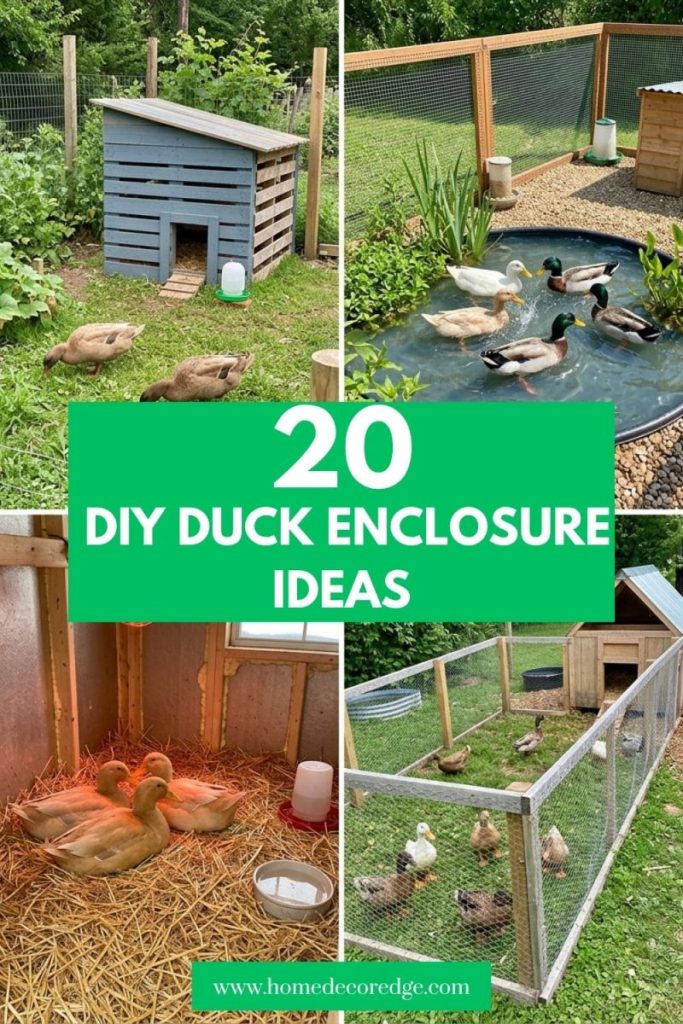
Below are 20 DIY duck enclosure ideas for every backyard, from cheap pallet runs to pond setups, winter shelters and a movable duck tractor.
1Simple Pallet Duck House Enclosure
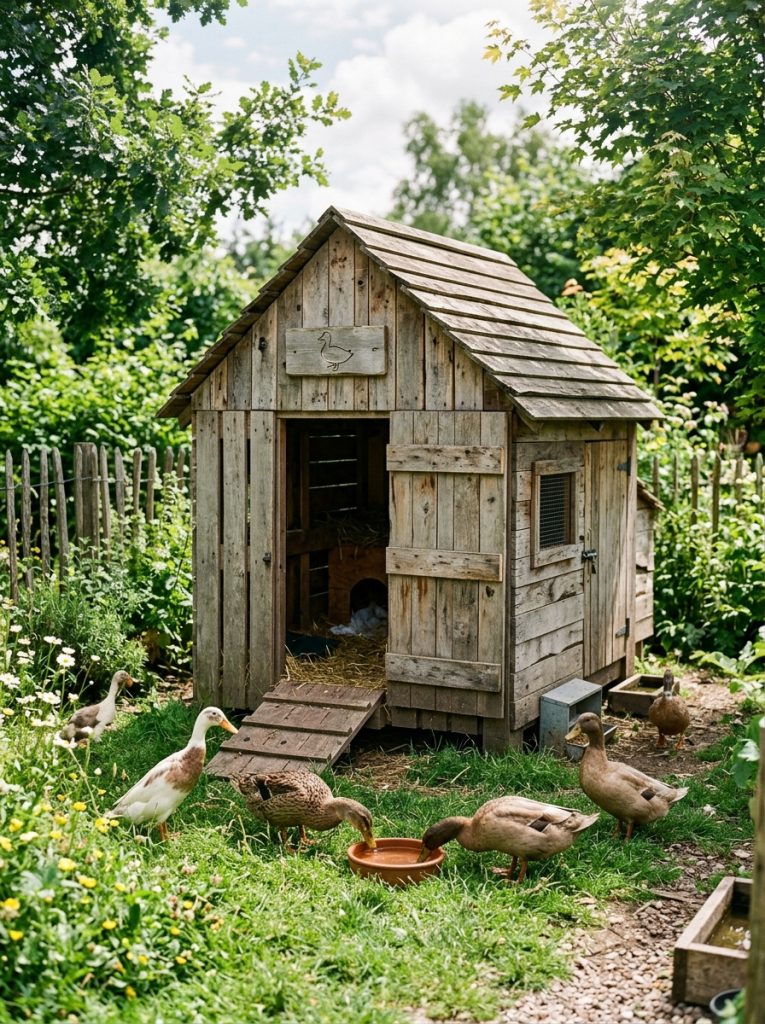
A pallet duck house is the cheapest shelter you can build. Pallets are often free and the whole thing comes together in one weekend.
Ducks sleep on the floor, so you only need a low, dry box with a wide door. If you would rather skip the build, a ready made duck house does the same job.
- Almost free
- Weekend build
- Weatherproof shelter
Project Card · 1 weekend · Easy
Materials Needed
- 6 to 8 heat treated wooden pallets
- Exterior screws and a drill
- Corrugated roofing panels
- Plywood for lining the walls
- Hinges and a predator proof latch
How to Make It
- Stand 4 pallets upright and screw them together into a box.
- Line the inside with plywood so wind cannot blow through the gaps.
- Add a sloped roof frame and screw roofing panels on top.
- Cut a wide, low door on one side for the ducks.
- Fit a hinged panel at the back so you can clean out bedding easily.

My Pick
Duck House Outdoor Enclosure
A ready made wooden duck house if you want a polished look without the build.
2Cheap Pallet Duck Run with Netting
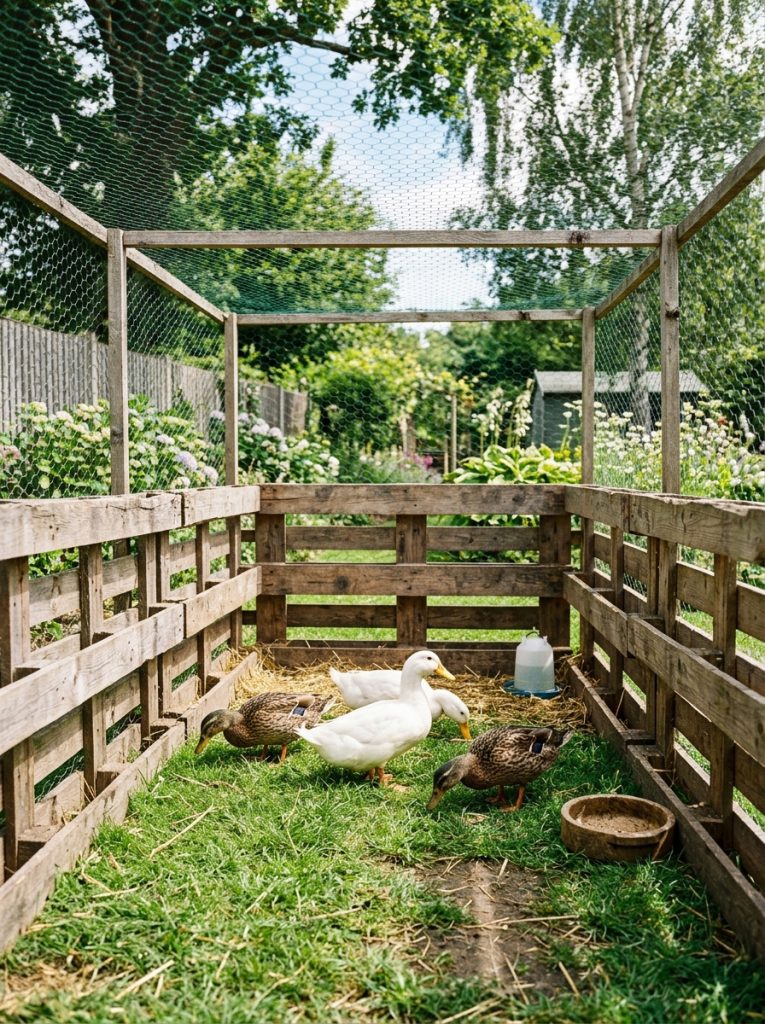
A pallet run gives your flock safe space to waddle around without wandering off.
Use pallets for the walls and stretch poultry netting over the top to stop hawks. Block any gaps at ground level, because that is where predators try first.
- Safe roaming space
- Low cost
- Covered top

My Pick
Poultry Netting for Duck Runs
Heavy duty netting to cover the top and sides of any pallet or post run.
3Pallet Duck House with Attached Run
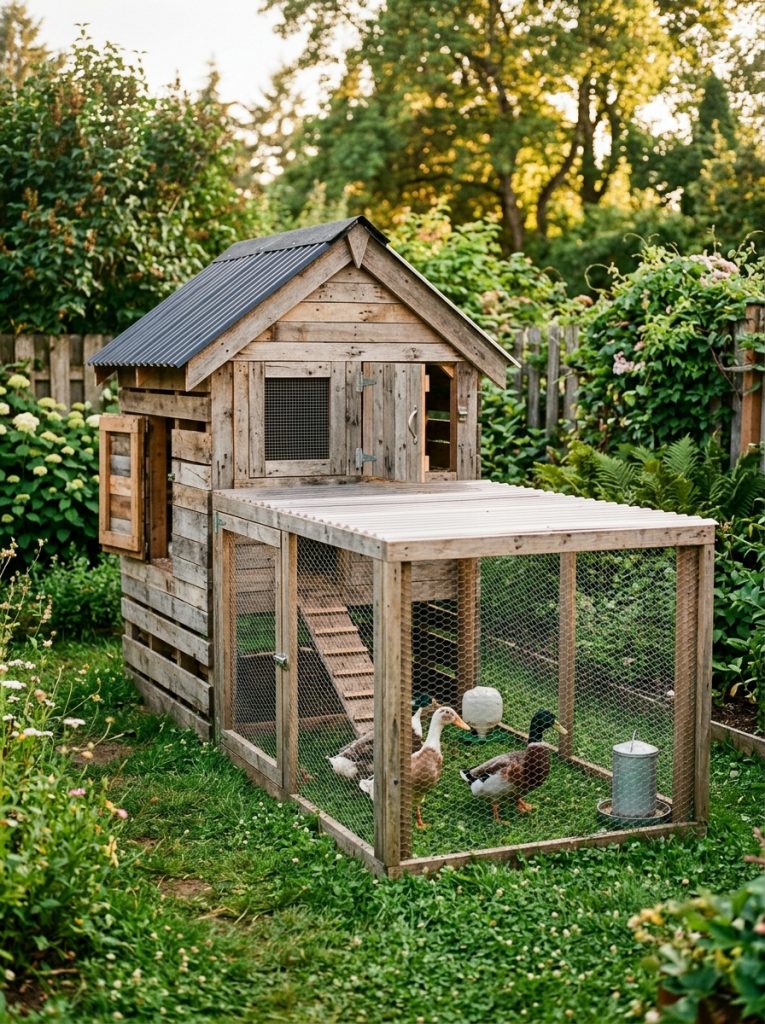
This one combines a house and a run in a single structure. Your ducks can move between shelter and outdoor space whenever they like.
Build the house first, then extend a netted run from the front door. It is one of the most practical setups for a small backyard.
- All in one
- Great for small yards
- Easy daily care
4Easy Ready Made Duck Coop Kit
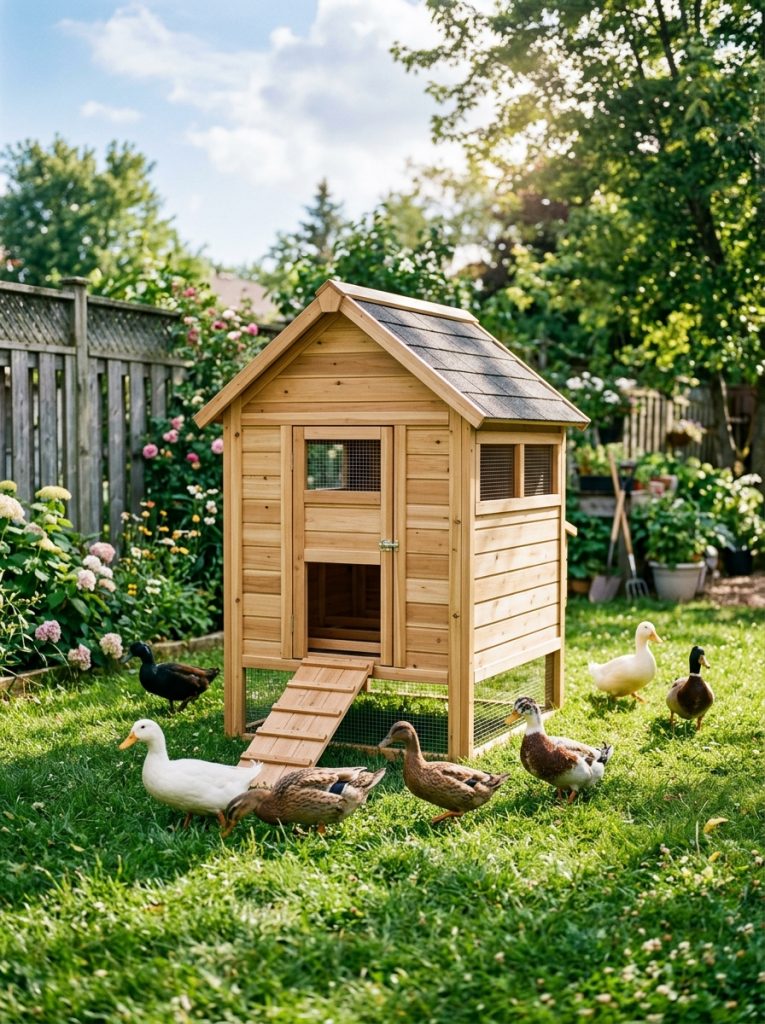
Not a builder? No problem. A duck coop kit goes together in a few hours with basic tools.
Look for one with good vents, a cleaning hatch and a low ramp. Set it on level ground, add bedding and your ducks have a home from day one.
- No building skills
- Ready in hours
- Ramp included

My Pick
Duck Coop Kit
Assembles in a few hours with vents, a cleaning hatch and a ramp ducks actually use.
Start Your 30-Day Home Reset
Stop waiting for a "perfect" free weekend. Grab the 30-day plan and start feeling lighter in your own home by tomorrow.
View the 30-Day Plan Printable PDF · Instant download5Easy DIY Duck Enclosure from Wire and Wood Posts
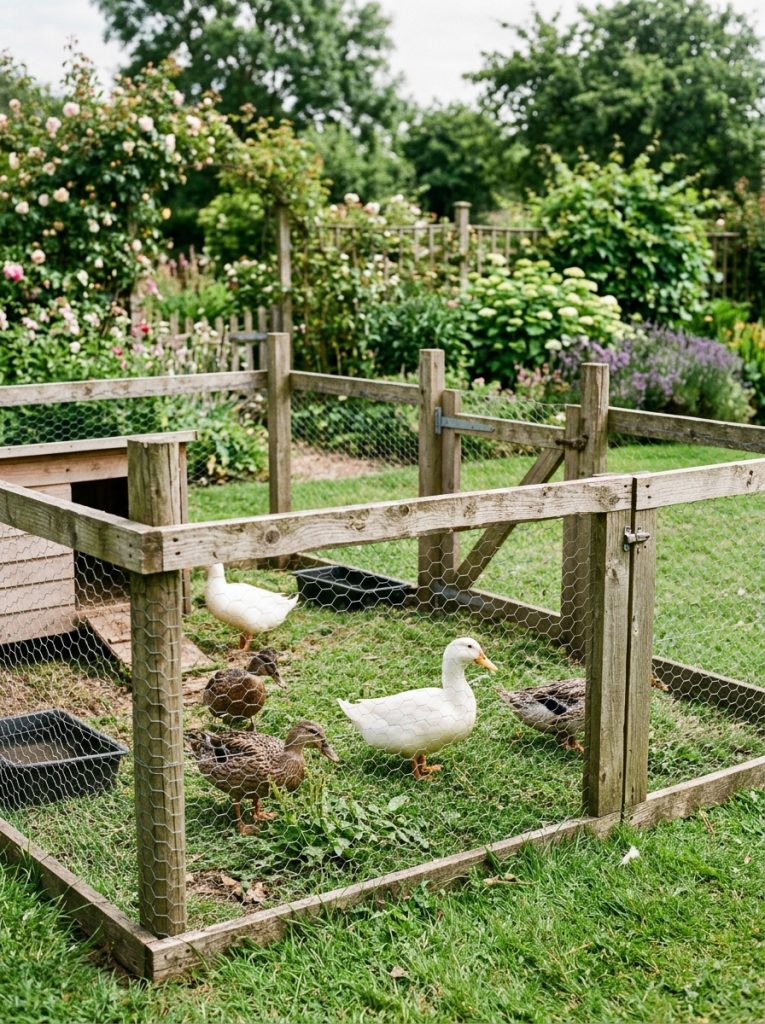
A post and wire enclosure is one of the easiest builds for a beginner. Drive in wooden posts, stretch wire between them and add a gate.
Use hardware cloth along the bottom and bury it about 6 inches deep. That stops anything trying to dig in.
- Beginner build
- Done in hours
- Dig proof base
6Duck Enclosure with Small Pond Liner Pool
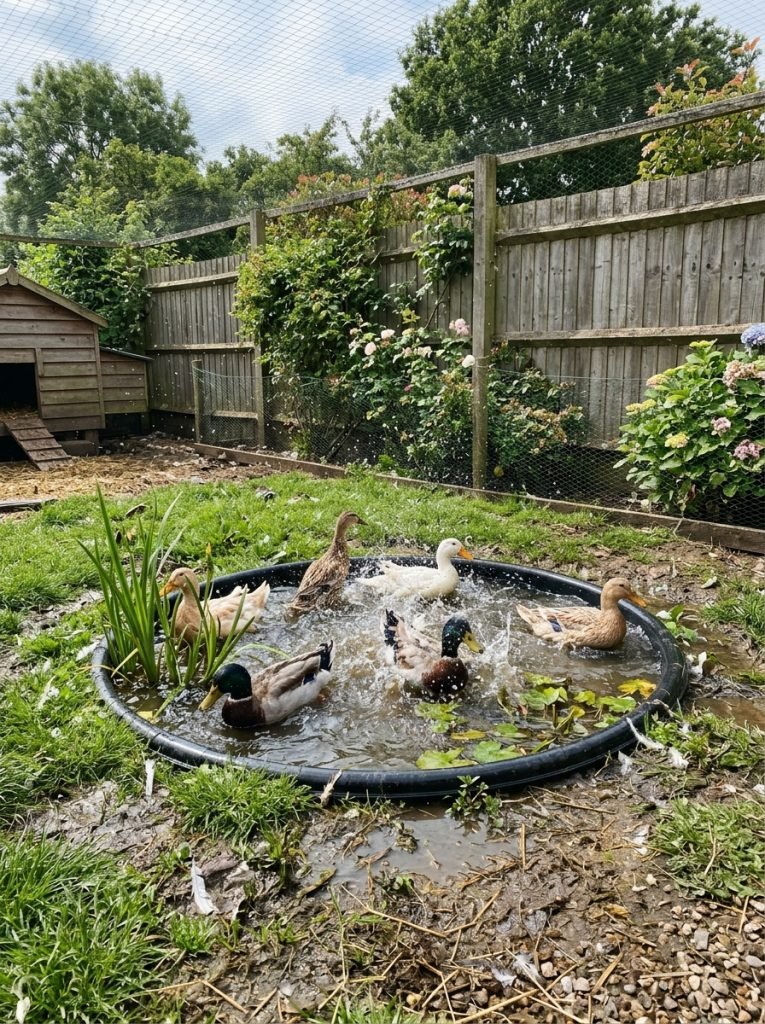
Ducks love water more than anything. A small pond inside the enclosure keeps them clean, busy and happy.
Sink a small pond liner into the ground with a gentle slope so ducks can walk in and out. Change the water every few days, or add a simple drain to make it easy.
- Happy ducks
- Cleaner feathers
- Easy to build
Project Card · 1 afternoon · Easy
Materials Needed
- Small preformed pond liner
- Shovel and level
- Builder sand
- Flat stones for the edge
- Pea gravel for the splash zone
How to Make It
- Dig a hole slightly bigger and deeper than the liner.
- Spread an inch of sand in the bottom so the liner sits flat.
- Set the liner in place and check it with a level.
- Backfill the gaps with soil and press it down firmly.
- Lay flat stones around the rim and gravel beyond that to control splash mud.

My Pick
Small Duck Pond Liner
A tough little liner that turns a shallow hole into a duck pool in an afternoon.
7Raised Pond Platform Inside Duck Enclosure
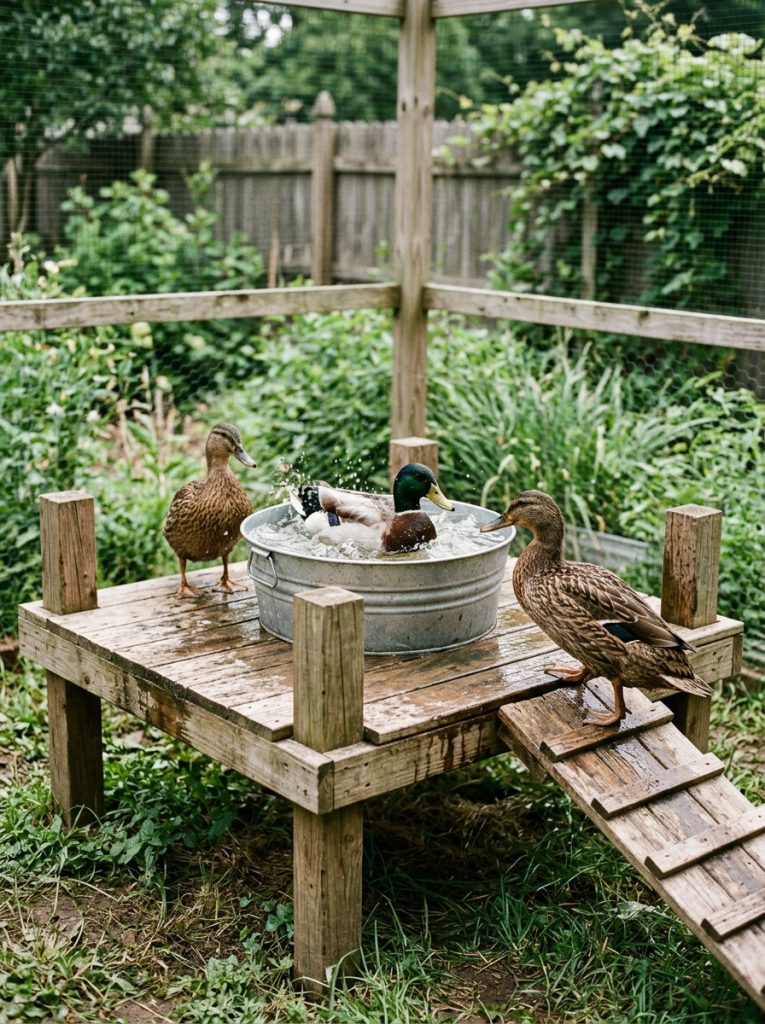
Do not want to dig? Set a large tub on a low wooden platform with a gentle ramp.
Add a non slip mat on the ramp so wet feet do not slide. Dump and refill the tub daily, and your ducks will use it all day long.
- No digging
- Easy to empty
- Moves anywhere
8Duck Enclosure with Outdoor Feeder Setup
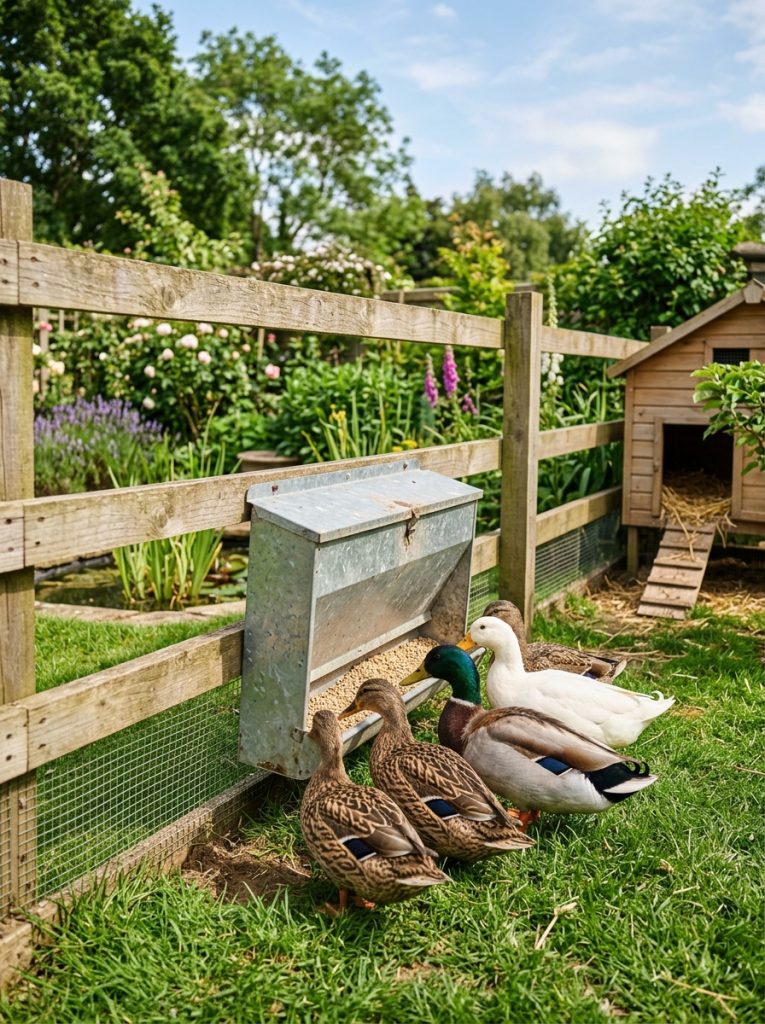
Feed on the ground gets wet, moldy and wasted fast. A proper feeder solves that.
Mount an outdoor duck feeder at head height in a sheltered spot, away from the pond. Clean it weekly and you will waste far less feed.
- Dry feed
- Less waste
- Cleaner run

My Pick
Outdoor Duck Feeder
Keeps pellets dry and off the ground, even in the rain.
9Duck Waterer Station Inside Enclosure
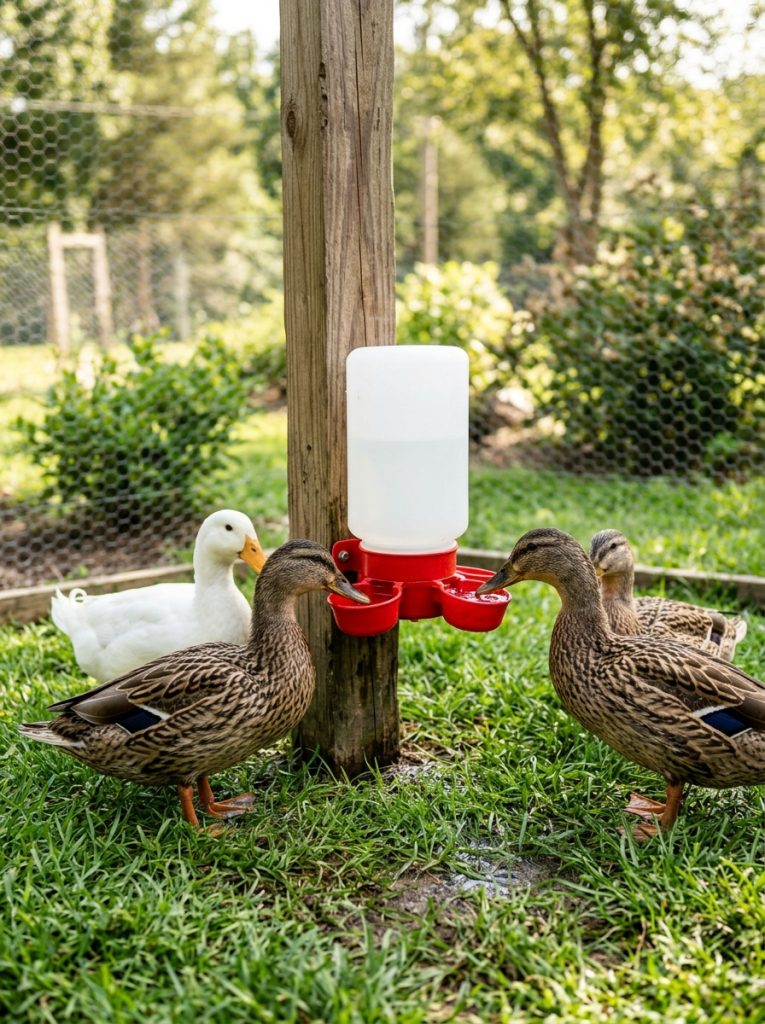
Ducks need clean drinking water that is separate from their swimming water. They also need it deep enough to dip their whole bill.
Place an outdoor duck waterer away from the pond and the bedding area so things stay drier. Refill daily and scrub it twice a week.
- Clean drinking water
- Drier bedding
- Easy refills

My Pick
Outdoor Duck Waterer
Easy to fill and stays cleaner than an open bowl for drinking water.
10Straw Bedding Duck House Setup
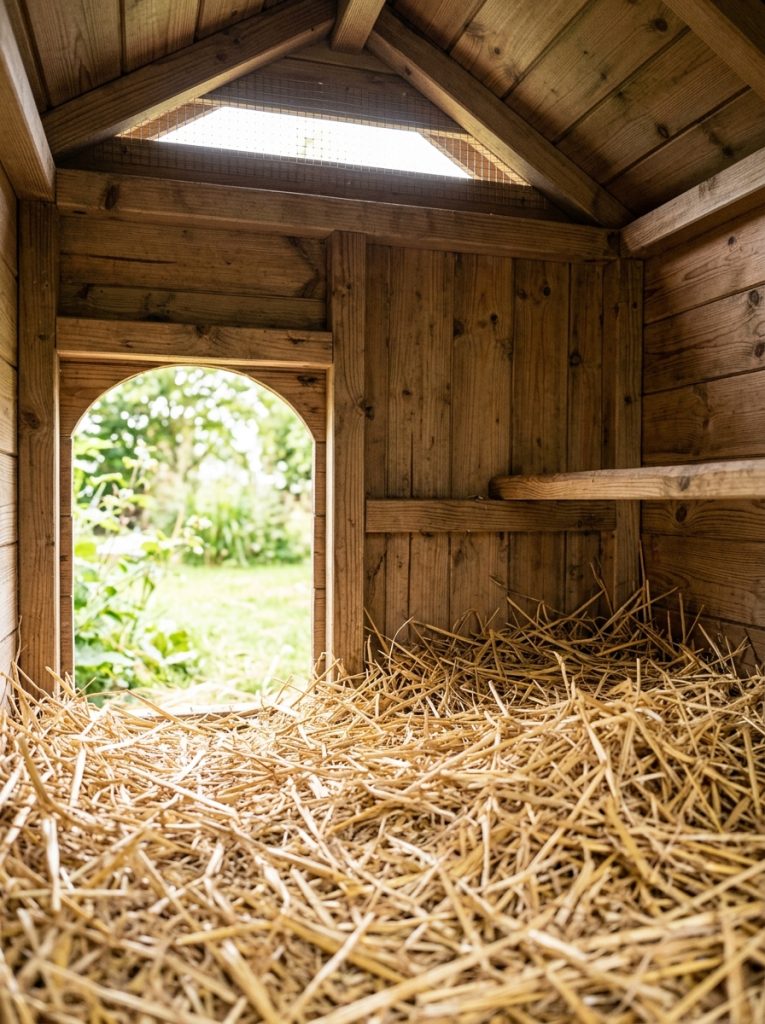
Ducks do not roost like chickens. They sleep on the floor, so deep bedding is a must.
Spread 4 to 6 inches of clean straw bedding and push it into the corners. Spot clean often and replace it fully every week or two.
- Warm and dry
- Comfy sleep
- Easy to replace

My Pick
Duck Bedding Straw
Clean, absorbent straw that keeps the duck house floor dry and cozy.
11Winter Duck Enclosure with Insulation
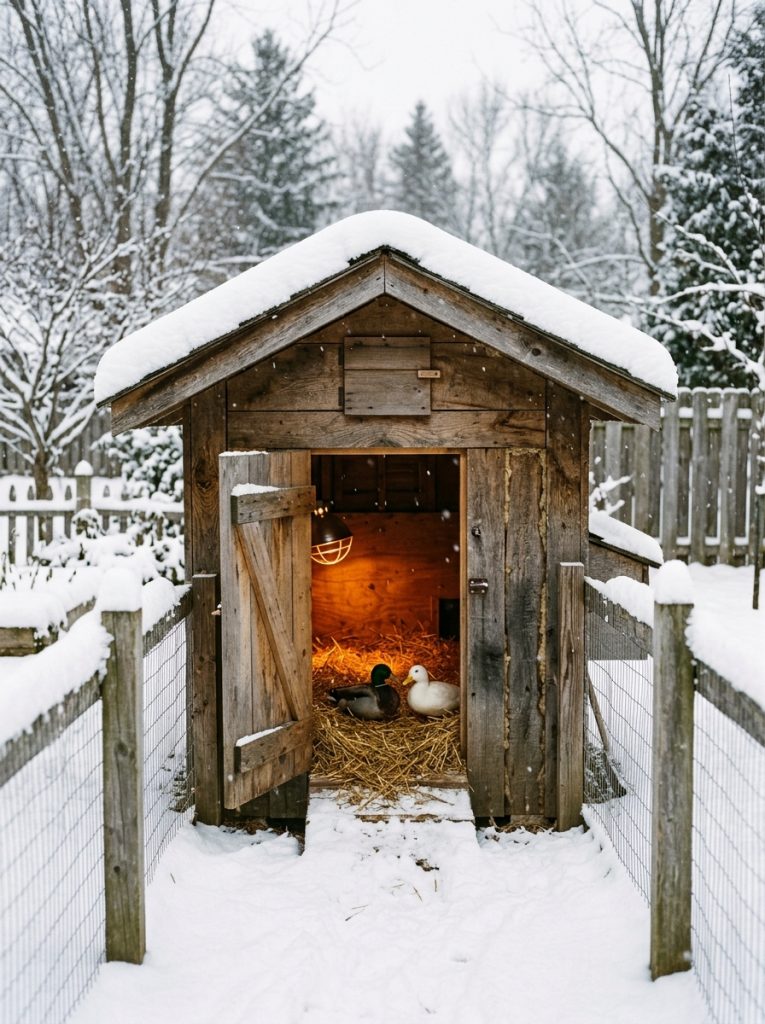
Ducks handle cold well, but freezing wind and wet bedding are a problem. A little insulation and lots of straw go a long way.
Skip hanging heat lamps, as they are a real fire risk around dry straw. If you need extra warmth, a flat panel poultry heater is much safer. Keep vents open up high so moisture can escape.
- Winter ready
- Safer heat
- Dry inside
PRO TIP Ventilation still matters in winter. Damp air is harder on ducks than cold air, so keep a vent open near the roof.

My Pick
Duck House Heater for Winter
A flat panel heater made for poultry houses. Much safer than a hanging heat lamp.
12Winter Duck Run with Windbreak Panels
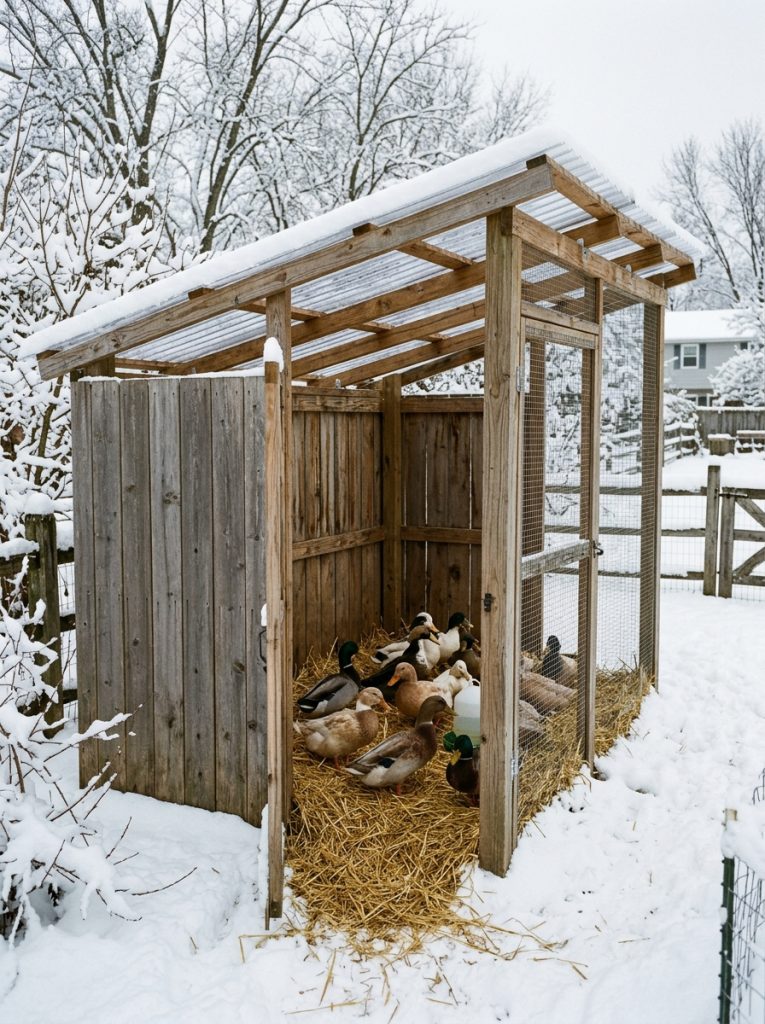
Solid panels on the windy sides of the run keep snow and icy gusts away while ducks still get outside.
Use timber boards or corrugated plastic panels on the north and west sides. A clear roof keeps it bright and dry underneath.
- Blocks cold wind
- Outdoor time in winter
- Bright and dry
13Heated Winter Water Setup for Duck Enclosure
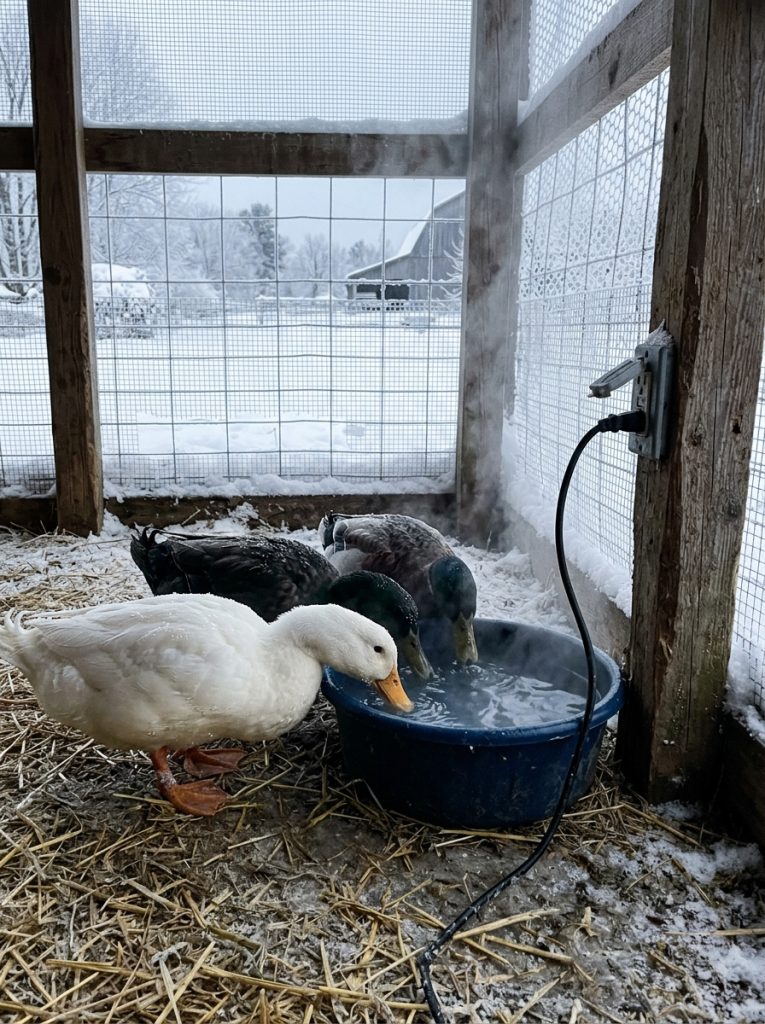
Frozen water is one of the biggest winter headaches for duck keepers. A heated water base keeps water liquid on the coldest mornings.
Use an outdoor rated cord and a covered outlet, and keep all cords where ducks cannot nibble them.
- No frozen water
- Less winter work
- Safe setup
14Indoor Duck Enclosure for Small Spaces
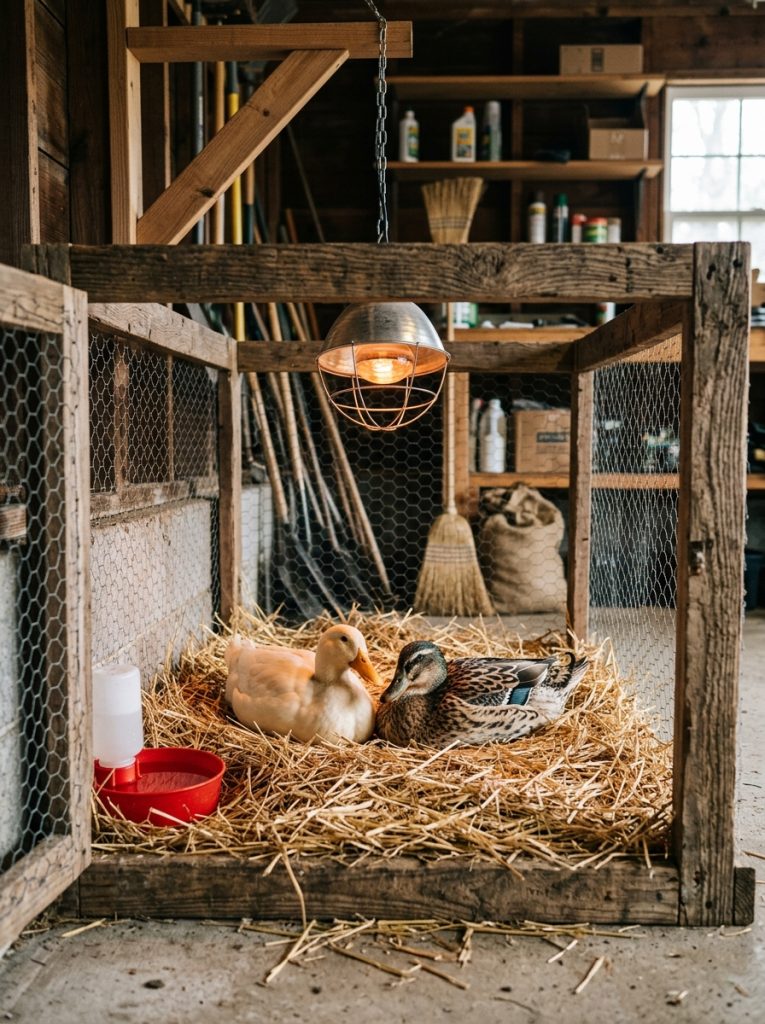
A pen in the garage or shed is handy for growing ducklings or riding out extreme weather.
Build a simple wooden frame about 2 feet high, put waterproof sheeting on the floor and add thick straw. Ducks are messy, so plan for easy cleanup.
- Weather backup
- Great for ducklings
- Easy pen build
15Indoor Duckling Brooder Setup
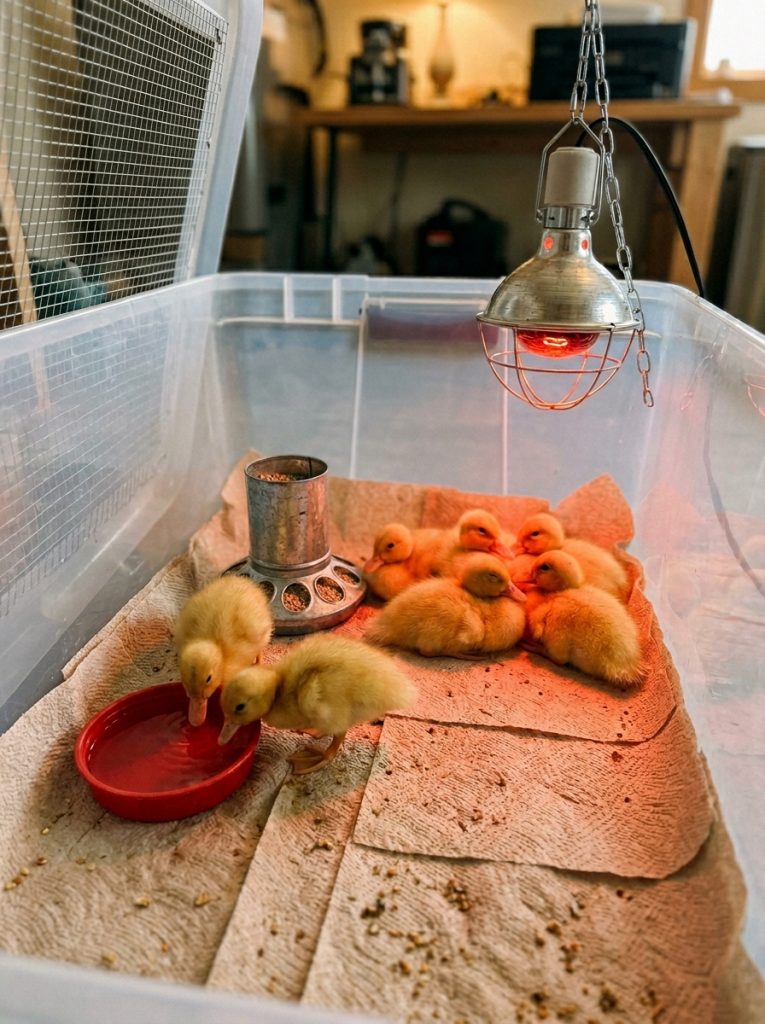
Ducklings need a warm brooder for their first few weeks. A big tub or wooden box works well.
A brooder heating plate is safer than a heat lamp. Feed waterfowl starter, not medicated chick starter, and give water deep enough to dip their bills but shallow enough that they cannot get stuck.
- Warm and safe
- Right starter feed
- Easy to set up
16Cheap Duck Enclosure from Repurposed Fencing
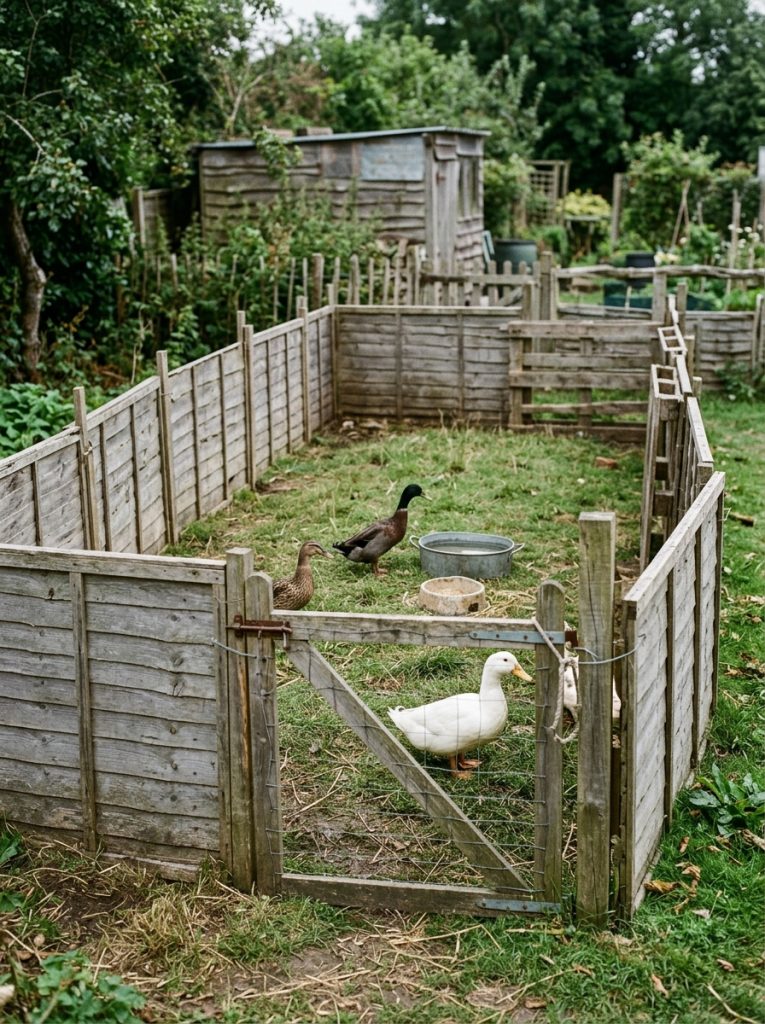
Old fence panels are solid, weatherproof and already cut to size. That makes them perfect for a quick duck pen.
Screw the panels together at the corners, add a gate and stretch netting over the top. It costs almost nothing and looks surprisingly tidy.
- Free materials
- Quick build
- Neat look
17Duck Enclosure with Shaded Rest Area
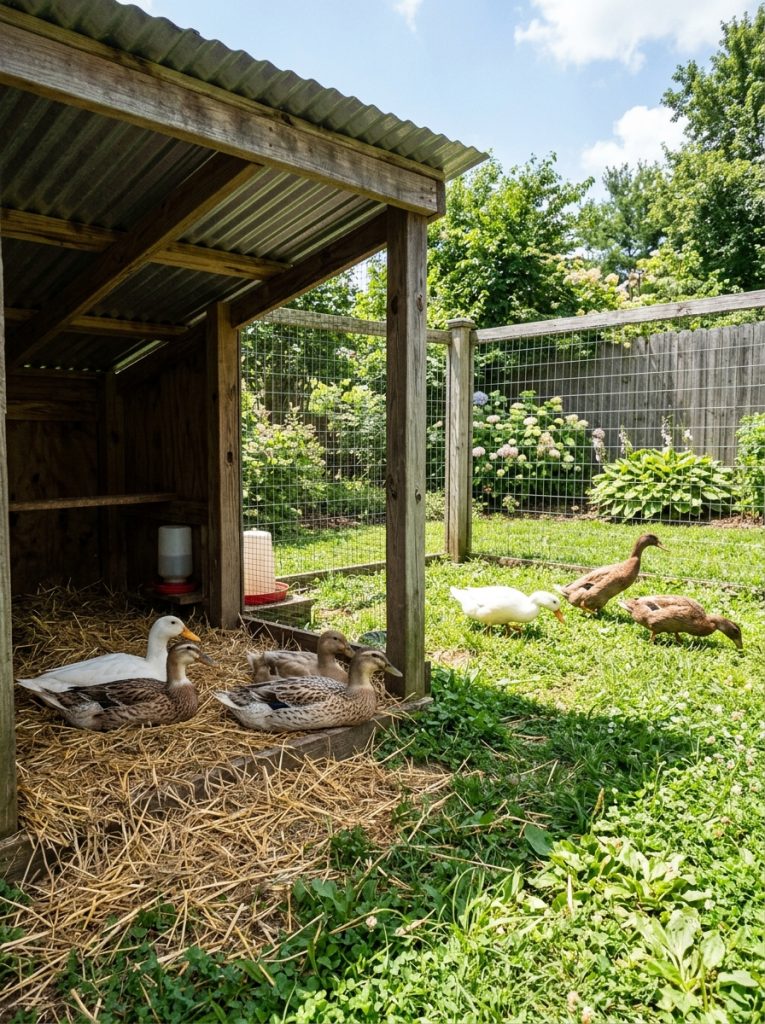
Ducks need shade on hot days just as much as they need water.
A simple lean to with a corrugated roof on one side of the run lets them choose between sun and shade. Keep a little straw under it for napping.
- Cool in summer
- Simple build
- Napping spot
18A Frame Duck House with Run
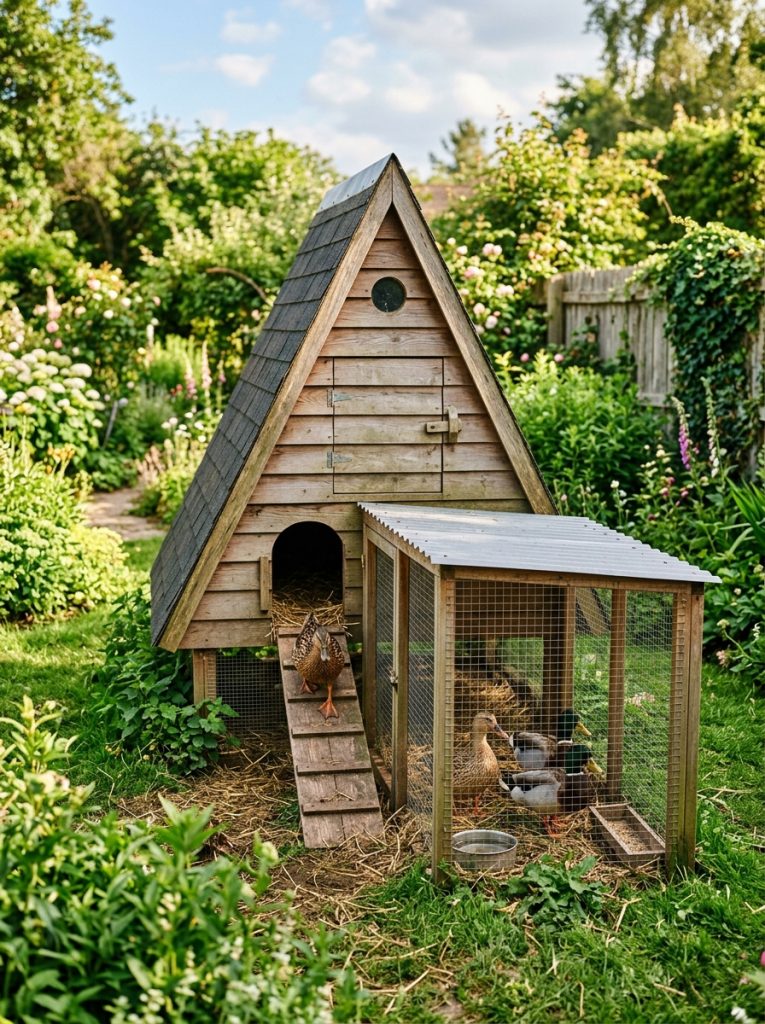
An A frame duck house is cute, compact and sheds rain easily.
The low shape stays steady in the wind. Attach a small covered run to the front with a low ramp and you have a neat setup for a small flock.
- Space saving
- Sheds rain
- Charming look
Project Card · 1 weekend · Medium
Materials Needed
- Exterior plywood sheets
- 2×3 lumber for framing
- Roofing felt or shingles
- Poultry netting for the run
- Hinges, latch and a low ramp
How to Make It
- Cut two plywood triangles for the front and back.
- Join them with a ridge board and lumber rafters.
- Cover the sides with plywood and finish with roofing felt.
- Cut a wide door in the front and fit a low ramp.
- Build a small frame off the front and wrap it in netting for the run.
19Duck Enclosure with Mud Management System
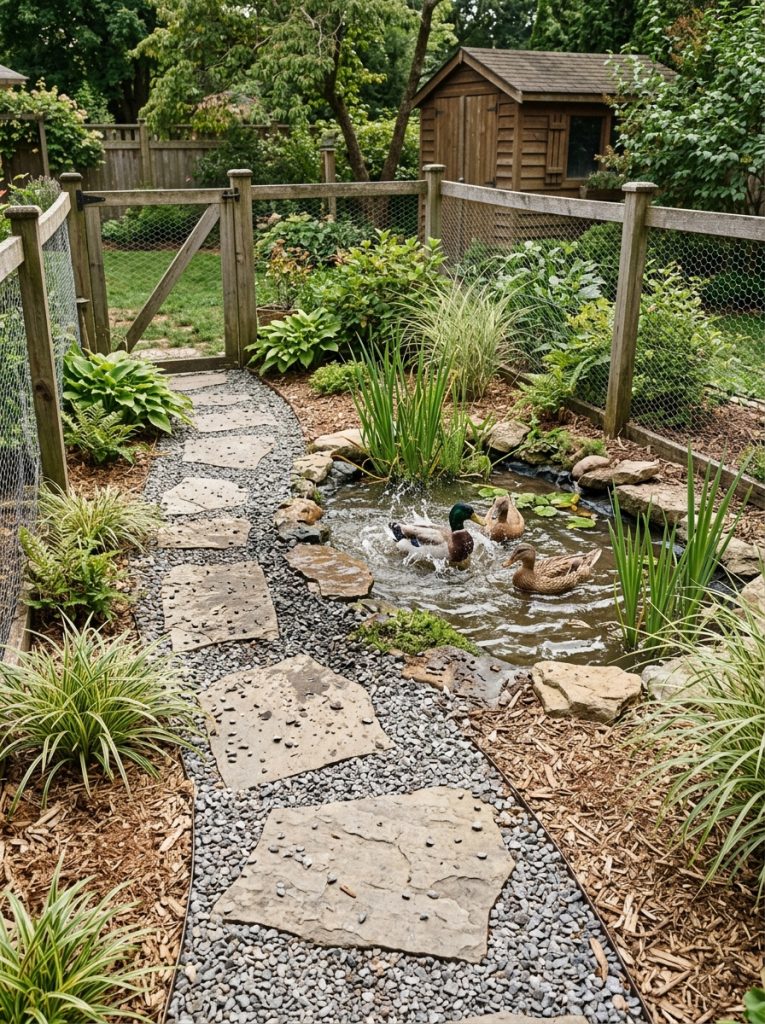
Ducks and mud go together. With a little planning, though, your run does not have to turn into a swamp.
Lay landscape fabric and 3 to 4 inches of gravel around the pond and water areas. It drains fast and gives ducks firm footing.
- Less mud
- Better drainage
- Cleaner ducks
20Movable Duck Tractor Enclosure
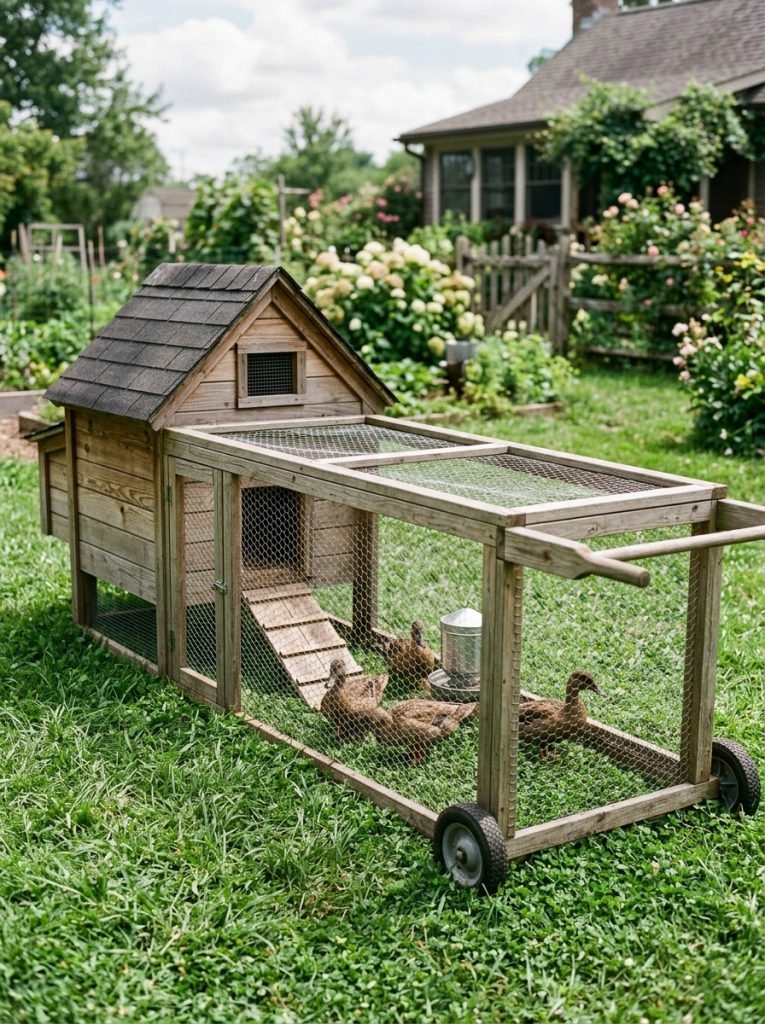
A duck tractor is a light pen with wheels or handles that you move to fresh grass every few days.
Your ducks get new ground to forage, the old patch gets a rest and the yard stays greener. It is perfect for small flocks in suburban yards.
- Fresh grass often
- Greener yard
- Small flock friendly
Frequently Asked Questions
How much space do ducks need in an enclosure?
Plan around 4 square feet per duck in the house and about 10 to 15 square feet per duck in the run. More space means less mud.
Do ducks need a pond?
Not a big one, but they need water deep enough to dip their whole head. A small pool or tub makes them much happier and helps keep them clean.
What should the floor of a duck enclosure be?
Sand, gravel or deep straw all work. Gravel around water areas helps control mud and drains well.
Is a heat lamp safe for ducks?
Hanging heat lamps can start fires near dry straw. A flat panel poultry heater or brooder plate is a much safer choice.
How do I keep predators out of a duck run?
Cover the top, use hardware cloth near the ground, bury wire 6 inches deep and lock the ducks inside at night.
Final Thoughts on DIY Duck Enclosure Ideas
A safe duck setup does not need to be fancy. A dry house, a covered run and some water to splash in are the real basics.
Start with a pallet house or a kit, then add a pond, a shady corner and a winter setup as your flock grows. Your ducks will tell you loudly how happy they are.


Amir Ali is the founder and site administrator of HomeDecorEdge, a modern home decor and interior design platform. Since starting the site, he has combined his passion for interior design, practical styling, and color coordination with hands-on content strategy and site management. He guides authors, curates high-quality articles, and ensures readers have access to actionable, visually inspiring, and user-focused home decor advice for apartments, small rooms, and family homes.