My neighbor’s dog got out three times in one month. That’s when I fixed my fence.
A good fence doesn’t have to cost a fortune. It just has to be tight, tall and secure.
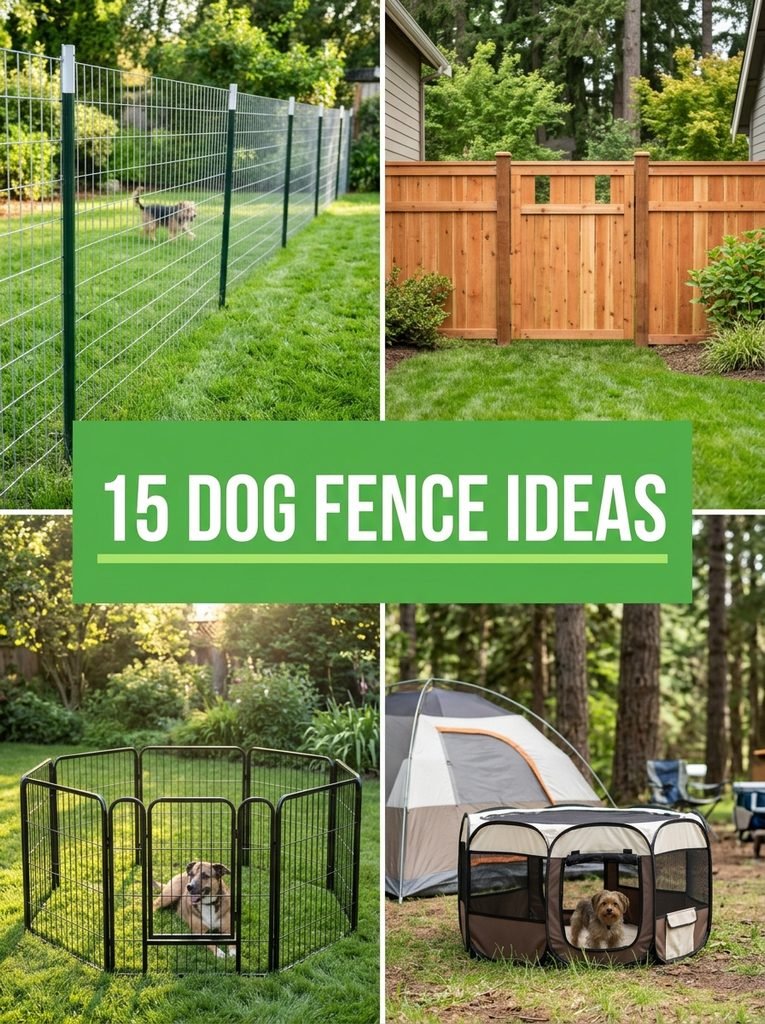
Here are 15 dog fence ideas, from cheap DIY and wooden fences to temporary, camping and dig proof options. Three of them come with full step by step cards.
Quick Picks
- Cheapest: Cheap DIY Backyard Dog Fence (idea 1)
- Best looking: Wooden Dog Fence (idea 2)
- For diggers: Dig Proof Dog Fence (idea 5)
- For renters: Temporary Dog Fence (idea 3)
1. Cheap DIY Backyard Dog Fence
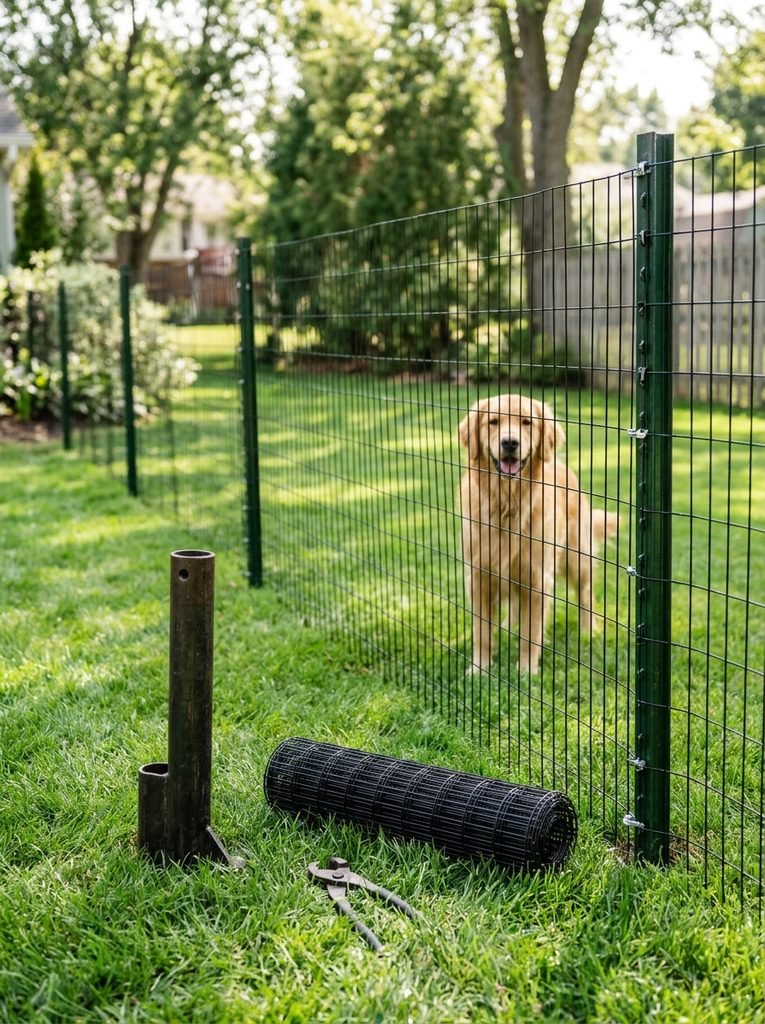
You don’t need a big budget to fence a yard. T posts, welded wire and a bit of patience make a strong fence for far less than a ready made one.
Walk the line first and mark every post with a stake. Put posts about 6 feet apart and keep the wire tight. Check for sharp wire ends and cover or fold them before your dog goes near.
⏱ 1 day💲 Low🛠 Medium
Materials Needed
- Steel t posts, 6 feet
- Welded wire fence roll, 4 feet
- T post clips
- A post driver, fence pliers and a tape measure
How to Make It
- Mark the fence line with stakes, and set a post every 6 feet.
- Drive each t post about 18 inches into the ground with a post driver.
- Unroll the welded wire along the posts and fasten it with t post clips.
- Pull the wire tight as you go, and fold or cap every sharp end.
- Add a gate, then walk the line and check for gaps at the bottom.
Tip: Keep the fence tight with no gaps wider than 2 inches. Cap or fold sharp wire ends, and never use thin chicken wire, which dogs can chew or tear.
2. Wooden Dog Fence
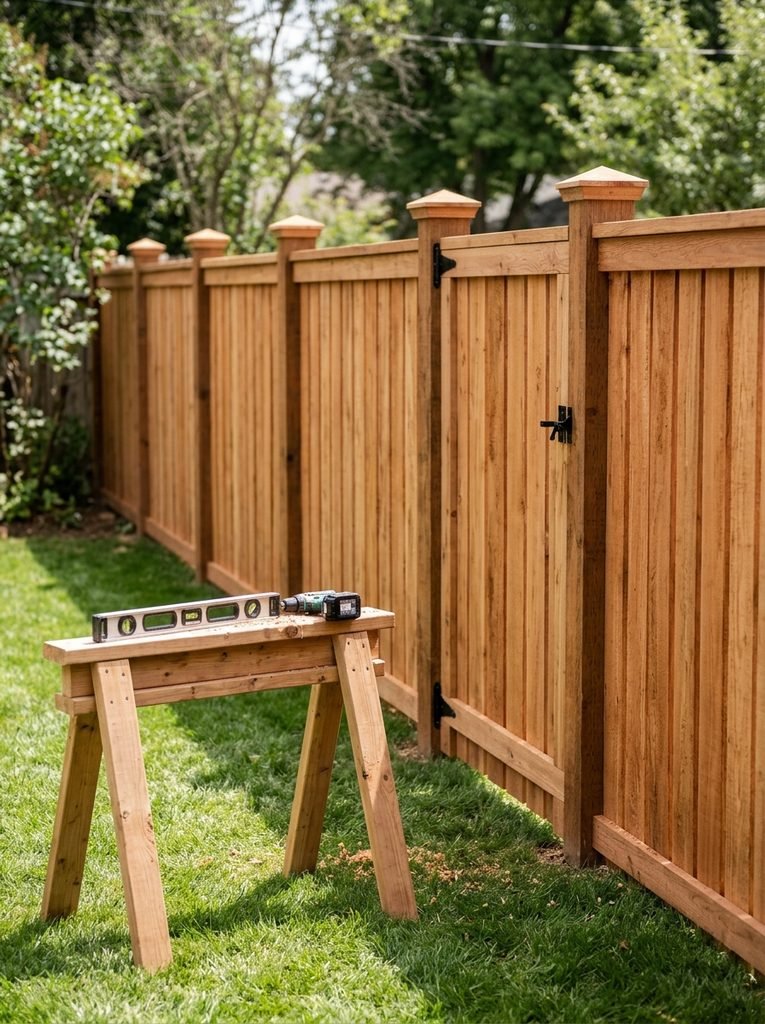
A wooden fence looks great and holds in even the most determined dog. It also keeps the neighbors’ dogs and distractions out of view.
Use rot resistant wood like cedar, or pressure treated posts set in the ground. Build to at least 5 or 6 feet for large dogs. Set the boards close together, with no gaps your dog can squeeze through.
⏱ 2 days💲 High🛠 Hard
Materials Needed
- Cedar fence pickets, 6 feet
- Pressure treated fence posts, 4 by 4
- Fast setting concrete mix
- A drill, a saw, a level and a post hole digger
How to Make It
- Mark the fence line and dig post holes about 2 feet deep, every 6 to 8 feet.
- Set each post in fast setting concrete and check that it’s level in both directions.
- Screw two or three horizontal rails between the posts.
- Attach the cedar pickets to the rails, keeping them tight together.
- Hang the gate with strong hinges and a self locking latch.
Tip: Check local rules and property lines before you build. Use a post cap so rain doesn’t rot the tops, and add a gate latch your dog can’t lift.
3. Temporary Dog Fence
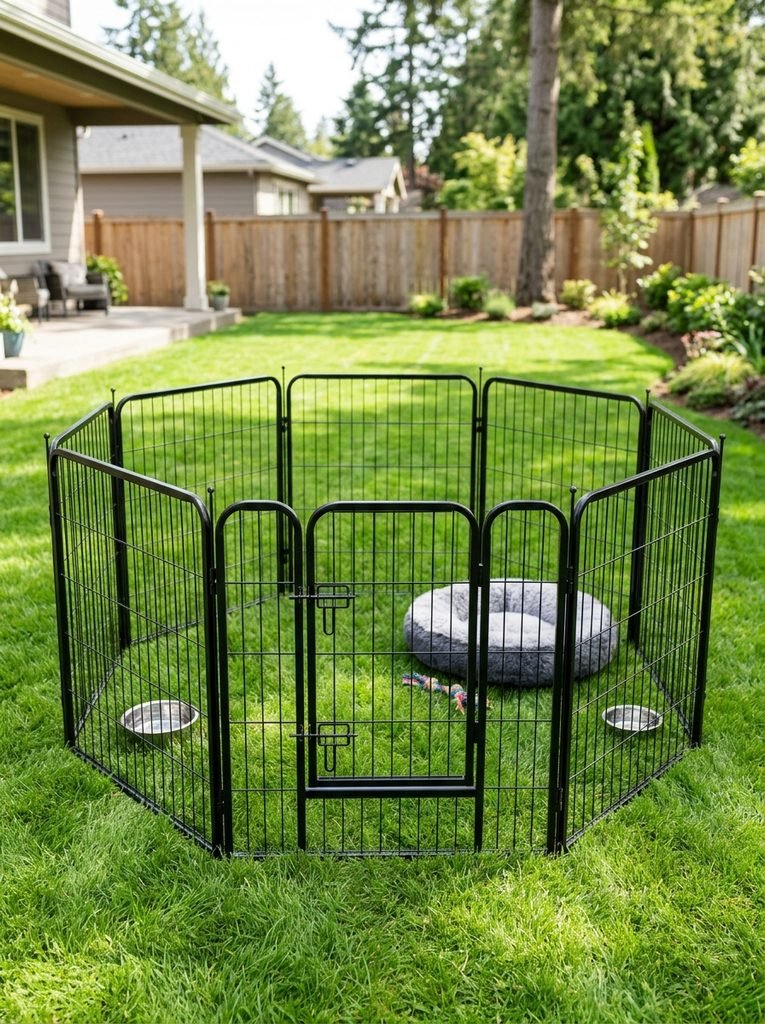
A temporary fence is perfect for renters, new puppies or a short fix. It goes up in minutes, and comes down just as quick.
Choose a heavy exercise pen with panels at least 36 inches tall. Link the panels in a square or circle, and stake them down in windy or grassy areas. Strong or jumping dogs can knock these over, so always watch.
You’ll need: dog exercise pen with gate, 8 panels and ground stakes for pens
Best for: renters, puppies and short term needs
4. Camping Dog Fence
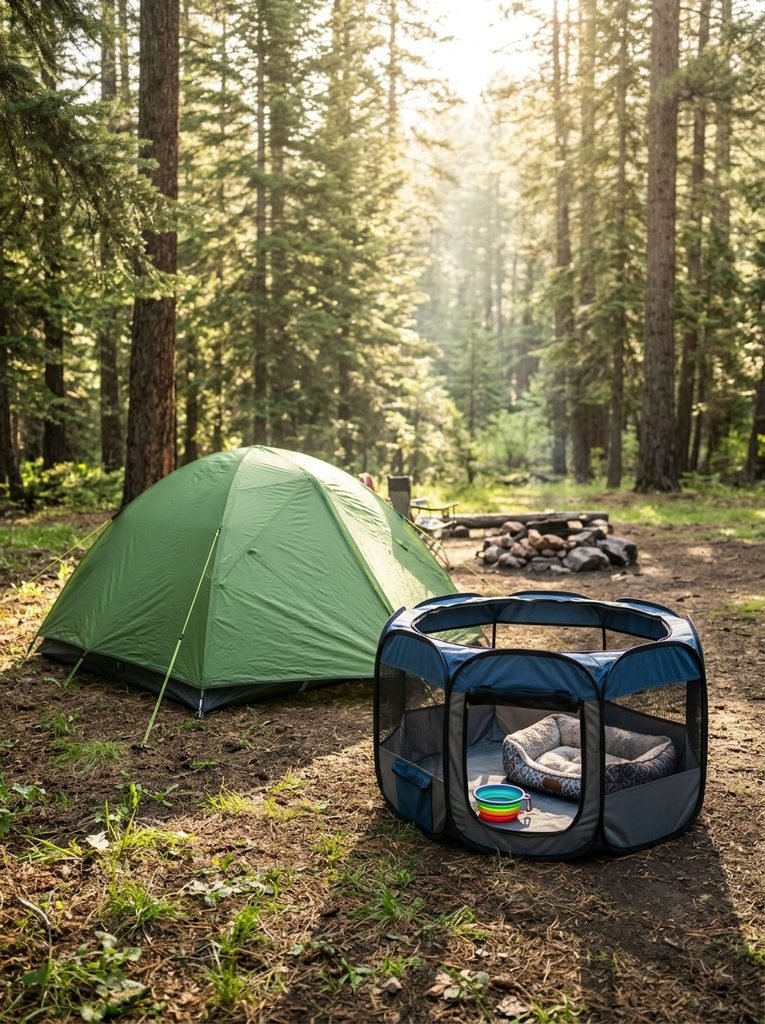
Camping with a dog is fun, but a loose dog near a campsite isn’t safe. A lightweight pen gives your dog a safe zone.
Pick a light, foldable pen that stakes into the ground. Set it up in the shade, and keep food and rubbish away. Never leave your dog alone in a camp pen, because wildlife or sudden weather can scare it.
You’ll need: collapsible camping dog pen
Best for: camping trips and road travel
5. Dig Proof Dog Fence
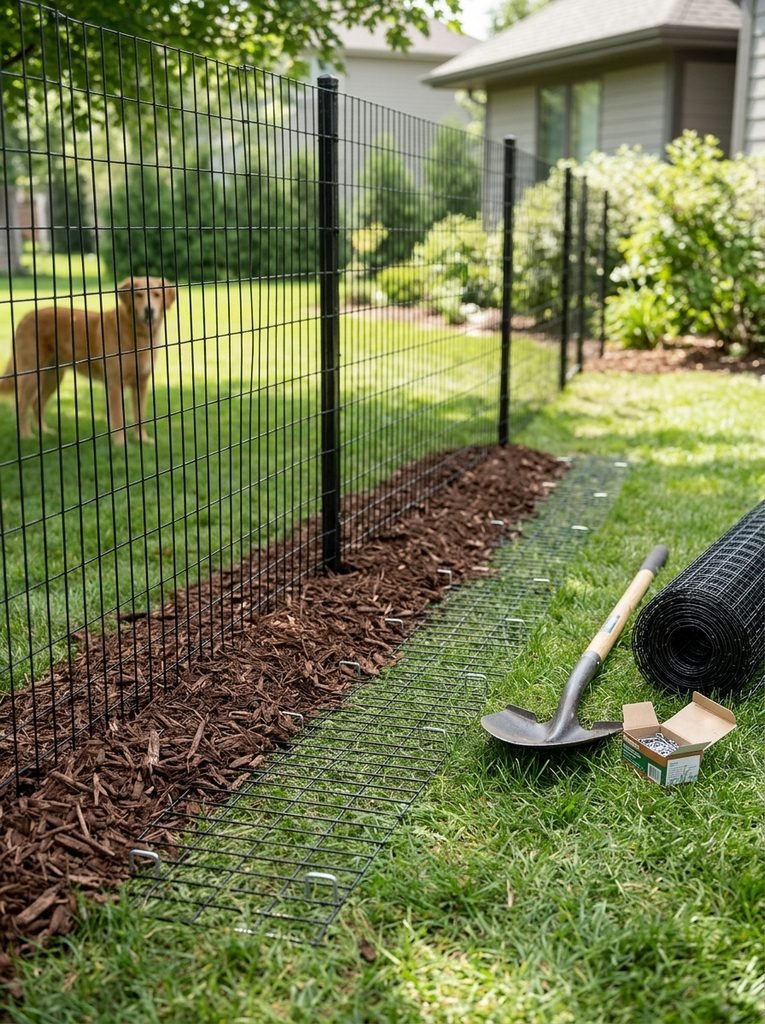
If your dog digs under the fence, the fix is below the ground. Dogs dig right at the fence line, so that’s where you build the barrier.
Lay a wire apron along the bottom of the fence, about 2 feet wide, pointing away from the yard. Bury it a few inches or cover it with mulch and stones. When your dog digs, it hits wire instead of finding a way out.
⏱ 3 hours💲 Low🛠 Medium
Materials Needed
- Welded wire for apron, 2 feet wide
- Landscape staples
- Concrete pavers, 12 inch
- A shovel, wire cutters and gloves
How to Make It
- Measure the fence line, and cut wire apron pieces 2 feet wide to fit.
- Lay the wire flat on the ground along the fence bottom, and point it outward so a digging dog hits it.
- Wire the apron to the base of the fence with strong zip ties or wire.
- Pin the apron down with landscape staples every 2 feet.
- Cover it with mulch or soil, and place pavers over the favorite digging spots.
Tip: Wear gloves and cap all cut ends. Give your dog a legal digging spot, such as a sandpit, so it has somewhere to dig.
6. Large Dog Fence for Big Jumpers
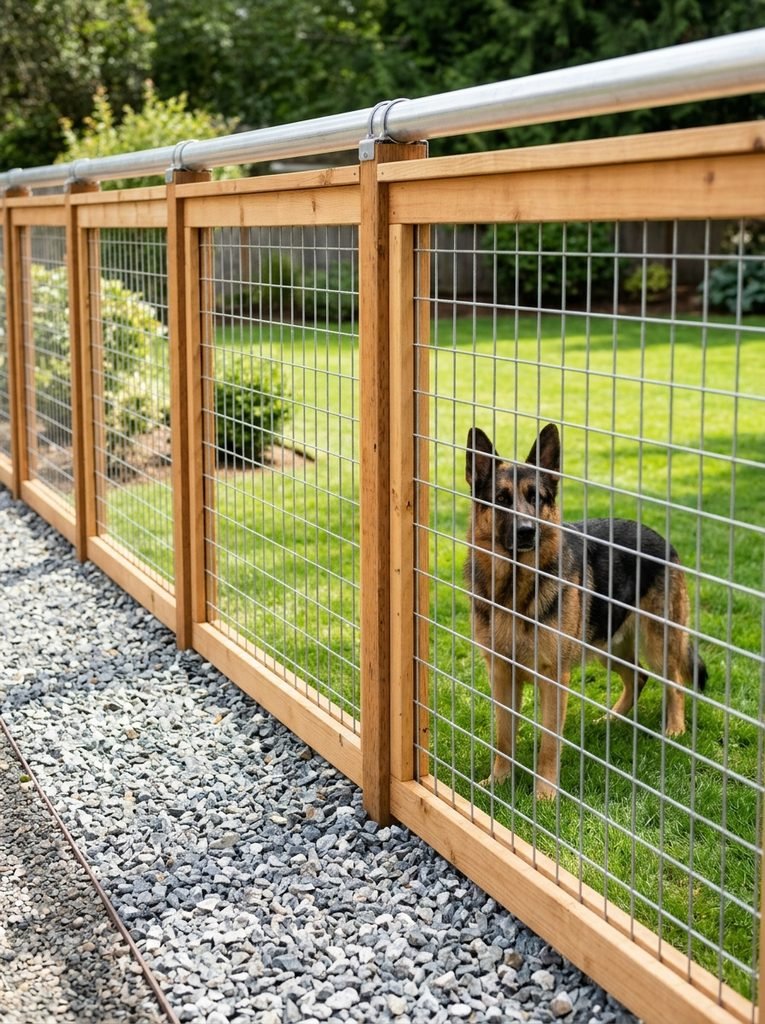
Big dogs can clear a short fence. For a lab, a shepherd or a husky, plan for six feet.
Use thick posts, strong wire and an extra top rail. Add a roller bar on top if your dog climbs. Keep the area near the fence free of boxes or furniture that your dog can use as a step.
You’ll need: fence roller bar topper
Best for: big dogs and strong jumpers
7. Front Yard Dog Fence
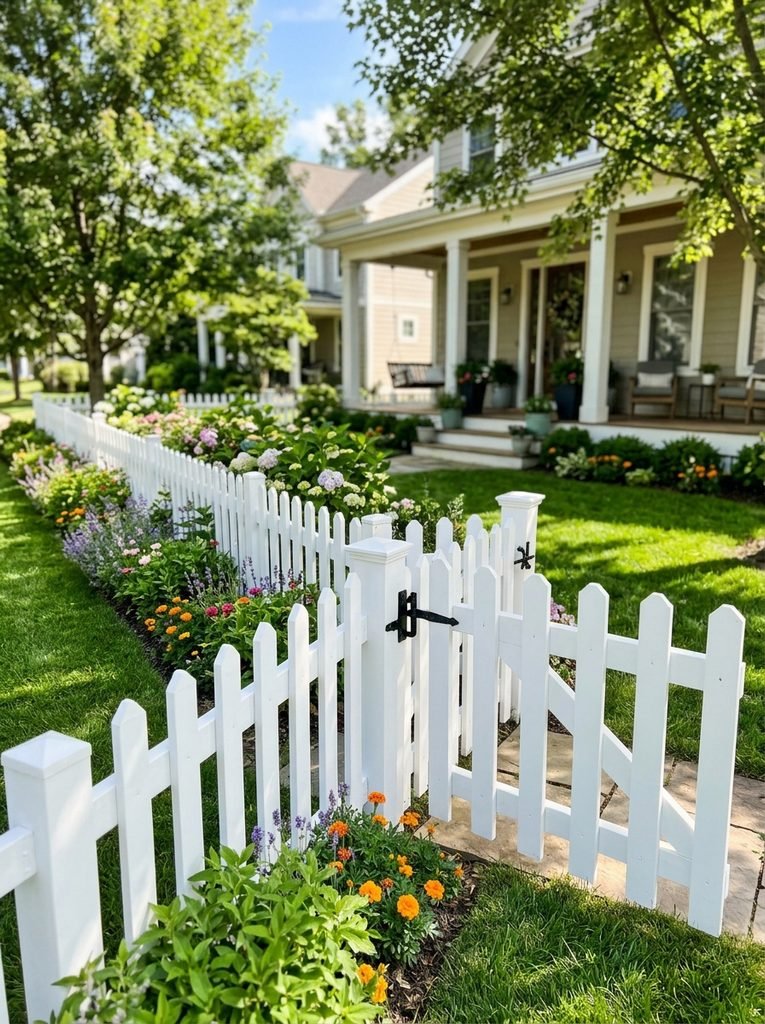
A front yard fence has to look good. Many towns also have rules about height and style, so check first.
A low picket or black metal fence keeps a small dog safe and looks neat. For jumpers, choose a taller one and plant shrubs on the street side to soften it. Always use a gate latch that locks.
You’ll need: white vinyl picket fence panels
Best for: front yards and neat looks
8. Garden Dog Fence to Protect Plants
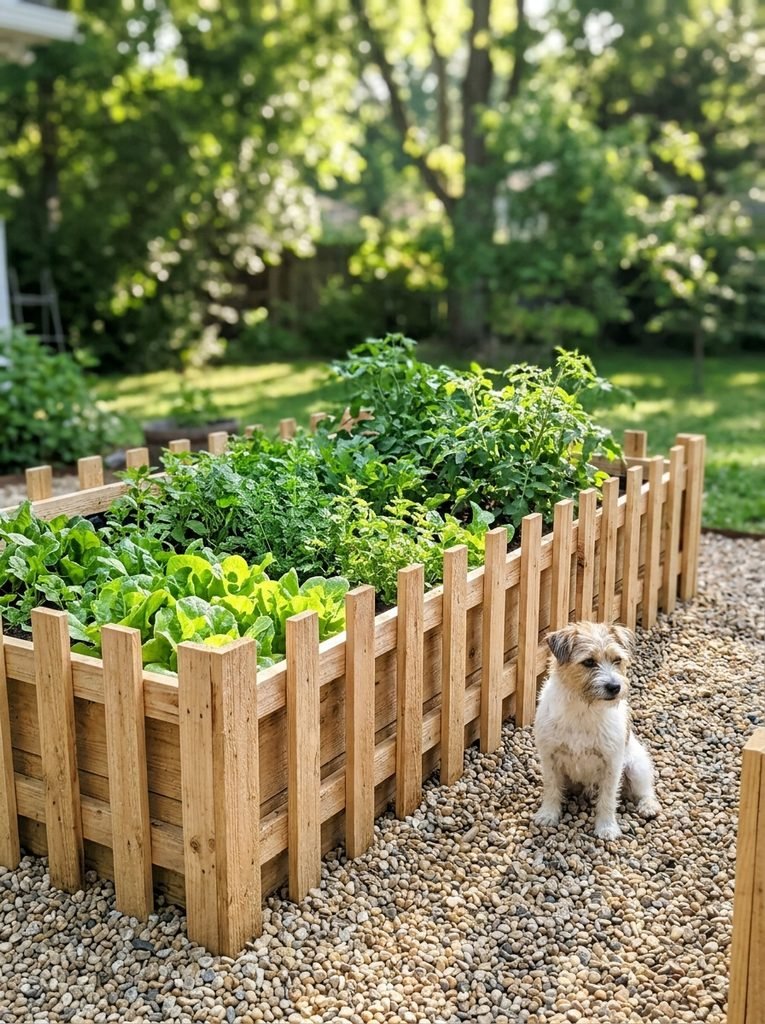
Dogs and gardens don’t always mix. A low fence around the beds protects your plants and keeps your dog safe from garden chemicals.
A 2 foot fence works for small, calm dogs, and 3 to 4 feet for bigger ones. Use sturdy posts and wire that dogs can’t push through. A neat gate at the path lets you in and out.
You’ll need: garden fence panels, 3 feet
Best for: vegetable beds and flower borders
9. Indoor Dog Fence and Gates
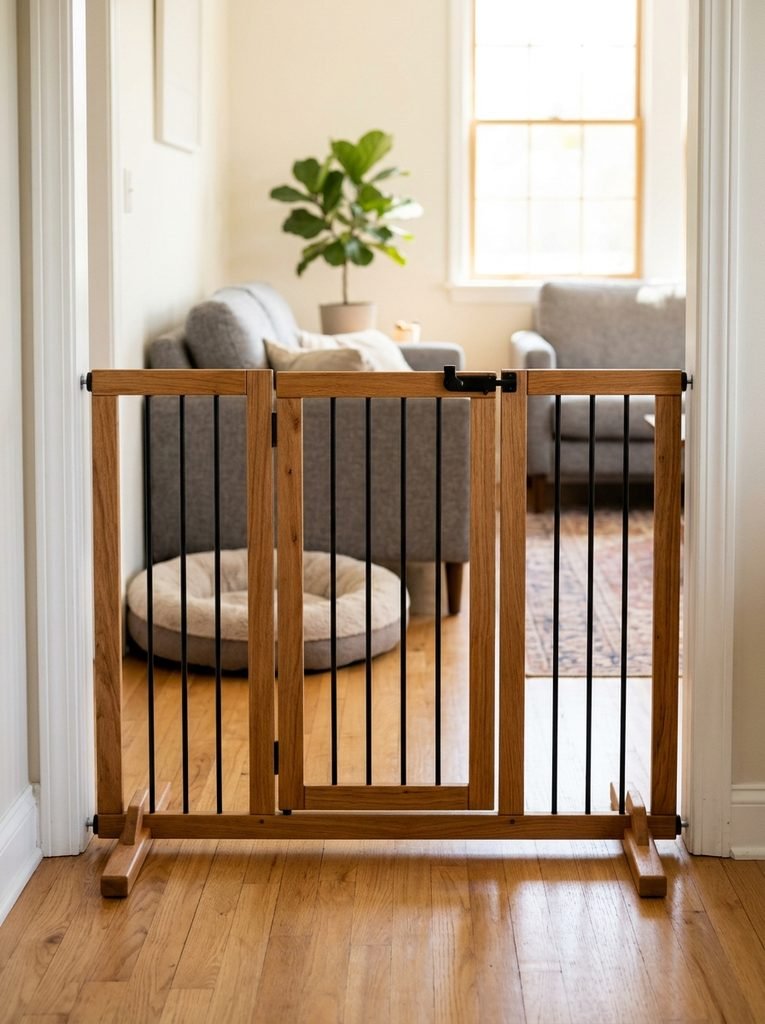
Indoors, a gate keeps your dog out of the kitchen or off the stairs. A playpen gives a puppy a safe place when you’re busy.
Pick a gate with a walk through door, and make sure it fits the opening tightly. Don’t use a pressure mounted gate at the top of stairs. Use a hardware mounted one there instead.
You’ll need: freestanding pet gate with door
Best for: puppies and small homes
10. Outdoor Freestanding Dog Fence Panels
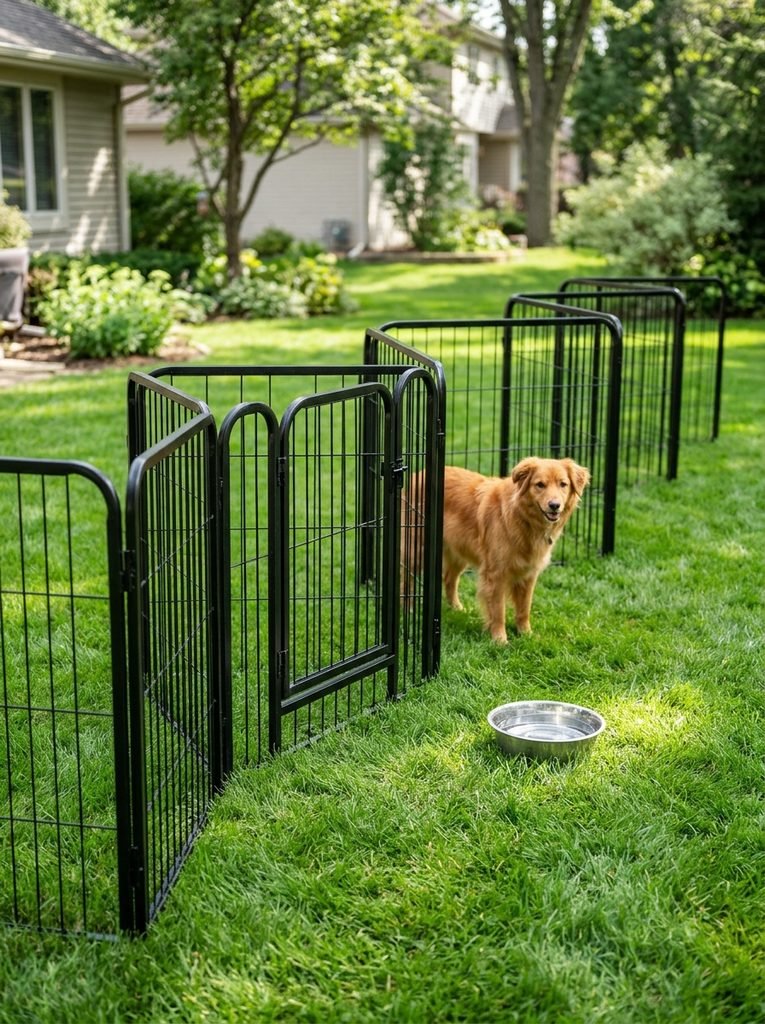
Freestanding panels need no digging. You can zigzag them for strength, and move them whenever you like. For more layout ideas, see these backyard dog run ideas.
Pick panels at least 36 inches tall, and connect each one with clips. Use a zigzag shape rather than a straight line, so the fence doesn’t tip. Stake the ends in windy places.
You’ll need: heavy duty freestanding fence panels
Best for: movable fences and renters
11. PVC Dog Fence
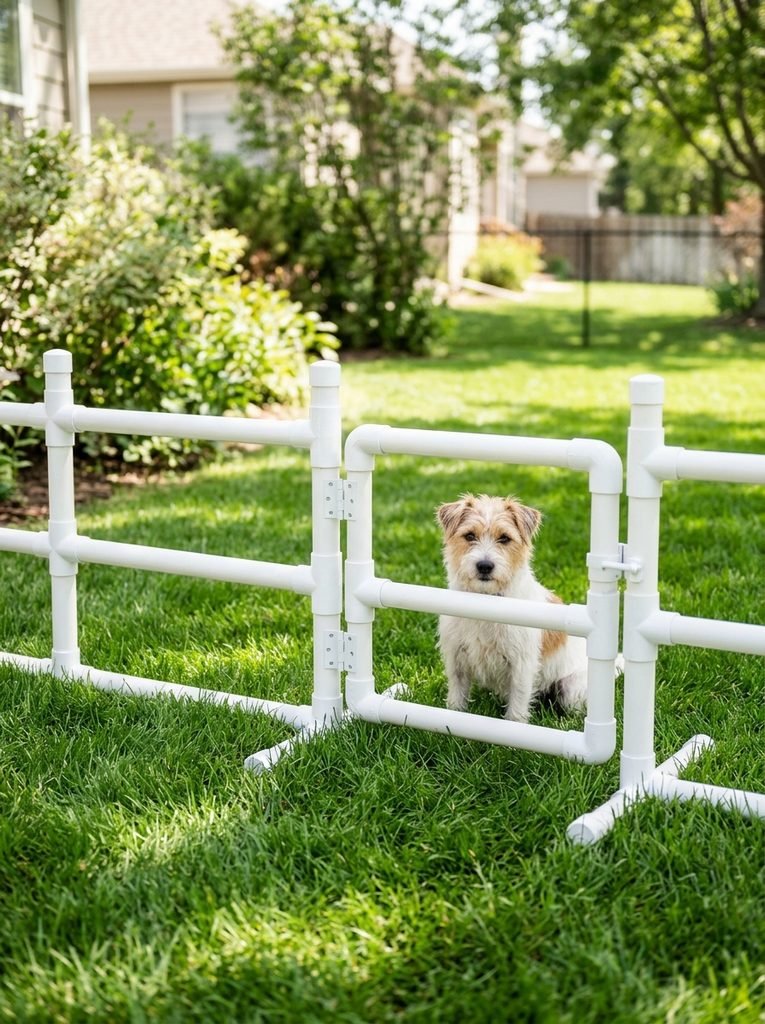
PVC pipe is cheap, light and easy to cut. It’s best for small, calm dogs.
Glue the pipes into panels and set them into the ground or into a base. Keep spaces narrow, and use a thick pipe for strength. A strong, jumping or chewing dog can break PVC, so don’t rely on it.
You’ll need: PVC pipe and fittings kit
Best for: small dogs and easy builds
12. Pallet Dog Fence
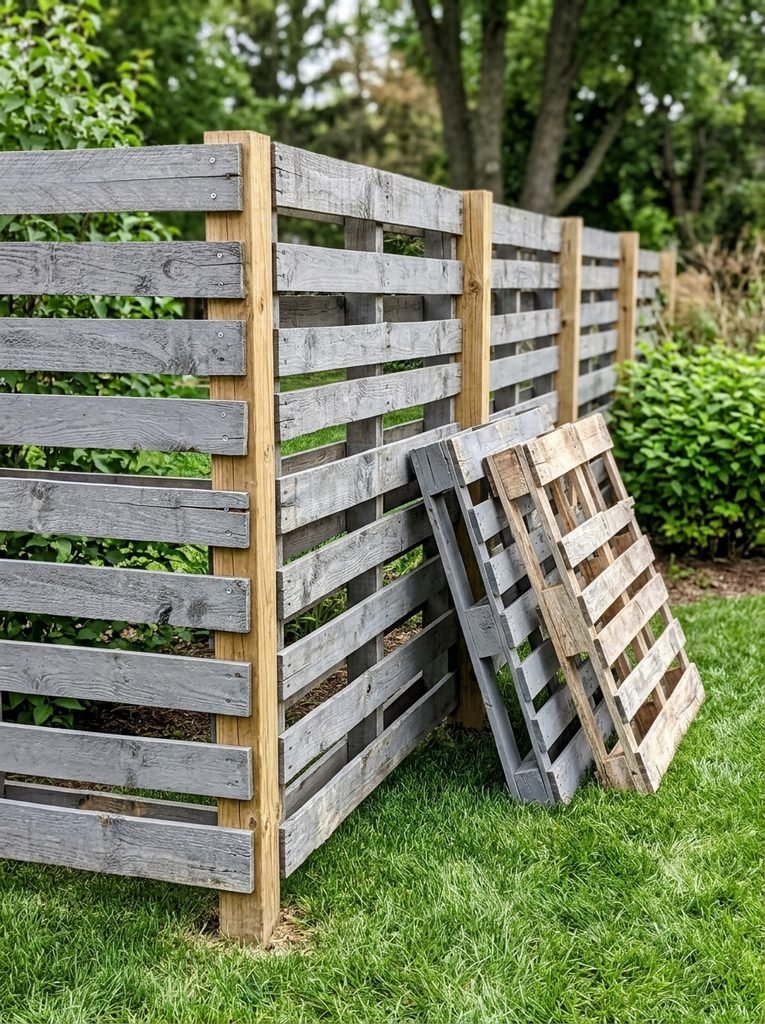
Pallets cost almost nothing. Lean or screw them into a line and you have a fence with real rustic charm.
Only use pallets stamped HT for heat treated. Avoid MB. Sand rough edges and check for loose nails. Fix each pallet to a post, so it can’t tip over.
You’ll need: heavy duty exterior screws
Best for: cheap builds and recycled wood
13. Hog Panel Dog Fence
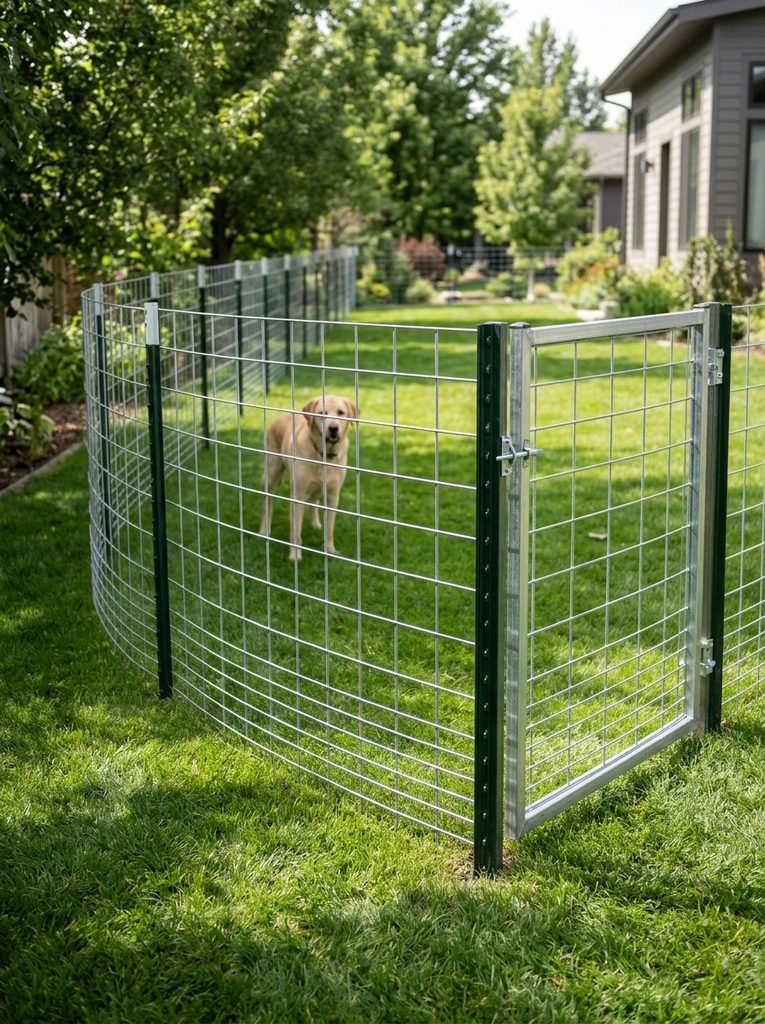
Hog panels are thick and sturdy, and they’re great for big or strong dogs. They cost less than most ready made fences.
Use 4 foot panels, and attach them to t posts with strong clips. Cut ends can be very sharp, so cap or grind them smooth. Ask the shop to cut the panels to length.
You’ll need: galvanized hog panel, 4 feet
Best for: strong dogs and cheap strength
14. Fence Toppers to Stop Jumpers
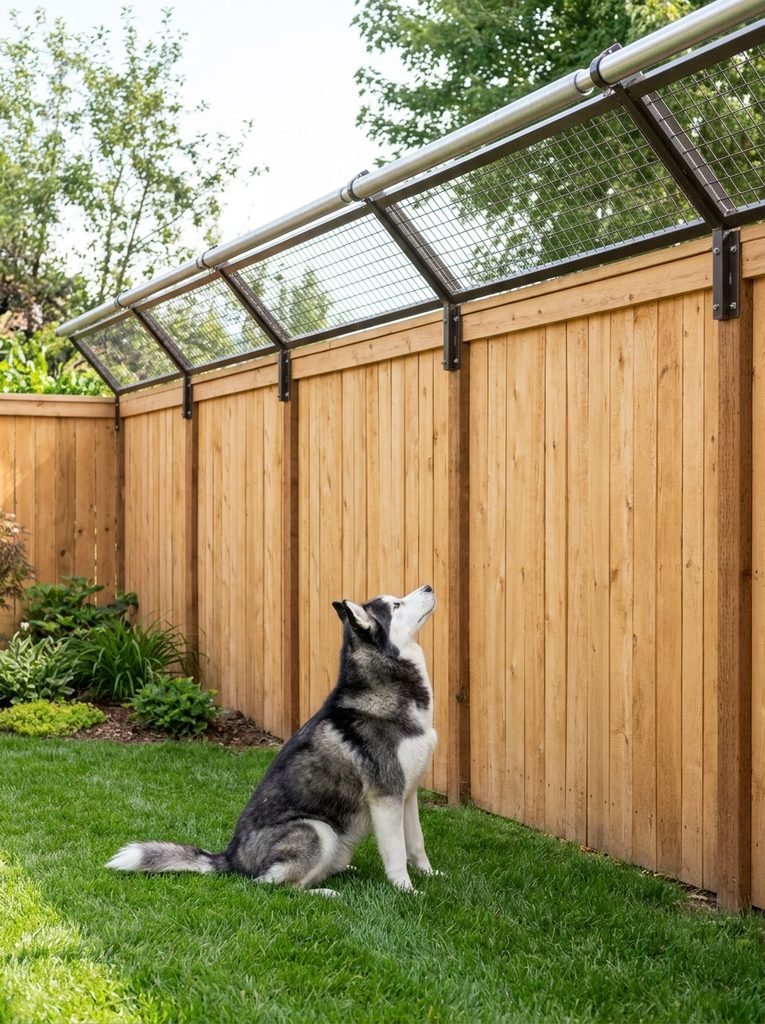
A jumper can clear 5 feet with ease. A topper tilts inward and makes climbing impossible.
Add an angled extension on top of the fence, leaning inward by about 45 degrees. A roller bar is another good choice. Check the fence every week for gaps.
You’ll need: fence extension brackets
Best for: jumpers and climbers
15. Gate Ideas for Dog Fences
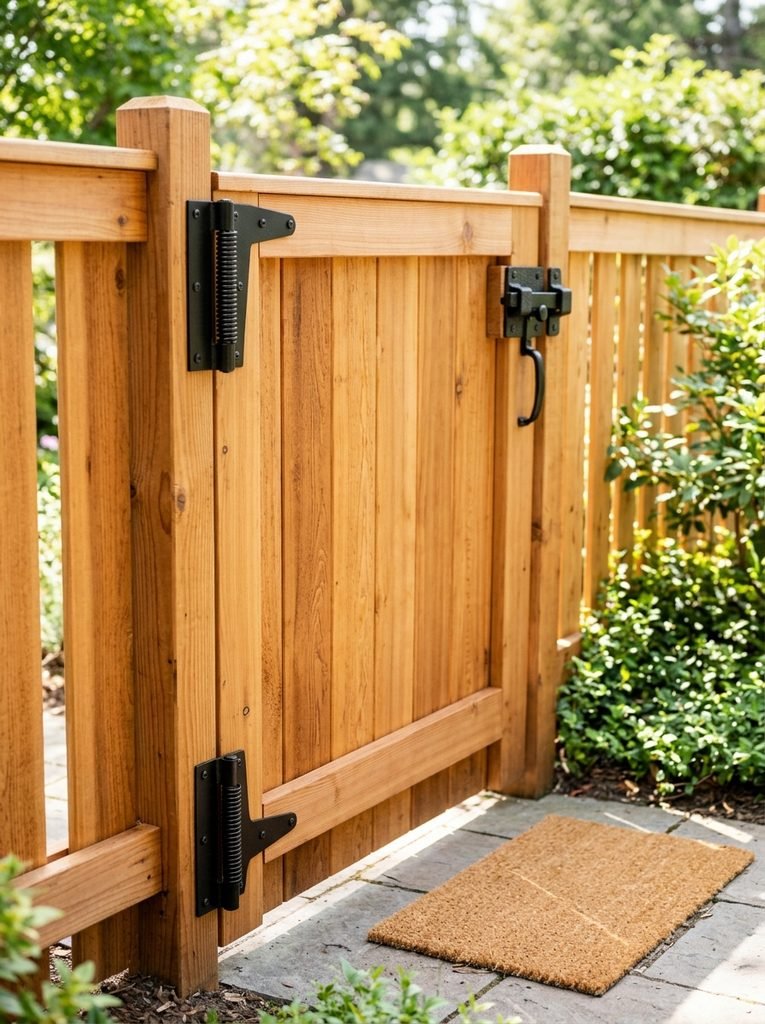
A fence is only as strong as its gate. Choose a gate that closes by itself and locks.
Use spring hinges, so the gate swings shut. Add a latch that locks automatically. Fit a second latch high up if your dog is a climber or a clever opener.
You’ll need: self closing spring gate hinges
Best for: escape artists and kids
Frequently Asked Questions
What is the cheapest dog fence?
T posts with welded wire, or a freestanding exercise pen. Both cost far less than a wooden fence.
How tall should a dog fence be?
Three to four feet for small dogs, five to six feet for big or jumping dogs.
How do I stop my dog digging under the fence?
Lay a wire apron along the base, point it outward and cover it with mulch or pavers.
Is chicken wire safe for a dog fence?
No. It’s thin and dogs can chew or tear it. Use welded wire or hog panels.
Can I use pallets for a dog fence?
Yes, if they are stamped HT. Avoid MB, and sand off splinters.
Do I need permission to build a fence?
Often, yes. Check local rules, property lines and any homeowners association limits before you build.
Final Thoughts on Dog Fence Ideas
A good fence is tight, tall enough and secure at the gate. Pick the style that fits your dog and your budget, and check it every week.


Amir Ali is the founder and site administrator of HomeDecorEdge, a modern home decor and interior design platform. Since starting the site, he has combined his passion for interior design, practical styling, and color coordination with hands-on content strategy and site management. He guides authors, curates high-quality articles, and ensures readers have access to actionable, visually inspiring, and user-focused home decor advice for apartments, small rooms, and family homes.