

An expense tracker printable turns money stress into one small line a day. Instead of wondering where the money went at the end of the month, you write down every purchase as you make it, and the page adds up the answer for you. By the end of the month the totals show you exactly what happened, no guessing and no guilt.
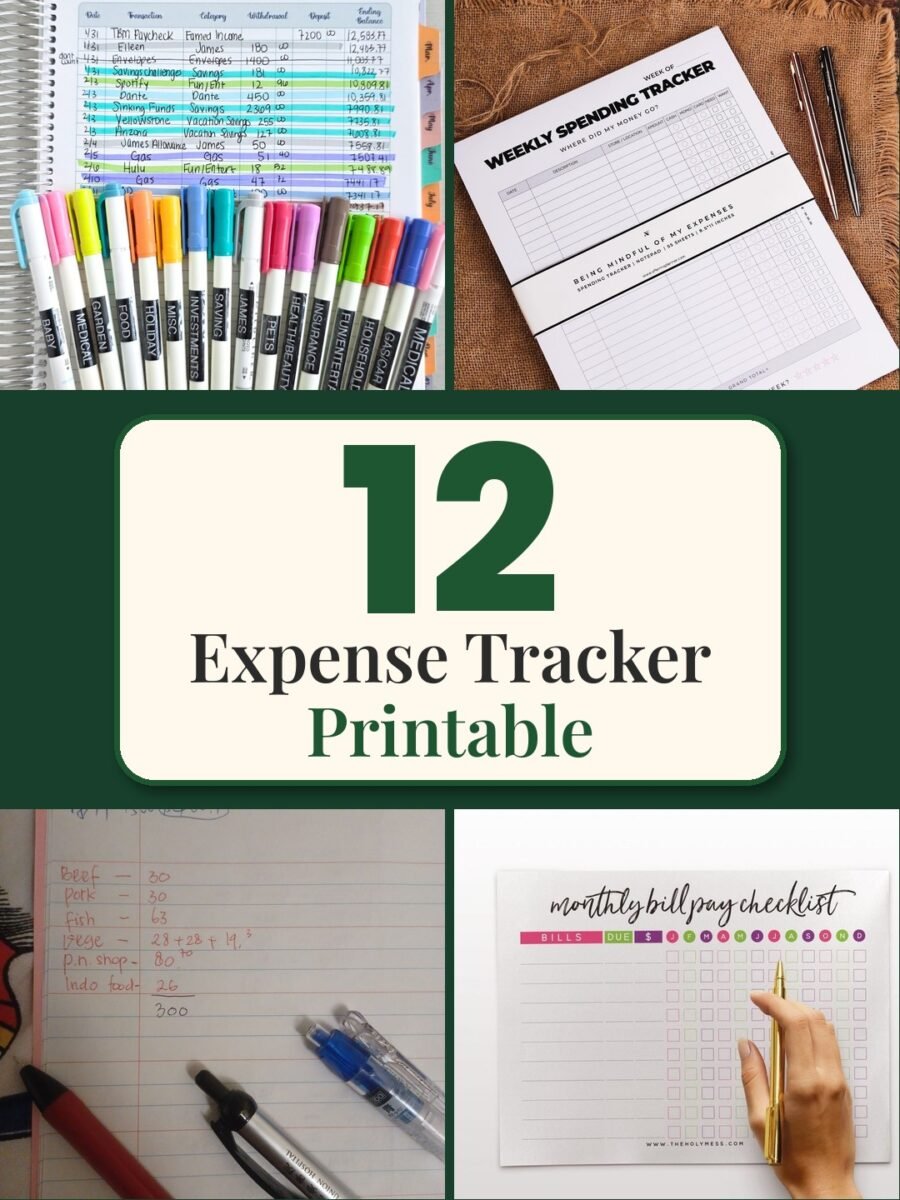
The twelve ideas below split into three easy groups: four for monthly, weekly and daily rhythms, four for bills, groceries and cash, and four for debt, business and the whole year. Start with the three that sound easiest and add one more each month. If you like pairing money tracking with daily habits, our habit trackers printable list sits beautifully beside this one.
You do not need a fancy app or a new budget system. One printed page, a pen you like, and a spot where you will actually see it cover most of this list. Keep the tracker on the fridge, by the bed, or open on your desk, because a habit you have to hunt for is a habit you will skip.
Work through the list in order, or pick the three that fit today and let the rest wait. Print one tracker tonight, write down the first purchase tomorrow morning, and let the small lines stack up into a month you can finally see clearly.
Quick Picks
- Best place to start: Monthly Expense Tracker for the Whole Month (idea 1)
- Easiest daily habit: Daily Expense Log in a Notebook (idea 3)
- Best for bills: Monthly Bill Pay Checklist (idea 4)
1. Monthly Expense Tracker for the Whole Month
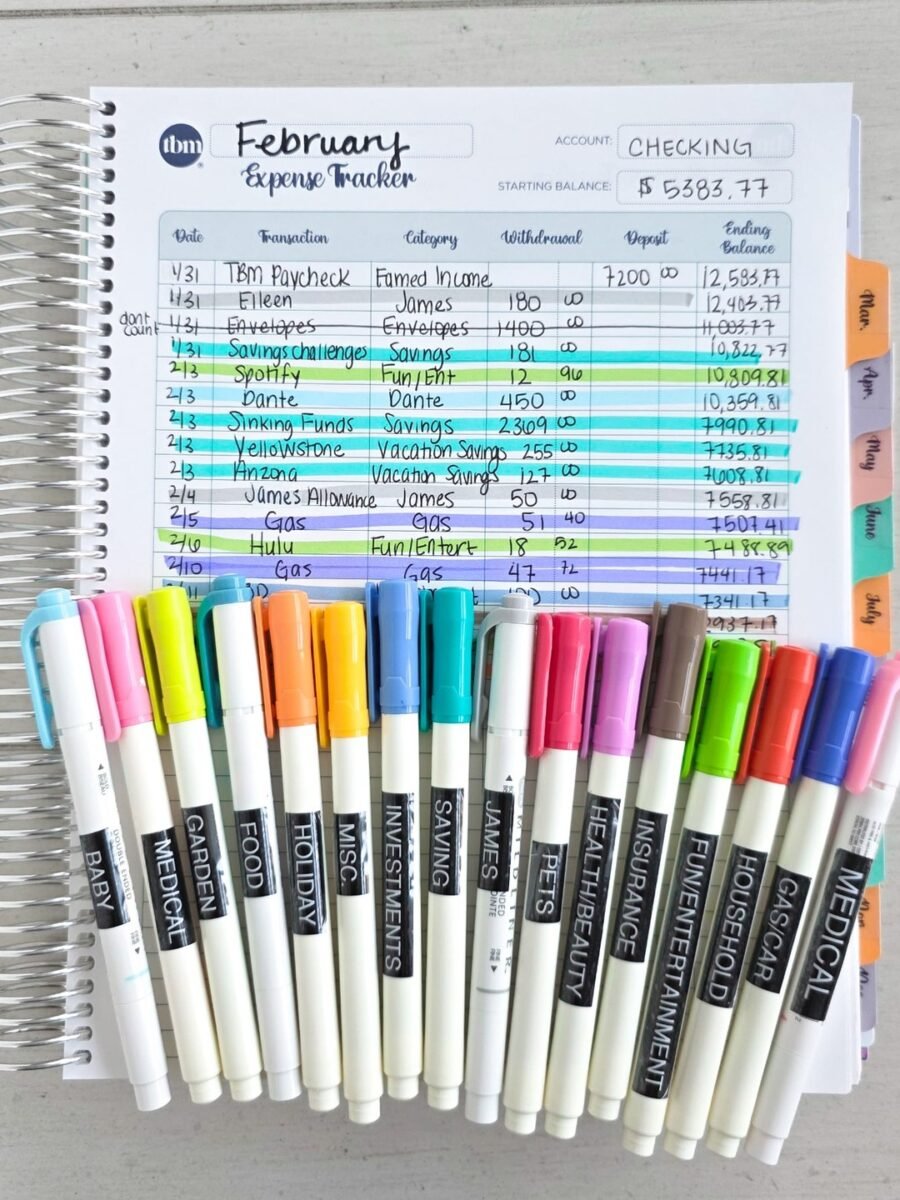
This is the simplest tracker on the list, and the best place to start. The February page in this open planner tracks a checking account with a starting balance of $5,383.77, and every row lists the date, the transaction, the category, the withdrawal, the deposit and the running balance, with rows highlighted in green, blue, purple and gray so each category is easy to spot. A row of markers below the page labels each category, from food and garden to pets and saving. Write down each purchase as you make it and total the page on Sunday, because a short list you finish beats a long list you abandon.
You’ll need: a printed monthly tracker, a pen and five minutes at the end of the day.
Best for: Anyone who wants one page that holds the whole month
2. Weekly Spending Tracker Notepad
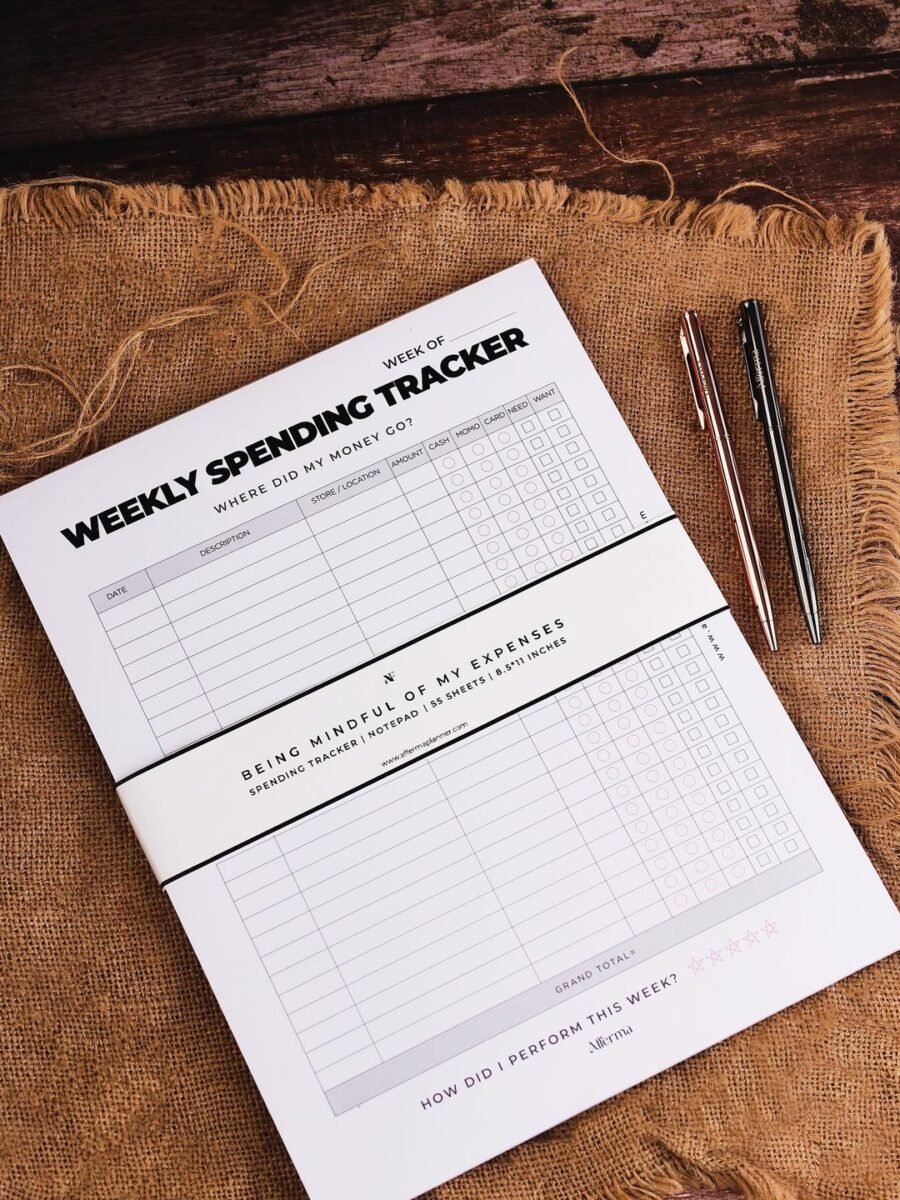
A weekly tracker is perfect when a whole month feels too big to face. This notepad asks one simple question at the top, Where Did My Money Go, then gives you columns for the date, the description, the store, the amount, the payment method and a need or want checkbox for every purchase. The need or want box is the clever part: tick it honestly for one week and you will see exactly how much of your spending was a want in disguise. Keep the notepad by the door and fill it in the moment you come home.
You’ll need: a weekly spending tracker notepad and a pen you enjoy writing with.
Best for: Weeks when one day at a time is not enough
Seasonal Special
Winter Home Reset Kit
8 printable pages to warm up your home, get holiday guest ready and stay cozy all season.
Get the Kit3. Daily Expense Log in a Notebook
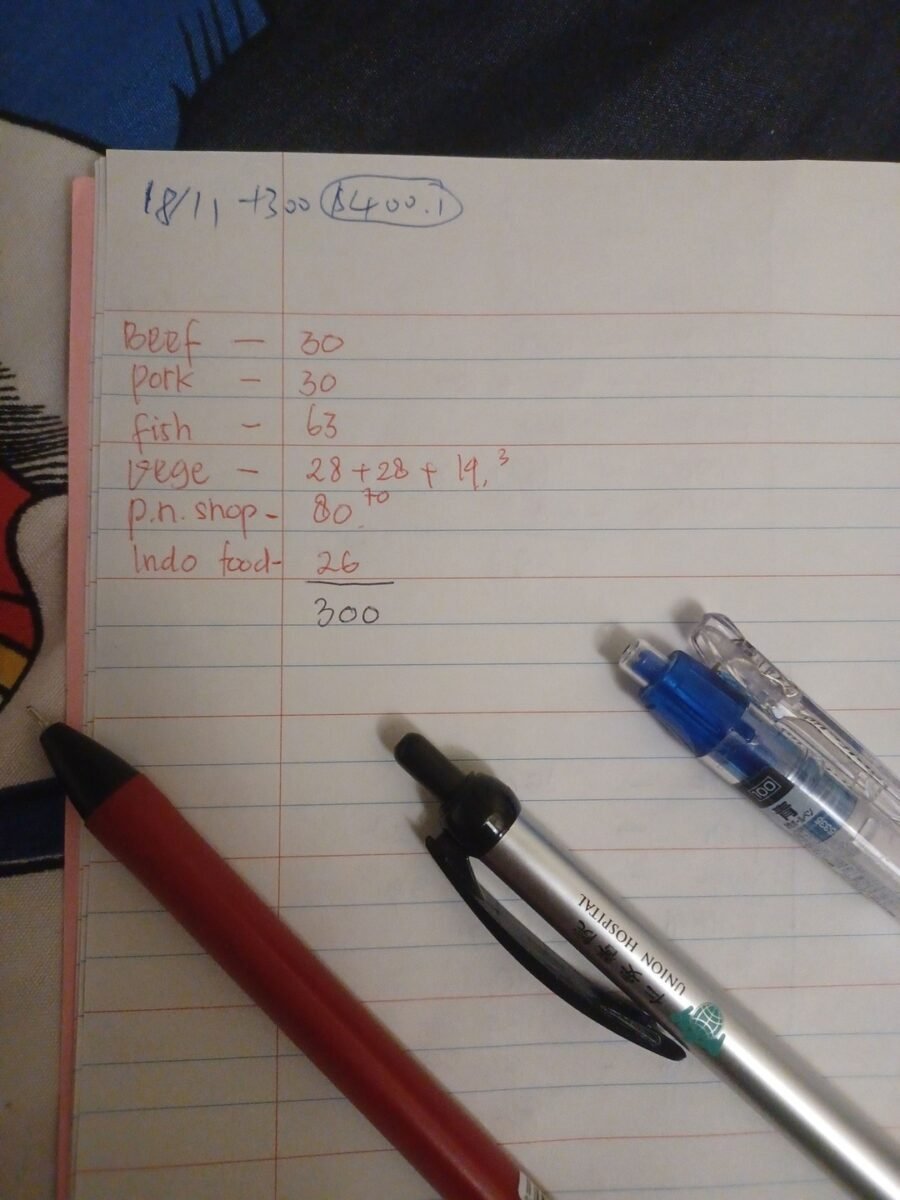
Some days the best tracker is a plain notebook page. This handwritten log dated 18/11 lists one day of food shopping in red ink, Beef 30, Pork 30, Fish 63, vegetables 28 plus 28 plus 14.3, a shop stop at 80 and Indo food at 26, with a total of 300 written underneath. No printed form, no app, just the date, the items and the total. Keep the notebook in the kitchen and write each shop down the moment you unpack the bags, because a log you write by hand is a log you actually remember.
You’ll need: a lined notebook and a pen, nothing else.
Best for: Days when a printed form feels like too much fuss
4. Monthly Bill Pay Checklist
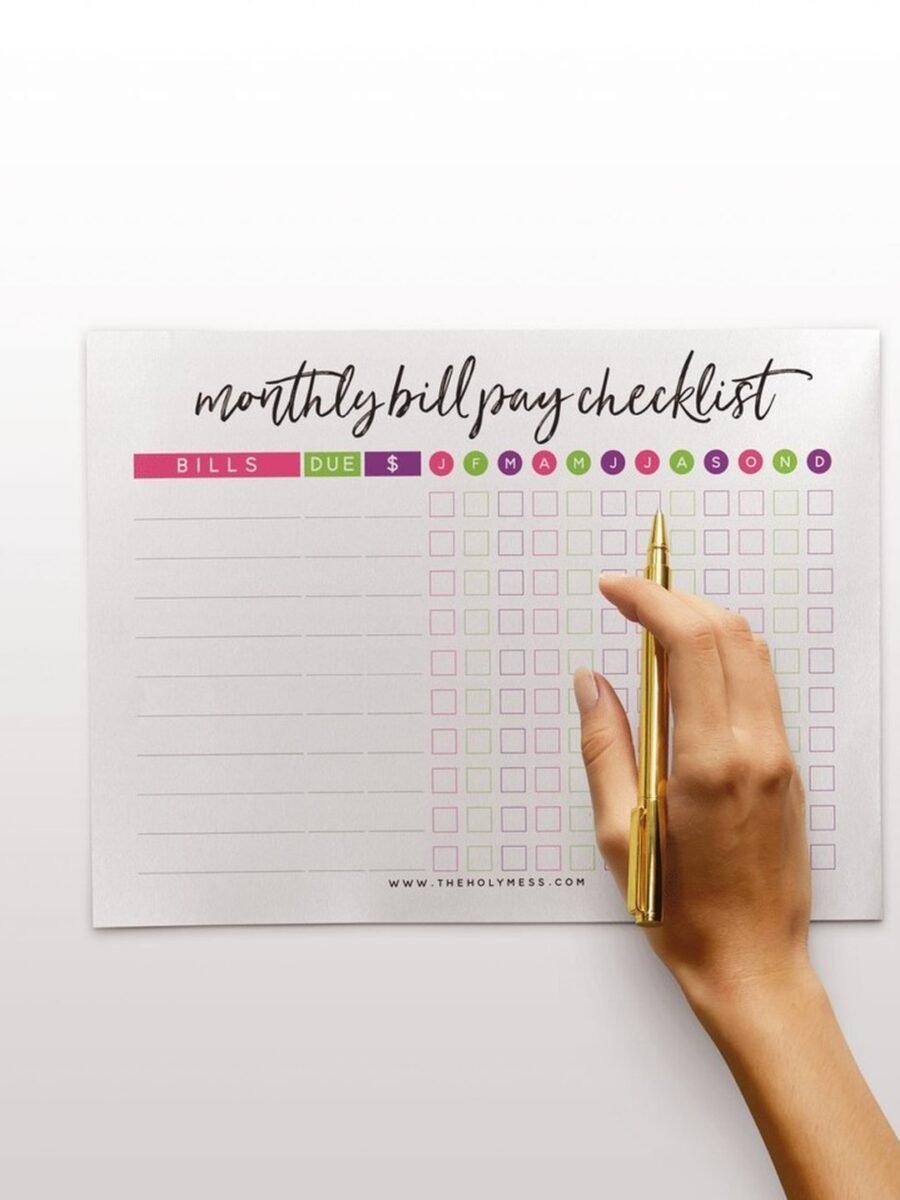
Late fees are the easiest money to save, and this checklist stops them. The page has columns for the bill, the due date and the amount, plus a checkbox for every month from January to December, so one glance shows which bills are paid and which are still waiting. Sit down once a month, fill in the due dates, and tick each box the moment you pay. Keep it on the desk next to a plant and a coffee, and paying bills starts to feel like a calm morning ritual instead of a chore.
You’ll need: a printed bill pay checklist and a pen kept beside it.
Best for: Bills that keep slipping past their due dates
5. Grocery Budget Savings Challenge
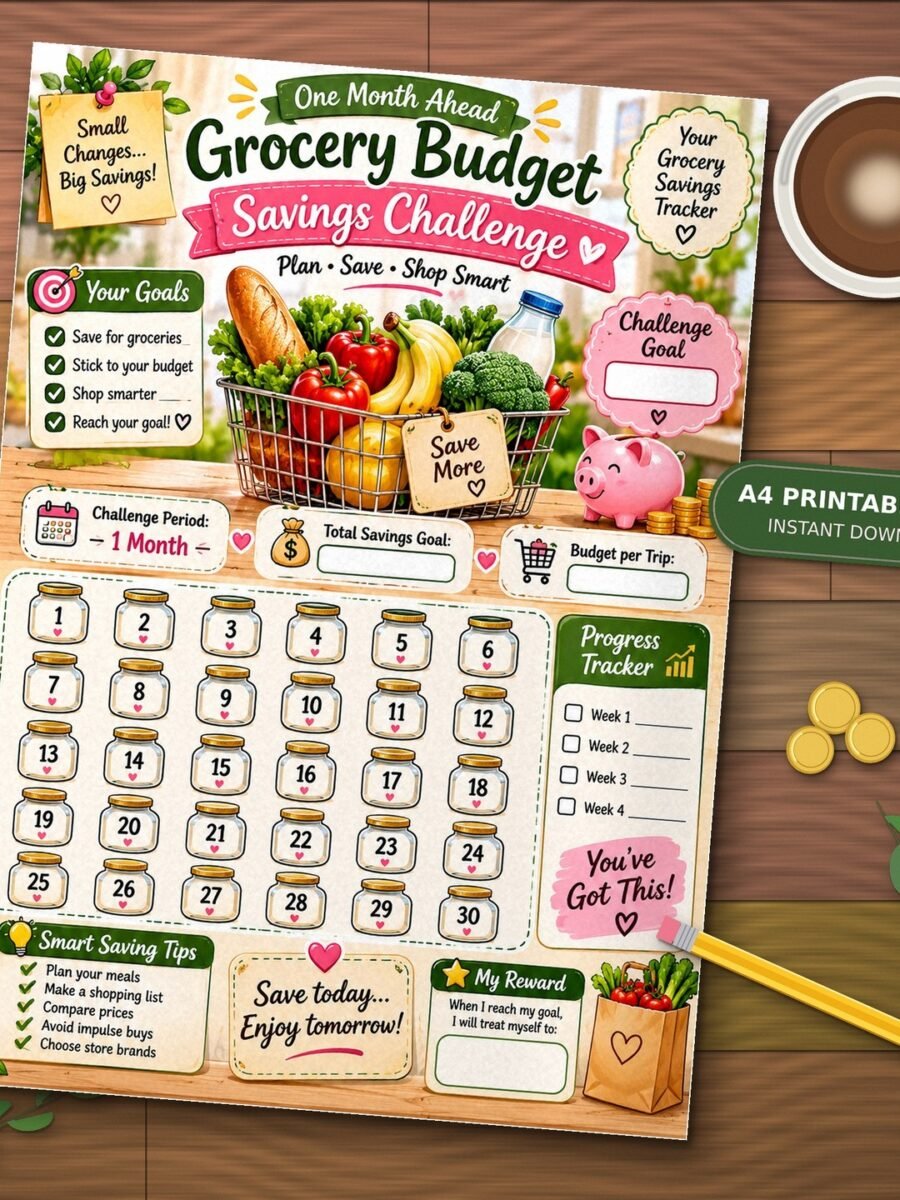
Groceries are where most budgets leak, so this tracker turns saving into a game. The one-month sheet sets a challenge goal and a budget per trip, then gives you a 30-day grid of numbered jars to colour in one at a time, a progress tracker for all four weeks, smart saving tips and a reward box for when you reach the goal. Colour one jar each day you stay on budget and watch the row fill up. Pick a small reward for the end of the month, because a challenge with a prize is a challenge you finish.
You’ll need: a printed grocery challenge sheet and a piggy bank or jar for the savings.
Best for: Grocery spending that grows a little every week
Printable Planner
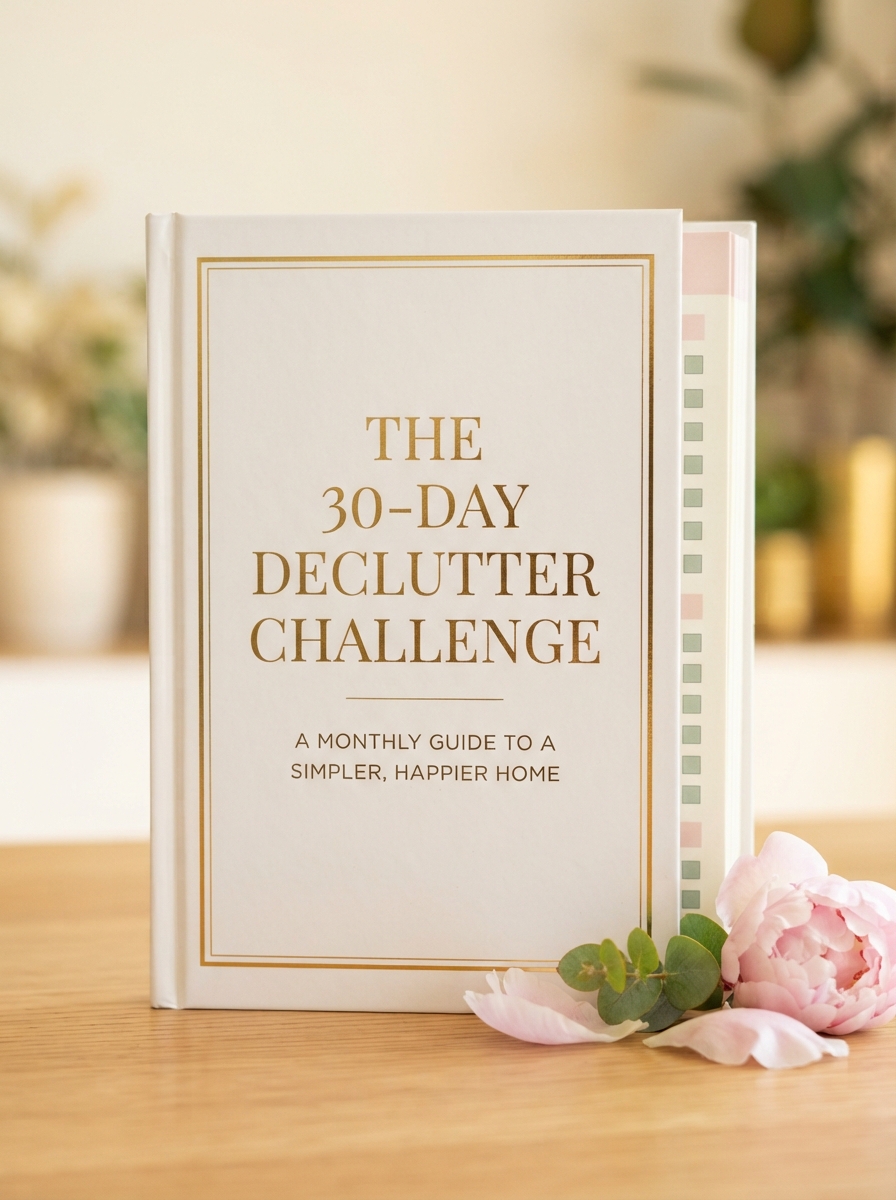
The 30-Day Declutter Challenge
15 minutes a day, room by room, to a calm and tidy home. 47 pages with checklists and labels.
6. Cash Envelope Budget Tracker
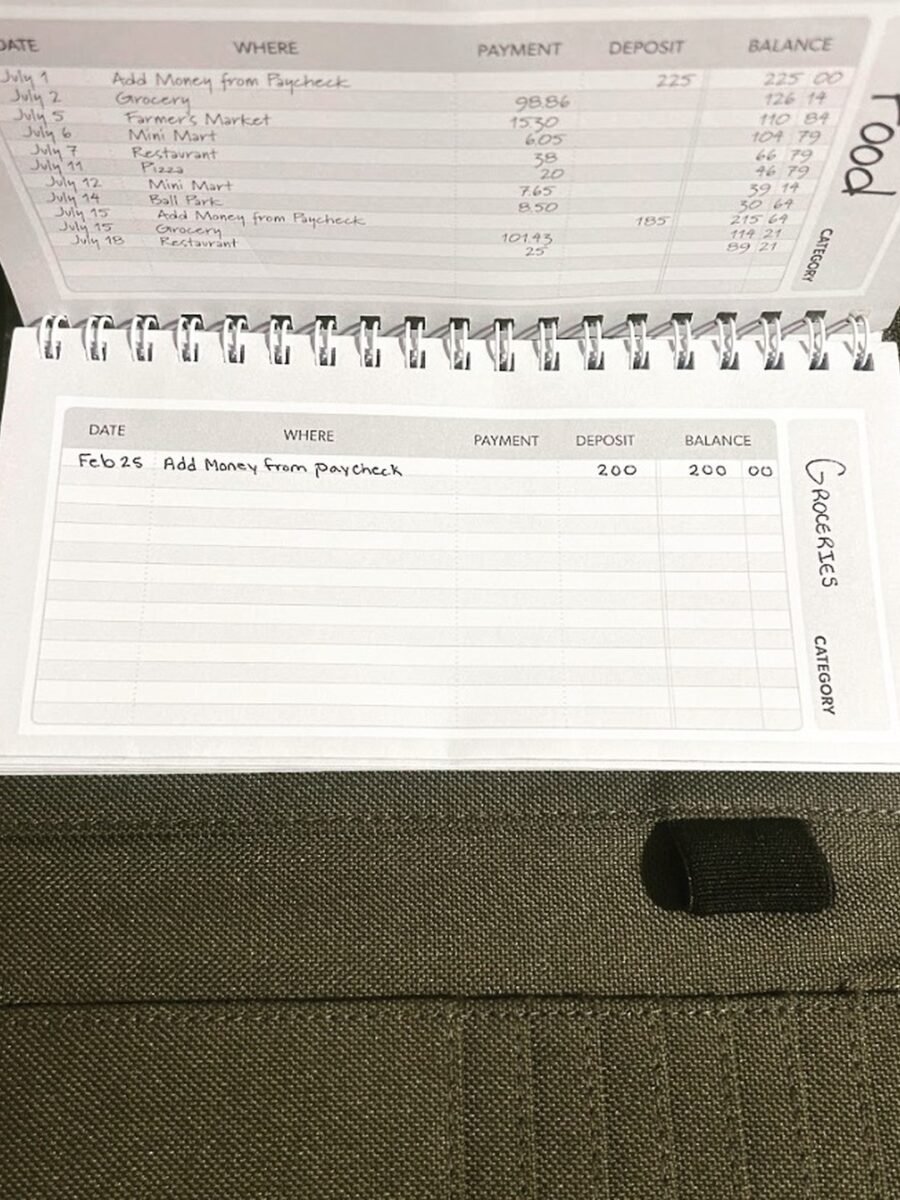
Cash is the hardest spending to track, because it leaves no bank statement behind. This open notebook fixes that with a ledger for each envelope: the Food page here covers July 1 to 18, with dates, places like the grocery store, the farmers market and a restaurant, plus payment, deposit and running balance columns. Two deposits land on the page, 225 on July 1 and 185 on July 15, and the running balance ends at 89.21. Put the cash in the envelope, write every spend on the page, and when the envelope is empty the spending stops until next month.
You’ll need: a cash-envelope tracker notebook, labelled envelopes and the cash for the month.
Best for: Cash spending that disappears without a trace
7. Simple One-Page Expense Tracker
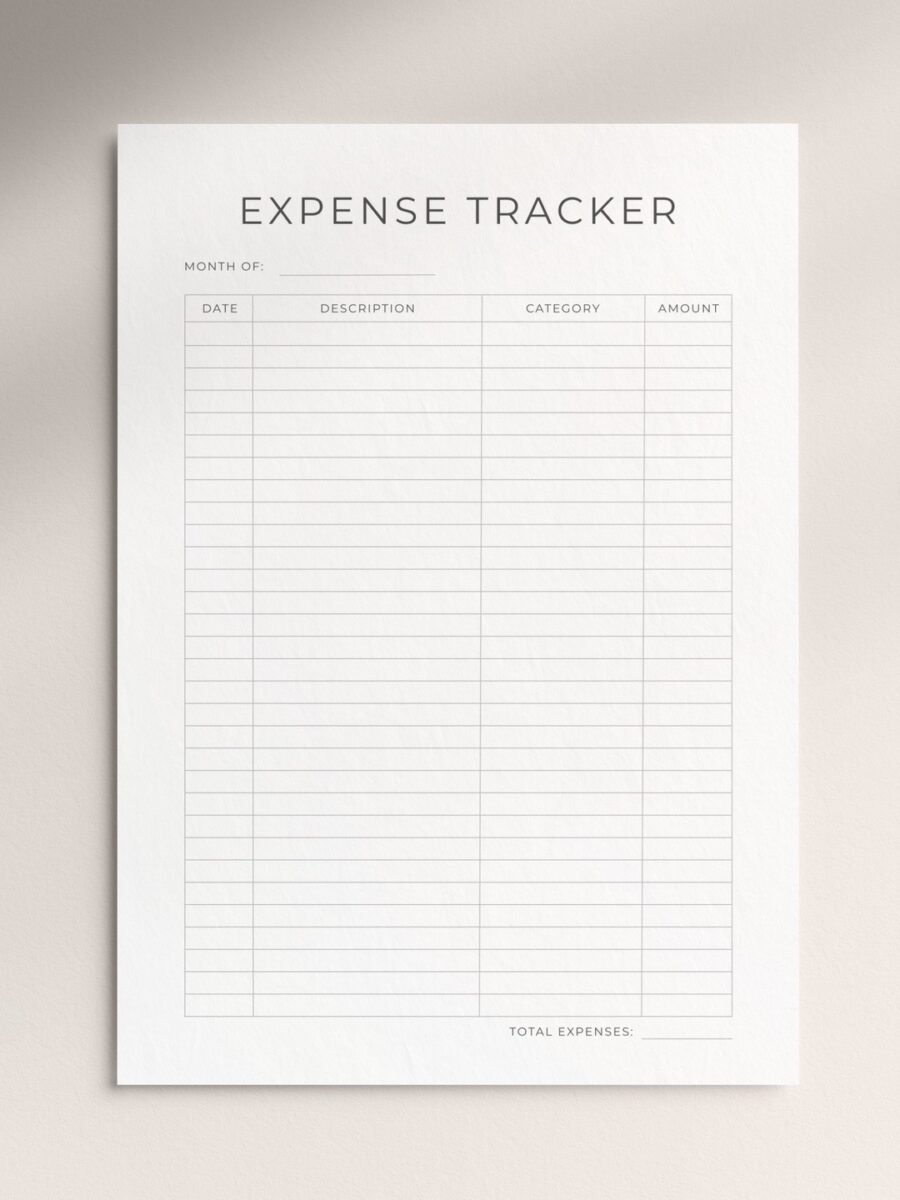
This is the plainest tracker on the list, and that is why it works. Four columns, date, description, category and amount, about 30 blank rows, and a total expenses field at the bottom right. No colours, no pictures, nothing to distract you from the numbers. Print a stack of them, keep one on a clipboard by the door, and start a fresh page on the first of every month. When a page is full, total it, file it, and start the next one the same way.
You’ll need: a printed one-page tracker and a pen.
Best for: Anyone who wants the simplest possible tracker
8. Debt Snowball Tracker
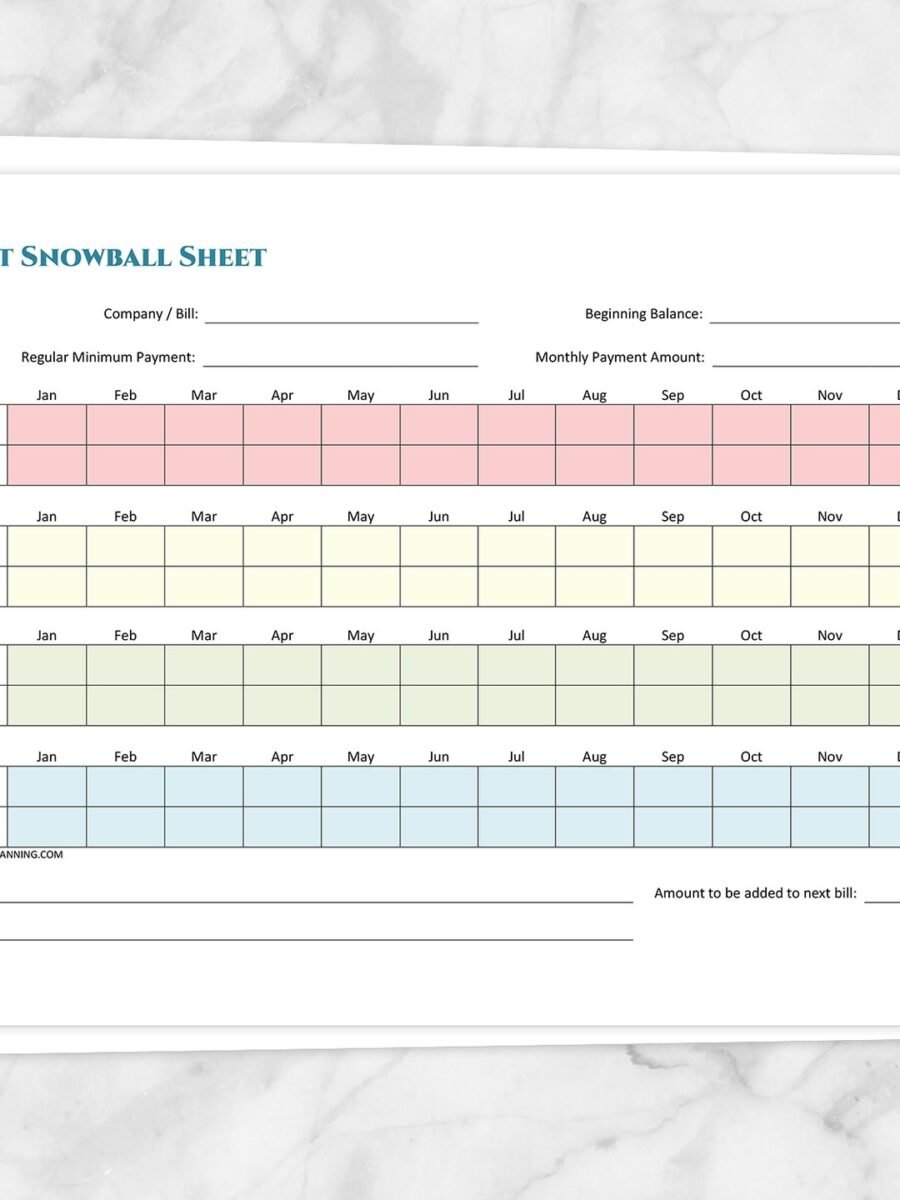
The debt snowball works because you can see the smallest debt shrink first. This sheet gives each debt its own monthly table, four tables in pink, pale yellow, light green and light blue, each with paid and balance rows running January to December, plus fields at the top for the company, the beginning balance, the regular minimum payment and the monthly payment amount. List your debts smallest to largest, pay the minimum on all of them, and throw every spare dollar at the smallest one. Cross it off, roll that payment into the next debt, and watch the snowball grow.
You’ll need: a printed debt snowball sheet and a pen to update the balances.
Best for: Debts that need a clear payoff order
9. Small Business Expense Tracker
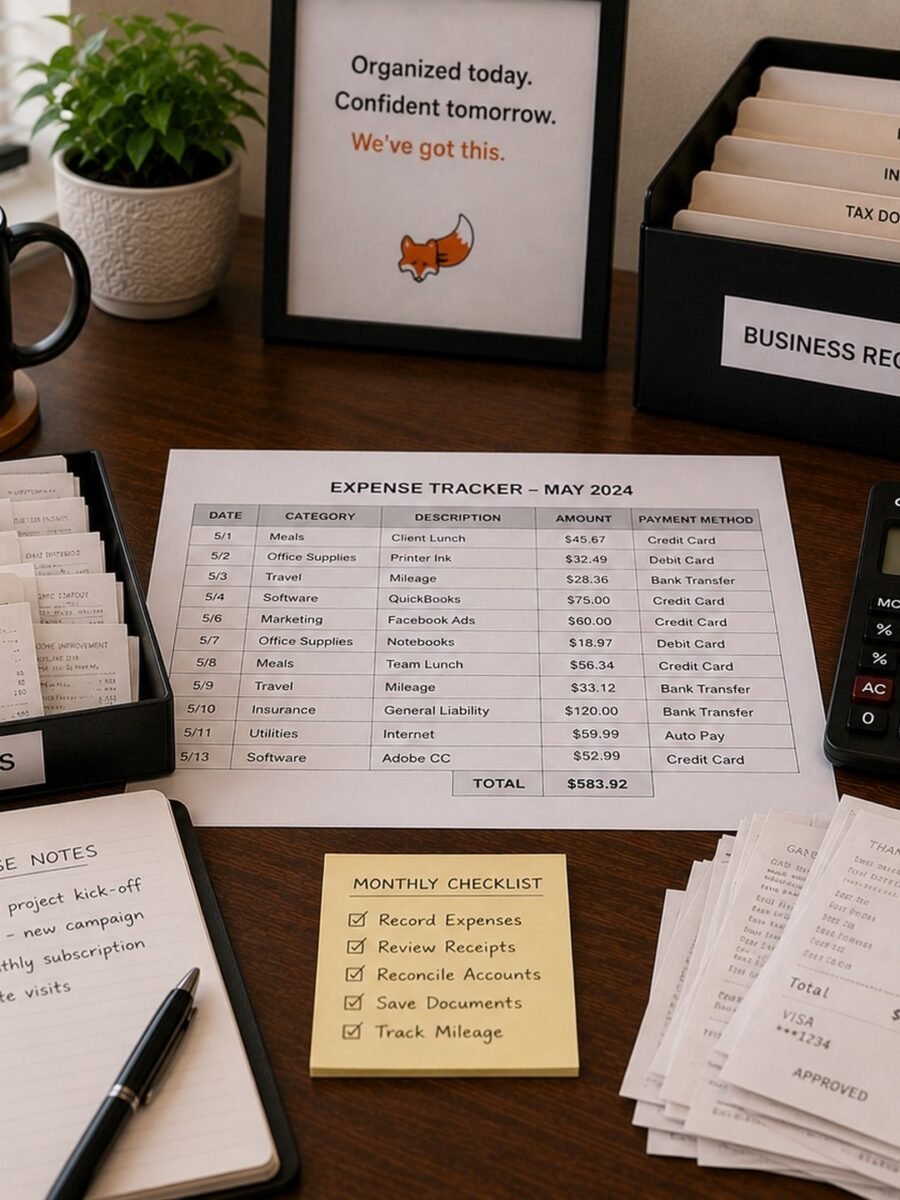
Business spending needs its own page, or it melts into the household budget. This desk setup for May 2024 does it properly: an expense tracker spreadsheet listing dates, categories, descriptions, amounts and payment methods, totalling $583.92, with the same total on the calculator beside it. The seven categories are Meals, Office Supplies, Travel, Software, Marketing, Insurance and Utilities, and a black tray labelled Receipts holds the paper proof sorted by category. Keep the receipts in the tray, log them the same day, and tax time stops being a panic.
You’ll need: a printed business expense tracker, a receipts tray and a calculator.
Best for: Small business owners who mix business and personal spending
10. Budget Binder with Cash Envelopes
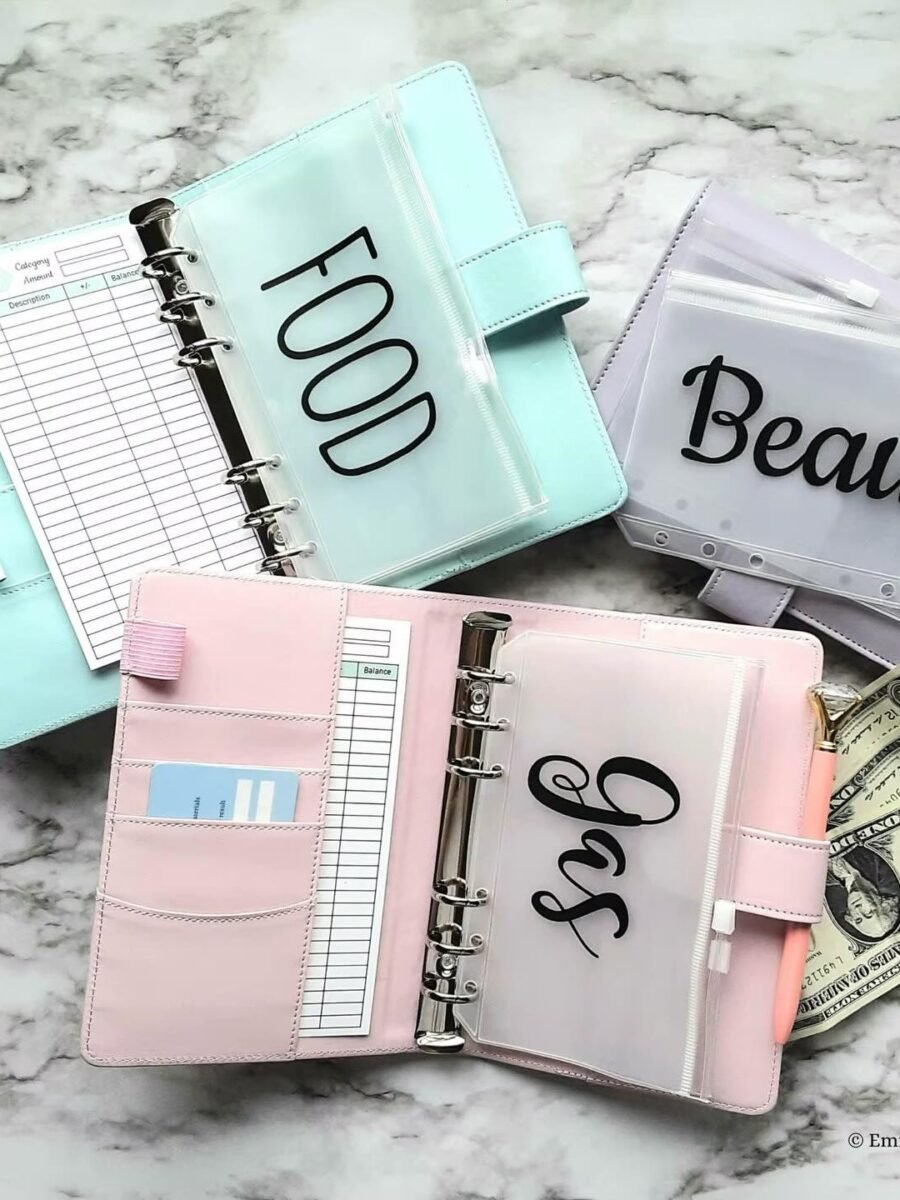
A budget binder turns the whole month into something you can hold. These two open A6 binders sit on white marble, one mint green with a zippered envelope labelled Food, one blush pink with an envelope labelled Gas, and a translucent lavender envelope labelled Beauty lying nearby. Inside each binder are expense tracking sheets, pen loops and card slots, so every category has its own cash and its own page. Fill the envelopes on payday, write every spend on the sheet inside, and the binder shows you the whole month at a glance.
You’ll need: a ring-binder budget planner with zippered cash envelopes and tracking sheets.
Best for: Budgets that work better in cash than on a screen
11. Annual Bills Tracker
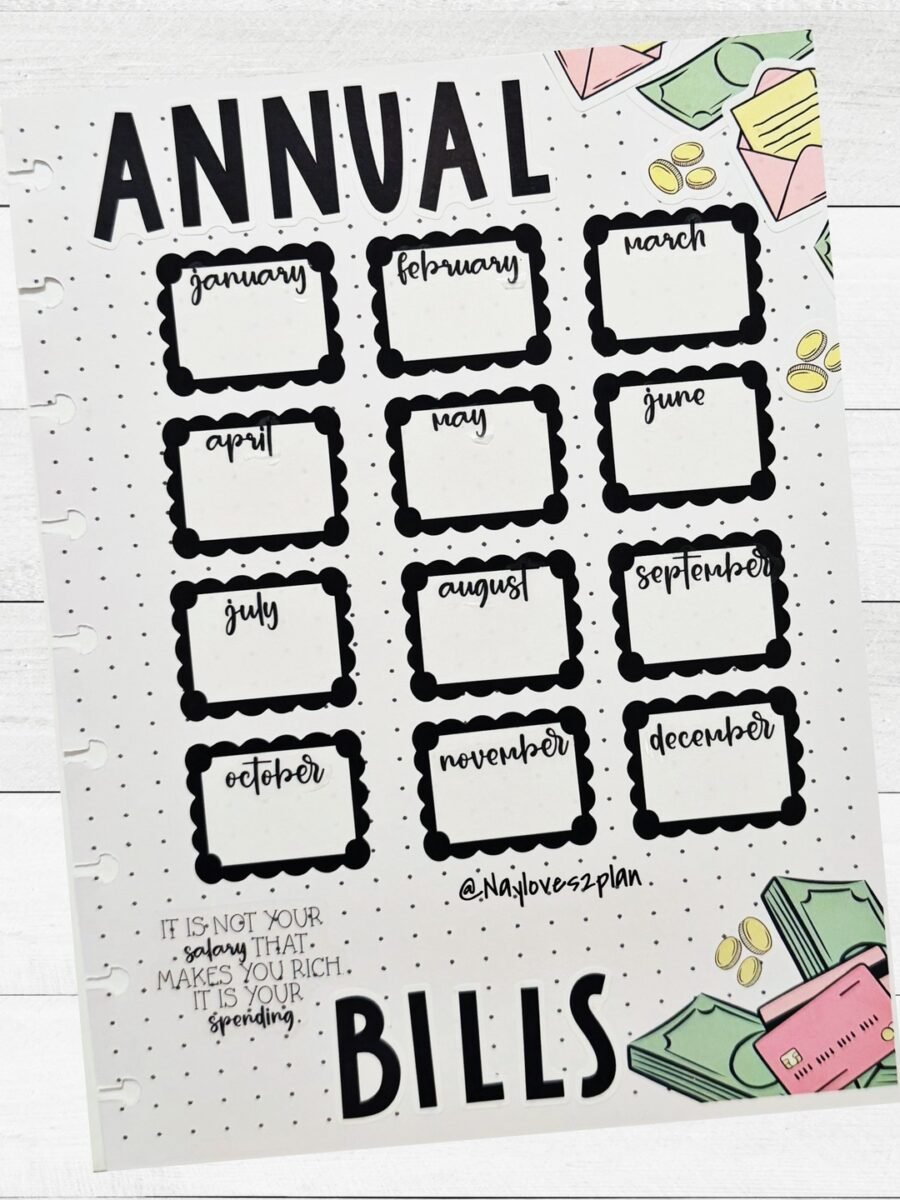
This is the most patient tracker on the list. Twelve boxes, one for each month from January to December, arranged in four rows of three between the words Annual and Bills, with a quote at the bottom: it is not your salary that makes you rich, it is your spending. Write each bill into its month box as it arrives, and one page covers the whole year, so you can see at a glance which months are heavy and which ones are light. Plan the heavy months early and the year stops surprising you.
You’ll need: a printed annual bills tracker and twelve colours, one for each month.
Best for: Seeing a whole year of bills on one page
12. Filled-In Expense Tracker with Cash Beside It
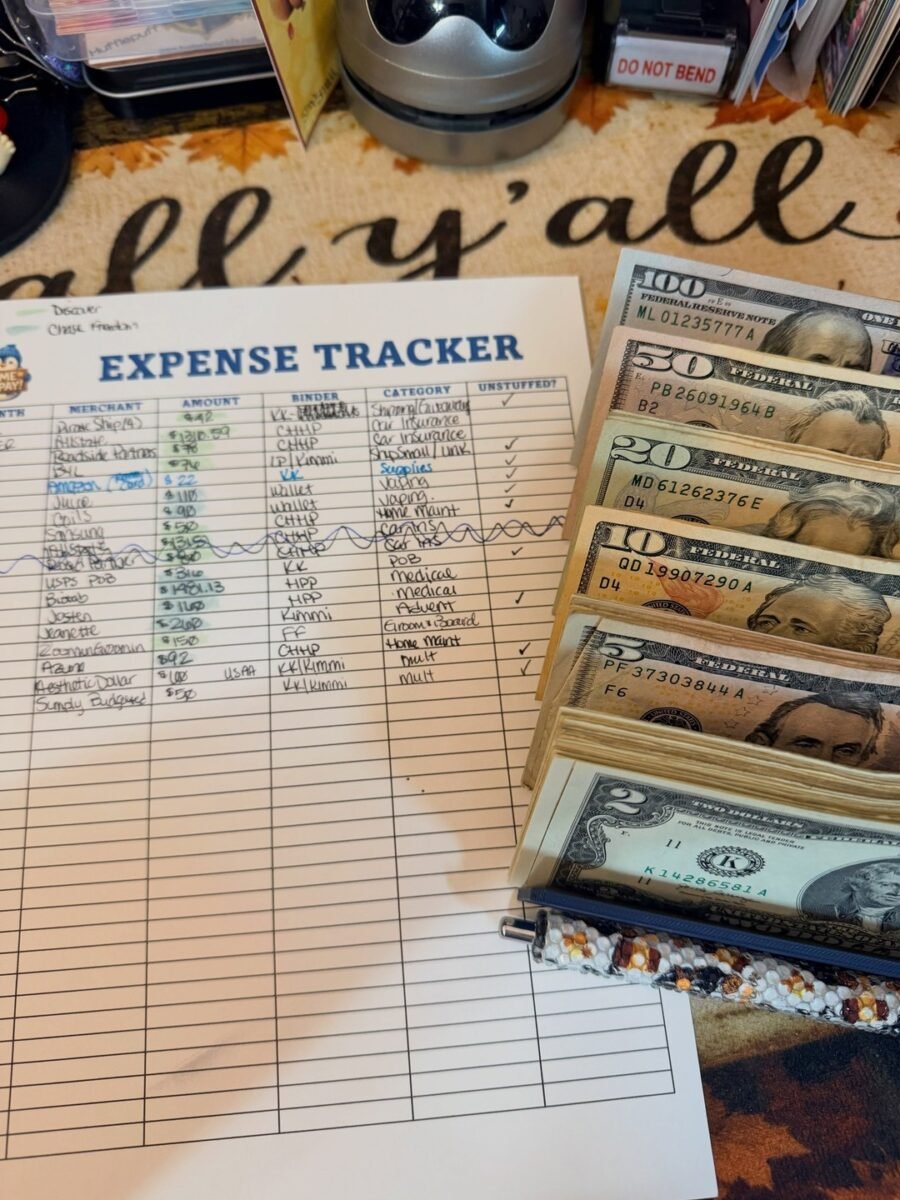
This is what a tracker looks like when it is actually working. The printed form is filled in by hand with columns for the month, the merchant, the amount, the binder, the category and whether the funds were unstuffed, and beside it sits a fanned stack of cash in 100, 50, 20, 10, 5 and 2 dollar bills, ready to go into the envelopes. The unstuffed column is the clever part: it shows which envelopes gave money back and which ones ran dry. Fill the form in as you stuff the envelopes, and the paper and the wallet will always agree.
You’ll need: a printed expense tracker, a pen and the cash envelopes for the month.
Best for: Cash stuffers who want the paper trail to match the wallet
Frequently Asked Questions
What is an expense tracker printable?
It is a printed page with columns for the date, what you bought, the category and the amount, plus a total line at the bottom. You write down every purchase as you make it, then add up the page at the end of the week or month. Print it, keep a pen beside it, and keep it where you will see it every day.
How often should I fill in an expense tracker?
Write down each purchase on the day you make it, which takes about five minutes, then total the page once a week on Sunday. A daily log stays honest because you still remember what you bought, while a weekly total shows the pattern without feeling like homework. If daily feels like too much, use a weekly tracker and save every receipt in one envelope until Sunday.
What categories should I use on an expense tracker?
Start with six: food and groceries, housing, transport, bills, fun, and everything else. Six categories fit on one page and cover almost every purchase without making the page crowded. Once a month of tracking shows you where the money really goes, split the biggest category into two smaller ones, like groceries and eating out.
How do I track cash spending?
Use cash envelopes with a tracker page for each one. Put the budgeted cash in the envelope at the start of the month, write every spend on the tracker as it happens, and write the running balance beside it. When the envelope is empty, the spending stops until next month, which is exactly why the method works so well.
What should I do if I miss a week of tracking?
Just start again with the next purchase. One blank week is not a failure, it is only one week, and the pages before it still show all the spending you did catch. The rule that works best is simple: never miss twice in a row. If you miss a week, make the next week the easiest version of tracking, one line a day, so the habit starts again.
How does an expense tracker pair with a 52 week money saving challenge?
They work as a team: the tracker shows you where the money is leaking, while the saving challenge gives the saved money somewhere to go. Track spending for one month first, find one category to trim, then put that exact amount into the challenge each week. Our 52 week money saving challenge has the twelve challenge ideas that pair best with this list.
Final Thoughts on Expense Tracker Printable
Twelve trackers, and the whole idea really comes down to one thing: write it down the day you spend it, then let the totals tell you the truth. A monthly page, a weekly notepad, a bill checklist and one honest look at groceries each week will change a month more than any strict budget. If you like keeping your plans on paper, the printable planners in our shop pair beautifully with these trackers, and our glow up checklist has a plan your week and your budget idea that fits right beside them.
Print one tracker tonight and pick just three categories. Write down the first purchase tomorrow morning, and by next month the totals will tell you more about your money than any plan ever could.

