

Poinsettias are sold like decorations, but they are living houseplants first. The growers who fill whole greenhouses with them, row after row of red, are not doing anything magical. They are just steady about light, water and temperature, and you can copy that at home.

Most poinsettias fail in the first two weeks, and it is almost never the plant’s fault. Cold air on the ride home, a heating vent under the pot, or water sitting in the foil sleeve will drop more leaves than any disease. Fix those three things and your plant is already ahead.
The first three ideas below are the core routine: picking a strong plant, setting up the right spot, and the long night trick that makes a kept plant turn red again next Christmas. The rest are simple ways to grow it on, style it and even start a small collection.
One safety note before you start. Poinsettia sap can irritate skin, and the leaves can upset a pet that chews them, so keep plants where curious cats and dogs cannot snack on them and wash your hands after pruning.
Quick Picks
- Start here: Pick a Healthy Plant at the Store (idea 1)
- Biggest payoff: Start the Long Night Routine to Rebloom It Next Year (idea 3)
- Prettiest shortcut: Style It as a Living Table Centerpiece (idea 7)
1. Pick a Healthy Plant at the Store
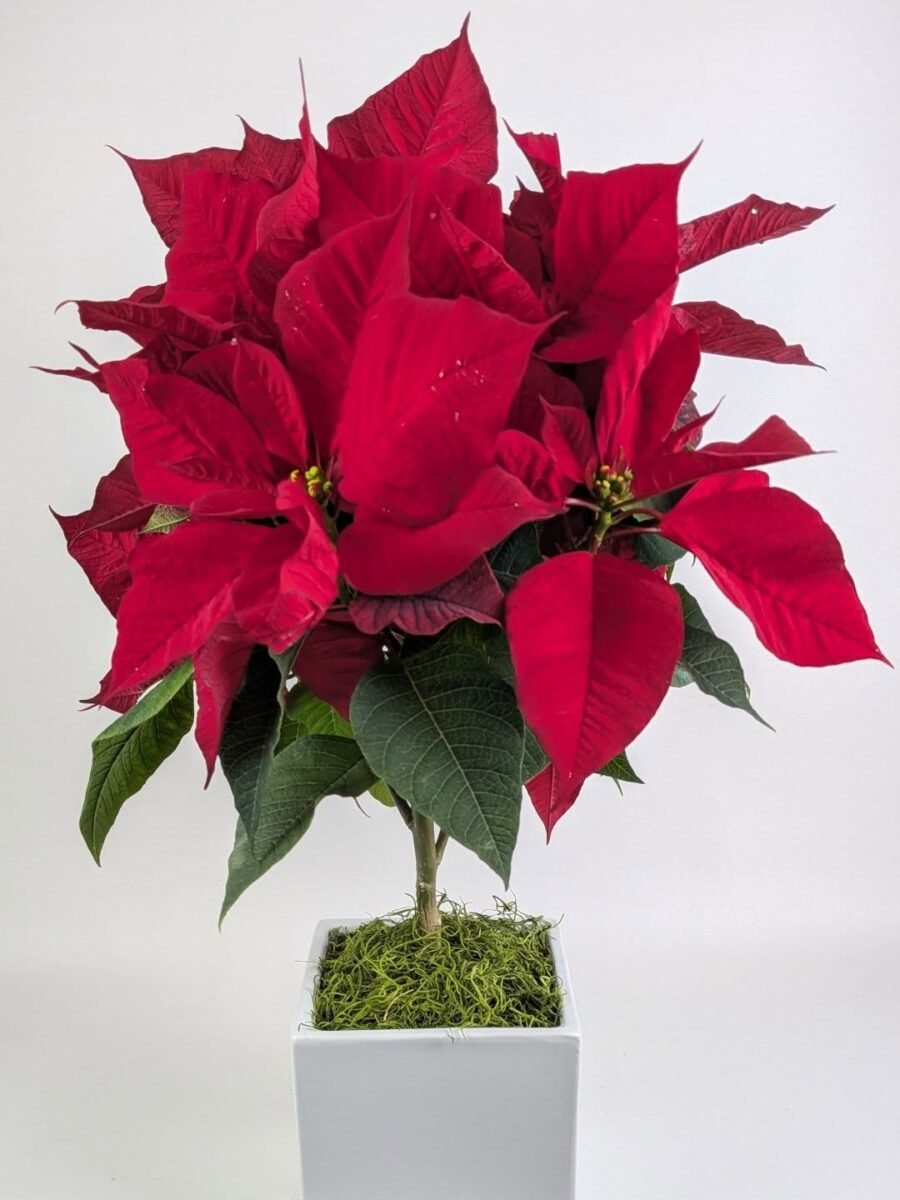
Growing christmas poinsettias well starts at the store shelf, not at home. Look for a plant with deep green leaves all the way down to the soil, stiff stems, and colored bracts that are fully open but not papery at the edges. The tiny yellow buds in the center, called cyathia, should still be tight and fresh.
Skip any plant sitting in a puddle, wrapped tight in a plastic sleeve by a drafty door, or already dropping yellow leaves. While you are there, grab a pot with a real drainage hole and a saucer, like this ceramic planter set with drainage holes and saucers, so the plant never has to live in its foil wrapper.
⏱ 10 minutes💲 Low🔧 Easy
Materials Needed
- A poinsettia plant with full green foliage
- A pot with a drainage hole, one size up from the nursery pot
- A matching saucer or tray
- A paper sleeve or bag for the ride home
How to Make It
- Check the center buds first. Tight yellow cyathia mean the plant is fresh, while bare centers mean it is already old.
- Turn the plant slowly and look for green leaves right down to the soil line, with no bare stems.
- Lift the pot. It should feel evenly moist and solid, not soggy, bone dry or wobbly at the roots.
- Slip the plant into a paper sleeve before you leave, since even a few minutes of cold air can shock it.
- At home, set it in bright indirect light and let it settle for a full day before you change anything.
Tip: Shop on a mild day or make the plant store your last stop. A poinsettia riding in a cold car trunk for an hour can drop leaves for a week.
2. Set Up the Perfect Light and Temperature Spot
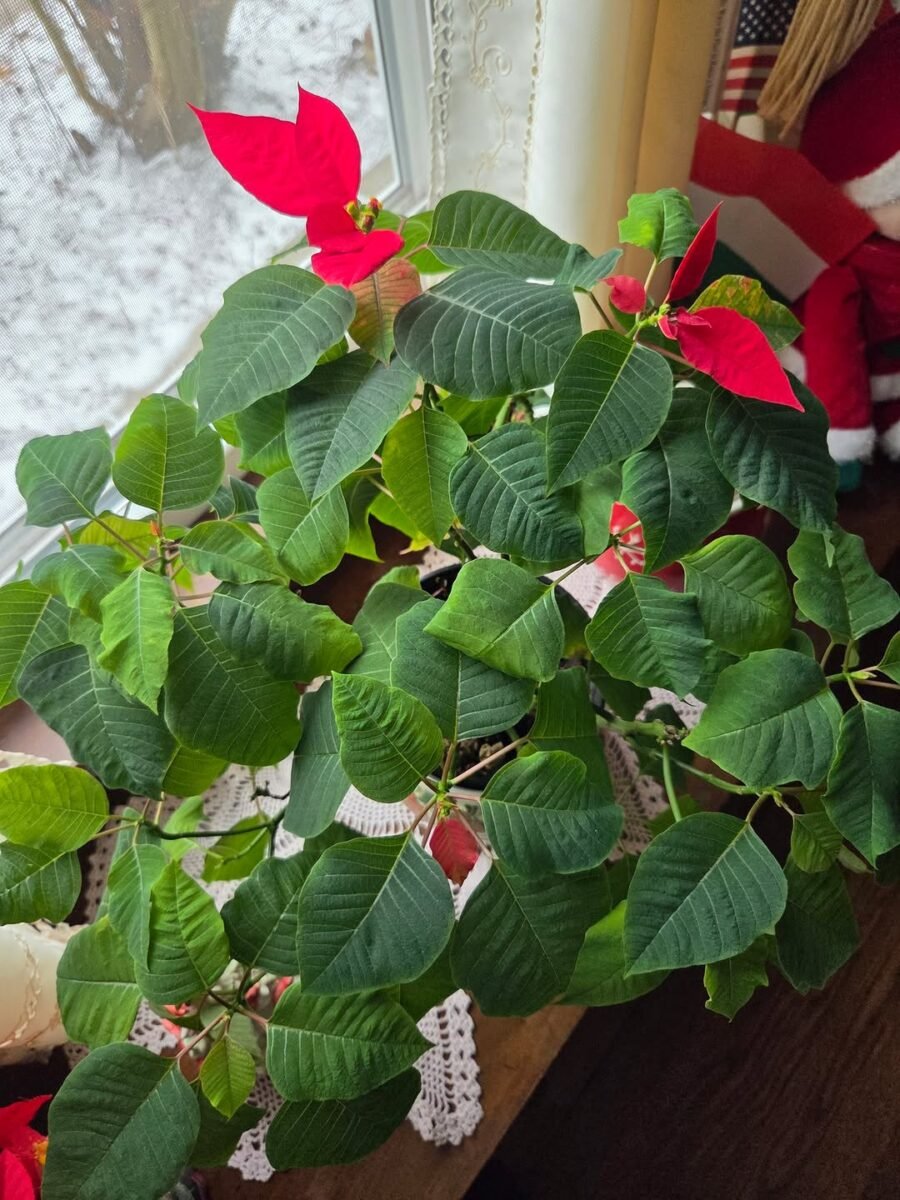
A sunny windowsill is the classic poinsettia spot for a reason. The plant wants about six hours of bright, indirect light a day, and a steady room temperature between 65 and 70 degrees. A spot near a bright window, set back just far enough that the leaves never touch cold glass, is ideal.
What it cannot handle is change. Heating vents, fireplaces, exterior doors and chilly night windows all swing the temperature up and down, and the plant answers by yellowing and dropping leaves. Pick one calm spot and leave the plant there.
⏱ 15 minutes💲 Low🔧 Easy
Materials Needed
- A bright windowsill or table near a window
- A saucer or tray for the pot
- A small thermometer, optional
- Sheer curtain if the sun is harsh
How to Make It
- Choose a bright east or south facing spot with indirect light for most of the day.
- Check what is nearby. Move the plant away from vents, radiators, fireplaces and doors that open to the cold.
- Set the pot on its saucer so water never pools under the roots.
- Turn the pot a quarter turn every few days so all sides get light and the plant grows evenly.
- Keep night temperatures above 55 degrees, and pull the plant back from glass on very cold nights.
Tip: If the leaves curl and drop but the soil feels fine, suspect a draft before you suspect water. Move the plant first and watch it for three days.
3. Start the Long Night Routine to Rebloom It Next Year

A poinsettia that survives Christmas turns into a big, handsome green plant, like the one in this photo that was kept growing in its gold foil pot by a window. Getting it red again is a light trick. Poinsettias color up only after weeks of long, completely dark nights, the same signal they get in a grower’s greenhouse.
From early October, the plant needs about 14 hours of total darkness every night for eight to ten weeks, with bright days in between. A closet, a spare room, or a cardboard box over the plant all work, as long as no lamp, hallway light or television leaks in.
⏱ 5 minutes a day💲 Low🔧 Medium
Materials Needed
- Your kept poinsettia plant, pruned and green
- A dark closet, spare room or large cardboard box
- A simple daily reminder or timer
- A bright daytime spot
How to Make It
- In spring, cut the stems back to about six inches and repot if roots crowd the pot, then grow it on in bright light all summer.
- From the first week of October, move the plant into total darkness each evening, around 5 pm.
- Bring it back into bright light each morning, around 7 am, and water as usual.
- Repeat every single day without a break for eight to ten weeks. Even a few lit nights can reset the clock.
- Watch for the top leaves to blush red in late November, then stop the routine and display your homegrown plant.
Tip: Put the evening move on your phone as a daily alarm. The routine is easy, but it only works if it never misses a night.

Printable Bundle
Christmas Printable Bundle
Christmas planner, 24 advent activity cards, 36 gift tags, handmade labels, Santa letter and family games.
4. Water Deeply, Then Let It Drain Completely

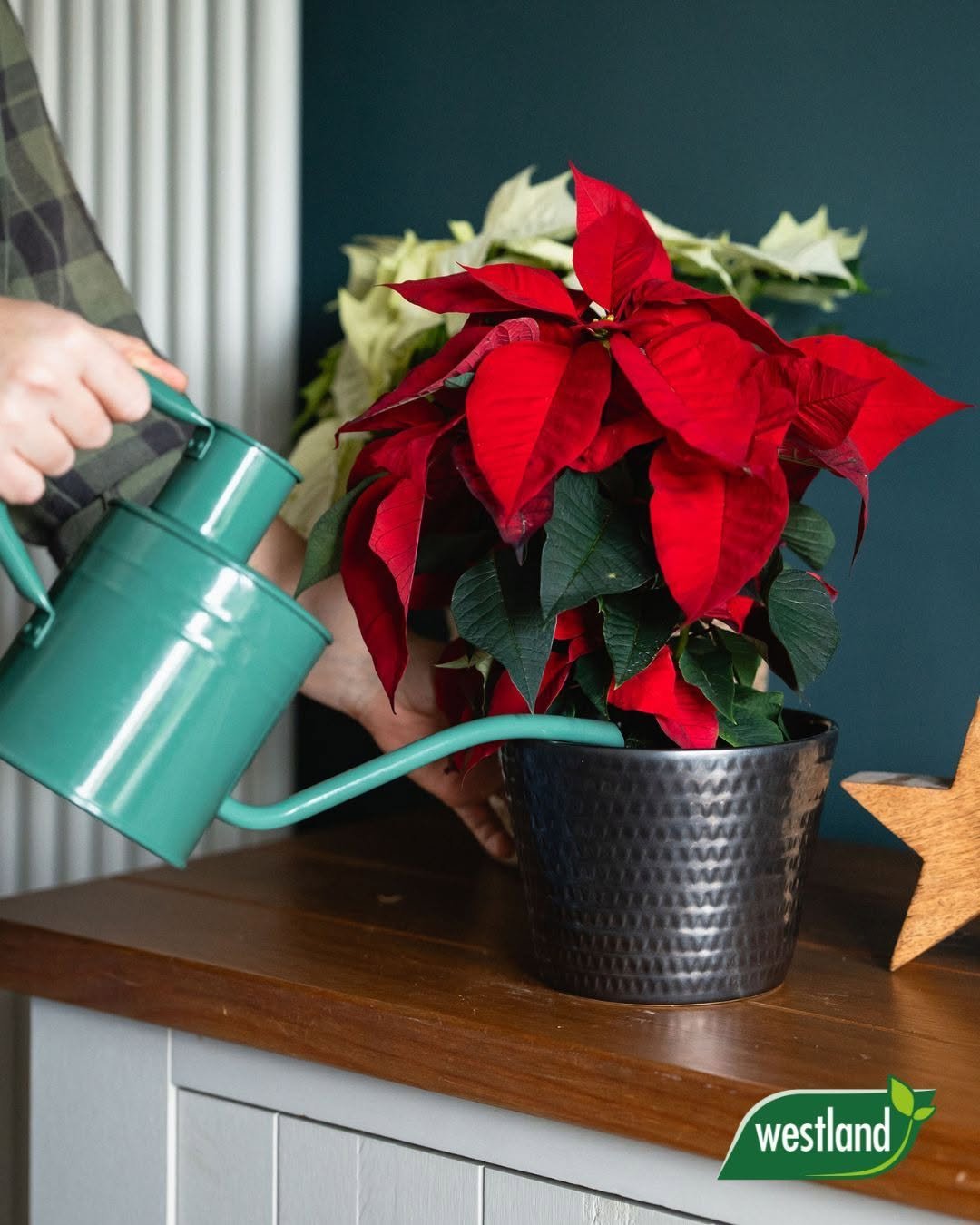
More poinsettias die from kind overwatering than from thirst. Water only when the top inch of soil feels dry, then water slowly until it runs out of the drainage hole, like the greenhouse watering in this photo. Empty the saucer after ten minutes, every time. Roots sitting in water rot quietly, and the plant wilts in wet soil exactly the way it wilts in dry soil, which fools almost everyone.
You’ll need: a watering can with a narrow spout, a saucer under the pot
Best for: anyone whose past poinsettias wilted in wet soil
5. Grow a Pink Poinsettia for a Softer Look
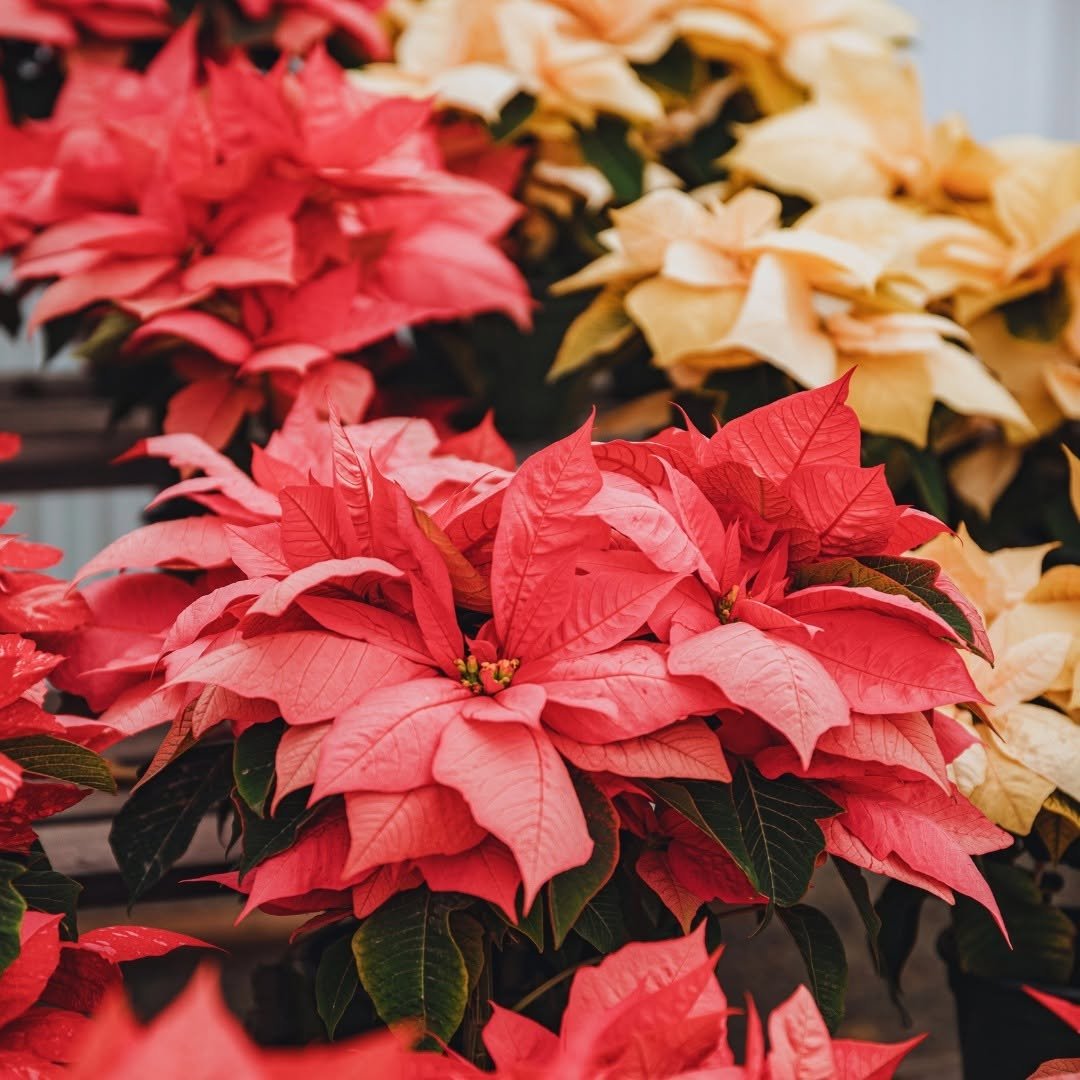
Red is the classic, but pink poinsettias like this close up beauty have become the grower’s favorite for modern rooms. The care is identical: bright indirect light, steady warmth and careful watering. Pink varieties show off best against white pots and pale wood, and they pair beautifully with one deep red plant for contrast on the same shelf.
You’ll need: a pink poinsettia plant, a light colored pot
Best for: soft, modern Christmas color schemes
6. Mix Speckled and Cream Varieties Together
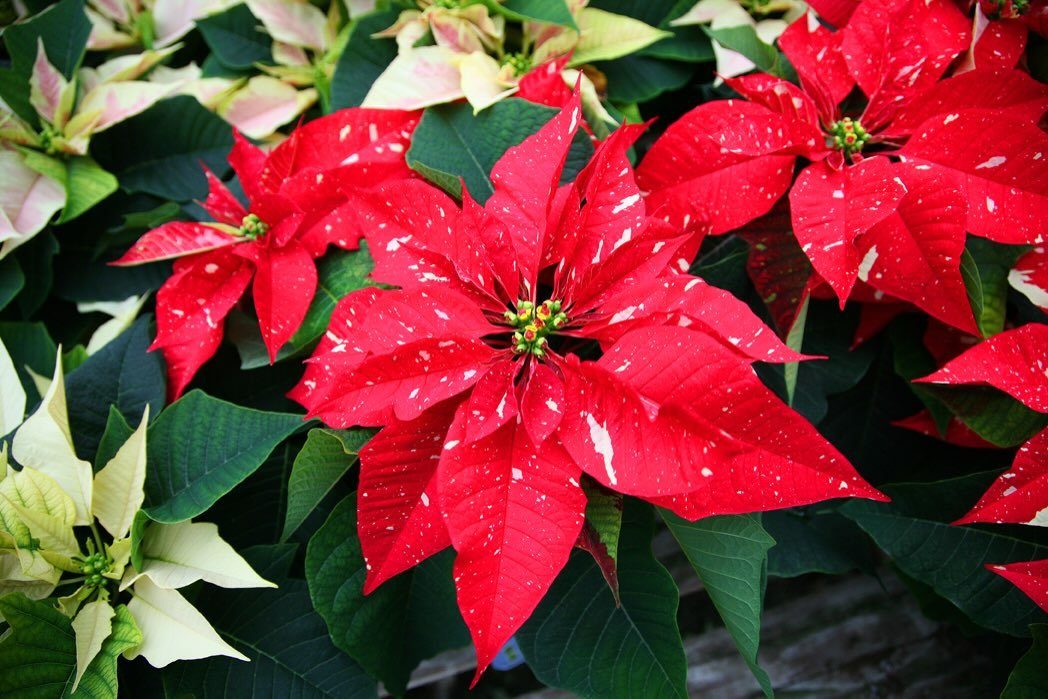
Speckled red and cream poinsettias growing side by side, like the varieties in this nursery photo, make a collection look designed instead of collected. Grow two or three small plants in matching pots and group them on one tray. Because they all want the same light and water, a mixed group is no harder to keep than a single plant, and the tray makes moving them for watering a one trip job.
You’ll need: two or three small poinsettias in different colors, matching pots and a tray
Best for: entry tables and mantel groupings
7. Style It as a Living Table Centerpiece
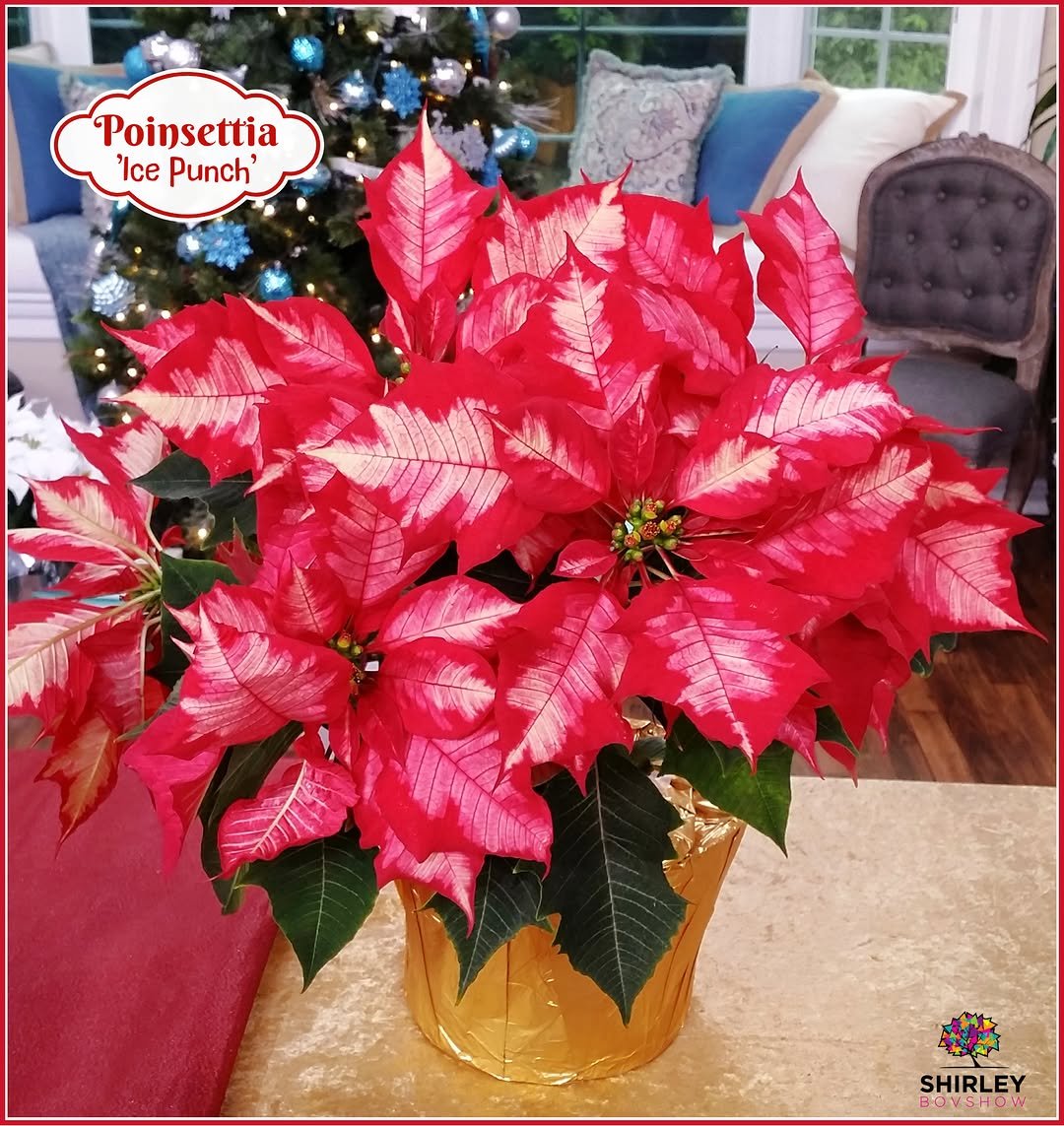
A potted poinsettia in a pretty variety like Ice Punch, set on the table in a bright room as in this photo, is a centerpiece that keeps growing after the party ends. Slip the nursery pot into a basket or a ceramic pot, tuck a little moss over the soil, and keep it away from the heat of candles and serving dishes. After the meal, it goes straight back to its bright spot.
You’ll need: a full poinsettia plant, a basket or decorative pot, a little sheet moss
Best for: holiday dinners without cut flower waste

Printable Games
Christmas Party Games Pack
9 fun games for family, friends and office parties: trivia, charades, gift swap and more.
8. Grow Mini Poinsettias for Place Settings
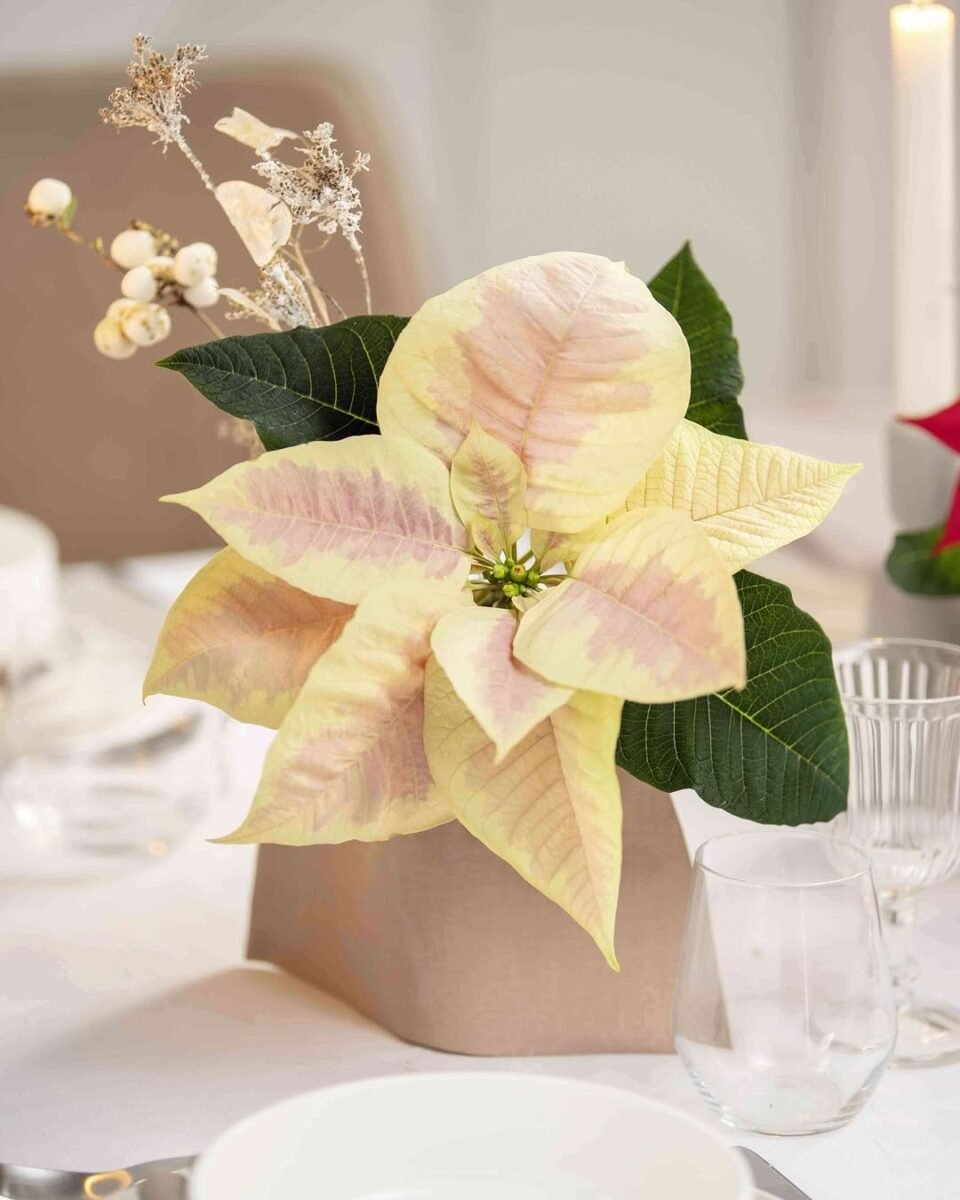
Single mini poinsettias, like the creamy one used as a table centerpiece here, are sold in tiny two to four inch pots all season. Set one at each place setting and let guests take theirs home as the favor. Minis dry out faster than big plants, so check the soil every two days and water in the sink, letting each little pot drain fully before it goes back on the table.
You’ll need: one mini poinsettia per guest, small saucers or coasters
Best for: dinner parties and small gifts that keep growing
9. Prune in Spring for a Bushier Plant
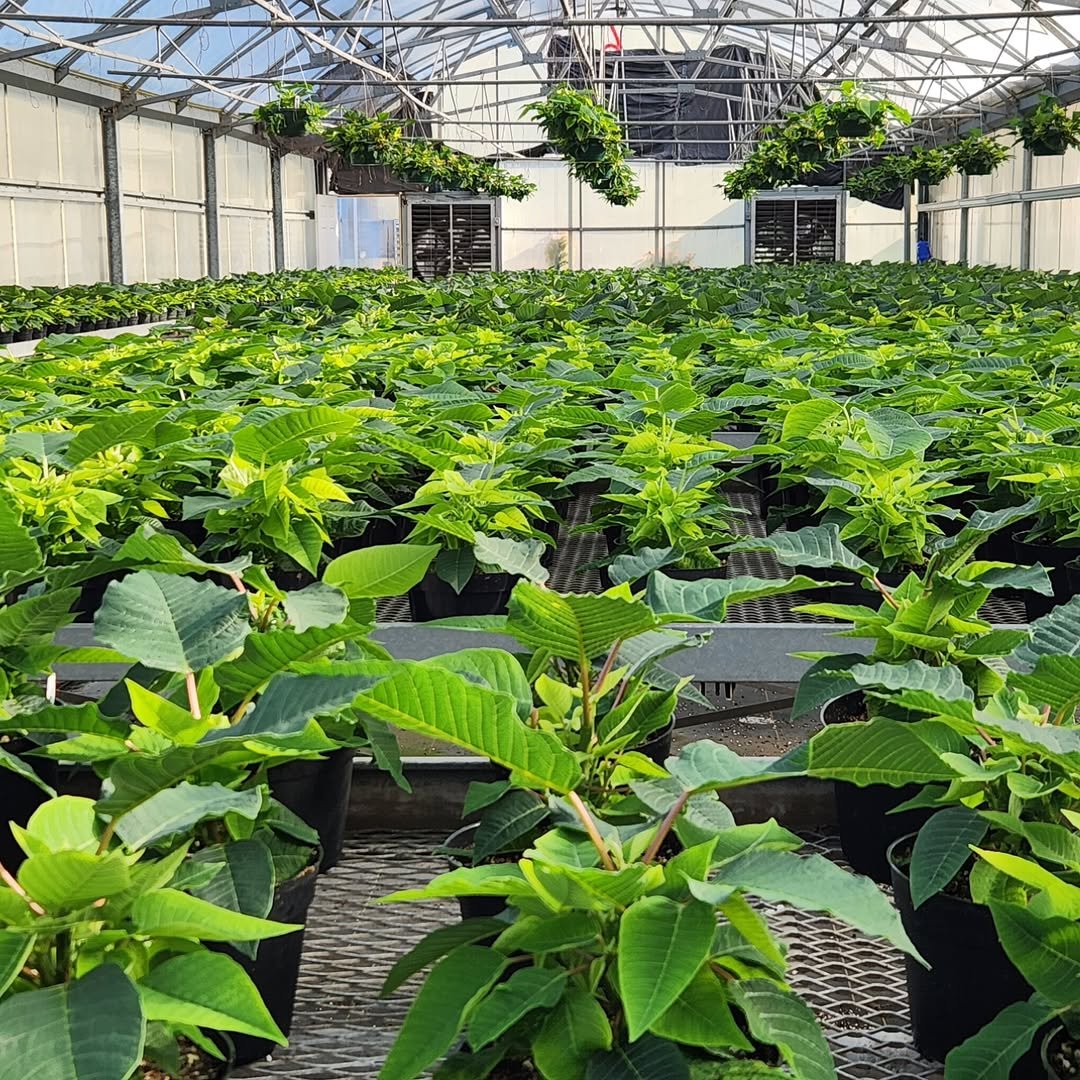
Young poinsettias in a greenhouse, like these rows of fresh green plants, are pinched again and again to make them branch. You can do the same at home. In March or April, cut each stem back by half, just above a leaf node. The plant answers with two or three new shoots, and by autumn you have a round, full plant instead of a tall, leggy one. Wear gloves, since the cut stems weep milky sap.
You’ll need: clean sharp scissors or pruners, gloves
Best for: leggy kept plants that need a fresh shape
10. Move It Outdoors for Summer Growth
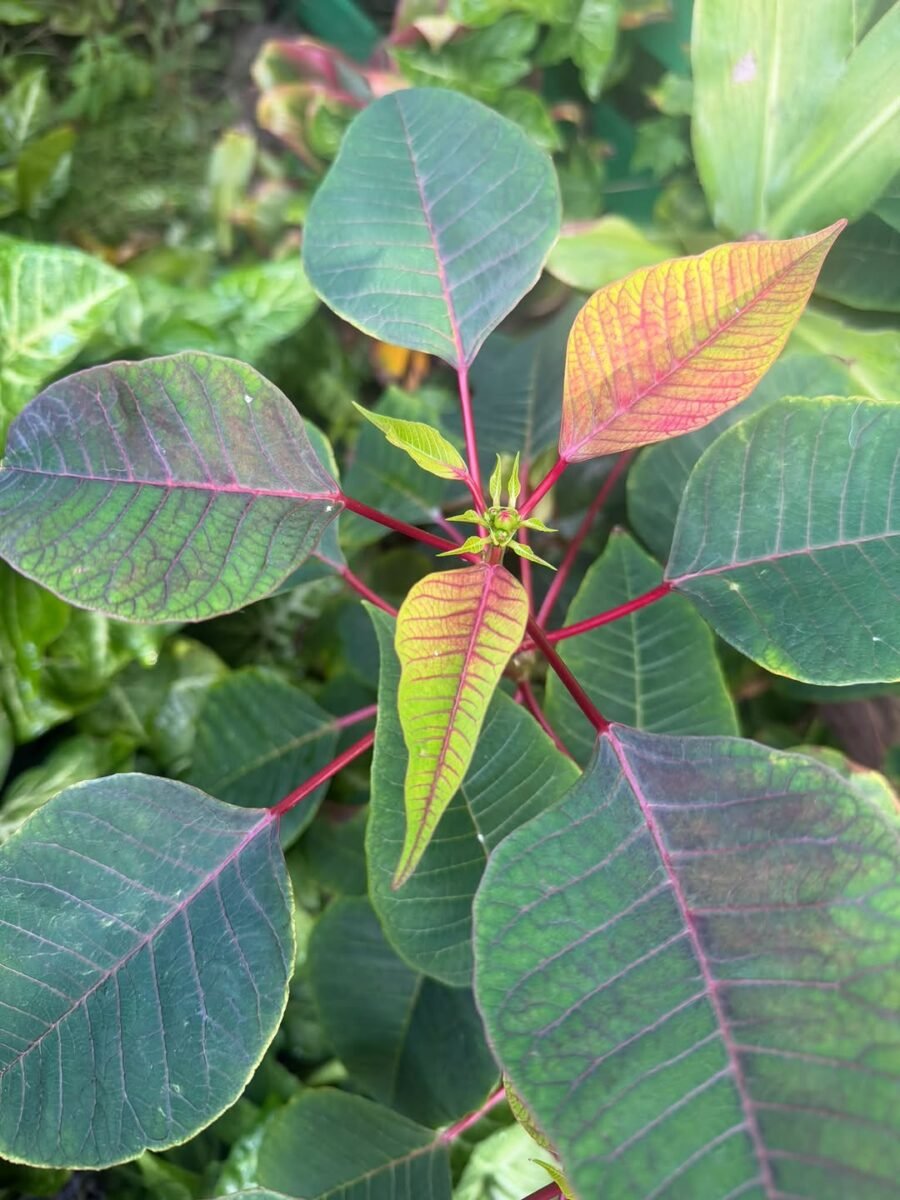
Once nights stay warm, a kept poinsettia loves a summer outside, like this young plant growing on among other greenery. Start it in shade for a week, then give it morning sun. Outdoor light builds the strong stems and deep green leaves that carry the plant into its autumn color routine. Bring it back inside before the first cool nights of fall, and check the leaves for hitchhiking pests first.
You’ll need: a shaded patio spot at first, a sturdy pot
Best for: gardeners in warm climates and summer growers
11. Feed Lightly Once the Holidays End
A poinsettia needs no food while it is in full color, since it is resting more than growing. Once new green growth starts in late winter, feed it once a month at half strength with a balanced blooming plant food such as Miracle-Gro Blooming Houseplant Food. Stop feeding when the darkness routine starts in October, so the plant puts its energy into color instead of soft new leaves.
You’ll need: balanced liquid houseplant food, a measuring jug
Best for: kept plants starting their second year
12. Build a Collection in Every Color
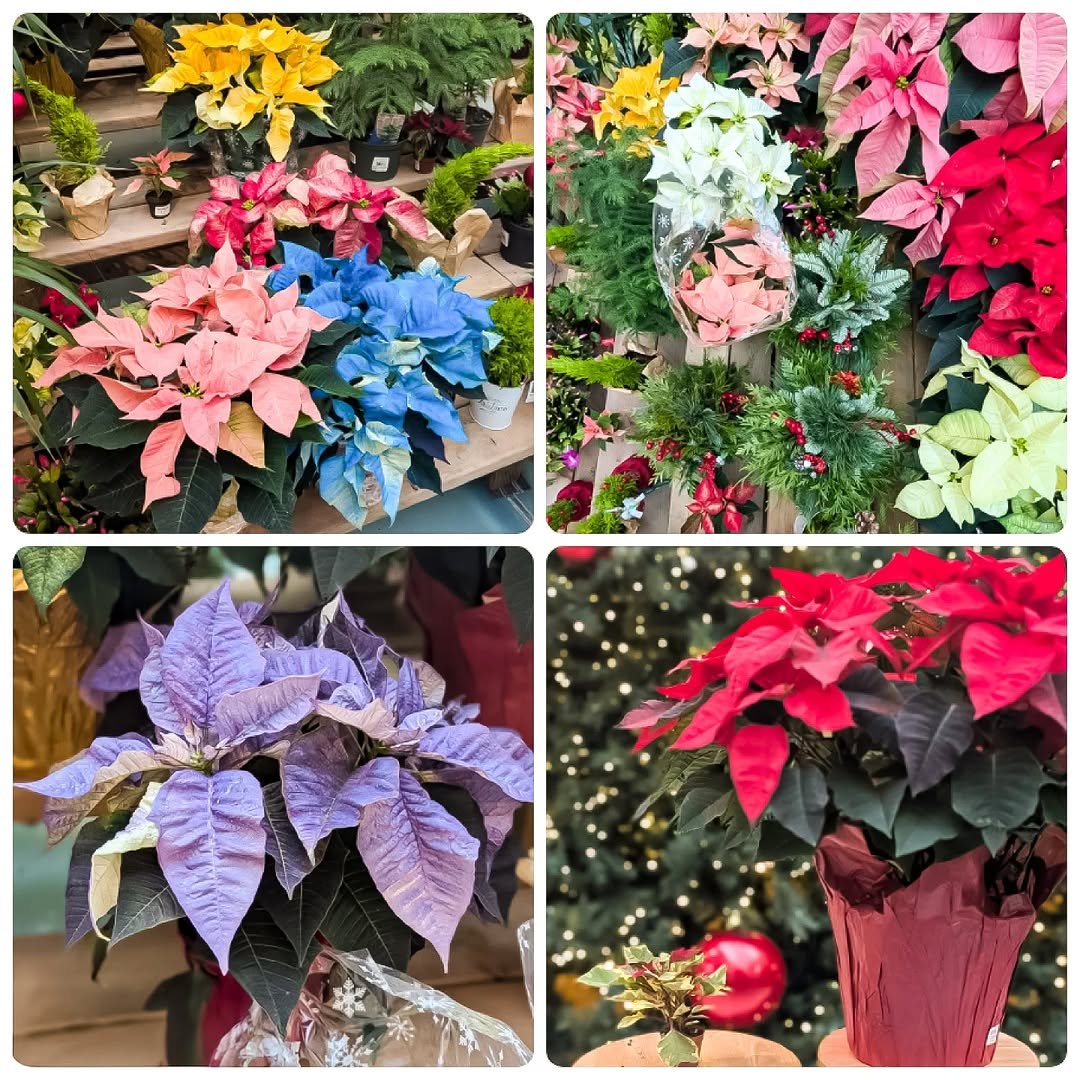
Garden centers now grow poinsettias in yellow, cream, pink, burgundy and even marbled shades, as the shelves in this photo show. Collecting them is half the fun of growing christmas poinsettias. Start with three colors in the same pot style, keep them on the same watering rhythm, and you will quickly learn which colors stay strong the longest in your home’s light.
You’ll need: three or more poinsettia colors, matching pots
Best for: collectors and color lovers
Frequently Asked Questions
How much light does a poinsettia need indoors?
About six hours of bright, indirect light a day is the sweet spot. A bright east or south window with the plant set back from the glass works well. Too little light makes the plant drop leaves and stretch pale and leggy, while harsh midday sun through glass can scorch the bracts.
How often should I water my poinsettia?
Check the soil, not the calendar. When the top inch feels dry, water thoroughly until it drains out of the bottom, then empty the saucer. In most homes that works out to once or twice a week. Never let the pot stand in water, and never let the plant wilt hard between waterings.
Why is my poinsettia dropping leaves?
Leaf drop is the plant’s one complaint for almost everything: cold drafts, hot dry air from vents, soggy roots, or a chilly ride home from the store. Check where the plant sits first, then check the soil. Move it to a calm, bright spot with steady temperature and it usually stops dropping within days.
Can I keep my poinsettia after Christmas?
Yes, and it is one of the easiest holiday plants to keep. It will turn into a leafy green houseplant through spring and summer. Prune it back in spring, grow it in bright light, then use the long night routine from early October and it can color up red again for the next Christmas.
Are poinsettias poisonous to cats and dogs?
Poinsettias have a scary reputation they do not fully deserve. The milky sap can irritate the mouth and stomach, so a pet that chews the leaves may drool or vomit, but the plant is not highly toxic. Even so, keep plants up on tables and shelves where pets cannot snack on them, and wash your hands after pruning.
When should I start the darkness routine for reblooming?
Start in the first week of October and keep it up for eight to ten weeks. The plant needs around 14 hours of complete, unbroken darkness every night, with bright light all day. Color usually shows by late November. One lamp left on in the room can delay the whole process, so total darkness really matters.
Final Thoughts on Growing Christmas Poinsettias
Growing christmas poinsettias comes down to three steady habits: buy a fresh plant, keep it in bright light away from drafts, and water it deeply but let it drain. Everything else in this list, from pink varieties to the rebloom routine, is just those habits with a little patience added. Pick one plant this year and keep it going. By next Christmas, the red one on your table could be the one you grew yourself.

