

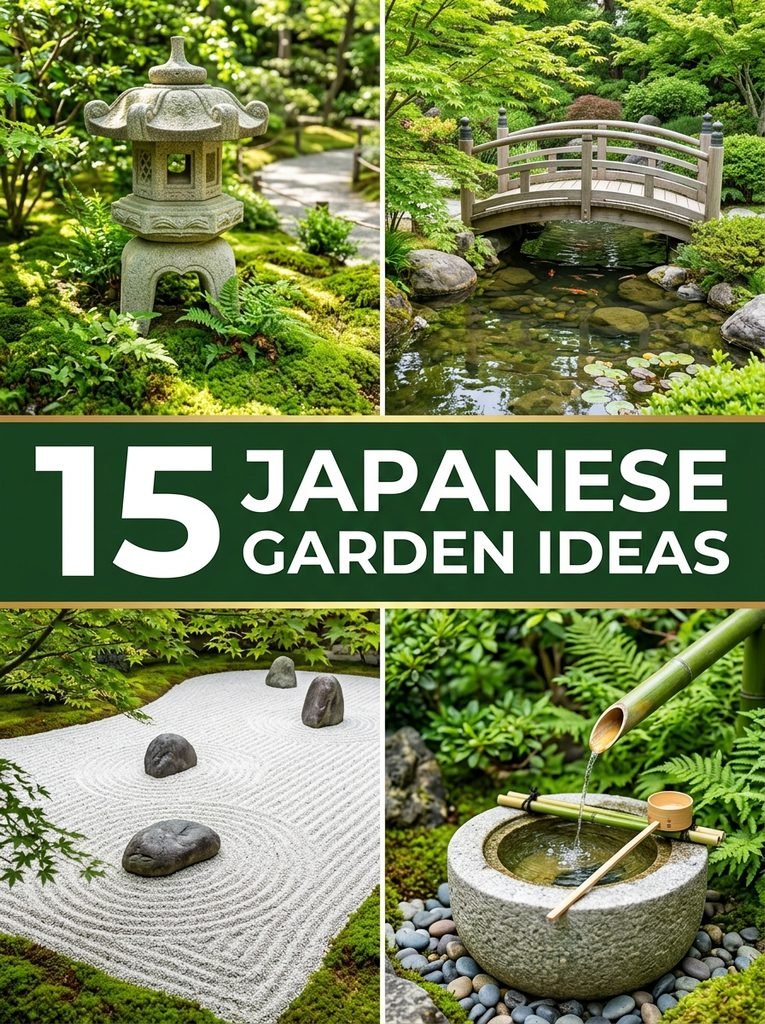
The first time I sat in a Japanese style garden, I noticed something odd. Nobody was talking. The sound of water and the soft crunch of gravel did all the work. That feeling is exactly what these gardens are built for, and the good news is you don’t need a huge yard or a big budget to get it. A few carefully placed stones, one good tree and a little moving water go a surprisingly long way. Here are 15 ideas I love, each with a practical tip so you can actually pull it off at home.
1. Add a Stone Lantern as a Focal Point
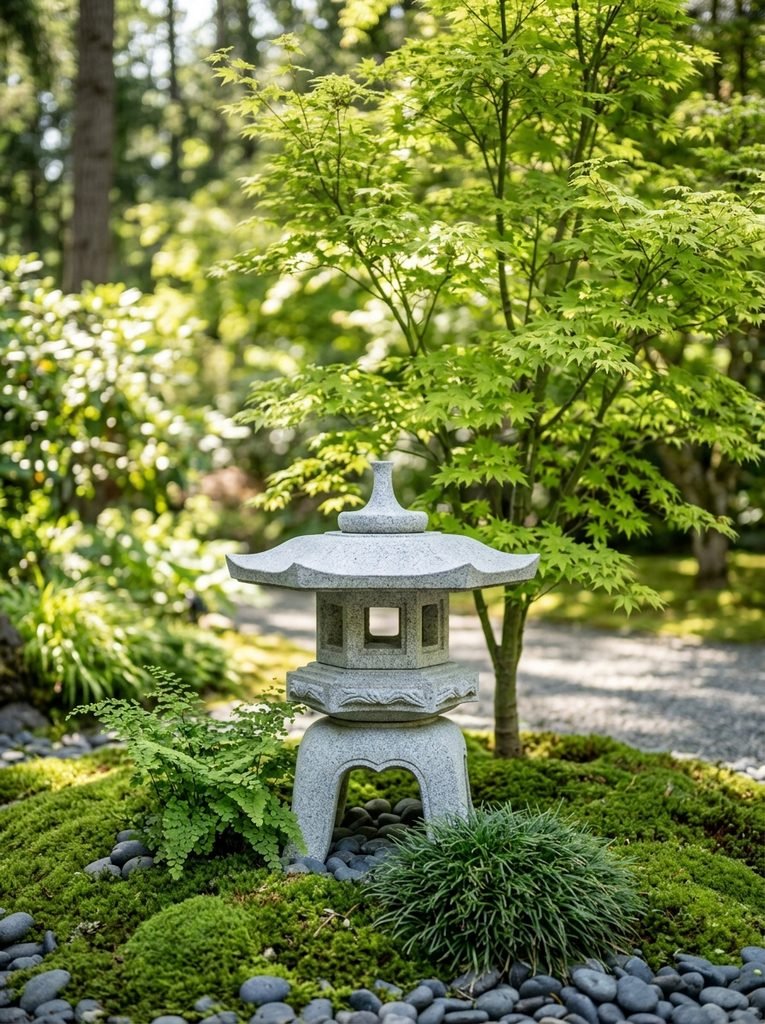
If you want one piece that instantly says Japanese garden, it’s a stone lantern. It gives the eye somewhere to land, which is honestly the whole trick with these spaces. I like placing it slightly off center, near water or at a bend in a path, rather than right in the middle of the lawn. Tuck moss or low ferns around the base so it looks settled, not dropped in. A tip I picked up: add a small solar light inside. At dusk it glows softly and the whole garden changes mood.
2. Lay a Curved Stepping Stone Path
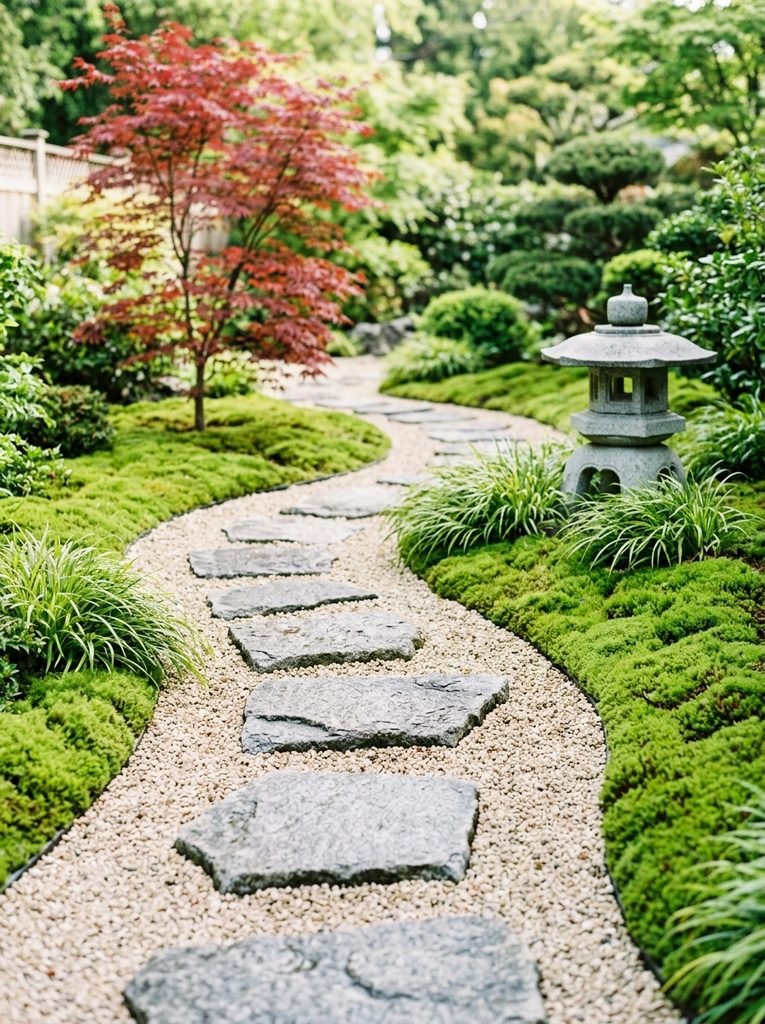
Straight paths feel rushed. A gently curving path slows you down, and that’s very much the point in a Japanese garden. This is one of the easiest builds on the list.
Materials Needed: Large flat natural stepping stones, landscape fabric, fine gravel or decomposed granite, a flat shovel, a rubber mallet, a level, a garden hose for marking the curve, and some sand for bedding.
How to Make It: Lay a garden hose on the ground to mark a soft curve until it looks right from your window, since that’s where you’ll see it most. Place the stones along the line, spaced for a relaxed natural step. Dig out under each stone, add a thin layer of sand, set the stone and tap it level with the mallet. Lay landscape fabric between the stones and top with gravel. In my experience, setting the stones so they sit just slightly above the gravel keeps them clean and makes them feel intentional.
3. Dig a Small Backyard Koi Pond
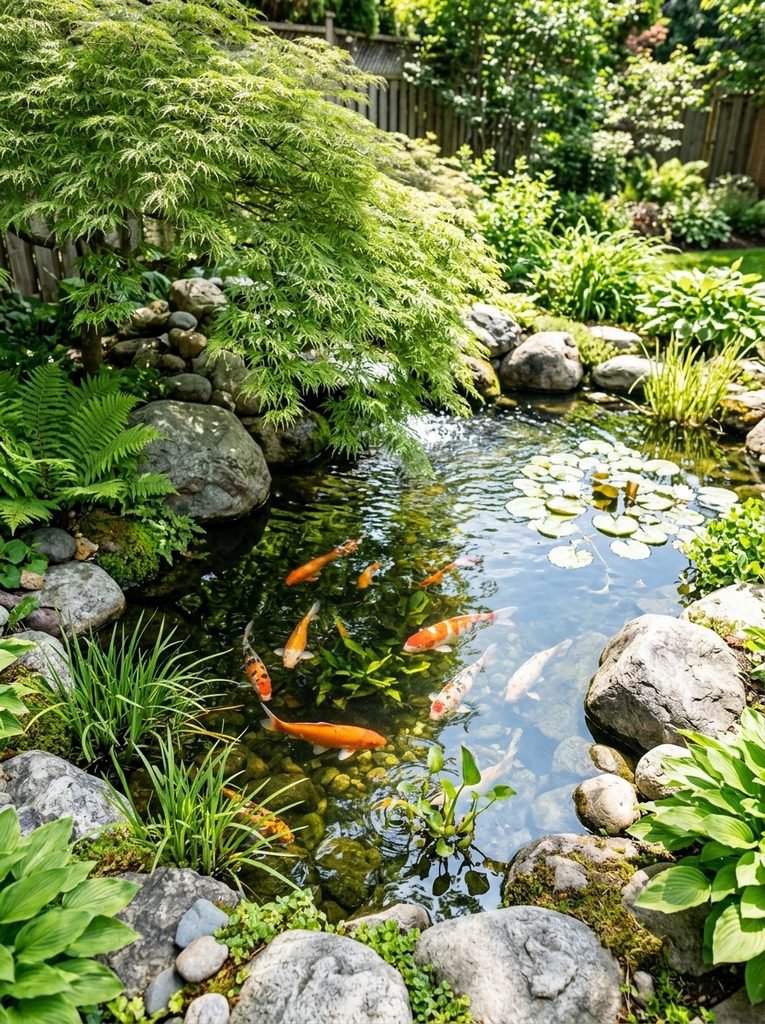
Water is the heart of most Japanese gardens, and a small pond brings life and movement in a way nothing else does. Honestly, even a modest pond feels magical once fish are gliding through it. If you want koi, plan for at least a few feet of depth so they stay cool in summer and safe from birds. A good pump and filter are not optional. They keep the water clear, and clear water is what makes the whole thing look calm instead of murky. Soften the edges with rocks and plants so the liner never shows.
4. Place a Wooden Arched Bridge
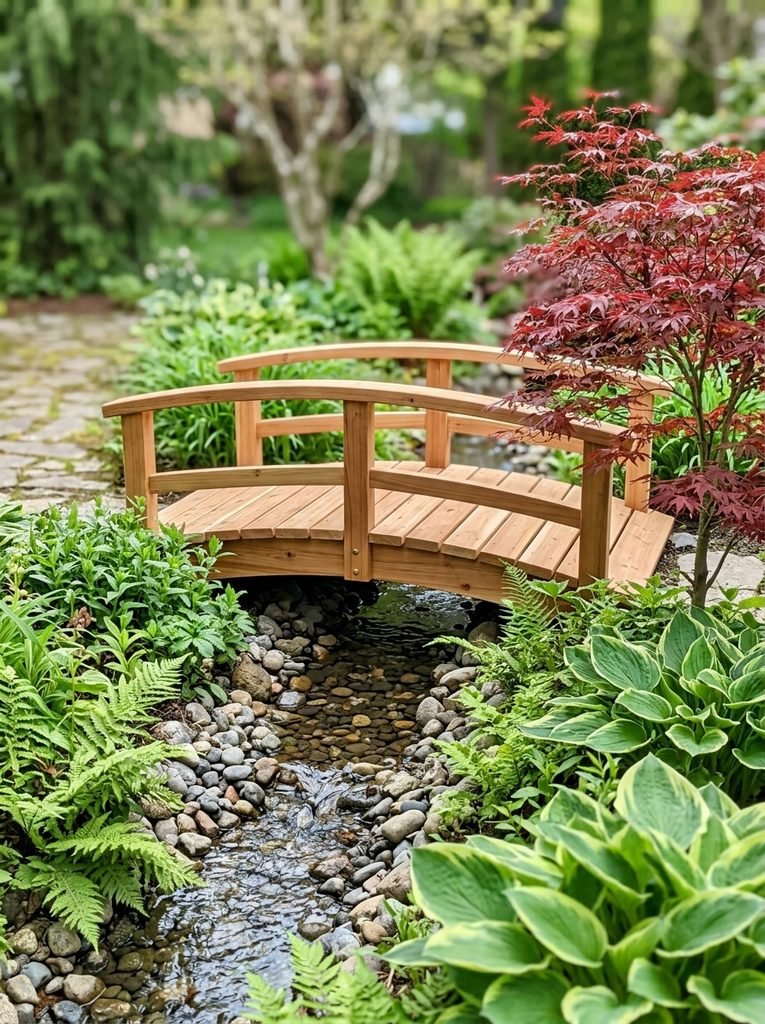
A little arched bridge is such a charming touch, and it doesn’t need real water under it. I’ve seen lovely ones crossing a dry stream of river rocks that look just as convincing. Cedar is my pick for the wood because it handles weather well and ages to a soft grey. You can leave it natural or go for the classic red lacquered look if you want a bolder statement. Make sure it’s anchored at both ends so it doesn’t shift when you walk across.
5. Create a Raked Gravel Zen Garden
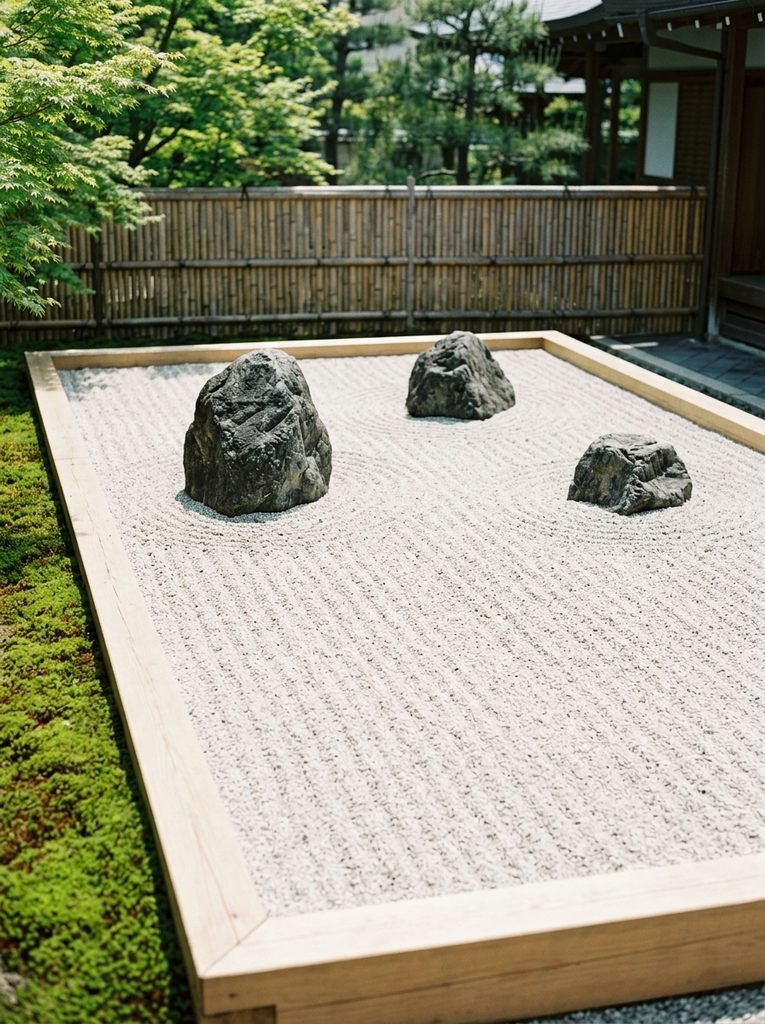
A dry zen garden is pure calm, and it needs almost zero water or mowing once it’s in. Raking the patterns is also weirdly relaxing on a Sunday morning.
Materials Needed: Pale gravel or crushed granite, three to five boulders in different sizes, landscape fabric, timber or steel edging, a flat rake, and a wooden rake with wide spaced teeth for patterns.
How to Make It: Mark out a simple rectangle or square and remove the grass and roots. Level the ground, lay landscape fabric, and install your edging so the gravel stays put. Place the boulders in an uneven group, always in odd numbers, and bury about a third of each one so they look like they’ve been there forever. Pour gravel about two to three inches deep, smooth it flat, then rake your lines and ripples. A tip I picked up: rake the circles around each stone first, then fill in the straight lines. It keeps the pattern clean.
6. Build a Bamboo Water Fountain
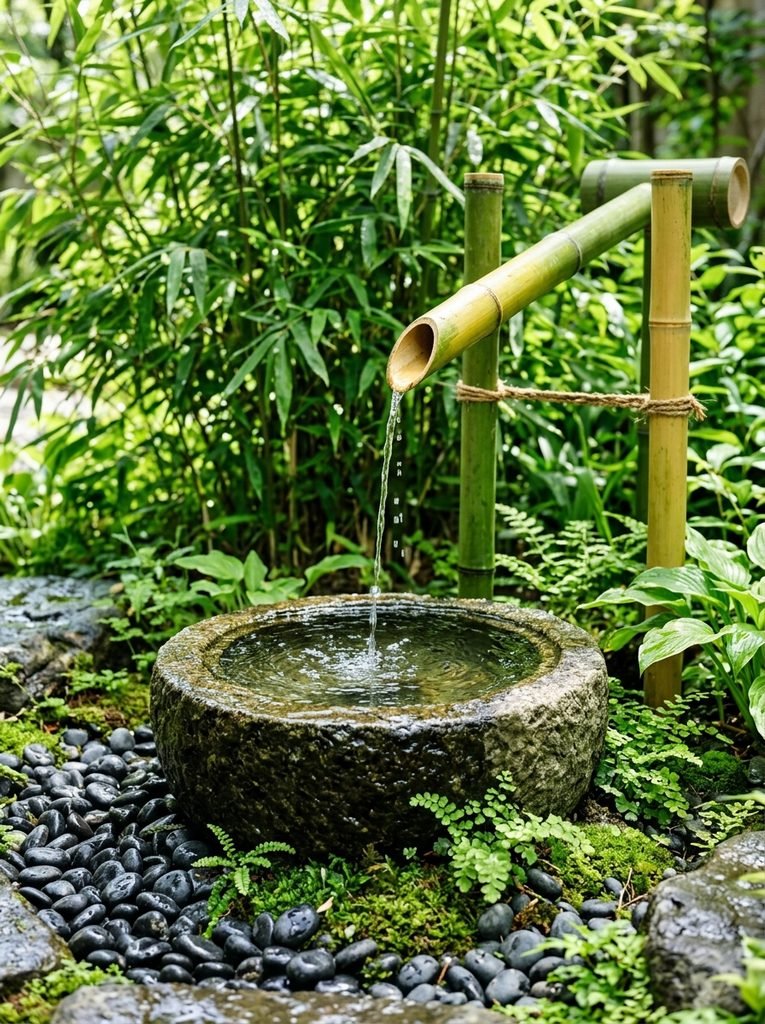
If a full pond feels like too much, a bamboo fountain gives you that gentle water sound in a tiny footprint. It’s honestly one of my favourite small projects.
Materials Needed: A thick bamboo pole and a thinner one for the spout, a stone or ceramic basin, a small submersible pump, flexible tubing, a buried reservoir tub, a grate to cover it, river pebbles, and a drill.
How to Make It: Dig a hole for the reservoir tub and set it level in the ground. Place the pump inside and run the tubing up through the thick bamboo pole. Cut and angle the thinner bamboo spout, attach it near the top, and connect the tubing through it. Cover the reservoir with the grate, set the basin on top, and hide everything with pebbles. Fill with water and switch on. In my experience, testing the flow before you hide the tubing saves a lot of digging back up.
7. Plant a Japanese Maple as the Centerpiece
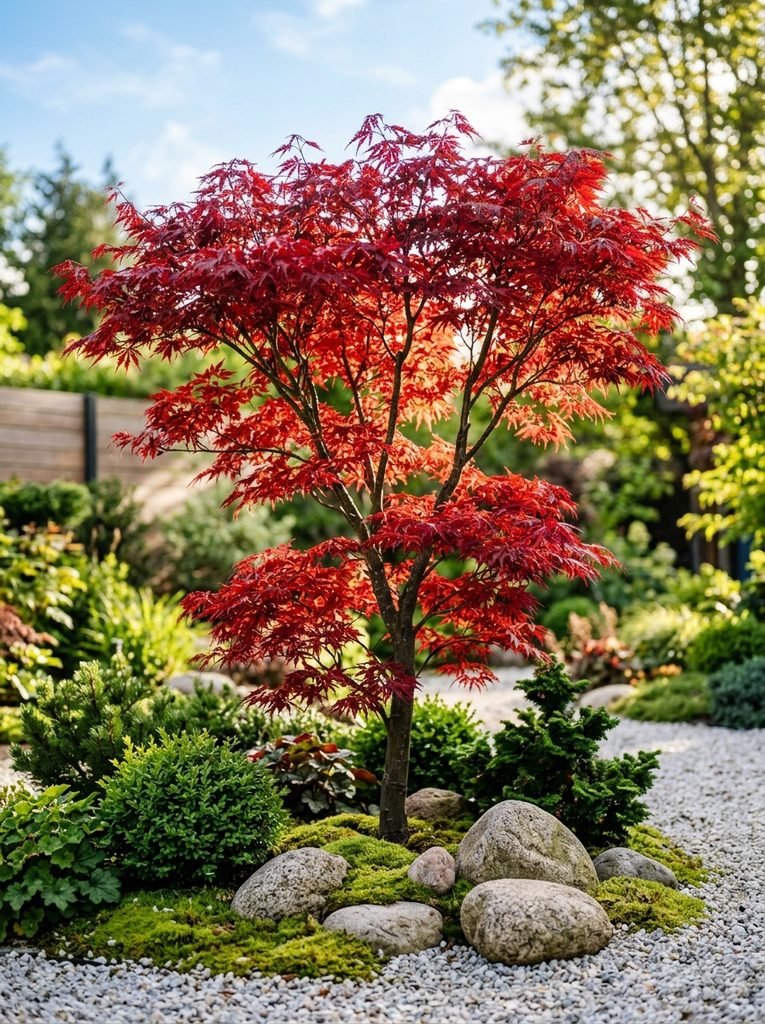
Every Japanese garden I love has one tree that steals the show, and it’s almost always a Japanese maple. The leaves are delicate, the shape is graceful, and the color changes through the seasons. I’d suggest picking a variety suited to your climate, since some prefer partial shade and scorch in harsh afternoon sun. Give it room. One well placed maple with space around it looks far better than three crowded together.
Start Your 30-Day Home Reset
Stop waiting for a "perfect" free weekend. Grab the 30-day plan and start feeling lighter in your own home by tomorrow.
View the 30-Day Plan Printable PDF · Instant download8. Grow a Soft Moss Garden Corner
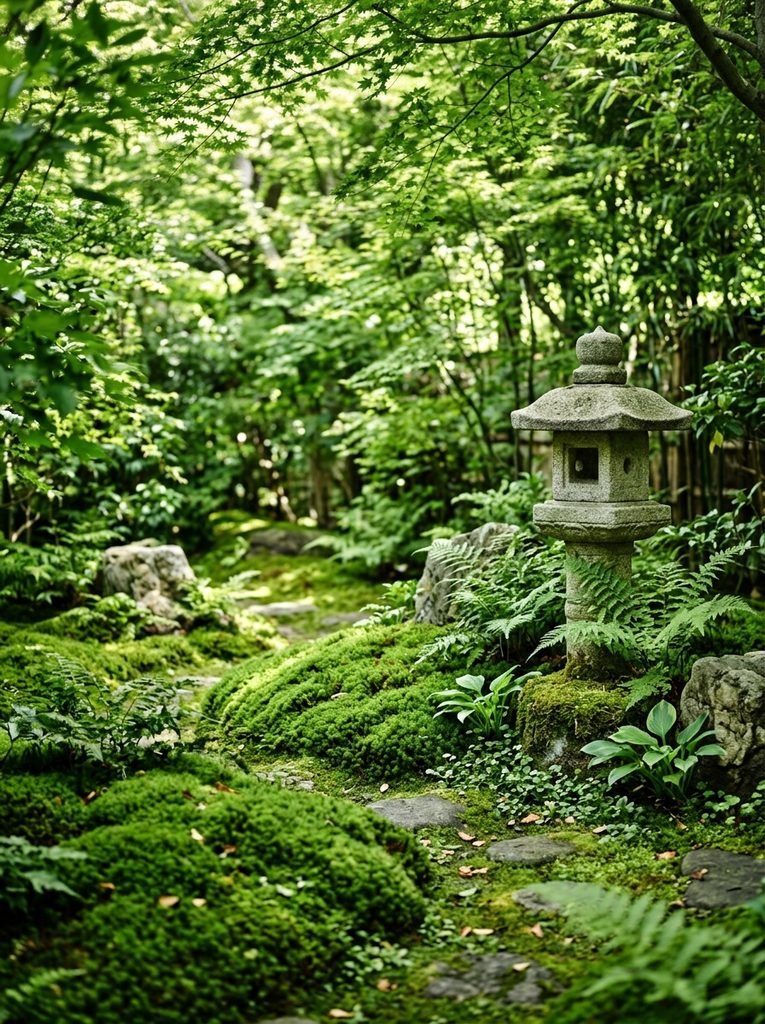
If you have a shady spot where grass keeps dying, don’t fight it. Turn it into a moss garden. Moss gives that soft, ancient look Japanese gardens are known for, and it honestly thrives where lawns struggle. It likes shade, moisture and slightly acidic soil. Clear the area of weeds, press moss pieces firmly onto damp soil, and mist it often for the first few weeks. Once it settles in, it needs very little. Just keep fallen leaves off so it can breathe.
9. Put Up a Bamboo Screen Fence
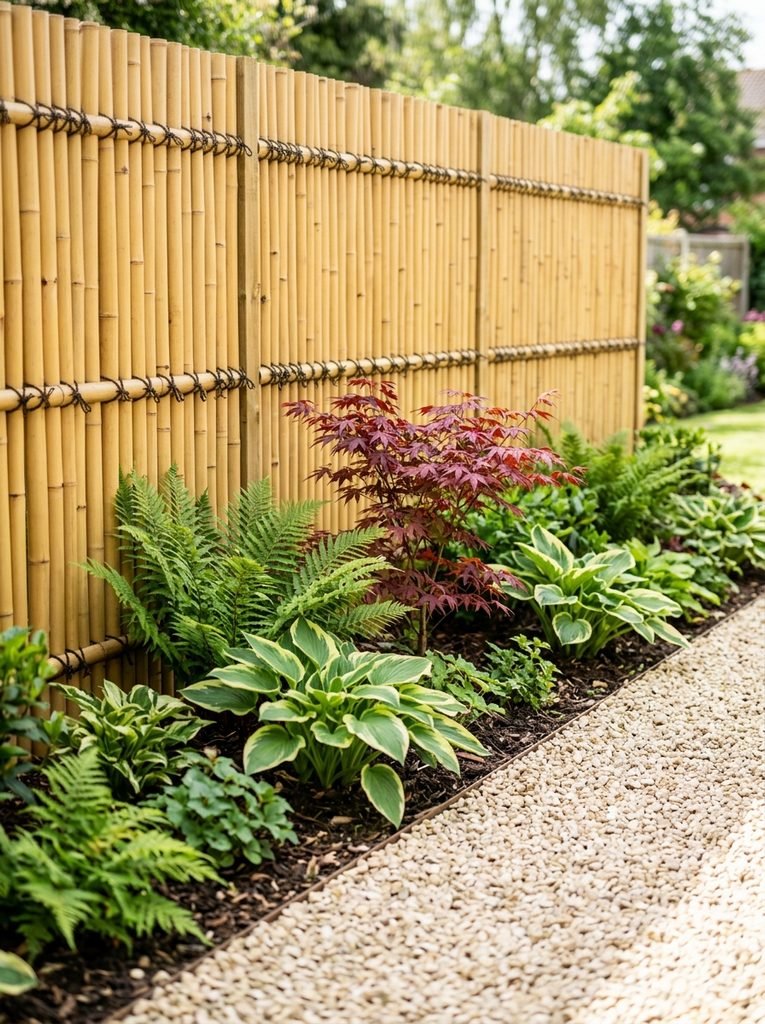
A bamboo fence is such a quick way to set the mood, and it’s great for hiding an ugly wall or a neighbour’s view. Rolled bamboo screens are cheap and can be attached right over an existing fence. I like them because they add warmth and texture instead of a flat solid barrier. A tip I picked up: seal the bamboo with a clear outdoor sealer once a year. It keeps that fresh golden color much longer and stops it from cracking.
10. Add a Small Garden Tea House Pavilion
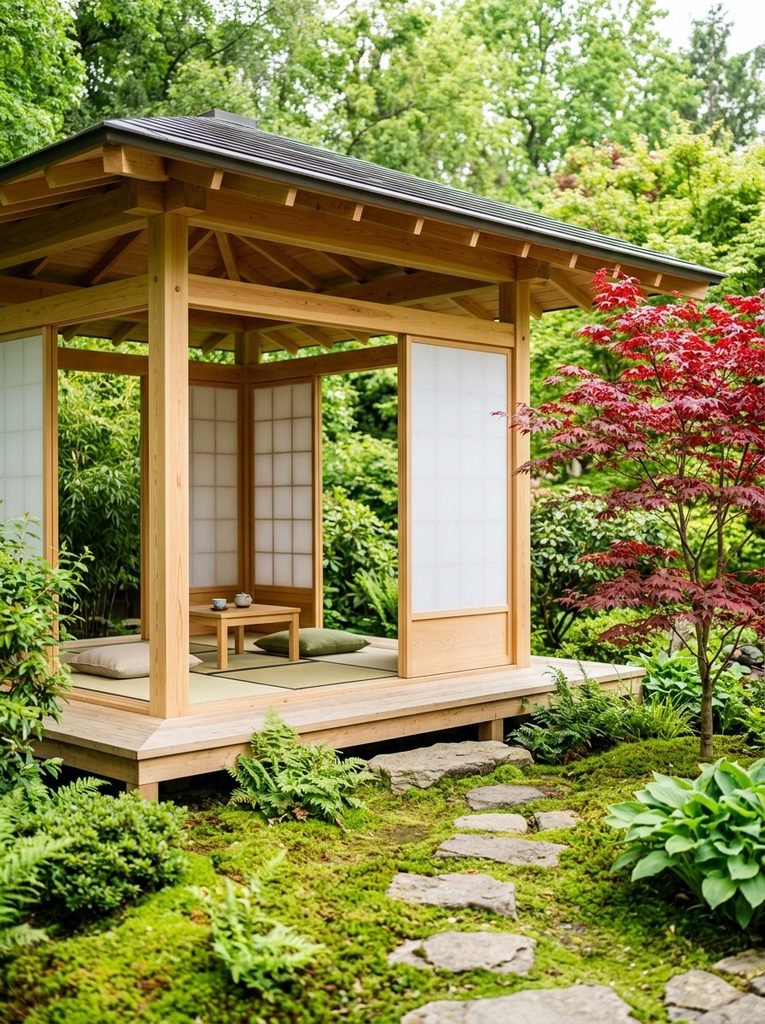
A little garden house or pavilion gives you somewhere to actually sit and enjoy everything you’ve built. It doesn’t have to be fancy. A simple timber structure with a low roof and a raised floor feels very Japanese inspired. I’d suggest placing it where you get the best view of your water feature or maple. Honestly, it becomes the spot you drink your morning tea in, and you’ll wonder how you managed without it.
11. Go for a Modern Minimalist Japanese Garden
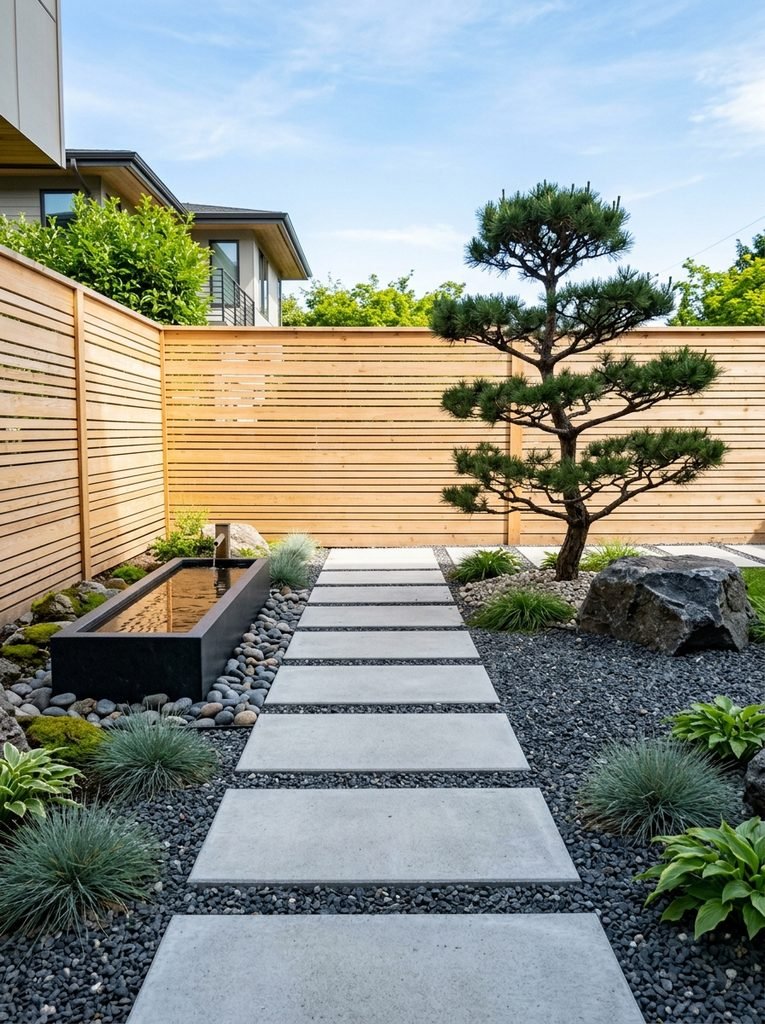
This is where Japanese garden design meets modern style, and I think it’s a perfect fit for newer homes. Swap curvy stones for clean rectangular pavers, keep the plant list short and let a few strong elements carry the space. Dark gravel, horizontal slatted fencing and a single sculptural tree look sharp and calm together. The honest rule here is restraint. The moment you add too many plants or ornaments, the modern feel disappears.
12. Create an Indoor Japanese Garden Corner
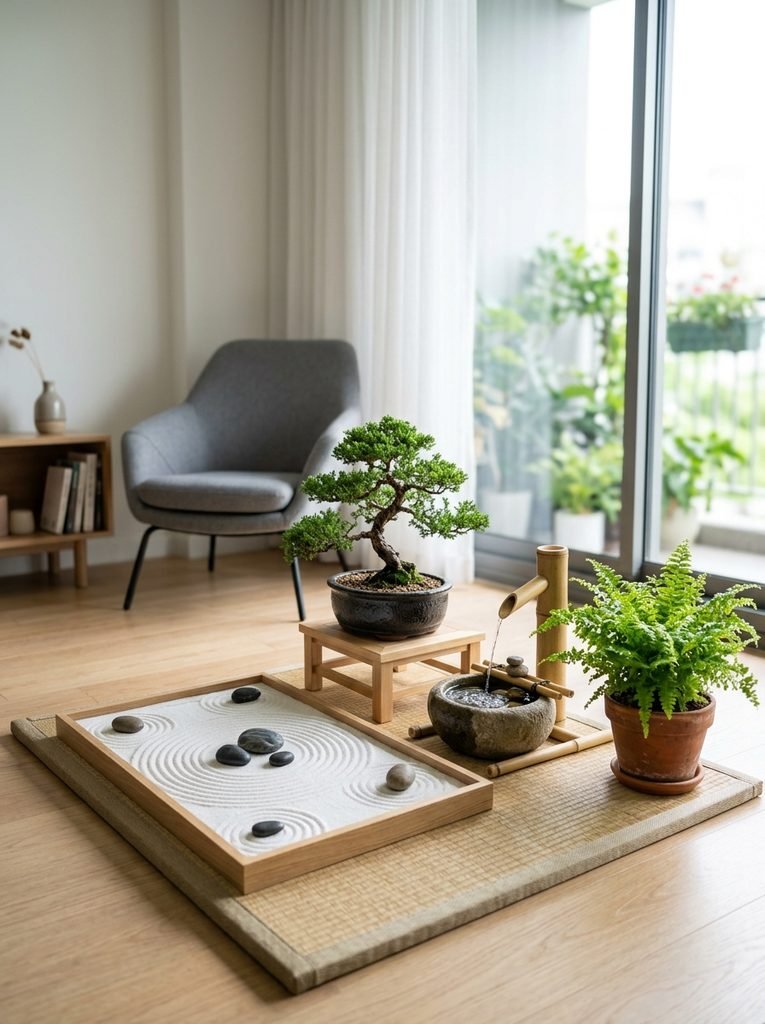
No yard? You can still bring the feeling inside. A little corner with a bonsai, a tabletop fountain and a tray of raked sand can turn part of a room into a calm spot. Place it near a window so the plants get light. I like keeping the colors simple, mostly greens, light wood and stone, so it doesn’t feel cluttered. In my experience, a tabletop fountain is the best part, because that soft water sound makes the whole room feel quieter.
13. Design a Small Courtyard Garden Layout
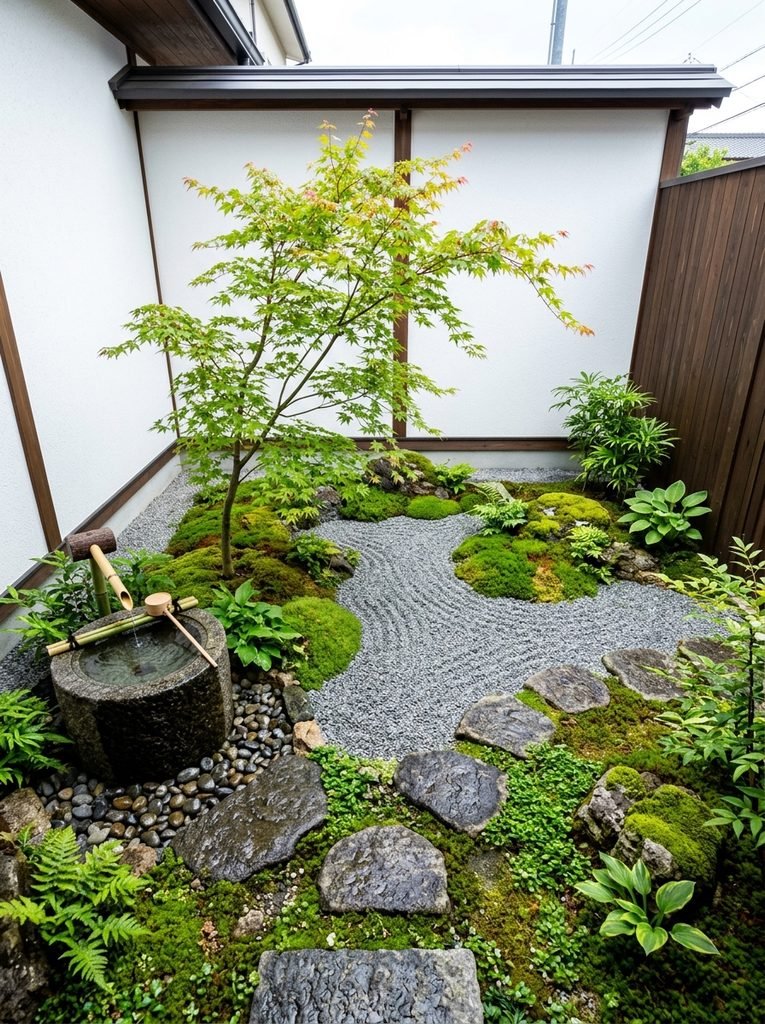
Japanese gardens are brilliant for small spaces because they’re all about careful layout, not size. In a courtyard, I’d suggest sketching a simple plan first with three layers: a tall element like a maple, a middle layer like stones or a lantern, and a low layer of gravel and moss. That layering creates depth even in a tiny area. Keep one open spot of gravel or moss for breathing room. Honestly, empty space is just as important as what you plant.
14. Shape Cloud Pruned Shrubs and Plants
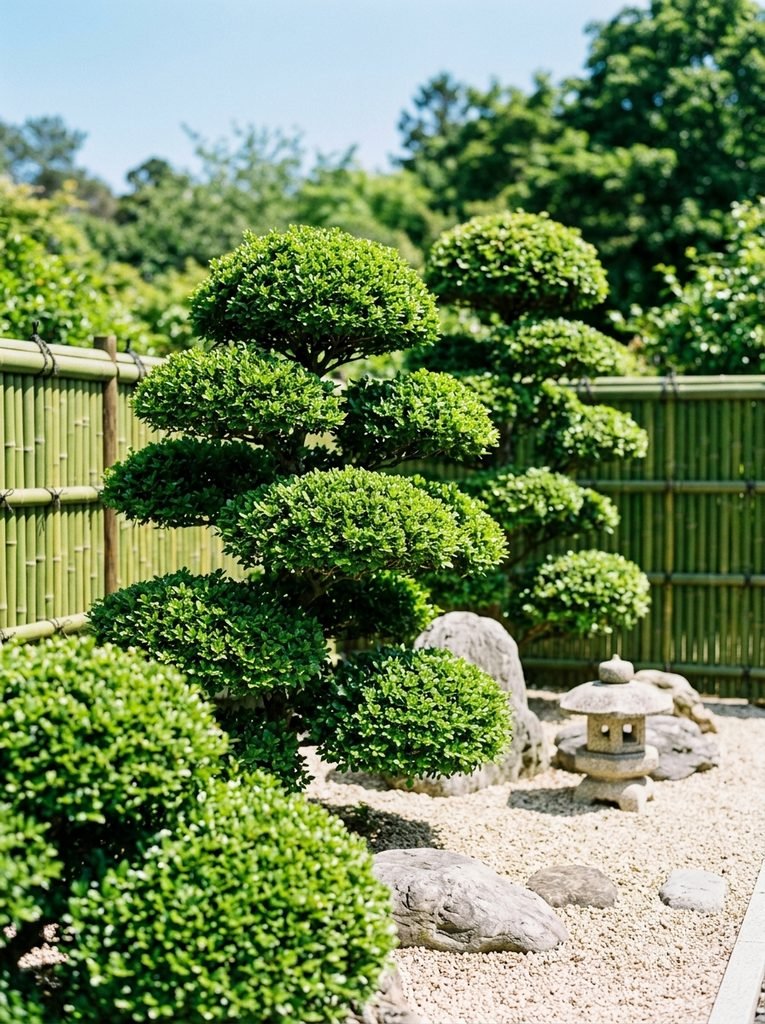
Cloud pruning turns ordinary shrubs into living sculpture, and it’s one of the most recognizable Japanese garden details. Boxwood, holly and some junipers take to it well. You don’t have to be an expert to start. Just trim the plant into a few rounded pads, clearing the stems between them so the “clouds” stand out. A tip I picked up: prune a little at a time, twice a year, rather than one big chop. The shapes stay tidy and the plant stays healthy.
15. Make a Dry River Bed With Stones
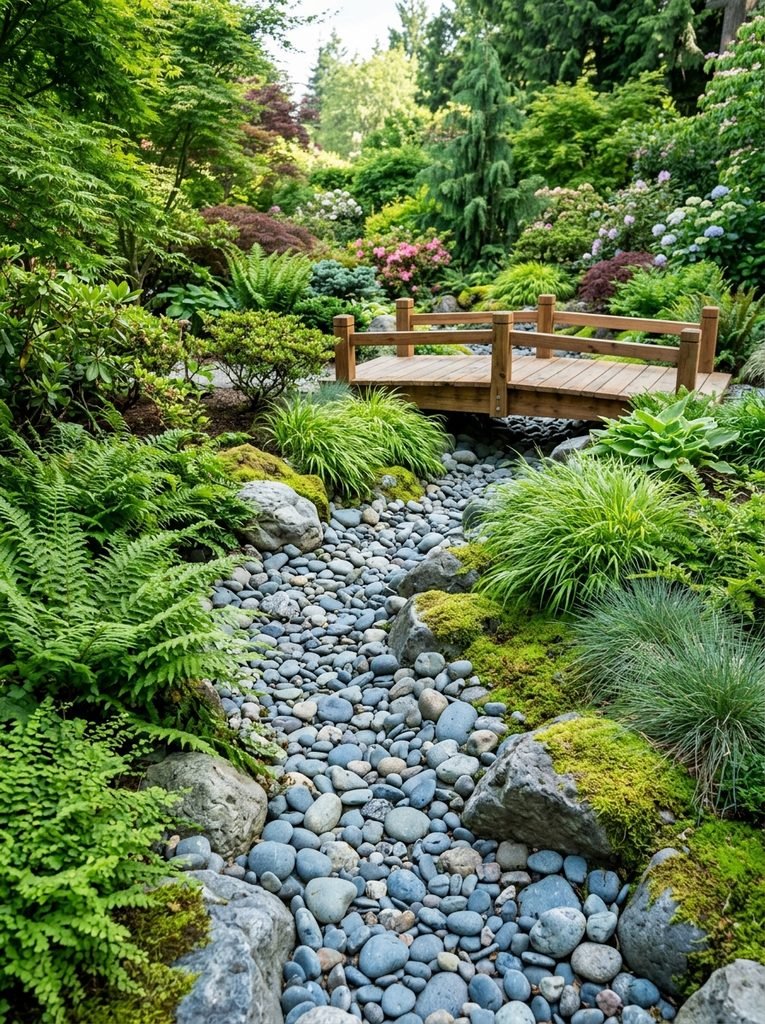
A dry river bed gives you the look of flowing water without any of the upkeep. It’s also genuinely useful, because it can guide rainwater away from low spots in your yard. Lay it in a gentle winding shape, use a mix of rock sizes and put the larger stones along the edges like a real stream would. I like adding a small bridge across it for that classic touch. Honestly, it’s one of those projects that looks like it took far more effort than it did.
Final Thoughts on Japanese Garden
You don’t have to build everything at once. Start with one piece, like a stone lantern or a small fountain, and let the garden grow around it. The best Japanese garden is the one that makes you slow down and breathe a little easier every time you step outside.


Amir Ali is the founder and site administrator of HomeDecorEdge, a modern home decor and interior design platform. Since starting the site, he has combined his passion for interior design, practical styling, and color coordination with hands-on content strategy and site management. He guides authors, curates high-quality articles, and ensures readers have access to actionable, visually inspiring, and user-focused home decor advice for apartments, small rooms, and family homes.