Ever cleaned a coop on your knees, with your head stuck in a tiny door?
I have. Once was enough.
A walk in chicken coop fixes that. Here are 15 ideas, from simple builds to farmhouse and modern looks, with storage, a feed room and a brooder. Three come with full step by step cards.

Quick Picks
- Easiest build: Simple DIY Walk In Chicken Coop (idea 1)
- Best for storage: Walk In Coop With Storage (idea 6)
- Budget pick: Cheap Walk In Chicken Coop (idea 9)
- Prettiest: Farmhouse Walk In Chicken Coop (idea 10)
1. Simple DIY Walk In Chicken Coop

A walk in coop saves your back. You stand up straight to clean, collect eggs and fill feeders, and that alone makes it worth the build.
Keep the first one simple. A basic frame, a pitched roof, one door and two vents are plenty. Make the door at least 6 feet tall, so an adult can walk in without ducking.
⏱ 1 weekend💲 Medium🛠 Medium
Materials Needed
- 2×4 lumber, 8 foot
- Hardware cloth, half inch
- Corrugated roof panels
- Exterior screws, hinges, a latch and plywood for the walls
How to Make It
- Mark out a 6 by 8 foot square on level ground and set the base frame.
- Build the four wall frames from 2x4s and stand them up one at a time.
- Add the roof rafters and screw on the roof panels with a little overhang.
- Clad the walls with plywood, and leave openings for vents and a window.
- Cover every opening with hardware cloth, then hang a tall door with a secure latch.
Tip: Fit the door before you clad the walls, so you can check the fit. Adults should do the sawing, drilling and roof work. Check local rules before building anything large.
2. Large Walk In Chicken Coop

If you keep a bigger flock, a large walk in coop makes life easier. There’s room to move around, to store supplies and to add roosts at several heights.
Plan about 4 square feet per hen inside the coop. An 8 by 12 foot coop suits a flock of roughly 20. Don’t overbuild, because a coop that’s too big is harder to keep warm in winter.
You’ll need: heavy duty door hinges and predator proof door latch
Best for: bigger flocks and serious keepers
3. Walk In Chicken Coop With a Run
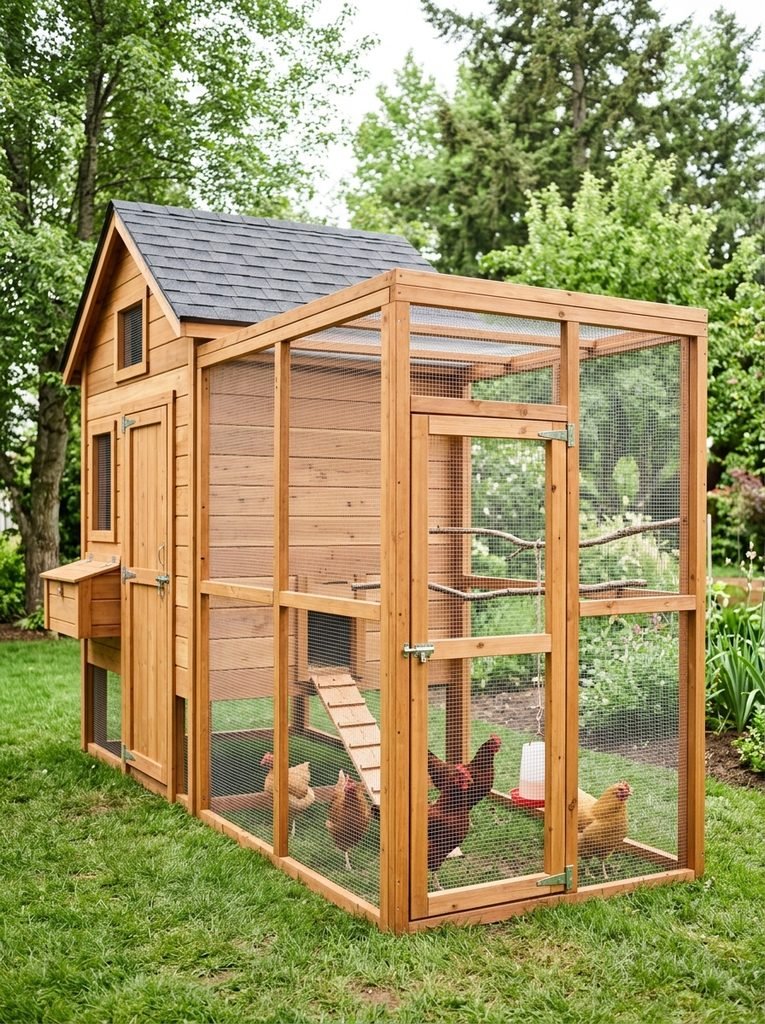
A walk in run turns a coop into a proper home. Hens get fresh air and space, and you get to step inside, instead of reaching over a fence.
Build the run as tall as the coop door, so you never have to duck. Roof at least part of it. Hens like a dry corner, and it also keeps hawks out.
⏱ 1 weekend💲 Medium🛠 Medium
Materials Needed
- Pressure treated posts, 4×4
- Hardware cloth, 19 gauge
- 2×4 rails, galvanized screws and a gate latch
- Landscape staples and a post hole digger
How to Make It
- Mark the run next to the coop and dig post holes about 2 feet deep.
- Set the posts, check they are plumb and fill the holes with gravel or concrete.
- Screw the top and middle 2×4 rails to the posts to make a frame.
- Cover the walls with hardware cloth, and staple or screw it every few inches.
- Hang a tall gate and add a roof over at least part of the run.
Tip: Bury the hardware cloth about 12 inches deep or lay a 2 foot wide apron outward from the base. It stops diggers like foxes and raccoons. Adults should handle the post hole digger and the tools.
4. Walk In Chicken Coop Layout
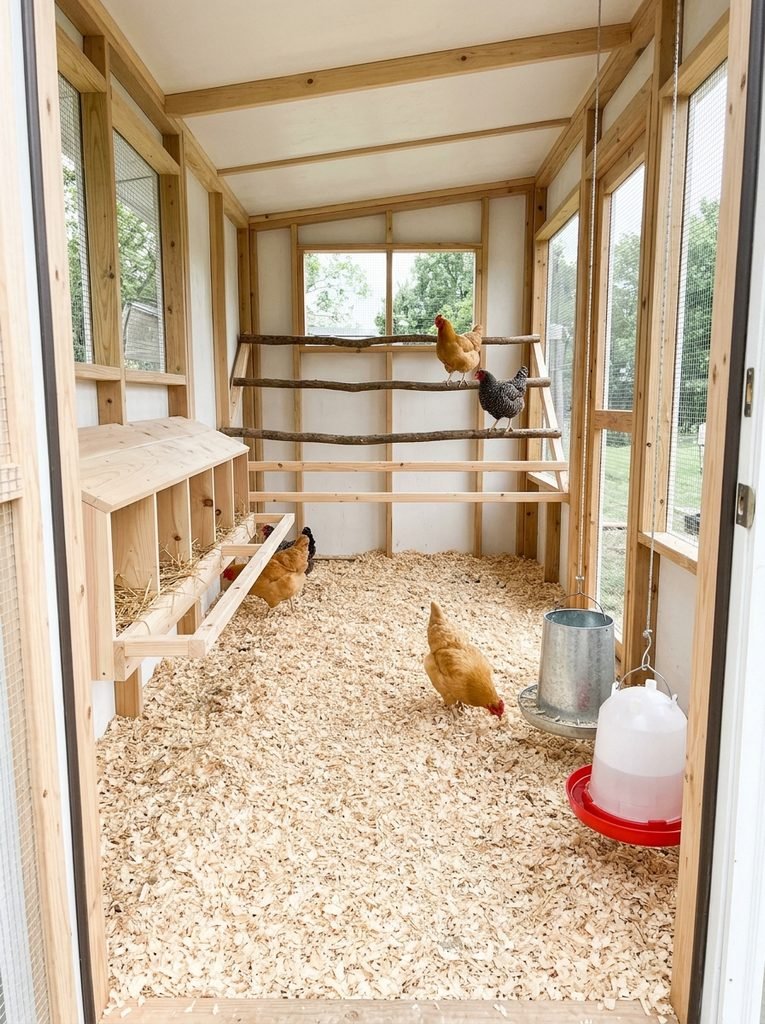
A good layout makes daily chores easy. Think of the coop as a small house with zones, one for sleeping, one for laying and one for feeding.
Put the roost on the far wall, nest boxes on a side wall and feed near the door. Keep an aisle clear down the middle. Never put the roost above the nest boxes, or the hens will sleep in them.
You’ll need: graph paper pad
Best for: planners and first time builders
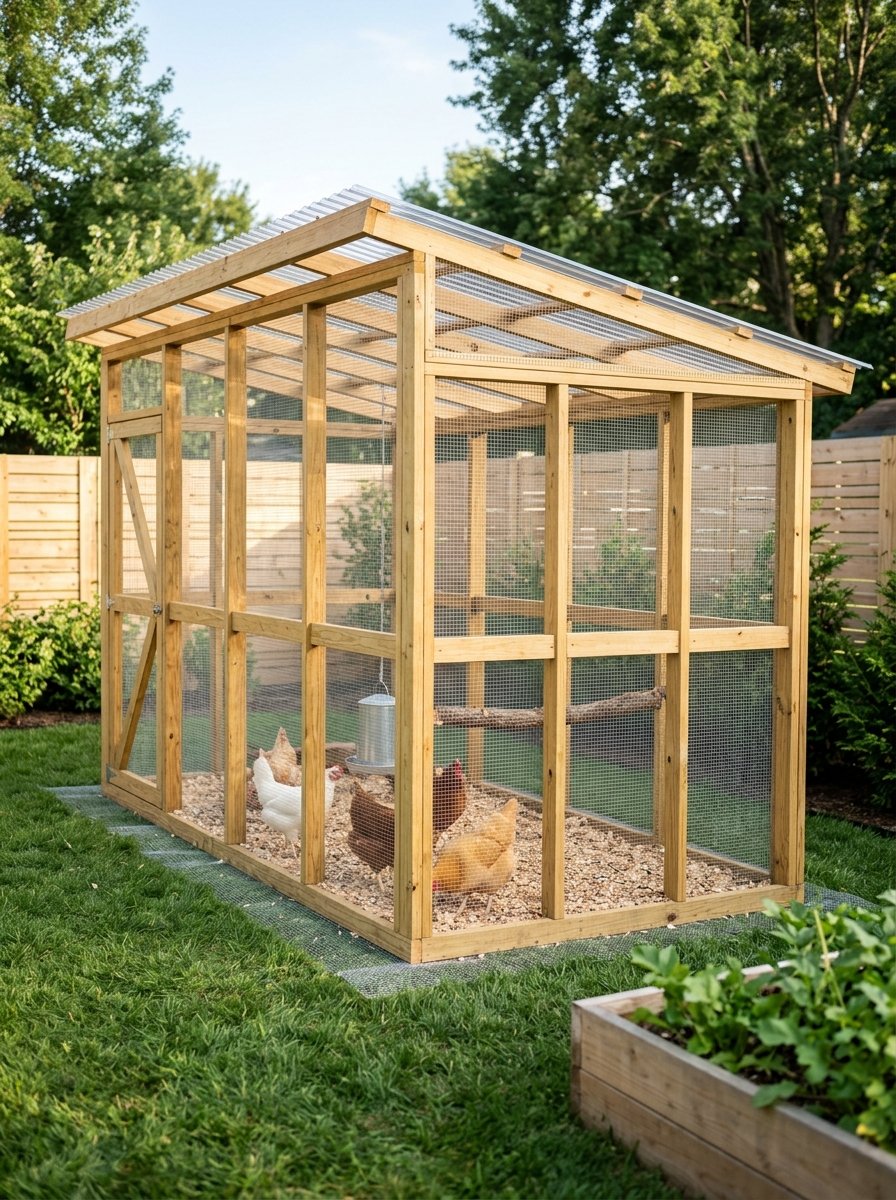
DIY Build Plans
8x12 Walk-In Chicken Run Plans
Predator-proof run for up to 10 chickens, with a full cut list, shopping list and 12 easy steps.
5. Walk In Coop Interior Ideas
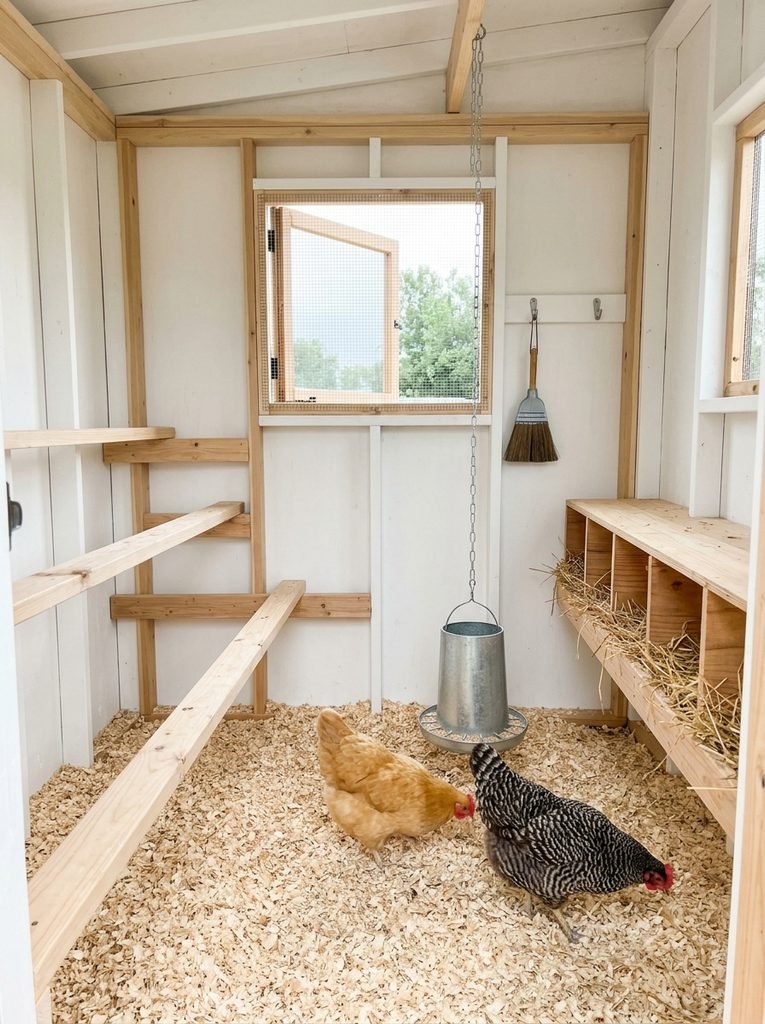
The inside of the coop matters most. Smooth, painted walls and a washable floor save you hours of scrubbing.
Use a semi gloss paint on the lower walls so they wipe clean. Add hooks for tools, and a small shelf for supplies. Keep everything off the floor where you can.
You’ll need: hanging poultry feeder and semi gloss exterior paint
Best for: tidy keepers and easy cleaning
6. Walk In Coop With Storage
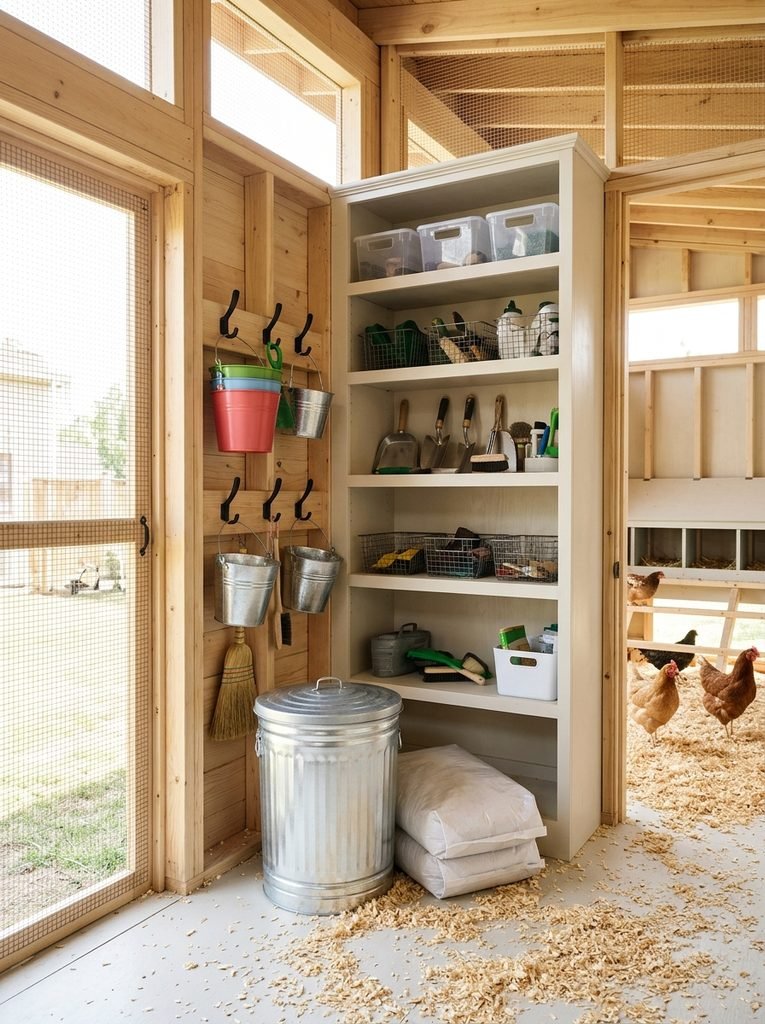
Storage is the best part of a walk in coop. Feed, bedding and tools all live inside, so there’s no more trips to the shed.
Build a small cabinet or shelf unit at one end. Keep it separate from where the hens sleep, and use closed lids on everything. Dust from feed and bedding can build up, so wipe the shelves often.
You’ll need: metal feed storage bin with lid
Best for: busy keepers who like things tidy
7. Walk In Coop With a Feed Room

A feed room is a little pantry for your flock. You can keep feed dry and safe from mice, and you won’t track dust through the hen area.
Make it about 2 by 4 feet, with a solid door. Use metal bins with tight lids, since mice and rats chew plastic. Keep the room dry and ventilated.
You’ll need: feed scoop
Best for: larger flocks and bulk feed buyers
8. Walk In Coop With a Brooder

A built in brooder is a clever use of the space. You raise chicks right there, and later you can open it up for the whole flock.
Use a heating plate, not a heat lamp. Plates are much safer, and chicks can snuggle under them like a mother hen. Keep the brooder warm and draft free, and move the plate up as the chicks grow.
⏱ 1 hour💲 Low🛠 Easy
Materials Needed
- Brooder heating plate
- Chick feeder and waterer set
- A plywood partition, hardware cloth for the lid and a hinge
- Pine shavings
How to Make It
- Pick a corner of the coop and measure a section about 2 by 4 feet.
- Screw a plywood partition across it, about 18 inches high.
- Hinge a hardware cloth lid on top, so chicks can’t hop out and nothing gets in.
- Set the heating plate on legs at chick height and cover the floor in shavings.
- Add the feeder and waterer and watch that the chicks use the warm spot.
Tip: Never use a heat lamp in a wooden coop, because it’s a major fire risk. Plug the plate into a GFCI outlet and keep the cord out of reach. Adults should handle the wiring.
9. Cheap Walk In Chicken Coop

You can build a walk in coop on a small budget. Reclaimed lumber, used windows and a simple roof keep the cost low.
Spend money where it counts, which is hardware cloth, latches and a solid roof. Save on the frame, the walls and the paint. Check old wood for rot, and skip anything treated with harsh chemicals near the hens.
You’ll need: galvanized welded wire mesh
Best for: tight budgets and recycled builds
10. Farmhouse Walk In Chicken Coop
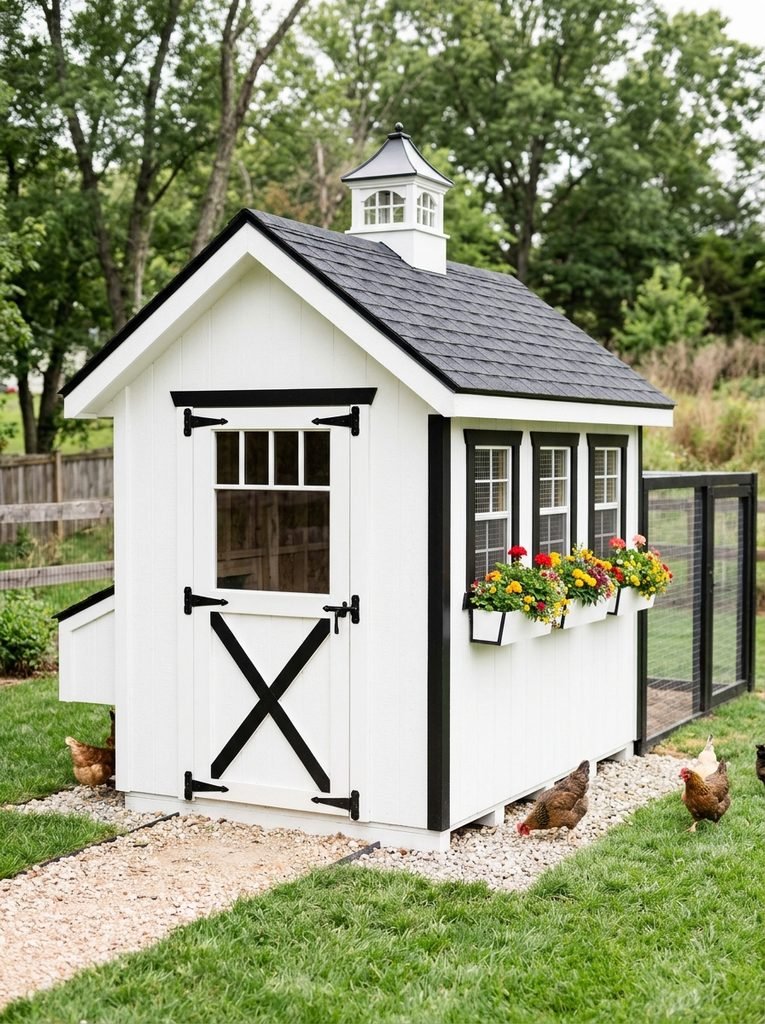
Farmhouse style makes a coop look like a little barn. White paint, dark trim and a barn style door do most of the work.
Add a small cupola for ventilation, and window boxes with plants that are safe around hens. Use exterior paint, and let it cure well before the hens move in.
You’ll need: exterior paint, white and black barn door hardware
Best for: people who love a pretty yard
11. Modern Walk In Chicken Coop
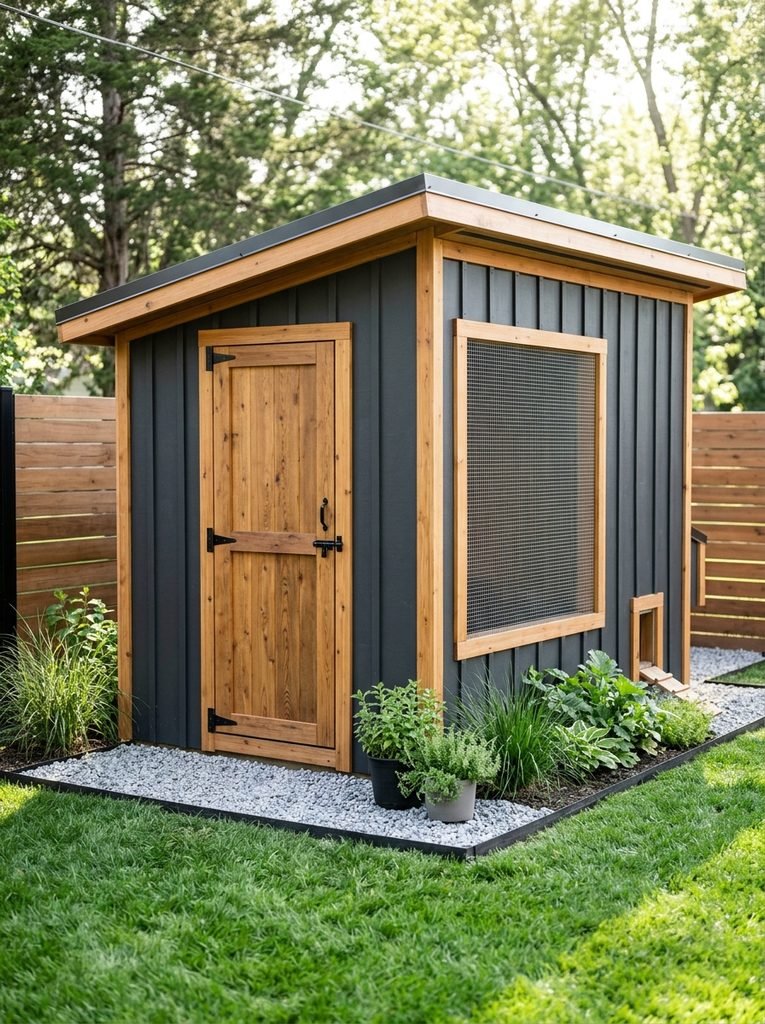
A modern coop looks sharp in any backyard. Clean lines, a single slope roof and dark siding make it feel like a garden room.
A flat roof needs a clear slope so water runs away. Keep the eaves long, and use a few large vents high up instead of many small ones.
You’ll need: metal roofing panels
Best for: modern homes and tidy gardens
12. Free Walk In Coop Plans and What to Check
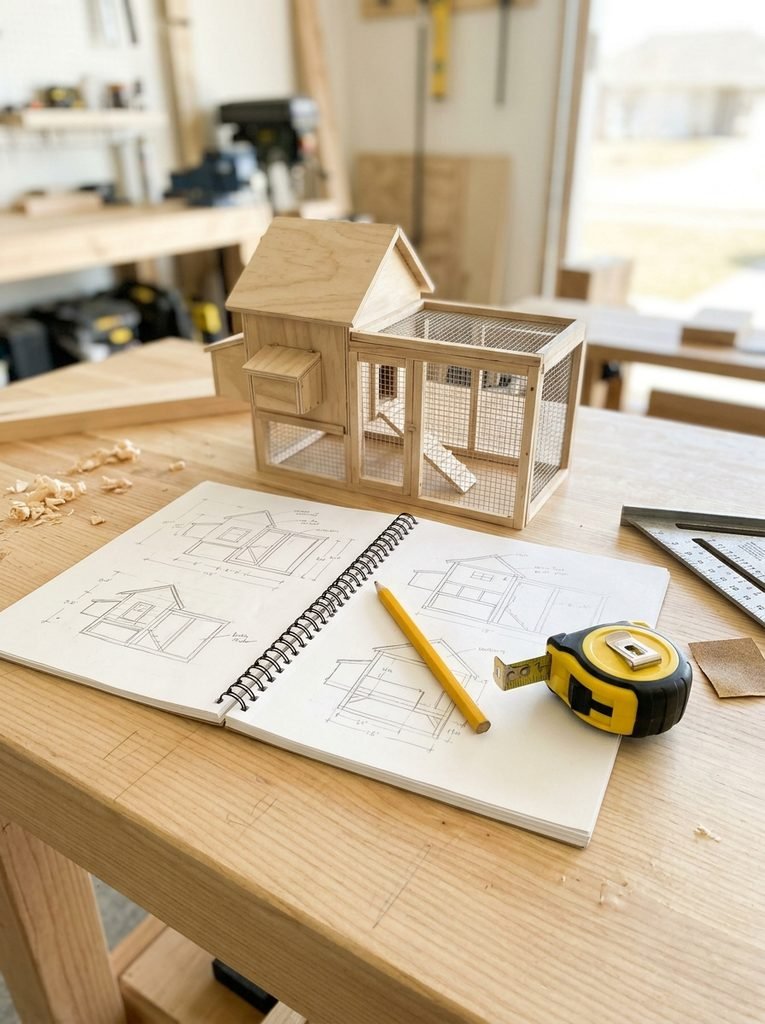
Free coop plans are everywhere, but not all of them are good. Some skip the details that make a coop safe.
Look for a clear cut list, a shopping list, drawings from several sides and real measurements. Check that the plan covers ventilation, predator proofing and flock size. If it doesn’t, keep looking.
You’ll need: tape measure, 25 foot
Best for: first time builders and planners
13. Walk In Coop From a Shed
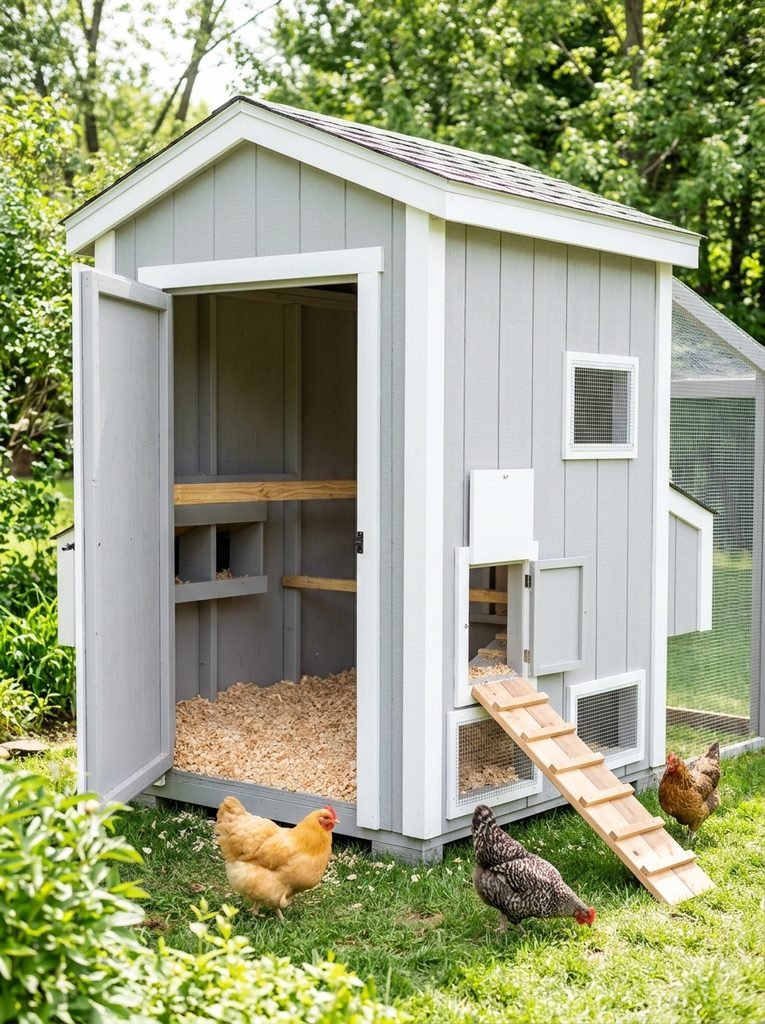
An old shed makes a ready made coop. The frame, roof and door are already there, so you only need vents, a pop door and roosts.
Cut vents high up under the roof, and cover them with hardware cloth. Check the floor for rot and seal any gaps. Make sure the shed hasn’t held chemicals, paint or fuel before the hens move in.
You’ll need: chicken pop door kit
Best for: anyone with a spare shed
14. Nest Boxes and Roosts Inside a Walk In Coop

Hens like quiet, dim, private spots for laying. A row of nest boxes along a side wall does the job.
Plan one box for every 4 or 5 hens, about 12 inches square, set lower than the roosts. Use a wide flat roost, about 10 to 12 inches of space per bird, and keep it away from the vents.
You’ll need: wooden nest box set
Best for: all flocks
15. Predator Proof Walk In Chicken Coop

Predators are the biggest risk to your flock. Raccoons can open simple latches, and foxes dig under fences.
Use hardware cloth, not chicken wire, because chicken wire only keeps chickens in. Bury it 12 inches deep or lay an apron 2 feet wide. Use two step latches, and close the coop up every night.
You’ll need: two step door latch and galvanized staples
Best for: every flock
Frequently Asked Questions
How big should a walk in chicken coop be?
Plan about 4 square feet per hen inside, and 10 square feet per hen in the run. A 6 by 8 foot coop suits about 12 hens.
How tall should the door be?
At least 6 feet, so an adult can walk in without ducking. Taller is better if you’re tall.
Do I need a permit for a walk in coop?
It depends on where you live. Many areas have rules for size and distance from the fence, so check with your local office first.
Is chicken wire safe for predators?
No. Chicken wire only keeps chickens in. Use half inch hardware cloth on every opening.
What floor is best for a walk in coop?
A solid or well packed floor with a deep layer of pine shavings. A concrete or gravel base stops digging and rodents.
Can I raise chicks in a walk in coop?
Yes, with a separate warm brooder section and a heating plate. Keep chicks apart from adult hens until they’re bigger.
Final Thoughts on Walk In Chicken Coop
A walk in coop makes every chore easier and keeps your flock safer. Start with the layout, spend on predator proofing and keep the rest simple. You’ll be glad you built it big enough to stand in.


Amir Ali is the founder and site administrator of HomeDecorEdge, a modern home decor and interior design platform. Since starting the site, he has combined his passion for interior design, practical styling, and color coordination with hands-on content strategy and site management. He guides authors, curates high-quality articles, and ensures readers have access to actionable, visually inspiring, and user-focused home decor advice for apartments, small rooms, and family homes.