

Be honest. How long did you spend looking for your seam ripper last time? For me it was twenty minutes, on a Sunday afternoon I had set aside just for sewing. I found it under a fabric pile, next to three spools of the same gray thread I did not know I owned.
That was the day I stopped blaming my sewing room for being small. The space was fine. The storage was the problem.
1Dedicated Sewing Storage Workstation
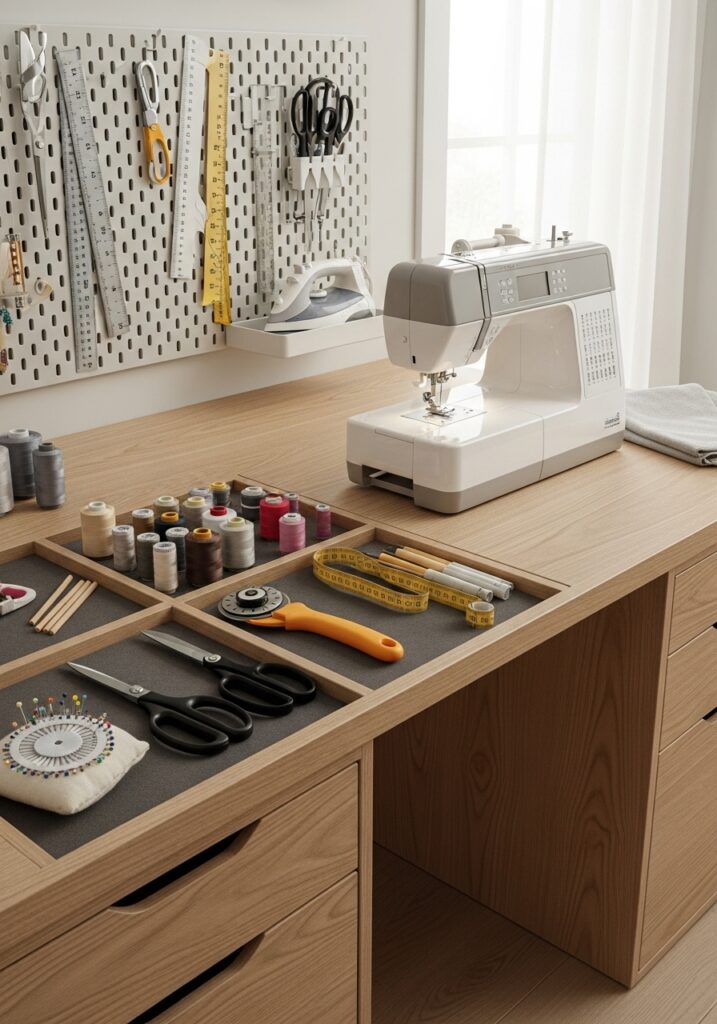
Everything else in your sewing room organizes itself around one spot, so make that spot count. A sewing machine table with storage drawers gives your machine a permanent home and keeps notions, thread and small tools right beside you.
In my experience, the biggest change is mental. When the machine is always set up, you sew for fifteen minutes on a busy evening instead of waiting for a free weekend that never comes. Keep only daily tools in the top drawer and you will feel the difference right away.
- Machine always ready
- Tools within arm’s reach
- Stops clutter spreading
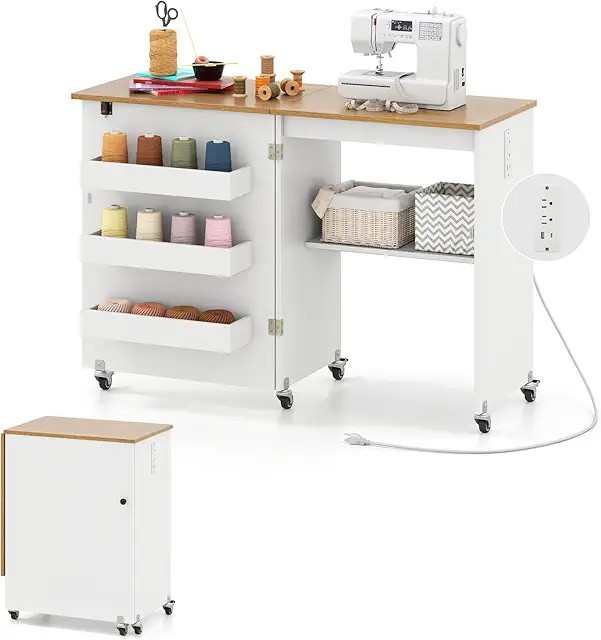
My Pick
Sewing Machine Table with Storage
Built in drawers keep notions and tools within reach, so this one table anchors your whole storage system.
2Small Sewing Room Storage Layout
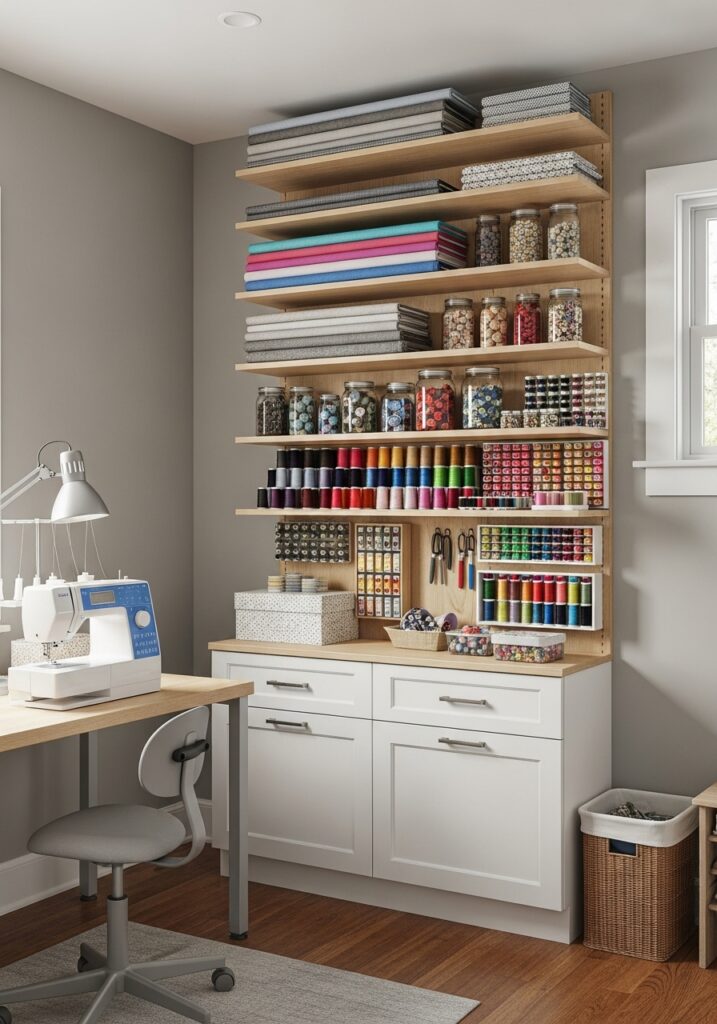
A small sewing room needs a plan before it needs furniture. Look up first. Wall cabinets, shelves above the machine and hooks on the back of the door free up the floor so you can actually move around.
I’d suggest keeping the walls light and the shelving open in a tiny room. Closed cabinets everywhere can make a small space feel boxed in, while a few open shelves keep it airy. Foldable or modular pieces help too, because you can reshape the room when a big quilt project lands.
- Floor stays clear
- Feels bigger
- Easy to reshape
3Fabric Storage by Type and Use
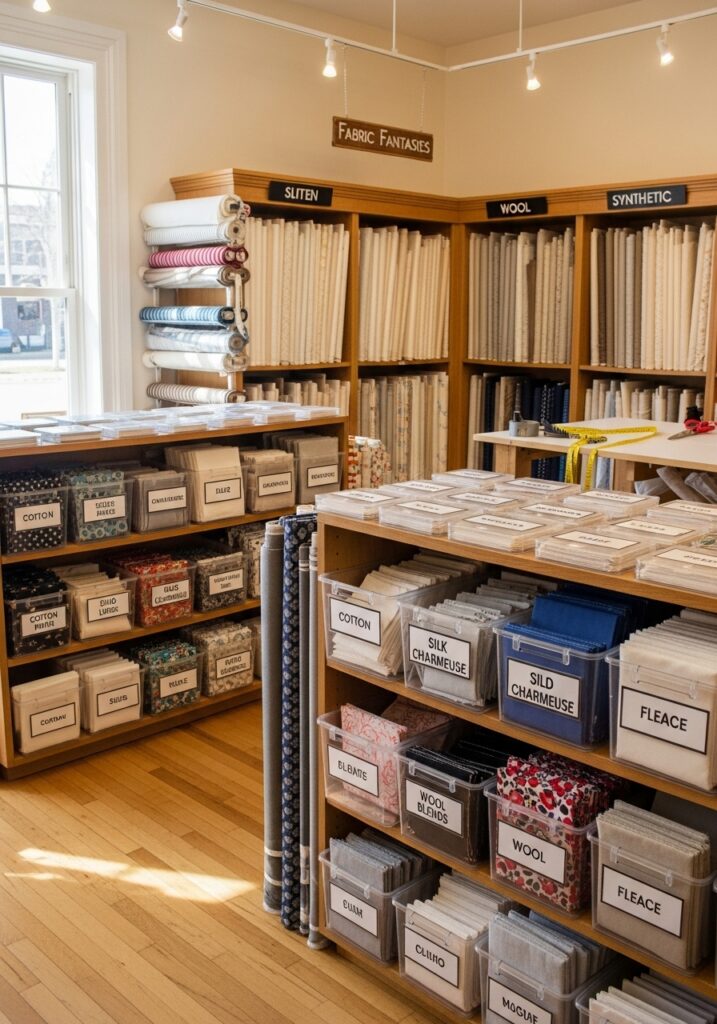
Fabric stored by type is easier to find and lasts longer. Cottons in one spot, linens in another, knits and specialty fabrics kept apart so nothing snags or stretches.
These fabric storage bins for shelves make the sorting simple, and honestly, a shelf of color sorted bins is one of the prettiest things in a sewing room. A tip I picked up: fold each piece to the same width as the bin, so every stack stands neat and you can read the edges like book spines.
- Protects delicate fabric
- Faster project planning
- Looks beautiful on shelves

My Pick
Fabric Storage Bins for Shelves
Sort fabric by color or type and turn plain open shelving into a neat, protected fabric display.
4Thread Storage Display System

Thread gets lost in drawers. It tangles, the ends unwind and you end up buying the same navy twice. A wall mount thread storage rack fixes all of that at once.
Every color sits in front of you, sorted like a paint chart, so matching thread to fabric takes seconds. I like hanging the rack right above the machine. It doubles as wall decor, and that drawer you used to stuff with spools is suddenly free for something else.
- No more tangles
- No duplicate buys
- Doubles as wall art

My Pick
Wall Mount Thread Storage Rack
Every spool visible and sorted by color, and your drawers are finally free for other things.
Start Your 30-Day Home Reset
Stop waiting for a "perfect" free weekend. Grab the 30-day plan and start feeling lighter in your own home by tomorrow.
View the 30-Day Plan Printable PDF · Instant download5Cutting Table with Integrated Storage
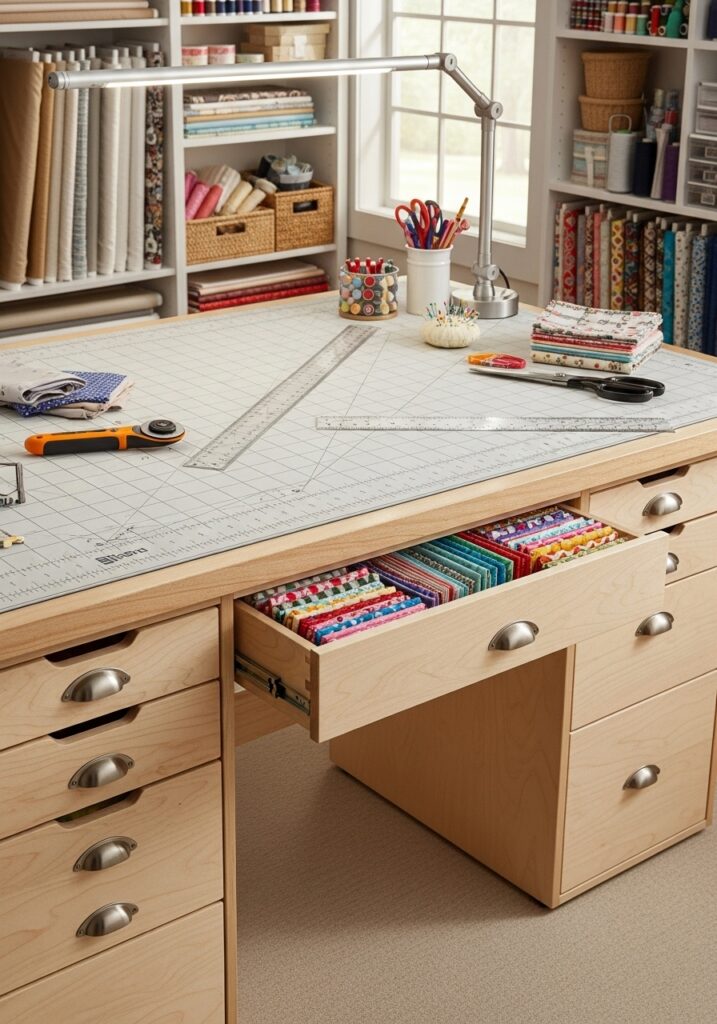
Cutting on the dining table or the floor is hard on your back and your accuracy. A proper cutting table at waist height, with drawers or shelves underneath for rulers and rotary cutters, keeps the whole cutting job in one place.
Top it with a large self healing cutting mat and you protect the surface while getting a printed grid for quick, straight cuts. In my experience, the mat is the piece people wish they had bought first. It saves so many measuring steps.
- Easier on your back
- Straighter cuts
- Rulers stored below

My Pick
Large Self Healing Cutting Mat
Protects your table and the printed grid means fewer measuring steps before every cut.
6Modular Sewing Storage Systems

Your sewing collection will grow. Modular storage grows with it. Cube units, adjustable shelves and stackable drawers can be rearranged or added to without starting over.
I like modular pieces for anyone who is not sure yet how they sew best. Start with a basic cube unit, live with it for a month and then add drawers or inserts where you keep reaching. It is a much cheaper way to learn what your room actually needs.
- Grows with you
- Rearrange anytime
- Budget friendly start
You’ll need: a cube storage organizer with a few fabric bins.
7Clear Storage Containers for Supplies

If you cannot see it, you forget you own it. Clear containers solve that. Interfacing, elastic, batting scraps, zippers, everything is visible without opening a lid.
These clear stackable storage bins keep dust off and stack neatly on any shelf. Honestly, they have saved me real money, because I stopped buying supplies I already had hiding in some opaque box.
- See everything at once
- Dust free
- Stops overbuying

My Pick
Clear Stackable Storage Bins
See every supply at a glance without opening a single lid, and stack them to save shelf space.
8Fabric Drawer Storage System
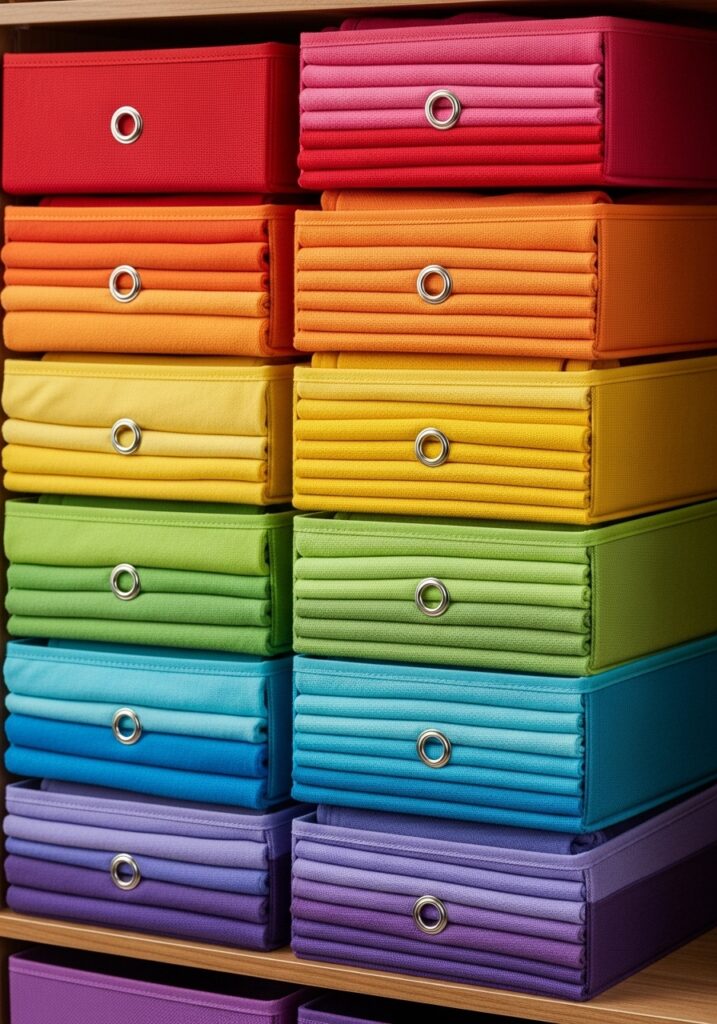
Drawers are kind to fabric. They block light that fades colors and dust that dulls them. Pull out drawers also let you see a whole stack without unfolding a thing.
This works especially well once your stash outgrows a few bins. Give each drawer one job, like solids, prints or project bundles, and the system stays tidy because there is never a question about where something goes.
- Blocks fading light
- No unfolding to search
- Handles big stashes
You’ll need: a drawer storage tower or a dresser you already own.
9Pegboard Sewing Tool Storage

A pegboard turns a bare wall into a tool wall. Scissors, rulers, measuring tapes and spools all hang in sight, and the work surface stays clear.
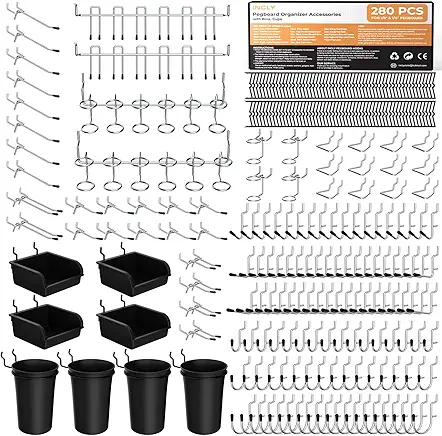
A pegboard organizer kit with hooks comes with everything you need, so setup really is one afternoon. I’d suggest hanging your most used tools at eye level and the rest higher up. You will grab and return things without thinking, which is the whole point.
- Frees the table
- Everything visible
- Rearrange in seconds
My Pick
Pegboard Organizer Kit with Hooks
Board, hooks, baskets and hardware in one box, so a bare wall becomes tool storage in a weekend.
10Zoned Sewing Storage Layout
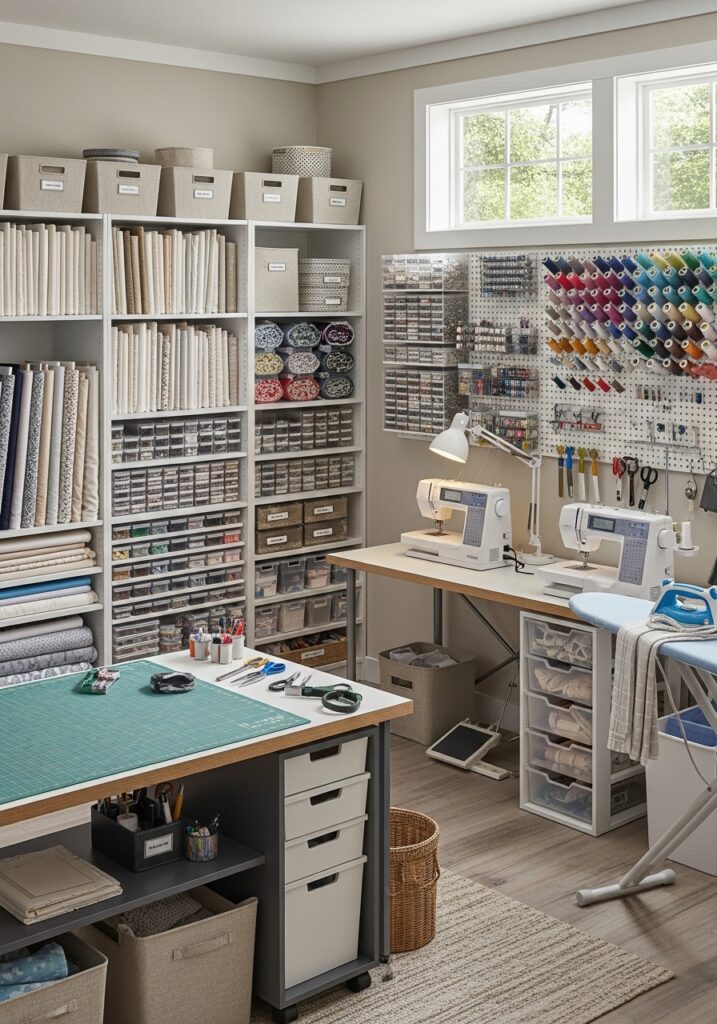
Zoning means giving each task its own corner. Cutting in one zone, sewing in another, pressing in a third, with storage in each for the tools that job needs.
It sounds fussy, but it saves so much walking. Rotary cutters live by the cutting table, pins live by the machine, the iron lives at the pressing spot. In my experience, a zoned room stays tidy longer because every tool has an obvious home.
- Less walking around
- Tools where you use them
- Smoother workflow
11Rolling Storage Carts

Fixed shelves cannot follow you around the room. A cart can. A rolling craft storage cart holds the supplies for the project you are working on right now and rolls from the cutting table to the machine to the iron.
Here is how I’d load it. Top tier for pins, clips and scissors, middle for the current project pieces, bottom for thread and bobbins. When you are done, roll it into a corner and the room looks finished.
- Goes where you go
- Fits tight spaces
- Rolls away after

My Pick
Rolling Craft Storage Cart
Rolls between your cutting, sewing and pressing spots and tucks away when the project is done.
12Fully Labeled Storage System
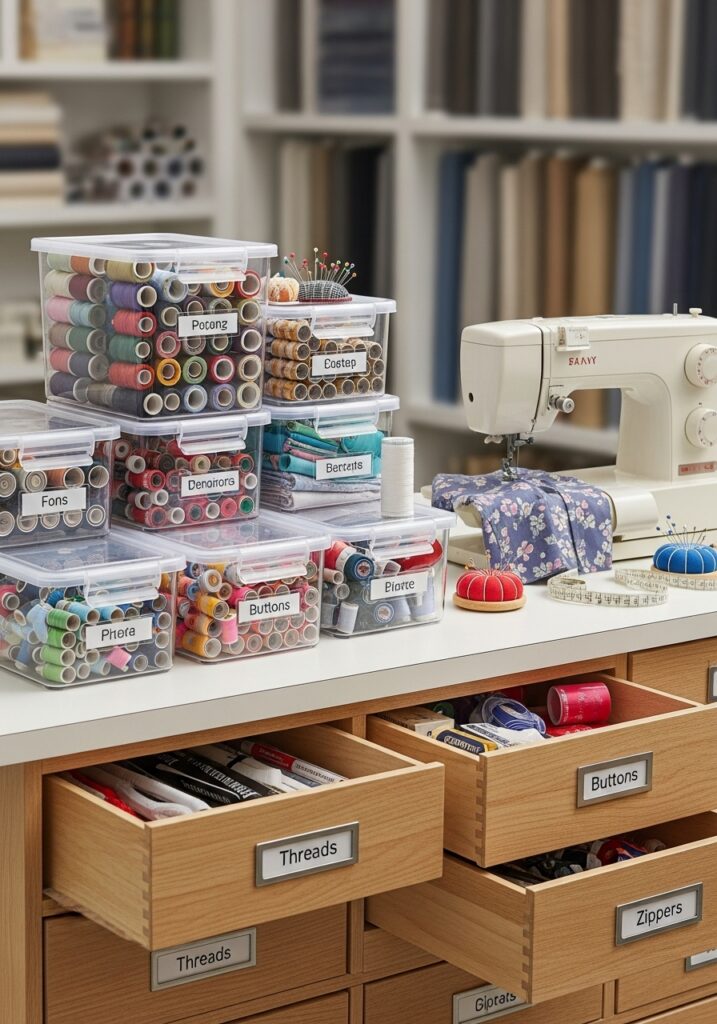
Labels feel like a small thing until you have them. Then you wonder how you ever managed without. Every bin, drawer and box says exactly what is inside.
This matters most when someone else uses your space, or when you come back after weeks away. A tip I picked up: label the front and the side of each bin, so you can read it no matter how it ends up on the shelf.
- No guessing
- Easy for everyone
- Keeps the system going
You’ll need: a label maker or printable labels.
13Open Fabric Shelving Storage

Open shelves keep your fabric on display, and seeing it is half the inspiration. Stacked by color, a shelf of fabric looks like a rainbow and makes you want to start something new.
Keep the shelves out of direct sunlight so colors do not fade. If dust is a worry, use fabric bins on the lower shelves and keep only your favorites open up top.
- Sparks ideas
- Fast restocking
- Pretty color display
14Sewing Pattern Storage System
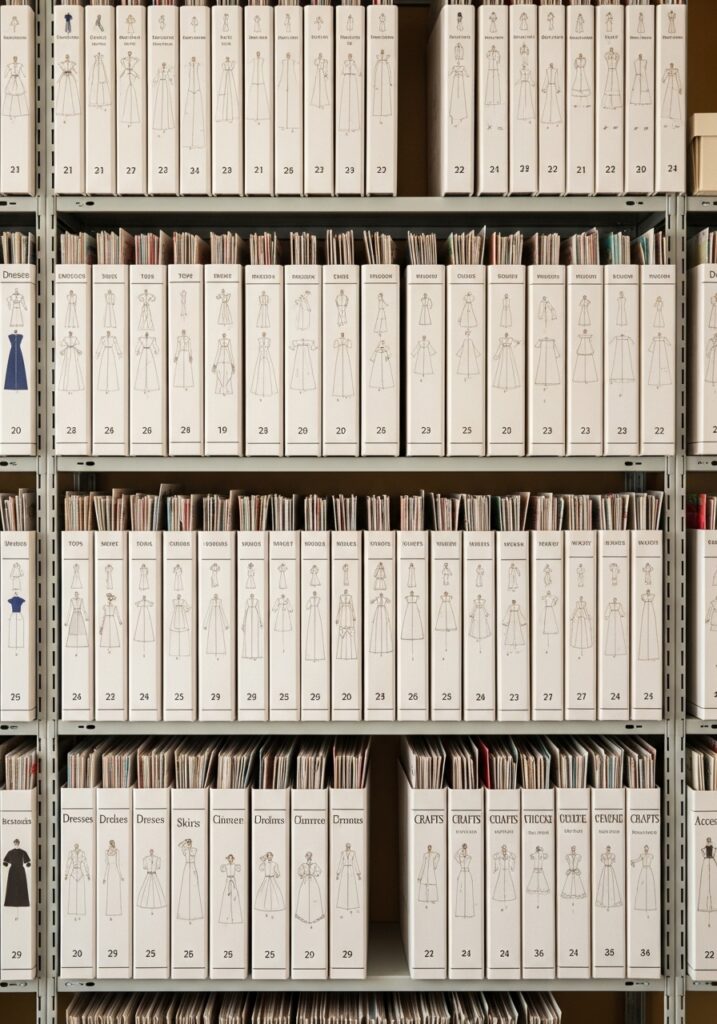
Folded patterns crease, tear and lose accuracy. Storing them flat or in hanging folders keeps every line clean for the next time you cut.
I like sorting patterns by garment type, so all the tops sit together and all the bags sit together. Slip the envelope into a clear sleeve on the front of each folder and you can flip through your whole collection in a minute.
- Patterns stay accurate
- Quick to browse
- Lasts much longer
You’ll need: hanging file folders and a file box.
15DIY Sewing Room Storage Projects
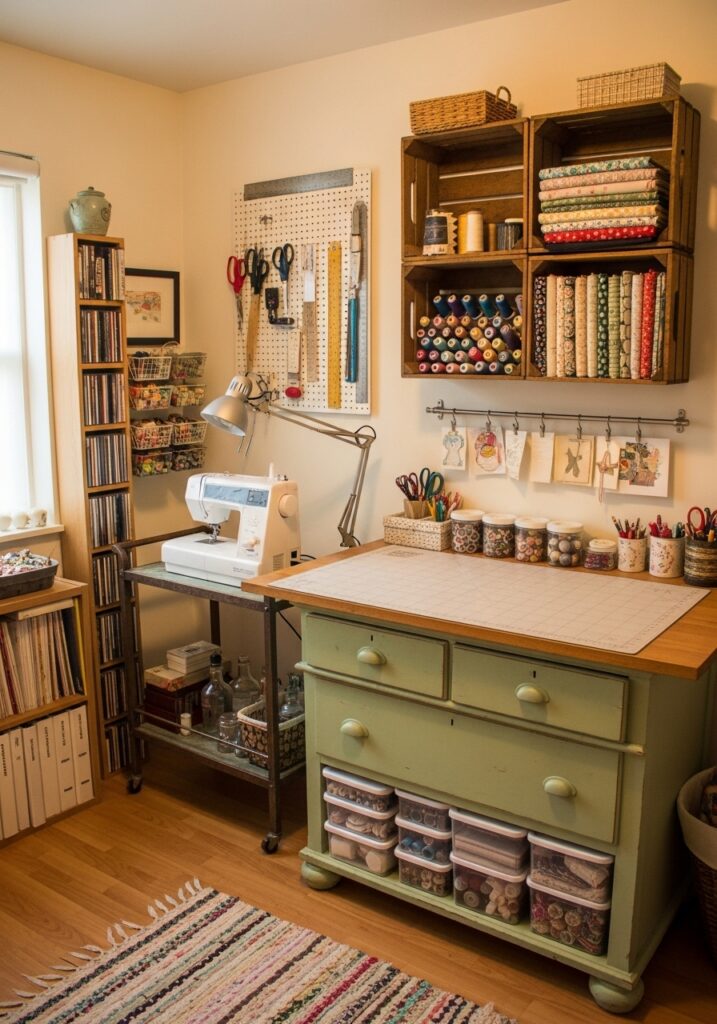
Some of the best sewing storage is homemade. An old dresser becomes a fabric cabinet, a spice rack becomes a thread holder, a bookshelf turned sideways becomes a bench with bins underneath.
Here is one easy project I love: a repurposed shelf turned into a fabric bin wall. It costs very little, fits your exact space and honestly feels more personal than anything off the shelf.
- Fits your exact space
- Low cost
- Feels personal
Project Card · 2 hours · Easy
Materials Needed
- An old bookshelf or set of shelves
- Sandpaper and a damp cloth
- Paint in a soft color
- Fabric bins or baskets to fit the shelves
- Paintbrush or small roller
How to Make It
- Wipe the shelf down and lightly sand any glossy areas so paint can grip.
- Paint it in a soft color that suits your room and let it dry fully.
- Measure each shelf opening and choose bins that fit with a little room to spare.
- Sort your fabric or supplies into the bins by type or color.
- Label the front of each bin and slide them into place.
PRO TIP Paint the back panel of the shelf a different color. It makes plain bins pop and turns a secondhand piece into a feature.
16Wall Mounted Storage Cabinets
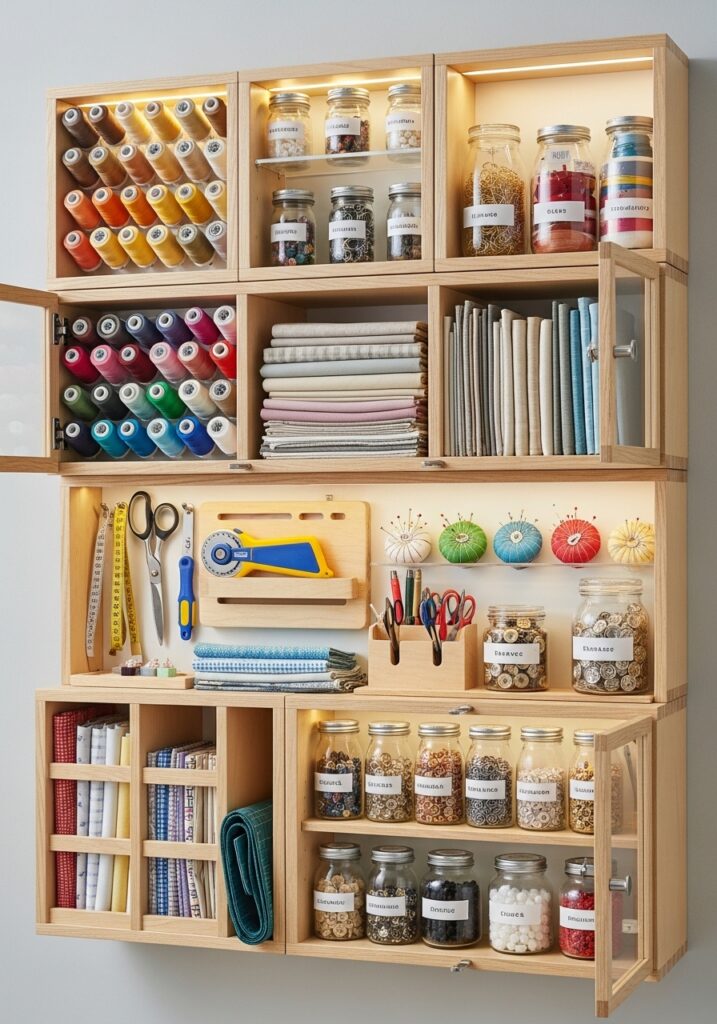
Wall cabinets give you serious storage without touching the floor. Fabric, tools and supplies sit behind doors, out of the dust, and the room underneath stays open.
They work brilliantly in narrow rooms. I’d suggest cabinets with adjustable shelves inside, because what you store this year will not be what you store next year.
- Floor stays open
- Dust stays out
- Great for narrow rooms
17Vertical Fabric Storage System

Stacking fabric flat means the bottom pieces get crushed and forgotten. Storing it upright, like files in a drawer, lets you see every piece and pull one out without the pile collapsing.
Fold each piece around a comic book board or a square of cardboard and stand them side by side. It looks like a little fabric library, and in my experience, it keeps wrinkles away far better than stacking.
- No crushed fabric
- See every piece
- Fewer wrinkles
18Drawer Dividers for Sewing Tools
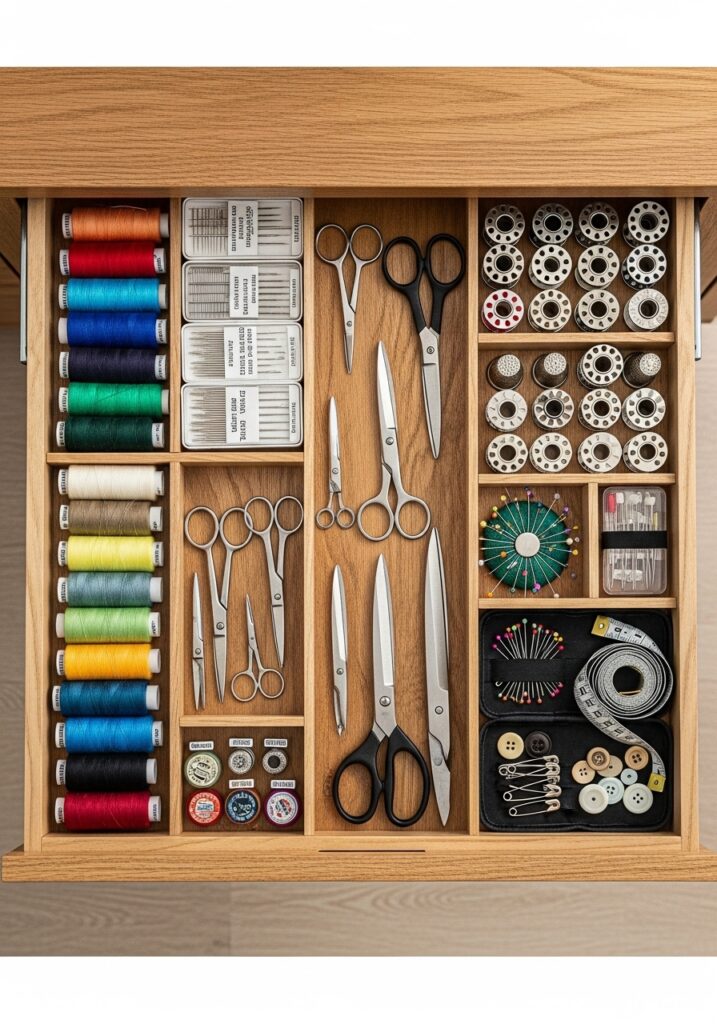
A drawer without dividers turns into a junk drawer within a week. Bobbins roll, pins scatter and the tape measure tangles around everything.
A drawer organizer for sewing notions gives zippers, elastic, buttons and bobbins their own small slots. It is one of the cheapest upgrades in this whole list, and it makes the biggest daily difference.
- No junk drawer
- Find notions fast
- Cheap and quick

My Pick
Drawer Organizer for Sewing Notions
Zippers, elastic and buttons each get their own slot, so finding one takes seconds.
19Floating Desk Sewing Storage Setup

A wall mounted floating desk gives you a sewing surface without legs taking up floor space. The area underneath stays free for a rolling cart or baskets.
This is my favorite setup for apartments. Make sure the desk is mounted into studs with sturdy brackets, because a sewing machine vibrates more than a laptop does.
- Saves floor space
- Clean modern look
- Perfect for apartments
20Built In Sewing Room Storage Cabinets

Built in cabinets are the dream setup for a dedicated sewing room. They use every inch from floor to ceiling, keep everything dust free and make the room look like a real studio.
They are a bigger investment, so plan carefully. I’d suggest sketching what you own today and adding a third more space for growth, because your stash will grow.
- Uses every inch
- Studio look
- Holds big collections
21Overhead Sewing Storage Cabinets
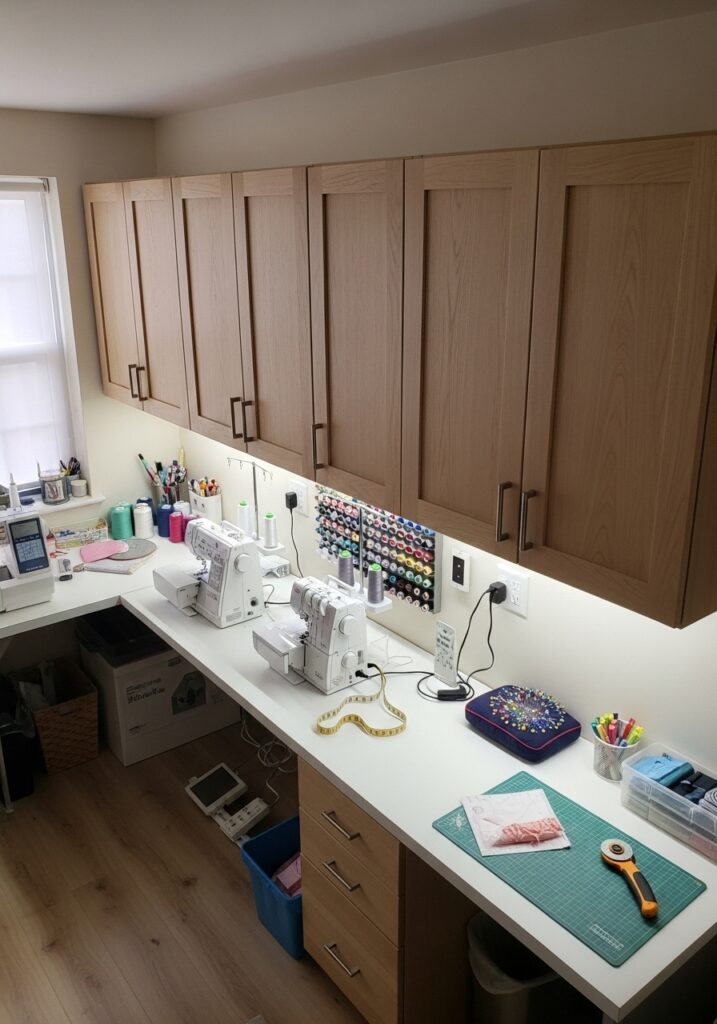
The space above head height is almost always wasted. Overhead cabinets put it to work for things you rarely need, like holiday fabric, spare batting or finished projects waiting for a gift.
Keep a small step stool nearby and store the lightest items up top. Your everyday tools stay low and easy to reach.
- Uses wasted space
- Great for rarely used items
- Keeps lower shelves free
22Open Shelf Fabric Bin Storage
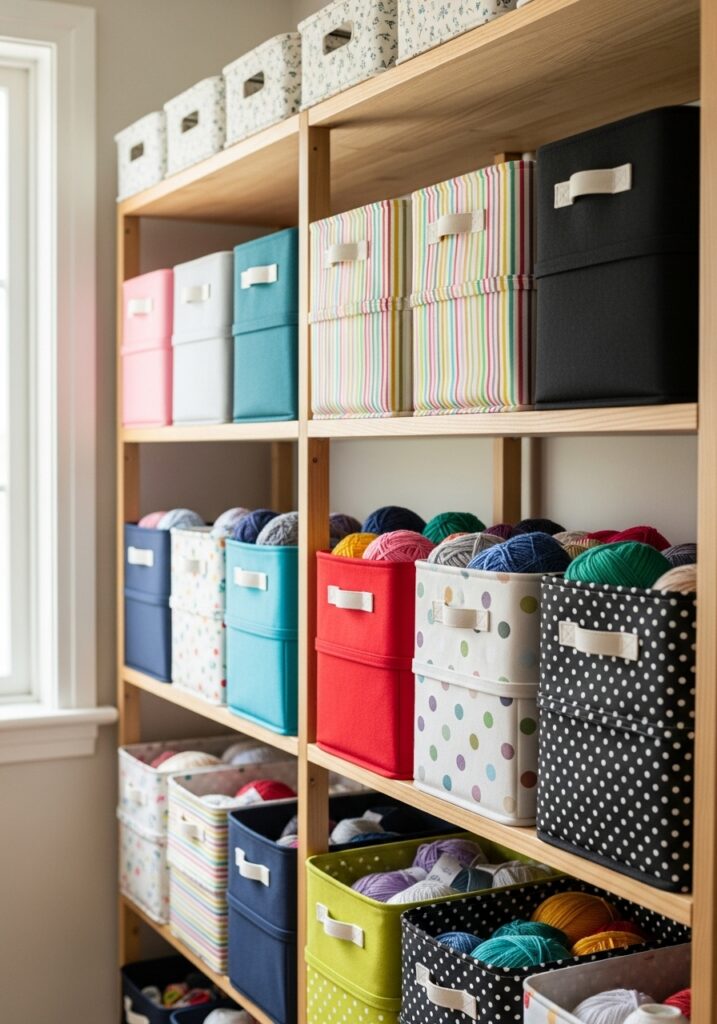
Open shelves with bins give you the best of both worlds. Fabric stays protected inside the bins, but the shelves keep everything easy to reach.
Pick neutral fabric storage bins if your fabric is colorful, so the room does not feel busy. Honestly, a calm shelf makes the fabric inside feel more inspiring, not less.
- Protected but reachable
- Calm look
- Easy to expand
23Advanced Pegboard Storage Accessories

Once your pegboard is up, accessories take it further. Small shelves for thread, cups for marking pens, dowel holders for ribbon and baskets for bigger tools.
If you are starting from scratch, a pegboard kit with hooks and baskets covers the basics. Then add accessories as you notice gaps. Your pegboard should change as your sewing changes.
- Fully customizable
- Holds odd shaped tools
- Grows over time
24Sewing Room Lighting Storage Integration

Good light is not optional in a sewing room. Dark thread on dark fabric is nearly impossible to see in dim light, and tired eyes make mistakes.
An adjustable LED desk lamp aims bright light exactly where you are stitching. I also like strip lights under shelves or cabinets, so you can actually see what is inside the bins when you go looking.
- Less eye strain
- True color matching
- Brighter storage areas

My Pick
Adjustable LED Desk Lamp
Bright, focused light right on your stitching, which makes color matching easy at any hour.
25Ergonomic Sewing Chair and Seating Storage
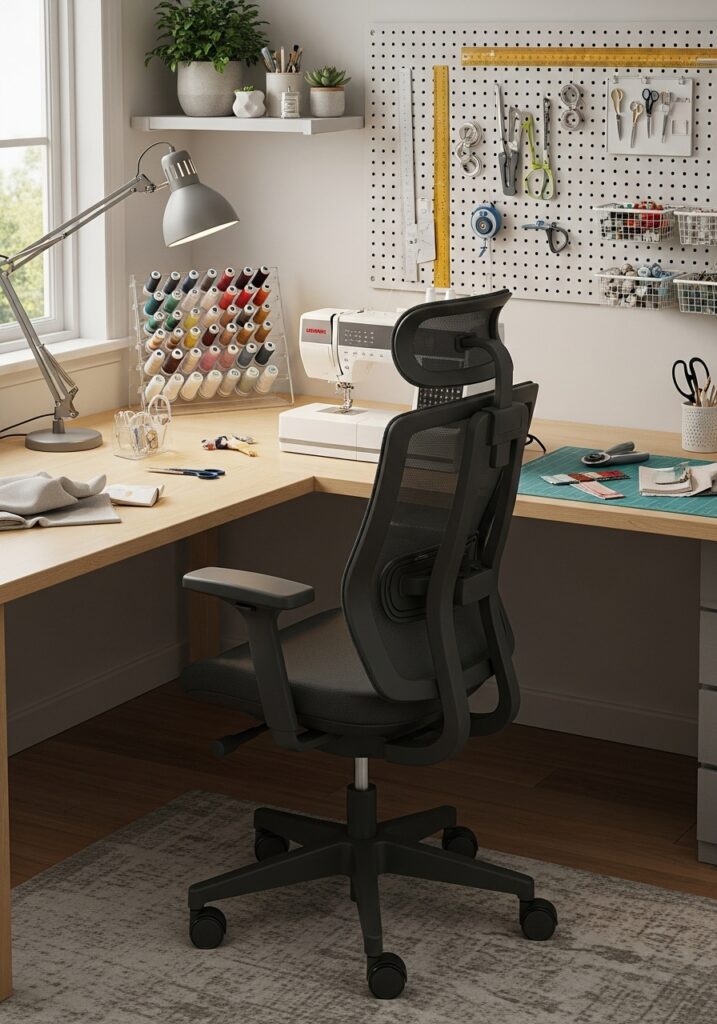
You can have the most organized sewing room in the world, but if your back hurts after an hour you will not sew much. Your chair matters more than people think.
An ergonomic adjustable sewing chair lets you set the height so your arms rest naturally at the machine. Pair it with a small basket beside the chair for whatever you reach for most, and long sessions feel so much easier.
- Less back pain
- Longer sessions
- Adjusts to your table

My Pick
Ergonomic Adjustable Sewing Chair
Proper back support and adjustable height, the comfort upgrade you feel after the very first long session.
26Sewing Room Island Storage Table

If your room is big enough, a center island changes everything. You get a huge surface for cutting and folding, and drawers or shelves underneath for tools and fabric.
Being able to walk all the way around the table is the real luxury here. Large quilts and long yardage lay flat, and nothing hangs off an edge.
- Huge work surface
- Storage on every side
- Great for quilters
27Clear Jar Storage for Sewing Notions
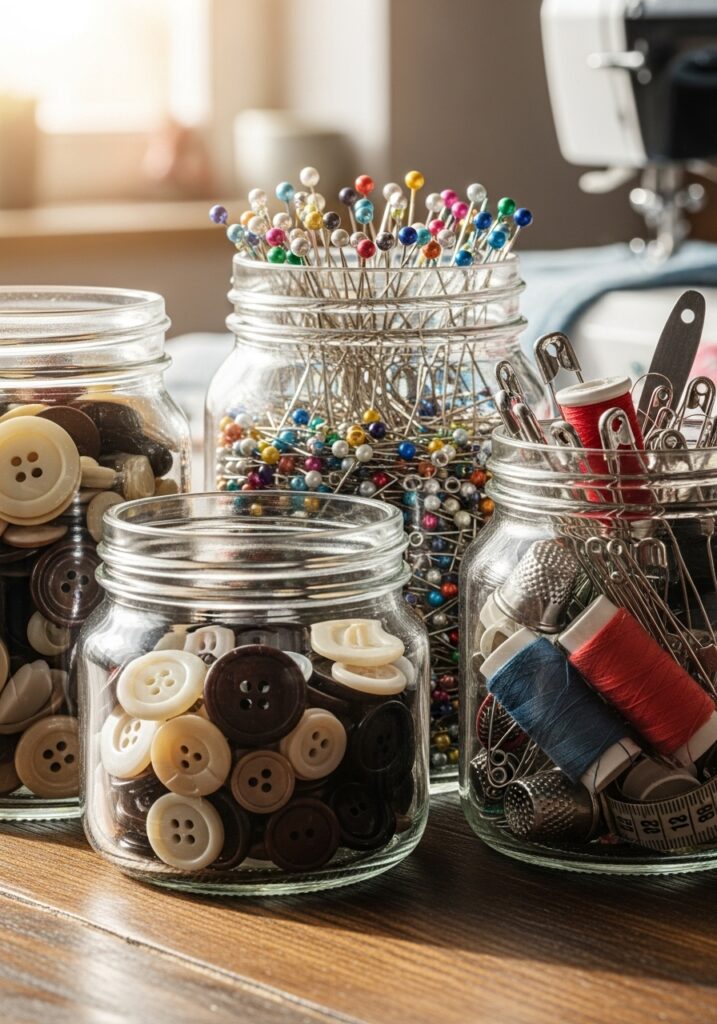
Buttons, safety pins, clips and snaps look lovely in clear jars. They stay visible, they stop rolling off the table and the shelf looks charming instead of messy.
I’d suggest matching jars in two or three sizes, so the shelf looks tidy even when the contents are wildly different colors. Label the lids if you have similar looking jars.
- Pretty on display
- Small items stay put
- Budget friendly
You’ll need: clear jars with lids in two or three sizes.
28Closet to Sewing Room Storage Conversion
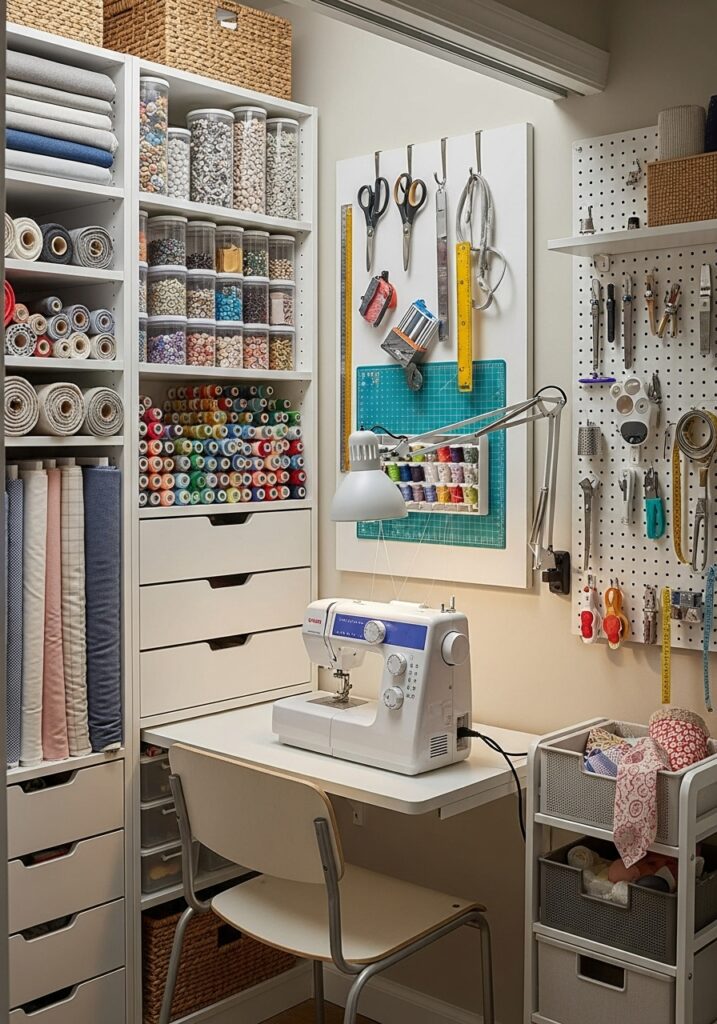
No spare room? Look at your closets. A standard reach in closet can become a full sewing nook with a desk, shelves and lighting, and the doors hide everything when you are done.
This is one of my favorite small space projects. It takes a weekend and some careful measuring, but the result feels like having a secret studio.
- Uses wasted space
- Doors hide the mess
- Feels like a studio
Project Card · 1 weekend · Medium
Materials Needed
- A clean, empty closet
- A desk top board cut to the closet width
- Two strong shelf brackets or a pair of cabinet bases
- Wall shelves and brackets
- LED strip light or puck lights
- Drill, level, screws and anchors
How to Make It
- Empty the closet, remove the hanging rod and patch any holes.
- Mount the desk top at about 29 inches high on brackets or cabinet bases.
- Add two or three shelves above the desk for thread, bins and patterns.
- Install the LED lights under the top shelf so the work area is bright.
- Move in your machine and a rolling cart, and keep the doors for hiding it all.
PRO TIP Measure your sewing machine with the light on and the arm extended before cutting the desk. Closets are shallower than you expect.
29Fold Down Sewing Table with Storage
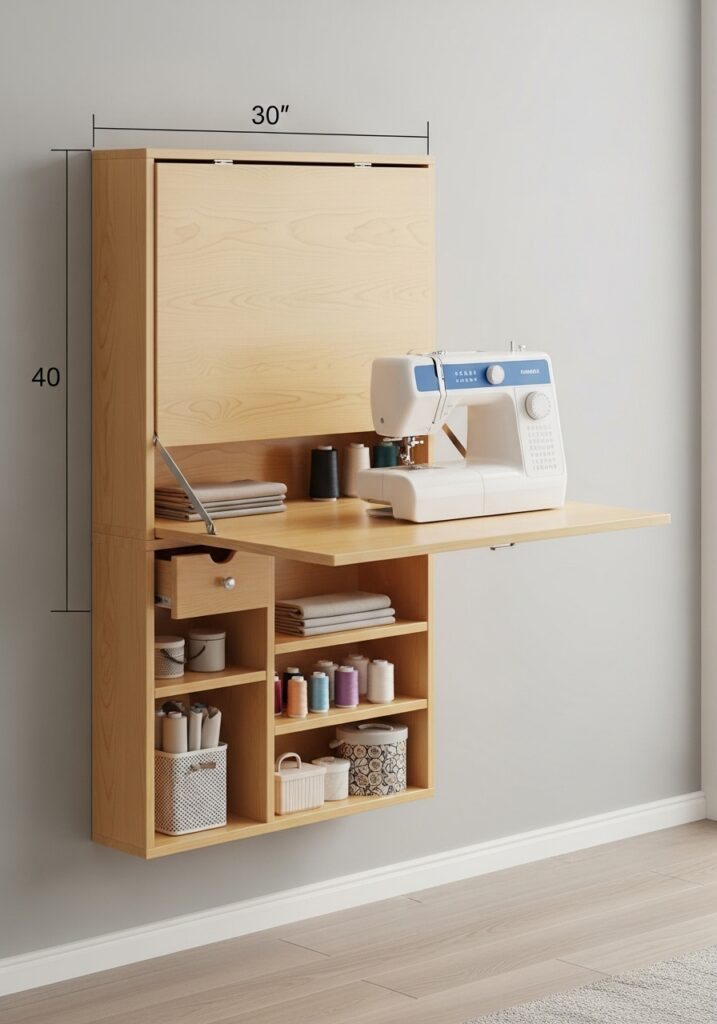
A fold down table mounts to the wall and drops down only when you need it. Shelves around it hold tools, and when you are done, the table folds flat and the room becomes a room again.
It suits occasional sewists and anyone sharing space. Just pick one sturdy enough for your machine and check that the hinges lock firmly.
- Folds out of sight
- Shares space easily
- Great for renters
You’ll need: a wall mounted fold down table rated for your machine’s weight.
30Labelled Fabric Drawer Storage System

Take drawers one step further with labels on every front. Solids, florals, flannel, scraps, each drawer says what it holds, and putting fabric away becomes automatic.
This is the system that keeps big stashes under control. In my experience, you will sew more from your stash once you can actually see what is in it.
- Automatic putting away
- Sew more from your stash
- Dust protected
31Dedicated Pressing Station Storage
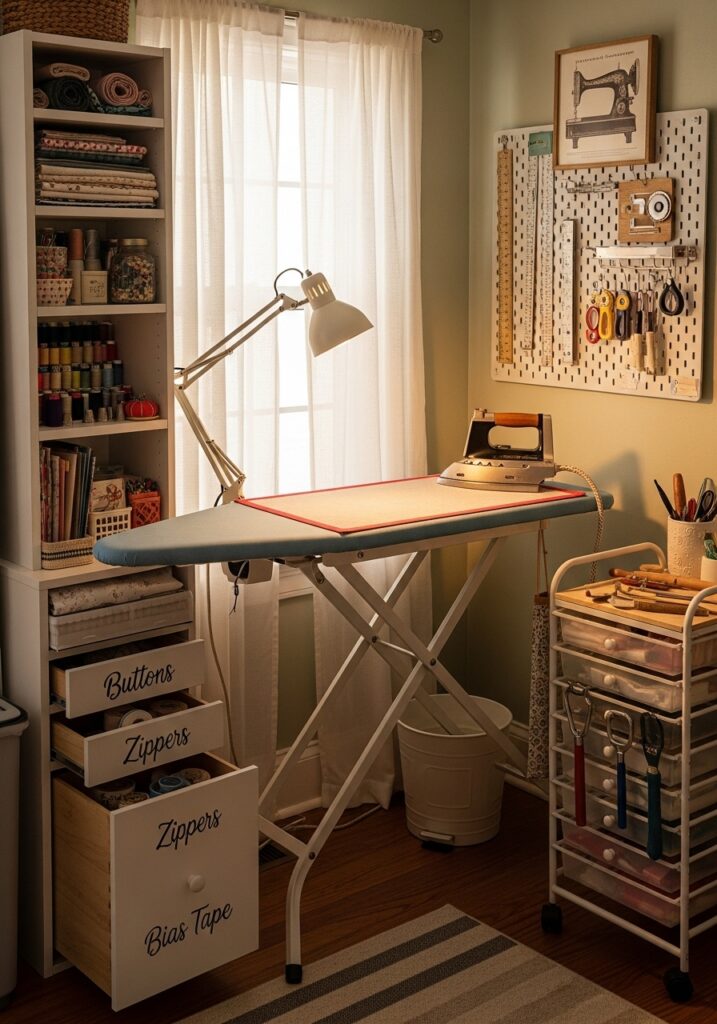
Pressing is half of good sewing, but the iron often ends up wherever there is space. A dedicated pressing station keeps the iron, pressing cloths and starch together and stops heat near your fabric piles.
A tabletop ironing board right beside the machine saves so many steps. Hang your iron on a heat safe wall holder when it is cooling down, and the station stays safe and tidy.
- Fewer steps
- Safer heat zone
- Better finished seams
You’ll need: a tabletop ironing board and a wall mounted iron holder.
32Sewing Pattern Filing Cabinet Storage
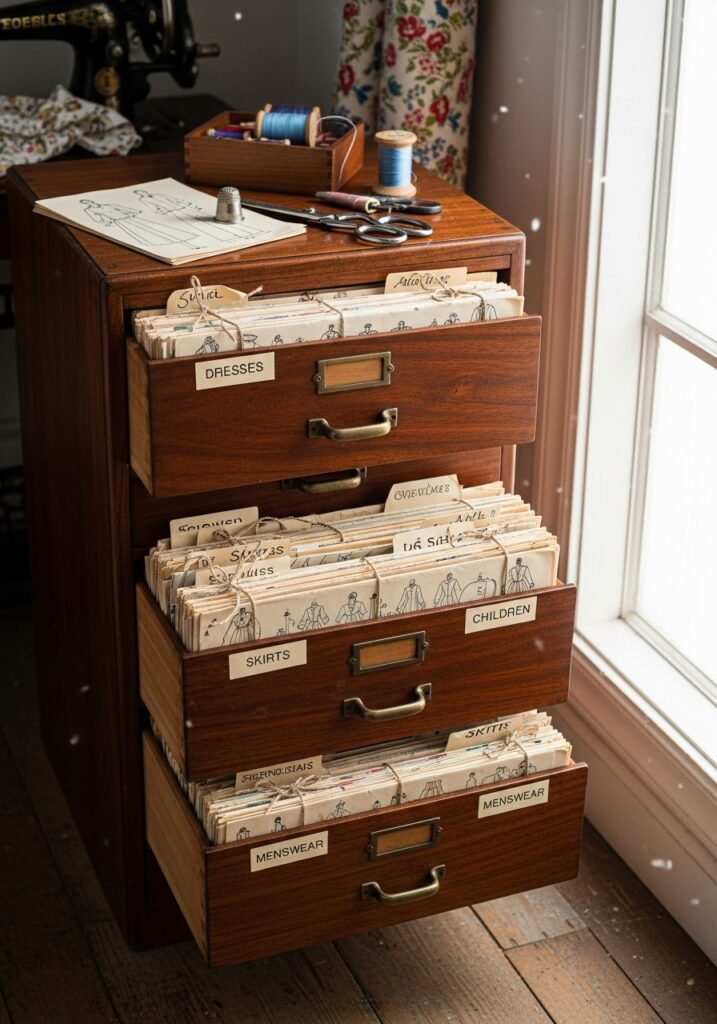
If your pattern collection is big, a filing cabinet keeps it flat, dust free and sorted. Hanging folders hold the tissue pieces, and the drawers lock away the clutter.
Sort by garment type or by size, whichever way you search most. I’d suggest writing the pattern number on the folder tab so you can find it in seconds.
- Patterns stay flat
- Quick to find
- Dust free
33Sewing Room Cable and Cord Storage
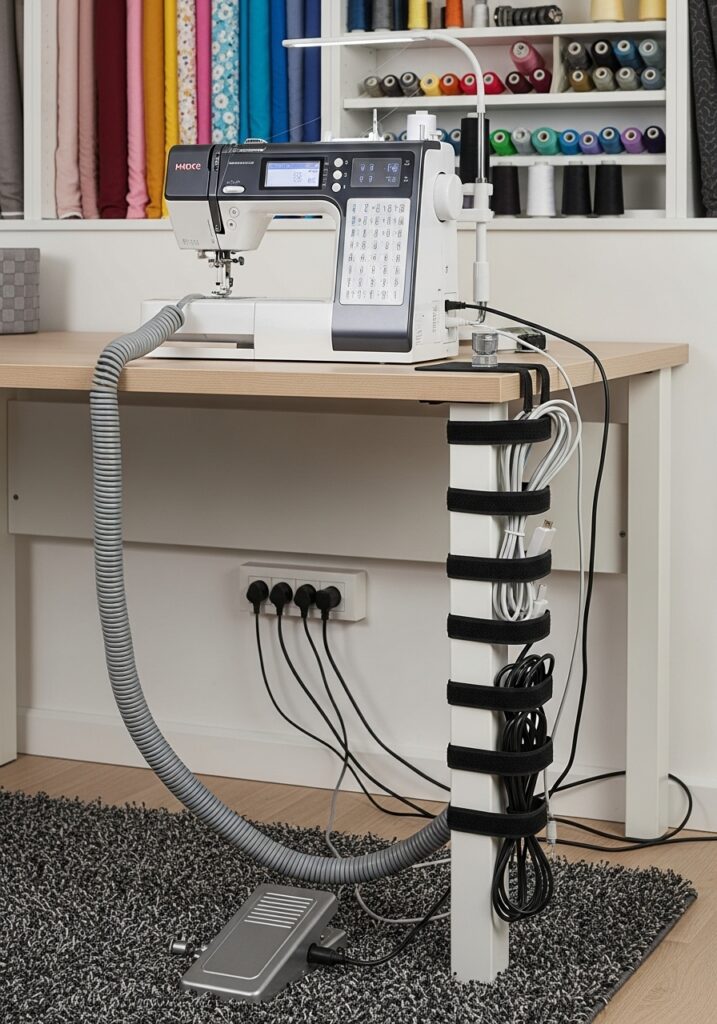
Sewing machines, lamps, irons and serger cords add up quickly. Loose cables look messy and are easy to trip over, especially with an iron plugged in nearby.
A few cable clips along the back of the table and a cable box for the power strip make the room look calm in about ten minutes. It is a boring job, but it is worth doing.
- Safer floor
- Cleaner look
- Ten minute fix
You’ll need: adhesive cable clips and a cable management box.
34Rolling Drawer Storage Units

Rolling drawer units are like a portable chest of drawers. They slide under the table, roll out when you need them and keep small tools sorted.
Use one drawer per category, such as marking tools, hand sewing, machine feet and bobbins. Pull the whole unit beside you while you work, then push it back under.
- Fits under tables
- Portable
- Sorted by category
You’ll need: a rolling drawer cart with shallow drawers.
35Sewing Room Inspiration Board Storage
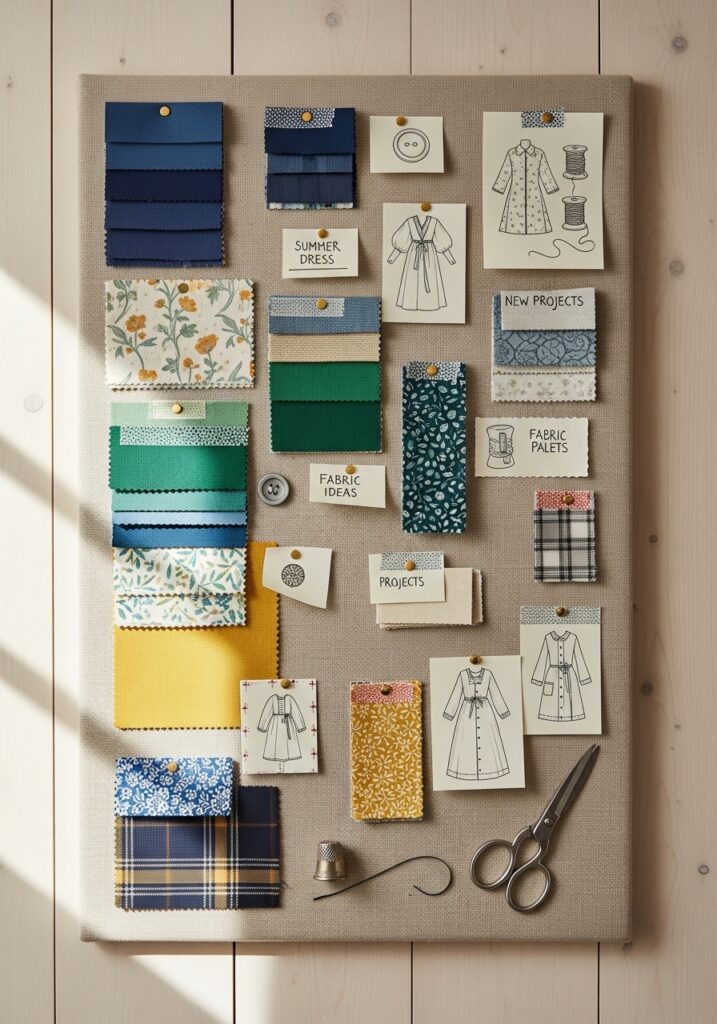
An inspiration board holds swatches, sketches, magazine clippings and notes for your next projects. It is storage for ideas, and it keeps them visible instead of lost in a notebook.
I like keeping one right above the cutting table. When a fabric and a pattern finally click together, pin them side by side and you will not forget the combination.
- Ideas stay visible
- Adds personality
- Helps project planning
36Floating Shelves for Sewing Supplies

Floating shelves are light, simple and easy to put almost anywhere. Use them for thread, jars, books and finished projects you are proud of.
Keep them shallow in small rooms so they do not feel heavy. And do not fill every inch. A few empty spaces make the shelf look styled instead of crowded.
- Light and airy
- Easy to install
- Storage plus decor
37Neutral Tone Sewing Storage System

Fabric is colorful. Storage does not need to be. White, cream and soft wood storage lets your fabric be the star and keeps the room calm.
In my experience, a neutral room is easier to work in for long hours. Your eyes rest, colors read truer and the space never feels chaotic even when a project is spread everywhere.
- Calm workspace
- Fabric colors stand out
- Timeless look
38Upholstered Pin Board Storage
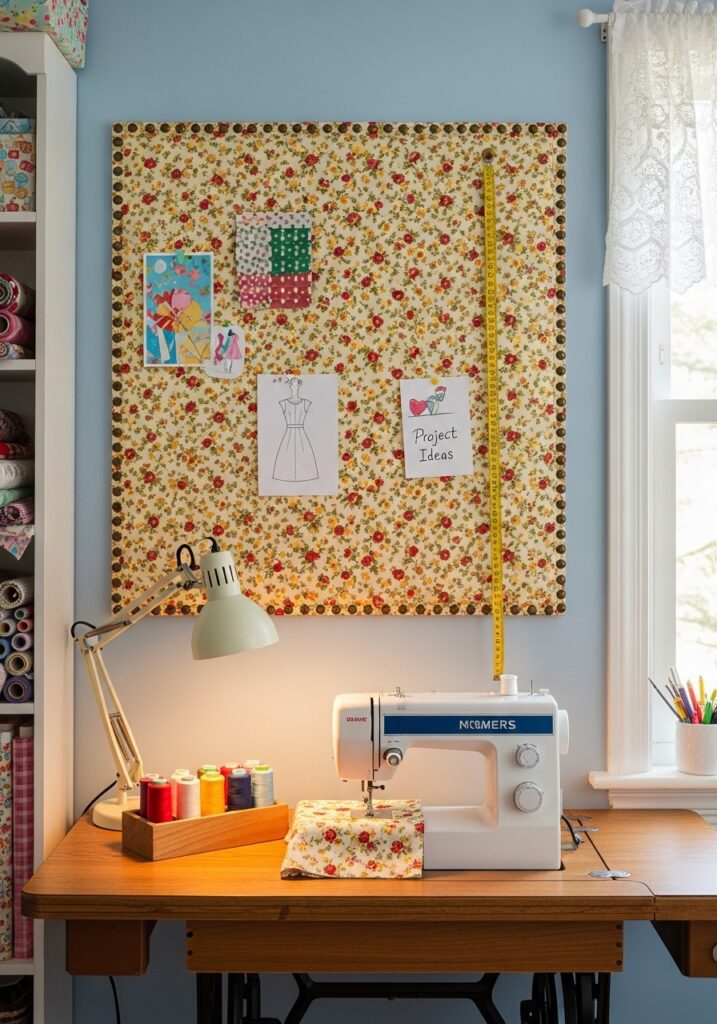
An upholstered pin board is a soft, pretty spot for patterns, notes and swatches. Pins go in easily, papers do not tear and it looks like decor rather than an office board.
Best of all, it is a perfect beginner project. Cover it in a fabric you love and it becomes the most personal thing in your sewing room.
- Soft on papers
- Looks like decor
- Beginner friendly
Project Card · 1 hour · Easy
Materials Needed
- A large cork board or foam board
- Thin batting cut slightly larger than the board
- Fabric cut 3 inches larger on every side
- Staple gun and staples
- Ribbon and upholstery tacks (optional)
- Picture hanging hooks
How to Make It
- Lay the batting on the board and trim it flush with the edges.
- Place the fabric face down, set the board on top and wrap the edges around the back.
- Staple the middle of each side first, then work out to the corners, pulling the fabric snug.
- Fold the corners neatly like wrapping a gift and staple them flat.
- Add a criss cross of ribbon held with tacks if you like, then hang it above your table.
PRO TIP Iron the fabric before you start. Every crease shows once it is stretched over the board.
39Sewing Room Mirror Integration
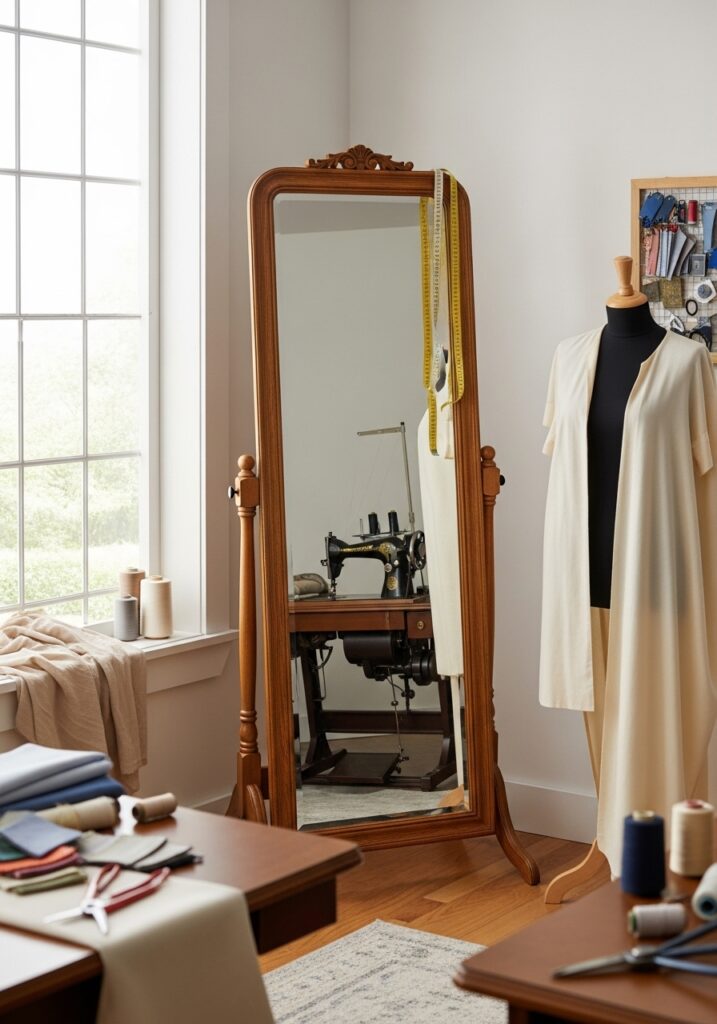
A full length mirror is a fitting tool, not just decor. Checking hems, darts and fit as you go saves you from finishing a garment and then unpicking it.
Mirrors also bounce light around and make small sewing rooms feel bigger. I like one on the back of the door, so it takes zero floor space.
- Better fit checks
- Brighter room
- Feels bigger
40Sound Reducing Storage Panels
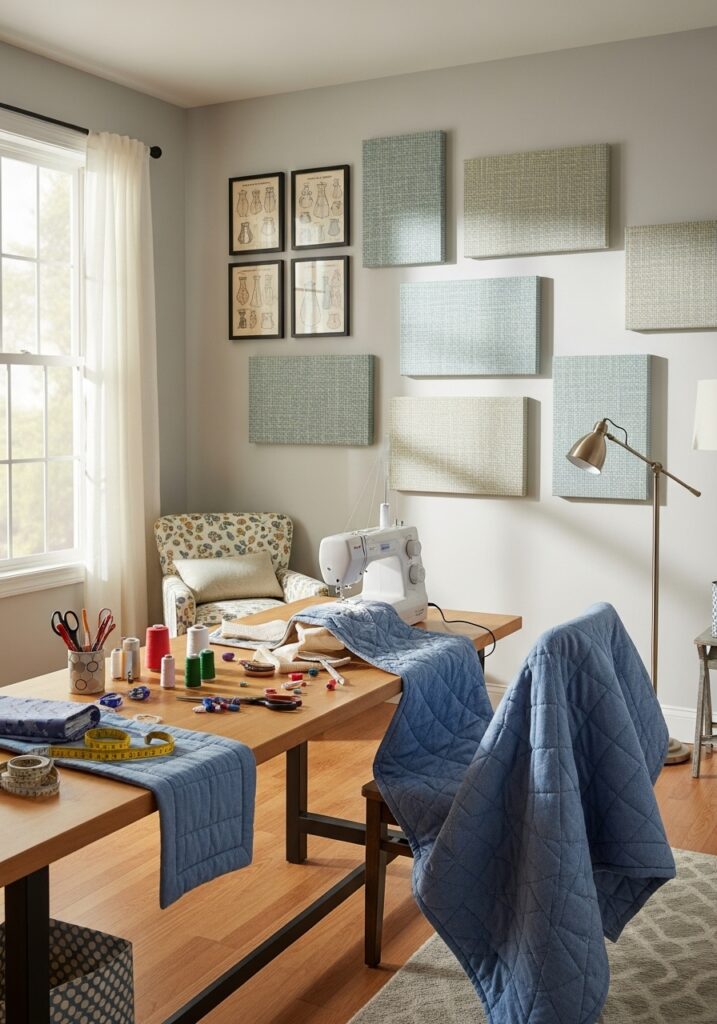
Sewing machines and sergers are loud, especially in a small room. Fabric covered acoustic panels soften that noise and double as pin boards.
It sounds like a luxury, but if you sew late at night or share a wall with family, quieter sessions make a real difference. Wrap panels in fabric from your stash and they match the room perfectly.
- Quieter sessions
- Doubles as pin board
- Matches your decor
41Seasonal Sewing Storage Rotation
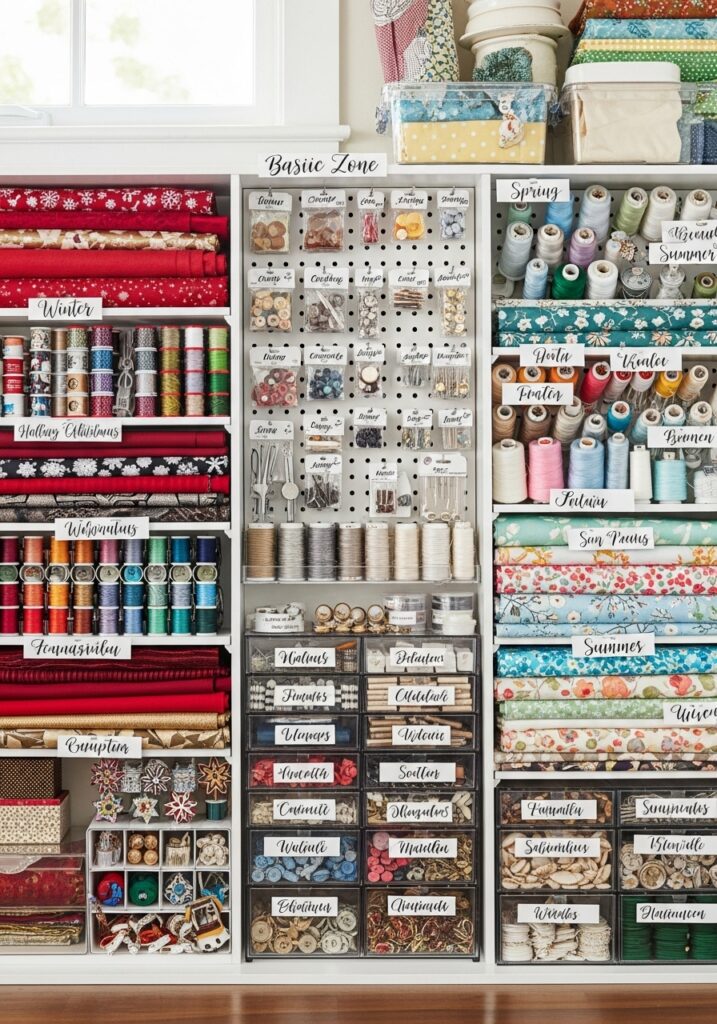
You do not need holiday fabric, heavy wools and summer linens all within reach at once. Rotate them. Keep the current season close and store the rest higher up or in another room.
I do a small switch twice a year. It keeps the main shelves light and it feels like opening a box of new fabric every time the season changes.
- Less crowding
- Feels fresh
- Easy twice a year
42Sewing Supply Inventory Storage System
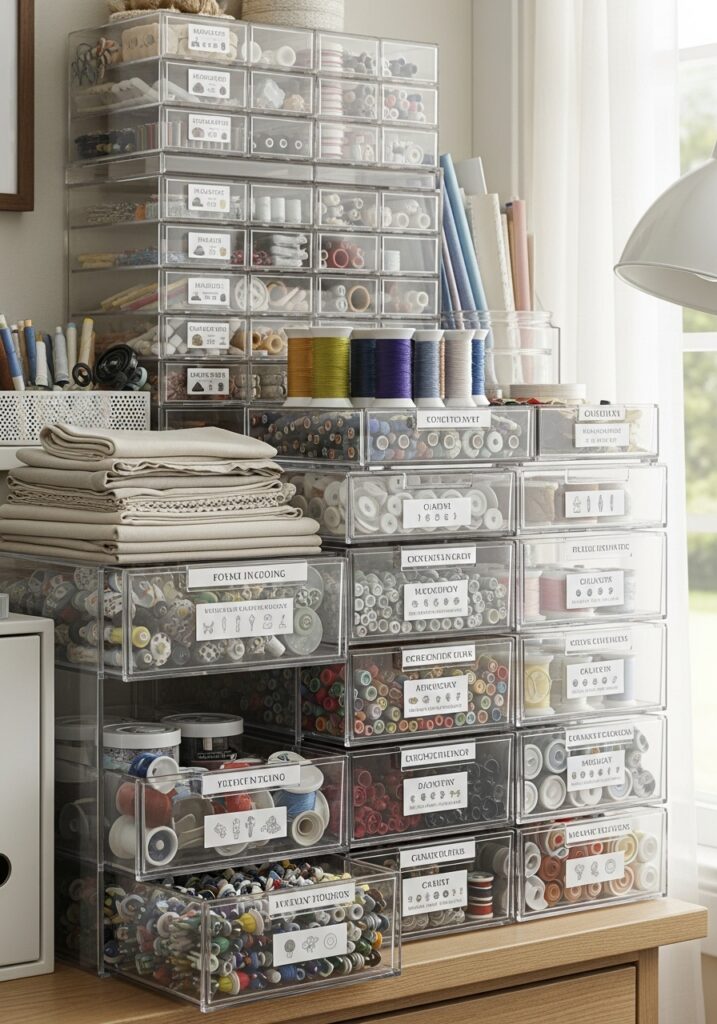
An inventory sounds like a business thing, but it helps hobby sewists too. A simple list of what you have, from zippers to interfacing, stops repeat buying.
Keep it on your phone so you can check it in the fabric store. Honestly, this one habit has saved me more money than any sale.
- Stops repeat buys
- Know what you have
- Saves money
43Drawer Storage for Sewing Notions

Give notions their own drawers, separate from tools. Snaps, hooks, elastic, bias tape and trims each get a compartment and stay flat and untangled.
A drawer organizer for notions keeps everything in its own slot. Shallow drawers work better than deep ones here, because small things vanish at the bottom of a deep drawer.
- Untangled trims
- Clear tabletop
- Quick to find
44Multi Level Sewing Storage Systems
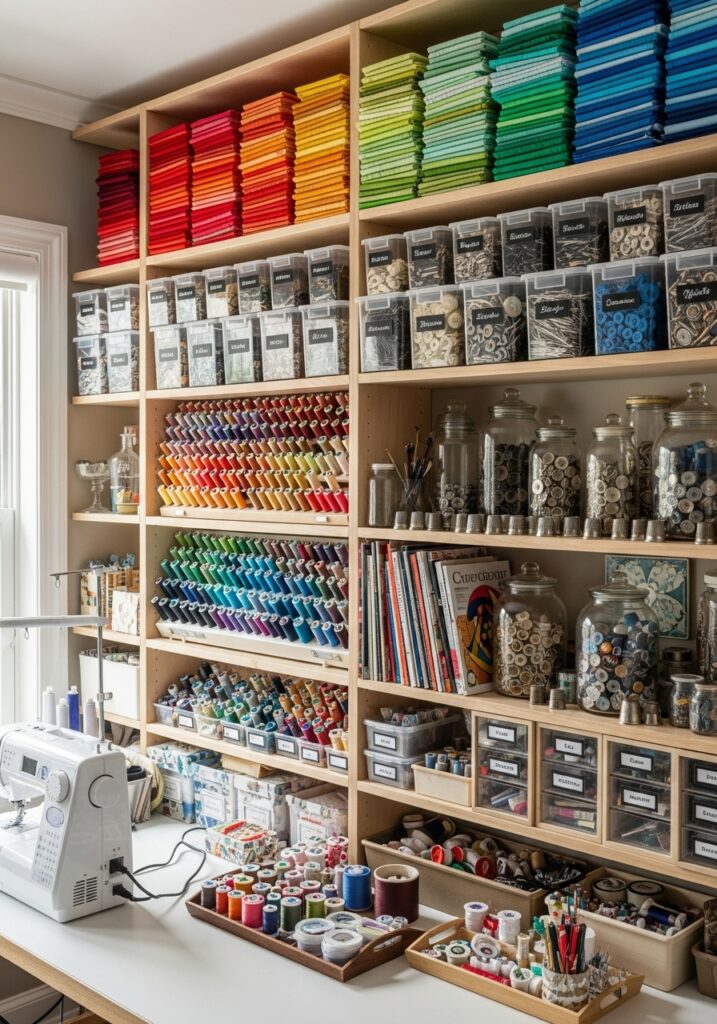
Mix shelf heights in one unit. Tall spaces for bolts and big bins, short spaces for thread boxes and jars. Nothing wastes space and everything fits its spot.
This is how you store more without a bigger room. I’d suggest putting the heaviest things on the lowest level, both for safety and so the unit never feels top heavy.
- More capacity
- Fits odd sizes
- Same footprint
45Adjustable Sewing Room Storage Shelving
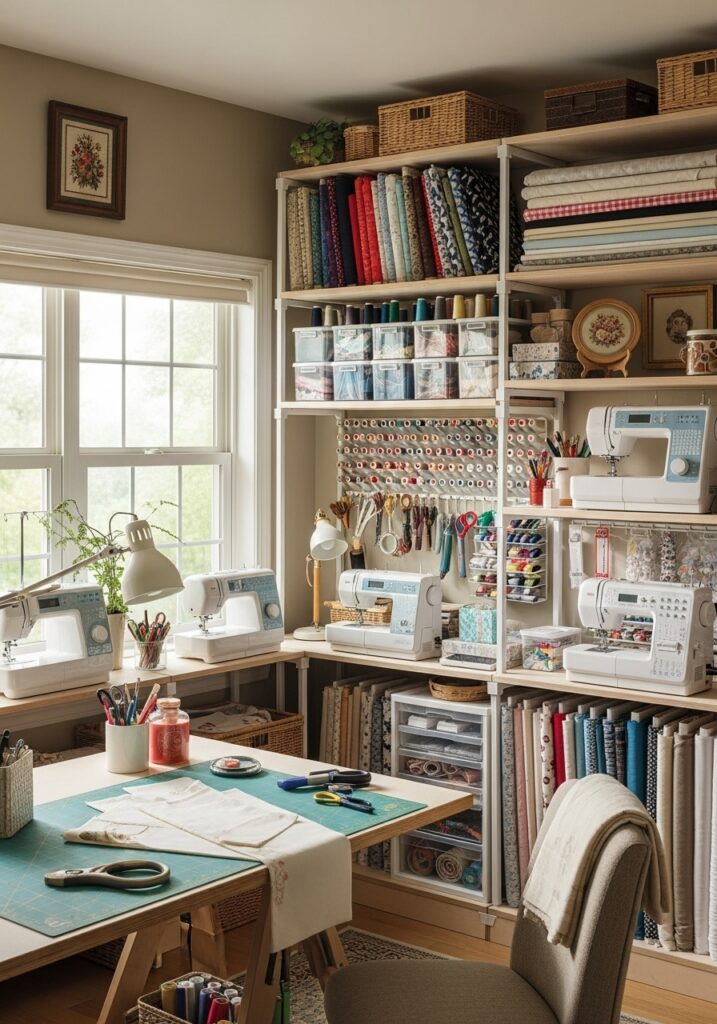
Adjustable shelving is the most forgiving storage you can buy. Move a shelf up for a taller bin, down for a short stack, and the system changes with you.
If you only buy one big storage piece, I would make it this. Your sewing will change over the years, from garments to quilts to bags, and adjustable shelves will keep up with every phase.
- Changes with you
- No wasted space
- Lasts for years
Frequently Asked Questions
How do I organize a small sewing room?
Start with the walls. Pegboards, floating shelves and wall cabinets free up the floor, and a rolling cart gives you storage that moves. Keep only the tools you use every week within reach and store the rest higher up.
What is the best way to store fabric?
Store fabric away from direct sunlight in bins, drawers or closed cabinets. Fold pieces to a consistent width and stand them upright when you can, so you see every piece and nothing gets crushed.
How should I store sewing thread?
A wall mounted thread rack is the easiest option. It keeps spools sorted by color, stops tangles and frees up drawer space. Keep it out of strong sunlight so colors do not fade.
How can I store sewing patterns without damaging them?
Keep patterns flat in hanging file folders or a filing cabinet. Sort them by garment type and write the pattern number on the tab so you can find each one quickly.
Final Thoughts on Sewing Room Storage Solutions
Good sewing room storage is not about a perfect room. It is about spending your time sewing instead of searching. Start with the spot you sew in most, give your daily tools a home and build from there.
Pick two or three ideas from this list this week. Honestly, a thread rack and a few labeled bins can make your sewing room feel brand new.


Amir Ali is the founder and site administrator of HomeDecorEdge, a modern home decor and interior design platform. Since starting the site, he has combined his passion for interior design, practical styling, and color coordination with hands-on content strategy and site management. He guides authors, curates high-quality articles, and ensures readers have access to actionable, visually inspiring, and user-focused home decor advice for apartments, small rooms, and family homes.