

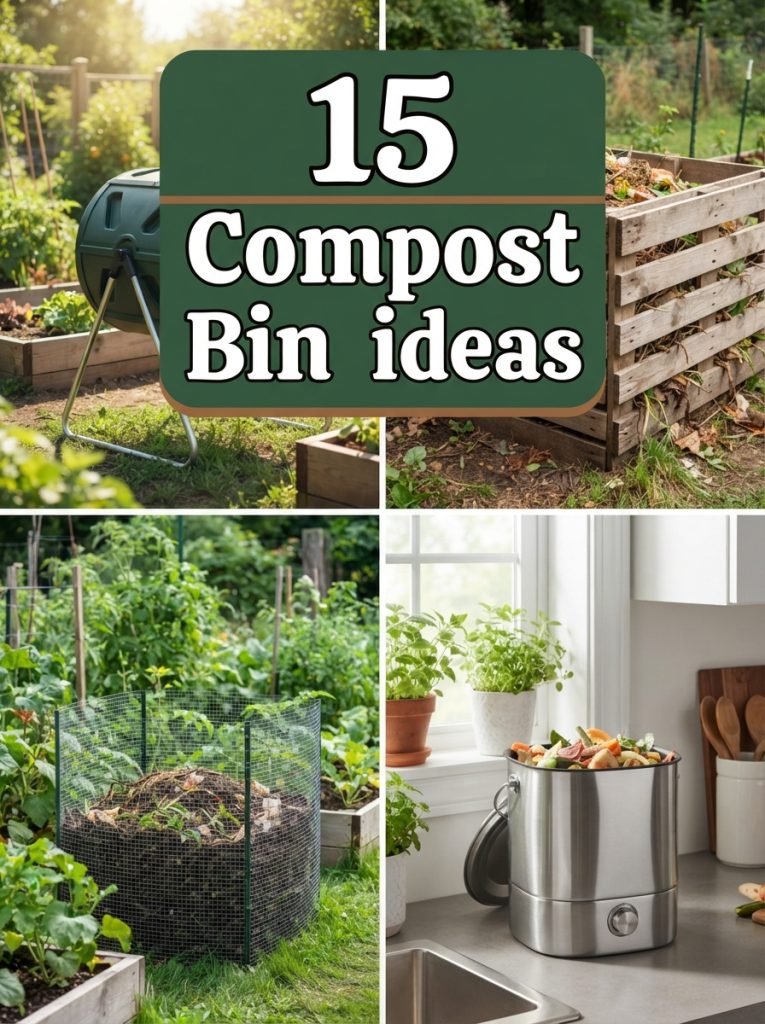
Turning kitchen scraps and yard waste into rich soil sounds complicated until the right bin makes the whole process almost effortless. The system chosen matters just as much as the composting itself, since a bin that is too much hassle to maintain usually ends up abandoned within a few weeks. These 15 compost bin ideas cover backyard builds, kitchen countertop options, and everything a beginner composter needs to get started.
This post contains affiliate links. If you purchase through these links I may earn a small commission at no extra cost to you.
1. Turn Waste Faster with a Tumbler Bin

A tumbler bin speeds up the composting process significantly since rotating the drum mixes materials and adds oxygen without any manual turning by hand. This compost bin outdoor tumbler sits elevated on a stand, which also keeps pests from burrowing in the way an open pile on the ground might invite.
Materials Needed:
- Compost tumbler bin
- Kitchen scraps and yard waste
- Brown materials like dry leaves or cardboard
How to Make It:
- Assemble the tumbler stand and drum according to the included instructions.
- Add a mix of green materials like food scraps and brown materials like dry leaves.
- Close the lid securely and rotate the drum every few days to mix contents.
- Check moisture levels periodically, adding water if the mixture feels too dry.
- Compost is ready to use once it turns dark and crumbly, usually within four to six weeks.
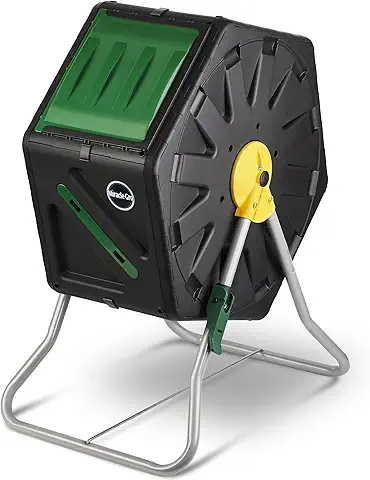
Compost Bin Outdoor Tumbler
Rotating tumbler bin that speeds up outdoor composting
Check Price on Amazon2. Collect Scraps in a Kitchen Countertop Bin
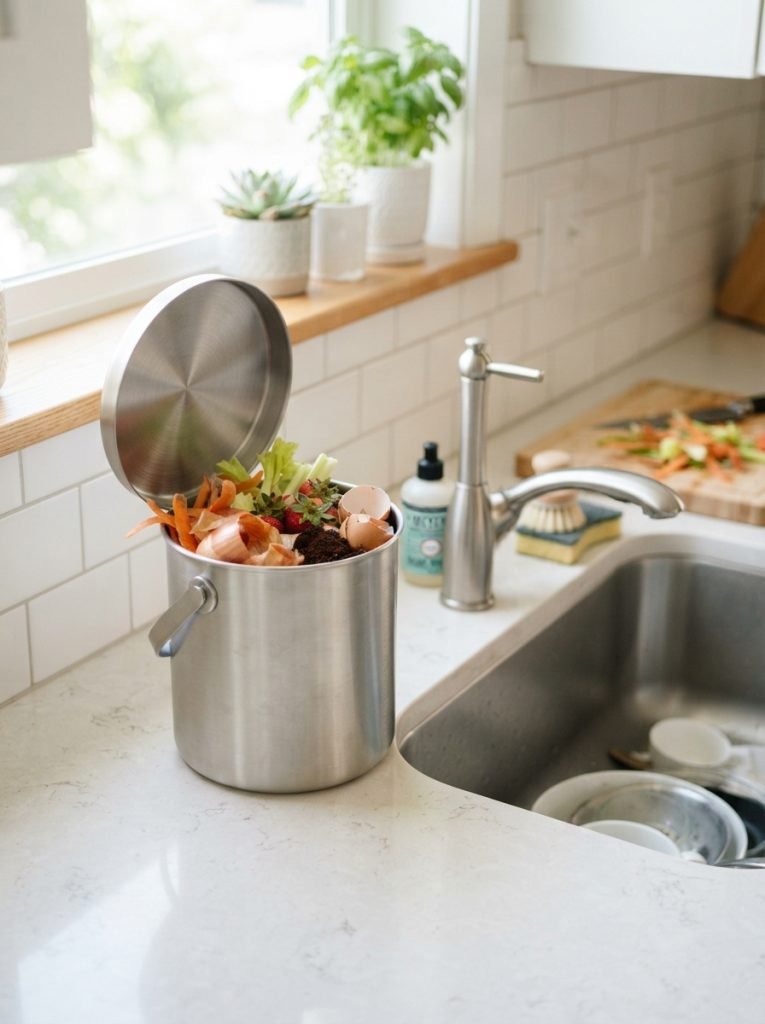
A countertop bin bridges the gap between the kitchen and the main outdoor compost pile, catching scraps as they happen during meal prep. This kitchen countertop compost bin has a sealed lid and carbon filter to control odor, so it can sit right on the counter without becoming unpleasant.
Materials Needed:
- Kitchen countertop compost bin
- Compostable liner bags
- Vegetable and fruit scraps
How to Make It:
- Place the countertop bin near the sink or cutting board for easy scrap disposal.
- Line the bin with a compostable bag if preferred for easier emptying.
- Add fruit and vegetable scraps, coffee grounds, and eggshells throughout the day.
- Empty the bin into the main outdoor compost system every few days.
- Wash the bin periodically to keep it fresh between uses.

Kitchen Countertop Compost Bin
Sealed countertop bin for collecting kitchen scraps before composting
Check Price on Amazon3. Start Worm Composting Indoors
Worm composting, also called vermicomposting, works well for anyone without outdoor space since the whole system fits in a closet, garage, or utility room. This worm composting bin kit uses red wiggler worms to break down scraps quickly, producing nutrient rich castings ideal for houseplants.
Materials Needed:
- Worm composting bin kit
- Red wiggler worms
- Shredded newspaper or cardboard bedding
- Vegetable scraps
How to Make It:
- Set up the stacked bin trays with shredded newspaper bedding in the bottom tray.
- Add the red wiggler worms to the bedding along with a small amount of food scraps.
- Feed the worms small amounts of scraps a few times a week, avoiding meat and dairy.
- Add a new tray on top once the bottom tray fills, letting worms migrate upward.
- Harvest finished castings from the bottom tray once it is fully composted.

Worm Composting Bin Kit
Stacked bin kit for indoor worm composting and rich castings
Check Price on Amazon4. Improve Airflow with a Wire Mesh Bin
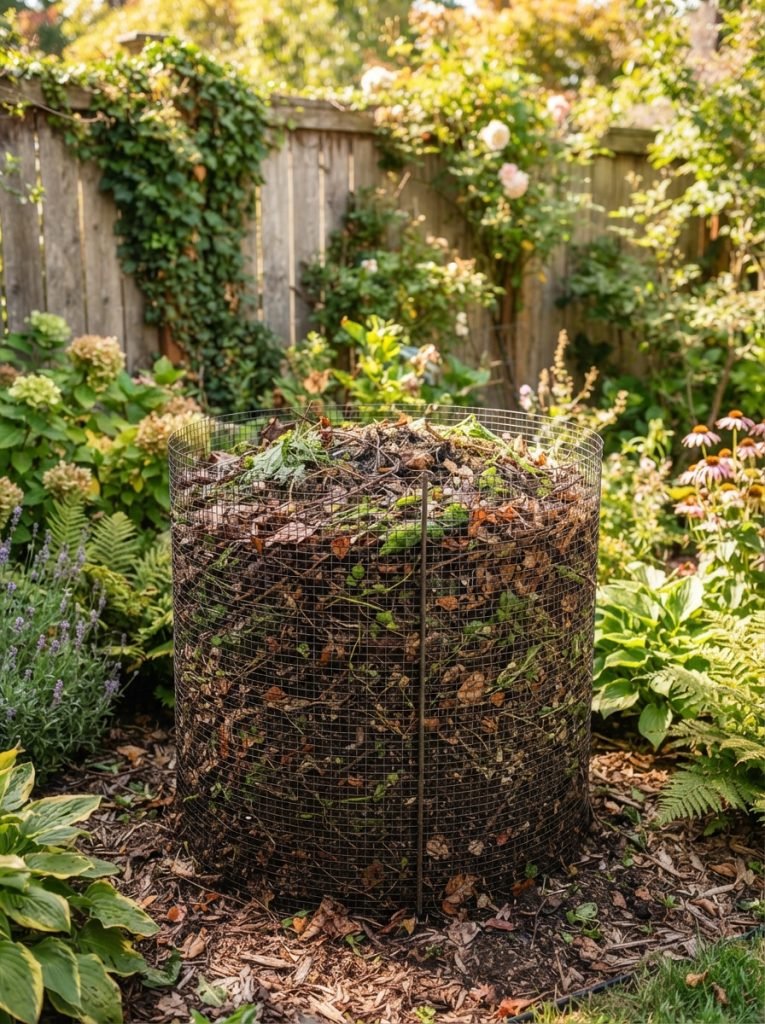
A wire mesh bin is one of the simplest and cheapest compost setups since it requires almost no assembly and allows excellent airflow through the open sides. This wire mesh compost bin works especially well for yard waste like leaves and grass clippings that benefit from consistent oxygen exposure.
Materials Needed:
- Wire mesh compost bin
- Yard waste like leaves and grass clippings
- Kitchen scraps
How to Make It:
- Set up the wire mesh bin in a level spot with good drainage.
- Layer brown materials like dry leaves with green materials like grass clippings and scraps.
- Turn the pile every one to two weeks using a garden fork to maintain airflow.
- Keep the pile moist but not soggy, adjusting with water during dry spells.
- Compost is ready when it turns dark, crumbly, and earthy smelling.

Wire Mesh Compost Bin
Open wire mesh bin for improved airflow during composting
Check Price on Amazon5. Build a Sturdy Wooden Backyard Bin
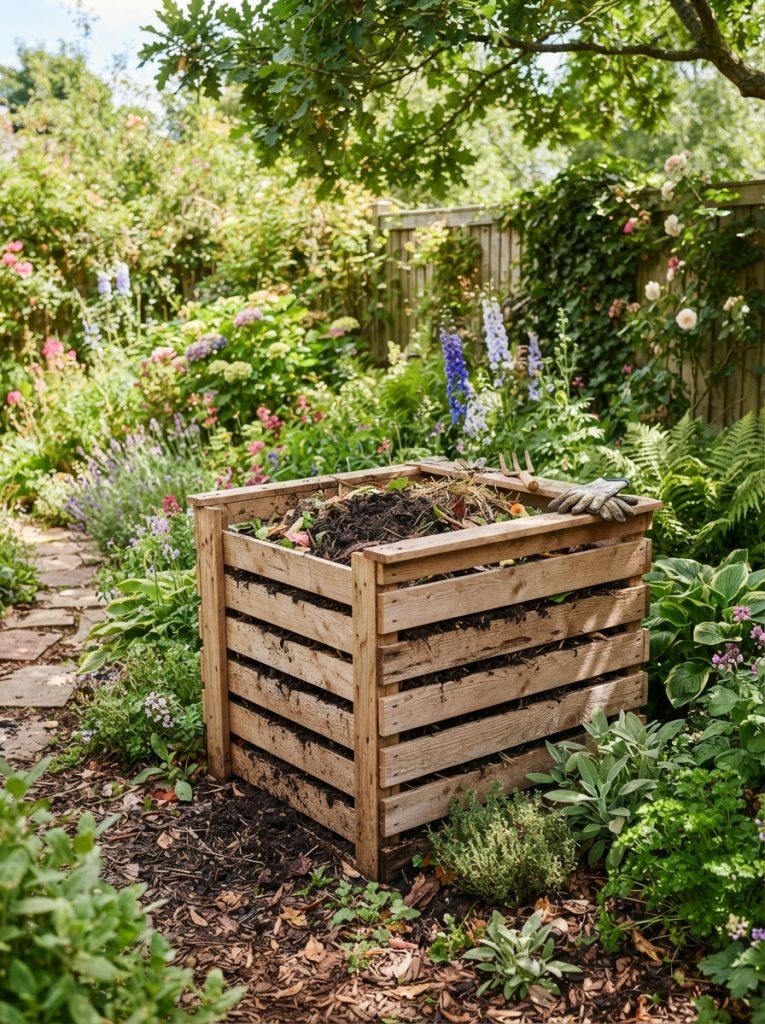
A wooden bin offers more structure and a tidier appearance than an open pile while still allowing airflow through the slatted sides. This wooden compost bin outdoor design holds a large volume of material, making it a solid choice for households generating significant kitchen and yard waste.
Materials Needed:
- Wooden compost bin
- Kitchen scraps and yard waste
- Garden fork for turning
How to Make It:
- Position the wooden bin on level ground in a spot with partial shade.
- Begin layering brown and green materials, starting with a base of coarse material for drainage.
- Add new scraps regularly, mixing them slightly into the existing pile.
- Turn the contents every couple of weeks with a garden fork to speed decomposition.
- Harvest finished compost from the bottom once it reaches a dark crumbly texture.

Wooden Compost Bin Outdoor
Sturdy wooden bin for backyard composting of scraps and yard waste
Check Price on Amazon6. Keep Pests Out with a Lidded Bin
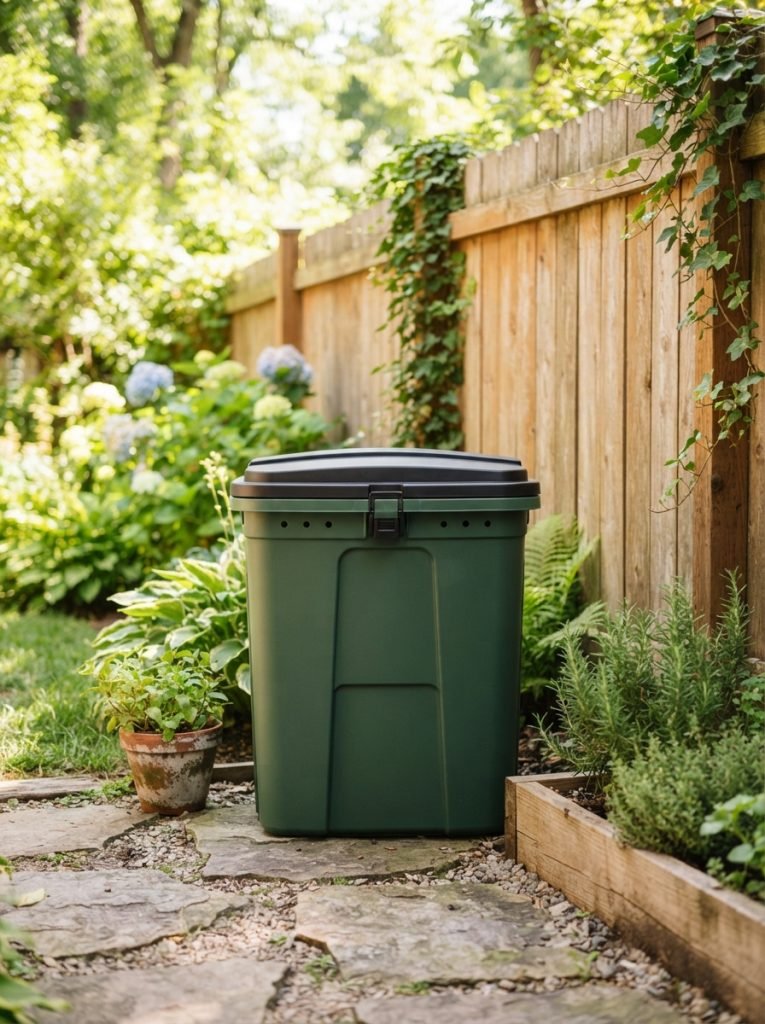
A secure lid makes a real difference in households dealing with curious pets, raccoons, or other wildlife drawn to food scraps. This compost bin with lid backyard style seals tightly while still allowing enough airflow for proper decomposition, keeping unwanted visitors away from the pile.
Materials Needed:
- Lidded compost bin
- Kitchen scraps
- Yard waste
How to Make It:
- Set the lidded bin in a convenient spot near the kitchen door for easy scrap disposal.
- Add a mix of green and brown materials in alternating layers.
- Close the lid securely after each addition to deter pests.
- Check moisture and turn contents periodically using the bin’s built in mixing tool if included.
- Empty finished compost from the base access door once fully decomposed.

Compost Bin with Lid Backyard
Secure lidded bin that keeps pests away from backyard compost
Check Price on Amazon7. Build a Compost Bin from Wooden Pallets
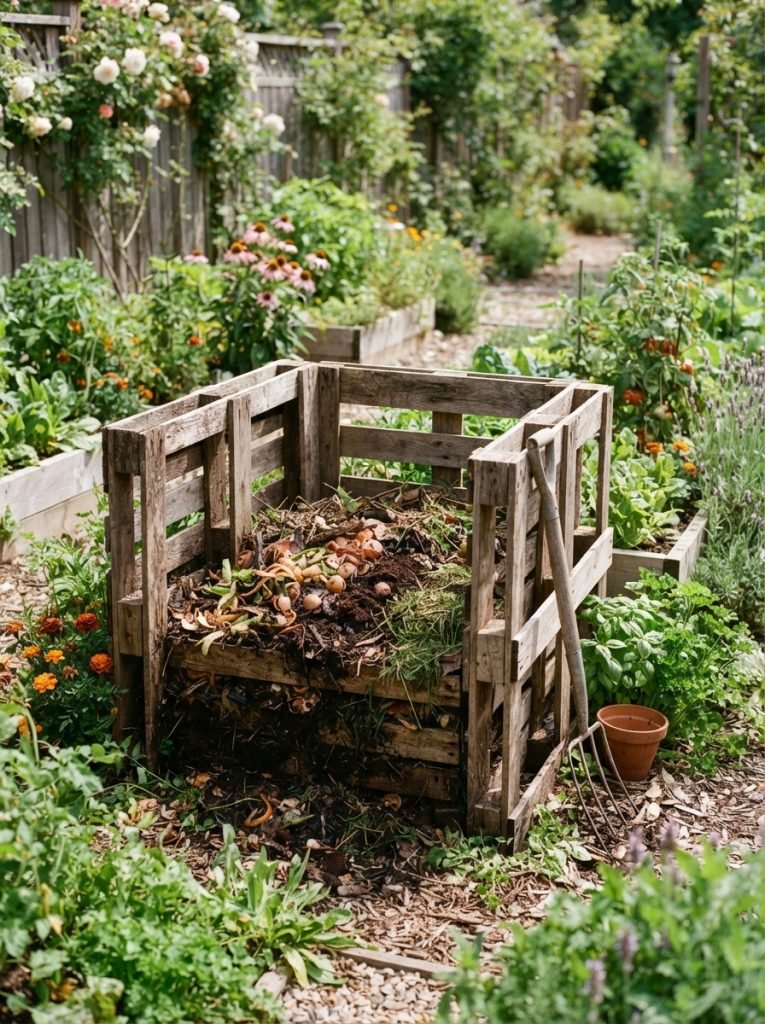
Wooden pallets, often available for free or very cheap, can be wired or nailed together into a three sided compost bin with almost no cost involved. This pallet build gives the same airflow benefits as a purchased wooden bin while using entirely repurposed material.
Materials Needed:
- Four wooden pallets
- Wire or heavy duty zip ties
- Wire cutters
How to Make It:
- Stand three pallets upright in a U shape on level ground.
- Secure the corners together using wire or zip ties through the pallet slats.
- Leave the front open or attach a fourth pallet as a removable front panel.
- Begin adding compost materials directly inside the enclosed space.
- Turn contents periodically using a garden fork for even decomposition.
8. Dig an In Ground Compost Pit
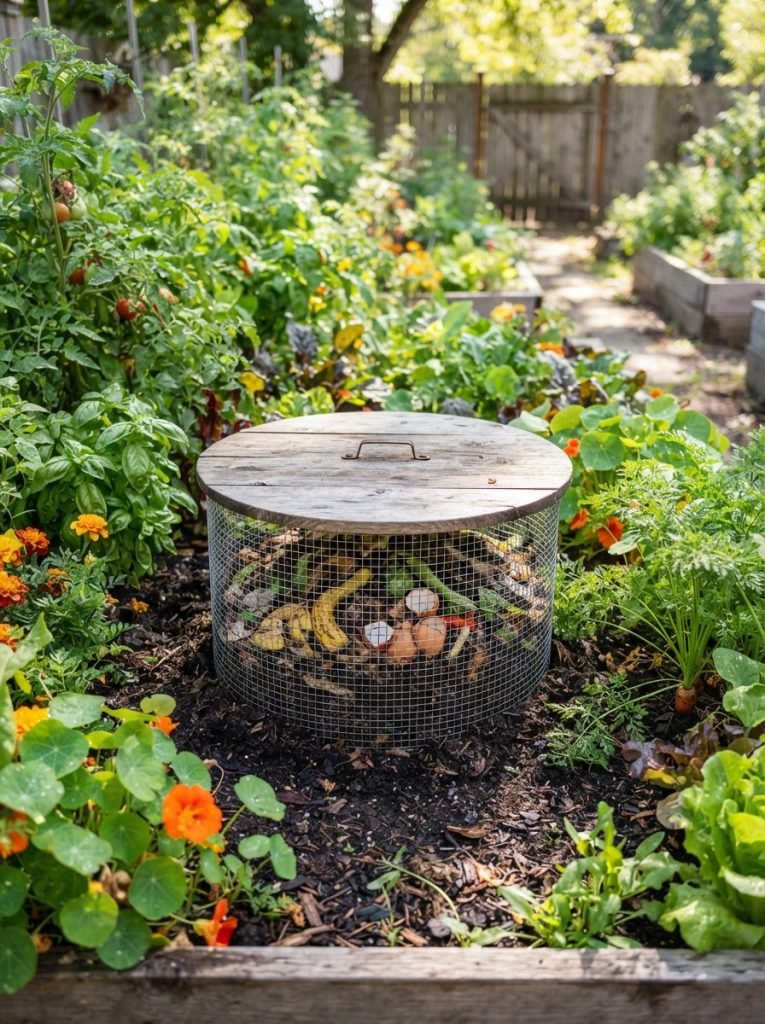
An in ground pit skips the need for any bin structure entirely, using the earth itself to insulate and speed up decomposition. This method works particularly well for anyone wanting to compost directly into a future garden bed without moving finished compost afterward.
9. Repurpose a Ceramic Crock for Kitchen Scraps
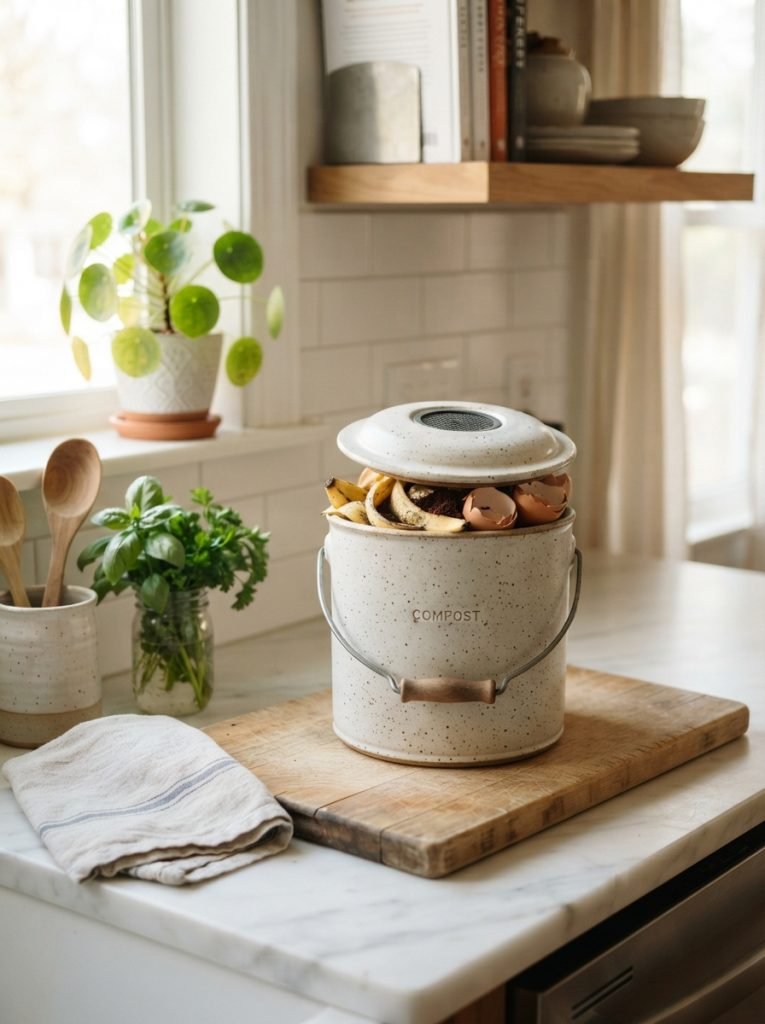
A ceramic crock brings a decorative touch to kitchen composting that a plastic bin simply cannot match, making it a favorite for anyone who wants their compost collector to look intentional on the counter. The charcoal filter in the lid controls odor just as effectively as plastic alternatives.
10. Create a Custom Compost Design from Drawings
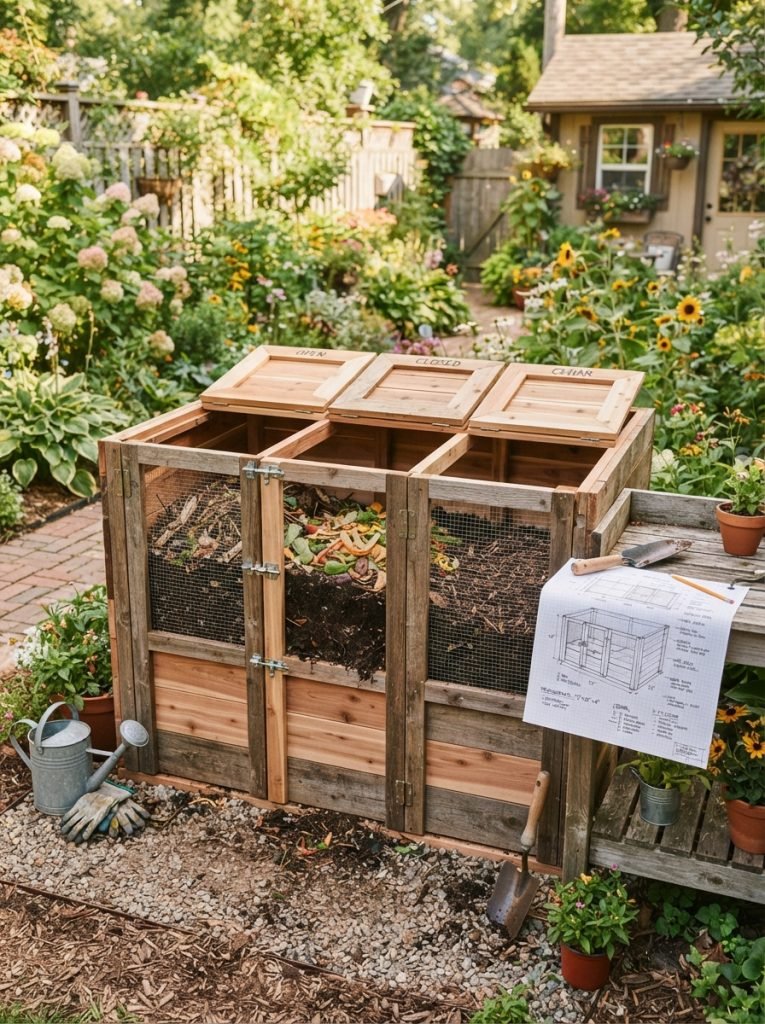
Sketching a custom compost bin design before building allows the final structure to fit an exact yard space and desired capacity rather than settling for a generic size. Planning dimensions on paper first also helps estimate the amount of material needed before a single board gets cut.
11. Set Up a Multi Bin Rotation System
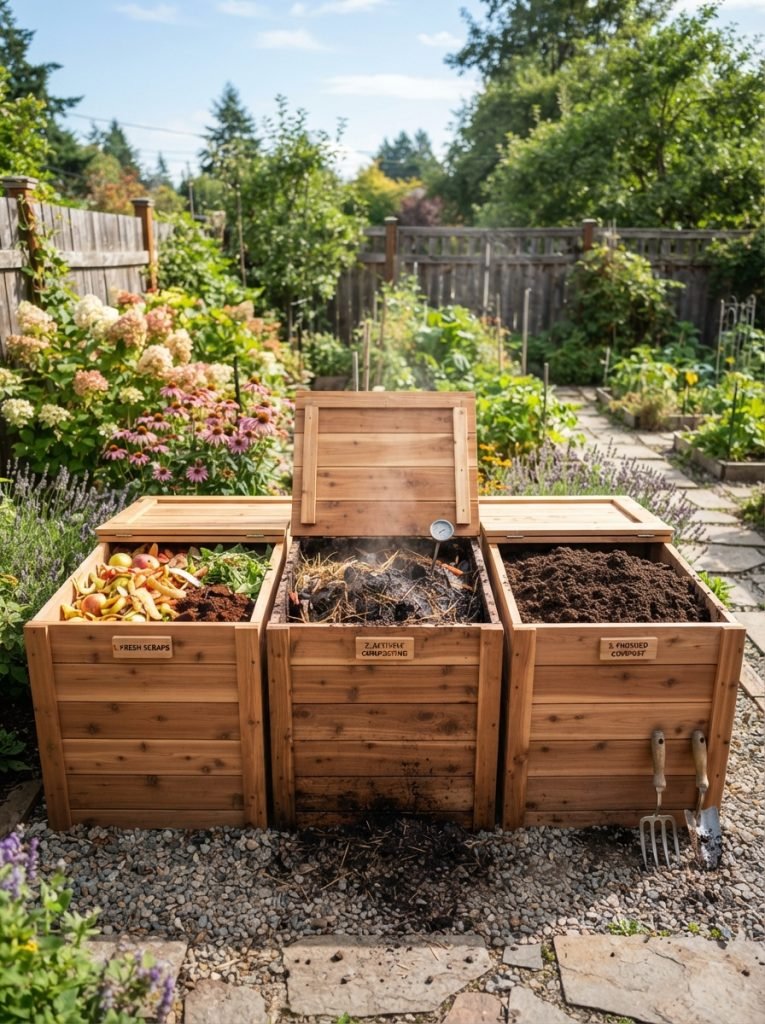
A multi bin system uses three separate sections, one for fresh scraps, one for actively decomposing material, and one for finished compost ready to use. This rotation method keeps a continuous supply of finished compost available without waiting for a single pile to fully break down each time.
12. Compost Indoors with a Sealed Bokashi System
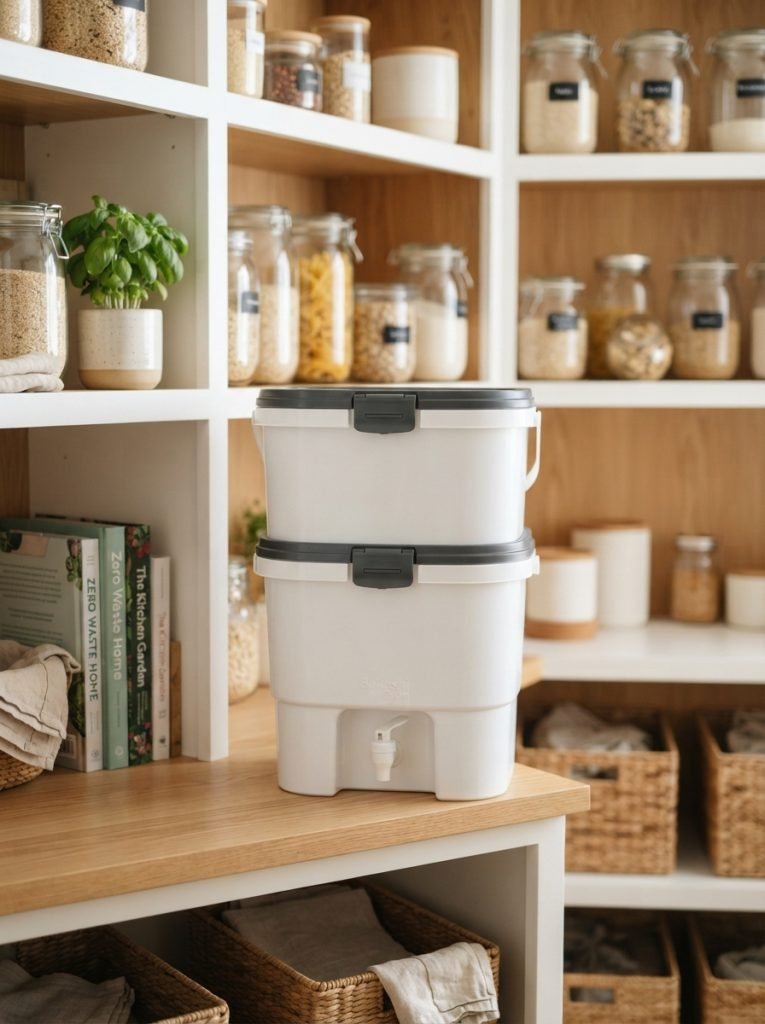
Bokashi composting uses a fermentation process in a sealed bucket, allowing it to handle meat and dairy scraps that traditional composting methods cannot break down. This indoor friendly system works well in apartments where outdoor composting space simply is not available.
13. Add a Compost Bin to a Small Garden Corner
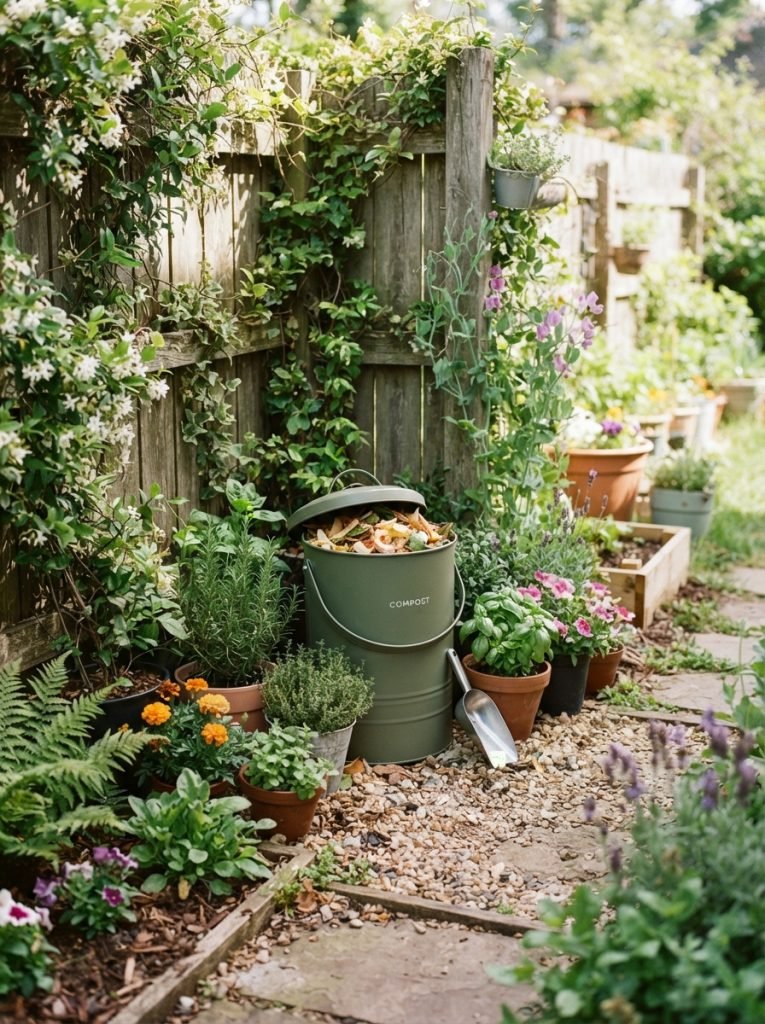
A small backyard does not rule out composting, it simply calls for a more compact bin tucked into an unused corner rather than a sprawling multi bin system. Even a modest sized bin can process a meaningful amount of household scraps over time.
14. Line a Bin with Cardboard for Easy Starts
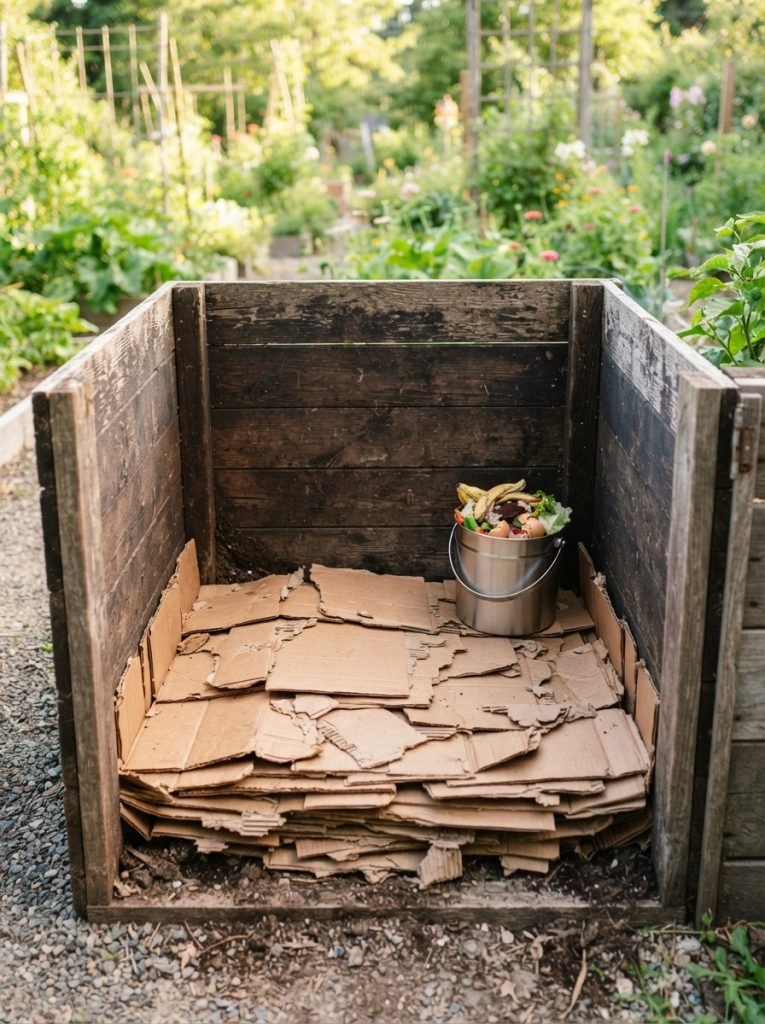
Lining the base of a new compost bin with cardboard gives beginners an easy starting layer that helps balance moisture and provides a carbon rich foundation for the pile. This simple trick makes starting a first compost bin feel far less intimidating for anyone new to the process.
15. Pair Compost with a Raised Garden Bed
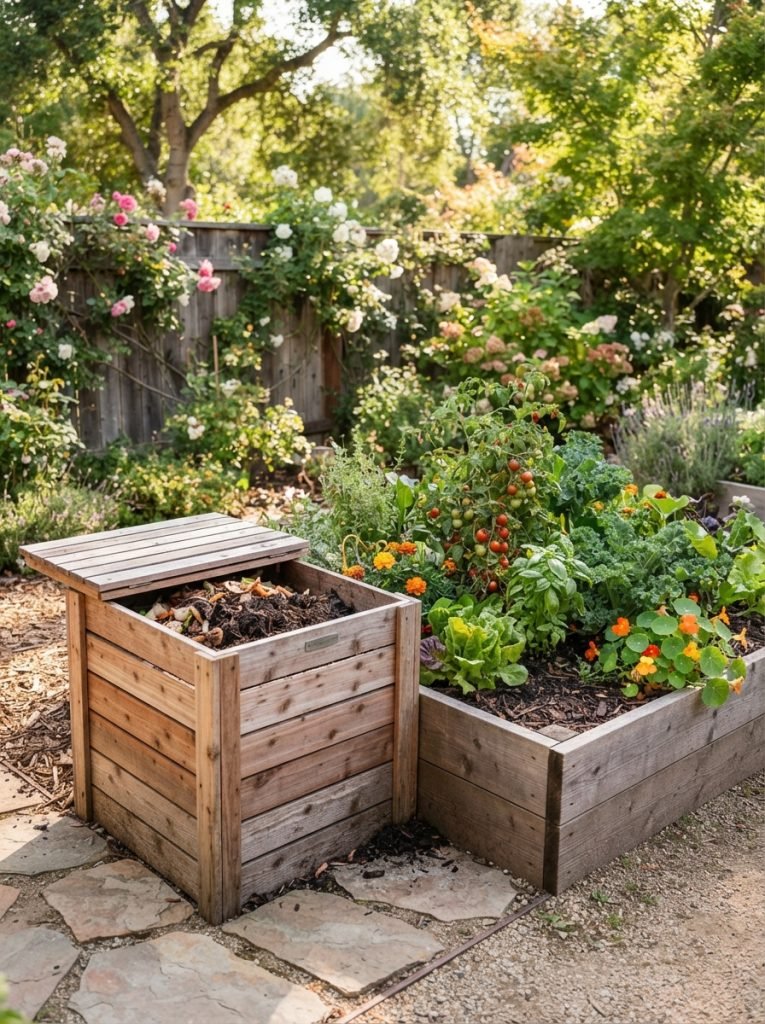
Positioning a compost bin close to a raised garden bed shortens the distance finished compost needs to travel, making it far more likely to actually get used regularly. This setup pairs naturally with the growing systems used in raised garden bed ideas and complements the layout thinking found in garden design ideas and backyard garden ideas for a fully connected outdoor growing space.
Final Thoughts on Compost Bin Ideas
The best compost bin comes down to matching the system to the space and amount of waste actually being generated. A tumbler or lidded bin suits a busy household wanting fast results with minimal mess, while a simple pallet build or wire mesh bin works well for anyone composting mostly yard waste on a budget. Starting small and adjusting the system as the habit builds makes composting far more likely to stick long term.

Amir Ali is the founder and site administrator of HomeDecorEdge, a modern home decor and interior design platform. Since starting the site, he has combined his passion for interior design, practical styling, and color coordination with hands-on content strategy and site management. He guides authors, curates high-quality articles, and ensures readers have access to actionable, visually inspiring, and user-focused home decor advice for apartments, small rooms, and family homes.