

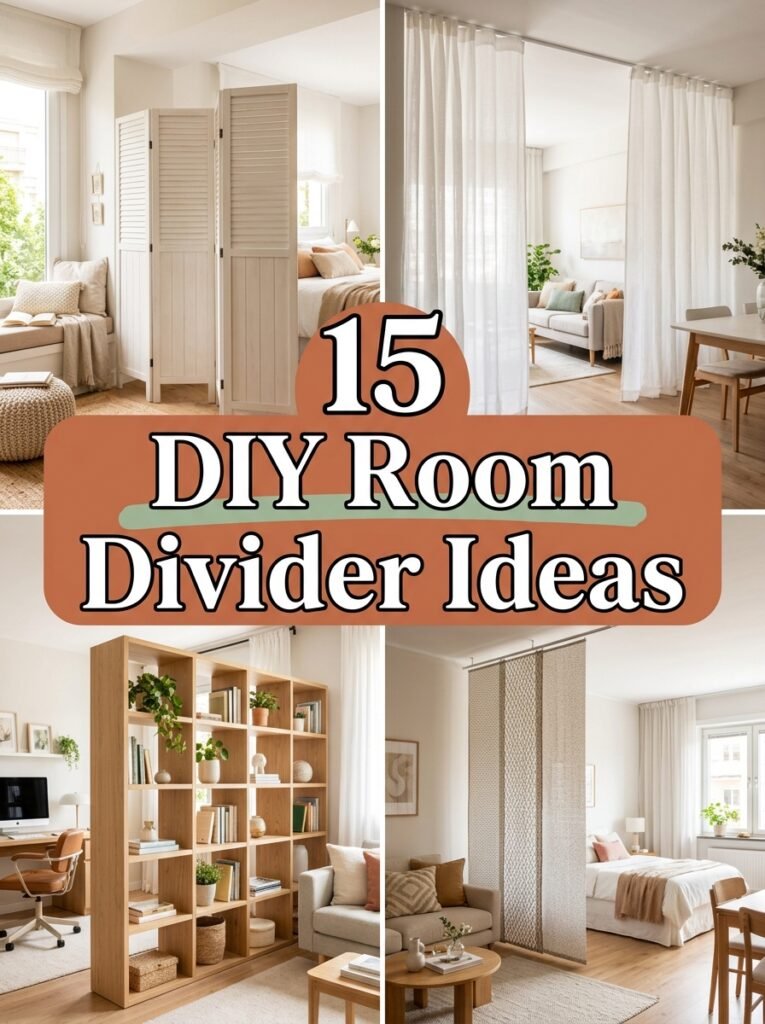
Living in one big open room sounds great until you actually need to sleep while someone else is still up watching TV ten feet away, and that’s usually when the search for a divider starts. The good news is that almost none of these solutions require permanent construction, which matters a lot for renters who can’t exactly knock down a wall to put one back up. These 15 diy room divider ideas cover studio apartments, shared bedrooms, and every temporary setup in between.
This post contains affiliate links. If you purchase through these links I may earn a small commission at no extra cost to you.
1. Set Up a Folding Screen Divider
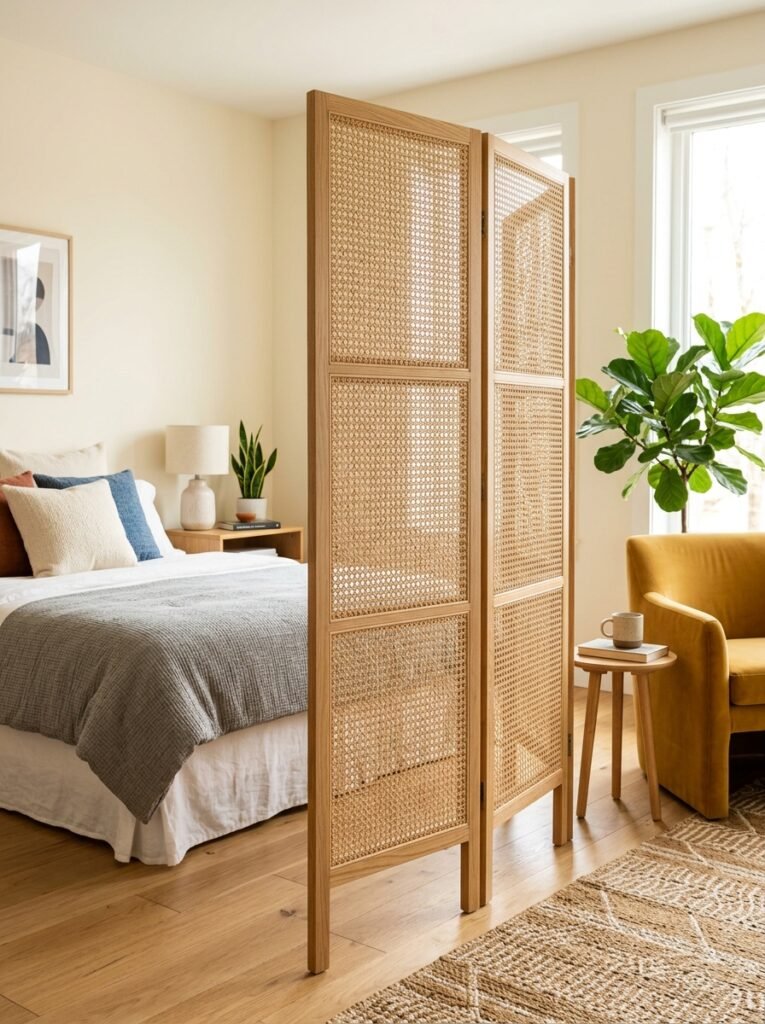
A folding screen is genuinely the fastest way to split a room since it needs zero installation and can be moved, folded flat, or repositioned entirely within a few seconds. This room divider screen folding piece stands on its own without any mounting, which makes it a solid choice for anyone renting who wants privacy without touching a single wall.
Materials Needed:
- Room divider screen folding
- No additional tools required
How to Make It:
- Unfold the screen to the desired width and angle it slightly for stability.
- Position it between the two areas needing separation.
- Adjust the panels until the screen stands firmly without wobbling.
- Add decor like fabric or hanging items to the panels if desired.
- Fold flat and store against a wall whenever the open layout is needed instead.

Room Divider Screen Folding
Freestanding folding screen for instant no install room separation
Check Price on Amazon2. Hang Curtains from a Ceiling Track
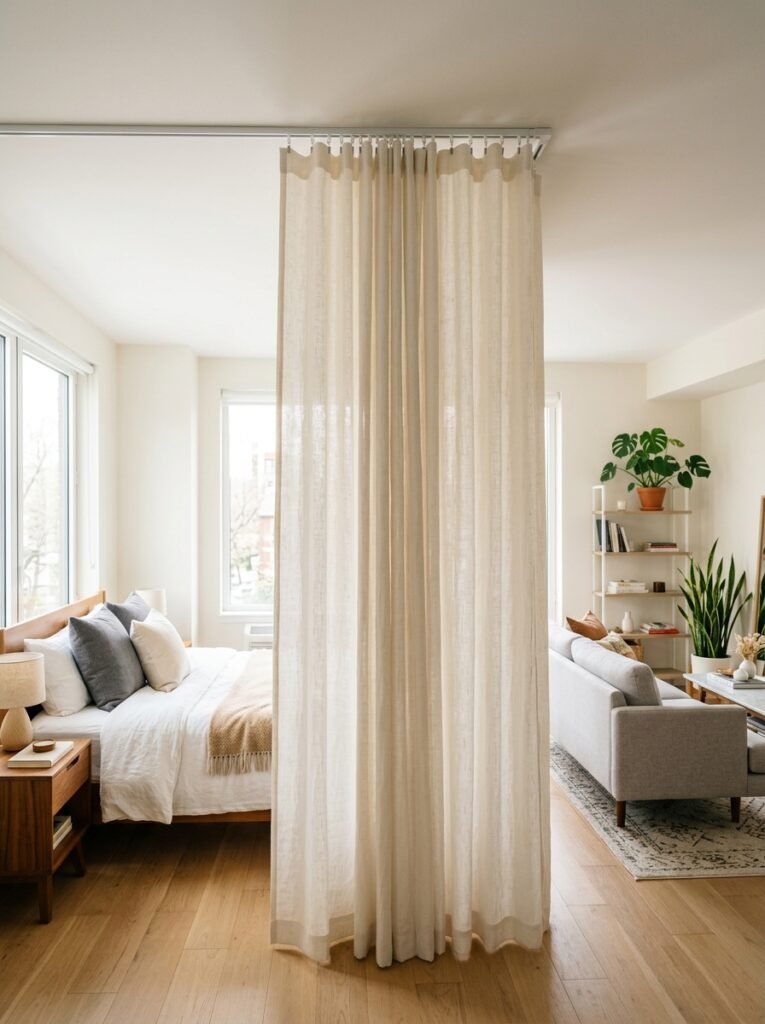
Curtains on a ceiling track give a room divider that can actually open and close, which matters if the two spaces sometimes need to feel connected and other times need full privacy. This curtain room divider track mounts to the ceiling with minimal drilling, and the fabric itself can be swapped seasonally without touching the hardware again.
Materials Needed:
- Curtain room divider track
- Curtain panels
- Ceiling mounting hardware
- Drill
How to Make It:
- Measure the ceiling span where the divider needs to run.
- Install the track securely into the ceiling following the included hardware guide.
- Thread the curtain panels onto the track using the attached hooks or rings.
- Slide the curtains open and closed to check they run smoothly along the full track.
- Adjust panel spacing until the fabric hangs evenly with no visible gaps.

Curtain Room Divider Track
Ceiling mounted track for a sliding curtain room divider
Check Price on Amazon3. Divide the Space with an Open Bookshelf
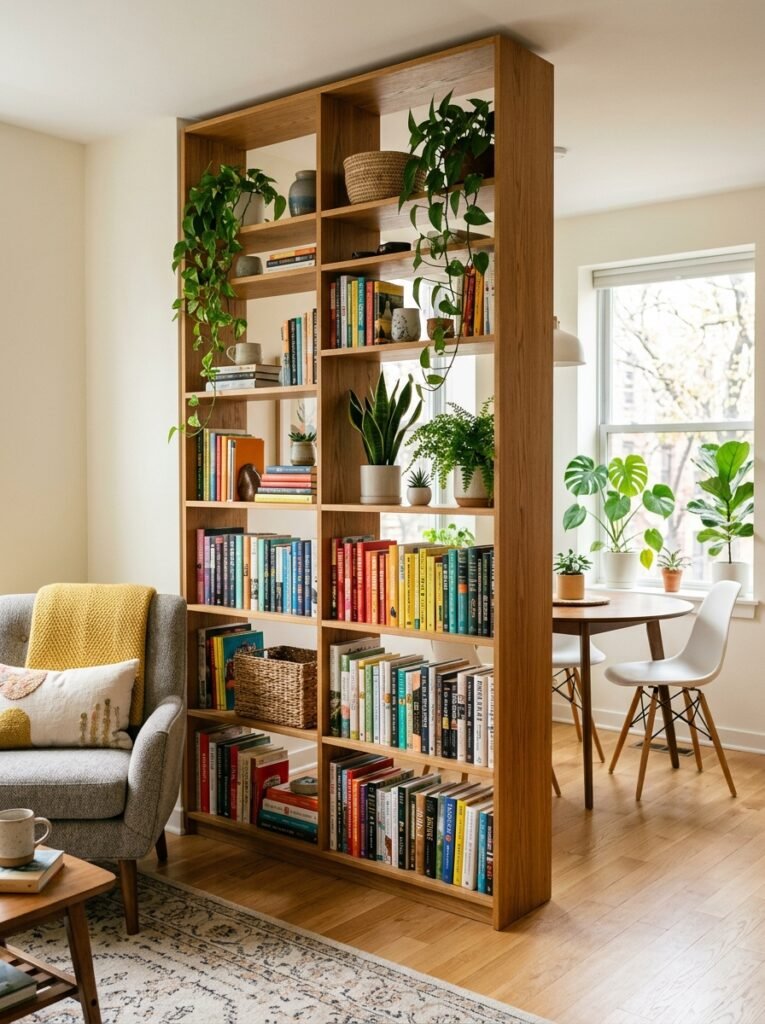
An open bookshelf does double duty as both a divider and actual storage, which is genuinely the most space efficient option on this whole list since it’s furniture you’d probably want anyway. This bookshelf room divider open design lets light pass through from both sides, so the room doesn’t feel chopped up the way a solid wall would.
Materials Needed:
- Bookshelf room divider open
- Books and decor items for styling
- Anti tip anchor straps for safety
How to Make It:
- Position the bookshelf perpendicular to the wall at the desired dividing point.
- Secure it to the wall with anti tip straps, especially in a home with kids.
- Load the shelves evenly, distributing weight from bottom to top.
- Style both sides differently since each will be viewed from opposite rooms.
- Adjust item placement until sightlines through the open back feel balanced.

Bookshelf Room Divider Open
Open back bookshelf that divides a room while doubling as storage
Check Price on Amazon4. Install a Tension Rod Fabric Divider
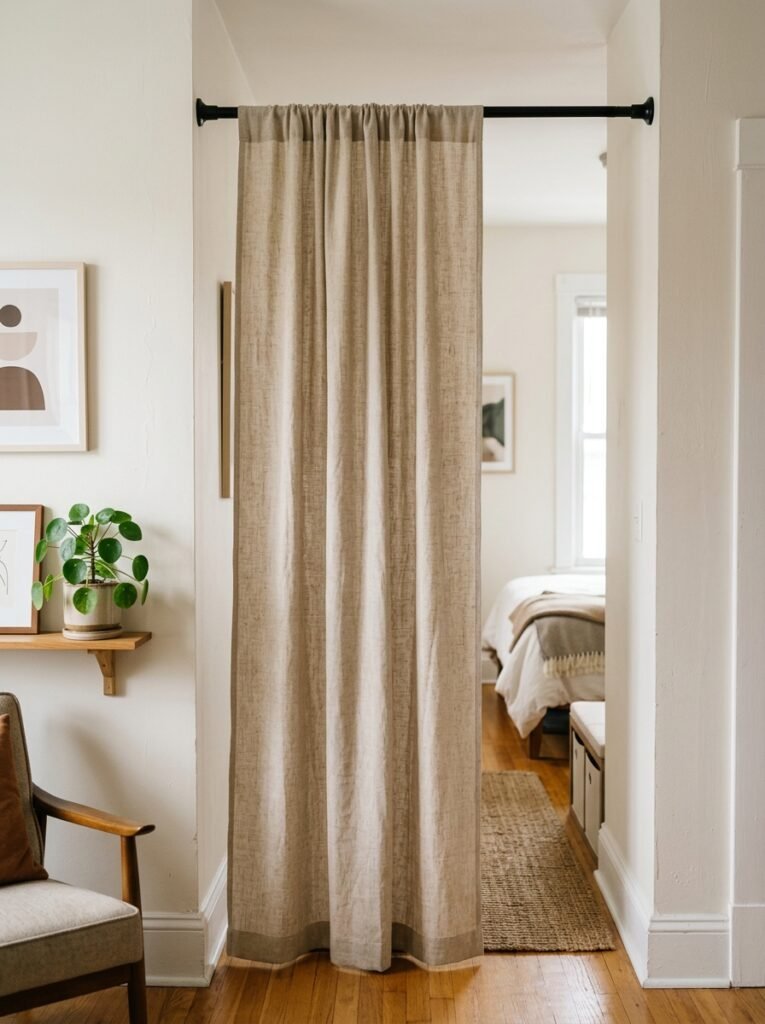
A tension rod wedges between two walls without a single hole drilled, making it the go to option for anyone who genuinely cannot damage the walls in a rental. This tension rod room divider holds a curtain or fabric panel across a narrow hallway or alcove, giving instant separation that comes down just as easily on move out day.
Materials Needed:
- Tension rod room divider
- Fabric panel or curtain
- No tools required for basic installation
How to Make It:
- Measure the width between the two walls needing the divider.
- Extend the tension rod to fit snugly, applying firm pressure against both walls.
- Thread the fabric panel onto the rod before final placement if using a rod pocket curtain.
- Test the rod holds securely by gently pulling on it before relying on it fully.
- Adjust the fabric so it hangs straight and covers the full opening.

Tension Rod Room Divider
No drill tension rod for a quick renter friendly fabric divider
Check Price on Amazon5. Hang Woven Panels for Texture
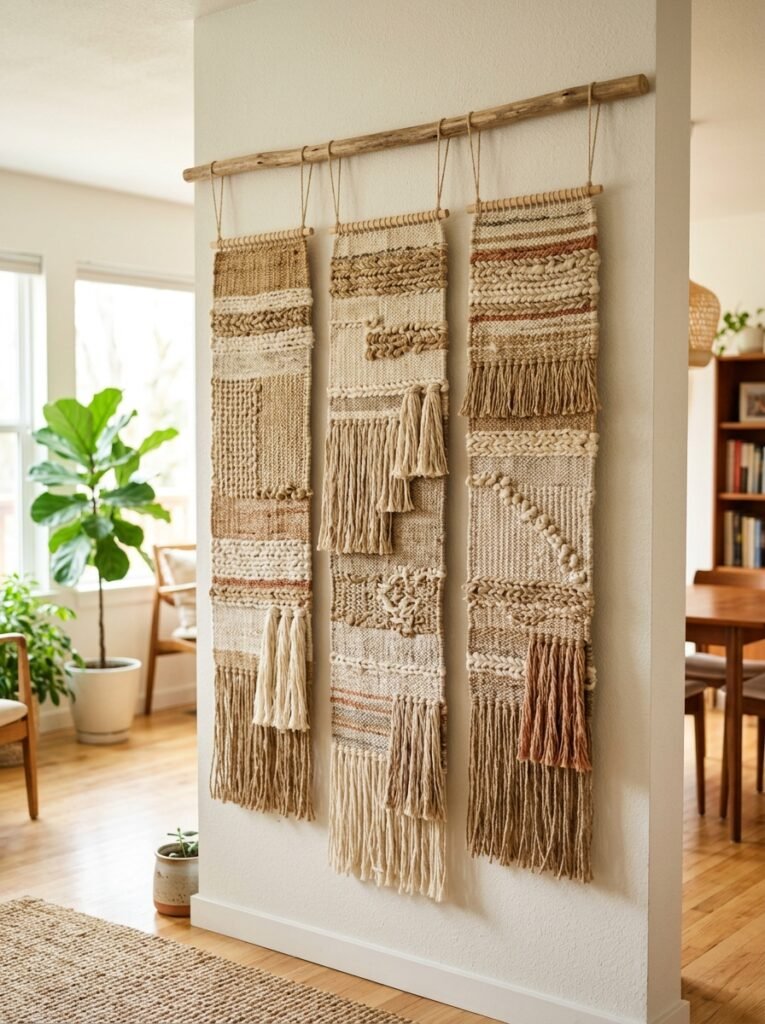
Hanging panels bring genuine texture into the mix, breaking up a room without the flat, solid look a screen or curtain sometimes has. These hanging room divider panels come in natural woven materials that let light filter through softly, working especially well for a bohemian or natural styled space.
Materials Needed:
- Hanging room divider panels
- Ceiling hooks or a mounted rod
- Drill if installing hooks
How to Make It:
- Determine the ceiling points where hooks or a rod will support the panels.
- Install the hooks or rod securely at the marked points.
- Attach the panels using their built in loops or ties.
- Space multiple panels evenly if using more than one across the divider line.
- Adjust panel height so the bottom edge clears the floor appropriately.

Hanging Room Divider Panels
Textured woven panels for a natural bohemian style room divider
Start Your 30-Day Home Reset
Stop waiting for a "perfect" free weekend. Grab the 30-day plan and start feeling lighter in your own home by tomorrow.
View the 30-Day Plan Printable PDF · Instant download6. Split a Studio Apartment Layout
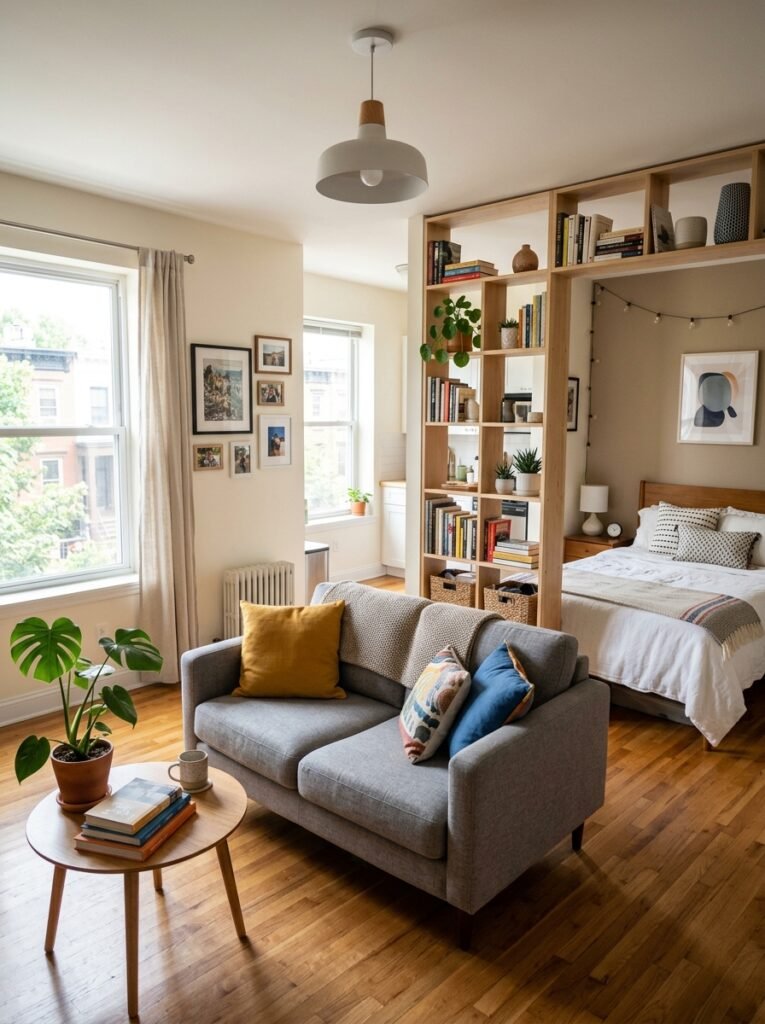
A studio apartment usually needs just one strategic divider to separate the sleeping area from everything else, rather than trying to chop the whole space into multiple zones. Placing the divider so it doesn’t block the room’s main light source keeps the split from making either side feel dark or cramped.
7. Create Privacy in a Shared Bedroom
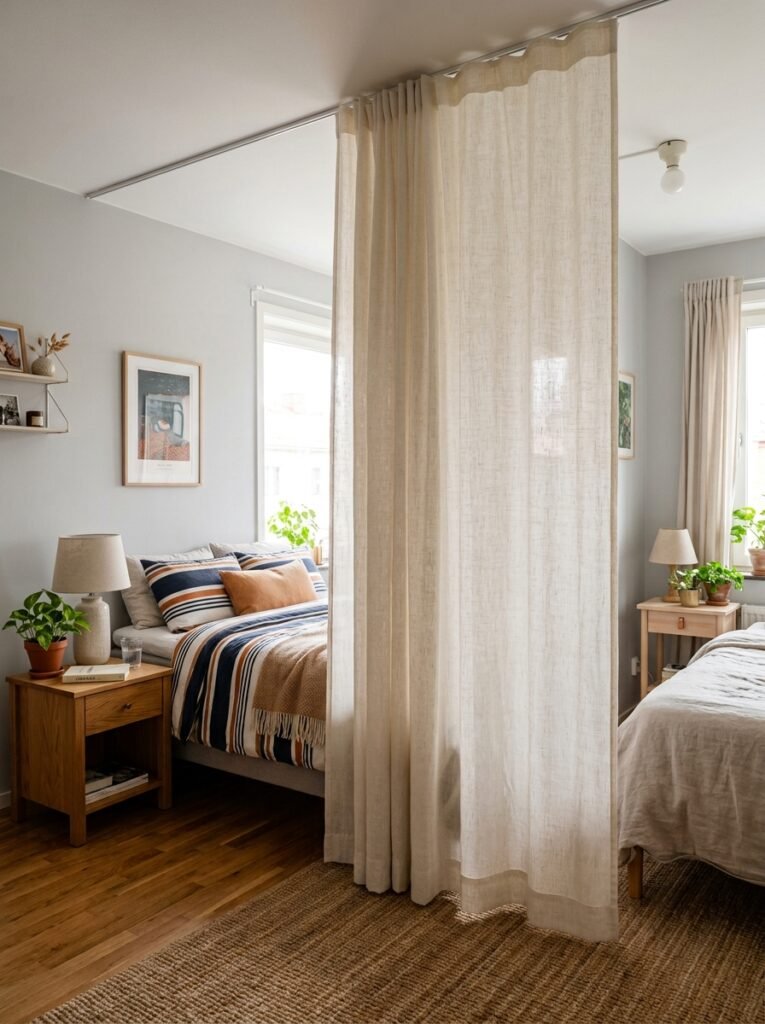
Two people sharing one bedroom, whether siblings or roommates, benefit most from a divider that still lets light through, since a fully solid wall in a shared room can feel more isolating than helpful. A curtain track or hanging panel setup gives each person a defined space without eliminating the connection between them entirely.
8. Section Off a Basement Living Area
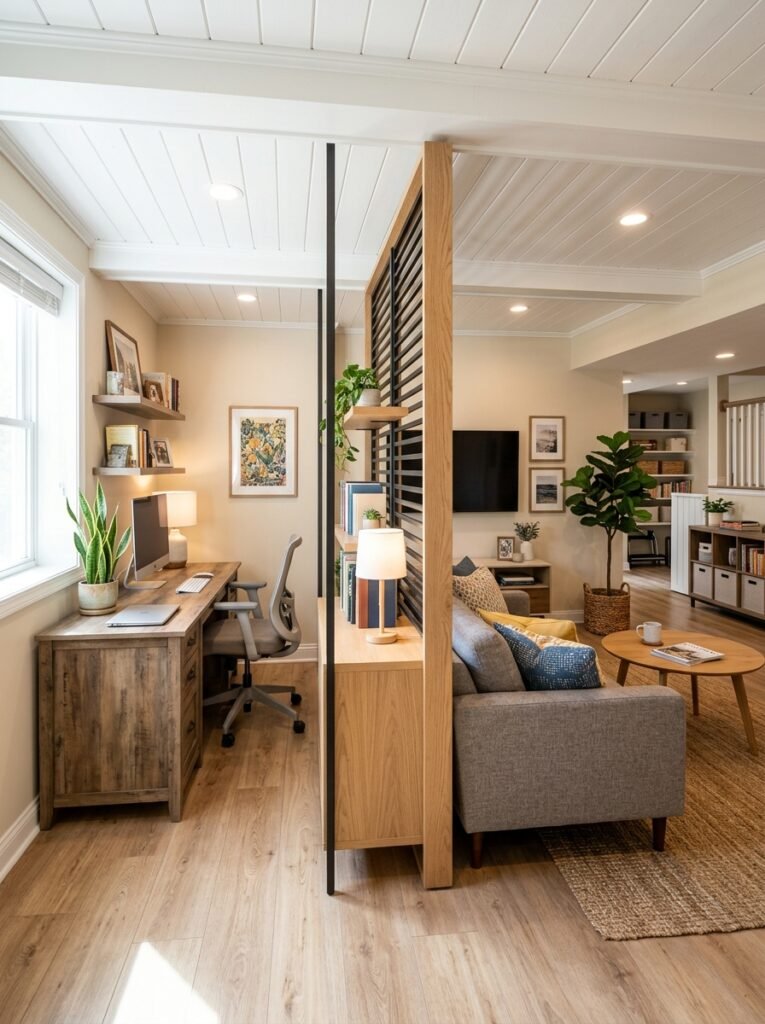
Basements often already read as one big undefined room, and a divider helps carve out distinct zones, a media area, a guest sleeping spot, a workout corner, without any actual construction. This works well combined with the same open layout thinking used in garage hangout ideas for other multi use spaces in the home.
9. Design a Divider for Kids Sharing a Room
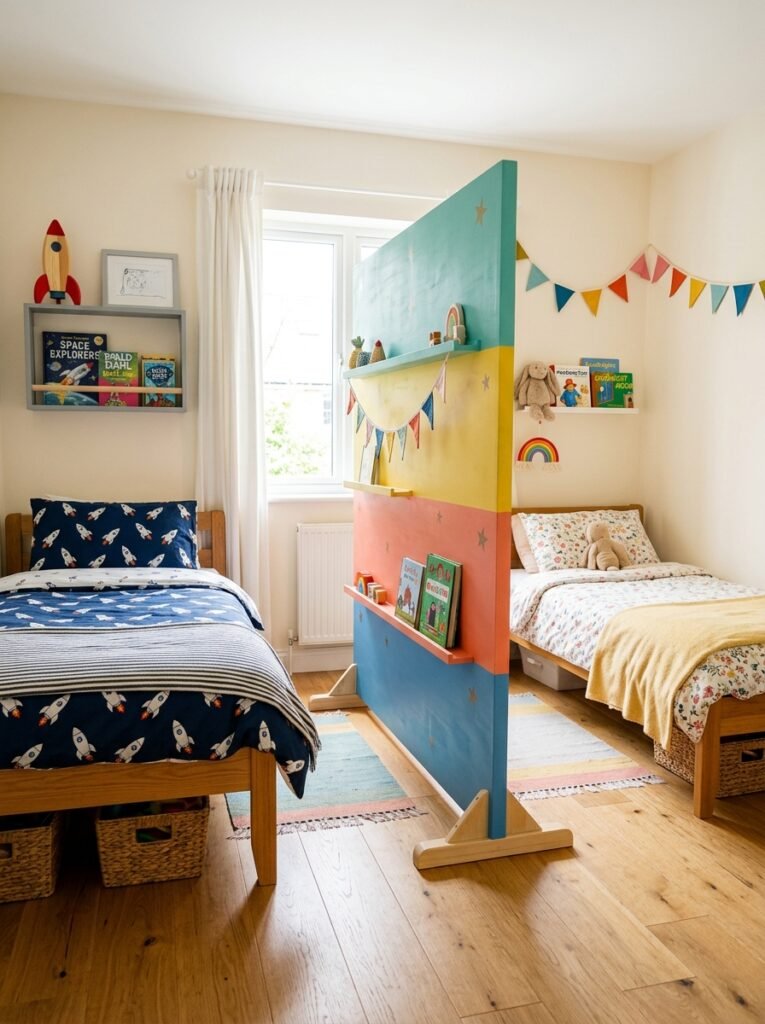
Kids sharing a bedroom often want their own defined territory even if the room itself stays open, and a simple divider gives each child that visual boundary without a full renovation. Letting each kid pick their side’s fabric or decor pattern makes the divider itself feel like part of their space rather than a random barrier.
10. Repurpose a Ladder as a Divider Base
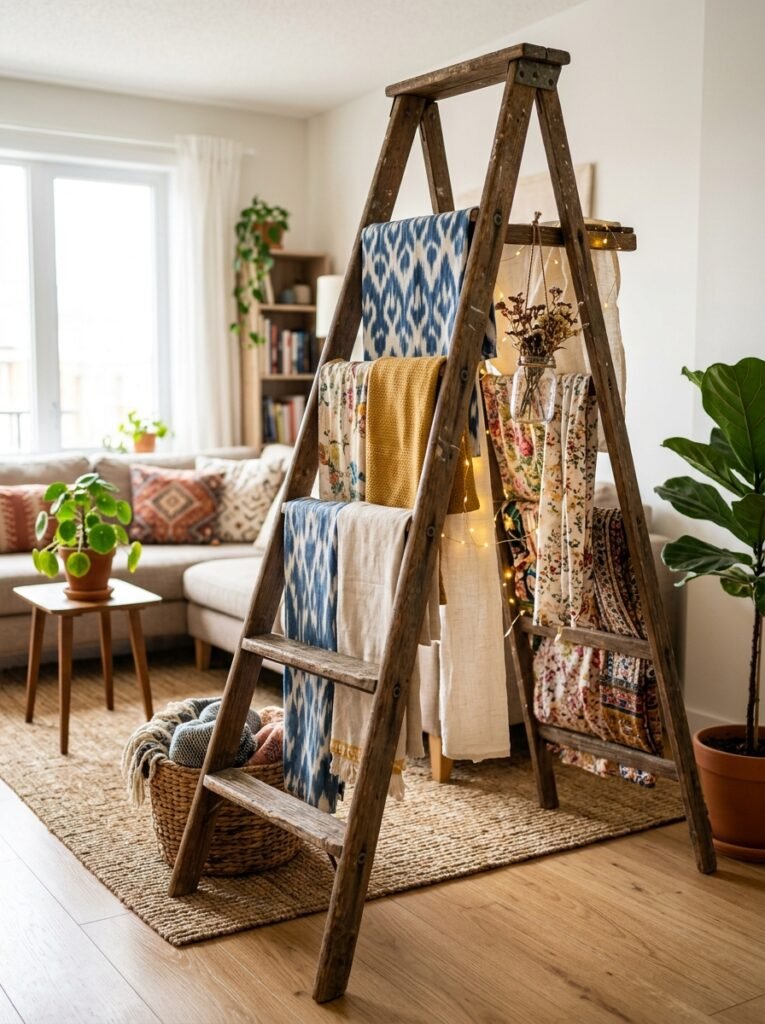
An old wooden ladder laid on its side or leaned at an angle can support draped fabric or hanging plants, creating a genuinely unique divider from something most people already have sitting in a garage. This repurposed approach costs almost nothing and adds a rustic, collected over time look that a purchased screen doesn’t quite replicate.
11. Build a Minimalist Divider with Clean Lines
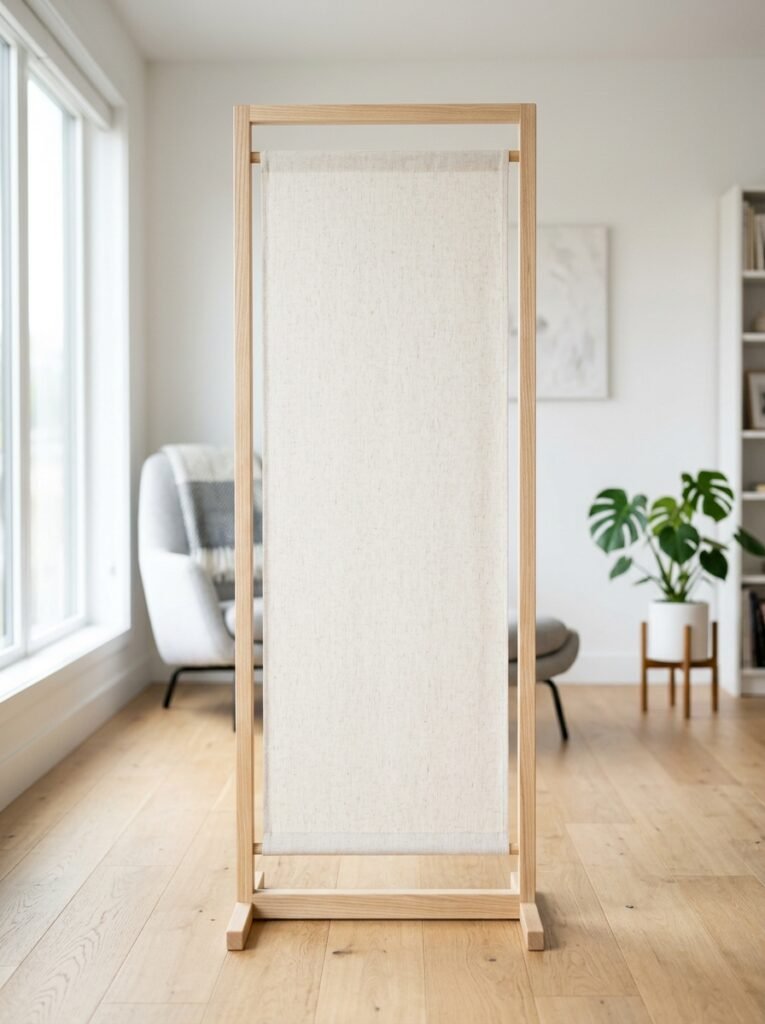
A minimalist room divider sticks to simple materials, a plain wood or metal frame with maybe one fabric panel, avoiding any pattern or ornamentation that would compete with the rest of a pared down space. This style works especially well in a small apartment already leaning into a clean, uncluttered aesthetic.
12. Add Bohemian Flair with Layered Textiles
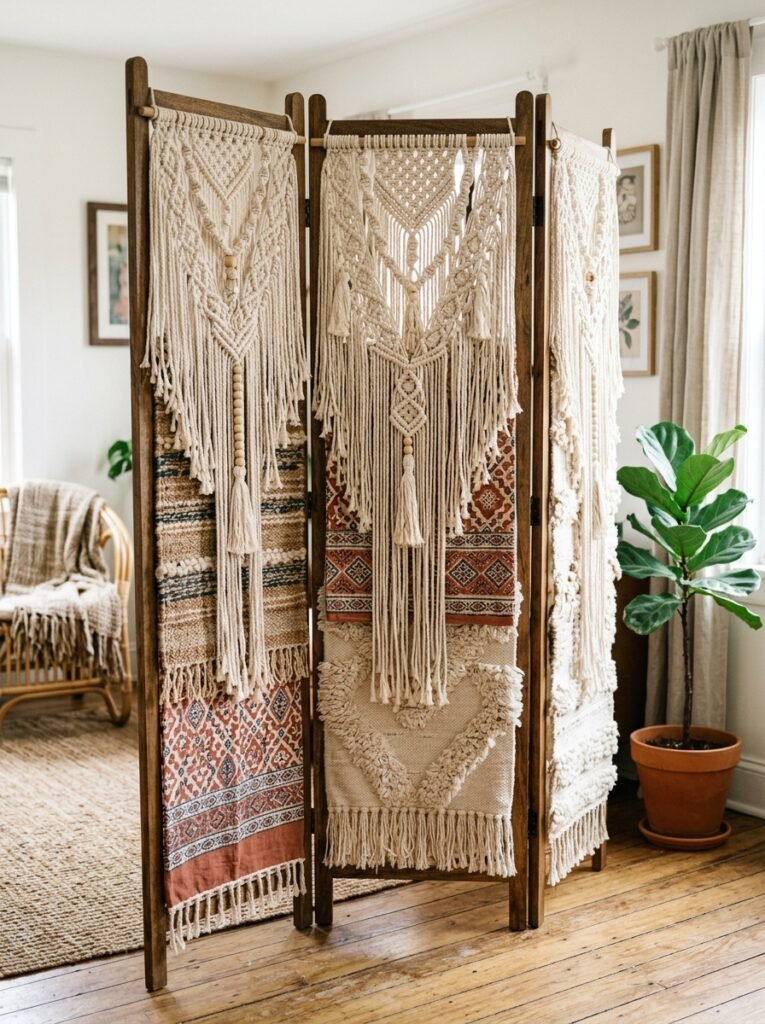
A bohemian divider layers multiple fabric textures and patterns together rather than sticking to one clean panel, mixing macrame, tassels, and warm earthy tones for a genuinely lived in feel. This approach pairs naturally with the mixed material styling covered in cottage garden ideas for other spaces embracing a similarly collected, organic look.
13. Try a Y2K Inspired Dorm Divider
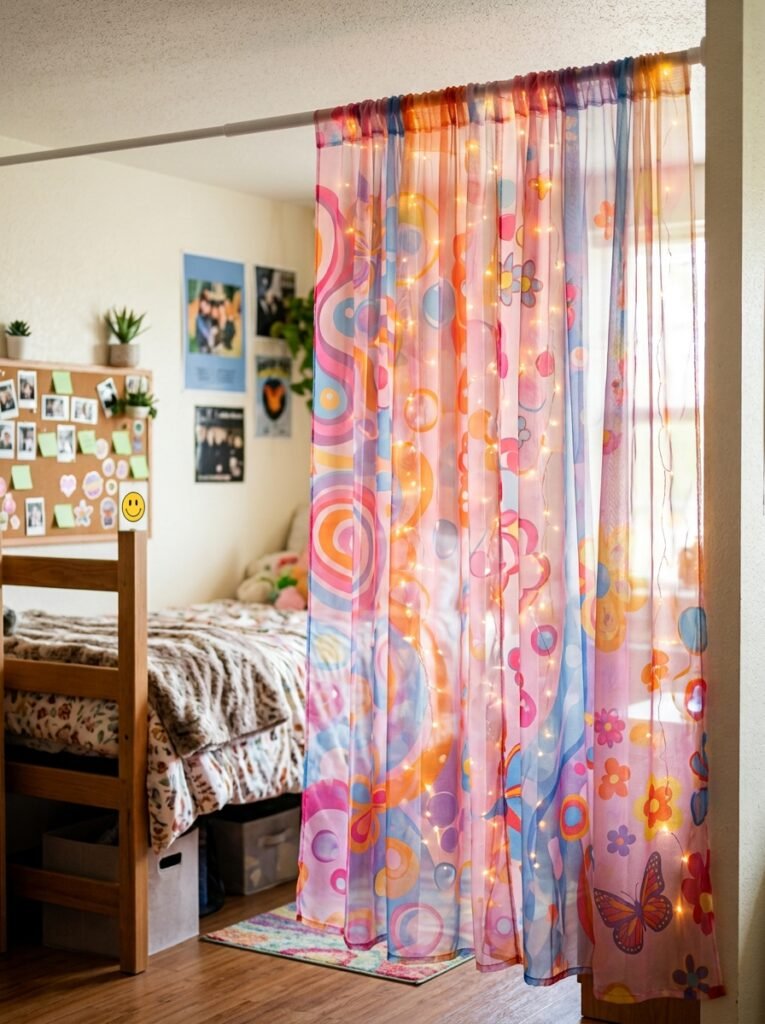
A Y2K style divider leans into the bright colors, sheer layered fabrics, and playful patterns associated with that specific aesthetic, giving a dorm room a distinct personality beyond just functional separation. Adding string lights woven through the fabric extends the theme into the evening once the overhead lights go off.
14. Use Repurposed Materials for a Budget Build
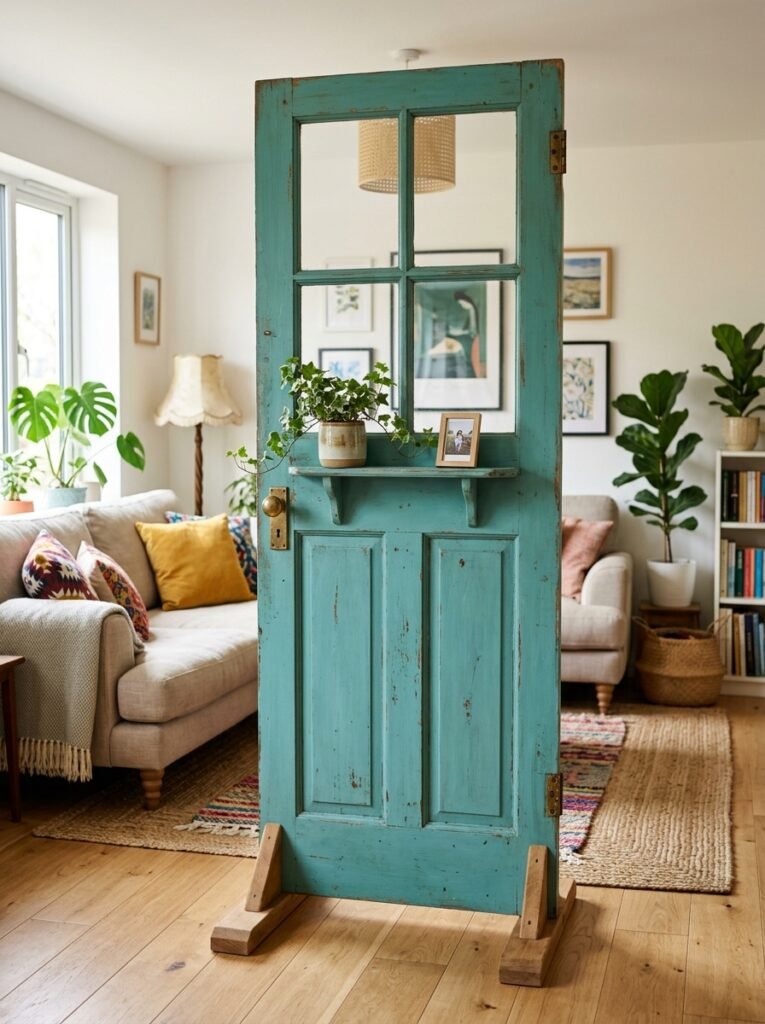
Old doors, pallets, or even a large piece of leftover fabric can all become a functional divider without spending much of anything on new materials. This upcycled thinking pairs well with the same budget conscious approach used in scrap fabric projects for other resourceful home projects.
15. Keep the Layout Flexible with a Rolling Divider
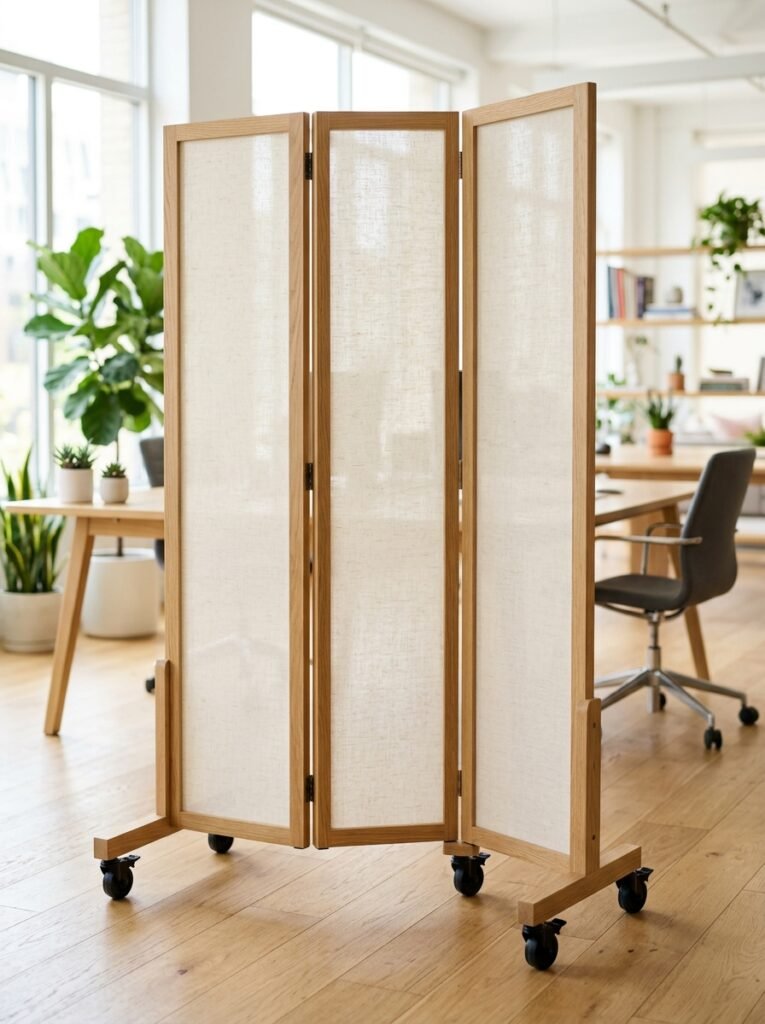
Mounting a divider, whether a screen or a shelf, on locking caster wheels means the layout can change on a whim rather than staying fixed in one spot forever. This flexibility matters most in a genuinely small space where the ideal room configuration might shift depending on whether guests are over or it’s just an ordinary night in.
Final Thoughts on DIY Room Divider Ideas
The right room divider really comes down to how much privacy you actually need versus how much you want the two spaces to still feel connected, since a solid bookshelf and a sheer curtain solve pretty different problems. Starting with something temporary and easy to remove, like a tension rod or folding screen, is a genuinely smart way to test whether a divider even improves the layout before committing to anything more permanent.


Amir Ali is the founder and site administrator of HomeDecorEdge, a modern home decor and interior design platform. Since starting the site, he has combined his passion for interior design, practical styling, and color coordination with hands-on content strategy and site management. He guides authors, curates high-quality articles, and ensures readers have access to actionable, visually inspiring, and user-focused home decor advice for apartments, small rooms, and family homes.