

Where do the extra plates go? And the table linens, the serving bowls, the candles, the board games that somehow end up in the dining room every single week? For a long time my answer was “on the table,” which meant every meal started with a five minute cleanup.
The dining room is one of the easiest rooms to add storage to, and honestly one of the most ignored. You have walls, corners and the space under a bench that nobody uses. Whether your dining area is a full room or a small corner of an apartment, these 15 dining room storage ideas will help you put things away and still keep the room feeling warm and open.
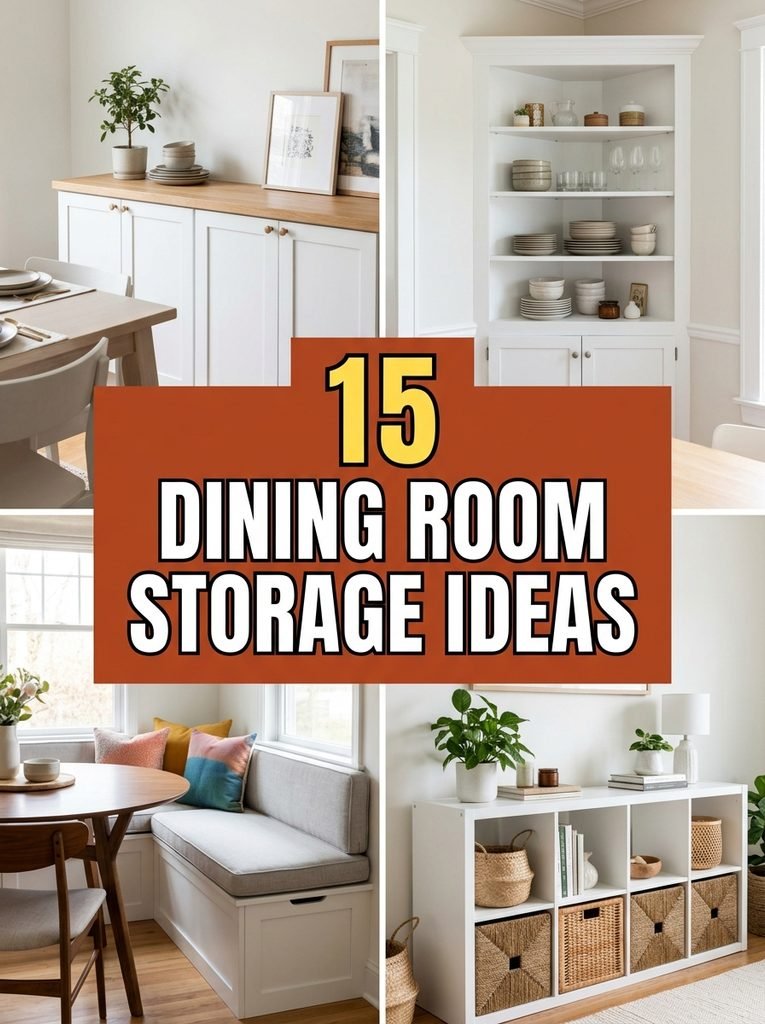
Quick picks if you’re short on time:
- Best DIY project: the built in buffet from stock cabinets (idea 1)
- Best for small spaces: the storage bench banquette (idea 3)
- Best on a budget: the cube storage sideboard (idea 4)
- Best for renters: the rolling bar cart (idea 11)
1. DIY Built In Buffet from Stock Cabinets
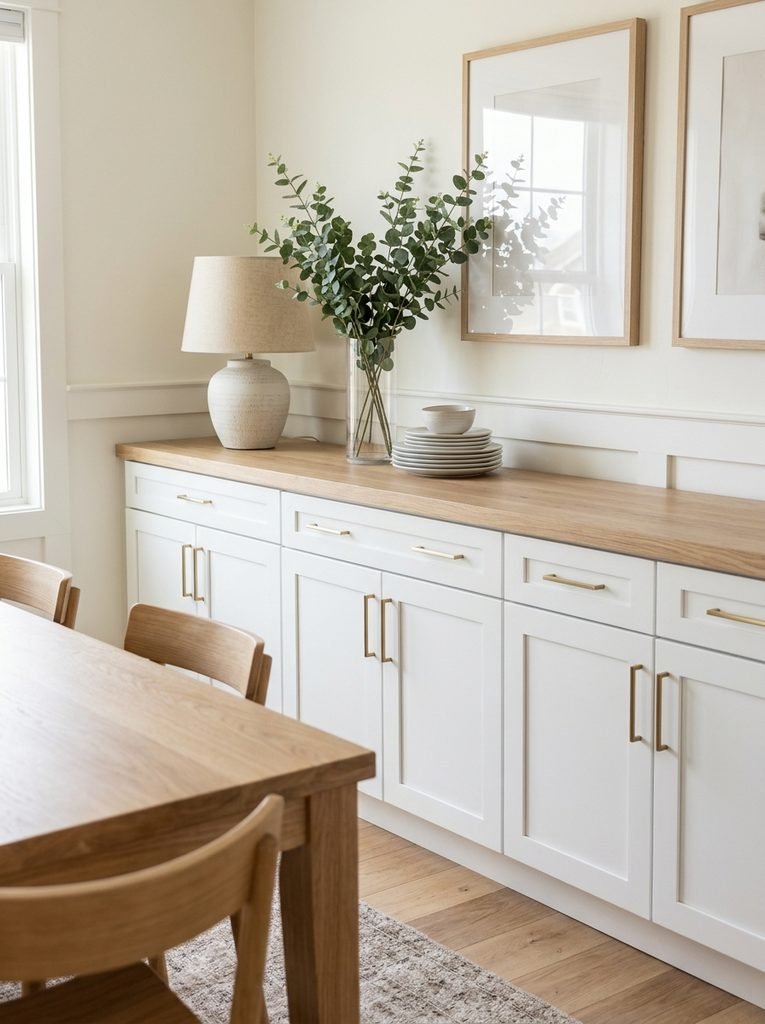
This is the project that changed my dining room the most. Kitchen base cabinets from any home store are sturdy, affordable and already the perfect height for a buffet. Line two or three of them up along a wall, add a nice wood top, and you get a custom built in look for a fraction of the price.
The big win is how much it holds. Plates and serving dishes go behind the doors, and the drawers take cutlery, napkins and candles. The top becomes a serving spot for holidays and a display surface the rest of the year.
Time: One weekendCost: MediumSkill: Intermediate
Materials Needed:
- 2 or 3 stock base cabinets (drawer and door styles mixed)
- A wood countertop or butcher block cut to length
- 2×4 lumber for a base riser
- Wood screws and cabinet connector screws
- A level, a drill and a stud finder
- Primer and paint, or the factory finish
- Cabinet pulls and a little wood filler
How to Make It:
- Measure your wall and pick cabinet widths that fill most of it, leaving a few inches on each side.
- Build a simple 2×4 frame on the floor so the cabinets sit level and slightly raised, just like kitchen cabinets do.
- Set the cabinets on the frame, line up their fronts, and clamp them together.
- Screw the cabinets to each other through the side panels, then screw them into the wall studs through the back rail.
- Lay the countertop on top, check it’s level, and fix it from underneath with short screws.
- Fill any gaps, paint if needed, and add the pulls.
A tip I picked up: let the countertop hang over each end by about an inch. It looks far more finished and custom than a top that stops flush with the cabinets.
2. DIY Corner Cabinet with Open Shelves
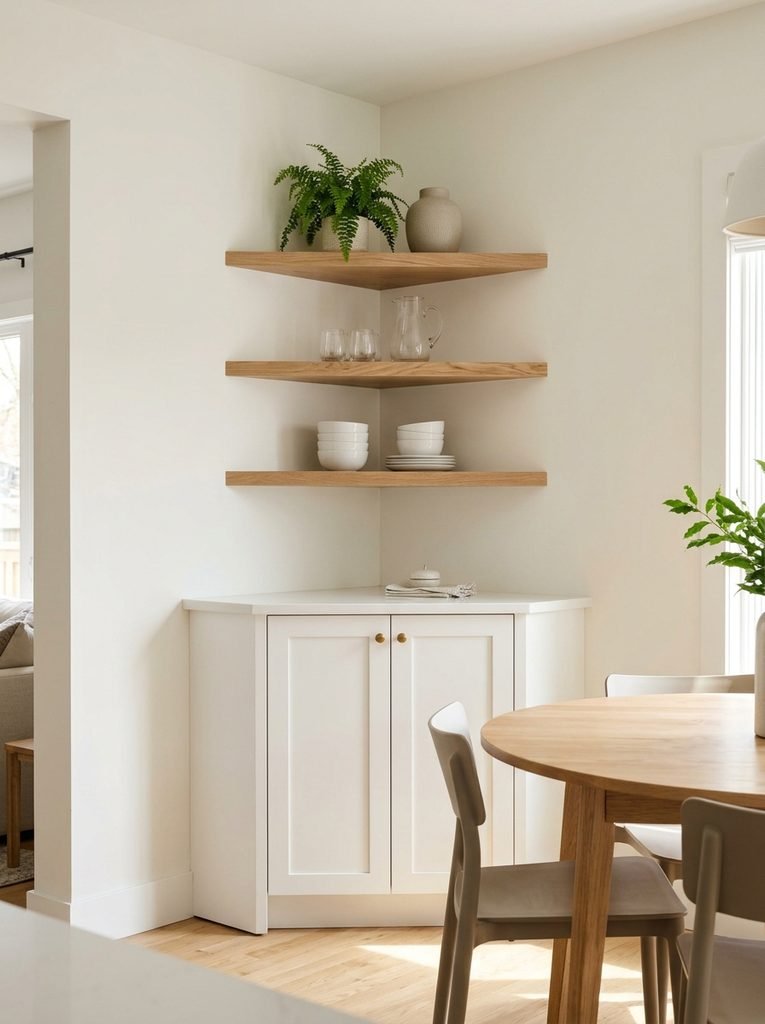
Corners are the most wasted spot in almost every dining room. A simple corner cabinet with open shelves above it turns that dead space into a little hutch. The closed bottom hides the messy stuff, and the shelves give you a spot for pretty bowls and a plant.
I love this one for small rooms because it adds storage without stealing any floor in front of the table.
Time: One dayCost: LowSkill: Beginner friendly
Materials Needed:
- A corner base cabinet (or a small square cabinet set at an angle)
- Three triangular wood shelves, cut from one board
- Small hidden shelf brackets or wood cleats
- Wall anchors and screws
- A level, a drill and a pencil
- Wood stain or clear finish
How to Make It:
- Set the cabinet into the corner and screw it into the wall studs so it can’t tip.
- Measure from the corner along each wall and cut the shelves into matching triangles.
- Sand the edges and finish the shelves to match your table or cabinet top.
- Mark the shelf heights on both walls, about 12 inches apart, and check each line with a level.
- Fix cleats or hidden brackets along the lines, using anchors where there are no studs.
- Slide the shelves on, screw them down from below, and style them with your everyday dishes.
Keep the heaviest stack of plates on the lowest shelf. It’s easier to reach and it keeps the whole corner looking steady.
3. DIY Storage Bench Banquette
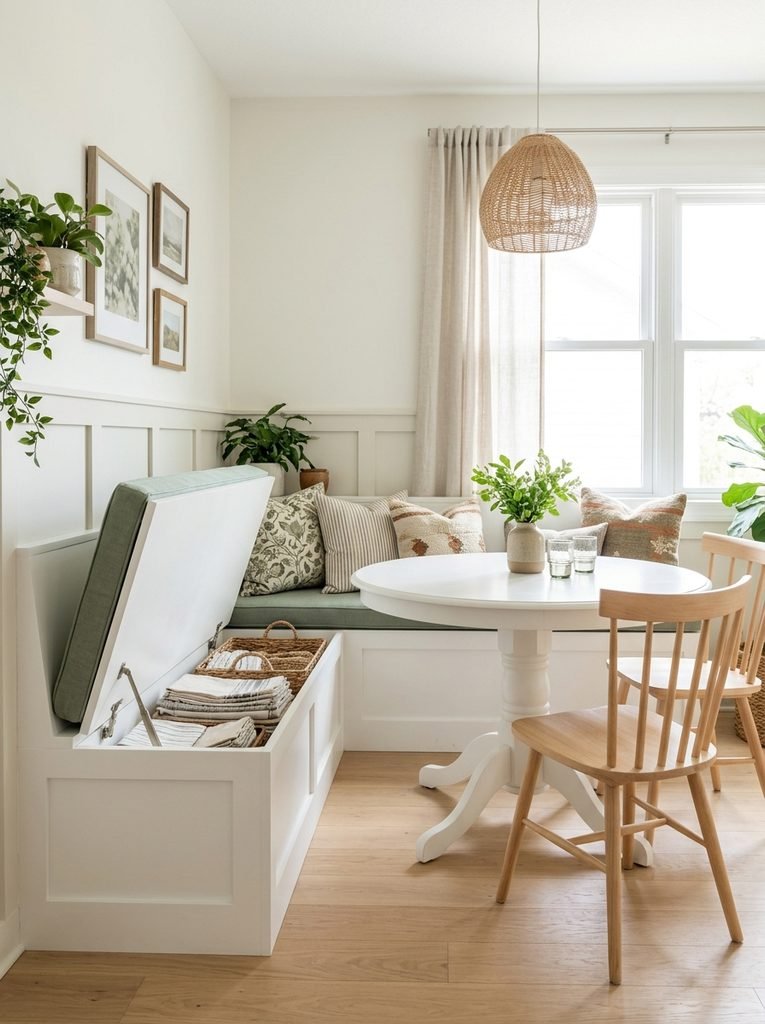
A banquette is seating and storage in one piece of furniture, which makes it perfect for small dining areas. Push the table against it and you fit more people than chairs ever could. Lift the seat and you have a deep hidden box for table linens, seasonal decor or extra napkins.
In my experience, the hinged lid version is the easiest to build, and it’s also the easiest to live with.
Time: One weekendCost: MediumSkill: Intermediate
Materials Needed:
- 3/4 inch plywood for the box and lid
- 2×2 lumber for inside corner supports
- A piano hinge or two lid stay hinges
- Wood glue and screws
- Baseboard trim and wood filler
- Paint, a foam cushion and fabric for the seat
How to Make It:
- Decide the bench length and keep the seat height around 18 inches with the cushion on.
- Cut the front, back, sides and bottom from plywood and glue and screw them into a box, with 2×2 supports in the corners.
- Cut the lid in one or two pieces and attach it with a piano hinge or lid stay hinges so it stays open while you reach in.
- Screw the back of the box into the wall studs.
- Add baseboard trim along the bottom so it looks built in, then fill and paint.
- Top it with a foam cushion wrapped in fabric, or a ready made bench cushion.
Use soft close lid stays, not a plain hinge. It stops the lid from slamming and keeps little fingers safe.
4. Cube Storage Unit as a Low Sideboard
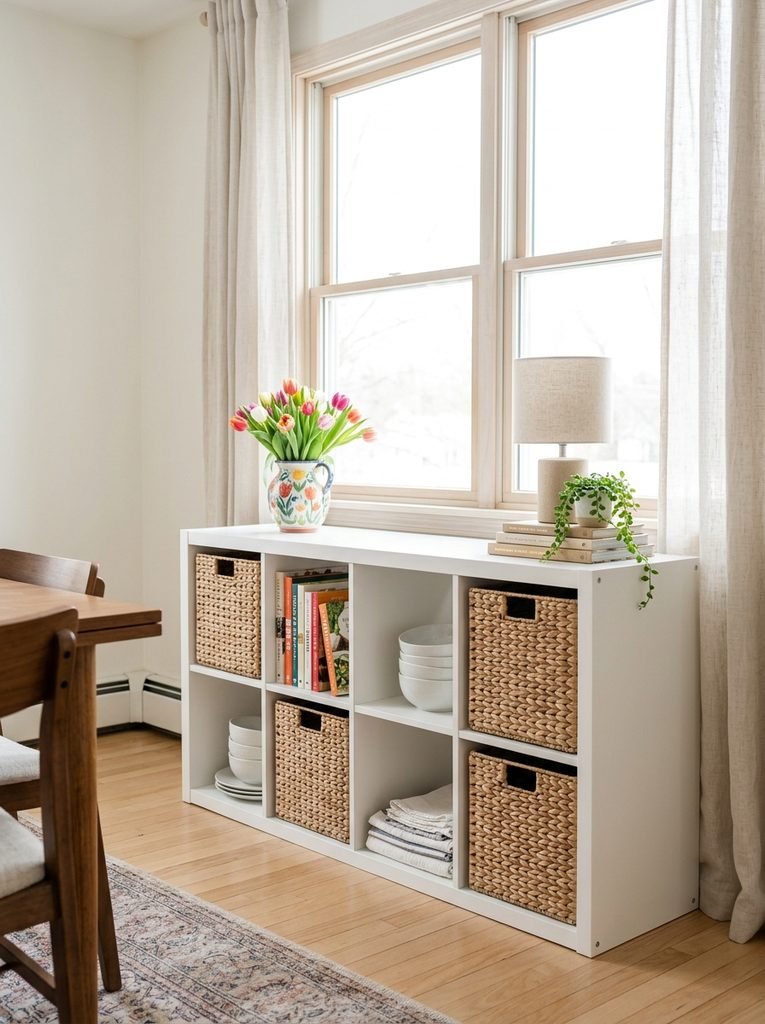
A cube shelf laid on its side is one of the cheapest sideboards you can make. It’s low enough to sit under a window and long enough to hold a lot. Mix closed baskets with open cubbies so it doesn’t look busy.
Honestly, the baskets are the secret. Fabric or woven ones hide placemats and napkins, while the open cubes show off a few nice bowls or a cookbook stack.
Start Your 30-Day Home Reset
Stop waiting for a "perfect" free weekend. Grab the 30-day plan and start feeling lighter in your own home by tomorrow.
View the 30-Day Plan Printable PDF · Instant downloadYou’ll need: a 2×4 cube storage unit, 4 to 6 baskets that fit the cubbies, and furniture legs or a plinth if you want it raised.
Best for: budget makeovers and rented homes
5. Wall Mounted Floating Shelves and Plate Rack
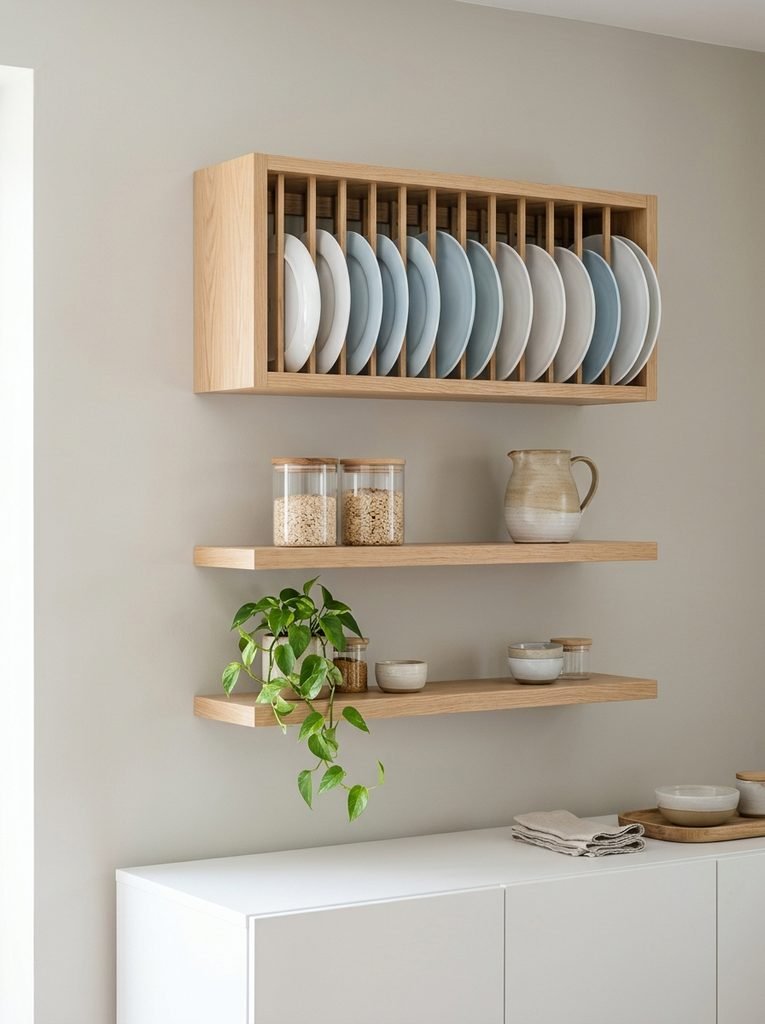
When the floor is full, go up. A wall mounted plate rack holds your everyday dishes upright, so they’re easy to grab and they double as wall decor. Add a couple of floating shelves below for glasses and serving jugs.
I like keeping these shelves to two or three items per foot. Too many things and it looks cluttered fast.
You’ll need: a wall plate rack, two floating shelves with hidden brackets, and wall anchors rated for the weight of your dishes.
Best for: small rooms with an empty wall
6. Slim Console for Narrow Dining Rooms
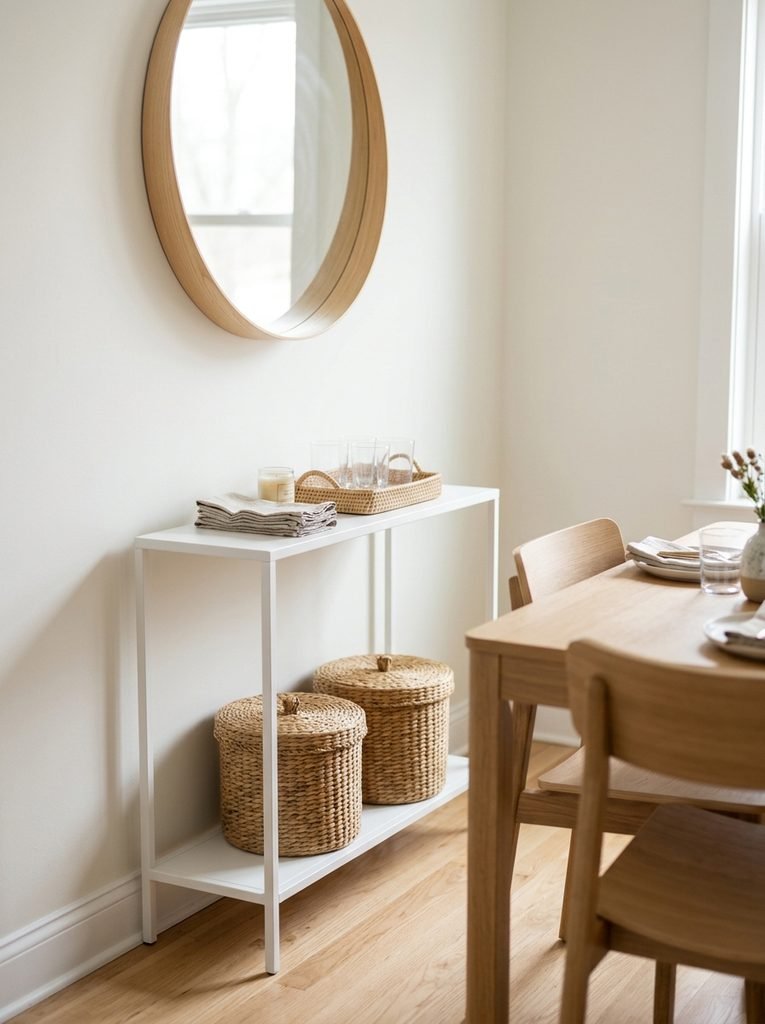
In a narrow room, a regular sideboard blocks the walkway behind the chairs. A slim console that’s 10 to 14 inches deep gives you a serving surface and a lower shelf without squeezing the room.
Put two lidded baskets on the bottom shelf and you get hidden storage too. A tray on top keeps glasses and coasters in one neat spot.
You’ll need: a console table under 14 inches deep and two lidded baskets for the bottom shelf.
Best for: narrow rooms and walkways behind chairs
7. Modern Flat Front Sideboard
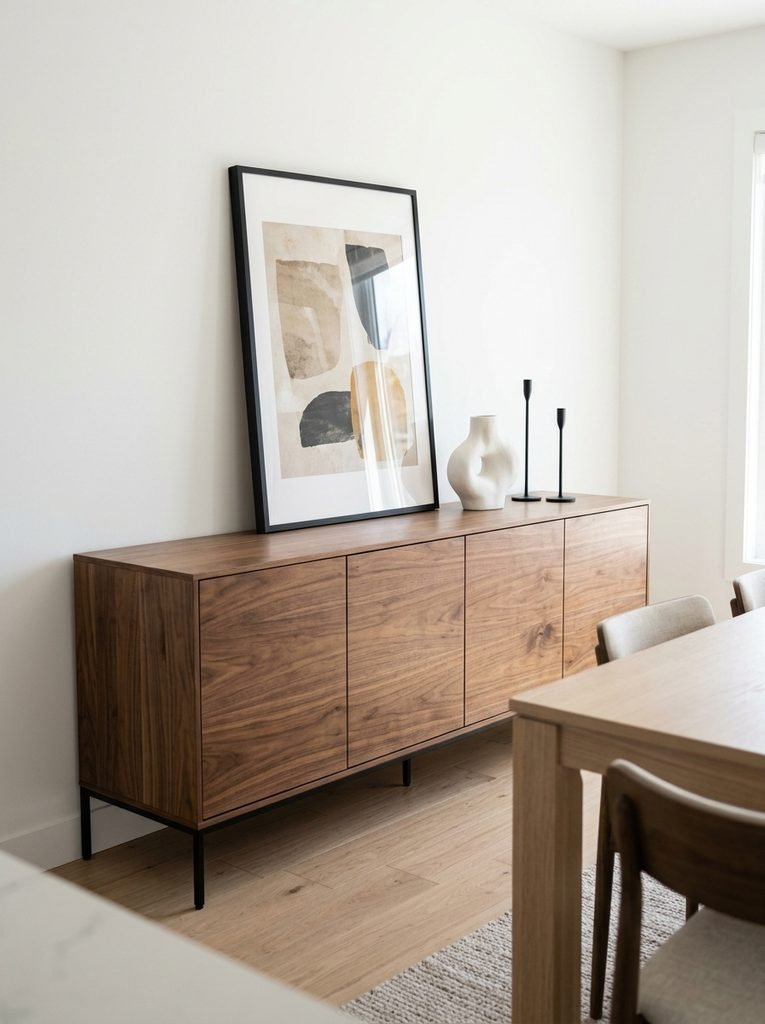
If you like a clean look, a flat front sideboard with no handles keeps everything hidden and calm. Push open doors mean nothing sticks out, so the room feels tidy even when the cabinet is packed.
Inside, I add a simple shelf riser so plates stack on two levels. It nearly doubles the usable space without changing how it looks from outside.
Best for: modern homes and anyone who loves a clutter free look
8. Farmhouse Hutch with Open Shelves
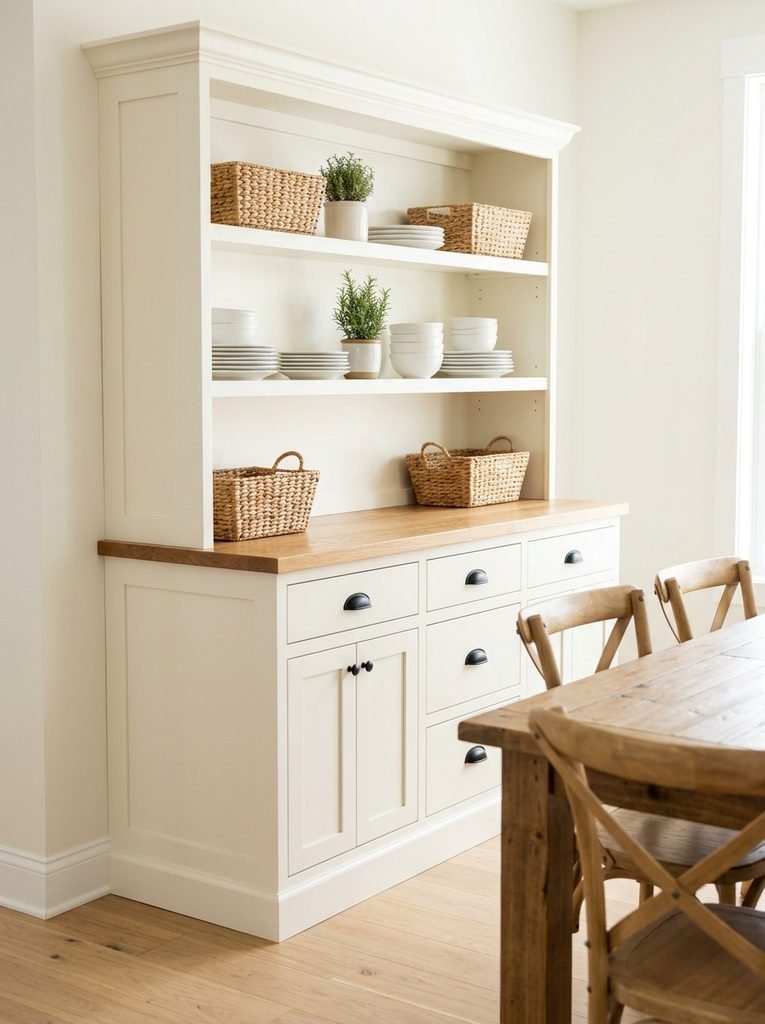
A farmhouse hutch gives you the best of both worlds. Closed cabinets at the bottom hide the serving platters, and open shelves on top show off plates and baskets. Warm wood with creamy paint feels cozy and rustic without looking dated.
A tip I picked up: line the back of the open shelves with a soft color or beadboard panel. It makes white dishes pop and adds that cottage farmhouse touch.
Best for: farmhouse and rustic dining rooms
9. Glass Front China Cabinet for a Formal Dining Room
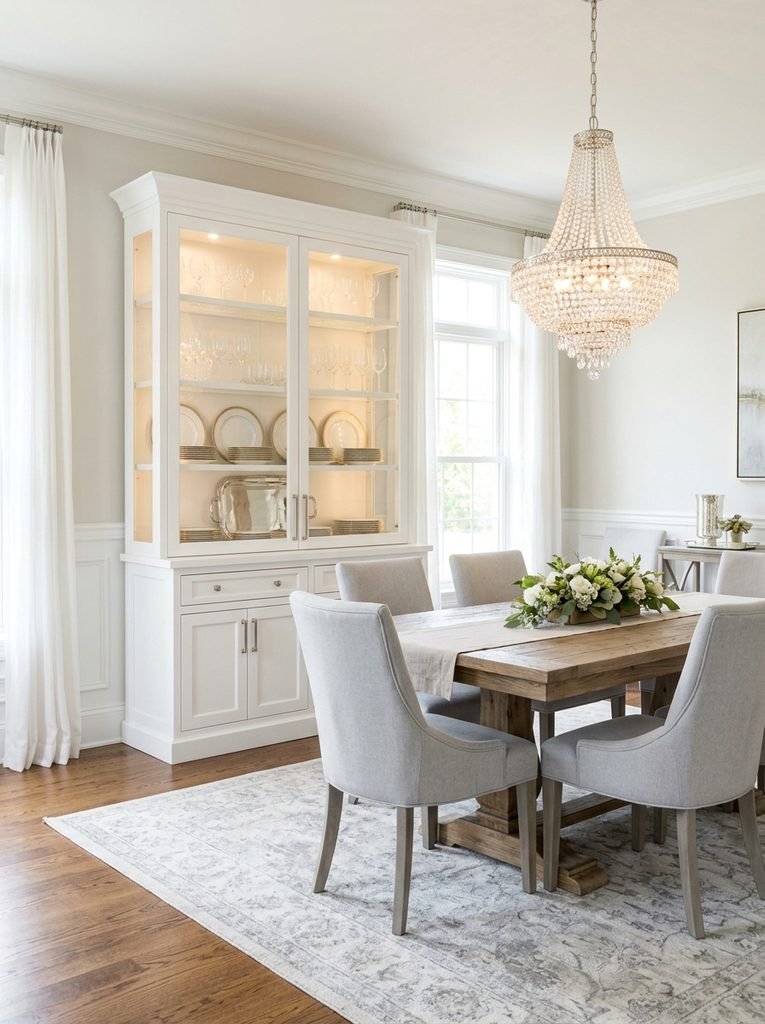
For a formal dining room, a glass front china cabinet is classic for a reason. It keeps your best dishes dust free while still letting you enjoy them. Add little puck lights inside and it glows beautifully during dinner.
I keep everyday things out of this cabinet. It works best for the special pieces you use a few times a year, like the good glasses and the holiday platters.
You’ll need: a glass front cabinet and battery or plug in puck lights for the shelves.
Best for: formal and transitional dining rooms
10. Coastal Buffet with Woven Baskets
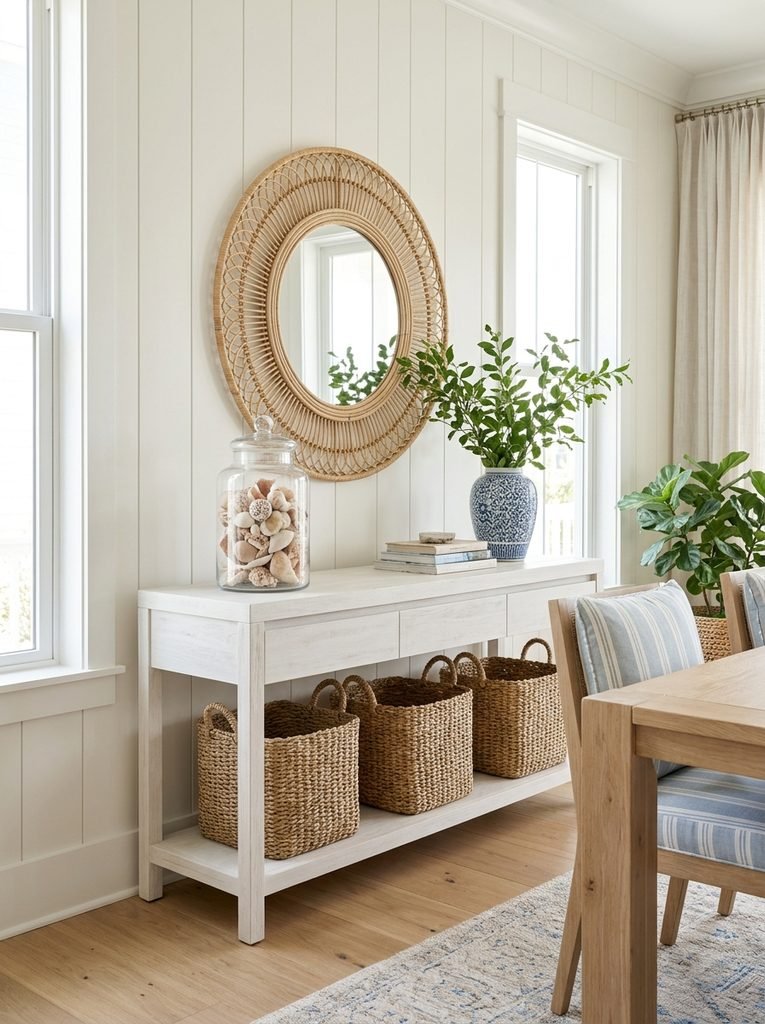
A light wood buffet with open shelves and woven baskets feels breezy and relaxed. The baskets hide the clutter and add texture, which is exactly what coastal style is all about.
I’d label the baskets on the inside of the rim with a small tag. Nobody sees it, but you’ll always know which one holds the napkins and which one holds the candles.
Best for: beach houses and light, airy homes
11. Rolling Bar Cart for Apartments
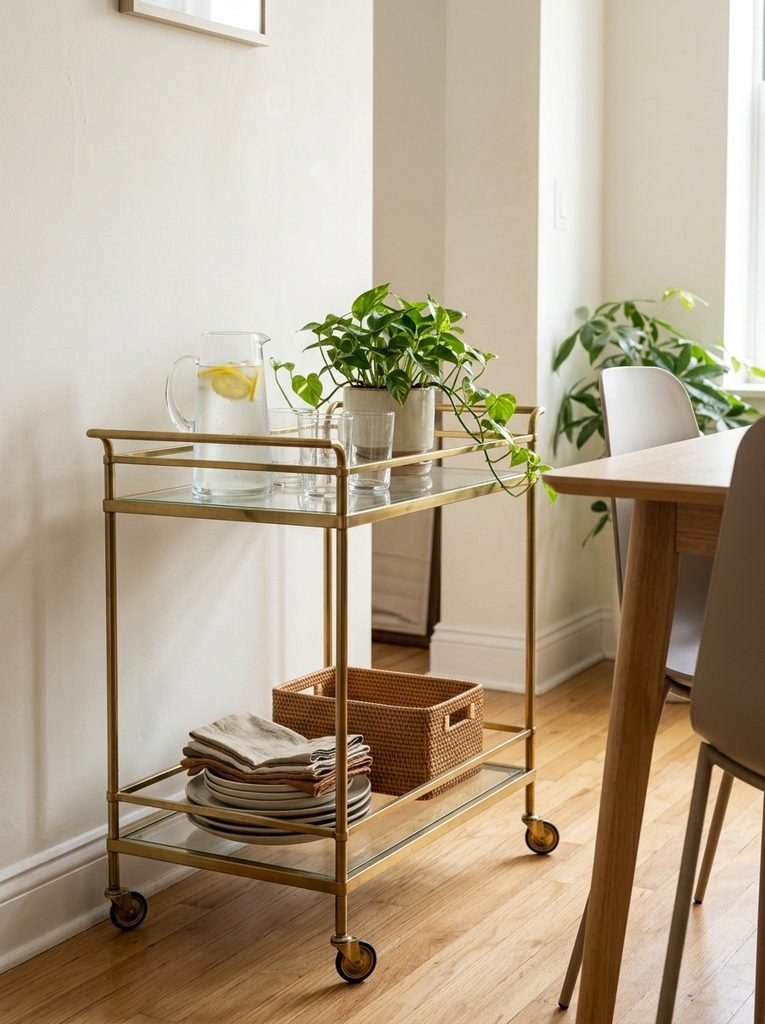
In a small apartment, a rolling cart is a sideboard that moves. Keep it by the table for meals, then roll it into a corner when you need the space. It holds glasses, plates and napkins, and it doubles as a drinks station when friends come over.
Honestly, this is my favorite renter friendly idea because there’s nothing to install and it moves with you.
You’ll need: a two or three tier rolling cart with locking wheels.
Best for: renters, apartments and tiny dining corners
12. Pantry Cabinet for a Kitchen and Dining Combo
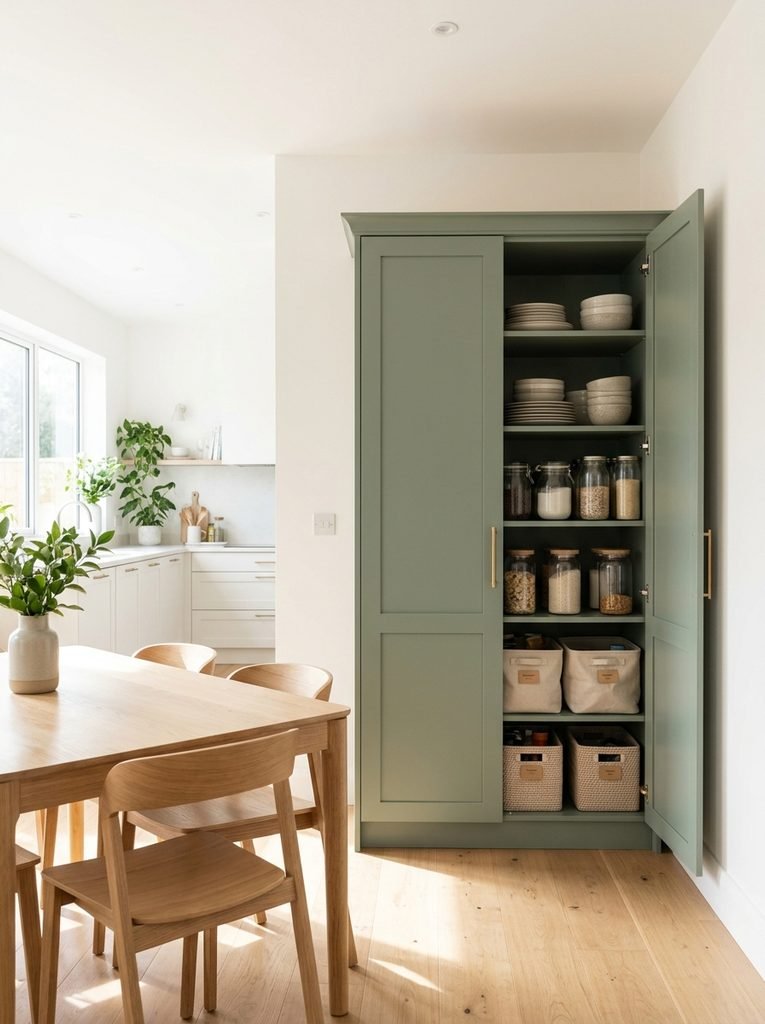
When your kitchen and dining room share one space, a tall pantry cabinet on the dining side takes pressure off the kitchen cabinets. Dishes, snacks and table linens all live in one place, right where you eat.
Pick a cabinet in a soft color like sage or navy so it looks like a piece of furniture, not an extra kitchen unit.
You’ll need: a tall freestanding pantry cabinet, shelf risers and a few clear bins.
Best for: open plan and kitchen dining combos
13. Wall Mounted Fold Down Table with Storage
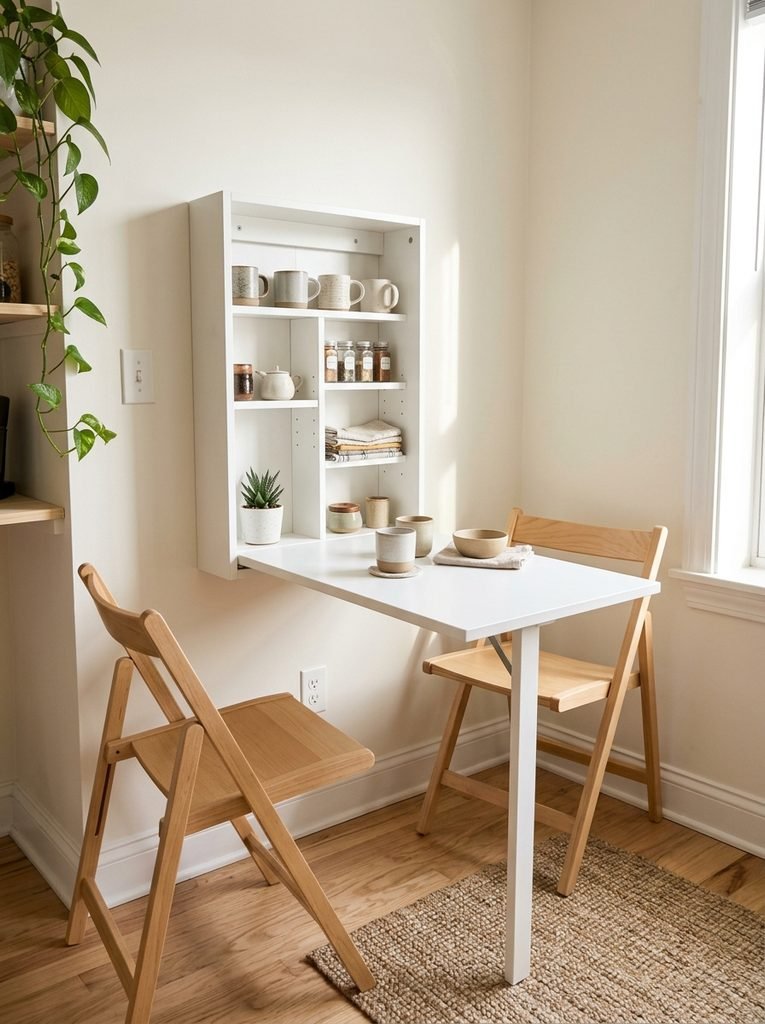
For a tiny space, this is the smartest idea on the list. When the table is folded up, it becomes a slim wall cabinet. Fold it down and you have a table for two, with shelves behind it holding mugs, napkins and spices.
It’s the kind of multi functional piece that makes a studio feel like it has a real dining area.
You’ll need: a wall mounted fold down table cabinet, heavy duty wall anchors and two folding chairs.
Best for: studios and tiny apartments
14. Open Shelf Room Divider for a Living and Dining Combo
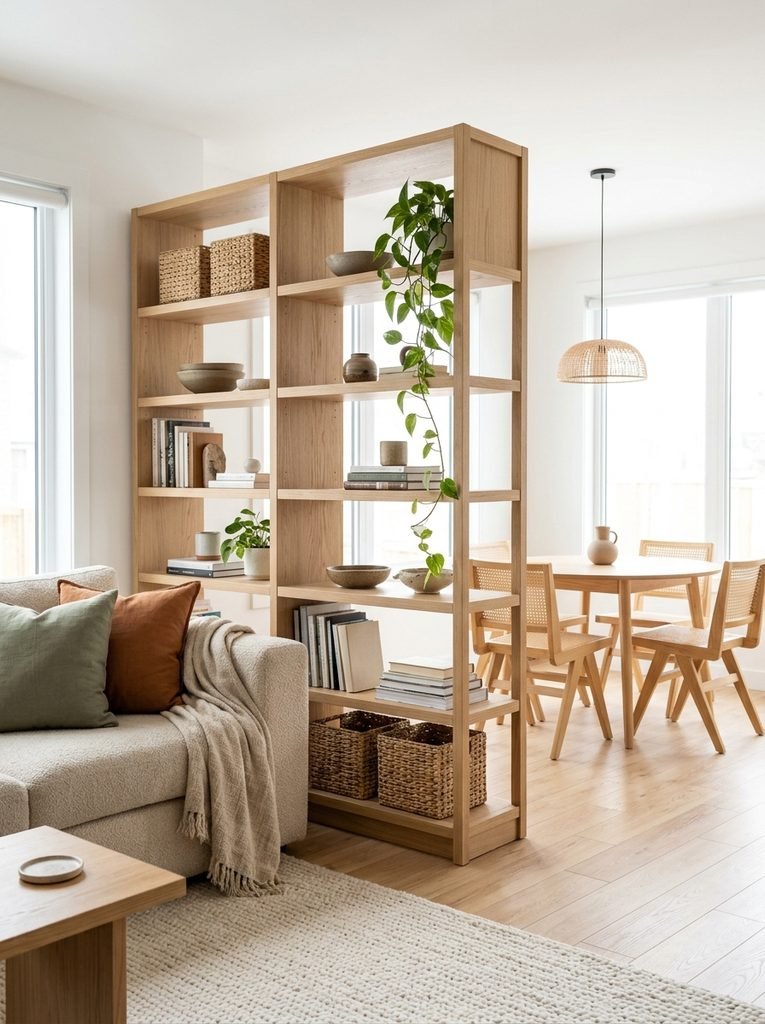
In a living and dining combo, an open back shelf separates the two areas without blocking the light. Put baskets on the lower shelves for dining things like placemats and candles, and keep the upper shelves for books and decor.
I like that it works from both sides. It gives each area its own feel while keeping the whole room open.
You’ll need: an open back shelving unit and a wall strap or ceiling anchor so it stays steady.
Best for: open plan living and dining rooms
15. Drawer Organizers for Linens and Cutlery
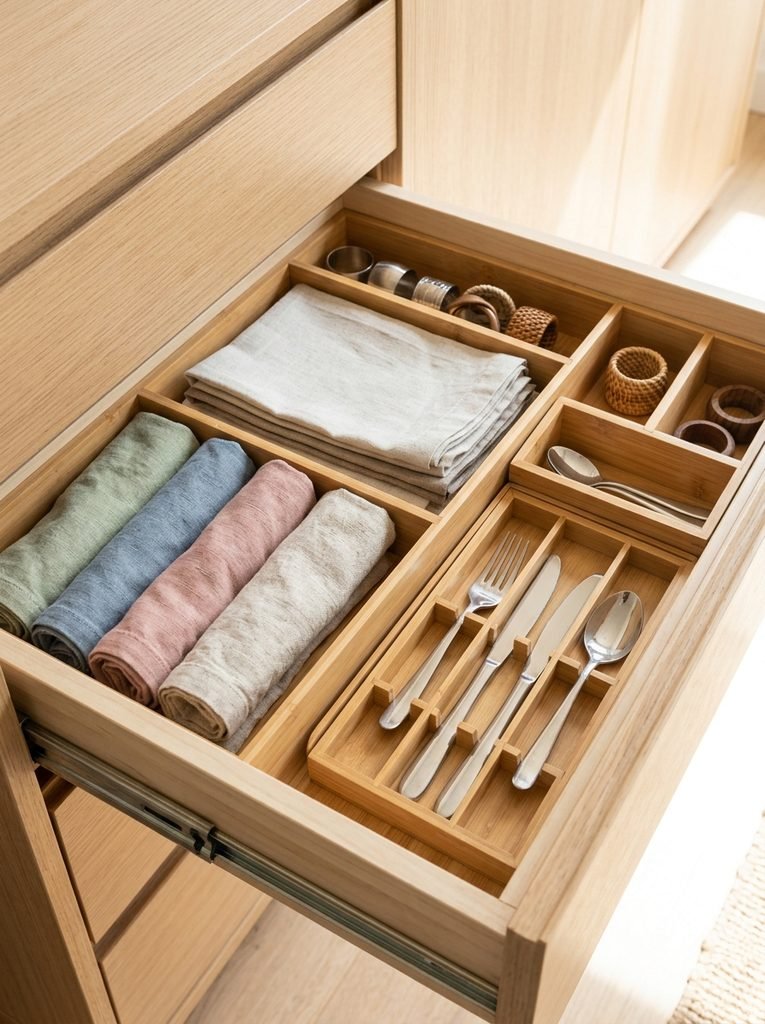
Sometimes you don’t need more storage, just better storage. Bamboo drawer dividers inside your buffet keep napkins, placemats and cutlery from turning into one big tangle.
A tip I picked up: roll cloth napkins instead of folding them. You can see every color at a glance and they don’t get crushed.
You’ll need: expandable bamboo drawer dividers and a cutlery tray sized to your drawer.
Best for: anyone with a buffet or sideboard that’s already full
Final Thoughts on Dining Room Storage Ideas
The best dining room storage ideas are the ones that fit how you actually use the room. If you host a lot, a built in buffet or china cabinet gives you room to serve. If your space is small, a storage bench, a slim console or a fold down table will do more work than you expect. Start with one corner or one wall, and you’ll be surprised how much calmer every meal feels.


Amir Ali is the founder and site administrator of HomeDecorEdge, a modern home decor and interior design platform. Since starting the site, he has combined his passion for interior design, practical styling, and color coordination with hands-on content strategy and site management. He guides authors, curates high-quality articles, and ensures readers have access to actionable, visually inspiring, and user-focused home decor advice for apartments, small rooms, and family homes.