

Our attic used to be the place where things went to be forgotten. Boxes on boxes. Nobody knew what was up there.
Sloped ceilings, low clearance and exposed beams make it feel impossible to organize. I get it.
But an attic has more usable space than most closets in your home. It just needs a plan.
These 15 attic storage ideas tackle the real problems. Unfinished floors, low ceilings, awkward eaves and that pile by the hatch.
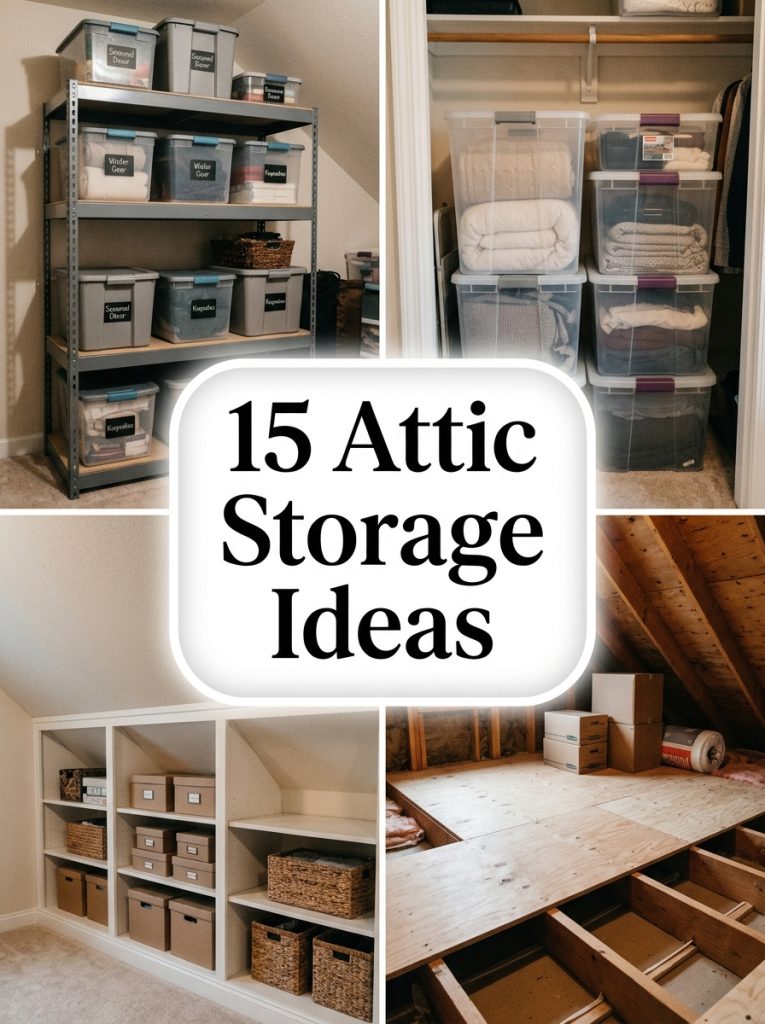
1Install a Metal Shelving Unit
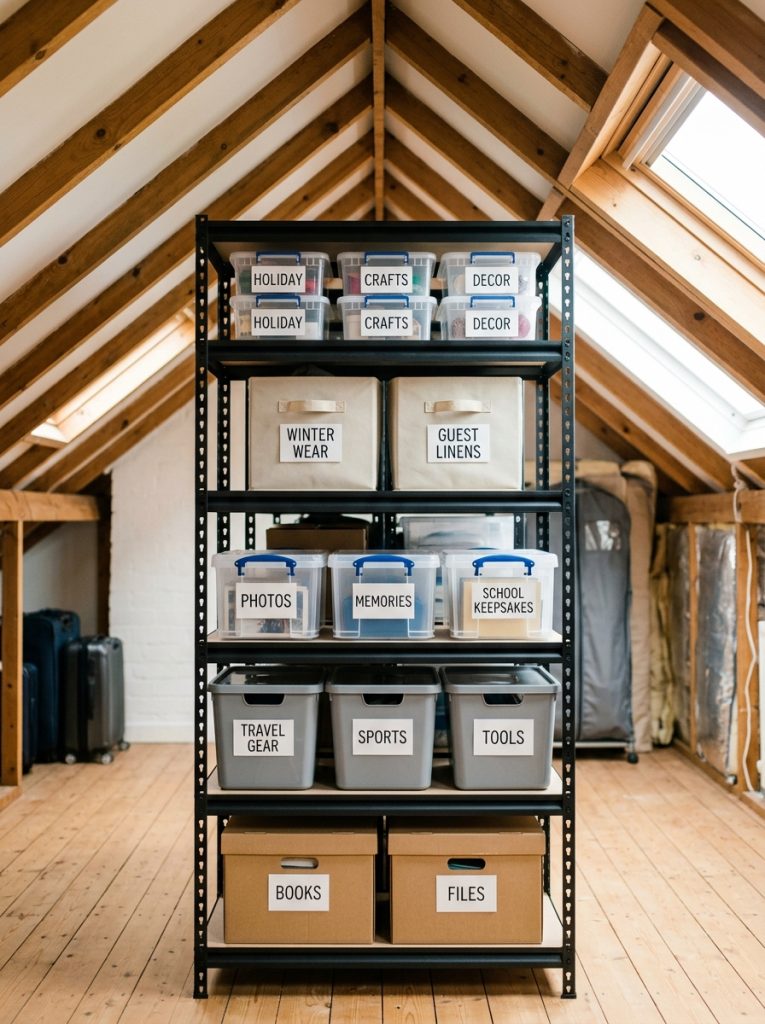
Put shelving at the tallest point of the attic, usually right under the center ridge. That is the only spot with full standing height.
Metal shelves keep boxes off the floor, away from insulation and ductwork. Keep the heaviest boxes on the bottom shelf.
- Uses full height area
- Keeps boxes off the floor
- Easy to see everything

My Pick
Attic Storage Shelving Unit
Sturdy metal shelves that fit under the ridge and keep boxes off the floor.
2Use Stackable Bins for Maximum Capacity
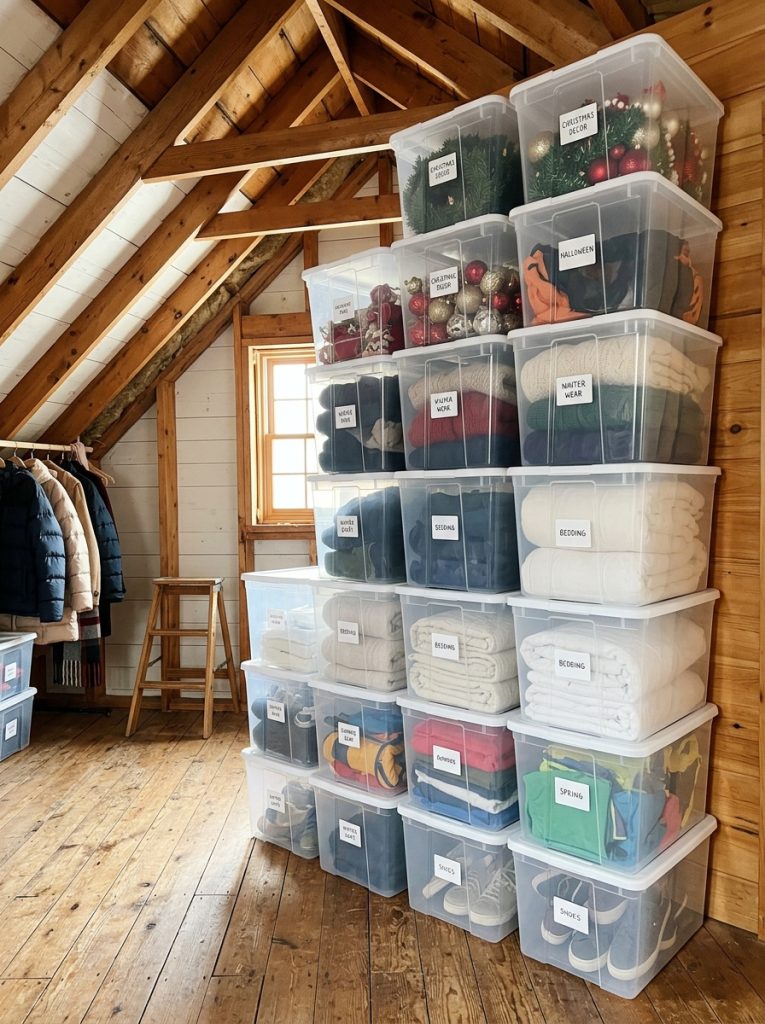
Stackable bins use height instead of floor space. That matters a lot when the floor area is small.
Interlocking bins will not topple, even on uneven boards. Clear ones let you see what is inside without opening anything.
- Saves floor space
- Stable tall stacks
- See contents at a glance

My Pick
Stackable Attic Storage Bins
Interlocking bins that stack tall without toppling, even on uneven boards.
3Use the Sloped Wall Space Under the Eaves
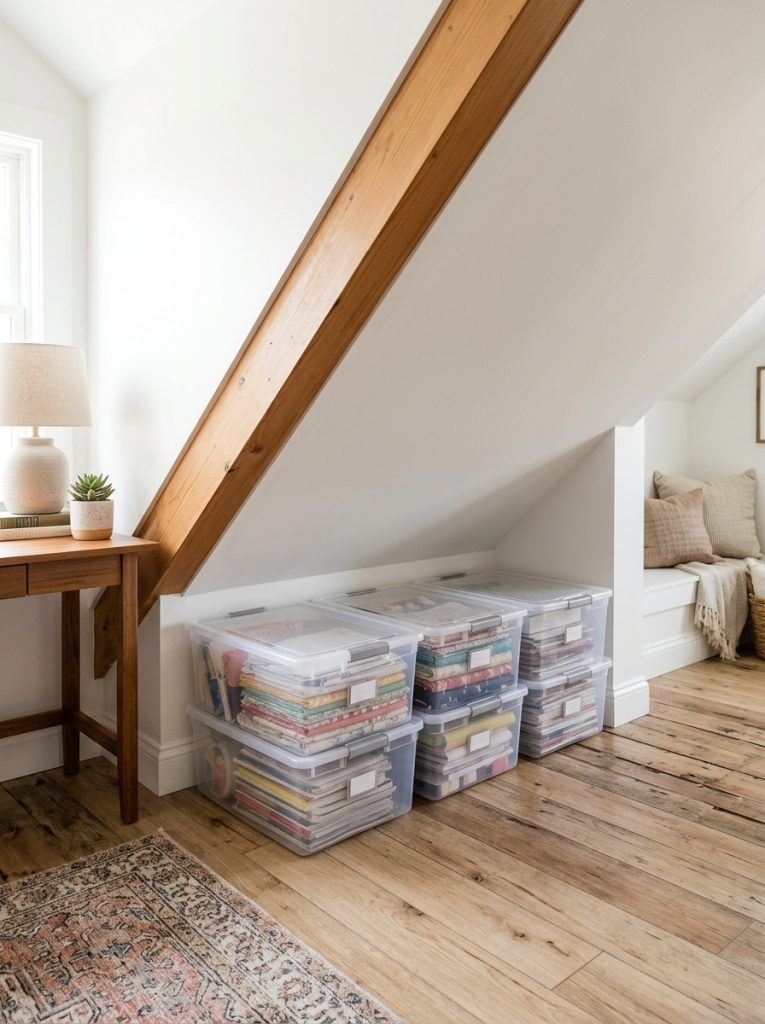
The triangle under the eaves usually sits empty. Low containers fit there perfectly.
Store flat things like wrapping paper, frames and flat holiday decor. Honestly, this zone surprised me with how much it holds.
- Uses dead space
- Perfect for flat items
- Keeps center clear

My Pick
Under Eave Low Profile Storage Containers
Short, wide containers made for that tricky triangle under the slope.
4Lay Platform Flooring Over the Joists
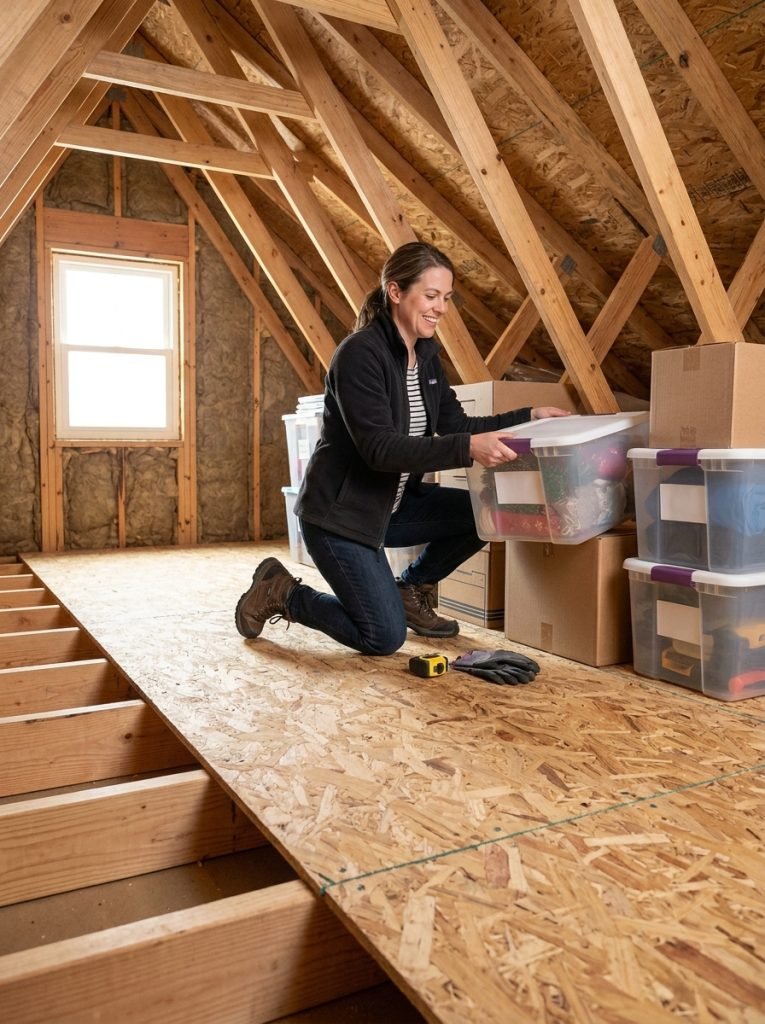
Never store anything directly on insulation or the ceiling drywall between joists. Weight must rest on the joists.
Platform flooring gives you a safe, flat surface. Raised panels sit above the insulation so it does not get crushed and keeps working.
- Safe to walk on
- Protects the ceiling below
- Keeps insulation working
Project Card · Half a day · Moderate
Materials Needed
- Attic platform flooring panels or raised floor kit
- Screws long enough to reach the joists
- Drill
- Tape measure
- Headlamp
- Knee pads, dust mask and gloves
How to Make It
- Plan a walkway and storage area near the hatch first, not the whole attic.
- Measure the joist spacing and confirm the panels match it.
- Lay each panel across the joists so its edges land on solid wood.
- Screw panels down into the joists, never into gaps.
- Keep loads light, and ask a contractor if you plan to store anything heavy.
PRO TIP Most attic floors are built for light storage only. Keep heavy things like tools and paint in the garage unless a pro confirms your joists can take the load.

My Pick
Attic Storage Platform Flooring
Creates a flat, stable surface over the joists so you never step through the ceiling.
Start Your 30-Day Home Reset
Stop waiting for a "perfect" free weekend. Grab the 30-day plan and start feeling lighter in your own home by tomorrow.
View the 30-Day Plan Printable PDF · Instant download5Add a Ladder Rack for Easy Access
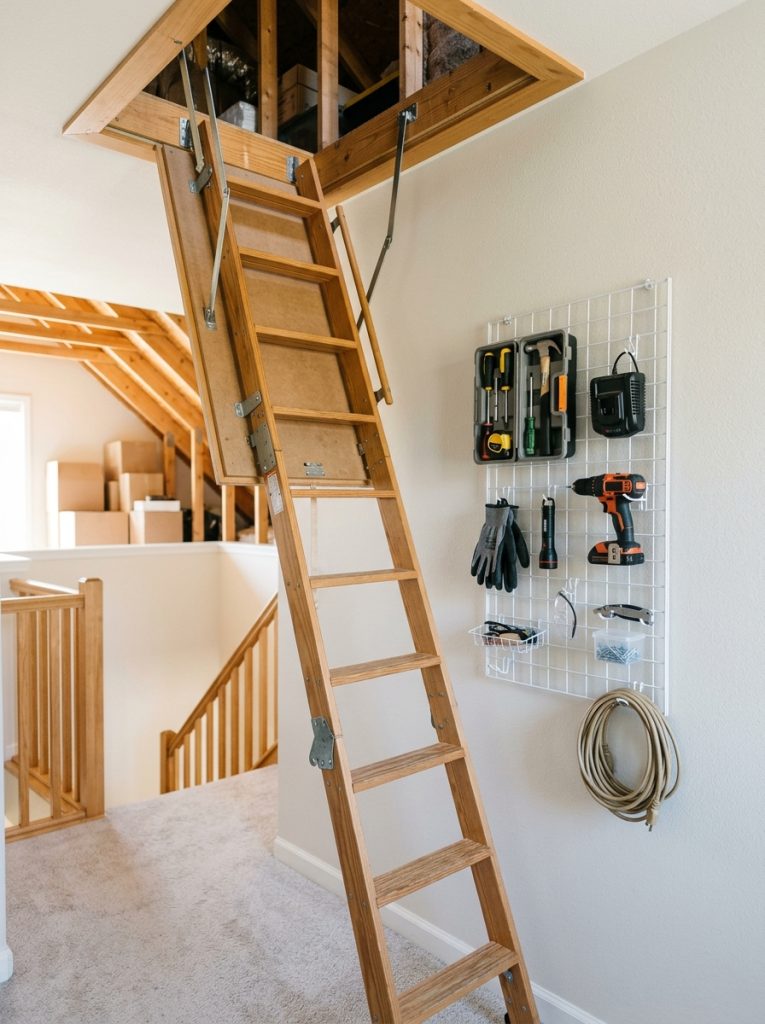
The spot right next to the attic ladder is gold. Keep items you use every year there.
A ladder rack near the entry means you grab holiday lights without crawling across the whole attic.
- Fast grab and go
- Less crawling around
- Safer climbing

My Pick
Attic Ladder Storage Rack
Keeps the stuff you grab most right by the hatch.
6Sort Seasonal Items into Labeled Containers
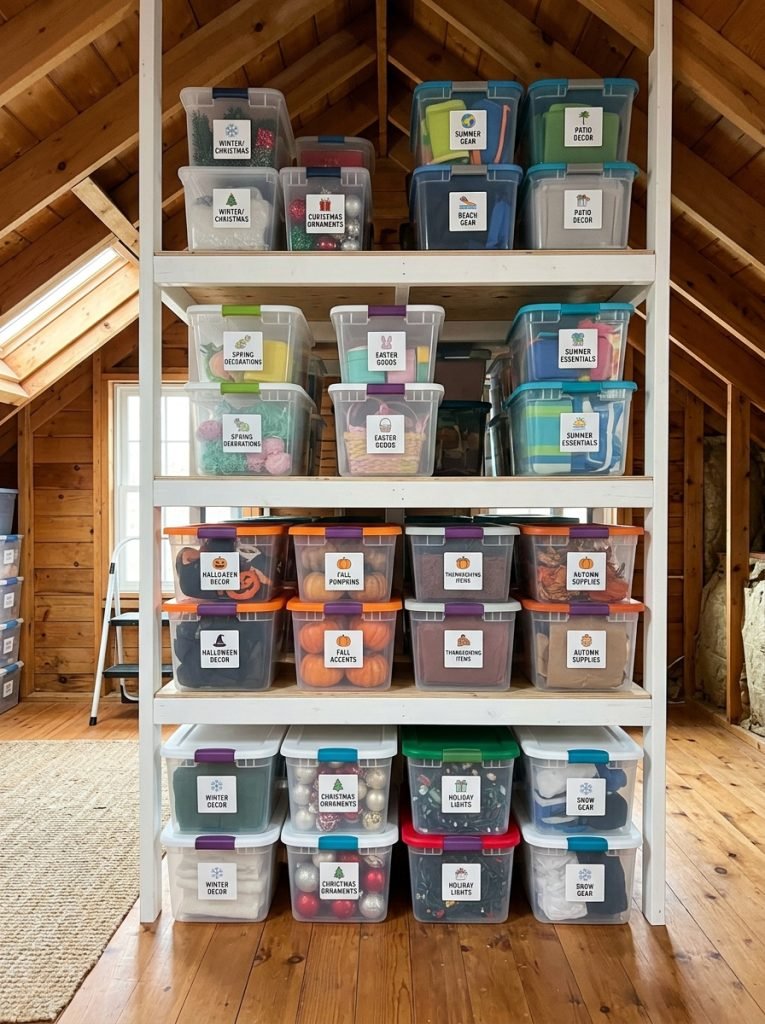
Seasonal stuff is most of what attics hold. A clear label system keeps it under control.
Sort by holiday or season. Christmas, Halloween, summer camping, winter clothes. Each one in its own labeled bin.
- Find things in minutes
- Easy yearly rotation
- No surprise boxes
Project Card · 2 hours · Easy
Materials Needed
- Seasonal storage containers
- Label maker or large printed labels
- Marker
- A simple inventory list on paper or your phone
How to Make It
- Bring everything down and sort into piles by season or holiday.
- Donate anything you did not use last year.
- Pack each pile into its own container, heavy items at the bottom.
- Label two sides of every bin so you can read it from any angle.
- Write a quick list of what is in each bin and keep it by the hatch.

My Pick
Seasonal Storage Containers
Big labeled totes for holiday decor and off season clothes.
7Organize an Unfinished Attic by Zone
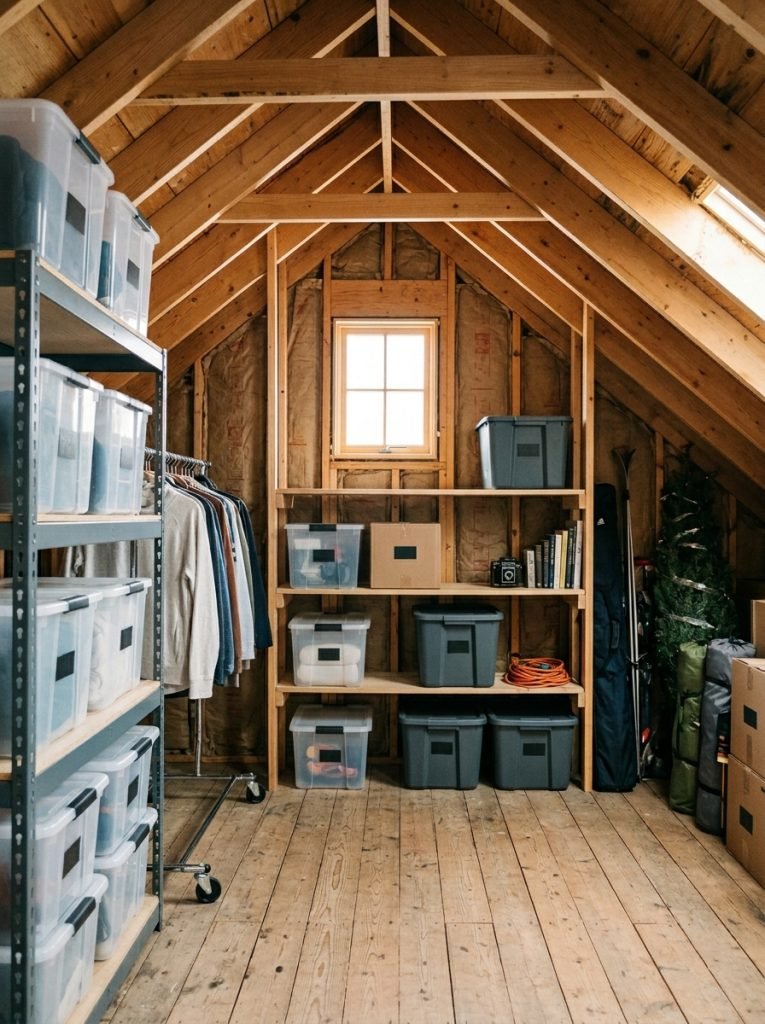
With no walls to divide space, zones are everything. Tall center for shelving. Low edges for flat things. Near the hatch for frequent items.
Once each zone has a job, clutter stops spreading.
- Clear system
- Stops clutter creep
- Easy for everyone to follow
8Maximize a Low Ceiling Attic with Shallow Storage
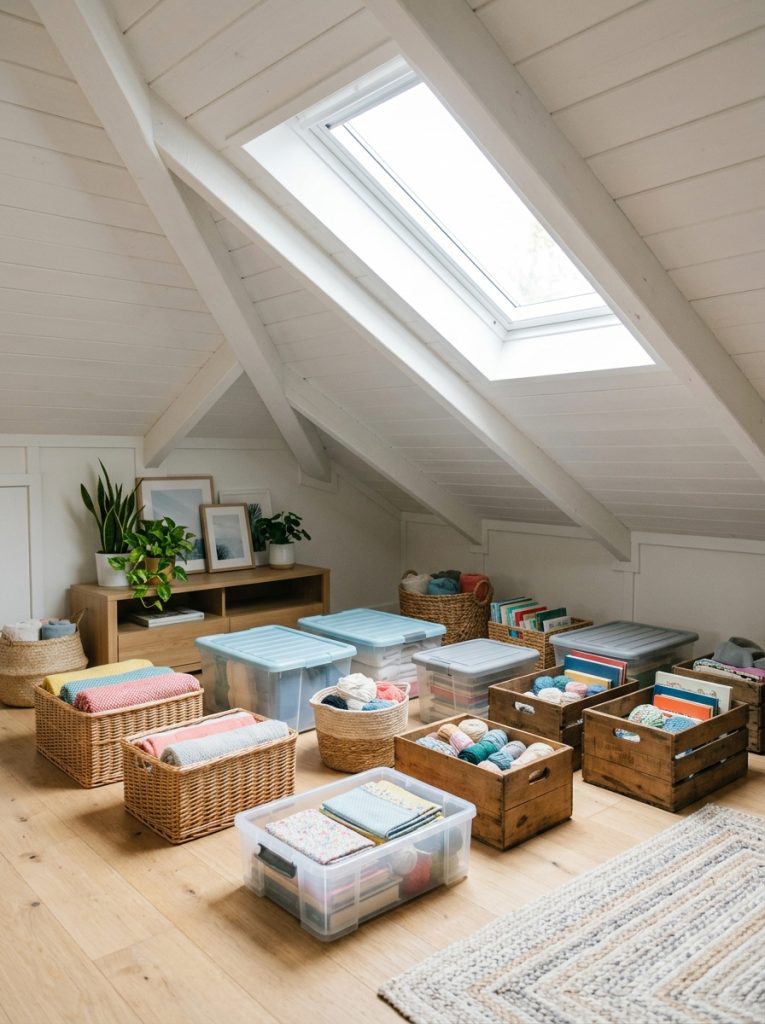
Under five feet of height? Think wide, not tall. Shallow containers that slide work better than stacks.
Use vacuum storage bags for blankets and coats so they fit flat. Leave a clear crawl path between zones.
- Works with low clearance
- Slide don’t stack
- Bulky items shrink down

My Pick
Vacuum Storage Bags with Hand Pump
Shrinks bulky blankets and winter coats so they fit in low, tight spaces.
9Build Smart Storage for a Tiny Attic Nook
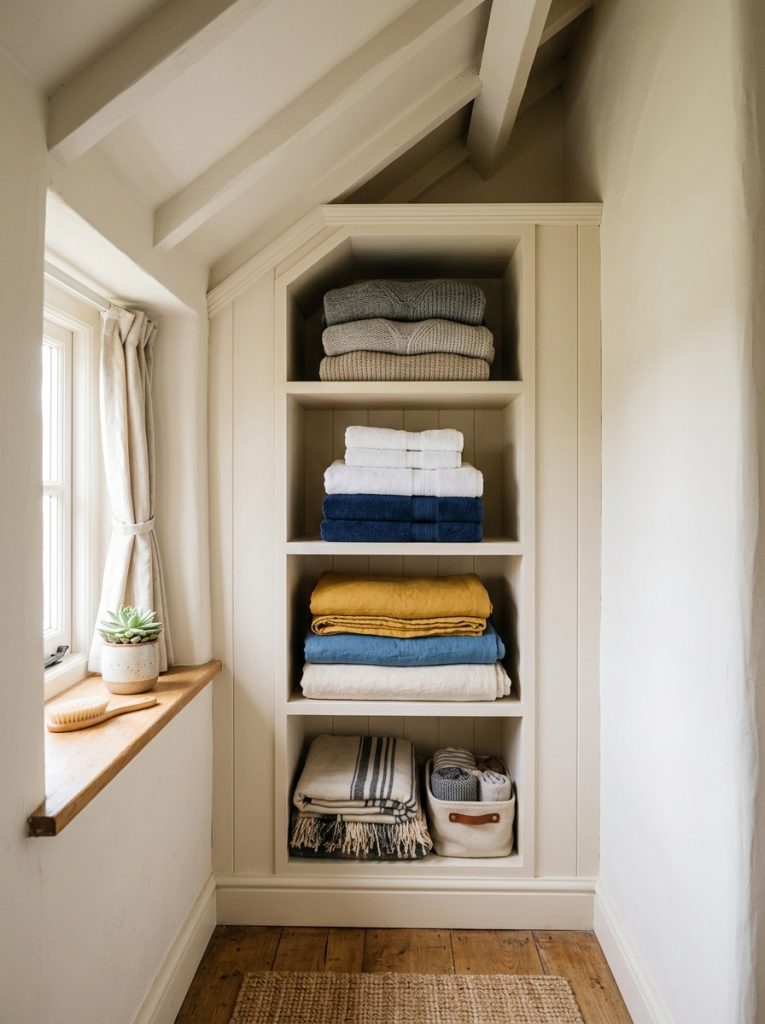
A small dormer or knee wall nook is too small for regular shelves. Build something to fit it exactly.
Shallow drawers or a small cubby uses every inch with no wasted gaps.
- Custom fit
- No wasted gaps
- Looks built in
10Create a DIY Walk In Attic Storage Room
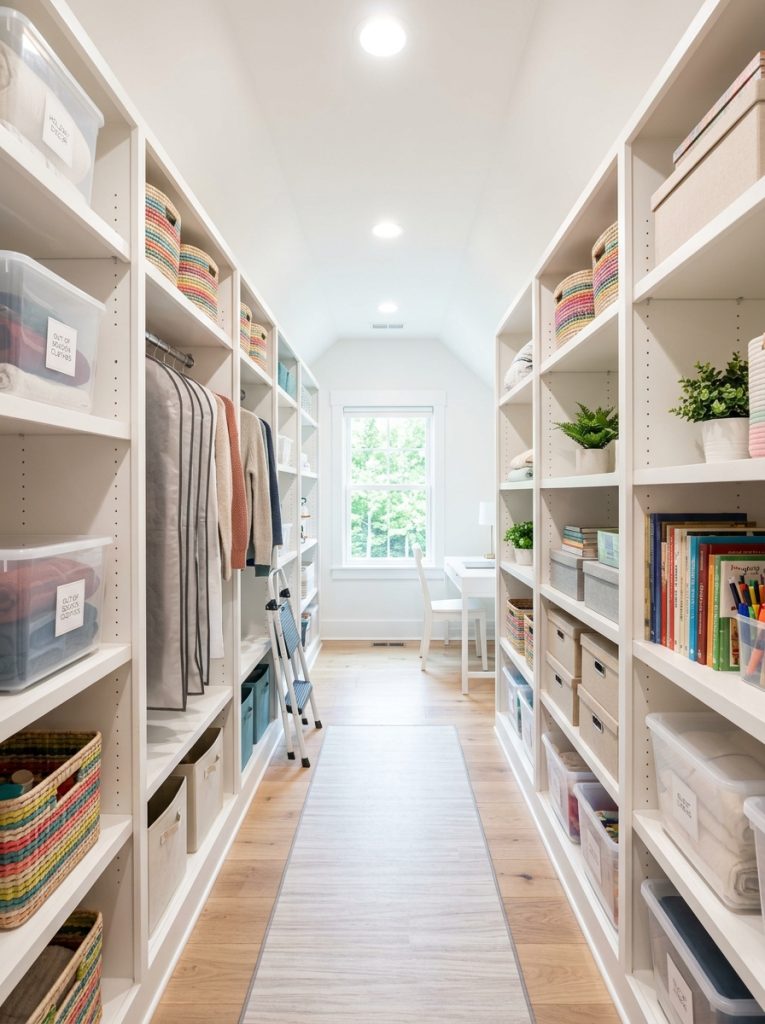
If the center has enough height, you can frame simple short walls along the slopes and create a real storage room.
Check local building rules first and keep ventilation clear. Insulation and airflow behind the new walls still need to work.
- Feels like a real room
- Much easier to use
- Adds home value
11Store Camping Gear Near the Attic Entrance
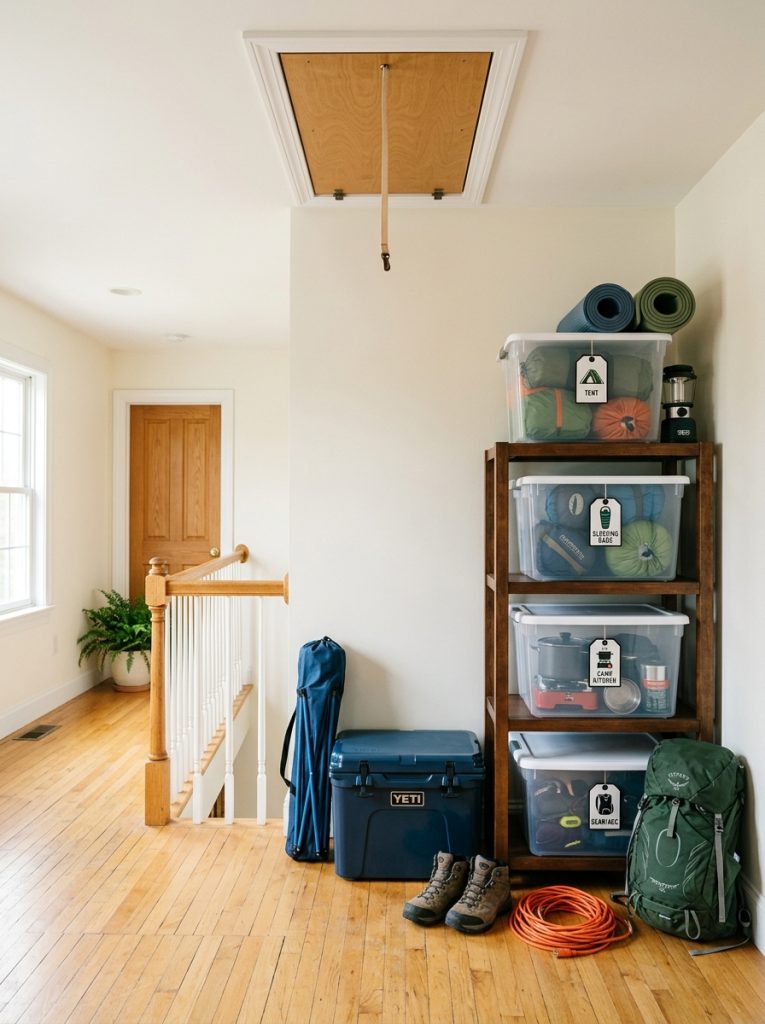
Good weather shows up with little warning. Keep camping gear close to the hatch so you can pack fast.
Group the tent, sleeping bags and cooking kit in one or two bins with locking lids. Packing takes minutes.
- Pack in minutes
- Gear stays together
- Dust and bug proof

My Pick
Stackable Storage Bins with Locking Lids
Latching lids keep dust, bugs and moisture out of gear you only use a few times a year.
12Set Up a Holiday Decoration Storage System
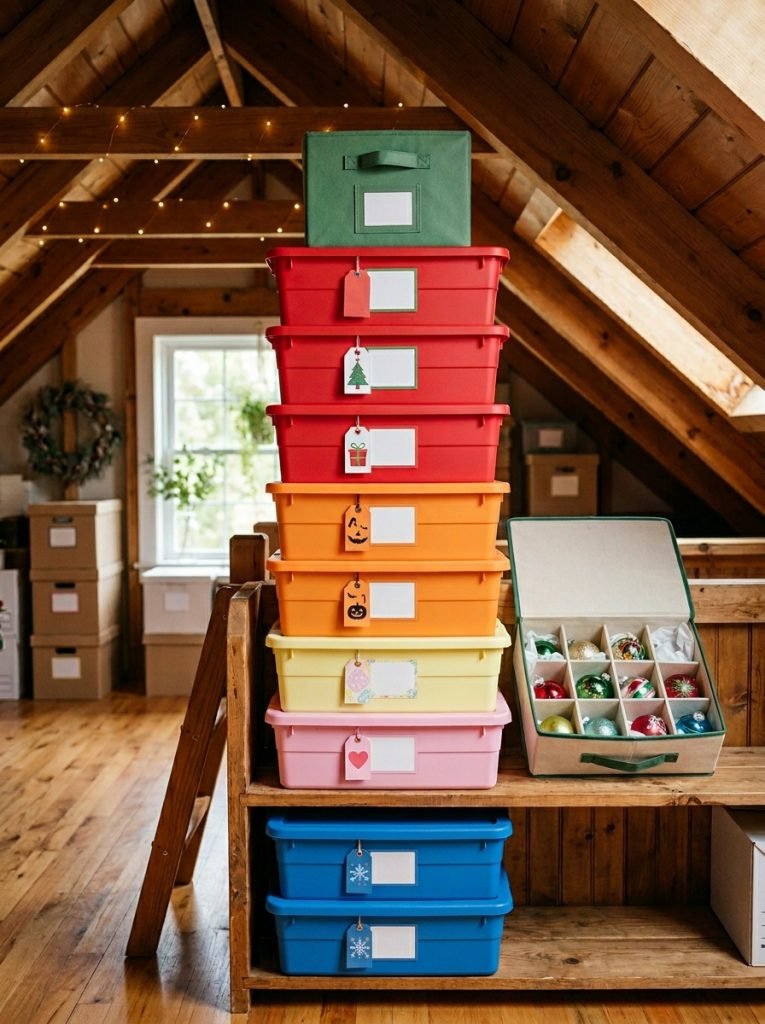
Holiday decor takes up the most attic space in most homes. Color coding makes it simple.
Red and green bins for Christmas, orange for Halloween, pastel for spring. Anyone can find the right bin from across the attic.
- Anyone can find it
- Faster decorating day
- Fun and simple
Project Card · 1.5 hours · Easy
Materials Needed
- Colored storage bins by holiday
- Ornament dividers or egg cartons for fragile pieces
- Cardboard to wrap lights around
- Labels
How to Make It
- Pick one bin color for each holiday.
- Wrap string lights around cardboard so they do not tangle.
- Pack fragile ornaments in dividers at the top of the bin.
- Label each bin with the holiday and the room it is for.
- Stack the bins by holiday in one zone near the hatch.
13Repurpose Garage Style Racking for the Attic
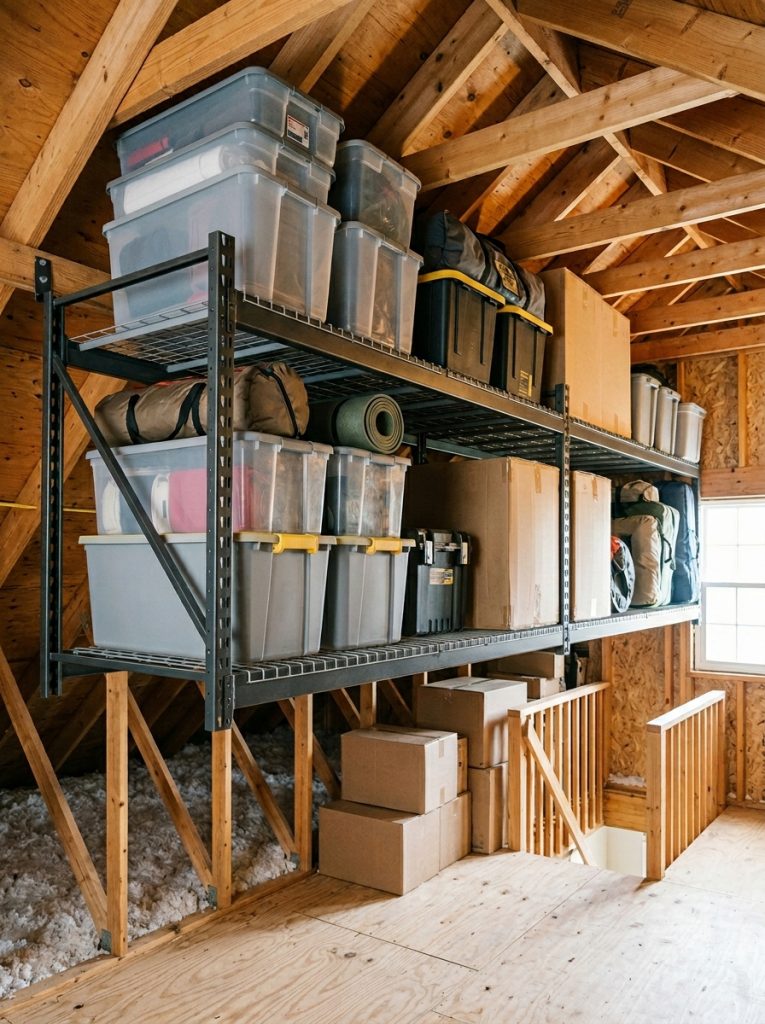
Garage shelving is strong and easy to assemble, and it works in attics with enough headroom.
Remember the shelf may hold a lot, but the attic floor might not. Use it for bulky, light things like coolers, bedding and empty suitcases.
- Strong steel frame
- Organizes bulky items
- Easy bolt together build

My Pick
Heavy Duty Garage Shelving
Bolt together steel shelving with high weight ratings for bulky storage.
14Use Clever Side Storage Along Knee Walls
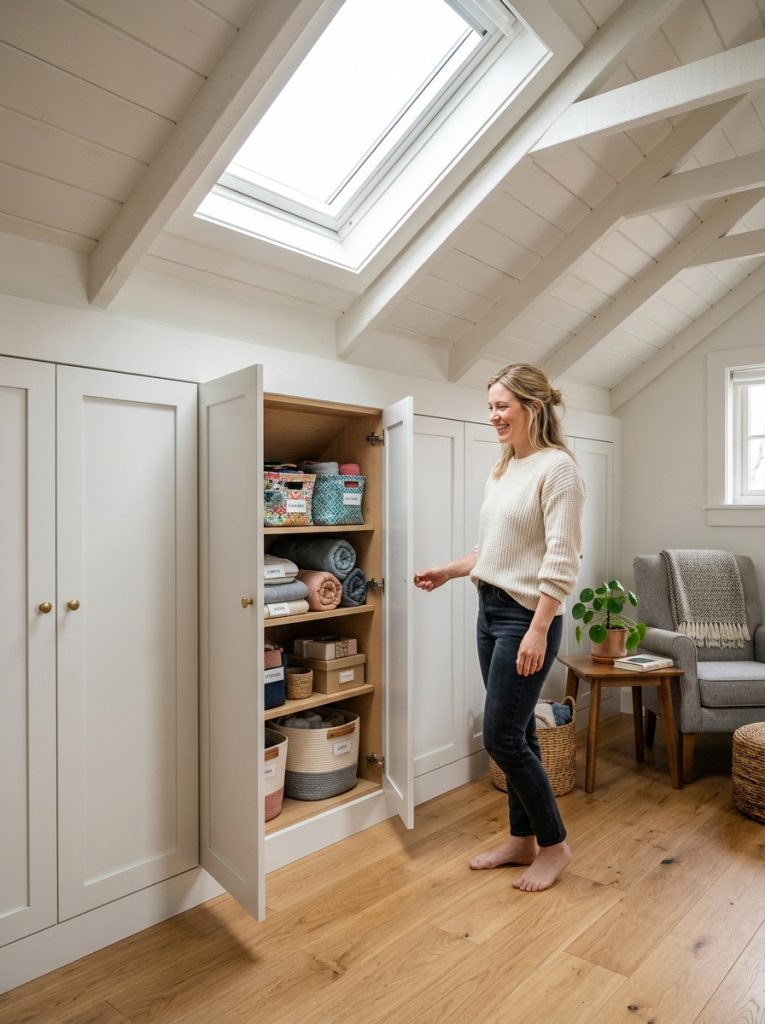
Knee walls almost always hide unused space behind them. A small access door turns it into storage.
Before cutting, check for wiring, pipes and insulation. Long flat items like rolled rugs and gift wrap fit perfectly back there.
- Hidden bonus space
- Great for long items
- Keeps main area clear
15Bring Home Office Supplies Up for Long Term Storage
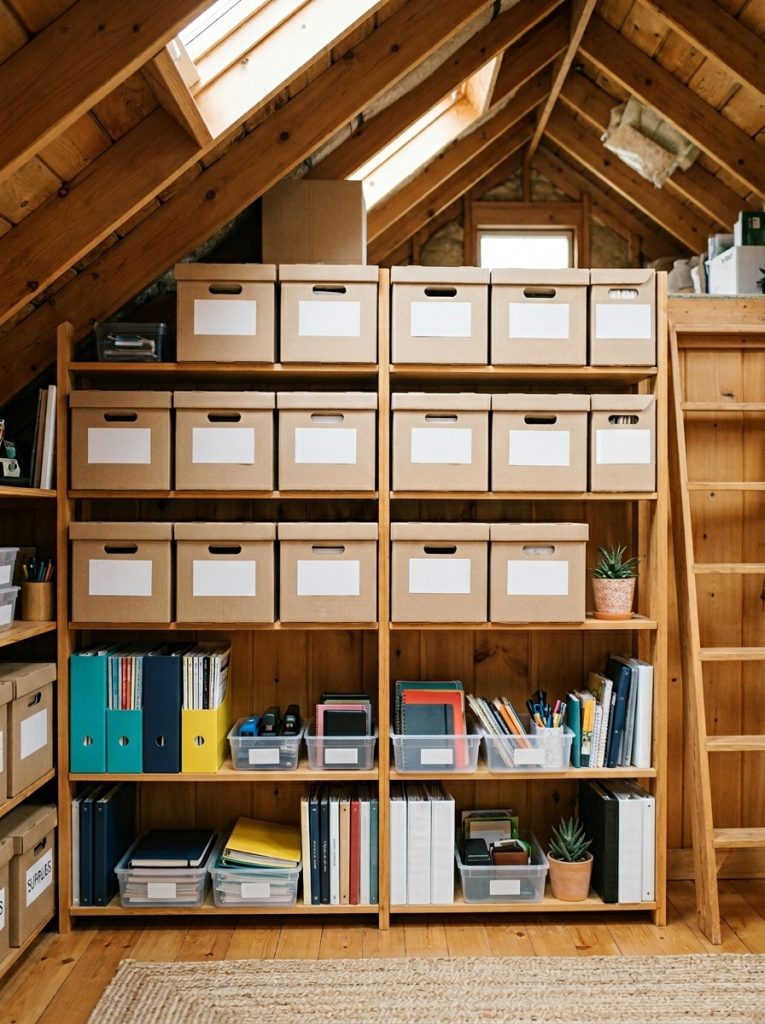
Old files and archived papers can go up, but attics get very hot and sometimes damp.
Use sealed plastic bins, not cardboard. Keep photos, electronics and anything heat sensitive inside the home instead.
- Frees office space
- Sealed and protected
- Easy to purge yearly
Frequently Asked Questions
Is it safe to store things in the attic?
Yes, if items sit on flooring over the joists and the load stays light. Avoid heavy items unless a contractor confirms your joists can carry them.
What should you not store in an attic?
Skip candles, photos, electronics, paint, important papers in cardboard and anything that melts or warps in heat.
How do I add storage to an unfinished attic?
Lay platform flooring over the joists near the hatch, then add shelving under the ridge and low bins along the eaves.
What are the best containers for attic storage?
Plastic bins with locking lids. They keep out dust, moisture and pests far better than cardboard boxes.
Final Thoughts on Attic Storage Ideas
An attic stops being a dumping ground once it has a real system. Safe flooring, zoned shelving and labeled bins change everything.
Start near the hatch with one small floored area and a few labeled bins. Then grow from there, one zone at a time.


Amir Ali is the founder and site administrator of HomeDecorEdge, a modern home decor and interior design platform. Since starting the site, he has combined his passion for interior design, practical styling, and color coordination with hands-on content strategy and site management. He guides authors, curates high-quality articles, and ensures readers have access to actionable, visually inspiring, and user-focused home decor advice for apartments, small rooms, and family homes.