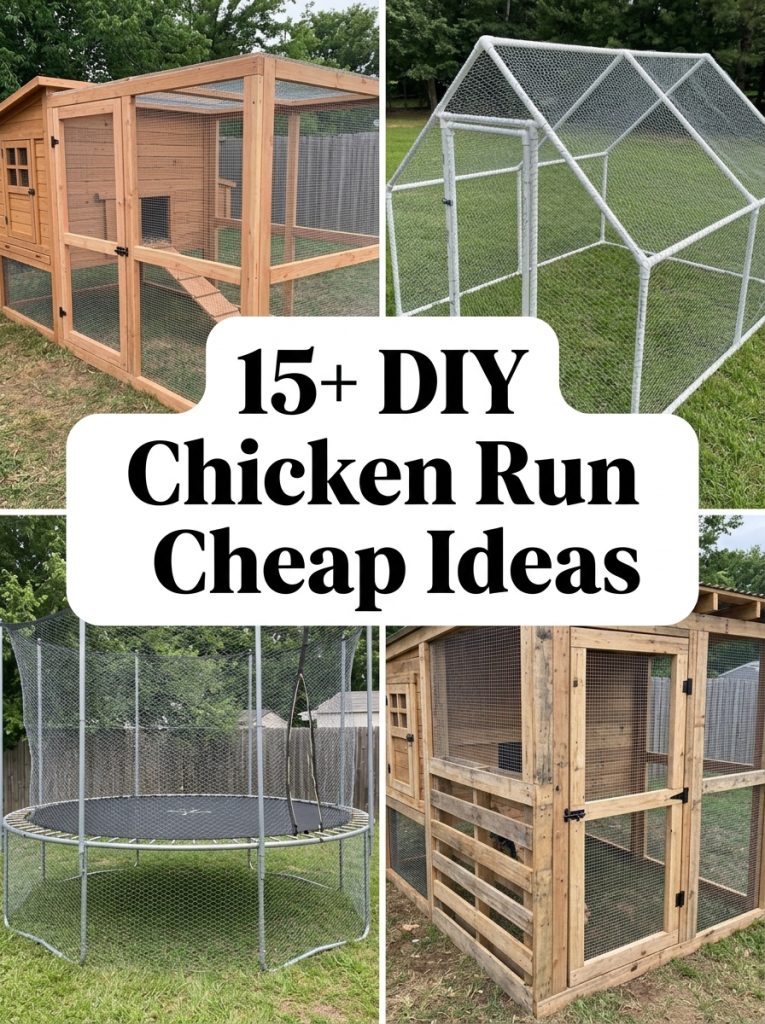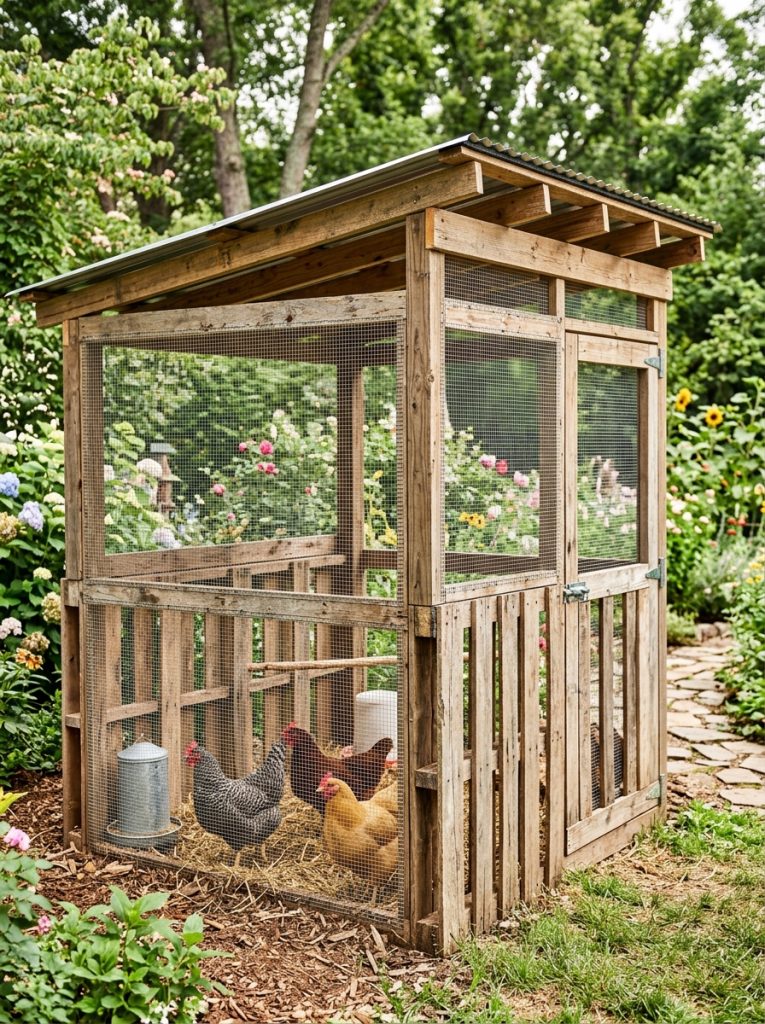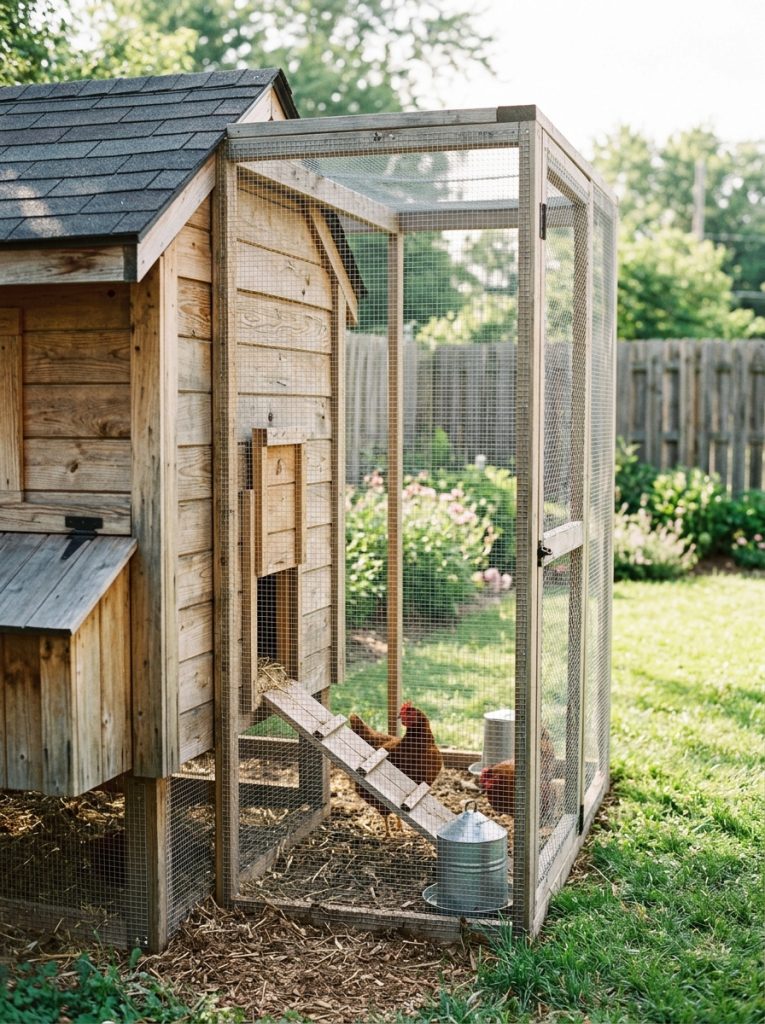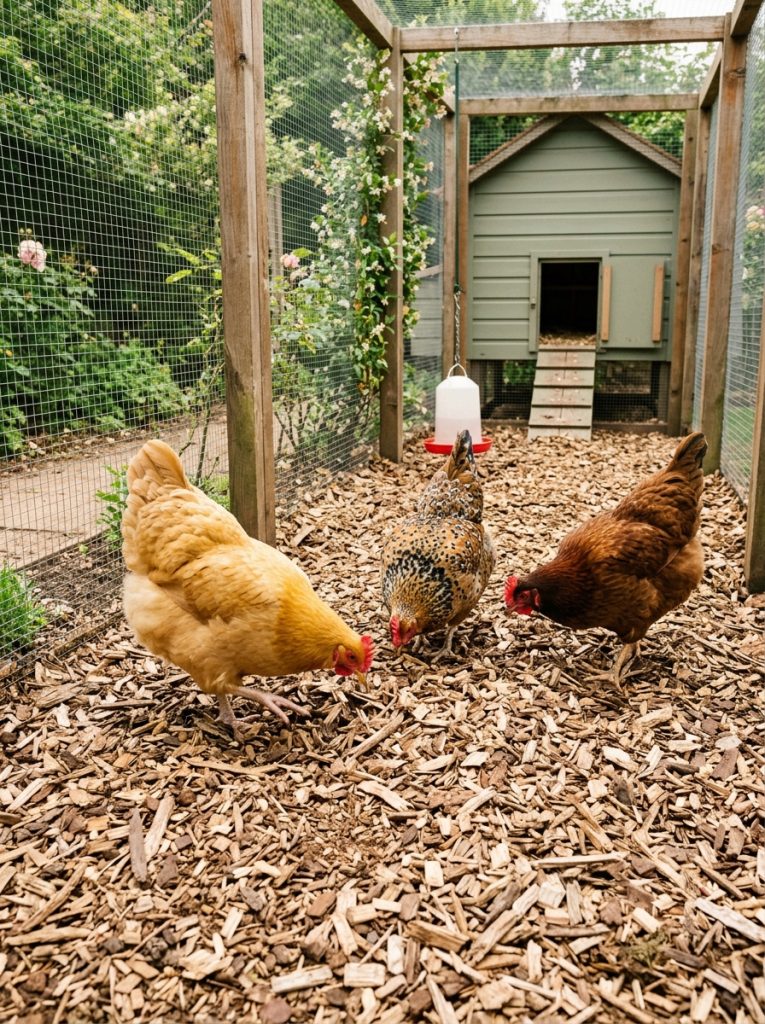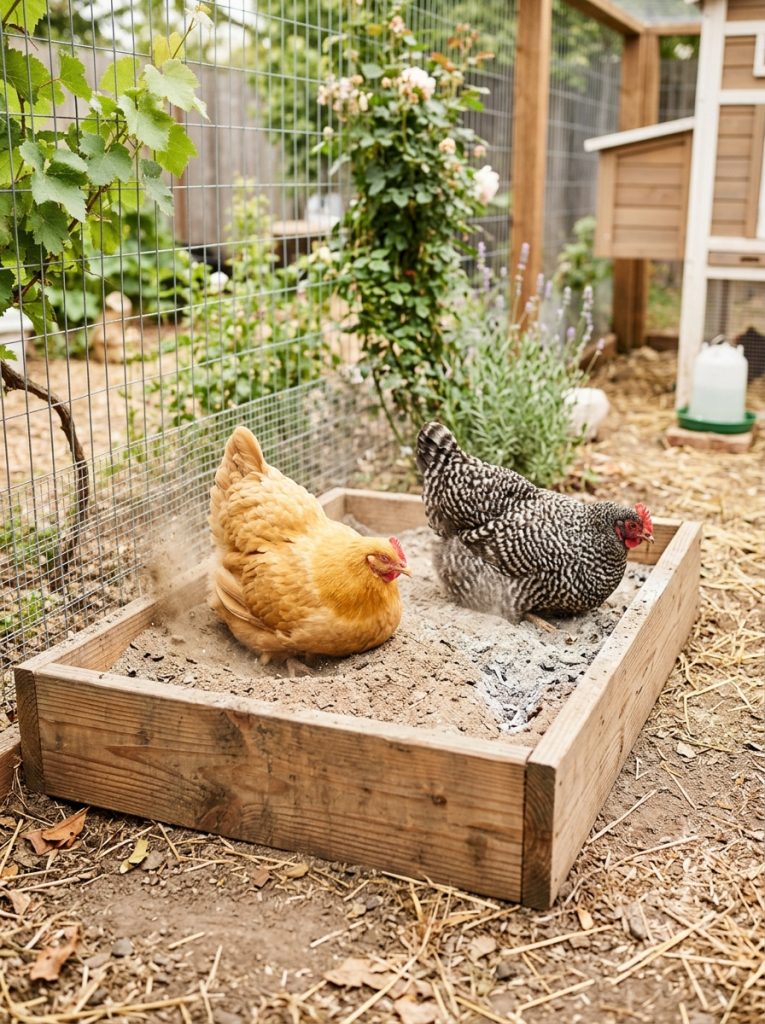
A chicken run gives backyard hens the outdoor space they need to scratch, dust bathe, and forage without the risks of completely free ranging — predators, garden destruction, and neighbor relations chief among them. The difference between a good chicken run and a basic one comes down to three things: the wire gauge used, the door latch security, and how well the structure handles the specific predator pressure in that location. These DIY chicken run cheap ideas cover every budget and building skill level, from a simple PVC frame weekend build to a permanent attached run that extends the coop into a full backyard chicken setup.
This post contains affiliate links. If you purchase through these links I may earn a small commission at no extra cost to you.

A chicken run built right keeps the flock safe, the garden intact, and the daily routine simple.
1. Cover the Run with Hardware Cloth Wire Mesh


Hardware cloth is the single most important material decision in any chicken run build — standard chicken wire keeps chickens in but does not keep determined predators out, while hardware cloth with a half-inch or smaller mesh genuinely stops raccoons, weasels, and foxes from reaching through or tearing an opening. This chicken run wire mesh hardware cloth has the right gauge and mesh size for a properly predator resistant run. Staple with heavy duty fencing staples at maximum six-inch intervals so no section can be peeled back under pressure.
Materials Needed:
- Half-inch hardware cloth roll
- Heavy duty fencing staples
- Staple gun or hammer
- Wire cutters
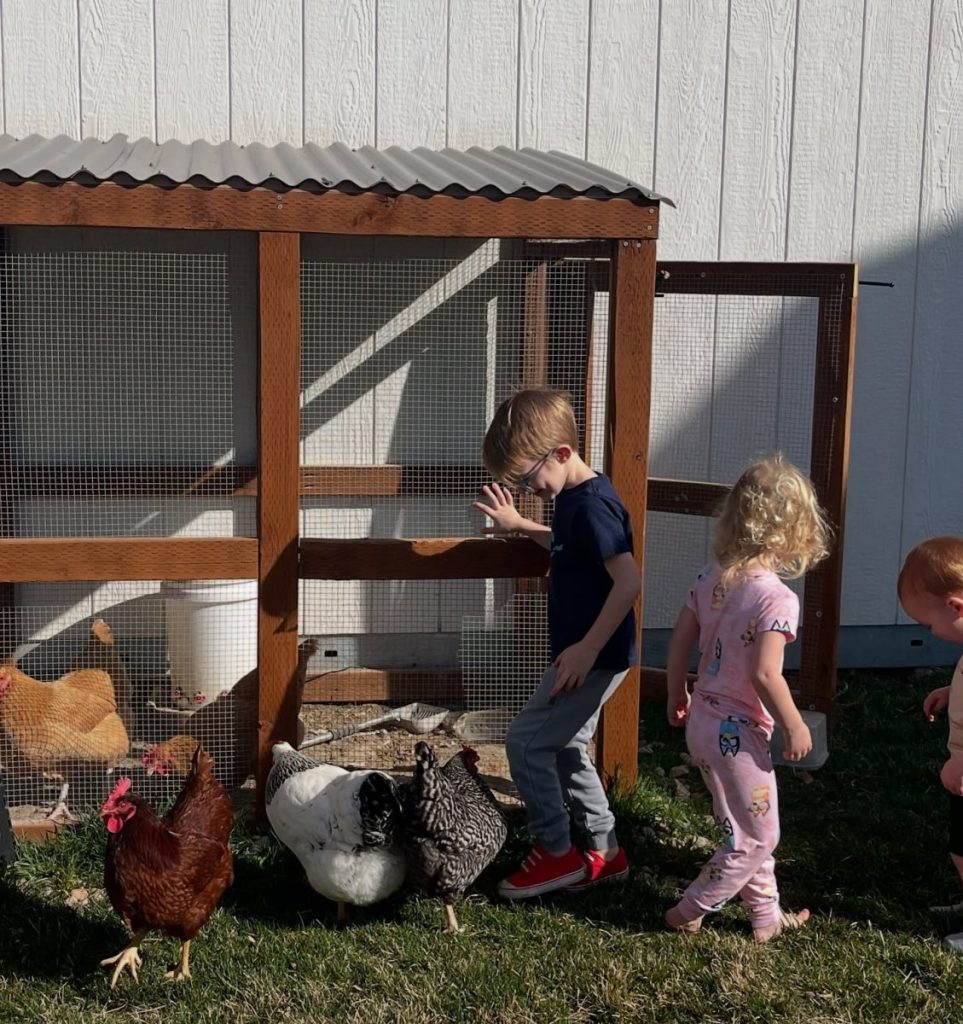
- Work gloves for handling cut edges
How to Make It:
- Cut hardware cloth sections to fit each wall and roof panel of the run frame.
- Start at one corner and staple along the top edge first to hold the cloth in position.
- Pull the cloth taut and staple down one side, then across the bottom, then up the other side.
- Space staples no more than six inches apart on all edges and every frame member.
- Fold and crimp all cut edges inward so no sharp wire ends are exposed inside the run.

Hardware Cloth Wire Mesh for Chicken Run
Heavy gauge half-inch mesh that stops predators from reaching through or tearing into a chicken run.
Check Price on Amazon2. Build a PVC Pipe Chicken Run

homedecoredgeofficial
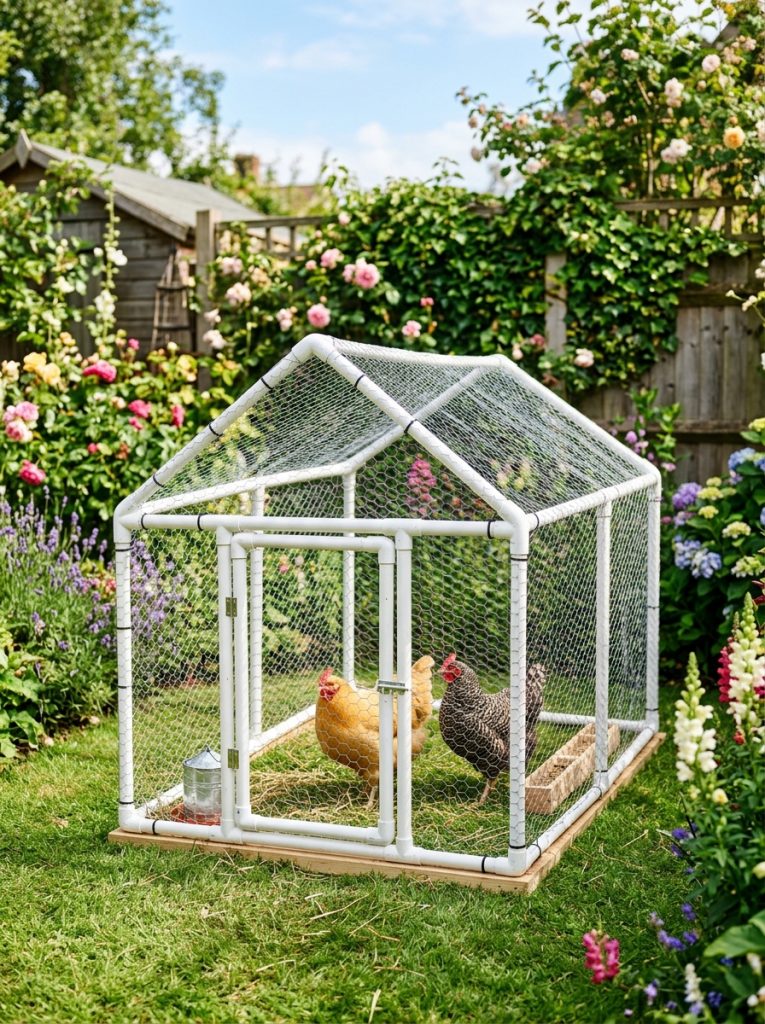
A PVC pipe frame chicken run is the most beginner-friendly build on this list because PVC cuts with a hand saw, connects without tools using push-fit connectors, and produces a lightweight structure that two people can move across the yard without difficulty. This chicken run PVC pipe connector kit has the corner and T-junction connectors needed to build a complete rectangular run frame without any complex joinery. Cover with hardware cloth secured by zip ties rather than staples for a fully tool-free assembly that still holds securely.
Materials Needed:
- PVC pipes in the required lengths
- PVC connector kit with corners and T-junctions
- Hardware cloth for covering
- Zip ties for attaching wire to frame
- Hand saw for cutting pipe to length
How to Make It:
- Plan the run dimensions and cut all PVC pipes to the required lengths using a hand saw.
- Assemble the base rectangle using corner connectors at all four corners.
- Add vertical uprights at each corner and connect with a top rectangle frame.
- Attach hardware cloth to all sides and the roof using zip ties at six-inch intervals.
- Add a simple PVC framed door panel on one end with a latch for access.

PVC Pipe Connector Kit for Chicken Run
Push-fit connector kit that builds a complete PVC chicken run frame without tools or complex joinery.
Check Price on Amazon3. Install a Predator Proof Door Latch

homedecoredgeofficial
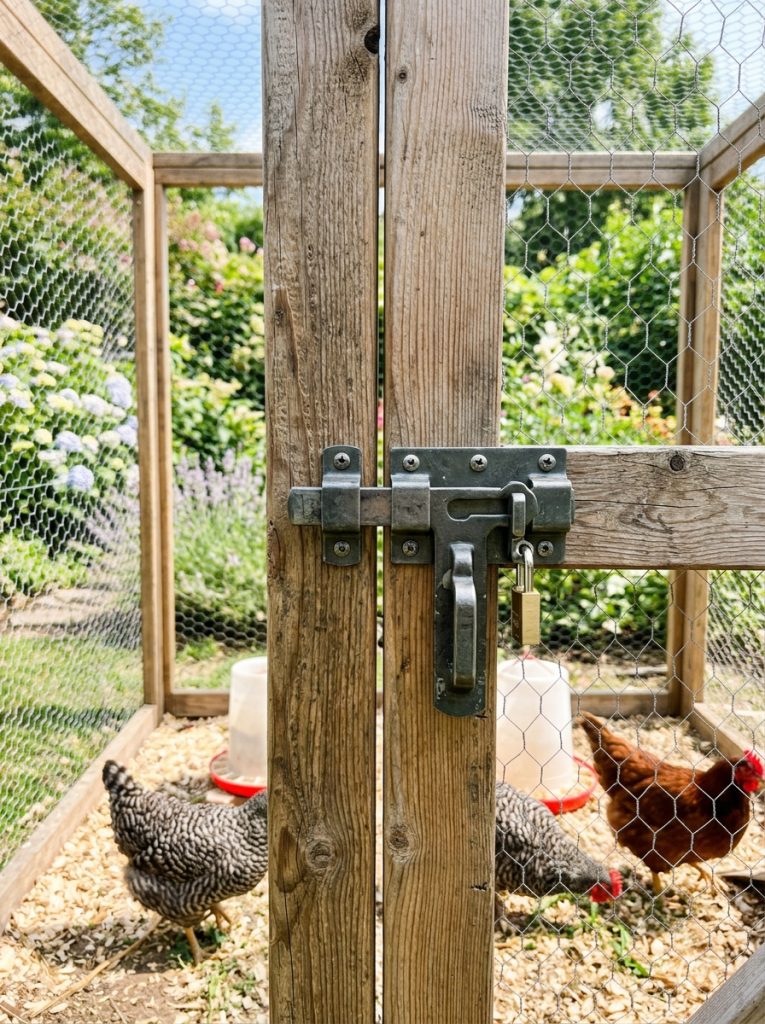
The door latch is the most critical security point in any chicken run because raccoons in particular are capable of opening simple hook-and-eye latches and sliding bolt latches with their dexterous hands given enough time and motivation. This chicken run door latch predator proof requires a two-step action to open that no raccoon can replicate — the same feature that makes child-proof latches effective for the same reason. Install on every access door in the run regardless of how secure the rest of the structure feels.
Materials Needed:
- Predator proof two-step latch
- Screwdriver and appropriate screws
- Drill for pilot holes
- Spare screws for double-mounting
How to Make It:
- Position the latch body on the door frame at a comfortable operating height.
- Drill pilot holes to prevent wood splitting and screw the latch body firmly in place.
- Mount the latch receiver on the door post at the exact matching position.
- Test the two-step mechanism multiple times to confirm smooth operation.
- Add a second latch at a different height on the same door for additional security at night.

Predator Proof Chicken Run Door Latch
Two-step latch that raccoons cannot open — the single most important security upgrade for any chicken run door.
Check Price on Amazon4. Hang a Feeder Inside the Run

homedecoredgeofficial
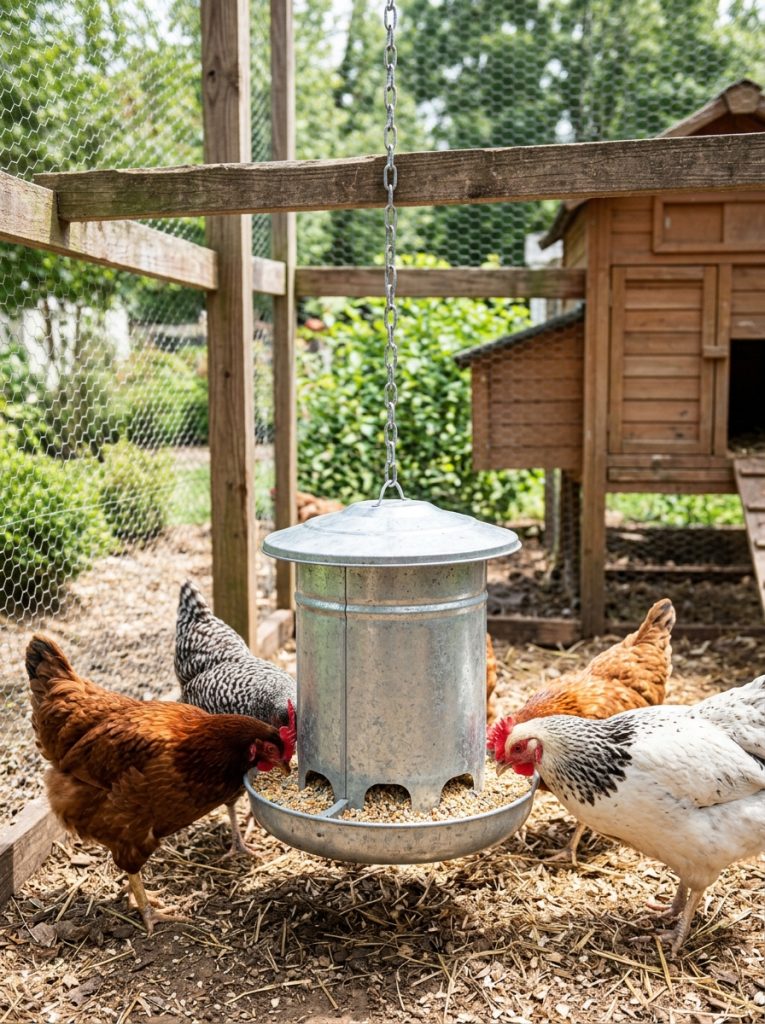
A hanging feeder suspended inside the run at chicken back height keeps feed off the wet ground, reduces waste from scratching, and discourages wild birds and rodents from accessing the feed at ground level. This chicken run feeder hanging has the right capacity for a small backyard flock and hangs from the run roof frame on an adjustable chain. Raise the feeder as the flock grows to keep it consistently at the right feeding height. For more chicken coop ideas check out these easy DIY chicken coop plans.
Materials Needed:
- Hanging chicken feeder
- S-hooks and chain for suspension
- Eye bolt for roof frame attachment
- Drill for installing eye bolt
How to Make It:
- Install an eye bolt into a solid run roof frame member directly above the intended feeder position.
- Attach a length of chain to the eye bolt using an S-hook.
- Hook the feeder to the bottom of the chain at the correct height for the flock.
- Adjust chain length so the feeder sits at chicken back height.
- Fill and check that the feeder swings freely without hitting the run walls.

Hanging Chicken Run Feeder
Suspended feeder that keeps feed dry, reduces waste, and discourages wild bird and rodent access.
Check Price on Amazon5. Install an Automatic Waterer

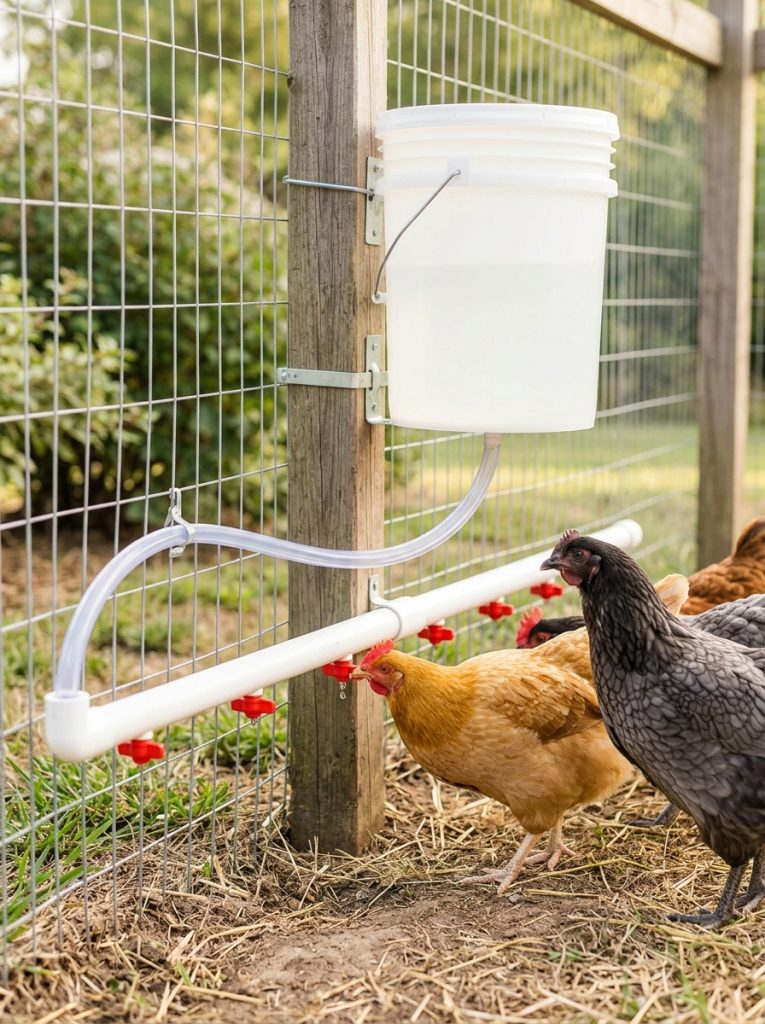
An automatic waterer connected to a garden hose or gravity-fed tank removes the twice-daily chore of manually refilling water containers and ensures the flock always has access to fresh clean water even during hot weather when water consumption increases significantly. This chicken run waterer automatic has nipple-style drinkers that stay clean far longer than open bowl waterers since chickens cannot scratch dirt and debris into the water supply.
Materials Needed:
- Automatic nipple waterer system
- Garden hose or gravity tank connection
- PVC pipe for distribution if needed
- Pipe clamps for securing to run frame
- Thread seal tape for all connections
How to Make It:
- Connect the waterer inlet to a garden hose or gravity-fed tank at the run exterior.
- Run the distribution pipe along the inside of the run at chicken head height.
- Secure the pipe to the run frame using pipe clamps at regular intervals.
- Install nipple drinkers at appropriate spacing along the pipe — one per three to four birds.
- Check all connections for leaks and train reluctant chickens to the nipples by touching water to their beaks.

Automatic Chicken Run Waterer
Nipple-style automatic waterer that eliminates daily refilling and keeps water clean from scratch contamination.
Check Price on Amazon6. Add Nesting Boxes to the Run Area

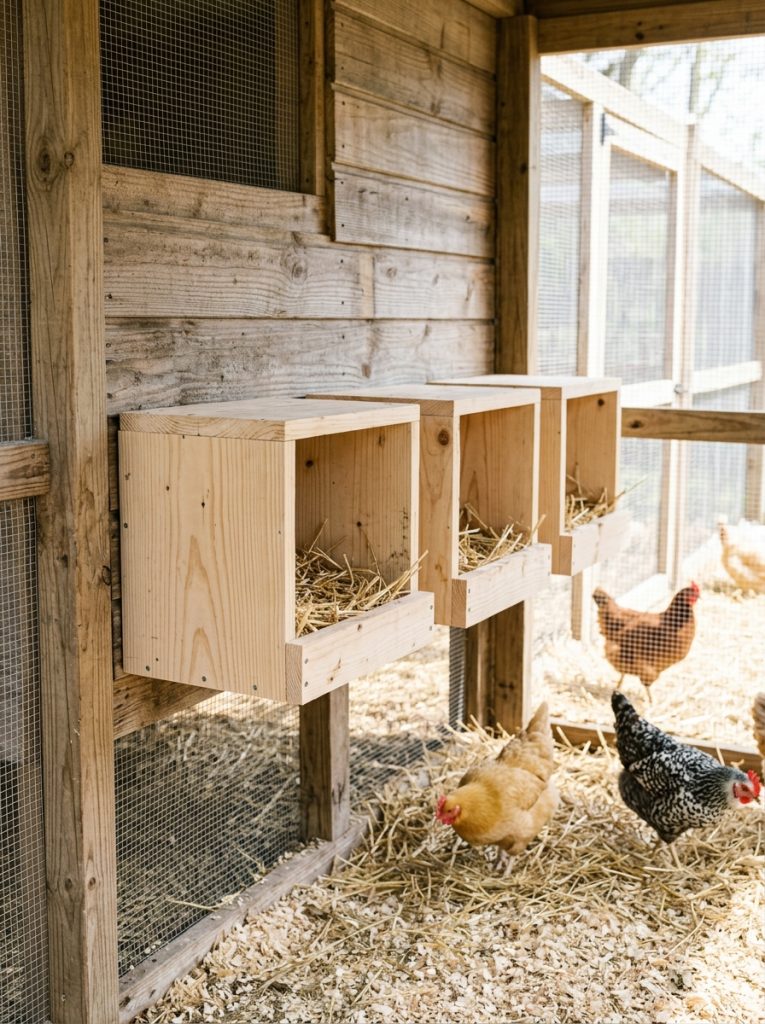
Nesting boxes positioned inside or adjacent to the run give hens a private laying spot that is accessible from the run without requiring them to return to the main coop structure. This chicken nesting box shows the ideal dimensions and mounting height — twelve inches square per box, mounted at around eighteen inches off the ground, with a lip at the front to keep nesting material inside. Mount boxes in the darkest and most sheltered section of the run for the highest laying rates.
Materials Needed:
- Nesting box unit or plywood for building
- Exterior wood screws for mounting
- Nesting material — straw or shavings
- Drill for pilot holes and mounting
- Hinged lid for easy egg collection access
How to Make It:
- Position the nesting box unit against the most sheltered run wall away from the main traffic area.
- Mount at eighteen inches off the ground using lag screws into the run frame.
- Ensure the mounting is level so eggs do not roll to one side.
- Fill each box with several inches of clean straw or pine shavings.
- Place a fake egg or golf ball in each box initially to encourage hens to choose the boxes for laying.

Chicken Nesting Box
Ready-to-mount nesting box at the right dimensions for comfortable laying hens in any chicken run.
Check Price on Amazon7. Repurpose a Trampoline Frame

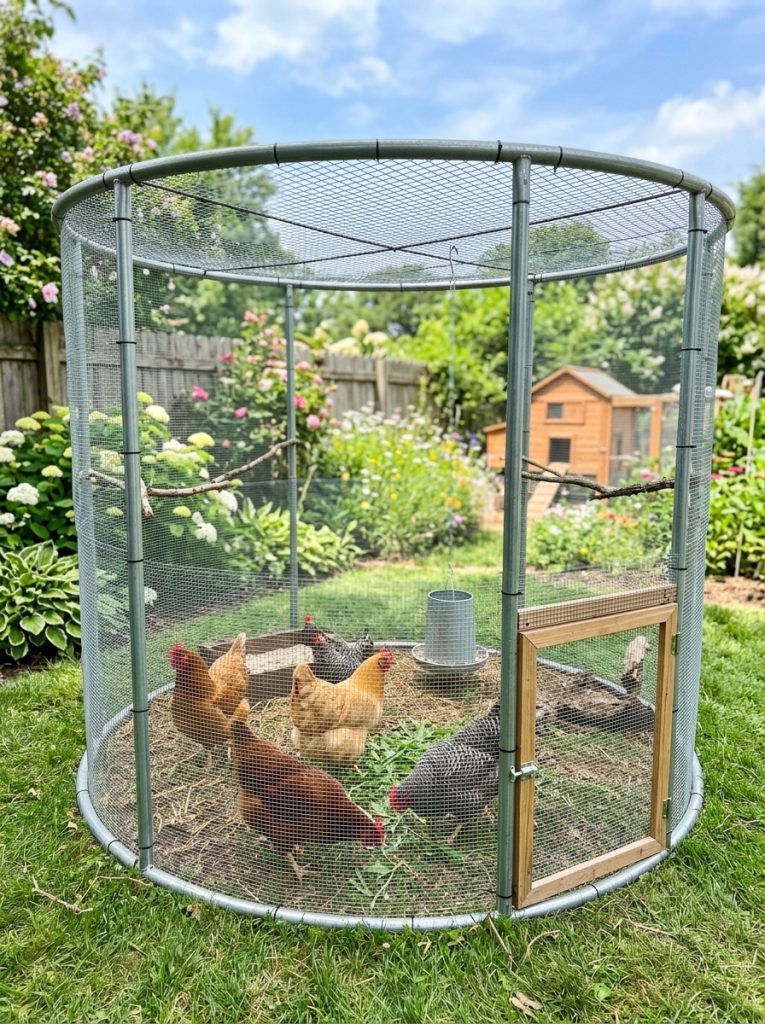
A discarded trampoline frame is one of the best free chicken run starting points available — the circular steel frame is already rigid, already the right size for a small flock, and already has attachment points for wrapping wire mesh around the perimeter. Source a free trampoline frame from local selling groups or curbside collection and the main run structure costs nothing. Wrap hardware cloth around the full perimeter and across the top opening and the run is complete.
Materials Needed:
- Discarded trampoline frame (free from local groups)
- Hardware cloth for perimeter and roof
- Zip ties for attaching wire to frame
- Wire cutters
- Door frame lumber and hinges for access
How to Make It:
- Remove all fabric, springs, and padding from the trampoline frame.
- Set the frame on level ground in the chosen run location.
- Wrap hardware cloth around the full perimeter and secure with zip ties every six inches.
- Cover the top opening with hardware cloth secured to the frame ring.
- Cut and frame a small door opening on one section and hang with hinges and a predator proof latch.
8. Build a Movable Chicken Tractor Run

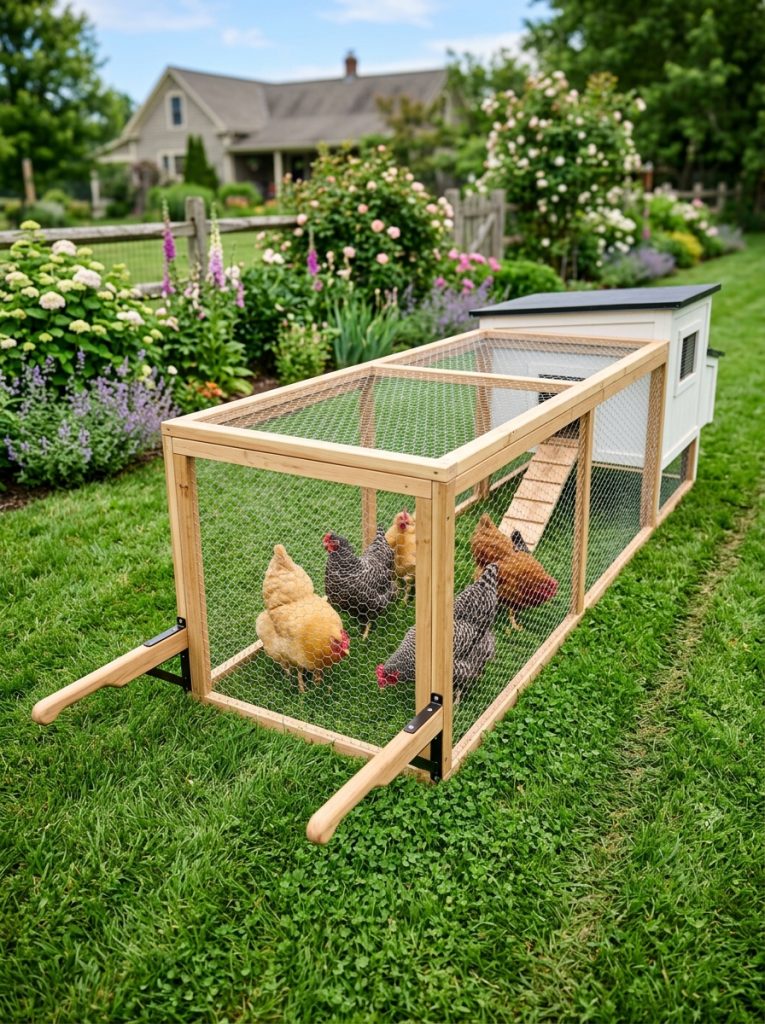
A movable chicken tractor run relocates to fresh ground every day or two, giving the flock access to new grass and insects without permanently stripping one area bare. Build as a lightweight A-frame or rectangular structure with handles at one end so two people can lift and move it across the lawn in seconds. The bottomless design means chickens access the ground directly while the wire sides and roof keep them safe from aerial and ground predators.
Materials Needed:
- 2×2 lightweight lumber for frame
- Hardware cloth for sides and top
- Handles or rope loops at one end
- Small hinged door for access
- Exterior wood screws
How to Make It:
- Build a simple A-frame or rectangular box frame from lightweight 2×2 lumber.
- Cover all sides and the top with hardware cloth stapled securely to the frame.
- Leave the bottom completely open so chickens access the ground.
- Add sturdy rope handles or wooden grip pieces at one end for lifting and moving.
- Move the tractor to a fresh patch of ground every one to two days.
9. Build a Pallet Wood Chicken Run

Wooden pallets make excellent free or near-free chicken run walls when the slats are covered with hardware cloth to fill the gaps between boards. Stand pallets upright and wire them together at the corners for fast wall construction, add a simple timber roof frame covered with corrugated metal or roofing felt, and the run is functional for almost no material cost. Check all pallets for HT heat treatment stamps rather than MB methyl bromide treatment which is unsafe for animal enclosures.
Materials Needed:
- HT stamped wooden pallets (free)
- Hardware cloth to cover pallet gaps
- Wire for connecting pallets at corners
- Roof timber and corrugated roofing
- Predator proof door latch
How to Make It:
- Check all pallets for HT stamps and discard any marked MB.
- Stand pallets upright and wire adjacent pallets together at each corner connection.
- Cover the inside of each pallet wall with hardware cloth stapled across all gaps.
- Build a simple roof frame from scrap timber and cover with corrugated metal sheeting.
- Leave one pallet section as a hinged door and fit with a predator proof two-step latch.
10. Attach the Run Directly to the Coop

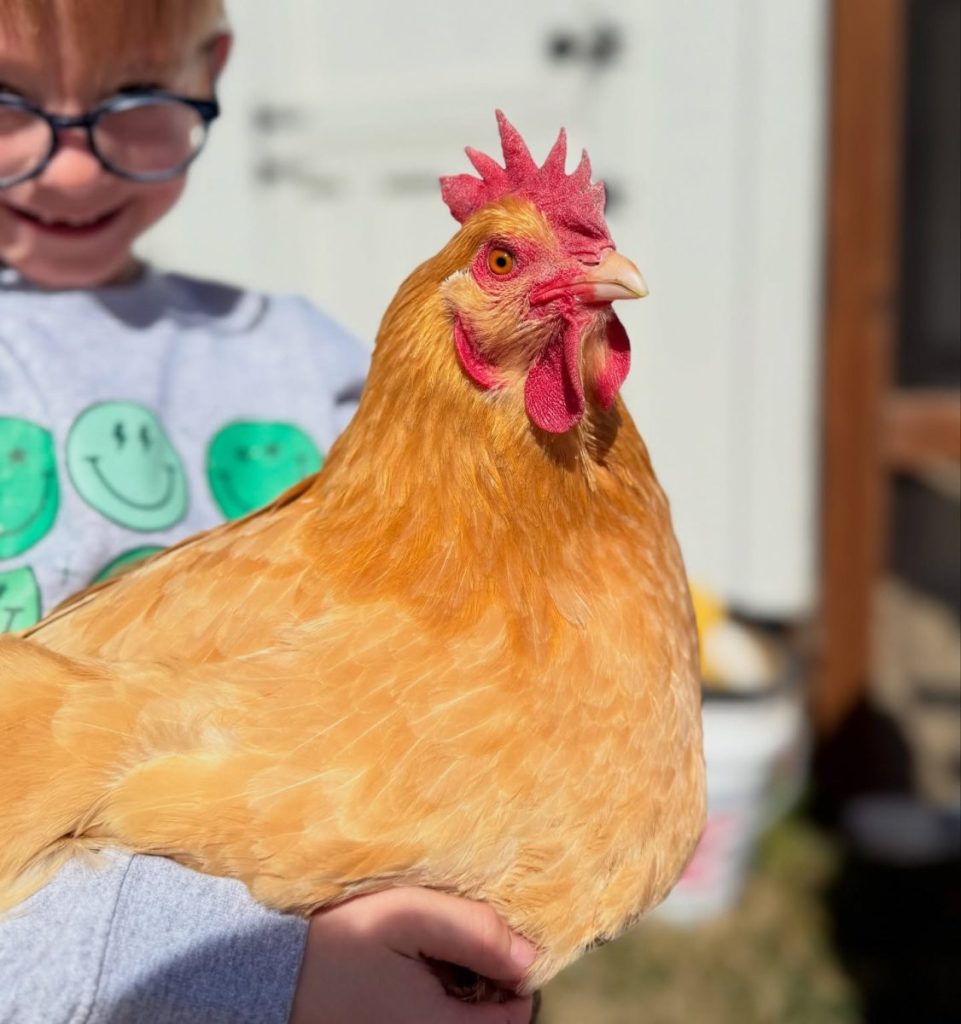
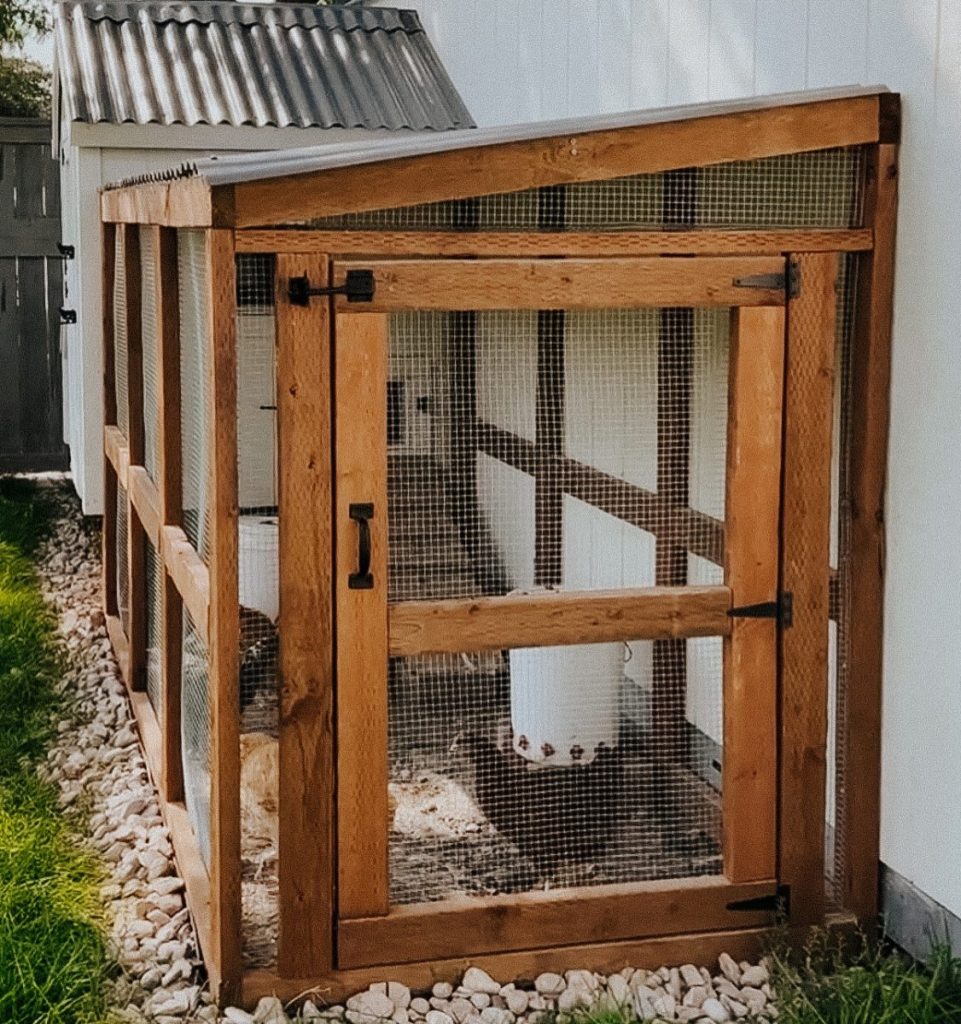
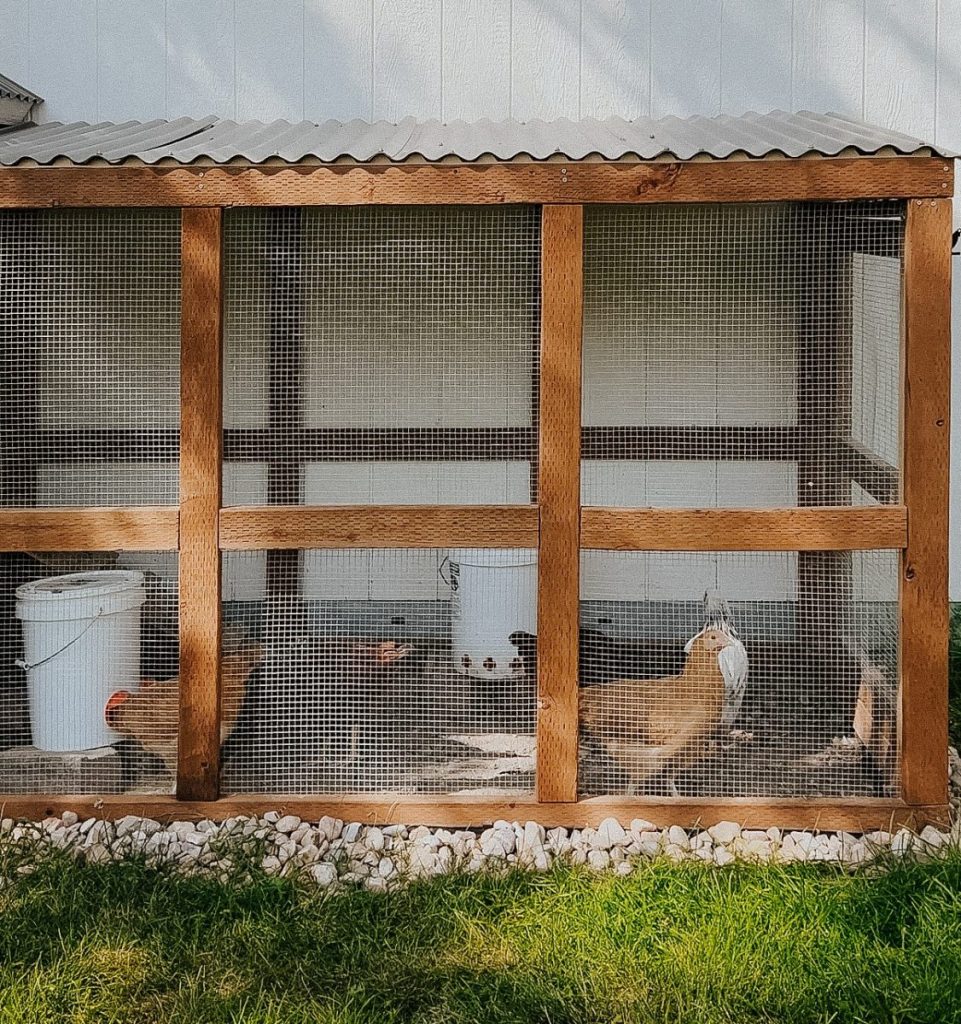
An attached run connects directly to the coop via a pop door, allowing chickens to move freely between their sleeping and laying area and the outdoor run without any human involvement in the transition. This integrated setup is the most convenient daily management arrangement since the only door operation required is opening and closing the coop pop door at night and morning. Build the run frame to flush against the coop wall and cut the pop door opening through the shared wall.
11. Cover the Run Floor with Deep Litter

The run floor material makes a significant difference to flock health and daily management — bare soil becomes muddy, smelly, and parasite-prone quickly, while a deep wood chip or straw litter layer stays dry, drains well, and provides ongoing scratching and foraging enrichment. Spread a minimum six-inch layer of wood chips and top up regularly rather than removing and replacing entirely, since the composting layer generates beneficial microorganisms that suppress pathogens in the soil below.
12. Add a Dust Bath Area in the Run

A dedicated dust bath inside the run gives chickens access to the essential grooming behavior that controls external parasites like mites and lice naturally without chemical treatment. Build a simple low-sided wooden box, fill with dry fine dirt mixed with wood ash and food grade diatomaceous earth, and position in a sheltered sunny corner of the run where the contents stay dry even during rain. Chickens will use it heavily and regularly once they discover it.
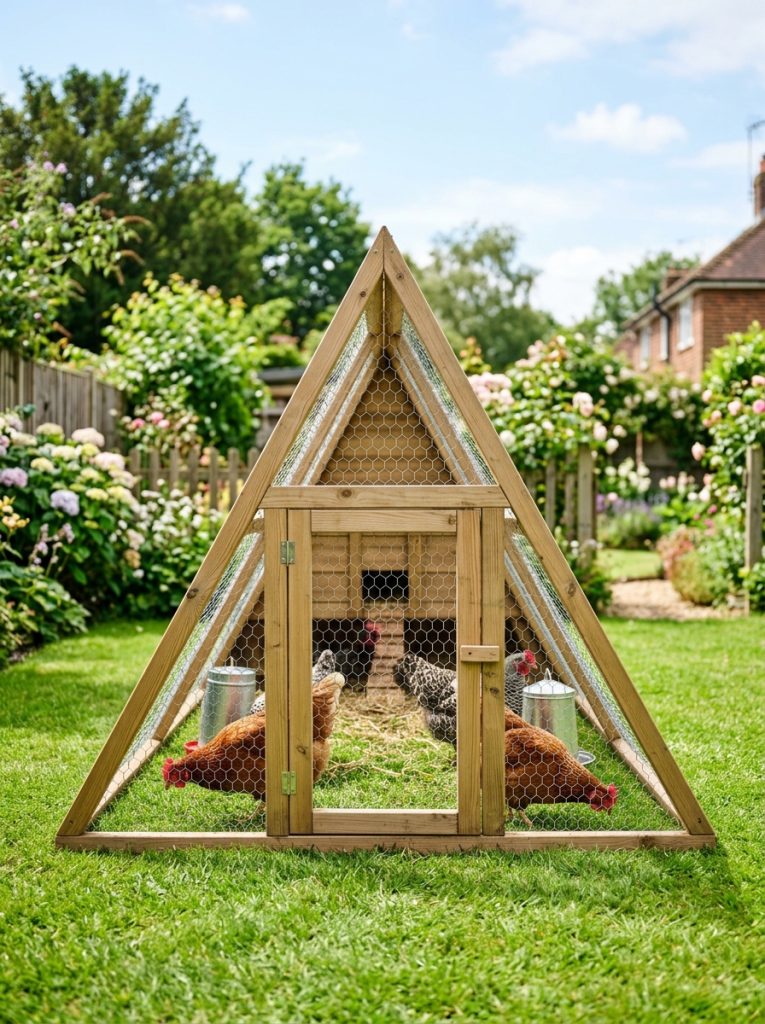
13. Build a Simple A-Frame Chicken Run

An A-frame chicken run is the simplest permanent structure build on this list — two angled side walls meeting at a ridge beam form the complete roof and wall structure simultaneously without any separate roof construction. The triangular cross-section sheds rain naturally from both sides, provides good headroom at the center ridge, and uses significantly less lumber than a box frame run of equivalent floor area.
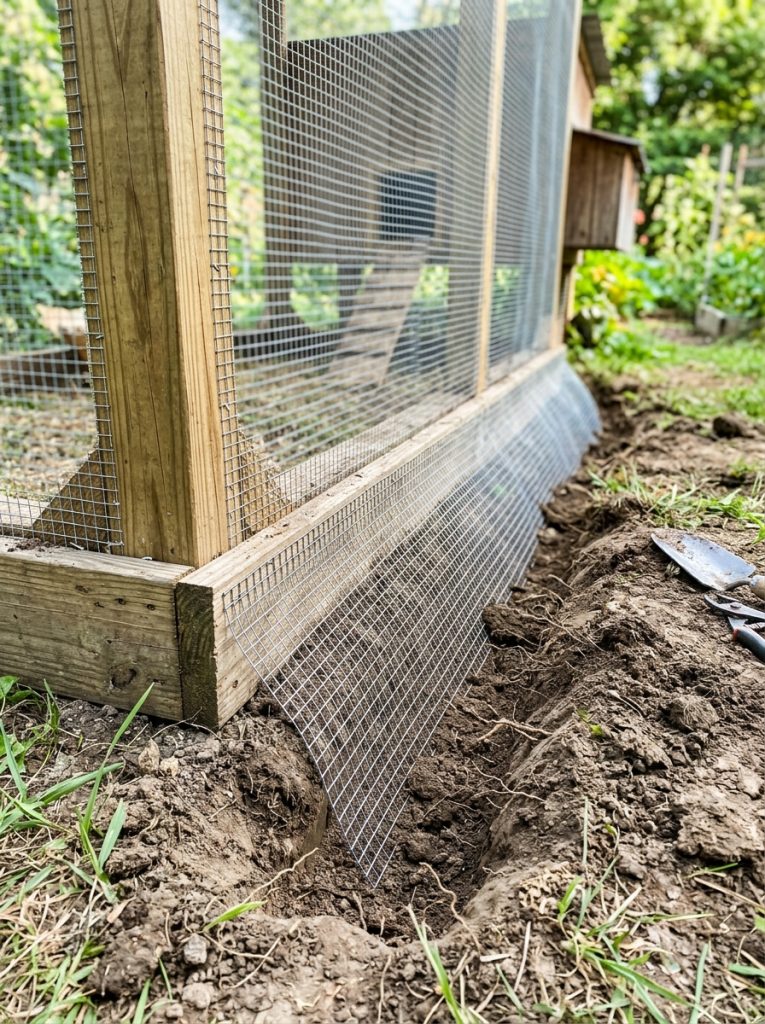
14. Bury an Apron to Stop Digging Predators

Digging predators including foxes, badgers, and dogs can tunnel under any chicken run that lacks a buried perimeter barrier, making the apron skirt one of the most important security additions to any run build. Bury hardware cloth in an L-shape — twelve inches straight down and twelve inches outward along the ground — around the full run perimeter. Any predator that digs at the base of the wall hits the buried wire before breaking through.
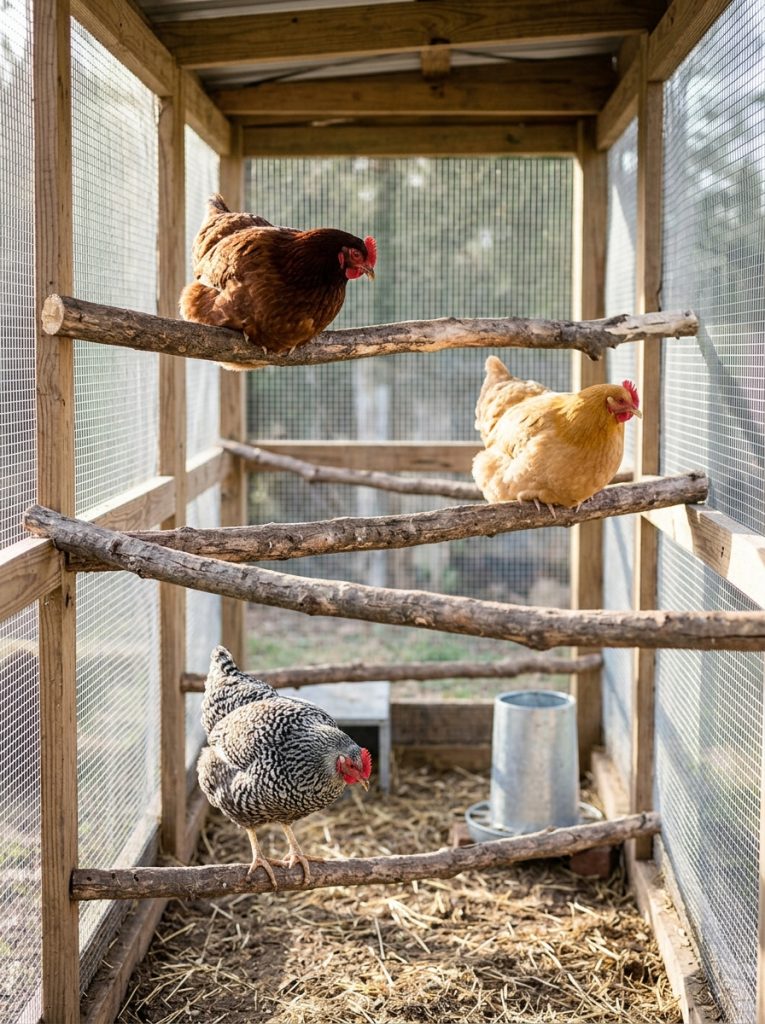
15. Add Perches Inside the Run

Perches inside the run at different heights give hens the elevated resting positions they instinctively seek during the day, reducing stress and pecking order conflict by allowing lower-ranking birds to create distance from dominant hens. Use natural branches of varying thicknesses mounted between the run walls — the irregular surface of a real branch is better for foot health than smooth dowel rod perches of a fixed diameter.
+ Extra DIY Chicken Run Tips
Shade is essential — cover part of the run roof with solid roofing or shade cloth so hens can shelter from direct sun during the hottest part of summer days without retreating to the coop.
Bury hardware cloth six inches deep around the full perimeter as a digging deterrent against foxes and dogs that target the base of run walls.
Provide enrichment — hang a cabbage or leafy greens bundle from the run roof for a simple pecking toy that keeps the flock occupied and reduces feather pecking behavior.
Check the run weekly — inspect every section of wire, every latch, and every frame joint at least once per week so any predator damage or structural weakness gets caught before a breach occurs.
Add a covered section — even a partial roof over one section of the run keeps one dry area available during rain so hens do not have to return to the coop every time it drizzles.
Final Thoughts on DIY Chicken Run Cheap Ideas
A well-built chicken run is the single investment that makes backyard chicken keeping genuinely sustainable long term — it protects the flock from the predator pressure that eventually ends most unprotected free range setups, and it keeps the garden intact enough to still enjoy alongside the chickens. Start with the right wire gauge, install proper door latches from day one, and build to a size larger than the current flock since herds tend to grow rather than shrink over time.

Amir Ali is the founder and site administrator of HomeDecorEdge, a modern home decor and interior design platform. Since starting the site, he has combined his passion for interior design, practical styling, and color coordination with hands-on content strategy and site management. He guides authors, curates high-quality articles, and ensures readers have access to actionable, visually inspiring, and user-focused home decor advice for apartments, small rooms, and family homes.