

Look around your home and you will see the raw material for a dozen projects already sitting in cupboards, closets and the garage. Old jars, worn sweaters, stained T-shirts, saved wine corks, a door leaning in the shed and a shutter nobody wants anymore all have a second life waiting. These reused diy projects turn those everyday things into useful home decor, and most of them cost nothing but an afternoon.

This list is about everyday items given a second use, not furniture flips or big builds. If you love this kind of second life making, our upcycle decor projects take the same idea further with dressers, ladders and pallets. Here the focus stays small and practical, with jars, fabric, corks, cups and books doing the work.
You do not need special tools to start. Scissors, glue, a needle and thread, and a drill cover almost every idea below. Wash jars and fabric before you reuse them, wear a mask and glasses when you sand or cut old materials, and test old painted wood for lead before you sand it. Start with one project and see how good it feels to make something from nothing.
Work through the three builds first, a mason jar herb garden, old sweater pillows and a braided T-shirt rug, then pick your favorites from the rest. Start today with the jars on your windowsill, and by the weekend your home will hold a few things that used to be headed for the bin.
Quick Picks
- Best place to start: Mason Jar Herb Garden (idea 1)
- Quickest win: Hanging Teacup Planters (idea 6)
- Best for a bare wall: Old Shutter Mail Organizer (idea 12)
1. Mason Jar Herb Garden
BuildAbout 30 minutesBeginner friendly
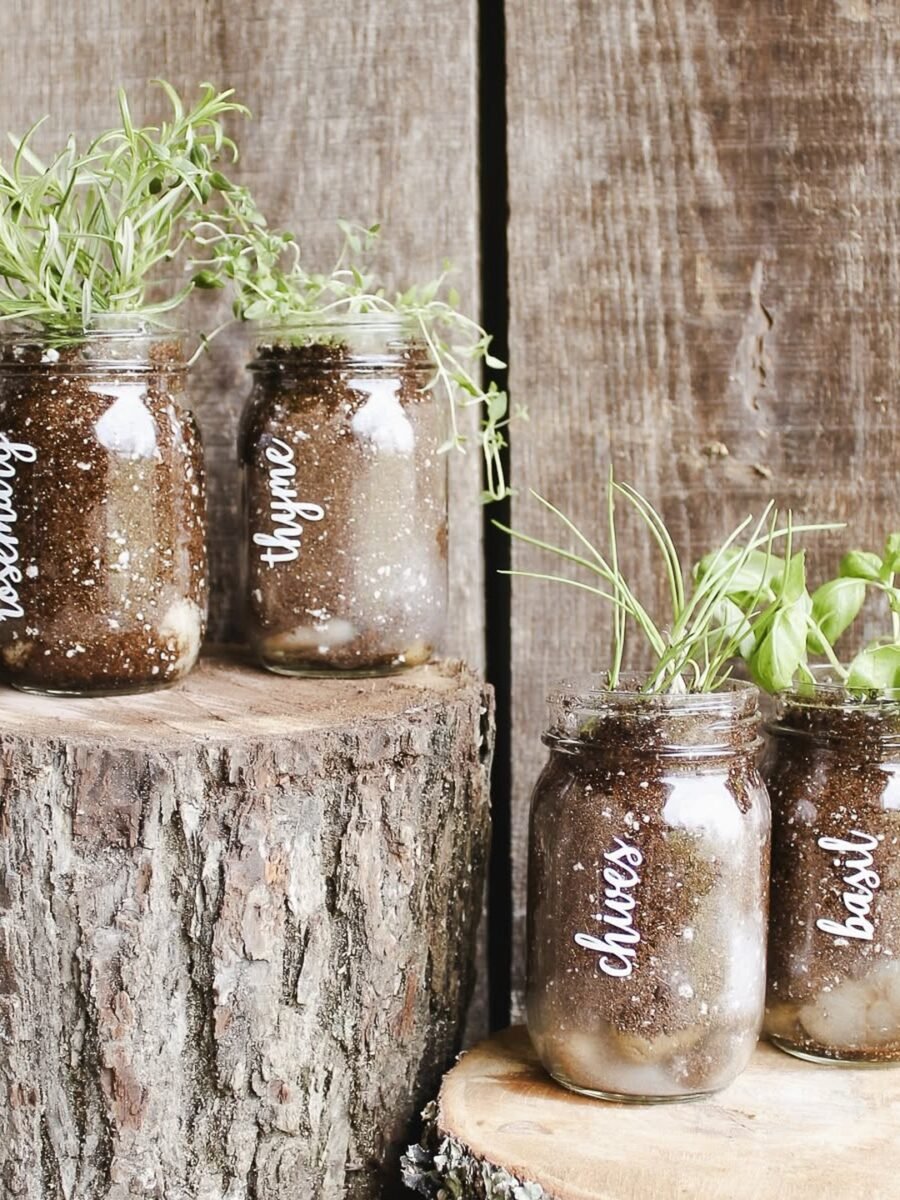
An old mason jar makes the perfect little herb pot, and four of them on a windowsill look like a tiny kitchen garden. Wash the jars well, add a layer of small stones for drainage, then fill with potting soil and tuck in basil, rosemary, thyme or chives. A handwritten label on each jar keeps the herbs straight, and the glass lets you see when the soil is dry. Keep them where they get morning sun and snip a few leaves whenever you cook.
Materials Needed
- Four clean glass mason jars, any size
- Small stones or gravel for drainage
- Herb plants or seeds: basil, rosemary, thyme and chives
- Potting soil, about one small bag
- A marker or paper labels and twine
How to Make It
- Wash the jars in hot soapy water, rinse well and let them dry completely.
- Drop a one inch layer of small stones into each jar so water can drain away from the roots.
- Fill each jar almost to the top with potting soil and press it down lightly.
- Plant one herb in each jar, or sow seeds and keep the soil damp until they sprout.
- Write the herb name on a paper label and tie it around the jar neck with twine.
- Set the jars on a sunny windowsill and water when the top of the soil feels dry.
Tip: Skip the stones if your jars have drainage holes, but most kitchen jars do not, so the stone layer is what keeps the roots from sitting in water.
2. Old Sweater Pillow Covers
BuildAbout 45 minutesSewing machine helpful
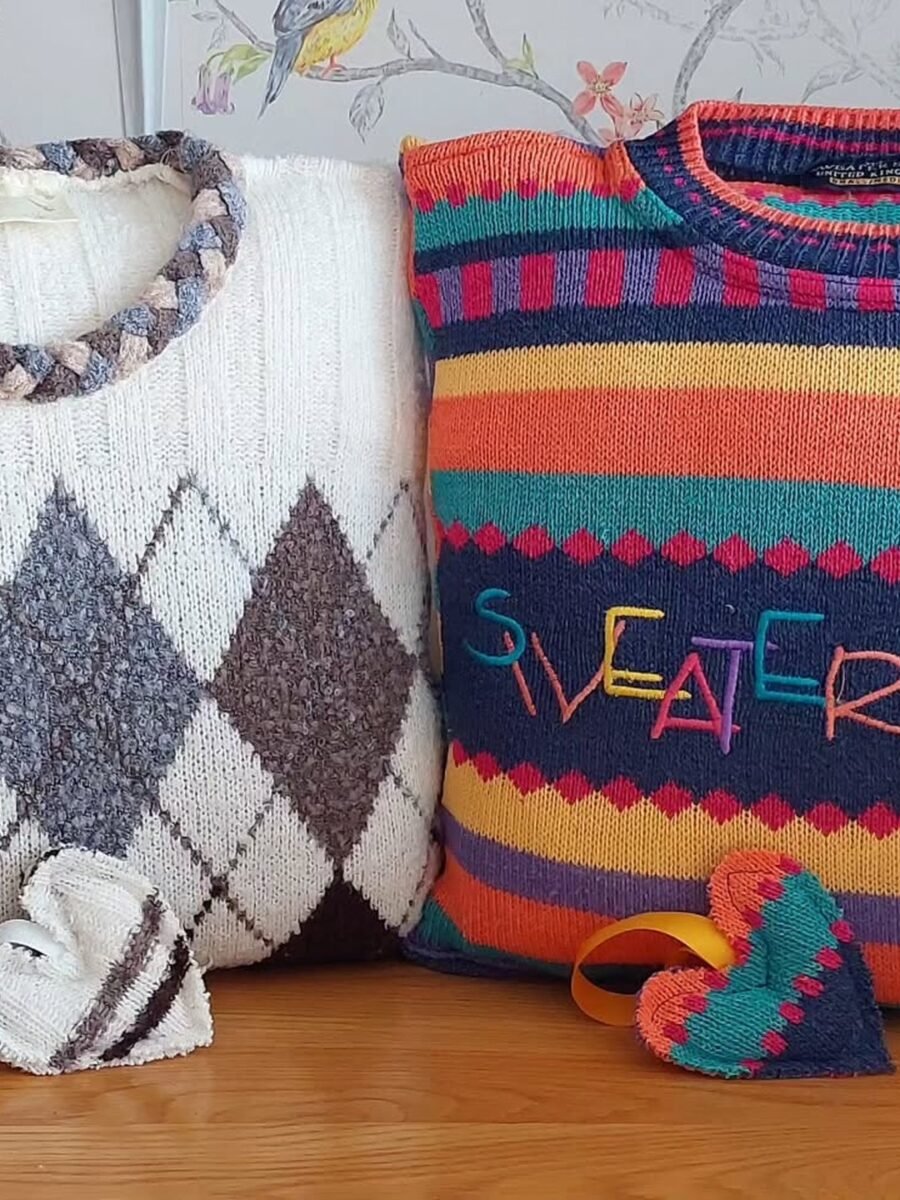
A soft old sweater that no longer fits still has plenty of life left as a pillow cover. The knit is already the right weight, the pattern is built in, and a cable knit or argyle sweater looks far more expensive than it is. Slip a pillow form inside, stitch the open edge closed, and you have a cozy cover that cost nothing. The striped sweater in the photo even spells out the word sweater in knitted letters, which is the kind of detail money cannot buy.
Materials Needed
- One clean old sweater, any size
- A pillow form to fit inside the sweater body
- Sharp fabric scissors
- A needle and matching thread, or a sewing machine
- Buttons or a zip, optional, for the opening
How to Make It
- Wash and dry the sweater, then lay it flat and smooth out the wrinkles.
- Slip the pillow form inside the sweater body and mark where the sweater needs cutting.
- Cut the sweater about one inch wider than the pillow form on all sides.
- Turn the sweater inside out and stitch three sides closed with a straight stitch.
- Turn it right side out, push the pillow form in, and stitch the last edge closed by hand.
- Fluff the pillow and set it on a chair or sofa, with the prettiest knit pattern facing out.
Tip: Pick a sweater with a tight knit and no thin spots, because a loose or worn knit will stretch out of shape once the pillow is stuffed.
3. Braided T-Shirt Rag Rug
BuildAbout 2 hoursNo sewing machine needed
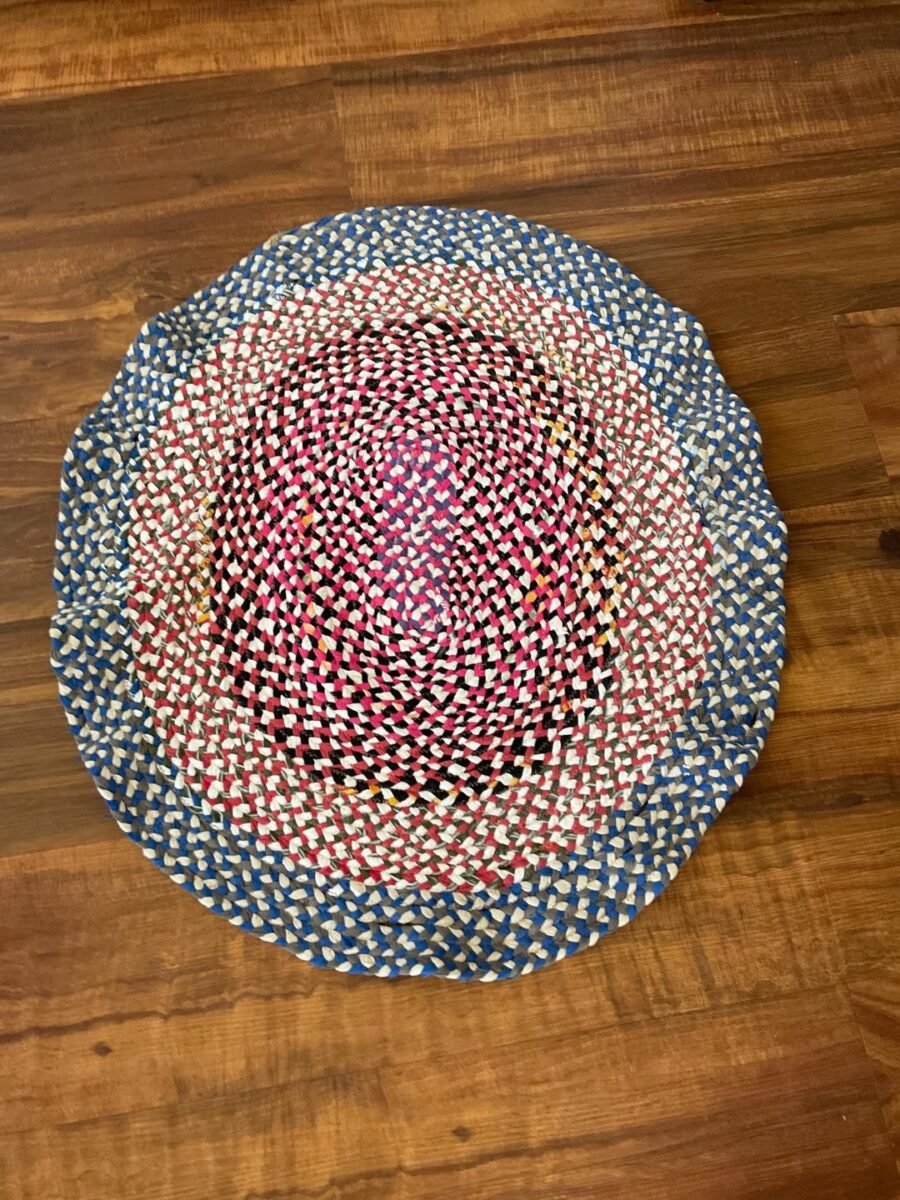
Old T-shirts that are stained or stretched out make the best rag rugs, because the cotton is soft underfoot and the colors mix into something cheerful. Cut the shirts into long strips, braid three strips together, then coil the braid into a round rug and stitch the coils together as you go. The rug in the photo uses rings of blue, pink, red and white, and it took shape one coil at a time. It is the kind of slow, satisfying project that suits an evening in front of the television.
Materials Needed
- Six to eight old T-shirts in colors you like
- Sharp fabric scissors
- A needle and strong thread
- A large safety pin to hold the braid start
- A flat surface to coil the rug on
How to Make It
- Cut each T-shirt into strips about one inch wide, cutting across the body from hem to armpit.
- Knot three strips together at one end and pin the knot to a cushion so it stays put.
- Braid the strips tightly, adding a new strip whenever one runs short.
- Coil the finished braid into a flat spiral on the table, starting from the center.
- Stitch the coils together with strong thread as you wind, keeping the rug flat.
- When the rug is the size you want, tuck the braid end underneath and stitch it down firmly.
Tip: Keep the braid tension even all the way through, because a braid that loosens halfway will make the rug ripple instead of lying flat.
4. Wine Cork Bath Mat
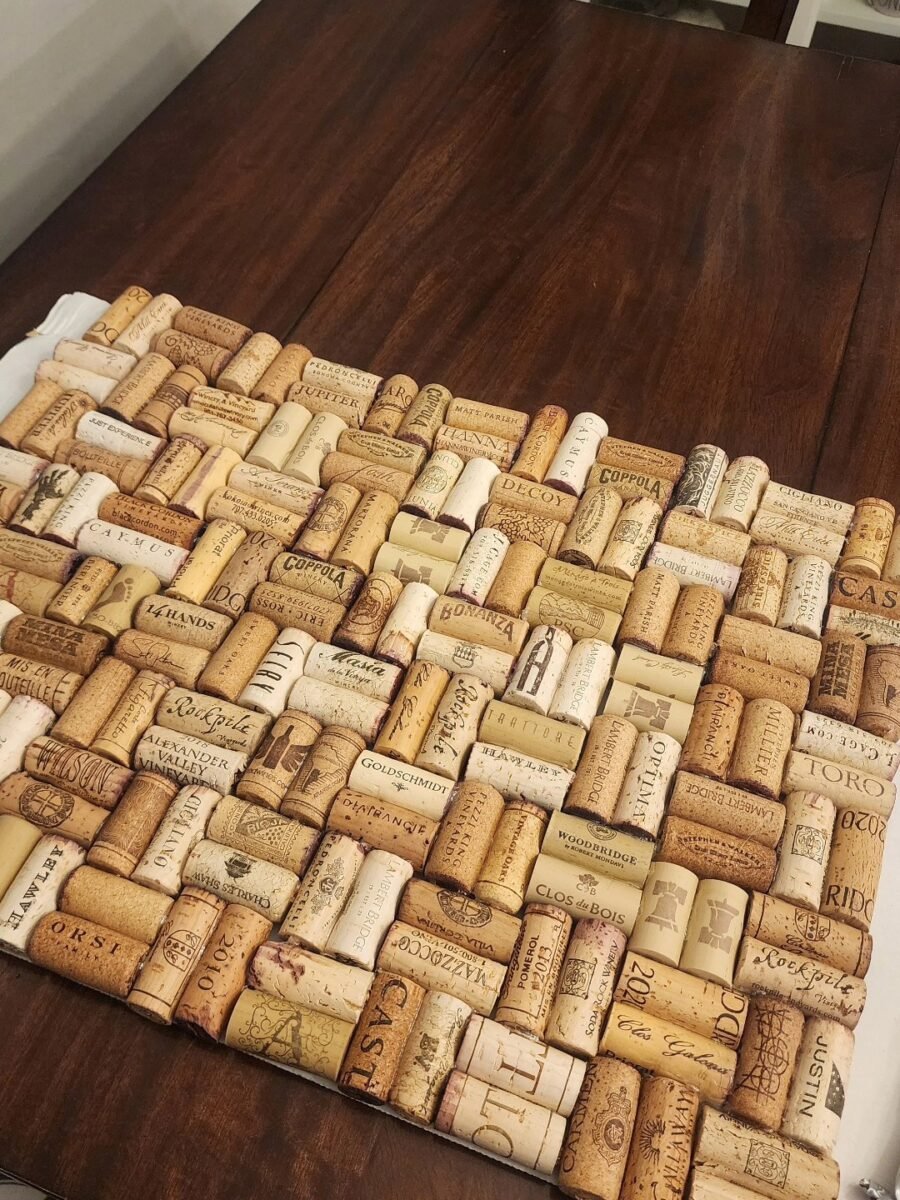
Save every wine cork and one day you will have enough for a bath mat that feels wonderful under bare feet. The mat in the photo holds more than a hundred corks glued side by side on a backing board, and the mix of winery names gives it a patchwork look. Cork dries fast, grips well when wet, and forgives a wobbly cut, so this is a forgiving first project. Ask friends to save their corks too, because one household alone takes a while to collect enough.
You’ll need: about 100 used wine corks, a backing board cut to mat size, strong glue, and a craft knife.
Best for: A bathroom that needs a warm, grippy mat underfoot
5. Old Door Headboard

Three old wooden doors stood on end make a headboard with more character than anything in a furniture store. The weathered white paint and peeling edges in the photo are the whole point, so do not sand them smooth. Measure the bed width first, join the doors with battens on the back, and fix the finished headboard to the wall or the bed frame so it cannot tip. Test old paint for lead before you sand anything, and seal flaking paint if the doors will sit near pillows.
You’ll need: three old wooden doors, wooden battens, screws, a drill, and wall fixings.
Best for: A bedroom that needs a bold focal point on a small budget
6. Hanging Teacup Planters
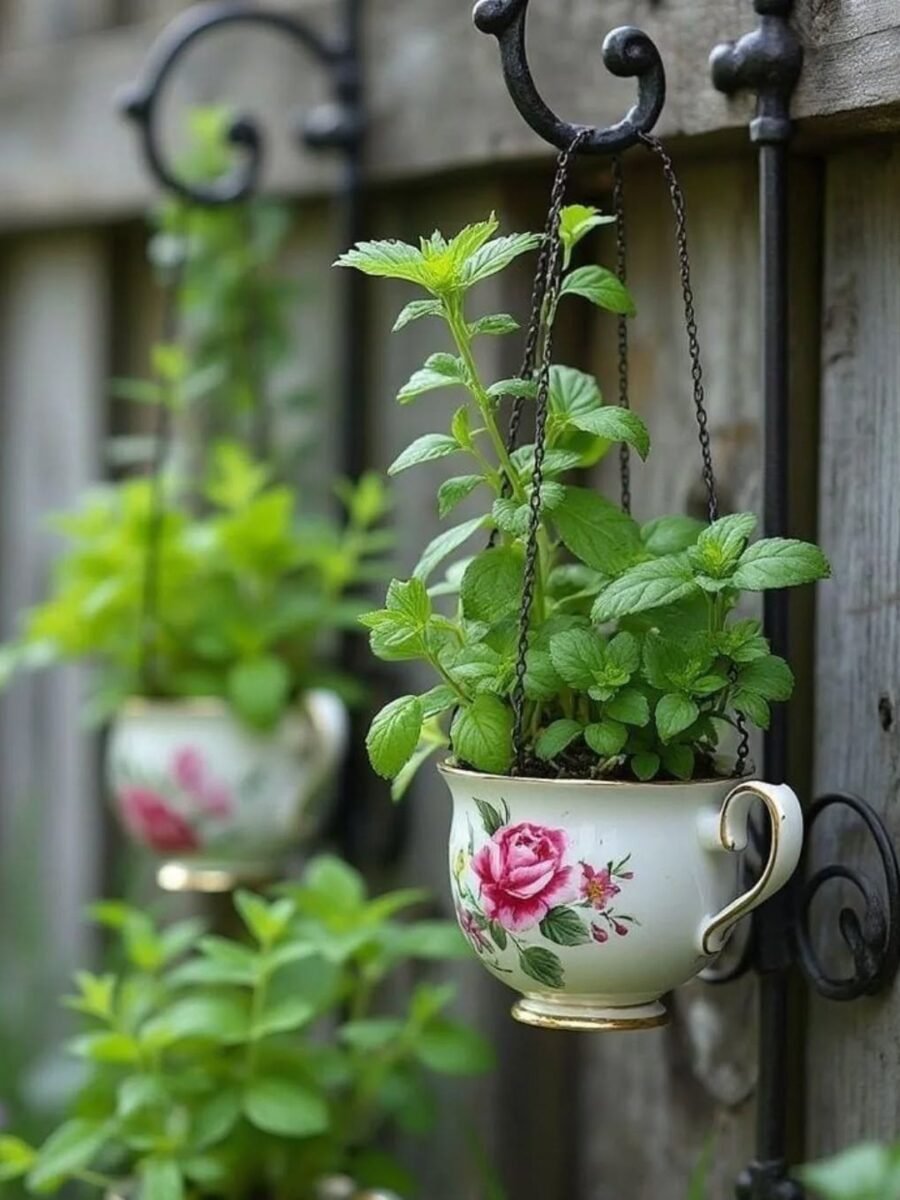
A chipped teacup that can no longer hold tea can still hold a plant, and hung from a hook it becomes the prettiest thing on a fence or balcony. The rose patterned cup in the photo holds a mint plant, and the chains let it catch the light. Drill a small drainage hole in the bottom with a ceramic bit, or add a layer of stones and water lightly. Herbs like mint suit these cups, because they grow fast and smell lovely every time you brush past.
You’ll need: old teacups, small plants or herb cuttings, potting soil, and chains or strong twine and hooks.
Best for: A small balcony or fence that needs a touch of green
7. Denim Pocket Wall Organizer
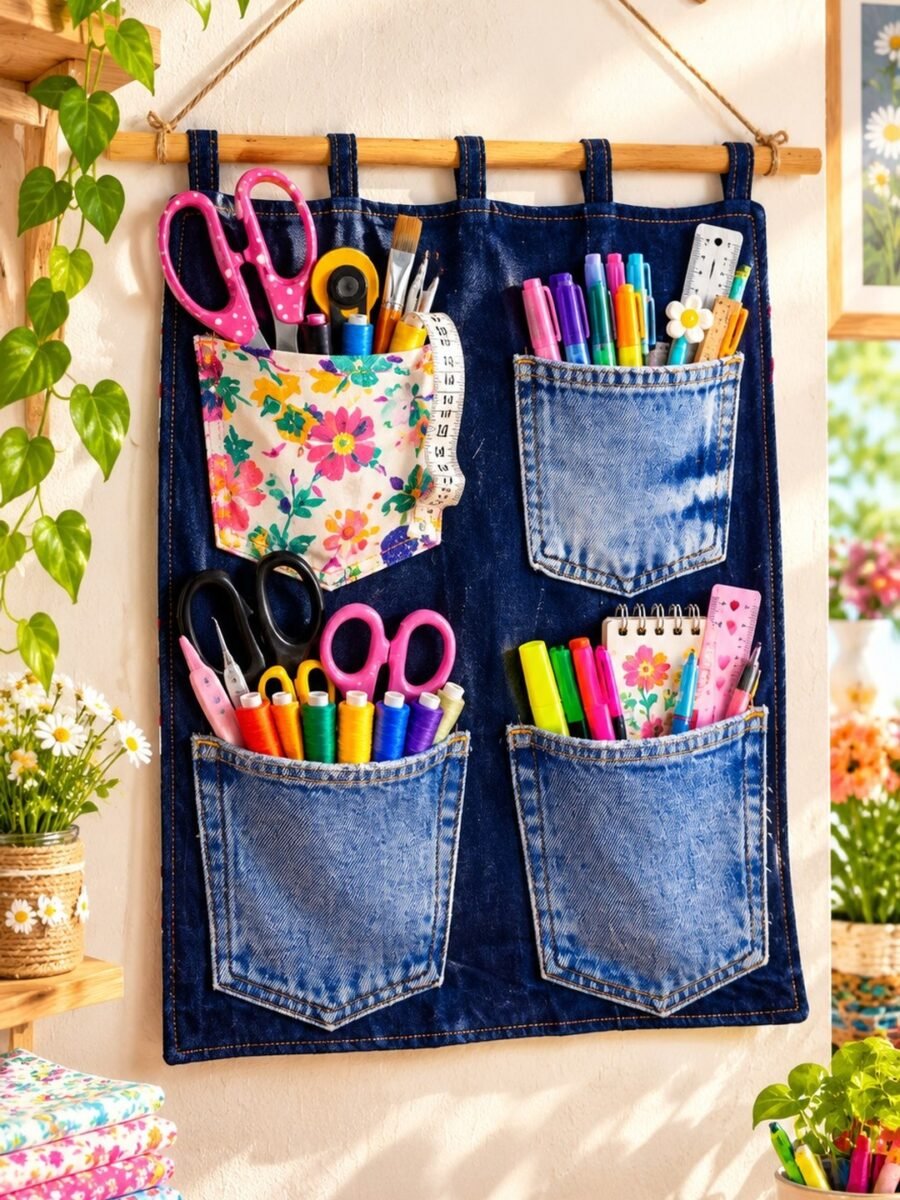
The pockets of old jeans are already perfect storage, so cut them out and sew them onto a backing panel and you have an organizer in an afternoon. The one in the photo holds scissors, markers, paintbrushes and thread spools, with every pocket doing a different job. Hang it by a wooden dowel on the wall near your desk or craft table, and the things you reach for most are always in sight. Use pockets from more than one pair of jeans for a mix of sizes and washes.
You’ll need: two or three pairs of old jeans, a backing fabric panel, a wooden dowel, thread, and a sewing machine.
Best for: A craft corner or desk that needs its supplies in plain sight
8. Reused Jar Pantry Storage
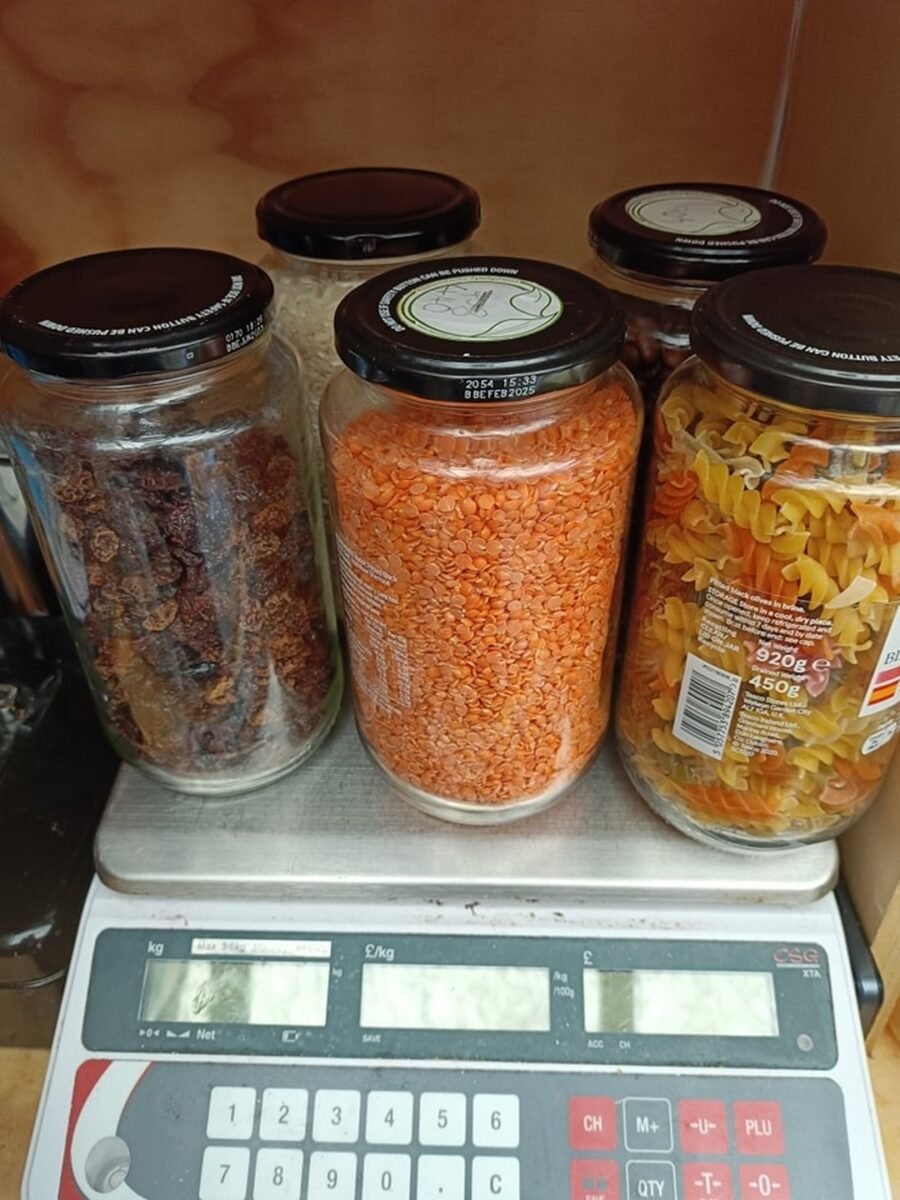
Empty pasta sauce and jam jars are the same glass as pantry canisters, so wash off the labels and put them straight to work. The jars in the photo hold lentils, pasta, rice and beans, and the clear glass shows at a glance what needs topping up. Match the lids in one color if you like a tidy shelf, or let the mixed jars show, because the food inside is the decoration. If your kitchen shelves hold old tins too, our diy tin can ideas put those to work the same way.
You’ll need: clean glass jars with lids, hot soapy water, labels, and a marker.
Best for: A pantry shelf that needs order without buying new canisters
9. Old Frame Jewelry Organizer
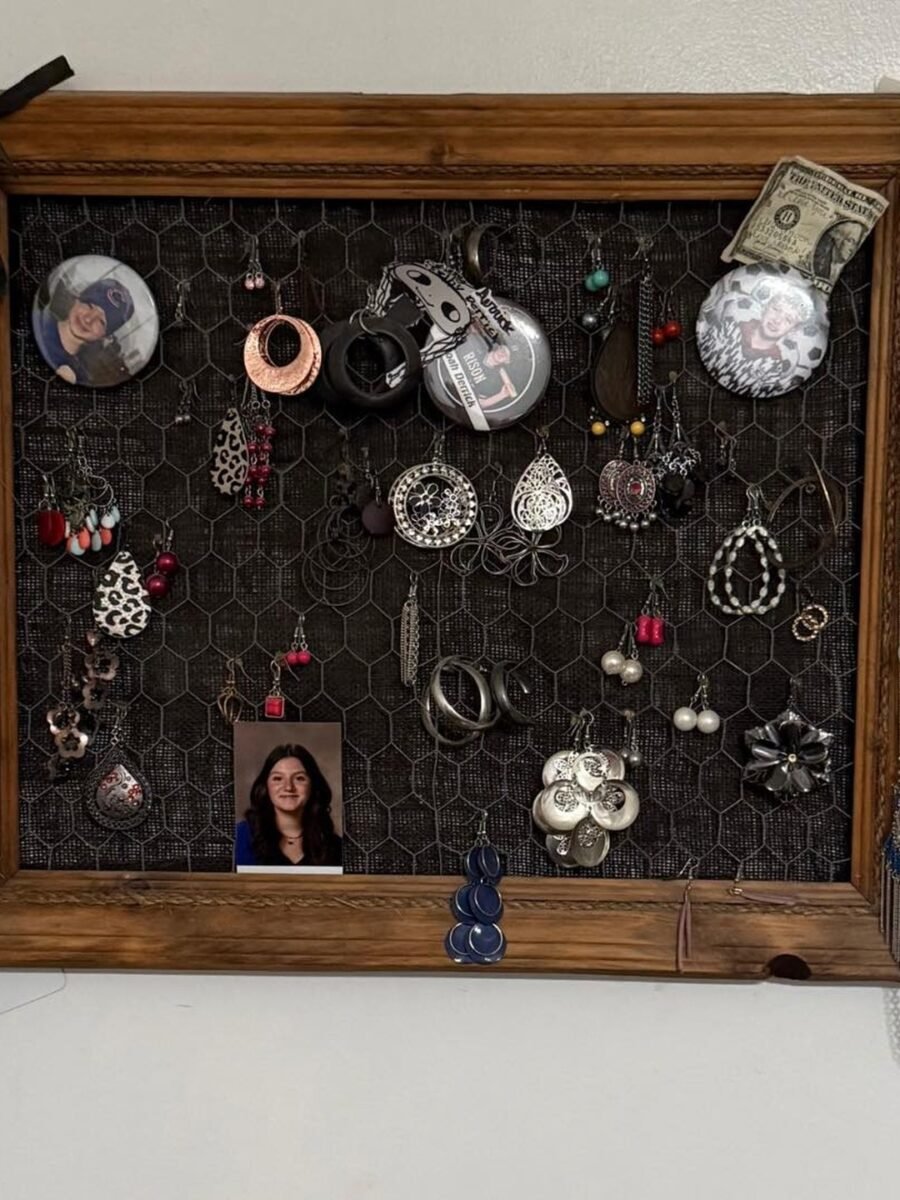
An old picture frame with the glass removed becomes a jewelry organizer with one sheet of chicken wire stapled across the back. Earrings hook straight through the mesh, necklaces drape over the sides, and everything stays visible instead of tangled in a box. The frame in the photo holds rows of earrings and chains, and it hangs on the wall like a piece of art. Paint the frame to match your room, and hang it where you get dressed so choosing earrings takes seconds.
You’ll need: an old wooden picture frame, chicken wire mesh, a staple gun, wire cutters, and picture hanging hardware.
Best for: A dresser top buried under tangled necklaces
10. Hollowed Book Planter
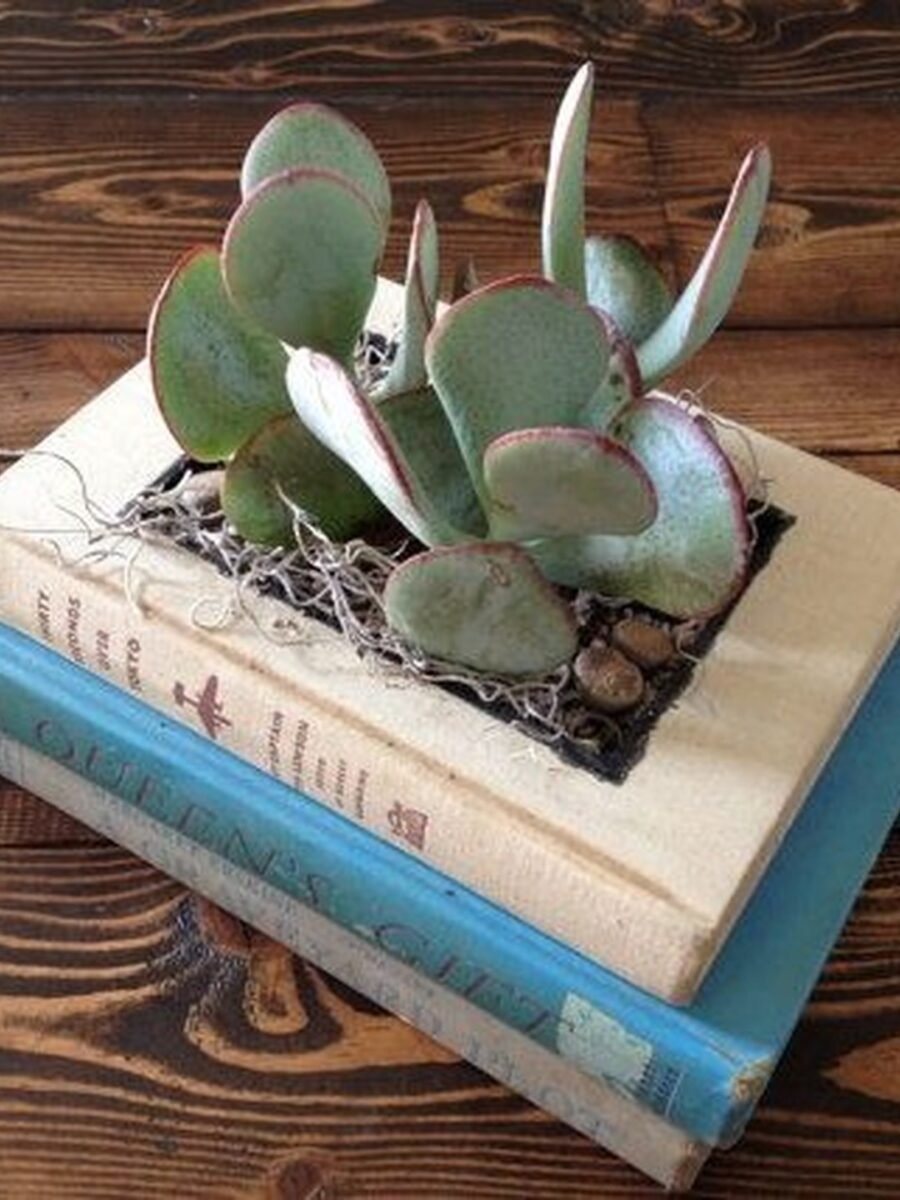
A worn hardcover book that nobody will read again makes a charming little planter for a succulent. Cut a rectangle through the pages, line the hole with plastic, add soil and tuck in a small jade plant. The book in the photo sits on top of another book, and the thick green leaves against the cream pages look like a still life. Pick a book with no sentimental value, and water sparingly, because succulents like dry soil and books do not like water.
You’ll need: a worn hardcover book, a craft knife, a plastic liner, potting soil, and a small succulent.
Best for: A bookshelf that needs one small green surprise
11. CD Mosaic Coasters
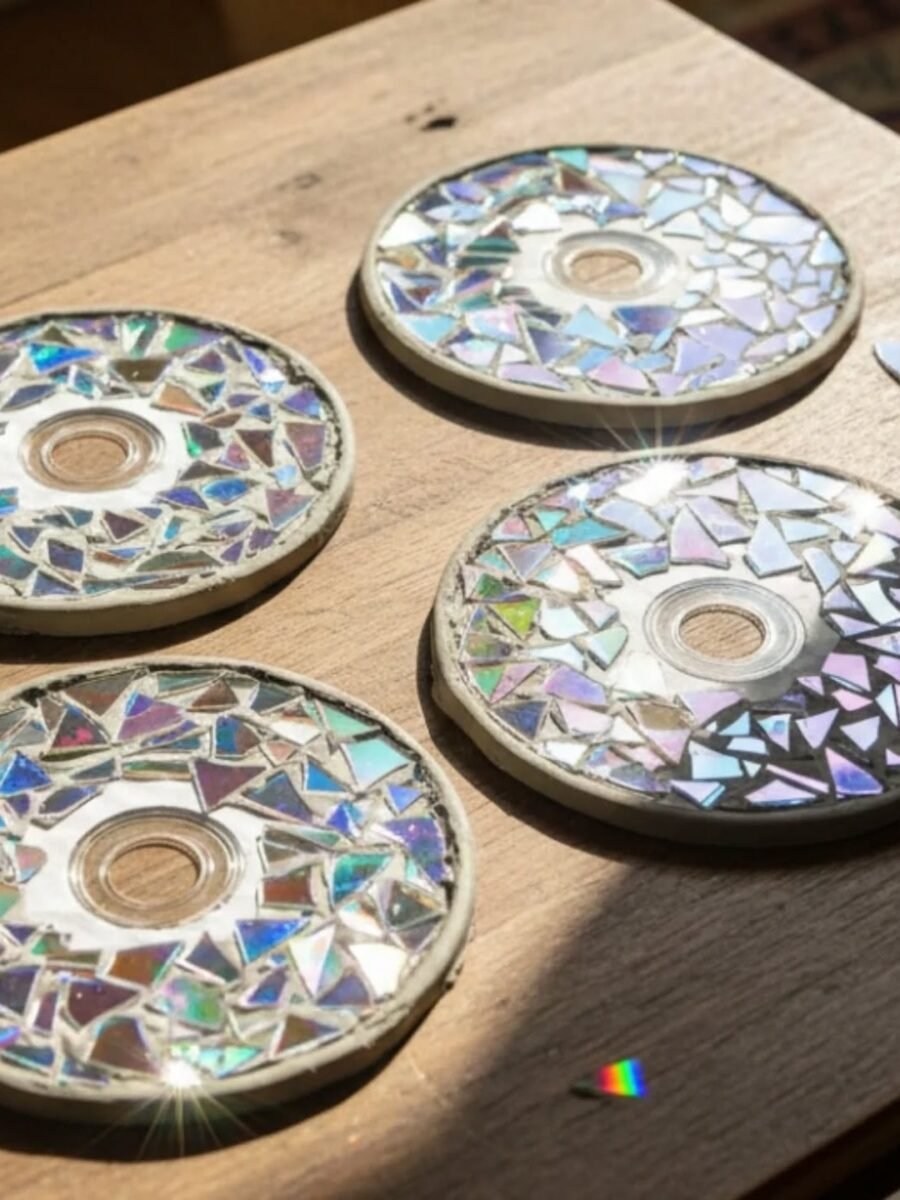
Old compact discs nobody plays anymore break into shiny shards that make coasters sparkle like stained glass. Glue the pieces onto a plain coaster base, grout the gaps, and seal the top so mugs slide smoothly. The four coasters in the photo catch the light in blues, pinks and silvers, and each one is different. Wear safety glasses while you break the discs, and keep the sharp edges inside the grout where fingers cannot reach them.
You’ll need: old compact discs, plain coaster bases, strong glue, grout, a sealant, and safety glasses.
Best for: A coffee table that needs color and a talking point
12. Old Shutter Mail Organizer
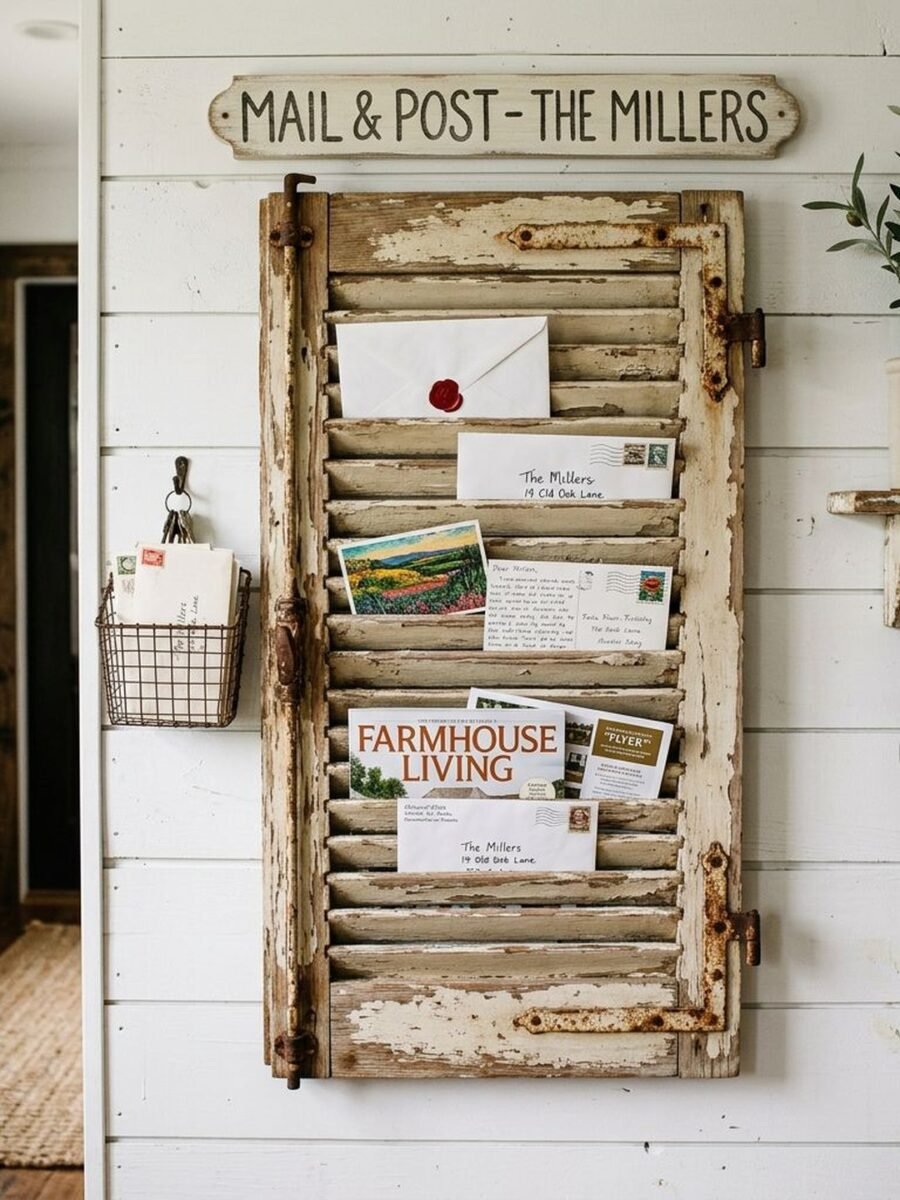
An old wooden shutter hung on the wall turns a pile of mail into a tidy entryway station. The slats hold envelopes and postcards, and the frame takes a small sign or a magazine in the lower slots. The shutter in the photo keeps the family mail sorted under a hand painted sign, and the weathered wood suits a farmhouse hallway perfectly. Fix it to the wall with sturdy screws into a stud, because a shutter full of mail is heavier than it looks.
You’ll need: an old wooden shutter, wall screws and plugs, a small sign, and a drill.
Best for: An entryway where mail always ends up in a pile
Frequently Asked Questions
What counts as a reused DIY project?
A reused DIY project takes something you already own, like a jar, an old sweater, a door or a shutter, and turns it into something useful or decorative instead of throwing it away. The original item stays recognizable in the finished piece, which is what makes these projects different from buying new craft supplies.
What old things are easiest to reuse first?
Glass jars are the easiest place to start, because they only need a wash before they become planters or pantry storage. Old T-shirts, sweaters and jeans come next, since they cut and sew easily, and wine corks and old books are simple too. Save doors and shutters for later, because they need a drill and wall fixings.
Do I need special tools for reused DIY projects?
No. Scissors, strong glue, a needle and thread, and a drill cover almost every idea on this page. A craft knife helps with the book planter and the CD coasters, and a staple gun helps with the frame jewelry organizer. Borrow the tools you do not own before you buy them.
How do I clean old jars, tins and fabric before reuse?
Wash glass jars in hot soapy water and let them dry fully so no food smell stays behind. Soak off paper labels with warm water, and rub sticky residue away with a little cooking oil. Wash sweaters, jeans and T-shirts before cutting, and air them out well, because clean materials glue and sew far better than dusty ones.
Are reused projects safe for food and plants?
Yes, if you pick the right materials. Use food safe jars with intact lids for pantry storage, and never store food in a jar that held chemicals. Line a hollowed book with plastic before adding soil, water succulents sparingly, and keep painted items away from food. Check old paint for lead before sanding any door or shutter.
Where do I find old items to reuse?
Start in your own home: kitchen cupboards hold jars, closets hold worn sweaters and jeans, and the garage often hides doors, shutters and scrap wood. Thrift stores and garage sales are the next best source, and friends are usually glad to pass on jars, corks and old books once they know you want them.
Final Thoughts on Reused Diy Projects
Twelve projects, and the pattern is simple: jars first, then fabric, then whatever is leaning in the garage. Mason jar herbs, sweater pillows and a braided rug start the list, cork mats, a door headboard and teacup planters keep it going, and denim pockets, jar storage, a frame organizer, a book planter, CD coasters and a shutter mail holder finish it off. If you have pallets waiting in the garage too, our pallet projects turn them into shelves and planters in the same spirit.
Start today with the mason jars, because the whole project needs only jars, soil and a sunny windowsill, then let the next old thing you spot pick the project after that. By the end of the month your home will hold a dozen small proofs that the best decor is the kind you already own.

