

Paint is the cheapest makeover your coop will ever get.
A bare wooden box can look like a shed you forgot about. Give it the right colors and suddenly it’s the cutest thing in the backyard, the spot everyone wants to photograph.
Color isn’t just about looks, though. Light shades keep the coop cooler in summer. Earthy tones hide dust and muddy footprints. And good exterior paint protects the wood for years.
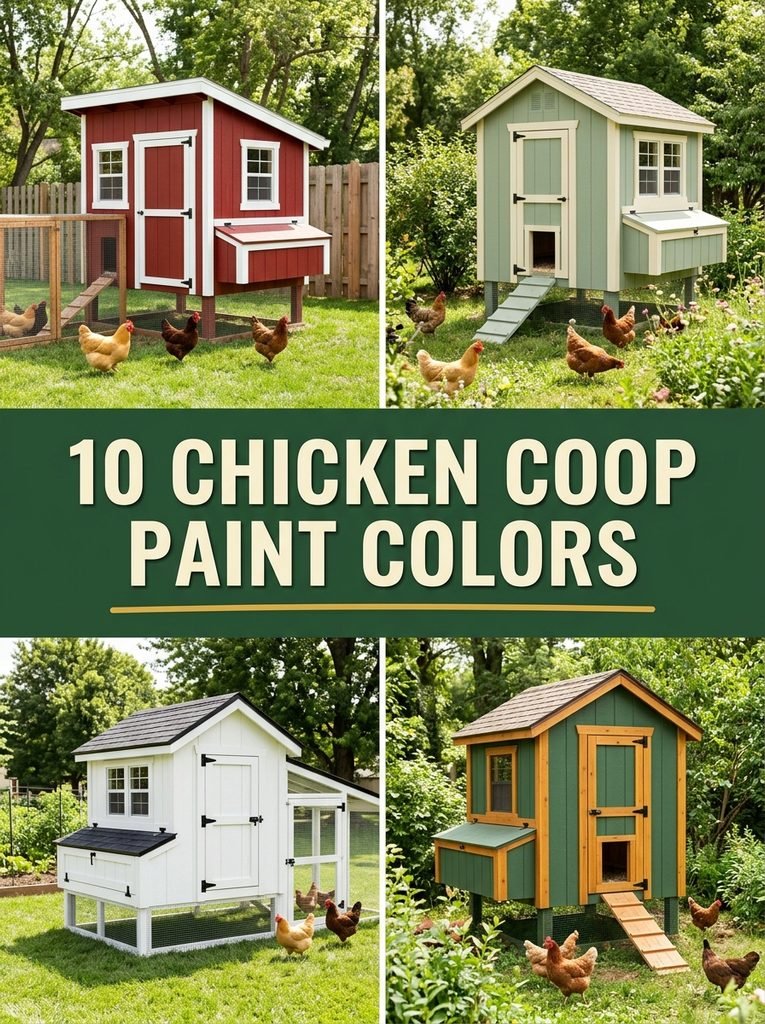
So here are 10 chicken coop paint colors and combinations I really like, from classic barn red to soft greens and warm rustic shades. A few of them come with full painting steps too.
Quick Picks
- Most classic: Barn Red With White Trim (idea 1)
- Best green: Sage Green and Cream (idea 2)
- Best for hot climates: Soft White With Black Trim (idea 5)
- Most rustic: Chocolate Brown and Mustard (idea 10)
1. Classic Barn Red With White Trim
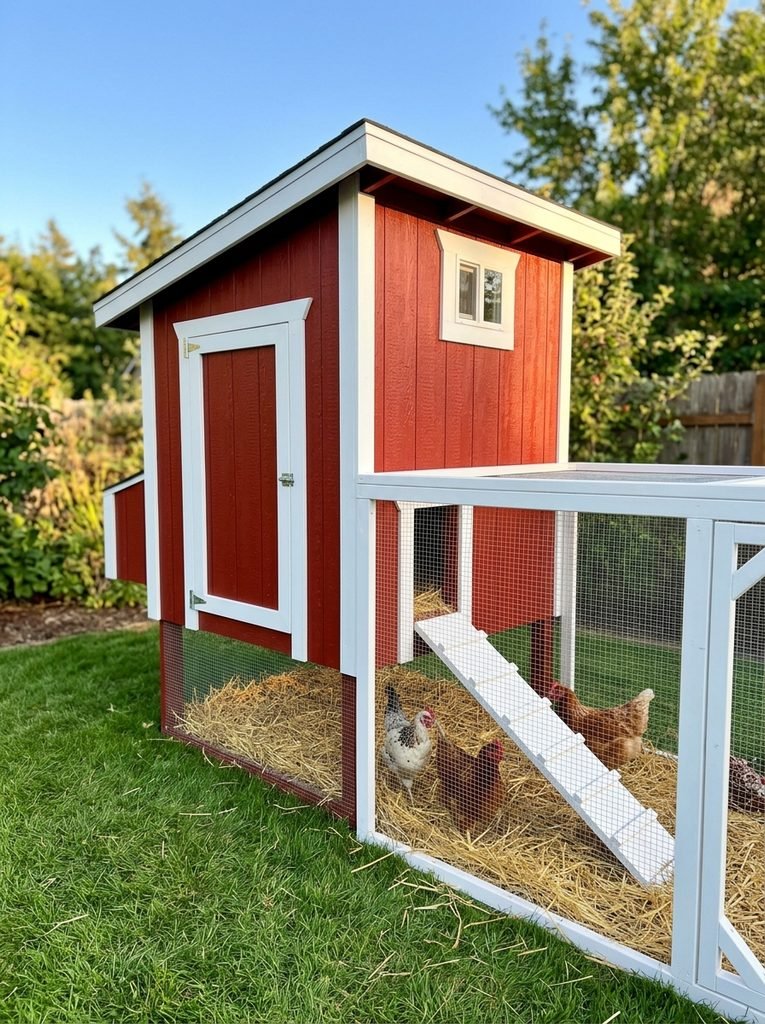
You can’t go wrong with barn red. It’s the color most people picture when they think of a farm, and white trim makes it pop instantly. It also hides dirt better than you’d expect.
One honest note: red fades faster in strong sun than most colors. Pick a good low VOC exterior paint with UV protection, and plan a fresh coat every few years. The steps below work for any color on this list.
⏱ 1 to 2 days💲 Medium🛠 Easy
Materials Needed
- Low VOC exterior paint in red and white
- Exterior wood primer
- Stiff brush, mild soap and a bucket
- Medium sandpaper and a dust mask
- Painter’s tape, an angled brush and a roller
- Drop cloth
How to Make It
- Move the hens to a safe pen away from the coop for the whole project.
- If the coop has old paint, test it for lead before sanding.
- Scrub the outside with mild soapy water, rinse and let it dry fully.
- Sand rough spots, wearing a mask, and wipe off the dust.
- Prime bare wood, then roll on two coats of red, letting each dry.
- Tape the edges and brush the white trim last.
- Let the paint cure for about a week before the hens move back in.
Tip: Paint the outside only. Inside, leave the wood bare or use a light limewash, since hens peck at everything near them.
2. Sage Green and Cream
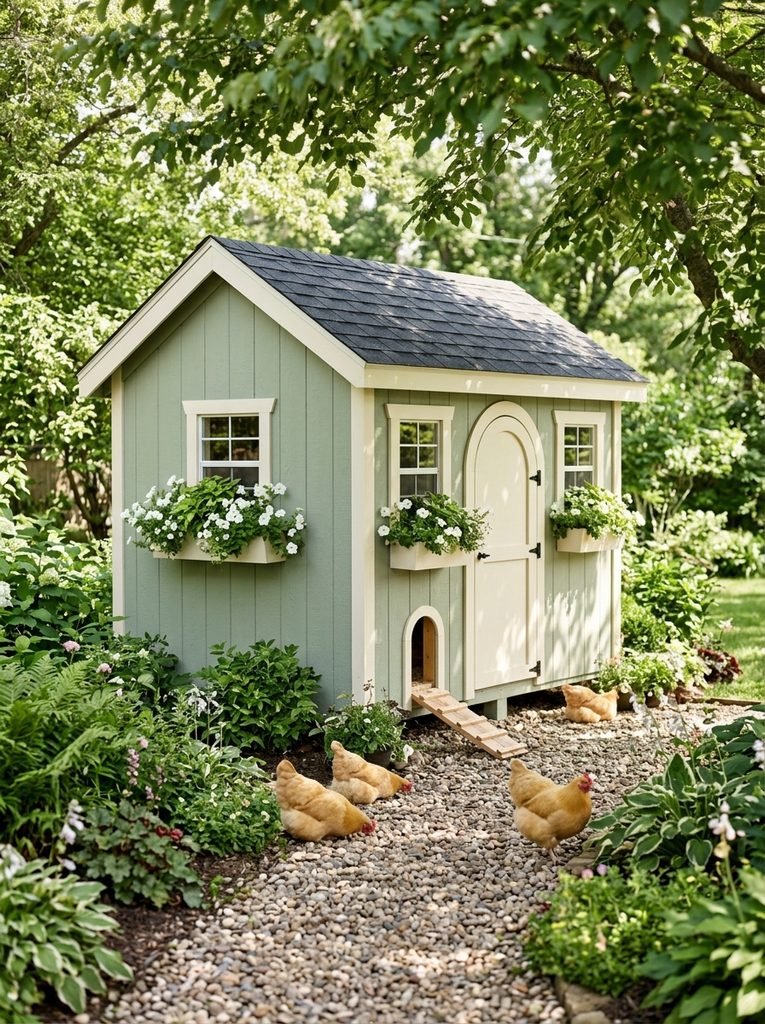
If you want your coop to blend into the garden, sage green is my top pick. It’s soft, calm and sits beautifully next to plants. Cream trim keeps it fresh instead of flat.
I like this one most in cottage gardens with lots of flowers. Being a light shade, it also stays cooler in summer than darker greens. That makes a real difference for hens on hot afternoons.
Best for: cottage gardens and coops near flower beds
3. Forest Green With Natural Wood Trim
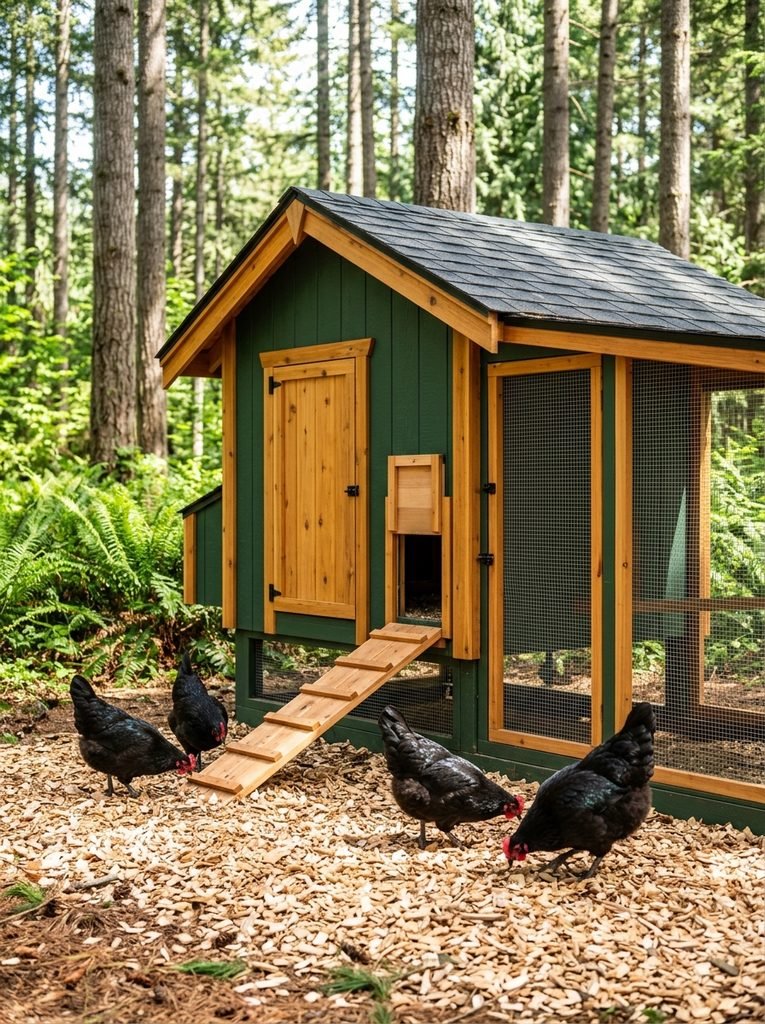
Deep forest green feels rustic and earthy in the best way. Pair it with natural wood trim and the coop looks like a little cabin in the woods.
Seal the bare trim with a water based exterior wood sealer so it doesn’t gray out. Dark colors soak up heat, so I’d save this one for shady spots or cooler climates.
Best for: wooded yards and shady corners
4. Two Tone Olive Green and Warm Tan
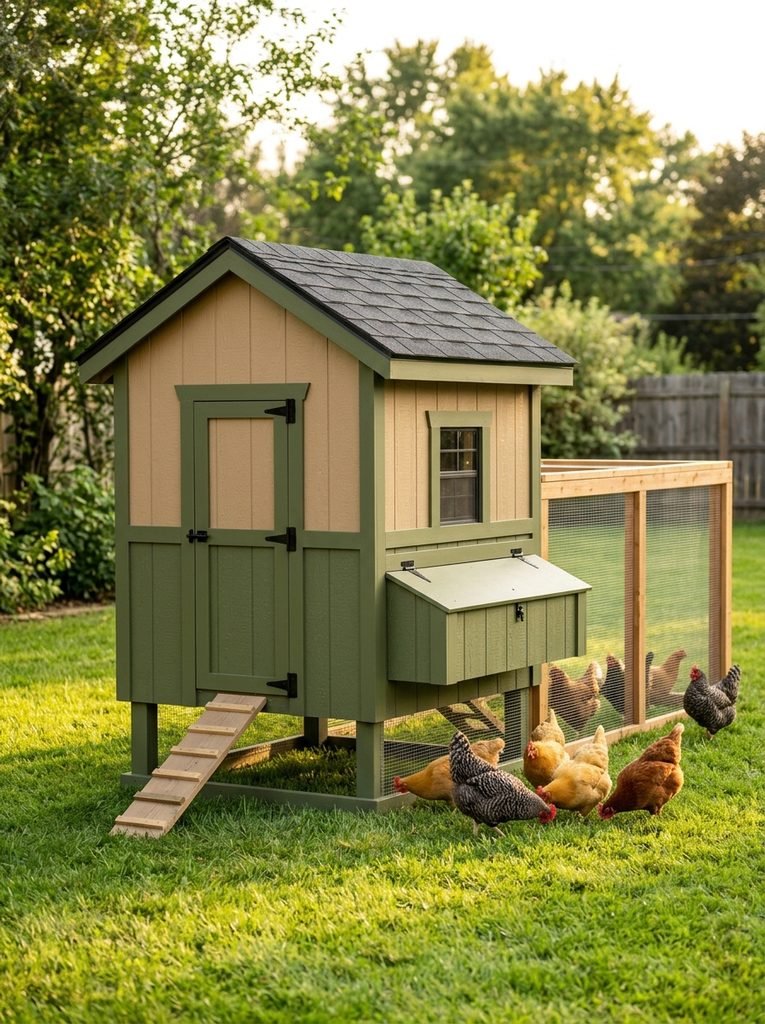
Two tone is my favorite trick for a coop that looks custom. A darker color on the bottom hides mud splashes, and a lighter color on top keeps it bright and cool.
Olive green and warm tan are a lovely earthy pair. A simple wooden strip across the middle makes the line between colors look clean and planned, even if your painting isn’t perfect.
⏱ 1 day💲 Medium🛠 Easy
Materials Needed
- Low VOC exterior paint in olive green and warm tan
- A 1 by 3 inch wooden strip for the middle band
- Level, pencil and tape measure
- Painter’s tape, brush and roller
- Exterior screws and a drill
How to Make It
- Clean and prep the coop as in idea 1, with the hens moved out.
- Mark a level line about one third of the way up all the way around.
- Paint the top half tan first, letting it run slightly past the line.
- Once dry, tape along the line and paint the bottom olive green.
- Paint the wooden strip olive and screw it over the line to hide the seam.
Tip: Always paint the lighter color first. It’s much easier to cover a light edge with a dark color than the other way around.
Start Your 30-Day Home Reset
Stop waiting for a "perfect" free weekend. Grab the 30-day plan and start feeling lighter in your own home by tomorrow.
View the 30-Day Plan Printable PDF · Instant download5. Soft White Farmhouse With Black Trim
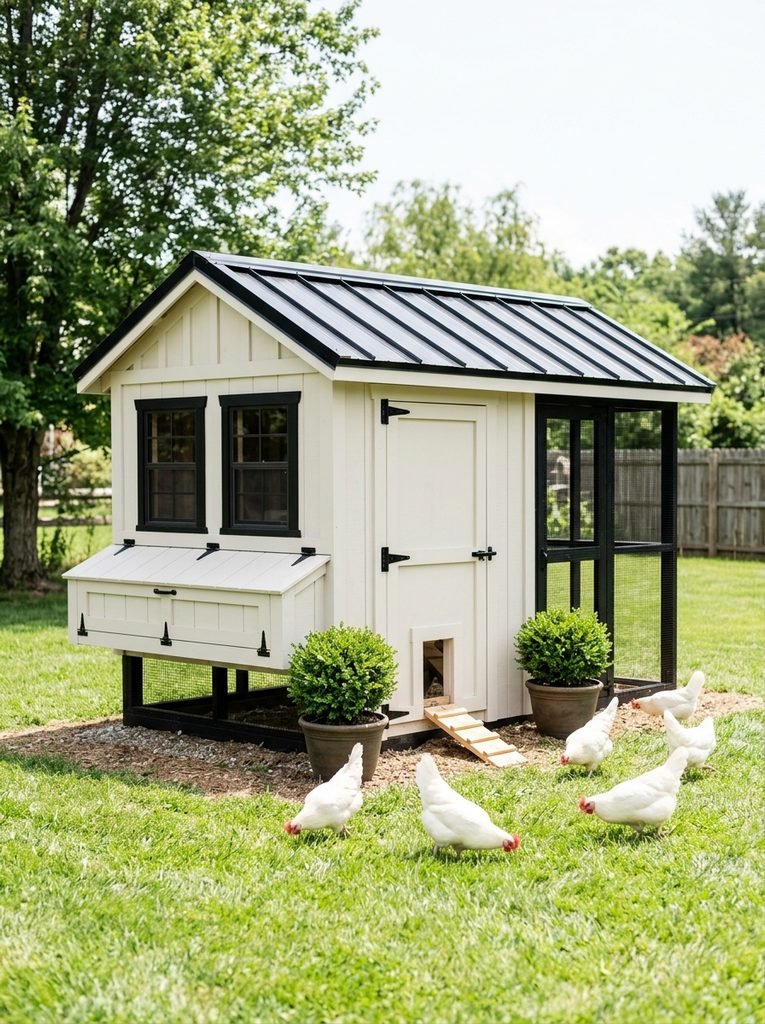
White with black trim is the modern farmhouse look, and it’s stunning on a coop. It feels clean, sharp and a little fancy.
It’s also one of the best colors for hot climates because white reflects sunlight. The only catch is that it shows dirt. I’d suggest a warm soft white rather than pure bright white, which hides dust a little better.
Best for: hot, sunny climates and modern homes
6. Terracotta and Cream
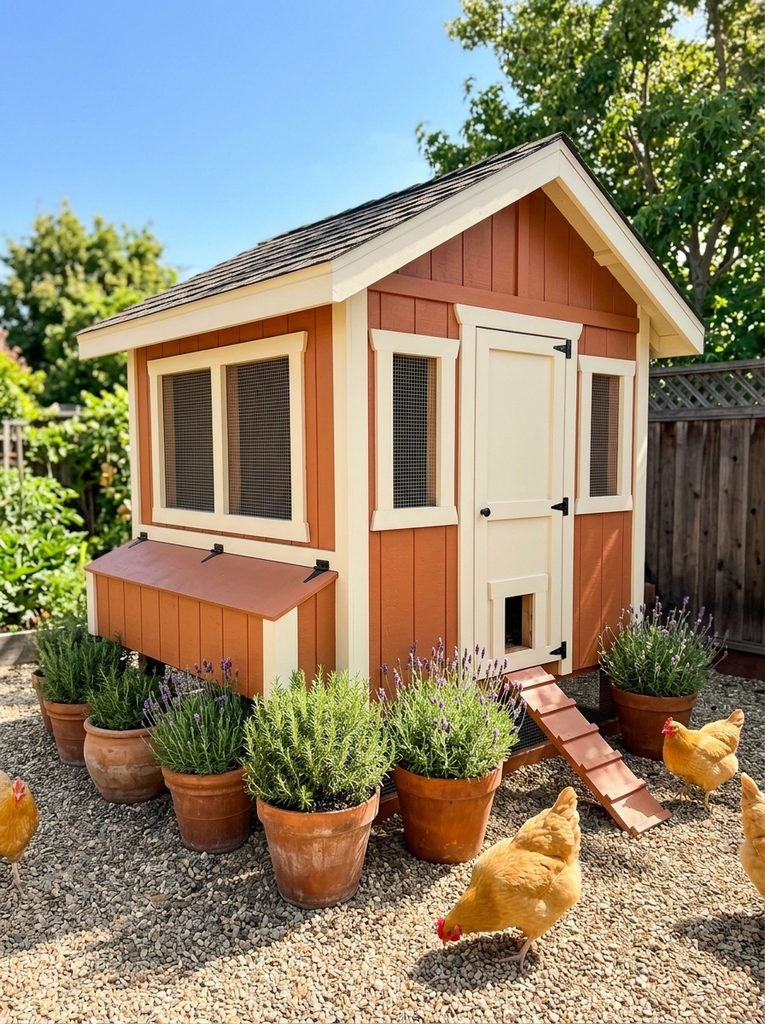
Terracotta brings a warm, sunny feel that works so well in dry gardens and gravel yards. It’s earthy without feeling dark or heavy.
Cream trim softens it nicely. Add a few clay pots of herbs around the base and the whole corner looks like a little Mediterranean courtyard. Rosemary and lavender are good choices and generally fine around chickens.
Best for: dry gardens and warm color lovers
7. Warm Greige With Charcoal Trim
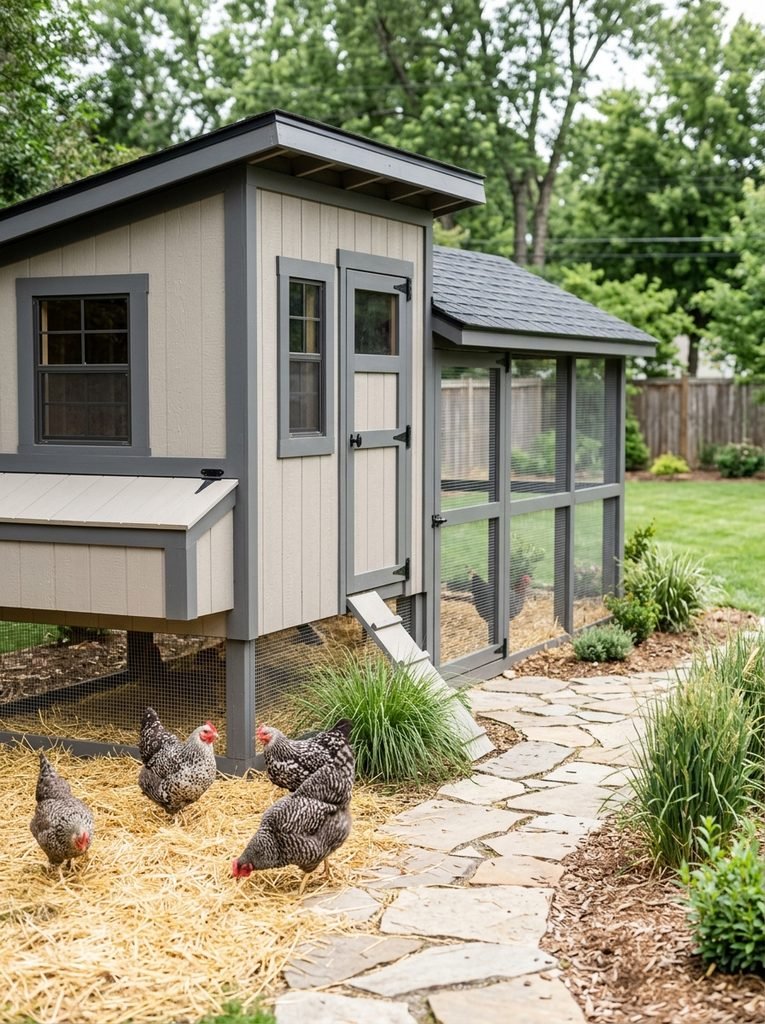
Greige is a soft blend of beige and gray. It’s quiet, earthy and matches almost any house. If you can’t decide on a color, this is the safe bet that still looks stylish.
Charcoal trim gives it shape and keeps it from looking washed out. In my experience, greige is also great at hiding dust and dried mud, which is a big plus on a coop.
Best for: matching a neutral house and hiding dirt
8. Butter Yellow Coop With a Painted Accent Door
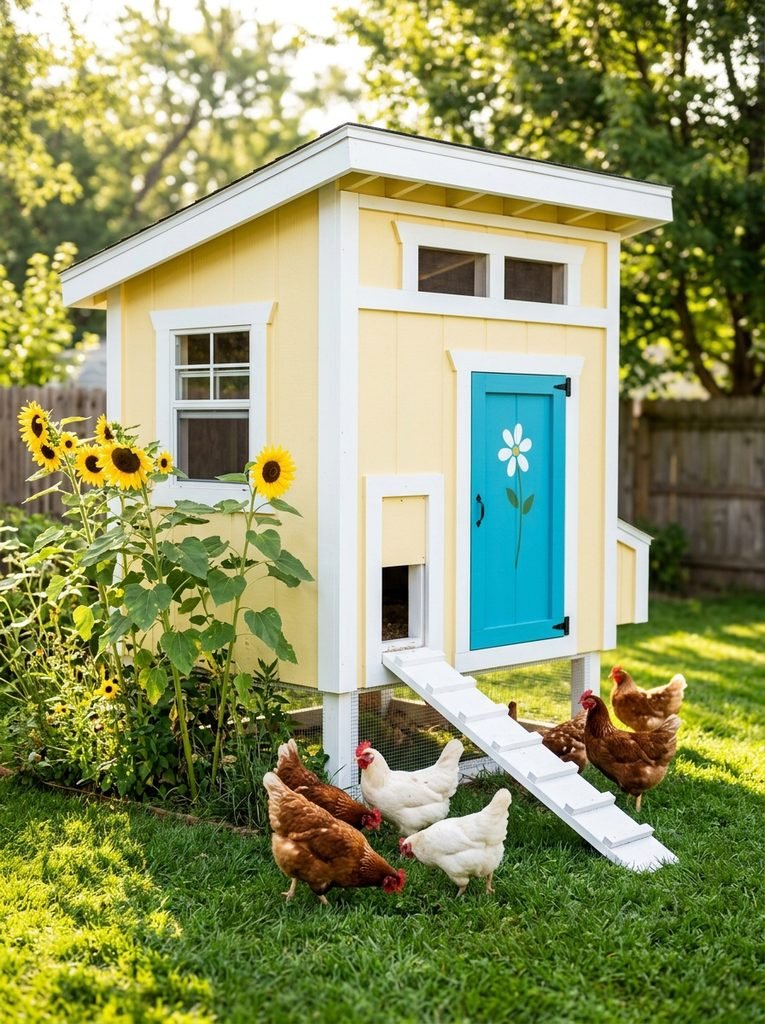
Want a coop that makes you smile every morning? Soft butter yellow does exactly that. Then paint just the door a bold contrasting color, like robin egg blue, for a fun pop.
An accent door is the easiest way to add personality without repainting everything later. Getting bored? Repaint only the door. I like adding a simple stencil with a reusable flower stencil for a cute finishing touch.
⏱ 3 hours💲 Low🛠 Easy
Materials Needed
- Low VOC exterior paint in an accent color
- Small amount of white exterior paint for the stencil
- Reusable stencil and a stencil brush
- Screwdriver, sandpaper and painter’s tape
- Two sawhorses
How to Make It
- Take the door off its hinges and lay it flat across the sawhorses.
- Lightly sand it, wipe it clean and tape off the hardware.
- Brush on two coats of the accent color, letting each coat dry.
- Tape the stencil in place and dab on white paint with an almost dry brush.
- Lift the stencil straight up, let it dry and rehang the door.
Tip: Painting the door flat stops drips and runs. It’s the difference between a homemade look and a polished one.
9. Robin Egg Blue With White Trim
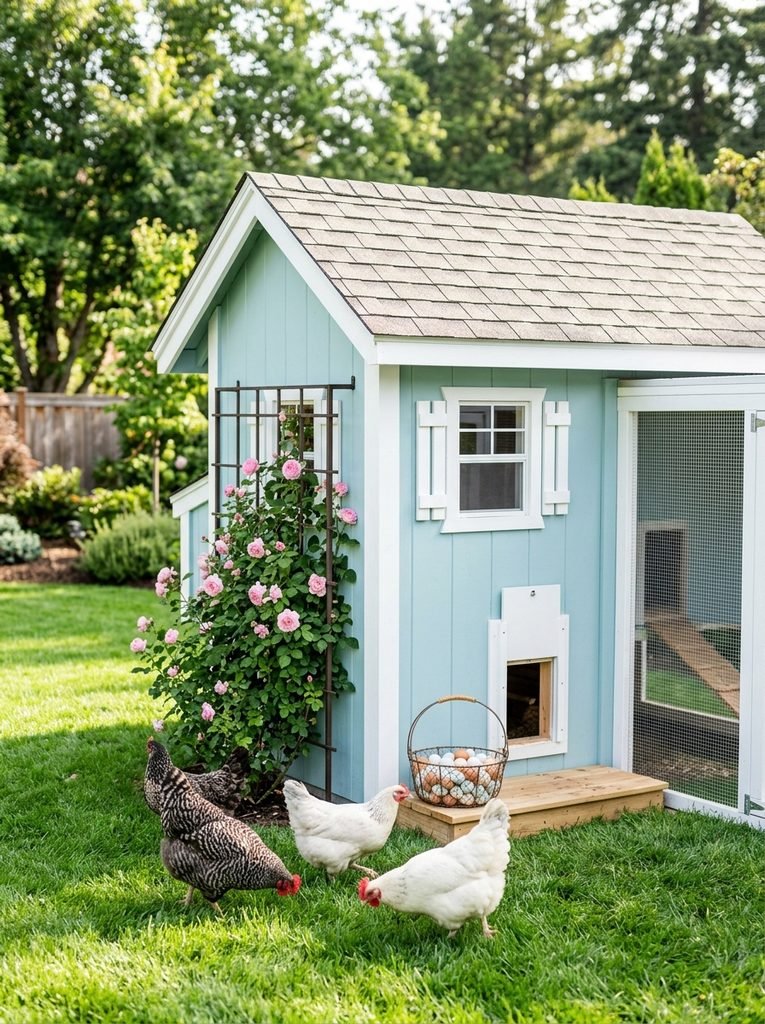
Robin egg blue is such a fitting choice for a chicken coop. It’s light, cheerful and a little playful, and it looks gorgeous next to green lawns and pink flowers.
White trim and shutters give it a seaside cottage feel. If you keep hens that lay blue eggs, this color just feels right. Like other light shades, it stays nicely cool in summer too.
Best for: playful cottage style and blue egg layers
10. Chocolate Brown and Mustard
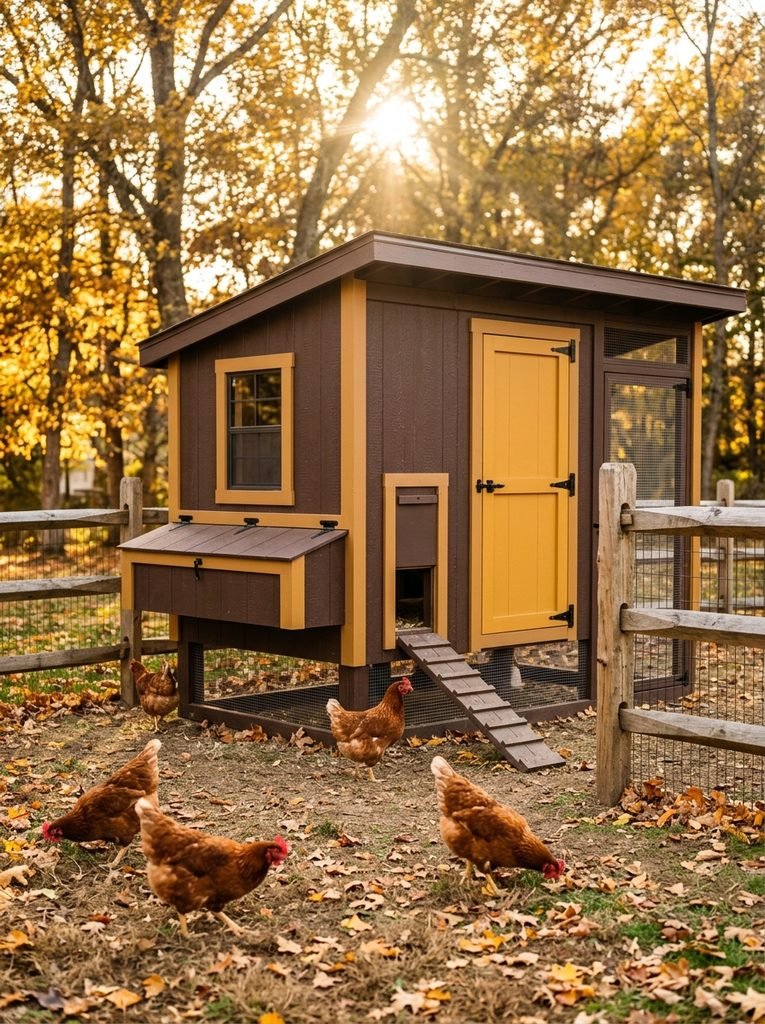
For the most rustic and earthy look, chocolate brown with mustard trim is hard to beat. It feels cozy and warm, like a little barn in autumn.
Brown is fantastic at hiding mud and dust, so it stays looking clean longer than any other color here. Since it’s dark, I’d place it where it gets some afternoon shade. Mustard trim keeps it bright and fun.
Best for: rustic farms and muddy yards
Frequently Asked Questions
What is the best color to paint a chicken coop?
Light colors like soft white, sage green and butter yellow are best in hot areas because they keep the coop cooler. Earthy shades like greige and brown hide dirt best.
Is it safe to paint a chicken coop?
Yes, if you use low VOC, non toxic exterior paint and paint the outside only. Keep hens away until the paint has cured, usually about a week.
Should I paint the inside of a chicken coop?
It’s best not to, since hens peck at walls and could swallow paint chips. Leave the inside bare or use a light limewash instead.
Do dark colors make a coop too hot?
They can. Dark paint absorbs more heat, so save it for shady spots or cooler climates and choose light colors for sunny yards.
What should I do about old paint on a coop?
Test it for lead before sanding, especially on older coops. If it tests positive, don’t sand it and ask a professional for advice.
How often should I repaint a chicken coop?
Every 3 to 5 years is typical. Coops in full sun, or painted in bright reds and blues, may need touch ups sooner.
Final Thoughts on Chicken Coop Paint Colors
The best coop color is one that suits your yard, your climate and your mood. Go light where it’s hot, earthy where it’s muddy and bold on the door if you want some fun. Keep the paint safe and outside, and your hens will have the prettiest house on the block.


Amir Ali is the founder and site administrator of HomeDecorEdge, a modern home decor and interior design platform. Since starting the site, he has combined his passion for interior design, practical styling, and color coordination with hands-on content strategy and site management. He guides authors, curates high-quality articles, and ensures readers have access to actionable, visually inspiring, and user-focused home decor advice for apartments, small rooms, and family homes.