

A good fence decides everything with chickens. Where they roam, what they dig up, and whether they are still there in the morning.
My first fence was a roll of cheap chicken wire tied to a few sticks. The hens hopped over it on day two and ate every lettuce in the garden.
Since then I have tried just about every kind of chicken fence. Some to keep hens in, some to keep them out of the veggies, and some to keep foxes and raccoons away.
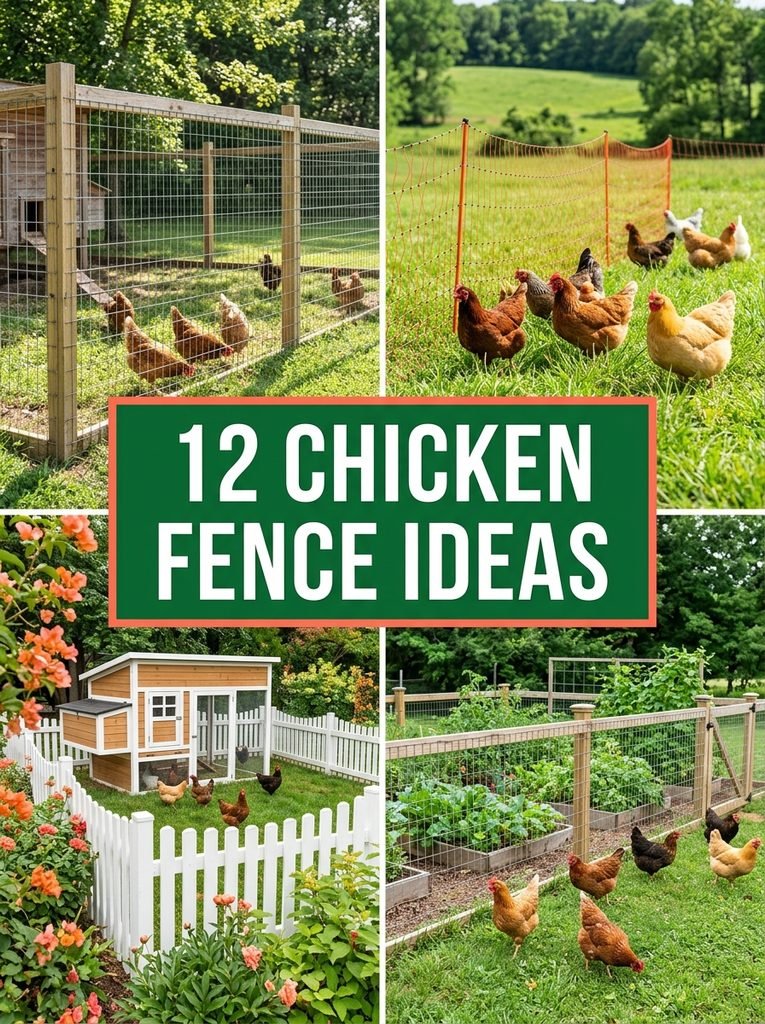
These 12 chicken fence ideas cover cheap DIY builds, free range setups, movable and portable fences, and simple temporary options for the garden.
1DIY Welded Wire Chicken Fence
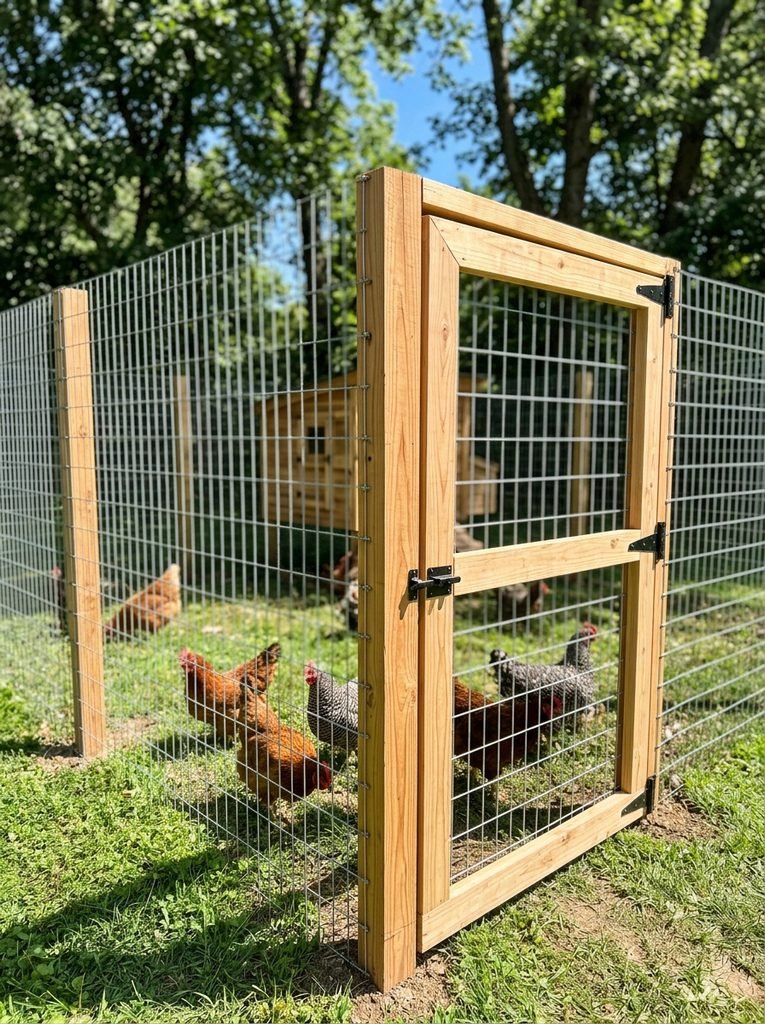
If I could only pick one fence, it would be this one. Welded wire is much stronger than chicken wire, it does not sag, and it lasts for years.
A 4 foot welded wire roll on wooden or metal posts makes a solid run. Most hens will not try to jump a 4 foot fence, and you can add a top line of string if you have a flyer.
- Strong and long lasting
- Does not sag
- Great all round choice
Project Card · 1 day · Moderate
Materials Needed
- Welded wire roll, 4 feet tall
- Wooden posts or metal T posts, one every 8 feet
- Post driver or digger
- Fence staples or zip ties
- Wire cutters, gloves and a tape measure
How to Make It
- Mark the fence line with string and stakes.
- Set the corner posts first, then the line posts every 8 feet.
- Unroll the wire along the outside of the posts, keeping the bottom close to the ground.
- Pull it tight and fasten it to every post with staples or zip ties.
- Add a simple gate at one corner using a short panel and two hinges.
2Free Range Perimeter Fence
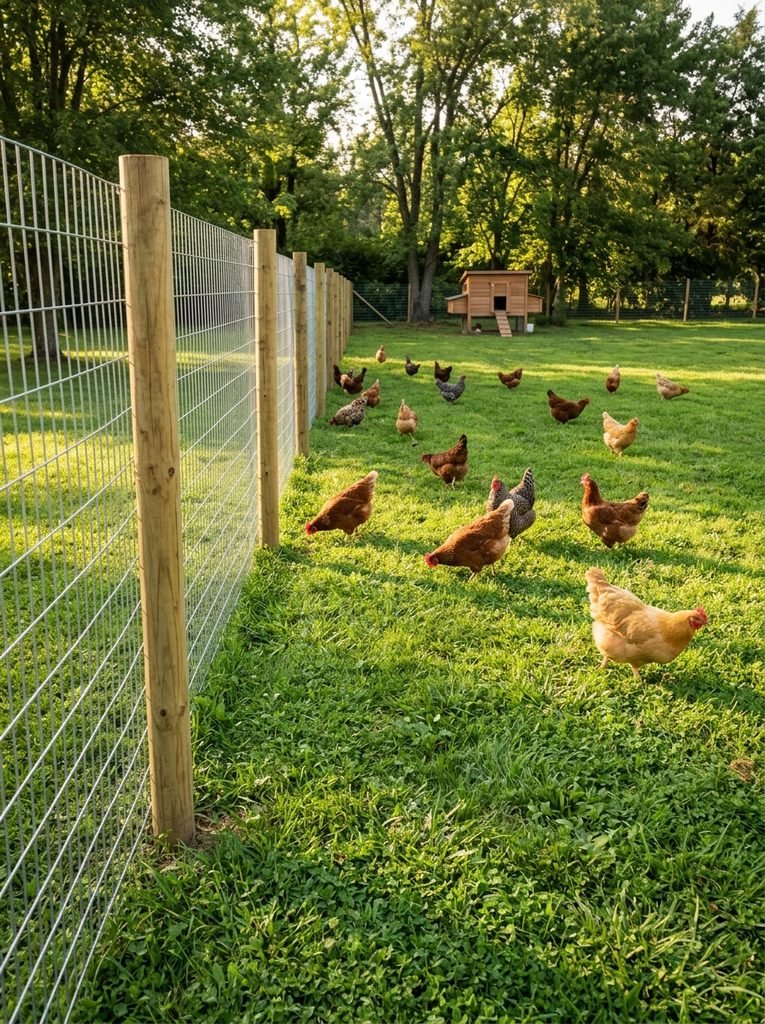
Free range hens are happy hens, but they still need a boundary. A perimeter fence around the yard or a big section of it lets them roam safely.
I like using the same welded wire here, just much longer. Honestly, the bigger the area, the less they scratch up any one spot.
- Lots of room to roam
- Happier hens
- Less damage in one spot
3Cheap T Post and Wire Fence
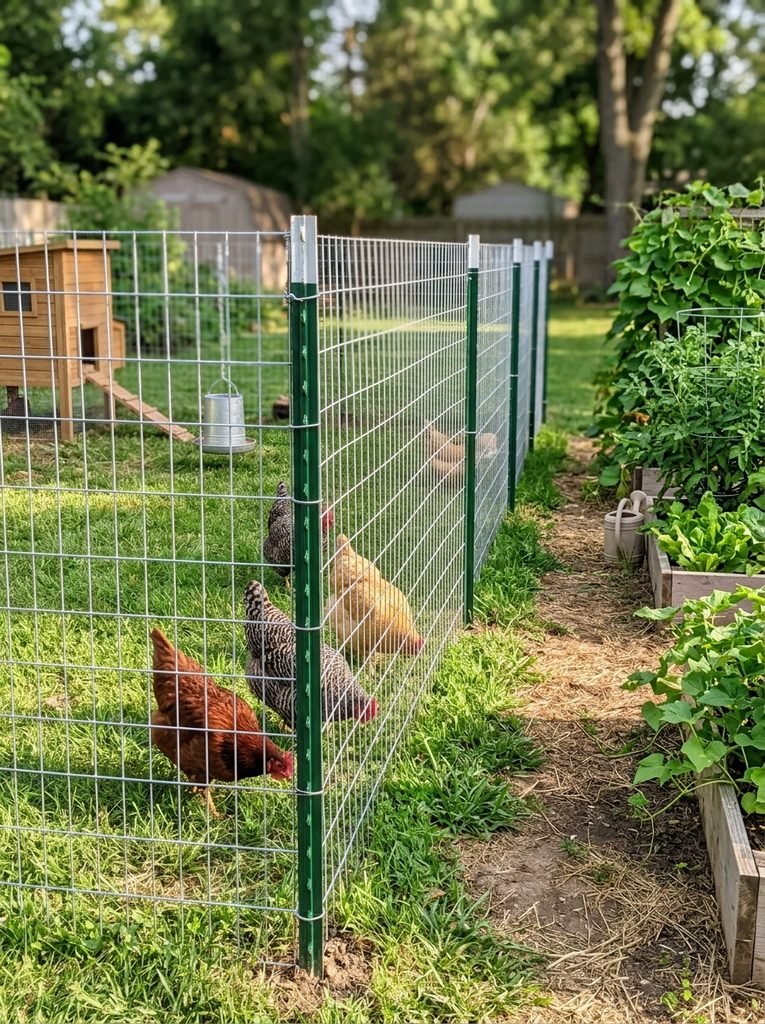
On a tight budget? Metal T posts and a roll of wire is one of the cheapest fences you can put up.
Metal T posts go in fast with a post driver and need no digging. Pair them with welded wire or garden fencing and you can fence a decent run in an afternoon.
- Very budget friendly
- No digging needed
- Fast to install
4Easy Pallet Chicken Fence
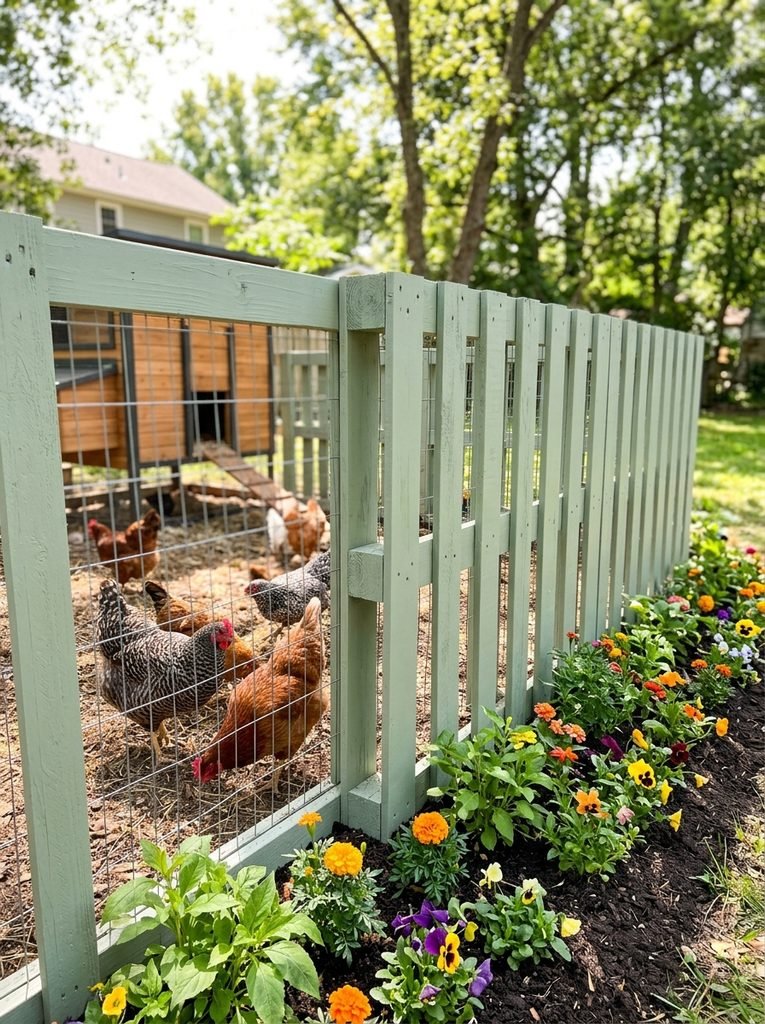
Free wooden pallets make a sturdy, rustic chicken fence. Stand them on end and screw them together side by side.
Look for pallets stamped HT, which means heat treated, not chemically treated. Paint them a bright color and they look surprisingly cute.
- Often free
- Sturdy and solid
- Easy to paint
Project Card · Half a day · Easy
Materials Needed
- Heat treated pallets stamped HT
- 2×4 boards or wooden stakes
- Exterior wood screws and a drill
- Outdoor paint, optional
- Chicken wire or hardware cloth for the gaps
How to Make It
- Check each pallet for loose nails and broken boards.
- Stand the first pallet on end and screw a stake to it to hold it upright.
- Line up the next pallet and screw the two together at the top, middle and bottom.
- Cover big gaps with wire so chicks cannot squeeze through.
- Paint the outside in a bright color if you like.
Start Your 30-Day Home Reset
Stop waiting for a "perfect" free weekend. Grab the 30-day plan and start feeling lighter in your own home by tomorrow.
View the 30-Day Plan Printable PDF · Instant download5Backyard Picket Chicken Fence
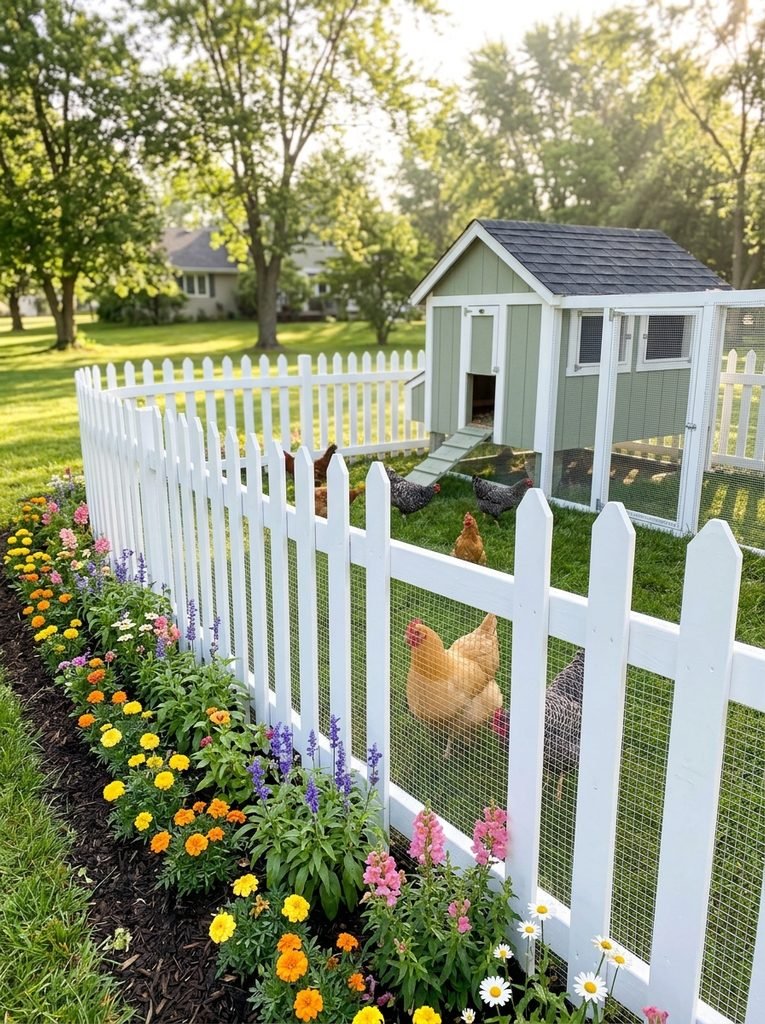
Want your chicken run to look pretty? A picket style fence turns it into part of the garden.
Line the inside with welded wire so hens cannot squeeze between the pickets. It looks charming and still does the job.
- Pretty garden look
- Neighbor friendly
- Easy to add a gate
6Vegetable Garden Fence to Keep Chickens Out
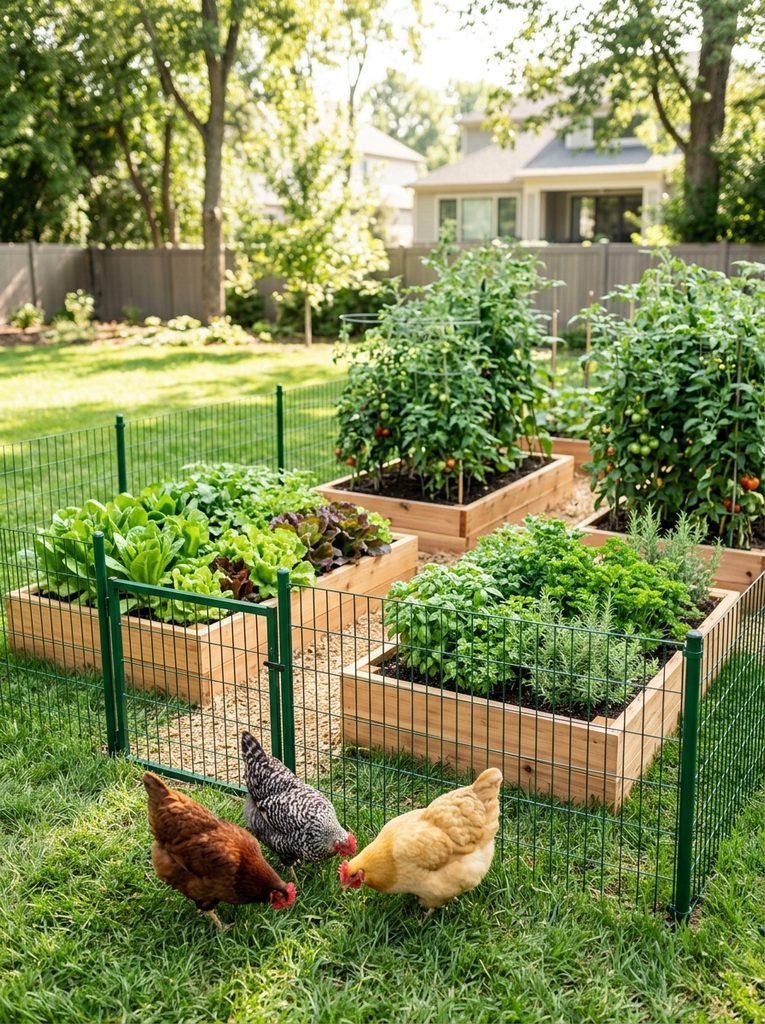
Chickens and veggie gardens do not mix. They will dig up seedlings and peck every tomato.
A 3 to 4 foot fence around the vegetable garden keeps them out while they roam the rest of the yard. In my experience a fence they can see through bothers them less than a solid one.
- Protects your veggies
- Hens still free range
- Simple to build
7Movable Chicken Run Fence
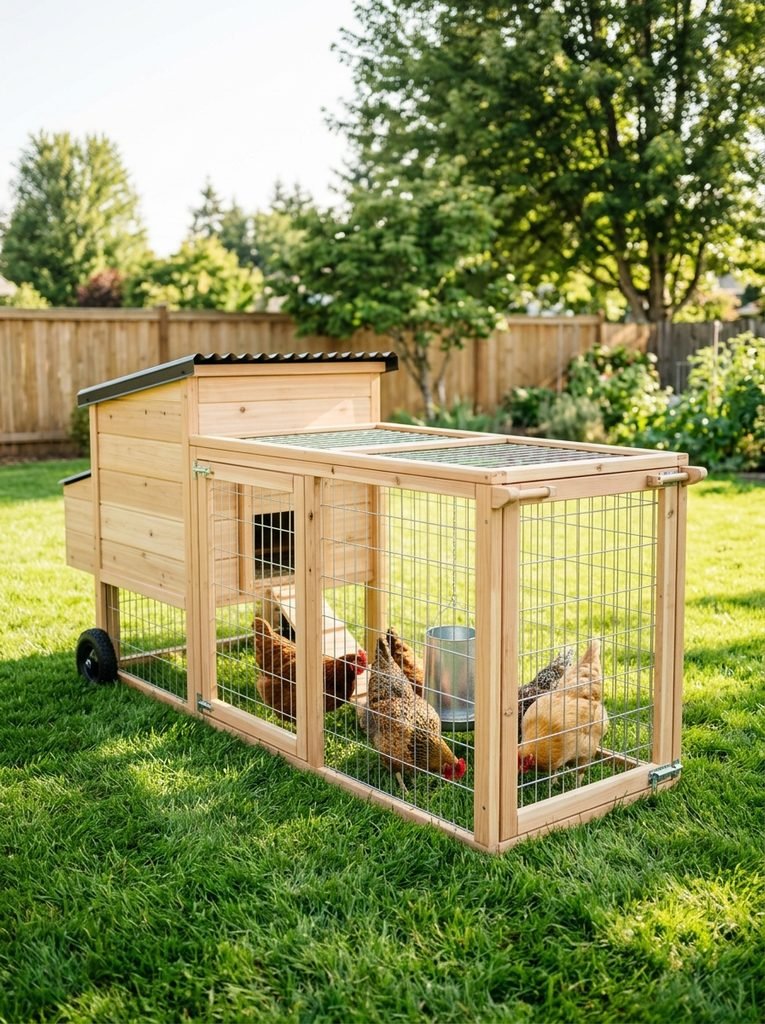
A movable run lets your hens graze fresh grass every few days without wrecking one patch of lawn.
Build light panels from wood and wire, then hinge or clip them together. Move the run to a new spot every few days and the grass bounces back.
- Fresh grass every week
- Lawn stays healthy
- Easy to reshape
8Portable Electric Poultry Netting
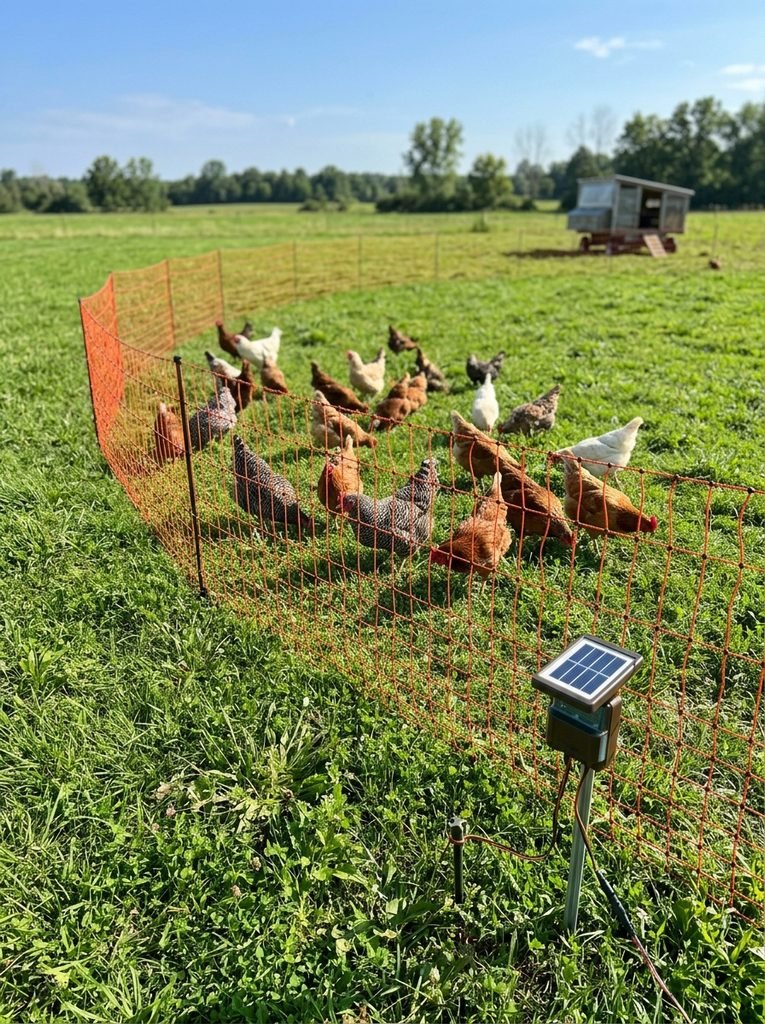
Electric poultry netting is the easiest portable fence there is. It comes in a roll with built in posts and sets up in minutes.
It also keeps most predators out, which is a big bonus. A poultry netting kit needs a fence energizer, and I always walk the line weekly to clear grass touching the bottom wire.
- Sets up in minutes
- Keeps predators out
- Move it anywhere
PRO TIP Always use a proper fence energizer made for poultry netting, and switch it off before you touch or move the fence.
9Temporary Fence with Step In Posts
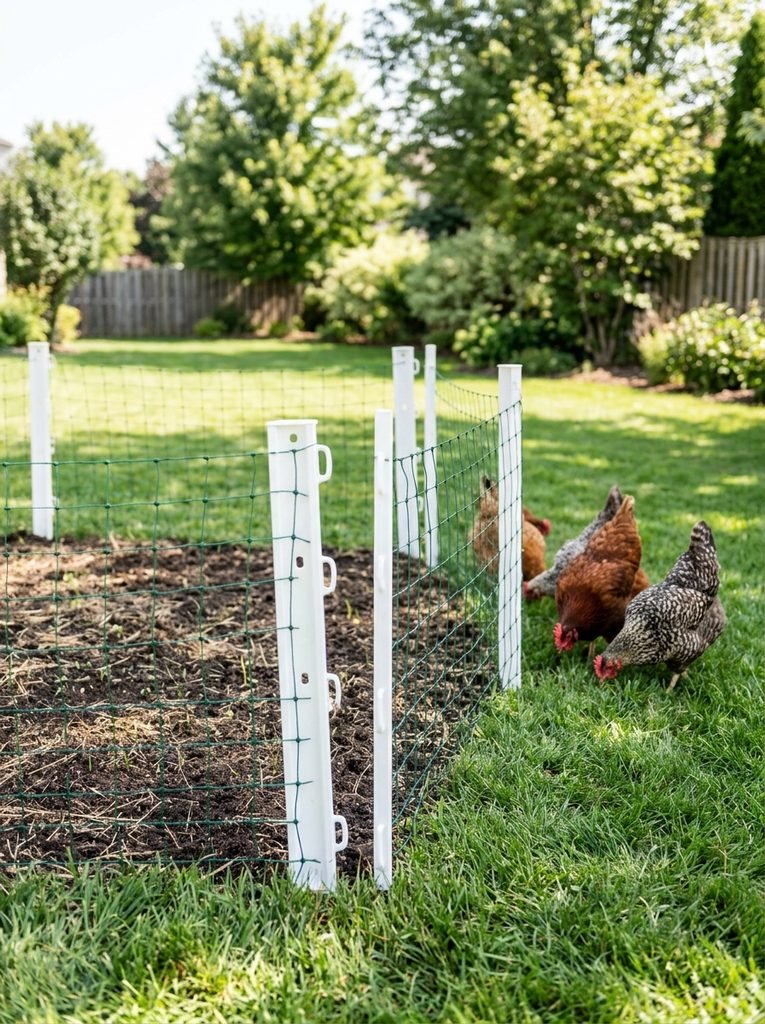
Need a fence for a few weeks only? Step in posts and a roll of plastic garden mesh go up fast and come down just as fast.
Step in posts push into the ground with your foot, no tools. It is great for keeping hens off new seed or fencing a small area while they clean up spent beds.
- No tools needed
- Up in minutes
- Great short term fix
10Garden Bed Hoop Covers
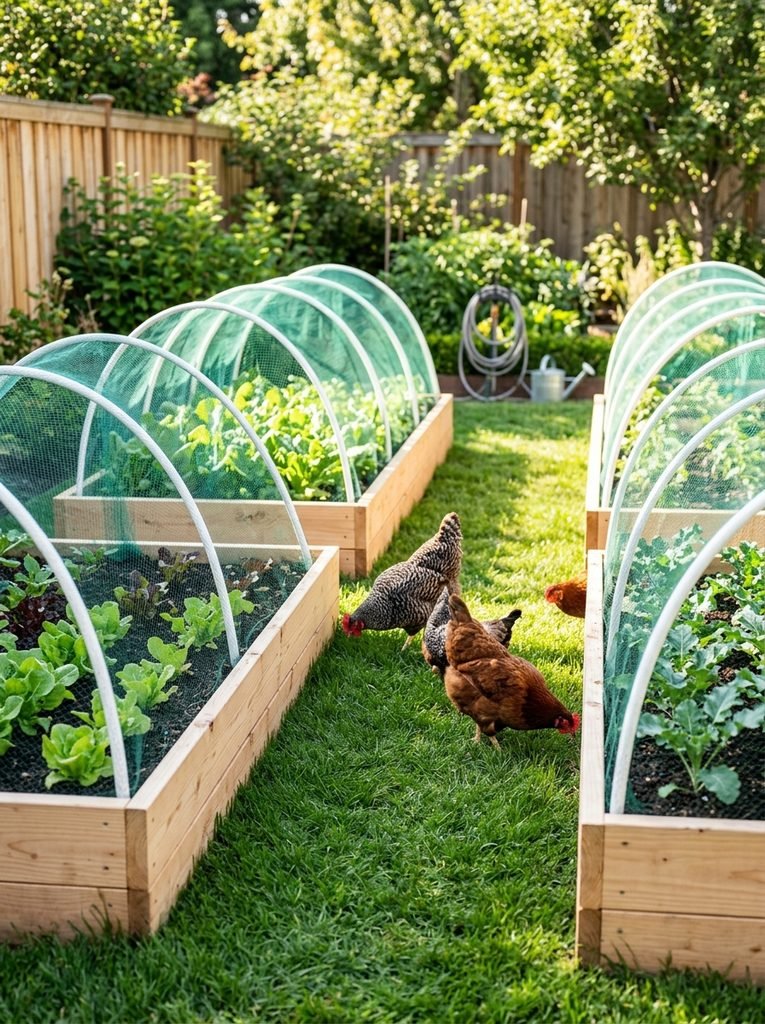
Sometimes you do not need a whole fence. Just cover the beds.
Bend wire or plastic hoops over a raised bed and drape netting over them. Your hens can roam right next to the bed and the plants stay safe.
- Protects single beds
- Cheap and simple
- Hens can roam freely
11DIY Predator Proof Apron Fence
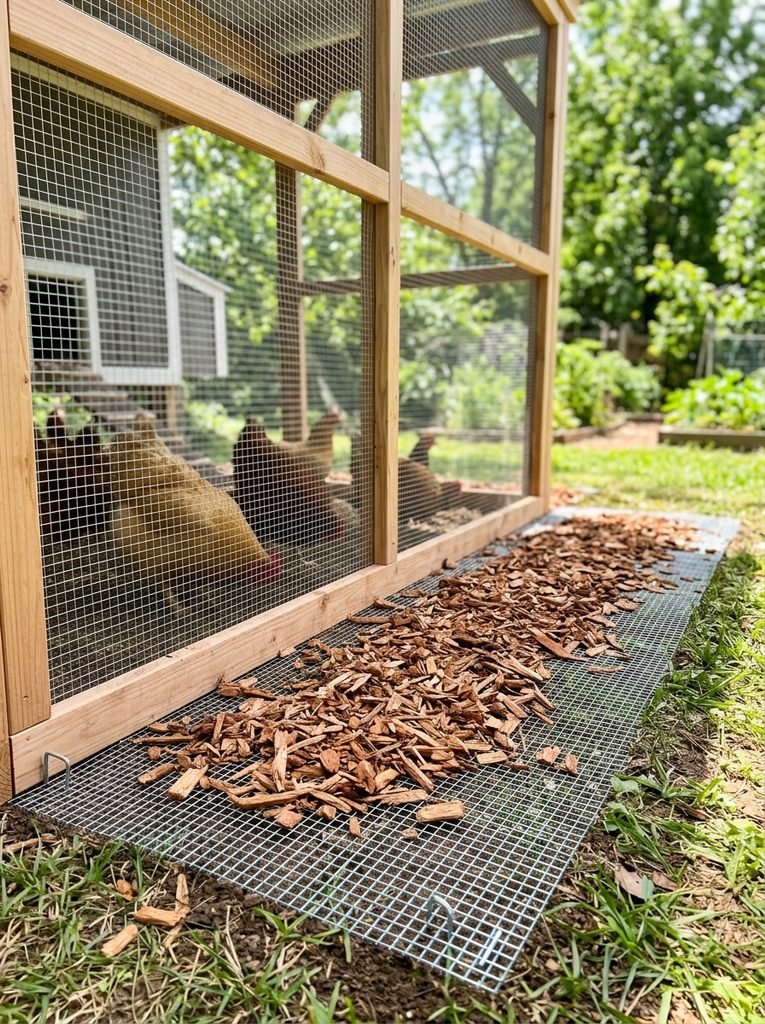
Foxes, dogs and raccoons dig under fences. An apron stops them.
Lay a strip of hardware cloth flat on the ground along the outside of your fence and attach it to the bottom. Predators dig at the fence, hit the wire and give up. Remember chicken wire keeps chickens in but does not keep predators out.
- Stops digging predators
- Protects at night
- One time job
Project Card · Half a day · Moderate
Materials Needed
- 1/2 inch hardware cloth, 2 feet wide
- Zip ties or hog rings
- Landscape staples
- Wire cutters and heavy gloves
- Soil or mulch to cover
How to Make It
- Lay the hardware cloth flat on the ground along the outside of the fence.
- Bend the inner edge up a few inches and fasten it to the bottom of the fence.
- Pin the outer edge down with landscape staples every foot.
- Overlap each new strip by a few inches and tie them together.
- Cover with soil or mulch so grass grows over it.
12Cheap Branch Wattle Garden Fence
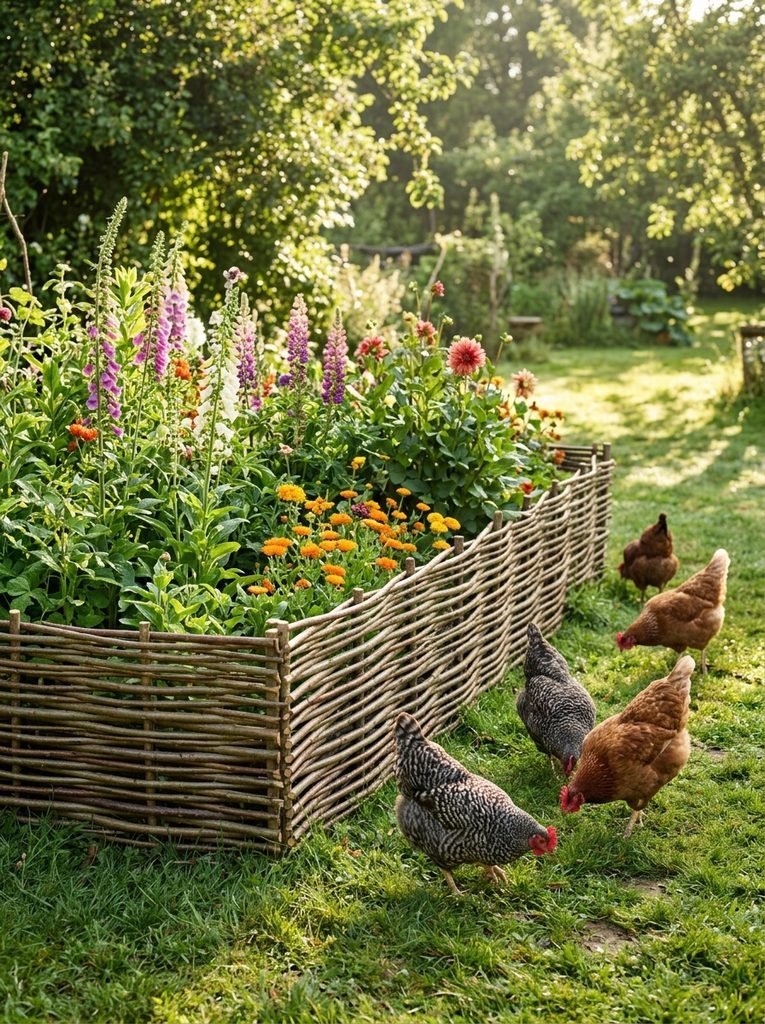
A wattle fence is woven from flexible branches between stakes. It costs nothing if you have trees to prune.
It is perfect as a low garden border to keep hens out of flower beds. It looks so lovely and natural, almost like something from a storybook garden.
- Free materials
- Beautiful natural look
- Great for flower beds
Frequently Asked Questions
How tall should a chicken fence be?
About 4 feet works for most hens. Lightweight breeds that fly well may need 5 to 6 feet or a covered top.
Is chicken wire good for a chicken fence?
It keeps chickens in, but it is too weak to stop predators. Use welded wire or hardware cloth where predators are a problem.
What is the cheapest chicken fence?
Metal T posts with wire, or free heat treated pallets, are the cheapest options.
How do I keep chickens out of my vegetable garden?
Fence the garden with a 3 to 4 foot see through fence, or cover individual beds with hoops and netting.
How do I stop predators digging under the fence?
Add a hardware cloth apron laid flat along the outside of the fence and pinned to the ground.
Final Thoughts on Chicken Fence Ideas
The right chicken fence depends on what you want it to do: keep hens in, keep them out of the garden, or keep predators away.
Start with a solid welded wire fence around the run and add a predator apron. Then use temporary or portable fencing for the garden as you go.


Amir Ali is the founder and site administrator of HomeDecorEdge, a modern home decor and interior design platform. Since starting the site, he has combined his passion for interior design, practical styling, and color coordination with hands-on content strategy and site management. He guides authors, curates high-quality articles, and ensures readers have access to actionable, visually inspiring, and user-focused home decor advice for apartments, small rooms, and family homes.