

I learned this the hard way. I hung my favorite cream cardigan on a regular hanger for one winter, and by spring it had two pointy bumps on the shoulders and sleeves that hung down past my fingertips. It never looked the same again.
Sweaters are bulky, soft and easy to ruin if you store them wrong. Hang them and they stretch. Stack them too high and the whole pile topples. Leave wool out in summer and moths move in. The good news is that a few smart habits fix all of it. These 12 sweater storage ideas cover closets, drawers, tiny spaces and off season storage, so your knits stay neat and keep their shape.
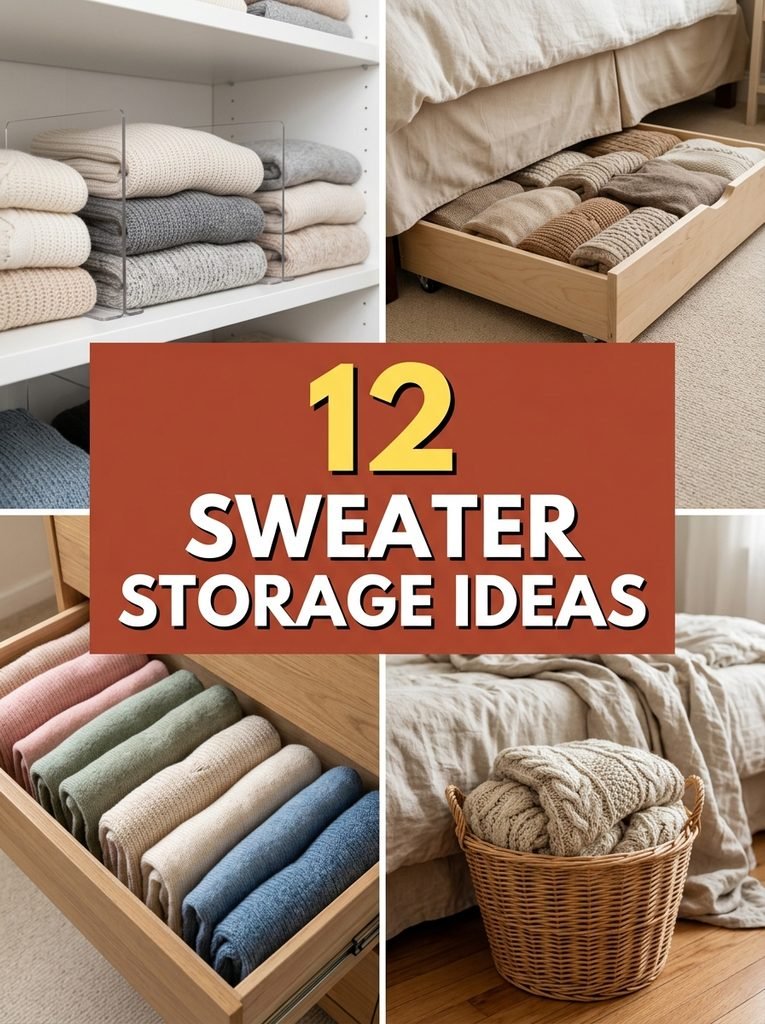
Quick picks if you’re short on time:
- Best for closets: the DIY shelf dividers (idea 1)
- Best for small spaces: the rolling under bed drawer (idea 2)
- Best for cardigans: the hanger fold trick (idea 5)
- Best for summer storage: breathable cotton bags (idea 10)
1. DIY Shelf Dividers for Folded Sweater Stacks
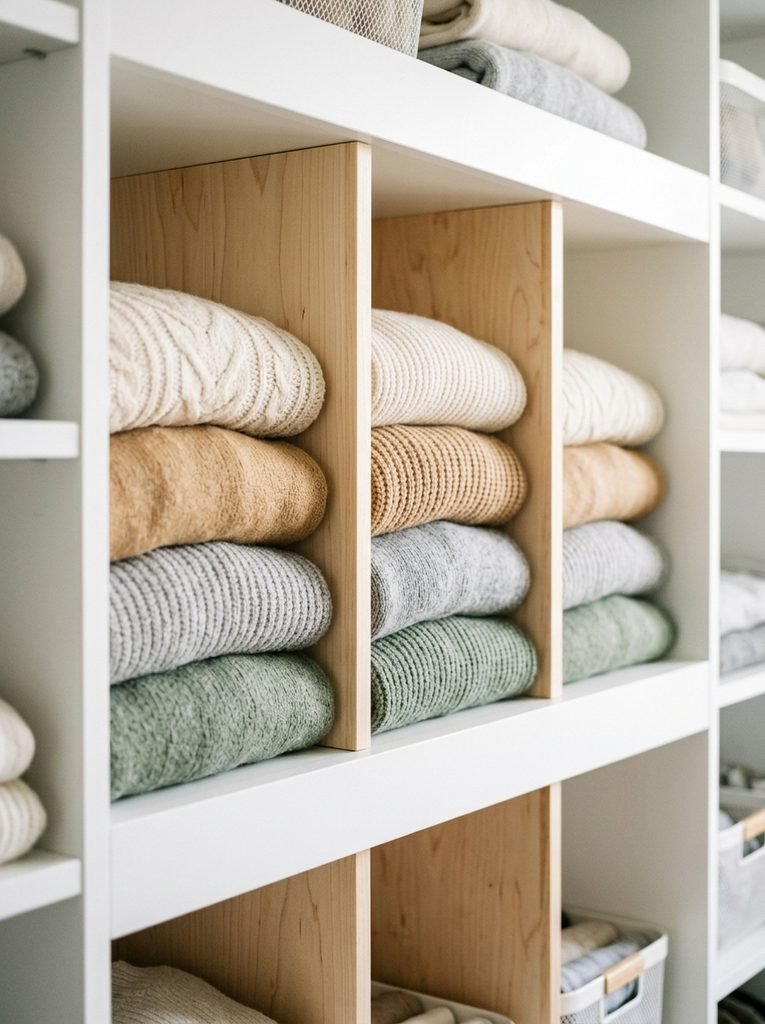
Folded sweaters on an open shelf look great for about two days. Then you pull one from the middle and the whole stack slides sideways. Shelf dividers fix that completely. Each stack gets its own little section, so it stays upright no matter how often you grab from it.
I made mine from thin wood boards and it took one afternoon. They cost far less than store bought dividers, and you can cut them to fit your exact shelf depth.
Time: One afternoonCost: LowSkill: Beginner friendly
Materials Needed:
- 1/2 inch thick wood boards or plywood strips
- A saw, or ask the store to cut them to size
- Small L brackets and short screws
- Sandpaper and a little paint or clear finish
- A tape measure, a pencil and a drill
How to Make It:
- Measure the depth of your shelf and the height between shelves.
- Cut each divider about 2 inches shorter than the shelf depth and about 12 inches tall.
- Sand the edges until they’re smooth so they won’t snag the yarn.
- Paint or seal the dividers and let them dry fully.
- Mark your spacing on the shelf, about 12 to 14 inches apart for adult sweaters.
- Attach each divider to the shelf with two small L brackets on one side.
A tip I picked up: keep each stack to four or five sweaters. Any higher and the bottom ones get crushed and hard to pull out.
2. DIY Rolling Under Bed Sweater Drawer
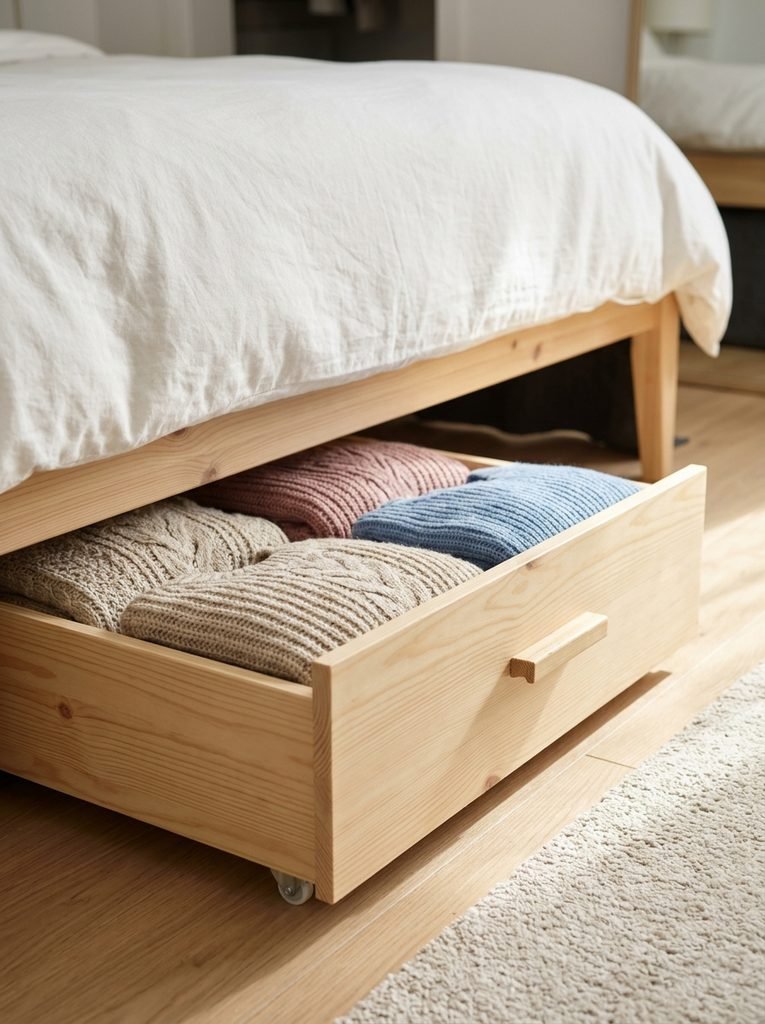
The space under the bed is perfect for sweaters. It’s dark, it’s out of the way, and it holds a lot. A rolling drawer makes it easy to slide out and grab what you need, which beats digging through a plastic tub every morning.
In my experience, a shallow open drawer works better than a deep box. You can see every sweater at once and nothing gets squashed at the bottom.
Time: One afternoonCost: LowSkill: Beginner friendly
Materials Needed:
- 1 piece of 1/2 inch plywood for the base
- 1×6 boards for the four sides
- 4 small caster wheels that fit your bed height
- Wood glue and 1 1/4 inch screws
- A cabinet handle or a rope pull
- Sandpaper and a clear finish
How to Make It:
- Measure the height under your bed and subtract about an inch so the drawer slides in easily.
- Cut the plywood base to fit the space, leaving room around the bed legs.
- Glue and screw the 1×6 boards around the edges of the base to make the sides.
- Sand everything smooth, especially the inside edges, then seal it.
- Screw a caster wheel into each corner underneath.
- Add a handle to the front and slide it under the bed.
Lay a cotton pillowcase or a piece of fabric over the sweaters. It keeps dust off without trapping moisture.
3. DIY Fabric Covered Sweater Storage Boxes
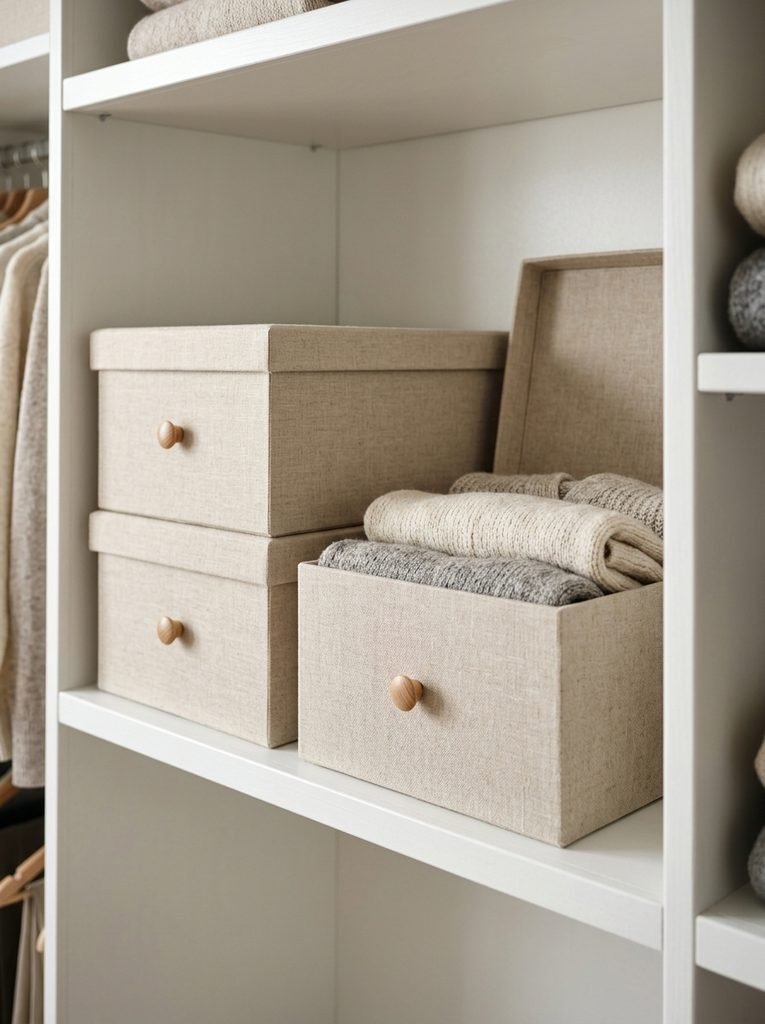
Sturdy shoe boxes or shipping boxes make great sweater boxes once you cover them in fabric. They look custom, they cost almost nothing, and they let air move in a way plastic bins don’t. That matters a lot for wool and cotton knits.
I like linen or cotton fabric in one neutral color so a row of boxes looks calm and matching on the shelf.
Time: Two hoursCost: Very lowSkill: Beginner friendly
Materials Needed:
- Sturdy cardboard boxes with lids
- Linen or cotton fabric
- Spray adhesive or fabric glue
- Fabric scissors and a ruler
- Wooden pull tabs or ribbon loops
- Small label tags
How to Make It:
- Wipe the boxes clean and tape any loose flaps shut.
- Cut a piece of fabric big enough to wrap the box with about 2 inches extra on every edge.
- Spray the outside of the box with adhesive and smooth the fabric over it, working from the center out.
- Fold the extra fabric neatly over the top edge and glue it inside the box.
- Cover the lid the same way.
- Glue a pull tab or ribbon loop on the front and add a label tag.
Use a fabric that’s easy to wipe. A cotton canvas or a linen blend handles dust and handling much better than thin quilting cotton.
4. File Folding Sweaters in Drawers
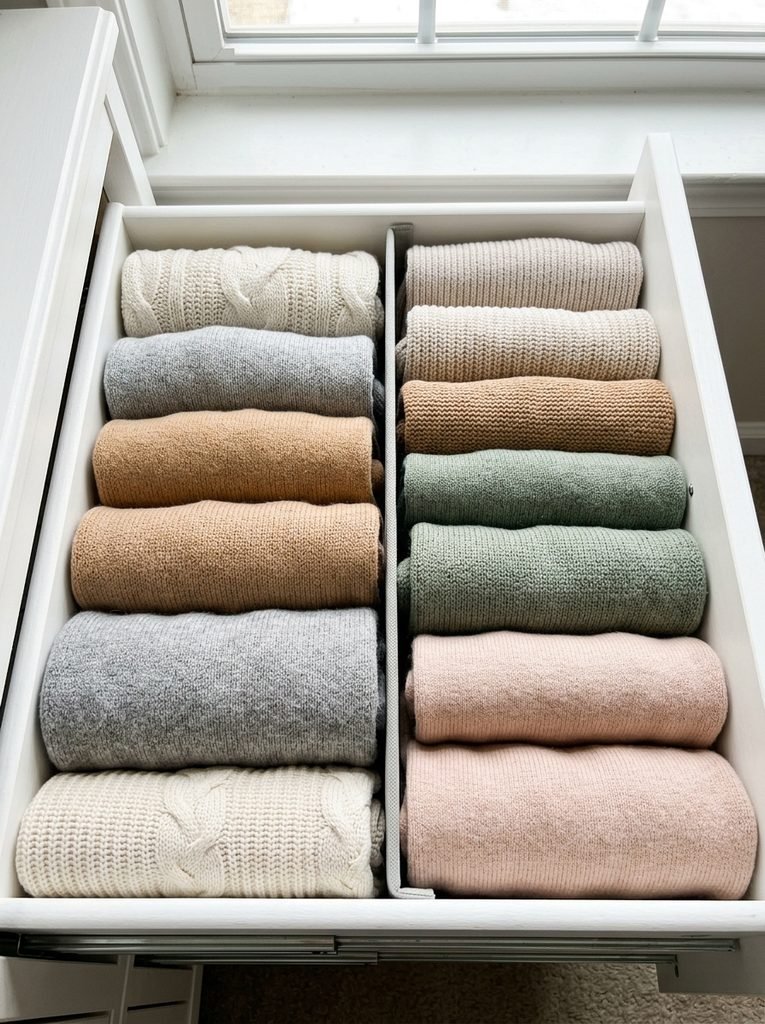
If your sweaters live in a drawer, stand them up instead of stacking them. Fold each one into a neat rectangle, then fold it in half again so it can stand on its edge. Line them up from front to back like files.
Honestly, this changed my mornings. I can see every sweater at once, and pulling one out doesn’t mess up the rest. Thin sweaters work best this way. Save the chunky ones for a shelf or basket.
Start Your 30-Day Home Reset
Stop waiting for a "perfect" free weekend. Grab the 30-day plan and start feeling lighter in your own home by tomorrow.
View the 30-Day Plan Printable PDF · Instant downloadBest for: dressers and thin to medium knits
5. The Hanger Fold Trick for Cardigans
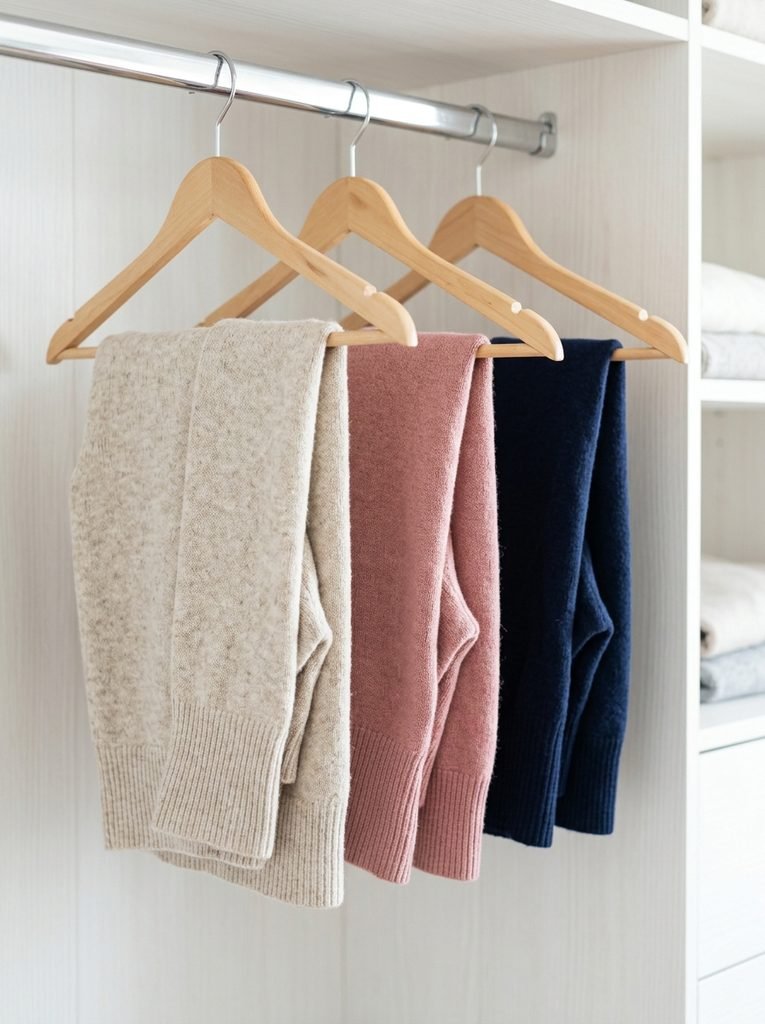
If you really want to hang cardigans, never hang them by the shoulders. Fold the cardigan in half lengthwise, lay the hanger hook in the armpit, and drape the body and sleeves over the bar. The weight sits on the bar, not on the shoulders, so there are no bumps and no stretching.
I use this trick for lighter cardigans that I wear often. Heavy wool still goes on a shelf.
You’ll need: wooden or velvet hangers with a straight bar.
Best for: light cardigans you wear every week
6. Clear Lidded Bins on the Top Closet Shelf
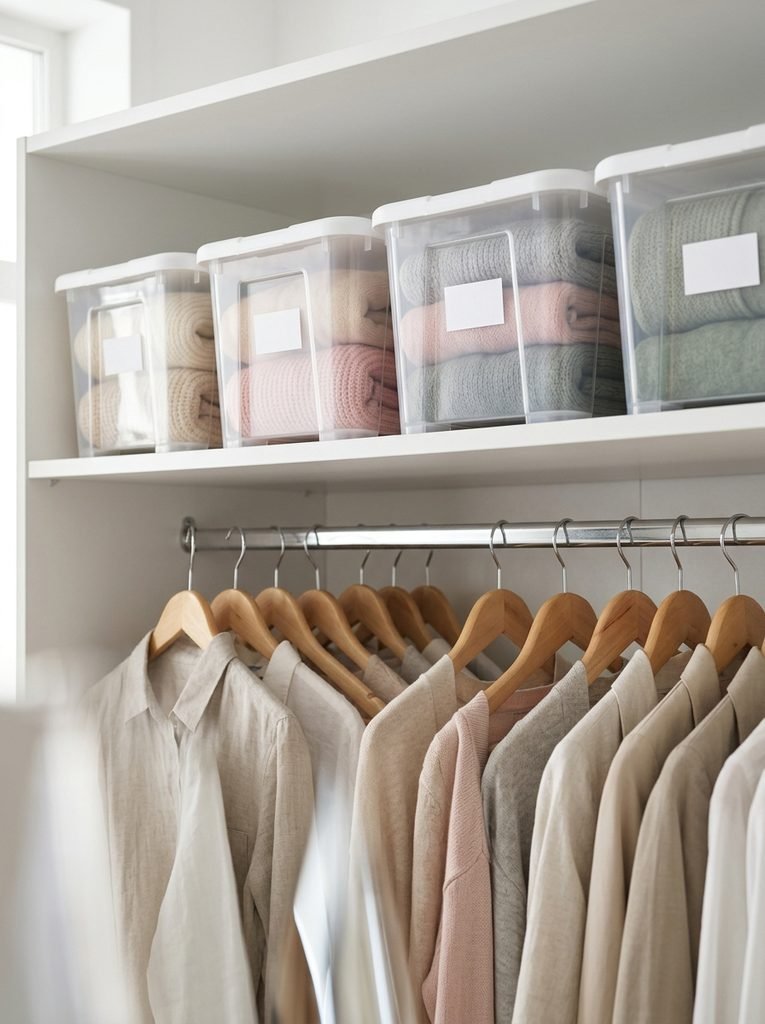
That high closet shelf is often wasted space. Clear lidded bins turn it into a sweater zone. You can see what’s inside without pulling everything down, and the lids keep dust off.
I’d pick bins with a front handle so they slide out easily from up high. And label the fronts by type, like “cardigans” or “wool,” so you grab the right one first time.
You’ll need: clear lidded bins with front handles and a set of labels.
Best for: closets with a high shelf
7. Hanging Shelf Organizer for Tiny Closets
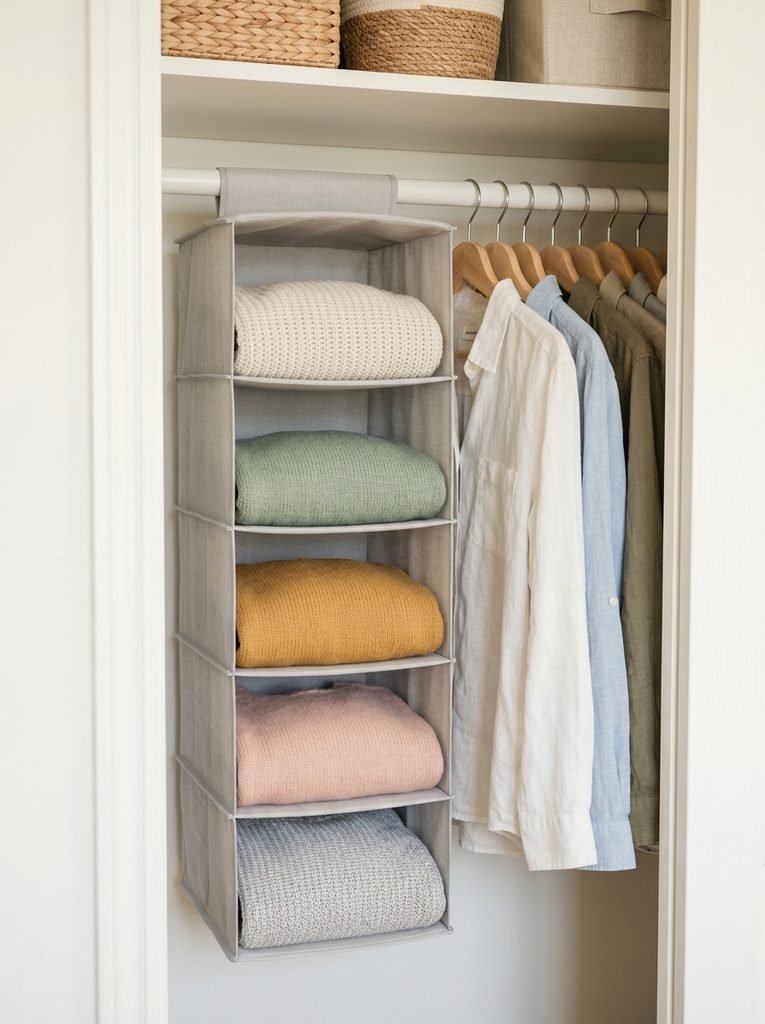
In a tiny closet with no shelves, a hanging fabric organizer adds shelves in seconds. It hooks over the rod and gives you a column of cubbies, one sweater per cubby.
This is my top pick for dorms, rentals and small apartments because there’s nothing to install. Keep heavier sweaters in the lower cubbies so the organizer hangs straight.
You’ll need: a hanging fabric shelf organizer with five or six cubbies.
Best for: tiny closets and renters
8. Open Woven Baskets for Chunky Knits
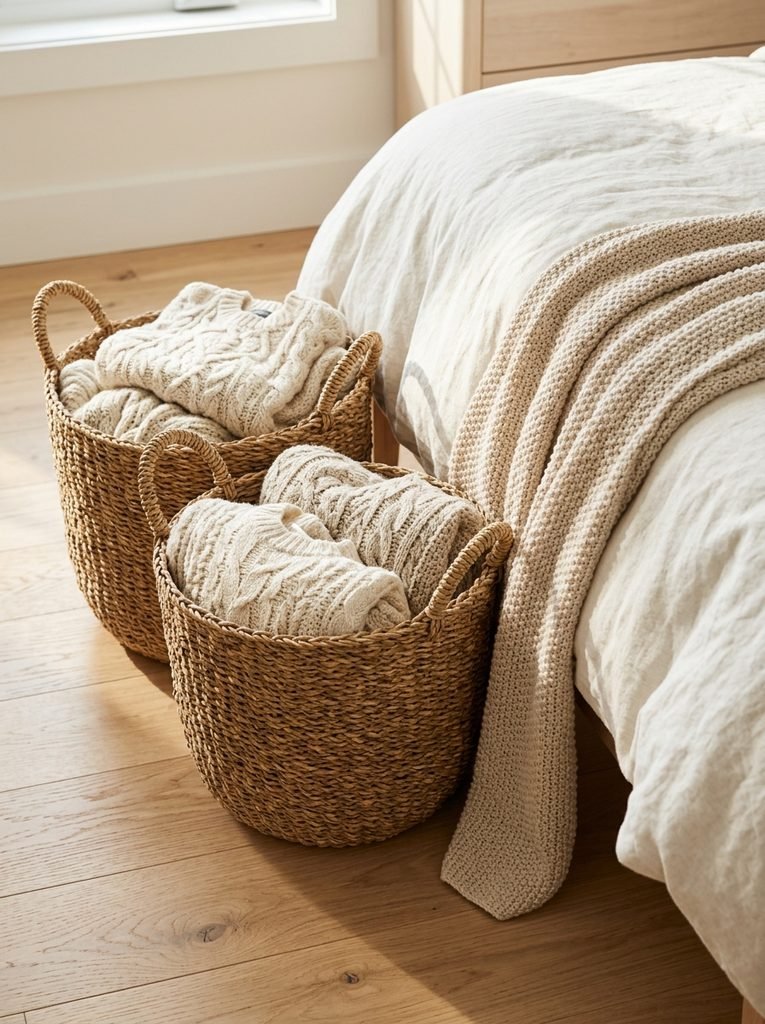
Chunky knits are too thick for drawers and too heavy to stack high. A big open basket is the easiest home for them. Fold each one loosely and lay them in, two or three per basket.
I keep one basket right by the bed in winter. It looks cozy, and my favorite chunky sweater is always one step away.
You’ll need: large woven baskets with smooth insides, or lined baskets so the weave doesn’t catch the yarn.
Best for: chunky and cable knit sweaters
9. Cedar Blocks and Breathable Bags for Wool Sweaters
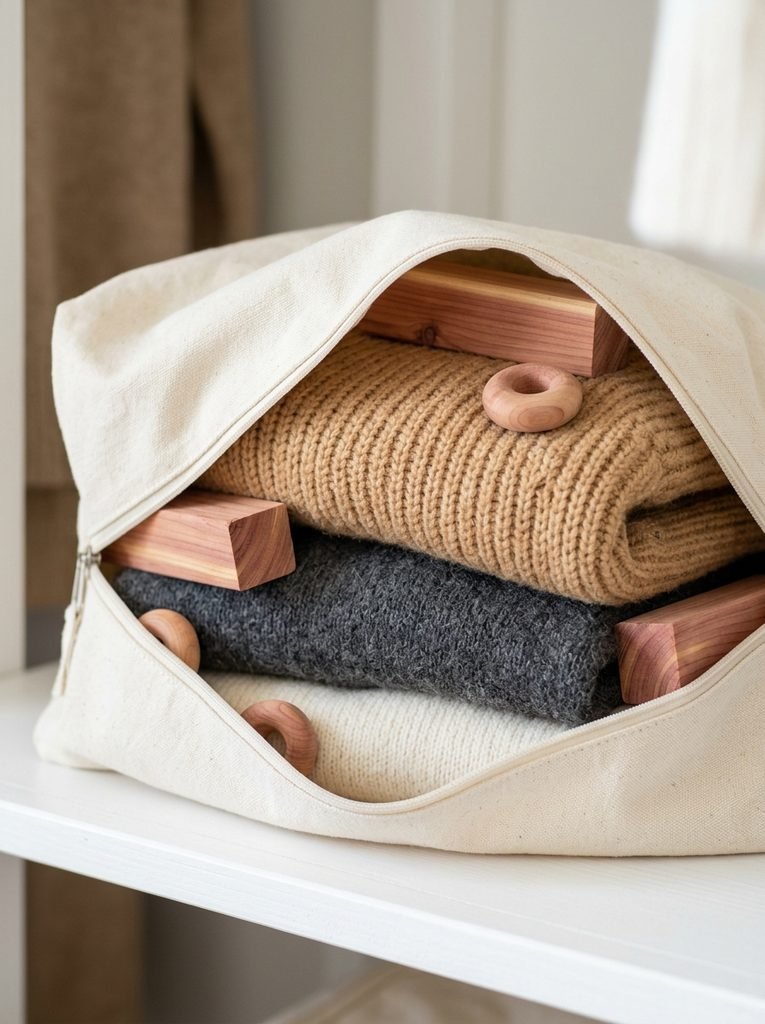
Wool is the sweater that moths love most. Cedar blocks are a natural way to keep them away, and they make your closet smell lovely too. Tuck a few blocks between your wool stacks or drop cedar rings into the bags.
A tip I picked up: lightly sand the cedar every few months. The smell fades over time, and a quick sanding brings the scent right back.
You’ll need: cedar blocks or rings and breathable cotton storage bags.
Best for: wool and cashmere sweaters
10. Off Season Storage in Summer: Breathable Cotton Bags
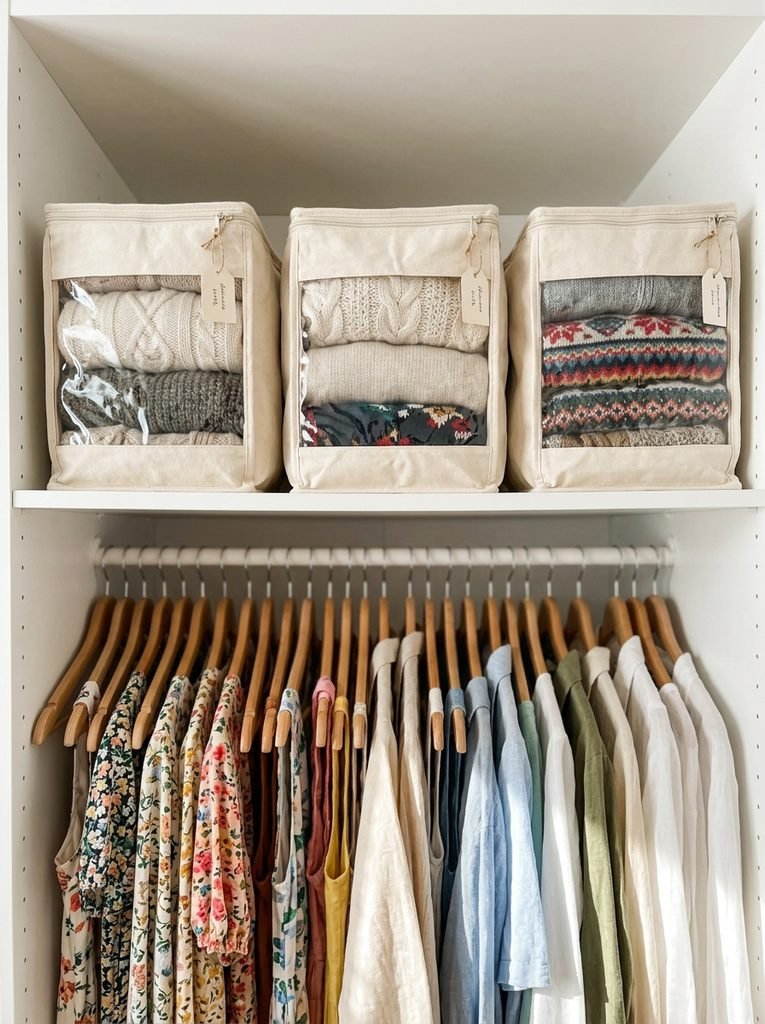
When summer arrives, pack your sweaters away the right way. Wash or clean them first, because even tiny food stains attract moths. Then fold them into breathable cotton bags, not plastic.
I skip vacuum bags for knits. They squash the fibers flat, and sweaters come out wrinkled and limp in the fall. Cotton bags let the yarn breathe and keep its shape.
You’ll need: cotton storage bags with clear windows and a few labels.
Best for: packing knits away for summer
11. Winter Rotation Shelf for Everyday Sweaters
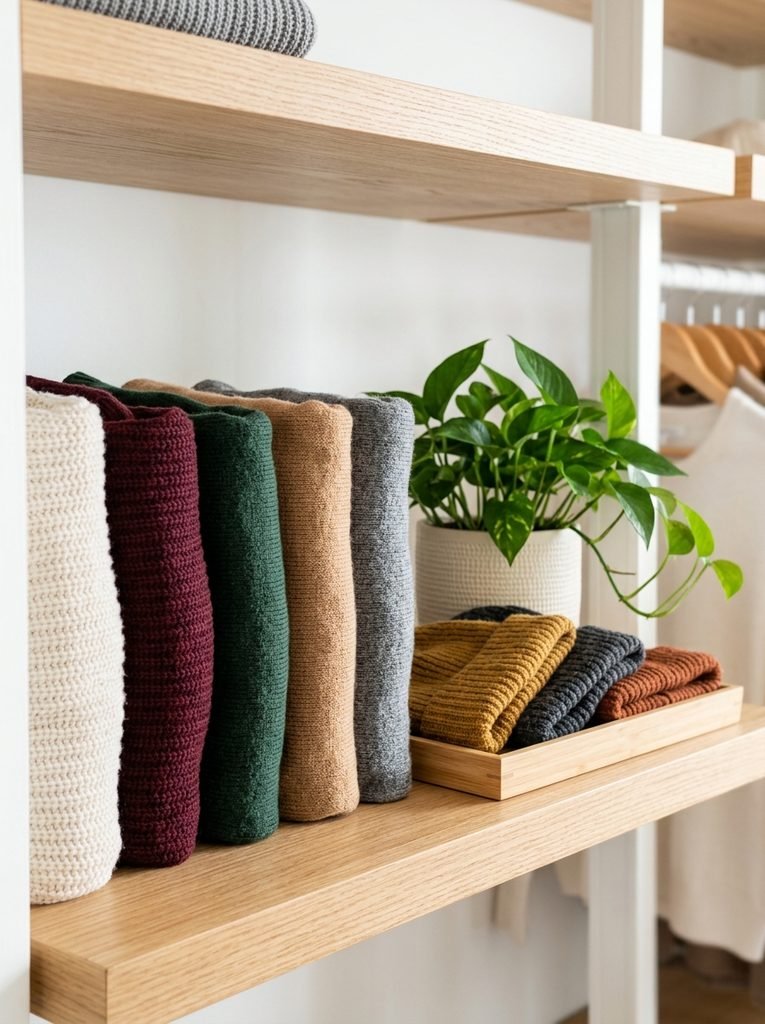
In winter, keep a small group of your most worn sweaters on the easiest shelf to reach, right at eye level. Everything else stays higher up or in bins. You’ll get dressed faster, and the shelf stays neat because you’re not digging through twenty sweaters to find one.
I swap a few sweaters in and out every couple of weeks. It feels like a fresh wardrobe without buying anything.
Best for: anyone with too many sweaters and not enough shelf space
12. Storage Ottoman at the Foot of the Bed
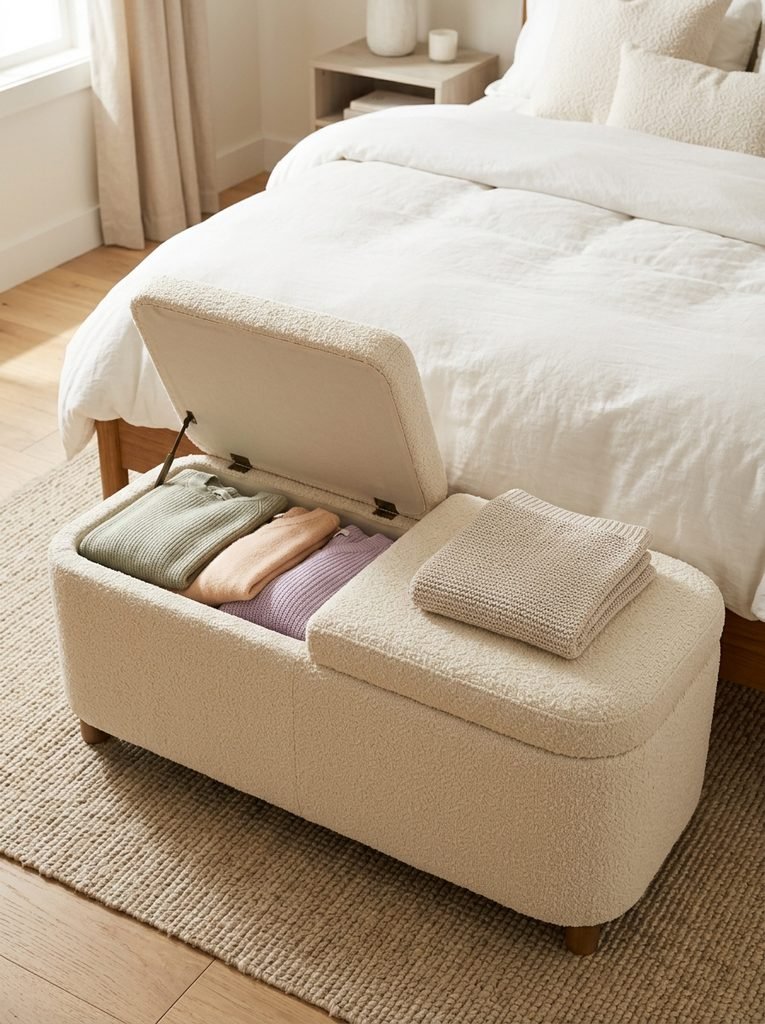
If your closet is full, a storage ottoman at the foot of the bed adds hidden space without adding clutter. It holds a surprising number of knit sweaters, and it gives you a spot to sit while you put on your boots.
I like keeping lighter knits in here, the ones I wear for lounging at home. They stay soft and folded, and they’re right where I need them.
You’ll need: a storage ottoman or bench with a lift up lid and a fabric lined inside.
Best for: small bedrooms and full closets
Final Thoughts on Sweater Storage Ideas
The best sweater storage ideas all follow a few simple rules. Fold, don’t hang, unless you use the hanger trick. Keep stacks short. Give wool cedar and air, not plastic. Once your sweaters have the right home, they’ll stay soft, keep their shape and last you many more winters.


Amir Ali is the founder and site administrator of HomeDecorEdge, a modern home decor and interior design platform. Since starting the site, he has combined his passion for interior design, practical styling, and color coordination with hands-on content strategy and site management. He guides authors, curates high-quality articles, and ensures readers have access to actionable, visually inspiring, and user-focused home decor advice for apartments, small rooms, and family homes.